
Matteo Tamburini’s most formally ambitious collection for the house turned the Gommino’s signature perforation from decorative motif into structural argument — with mixed but genuinely interesting results
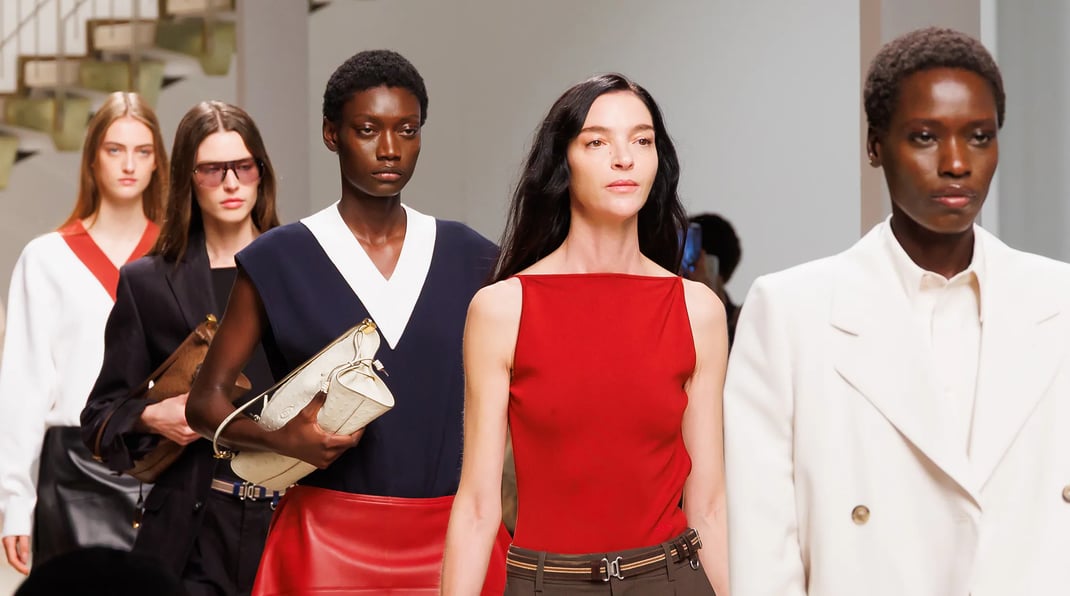
MILAN — Matteo Tamburini set himself a deliberately introspective question for Spring/Summer 2027: how does a personal imaginary world form, and what happens when it finally becomes clothes? His reference points – Sade, Uma Thurman, Christy Turlington, Princess Diana – landed somewhere specific in the 1990s glamour spectrum, and the collection he built from that material was the most architecturally committed work he has delivered at Tod’s so far.
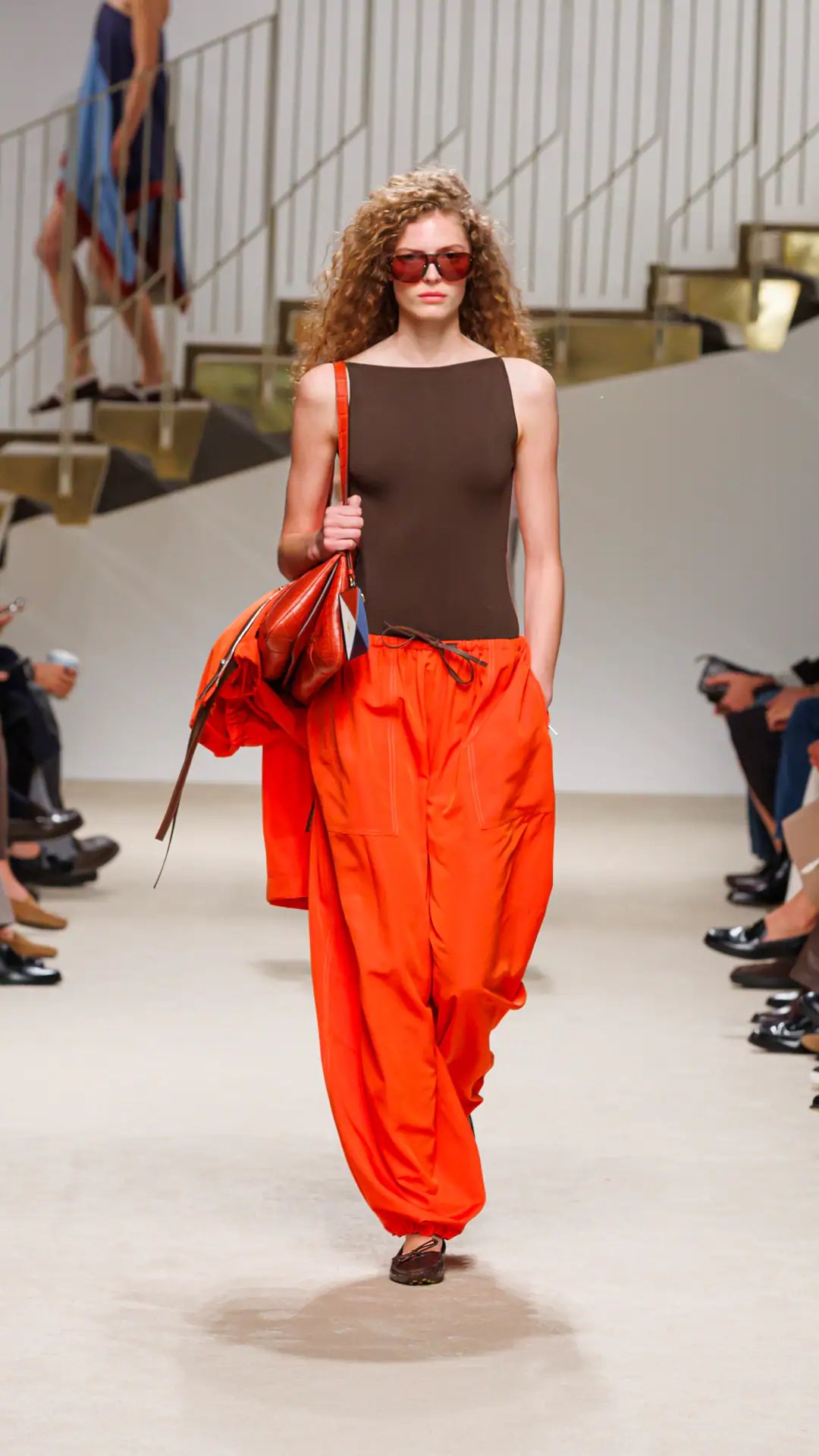
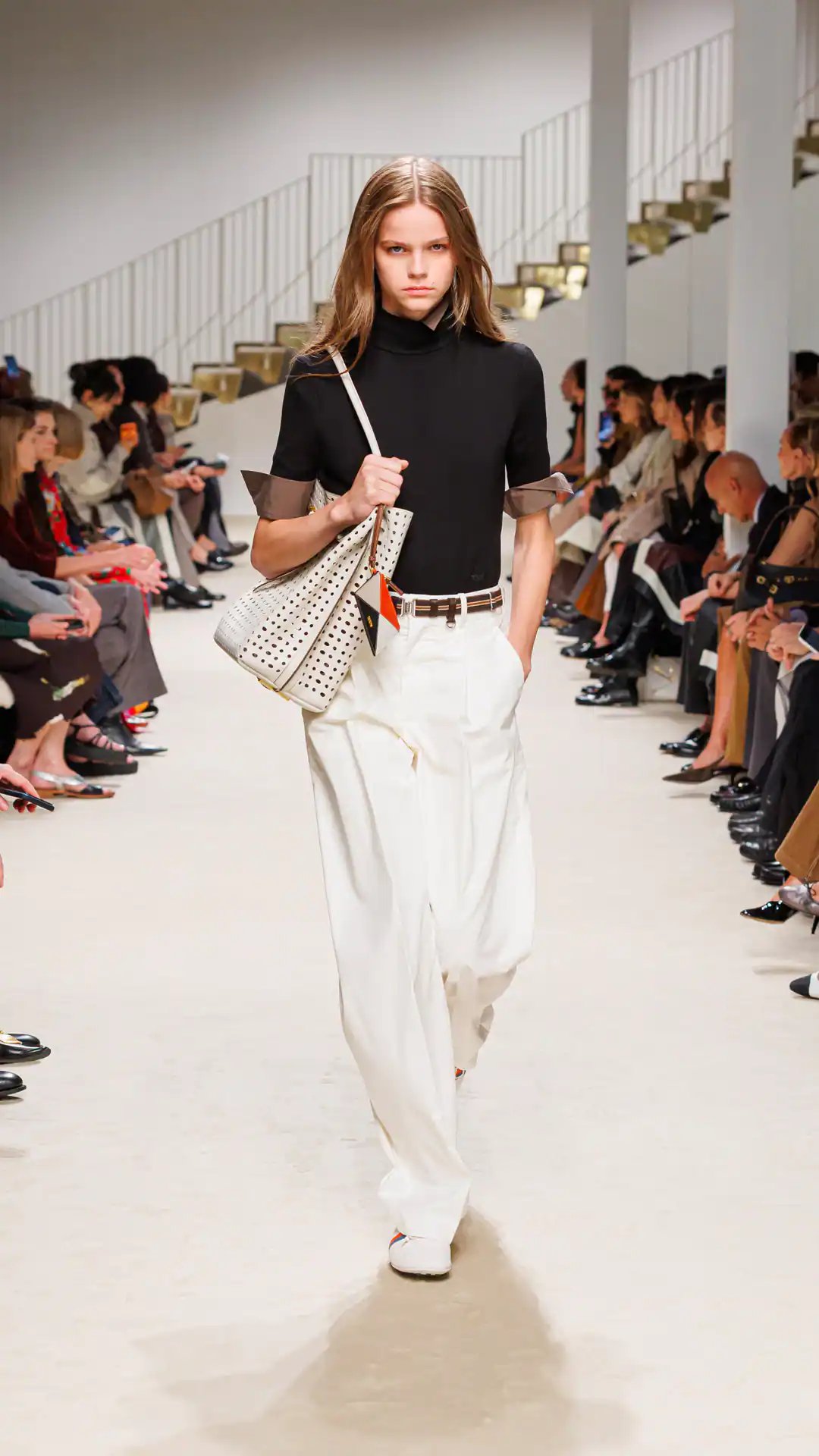
The difference from last September was legible in the opening looks. A year ago, Tamburini used the Gommino perforation as connective tissue – the pebbled sole pattern migrating onto garment surfaces and accessories as a house signature rewritten in new vocabulary. The approach was considered and somewhat cautious. Spring/Summer 2027 retained the perforation, but the ambition around it shifted: the mark that defines the house’s most iconic product became the organizing logic for structural garment engineering, not merely a decorative callback.
The outerwear made the argument most clearly. A cream double-breasted trench coat, perforated from collar to hem with circular eyelets echoing the Gommino’s sole pattern, revealed a sky-blue silk lining beneath the punctured leather surface. The construction held its rigid tailored architecture while the eyelets let both light and air pass through – which is to say, Tamburini made a winter-weight silhouette function as a summer proposal through the house’s own technical language. It was convincing. Elsewhere in the lineup, a dandelion-yellow trench in featherweight glossy leather was cropped into a floating storm flap, cinched at the waist and worn asymmetrically as an architectural cape. The result fell further from Tod’s heritage comfort zone than anything Tamburini has shown at the house, and it held its argument without reaching for familiar code.
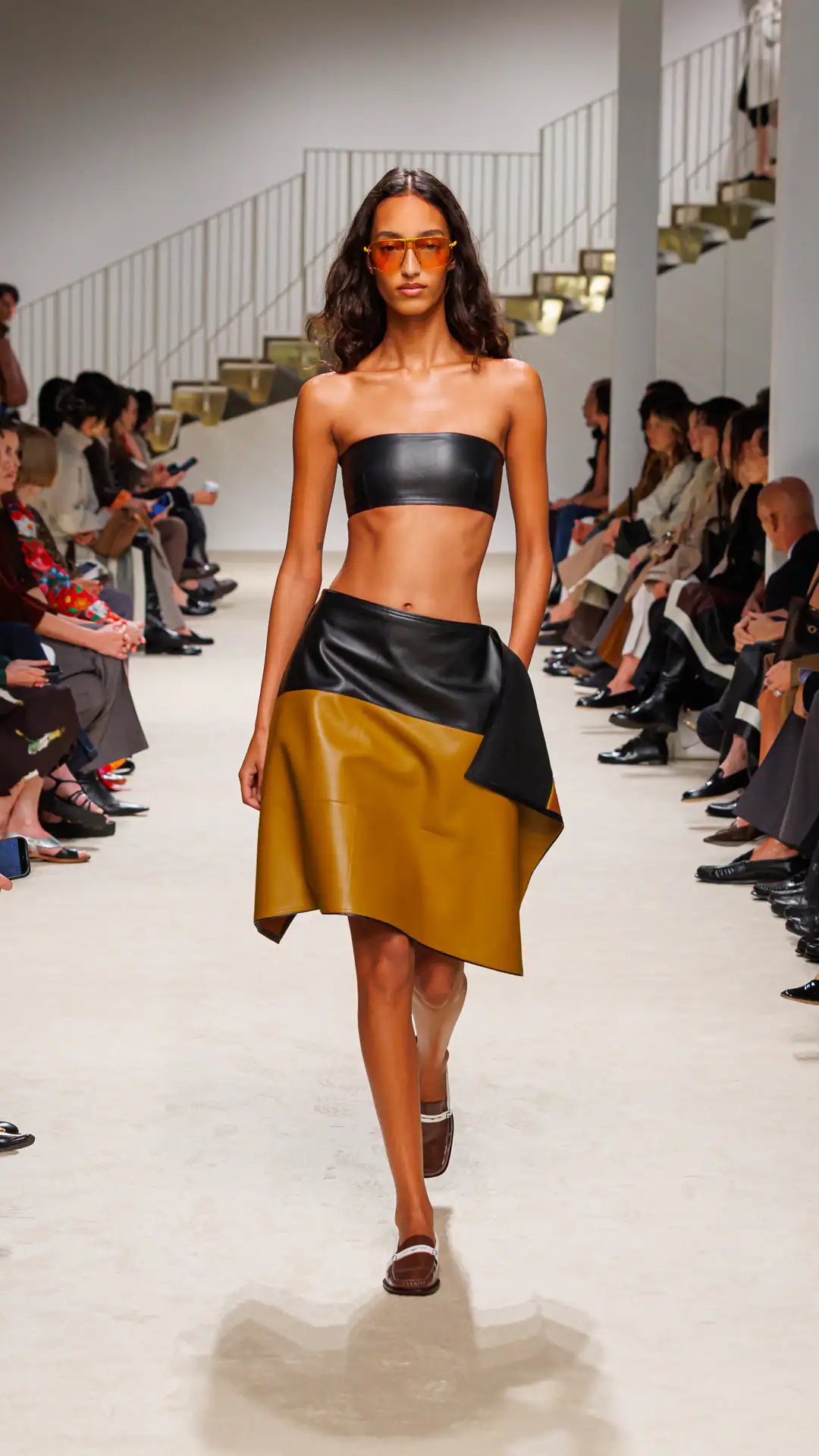
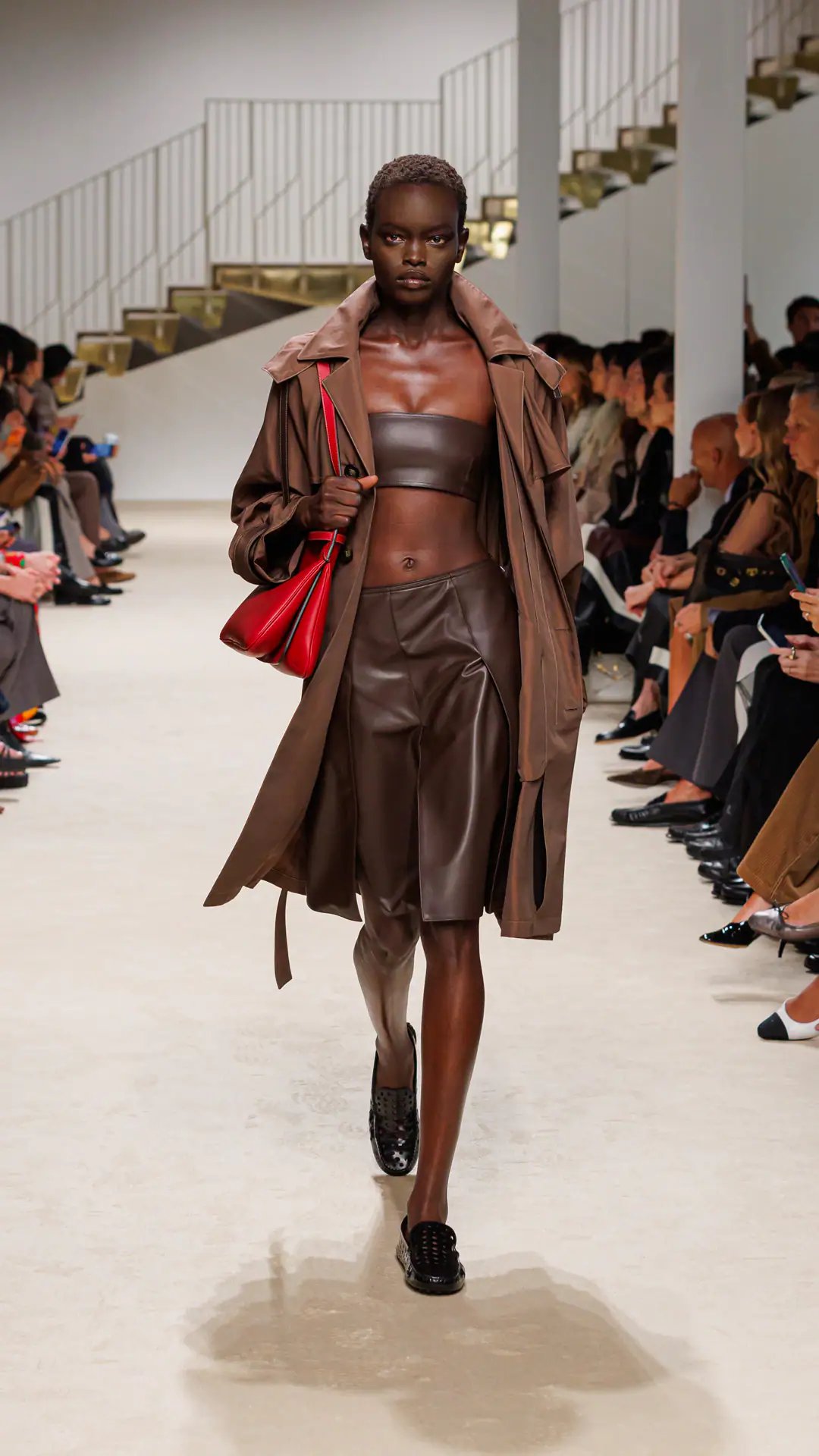
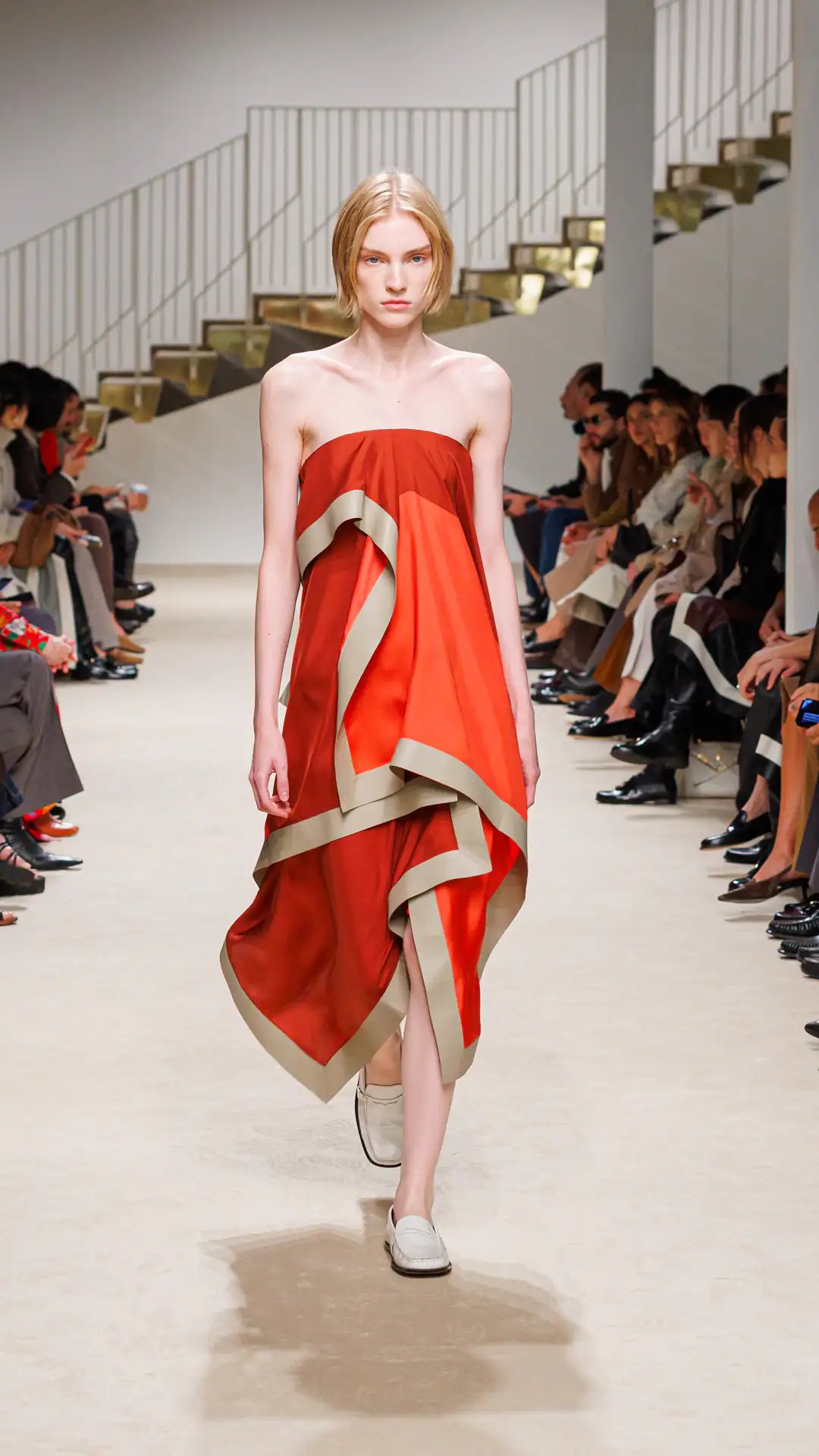
The evening and cocktail register extended the formal proposition. A strapless gown in terracotta and vermilion used broad contrast-edged ribbon bands, folded in overlapping dimensional arcs across the torso, to push volume away from the body. The construction logic was origami rather than conventional draping – layers building outward, floating – worn over flat leather slippers that kept the weighting grounded rather than formal. An asymmetric white shift interrupted by a terracotta cape collar with ink-black piping made the same structural point with greater restraint. Both pieces suggested Tamburini is thinking less about tailoring as accommodation and more about garment as proposition.
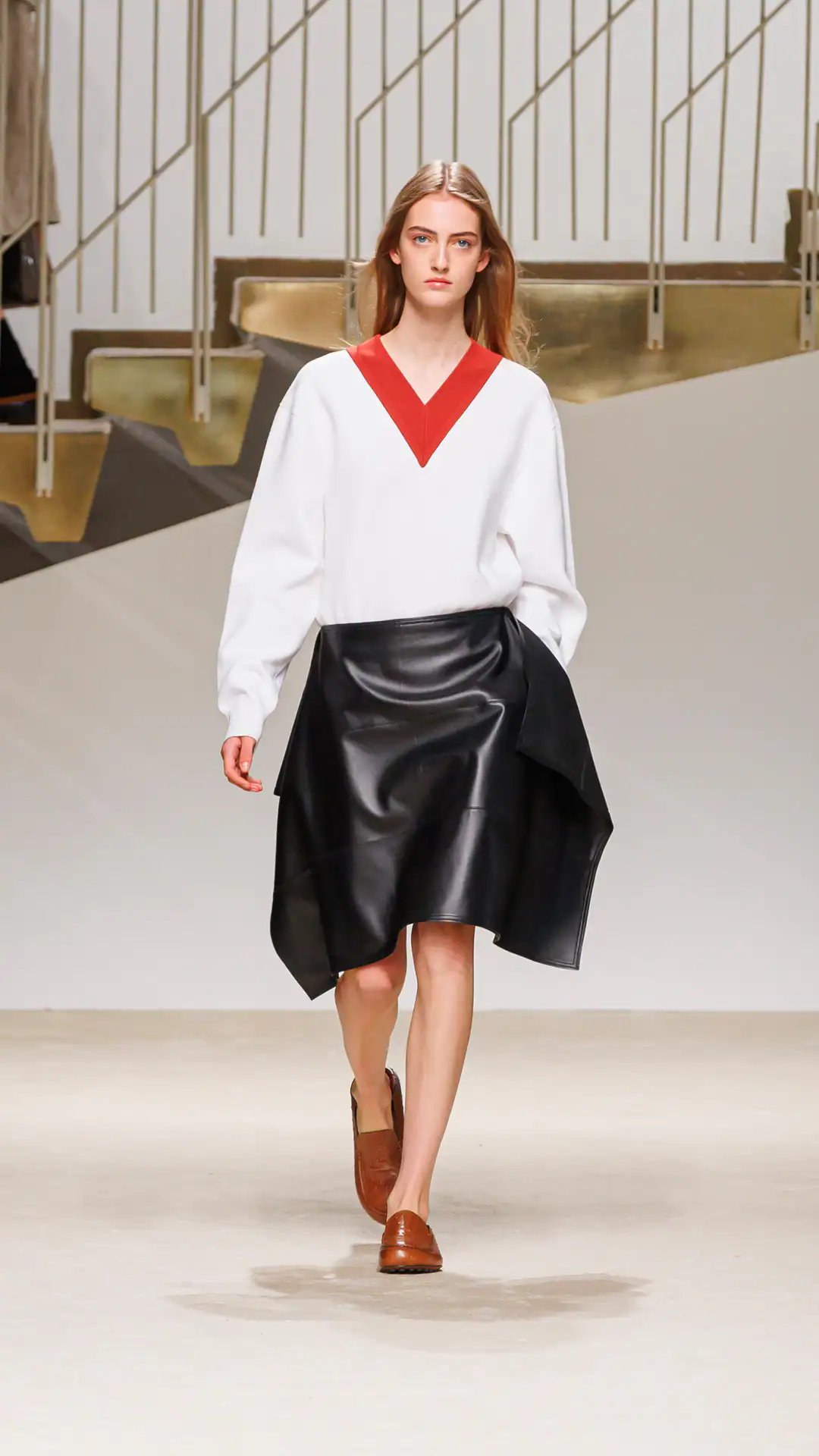
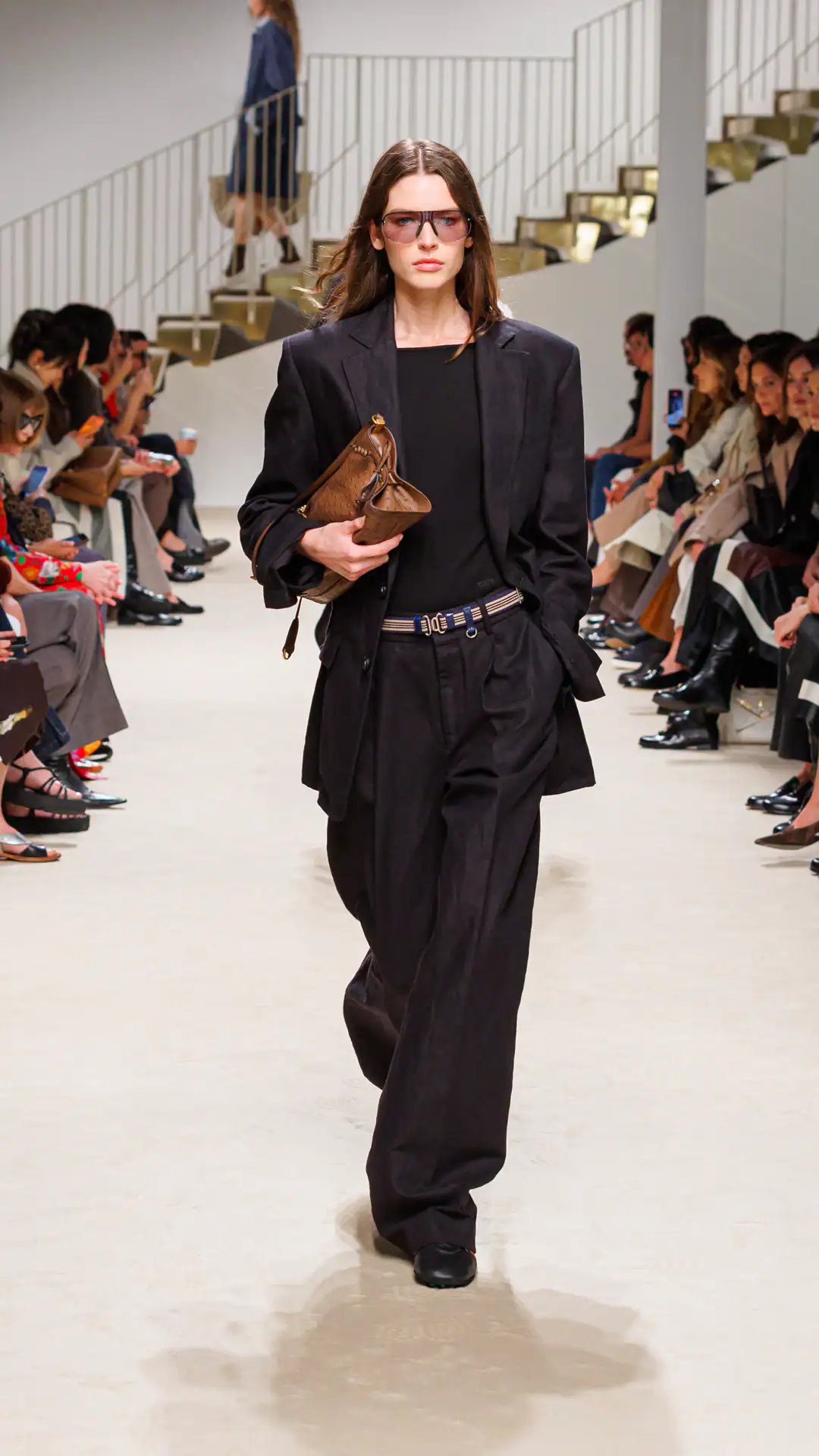
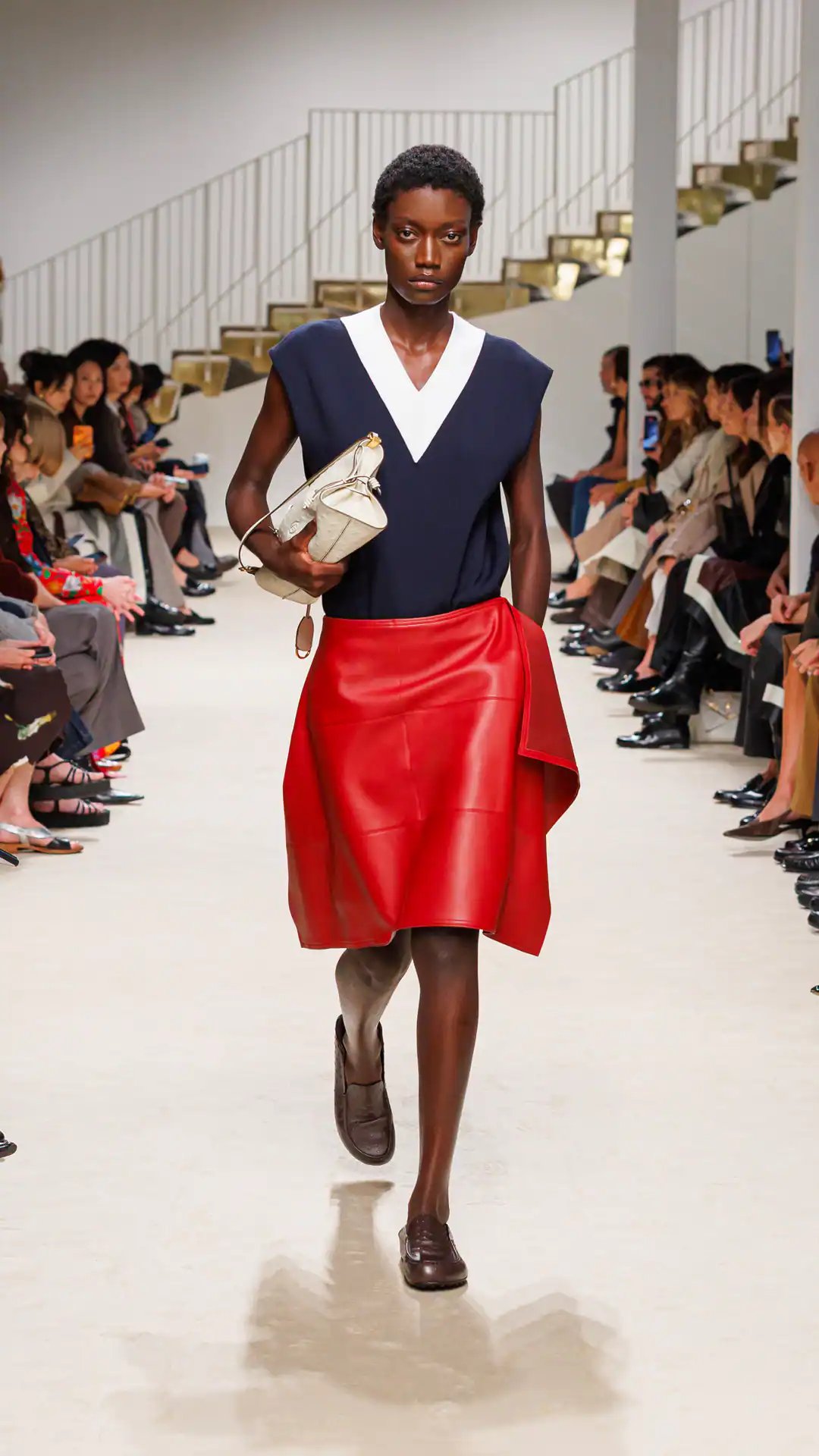
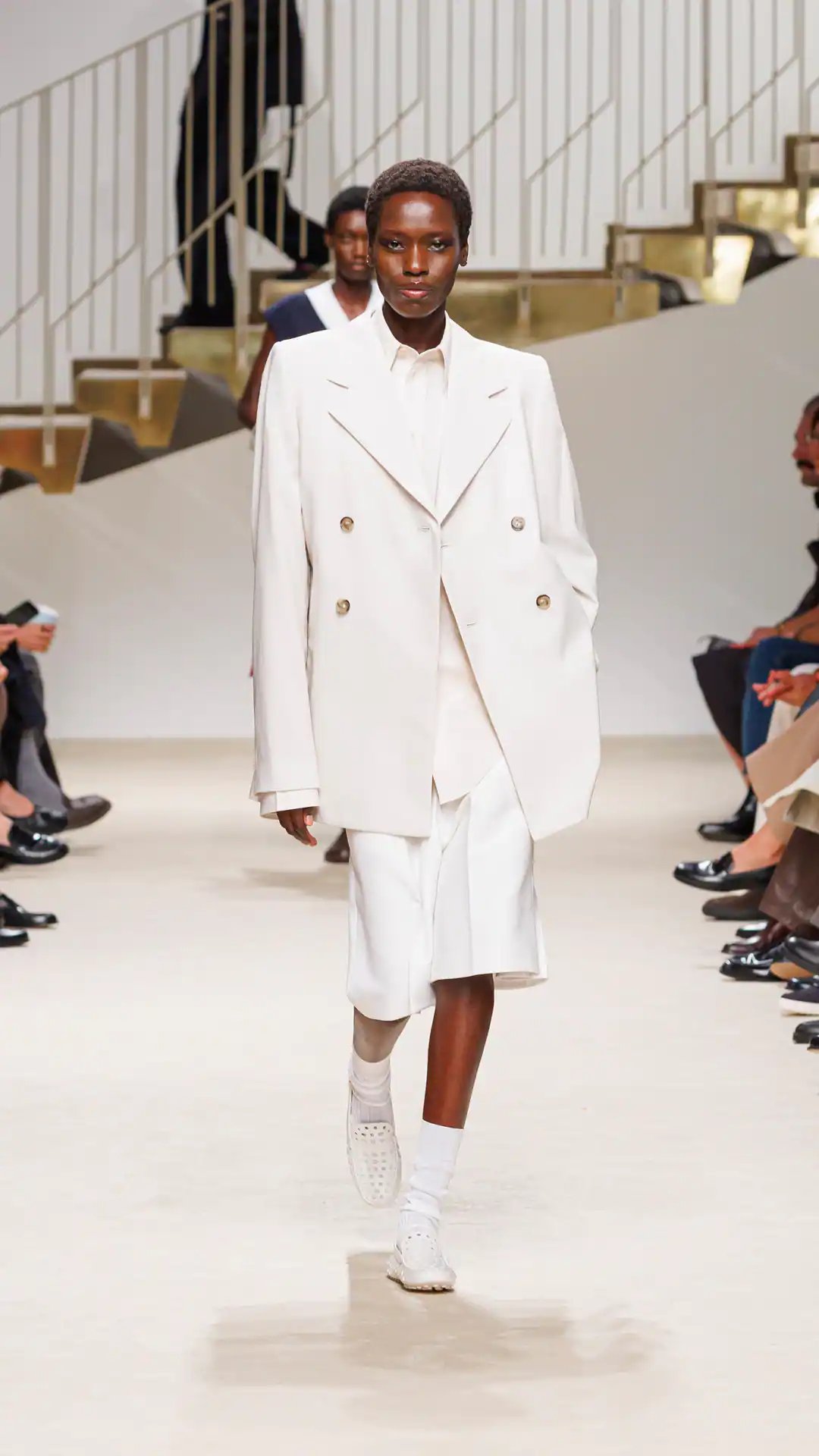
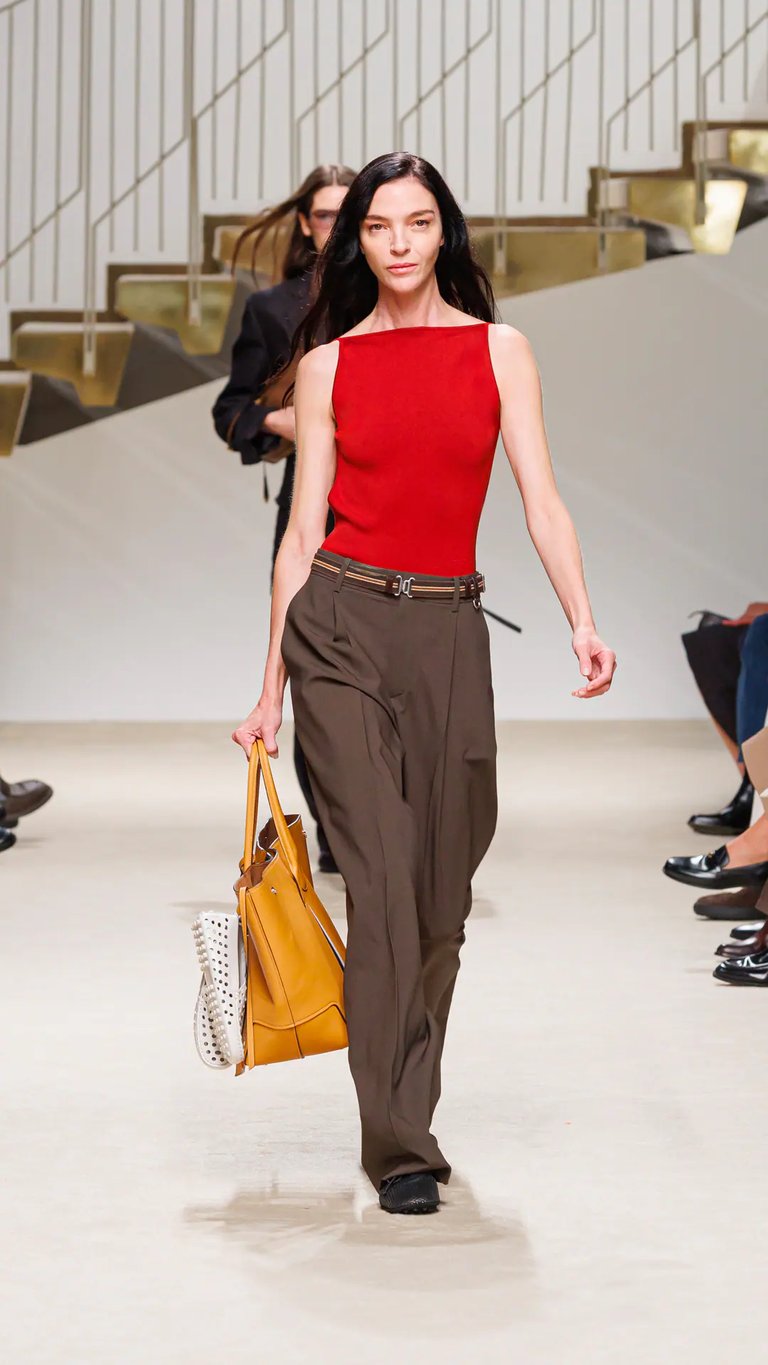
The color blocking throughout was more overt than prior seasons – midnight blue against scarlet nappa, ochre against white poplin, terracotta against cream – and the palette tracked directly from the stated 1990s axis. The references that mattered here were less runway or editorial than a particular register of authority: Turlington and Thurman and Sade represent a glamour that assumes intelligence rather than telegraphing it, dressed specifically rather than generically. The collection’s strongest moments worked because they read as current rather than referential. A midnight-blue sleeveless tunic paired with a scarlet nappa leather wrap skirt, cut into architectural cascading panels, was a contemporary proposition wearing its influences quietly.
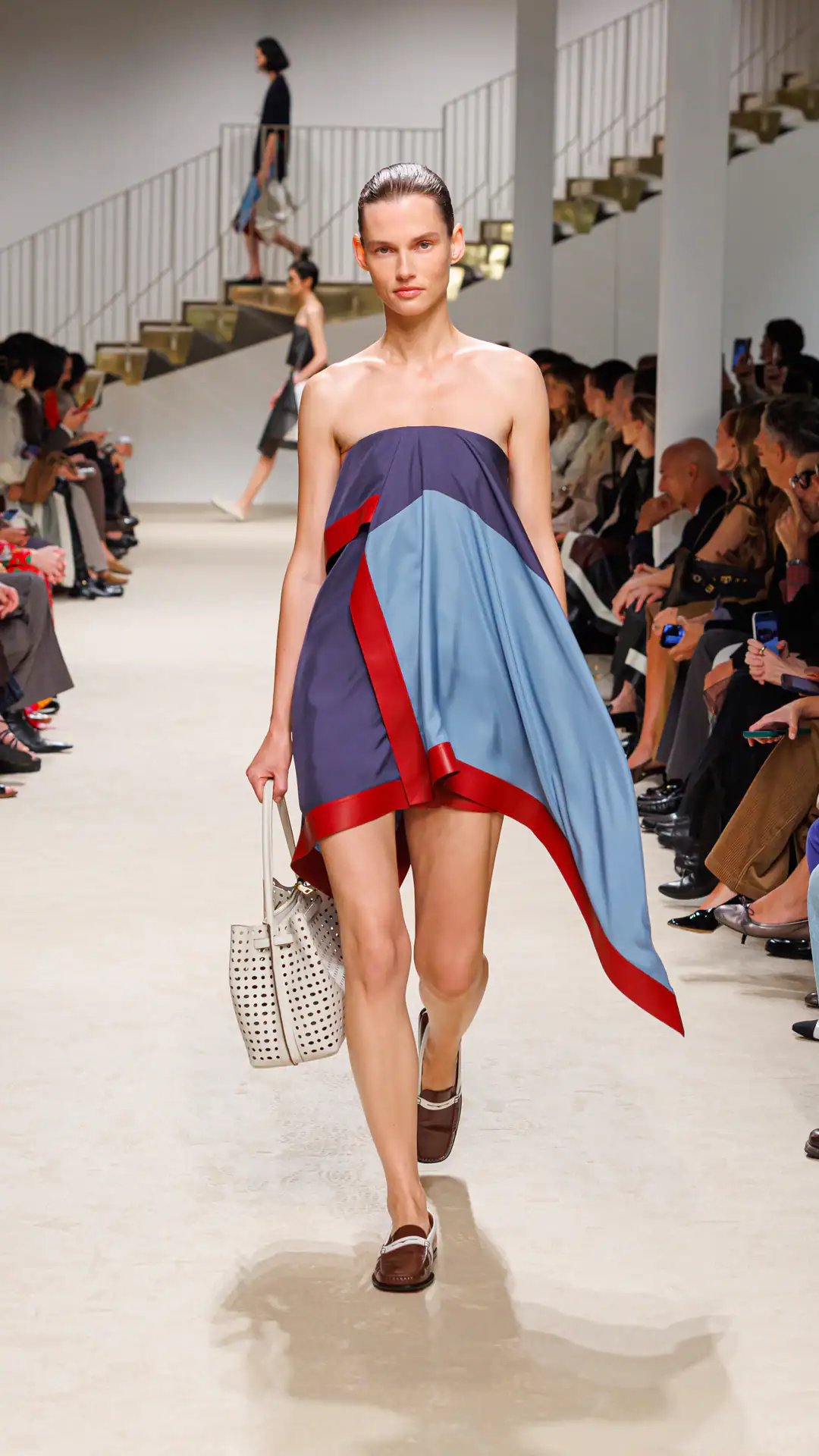
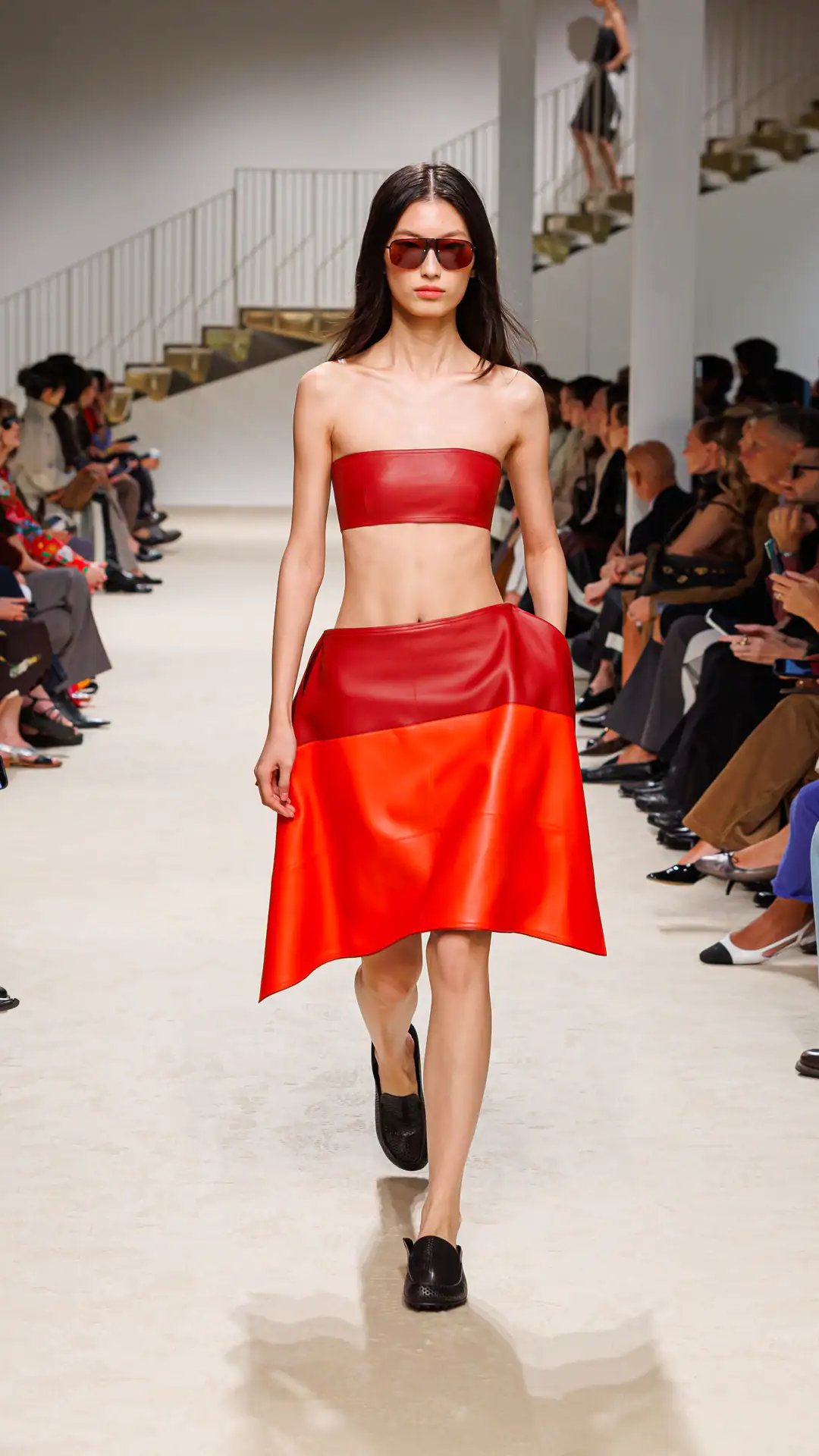
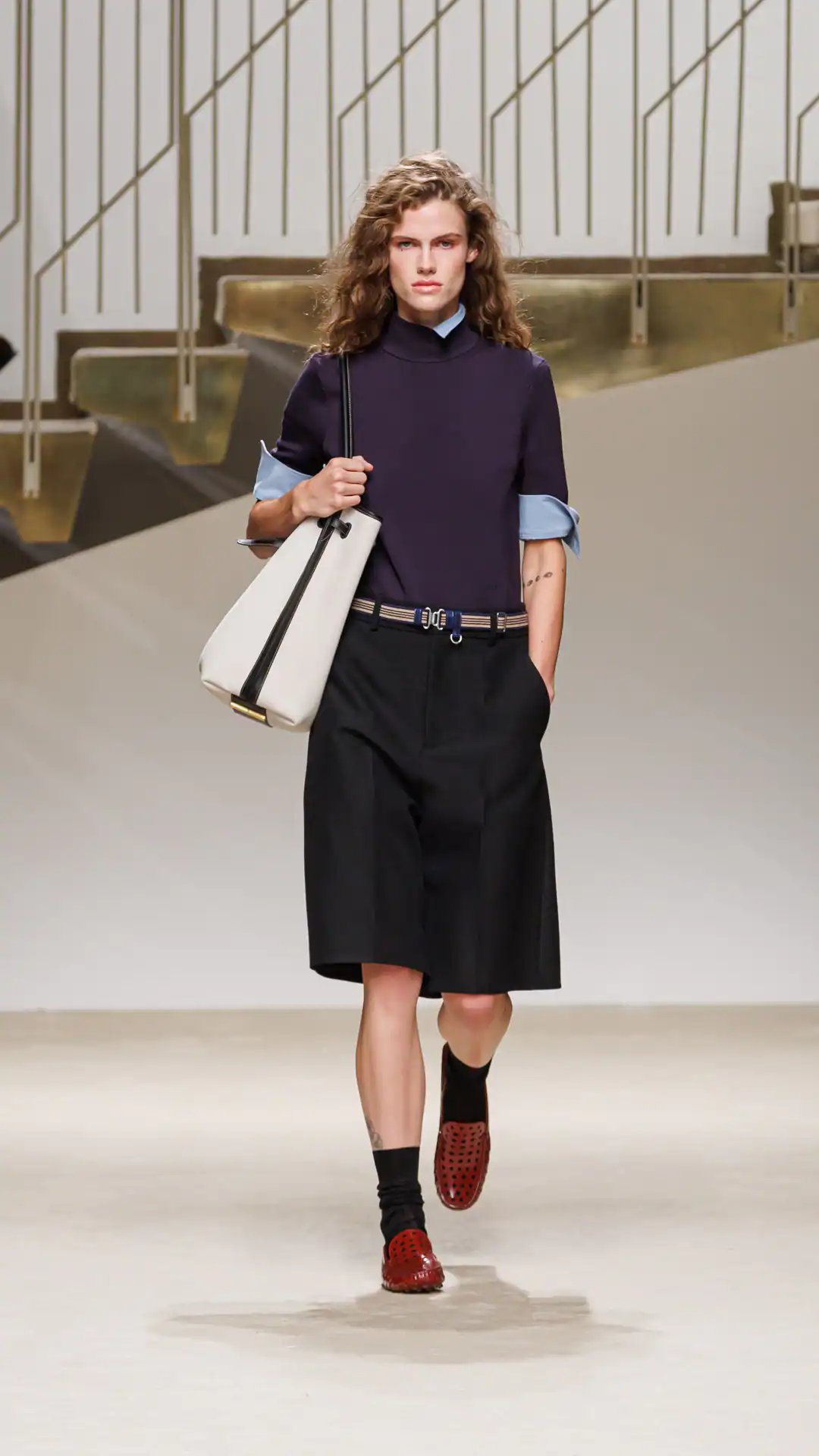
The collection lost discipline in its softer register. Flowy handkerchief dresses and knee-length shorts worn under roomy V-neck sweaters and body-hugging bombers felt like a different show – quieter and more conventional, without the formal pressure the structured pieces established. Leather skirts with angled flaps at the hips were technically accomplished but proposed a silhouette that could prove cumbersome in practice. These pieces read as concessions to a broader customer – understandable commercially, but they diluted the arc.
The accessories continued the now-established evolution of the Gommino: classic moccasins, perforated versions, hand-threaded multicolored leather loafers, a butter-yellow structured baguette, a two-tone translucent bucket bag. The T Timeless handbag’s continuous perforations produced an industrial graphic texture. The accessories category remains the line where Tod’s is most commercially legible and most immediately recognizable to a wide audience. Tamburini is not disturbing that – the ready-to-wear is now the territory where he is taking risks.
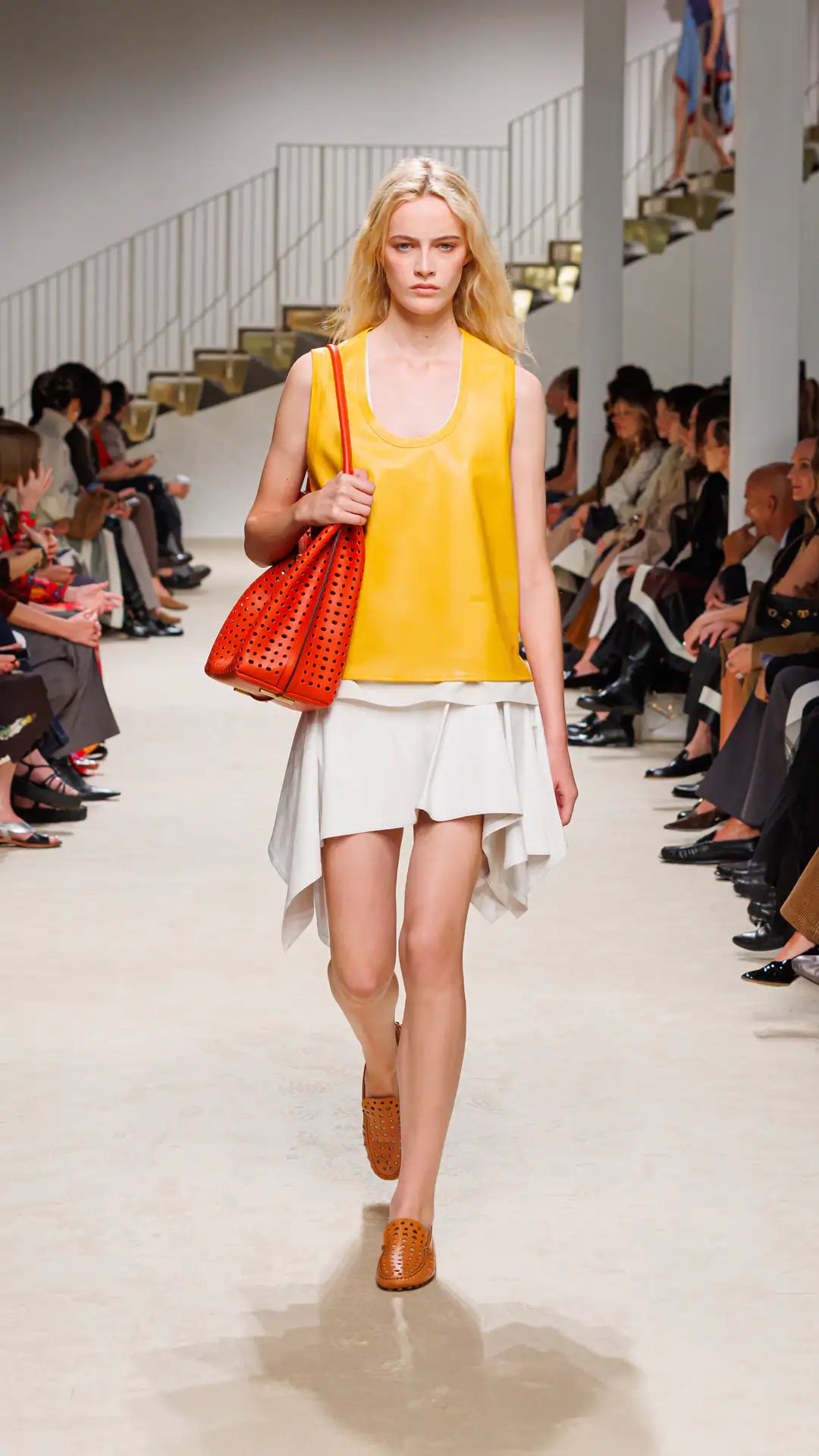
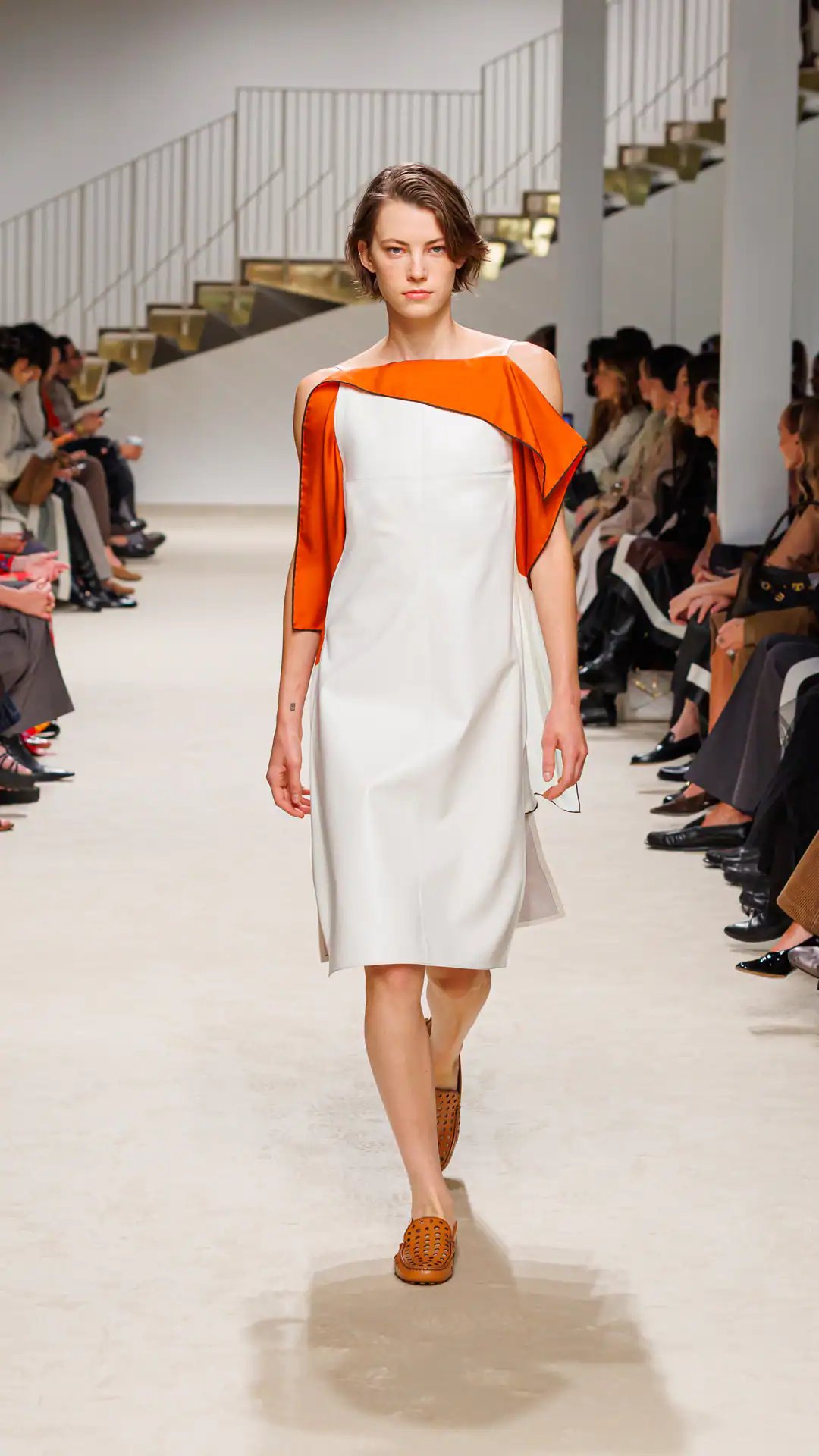
The collection established that Tamburini is no longer calibrating his work around the cautious center of the house’s appeal. The origami folding, the structurally perforated outerwear, the unhedged color blocking – these belonged to a house operating with genuine formal conviction. The question for next season is whether that conviction becomes the whole show or continues to share the runway with more accommodating programming.
See the complete collection below:
Images courtesy of Tod’s
In another fashion week news, Etro Spring 2027: Ready-to-Wear Collection at Milan Fashion Week