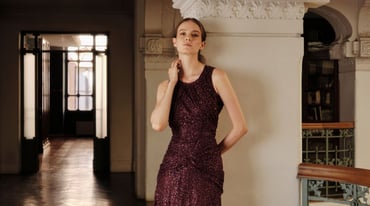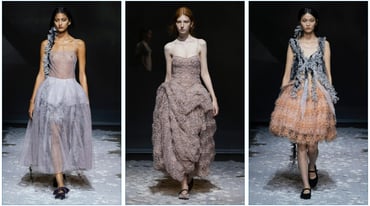


Etro’s in-house team staged the house’s first women’s runway since Marco De Vincenzo’s exit, walking a powder-to-aubergine collection through a Milan evening. The archive was read fluently. The case for it stayed quiet
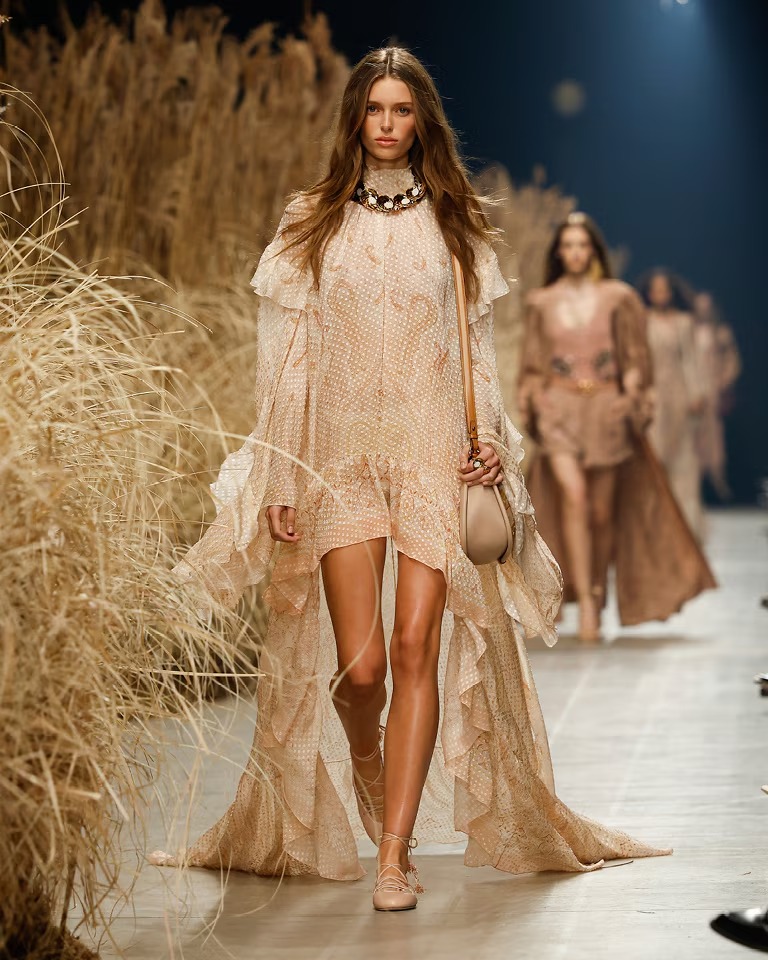
MILAN – The Etro show went up at 7 p.m. on Sept. 23, in a week that opened by testing houses with a designer at the helm. Etro does not have one. The collection walked at Piazza Lina Bo Bardi 2 under a single word, “Halo,” credited to the studio, with Ashley Graham and Madelyn Cline in the front row and nobody stepping out to take a bow.
That absence framed everything that followed. A runway can survive a transitional season. A house has a harder time surviving one.
A Day, Walked in Sequence
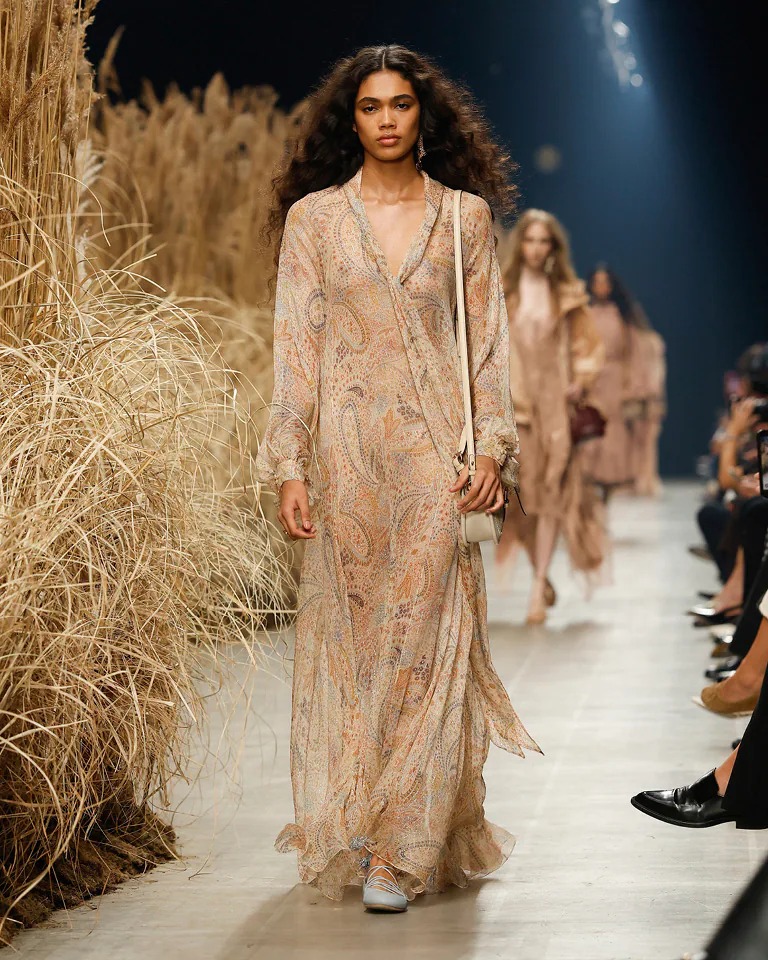
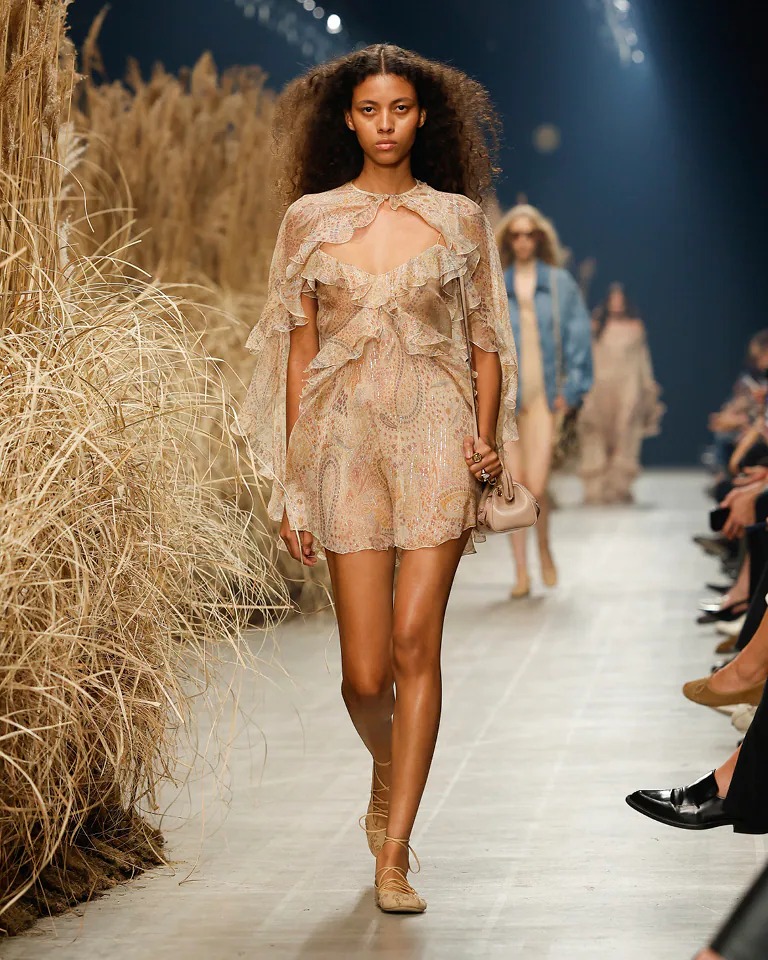
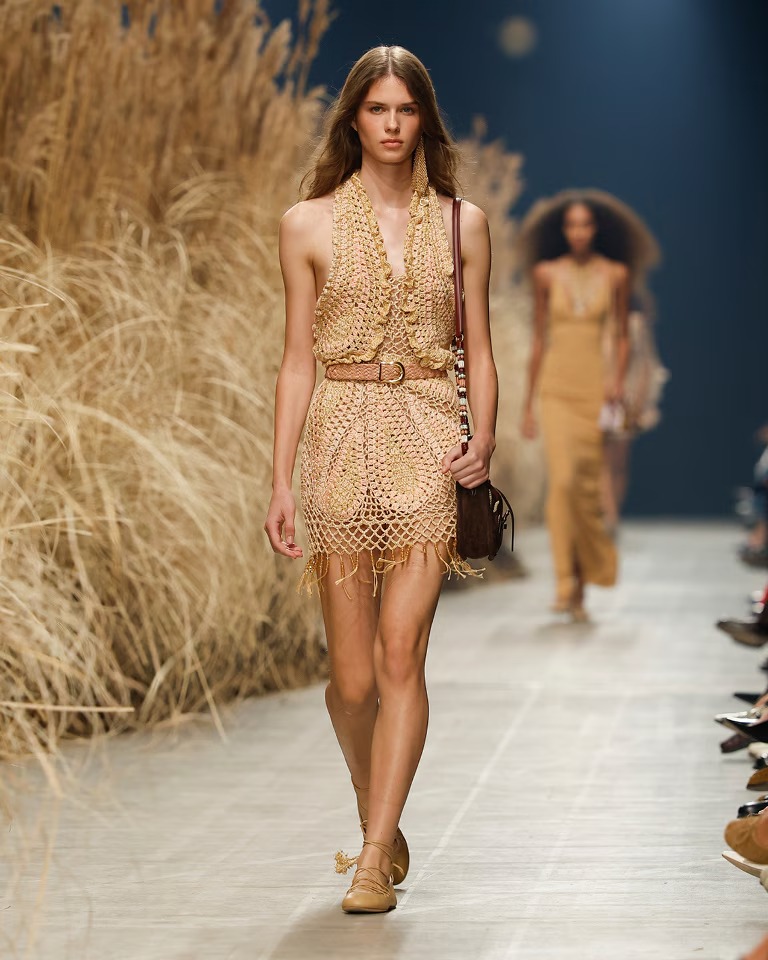
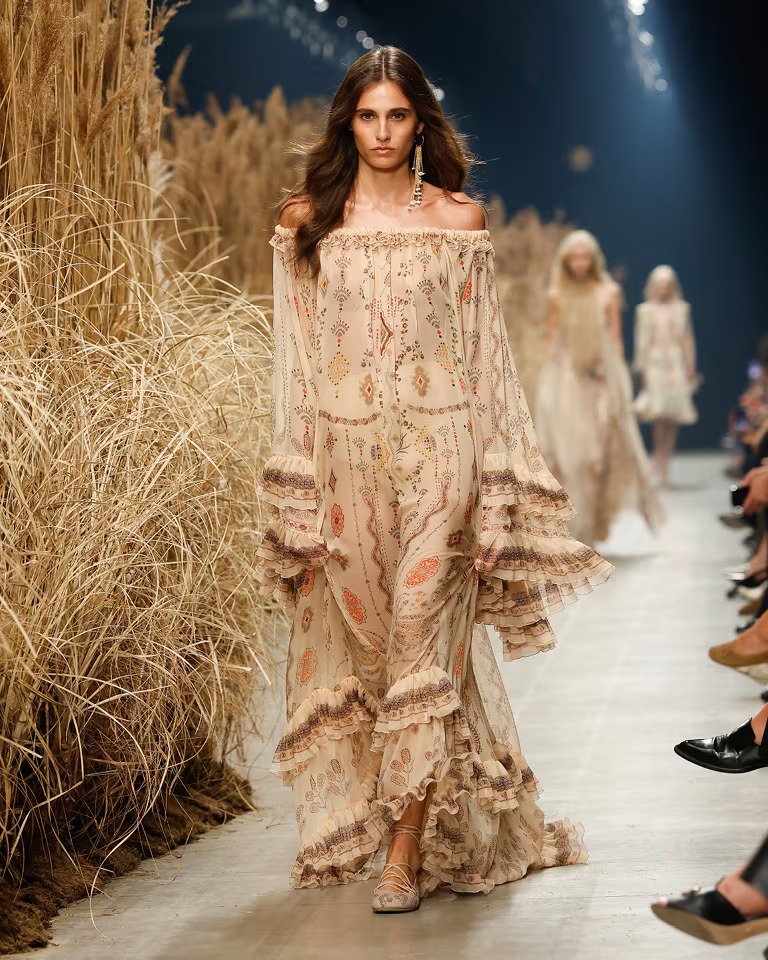
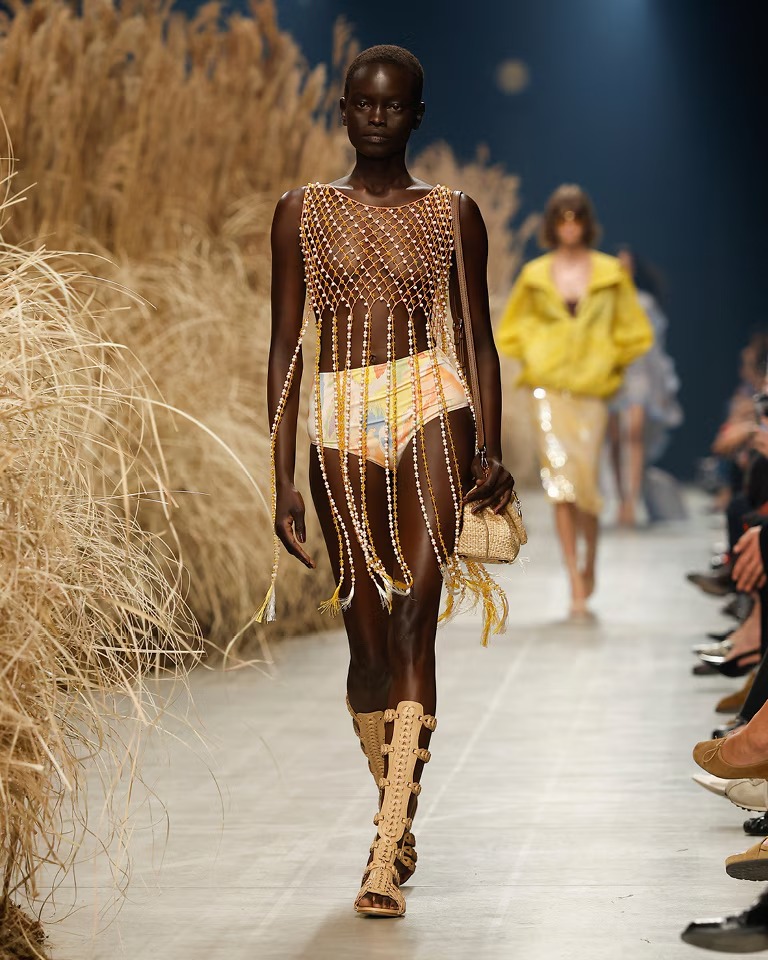
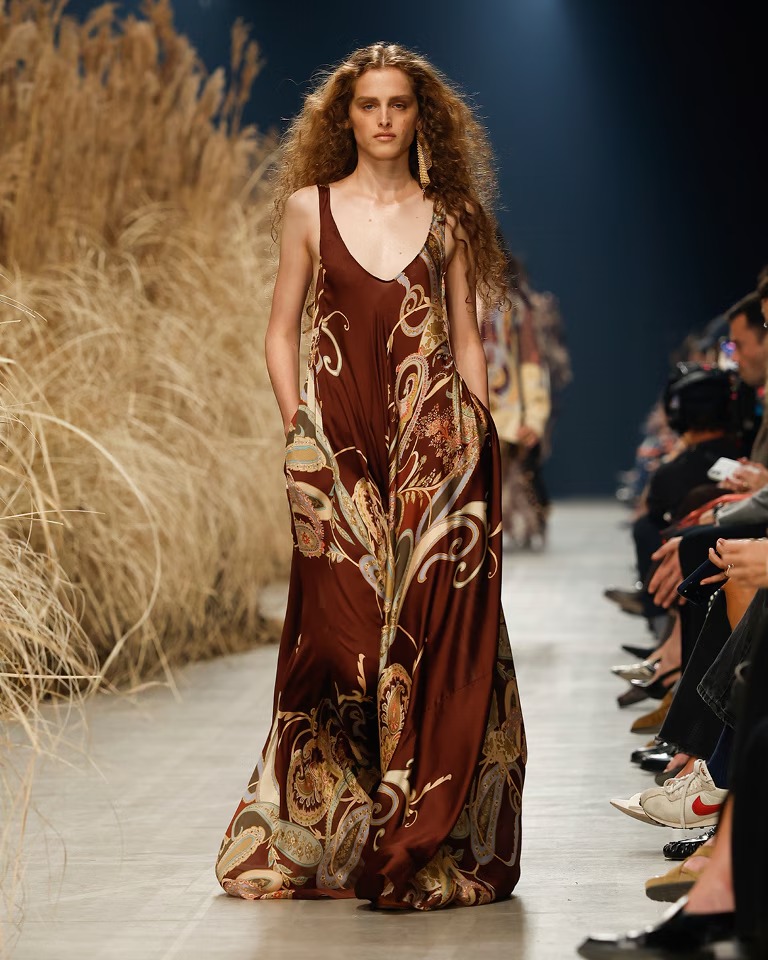
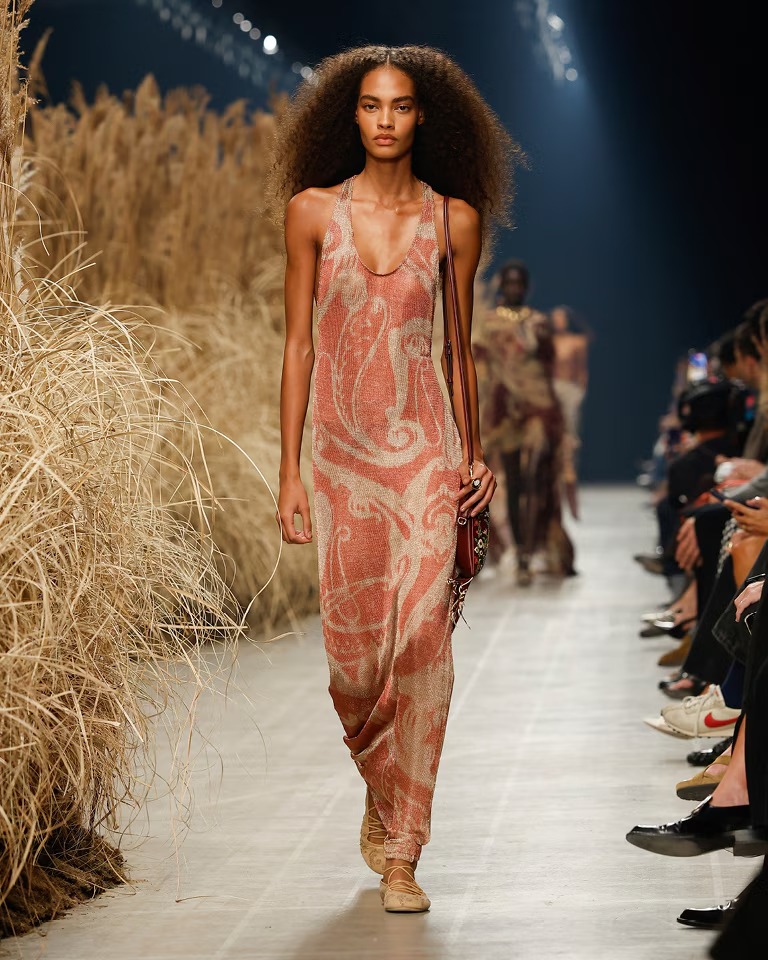
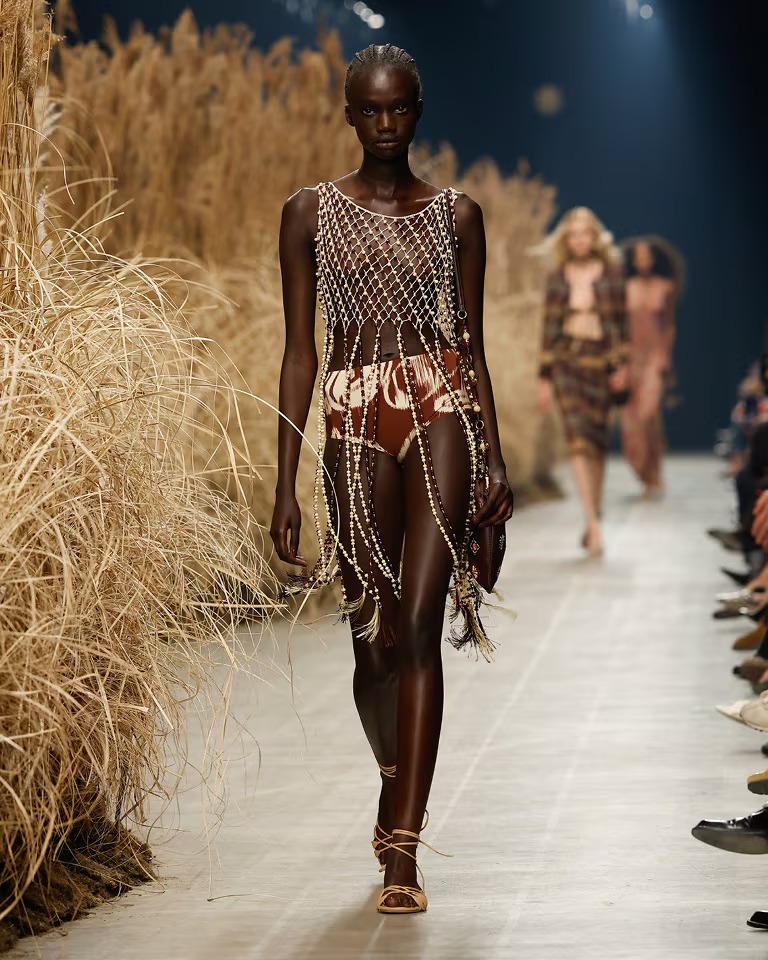
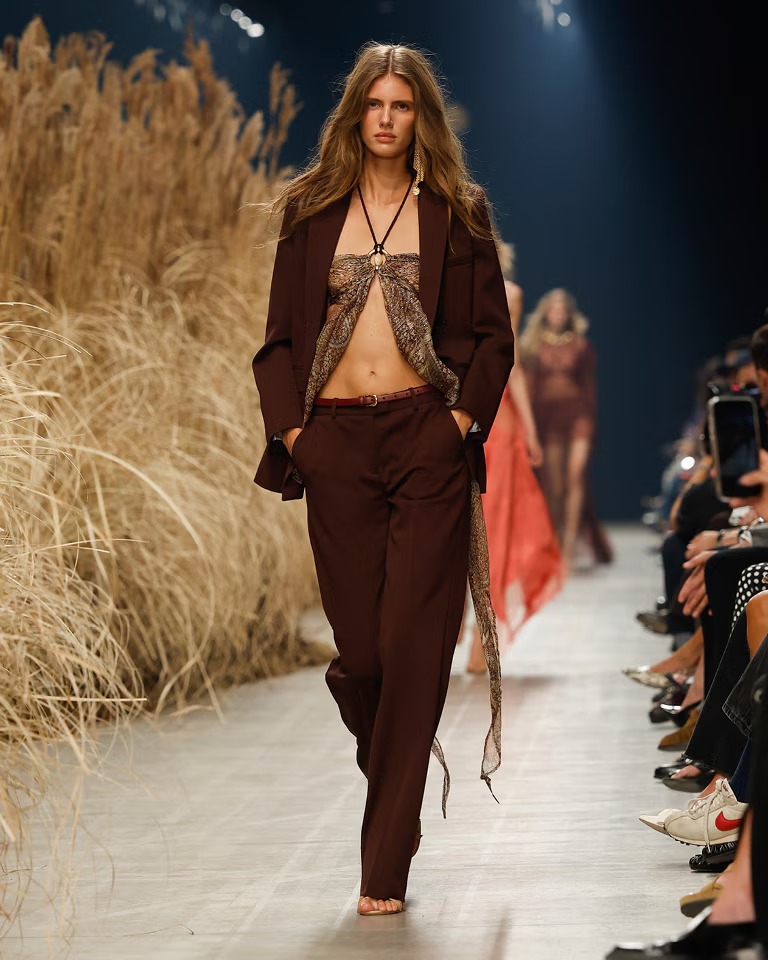
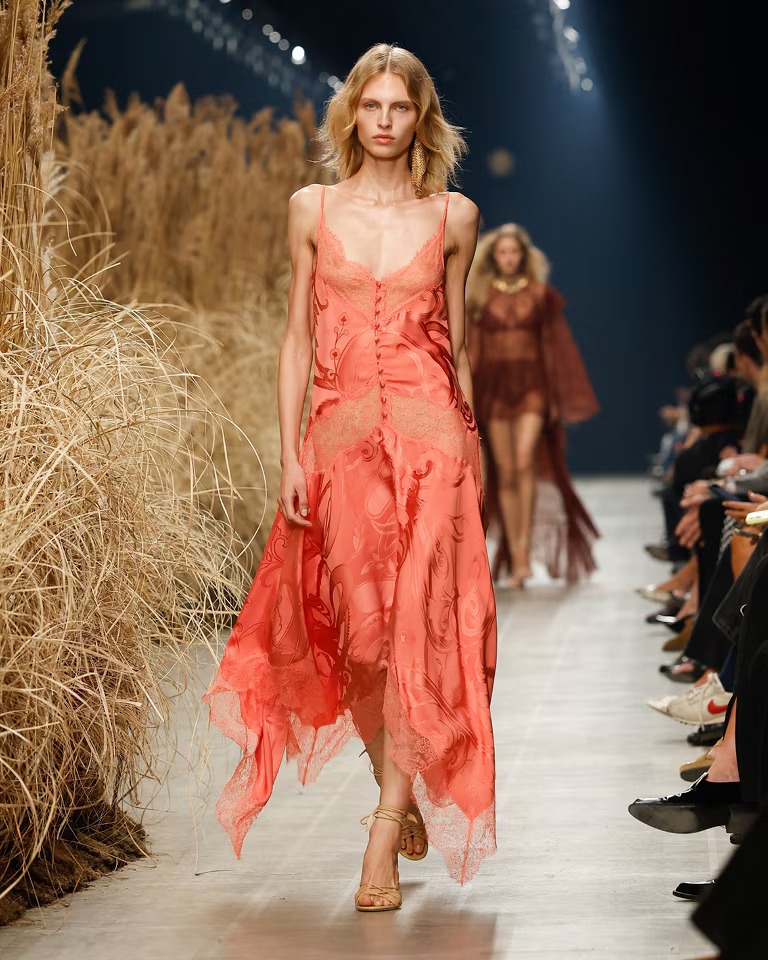
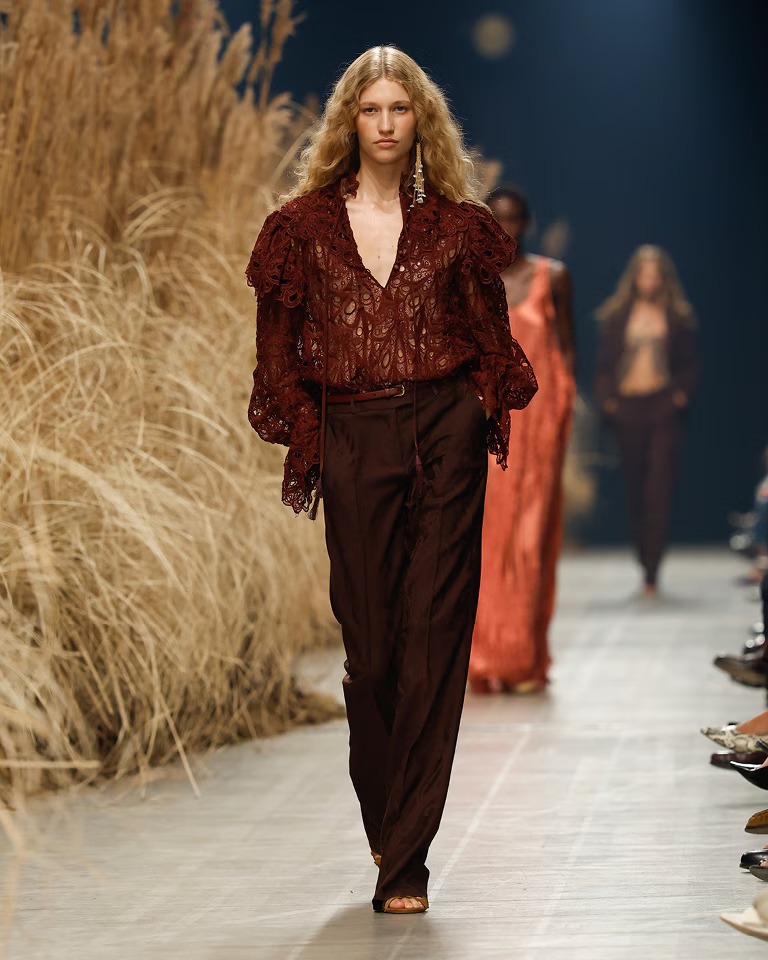
The title was the instruction, and the studio followed it literally. Where the pre-collection had set out to restate the house pillars plainly, spring let those codes hover over a woman’s day as an airy presence. The first exits came in powder and near-nude tones cut for morning: light knits, pale slips, nothing that asked for an evening. The palette warmed as the show ran, through yellow and orange, then cooled into blue and green, before the last passes arrived in burgundy, brown and black. Etro’s own description of the arc put the close in aubergine, and the final looks supported it.
Read that way, “Halo” is a day rather than a mood board, and the sequencing is the studio’s most disciplined move. It also set the collection’s central problem. A palette can carry an hour. It cannot carry a silhouette, and across the full run the shapes shifted far less than the colors did.
The Print, Taken Apart
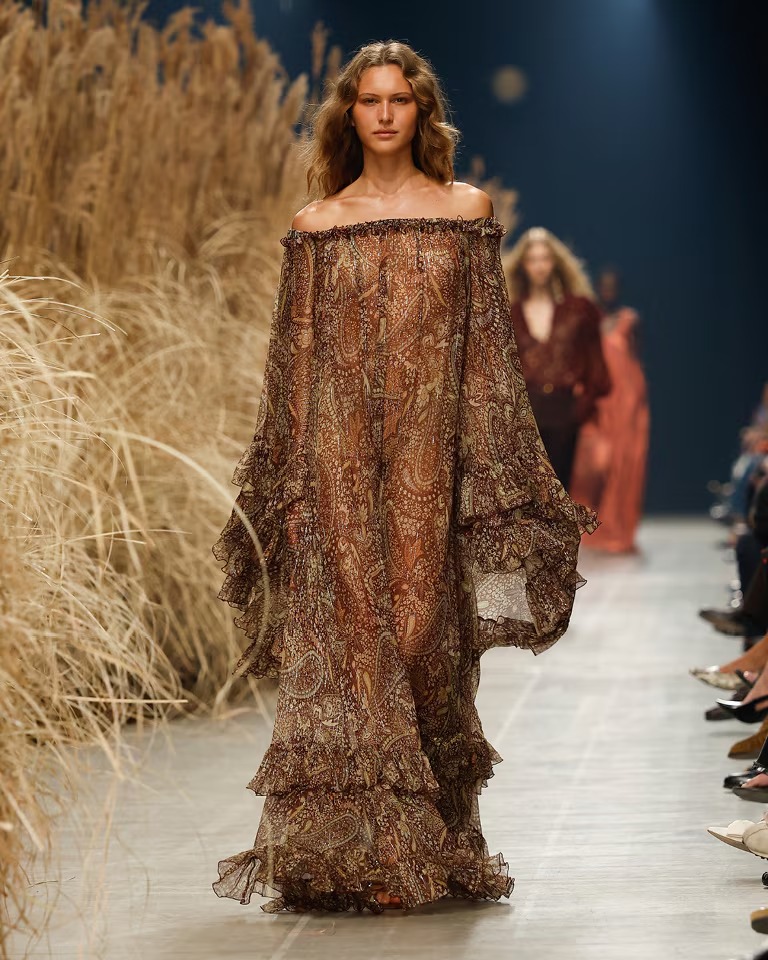
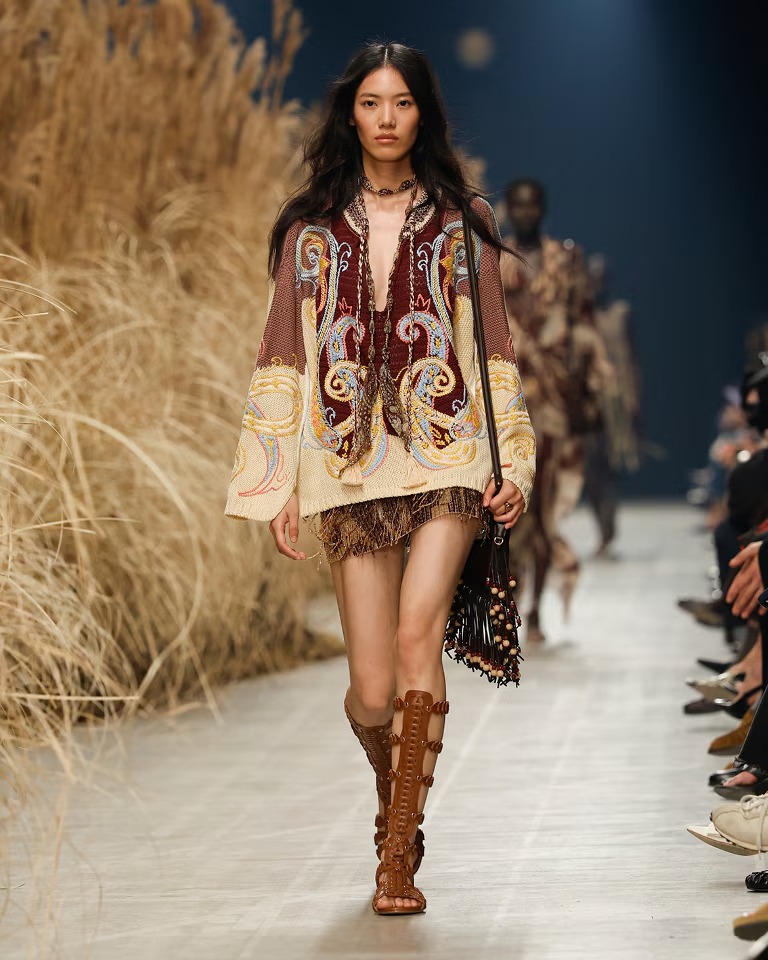
Paisley is Etro’s most valuable and most visible asset, which makes it the hardest thing in the archive to move. The studio’s answer was to blur it. The motif appeared across printed caftans and nylon windbreakers with the color pulled back, reading as a watermark rather than a statement.
It worked best on the outerwear. Suede and denim blousons reassembled the teardrop from tonal patches, building the shape out of separate pieces of hide and cloth instead of printing it whole. That is a construction idea, not a graphic one, and it is the one place this collection added to the house vocabulary rather than restating it.
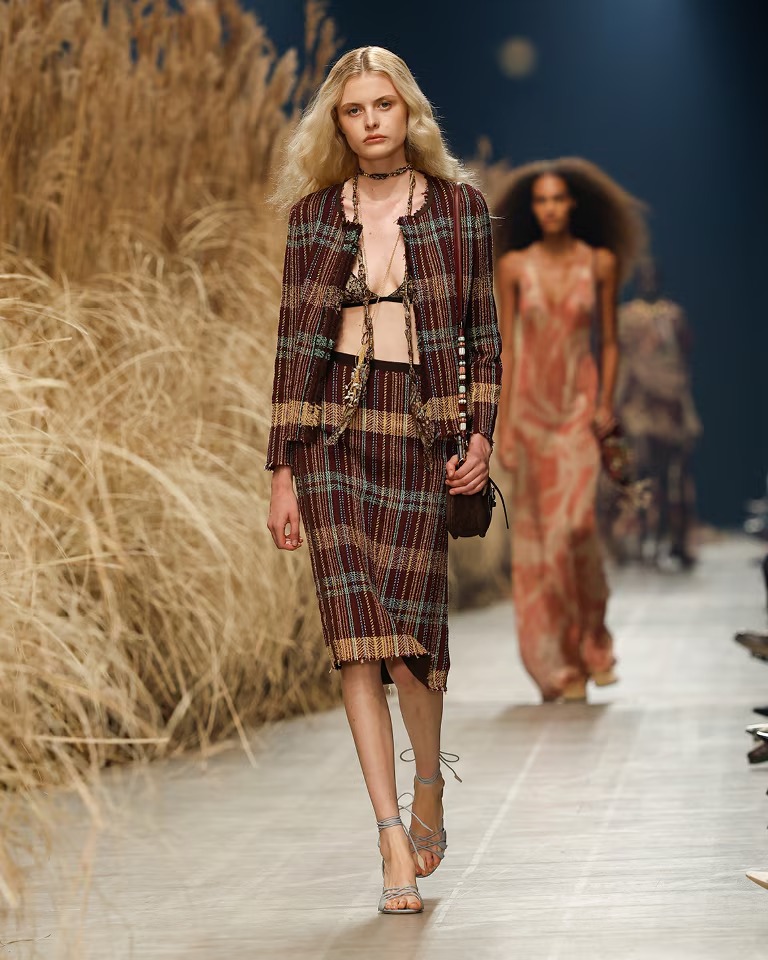
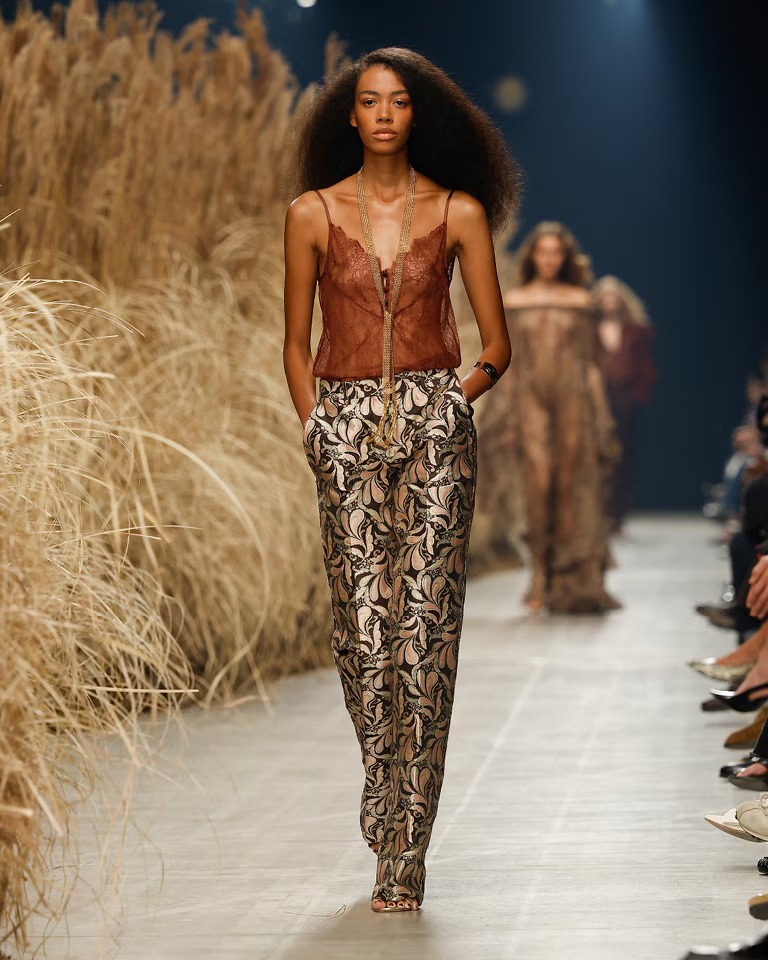
Between those looks came the categories the studio knows it has to serve: crochet dresses, ruffled shirts, jacquard trousers, lingerie-inspired tops and slip dresses, along with frilled dresses cut in fabric light enough to move, carrying the 1970s boho register the house has held since the decade itself.
Ground Level
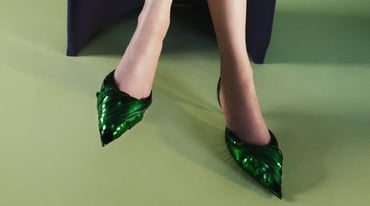
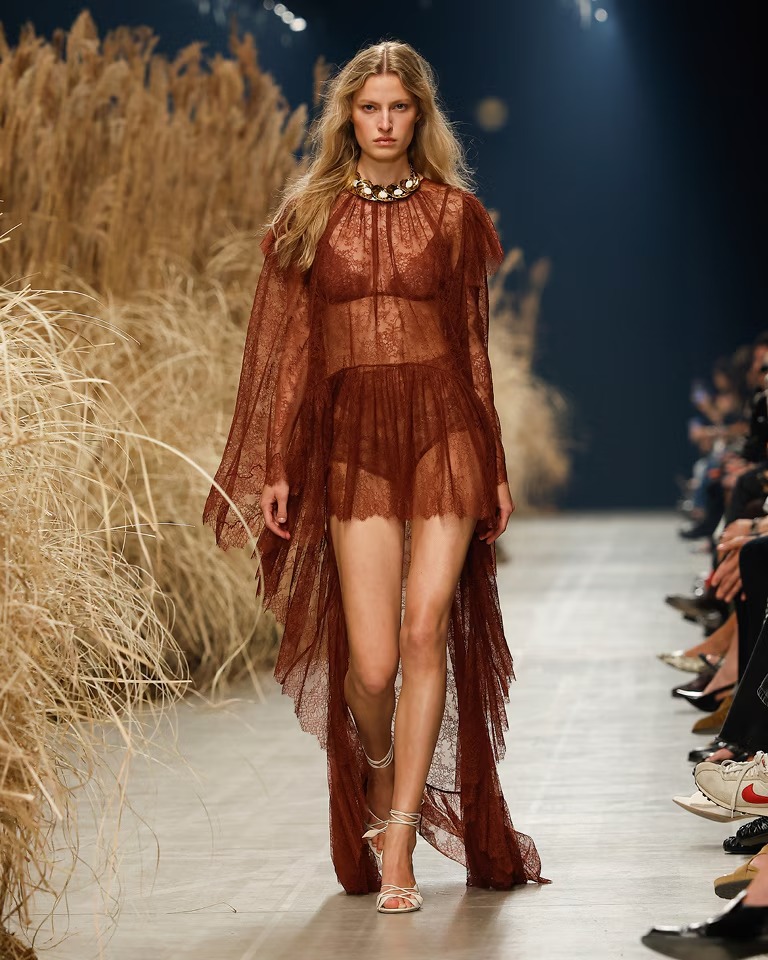
The styling kept the volume low. Dresses skimmed the body and fell into long trains, layered with fringe and sheer panels that moved with each step. Against them, the studio set ballerina flats, gladiator sandals and leaf-edged cone heels, with slouchy boho bags and patchwork denim jackets holding the looks to the floor.
Footwear is where a light-touch season usually announces itself, and flats were the right call for the morning half. It also flattened the read. When every look lands at the same distance from the ground, a color story stops translating into a change in posture.
The Same Method, Twice
Etro’s men’s show in June ran a version of this argument at the Museo della Scienza e della Tecnologia, set among vintage locomotives and tram replicas. Paisley and stripes arrived there with the studio’s intended immediacy and landed as a restatement. Two collections, one method: fluent in the codes, careful about extending them.
The archive will keep supplying material. Etro began in Milan in 1968 as a textile house founded by Gerolamo “Gimmo” Etro and built on silk, wool and cashmere. The house established a library of rare books in 1974. The paisley entered the line after a 1981 trip to India, and the house now holds about 150 paisley shawls dating from 1810 to 1880.
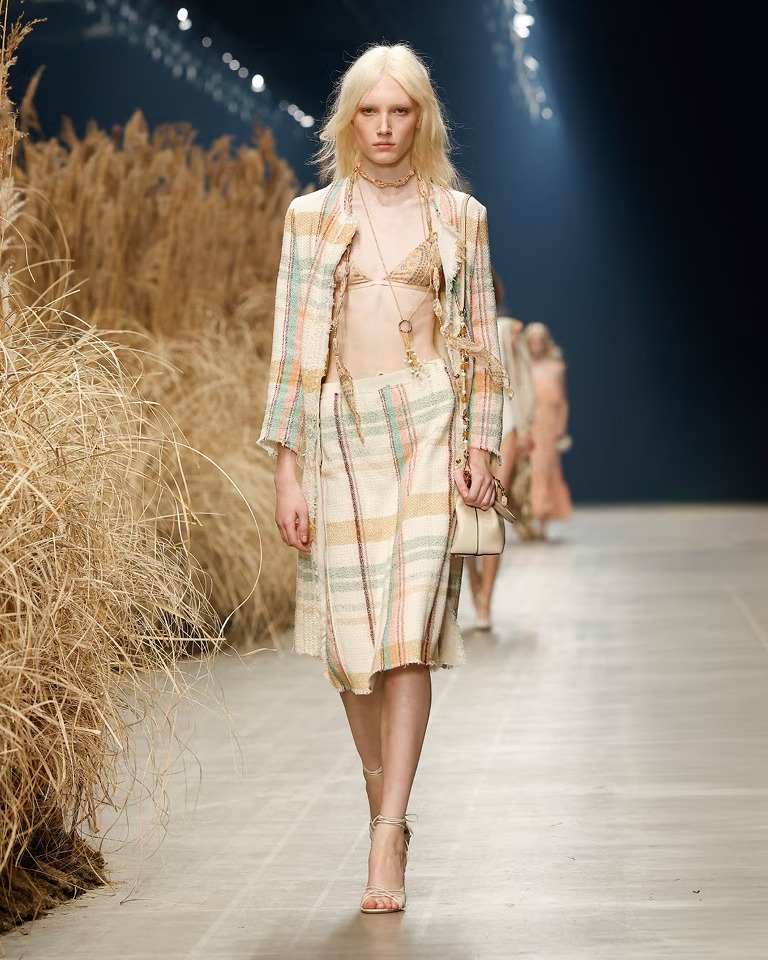
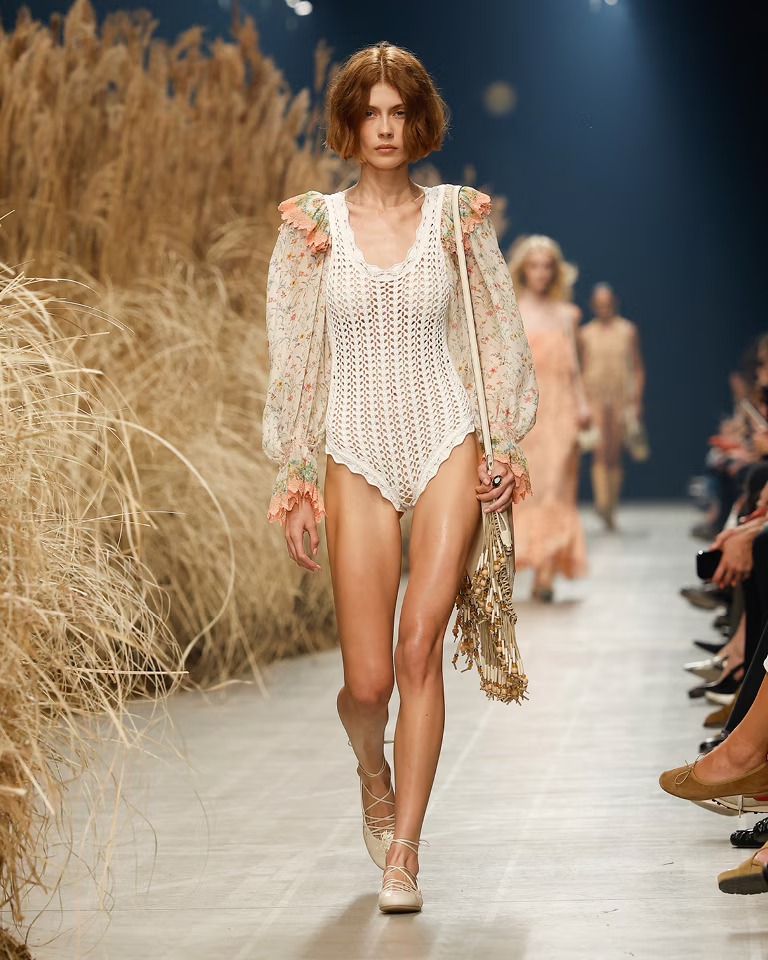
Cohesion was the cost. The studied palette and the familiar signatures reassured, and the collection’s lightness cost it the through-line that turns a runway into an argument. The looks shared a set of colors and a register, not a silhouette. Set against the patched outerwear and a handful of sharp tailored pieces, the evening looks arrived without a position.
Then there is the business underneath. Marco De Vincenzo’s departure was announced on March 12 after almost four years, and no successor has been named. L Catterton, backed by LVMH, remains the majority owner. The founding family sold the shares it still held in December 2025 to a group including Turkey’s RAMS Global, with Faruk Bülbül taking the chairman’s seat and Fabrizio Cardinali staying on as chief executive. The most recent filings with local chambers of commerce put net revenues at €245 million, down from €261 million, and the net loss at €23 million.
A house in that position needs a season that argues for its own future. This one argued for its past, and argued it well. Etro’s history and its traveling instinct mean the brand can sit almost anywhere. What it needs now is the person who reads the compass, and a studio can hold the needle steady only so long.
See the complete collection below:
Images courtesy of Etro
In another fashion week news, Fendi Spring 2027: Maria Grazia Chiuri Finds Freedom in Lingerie