
Rizzo and Messina’s debut stages a democratic provocation on a Milan parking garage rooftop and proves its case in moments — but the collection’s safer instincts undercut what the concept promises
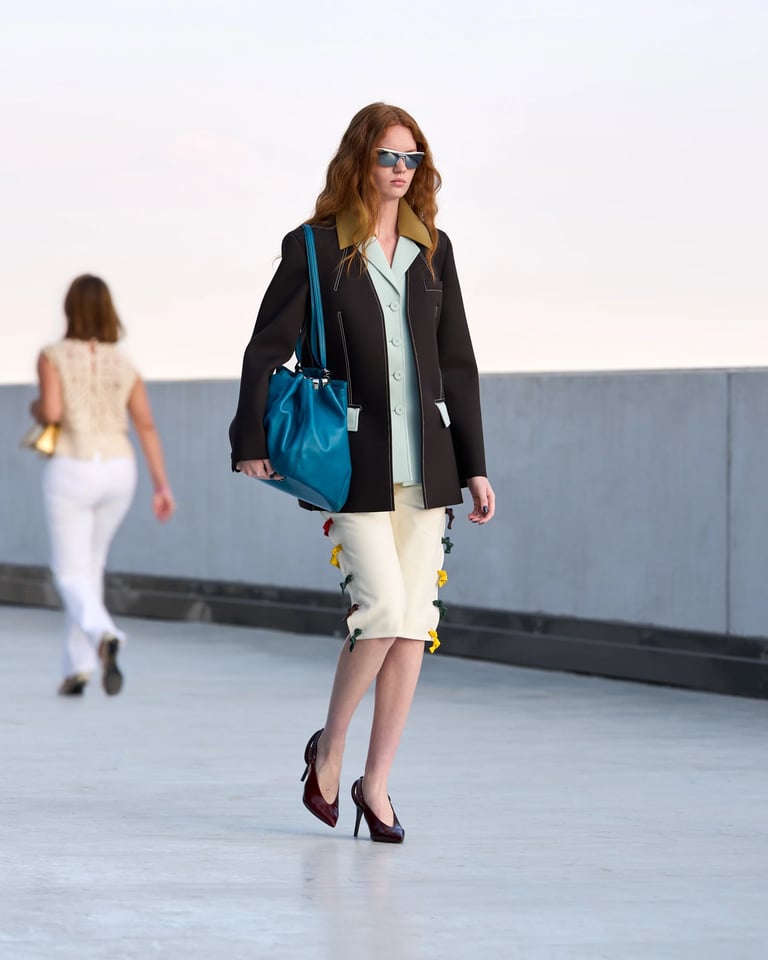
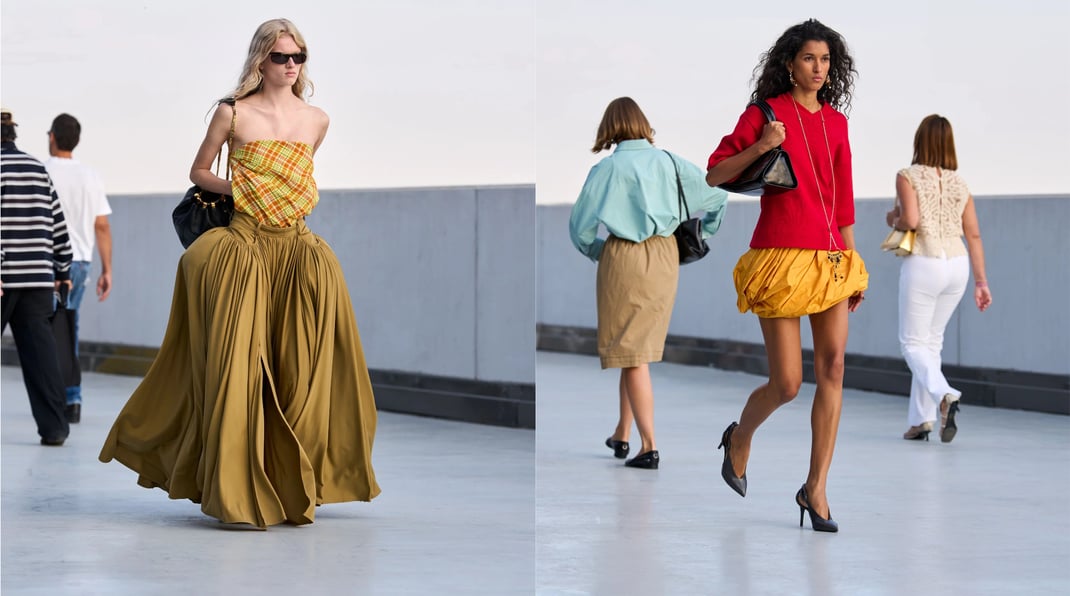
MILAN — Simone Rizzo and Loris Messina opened their first Moschino collection on the roof of a parking garage in the city’s outskirts, at golden hour, with roughly 100 street-cast Milanese – children, bicycles, cell phones, a drag queen, a gym regular – walking against the flow of the models. The crowd moved through the show and the models moved through the crowd, and neither stopped for the other.
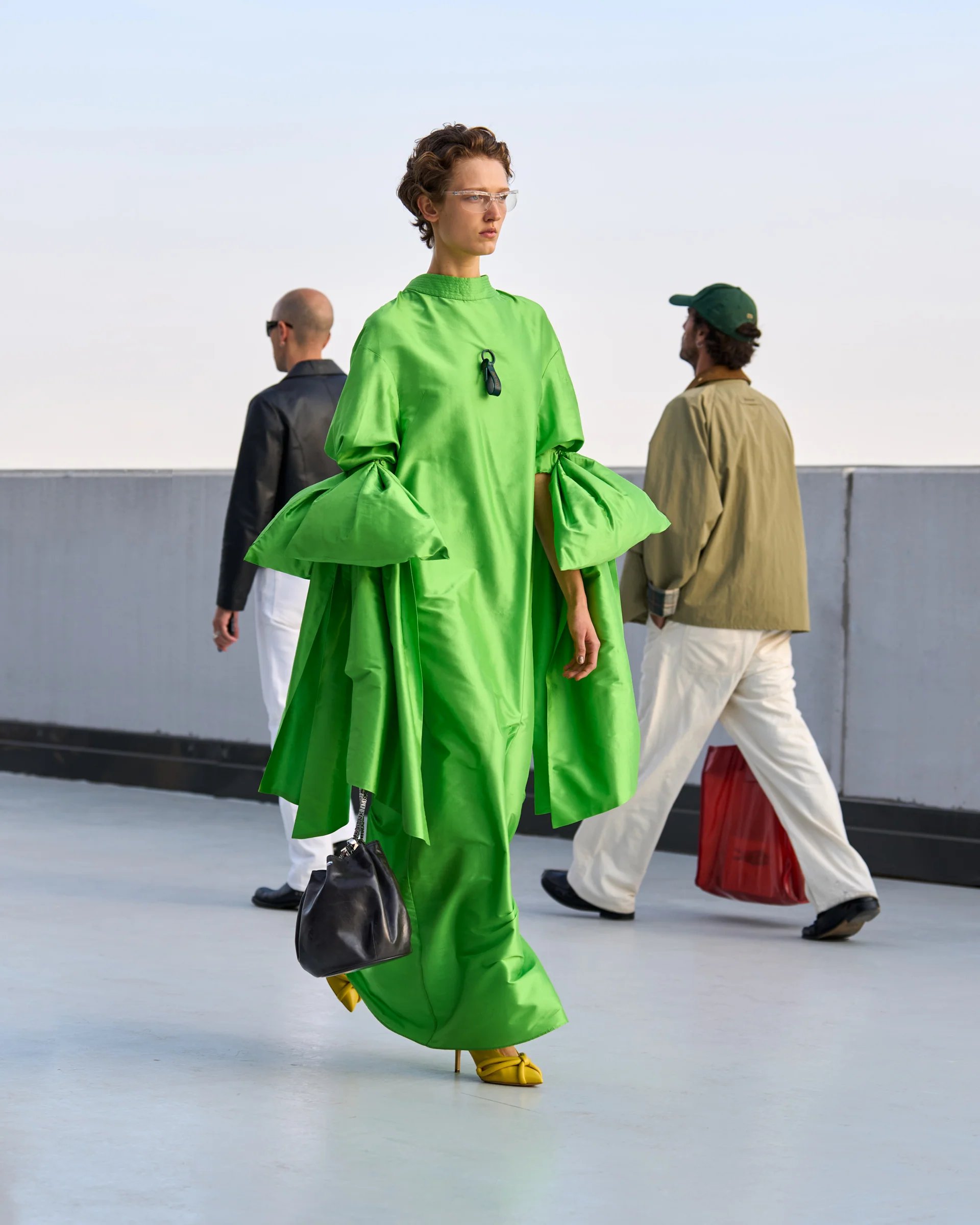
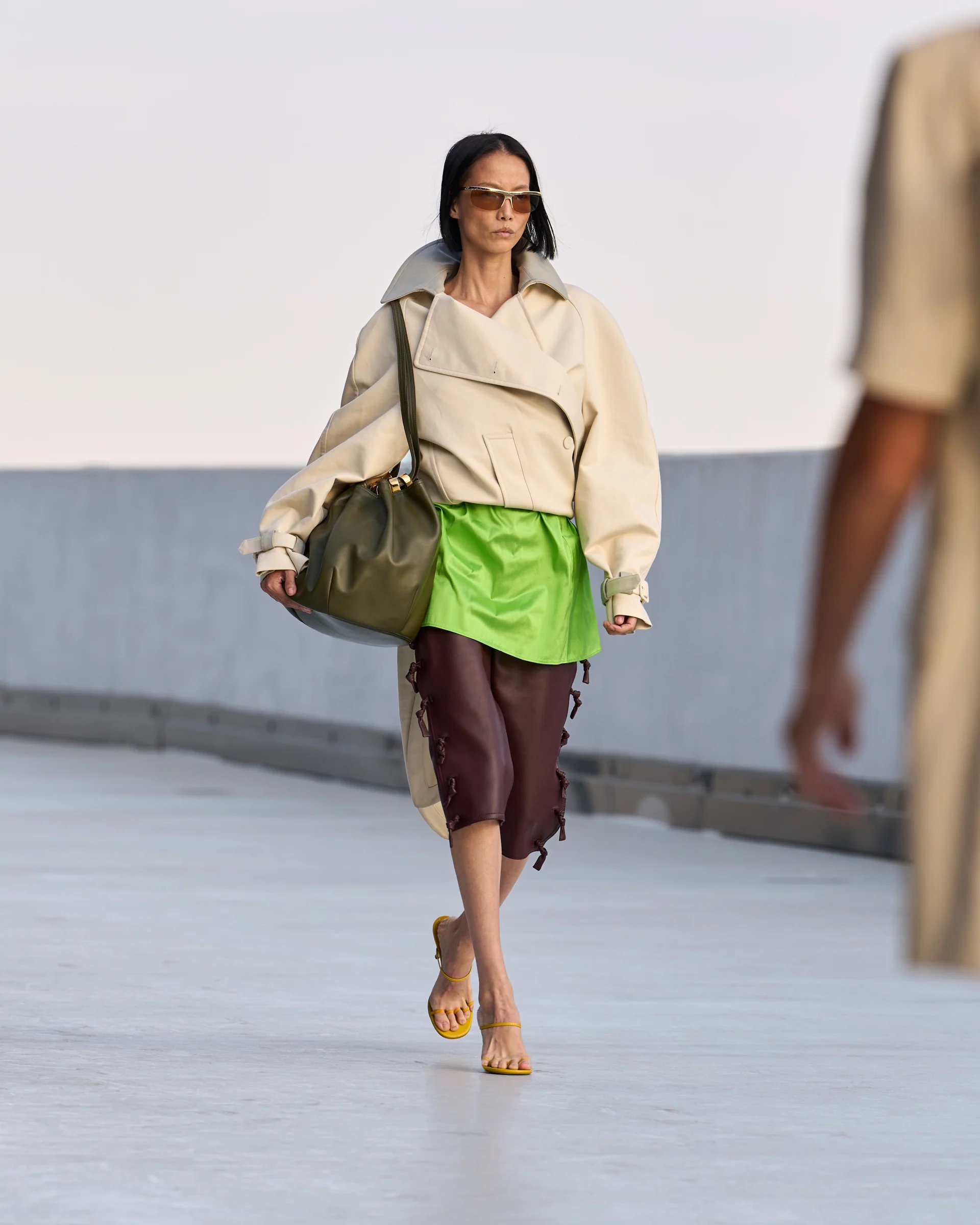
The concept was crisper than anything in the collection. Rizzo and Messina, who built Sunnei around format experimentation since founding the label in 2014, know how to stage a proposition. The press notes named it plainly: “Reignite Moschino without imitating it,” with a second line insisting that “a clear universal present-day language is needed.” Both mantras were more persuasive than most of the clothes that followed.
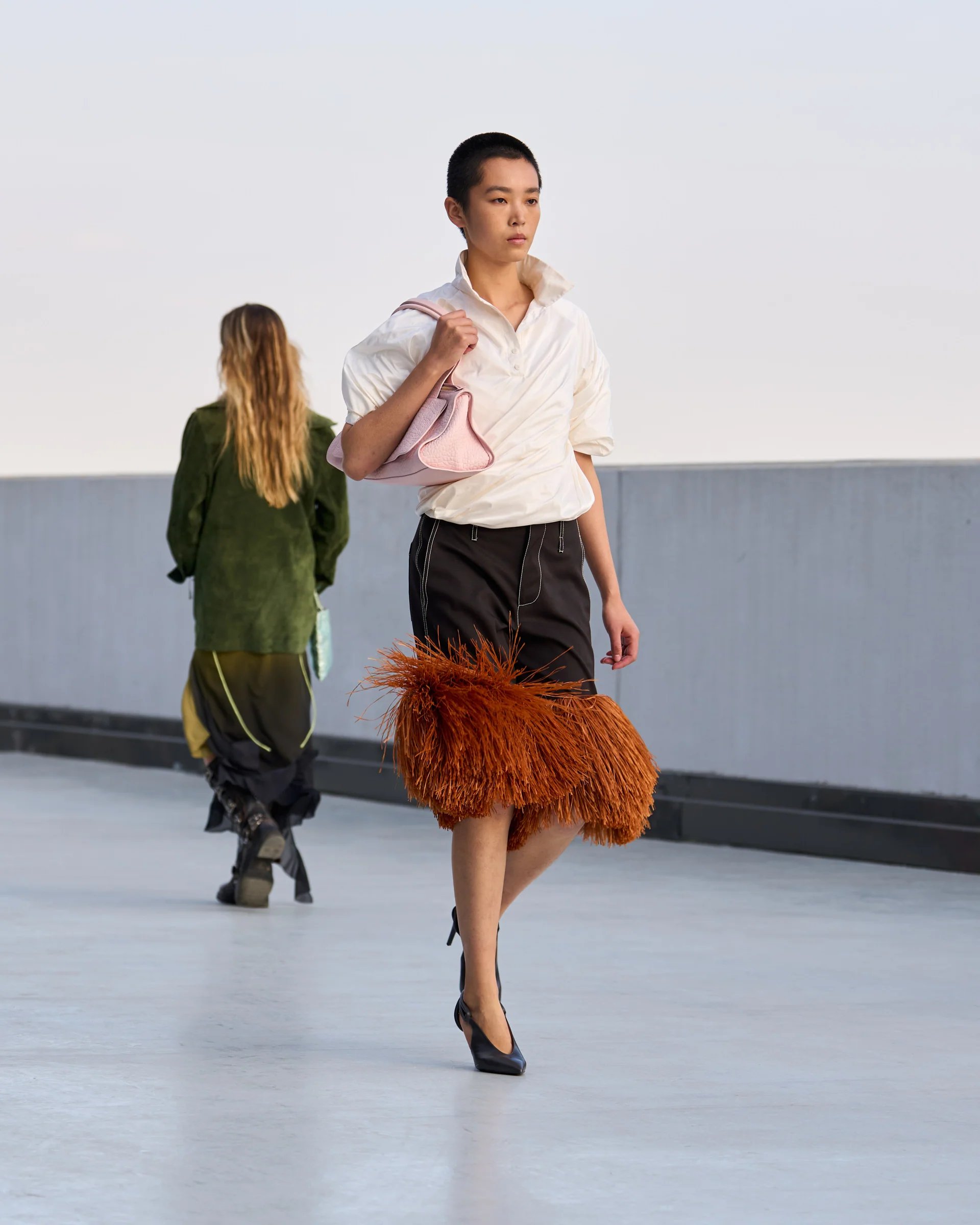
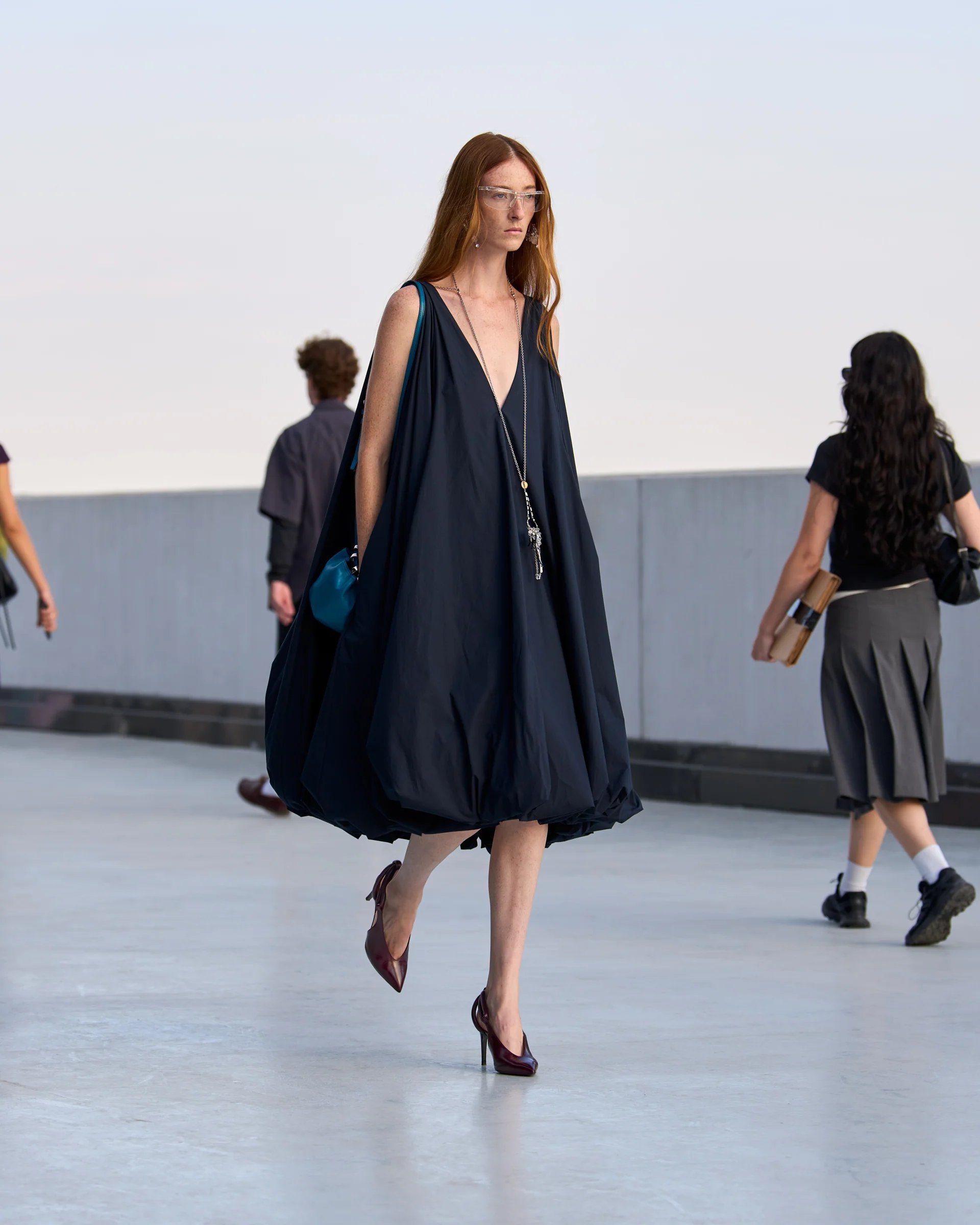
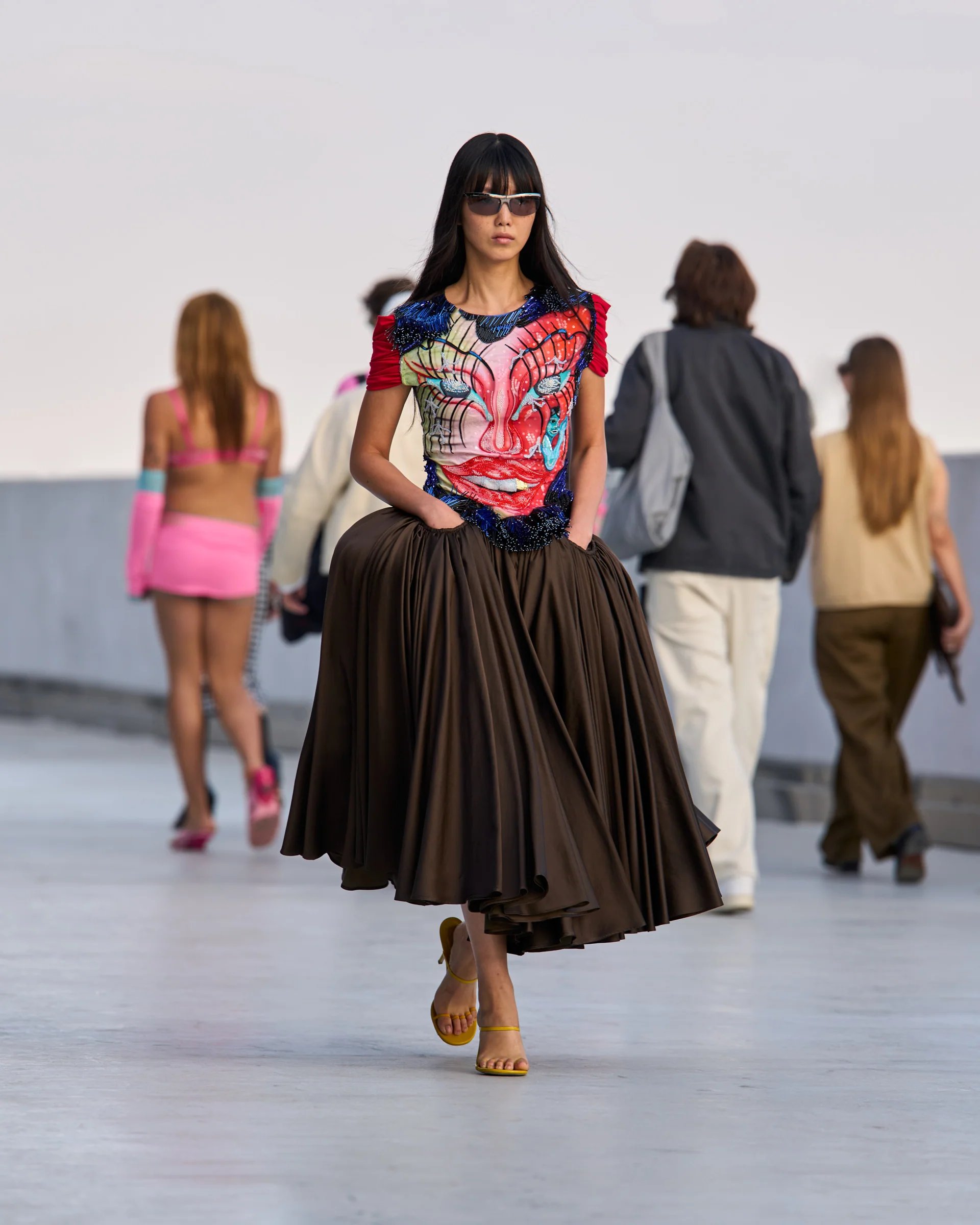
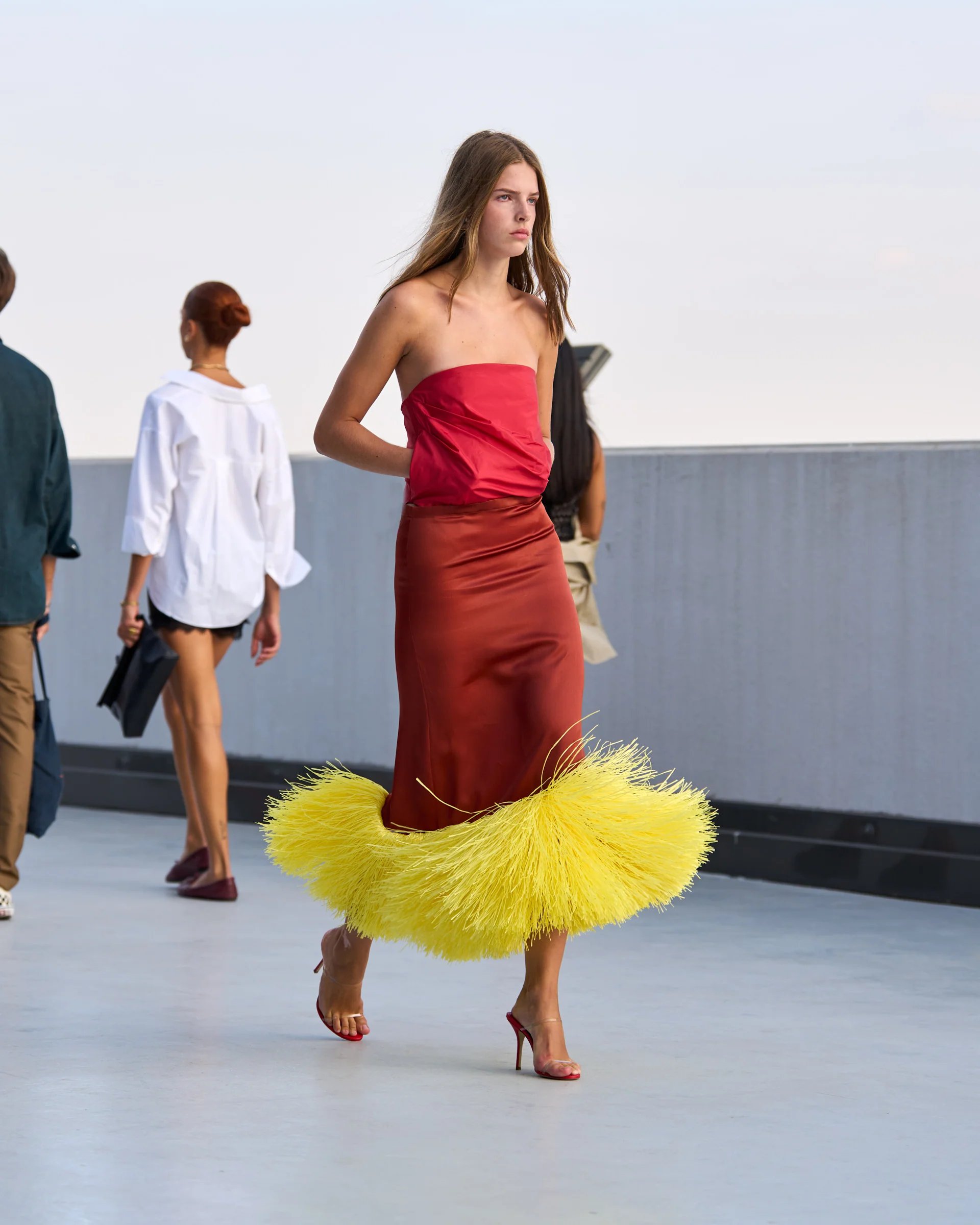
The ironic slogans, visual puns and camp overstatement of the Jeremy Scott and Adrian Appiolaza years were largely dialed back – deliberately. What replaced them was a colorful urban wardrobe moving between saturated color blocks and quieter neutrals, with the most convincing silhouettes arriving in skirts and dresses where the hip was dramatically extended, lifting the proportion of an 18th-century pannier and stripping it of any aristocratic register. Those looks made an argument. So did the rigid black-cat-shaped bag carried casually over one shoulder – familiar enough to read immediately, strange enough to stop you. That is the Moschino mechanism Franco Moschino built the house around in 1983: the object of desire that quietly jokes about the desire. A “GOOD LUCK” T-shirt, a slogan the duo had introduced at Vogue World: Milano 2026 earlier this season, landed on the same register.
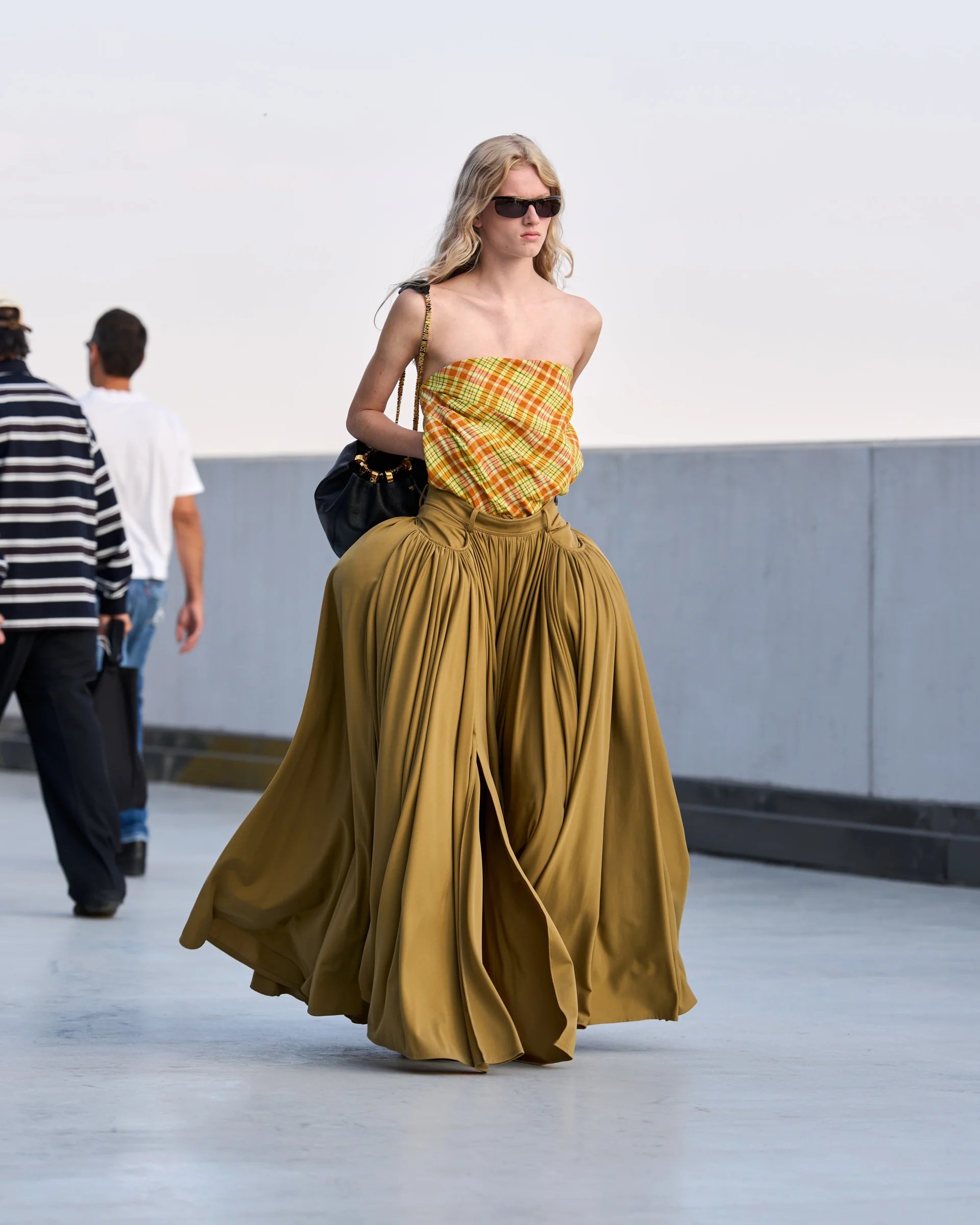
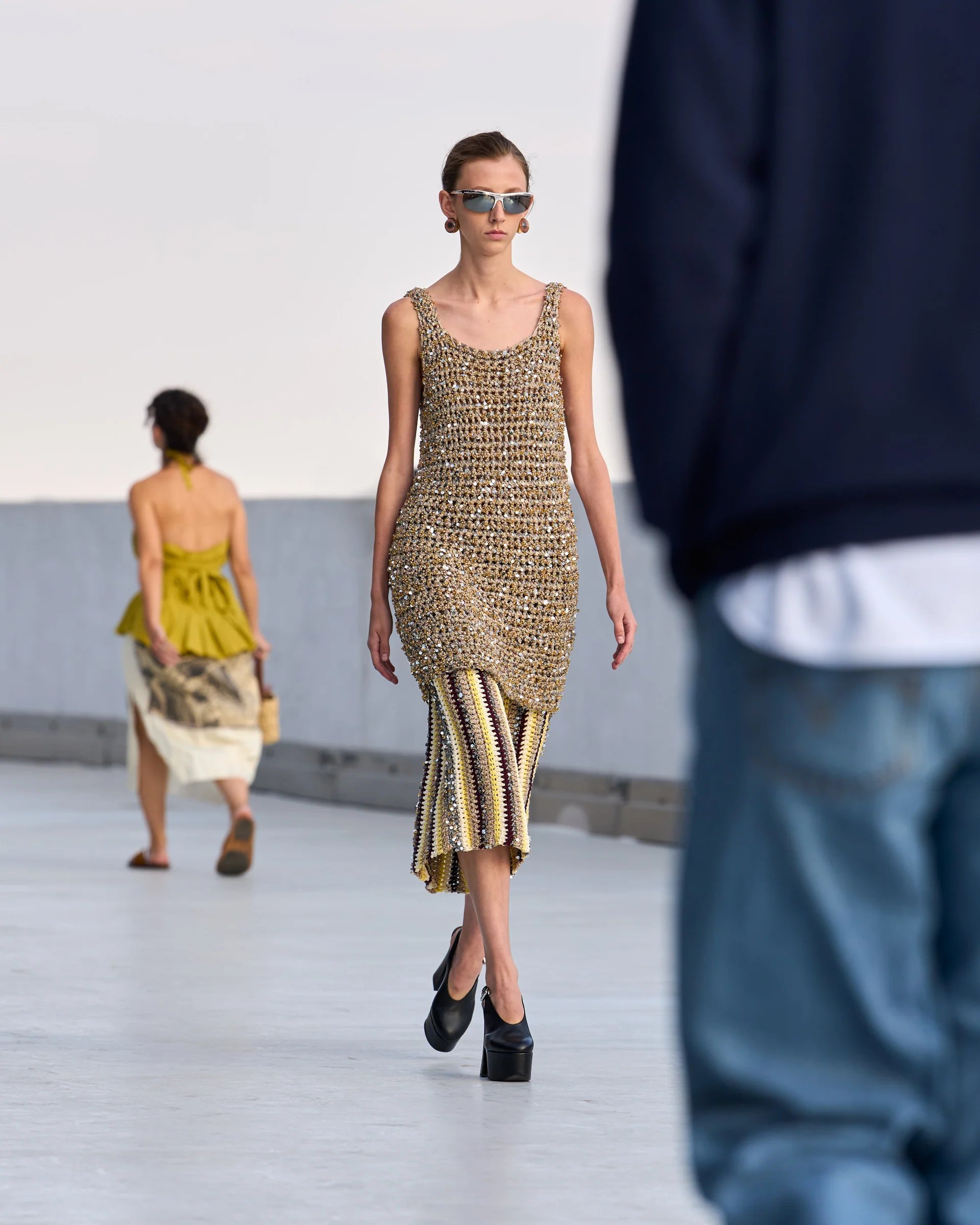
But those were isolated moments in a collection that otherwise settled for legibility. Much of what walked through the parking garage – block-color separates, straightforward tailoring – could have come from any number of capable Milanese labels. Moschino’s original logic wasn’t irony applied to clothes; it was irony as the clothes’ structural premise. The slogans, the visual puns, the provocation: those weren’t additions; they were the architecture. Rizzo and Messina treat irony as a seasoning. The doses are measured and pleasant. They rarely sting.
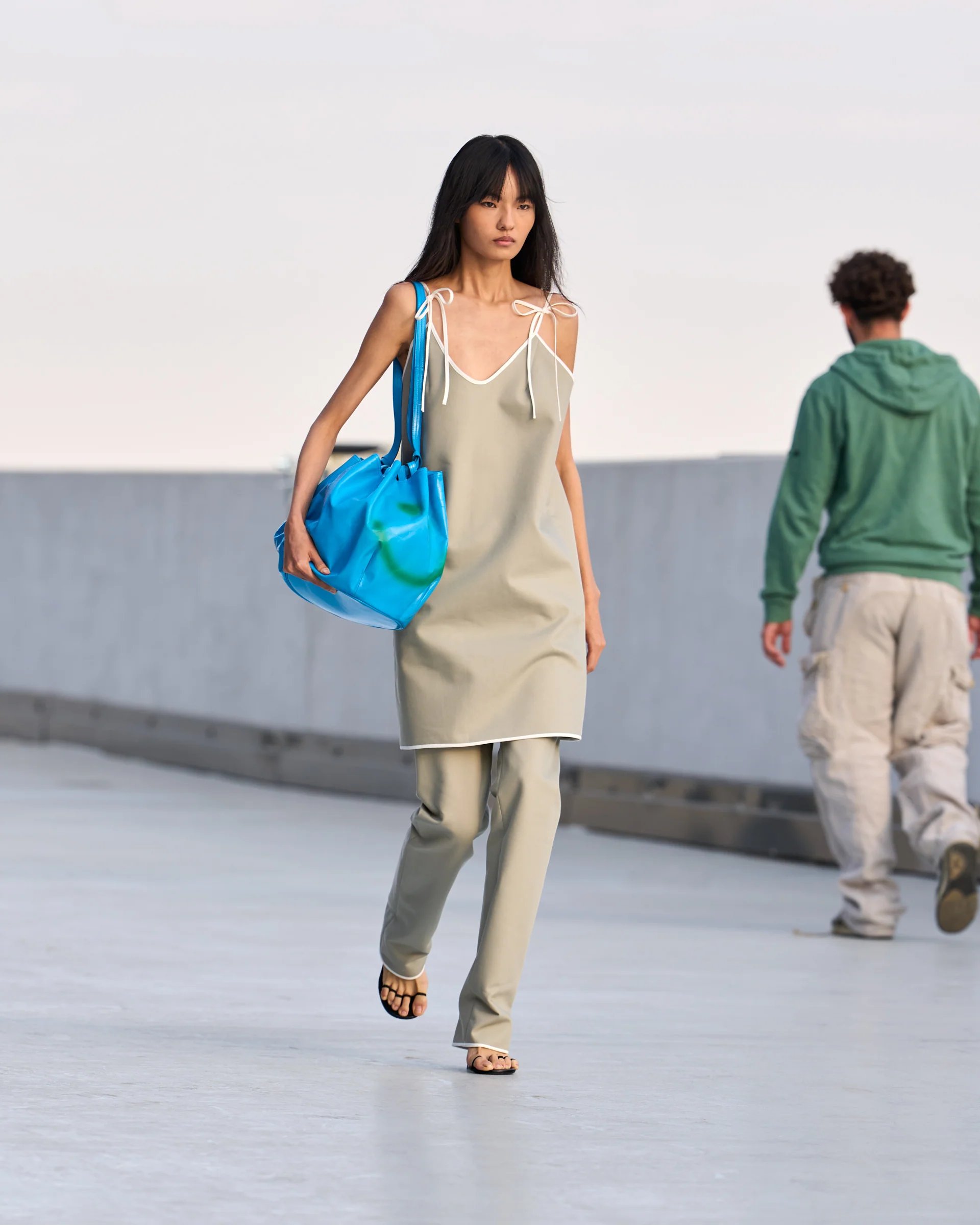
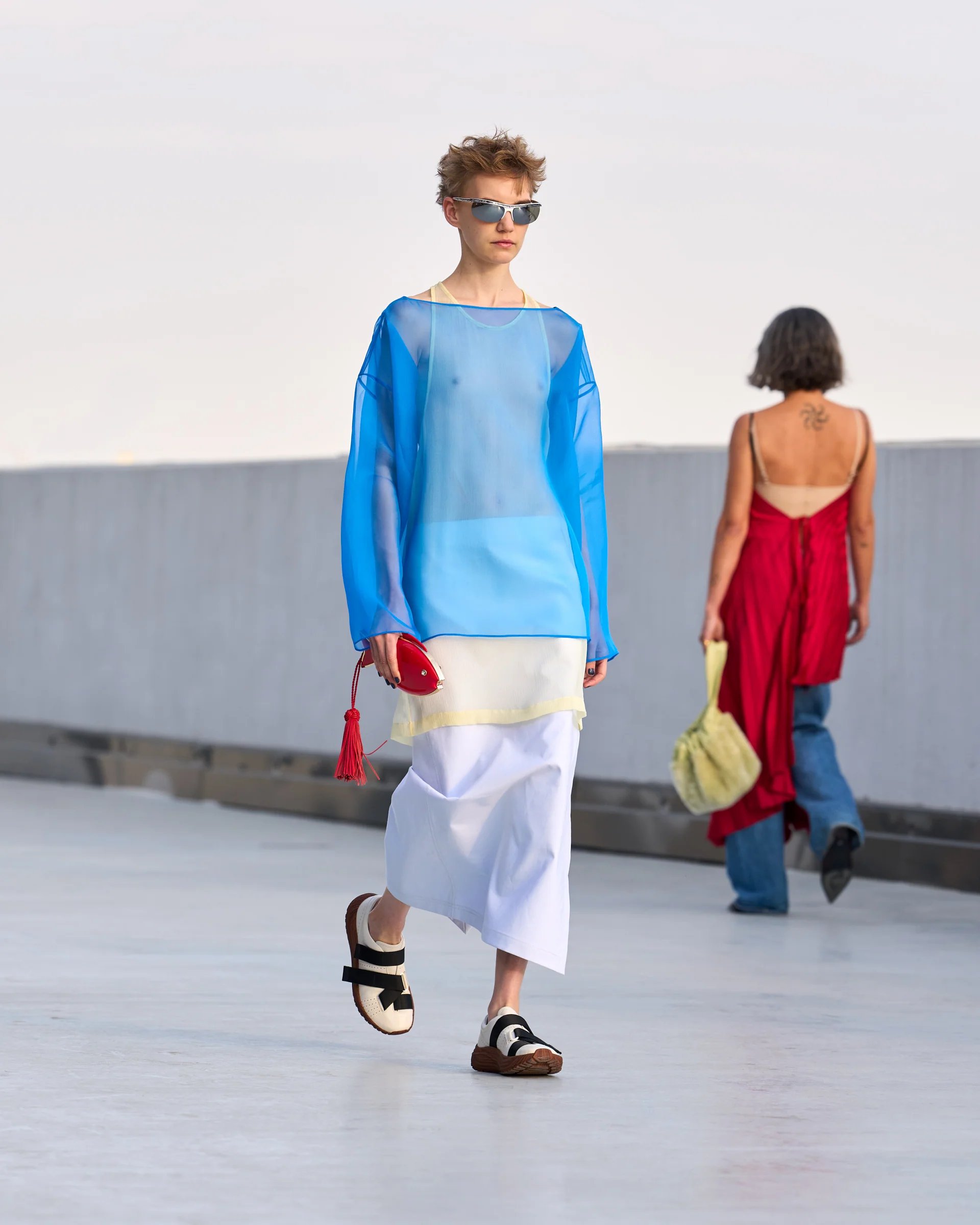
The staging was braver than the collection. When the crowd and the models passed through each other on that rooftop, the suggestion that Moschino belongs to the street rather than to the show circuit felt genuinely earned. The pannier skirts, the cat bag, the moments where exaggeration was doing structural work – those backed the idea up. The weaker looks didn’t contradict it so much as ignore it.
See the complete collection below:
Images courtesy of Moschino
In another fashion week news, Etro Spring 2027: Ready-to-Wear Collection at Milan Fashion Week