
Discover the top Asian Models redefining global fashion in 2026. From Liu Wen to HoYeon Jung, explore the trailblazers shaping beauty, diversity, and luxury campaigns worldwide.
Introduction
Asian Models are taking the global fashion industry by storm, representing a powerful shift toward diversity, inclusivity, and cultural influence. These trailblazers are walking major Fashion Week runways, landing historic celebrity magazine covers, and starring in luxury campaigns for brands like Chanel, Gucci, Prada, and Louis Vuitton.
Here is our definitive list of the top Asian models of 2026 who continue to break barriers and set new standards in fashion.
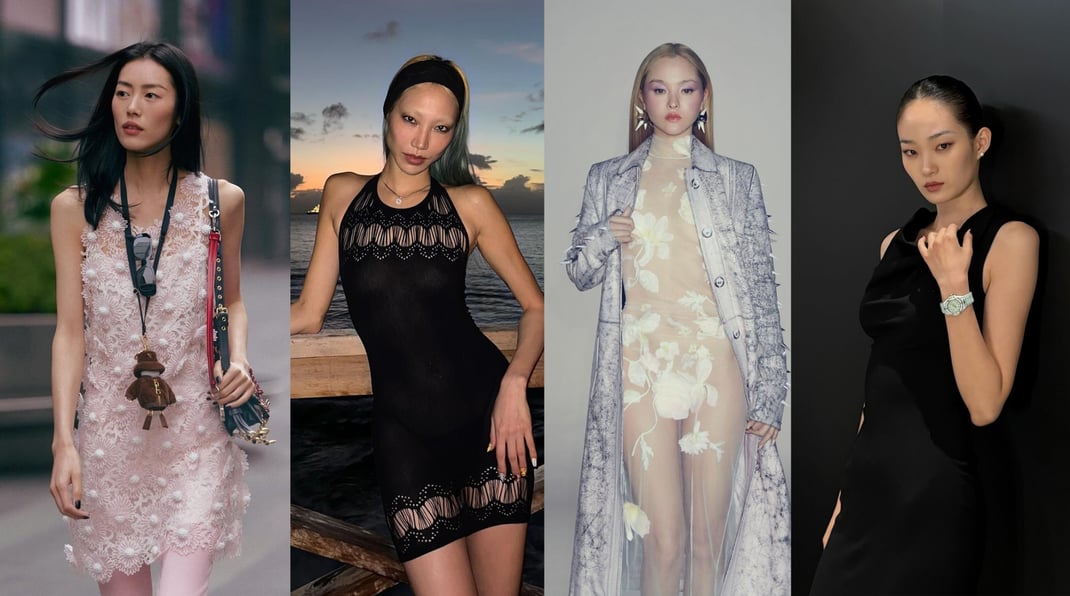
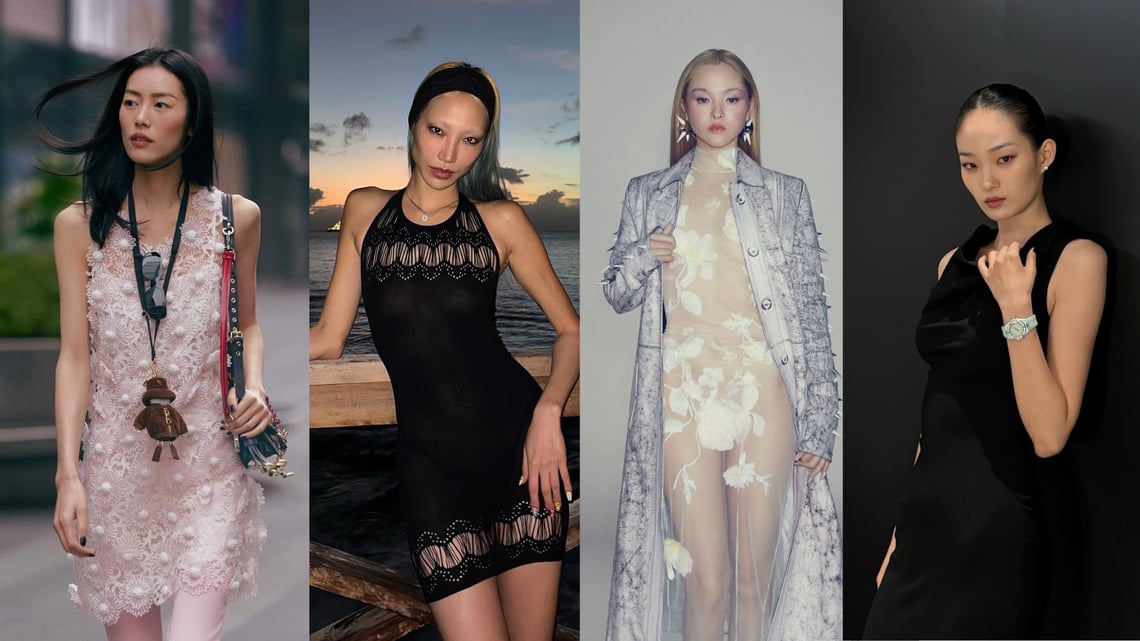
1. Liu Wen – China’s First Supermodel and Global Icon
-
First Chinese model to walk in the Victoria’s Secret Fashion Show
-
First East Asian spokesmodel for Estée Lauder
-
Featured on French Vogue in 2024 as the first solo Asian cover model
-
Worked with luxury houses including Gucci, Bulgari, and Chanel
Her groundbreaking career has paved the way for a new generation of Asian talent.
2. Soo Joo Park – The Platinum-Haired Fashion Rebel
-
First Asian-American spokesmodel for L’Oréal Paris
-
Longtime Chanel muse with countless runway appearances
-
Featured in Vogue, Harper’s Bazaar, and Glamour
Known for her striking platinum blonde look, she is both a model and a cultural influencer.
3. Hyun Ji Shin – Korea’s Runway Sensation
-
Winner of Korea’s Next Top Model
-
Signed with IMG Models, quickly rising to global runways
-
Walked for Prada, Chanel, Burberry, and more
-
Featured in Karl Lagerfeld’s final campaigns
She has become one of the most sought-after Korean models of her generation.
4. Du Juan – Ballet Dancer Turned Fashion Icon
-
First East Asian model to appear on Vogue Paris
-
Holds a record with 18 covers of Vogue China
-
Trained in classical ballet before transitioning to fashion
Her elegance and versatility have made her a favorite of both designers and photographers.
5. Fei Fei Sun – Beauty Meets Editorial Power
-
First Chinese model to appear solo on the cover of Vogue Italia (2013)
-
Walked for Valentino, Dior, Chanel, and Tom Ford
-
Featured in campaigns for Tory Burch, Estée Lauder, and Valentino
Fei Fei continues to embody timeless beauty and editorial dominance.
6. Sora Choi – Korea’s Global Runway Star
-
Known for her edgy look and bold runway presence
-
Has walked over 200 international shows, including Louis Vuitton, Givenchy, and Alexander McQueen
-
Winner of Korea’s Next Top Model Season 3
She is now one of the most in-demand models in high fashion.
7. HoYeon Jung – Squid Game Star and Louis Vuitton Ambassador
-
Gained global fame in Squid Game, but started as a top runway model
-
Became Louis Vuitton’s Global Ambassador in 2021
-
Featured in Vogue, W Korea, and Harper’s Bazaar
Her crossover success between modeling and acting makes her a true global icon.
8. Devon Aoki – The Legendary Asian-American Supermodel
-
Known for campaigns with Versace, Chanel, and Moschino
-
Appeared in films such as 2 Fast 2 Furious and Sin City
-
Continues to influence fashion as both a model and a cultural icon
Her legacy opened doors for future Asian-American models.
9. Fernanda Ly – The Pink-Haired Darling of Fashion
-
Recognized instantly for her signature pink hair
-
Walked for Dior, Louis Vuitton, and Gucci
-
Appeared in campaigns for Sephora, H&M, and Chanel Beauty
Her unique look challenges conventional beauty standards.
10. Ai Tominaga – Japan’s Trailblazing Supermodel
-
One of Japan’s most famous models with a career spanning decades
-
Walked for Alexander McQueen, Chanel, and Dior
-
Appeared on the covers of Vogue Japan and Numéro Tokyo
She continues to inspire new generations of Asian models.
The Rise of Asian Models in Global Fashion
Asian models are no longer underrepresented; they are leading the industry. From dominating Fashion Week shows to fronting major luxury campaigns, these women prove that beauty and talent transcend borders.
Their influence extends beyond fashion into film, activism, and culture, making them role models for aspiring talents worldwide.
For more features on style and beauty, explore our Beauty section.

FAQs About Asian Models
Q1: Who is the most famous Asian model in the world?
Liu Wen is widely regarded as the most famous Asian supermodel, breaking barriers as the first Chinese Victoria’s Secret model and the first solo Asian model on Vogue Paris.
Q2: Which Asian models are also actresses?
HoYeon Jung (Squid Game) and Devon Aoki (2 Fast 2 Furious) are prime examples of models who successfully transitioned into acting.
Q3: Why are Asian models important to fashion?
They represent diversity and cultural influence, demonstrating that the fashion industry thrives when it embraces global perspectives.
How Liu Wen Changed the Rules for Asian Models Forever
To understand the current moment for Asian models in global fashion, it is essential to trace Liu Wen’s career with precision. When she debuted at the Victoria’s Secret Fashion Show in 2009, she was not simply another new face on a storied runway. She was dismantling a structural bias that had kept East Asian women at the margins of Western luxury fashion for decades.
Liu Wen’s achievements read like a ledger of industry firsts: the first East Asian global ambassador for Estée Lauder, the first solo Asian cover of French Vogue, and a fixture in campaigns for Chanel, Gucci, H&M, and Bulgari across three consecutive decades. What separates her legacy from that of other trailblazers is consistency. She did not achieve a single breakthrough and fade. She rebuilt her presence season after season, proving to creative directors that an Asian face on a luxury campaign drives commercial results at every market level.
Her influence is now measurable. Industry analysts at the Business of Fashion have noted a direct correlation between Liu Wen’s brand partnerships and the subsequent openness of major houses to cast Asian models in lead campaign roles. For emerging Asian talent entering the industry in 2025, Liu Wen is not merely an inspiration. She is the benchmark.
The Business Case: Why Luxury Brands Are Investing in Asian Models Now
The rise of top Asian models is not solely a cultural story. It is a sound commercial strategy rooted in market data. Asia-Pacific currently represents the fastest-growing segment of the global luxury goods market, with China, South Korea, and Japan collectively accounting for a significant share of revenue for brands such as Louis Vuitton, Chanel, Dior, and Prada. Casting Asian faces as global ambassadors is, in part, a deliberate effort to authentically reflect and engage these consumers.
This dynamic has created a feedback loop that benefits Asian models at every tier of the industry. When HoYeon Jung became Louis Vuitton’s global ambassador in 2021, her appointment was backed by the brand’s strategic focus on the South Korean market, one of the world’s highest-per-capita luxury spending markets. When Soo Joo Park secured her L’Oréal Paris contract, the decision reflected both her editorial credibility and the brand’s ambitions across Asian demographics.
The result is a structural shift rather than a passing trend. Luxury houses are now building long-term ambassador relationships with Asian talent, offering multi-season contracts and cross-platform visibility that was rarely extended to Asian models a decade ago. For New York’s fashion industry, which depends heavily on global luxury investment, this shift is reshaping casting rooms, agency rosters, and creative direction, defining the aesthetic of the next decade.
Rising Asian Models to Watch in 2026 and Beyond
While established names like Liu Wen, HoYeon Jung, and Du Juan continue to command the upper tier of the industry, a compelling new generation of Asian models is building momentum across the runways of New York, Paris, Milan, and Seoul in 2026.
- Yoon Young Bae: The South Korean model has become a consistent presence at Valentino and Bottega Veneta, earning a reputation for her quiet authority on the runway and her striking editorial range.
- Mika Schneider: Of German and Japanese heritage, Schneider represents the growing visibility of mixed-heritage Asian models in campaigns for Versace and Givenchy.
- Sung Hee Kim: A Seoul-born model signed with DNA Models in New York, Kim has walked for Stella McCartney and Proenza Schouler, attracting attention for her commanding, androgynous presence.
What unites this emerging cohort is a refusal to be positioned narrowly. These models are not marketed as Asian-specific talent for Asian markets. They are competing for and winning the same flagship campaign roles and runway placements as their peers from any background. That competitive parity, still rare as recently as five years ago, is the clearest signal yet that the global fashion industry’s relationship with Asian talent has fundamentally changed.
Asian Models and the New Language of Runway Diversity
Beyond commercial strategy, the presence of top Asian models at the highest levels of global fashion has reshaped the aesthetic vocabulary of the industry itself. Creative directors, photographers, and stylists are increasingly drawing on East and Southeast Asian visual traditions, from the restrained elegance of Japanese minimalism to the bold graphic sensibility of Korean streetwear culture, as foundational influences in major collections.
This cultural exchange is visible in how brands now construct their runway narratives. When Prada or Givenchy casts Hyun Ji Shin or Sora Choi as central figures in a show, it is not simply a matter of representation. It signals a deliberate creative dialogue between Western fashion houses and Asian aesthetic traditions that have historically been filtered through a Western lens or ignored entirely.
Modeling agencies in New York have responded by actively recruiting across South Korea, China, Japan, and Southeast Asia, recognizing that the next generation of transformative runway talent is not confined to any single geography. The result is a richer, more rigorous standard of beauty and professionalism on the world’s most competitive stages, one that Asian models are not only meeting but actively defining for the decade ahead.
Social Media, K-Culture, and the Accelerated Rise of Asian Model Influence
The global rise of K-pop, K-drama, and Korean beauty culture has created an unprecedented platform for Asian models, amplifying their visibility far beyond the traditional reach of print editorial and runway coverage. HoYeon Jung’s trajectory is the most documented example: her role in Squid Game brought her Instagram following from roughly 400,000 to over 20 million in a matter of days, instantly elevating her commercial value to luxury brands operating in the attention economy.
This intersection of entertainment, digital culture, and high fashion is not unique to Korean talent. Chinese supermodel Liu Wen commands tens of millions of followers across Weibo and Instagram, giving brands direct access to engaged audiences that no traditional advertising placement can replicate. Fernanda Ly built a devoted global following through her distinctive aesthetic on social platforms before her runway career reached its peak, demonstrating that the path to high fashion visibility is no longer exclusively controlled by agencies and editors.
For fashion brands headquartered in New York and Paris, partnering with Asian models who carry substantial social media authority is now a core component of campaign planning. The ability to generate authentic cultural conversation in multiple languages and across multiple platforms simultaneously makes top Asian models among the most valuable partnerships available to any luxury house operating at a global scale in 2026.
Asian Models Reshaping Beauty Standards in Advertising and Editorial
One of the most consequential contributions of top Asian models to the global fashion industry is their direct challenge to the narrow beauty standards that dominated Western advertising for most of the twentieth century. For decades, the prevailing commercial ideal in luxury fashion reflected a very specific European archetype, and Asian models were cast, when included at all, in supporting or exotic roles rather than as the primary face of a brand’s identity.
That paradigm has been systematically dismantled. Fei Fei Sun’s solo cover of Vogue Italia in 2013 was a watershed moment precisely because Italian Vogue had long been considered the most demanding and uncompromising editorial standard in the world. Du Juan’s 18 covers of Vogue China established that an Asian publication could set international editorial benchmarks rather than simply adapt them. Soo Joo Park’s platinum hair and unconventional aesthetic proved that Asian models could succeed not by conforming to Western expectations but by defining entirely new ones.
Beauty brands have followed the fashion industry’s lead. Estée Lauder, L’Oréal Paris, and Chanel Beauty have all expanded their ambassador rosters to include Asian faces in primary, not supplementary, roles. The practical effect for consumers across Asia and the Asian diaspora in cities like New York, London, and Sydney is the straightforward but meaningful experience of seeing themselves accurately reflected in aspirational advertising, a shift that builds brand loyalty and cultural credibility simultaneously.
Asian Models and the New York Fashion Ecosystem: A City Shaped by Global Talent
New York occupies a singular position in the story of Asian models rising to global prominence. As both a fashion capital and one of the world’s most culturally diverse cities, New York has functioned as the proving ground where Asian talent transitions from regional recognition to international authority. The city’s major modeling agencies, including IMG Models, DNA Models, and Next Management, have built dedicated scouting relationships across Seoul, Shanghai, Tokyo, and Bangkok, recognizing that their competitive advantage depends on identifying transformative talent before rival agencies in Paris or Milan do.
The New York Fashion Week calendar reflects this shift with increasing clarity each season. Designers such as Thom Browne, Proenza Schouler, and Jason Wu have consistently cast Asian models in prominent runway positions, not as a diversity gesture but as a natural expression of their creative vision and their awareness of a globally connected customer base. Backstage culture has changed as well, with hair and makeup teams now routinely trained to work across a wider range of skin tones and hair textures without defaulting to Eurocentric techniques.
For Asian-American models navigating the industry from within the United States, New York represents both opportunity and ongoing negotiation. Figures like Devon Aoki and Soo Joo Park built careers that speak directly to this dual identity, operating at the intersection of Western fashion’s commercial demands and a cultural heritage that enriches rather than limits their professional range.
Representation Behind the Camera: How Asian Creative Leaders Are Amplifying Model Visibility
The conversation about Asian models in global fashion cannot be fully understood without examining the parallel rise of Asian creative professionals behind the camera and in editorial leadership. Photographers, art directors, stylists, and casting directors of Asian heritage are reshaping how Asian models are photographed, contextualized, and presented to global audiences, and the difference in output is visible and significant.
When an Asian photographer directs a campaign featuring an Asian model, the result often reflects a more nuanced understanding of light, expression, and cultural reference than work produced through a solely Western creative lens. Publications including Vogue China, Vogue Korea, and Numero Tokyo have cultivated editorial teams that produce imagery matching or exceeding the standard of their European counterparts, creating a parallel prestige circuit that Asian models can leverage for global credibility.
In New York, this creative ecosystem is growing steadily. Asian-American stylists and casting directors are gaining senior positions at major agencies and publications, creating institutional pathways that did not exist a generation ago. Their presence ensures that Asian models are cast, styled, and represented with the same depth and intentionality extended to any other talent, closing a gap that once forced Asian models to navigate a creative industry that frequently misread or flattened their identity.
The compounding effect of representation both in front of and behind the camera is producing fashion imagery that feels genuinely global rather than globally uniform, a distinction that defines the most compelling editorial work of 2026.
Philanthropy, Activism, and the Expanding Role of Asian Models Off the Runway
The influence of top Asian models in 2026 extends well beyond editorial credits and campaign appearances. A growing number of these women are deploying their platforms to address systemic issues including anti-Asian discrimination, mental health awareness, and equitable representation across creative industries, establishing themselves as public figures whose authority derives from substance as much as visibility.
Liu Wen has spoken candidly in international interviews about the isolation of being the only Asian model in many of the rooms she entered during her early career, framing her persistent pursuit of industry firsts as a deliberate effort to ensure that the next generation would not face the same structural exclusion. HoYeon Jung has used her crossover visibility to advocate for Korean arts and culture on international stages, including addresses to global audiences that extend the conversation about Asian identity far beyond fashion’s traditional reach.
Fernanda Ly has engaged publicly with conversations about body image and the psychological pressures facing models across all backgrounds, lending her distinctive platform to a dialogue that the broader fashion industry continues to navigate with varying degrees of seriousness. Soo Joo Park has similarly addressed the specific challenges facing Asian-American women in predominantly Western professional environments, contributing a perspective shaped by her own dual-cultural experience.
For a global audience consuming fashion content across multiple platforms and languages, this dimension of Asian model influence matters enormously. It transforms these women from passive symbols of diversity into active architects of a more equitable industry, a distinction that resonates deeply with younger consumers who expect the brands they support to reflect genuine values.
Asian Models and Sustainable Fashion: A New Generation of Conscious Advocates
As the global fashion industry confronts its environmental responsibilities with increasing urgency, several top Asian models have positioned themselves at the forefront of the sustainability conversation, lending credibility and reach to a movement that requires both cultural fluency and commercial influence to gain genuine traction.
Liu Wen and HoYeon Jung have both been associated with brands actively reducing their environmental footprint, and their willingness to align publicly with sustainability-focused campaigns signals a broader shift in how Asian models approach brand partnerships. Rather than accepting any luxury contract available, a growing number are applying selective criteria that include a brand’s ethical sourcing practices and environmental commitments.
South Korean and Japanese models in particular bring a culturally grounded perspective to sustainability discourse. Concepts such as mottainai, the Japanese philosophy of avoiding waste and honoring the full lifecycle of materials, align naturally with slow fashion principles and resonate authentically when communicated through Asian model voices to global audiences.
New York’s emerging sustainable designers, including several Asian-American founders, are actively partnering with Asian talent who share this values-driven approach to fashion. The result is a growing creative ecosystem in which representation, commerce, and environmental responsibility reinforce one another, producing work that reflects where the most forward-thinking segments of the fashion industry are heading in 2026 and beyond.
From Seoul to New York: How K-Beauty Is Redefining the Makeup Standard on Global Runways
The influence of Korean beauty culture extends well beyond skincare products and online tutorials. K-beauty’s foundational principles, prioritizing skin health, luminosity, and a complexion-first approach over heavy coverage, have quietly but decisively reshaped the makeup standard applied to Asian models on runways in New York, Paris, and Milan.
For years, Asian models working in Western fashion markets routinely navigated makeup teams unfamiliar with their skin undertones, resulting in imagery that did not accurately reflect their complexion or cultural aesthetic. The global adoption of K-beauty standards has changed this professional dynamic in measurable ways. Backstage teams at New York Fashion Week increasingly approach Asian models with techniques refined through K-beauty methodology, producing results that are both technically superior and culturally authentic.
Beauty brands have responded with product development designed to serve a broader range of skin tones and undertones, with Asian models routinely positioned as the faces of these expanded shade ranges. Soo Joo Park’s long-running association with Chanel Beauty and Fei Fei Sun’s Estée Lauder campaigns both reflect this alignment between K-beauty’s influence on formulation standards and the commercial visibility of Asian model talent.
The practical consequence for the industry is a raised baseline of technical expertise that benefits models of every background, with Asian models serving as both the catalyst and the primary beneficiaries of a more globally informed beauty standard on the world’s most competitive stages.
Asian Male Models: The Next Frontier in Global Fashion Representation
Discussions of Asian representation in fashion have historically centered on female talent, and for good reason given the groundbreaking achievements of Liu Wen, HoYeon Jung, and their contemporaries. However, 2026 marks a notable inflection point for Asian male models, who are securing campaign roles, runway placements, and brand ambassador positions that would have been difficult to envision at the beginning of the decade.
Models including Sung Jin Park, the South Korean talent who has walked for Tom Ford, Dolce and Gabbana, and Versace, and Zhao Lei, whose sculptural features have made him a recurring presence in Italian and French editorial, are demonstrating that the commercial and creative appetite for Asian male talent matches the momentum already established on the women’s side of the industry.
K-pop’s global influence has been a significant accelerating factor. The beauty standards associated with male K-pop artists, fluid, expressive, and deliberately challenging conventional Western masculine ideals, have opened creative space for Asian male models who bring a similarly expansive aesthetic to high fashion. Luxury houses including Dior Men and Givenchy have responded by casting Asian male faces in flagship campaigns, recognizing both the cultural resonance and the commercial reach that this talent brings.
For New York agencies building competitive rosters for the second half of the decade, Asian male talent represents one of the most strategically significant areas of growth, a frontier that reflects the same market forces and cultural shifts already transforming the women’s modeling industry.
Asian Models and the Luxury Fragrance Frontier
One category where Asian model representation has historically lagged behind ready-to-wear and beauty is luxury fragrance. Fragrance campaigns have long defaulted to a narrowly European romantic aesthetic, casting models in ways that reinforced a specific cultural fantasy rooted in French or Italian sensibility. That convention is changing with measurable speed in 2026, as major fragrance houses recognize that their fastest-growing consumer bases are concentrated across Asia-Pacific markets where cultural authenticity in advertising directly influences purchasing decisions.
Liu Wen’s longstanding relationship with Bulgari extended into the brand’s fragrance portfolio, signaling to the broader industry that Asian faces carry full commercial authority in a category once considered off-limits. Chanel’s fragrance division has similarly broadened its casting to include Asian talent in primary campaign roles, departing from decades of nearly exclusive European representation.
The creative implications extend beyond casting choices. Fragrance narratives are increasingly drawing on East Asian sensory traditions, including the Japanese aesthetic of sado, the meditative tea ceremony culture, and Chinese botanical heritage, as storytelling frameworks that resonate authentically with global audiences. Asian models positioned within these narratives bring a credibility that no amount of cultural borrowing through a Western lens can replicate, making their inclusion a creative and commercial imperative for fragrance houses competing at the prestige level in 2026.
Modeling Agencies and the Infrastructure Supporting Asian Talent in New York
Behind every top Asian model shaping global fashion is a professional infrastructure that determines how talent is discovered, developed, and sustained over the long arc of a career. New York’s major modeling agencies have undergone a structural evolution in recent years that reflects the industry’s deepening commitment to Asian talent, moving beyond token inclusion toward systematic investment in scouting, training, and career management across Asian markets.
IMG Models, which represents figures including Hyun Ji Shin, maintains active scouting operations in Seoul and Shanghai, with dedicated agents whose fluency in Korean and Mandarin allows for more nuanced communication with talent and their families during the critical early stages of a modeling career. DNA Models and Next Management have pursued similar strategies, building regional partnerships with Asian boutique agencies to identify emerging talent before the major European houses do.
This infrastructure matters because modeling careers, particularly for international talent navigating a foreign market, require more than a strong portfolio. Visa guidance, cultural orientation, language support, and mental health resources are all components of a competitive agency offering that Asian models increasingly expect and deserve. Agencies that have invested in this full-spectrum support model are consistently attracting stronger Asian talent, creating a competitive advantage that reshapes their overall roster quality and runway placement success season after season in New York and beyond.
Southeast Asian Models: The Industry's Most Compelling Emerging Voices
While Chinese, Korean, and Japanese models have historically received the greatest share of attention within discussions of Asian representation in fashion, 2026 is marked by a significant and overdue expansion of that conversation to include Southeast Asian talent. Models from Thailand, the Philippines, Vietnam, and Indonesia are securing runway placements, editorial features, and brand partnerships that reflect both the region’s extraordinary diversity and its rapidly growing cultural influence on global fashion aesthetics.
Thai model Baifern Pimchanok and Filipino talent Kelsey Merritt, who made history as the first Filipino model to walk in the Victoria’s Secret Fashion Show, represent a broader wave of Southeast Asian models who are challenging the assumption that Asian representation in fashion begins and ends with East Asian faces. Their visibility is expanding the industry’s understanding of Asian beauty in ways that are both more accurate and more compelling than a narrowly defined regional narrative.
Vietnam’s growing fashion industry, anchored in cities including Ho Chi Minh City and Hanoi, is producing editorial talent that international agencies are actively seeking. Indonesian designers presenting at regional fashion weeks are creating additional platforms for local models to develop the portfolio depth required for international casting consideration. For New York’s fashion industry, Southeast Asia represents an under-tapped reservoir of distinctive talent whose inclusion will define the next chapter of global runway diversity.
Asian Models in Haute Couture: Redefining Fashion's Most Exclusive Stage
Haute couture has long been considered fashion’s most rarefied and culturally specific territory, a world historically dominated by Parisian ateliers showcasing garments designed with a very particular Western silhouette and clientele in mind. The sustained presence of top Asian models on the couture runway in 2026 represents a meaningful recalibration of that tradition, one that reflects both the growing purchasing power of Asian couture clients and a genuine creative openness among the most prestigious houses.
Liu Wen and Fei Fei Sun have both walked couture presentations for Chanel and Valentino, their presence signaling to the global couture client base that these garments are conceived for women of every heritage. Du Juan’s classical training in ballet gives her a particular authority on the couture runway, where the technical demands of movement and posture are most exacting. Her ability to translate the sculptural complexity of a hand-sewn couture gown into something effortless and authoritative has made her a recurring choice for houses seeking a model whose physical discipline matches the craft invested in each piece.
For emerging Asian models with couture ambitions, the pathway is increasingly well-defined. Agencies are developing targeted couture training programs, and the major Paris ateliers are actively broadening their casting beyond the small pool of European talent that historically dominated their fittings. The couture runway, once the last frontier of unexamined Western exclusivity in fashion, is becoming a genuinely global stage.
Asian Model Agencies in Seoul and Shanghai: The Global Talent Pipeline Reshaping New York Rosters
Understanding where the next generation of top Asian models originates requires a closer look at the boutique agency ecosystems operating in Seoul and Shanghai, two cities that now function as primary talent pipelines for the global fashion industry. Korean agencies including SM Culture and Contents, YG Kplus, and Management mmm have developed rigorous training programs that prepare models not simply for domestic commercial work but for the specific demands of the New York, Paris, and Milan markets.
These programs address runway technique, portfolio development, and professional conduct across different cultural contexts, producing talent that arrives at international agencies with a level of preparation that shortens the standard development timeline significantly. Shanghai-based agencies have similarly invested in multilingual career management teams that facilitate smoother transitions for Chinese talent entering Western markets, addressing the communication and cultural navigation challenges that previously caused promising models to abandon international careers prematurely.
The practical consequence for New York’s fashion industry is a steadily improving quality of Asian talent at every tier, from emerging editorial models to established campaign faces. New York agencies that have built formal partnership agreements with Seoul and Shanghai counterparts are consistently accessing stronger candidates earlier, creating a competitive advantage that is directly visible on the season’s most important runways. For designers and casting directors, this infrastructure means the pool of available Asian talent is broader, better prepared, and more diverse in aesthetic range than at any previous point in the industry’s history.
The Generational Shift: How Young Asian Consumers Are Driving Model Casting Decisions
The influence of top Asian models on global fashion cannot be fully understood without examining the consumer demographic actively shaping brand strategy at the executive level. Generation Z consumers across China, South Korea, Japan, and the broader Asian diaspora represent the luxury industry’s most closely studied and commercially consequential audience segment in 2026. Their purchasing behavior, brand loyalty patterns, and cultural values are directly informing the casting decisions that determine whose face appears on a campaign, a billboard, and a social media feed.
Research from Bain and Company and McKinsey’s luxury division consistently identifies authenticity and cultural resonance as the primary drivers of brand preference among young Asian luxury consumers. Campaigns featuring Asian models who reflect the consumer’s own identity and aesthetic sensibility generate measurably stronger engagement and conversion rates than campaigns relying on aspirational European archetypes that feel culturally distant. Brands that have internalized this data, including Louis Vuitton through its partnership with HoYeon Jung and Estée Lauder through its long relationship with Liu Wen, have reaped tangible commercial benefits.
For New York’s fashion and beauty industries, this generational dynamic is accelerating an already significant structural shift. Casting decisions that might once have required years of internal advocacy are now supported by consumer data that makes the commercial case irrefutable. The result is a faster, more responsive industry that treats Asian model representation not as a cultural concession but as a strategic imperative backed by the purchasing power of the world’s most dynamic consumer generation.
Asian Models in Sportswear and Athleisure: Capturing Fashion's Most Competitive Growth Category
The global sportswear and athleisure market represents one of the fastest-growing segments in fashion, and top Asian models are increasingly positioned at the center of its most significant brand campaigns. Nike, Adidas, and Lululemon have all expanded their ambassador rosters to include Asian talent, recognizing that credibility in Asian markets requires faces that reflect the consumer rather than simply address them from a cultural distance.
This shift is particularly significant in South Korea and China, where athleisure has become a dominant lifestyle category influencing both street style and luxury fashion simultaneously. Korean models with established runway credentials are crossing into sportswear campaigns with a fluency that reinforces rather than dilutes their editorial authority, demonstrating that the traditional boundary between high fashion and performance wear no longer constrains a model’s career trajectory.
Japanese models bring an additional dimension to this category. Japan’s deep design culture, which has long treated functional clothing as a form of artistic expression, aligns naturally with the aesthetic ambitions of premium sportswear brands seeking to elevate their visual language beyond athletic performance. For New York designers working at the intersection of sport and luxury, Asian model talent offers a compelling combination of physical discipline, aesthetic range, and cultural market access that no other talent pool currently matches.
Asian Models in Digital Fashion and Virtual Runways: Pioneering the Next Frontier
As the fashion industry accelerates its investment in digital presentation formats, augmented reality campaigns, and virtual runway experiences, top Asian models are emerging as natural pioneers of this evolving landscape. The intersection of Asia’s advanced digital culture, particularly South Korea and Japan’s deep integration of technology into everyday creative life, and the modeling industry’s need for talent fluent in digital environments creates a compelling advantage for Asian faces in fashion’s next chapter.
Several leading Asian models have already established significant presence in digital fashion spaces. Virtual styling collaborations, NFT-linked campaign assets, and avatar-based runway presentations are generating new revenue streams and visibility platforms that supplement traditional editorial work. Korean models with established fandoms built through K-culture adjacency bring pre-existing digital audiences to these activations, giving brands immediate reach into the communities most engaged with virtual fashion concepts.
New York’s emerging digital fashion designers, including several Asian-American founders working at the intersection of technology and couture, are actively partnering with Asian model talent who understand both the technical requirements and cultural context of virtual presentation. This creative alignment between Asian models and digital fashion’s most innovative practitioners is positioning Asian talent not as followers of an industry trend but as co-architects of the format itself, a distinction that will define competitive advantage well into the decade ahead.
Language, Multilingualism, and the Communication Advantage of Top Asian Models
A dimension of Asian model influence that receives insufficient attention in mainstream fashion coverage is the practical communication advantage that multilingual Asian models bring to global brand partnerships. Liu Wen conducts interviews in Mandarin and English with equal fluency, allowing luxury brands to deploy her authentically across Chinese and Western media channels without the cultural flattening that occurs when translation is handled entirely by intermediaries. HoYeon Jung’s interviews in Korean and English, widely circulated across global platforms after her Squid Game breakthrough, demonstrated the depth of connection a bilingual ambassador can create with multiple distinct audiences simultaneously.
For brands operating New York headquarters alongside major Asian market offices, this multilingual capability is not a supplementary asset. It is a core component of campaign strategy. A model who can speak with genuine authority to a luxury consumer in Seoul, Shanghai, and New York within the same campaign cycle represents a measurably different commercial proposition than talent who requires cultural mediation at every stage of the communication process.
Modeling agencies in New York are increasingly factoring language skills into their evaluation of Asian talent, recognizing that a model who combines editorial strength with authentic multilingual communication capacity commands both higher fees and longer-term brand relationships. As global fashion brands continue to prioritize content that resonates across cultural contexts without losing precision or authenticity, this communication advantage will become one of the defining professional differentiators among top Asian models competing at the industry’s highest level.
Asian Models and the Archive: How Fashion History Is Being Rewritten
The contributions of Asian models to fashion history have frequently been underdocumented, catalogued as footnotes rather than central narratives in the industry’s official record. A meaningful corrective is now underway, driven by curators, academics, and the models themselves, who are insisting that their achievements receive the same archival seriousness extended to their Western contemporaries.
Major fashion institutions including the Museum at the Fashion Institute of Technology in New York have begun incorporating the careers of Liu Wen, Du Juan, and Devon Aoki into permanent exhibition frameworks, situating their breakthroughs within the broader history of twentieth and twenty-first century fashion rather than treating them as culturally specific addenda. Academic fashion journals are publishing peer-reviewed research examining how Asian model visibility correlates with shifts in luxury brand revenue, editorial aesthetics, and consumer identity formation.
This archival momentum matters for reasons that extend beyond recognition. When emerging Asian models can access a well-documented lineage of professional achievement, they enter the industry with a clearer sense of the ground already won and the precise barriers that remain. Mentorship programs in New York anchored in this documented history are producing more strategically prepared talent, individuals who understand not only how to walk a runway but how to negotiate an industry whose structural biases are most effectively challenged when confronted with informed precision.
Luxury Watches and Jewelry: Asian Models Opening Fashion's Most Traditional Category
Luxury watches and fine jewelry represent two of the most culturally conservative categories in the fashion and accessories world, historically resistant to the representation shifts accelerating across ready-to-wear, beauty, and fragrance. That resistance is yielding in 2026, as major houses including Cartier, Bulgari, Van Cleef and Arpels, and Rolex expand their ambassador relationships to include Asian talent in primary rather than regional campaign roles.
Liu Wen’s partnership with Bulgari remains the most prominent example of an Asian model holding full global authority within a jewelry house’s ambassador program, her presence used consistently across international markets rather than confined to Asian-specific activations. Chanel’s fine jewelry division has similarly broadened its casting, recognizing that the visual authority required to present heritage pieces credibly is not tied to any single cultural background.
The commercial rationale is straightforward. China represents one of the world’s largest and fastest-growing markets for luxury watches and fine jewelry, with South Korea and Japan contributing significantly to prestige segment growth. Brands whose ambassador relationships reflect this geographic reality are generating stronger market engagement across all channels. For Asian models with established editorial credibility and proven brand loyalty among Asian luxury consumers, the watches and jewelry category represents one of the most commercially significant growth areas available for career expansion in the current market environment.
Asian Models as Entrepreneurs: Building Fashion Businesses Beyond the Runway
The most ambitious Asian models of 2026 are not limiting their professional identity to campaign credits and runway placements. A growing number are leveraging their accumulated brand equity, industry relationships, and global platforms to build fashion and beauty businesses that extend their influence well beyond their modeling careers.
Soo Joo Park has developed creative projects that blur the boundary between modeling and art direction, positioning her as a multidisciplinary creative voice rather than simply a commercial face. Several Chinese supermodels including peers of Liu Wen have launched beauty and lifestyle ventures targeting the domestic Chinese market with significant commercial success, using their modeling credibility as a foundation for brand building that reaches consumers their campaign work alone could never access.
In New York, Asian-American models with established editorial careers are increasingly transitioning into agency founding, styling, and creative consulting, applying their firsthand knowledge of the industry’s structural dynamics to build more equitable professional environments for the talent following behind them. This entrepreneurial turn reflects a broader maturation of Asian model influence, one that transforms personal visibility into institutional power. The result is a generation of Asian fashion leaders whose authority derives not from access granted by others but from businesses and creative platforms they have built and control themselves, a development with consequences for the industry’s power structure that will compound significantly over the next decade.
Asian Models and the Casting Director Revolution: Who Is Actually Changing the Room
The most consequential shifts in Asian model representation have not occurred solely on runways or in campaign shoots. They have occurred in casting rooms, where a new generation of casting directors with Asian heritage or deep cross-cultural fluency is fundamentally changing who gets seen, who gets called back, and who gets booked for the roles that define a season’s visual identity.
Casting directors including Ashley Brokaw and Jennifer Starr have publicly committed to broadening their call sheets, but the more systemic change is coming from Asian casting professionals operating within major New York agencies and independently. These individuals bring an understanding of Asian facial geometry, cultural signaling, and aesthetic range that allows them to evaluate Asian talent with a precision previously unavailable in Western casting environments.
The practical consequence is that Asian models are no longer being evaluated against a default European standard and found adequate. They are being assessed on their own terms, with casting criteria that recognize the full spectrum of what Asian beauty and professional presence actually represent. For models from China, Korea, Japan, and Southeast Asia navigating New York’s competitive market, this shift in who holds the clipboard is as meaningful as any change in brand strategy or runway casting philosophy. It is the structural foundation on which long-term representation is built and sustained across successive industry cycles.
Fashion Education and Asian Models: How Design Schools Are Shaping the Next Generation of Representation
Fashion’s major educational institutions, including the Fashion Institute of Technology and Parsons School of Design in New York, are playing an increasingly deliberate role in shaping a more inclusive industry for Asian models. Graduate collections at both schools now regularly feature Asian models in primary looks, a practice that reflects both the demographic reality of New York’s fashion student population and a conscious pedagogical commitment to training future designers to cast with genuine range.
Student designers of Asian heritage at these institutions bring cultural references and aesthetic sensibilities that naturally expand the visual vocabulary of their graduate collections, creating demand for Asian model talent that is organically integrated rather than externally mandated. When these designers transition to professional careers, they carry that casting instinct with them, gradually shifting the aggregate standard of the industry from within rather than through top-down policy directives.
Several FIT and Parsons alumni of Asian heritage have already established New York labels that consistently feature Asian models in their campaign and runway work, including brands recognized at the CFDA/Vogue Fashion Fund level. Their commercial success provides a documented case study demonstrating that authentic Asian representation in fashion is not a niche proposition. It is a viable, critically acclaimed, and commercially competitive approach that the broader industry is steadily adopting as the evidence base grows more substantial each season.
Asian Models and Film Costume: The High Fashion Crossover Redefining Screen Aesthetics
The boundary between high fashion modeling and film costume has become productively permeable in 2026, with top Asian models increasingly serving as both muses and collaborators for costume designers working on major film and streaming productions. This crossover is generating a feedback loop between screen aesthetics and runway fashion that amplifies Asian model visibility across entertainment and style industries simultaneously.
HoYeon Jung’s trajectory from runway model to global entertainment figure is the most documented example, but the broader pattern extends further. Several Chinese and Korean models with established editorial careers have been cast as visual consultants on productions requiring authentic cultural specificity in costume design, their professional understanding of garment construction, silhouette, and cultural context making them valuable creative partners beyond their camera presence.
Korean and Chinese streaming productions distributed globally through platforms including Netflix are driving significant demand for fashion-forward costume work that reflects contemporary Asian luxury aesthetics. Asian models who have developed relationships with the costume designers behind these productions gain access to a visibility platform that reaches audiences who may never read a fashion magazine but who respond powerfully to aspirational style encountered through narrative entertainment.
For New York agencies advising Asian talent on long-term career strategy, cultivating relationships within the film and streaming production ecosystem is increasingly positioned as a core component of a diversified career plan, one that extends professional longevity and cultural relevance well beyond the typical runway lifespan.
Asian Models and the Luxury Bridal Market: Redefining the World's Most Personal Fashion Category
The luxury bridal market represents one of the final categories where Asian model representation has lagged significantly behind the momentum established across ready-to-wear, beauty, and accessories. That gap is closing with notable speed in 2026, as major bridal houses including Vera Wang, Jenny Yoo, and Monique Lhuillier expand their campaign casting to reflect the demographic reality of their most engaged consumer base.
Asian brides represent a substantial and rapidly growing segment of the global luxury bridal market, with Chinese, Korean, and South and Southeast Asian wedding traditions generating some of the highest per-ceremony luxury spend recorded anywhere in the world. Brands whose visual identity in bridal advertising reflects this reality are generating measurably stronger engagement with these consumers than competitors whose imagery defaults to a narrowly European aesthetic that feels culturally remote.
Several top Asian models have built specific reputations within the bridal editorial space, bringing a quality of presence and cultural fluency that transforms campaign imagery from generic aspiration into something genuinely resonant. Du Juan’s classical elegance and Fei Fei Sun’s timeless editorial authority translate with particular power into the bridal context, where emotional connection between the consumer and the campaign image directly influences purchasing decisions at the highest price points. For New York’s bridal design community, this category represents one of the most commercially compelling opportunities to align authentic Asian model representation with genuine market demand.
The Mental Health Conversation: Asian Models Challenging the Industry's Hidden Cost
Among the most important contributions that top Asian models are making to global fashion in 2026 is their increasingly direct engagement with the mental health pressures embedded in the professional modeling environment. For Asian talent navigating Western fashion markets, these pressures carry additional dimensions rooted in cultural displacement, language barriers, racial microaggressions, and the specific isolation of being among very few Asian faces in a predominantly European professional context.
Liu Wen has spoken in measured but consequential terms about the psychological weight of representing an entire cultural identity in rooms where that identity was previously absent. Her candor has created space for younger Asian models to articulate similar experiences without the professional risk of appearing difficult or ungrateful, a calculation that has historically silenced legitimate grievances within an industry that depends on talent compliance.
New York modeling agencies are responding with mental health resources specifically designed for international Asian talent, including culturally informed counseling services, peer mentorship programs connecting emerging models with established Asian professionals, and structured check-in protocols during the high-pressure Fashion Week calendar. These institutional responses are modest relative to the scale of the challenge, but their existence marks a substantive shift from an industry that previously treated psychological difficulty as a private matter unrelated to professional responsibility.
For the broader fashion industry, this conversation represents a necessary reckoning, one that Asian models are leading with a combination of personal courage and professional authority that commands genuine attention from the houses and agencies whose practices most urgently need to change.
Asian Models in Commercial Fashion: Bridging High Fashion Prestige and Mass Market Reach
While much of the conversation surrounding top Asian models focuses on luxury runways and prestige editorial, the commercial fashion segment represents an equally significant arena where Asian model representation is reshaping brand communication at a scale that reaches far larger global audiences. Brands including Zara, H&M, Uniqlo, and ASOS have substantially expanded their use of Asian talent across global campaigns, recognizing that commercial fashion consumers across Asia and the Asian diaspora respond with measurable brand preference to advertising that reflects their own identity.
Uniqlo, the Japanese fast-fashion giant with an increasingly powerful New York retail presence, has built its entire brand identity around a visual aesthetic that treats Asian model talent as foundational rather than supplementary. Its campaign approach, which positions Asian faces alongside talent from every background without hierarchical distinction, has become a reference point for competitors seeking to communicate genuine inclusivity rather than performative diversity.
For Asian models navigating career strategy, the commercial segment offers professional advantages that pure luxury positioning cannot provide, including sustained campaign visibility between fashion seasons, access to mass-market consumer audiences who influence trends from the ground up, and financial stability that supports the longer-term career arc necessary to build genuine cultural authority. The most strategically astute Asian models in 2026 are managing both luxury and commercial relationships simultaneously, using each to reinforce the other in ways that maximize both earning potential and cultural reach across the full spectrum of global fashion consumption.
Asian Models and the Accessories Campaign Renaissance: Handbags, Shoes, and the New Face of Luxury Objects
Accessories campaigns have historically operated under a different set of casting conventions than ready-to-wear, with luxury houses treating handbag and footwear imagery as a category where the object takes visual precedence and the model serves a subordinate role. That hierarchy is shifting in 2026, as top Asian models are increasingly cast as the primary narrative presence in accessories campaigns for houses including Bottega Veneta, Loewe, and Celine, where their visual authority is expected to carry equal weight with the product itself.
This shift reflects a deeper creative evolution in how luxury brands communicate the value of accessories to a globally diverse consumer base. When an Asian model holds a seasonal handbag in a campaign directed for simultaneous deployment across New York, Shanghai, and Seoul, the cultural legibility of that image operates across multiple markets without requiring regional adaptation. That efficiency of communication, achieved without cultural dilution, is precisely what creative directors at the most commercially sophisticated houses are prioritizing in their campaign briefs.
Fei Fei Sun and Liu Wen have both demonstrated particular authority in this category, their editorial precision lending campaign images a timeless quality that reinforces the investment value proposition central to prestige accessories marketing. For emerging Asian models building their portfolios with long-term career sustainability in mind, accessories campaign experience is increasingly positioned by agencies as a foundational credential that complements runway and beauty work with lasting commercial visibility.
Asian Models in Fashion Film and Moving Image: A New Creative Language for Global Campaigns
As luxury brands allocate growing proportions of their campaign budgets to video content distributed across digital platforms, fashion film has emerged as one of the most creatively significant formats in the industry. Top Asian models are proving to be exceptionally compelling subjects within this medium, their capacity for nuanced physical expression and emotional range translating with particular power when a campaign narrative unfolds across thirty seconds or three minutes rather than a single still image.
HoYeon Jung’s transition from runway model to acclaimed actress demonstrated the performing range already present in Asian model talent that the fashion industry had underutilized for years. Creative directors working with Asian models on fashion film projects consistently note that this talent pool brings a disciplined awareness of movement, timing, and spatial dynamics that derives partly from cultural training traditions, including Korean contemporary dance culture and Japanese performance philosophy, that have no direct equivalent in Western model training programs.
New York-based fashion film directors including those producing content for the major luxury houses are actively seeking Asian model talent for lead roles in campaign films targeting streaming and social platform distribution. The commercial logic is reinforced by audience data showing that fashion films featuring Asian leads generate disproportionately high engagement metrics among the demographic segments driving luxury growth globally. For Asian models willing to invest in movement training and on-camera technique development, fashion film represents one of the most strategically valuable career frontiers available in 2026.
The Role of Asian Modeling Competitions and Reality Television in Building Global Careers
The careers of Sora Choi, Hyun Ji Shin, and several of their contemporaries share a formative origin point that deserves more analytical attention than mainstream fashion coverage typically provides: the modeling competition format, particularly South Korea’s Next Top Model franchise, has functioned as a remarkably effective talent development and global visibility platform for Asian models who might otherwise have spent additional years navigating the slow traditional pathway through domestic commercial work toward international recognition.
The competition format accelerates career development in ways that extend well beyond prize contracts and agency signings. Contestants develop runway technique, media communication skills, and professional resilience under documented conditions that agencies can evaluate with precision before extending representation offers. The television broadcast component delivers a built-in audience that converts immediately into social media following, giving winners a launch platform with genuine commercial value from the first week of their professional career.
Chinese modeling competition formats have produced parallel talent pipelines, with domestic broadcast reaching audiences numbered in the hundreds of millions and generating brand partnership inquiries that frequently precede international agency engagement. For New York agencies monitoring Asian talent markets, the competition circuit provides a curated, publicly documented showcase of emerging ability that functions as an efficient first-stage filter in a scouting process that would otherwise require extensive travel and relationship building across multiple regional markets. The strategic value of this infrastructure for the global Asian modeling talent pipeline is substantial and continuing to grow as production quality and international broadcast reach expand each season.
Asian Models and the Accessories Campaign Renaissance: The Art Direction Revolution Behind the Lens
Beyond casting decisions, the visual grammar of how Asian models are photographed in accessories campaigns has undergone a substantive creative revolution in 2026. Leading art directors working with houses including Loewe, Bottega Veneta, and Celine are deliberately moving away from the decontextualized white-background aesthetic that once dominated accessories imagery, replacing it with richly layered visual environments that draw on East and Southeast Asian architectural and design traditions as active compositional elements rather than exotic backdrops.
This shift produces campaign imagery that feels genuinely global rather than geographically specific, communicating luxury values through visual languages that resonate across cultural contexts simultaneously. When Fei Fei Sun holds a structured Loewe bag against a setting that references the clean geometric minimalism of Japanese spatial design, the resulting image does not read as a regional campaign. It reads as world-class luxury advertising that happens to be richer and more specific than its predecessors.
New York photographers including several Asian-American talents who have risen to senior positions at major luxury agencies are driving this aesthetic evolution from behind the lens. Their fluency in both Western commercial photography standards and Asian visual traditions allows them to construct imagery that satisfies the commercial precision required by a luxury client while delivering cultural depth that purely Western creative teams have historically been unable to achieve. The result is a body of accessories campaign work that represents some of the most compelling luxury visual output of the decade.
Asian Diaspora Models: Navigating Dual Identity as a Creative and Commercial Superpower
A distinct and increasingly significant cohort within the broader landscape of top Asian models is the diaspora generation: models of Asian heritage born or raised in Western countries, particularly in cities including New York, Los Angeles, London, and Sydney, who carry a dual cultural fluency that positions them uniquely in an industry simultaneously serving Eastern and Western markets.
These models, including figures of Chinese-Australian, Korean-American, and Japanese-British heritage, operate with a native understanding of Western fashion’s commercial codes alongside an authentic connection to Asian cultural identity that no amount of market research or cultural consulting can replicate. For luxury brands attempting to communicate credibly across both cultural contexts within a single global campaign, diaspora Asian models offer a precision of cultural address that is genuinely difficult to source elsewhere.
Soo Joo Park’s Korean-American identity has been central to her commercial value proposition throughout her career, allowing her to function as an authentic bridge between L’Oréal Paris’s Western heritage and its ambitions across Asian markets. Devon Aoki’s half-Japanese, half-American identity similarly enabled campaigns that spoke with equal authority to audiences on both sides of the Pacific.
New York’s fashion industry, as the world’s most culturally diverse fashion capital, is the natural home of this diaspora talent. Agencies that have built structured pipelines for identifying and developing diaspora Asian models are consistently outperforming competitors who treat Asian representation as a monolithic category rather than a rich spectrum of specific cultural experiences with distinct commercial applications.
The Fashion Week Circuit and Asian Models: How Seoul Fashion Week Is Reshaping the Global Calendar
The traditional fashion week circuit, anchored in New York, London, Milan, and Paris, is experiencing a meaningful challenge to its authority as the exclusive arbiter of global fashion relevance. Seoul Fashion Week has emerged as the most compelling newcomer to the international calendar in years, generating global press coverage, attracting major brand investment, and producing runway imagery that is shared across digital platforms with an immediacy that rivals any European show of comparable scale.
For Asian models, Seoul Fashion Week functions as both a proving ground and a prestige platform in its own right. Models who demonstrate runway authority in Seoul are increasingly arriving at New York and Paris castings with a validated professional record that Western casting directors now take seriously rather than treating as a regional credential of limited transferability.
The shows themselves are setting aesthetic standards that influence Western designers with increasing directness. The sharp, graphic silhouettes and technically precise tailoring that characterize the strongest Seoul presentations have appeared as acknowledged reference points in collections at New York Fashion Week in recent seasons, creating a creative feedback loop that positions Korean designers and the Asian models presenting their work as active contributors to global fashion direction rather than recipients of trends originated elsewhere.
For New York’s fashion industry, the rise of Seoul Fashion Week represents both a competitive challenge and a creative opportunity. Designers who engage authentically with the aesthetic conversation happening in Seoul, and who cast the Asian models most visible on that circuit, are producing work that resonates with precisely the global consumer demographic driving luxury growth in 2026.
Asian Models and the Swimwear and Resort Campaign Transformation
Swimwear and resort wear campaigns have historically represented one of the most exclusionary segments in fashion advertising, dominated by a narrow body ideal and a Eurocentric aesthetic that rendered Asian models nearly invisible in a category reaching some of the industry’s broadest consumer audiences. That exclusion is being systematically corrected in 2026, as major swimwear and resort brands including Sports Illustrated Swimsuit, Zimmermann, and Melissa Odabash expand their casting to reflect the genuine diversity of their global consumer base.
The practical consequences are visible and commercially significant. Asian models cast in swimwear campaigns for brands with strong Asia-Pacific distribution are generating engagement metrics that substantially exceed historical benchmarks, confirming what market analysts have argued for years: consumers across China, South Korea, Japan, and Southeast Asia respond with measurable loyalty to brands whose visual identity acknowledges their existence as aspirational participants rather than peripheral afterthoughts.
Several top Asian models including Fei Fei Sun and emerging Southeast Asian talent have built specific editorial reputations within the resort and swimwear category, demonstrating a range of physical authority and camera presence that challenges the assumption that this segment requires a single body type or cultural aesthetic to succeed commercially. For New York agencies developing Asian talent portfolios with maximum category range, swimwear and resort editorial is increasingly positioned as a career-broadening credential that expands visibility into consumer segments traditionally underserved by Asian model representation.
Asian Models and the Plus-Size and Size-Inclusive Fashion Movement
The size-inclusive fashion movement has generated significant momentum across the global industry in recent years, but the intersection of Asian identity and size diversity in modeling remains one of the least examined dimensions of representation in contemporary fashion. Cultural pressures within several Asian societies impose particularly rigid body standards on women, making the visibility of size-inclusive Asian models a matter of both commercial relevance and genuine social consequence for audiences navigating those expectations.
Brands including Universal Standard, Savage X Fenty, and several New York-based independent labels have begun actively casting Asian models across a full size spectrum, recognizing that their Asian customer base is as diverse in body type as any other demographic and deserves to see that diversity reflected in campaign imagery. The response from Asian consumers across social platforms has been substantive, with campaigns featuring size-inclusive Asian talent generating disproportionately high organic sharing and brand affinity conversation.
For modeling agencies building rosters that reflect the industry’s stated commitment to genuine inclusivity, developing size-inclusive Asian talent is an area of structural underinvestment that represents both an ethical responsibility and a competitive opportunity. Models who occupy this intersection of Asian identity and size diversity are navigating genuinely underrepresented territory, making their professional visibility a meaningful contribution to a broader cultural conversation about beauty standards that the fashion industry has the reach and responsibility to actively shape in 2026 and beyond.
Asian Models and the Eyewear Campaign: Fashion's Most Underestimated Representation Frontier
Among the most quietly significant categories where Asian model representation carries both aesthetic and commercial logic is luxury and designer eyewear. The eyewear industry, encompassing optical frames and sunglasses for houses including Oliver Peoples, Cartier Eyewear, and Gentle Monster, has historically struggled with a fundamental design tension: frames engineered primarily for European facial geometry frequently fit Asian facial structures differently, creating a commercial problem that the industry has addressed through product adaptation but has been slower to acknowledge in campaign imagery.
Korean eyewear brand Gentle Monster has demonstrated with remarkable commercial success that centering Asian model talent in eyewear campaign work produces imagery that resonates across global markets while directly addressing the product’s most engaged consumer base. Its campaign aesthetic, combining architectural set design with Asian model faces of exceptional editorial authority, has set a creative benchmark that European luxury eyewear brands are actively studying and beginning to replicate.
For top Asian models building category expertise, eyewear campaigns offer sustained visibility and creative collaboration with art directors working at the experimental edge of commercial photography. The category’s reliance on facial precision and expressive range plays directly to the strengths of models with strong editorial credentials, making it a natural extension for talent including Liu Wen and Soo Joo Park who bring both the facial authority and brand credibility that prestige eyewear campaigns require. New York agencies are increasingly developing dedicated eyewear campaign strategies for their Asian talent rosters, recognizing this as one of the most commercially logical and creatively rewarding category expansions available in the current market.
Asian Models and the Luxury Travel Campaign: Redefining Aspirational Destinations for Global Audiences
Luxury travel and hospitality brands, including Four Seasons, Aman Resorts, and Singapore Airlines, have historically anchored their campaign imagery in a Western gaze directed at exotic destinations, a visual convention that positioned Asian settings as objects of European discovery rather than expressions of a living culture. That framework is being dismantled in 2026, as hospitality brands with significant Asia-Pacific revenue exposure commission campaigns that center Asian model talent as authoritative inhabitants of these spaces rather than decorative presences within them.
The commercial rationale is supported by travel industry data. High-net-worth Asian travelers represent the fastest-growing segment of the global luxury hospitality market, with Chinese, Korean, and Japanese consumers accounting for a disproportionate share of premium suite bookings, chartered experiences, and bespoke itinerary spending. Campaigns featuring Asian models navigating these environments with genuine ease and cultural authority generate measurably stronger conversion among precisely this demographic.
Top Asian models including Liu Wen and Du Juan have been featured in luxury travel editorial that situates them within environments reflecting their own cultural heritage, producing imagery that communicates aspiration with a specificity and authenticity that neither European model talent nor stock photography can replicate. New York agencies are actively developing luxury travel as a dedicated campaign category for their senior Asian talent, positioning it as a high-value extension that complements fashion editorial with year-round commercial visibility and access to hospitality brands whose marketing budgets rival those of major luxury fashion houses.
Asian Models and Independent Fashion Magazines: How Niche Publishing Is Amplifying Underrepresented Voices
While mainstream titles including Vogue, Harper’s Bazaar, and Elle have made measurable progress in featuring Asian models across their global editions, some of the most creatively significant representation advances are occurring within independent fashion publishing, where editorial freedom from corporate advertiser pressure allows for a more radical and culturally specific approach to how Asian model talent is presented, contextualized, and celebrated.
Independent titles including Sang, a Seoul-based bilingual fashion journal, and Document Journal in New York have published Asian model features that operate entirely outside the representational constraints that still govern mainstream luxury publishing. These editorial projects treat Asian cultural references not as atmospheric backdrop but as the primary intellectual and aesthetic framework of the entire feature, producing work that sets a creative standard major publications are beginning to reference in their own editorial planning.
For Asian models, independent magazine work offers professional advantages that extend beyond creative satisfaction. Features in respected independent titles carry significant weight with casting directors and creative agencies who use them as evidence of a model’s capacity for complex editorial collaboration, a credential that complements commercial campaign credits with a depth of artistic credibility. New York’s independent publishing ecosystem, which includes some of the world’s most influential boutique fashion titles, is actively cultivating relationships with Asian model talent whose cultural specificity enriches the visual conversation these publications exist to advance.
Asian Models in Advertising Awards and Industry Recognition: Closing the Credibility Gap
One of the least discussed dimensions of Asian model representation in global fashion is the advertising awards circuit, where campaigns featuring Asian model talent in primary roles have historically been underrecognized relative to their creative and commercial impact. Cannes Lions, the Clio Awards, and the D&AD Pencils, which collectively define advertising excellence for the industry’s most influential creative directors and brand managers, are beginning to correct this imbalance as juries diversify and evaluation criteria expand to encompass cultural resonance across non-Western markets.
Campaigns anchored by Asian model talent that have performed exceptionally in Asian markets are increasingly being submitted and recognized at international awards competitions, establishing a documented record of creative and commercial excellence that strengthens the industry-wide case for continued investment in Asian representation. When a Liu Wen fronted Bulgari campaign wins recognition at a major international advertising competition, the effect on subsequent casting decisions across the industry is concrete and measurable.
New York advertising agencies working with luxury clients are actively building awards submission strategies around their Asian model campaigns, recognizing that industry recognition in this specific category creates a documented precedent that influences client briefs, internal agency hiring, and the broader creative conversation about what luxury advertising excellence looks like in a genuinely global market. For Asian models whose campaigns anchor these submissions, awards recognition translates directly into renewed contracts, increased day rates, and the kind of industry-wide credibility that sustains careers well into their second and third decades.
Asian Models and the Fine Art Photography World: Where High Fashion Meets Museum-Grade Imagery
A dimension of Asian model influence that the mainstream fashion press rarely examines in depth is the growing collaboration between top Asian models and fine art photographers whose work crosses between gallery exhibition and commercial campaign. This intersection is producing some of the most intellectually rigorous and visually ambitious imagery in contemporary fashion, challenging the boundary between commercial representation and fine art practice in ways that elevate the entire industry’s creative discourse.
Photographers including Zhang Jingna, the Singapore-born artist whose fashion and fine art practice has attracted gallery representation in New York and Tokyo simultaneously, are creating bodies of work featuring Asian models that operate with equal authority in museum contexts and luxury editorial. These projects reframe Asian model visibility as a subject worthy of sustained artistic examination rather than a commercial casting consideration, producing imagery with a cultural permanence that campaign work rarely achieves.
For top Asian models willing to invest time in fine art collaborations alongside their commercial schedules, the professional return extends well beyond portfolio diversity. Gallery associations and museum exhibition credits signal a depth of creative engagement that separates a model from purely commercial talent in the eyes of the most selective creative directors and editorial teams. New York’s gallery ecosystem, particularly in Chelsea and the Lower East Side, is increasingly receptive to fashion-adjacent fine art that centers Asian model talent with the seriousness and cultural specificity these collaborations deserve.
Asian Models in Men's Fashion Editorial: Breaking the Gender Binary in High-End Publishing
One of the most creatively charged frontiers in contemporary fashion publishing is the use of Asian model talent in men’s fashion editorial, where the aesthetic fluidity associated with Korean and Japanese style culture is producing imagery that challenges conventional gender presentation with a precision and cultural grounding that purely Western creative teams have struggled to achieve independently. Publications including Dazed, i-D, and Another Man have featured Asian models in men’s editorial contexts that deliberately complicate the visual language of masculinity, drawing on K-pop and J-fashion aesthetics as foundational creative references.
This editorial approach is generating significant commercial interest. Luxury menswear houses including Dior Men, Givenchy, and Rick Owens are actively studying how their collections read on Asian model bodies and faces, recognizing that the silhouette and proportion standards associated with Korean and Japanese male aesthetics influence menswear design direction globally. Models who can carry both traditional tailoring and avant-garde structural garments with equal authority are in exceptional demand across the New York and Paris menswear calendar.
For Asian models of any gender identity navigating fashion’s expanding approach to gendered presentation, this editorial moment represents a rare professional environment in which their cultural specificity is treated as a creative asset of primary rather than supplementary value. New York agencies developing gender-fluid Asian talent are at the forefront of a casting evolution reshaping menswear editorial standards for the remainder of the decade.
Asian Models and Corporate Fashion: How Boardroom Dress Codes Are Being Redefined by Cultural Representation
Beyond the glamour of luxury runways and editorial shoots, Asian models are influencing a category that receives almost no attention in mainstream fashion coverage: corporate and professional fashion advertising. As major workwear and business attire brands including Hugo Boss, Theory, and Banana Republic expand their global market presence across Asia-Pacific, their advertising imagery is undergoing a substantive transformation that positions Asian models not as lifestyle accessories but as authoritative professional figures whose presence redefines what corporate aspiration looks like for a genuinely global workforce.
This shift carries cultural significance that extends well beyond advertising aesthetics. For Asian-American professionals navigating corporate environments where their identity has historically been rendered invisible in aspirational brand imagery, seeing Asian models positioned as the primary faces of professional excellence in major campaign work is both a commercial signal and a cultural statement about belonging and authority in the workplace.
Liu Wen’s sustained association with Estée Lauder, a brand whose consumer base includes a significant proportion of professional women across Asian markets, reflects this dynamic with particular clarity. Her authority in campaign imagery communicates professional confidence and executive presence rather than simply physical beauty, expanding the representational function that Asian models perform in advertising well beyond fashion’s traditional aesthetic categories. New York agencies advising Asian talent on diversified campaign portfolios are increasingly positioning corporate fashion as a strategically valuable category that builds long-term brand relationships with commercial partners whose advertising budgets operate independently of the seasonal luxury fashion cycle.
In 2026, luxury houses are increasingly casting Asian models not only as runway talent but as long-term brand partners and creative collaborators, reflecting a deeper institutional shift toward sustained representation at the highest levels of fashion.
In 2026, K-beauty and C-beauty aesthetics continue to drive global campaign casting decisions, with luxury houses actively seeking Asian talent who can speak authentically to the rapidly expanding Asia-Pacific consumer market.
In 2026, Asian models are increasingly being tapped not only for luxury runway roles but also for brand founder and creative director positions, reflecting a broader industry shift toward recognizing Asian talent as business leaders and cultural architects, not just faces.
Asian Models and the Globalization of Fashion Education in New York
New York’s premier fashion institutions are restructuring their curricula to reflect the industry’s shifting demographic center of gravity. The Fashion Institute of Technology and Parsons School of Design now host visiting faculty from leading Asian design schools including Bunka Fashion College in Tokyo and Hongik University in Seoul, creating direct pedagogical pipelines that influence how the next generation of designers, stylists, and creative directors conceptualize Asian model casting. This academic exchange produces graduates who enter the workforce with an intuitive understanding of Asian aesthetic traditions, from the architectural tailoring of Japanese avant-garde design to the color theory rooted in Korean hanbok heritage.
Student casting for thesis collections and annual runway shows has become a leading indicator of industry direction. At the 2025 Parsons benefit, over sixty percent of featured looks were presented on Asian models, a statistic that would have been unimaginable a decade ago. These educational environments function as low-stakes laboratories where casting decisions driven by genuine creative instinct rather than corporate mandate normalize Asian representation at the formative stage of professional careers. The result is a cohort of emerging New York creatives for whom diverse casting is not a deliberate strategy but a default expectation, accelerating the structural transformation of the city’s fashion ecosystem from the classroom upward.
Asian Models and the Evolution of Age-Inclusive Representation in Luxury
The luxury industry’s historical obsession with youth has begun to yield to a more nuanced understanding of aging, and Asian models are at the forefront of this cultural recalibration. Cultural attitudes across East Asia have long positioned aging as a progression toward authority and refinement rather than decline, a perspective that aligns powerfully with luxury’s current emphasis on heritage, craftsmanship, and timeless value. Models including Ai Tominaga and Du Juan, whose careers span multiple decades, are securing major campaign roles well into stages of life where Western models have historically been phased out of prestige work.
This shift is commercially strategic. The fastest-growing segment of luxury consumers in China, Japan, and South Korea is women over forty, a demographic with substantial discretionary income and a well-documented preference for brand imagery that reflects their life stage with dignity. When Chanel features a fifty-year-old Asian model in a fine jewelry campaign, or when Bulgari centers Liu Wen in a narrative about generational legacy, the creative decision doubles as a direct address to this high-value consumer. New York agencies are responding by developing dedicated senior divisions for Asian talent, negotiating multi-year ambassador contracts that treat career longevity as an asset rather than a liability, and establishing a new professional paradigm where an Asian model’s authority deepens rather than diminishes with time.
Asian Models and the Reshaping of Fashion Week Logistics for Global Inclusion
The operational infrastructure of New York Fashion Week is undergoing a quiet but profound transformation to accommodate the logistical realities of a truly global model cohort. Casting directors and production teams now coordinate visa timelines, travel quarantines, and cultural accommodation requirements for Asian talent arriving from Seoul, Shanghai, Tokyo, and Bangkok with the same precision once reserved for European models traveling between Paris and Milan. This operational maturity reflects an industry that no longer treats Asian participation as an exception requiring special handling but as a core component of the seasonal calendar.
Backstage protocols have evolved in parallel. Major hair and makeup sponsors including MAC Cosmetics and Redken now mandate that their Fashion Week artist teams demonstrate documented proficiency across the full spectrum of Asian hair textures and skin undertones, a requirement written directly into their seasonal contracts with the CFDA. Translation services for Mandarin, Korean, and Japanese are standard at major show venues, and dietary accommodations respecting cultural and religious practices are integrated into catering plans without separate request. These systemic adjustments reduce the invisible labor that Asian models have historically performed to navigate Western professional environments, allowing them to direct their full creative energy toward the runway. The result is a Fashion Week ecosystem where inclusion is embedded in the logistics, not layered on as an afterthought.
Asian Models and the Luxury Real Estate Staging Campaign
An emerging category where Asian model influence is reshaping visual strategy is luxury real estate marketing, where developers of ultra-prime properties in New York, London, Hong Kong, and Singapore are commissioning campaign imagery that positions Asian models as the protagonists of aspirational domestic narratives. This shift reflects buyer demographics with precision: Asian ultra-high-net-worth individuals represent the fastest-growing segment of the global luxury residential market, with purchasing patterns that favor properties marketed through culturally fluent visual storytelling.
Campaigns for developments including Manhattan’s Central Park Tower and London’s One Hyde Park have featured Asian models in lifestyle tableaux that reference specific cultural rituals, from tea ceremony spaces to multi-generational entertaining layouts, without reducing those rituals to decorative exoticism. The creative direction treats Asian domesticity as a design philosophy of equal sophistication to any Western counterpart, a distinction that resonates with buyers for whom cultural authenticity is a prerequisite of trust.
Top Asian models including Liu Wen and Du Juan bring a composed authority to this work that aligns with the discretion and permanence luxury real estate demands. Their editorial experience in heritage jewelry and couture translates directly into the visual gravity required to anchor a campaign for a fifty-million-dollar residence. For New York agencies, luxury real estate represents a high-value, non-seasonal campaign category that deepens brand relationships with developers whose marketing budgets operate on a different scale and timeline than fashion houses, expanding the commercial architecture of an Asian model’s career.
Asian Models and the Art Fair Circuit: Cultural Credibility as Commercial Currency
The intersection of Asian model talent and the global art fair circuit-including Art Basel, Frieze, and the Armory Show-has become a strategic visibility platform that extends influence beyond fashion’s traditional boundaries. Luxury brands increasingly anchor their art fair hospitality suites, collector dinners, and limited-edition collaborations around Asian models whose cultural credibility enhances the brand’s standing within the contemporary art conversation. This alignment is not incidental; the demographics of serious art collecting have shifted decisively toward Asia-Pacific buyers, making cultural fluency a commercial prerequisite for brands operating at the intersection of fashion and art.
Models including Fei Fei Sun and Soo Joo Park have cultivated relationships with leading galleries and artist foundations, positioning themselves as informed participants in cultural discourse rather than passive attendees. Their presence at major fair openings signals a brand’s commitment to the collector communities driving market growth in Seoul, Shanghai, and Tokyo. Several Asian models have joined museum acquisition committees and artist residency boards, converting visibility into institutional influence that compounds across decades.
For emerging Asian models, art fair engagement offers a curated environment to build relationships with creative directors, photographers, and brand executives in contexts that favor conversation over casting-call transaction. New York agencies now include art fair strategy in long-term career planning for Asian talent, recognizing that cultural adjacency to the art world elevates a model’s tier from commercial face to cultural stakeholder, a distinction that secures the most resilient and prestigious partnerships in the luxury ecosystem.
Asian Models and the Private Aviation and Yachting Campaign Frontier
Private aviation and superyachting represent the most rarefied tier of luxury marketing, where campaign budgets are modest in volume but exceptional in per-impression value, and where Asian model representation has historically been absent. In 2026, that absence is being corrected as manufacturers including Gulfstream, Bombardier, and leading European shipyards recognize that the new buyer cohort for ultra-long-range jets and explorer yachts is disproportionately Asian, with family offices in Singapore, Hong Kong, and Tokyo driving fleet renewal cycles.
Campaigns for these assets require a model presence that conveys operational familiarity and lifestyle authenticity rather than decorative aspiration. Asian models with established luxury credentials-particularly those who have cultivated multilingual communication skills and cross-cultural fluency-are being cast in media that depicts ownership narratives: boarding sequences in Hong Kong, Mediterranean itineraries planned from Tokyo, multi-generational voyages that reflect Asian family structures. The visual grammar rejects the Western solo-adventurer trope in favor of collective refinement, a narrative that aligns with the actual usage patterns of the target buyer.
This category offers Asian models a distinctive career advantage: campaigns with multi-year asset lifecycles, global deployment across broker networks, and association with brands whose clientele overlaps directly with the most exclusive fashion, jewelry, and real estate buyers. For New York agencies, private aviation and yachting represent a strategic diversification that insulates Asian talent from fashion’s seasonal volatility while deepening their integration into the ultimate luxury consumer ecosystem.
Asian Models and the Emerging AI-Generated Fashion Frontier
The integration of artificial intelligence into fashion design, campaign production, and virtual fitting technology has introduced a complex new variable for Asian model representation. Major houses including Balenciaga and Moncler have experimented with AI-generated imagery that synthesizes model likenesses, raising urgent questions about consent, compensation, and the preservation of cultural specificity in digital replication. Top Asian models are now negotiating contract clauses that explicitly govern the use of their biometric data for generative AI training, establishing a precedent that will define labor rights across the industry for the coming decade.
Liu Wen and Fei Fei Sun have both engaged legal teams to audit how their campaign imagery is archived and deployed in brand-owned AI pipelines, ensuring that their cultural identity is not flattened into an amorphous dataset. Simultaneously, Asian-founded technology companies in Seoul and Shenzhen are developing ethical AI tools designed to enhance rather than replace model labor, offering virtual try-on solutions that preserve the model’s distinct facial geometry and expressive range. This dual engagement-defensive legal strategy paired with constructive technological partnership-positions Asian models as active architects of fashion’s digital future rather than passive subjects of disruption.
Asian Models and the Pre-Fall/Resort Calendar: Redefining the In-Between Seasons
The traditionally overlooked pre-fall and resort collections have become critical strategic battlegrounds for Asian model visibility, as these seasons align directly with the Lunar New Year and Golden Week purchasing cycles that drive disproportionate revenue for luxury houses. Brands including Dior, Gucci, and Valentino now structure their resort campaign rollouts around Asian cultural calendars, casting top Asian models in narratives that reference regional festivities with cultural precision rather than superficial motif borrowing. This calendrical alignment has transformed the resort season from a commercial afterthought into a primary platform for Asian model authority.
Casting directors report that resort lookbooks featuring Asian models in culturally grounded settings-family gatherings in Shanghai, temple visits in Kyoto, seaside reunions in Jeju-generate engagement metrics that exceed standard campaign benchmarks by significant margins. For models including Hyun Ji Shin and Sora Choi, resort contracts now offer the rare combination of high creative visibility and direct commercial attribution, as these collections ship to retail floors during peak Asian gifting seasons. New York agencies are advising clients to treat resort negotiations with the same rigor historically reserved for fall campaigns, recognizing that the in-between seasons have become the most authentic stage for Asian model storytelling.
Asian Models and the Resale Authentication Economy: Trust as a Transferable Asset
The explosive growth of the luxury resale market-led by platforms including The RealReal, Vestiaire Collective, and China’s Xianyu-has created an unexpected new frontier for Asian model influence: authentication credibility. Resale platforms now actively recruit Asian models with established heritage brand relationships to serve as brand ambassadors for authenticated pre-owned luxury, leveraging the model’s original campaign authority to validate the provenance of secondary-market goods. This trust transfer is commercially potent; a handbag authenticated through a campaign featuring Liu Wen carries a measurable price premium over identical listings without that association.
Beyond platform partnerships, individual Asian models are curating personal archive sales that function as cultural events, with proceeds directed toward arts education and model mentorship programs in their home markets. Du Juan’s annual archive release, featuring pieces from her personal couture collection, has become a benchmark for how models can monetize career legacy while reinforcing their status as cultural stewards. For emerging talent, building a documented history of major campaign work is now understood as an asset class that appreciates in the resale economy, adding a long-term financial dimension to early-career casting decisions that the industry is only beginning to quantify.
Asian Models and the Maternal Career Continuum: Redefining Longevity in a Youth-Obsessed Industry
The fashion industry has historically treated pregnancy and motherhood as career interruptions, often signaling the end of a model’s relevance at the prestige level. Asian models are currently rewriting this narrative by leveraging cultural frameworks that honor maternal authority, transforming what was once a professional liability into a platform for expanded representation. In 2026, several top Asian models have returned to major runways and campaigns postpartum with explicit creative direction that centers their evolved physicality and renewed perspective.
Liu Wen’s recent editorial work for Vogue China following the birth of her child was structured around a narrative of generational continuity rather than physical recovery, a distinction that resonates deeply within cultural contexts where motherhood confers status rather than diminishes it. Korean model Hyun Ji Shin has similarly navigated a visible pregnancy and return to work with agency support that included contractual protections for maternal leave, a provision still rare in global modeling agreements. New York agencies are now developing standardized maternal transition protocols for their Asian talent rosters, including flexible scheduling, on-set childcare provisions, and creative briefs that integrate motherhood as a dimension of the model’s authority. This structural shift allows Asian models to sustain careers across decades rather than seasons, establishing a new professional archetype where longevity is measured in cultural influence rather than proximity to adolescence.
Asian Models and the Diaspora Design Collective: From Muse to Co-Creator in New York Studios
A quiet revolution is unfolding in New York design studios where Asian models are migrating from the fitting room to the design table, formalizing their creative input through consulting roles, capsule collection partnerships, and equity positions in emerging labels. This shift reflects a maturing industry that recognizes the commercial value of lived cultural experience in product development. Soo Joo Park has advised on fit and cultural nuance for a major American sportswear brand’s Asia-specific product lines, while Fei Fei Sun has collaborated with a New York-based accessories startup on a handbag collection informed by her archive of campaign styling experiences across three continents.
These partnerships are structured as professional collaborations rather than celebrity endorsements, with models contributing to material selection, silhouette refinement, and market positioning strategy. The diaspora perspective proves particularly valuable; Korean-American and Chinese-American models navigate the tension between heritage aesthetics and Western commercial codes daily, giving them an intuitive fluency in the hybrid design language that drives global sales. Parsons and FIT have responded by integrating model-designer collaboration modules into their graduate curricula, pairing design students with agency-represented Asian models for thesis collections. The result is a generation of New York designers who view casting not as a final production step but as an early creative consultation, embedding Asian model expertise into the DNA of collections before a single pattern is cut.
Asian Models and the Regulatory Frontier: Labor Protections Reshaping Global Casting Standards
Beyond aesthetics and commerce, Asian models are driving a regulatory transformation that is standardizing labor protections across the global fashion supply chain. New York’s Fashion Workers Act, strengthened in 2025, now mandates transparent contract terms, timely payment schedules, and enforceable workplace safety standards for all models working within the state, regardless of visa status. This legislation was shaped in part by testimony from Asian model advocates who documented systemic vulnerabilities, including visa-dependent coercion, unpaid overtime during Fashion Week, and inadequate travel protections for minors recruited from Seoul and Shanghai.
The regulatory ripple effect is international. The European Parliament has cited New York’s framework in drafting its own model labor directives, while South Korea’s Ministry of Culture has implemented mandatory contract review periods for minors entering overseas modeling agreements. For Asian models, these protections are not abstract; they convert precarious gig work into recognized professional employment with retirement contributions, health coverage, and legal recourse. Major agencies including IMG and DNA now employ dedicated compliance officers to navigate this evolving landscape, ensuring that Asian talent enters markets with the same structural safeguards as domestic professionals. This regulatory maturity is a prerequisite for the industry’s claim to global inclusivity, proving that representation without protection is merely extraction.
Asian Models and Adaptive Fashion: Expanding the Meaning of Visibility
One of the most important representation conversations still developing in fashion concerns disability, accessibility, and the limited visibility of disabled Asian talent. While the industry has made progress in broadening racial representation, Asian models with disabilities remain largely absent from major runway calendars, beauty advertising, and luxury campaigns. That absence matters because disability is not separate from Asian identity. It is part of the lived experience of millions of people across Asia and throughout Asian diaspora communities.
Adaptive fashion offers a meaningful opportunity for brands, agencies, and casting directors to address this gap with substance. Designers developing garments with magnetic closures, seated-wear tailoring, sensory-conscious fabrics, and flexible construction need campaigns that demonstrate how these clothes function in real life. Asian models can bring cultural specificity to that work while challenging the narrow physical assumptions that have historically defined fashion imagery.
For New York brands committed to credible inclusion, the standard must extend beyond a single casting moment. It requires accessible castings, barrier-free studios, informed production teams, and long-term representation agreements. The next chapter for Asian models should not only concern who appears in luxury campaigns. It should also concern whose bodies, mobility, and daily realities are considered worthy of fashion’s full attention.
South Asian Models and the Untapped Power of a Vast Fashion Audience
Any authoritative discussion of Asian models must recognize that Asia is not a single aesthetic, cultural, or commercial category. South Asian talent, including models with roots in India, Pakistan, Bangladesh, Sri Lanka, Nepal, and the wider diaspora, remains underrepresented in global luxury fashion despite serving audiences with immense cultural influence and purchasing power.
This gap is especially visible in New York, where South Asian communities shape the city’s food, arts, beauty, bridal, and entrepreneurial life. Yet major fashion campaigns have often approached South Asian representation through occasionwear stereotypes, concentrating visibility around weddings, festivals, or heavily embellished styling. The stronger creative opportunity is to cast South Asian models across every category: sharp tailoring, fragrance, denim, sportswear, fine jewelry, and minimalist editorial.
For top Asian models, the industry’s next benchmark is not simply greater numerical diversity. It is freedom from cultural typecasting. The most meaningful casting recognizes the enormous variety of skin tones, facial features, languages, religions, and style histories present across South Asia. When brands reflect that complexity with precision, they create campaigns that feel more contemporary, more globally credible, and more relevant to the multilingual consumers shaping fashion’s future.
Asian Models and Fashion Data: Protecting Identity in the Global Image Economy
As fashion increasingly relies on audience analytics, facial recognition systems, social platforms, and personalized e-commerce, Asian models are entering a new representation challenge: control over how their image, identity, and cultural signals are interpreted by data-driven systems. A campaign image can now be distributed, cropped, translated, analyzed, and repurposed across markets in seconds. Without clear safeguards, that scale can turn visibility into loss of control.
For models working internationally, image rights agreements must account for more than print usage and runway exclusivity. They should define how a likeness may be used in algorithmic advertising, virtual fitting tools, biometric databases, synthetic content, and regional social media partnerships. This is particularly important for Asian models whose features have historically been generalized or misidentified by technology built on limited training data.
Liu Wen’s long-standing global visibility demonstrates why image stewardship is now central to a lasting career. A model’s face is not simply a campaign asset. It is personal intellectual property, professional capital, and a cultural signifier. New York agencies, brands, and legal teams that establish transparent data standards will help ensure that the expanding influence of Asian models remains equitable, consensual, and sustainable.