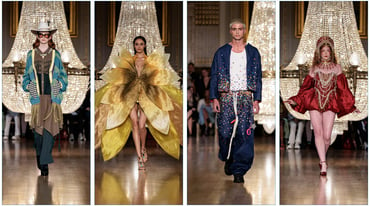

Plaid-à-Porter at Berlin Fashion Week SS27: Unseasonal
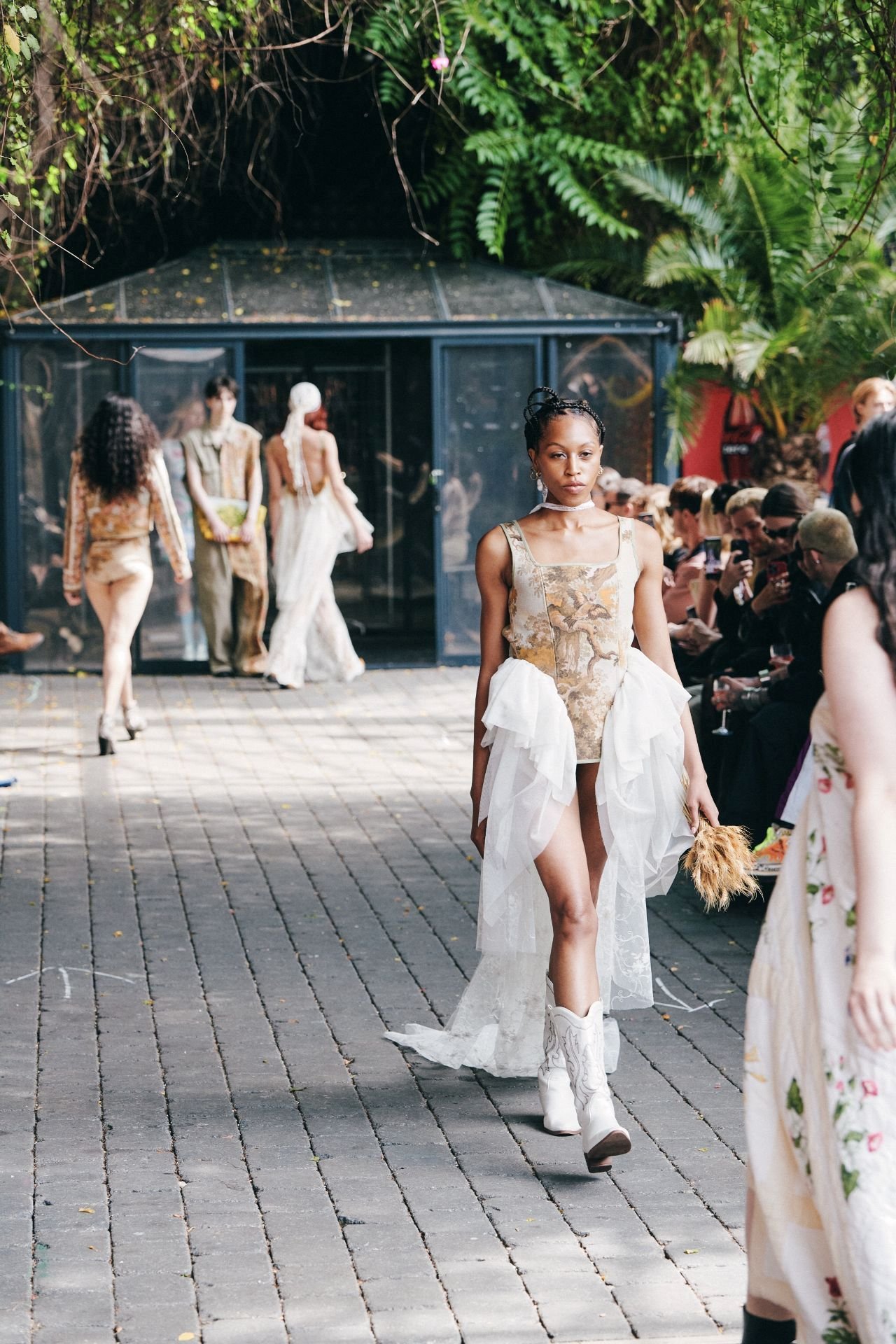
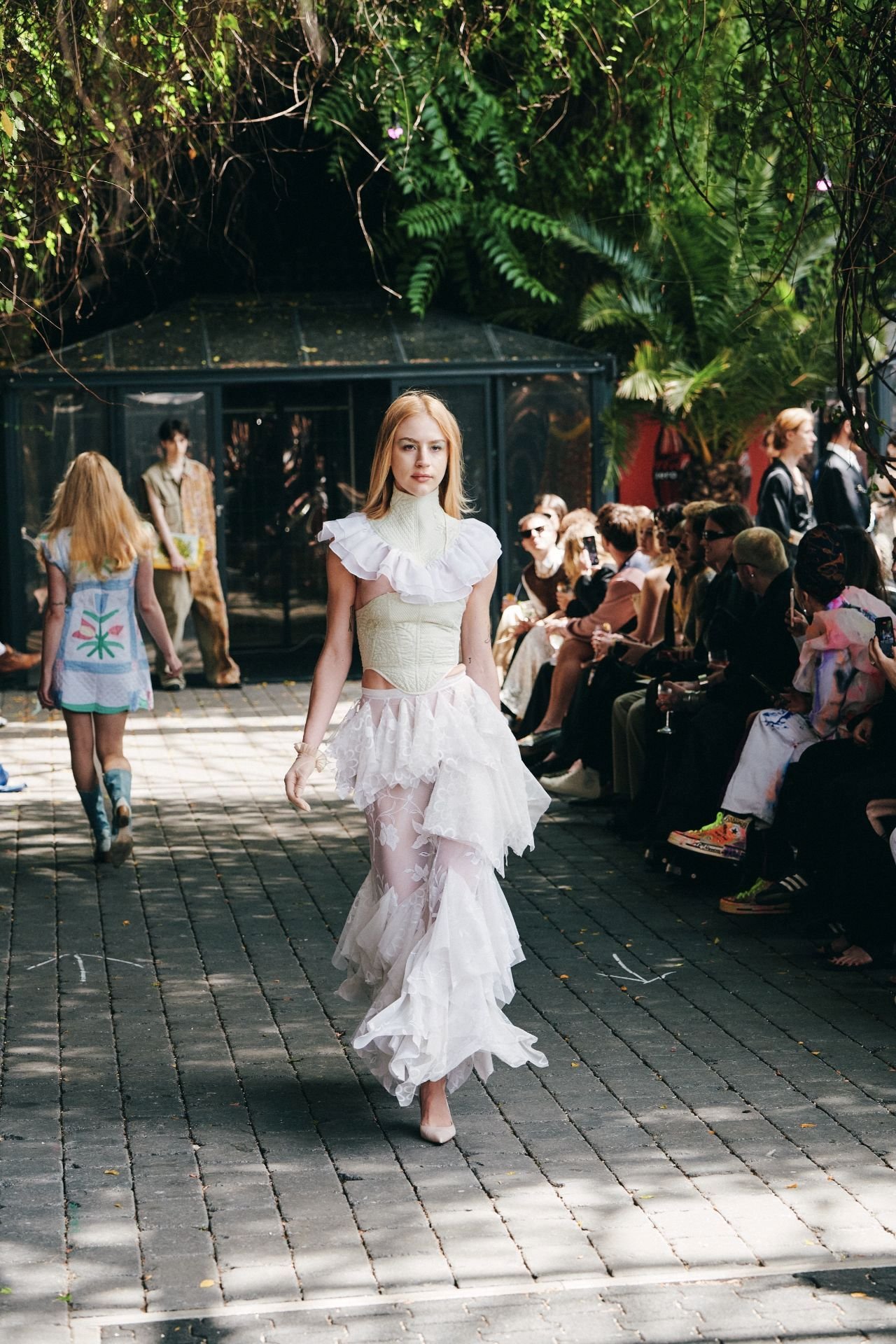
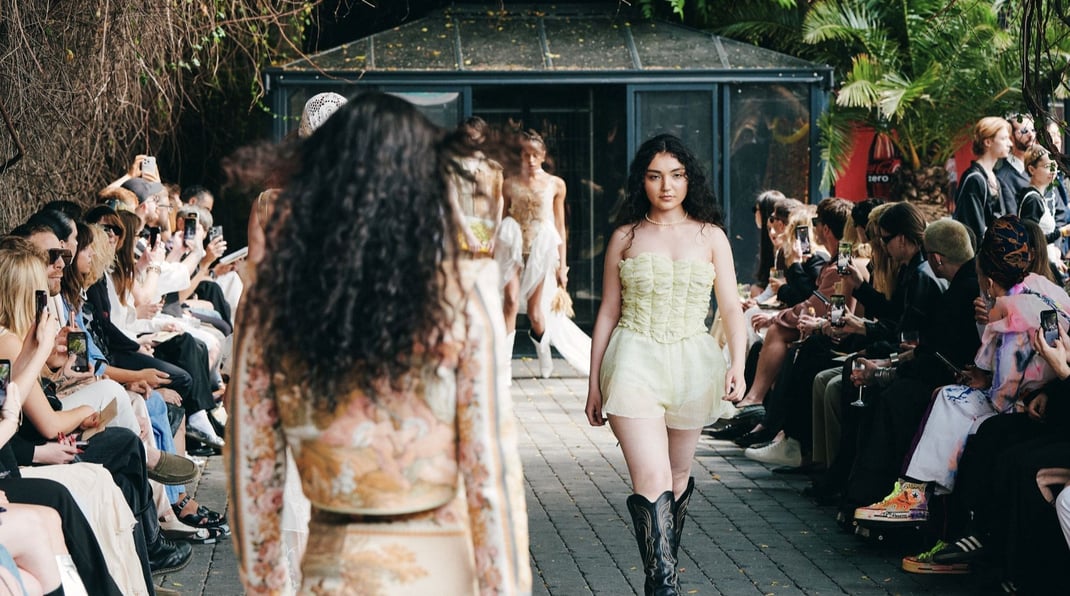
What if fashion abandoned seasons altogether? At Berlin Fashion Week SS27, Plaid-à-Porter asked exactly that question. With “UNSEASONAL,” the label presented a format that blended a runway show with a spatial installation, delivering a couture collection crafted entirely from curated vintage textiles and one of the week’s most artistically ambitious presentations.
Dissolving the Seasons
The central concept behind “UNSEASONAL” was the dissolution of traditional fashion seasons, framed explicitly as an artistic response to climate change and overproduction. It was a bold and timely proposition, engaging directly with two of the most urgent challenges facing the fashion industry today.
The seasonal calendar has long structured how fashion operates, driving relentless production cycles and encouraging constant consumption. By questioning that structure, Plaid-à-Porter positioned its collection as a genuine intervention, using the language of couture and performance to challenge the industry’s fundamental assumptions. At a moment when climate change makes the traditional seasonal calendar increasingly nonsensical, and when overproduction has become one of fashion’s defining problems, this argument carried real weight.
Couture From Vintage Textiles
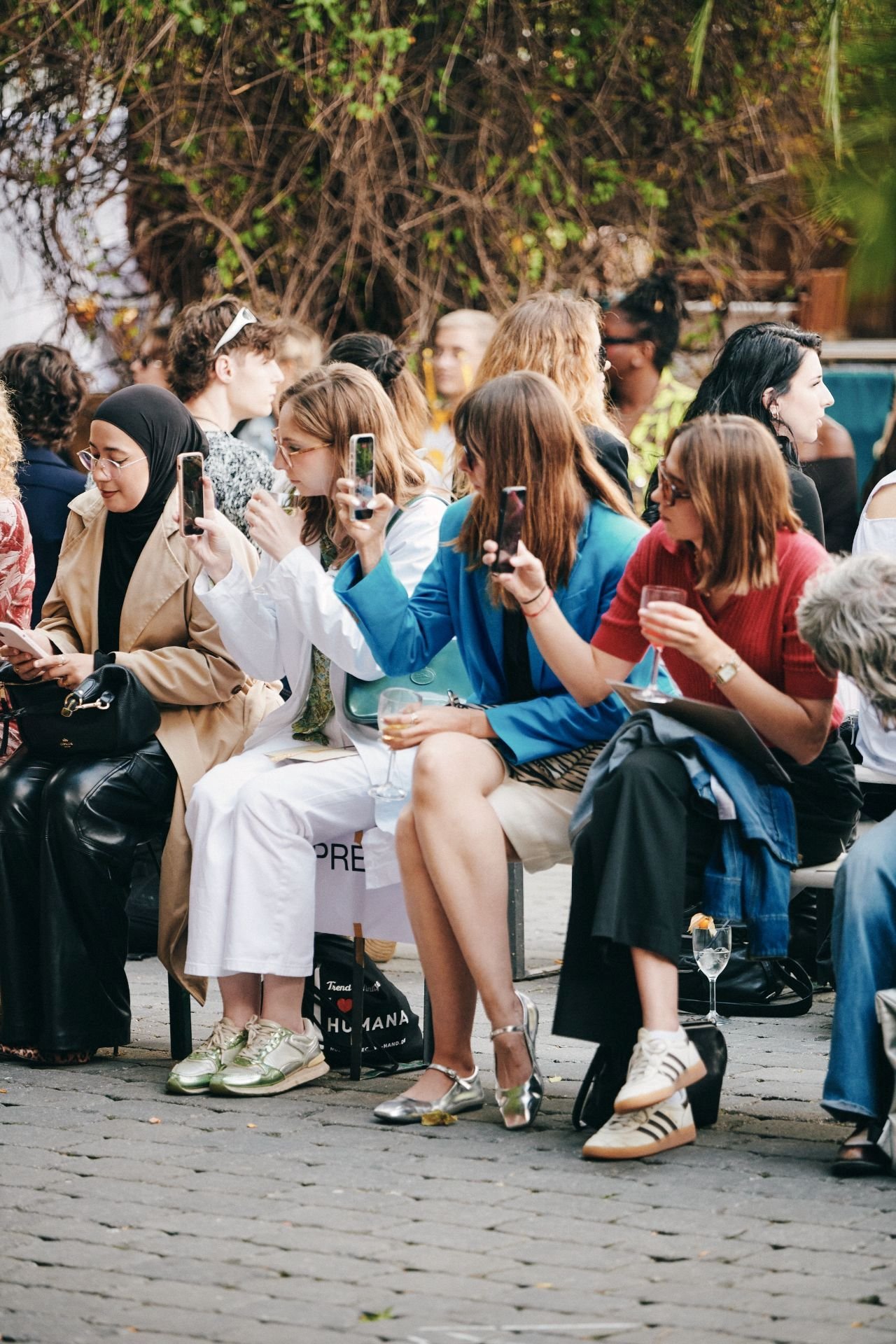
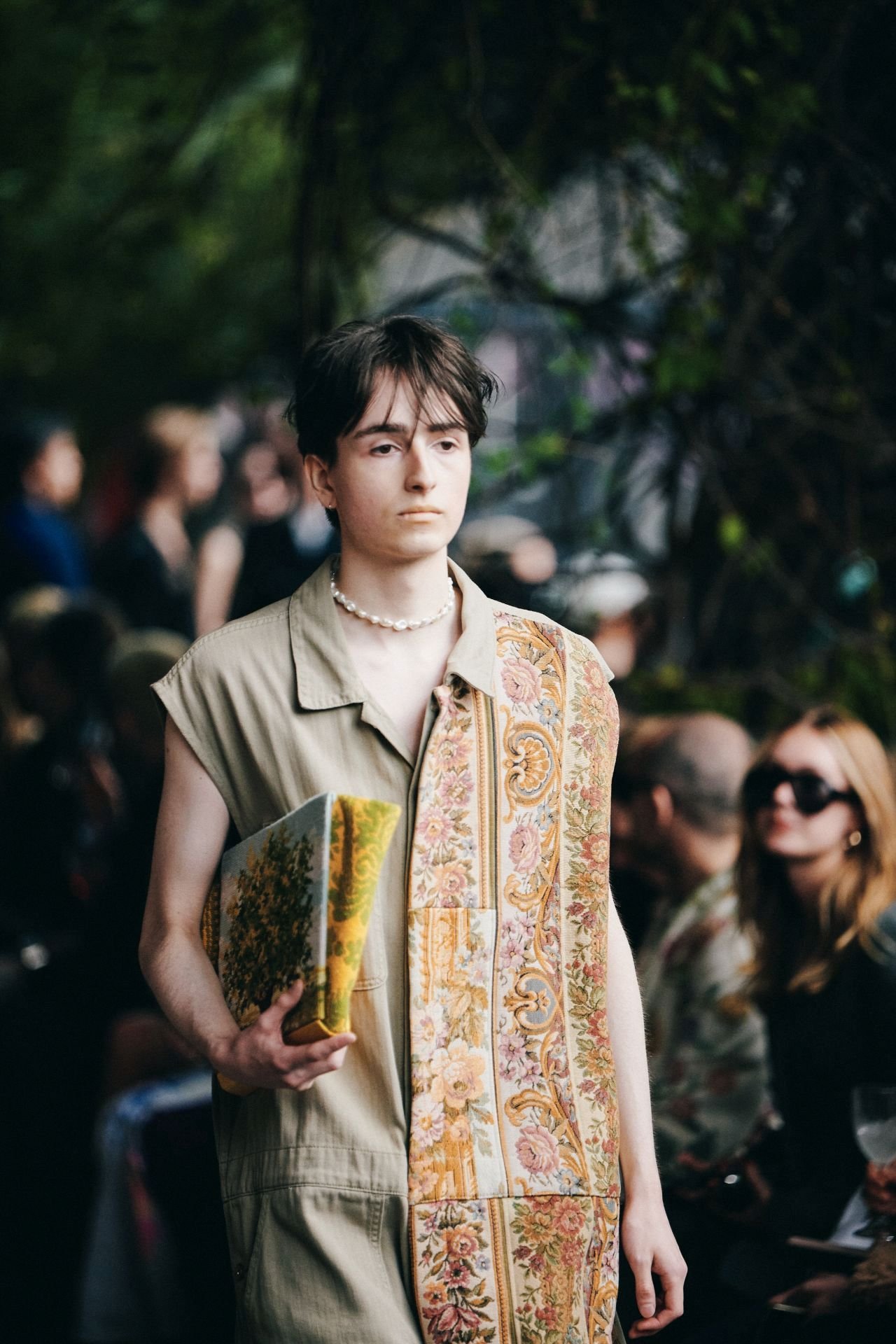
The collection embodied its own critique through its materials. Every piece was a couture creation made entirely from curated vintage textiles, demonstrating that the highest level of craftsmanship and design can be achieved without producing a single new meter of fabric. This approach connected the collection’s conceptual argument directly to its physical reality, ensuring that the message and the making were in perfect alignment.
Working exclusively with curated vintage textiles requires a particular kind of creative discipline. Each fabric carries its own history, its own limitations, and its own character, demanding that the designer work with the material rather than imposing upon it. The couture-level results demonstrated genuine skill and imagination, transforming existing textiles into pieces of real beauty and technical accomplishment.
Music, Performance, and Vivaldi Reimagined
What elevated “UNSEASONAL” from a strong collection into a genuinely memorable artistic event was its integration of music and performance. Blending a runway show with a spatial installation, the presentation offered a complete reinterpretation of Vivaldi’s “Four Seasons” on the stage, an extraordinary choice of conceptual precision given the collection’s central theme.
Vivaldi’s “Four Seasons” is perhaps the most famous musical celebration of the seasonal cycle in the Western canon, making its reinterpretation the perfect accompaniment to a collection about the dissolution of fashion’s seasons. In the performance, virtuoso violin passages met spoken poetry, creating a rich, layered soundscape that gave the presentation genuine emotional and artistic depth.
This interweaving of music, poetry, performance, and fashion transformed the show into a complete artistic experience, engaging the audience intellectually and emotionally while reinforcing the collection’s argument at every level.
Final Thoughts
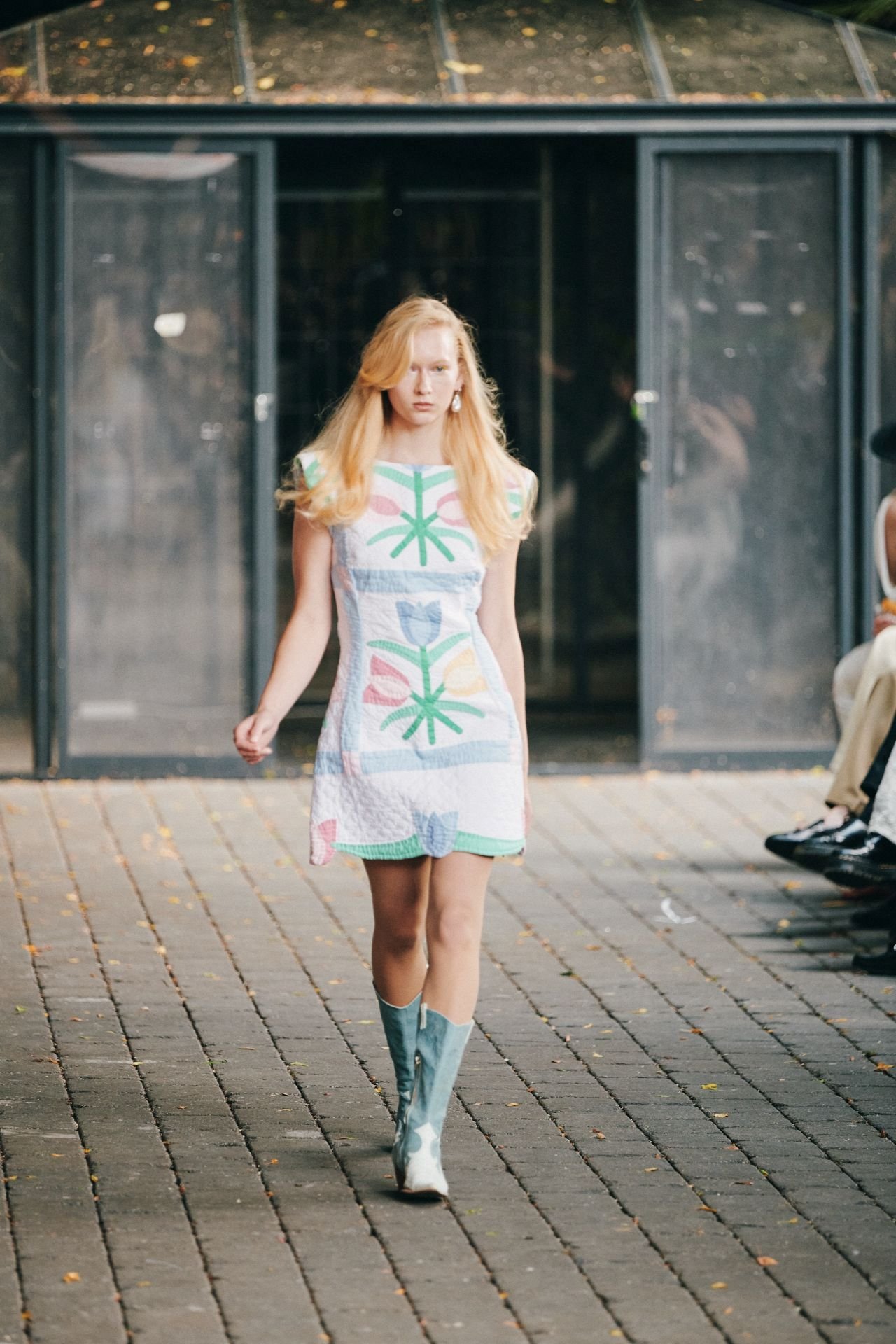
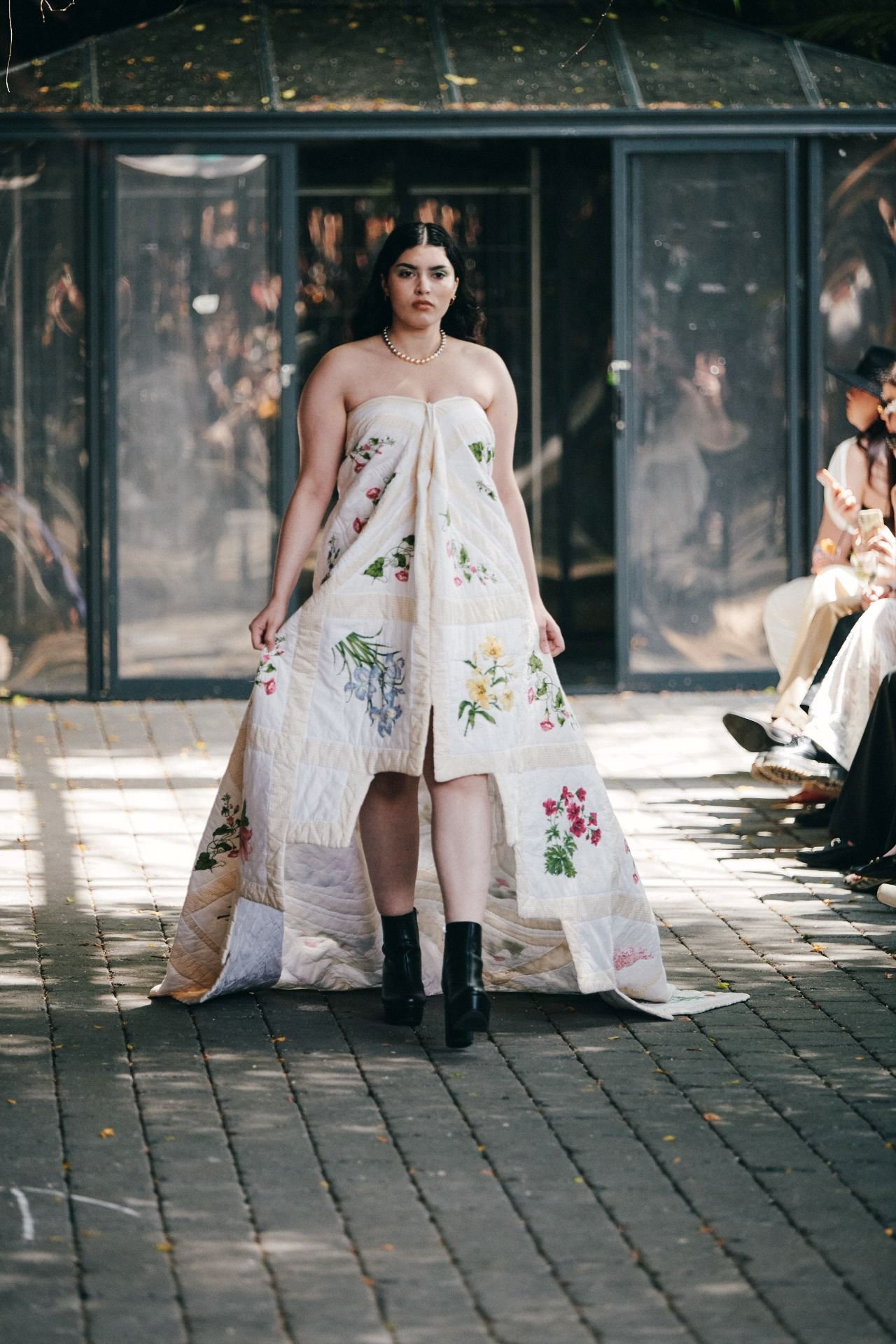
Plaid-à-Porter’s “UNSEASONAL” was one of the most conceptually rigorous and artistically ambitious presentations of Berlin Fashion Week SS27. By creating a couture collection entirely from curated vintage textiles, framing it as an artistic response to climate change and overproduction, and accompanying it with a complete reinterpretation of Vivaldi’s “Four Seasons,” the label delivered a show that was as intelligent as it was beautiful. In questioning fashion’s most basic organizing principle, Plaid-à-Porter offered a genuinely provocative vision of what the industry could become.
Plaid-à-Porter and the Berlin Fashion Week Context
Berlin Fashion Week has long distinguished itself from its counterparts in Paris, Milan, and New York by nurturing presentations that prioritize concept and sustainability over spectacle and commercial immediacy. That institutional context made it the natural home for “UNSEASONAL.” The city’s fashion calendar has increasingly become a platform for designers who treat the runway as a space for genuine critical inquiry rather than seasonal product launch, and Plaid-à-Porter arrived as perhaps the clearest expression of that ethos at SS27.
The label’s decision to show in Berlin rather than one of the more commercially dominant fashion capitals is itself a statement. Berlin’s creative infrastructure, its audience of editors, buyers, and cultural figures who are receptive to work that resists easy categorization, and its long association with alternative and subcultural aesthetics all provided fertile ground for a collection that asks fashion to rethink its foundational logic. Placing “UNSEASONAL” within that ecosystem amplified its argument, surrounding it with an audience primed to engage with fashion as cultural practice rather than pure commerce. For international observers, the show reinforced Berlin Fashion Week’s growing reputation as the circuit’s most intellectually serious venue.
The Craft Argument: Why Vintage Textiles Demand More, Not Less
A persistent misconception in conversations about sustainable fashion is the assumption that working with reclaimed or vintage materials represents a creative compromise, a limitation accepted in the name of ethics. Plaid-à-Porter’s “UNSEASONAL” made a persuasive counter-argument through the quality and ambition of its executed garments. Couture construction applied to vintage textiles is, by any measure, a more demanding discipline than working with purpose-manufactured fabric produced to uniform specifications.
Vintage textiles arrive with fixed quantities, irregular conditions, and histories encoded in their weave, dye, and wear. A couture maker working with new fabric can order more yardage if a pattern requires it. A designer working exclusively with curated vintage materials cannot. Every cut is irreversible in a way that compounds across an entire collection. The structural integrity of aged fabric must be assessed and respected. Pattern matching across materials of different origins requires a level of spatial and technical intelligence that exceeds standard couture practice.
The results at “UNSEASONAL” demonstrated that these constraints, properly embraced, produce garments with a singularity and material richness that new fabric cannot replicate. Each piece carried the weight of its source material’s history while being transformed into something entirely new, a quality that is difficult to manufacture and impossible to mass-produce.
What "UNSEASONAL" Signals for Fashion's Near Future
Taken together, the conceptual framing, material choices, and performative ambition of Plaid-à-Porter’s “UNSEASONAL” sketch a possible direction for fashion that a growing number of designers and critics are beginning to take seriously. The biannual seasonal calendar, codified in the twentieth century to serve a retail and production model that was already straining before climate change accelerated the pressure on it, is increasingly difficult to defend on either cultural or environmental grounds.
Several major houses and independent labels have already experimented with seasonless or reduced-calendar approaches, though few have articulated the argument with the clarity and formal completeness that Plaid-à-Porter achieved in Berlin. By embedding the critique within a couture collection of genuine quality and pairing it with a live artistic performance of real sophistication, the label demonstrated that rejecting the seasonal calendar does not require rejecting craft, beauty, or ambition.
For buyers, editors, and industry observers watching SS27, “UNSEASONAL” raised a question that will not easily be dismissed: if the seasonal model is both environmentally indefensible and creatively arbitrary, what replaces it? Plaid-à-Porter did not prescribe a single answer, but the presentation made clear that the conversation has moved beyond theory and into practice.