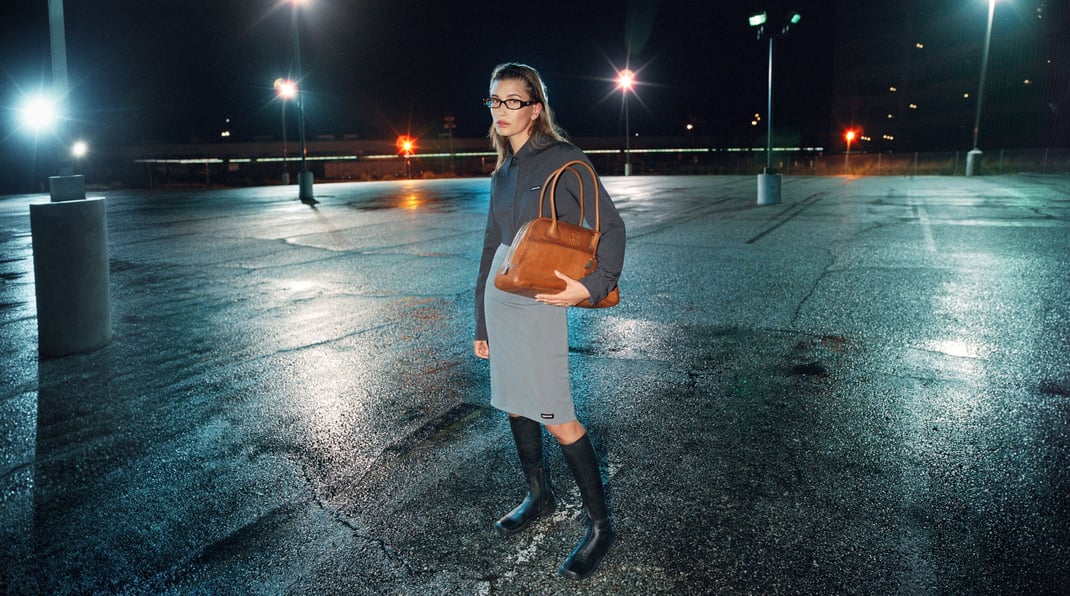

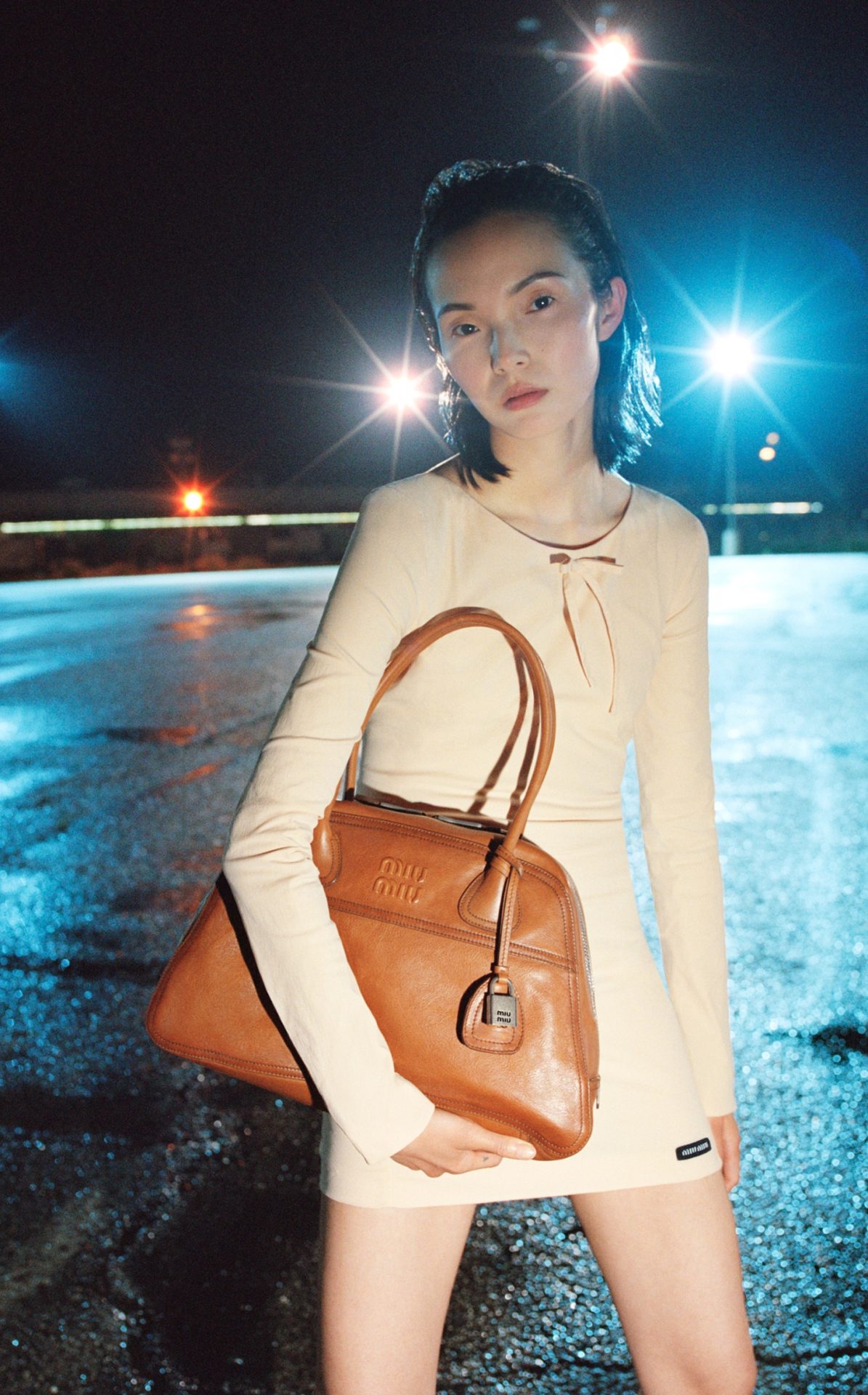
The Miu Miu Fall/Winter 2026 campaign, photographed by Zoe Ghertner under creative direction by Miuccia Prada and art direction by Christopher Simmonds, casts Hailey Bieber and Xiao Wen Ju against a nocturnal, industrial backdrop saturated in abstracted blue tones. The collection’s fabric story spans stretch poplin, washed double cashmere, linen, tweed, satin, embroidered tulle, and lingerie-inspired ribbon and bows, alongside oversized shearling-lined outerwear and an opera coat clasped at the breastbone. The campaign’s central argument, stated directly by the house, is that dressing is a declaration and presence is the ultimate expression.
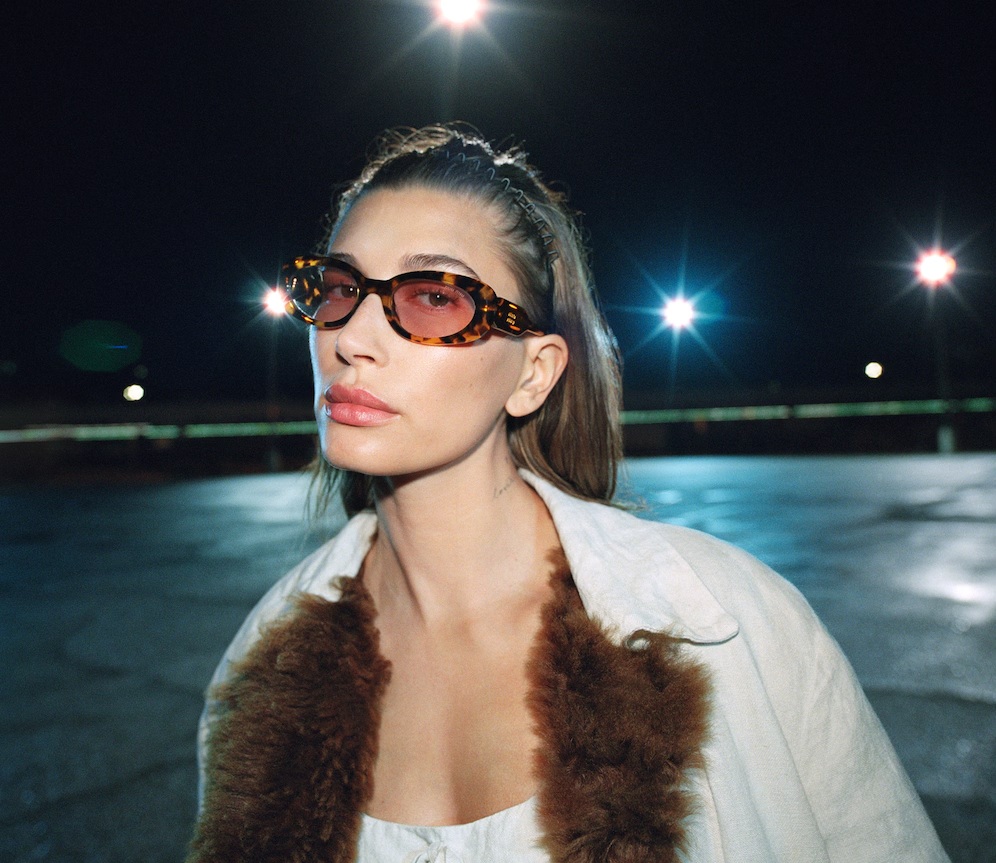
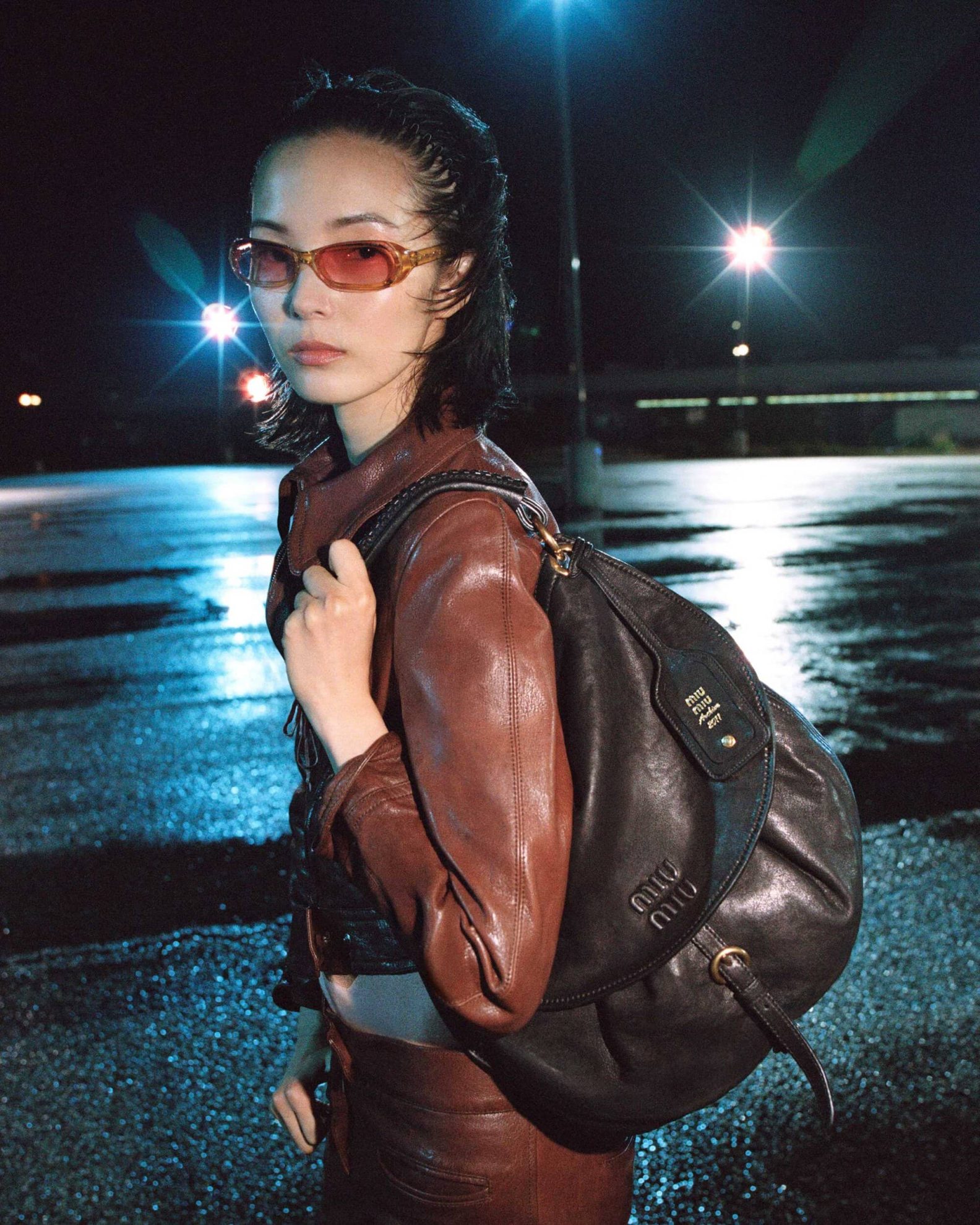
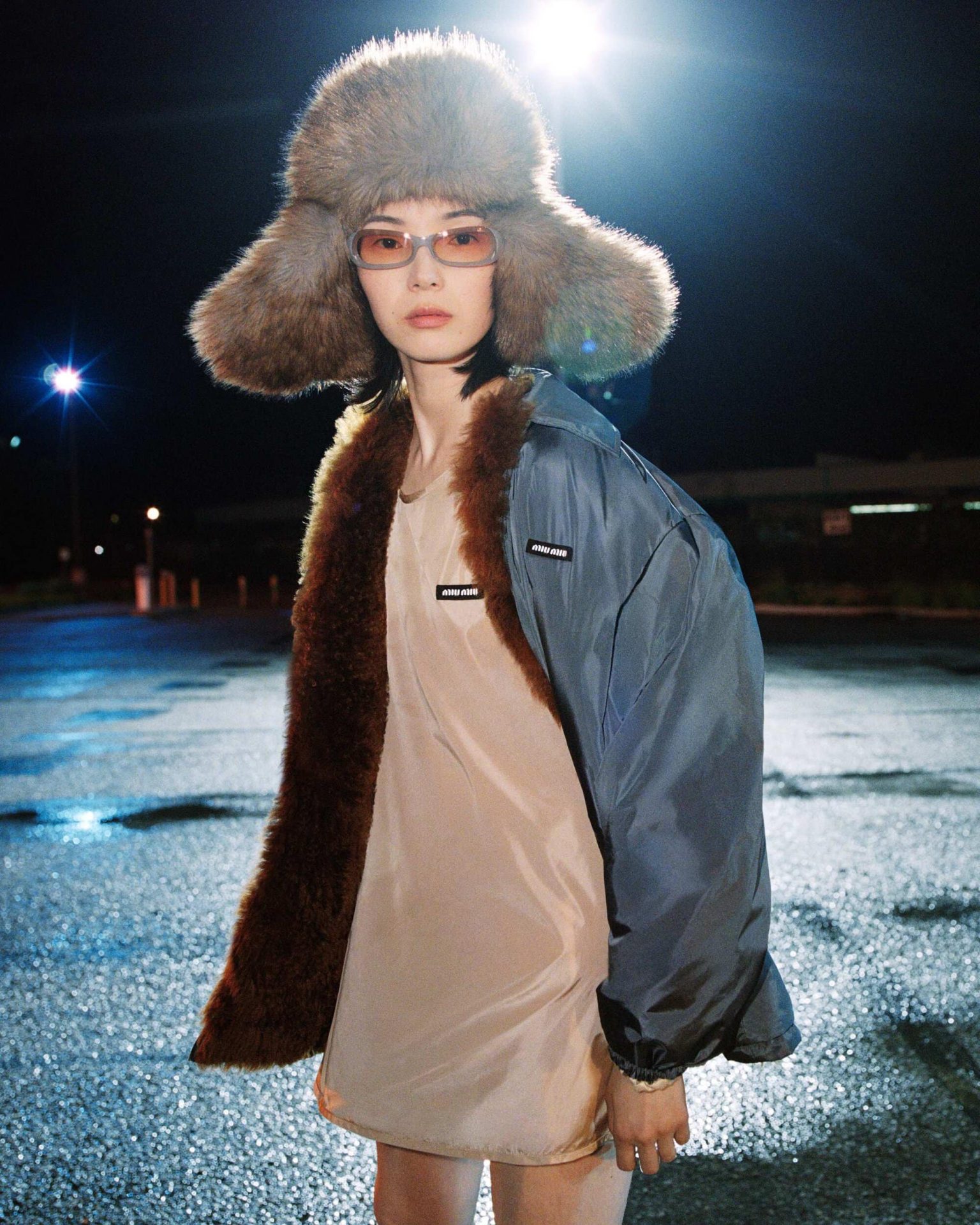
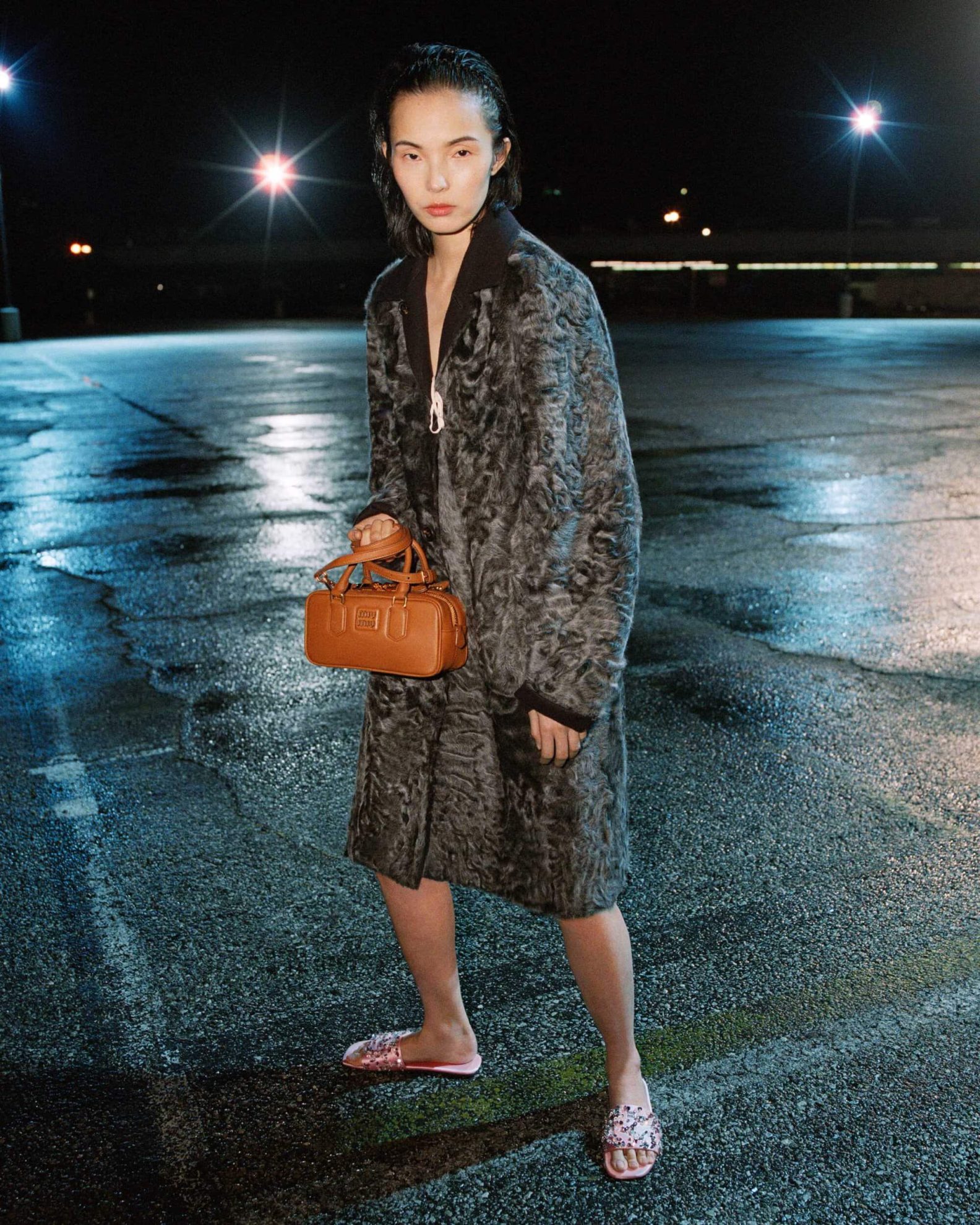
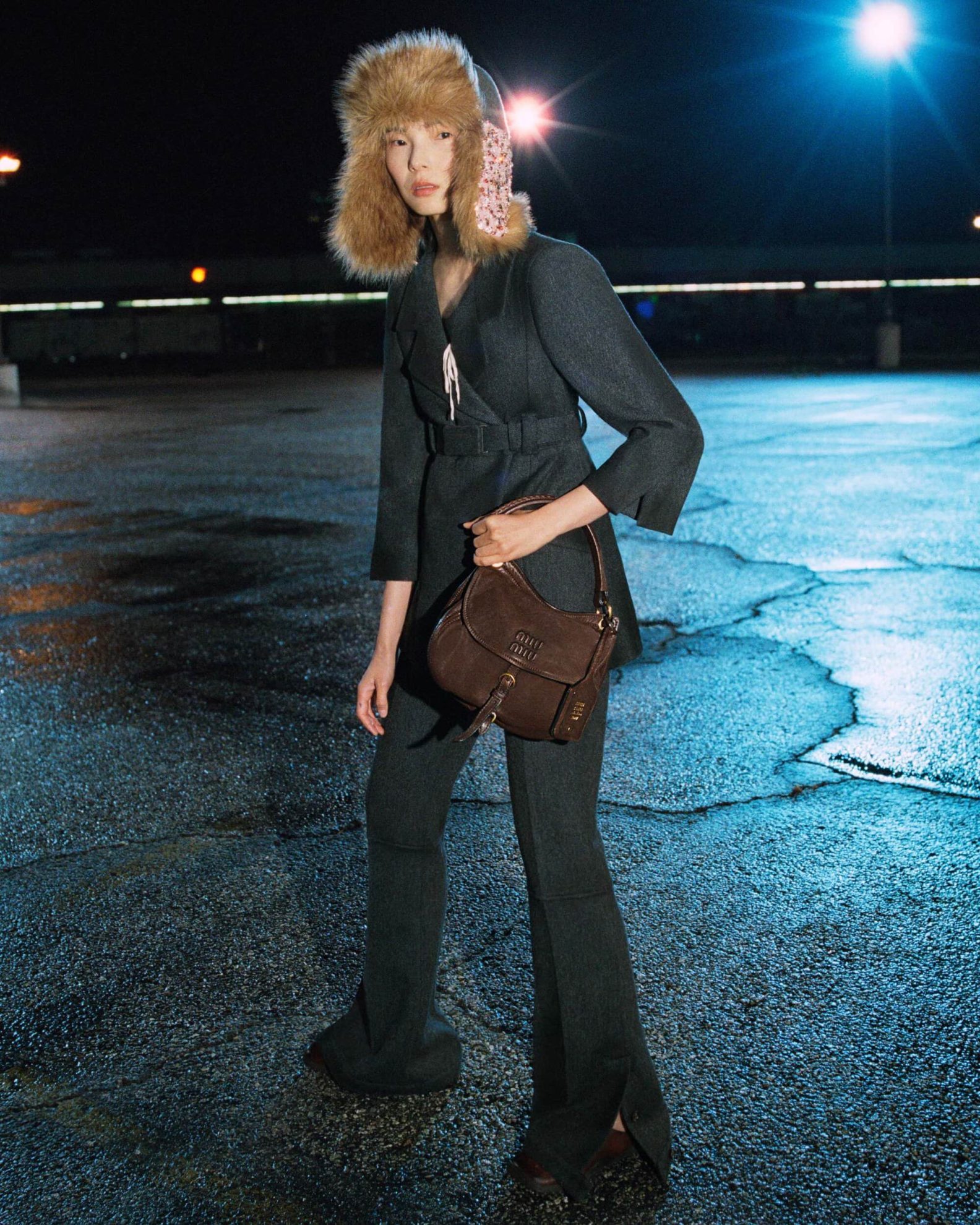
- The Miu Miu Fall/Winter 2026 campaign, photographed by Zoe Ghertner under creative direction by Miuccia Prada and art direction by Christopher Simmonds, casts Hailey Bieber and Xiao Wen Ju against a nocturnal, industrial backdrop saturated in abstracted tones of blue, with flash photography that flattens space and heightens texture so that each frame reads as a solitary encounter rather than a narrative sequence.
- The campaign’s central argument is that presence is the collection’s primary garment: the house states directly that “dressing is declaration” and “presence becomes the ultimate expression,” positioning the clothes not as objects to be displayed but as instruments through which a woman makes herself legible on her own terms.
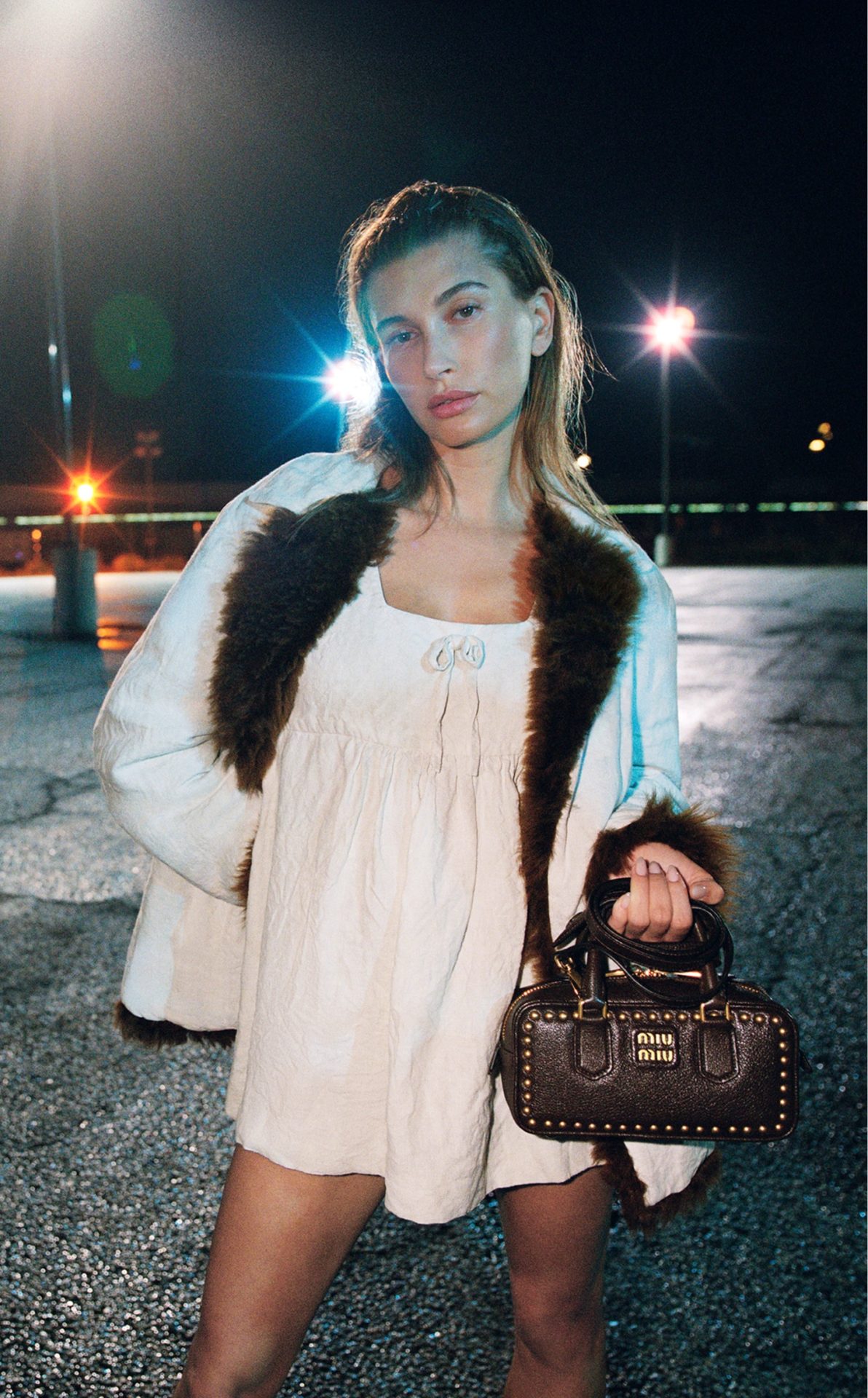
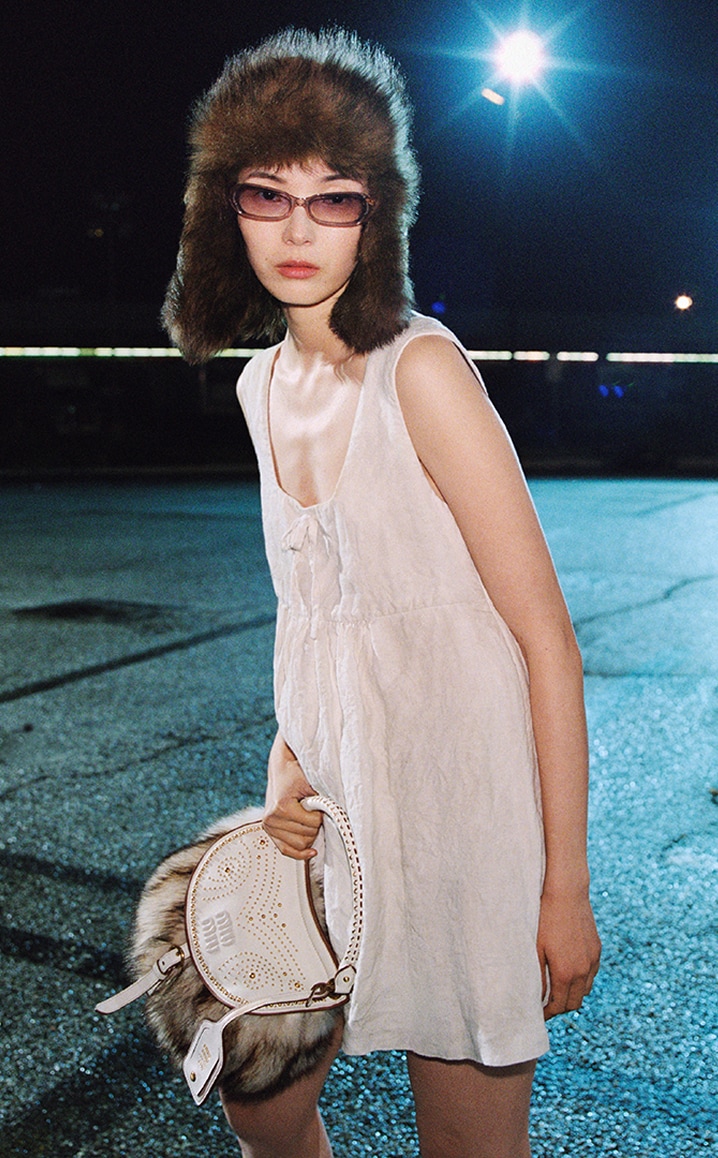
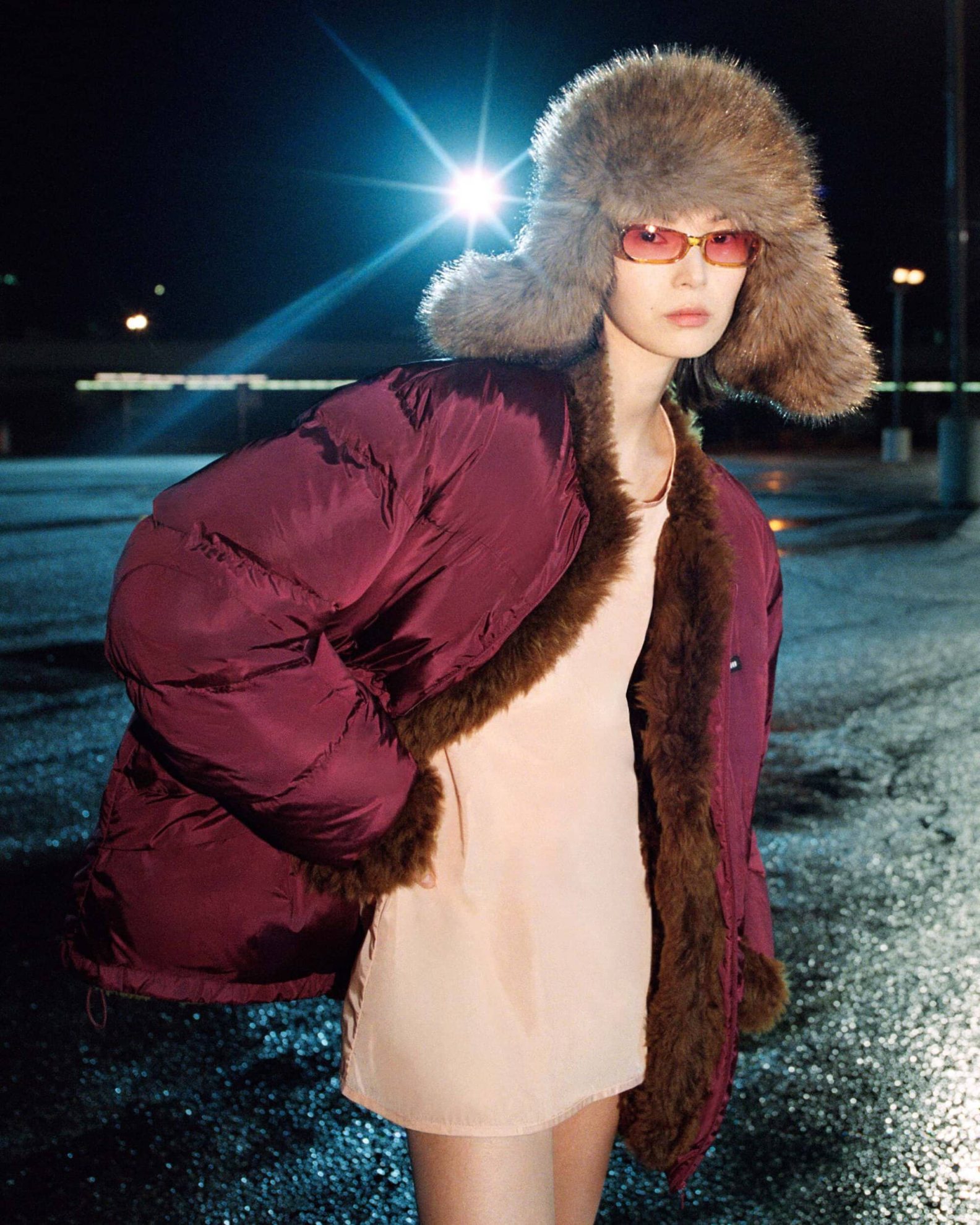
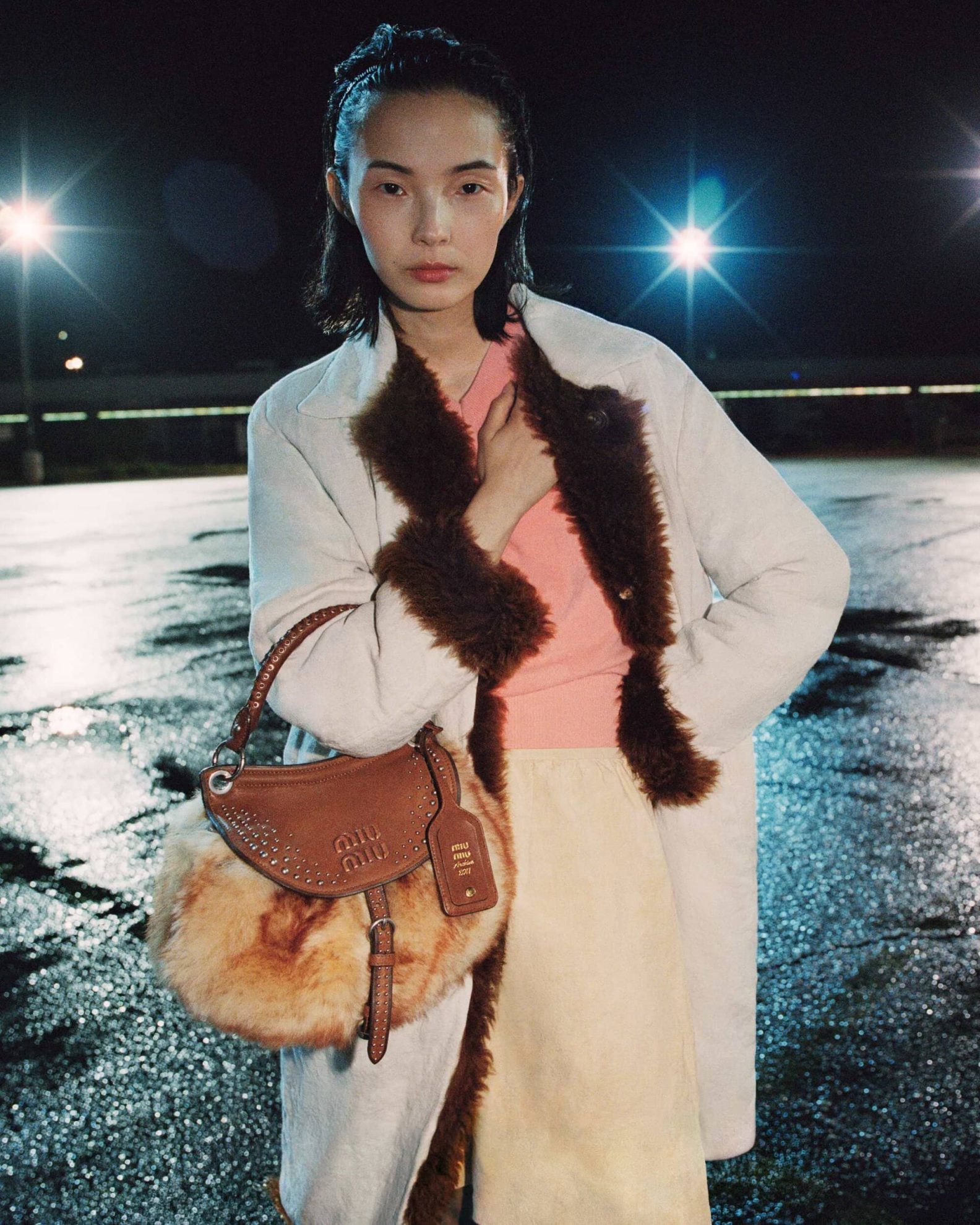
- The collection’s fabric story is built on garments worn close to the skin in washed fabrications: stretch poplin, washed double cashmere, linen, satin, embroidered tulle, and lingerie-inspired detailing in ribbon and bows sit alongside leather and tweed; outerwear spans oversized shearling-lined zip-fronted jackets, an opera coat clasped at the breastbone, and cosseting trapper hats described by the house as “romantic but always worldly.”
- The campaign’s femininity concept is structural rather than decorative: the source describes it as “fluid and self-authored,” shifting between vulnerability and control, innocence and awareness, intimacy and detachment, with the house stating explicitly that “these tensions are not oppositions but coexistences” and that “delicacy is prized but results in authority.”
- The critical tension is embedded in the campaign’s own visual logic: Ghertner’s flash photography renders the industrial setting unreal, transforming the everyday into the cinematic, but a campaign that positions stillness as performative risks making composure itself into a spectacle, which is precisely the condition the collection’s concept of self-authored femininity is designed to resist.
The flash fires. Space flattens. Hailey Bieber and Xiao Wen Ju emerge from a flickering industrial backdrop, their presence in sharp focus against abstracted tones of blue. The setting is nocturnal, suspended, and deliberately unresolved.
That visual grammar is the campaign’s first argument. Zoe Ghertner, working under creative direction by Miuccia Prada and art direction by Christopher Simmonds, uses flash not to illuminate but to isolate. Each frame exists as a solitary encounter. The still and moving image campaign does not build a world for the clothes to inhabit. It builds a condition: one in which the body is the only fixed point.
Dressing is declaration.
When the Fabric Becomes the Argument
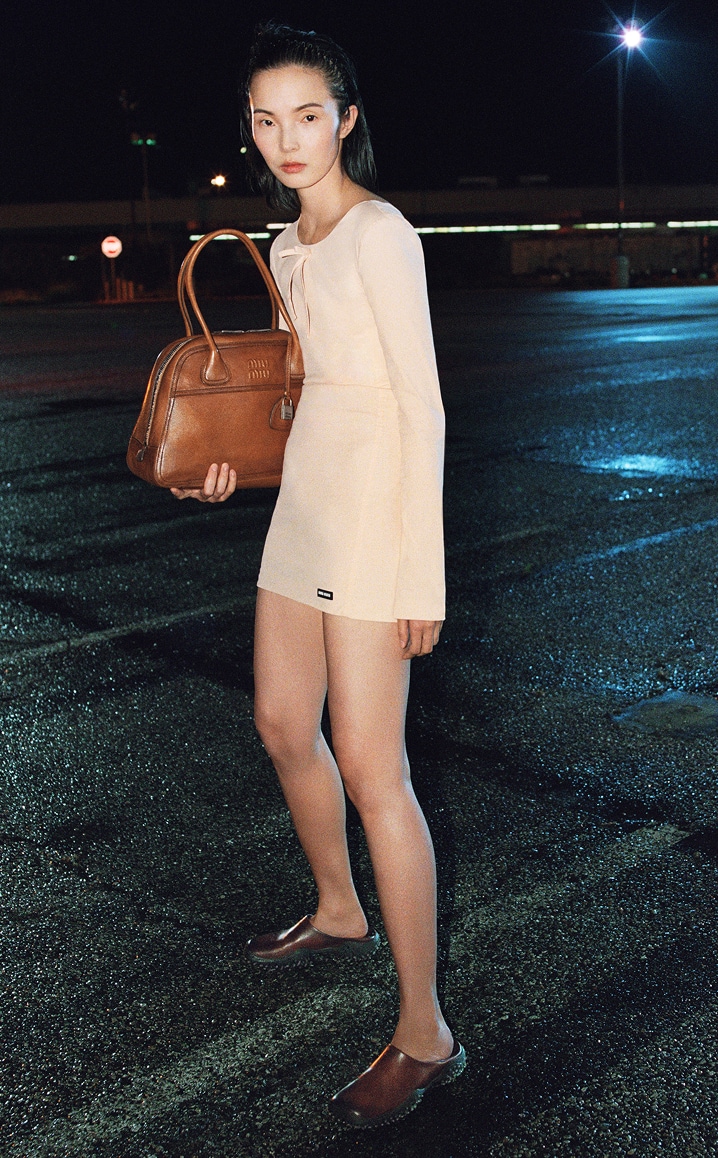
The collection’s garments are worn close to the skin in gentle, washed fabrications. That construction choice is precise. Stretch poplin, washed double cashmere, satin, and embroidered tulle do not hold the body at a distance. They register it. Lingerie-inspired detailing, ribbon and bows, extends that logic: the garment acknowledges the body beneath it rather than concealing it.
The source frames this as coexistence rather than contradiction. Clothing operates as armor and expression simultaneously, assertive and protective, concealed yet revealed. The delicacy of the fabrications is not a softening of the collection’s authority. It is the source of it.
Outerwear operates differently. The oversized shearling-lined zip-fronted jackets and the opera coat clasped at the breastbone add volume and structure where the base layer removes it. The trapper hats extend that enclosure upward. The house describes this outerwear as romantic but always worldly, and the distinction matters: the romance is not nostalgic. It is present-tense.
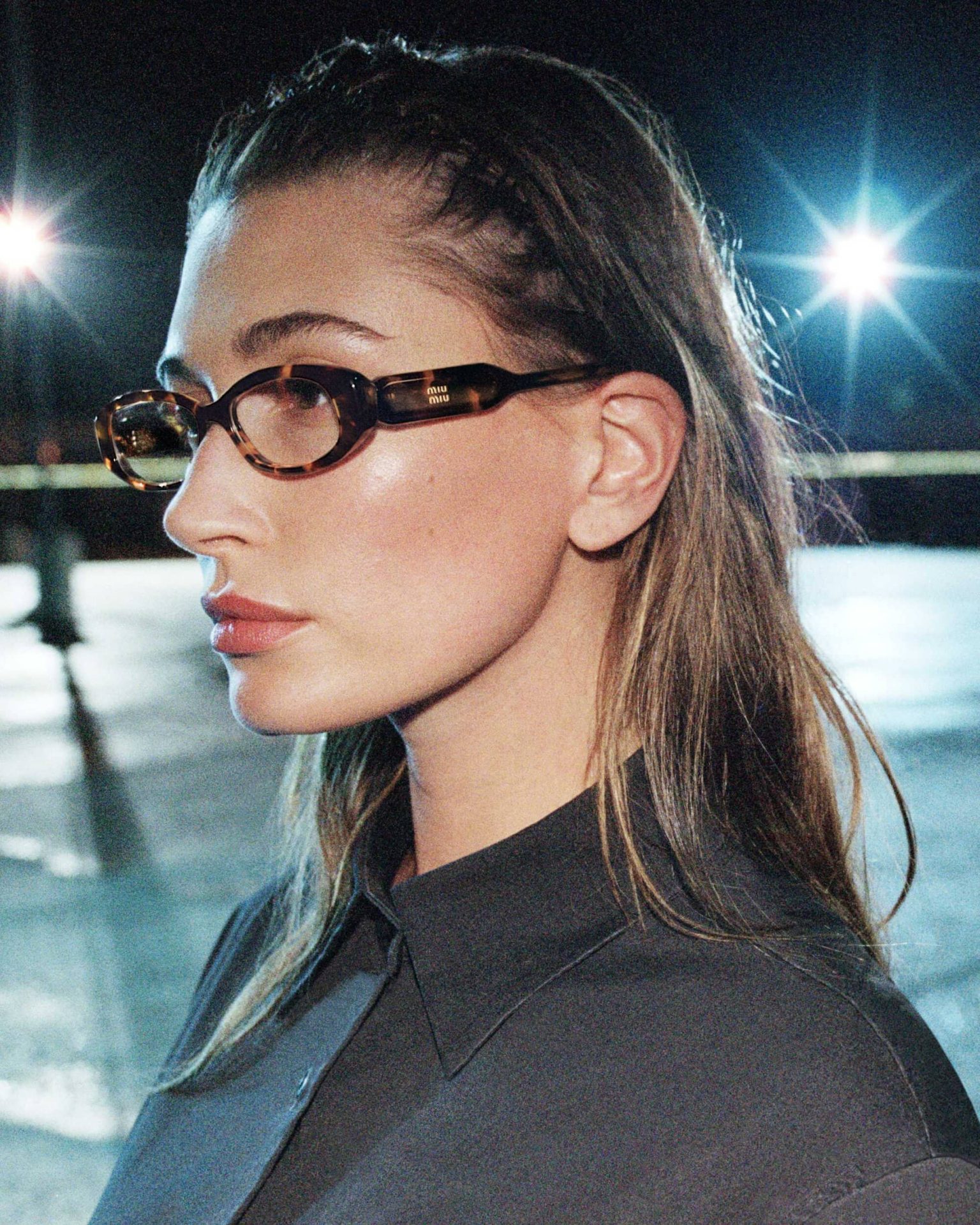
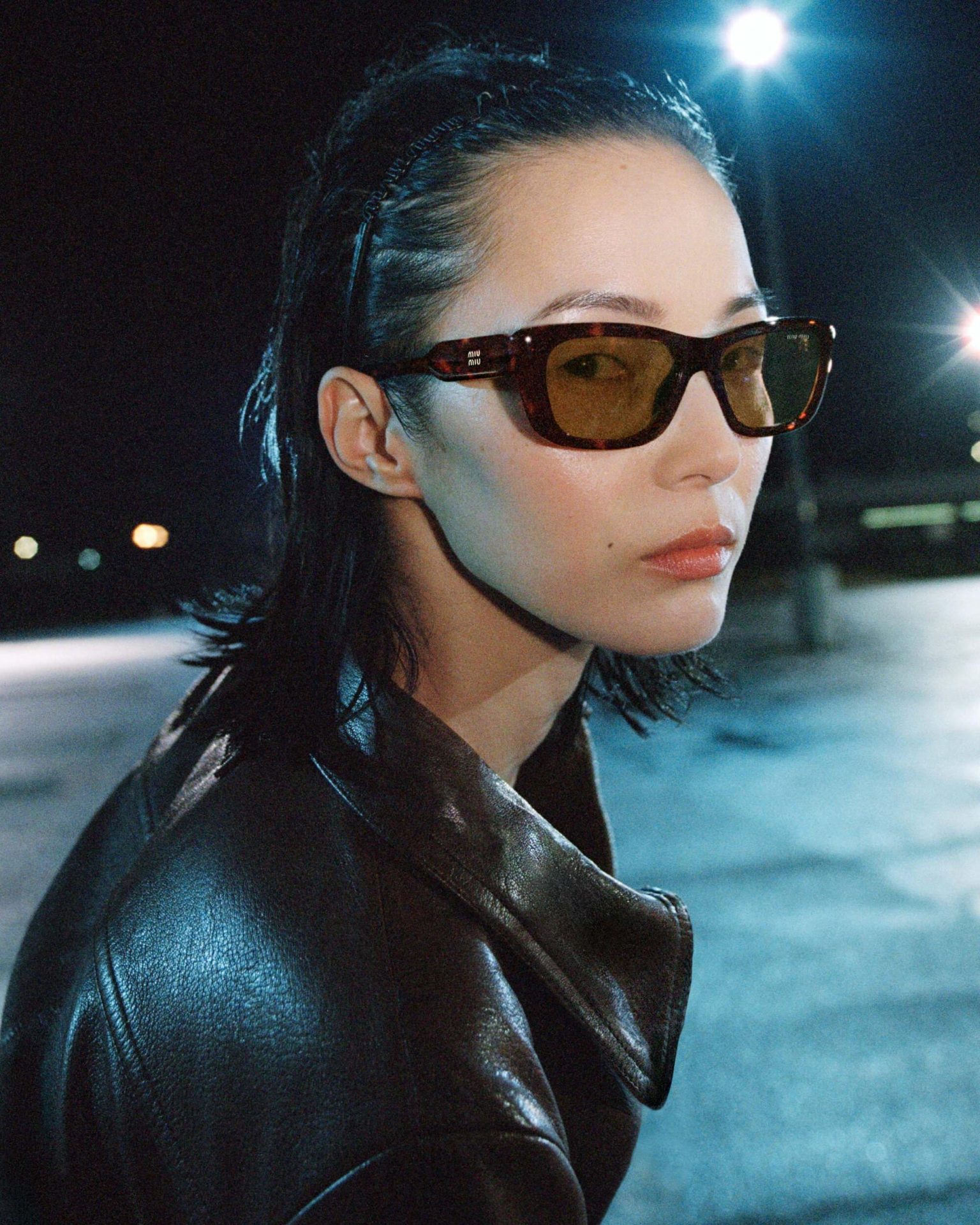
Accessories follow the same dual logic. The Vivant bag, the Rendez-vous, and the Arcadie are crafted in soft leather. The Bubble shoe, first introduced in the early 2000s, is reiterated here. Stretch leather knee-high boots and elaborate slides are described as precious and pragmatic. Eyewear loosely references a 1970s aesthetic and, the source notes, ensures privacy while amplifying an assertive gaze.
The Crepuscular Setting and Its Risk
Ghertner’s flickering factory frame is not incidental. Photography that ruptures space, flattening depth and heightening texture, makes the real unreal. The campaign positions this as transformation: the everyday becomes cinematic, stillness becomes performative. Each image is a contained encounter, not a scene.
The femininity on display is described by the house as fluid and self-authored, shifting between vulnerability and control, innocence and awareness, intimacy and detachment. These are not oppositions, the source insists, but coexistences. The campaign’s visual language supports that claim: the crepuscular setting removes context, leaving only the body and the clothes it has chosen.
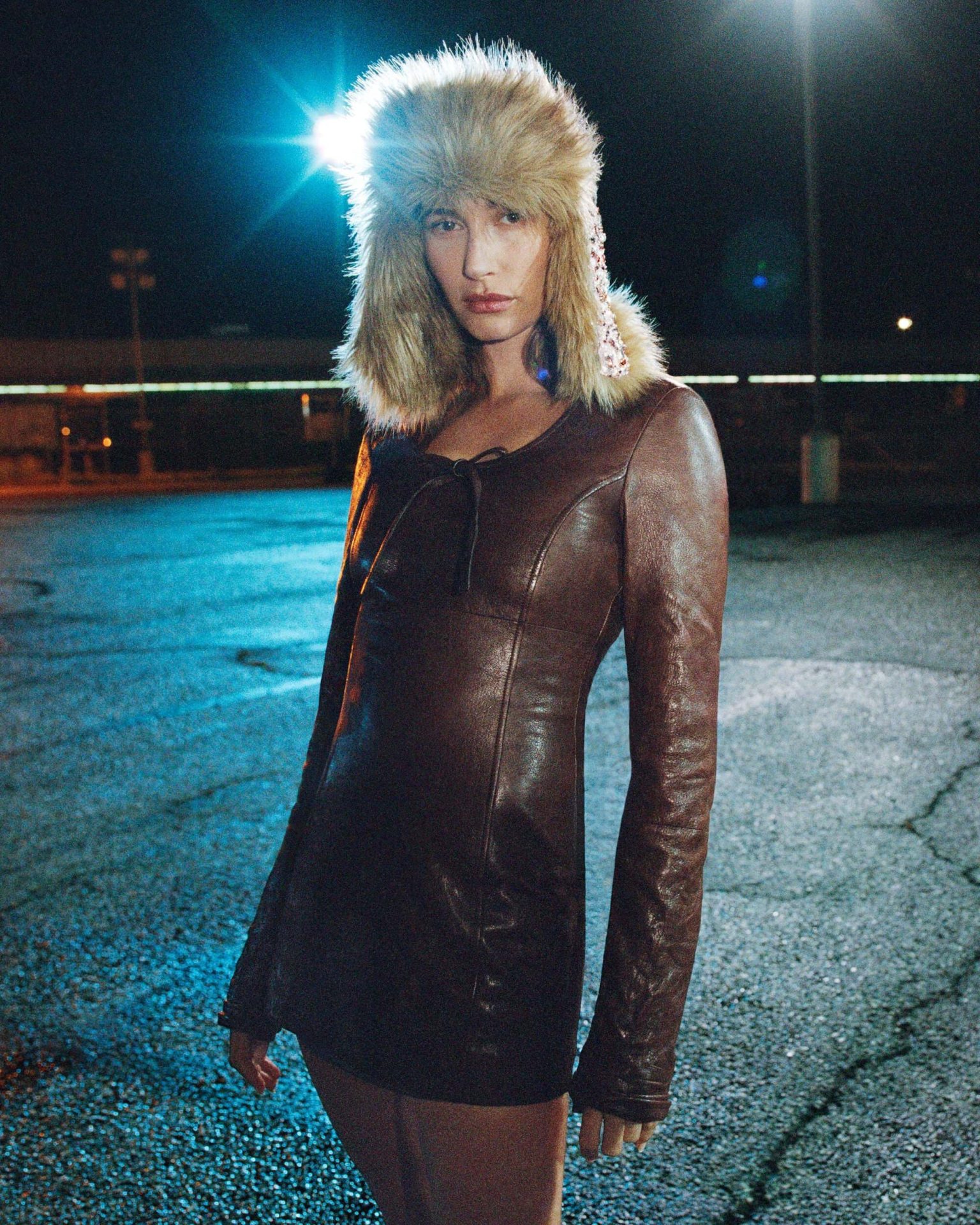
The critical tension is structural. A campaign that makes stillness performative risks turning composure into its own kind of spectacle. The concept of femininity as fluid and independently authored depends on the woman being the author of her own image, not a subject arranged within a carefully constructed atmosphere. Ghertner’s technique is precise and controlled. Whether the campaign’s nocturne serves the clothes or frames them is the question the work leaves open.
The house’s answer is embedded in the fabric choices. Garments worn close to the skin in washed fabrications do not perform. They declare.
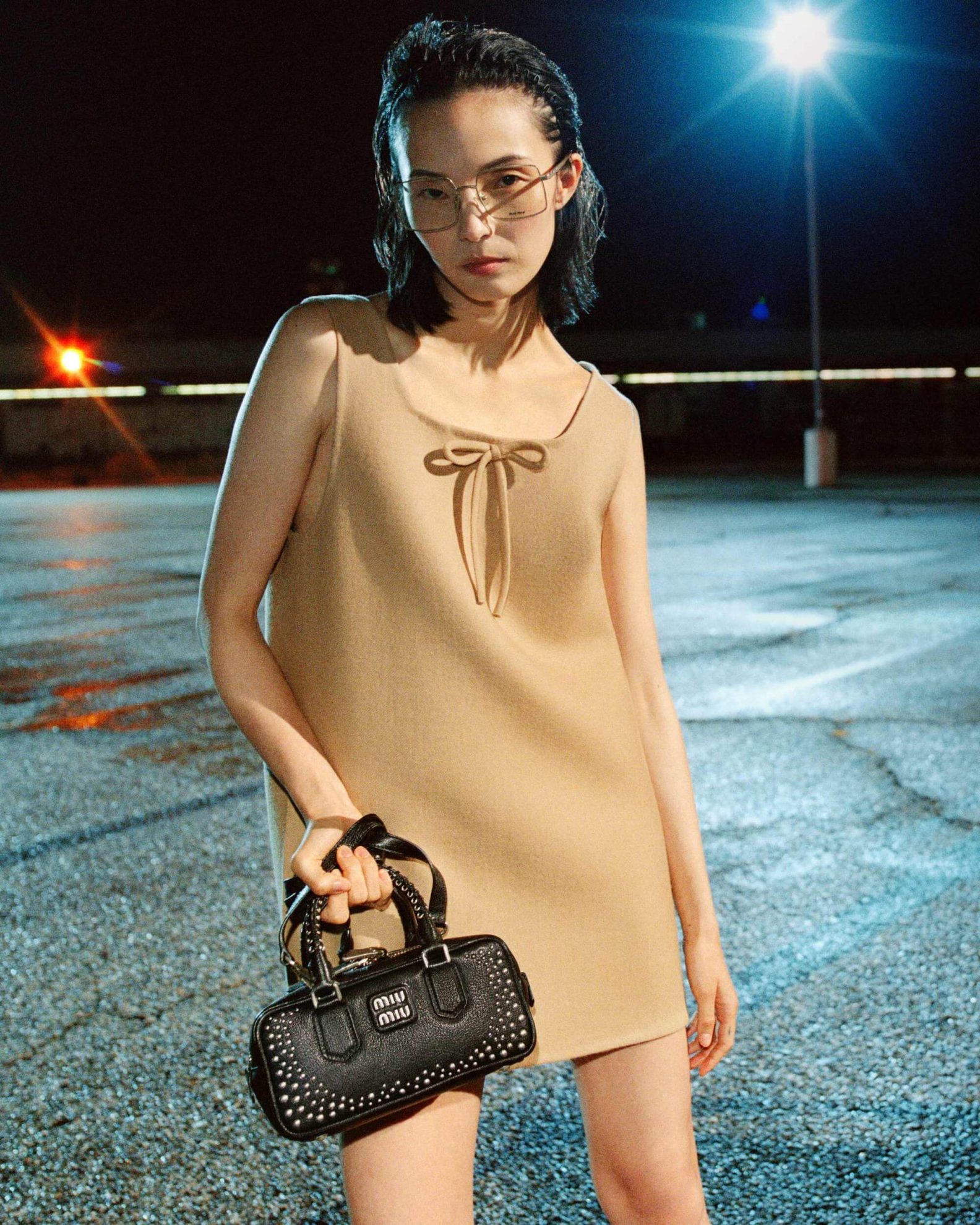
The Miu Miu FW26 campaign is a precise argument for the body’s relationship to what it wears as the primary instrument of dressing. Ghertner’s photography and Prada’s fabric story work toward the same conclusion: that authority is not constructed through volume or spectacle but through contact. For the house, the campaign confirms that the most direct statement of femininity is also the most considered one.
Images Courtesy of Miu Miu
In other campaign news, Bottega Veneta’s “IL MIO” Asks What a Bag Means After You’ve Lived With It