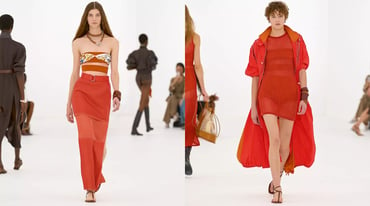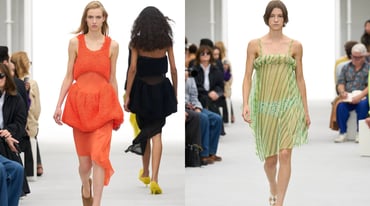

Lorenzo Serafini’s fourth show for Alberta Ferretti rests on a palette the house has never leaned on and a 1920s argument about freedom, in a brand that now sells one wardrobe to the customers of two former labels. The clothes make the case; a house generating 7.6 percent of Aeffe’s revenue will settle it
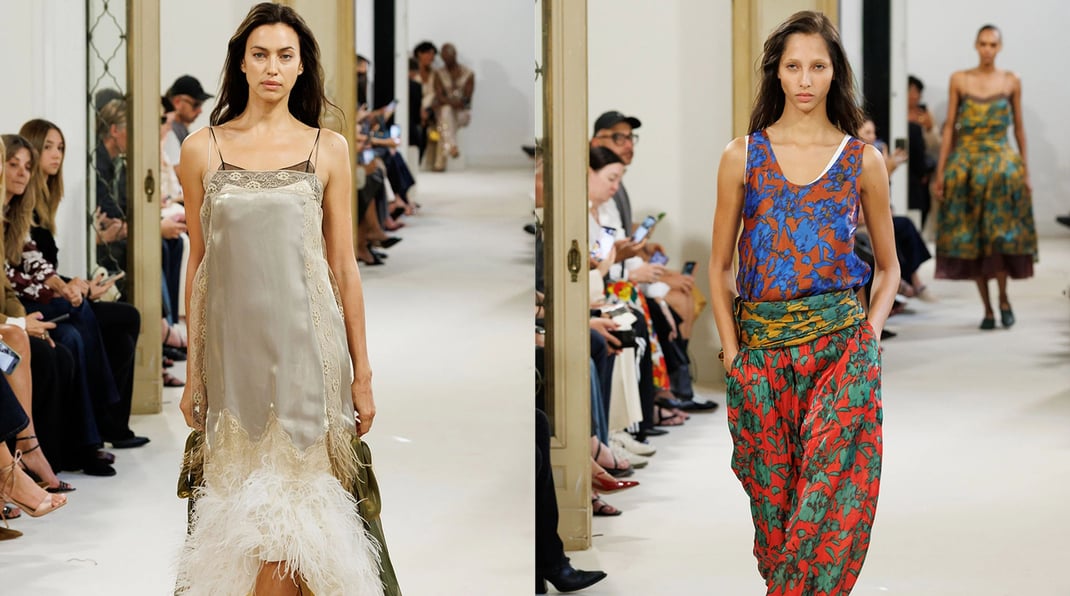
Alberta Ferretti showed Spring/Summer 2027, titled “A Beautiful Escape,” in the salons of its Milan headquarters on Sept. 24, 2026, in Milan Fashion Week’s 4 p.m. slot. Saturated blue, teal, rust and mustard ran against ivory and black, with lilac, pistachio and powder pink held for the lighter end. The season’s argument is color, and the test is whether a house built on two merged labels can turn it into a print-and-color system the wholesale floor can repeat.
The Collection’s Central Idea
MILAN — Alberta Ferretti showed its Spring/Summer 2027 collection in the salons of its Milan headquarters on Sept. 24, the fourth runway outing for creative director Lorenzo Serafini and the first built on color, in a house that now sells one wardrobe to the customers of two former labels.
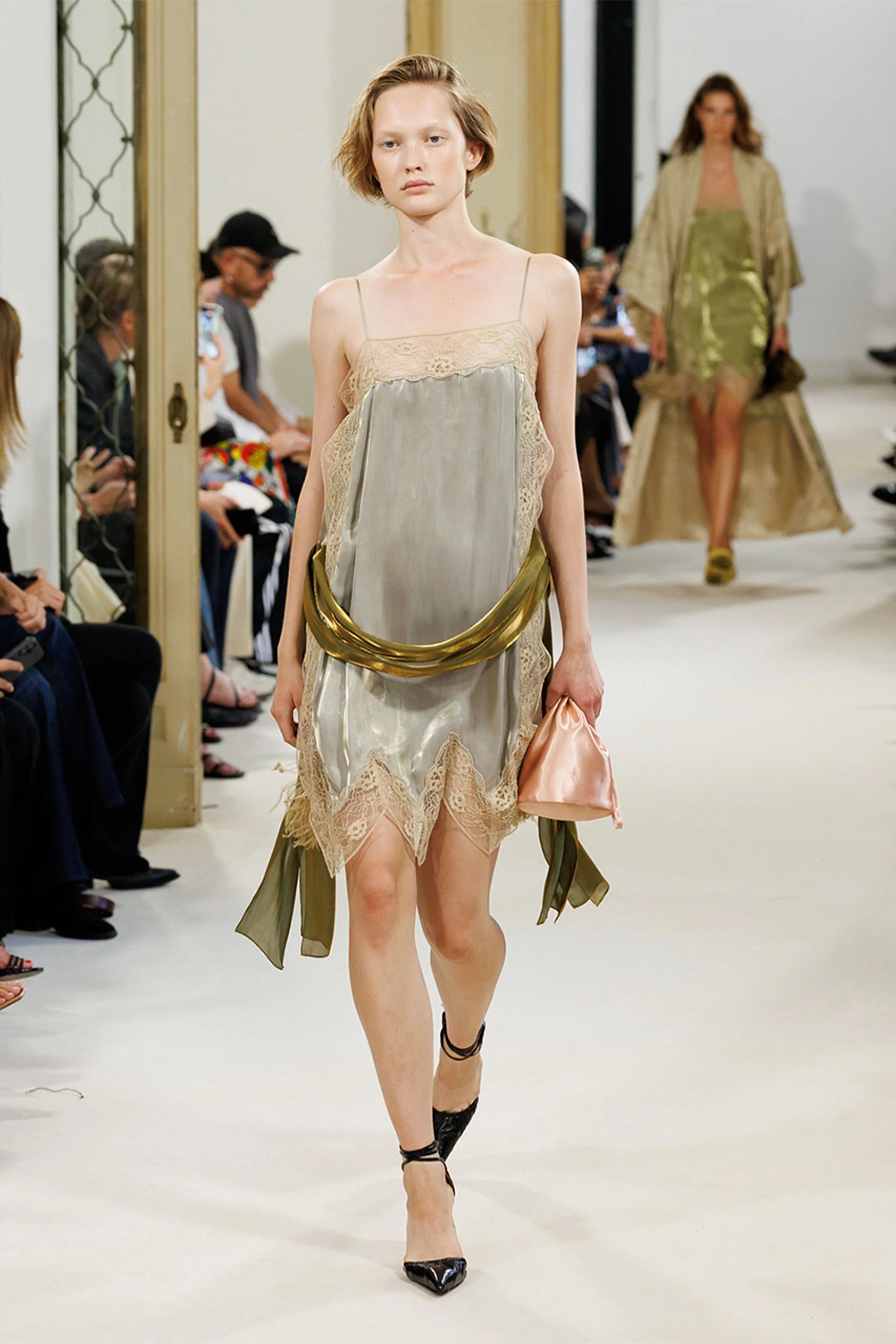
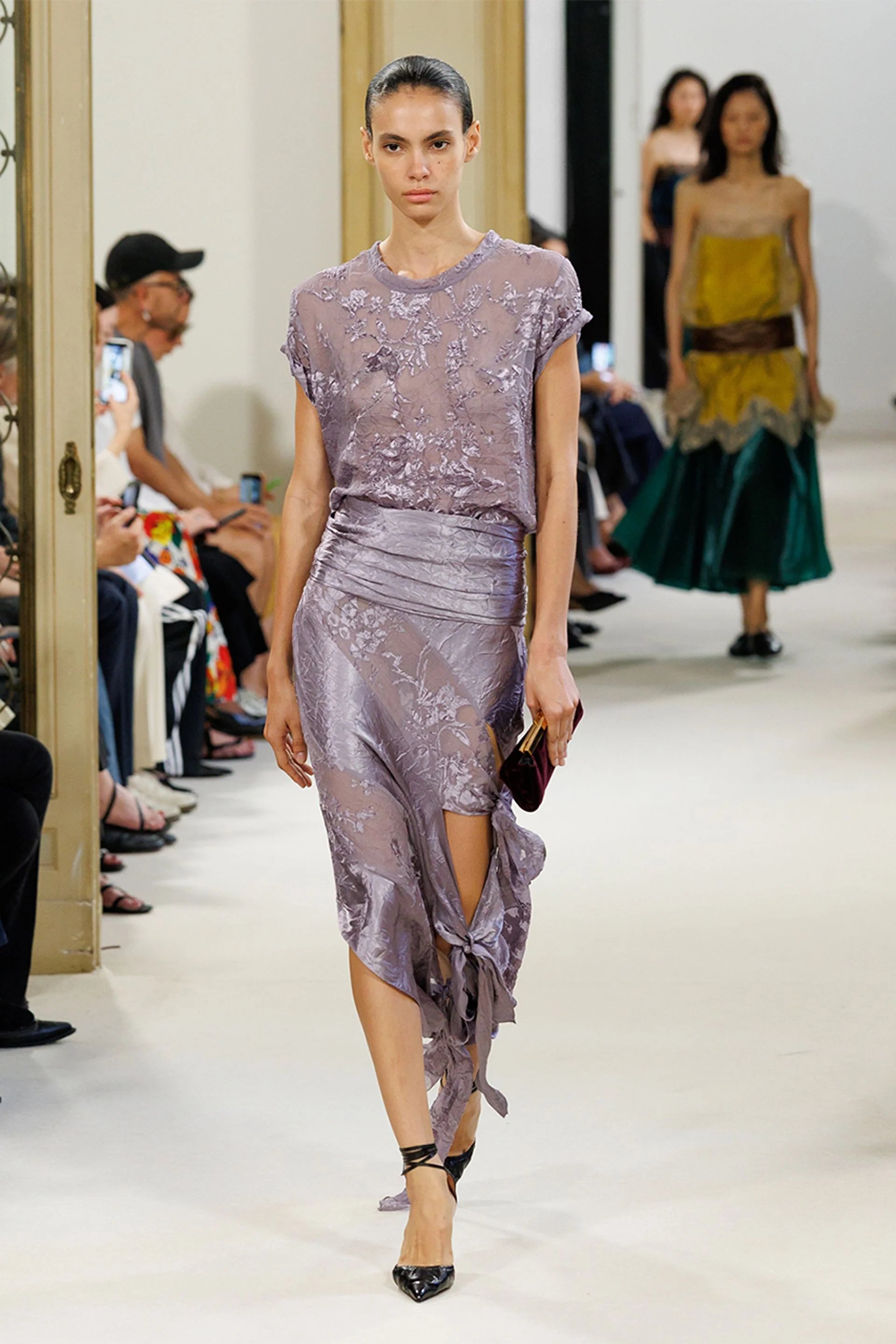
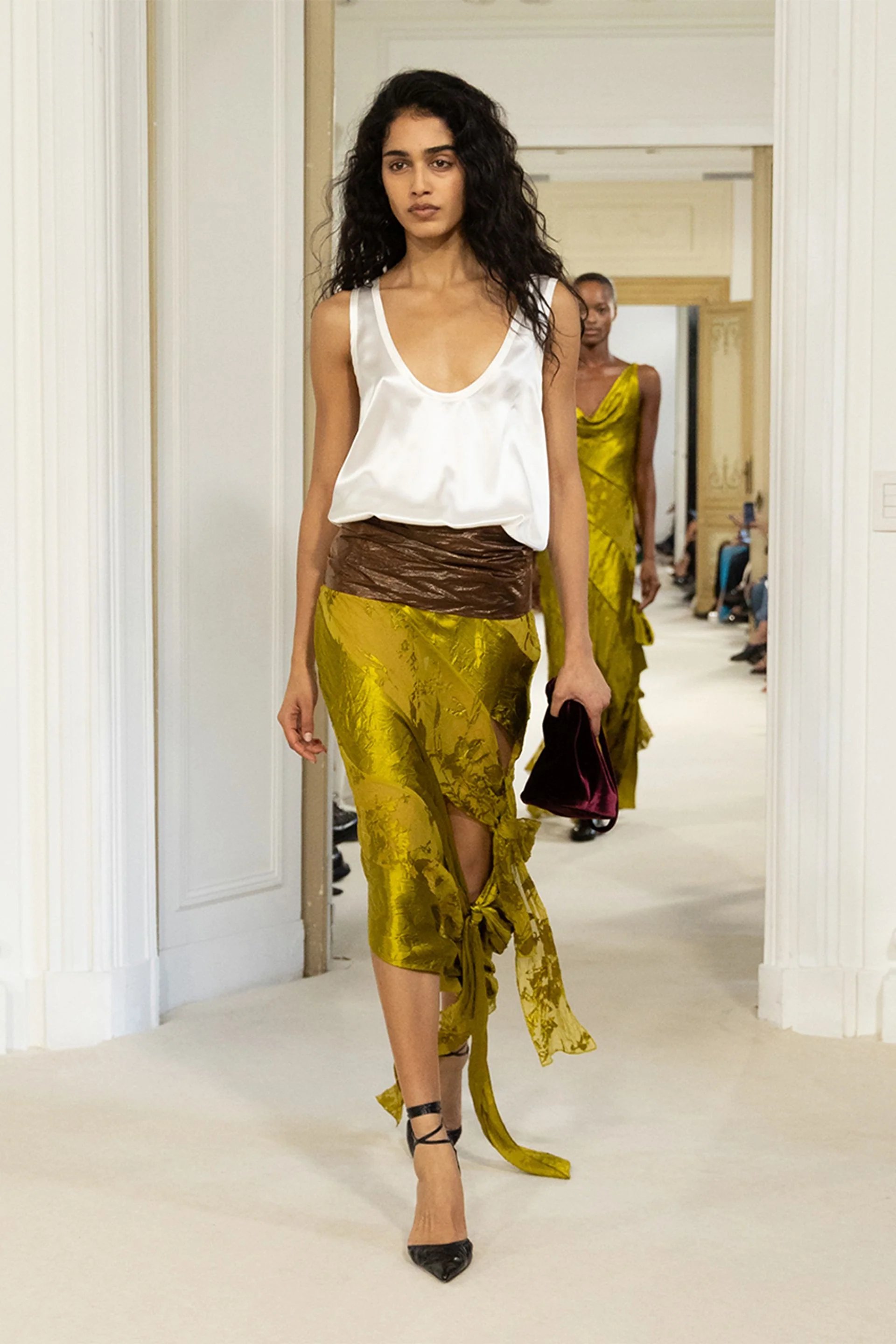
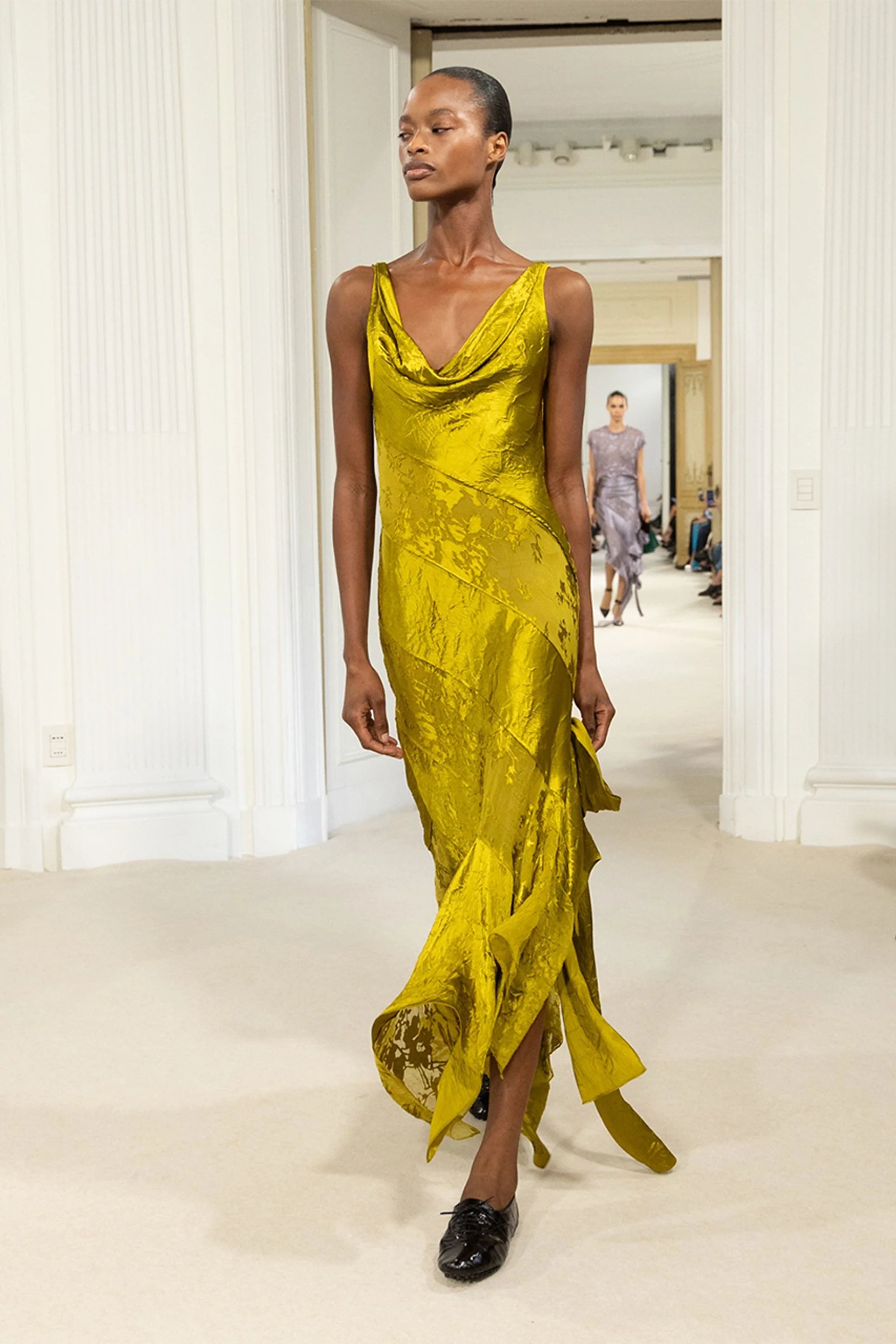
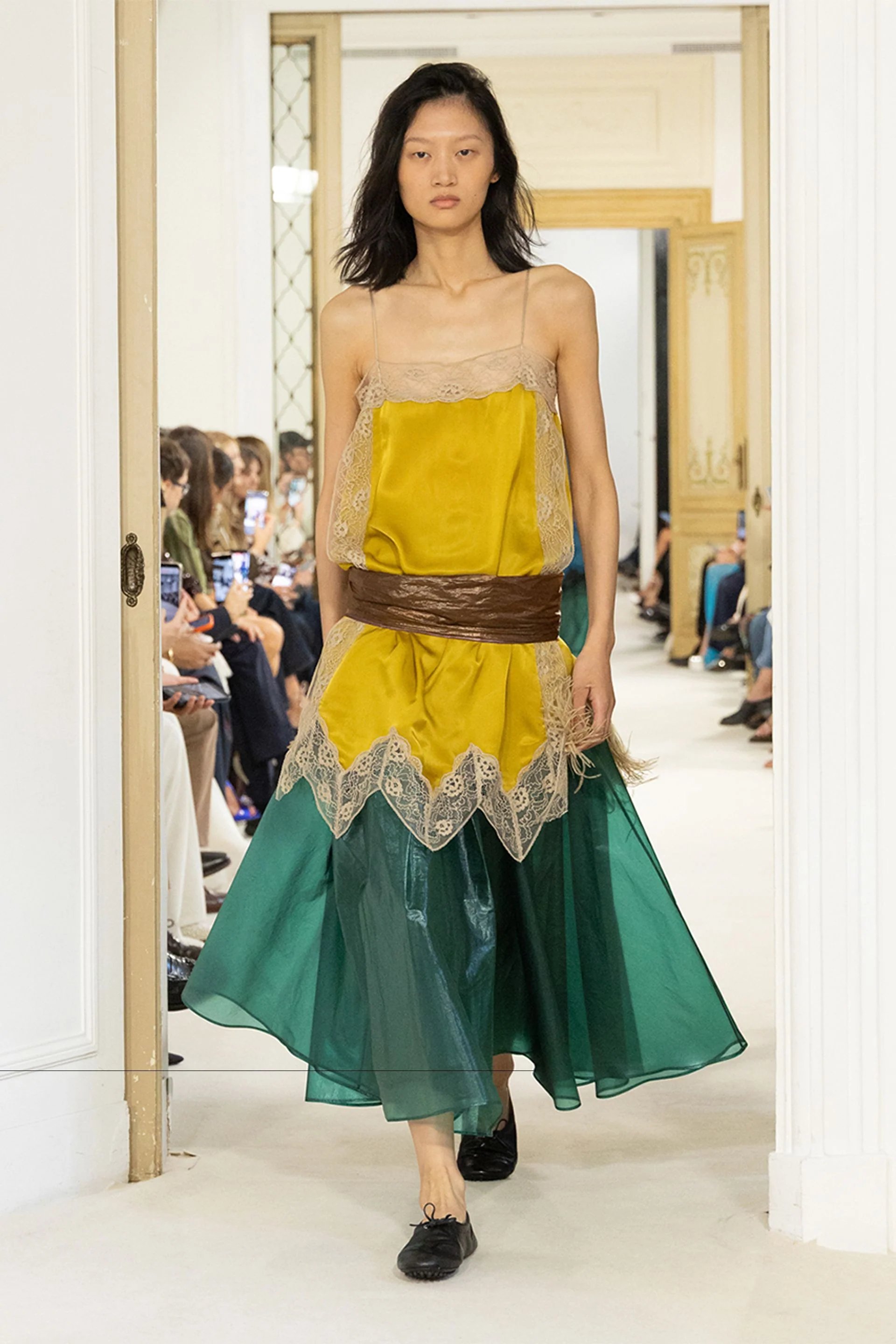
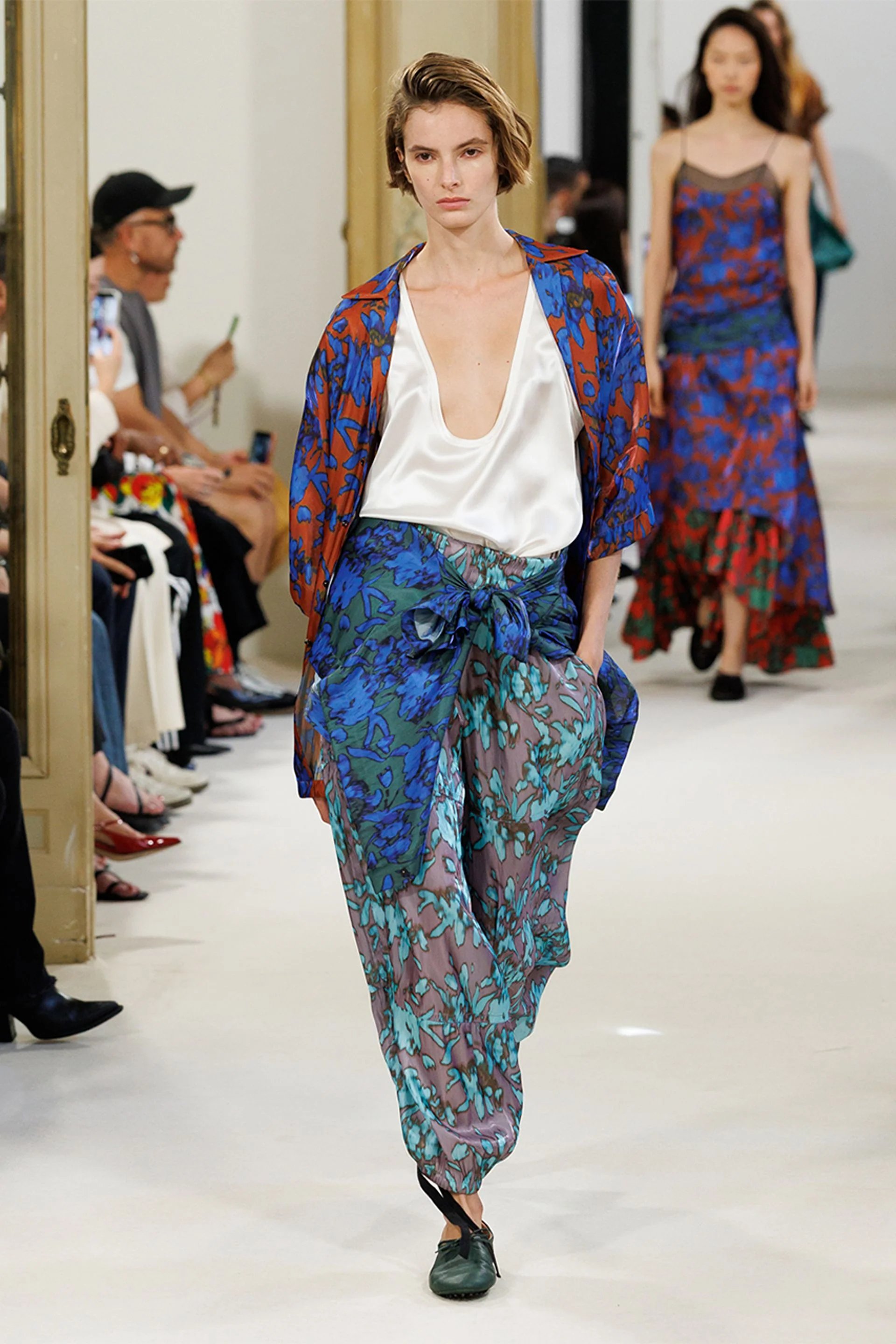
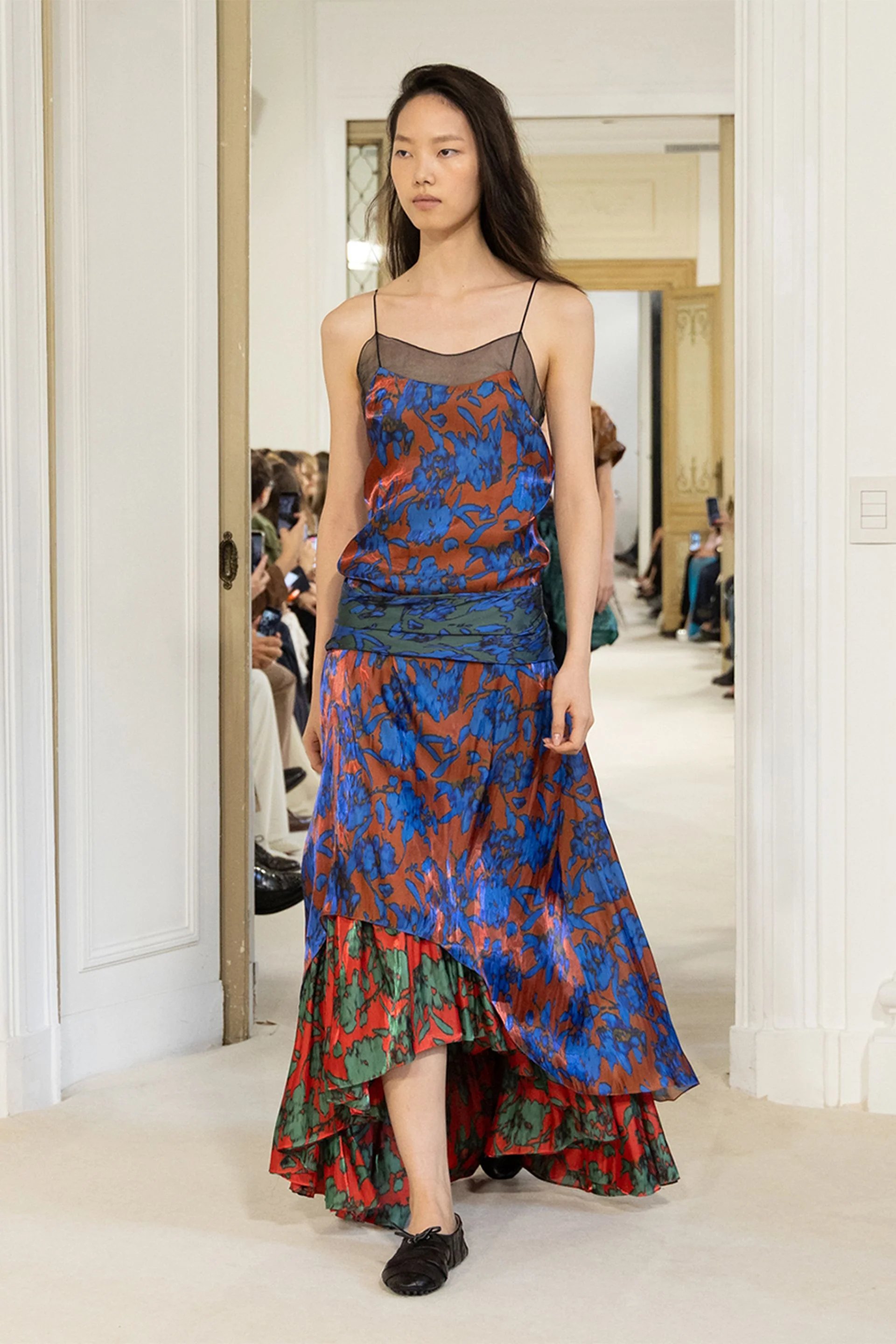
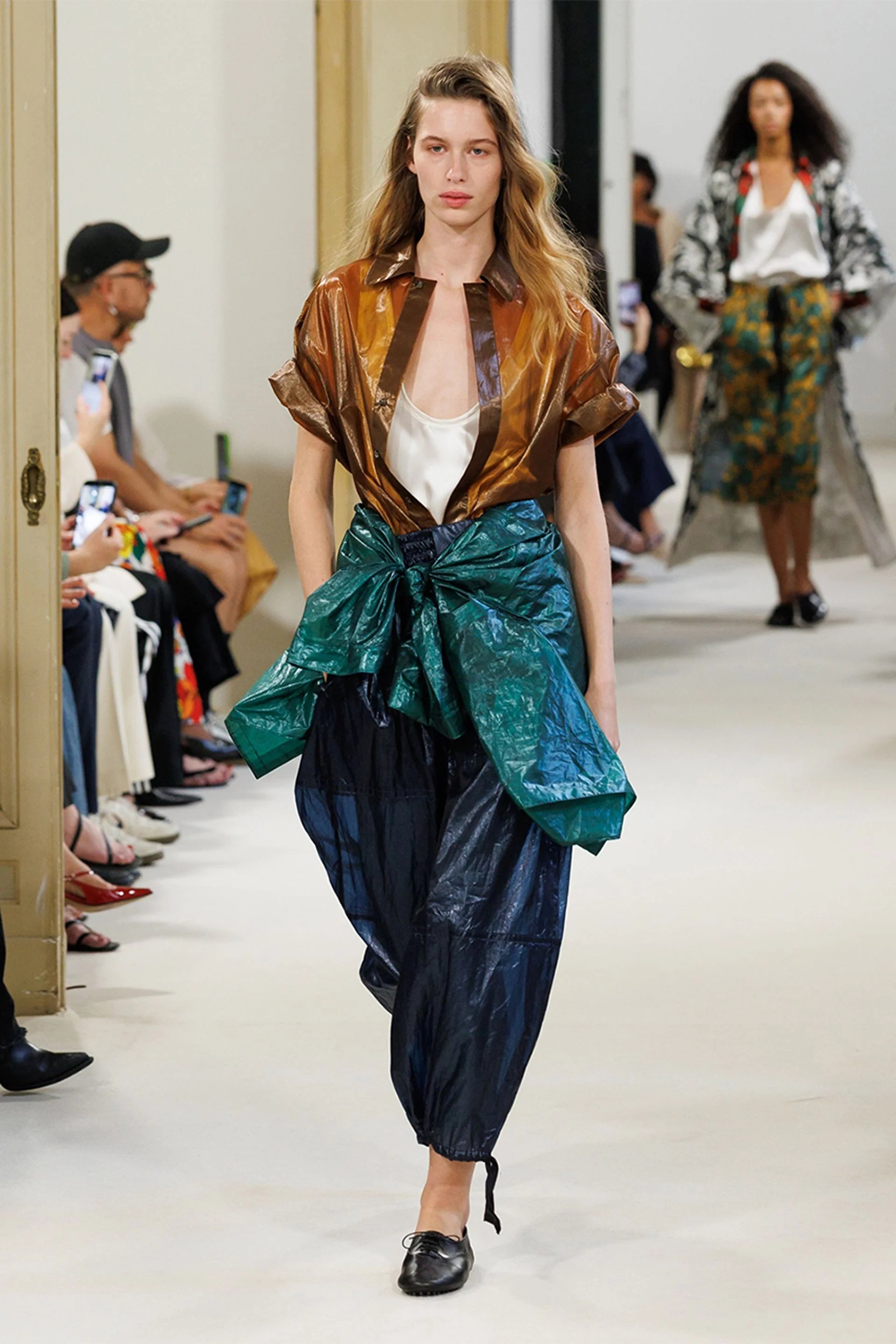
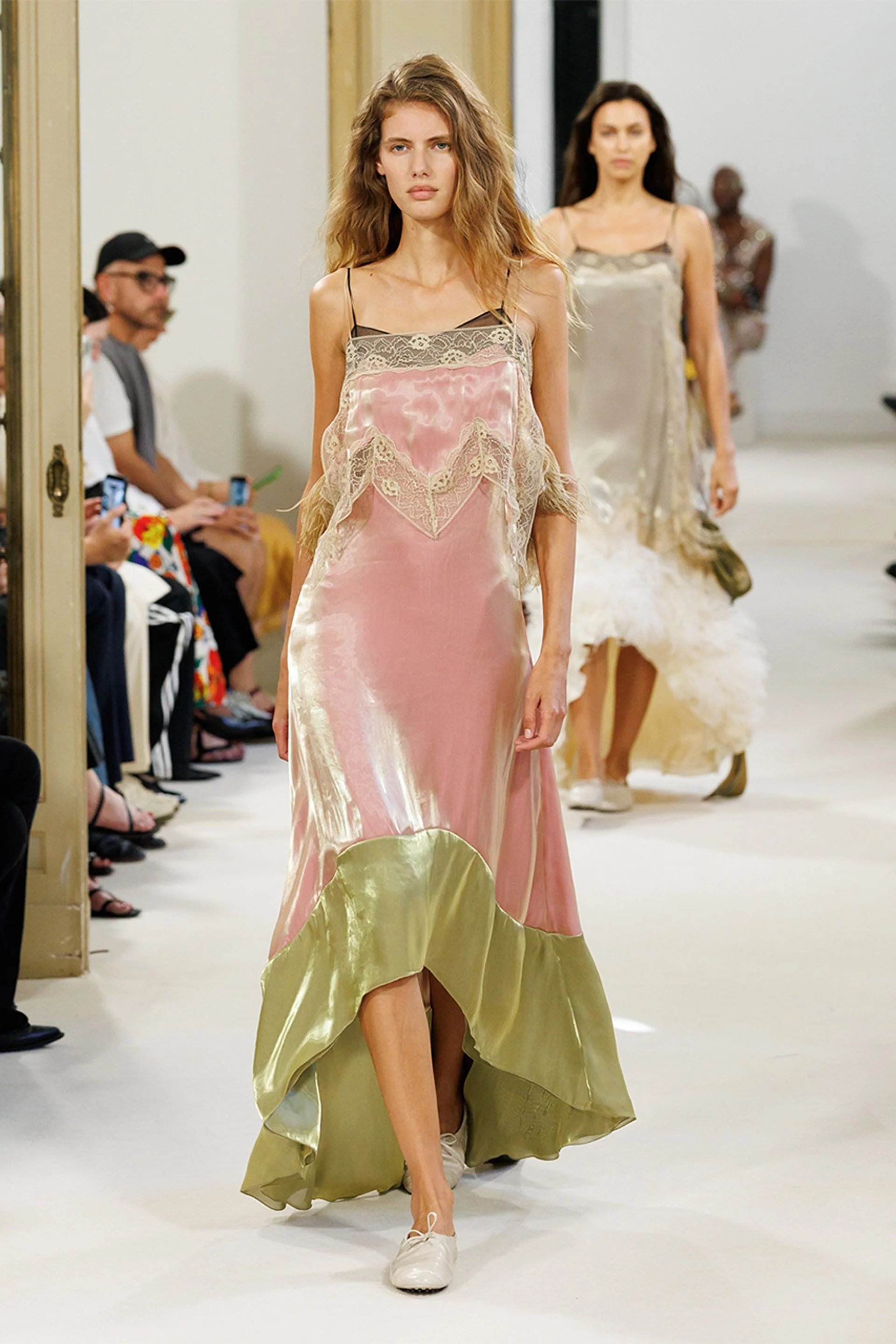
Blue, teal, rust and mustard carried the opening. Ivory and black grounded them. Lilac, pistachio and powder pink surfaced later.
The stakes are structural, not aesthetic. Serafini arrived at Aeffe from Dolce e Gabbana via Roberto Cavalli, took the Ferretti design chair after founder Alberta Ferretti stepped down, and saw the Philosophy di Lorenzo Serafini line he had run since 2014 folded into the main brand from the Fall/Winter 2025 season. One runway now speaks for two customer bases and one balance sheet.
His reference was the 1920s. Serafini pointed to Léon Bakst, Erté and Balanchine’s choreography, telling FashionNetwork the starting point was “the liberation from restrictive garments and the celebration of the female body.” Matisse sat in the house’s notes.
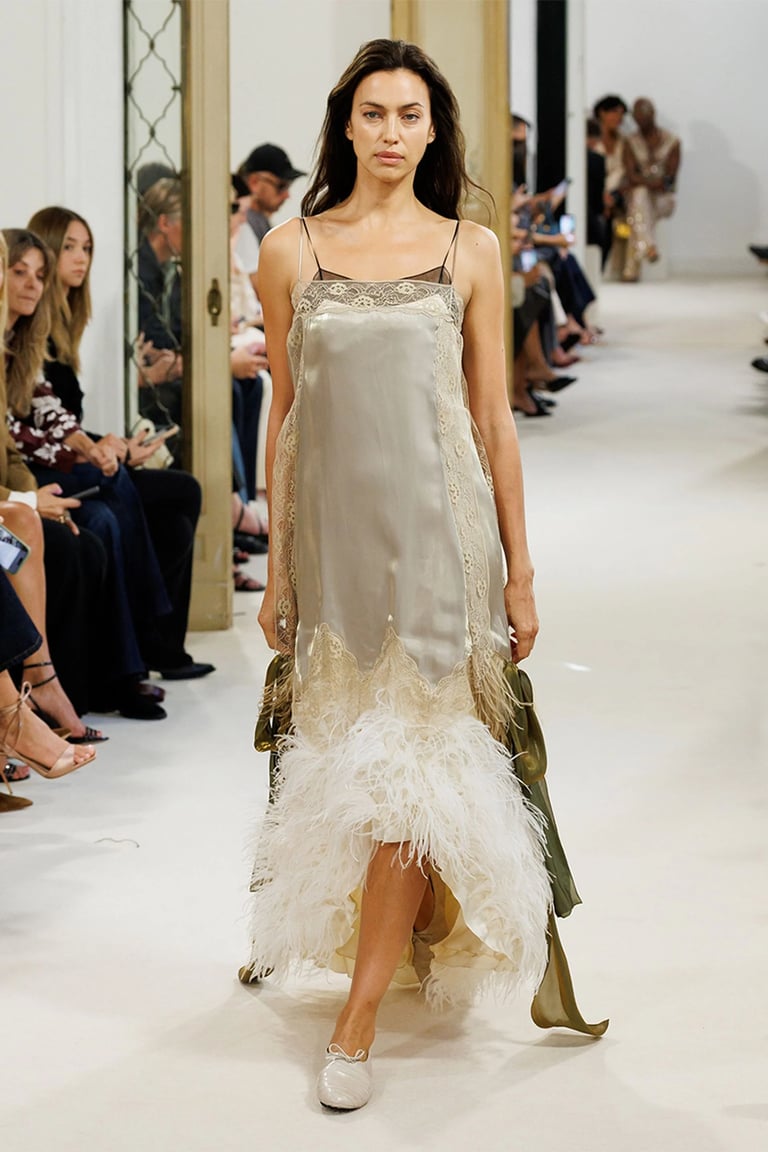
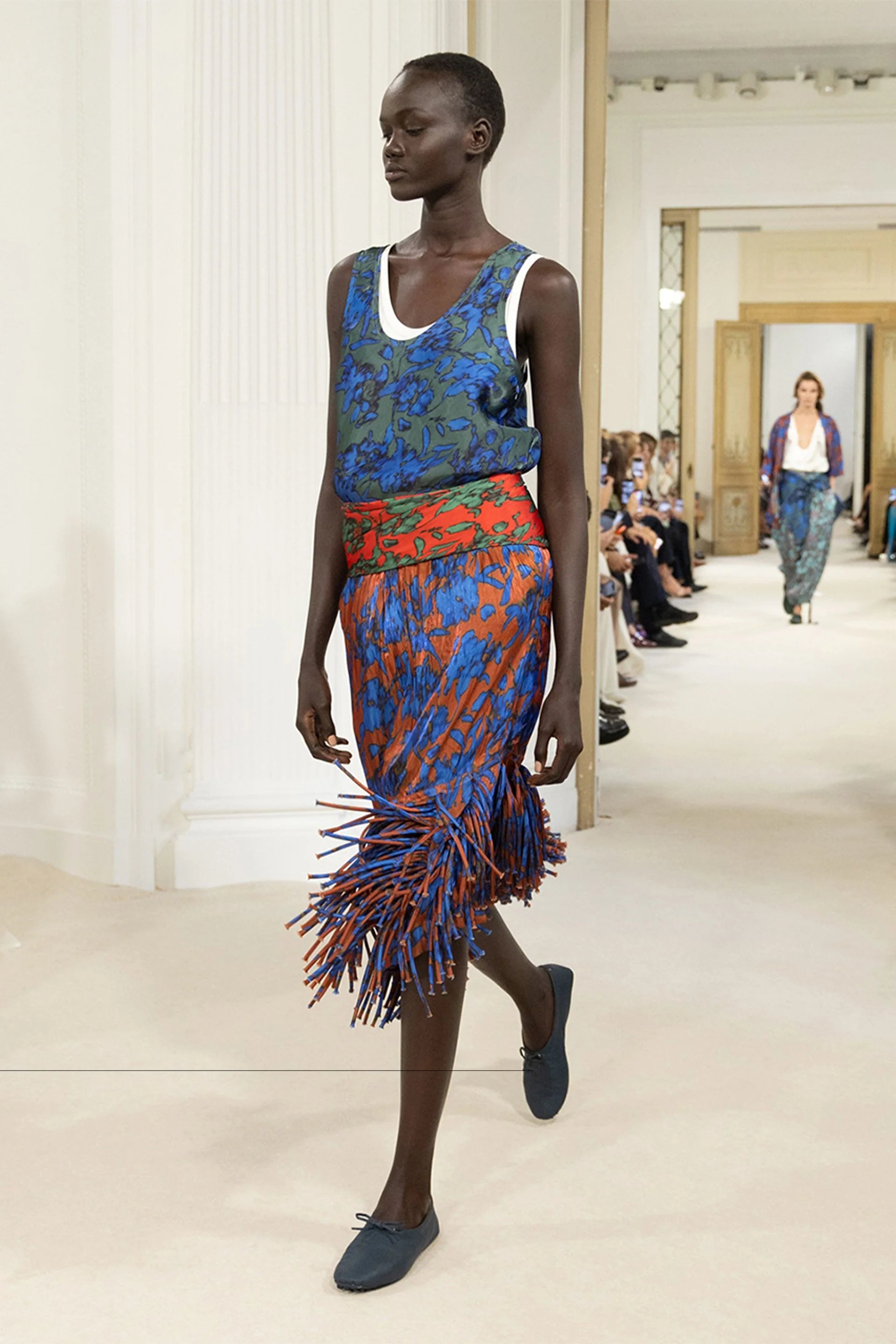
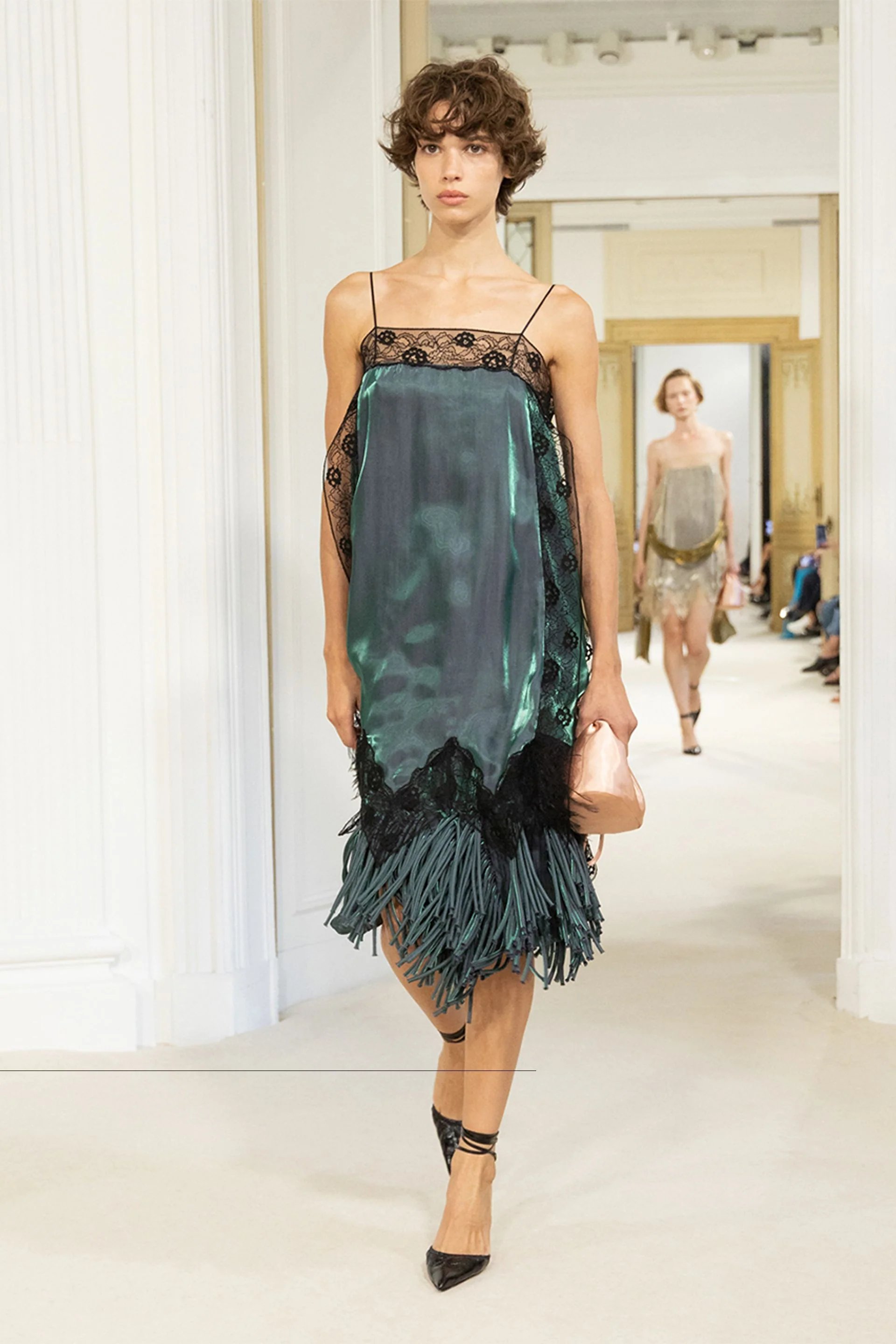
The wardrobe loses the line between dressing and undressing: slip dressing over lingerie, kimono jackets over balloon trousers, obi belts, fringing. Before the show, Serafini said designing the collection helped him “skirt the darker thoughts in a challenging global scenario.” An escape collection asks a customer to buy an idea of summer rather than one silhouette.
Silhouette and Styling
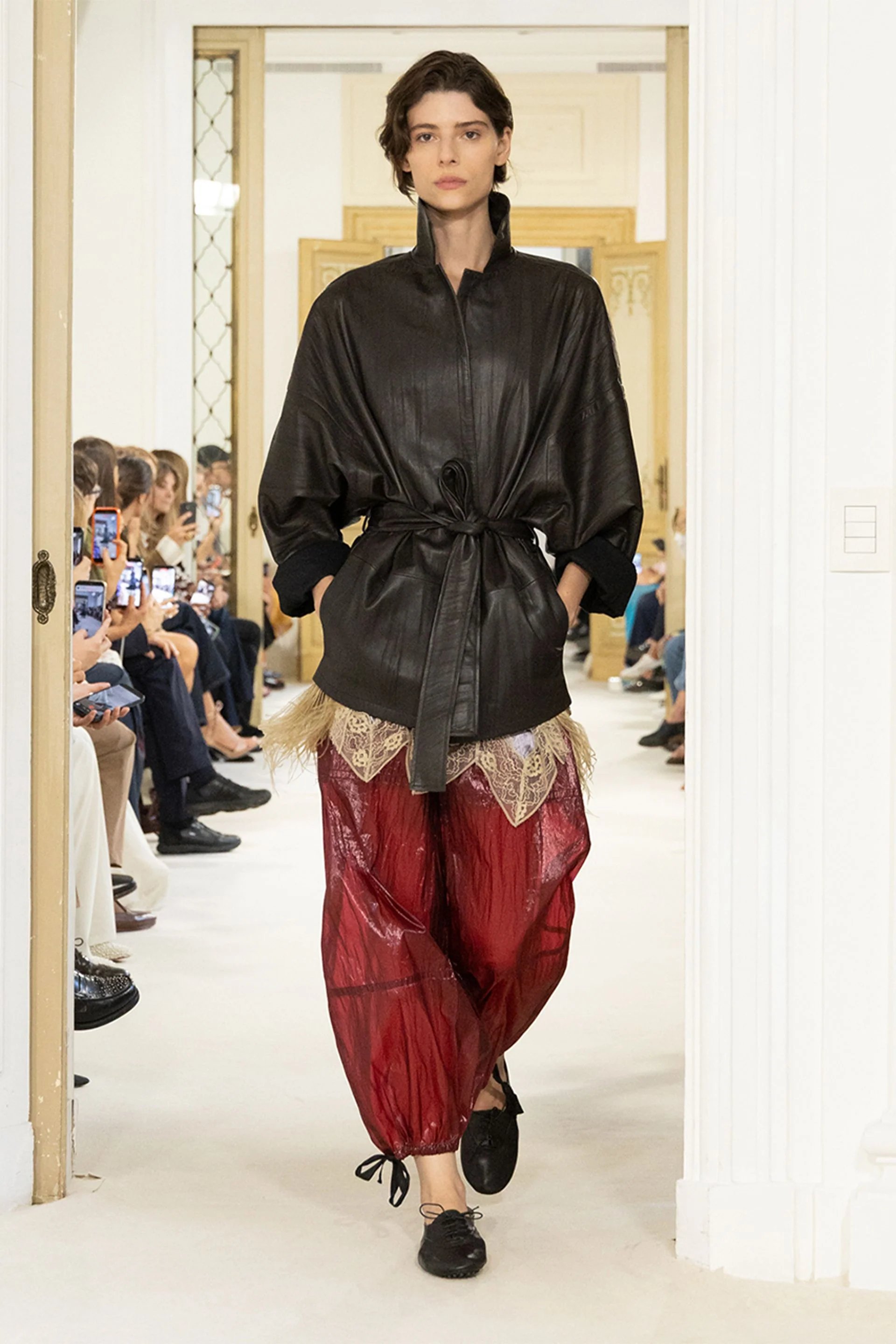
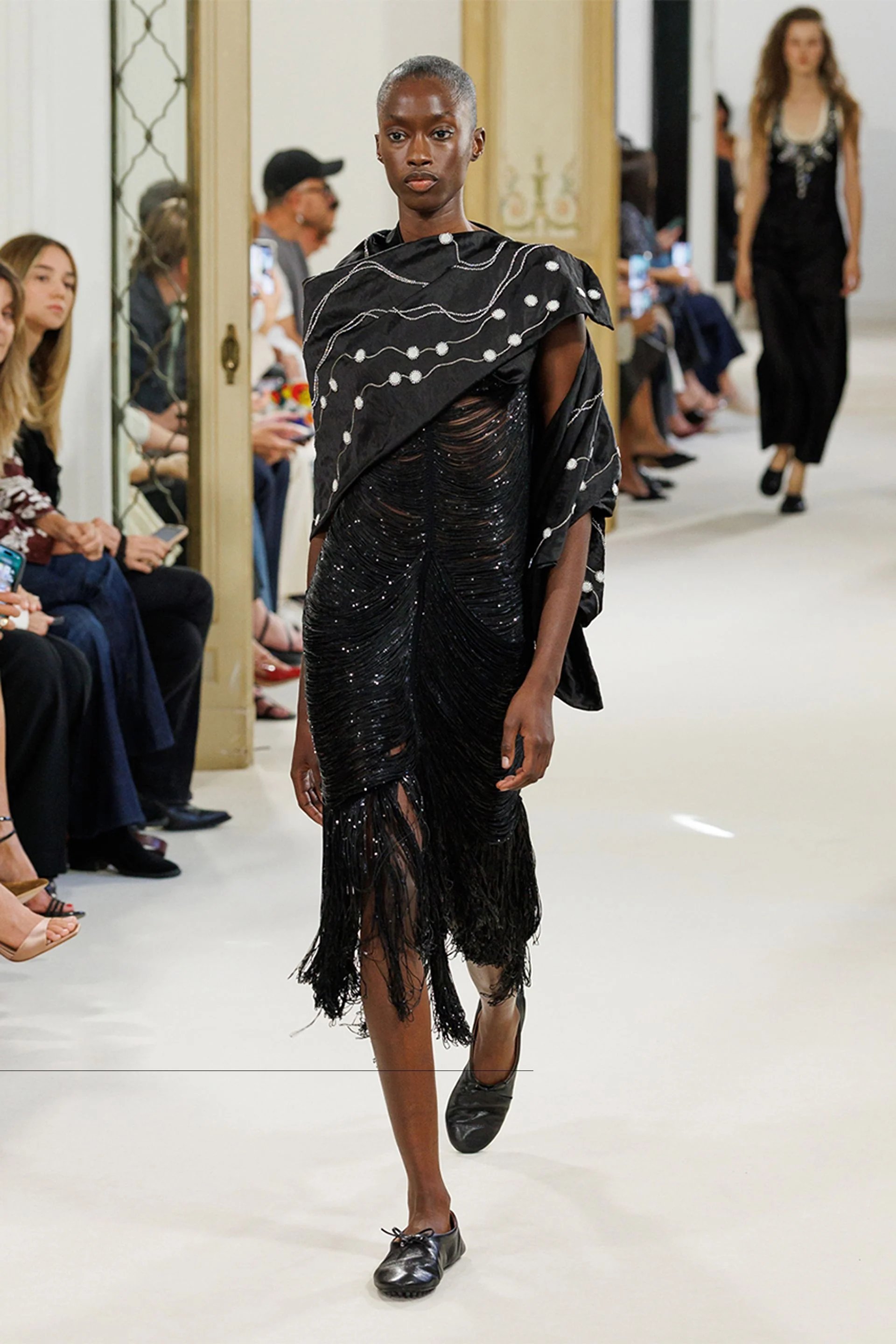
Volume moved off the body and stayed there. Balloon trousers and fluid pants carried the widest shapes, with kimono jackets closing over them.
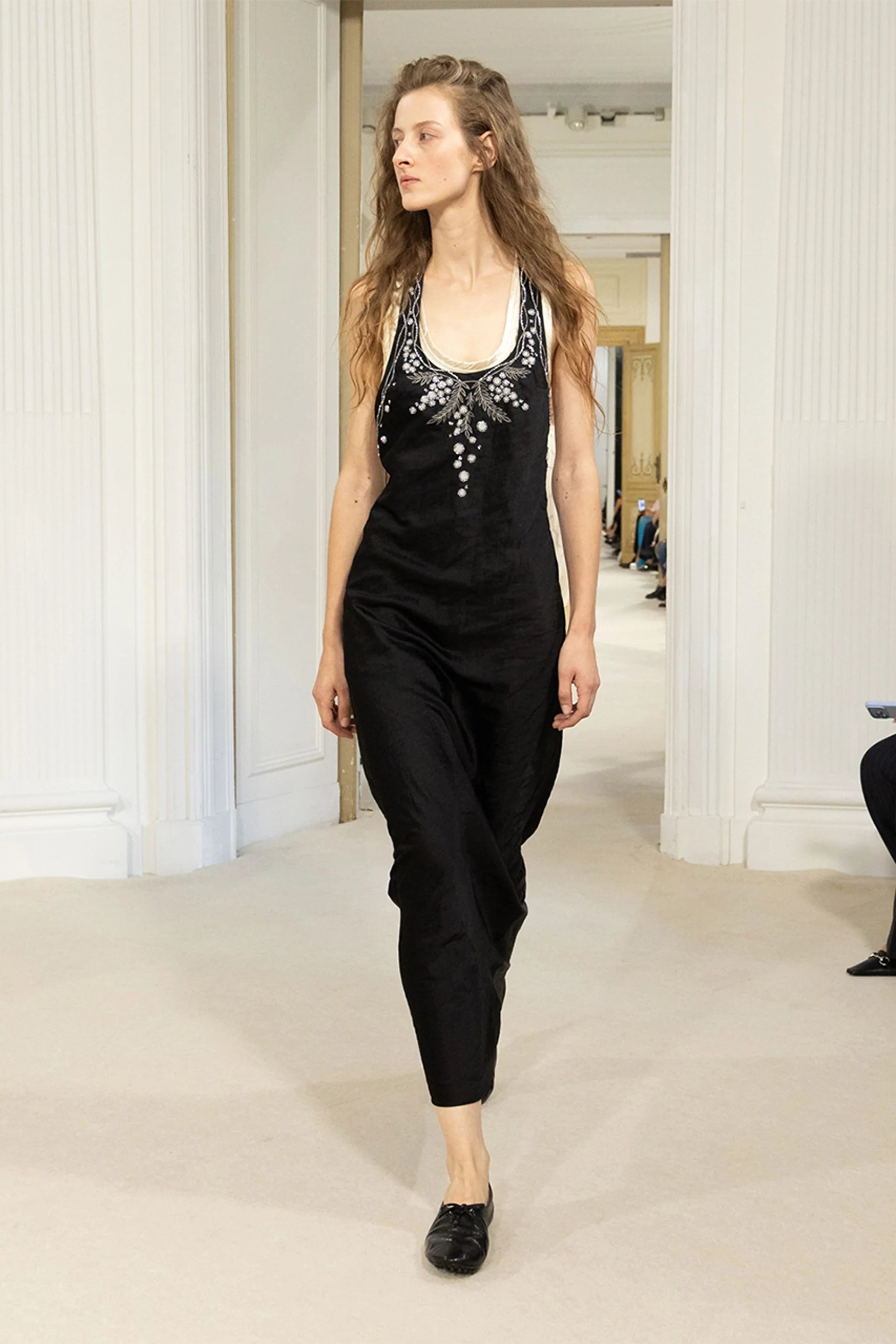
Wrapped skirts and slip dresses supplied the narrow counterpoint. Models walked in flats, which changed the lineup’s gait and positioned it as daywear rather than the evening register the house is known for.
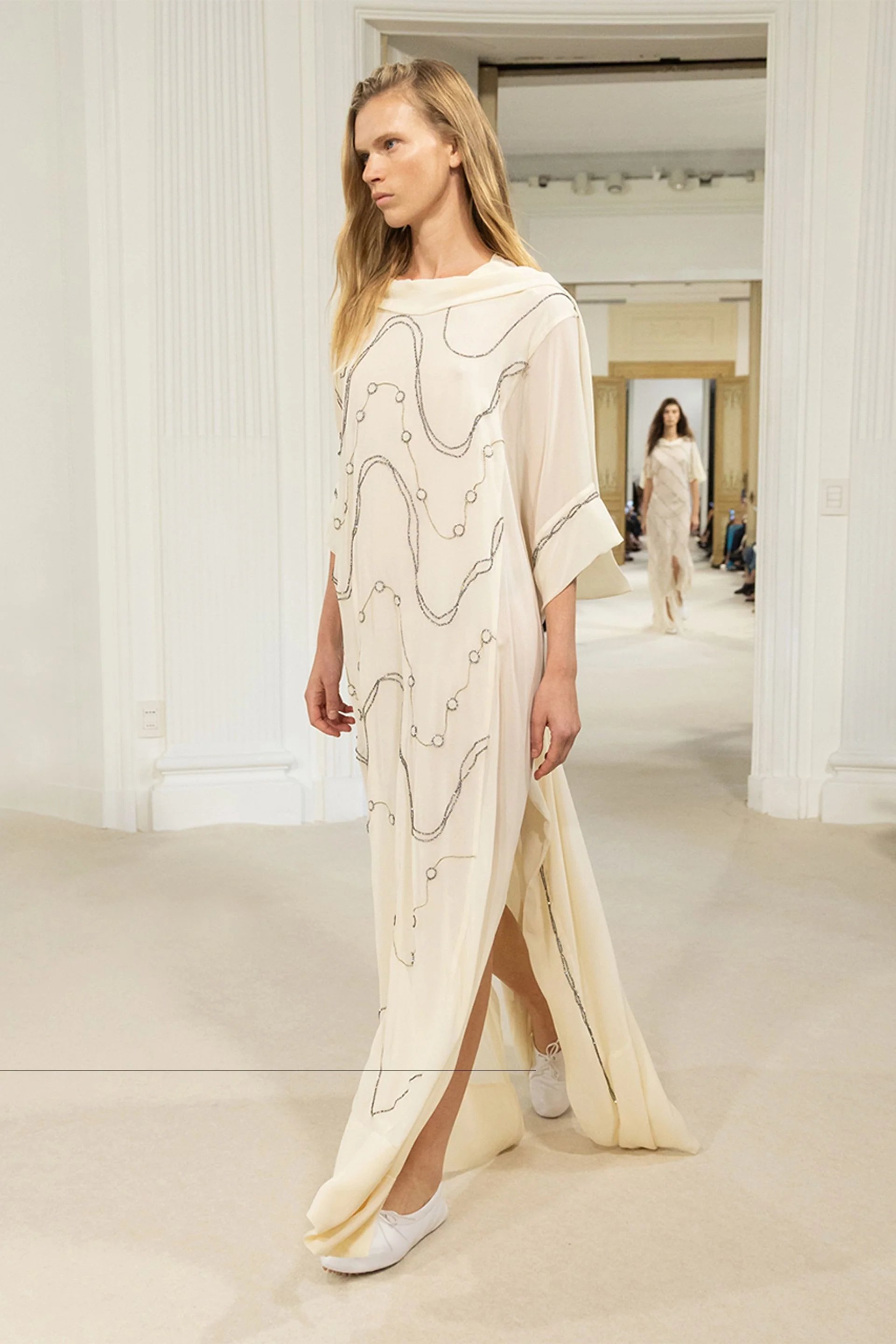
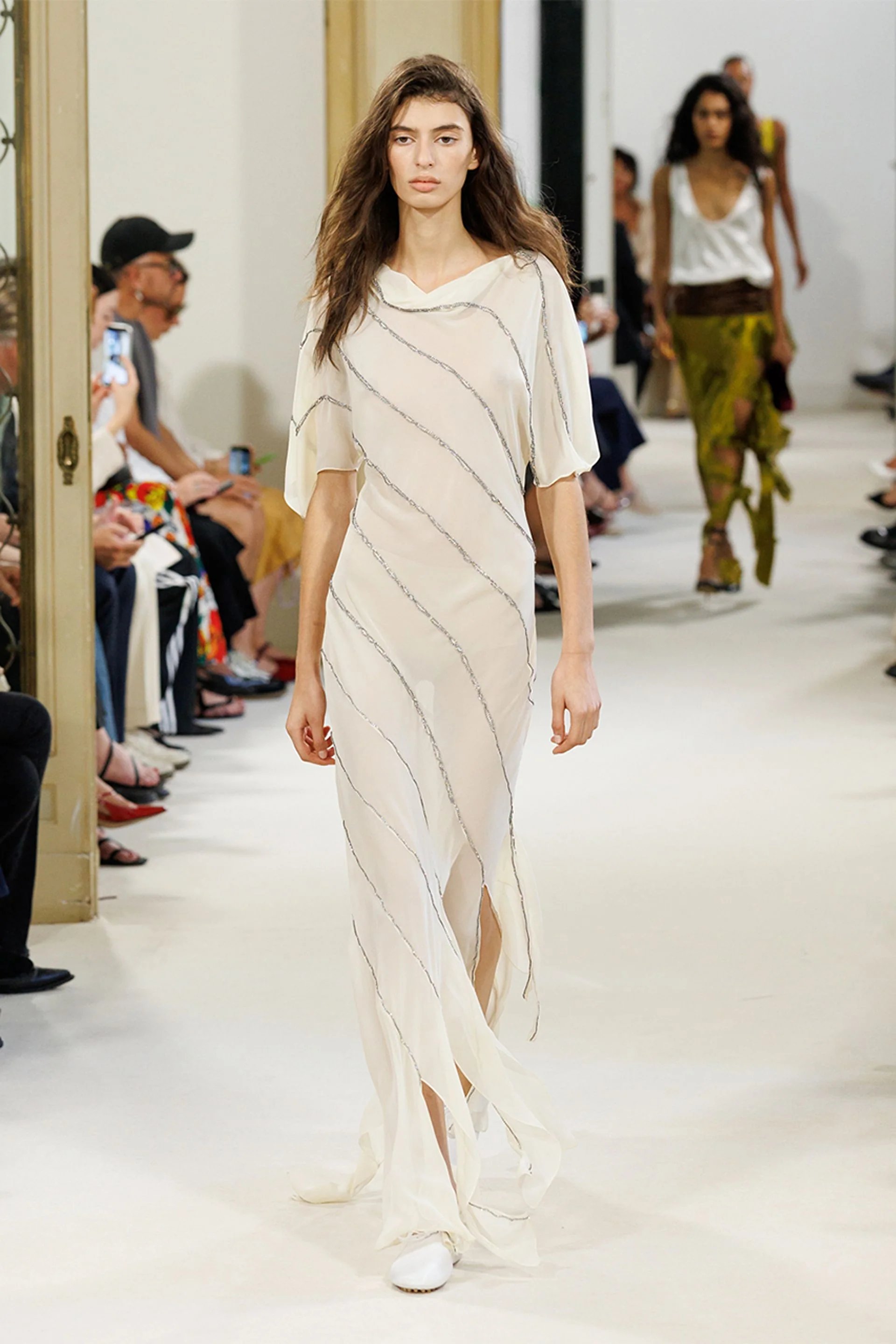
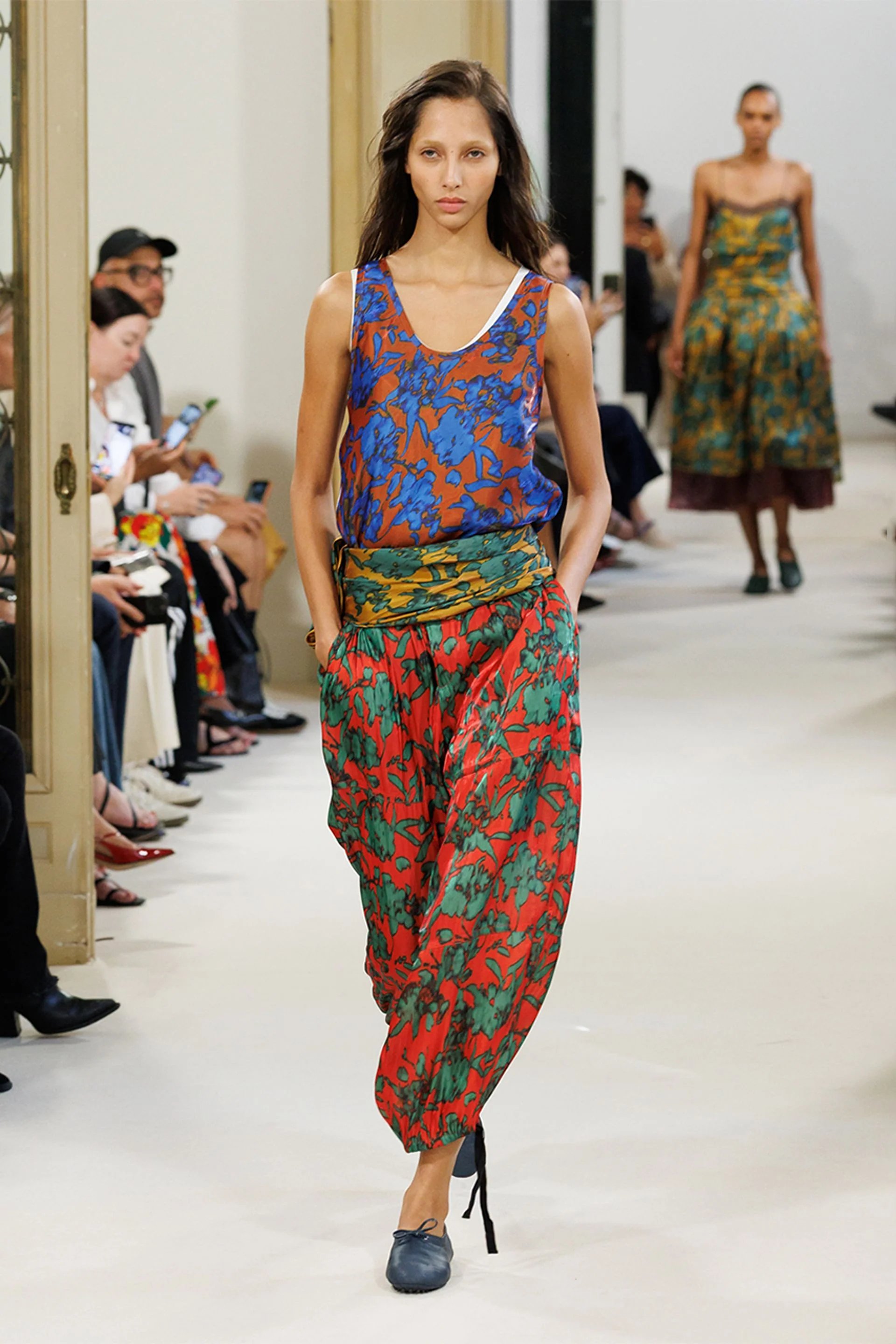
The fabrication program carried more information than the shapes did. A floral dissolved across a Japanese weave threaded with fine metal, so the print behaved like a surface finish rather than a pattern. Print mixing was, in the house’s own description, instinctive: ikats appeared on pants and tops alongside the florals, and feather fringing ran along hems and down trousers from the knee. Irina Shayk was among the models.
A print that moves like a finish is harder to copy and harder to photograph flat.
The House Codes
Ferretti’s codes are lightness and evening. Serafini kept both and imported a third, the loose, uncovered volume of the 1920s.
The slip dress is the founder’s garment. The balloon trouser and the fringed hem are not. Where the two meet is the dressing-undressing proposition, an extension of a house that has always understood boudoir clothes.
Philosophy’s register was younger and more romantic than the Ferretti signature line, and it now lives inside a brand built on eveningwear authority. Serafini is not designing one collection; he is reconciling two house voices under a single label and a single price architecture.
What Worked
The strongest argument in the lineup came from the cloth. The metal-thread weave gave the florals a liquid quality no static image reproduces, the kind of detail a wholesale buyer remembers at the appointment, and a copyist cannot reverse-engineer.
Color worked best when it was grounded. Ivory and black with lilac, pistachio and powder pink is the repeatable end of the palette, the half a store can carry into a second season without restyling the floor around it. The saturated opening is the argument; the grounded middle is the sellable evidence.
Models walked in flats through the salons of a working headquarters, with no runway build and no spectacle. It read as a product presentation from a house that expects to be bought rather than photographed.
Where It Faltered
Instinct is an expensive merchandising method. Putting dissolved florals, ikats, and metal-thread cloth into the same delivery asks a buyer to find one print to order and hands her three that read as related. The obi belt did connective work; a tighter print edit would have done better. The consequence lands in the order book, not on the runway.
The flats will not survive the fitting room. A kimono jacket over balloon trousers is a proportion built for a long stride and a tall frame. Most of the women who buy this brand will meet that look at a different height, standing still, with shoes on.
Serafini has said color is a novel element for him. Novelty reads as a season; a house needs a system.
The saturated half of the palette, blue, teal, rust and mustard, is the half least likely to repeat, because it depends on a customer agreeing to be seen in it. The grounded half travels. Much of the rest may stop at the runway.
The Bigger Picture
Aeffe’s consolidated revenues fell 27.8 percent to 100 million euros in the first half of 2025, according to its half-year report at June 30, 2025. The Alberta Ferretti brand fell 22.5 percent to 7.6 million euros, or 7.6 percent of the consolidated total, and Philosophy fell 23.3 percent to 6.3 million euros. Group net loss reached 28.5 million euros, and the group has been selling assets to cut debt, including its Moschino beauty business.
Read against those numbers, the Philosophy consolidation is the strategic fact of the season. Two labels that together generated 13.9 percent of group sales now share one pista, one identity and one result to defend. A unified color and print story is the least expensive way to make two customer bases read as one proposition on a single floor.
The house’s return to the Quadrilatero della Moda is at Via della Spiga, 26: about 2,700 square feet over two floors, and the first store built to Serafini’s retail concept. The Via Montenapoleone flagship a few feet away closed in October 2024, and the brand also operates stores in Rome, Florence and Paris.
That is the harder test. A boutique trades 12 months a year in every kind of weather. An escape collection trades for one season in the sun.
The house is booked as guest designer at Settimana della moda di Dubai in February, opening the week. Massimo Ferretti, executive chairman of Aeffe, said presenting the Fall/Winter collection there reflects the group’s commitment to “expanding the international presence of the brand.” For a brand of this size, the export itinerary shapes the collection.
Alberta Ferretti built a house on a woman who dresses for the evening. Serafini is asking her to buy the afternoon off. One of those is a armadio. The other is a season.
See the complete collection below:
Images courtesy of Alberta Ferretti
In another fashion week news, Etro Spring 2027: Ready-to-Wear Collection at Milan Fashion Week