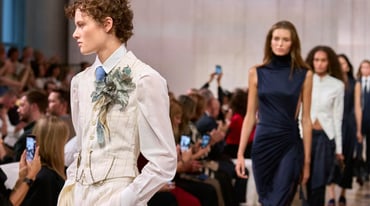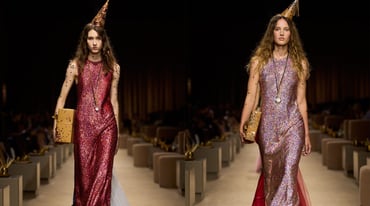

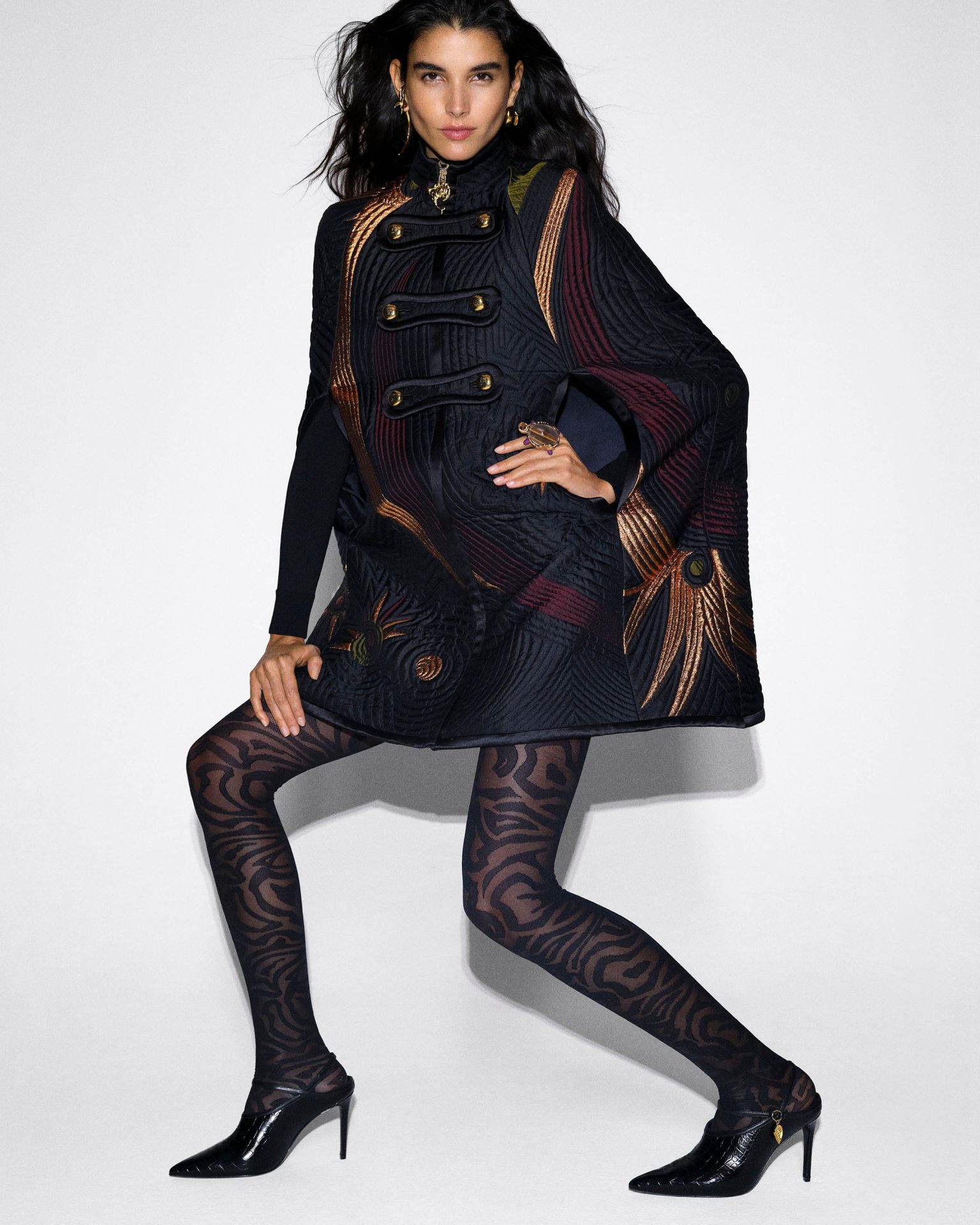
The scene: a Milan runway, and a woman moving like she has somewhere better to be – a party that hasn’t started until she walks in. She wears a quilted cape the color of midnight, stitched in gold sunbursts that catch the light like armor catching fire, her throat stacked with a lion’s-head pendant, her legs sheathed in a tiger’s worth of print. She is medieval and disco at once: a figure out of a Siena banner who has just stepped off the dance floor at Studio 54.
This is Emilio Pucci’s Fall 2026 ready-to-wear, and it is the sound of a house discovering that its Florentine exuberance has more than one historical address.
The Archive Detour
For several seasons, Camille Miceli mined Pucci‘s psychedelic 1970s vein – the Capri jet-set swirl, the acid-bright geometry that made the label shorthand for la dolce vita in print form. Fall 2026 takes a detour into stranger, older territory: the Palio di Siena, the bareback horse race that has thundered around the medieval brick of Siena’s Piazza del Campo, twice a year, since the Renaissance.
The idea was hardly a stretch. In 1967, house founder Emilio Pucci himself produced a collection inspired by the Palio – drawn, as Miceli notes with a grin, to its swirl of society and its associations with nobility. “Don’t forget, he was obsessed by the high society,” she says. The fact that the founder had been there first mattered enormously: this was no outside reference grafted onto a brand, but a buried chapter of Pucci’s own story, waiting to be reopened.
Miceli and her team went all the way to Siena to do it properly, studying the city’s historic contrade – the seventeen wards, each with its own emblem, its own banner, its own ferocious pride. Those animals and insignia – eagle and unicorn, dragon and she-wolf, shell and wave – became the season’s raw material, translated into prints, jewelry, and motifs with their medieval pomp pushed decisively into the present.
“It’s a completely different vibe,” Miceli says of the Palio prints she had long coveted. “It’s much more graphic.”
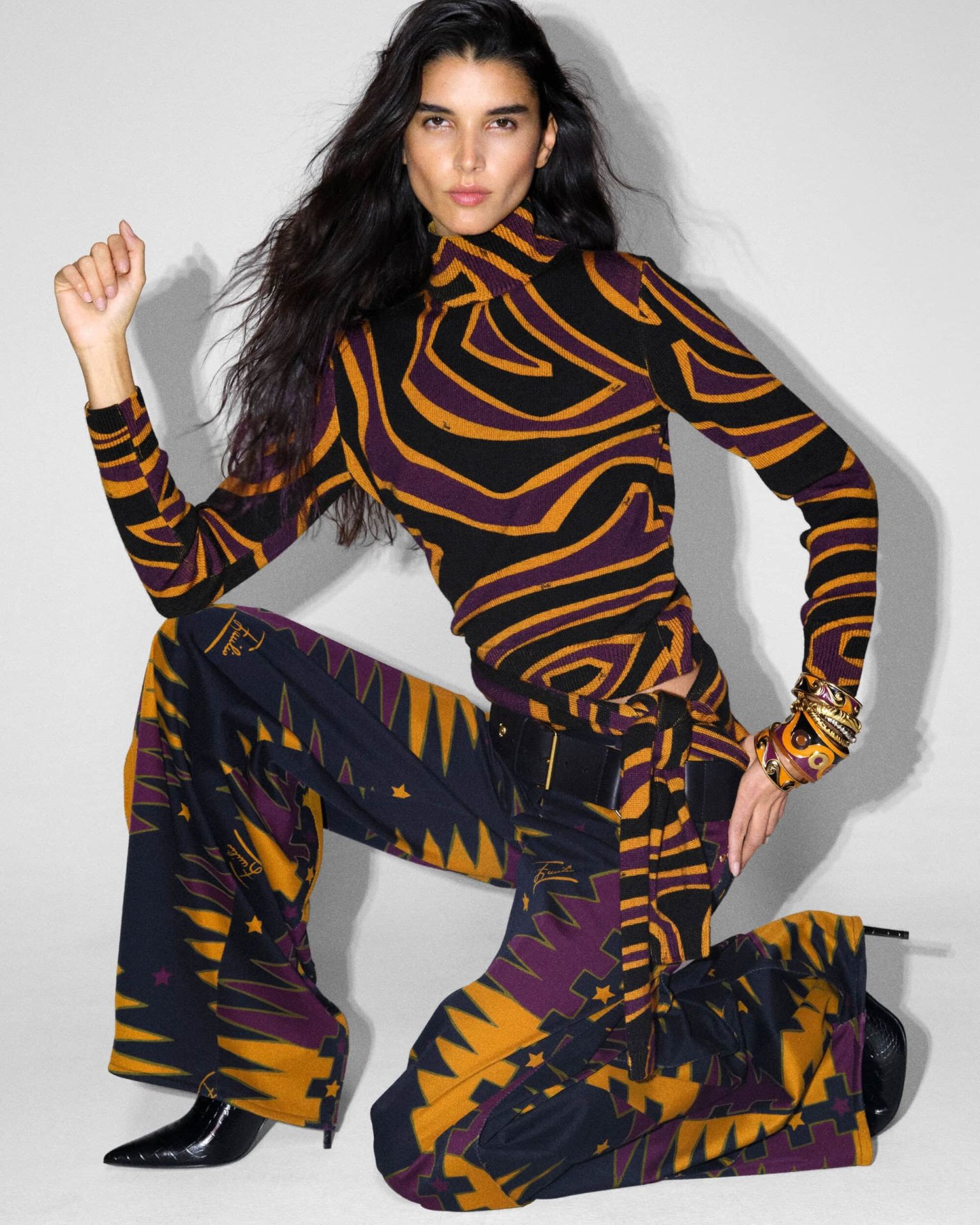
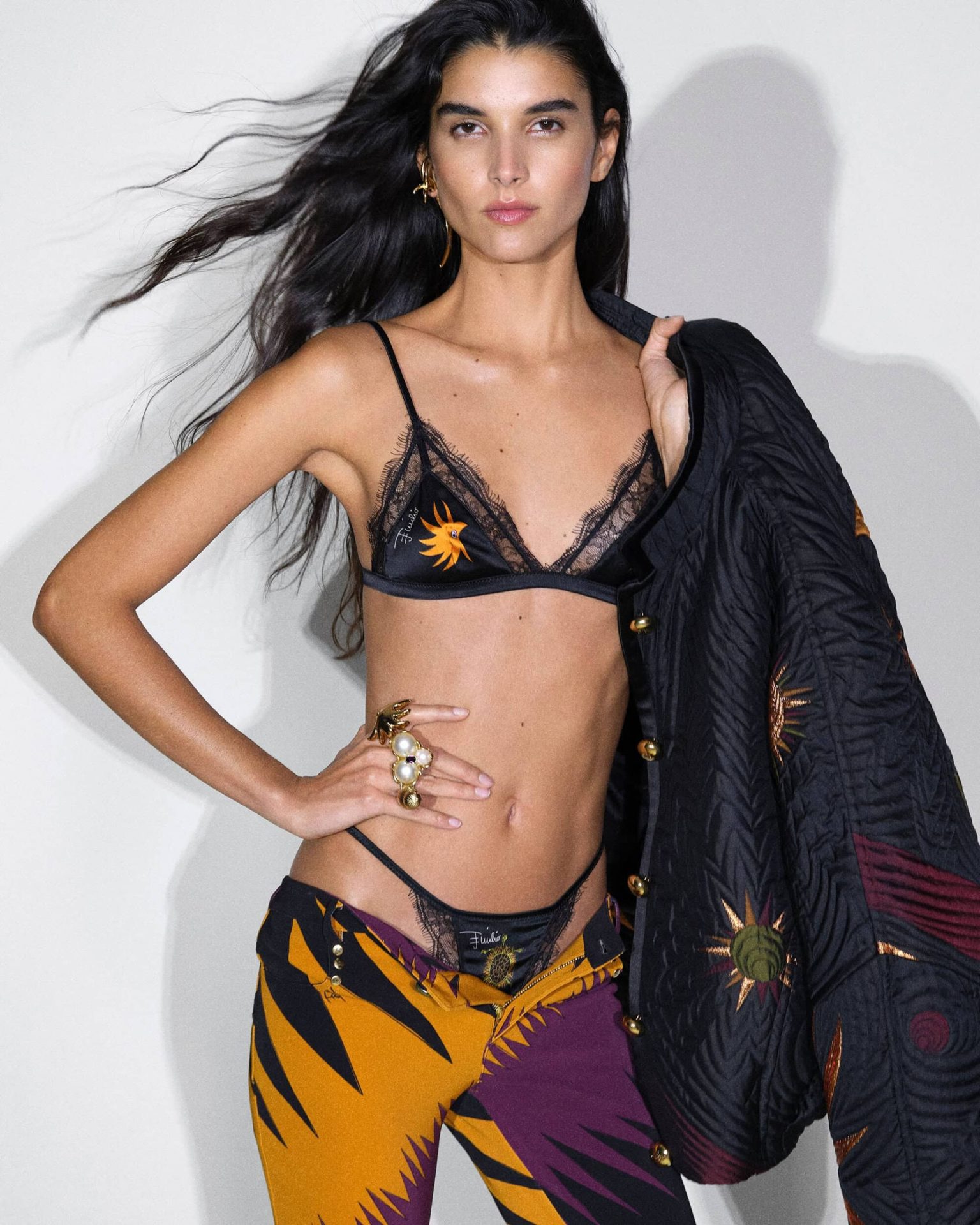
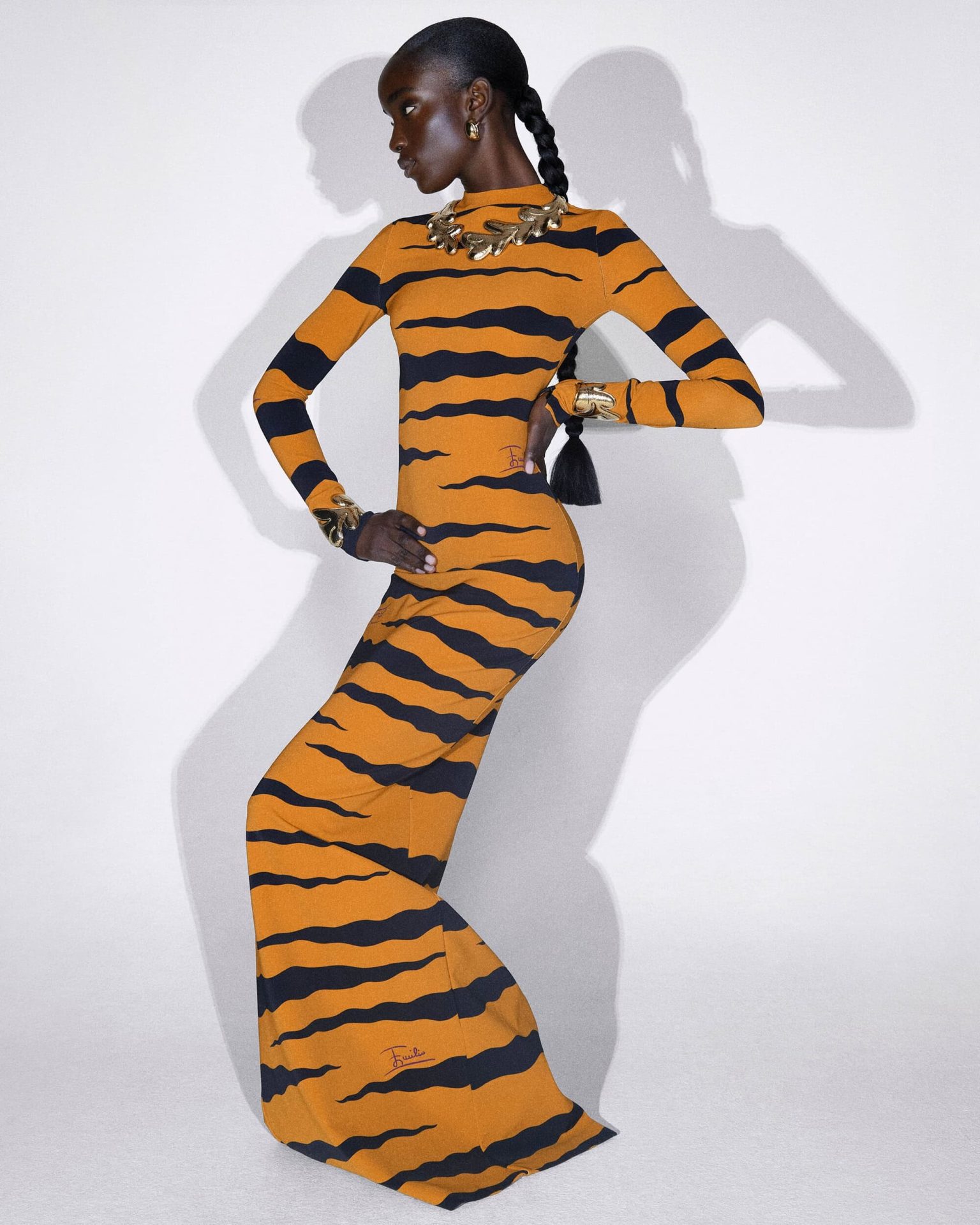
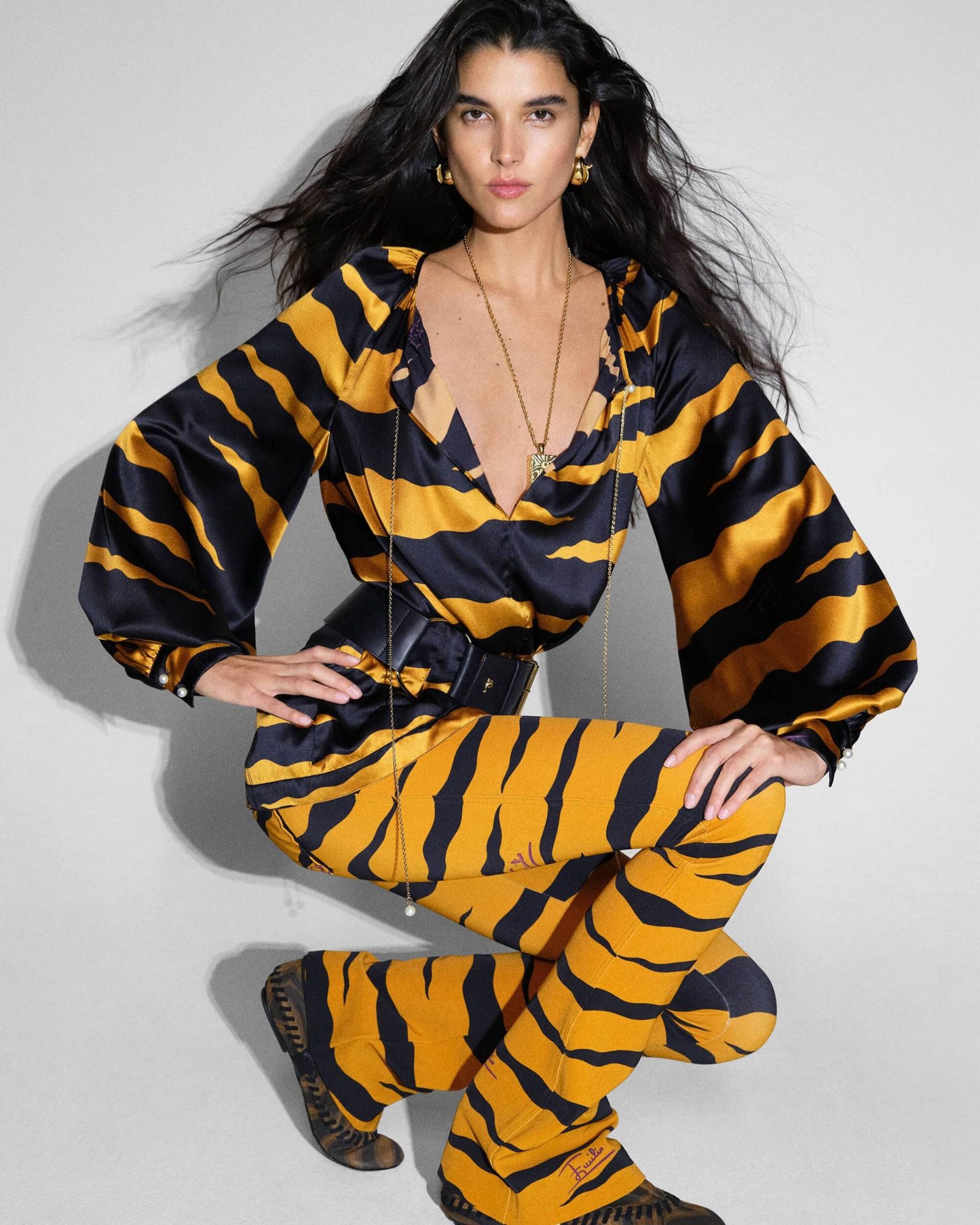
Graphic, Pointed, Sensual
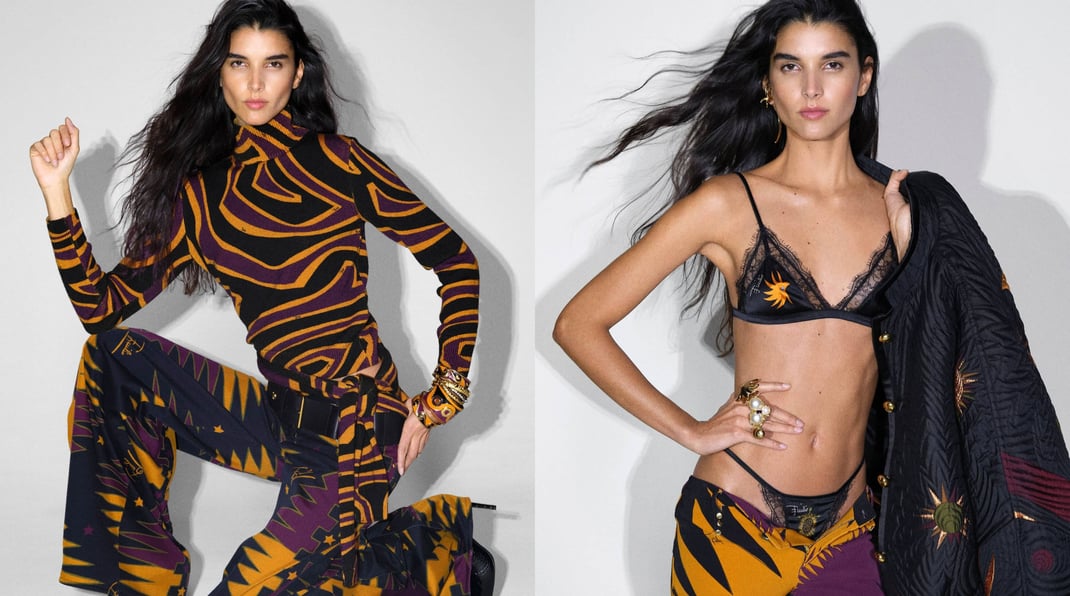
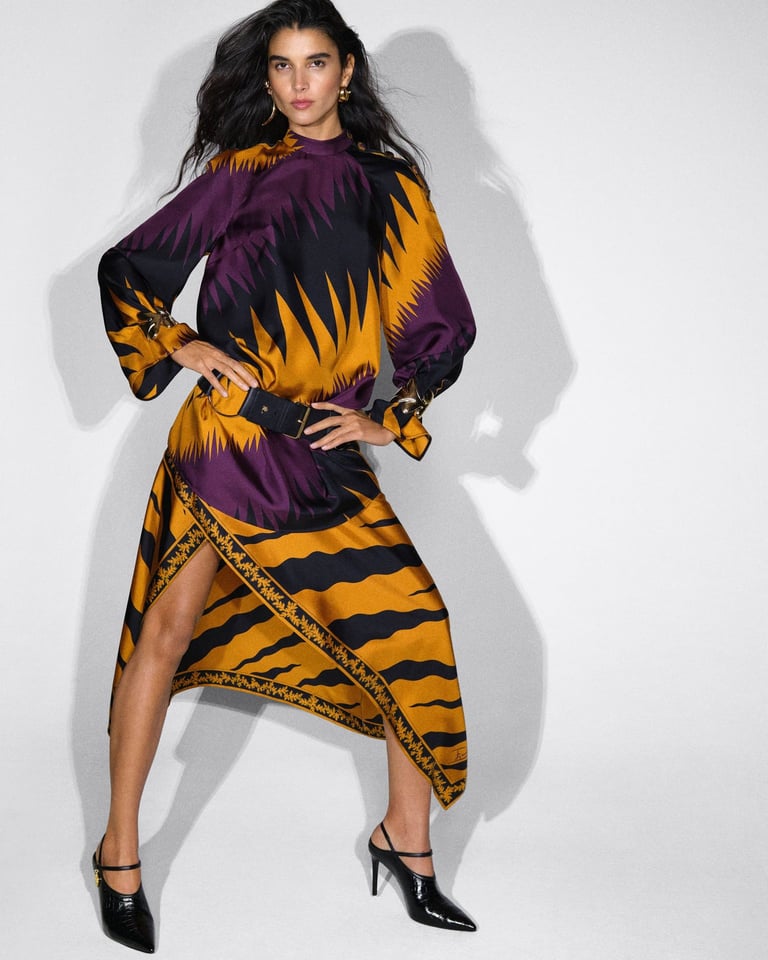
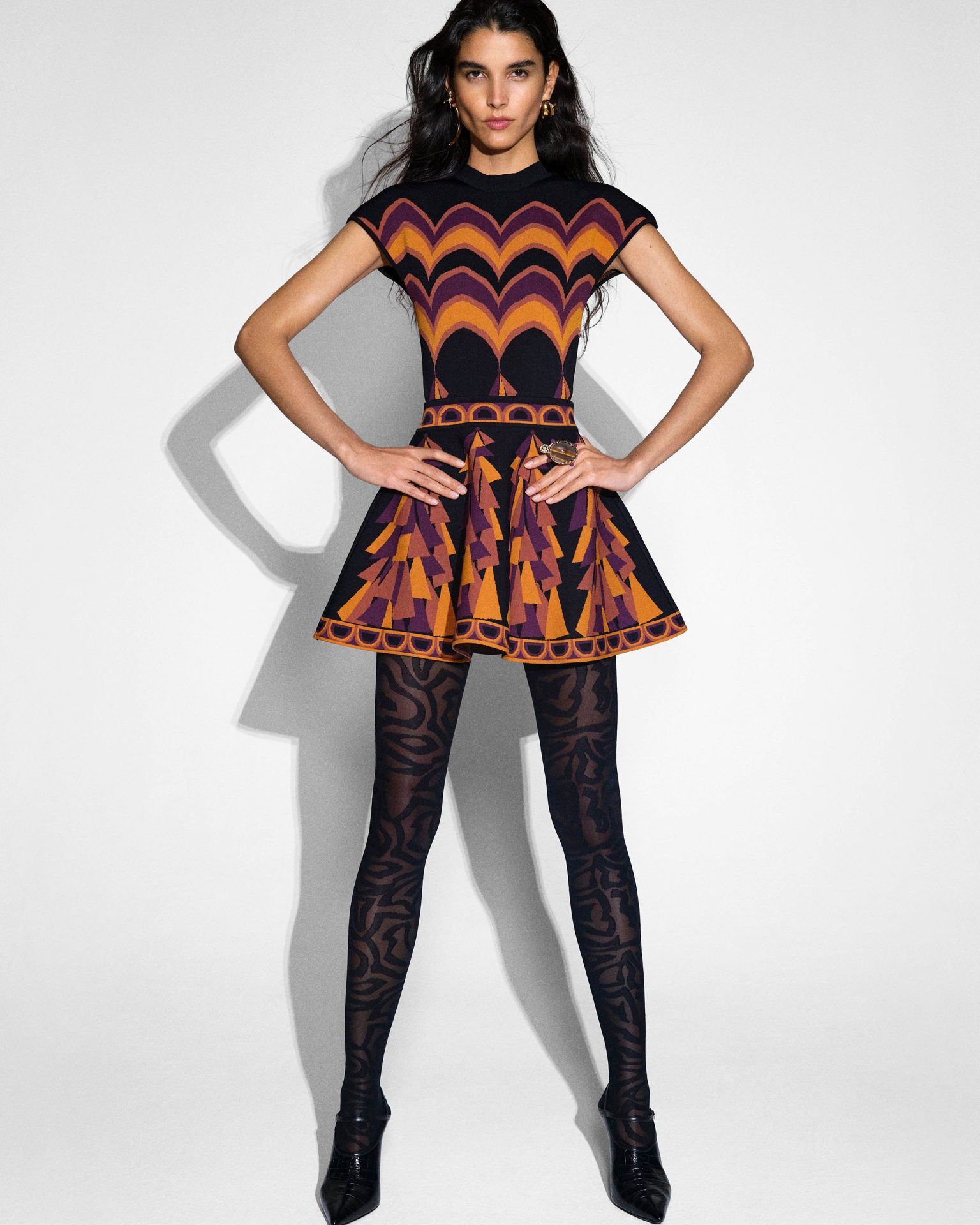
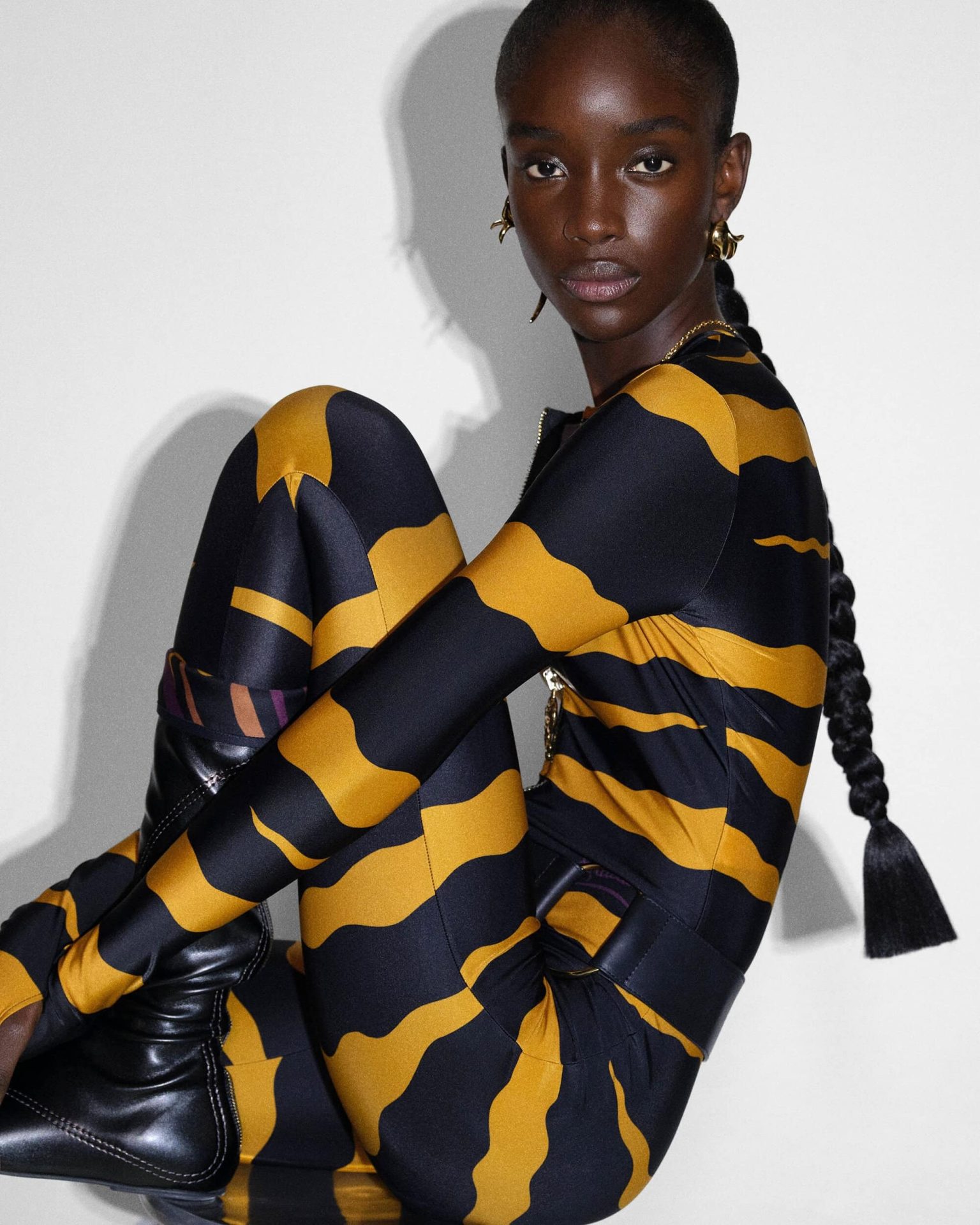
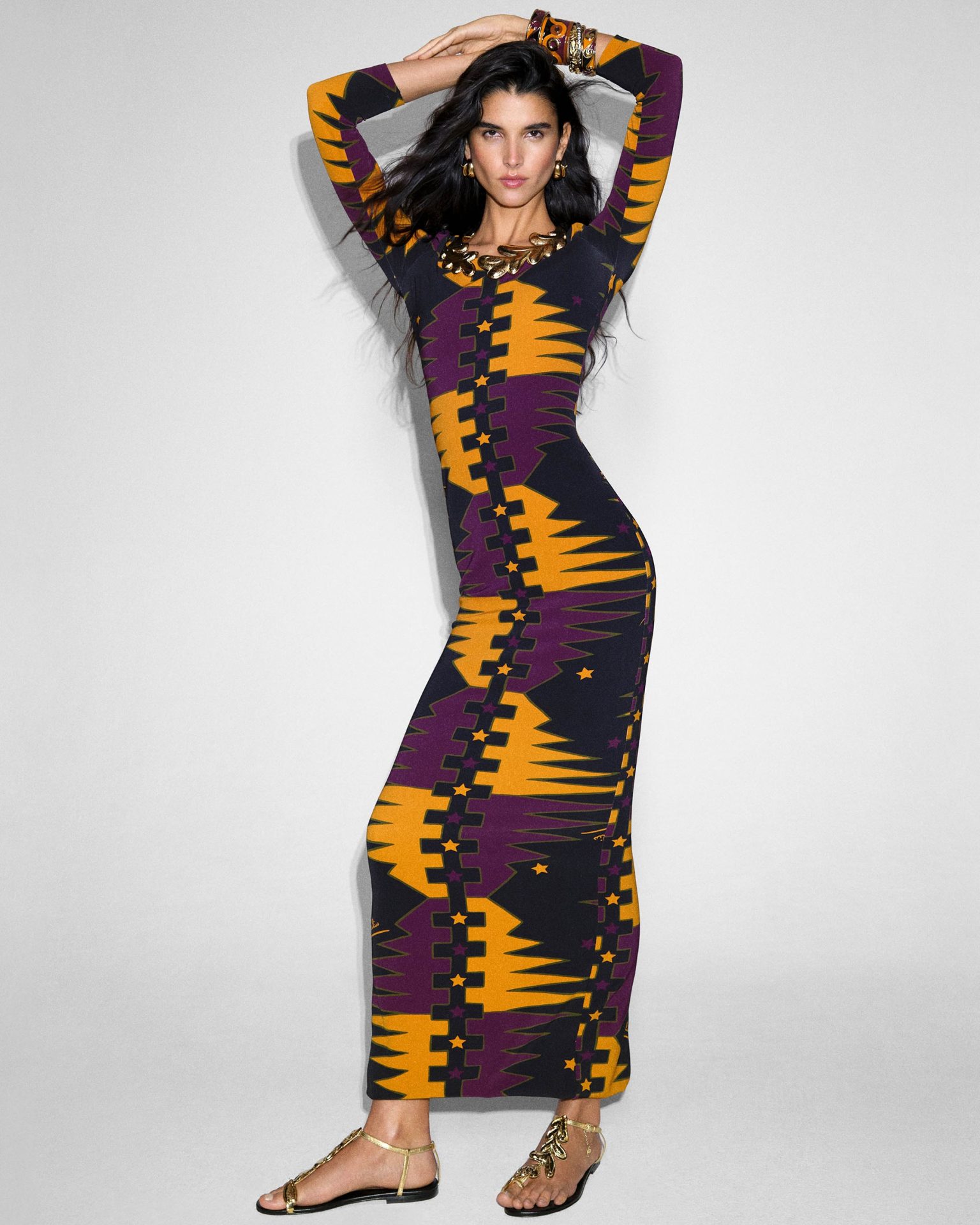
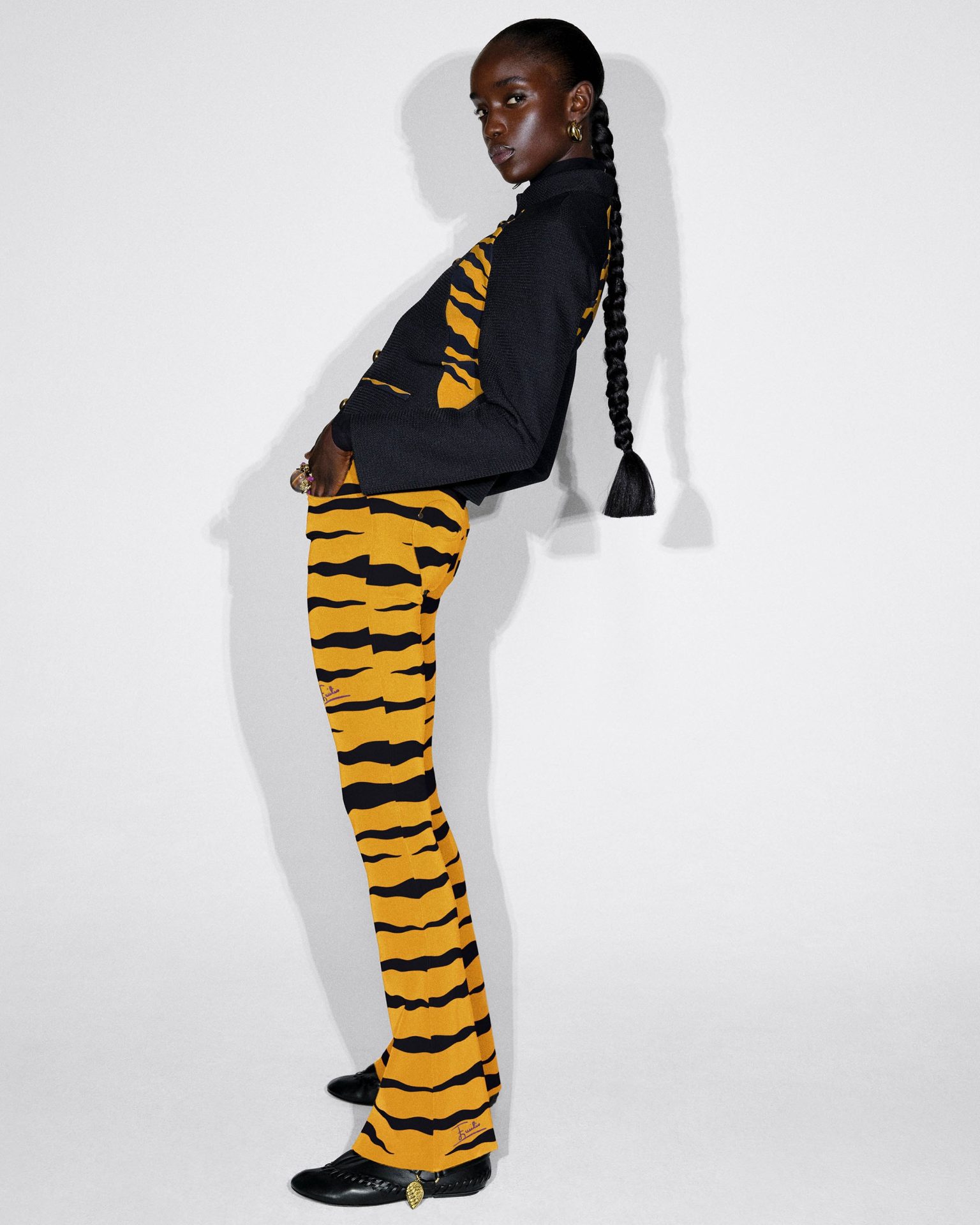
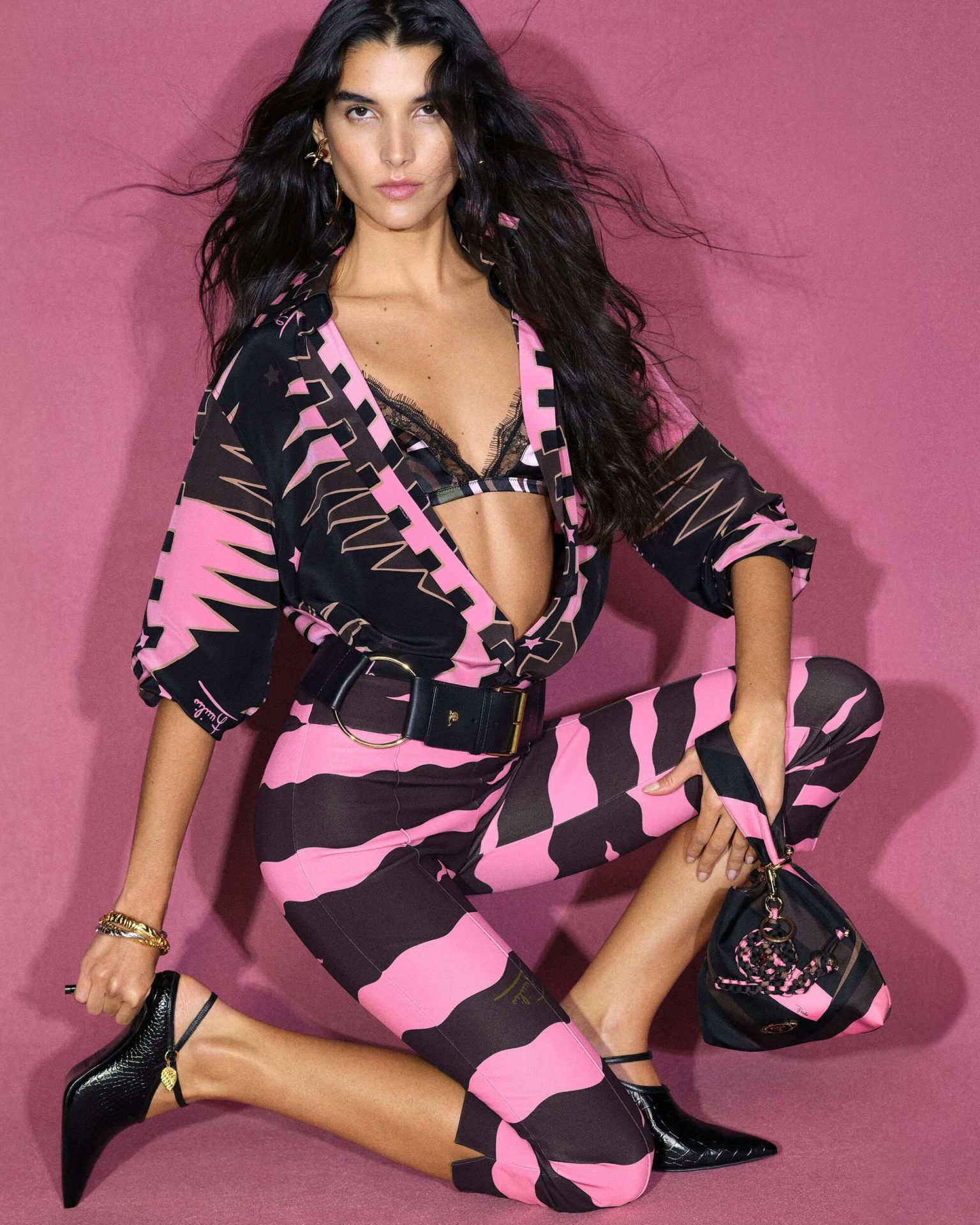
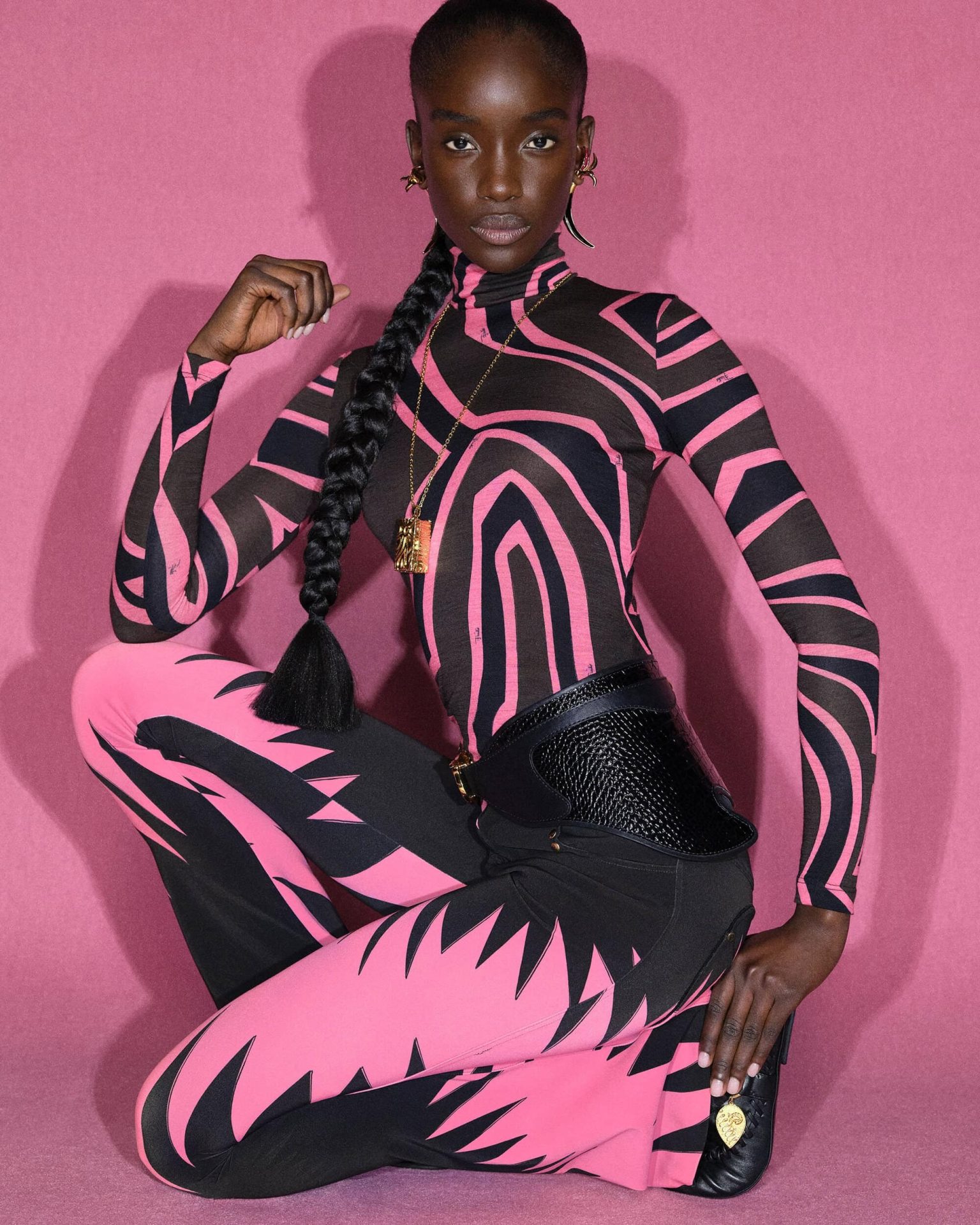
Graphic, yes – but the collection’s genius is in how pointed it feels. Pucci’s familiar vocabulary tightens and sharpens: a black-and-gold zebra print carries the drama of a heraldic creature rather than a pattern-book repeat; glyphs stretch vertically and horizontally until they seem to gallop across the fabric; tessellations and irregular zigzags collide with animalia motifs in compositions that feel less like decoration than signal.
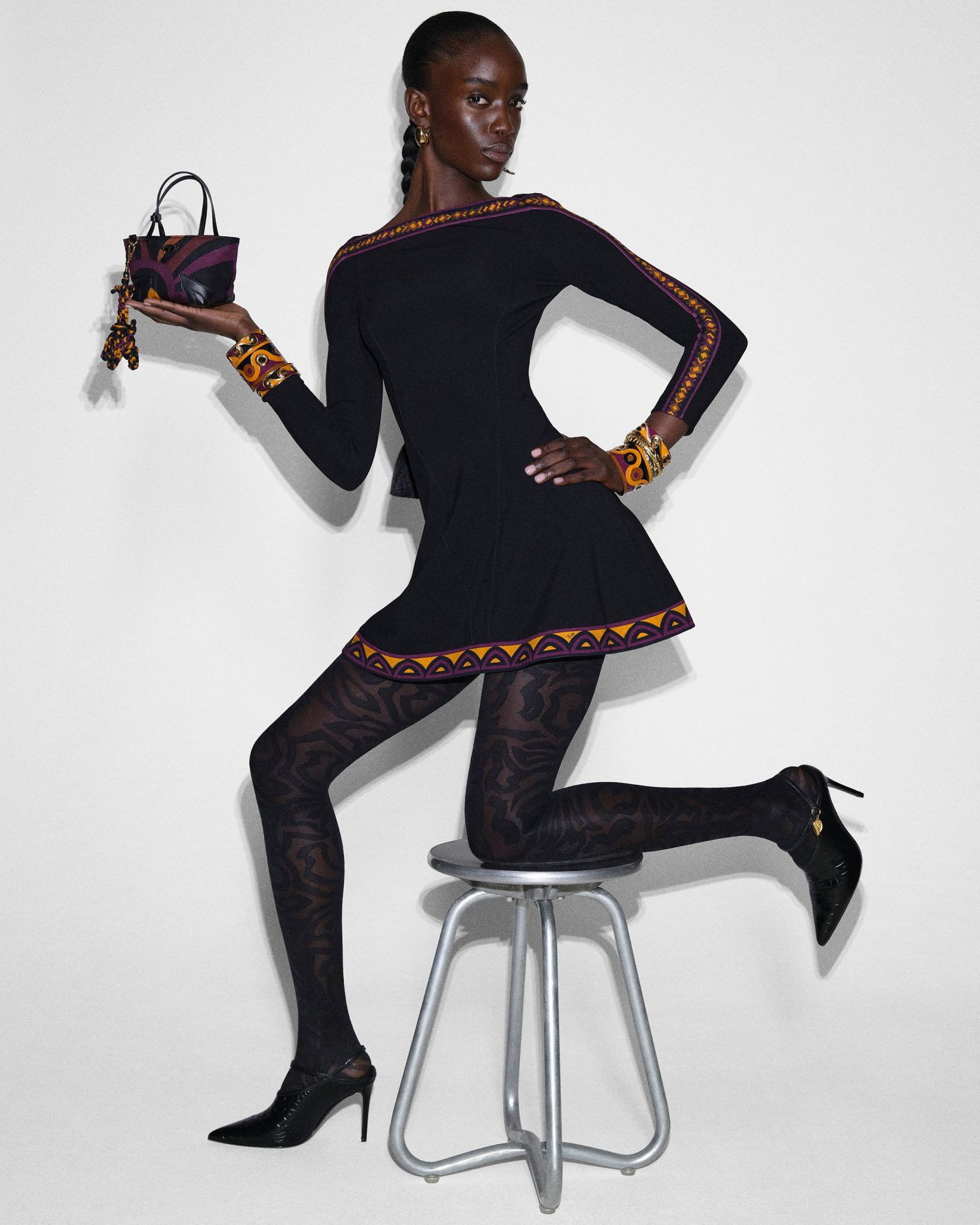
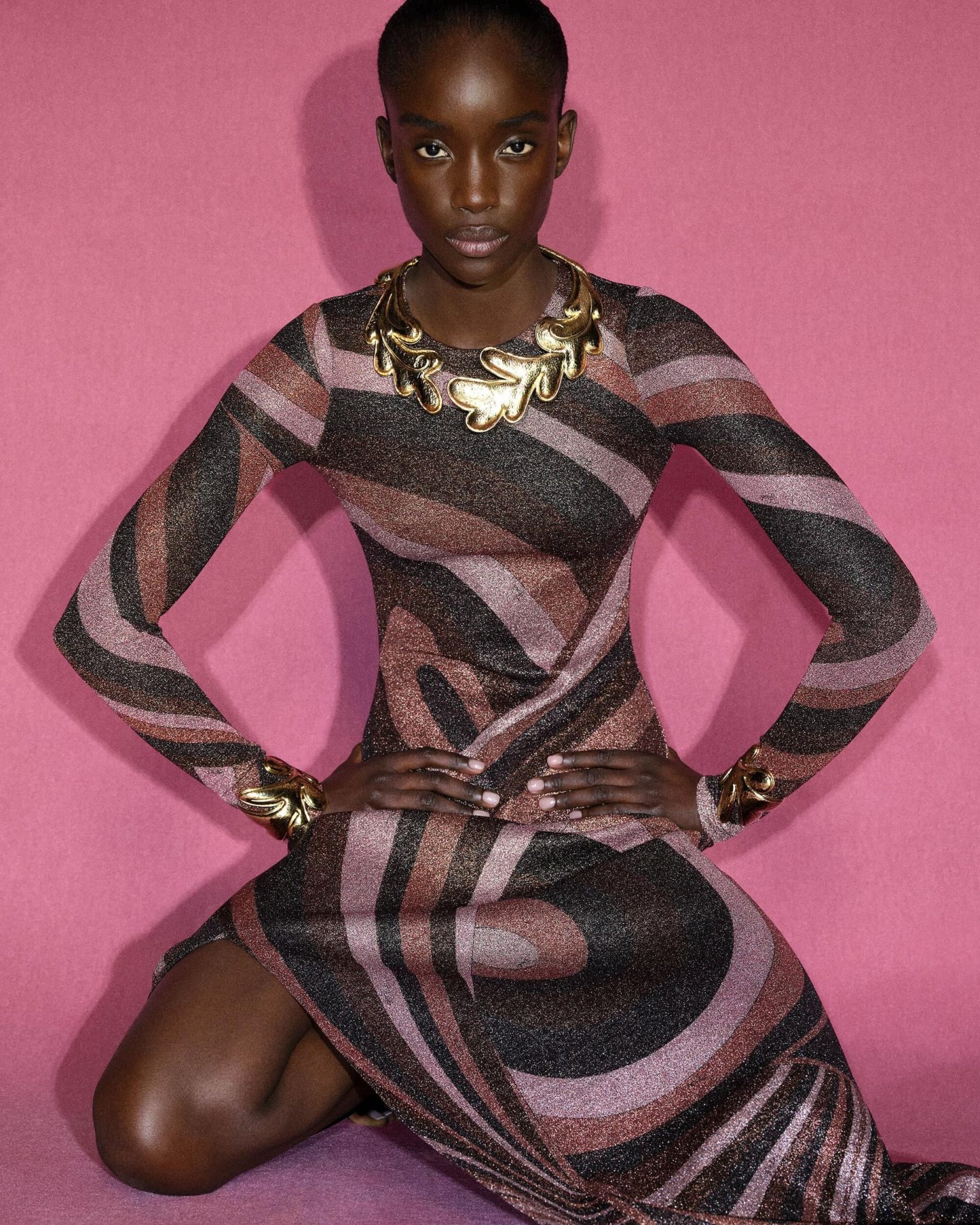
Gold does the heavy lifting of mood. It pours through the collection in antique thread and molten jewelry – sunbursts on quilted satin blousons, filigree borders tracing the hems of asymmetric dresses, sculptural hoops at the ear and a bestiary of charms at the bag. The effect is nocturnal, decadent, candlelit: gold as the color of a room that has just turned down its lights for a party.
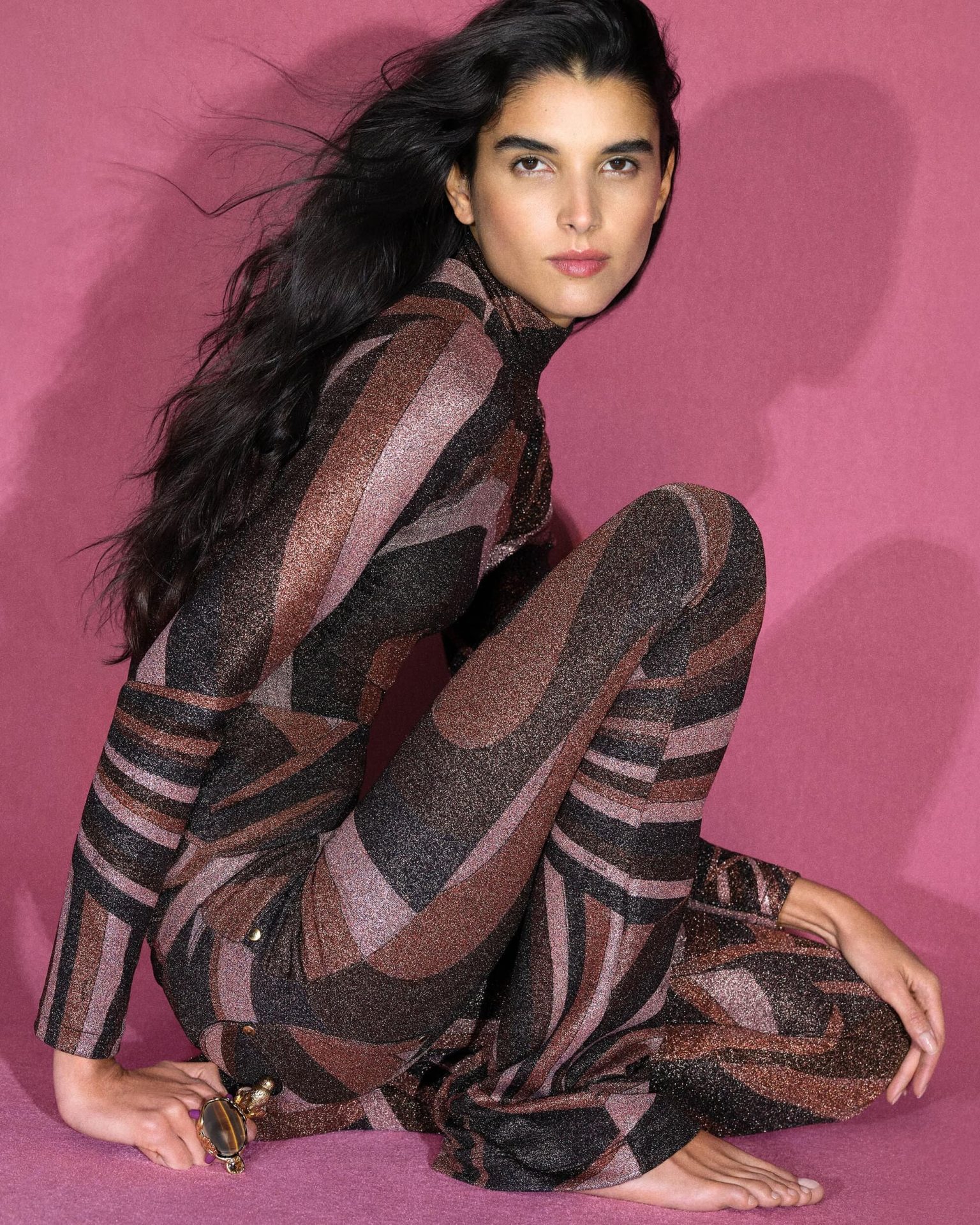
Yet Miceli is careful never to let the prints do all the talking. It has become something of a mission for her – to make Pucci read as a fashion house rather than merely a very good address for print. So Fall 2026 builds its counterpoints deliberately: black-on-black jacquards, dense quilting, slinky knits, ribbons, and deliberately plain pieces that give the eye a place to rest. This is also a tactile collection in a way Pucci rarely allows itself to be. Jacquards, quilts, and nubby surfaces make the pattern feel engineered into the cloth itself – not silk-screened on as an afterthought, but woven through the very structure of the garment. In revisiting Emilio’s own drawings, including previously unused sketches, Miceli extracted details and proportions from the archive rather than reproducing its most obvious hits.
The result is Pucci’s maximalism with a spine: stronger silhouettes, richer materials, and just enough restraint to make the excess land.
Medieval Skating, Dance-Floor Ready
The Palio’s theatrical past ghosts through the silhouettes. Waists are cinched hard, skirts flare out with a flick, and certain dresses carry a quality the designer herself spotted in the archive: the vaguely medieval peplum tunics Siena’s jockeys once wore reminded her of figure-skating costumes. It is an odd, delightful alchemy – medieval-meets-skating – and it feels entirely natural inside the Pucci universe, where a short, flaring dress in a bold print always looks one song away from the dance floor.
Because if Siena supplied the drama, New York supplied the after-dark attitude. “I want girls to come to Pucci to dress up for a night on the town,” Miceli says, and the collection honors that brief to the letter: clinging catsuits, slinky knit dresses, the raciest jeans imaginable with tiger-like prints and back pockets shaped like Google map pins, quilted blousons that catch the light, regal capes that read as evening armor.
The campaign completes the thought. Miceli chose Bus Palladium – the Paris nightclub of her adolescence – as its location, with Carlijn Jacobs behind the camera and model Grace Elizabeth grooving in shimmering gold Lurex jersey, by now a staple code of Miceli’s Pucci. Images conceived around dancing and partying extend the idea of Pucci as an occasion brand: clothes for when you intend to be seen.
Real Women, Real Lives
Which is rather the point. For Miceli, Pucci is feminine, daring, energetic – a celebration of women who want to stand out. But she is emphatic that these clothes should not require an instruction manual. They should be, in her phrase, a “no-brainer”: you grab one, you put it on, you go.
That apparent simplicity is harder to achieve than it sounds. Behind the exuberance is a precise attention to the female body – “where a waist should sit, where a motif should fall, what should be revealed and what might be better left to the imagination.” Here, her point of view as a woman designing for women becomes most persuasive. She is not dressing an imaginary unicorn; she is thinking about real women, with real bodies and real lives. Pucci’s fantasy remains gloriously intact – but it is becoming more wearable, more possible, more pragmatic.
The cleverness of this collection lies precisely there. Miceli is not trying to tone Pucci down. She is giving all that color, pattern, and glamour something to hold on to – and, in doing so, reminding us what the house has always done best: make an entrance, and make dressing up feel guilt-free. The Palio may be centuries old, but for Pucci it is not an exercise in historical costume. It is simply another reason to believe that some occasions require a little heraldry after hours.
Pucci Fall 2026, in the end, isn’t about the race – it’s about the arrival. The banner has been raised. The party is waiting.
See the complete collection below:
Images Courtesy of Pucci
In other brand campaign news, Jimmy Choo Fall-Winter 2026 Campaign Starring Africa Garcia