
The label sent its fall wardrobe down a Financial District runway on Sunday. A protest made sure the collection was not the only thing the room remembered
Cos staged its fall 2026 runway show on Sunday afternoon at the downtown WSA Building in New York City’s Financial District. The coed lineup filtered corporate modernism through a minimalist lens and landed on cold-weather dressing with a precise, unshowy confidence. Select pieces from the collection were available to shop immediately on the company’s website and in stores, and limited numbers will continue to drop throughout the season.
Outerwear First
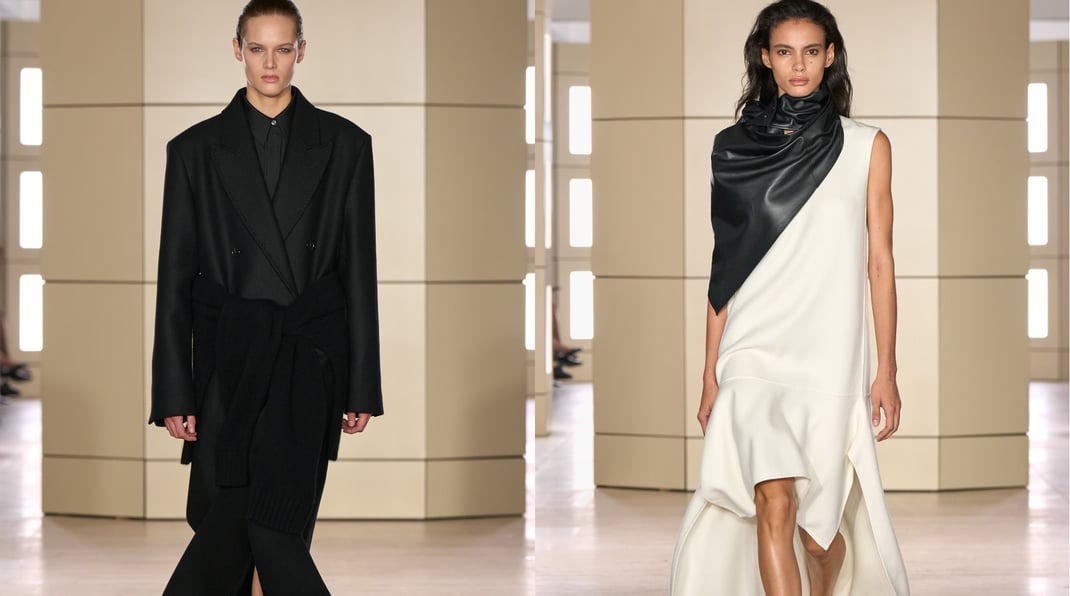
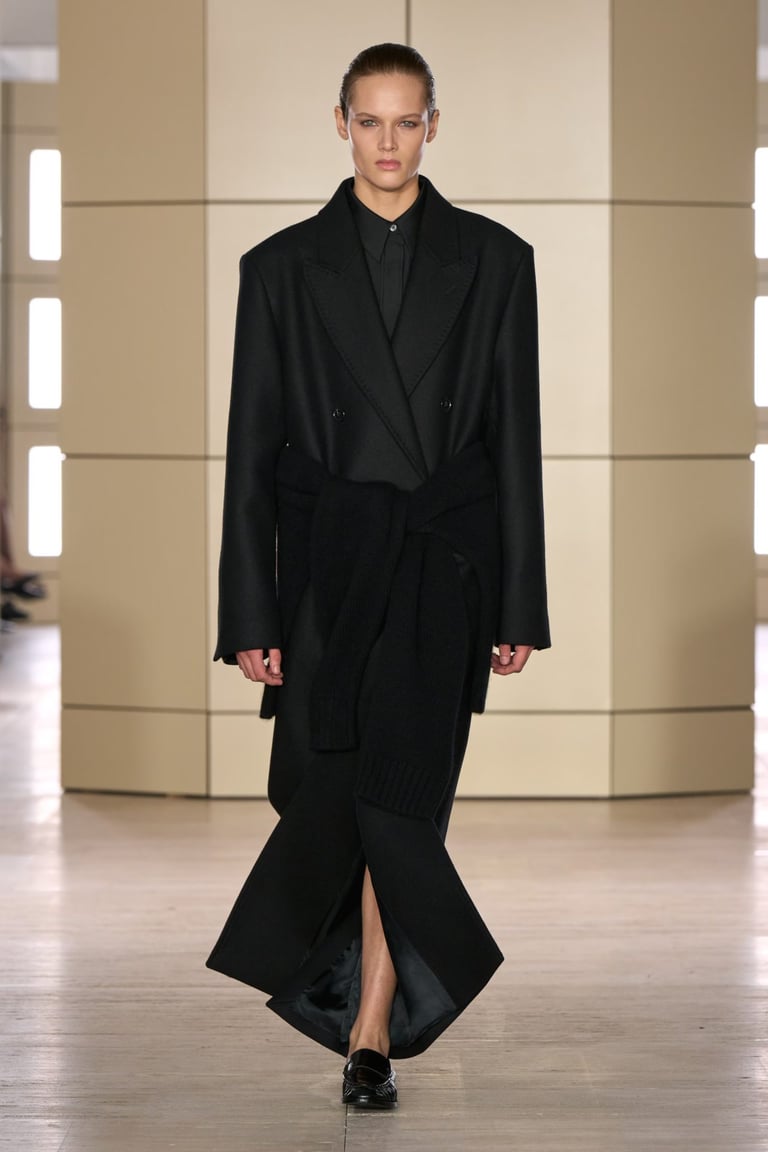
The clothes, though, were the point of the show, and they earned the attention. The coed lineup opened with men’s and women’s ultra-long, precisely tailored wool topcoats, the season’s biggest emphasis, with knits tied around the waists.
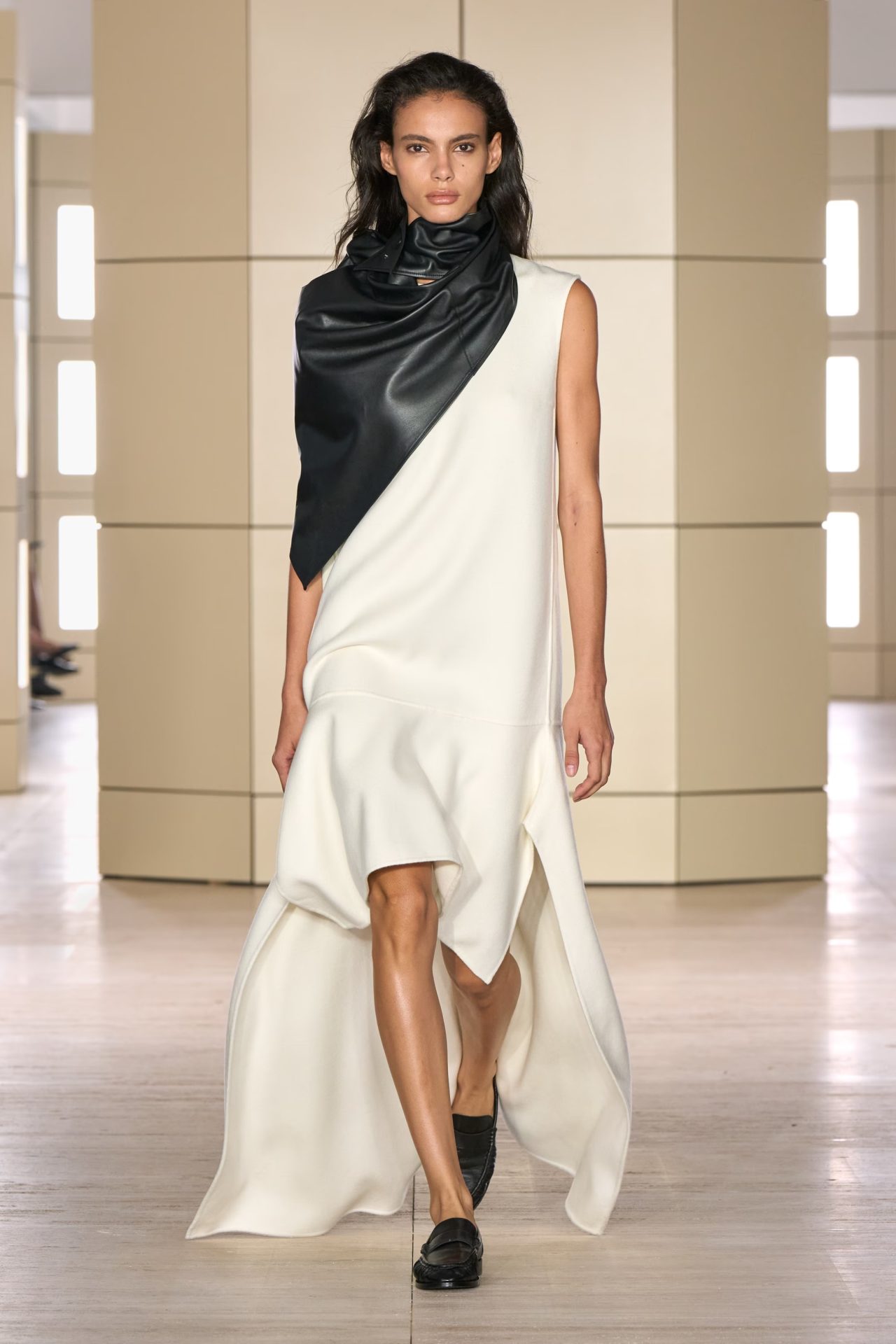
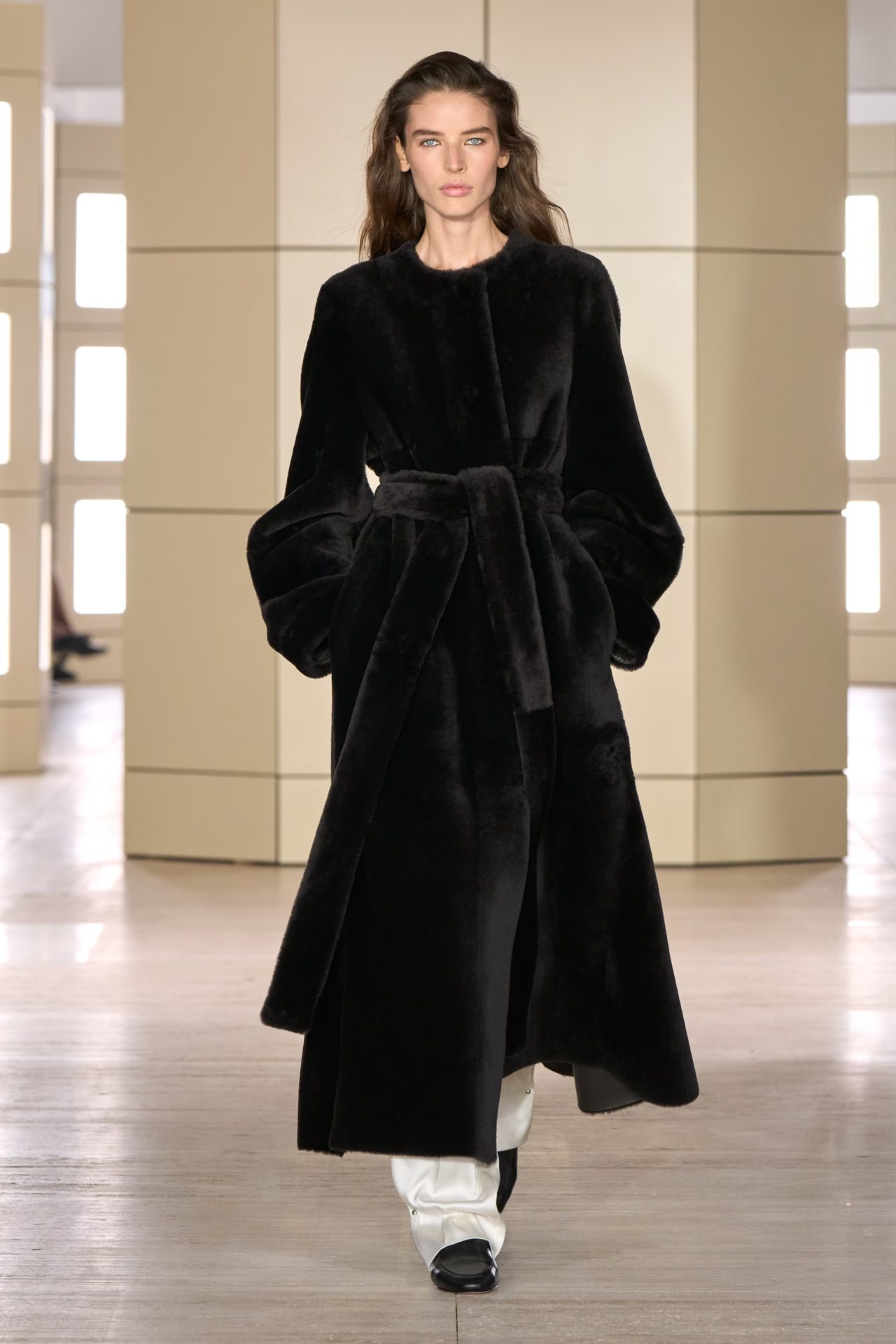
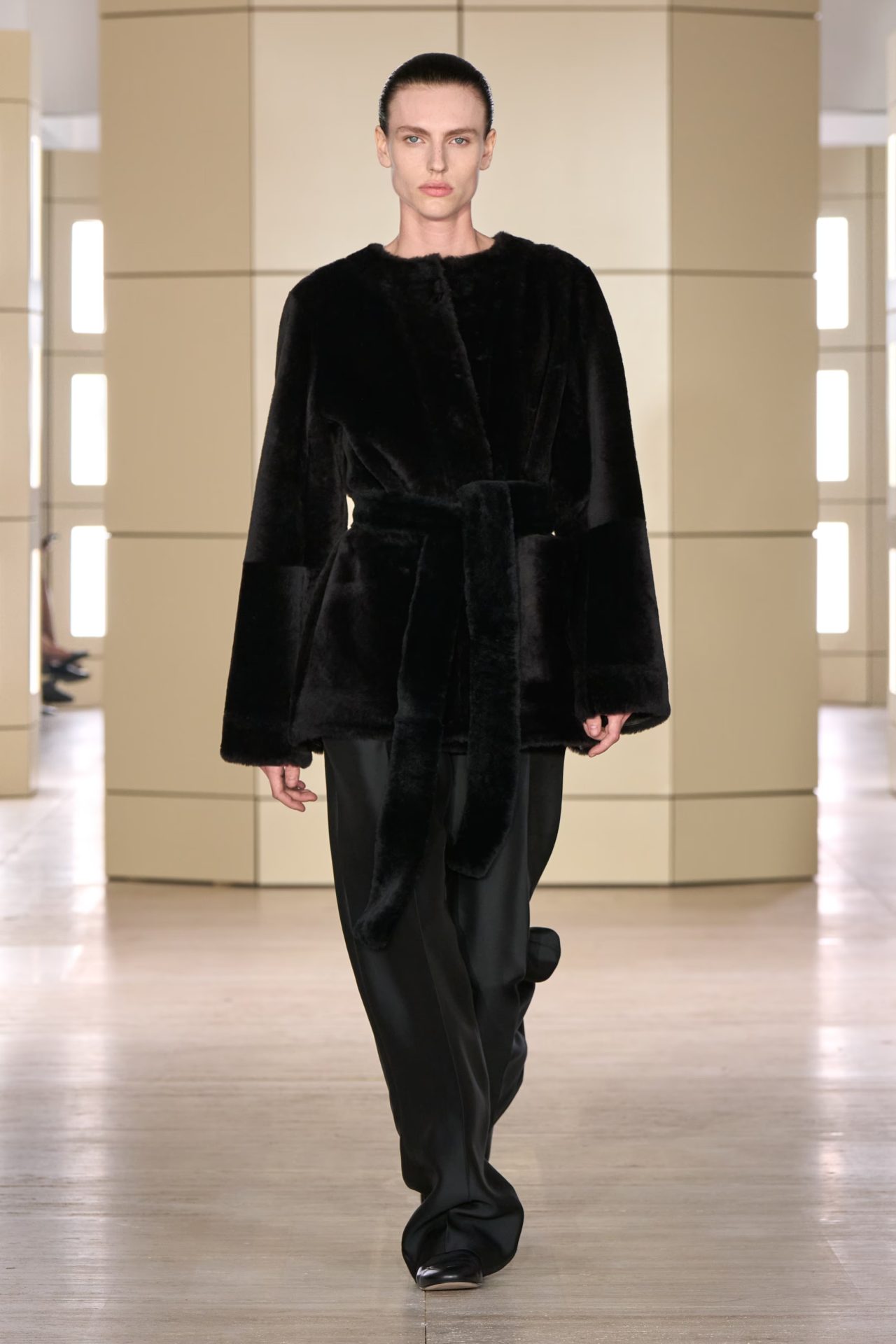
Leather outerwear came cut both long and short, in trench coats and workwear jackets in black and charcoal. Wrapped cashmere toppers and a faux fur robe jacket added a cozy warmth.
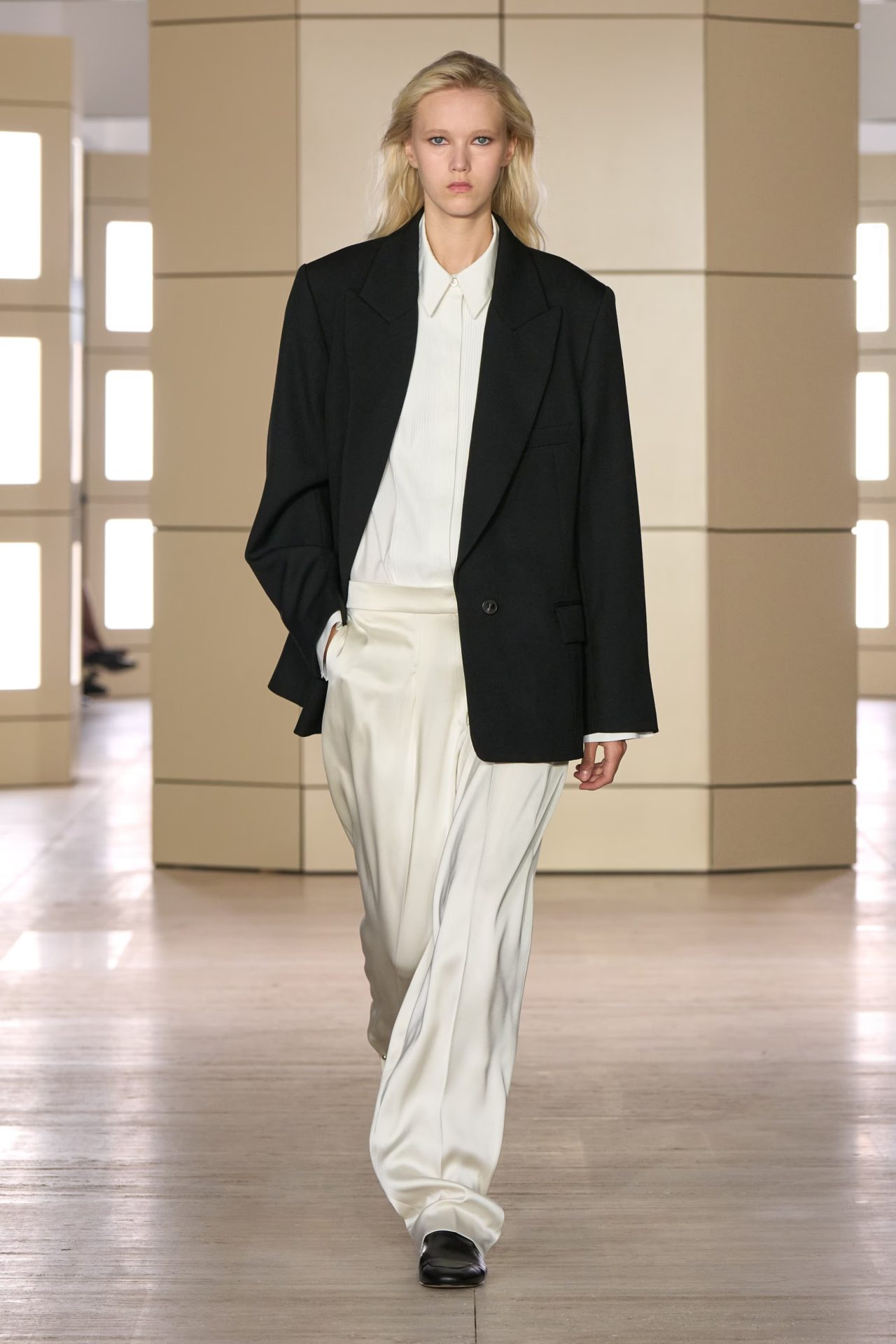
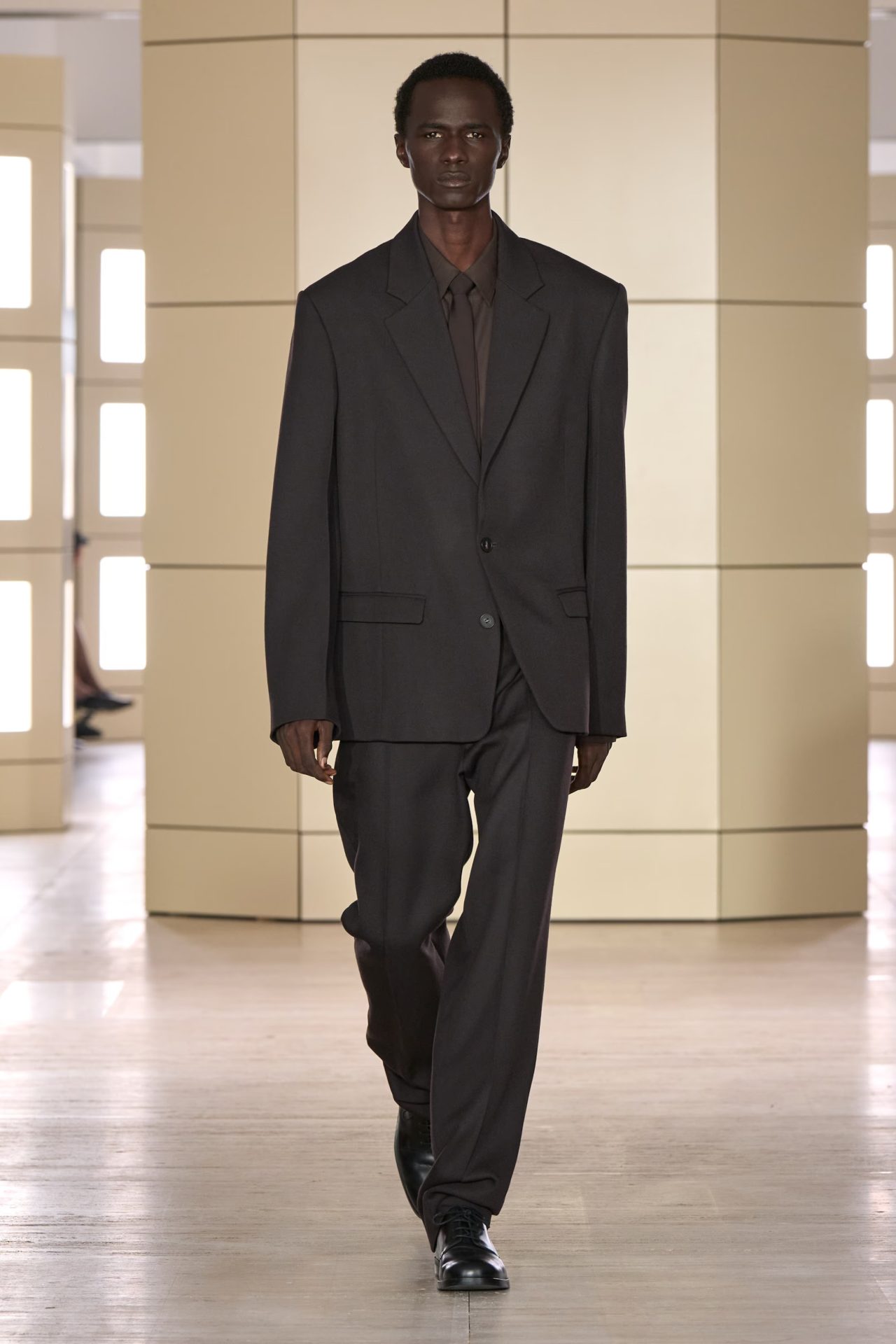
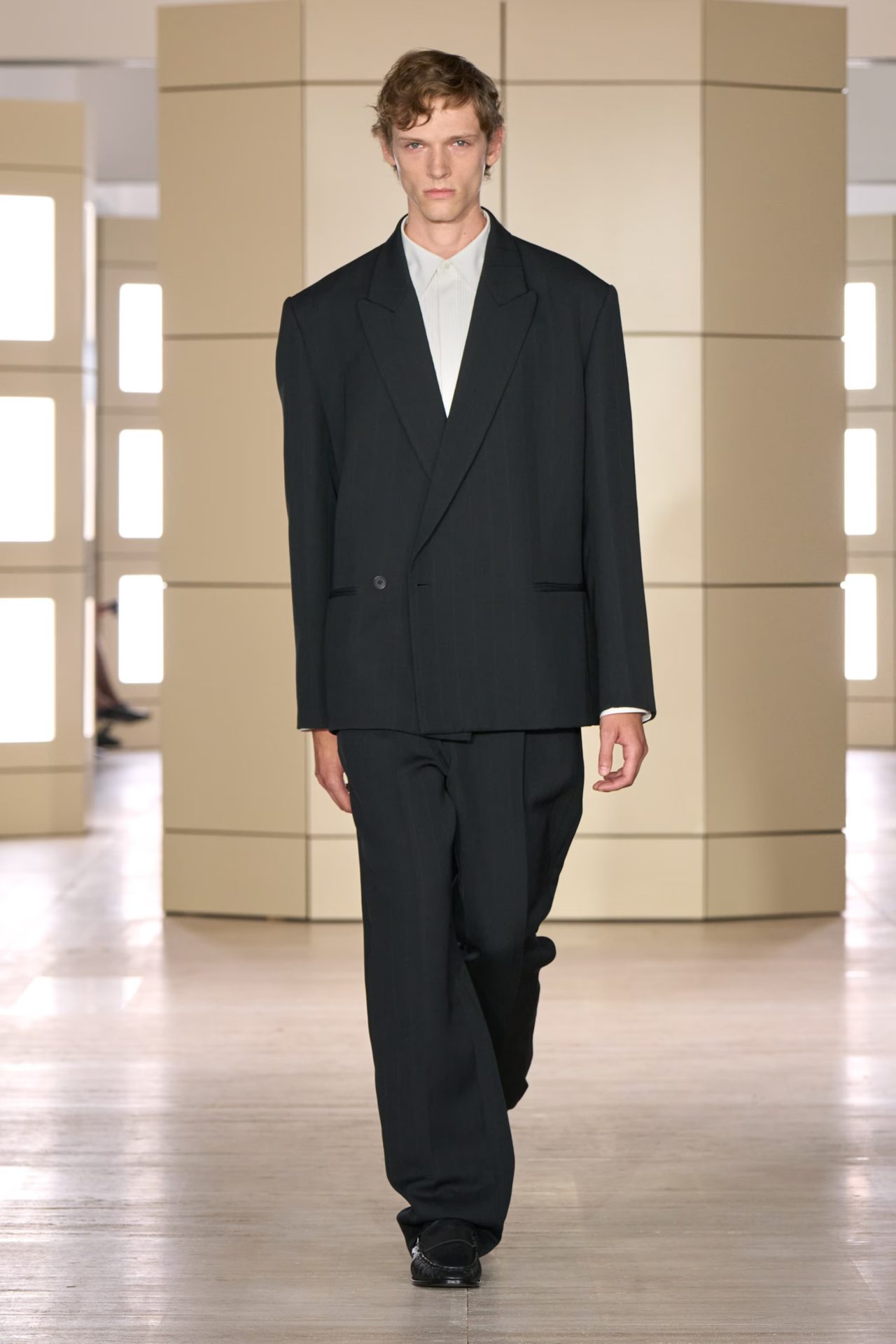
Beyond outerwear, Cos kept its tailoring straightforward and let proportion do the talking. Slightly oversized cropped boiled wool-blend blazers were paired with slim suiting skirts, and modern tuxedo dressing emerged in the men’s lineup.
Texture and a New Elegance
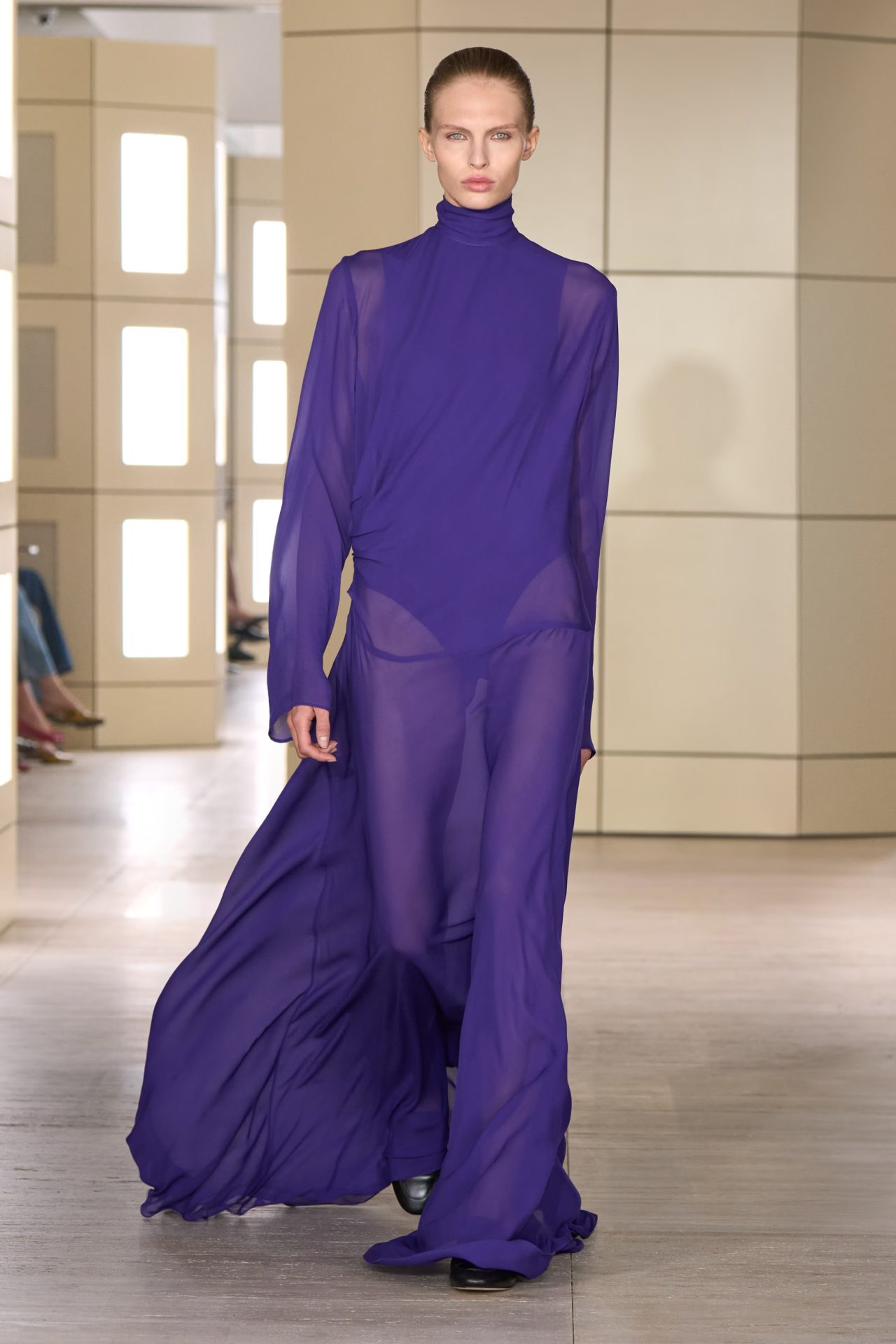
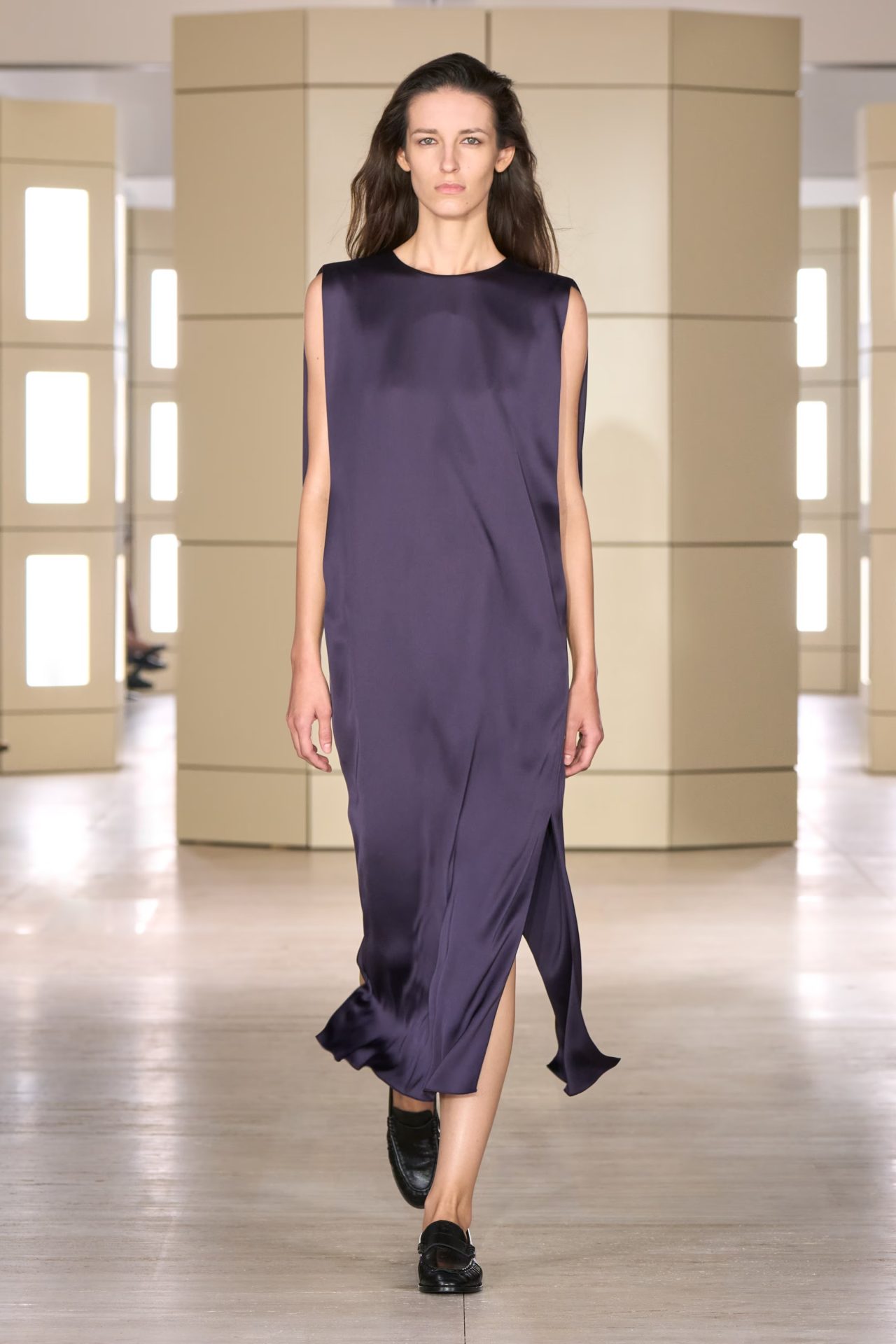
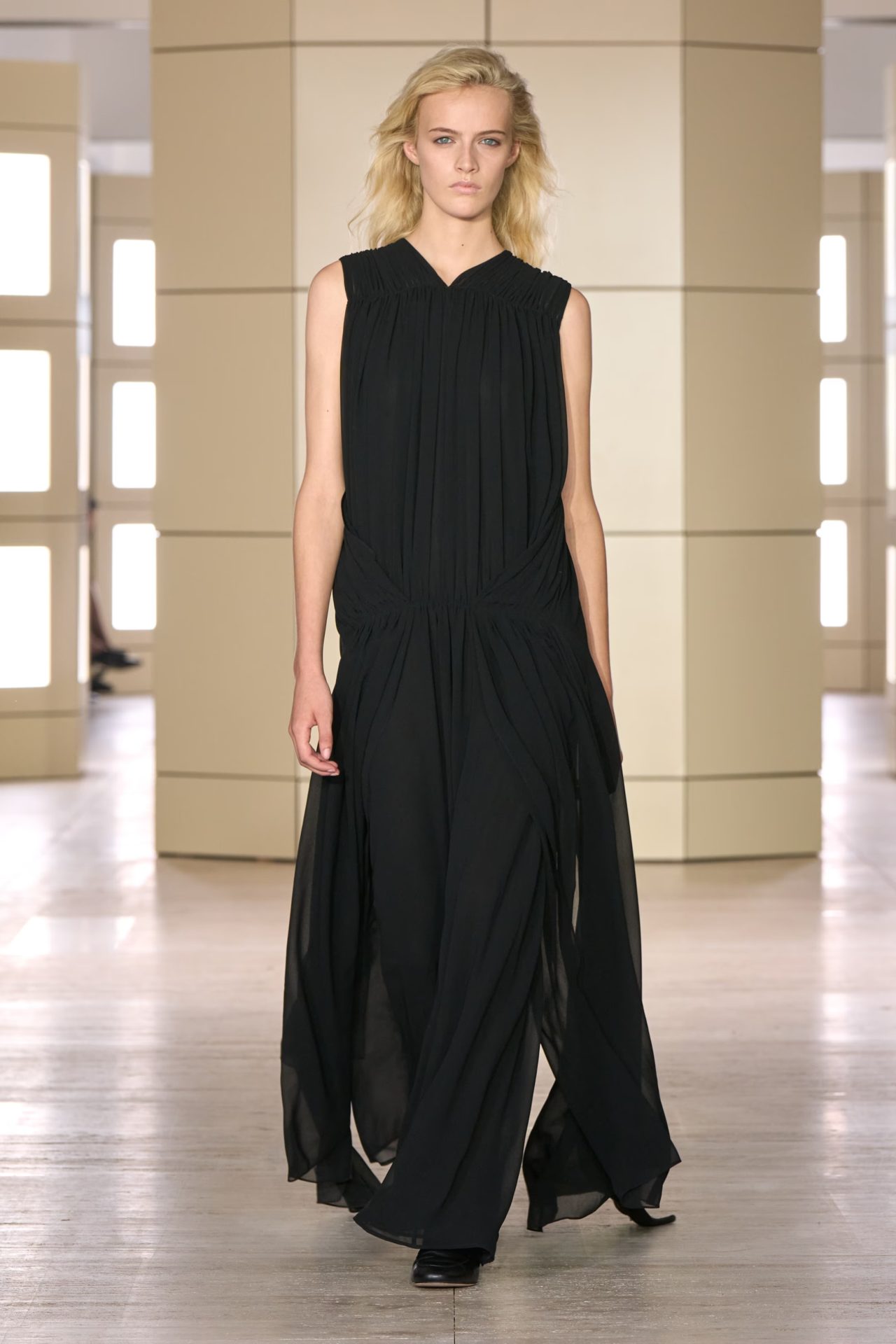
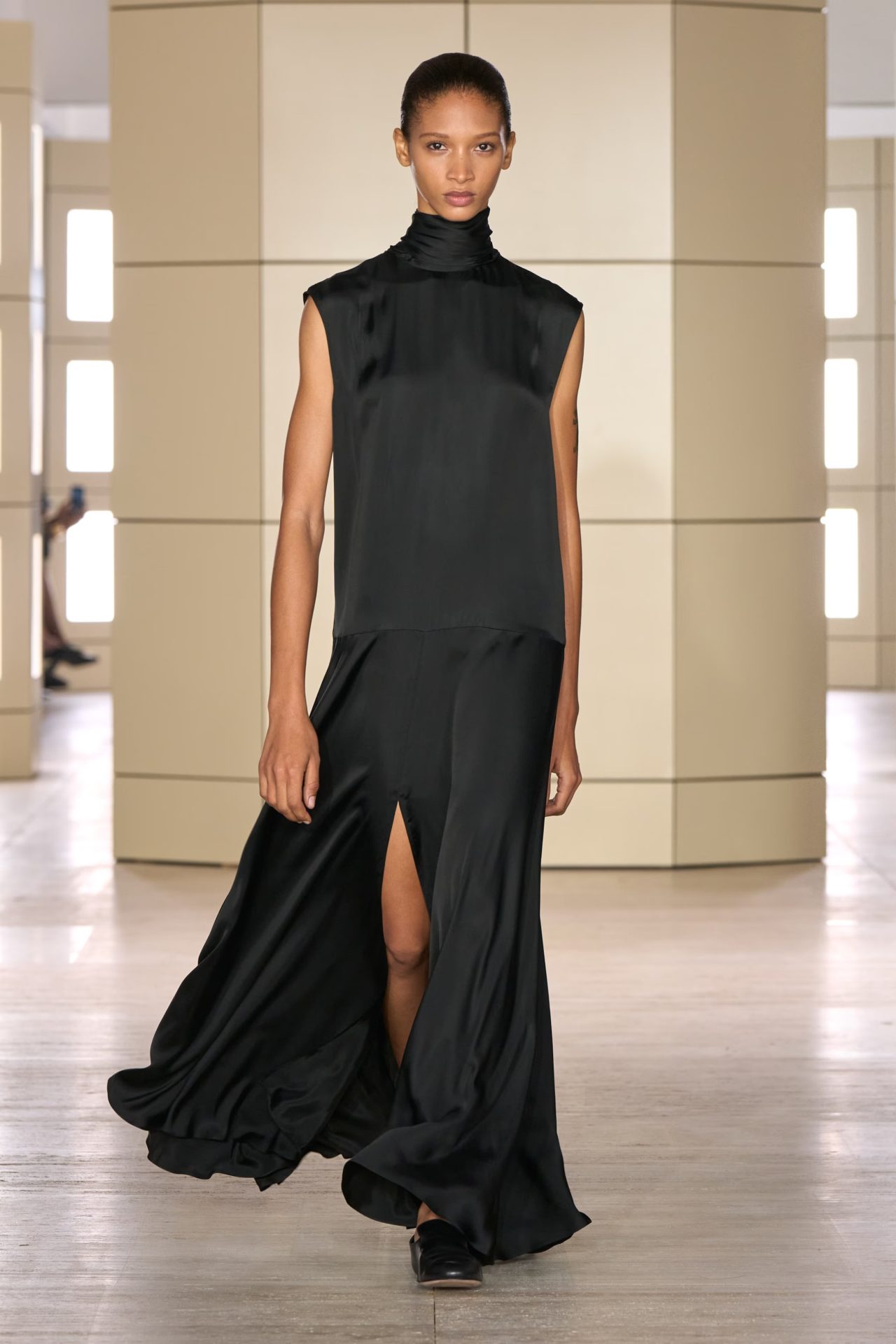
New ideas surfaced as the show progressed. Leather pants were paired with nubby jumpers, and a pieced-together raw leather tunic and skirt made construction the decoration. Double-faced wool mullet dresses and carwash panel skirts brought movement into the mix, alongside softer women’s occasionwear. A draped purple maxidress added punctuation to an otherwise restrained palette.
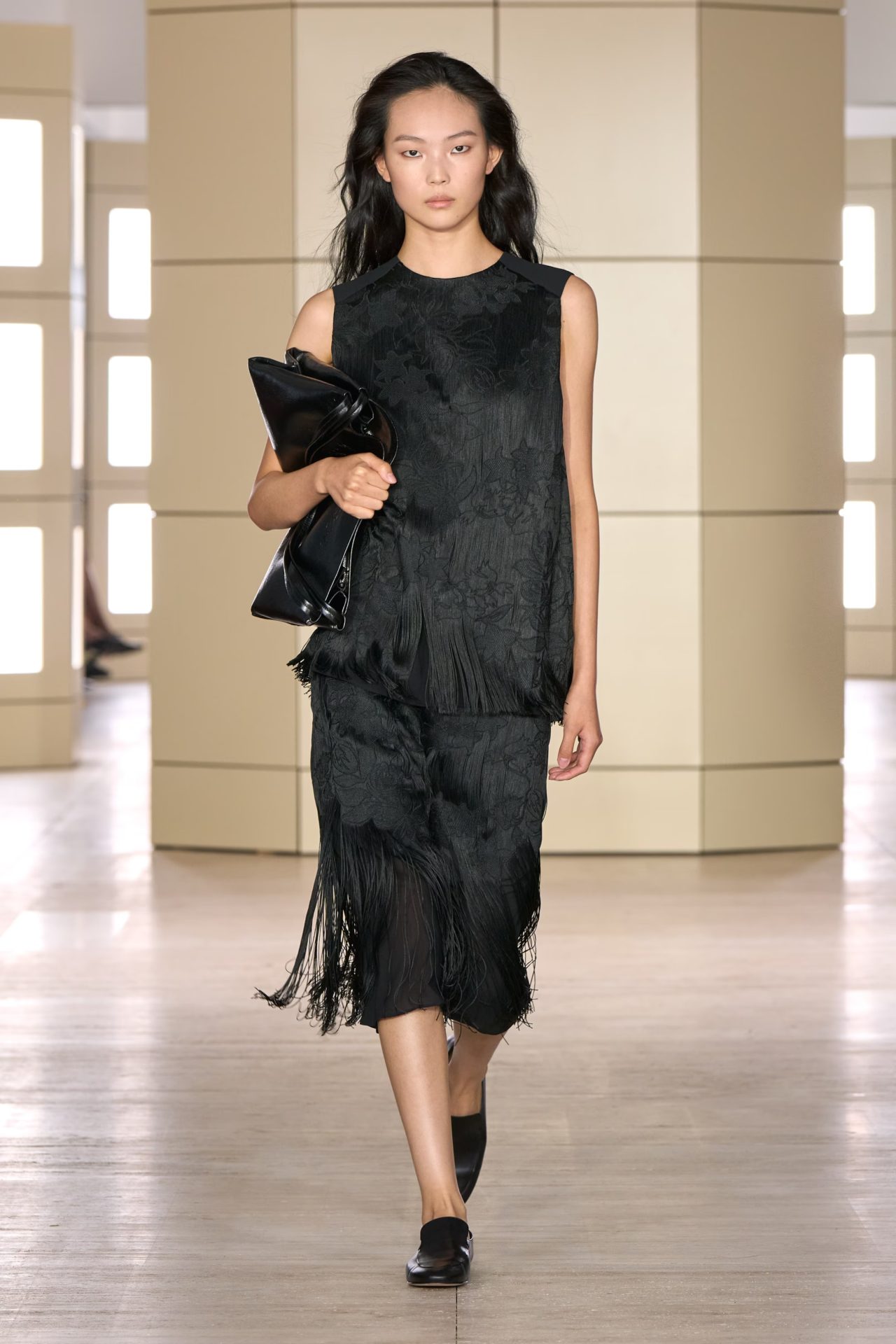
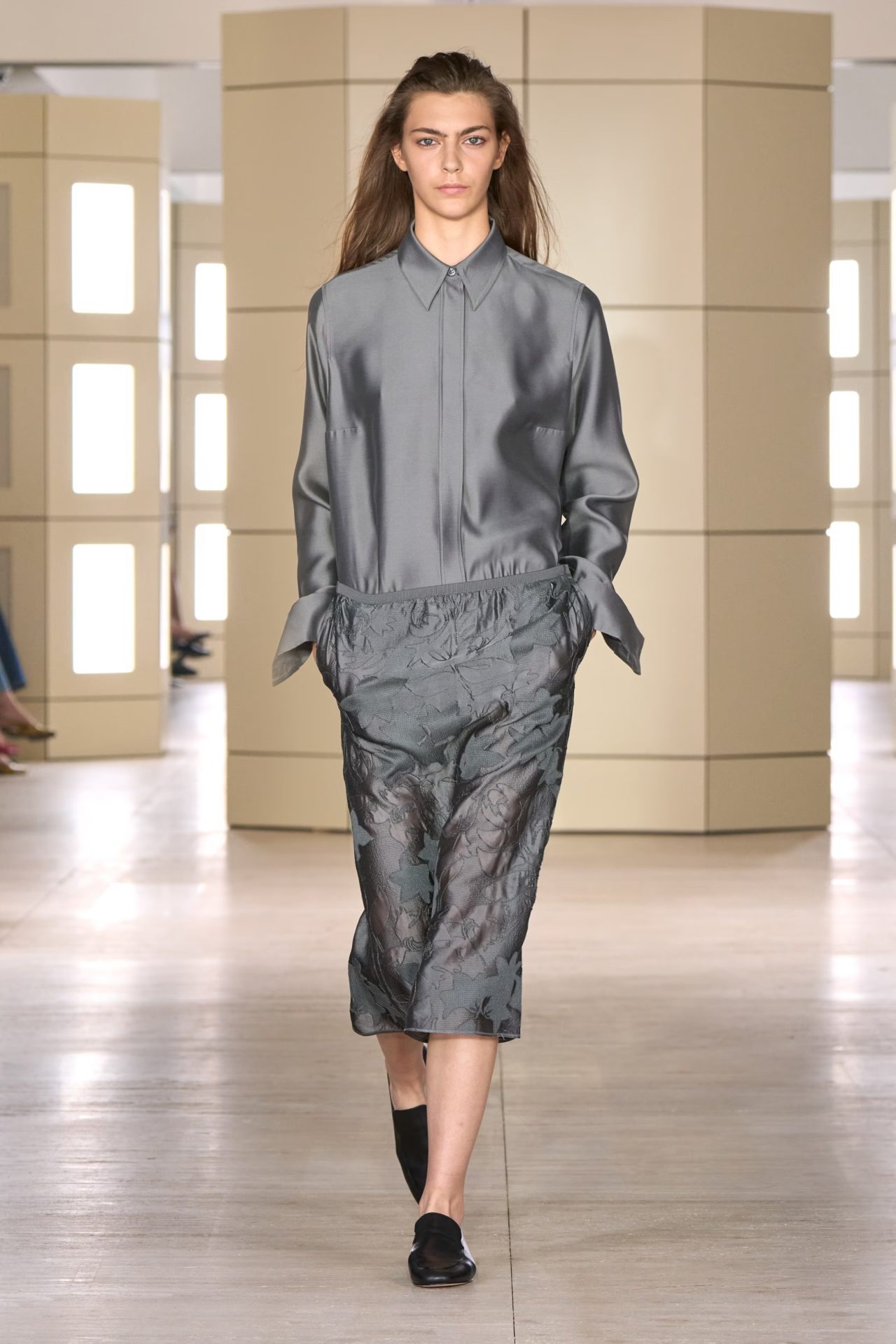
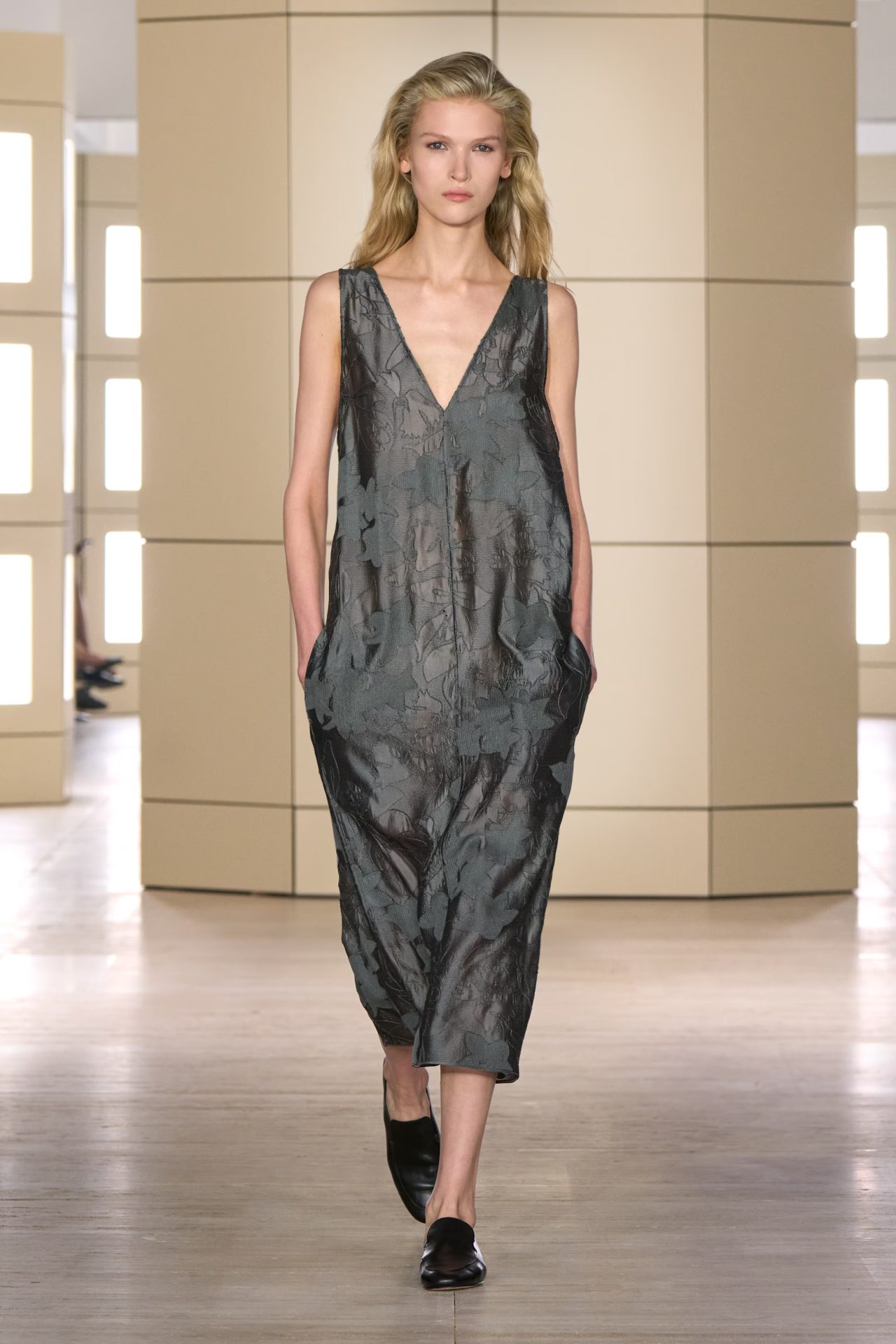
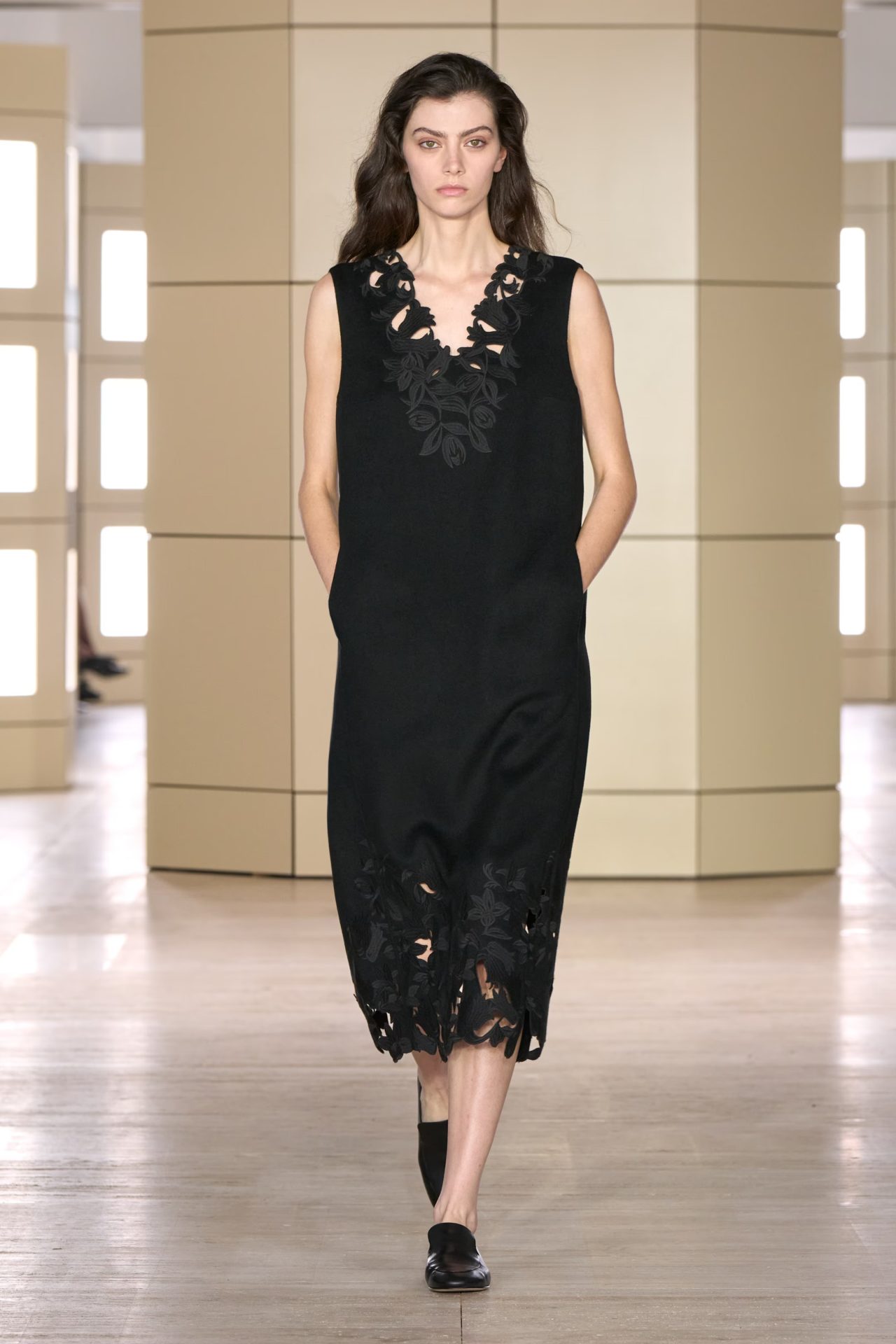
The evening pieces carried the most handwork. A double-faced wool-blend column dress was edged in embroidery, and easy column skirts were embroidered with mulberry silk and hand-drawn floral motifs inspired by 1920s eveningwear. Together they brought a new elegance to the collection through texture rather than ornament.
Cos has built its reputation on clothes that do not announce themselves, and fall 2026 holds that line. The coats have the structure to carry a winter. The skirts have handwork worth a second look. The show went on. For now, the conversation is about everything around it.
See the complete collection below:
Images courtesy of Cos
In other NYFW news, Tory Burch Spring 2027 ready-to-wear collection at New York Fashion Week
Styling the Collection for the City
The Financial District venue was no accident; the clothes are engineered for the pace and verticality of downtown Manhattan. The ultra-long wool topcoats that opened the show are cut to clear the subway grate and the curb splash, with a back vent deep enough for a full stride across Chambers Street. Stylists at the label suggest wearing the boiled-wool blazers unbuttoned over fine-gauge merino turtlenecks, letting the cropped hem sit above high-waisted tailored trousers for a silhouette that reads architectural rather than oversized. For evening, the embroidered column skirts anchor a black cashmere bra top and the faux-fur robe jacket, a combination that transitions from a gallery opening in Tribeca to a late reservation in the West Village without a wardrobe change. Footwear leaned utilitarian: leather lace-up boots with Vibram soles for the men, and low-block-heel ankle boots in polished calfskin for the women, both designed for cobblestones and wet pavement. The knits tied at the waist on the runway serve a practical second life as a scarf when the wind tunnels between skyscrapers, reinforcing the collection’s thesis that elegance in New York must survive the commute.
Material Innovation and Responsible Sourcing
Beneath the quiet aesthetic lies a rigorous material strategy that aligns with the brand’s evolving sustainability commitments. The signature wool topcoats utilize a double-faced Italian fabric woven from RWS-certified merino, bonded without adhesives to allow for end-of-life recyclability. Leather outerwear is sourced from tanneries rated gold by the Leather Working Group, with traceability back to European farms; the raw-leather tunic and skirt that drew attention for their pieced construction are cut from zero-waste pattern layouts, turning off-cuts into design features. The nubby jumpers paired with leather pants incorporate a blend of recycled polyamide and mulesing-free wool, reducing virgin fiber use while maintaining the tactile contrast central to the collection. Even the mulberry silk embroidery on the evening column skirts is sourced from a certified organic sericulture program in China, dyed using a closed-loop water system. COS has also expanded its take-back program for this season: customers can return any piece from the fall 2026 drop to stores for resale, repair, or fiber-to-fiber recycling, closing the loop on garments designed to outlast a single trend cycle.
The Protest and the Cultural Moment
Midway through the second row of topcoats, a small group of activists unfurled a banner criticizing the fashion calendar’s carbon footprint, momentarily shifting the room’s focus from hemlines to systemic accountability. The interruption was brief; security escorted the protesters out within ninety seconds, and the show continued without pause. Yet the incident underscored a tension that has defined this fashion week: the industry’s accelerated drop cycles versus mounting pressure for degrowth. COS, owned by H&M Group, occupies a complex position-its see-now-buy-now model and immediate shoppability drive volume, while its design language champions longevity. Creative director Karin Gustafsson addressed the moment backstage, noting that the brand’s shift toward seasonless staples and repair services is a direct response to the critique. The protest also highlighted the Financial District’s symbolism: a neighborhood built on financial capital now hosting a conversation about ecological debt. For the global audience watching the livestream, the juxtaposition of impeccably tailored wool coats and a demand for structural change became the defining image of the day, framing the collection not just as product but as a participant in fashion’s ongoing reckoning.