
Four decades in, the designer chased one unidentified detail through an old magazine and let it shape a whole collection
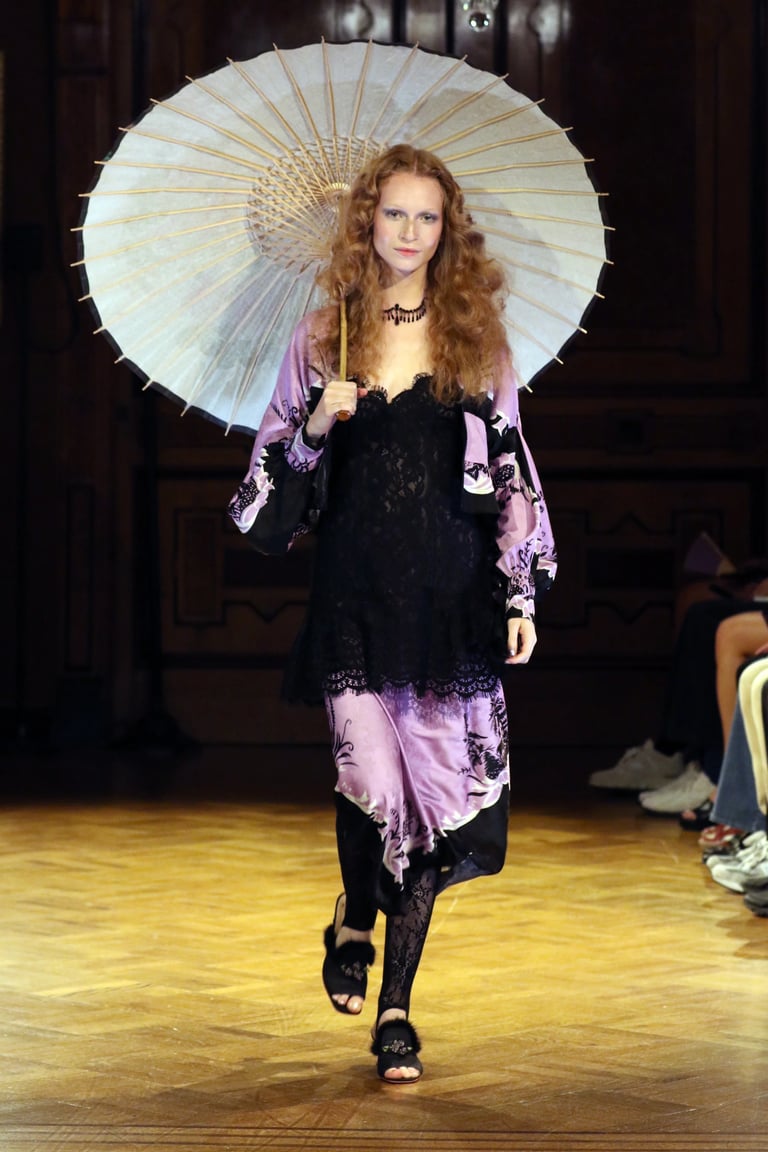
Anna Sui went looking for a 1970s hairstyle and came back with a collection.
Her spring lineup, “Wonderment,” began with something she could not identify. Sui was leafing through an old issue of Vogue in search of a style by the legendary hairdresser Era Gallant when something blurry on the walls behind it caught her eye. “What the hell is that?” she remembered thinking. Down the rabbit hole she went.
The blur turned out to be fantasy paintings by Howard Gardiner Cushing at The Ledges, his family’s eccentric Newport home. Sui had somehow never encountered them, and the thrill of discovery proved catalytic. Art Nouveau, fairy tales, water lilies and mother-of-pearl followed, references she metabolized rather than reproduced.
Romance With a Wink
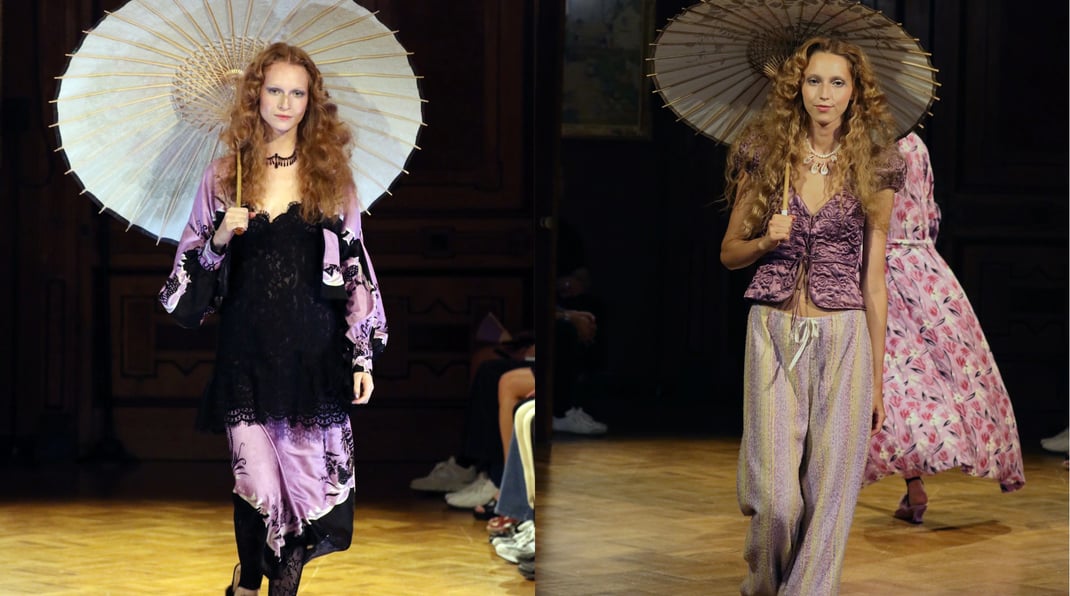
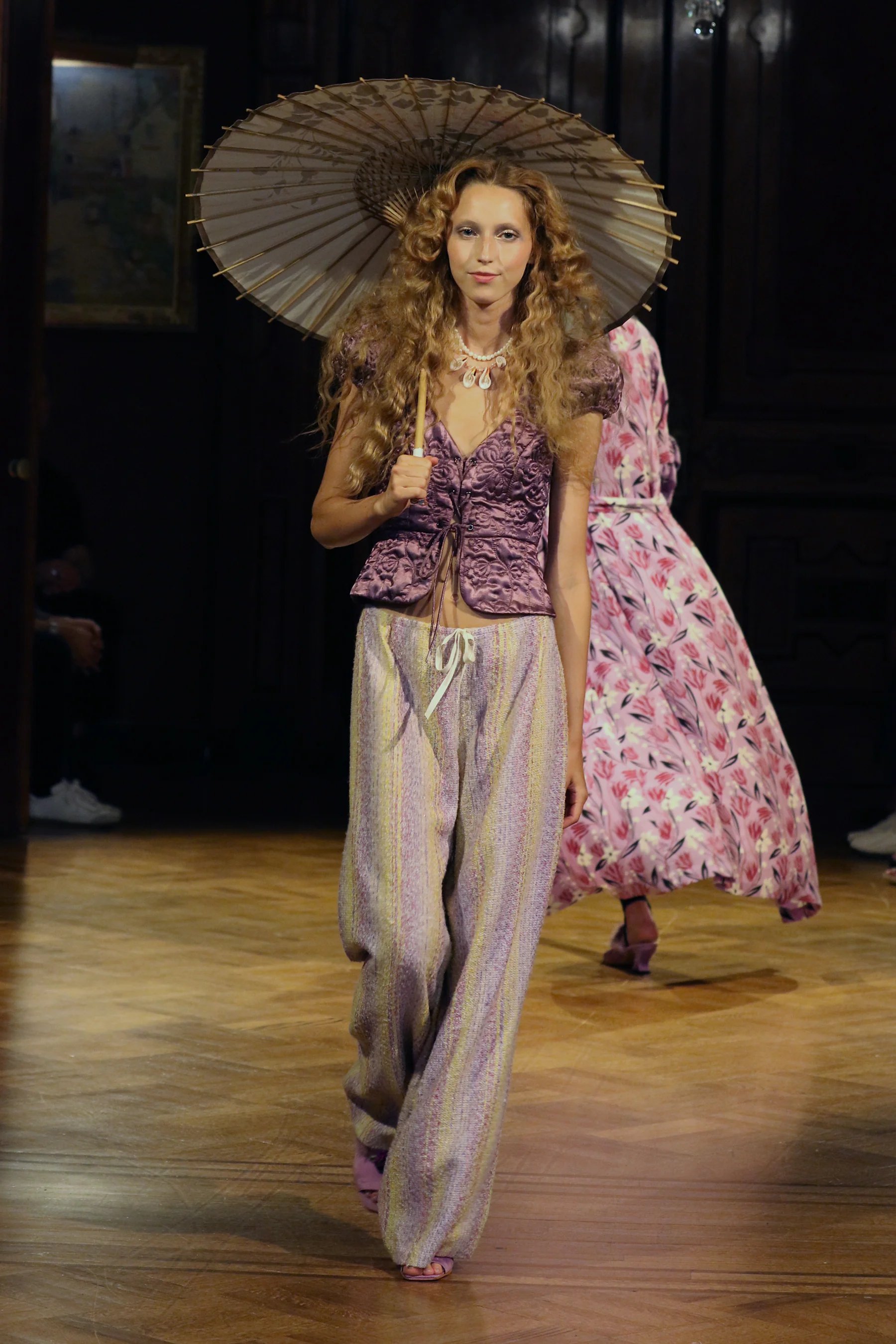
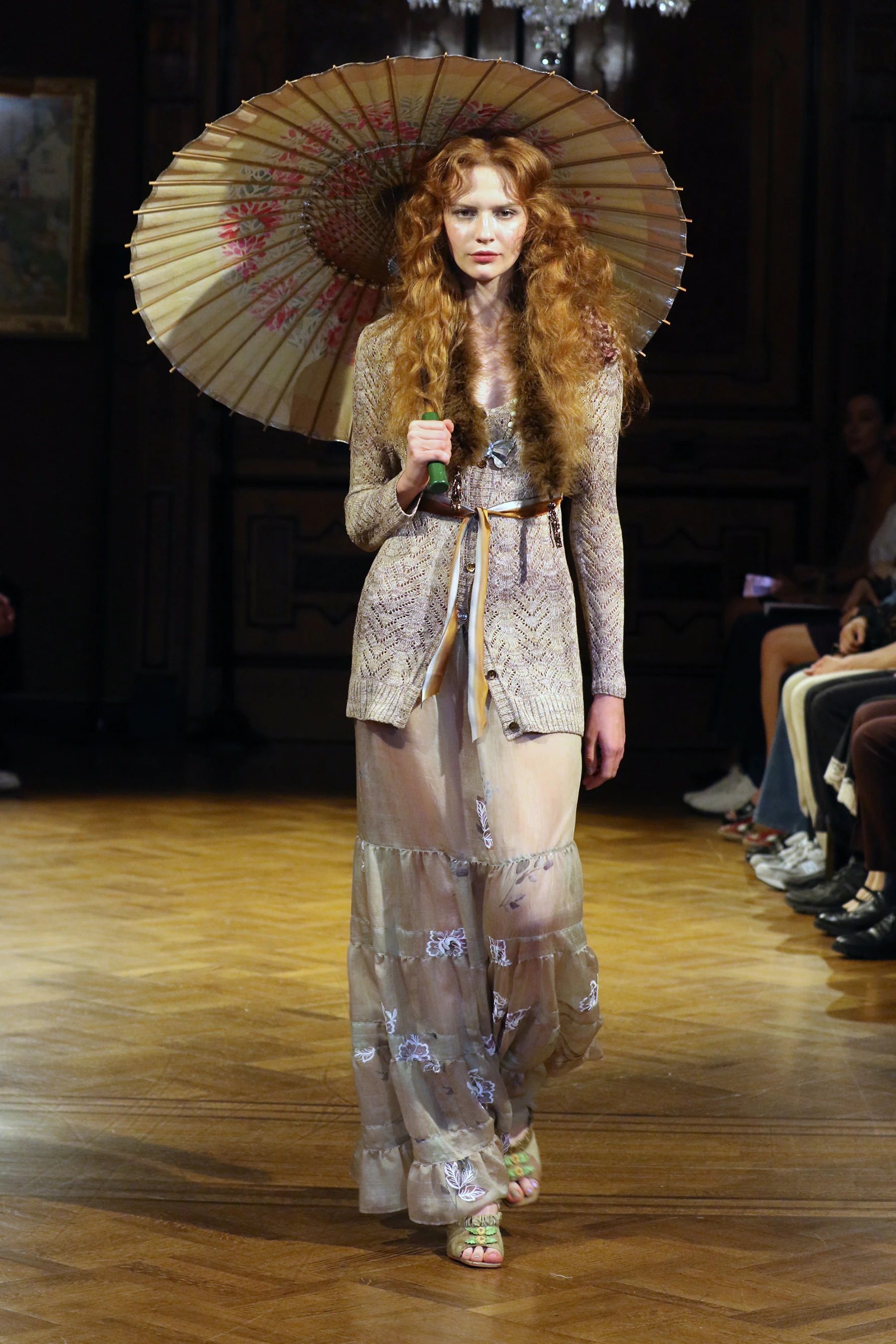
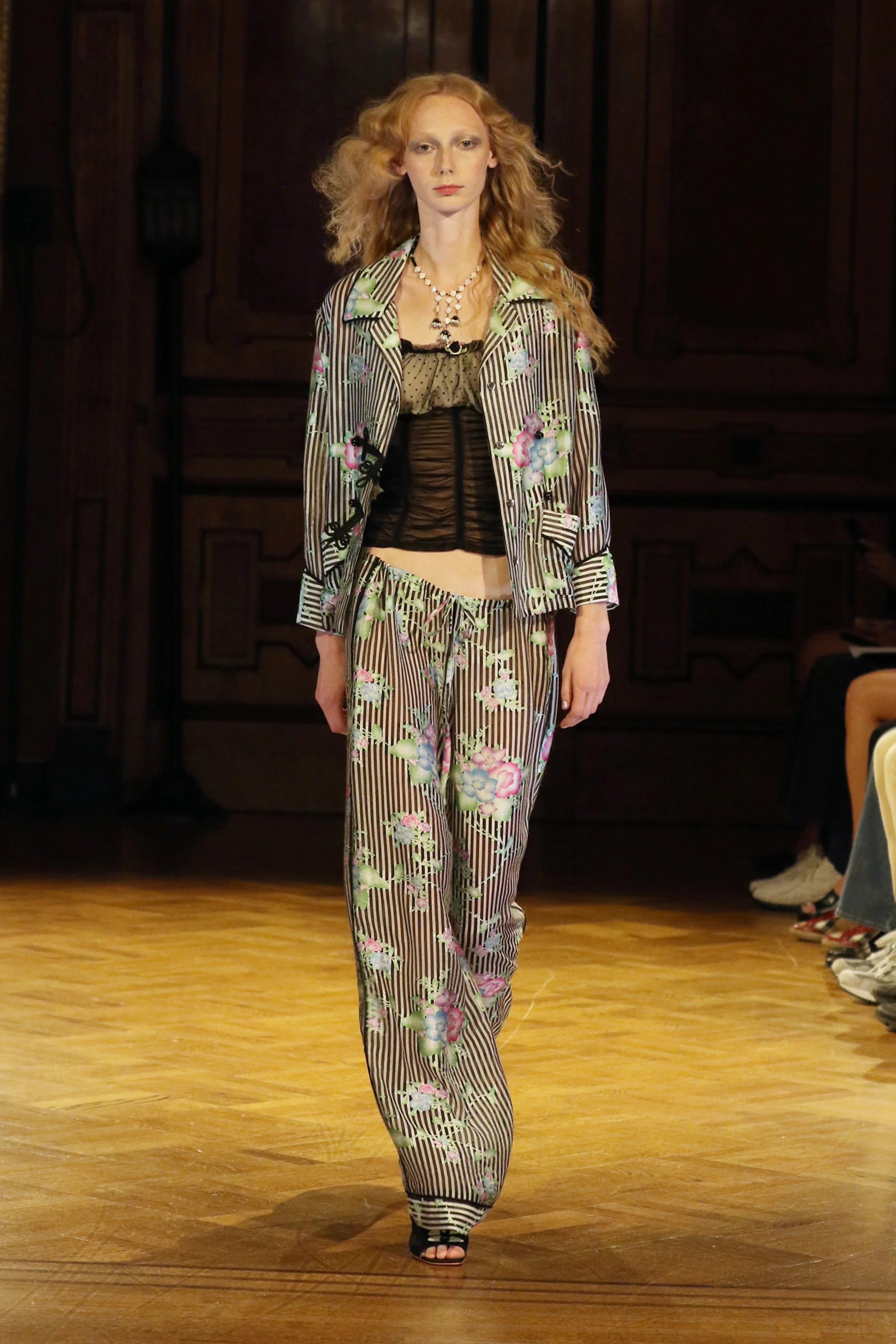
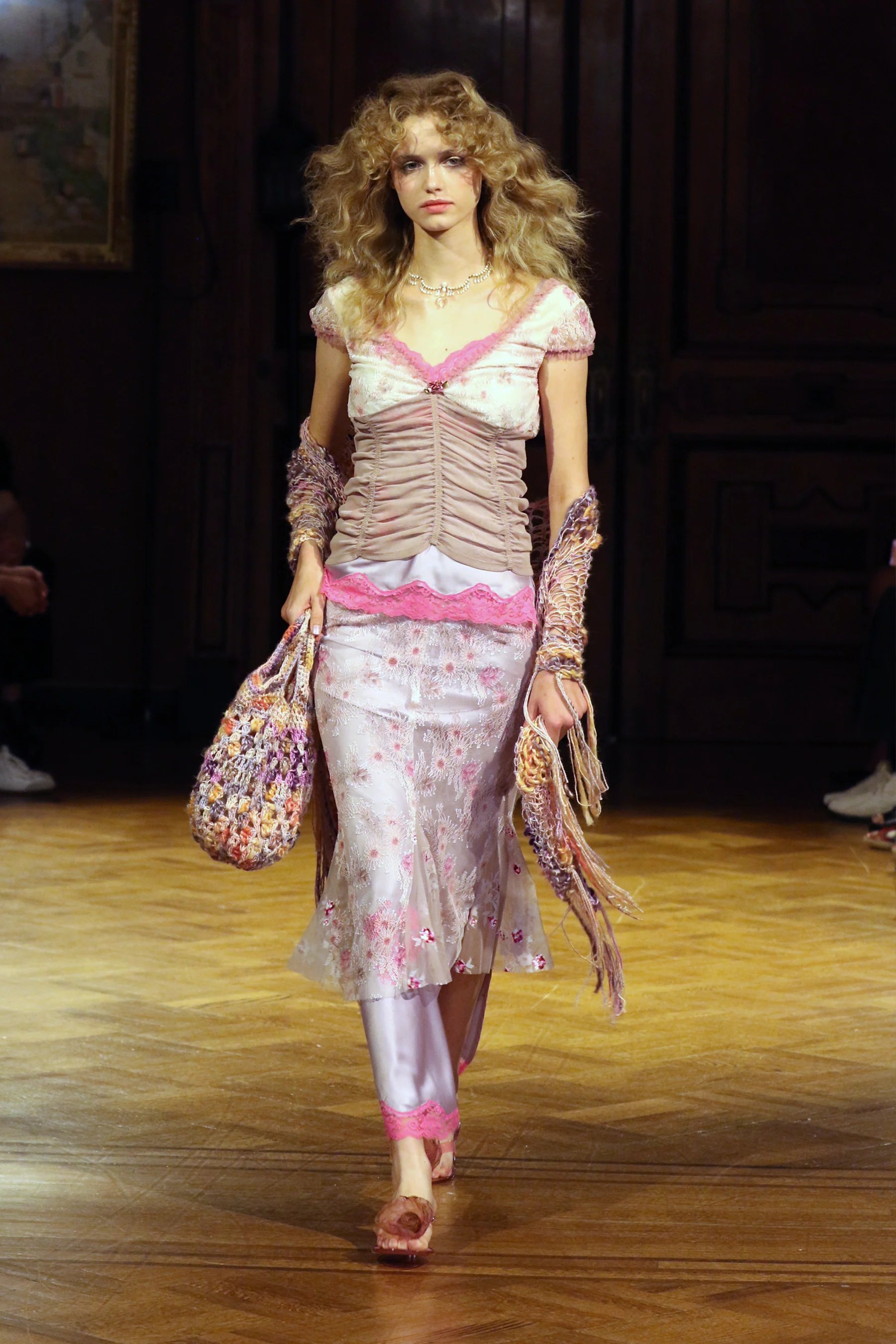
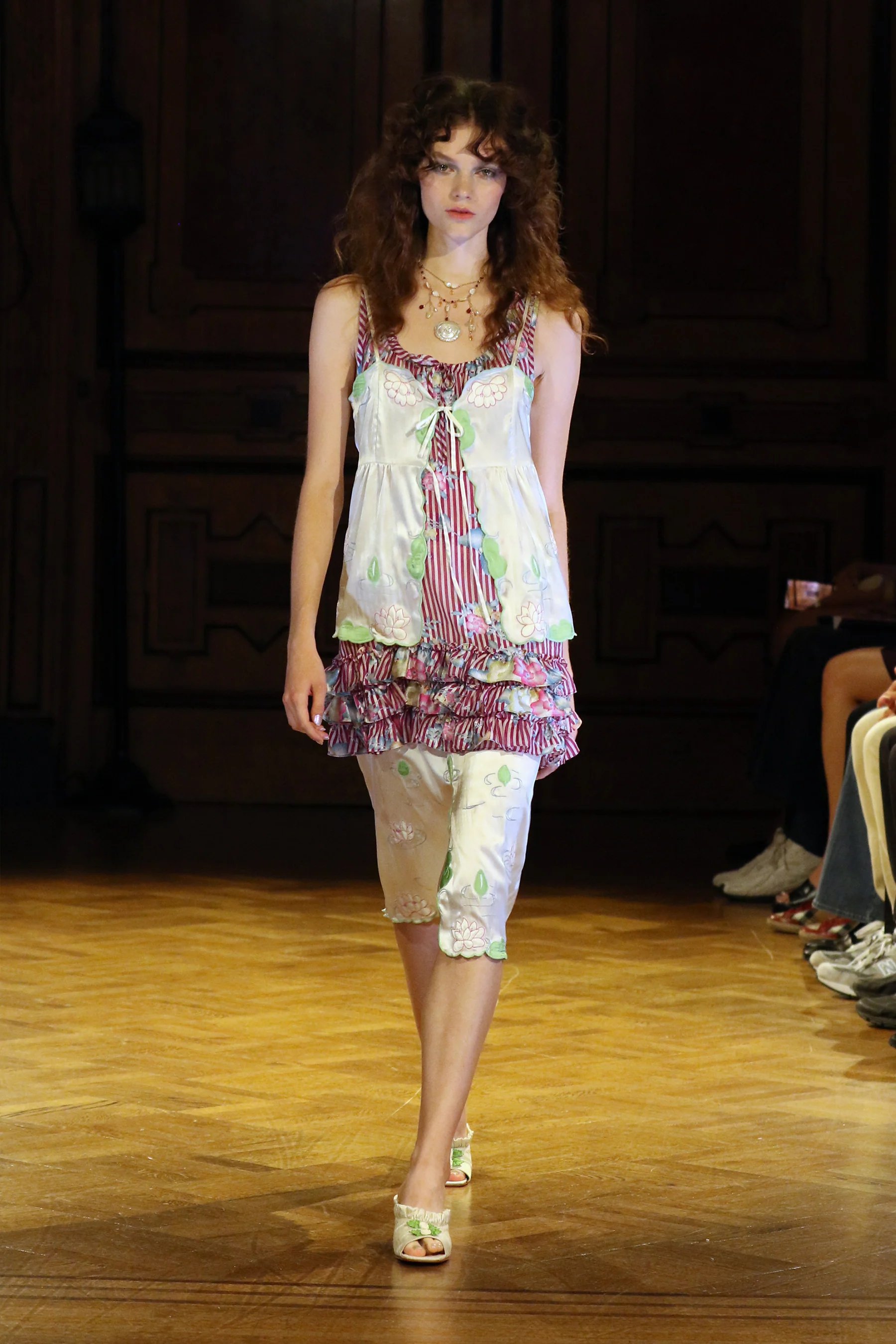
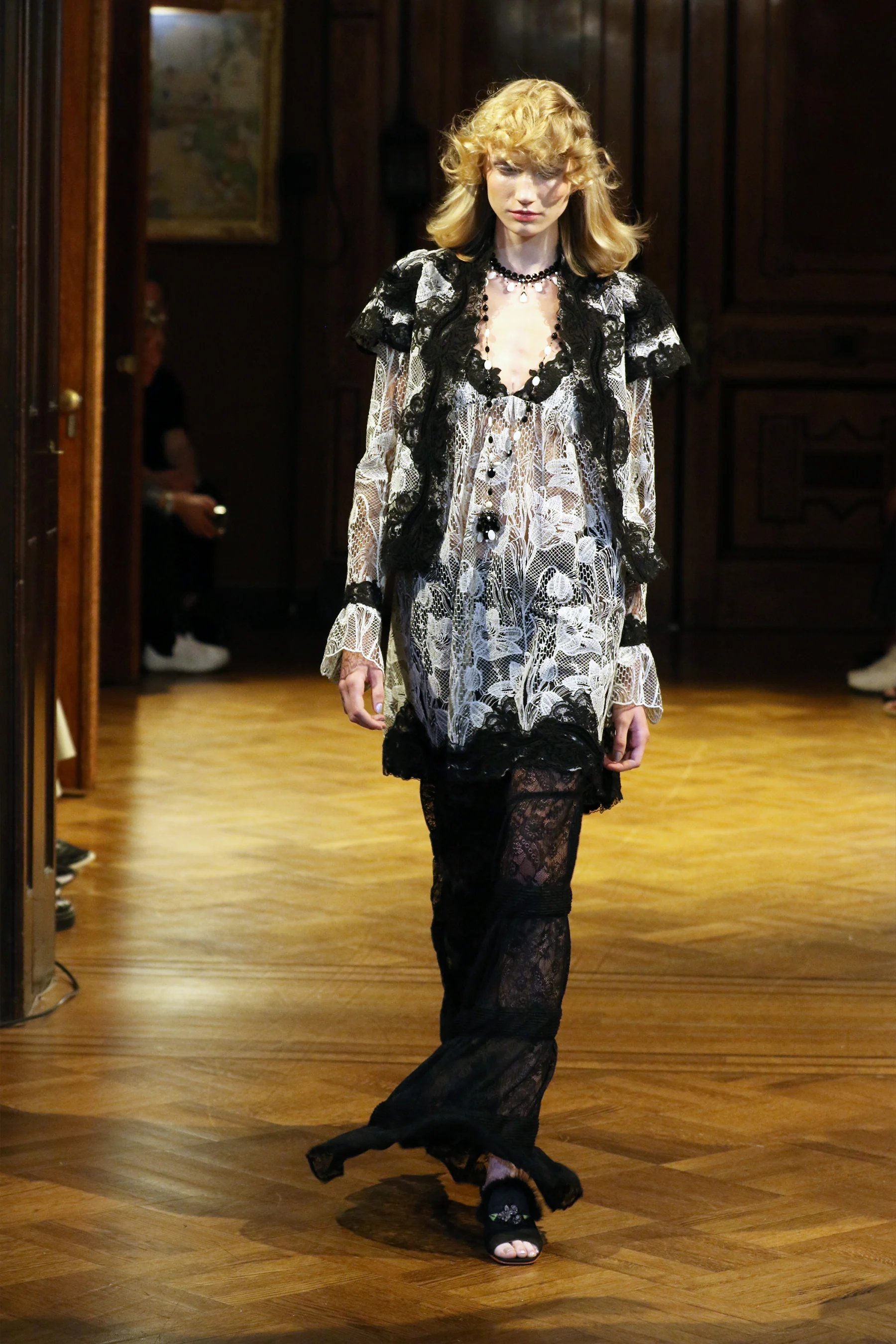
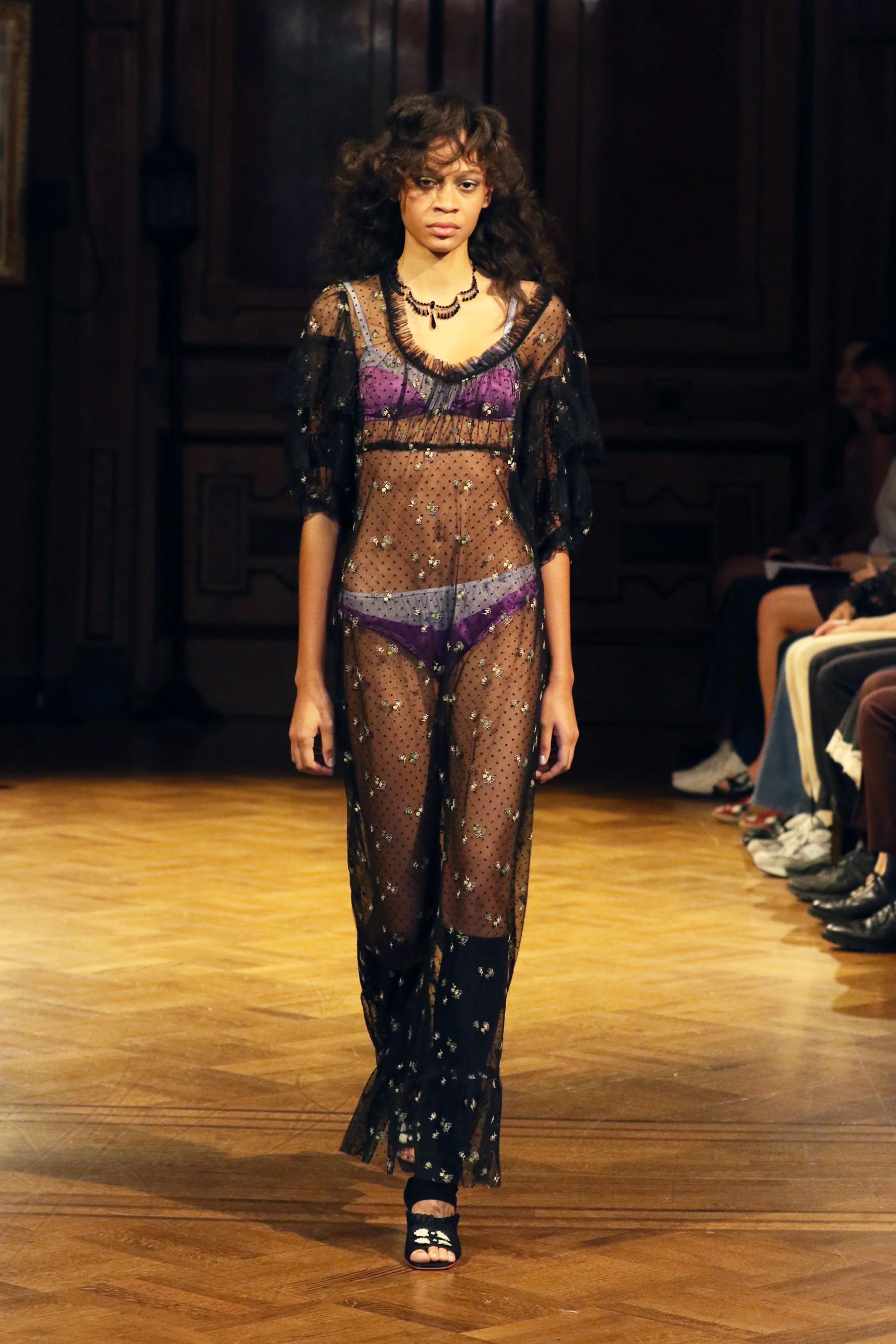
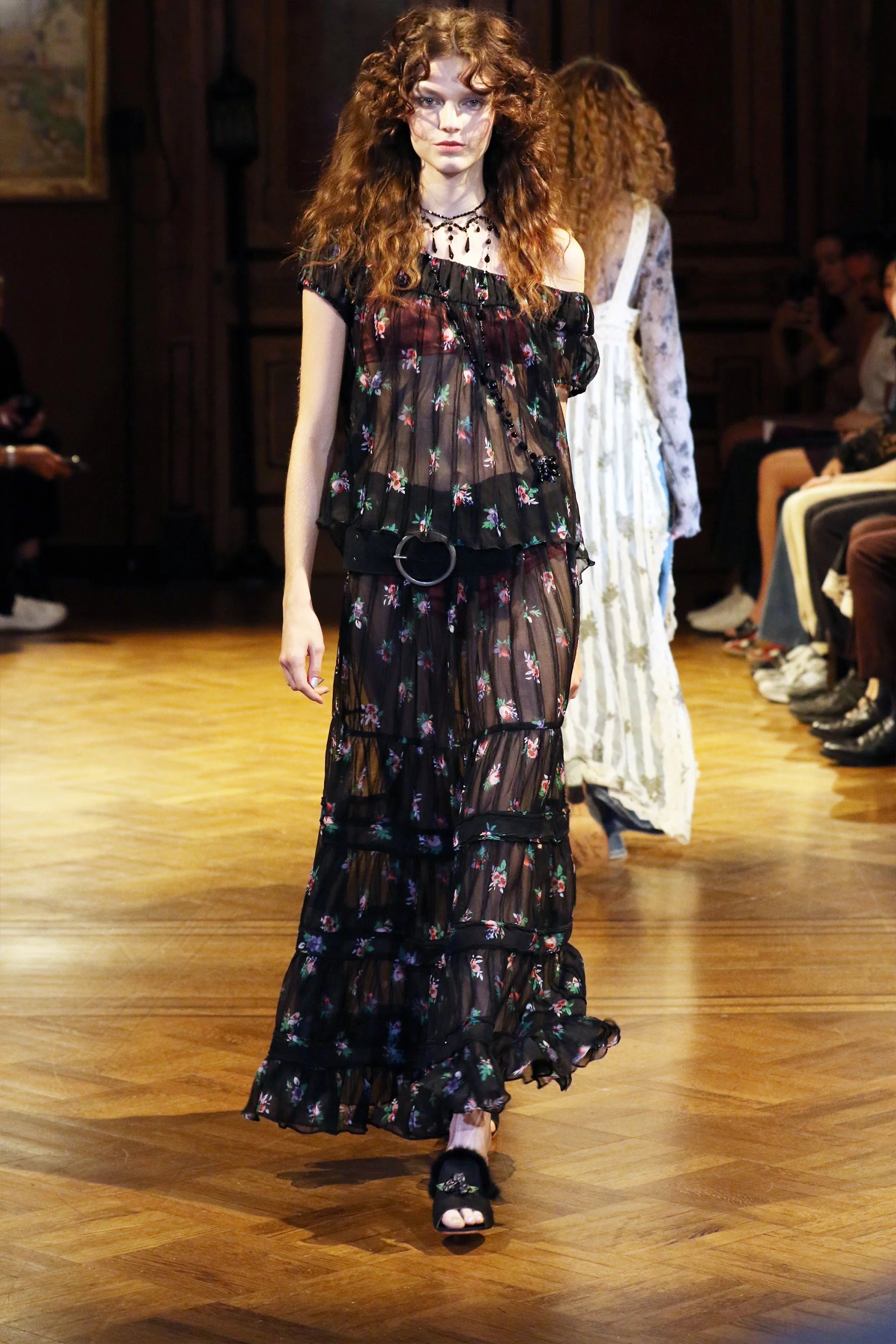
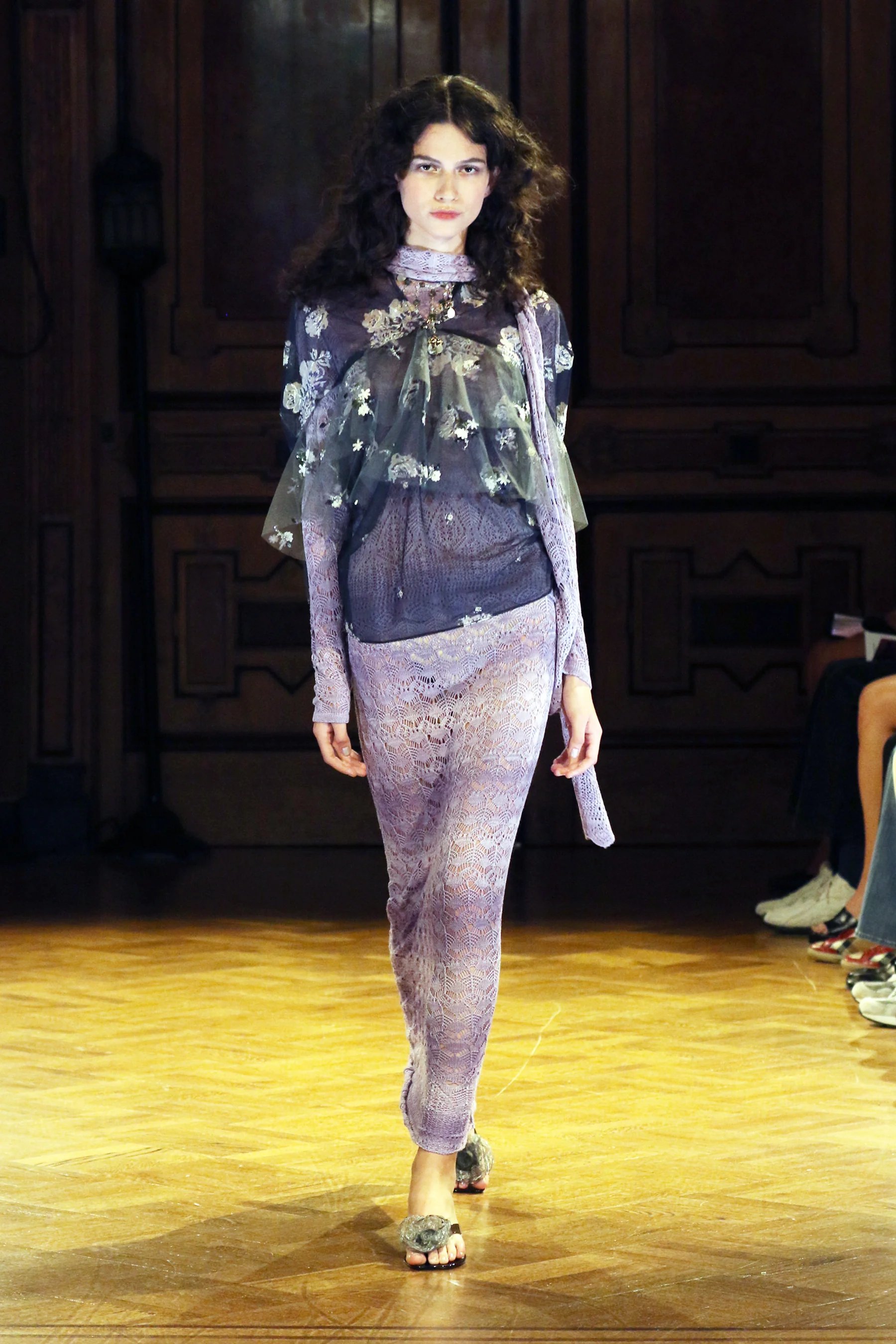
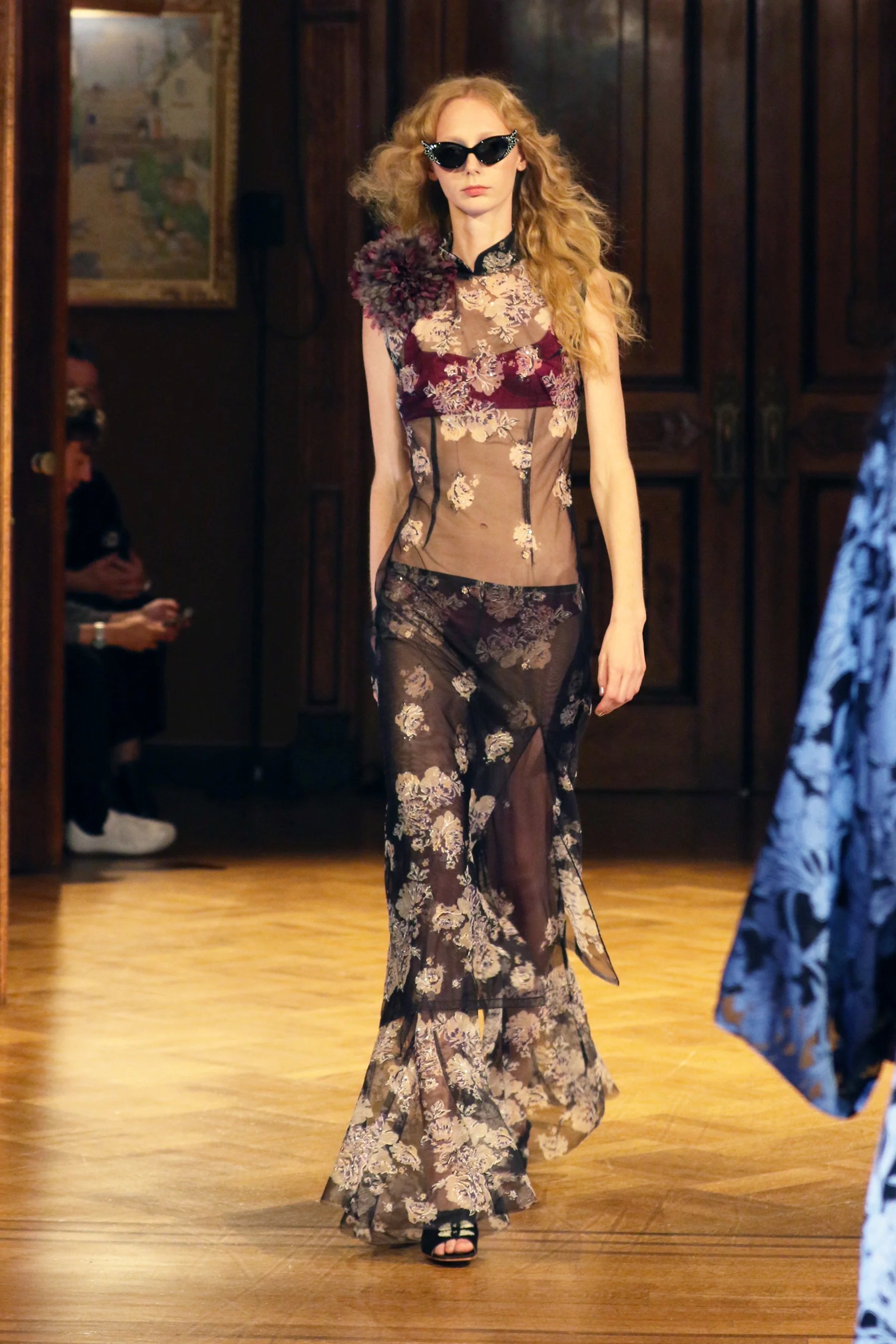
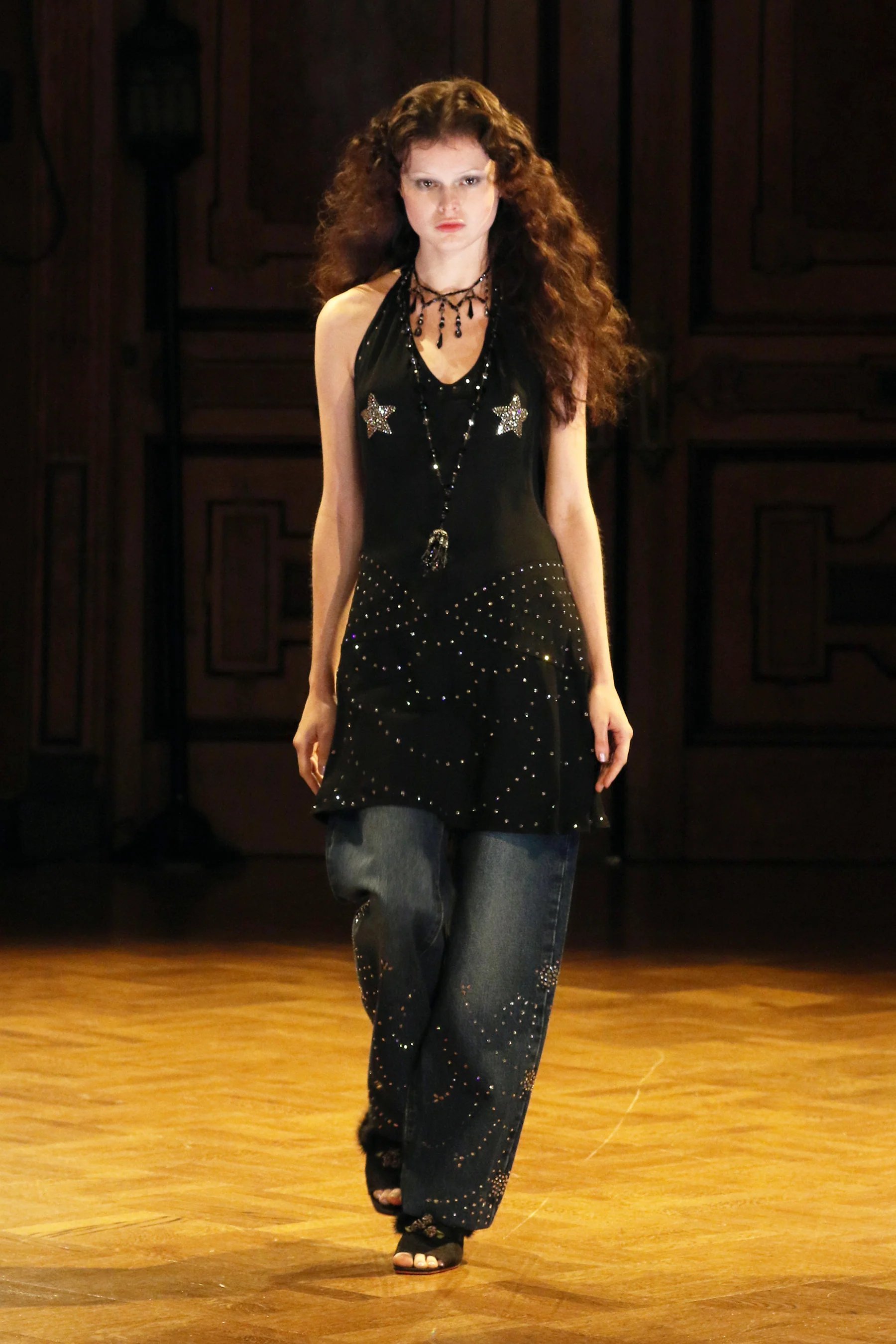
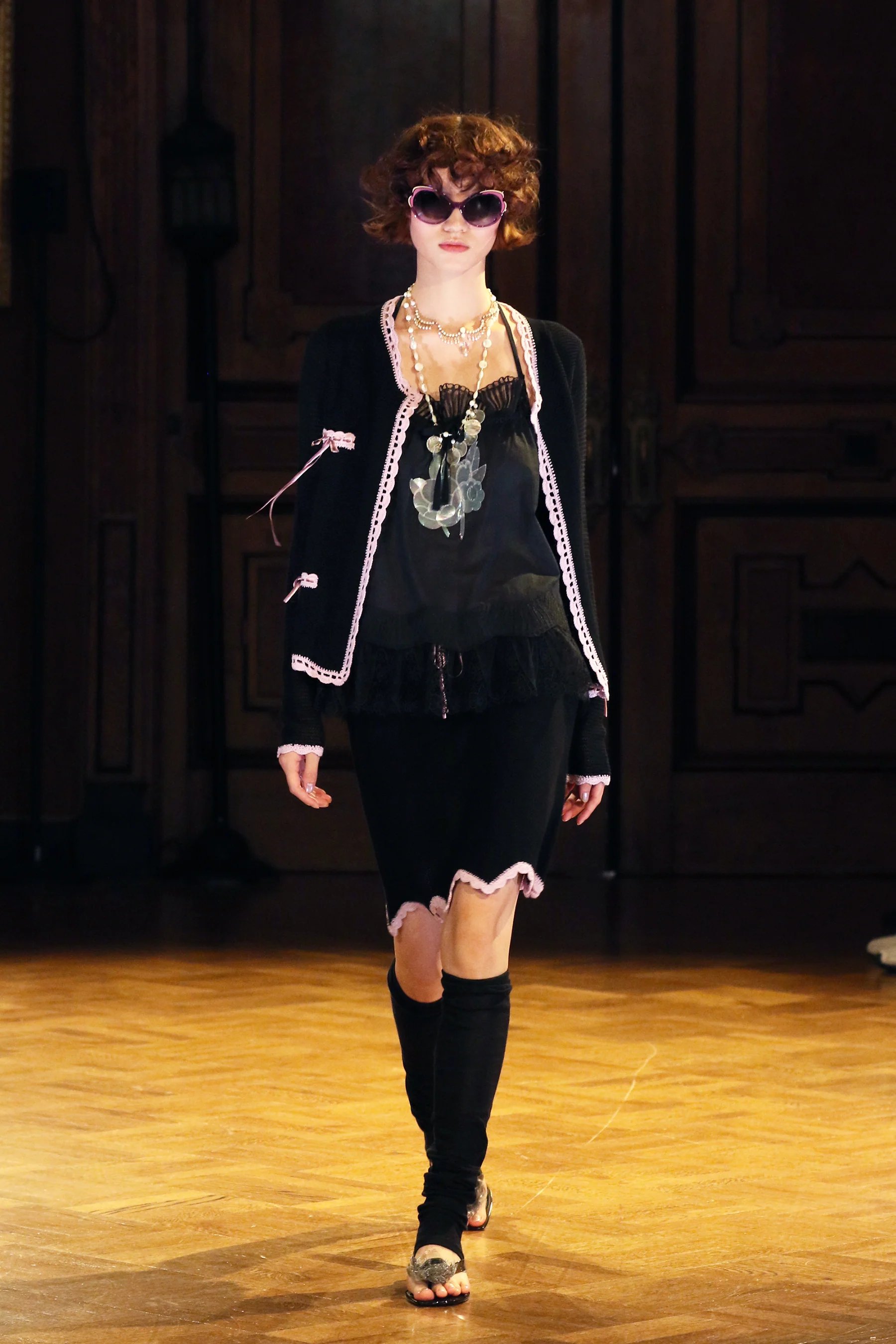
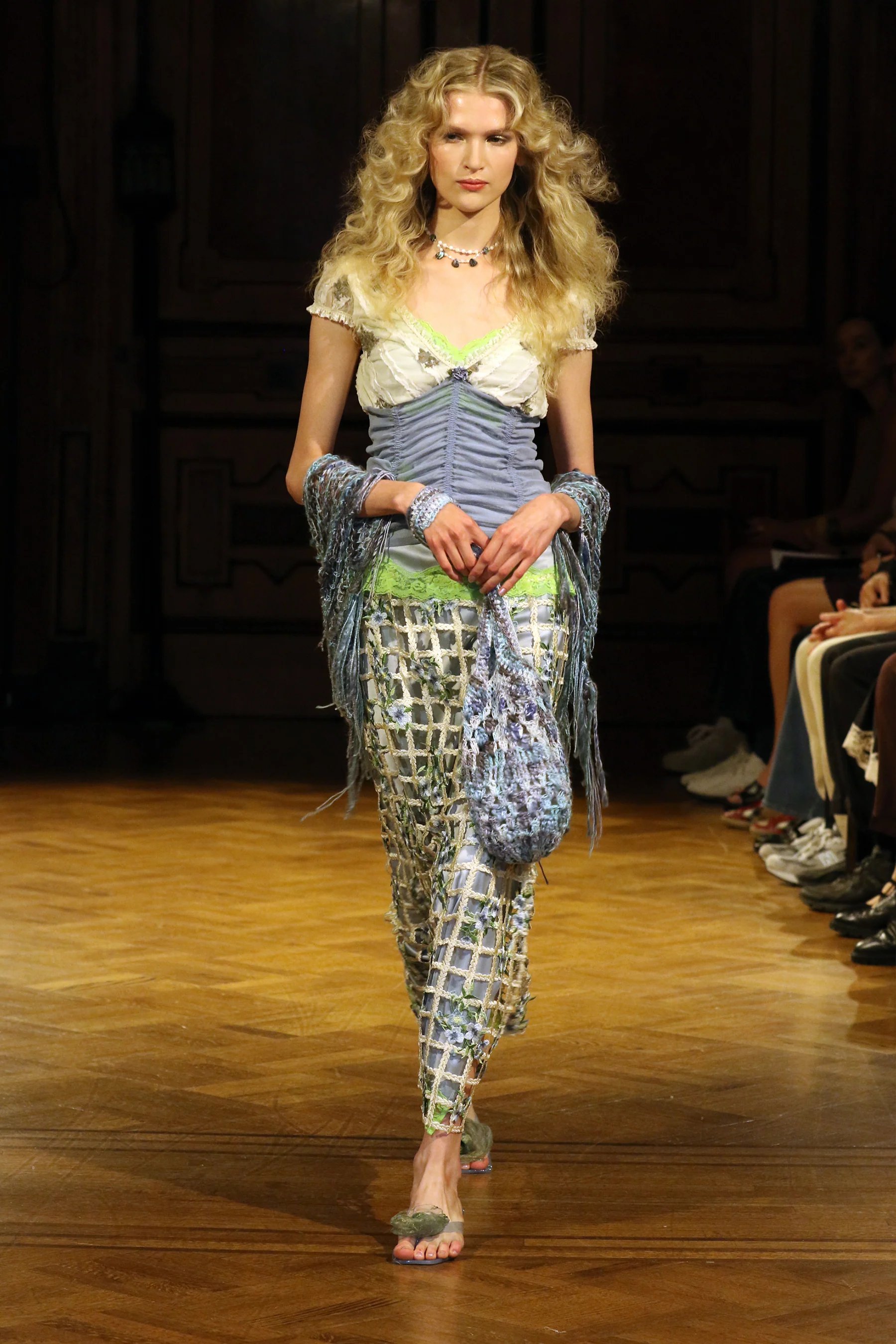
The resulting clothes were romantic but mischievous. A faded palette of mauve, lavender, old rose, cream and denim blue washed over lace, crochet, point d’esprit and satin. Sheer mesh floated over fluorescent lingerie, while an iridescent T-shirt was layered with satin-striped plaid and chartreuse crushed-velvet pants. Appliquéd denim and jorts mussed up the prettiness.
Two longtime collaborators carried the mood off the clothes. Erickson Beamon, Sui’s jewelry partner since the beginning, translated the paintings’ luminosity into fantastical pieces built from mother-of-pearl, abalone, and shell. John Fluevog fashioned vintage textiles and fur trim into boudoir-ish slippers.
For all the accumulation, air lived between the layers. Sui intentionally kept fabrics sheer and floaty, allowing lingerie and flashes of color to flicker underneath. And because she styles every look herself, the improbable collisions were entirely her own. Chartreuse against lavender. Lingerie with denim. Iridescence against something homespun.
The Machine and the Hand
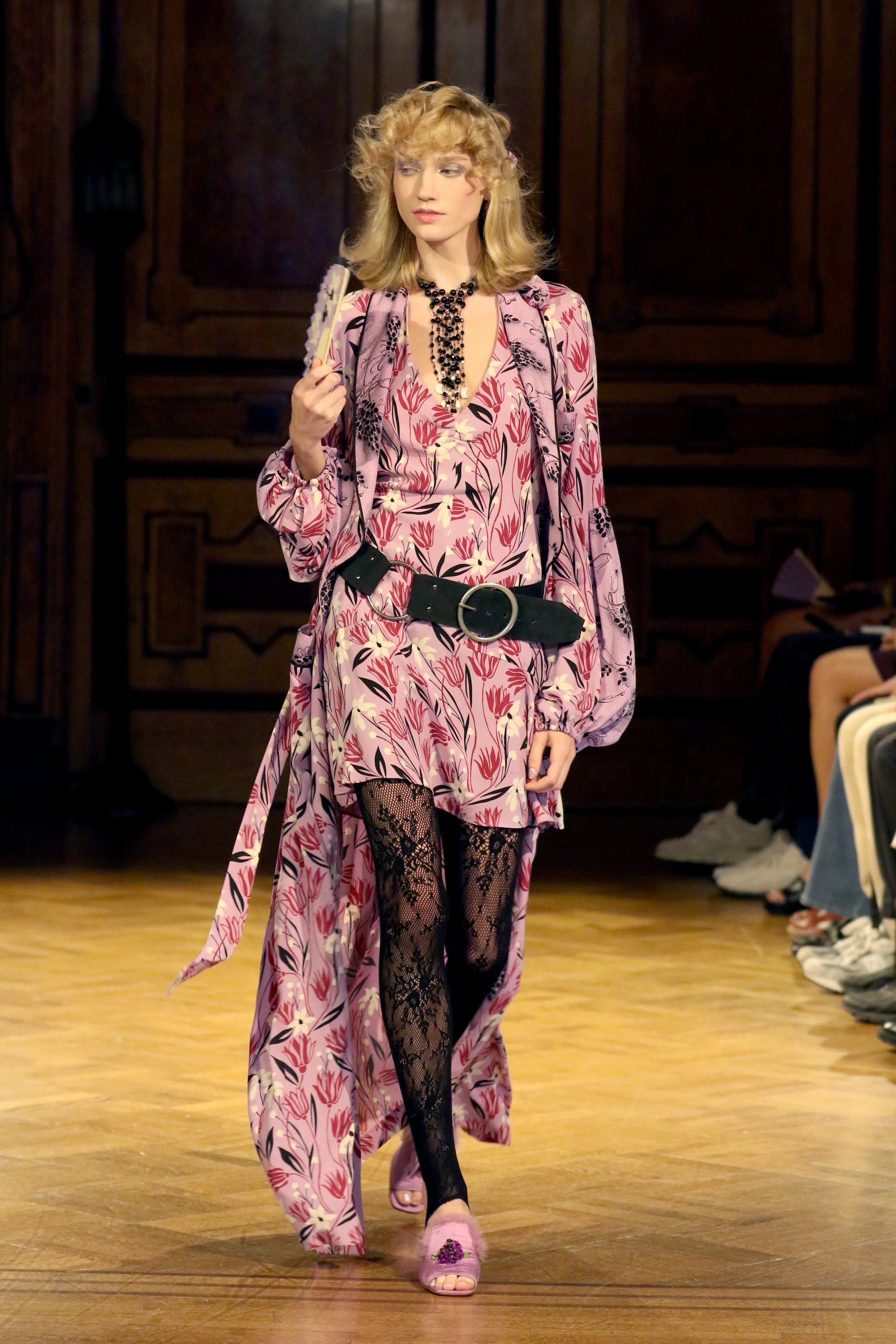
Some of the collection’s most seemingly handcrafted surfaces came from machines. New digital techniques allowed jacquard, print, embroidery and sequins to coexist in a single textile, with a complexity that Sui said once would have required hours of handwork and pushed the clothes beyond her price range.
She embraced the technology without fetishizing it. Engineered embroidery existed alongside hand crochet, New York embroidery and hand-dyed flowers from M&S Schmalberg. The machine did not supplant the hand. It gave Sui another tool with which to indulge her curiosity.
That choice carries its own logic. A designer who has spent more than four decades building clothes that look handmade cannot always charge handmade prices, and the digital work let Sui keep the density of craft she wanted without pushing the pieces beyond what her customer will pay. The surfaces read as labor. They cost less to make.
That instinct extends to people. Her history with Fluevog dates to 1993, and the artist Ellen Berkenblit remains a collaborator decades on. Marc Jacobs, Vera Wang, Debbie Harry and Karen Elson turned out in support. Elson’s daughter, Scarlett White, wore a Swarovski-embellished reprise of a tiny dress Kate Moss wore in the 1990s. Fashion generations folded into one another as easily as the clothes.
Rooms With Gravity
At the National Arts Club, Sui’s favored old-world نیویارک setting of recent seasons, the contrast came alive. Against the visual gravity of dark wood, parquet floors and stained glass, lithe models seemed to float through the rooms, sheer layers fluttering behind them and iridescent surfaces catching the light. They looked less like fairy-tale heroines than mischievous interlopers who had wandered into somebody’s drawing room.
“Wonderment,” then, felt less like a theme than a disposition. After more than four decades in فیشن, Sui remains as curious as ever. She still delights in finding something she has not seen before.
See the complete collection below:
Images courtesy of Anna Sui
For more NYFW SS27 collection: Coach Spring 2027: Inside-Out 85th Anniversary Collection