
In 80 looks staged among the stacks of the Bibliothèque Sainte-Geneviève, Michele argued that unworn garments hold their own value — a seductive thesis from a house that lost 103 million euros last year
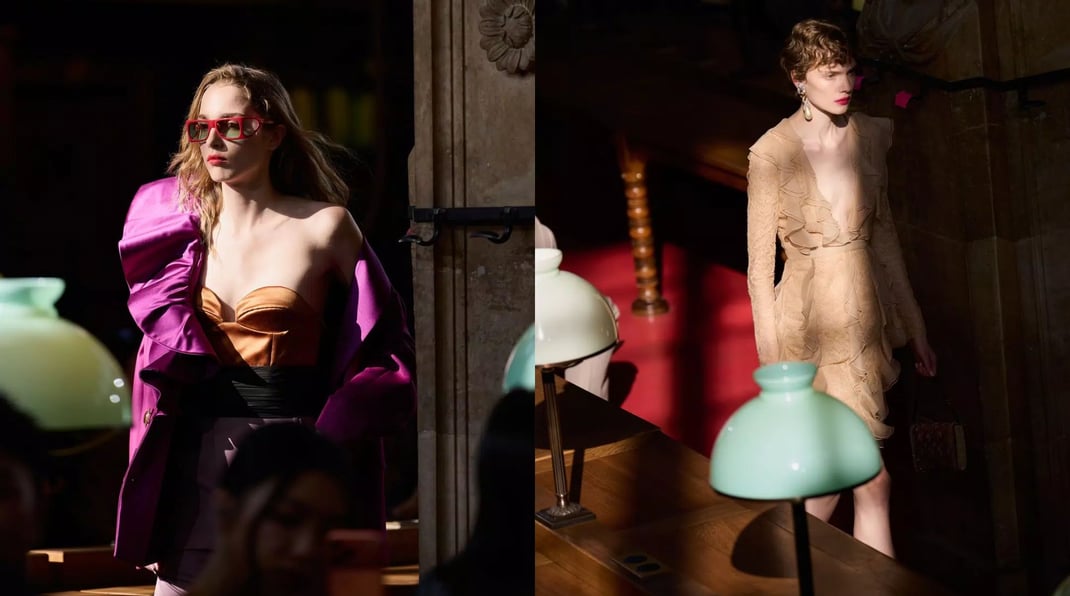
PARIS — Alessandro Michele sent 80 looks through the reading room of the 19th-century Bibliothèque Sainte-Geneviève on Sunday afternoon, down a red runner laid between the iron stacks, with Troye Sivan’s “Party” on loop and strobes going off under the vaulted ceiling. Guests were asked to bring a book to donate to public libraries. Alexander Skarsgård, Cynthia Erivo, Law Roach and Yidan Huang arrived holding theirs up for the photographers, then took seats at the long oak reading tables under the green lamps.
The collection was titled “Antibiblioteca.” Michele’s show notes, signed with his first name, built the title out of Nassim Nicholas Taleb on Umberto Eco’s unread shelves, the Japanese habit of tsundoku and Giorgio Agamben on potentiality. The proposition is that garments that never get worn still hold value, because they widen what a wearer can imagine. They “still speak to us of the lives we could have lived,” he wrote. He has led the house since March 2024; this was his third spring ready-to-wear show.
It is a generous idea. It is also a strange one to publish from a house that swung to a 103 million euro operating loss in 2025.
Sainte-Geneviève Lends a Discipline the Clothes Decline
A library is not a pile. It is a selection system – cataloged, ranked, weeded. Michele borrowed the romance of the building and left the method on the shelf, staging 80 looks in a room whose architecture argues for editing. The setting handed him a structural idea, and he used it as a backdrop.
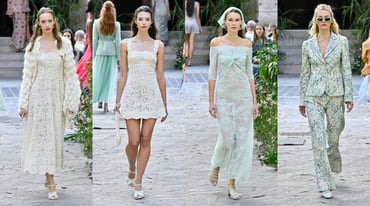
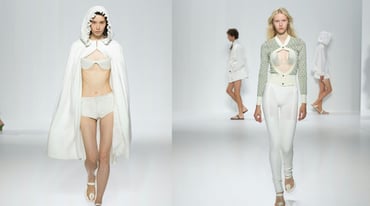
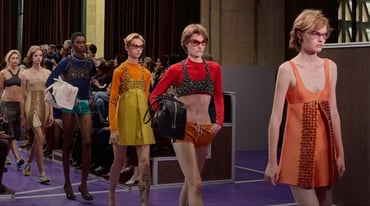
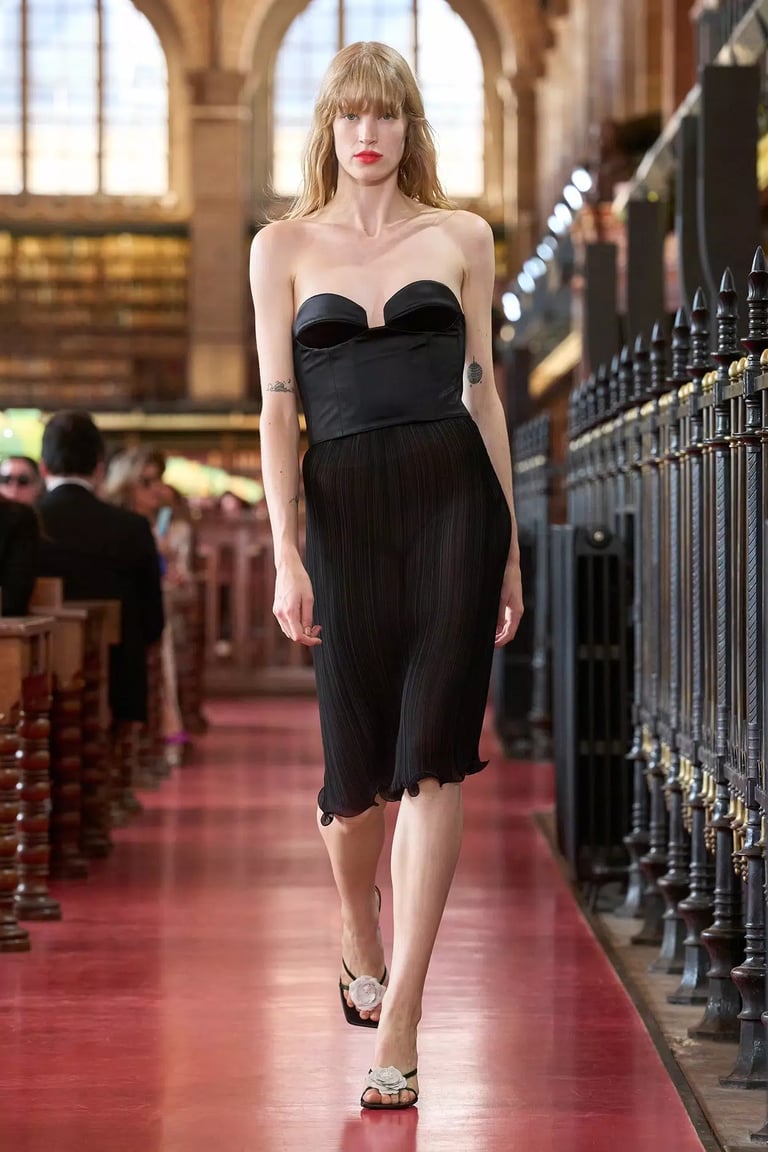
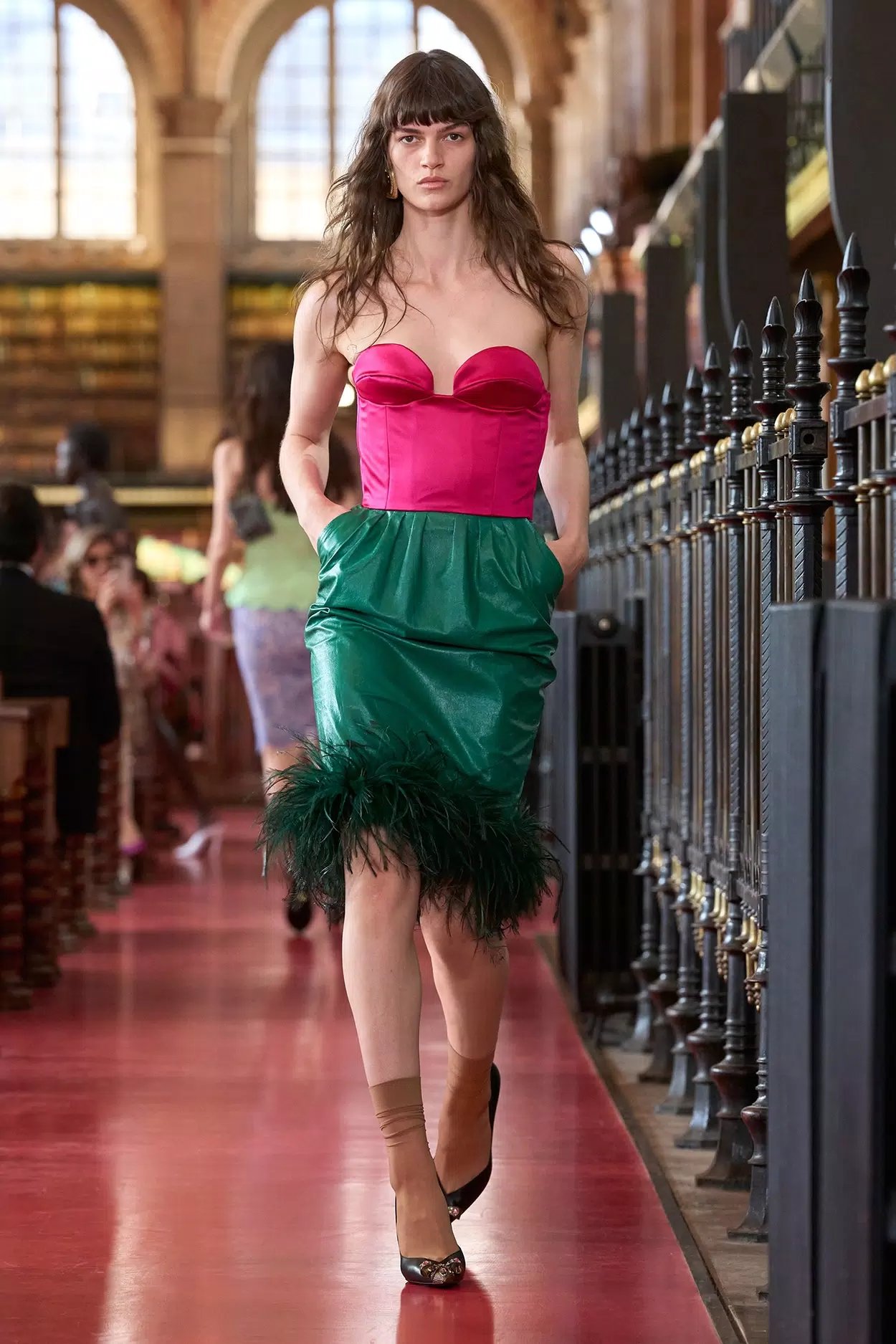
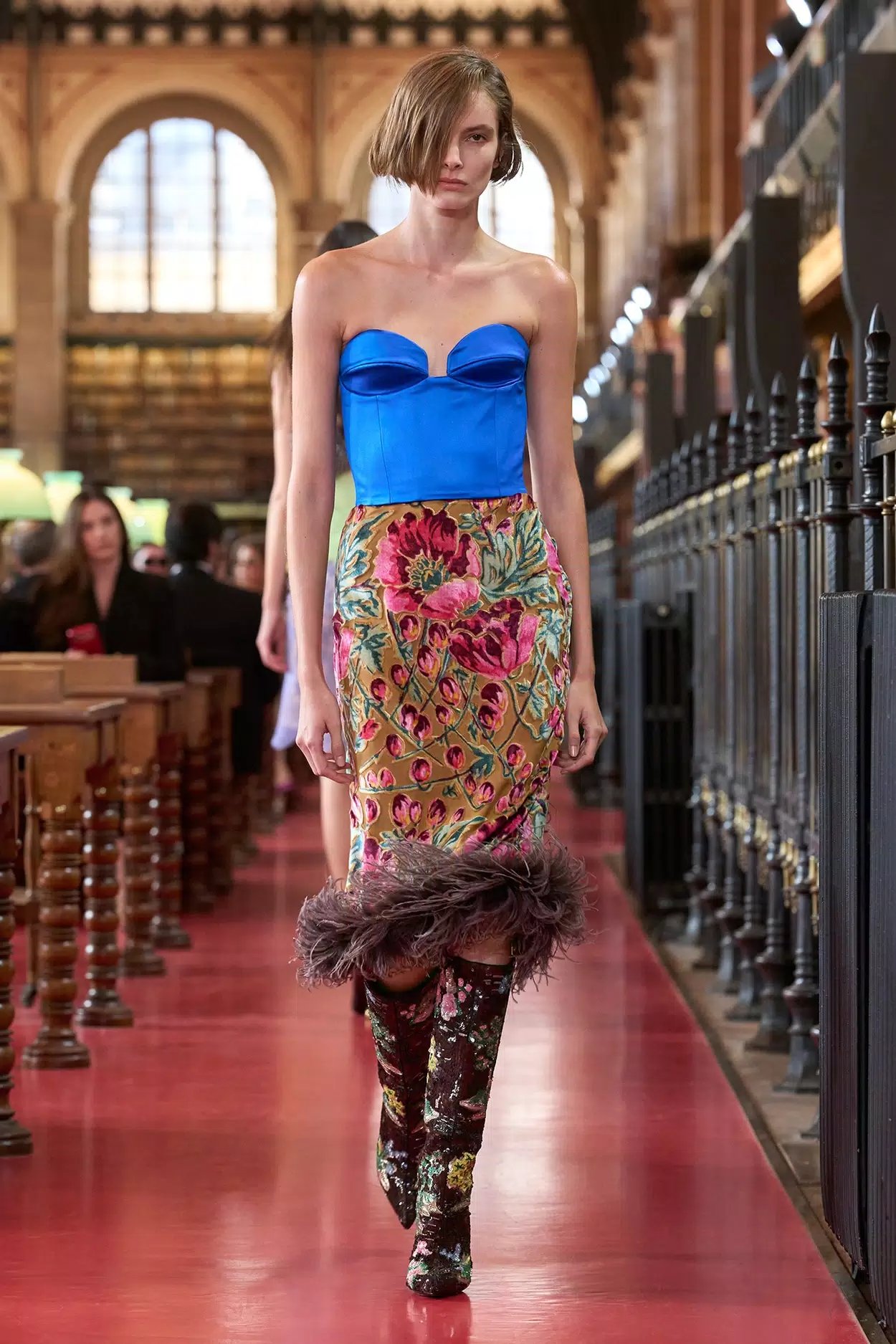
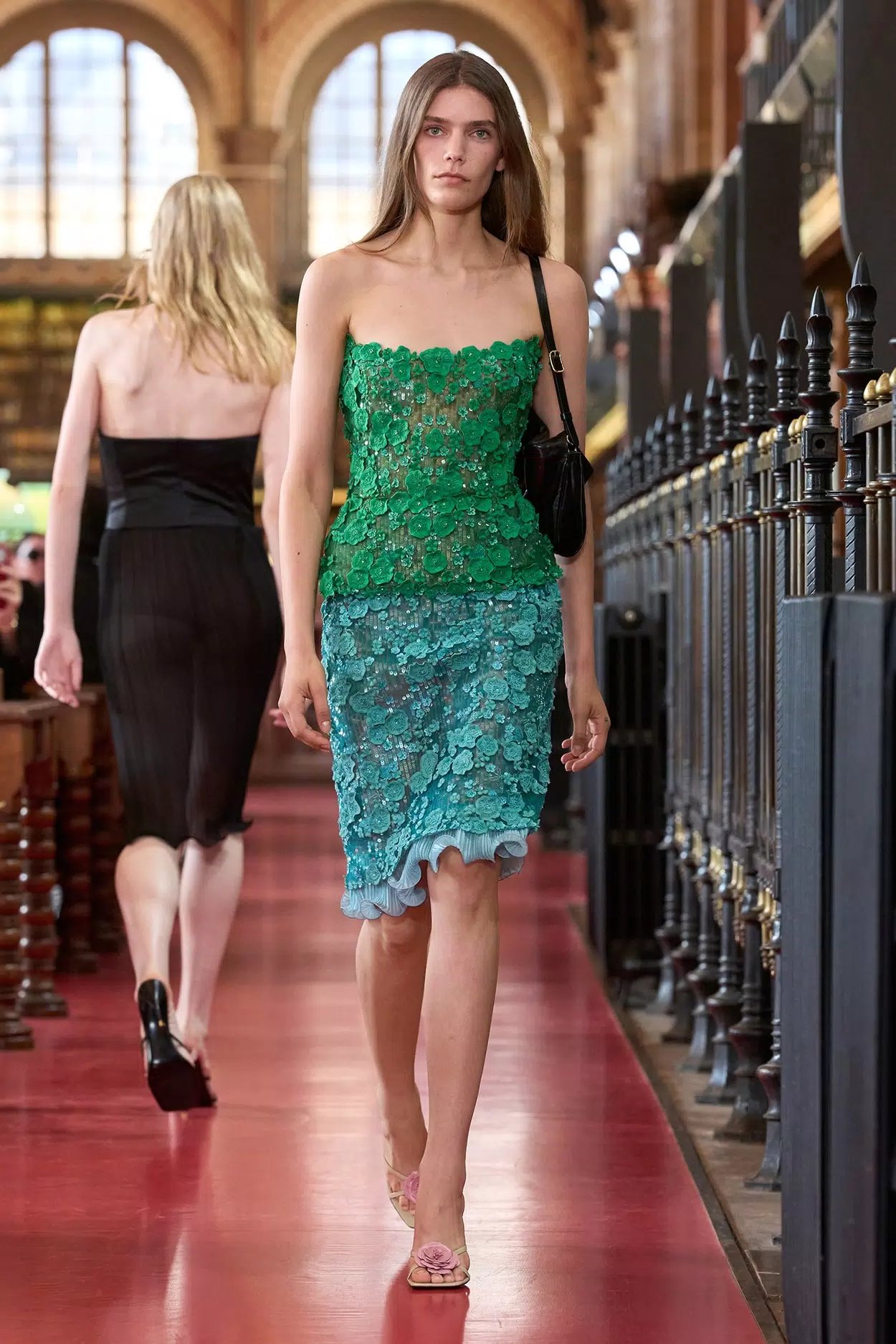
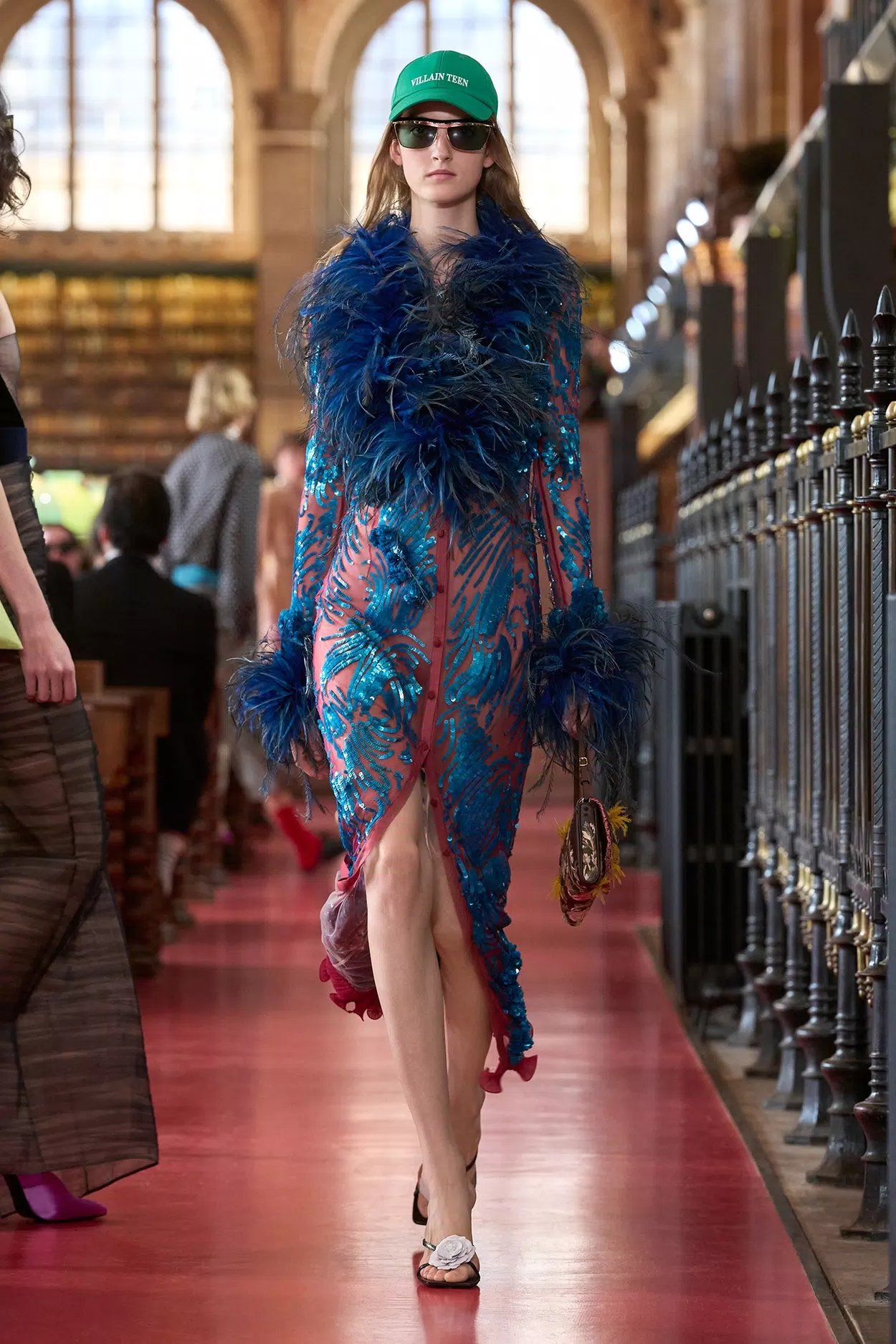
The opening established the collection’s most durable formula: silk bustiers and corset tops in saturated blue, yellow and hot pink, cut tight to the torso and worn over skirts in a clashing second color, some knee-length in crinkled crepon or floral dévoré. Strapless dresses followed. Lace skirts and shirts ended in ostrich-feather hems that moved the line away from the leg as the models passed the stacks.
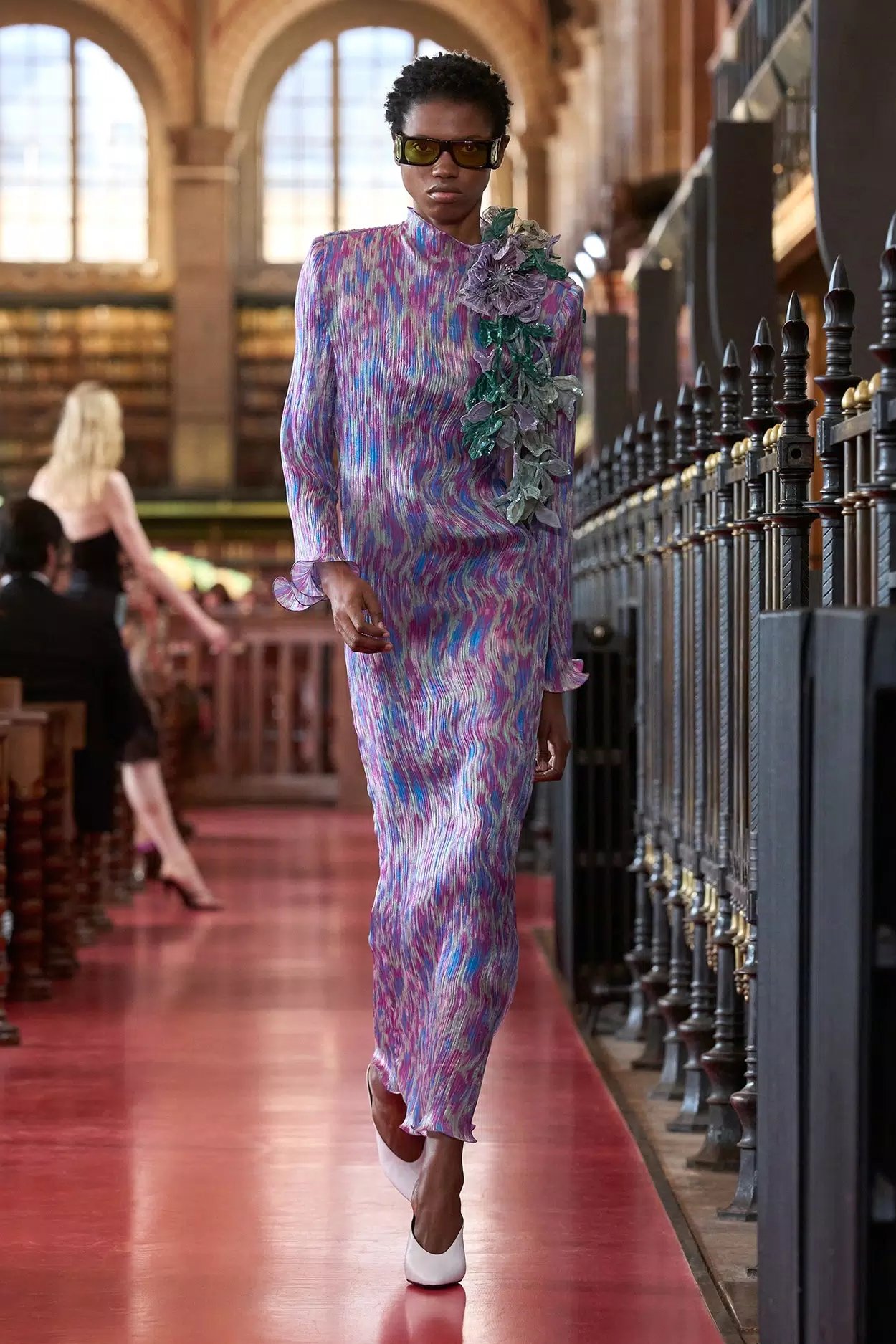
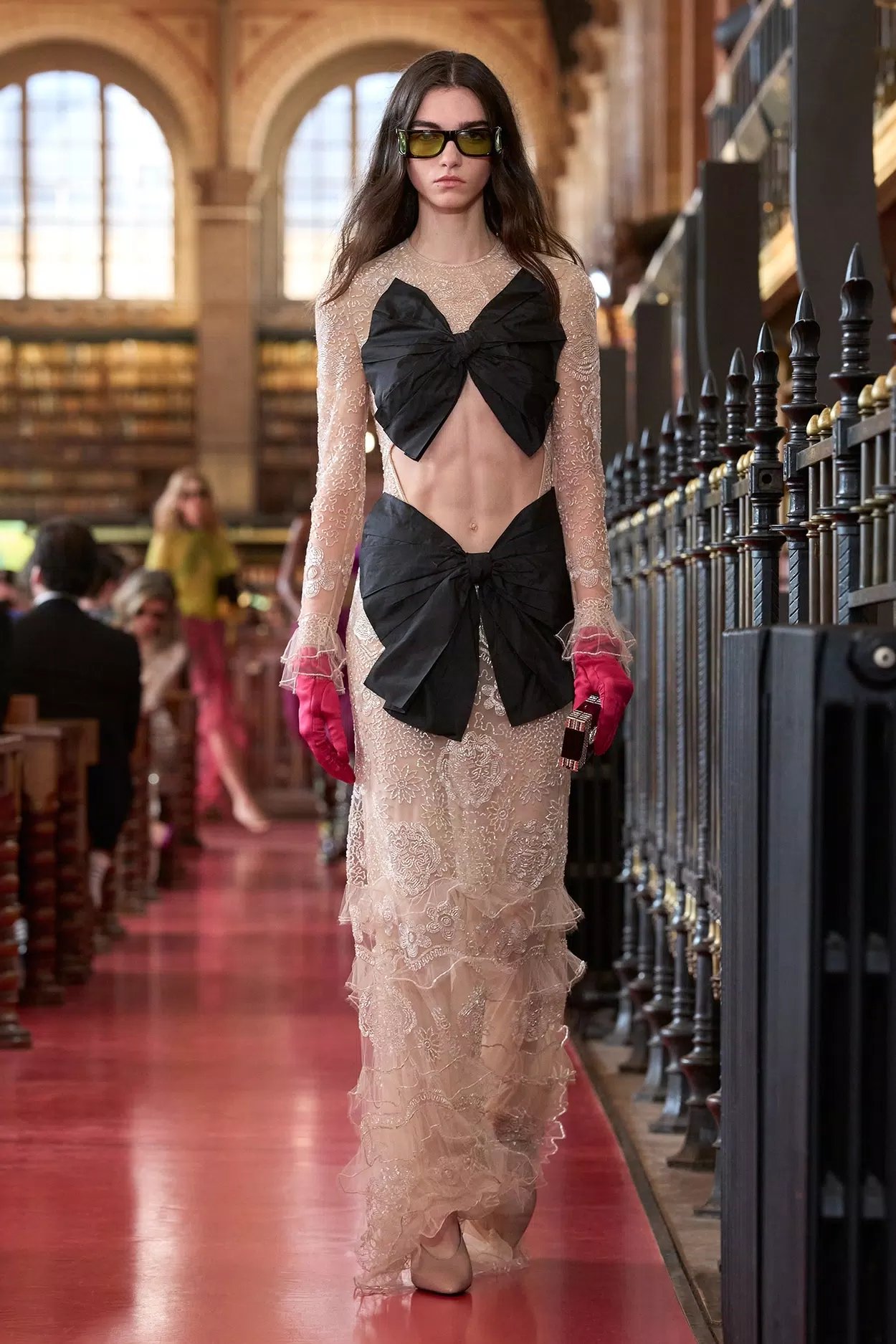
From there the vocabulary accumulated rather than developed. Leopard print, sequins, dimensional fabric flowers, bow-knit skirts, mermaid hems, belted leather blazers, opera gloves, marigold ruffled dresses, amber beads worn over suiting. Michele’s palette ran lilac against lemon yellow, forest green against cherry red. Nothing in the sequence told a viewer which of these was the house’s position and which was a variant.
Baroque Gold and Studded Clutches Do the Commercial Work
The accessories held their argument better than the clothes did. Baroque gold necklaces, oversize pearl earrings, rectangular clutches worked with studs and sequins, cross-body bags carried by both the women and the men – this was the most legible and most resolved register in the show, and the one with the clearest path to a counter.
The corset-and-contrast-skirt proposition is the commercial engine here, and it is a genuine advance on Michele’s first seasons at the house: separates, color, an identifiable entry price, a silhouette a client can place on her own body without a styling team. The exposed torso gave the collection a directness its show notes spent 1,100 words avoiding.
Michele’s Gucci Vocabulary Arrives Largely Untranslated
The men’s looks were the weakest stretch. Half-buttoned double-breasted jackets, sequinned shirts, tinted sunglasses and baseball caps printed with “VILLAIN TEEN” are, line for line, the language Michele built across eight years at Gucci, moved to a new address with the proportions intact. The cap is a good joke – the phonetic echo of Valentino is the sharpest thing in the show, and the only moment where the wit operated on the house rather than on Michele’s own catalogue.
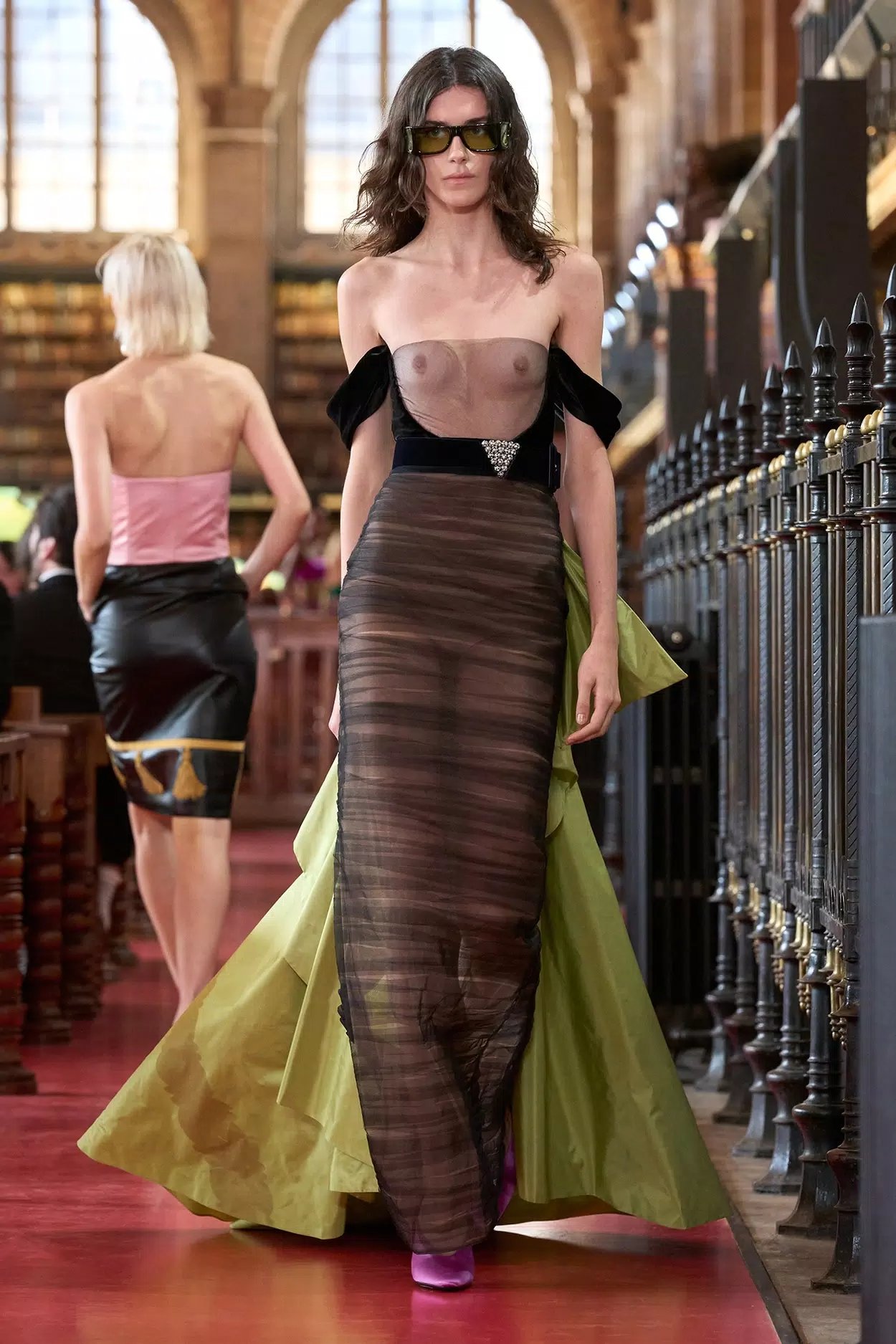
Set against that, the eveningwear is where the house actually lives, and it arrived late and in volume. By the time the sequence reached the floor-length Valentino red gown with its enormous black bow and pleated train – the last look out – the collection had spent 79 looks deferring the one statement it could make without footnotes. A register change that lands at the end is not a structure. It is a finale.
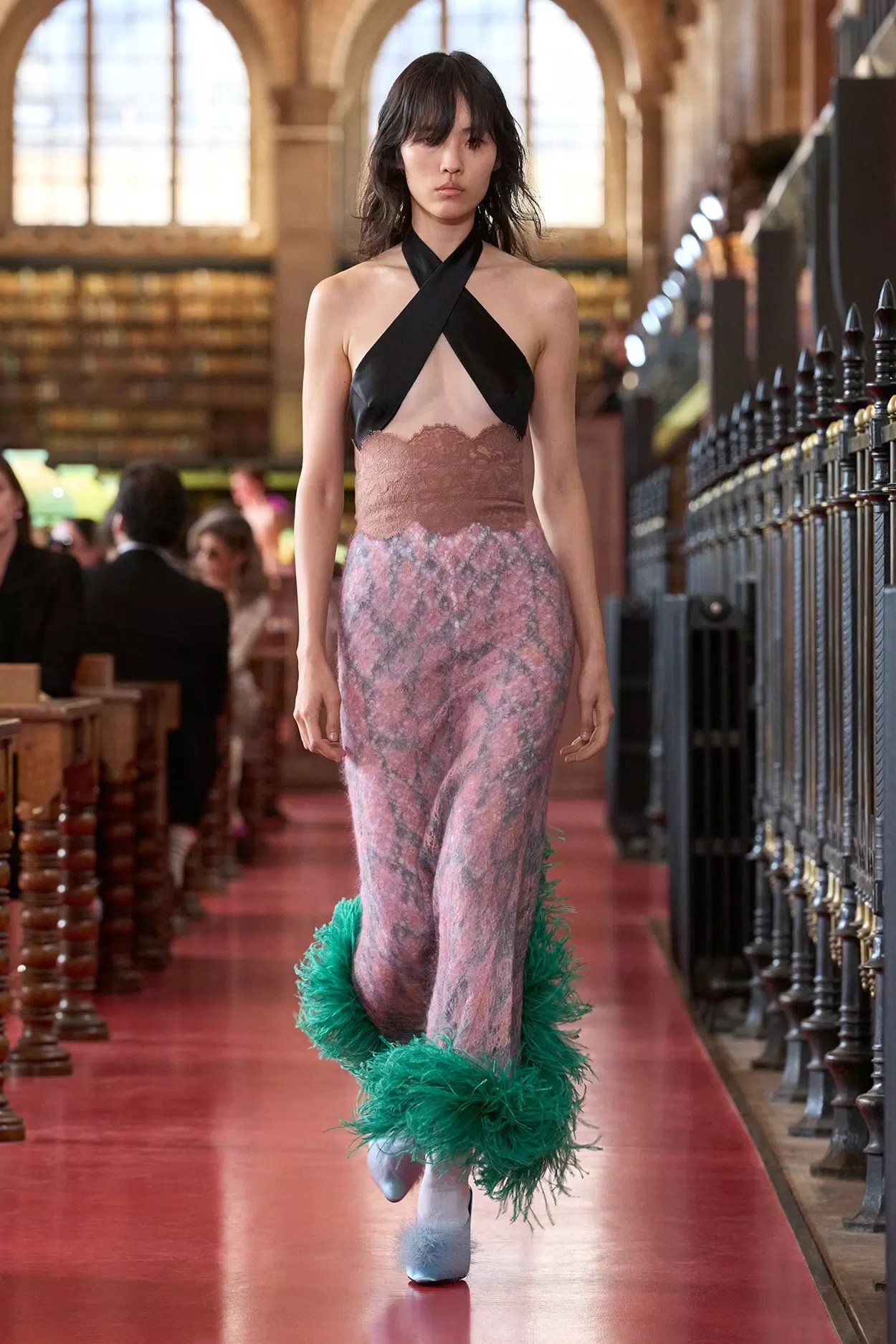
Eighty Looks and No Cataloging System
The repetition is the real problem, and it is a problem of ratio rather than taste. Strip out the color changes, and the show runs a small number of ideas – torso, contrast skirt, feather hem, heavy jewelry – through dozens of iterations without ranking them. An 80-look show asks a buyer to do the editing the designer declined to do, in a season when several houses went the other way and cut their line-ups down.
The thesis also commits him to something. Michele argues that a garment’s worth is not exhausted by use. That is a defensible position for an artist and an awkward one for a creative director whose women’s ready-to-wear shrank to 24 percent of group revenue from 25 percent, on weak sales in directly operated stores. A theory of non-use is not a theory of sell-through, and the show’s most beautiful objects were precisely the ones it told you not to worry about wearing.
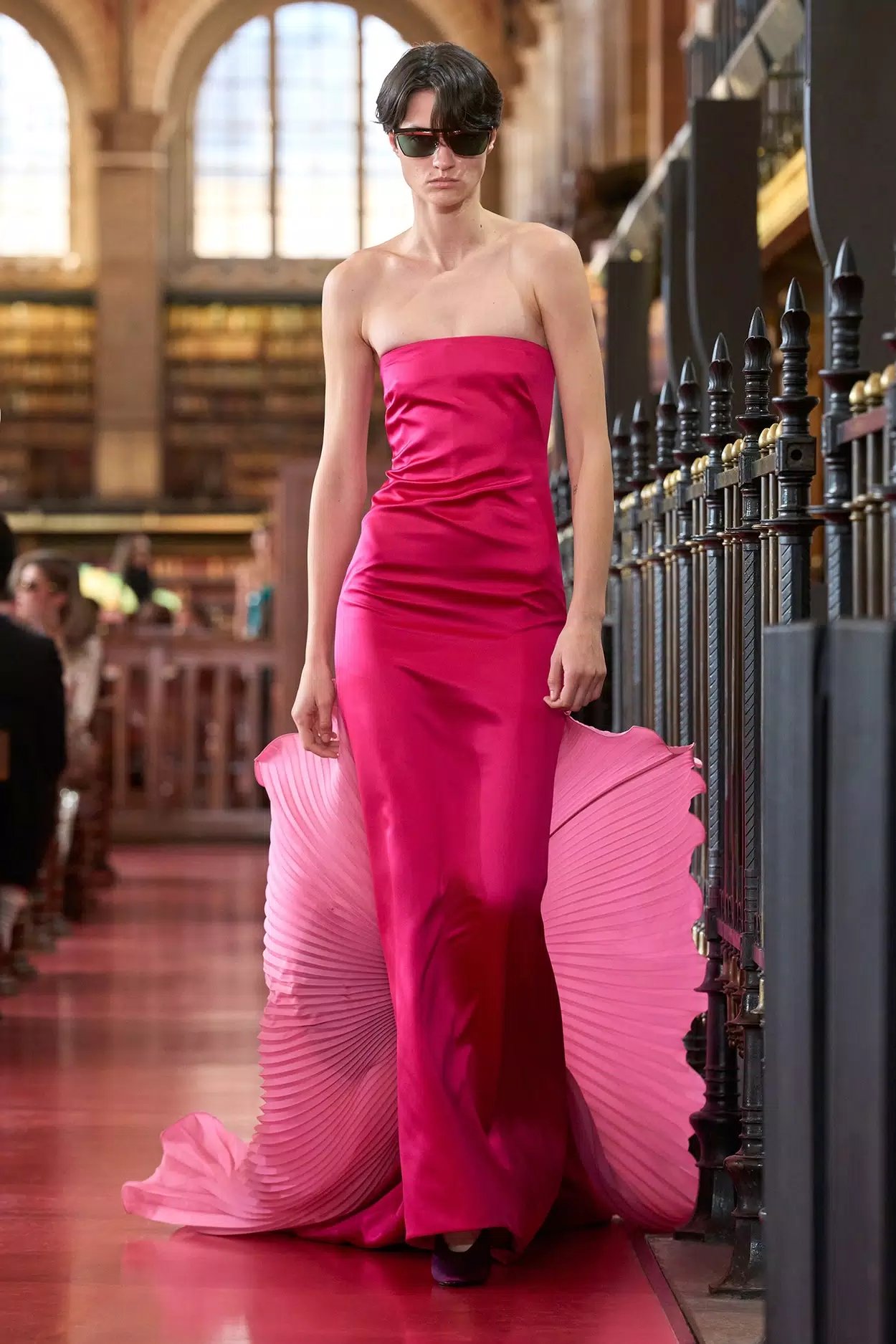
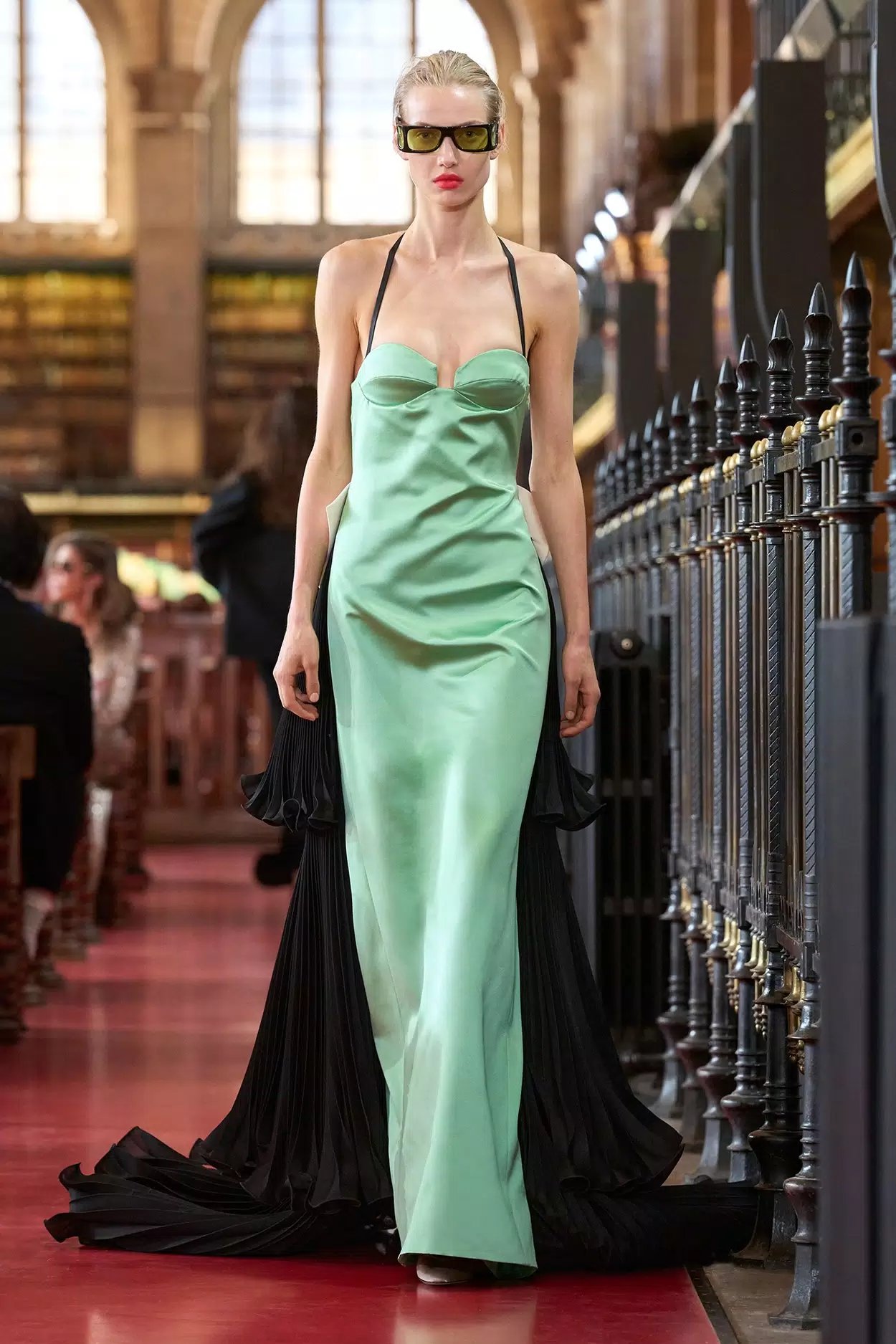
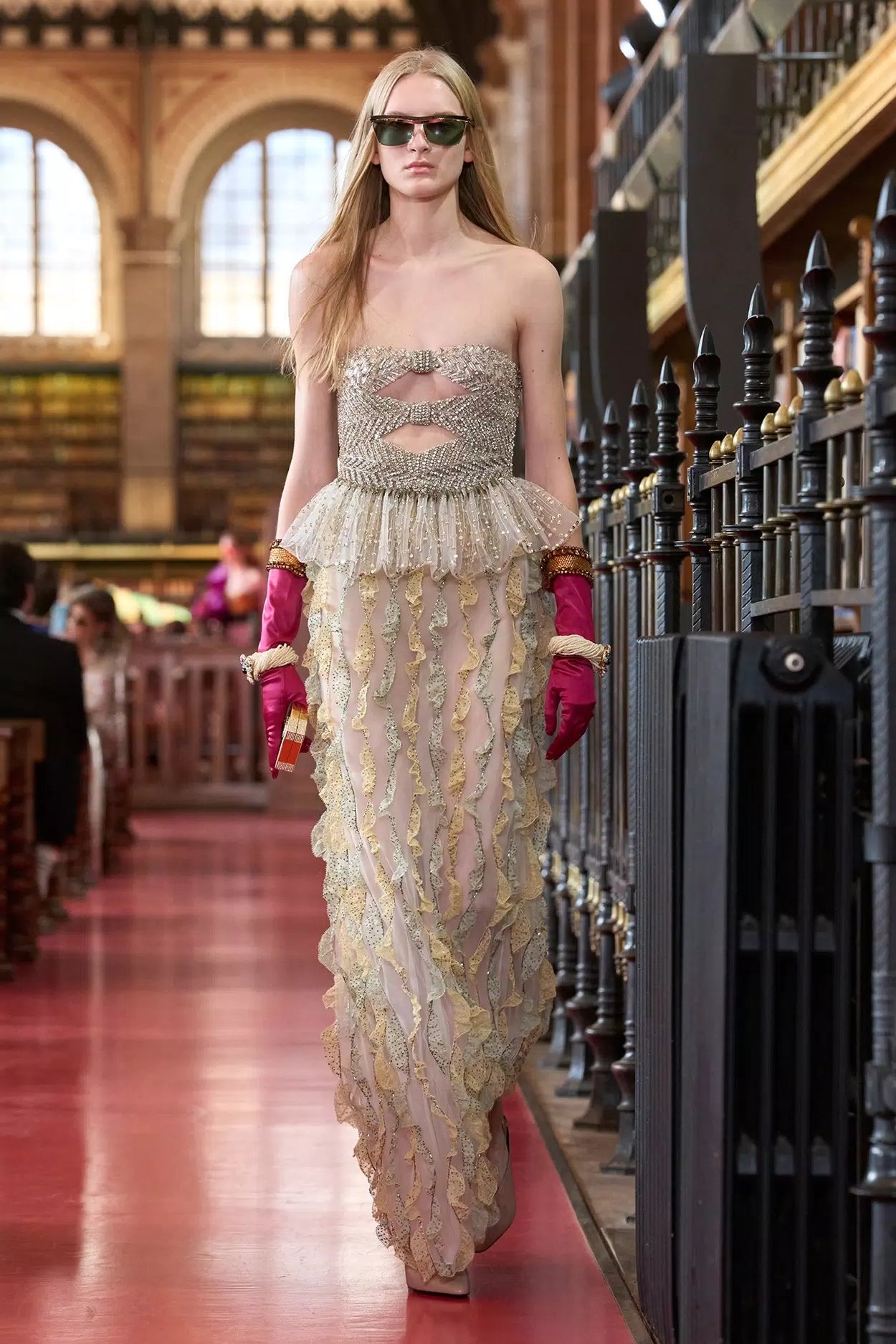
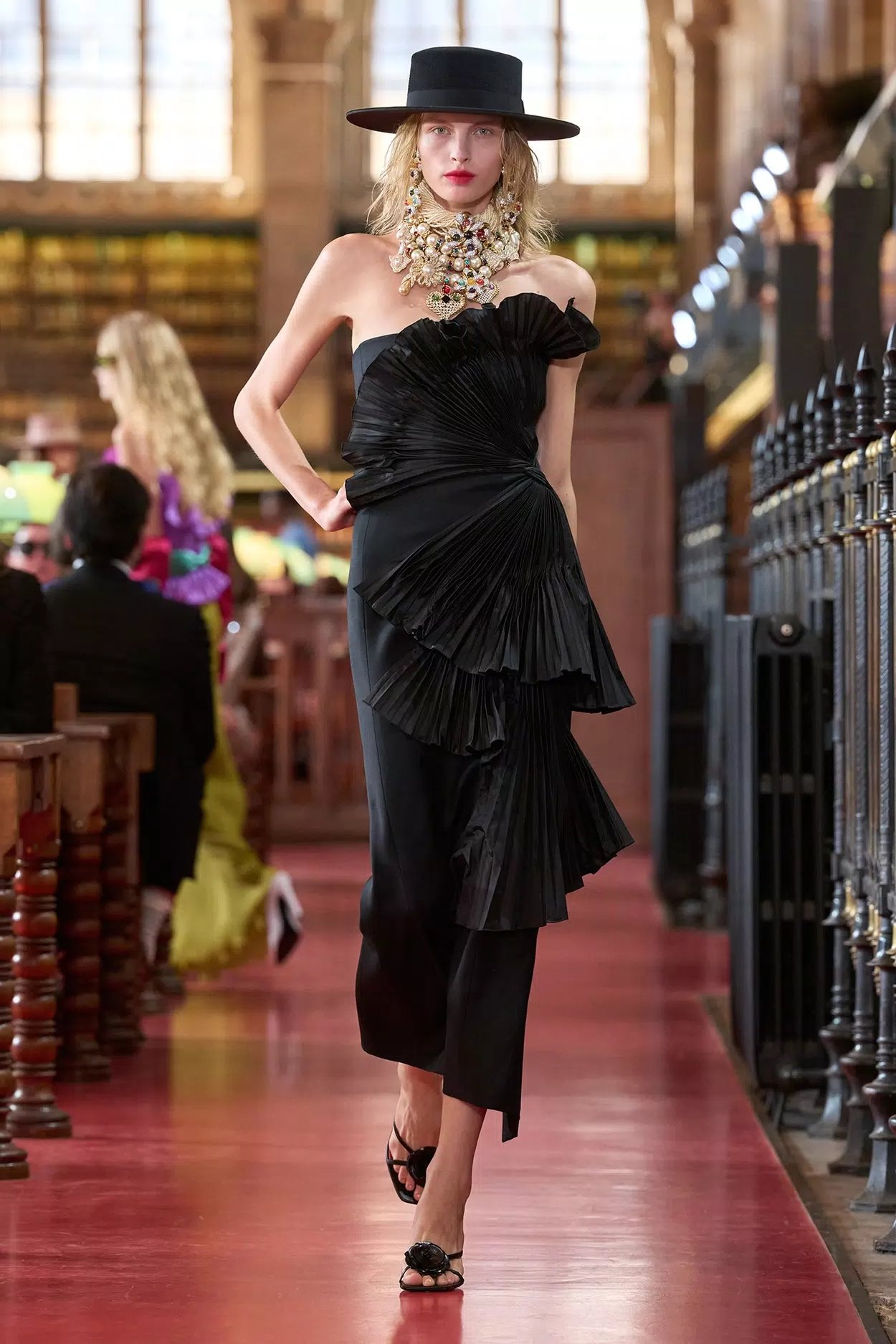
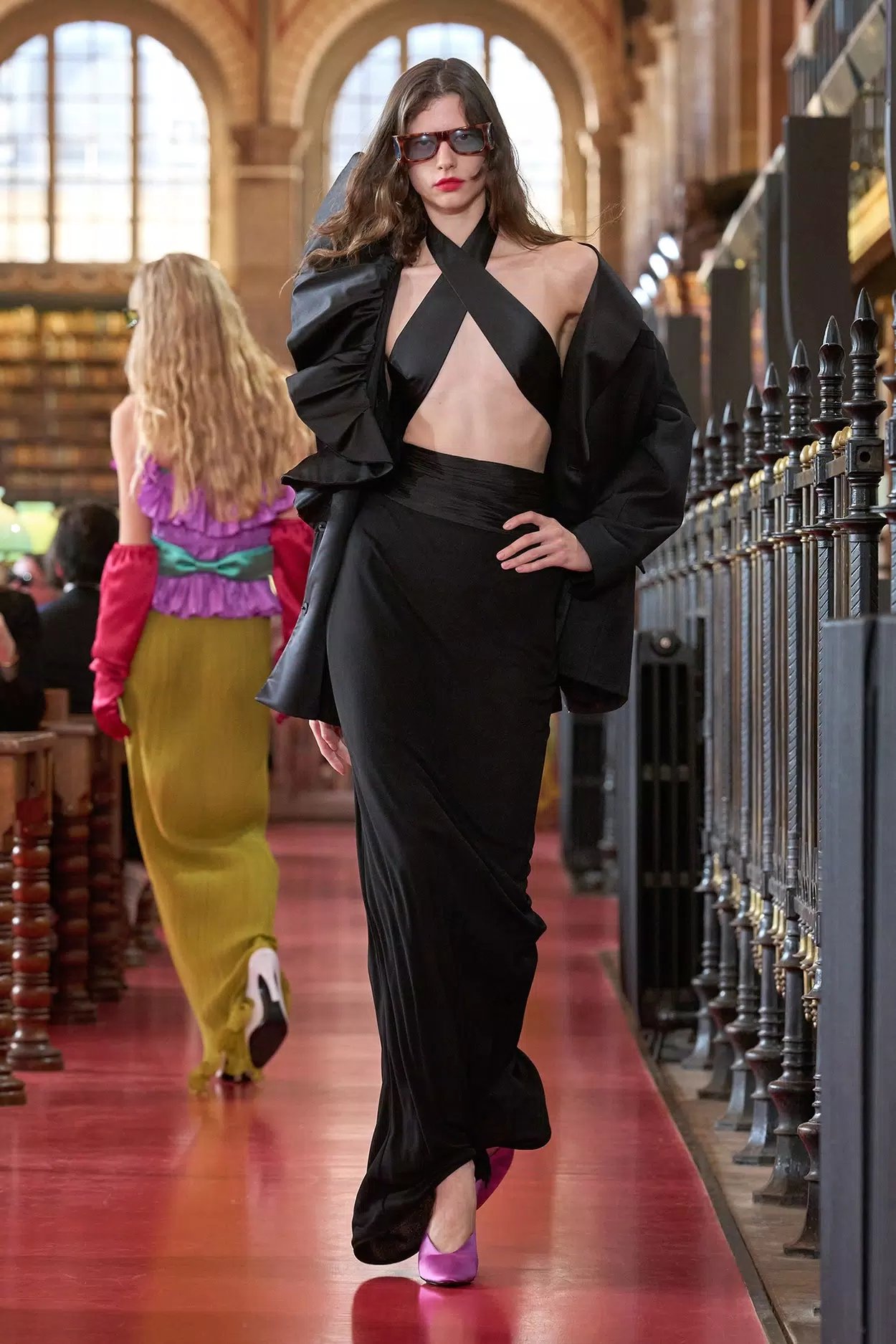
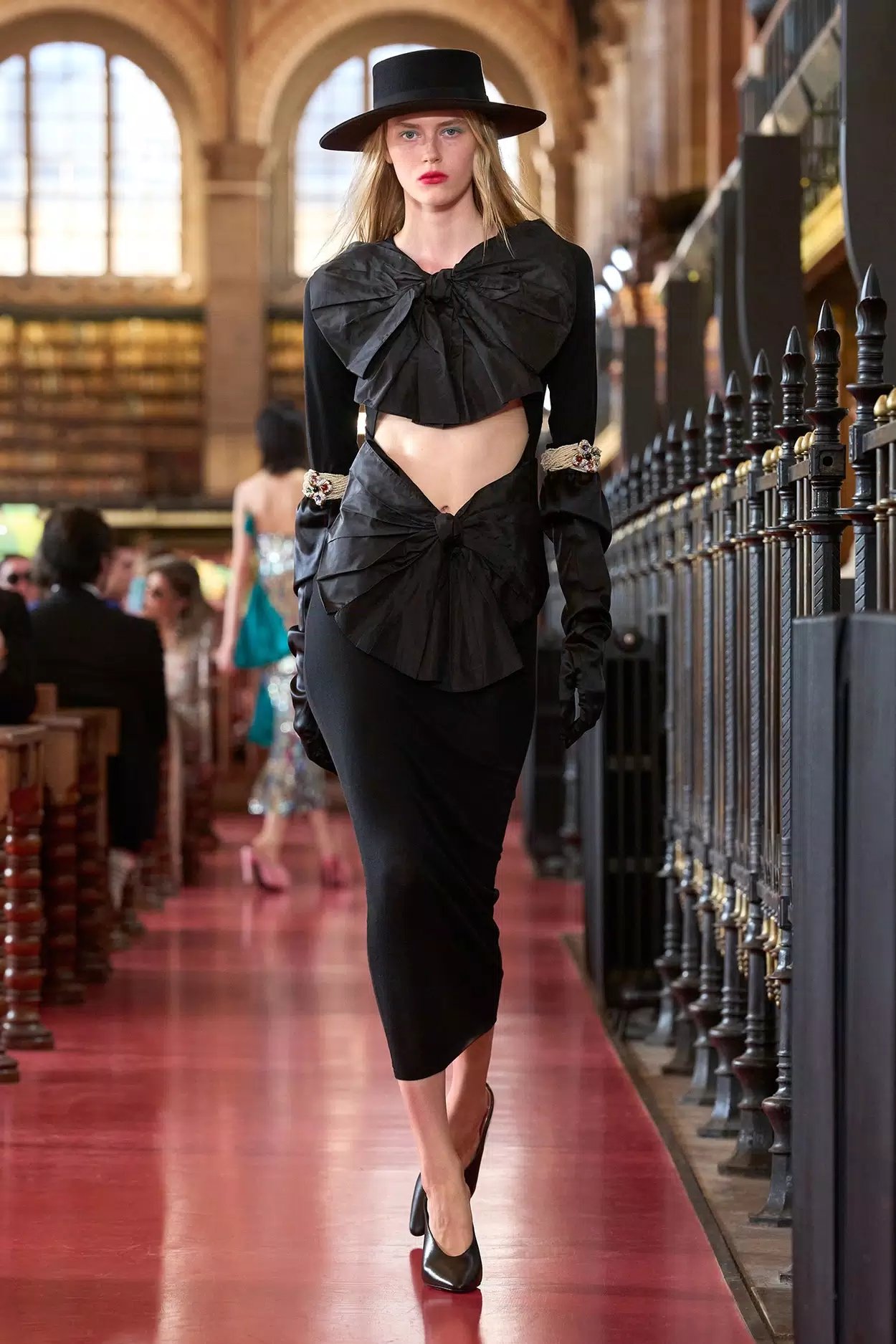
A 103 Million Euro Loss Meets a Theory of Potentiality
The accessory density and the separates push both read as answers to a specific set of numbers. Valentino’s revenue fell 15 percent to 1.12 billion euros in 2025, and EBITDA dropped 41 percent to 174 million euros, with leather goods and footwear down while moda jewelry and fragrance proved more resilient, according to a company filing. Net debt under IFRS 16 rose to 1.13 billion euros at year-end from 1.08 billion; excluding lease liabilities, it rose to 472 million euros from 377 million. Mayhoola, which holds 70 percent, and Kering, which holds 30 percent and has options to take full ownership by 2029, put in 100 million euros of capital in 2025 and formalized further commitments for 2026. Whether a collection weighted toward jewelry and clutches moves those lines is not something a pist can answer, and Riccardo Bellini, chief executive officer since September 2025, inherited the question rather than this collection.
Michele’s defense, offered after the show, was that a garment is a possibility the way a book is – you never know whether it will be read, and it can change a life either way. The clothes that will do that here are the bustiers, the gold and the red gown. The other 60-odd looks are shelf stock, and the show notes have already explained why that is fine.
See the complete collection below:
Images courtesy of Valentino
In other fashion week news, Dior Spring 2027 Ready-to-Wear Collection at Paris Fashion Week