
Taylor Hill fronts Good American’s fall 2026 campaign from her own home, as the brand turns 10 and reaches beyond denim
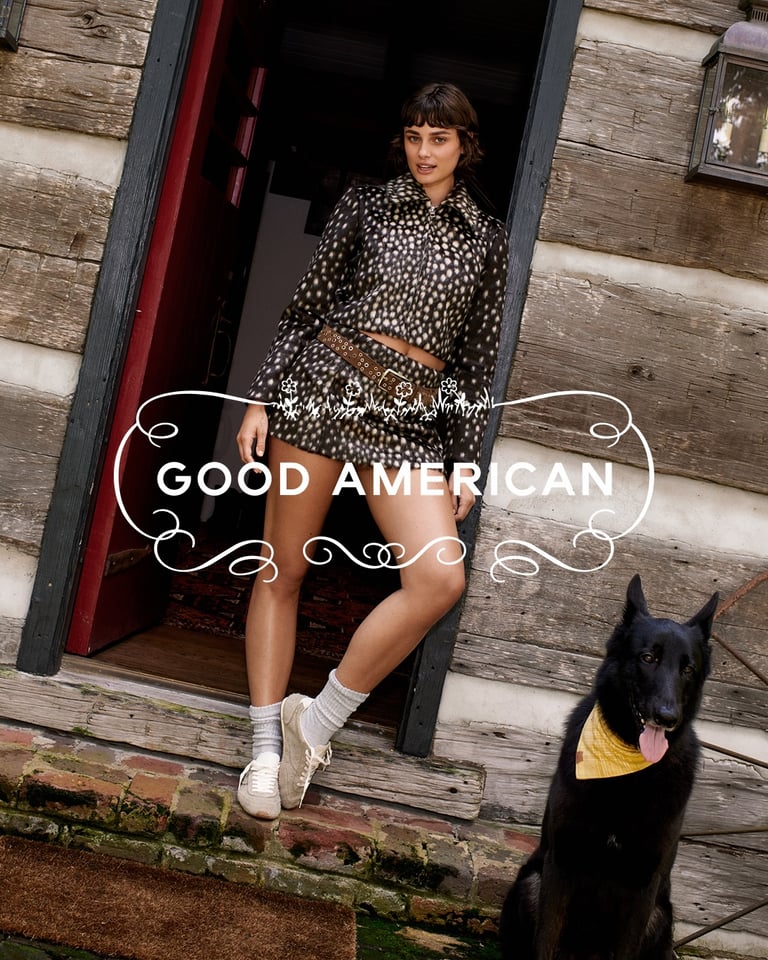
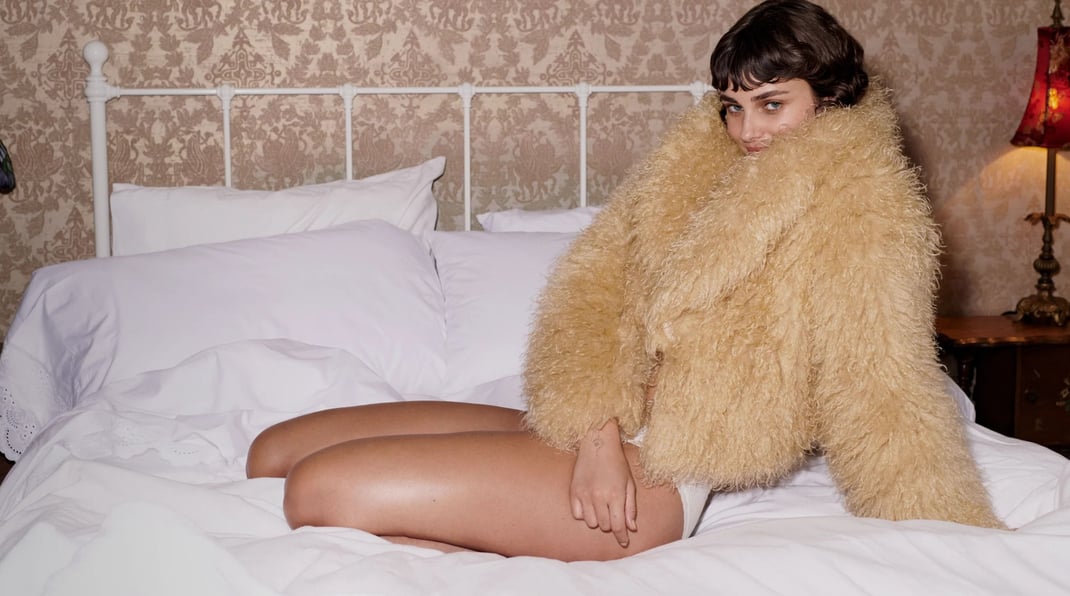
The cameras did not travel far for Good American’s fall 2026 campaign. They set up in Taylor Hill’s house in Nashville, where the model appears not as a guest dropped into an imagined world but as a woman in her own kitchen, in her own light, wearing clothes she says she would actually wear. The brand wanted a life, not a location. It shot both.
“Being able to shoot this campaign at my home in Nashville made it feel incredibly personal,” Hill said in a statement. “There’s something about the pace and ease of life here that really connects to the spirit of Good American’s new collection. I love how these pieces take familiar Americana staples and make them feel modern and super wearable.”
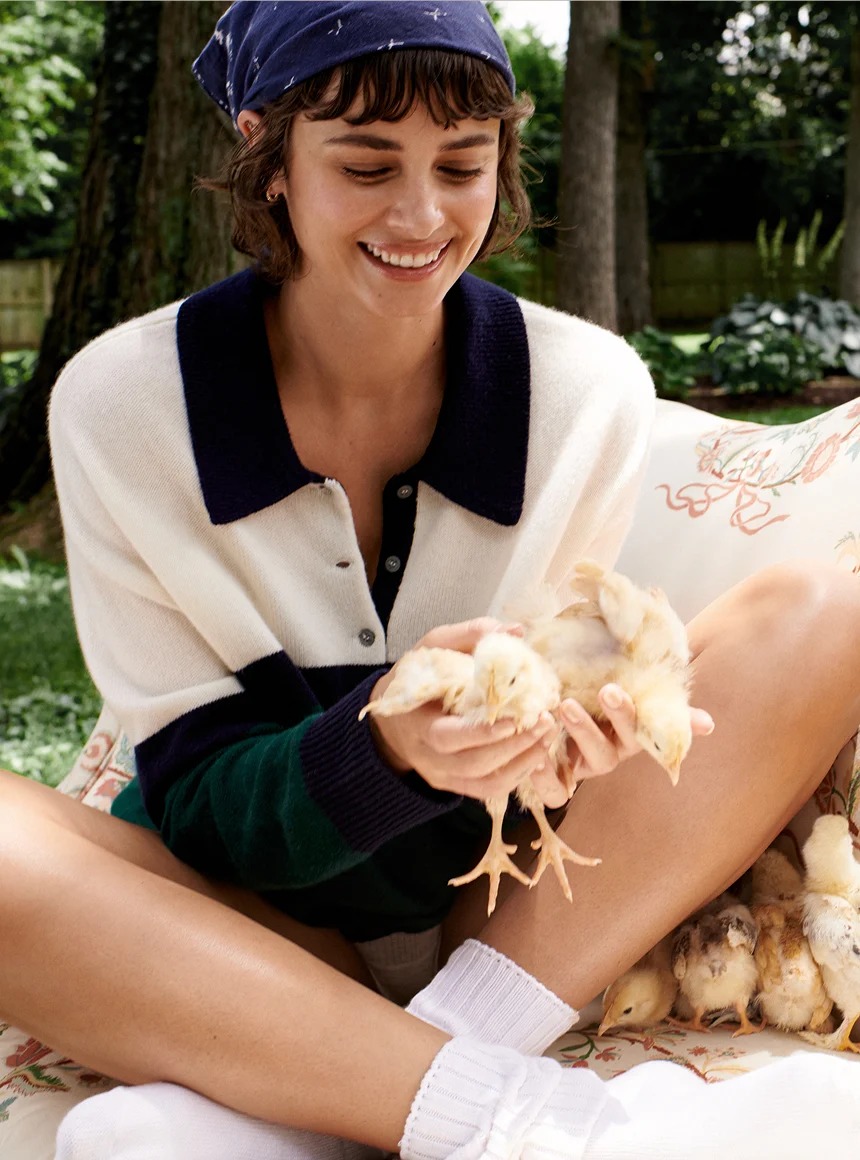
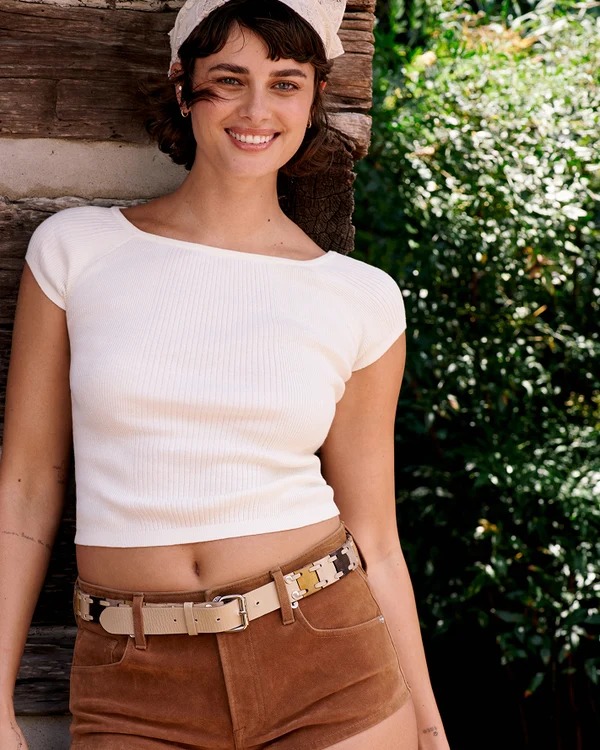
The collection arrives under a banner Emma Grede, the brand’s cofounder and chief executive officer, calls “The Good American Dream.” The clothes make the phrase literal: relaxed denim, fitted knits, matching sets and statement outerwear, Americana staples redrawn for the way women dress now. The line is available now online, in Good American stores and through select retail partners, priced from 358.
Grede said the set choice was deliberate. “We shot the campaign at her home in Nashville because we wanted to capture Taylor in her own world rather than create something that felt overly produced,” she said. “There’s an aspirational quality to her life, but it still feels grounded, personal and real.”
The bigger idea runs underneath the images. “The modern American dream isn’t about one definition of success,” Grede said. “It’s about living the best version of your own life, whatever that looks like for you.”
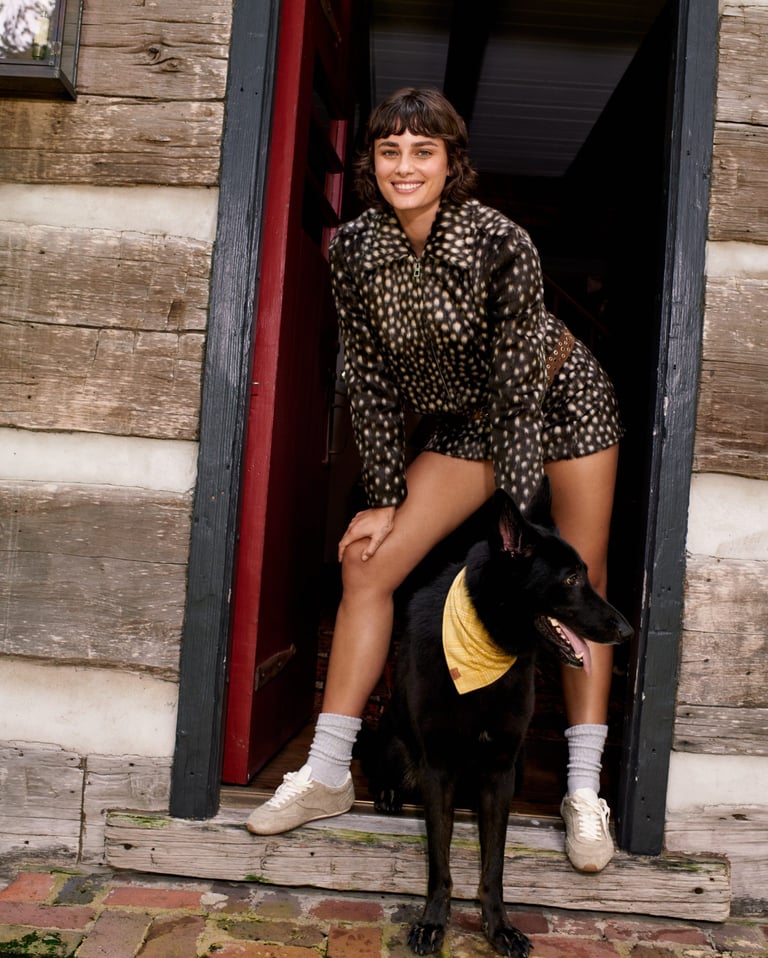
Put a finer point on it: most campaigns manufacture intimacy with rented houses and art-directed mess. Good American skipped the production and walked into Hill’s real rooms, and the difference reads in frames that feel candid rather than composed. That is the strategy, and it is a quiet one. Nothing in the campaign asks you to admire a fantasy. It asks you to recognize a life.
The timing is meaningful. Good American, founded in October 2016 by Grede and Khloé Kardashian, is entering its 10th year with a broader focus beyond denim. Ready-to-wear has become one of the brand’s top-selling categories, while tops and outerwear are gaining traction. Denim still anchors the business: the Low Slung Baggy Trouser sold out within 24 hours of launch and the Vintage Low Loose in four days, according to the company, with both styles being restocked.
“Our customer is increasingly coming to Good American not just for a great pair of jeans, but for the pieces she wants to wear with them and, ultimately, for her entire wardrobe,” Grede said.
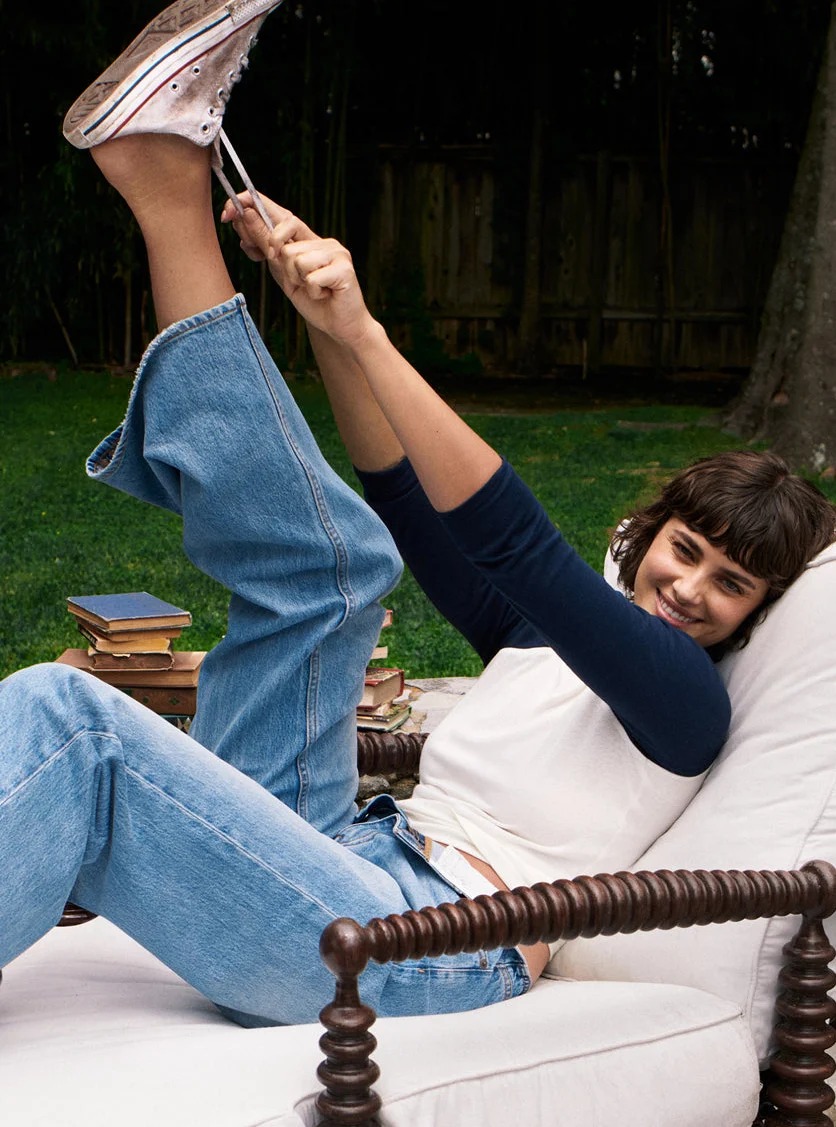
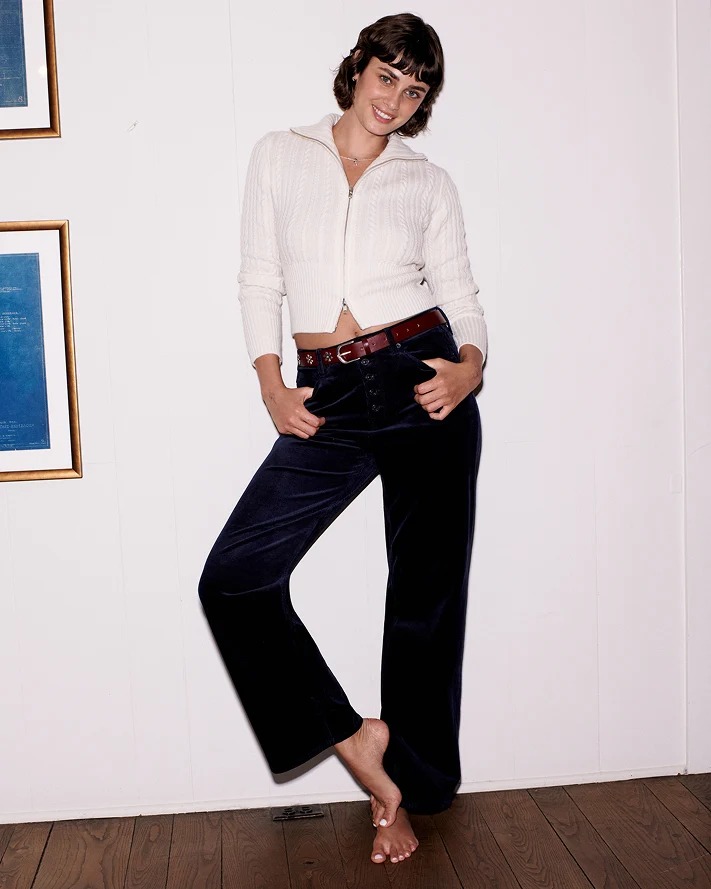
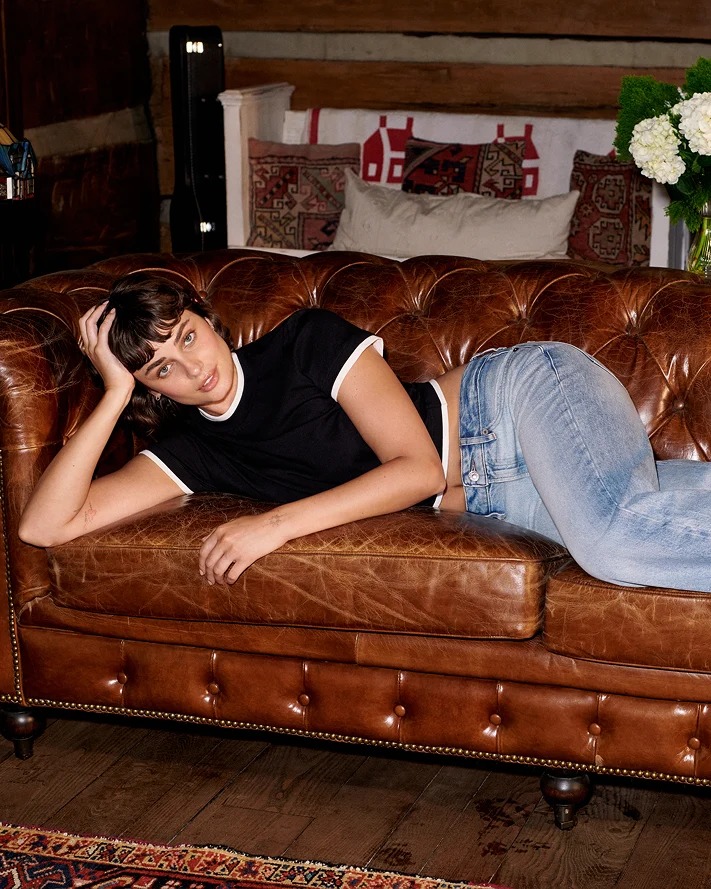
Good American will carry the campaign offline this fall with a college tour and a New York City pop-up opening Oct. 15. The fall collection is an argument that it can also sell the life those jeans are worn in, one that starts in a Nashville kitchen with a model who did not have to leave home to become the face of a season.
Images courtesy of Good American
In other brand campaign news, Calvin Klein Fall 2026 “Feel the Fit” Denim Campaign Starring Sadie Sink
From Denim Disruptor to Full Wardrobe Architect
When Good American launched in October 2016, it entered a crowded denim market with a singular proposition: size inclusivity as a baseline, not a niche. The brand debuted with a 00 to 24 size run and a patented waistband construction designed to eliminate gaping, a technical solution to a fit problem the industry had long ignored. That engineering-first mindset, paired with the marketing velocity of cofounder Khloé Kardashian, turned a direct-to-consumer denim label into a retail phenomenon almost overnight.
A decade later, the fall 2026 collection illustrates how far the architecture has extended. Ready-to-wear now ranks among the company’s top-selling categories, with tops and outerwear accelerating at a pace that mirrors the denim trajectory of 2017. The assortment includes tailored shackets, merino blend knits, and leather outerwear priced to sit between contemporary bridge and accessible luxury. Each category applies the same fit logic developed for jeans: wear-tested on a range of bodies, graded proportionally rather than linearly, and produced with stretch recovery retention as a non-negotiable.
Retail partners have responded by expanding floor space. Nordstrom, Saks Fifth Avenue, and Selfridges now carry the full lifestyle edit, not just the denim wall. The brand’s own stores in Los Angeles and Miami function as showrooms for the total look, with fitting rooms stocked by stylists who pull cross-category ensembles. The strategy is deliberate: convert the denim loyalist into a full wardrobe customer, then retain her through replacement cycles that span seasons, not drops.
Nashville as Creative Counterpoint
Taylor Hill’s relocation to Nashville mirrors a broader migration of creative professionals toward cities that offer spatial freedom without cultural isolation. The model purchased her property in 2022, joining a cohort of editors, photographers, and designers who have established secondary studios in the city. For Good American, the location choice functions as both biography and brand signal. Nashville represents a version of Americana that is lived rather than costumed, a distinction the campaign leverages without announcing.
The interiors shown in the imagery reflect Hill’s actual residency: a mix of vintage Mid-Century pieces, locally sourced ceramics, and architectural bones that predate the neighborhood’s recent turnover. There is no stylist’s hand visible in the arrangement of books on the kitchen counter or the drape of a throw over a chair. This authenticity operates as a quiet rebuttal to the aesthetic fatigue of over-art-directed campaigns, where every surface reads as a mood board reference.
Grede has described the setting as aspirational yet grounded, a phrase that captures the brand’s evolving positioning. The Good American customer is not buying into a fantasy of leisure; she is buying clothes that withstand the friction of a real day. A Nashville kitchen, with its morning light and functional mess, makes that promise credible. The campaign does not sell the house. It sells the confidence of a woman who does not need to leave her life to look the part.
The College Tour and the Pop-Up as Physical Manifestos
Good American will translate the fall campaign into physical activations this October, beginning with a multi-city college tour that targets the demographic driving the brand’s ready-to-wear growth. The tour visits ten campuses across the Southeast and Midwest, regions where the brand’s e-commerce data shows high conversion but low physical touchpoints. Each stop combines a fit clinic, a styling workshop, and a panel featuring local entrepreneurs, alumni, and brand executives. The format prioritizes dialogue over transaction, though exclusive product drops accompany each event.
The New York City pop-up opening October 15 operates on a different logic. Located in SoHo, the 3,200-square-foot space functions as a seasonal flagship rather than a marketing installation. The layout mirrors the Nashville kitchen narrative: a central domestic vignette surrounded by shoppable zones organized by occasion, not category. Fitting rooms are equipped with digital request screens linked to inventory across the street at the brand’s permanent showroom, blurring the line between pop-up and permanent retail.
Both activations serve a strategic purpose beyond awareness. They generate first-party data on fit preferences, styling combinations, and regional assortment gaps that e-commerce analytics cannot capture. That data feeds directly into the spring 2027 buy, closing a loop between campaign storytelling and merchandise planning. In an industry where physical retail is often treated as brand theater, Good American uses it as a listening device.