
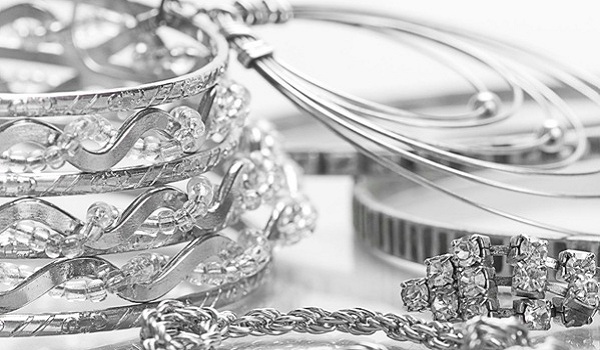

When it comes to antique silver pieces, it can be confusing trying to decode the maker’s mark and other identifiers. Good silver will always be identified by a stamp somewhere on the piece. However, this doesn’t always give us the full picture. Often, techniques are used to reduce the amount of silver in a piece, and these less-than-solid-silver pieces can be hard to identify. The difference between silver and silver overlay lies in the crafting process itself more often than the purity grade of the silver used.
What Is Real Silver?
Like gold, silver is a very soft metal in its raw form. To ensure silver retains its form, it is mixed with sturdier metals. Often, zinc or nickel are used as inexpensive mixes to create a strong silver alloy. Anyone allergic to these two common metals need not worry; in quality silver, the alloy metal is usually as little as 7.5 percent.
This 92.5 percent alloy is the purest grade of silver, earning it the title “sterling.” The best figurines and collectibles are sterling. Pieces made from this grade of silver will always be stamped 925, 92.5, and s/s, most commonly.
What Is Silver Overlay?
To begin, the silver overlay is not the same as silver plating. The latter has become synonymous with cheap supermarket-grade trinkets. Plated pieces are finely sprayed with a coating of metal, such as very impure silver. The difference between silver and silver overlay is the addition of a base shape of a different metal.
Overlay starts with quality material, such as copper or brass. A heavy coating of quality silver is then added. Often, this technique is used for decorative pieces, as making it out of pure silver would be excessively expensive and would likely reduce the piece’s longevity.
The addition of a base metal makes each overlay piece much sturdier and resistant to damage, even with frequent use. As such, it’s a great choice for everyday jewelry and luxury anytime. Overlay also retains a value closer to pure silver and is resold similarly. However, as the outer shell is still good silver, it requires the same careful handling, it’s just more resistant to bending, as are other silver grades.
How To Tell the Difference
Because silver overlay has a heavier coating of real silver, it can be tough to spot. A good overlay can even be a true sterling mix, and if it’s thick enough, it may also have a silver stamp. Hardness is the primary way to tell if a piece is solid or not.
Since silver is very soft, even when mixed to become sterling, overlayed items will always be more dent and bend-proof. Besides this, if the manufacturer is known, the piece should be listed as either silver or overlay, even if it is now an antique.
Ultimately, time will reveal the truth. Aged silver overlay is easy to spot, as the base metal will eventually show through. These pieces are still valuable and can also be restored, but solid silver is generally much more collectible and desirable.
In 2026, silver overlay pieces, especially antique perfume bottles with German silver overlay detailing, have gained renewed visibility through the resurgence of maximalist and vintage-inspired aesthetics on global style platforms.
German Silver Overlay: A Distinct Craft Tradition
German silver overlay represents one of the most refined applications of the overlay technique in decorative arts history. Despite its name, German silver contains no actual silver at all. It is an alloy composed primarily of copper, zinc, and nickel, and it serves as the base material over which genuine sterling silver is applied in elaborate, often hand-engraved patterns.
The technique rose to prominence in Central Europe during the late nineteenth and early twentieth centuries, when skilled craftsmen in Germany, Austria, and Bohemia applied it to everything from serving trays to vanity accessories. The results were visually striking and far more affordable than all-sterling alternatives, making luxury aesthetics accessible to a broader market.
Collectors today specifically seek out pieces marked with German silver overlay designations, as the craftsmanship involved is frequently exceptional. The overlay work on these pieces tends to feature dense floral motifs, scrollwork, and figural scenes that reflect the decorative sensibilities of the Jugendstil and Art Nouveau movements. When evaluating such pieces, examine the clarity and depth of the silver patterning, as finer execution correlates directly with higher collector value.
Antique Silver Overlay Perfume Bottles: Collectibility and Care
Among the most coveted categories within the silver overlay market, antique perfume bottles occupy a singular position. Produced in large numbers between approximately 1880 and 1940, these bottles combined glassmaking artistry with intricate silver overlay work to create objects that functioned equally as vanity accessories and display pieces.
The most desirable examples typically feature:
- Hand-blown or cut crystal bases with deep color saturation, most often cobalt blue, ruby red, or emerald green
- Sterling silver overlay applied in continuous, unbroken patterns across the glass surface
- Original stoppers that match the overlay design and remain intact
- Legible maker’s marks from recognized American or European manufacturers
American firms such as Alvin, Gorham, and Unger Brothers produced some of the finest examples, many of which now command significant prices at specialist auctions. Proper care requires storing these bottles away from direct sunlight, which can degrade both the glass and any residual fragrance oils that may have leached into the stopper over decades. Cleaning should be approached with extreme caution; a soft, dry cloth is almost always the safest option, as moisture can work beneath the silver layer and cause adhesion failure over time.
What Is Sterling Silver Overlay Worth Today?
Understanding the current market value of sterling silver overlay pieces requires separating two distinct sources of worth: the intrinsic metal value and the collector or aesthetic premium. Because the silver layer in an overlay piece is thinner than that of a solid sterling object, the raw metal content is lower, and this is reflected in melt value calculations. However, collector demand frequently pushes market prices well above melt value for pieces with documented provenance, strong decorative quality, or association with notable makers.
In contemporary markets, the resurgence of maximalist and vintage-inspired aesthetics, particularly visible across global style platforms and editorial fashion, has renewed interest in ornate silver overlay objects. Antique silver overlay perfume bottles and vanity sets appear with increasing frequency in high-end interior styling features and luxury resale environments.
Key factors that influence value include:
- The thickness and quality of the silver overlay itself
- The condition of both the base material and the silver layer
- The prominence and legibility of any maker’s mark
- Rarity of the specific form or pattern
- Provenance documentation, particularly for pieces linked to notable estates or periods
Buyers entering this market for the first time are advised to consult established dealers who specialize in American or European decorative silver, as authentication expertise is essential to making sound acquisitions.