Birth Chart 101
Learn what a natal birth chart represents, what information is needed to calculate one, and how signs, planets, houses and aspects work together.
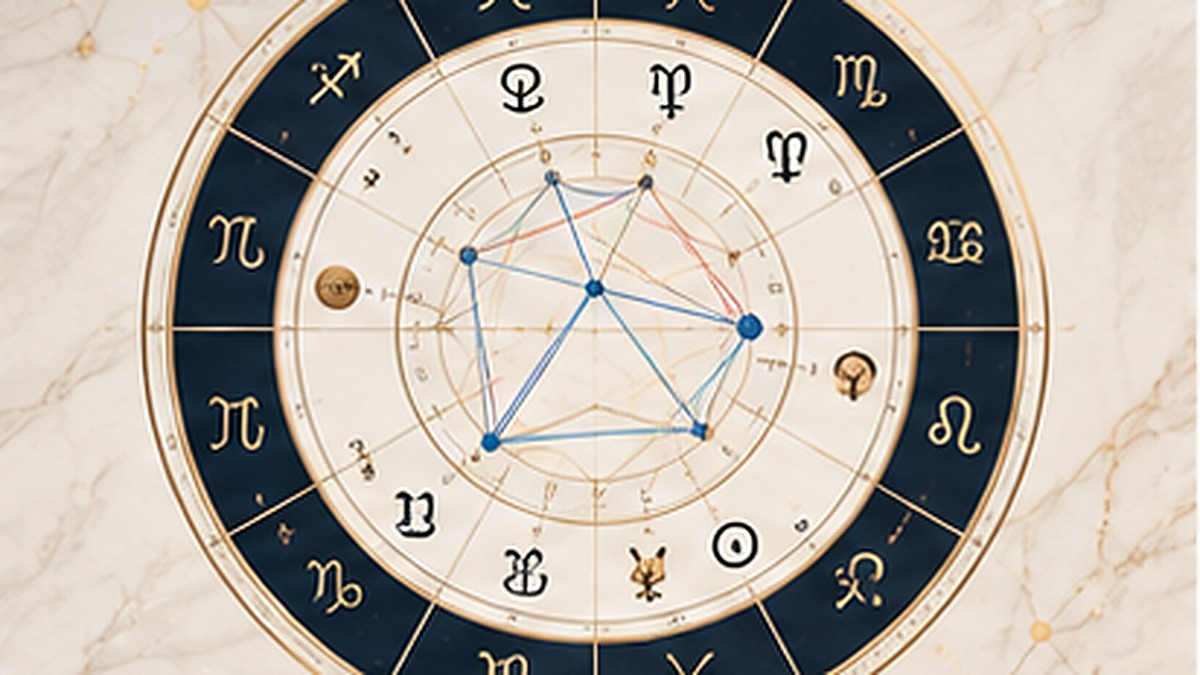
A birth chart, also called a natal chart, is a symbolic map of the sky for a specific birth date, time and place. In Western astrology, readers interpret the planets by sign, house and aspect to describe recurring themes, tendencies and areas of focus. It is more detailed than a Sun-sign horoscope because it uses many chart factors at once.
What a birth chart contains
A natal chart places the Sun, Moon and planets around a circular zodiac wheel. Each planet is interpreted through the sign it occupies, while the houses describe areas of life and the aspects describe angular relationships between chart points.
The result is not one single label. A chart is a network of placements that can reinforce, soften or complicate one another, which is why two people with the same Sun sign can still have very different astrological profiles.
The information needed to calculate a chart
A complete chart normally starts with a birth date, an exact or best-known birth time, and a birth location. The date establishes the planetary positions for that day. The time and location are especially important for the Ascendant and house positions.
If the birth time is unknown, many planetary sign placements can still be discussed, but the Rising sign and house structure may be uncertain. The Moon can also change signs during some calendar days, so an exact time can matter there as well.
The four layers of chart interpretation
A useful reading order is planet, sign, house, then aspect. The planet describes the function, the sign describes how that function tends to express itself, the house describes where it becomes especially visible, and the aspects show how different chart functions interact.
For example, Venus is associated with attraction, pleasure, aesthetics and values. Its sign changes the style of expression, its house places those themes in a life area, and its aspects connect Venus to other parts of the chart.
Why the Sun sign is only the beginning
Sun-sign astrology is useful because the Sun is a major chart factor and because it creates an accessible twelve-sign framework for daily and seasonal horoscopes. A natal chart adds the Moon, Ascendant, personal planets, outer planets, houses and aspects.
That added context is why full-chart interpretation can feel more specific than a general horoscope. It also explains why a person may strongly identify with traits associated with another sign that appears prominently elsewhere in the chart.
How to read a chart without getting overwhelmed
Start with the Sun, Moon and Rising sign, then add Mercury, Venus and Mars. Next, look at the chart ruler, the angular houses, major aspects and any repeated element or modality patterns.
A chart becomes easier to understand when recurring themes are grouped together instead of treating every placement as a separate prediction. Repetition and pattern are more useful than collecting isolated keywords.
Birth chart building blocks
Frequently Asked Questions
Is a birth chart the same as a horoscope?
No. A birth chart is a natal map calculated for a specific birth moment, while a horoscope is an interpretation for a period of time or a broader sign-based audience.
Do I need an exact birth time?
An exact time is especially important for the Ascendant and houses. Without it, many planetary sign placements remain usable, but the chart cannot be interpreted with the same confidence in time-sensitive areas.
What should I read first in a birth chart?
Start with the Sun, Moon and Rising sign. Then add Mercury, Venus and Mars before moving into houses, aspects and more advanced patterns.
Explore NYSG Astrology
Use the reference library as the foundation, then move into current readings and the broader NYSG astrology experience.
Read current Daily, Weekly, Love, Money, Career and Wellness forecasts.
Explore →Zodiac Sign GuidesExplore the enduring traits, style and structure of all 12 signs.
Explore →Compatibility LabMove from reference concepts into relationship-focused sign pairings.
Explore →Celebrity ZodiacSee how zodiac-sign content connects with designers and cultural figures.
Explore →