
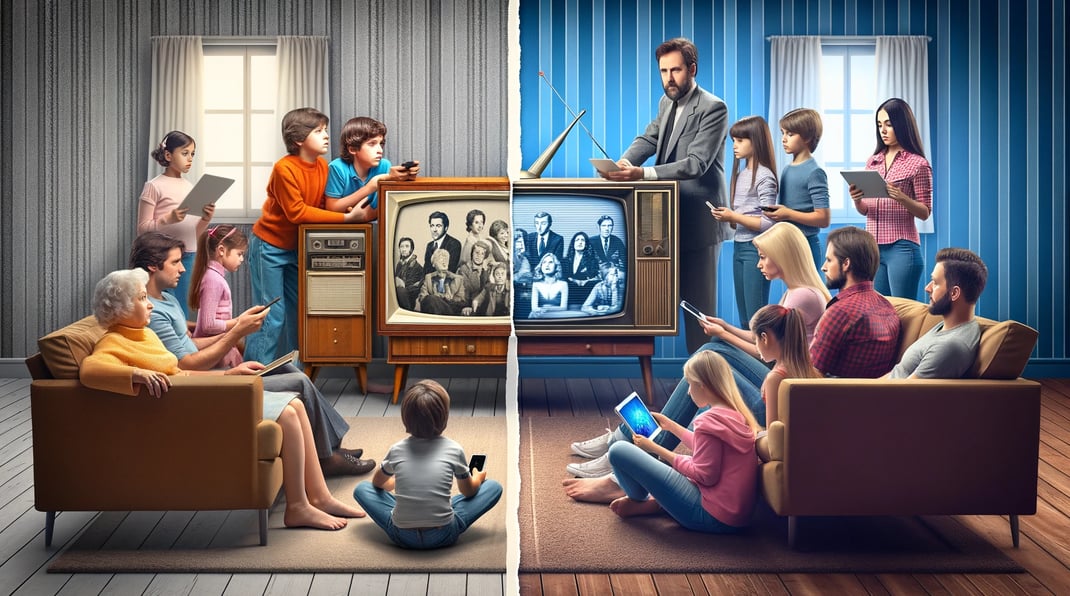

“It was all different back in my day”
Every Person Over 50. Ever.
Complaining about young people. Looking at the rate of progress with bewilderment and an element of fear. An old man yelling at the clouds. Whatever you want to call it, humans have been complaining about youngsters’ attitudes and looking upon technological advances with fear since Aristotle in 4th century Greece.
It’s nothing new, but we want to avoid doing it in this article, despite the title. Instead of looking at things through a reproachful, negative lens, we want to pay homage to technological advancements by highlighting some of how they have changed the average person’s daily life.
Read on to find out how technology has improved and altered everything from how we spend our free time to how we learn and interact with others and the world around us.
Leisure in the Living Room
Perhaps the greatest change of all in the last 20 years is how the average person spends their free time – increasingly at home. Whilst that might seem like a sad statement on its own, in reality, it isn’t.
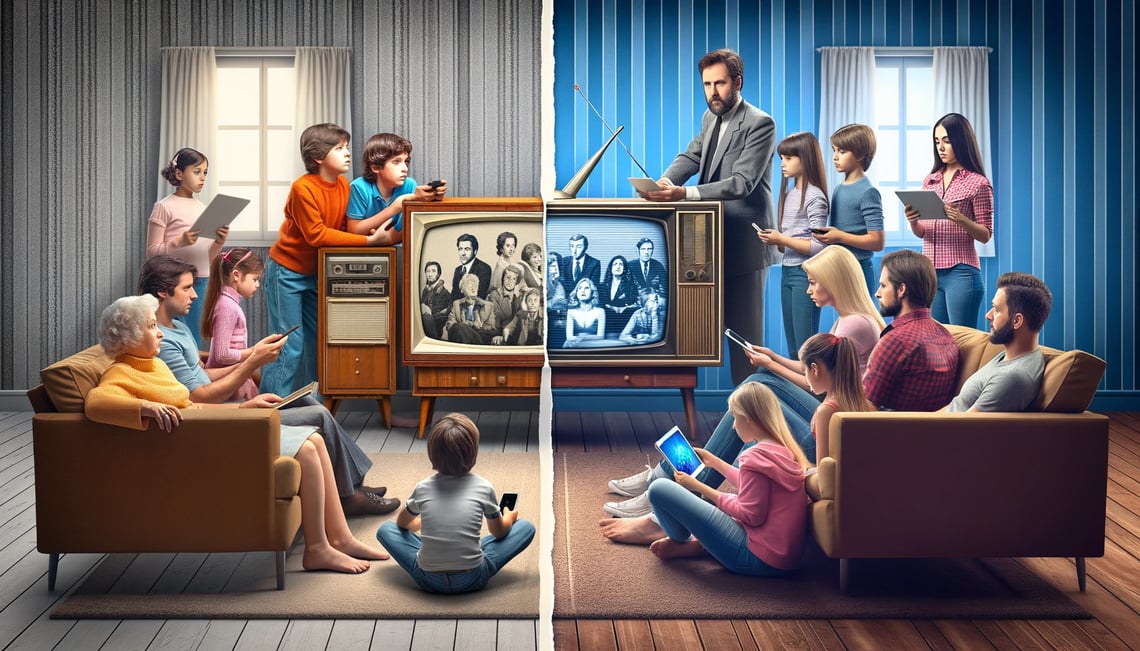
Instead of shilling out for expensive evenings at the cinema, many choose to sit in the comfort of their own home and watch the latest blockbuster movies on their TV. That goes for socializing too, during Covid many friendship groups turned to online gaming as a way to keep in touch which is a habit that has persisted for 2 years since the pandemic.
(25 years ago people flocked to the cinema to watch The Talented Mr Ripley, now tens of millions are enjoying this eight-part TV show on Netflix.)
Increased Numbers Gaming Online
The ways people play games have changed over the years, online gaming now competes with the traditional consoles, while mobile apps have made it so people can play quick games at any time of day.
There is a huge range of niches and themes available, and the range of games at Vegas Slots is continually updated. The games are available with clear instructions on how to play, and the risks behind gambling are highlighted.
20 years ago, you would see many Canadians heading to the stores to pick up their local and national newspapers to be updated on the daily news. A 2023 Digital News Report found that 69% of Canadians now access the news online via news websites or social media platforms.
People are increasingly addicted to their phones and for print media that’s a bad thing. It means that people no longer get their news from newspapers and TV, they get it online, from blogs, from social media, and subscription services.
(The decline of print media has been on the horizon for some time.)
The Death of the Water Cooler Moment
In TV there used to be something known as ‘the water cooler moment’, which was the phrase that directors and executives used to describe a dramatic moment that would get people talking at the water cooler station in the office the next day.

There is no such thing today because people don’t watch the same TV shows at the same time on terrestrial TV.
At the water cooler in any given office in Canada, there could be three people crowded around, one who last night watched the first episode of Breaking Bad, another who watched the anime film My Neighbour Totoro, and the other who watched Coronation Street.
The Return of Servant Culture
100 years ago there were an estimated 200,000 active servants in Canada which was quite a substantial number when you consider that only around 8 million people were living in the country at the time.
Currently in a labor force of 32.5 million, just under half a million are gig economy workers employed by the likes of Uber Eats and Door Dash. Technology and shifting lifestyle trends have taken us to a place where we are returning to a culture of servants and masters.
A peckish banker in central London can, at the touch of his fingers, send a frantic underpaid Uber Eats worker scrambling around the busy streets of the capital to fetch a croissant and a vanilla latte from a Starbucks to the 105th floor of a swanky office building.
(James Plunkett uses history to navigate some of the problems faced in the modern day, including the issue of the gig economy.)