
Julian Klausner showed 60 looks for Dries Van Noten’s Spring 2027 women’s collection at the Palais Garnier in Paris on Sept. 30, his fourth womenswear runway show since taking over the Antwerp house. The collection treats getting dressed as role-play, in bias-cut satin, brocade bubble skirts, oversized tailoring and film-poster prints, and the commercial question is whether the graphic pieces or the tailoring carry the floor.
PARIS — Julian Klausner showed 60 looks for Dries Van Noten‘s Spring 2027 women’s collection at the Palais Garnier on Sept. 30, his fourth womenswear runway show since taking over the Antwerp house, and the first built around a single sellable proposition: getting dressed as a performance.
The venue was part of the argument. The house said the collection “was created with the venue in mind, the stories these walls might tell,” and Klausner’s show note frames the season as an actress coming off set, still carrying the score, a movie siren on and off screen.
The Collection’s Central Idea
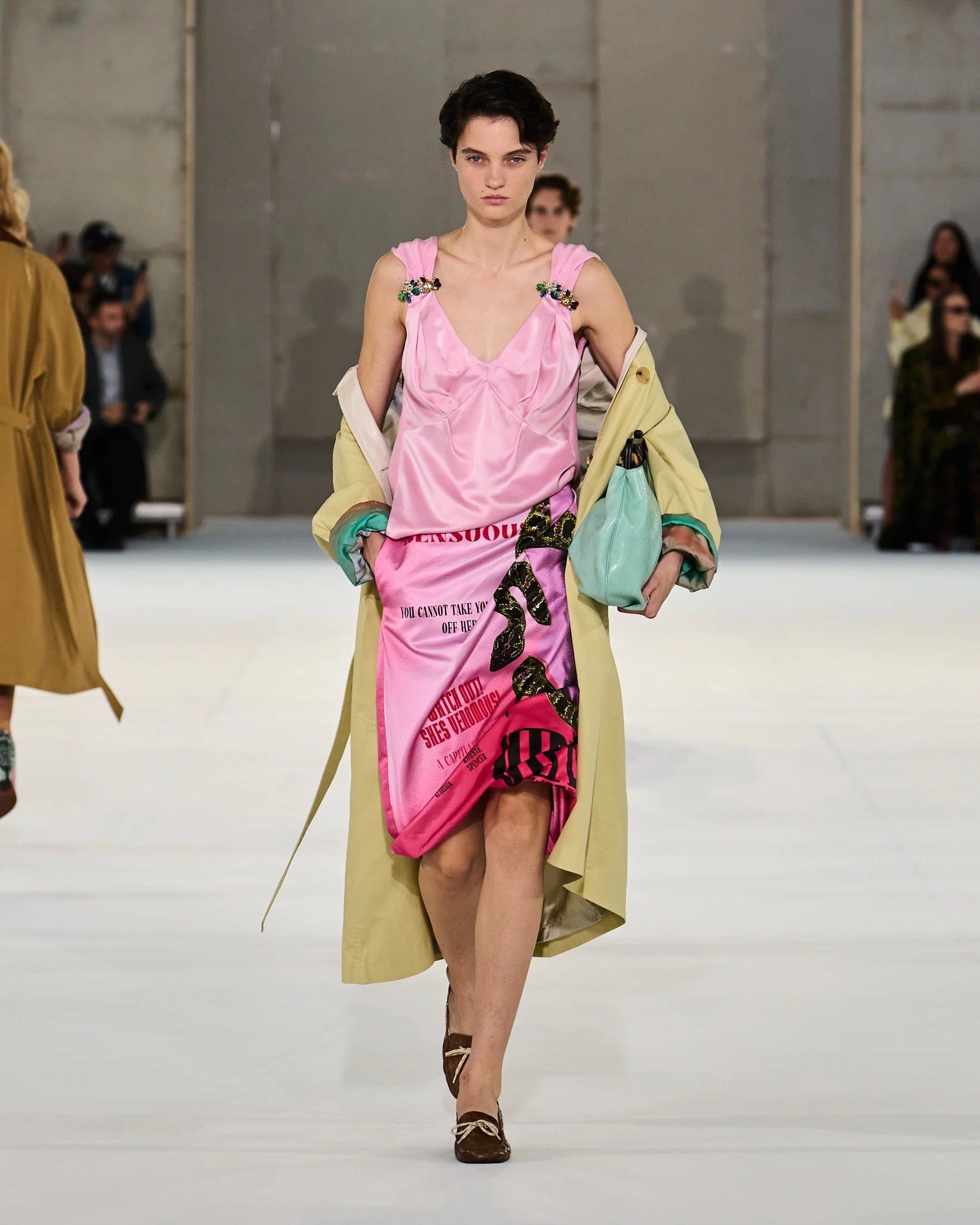
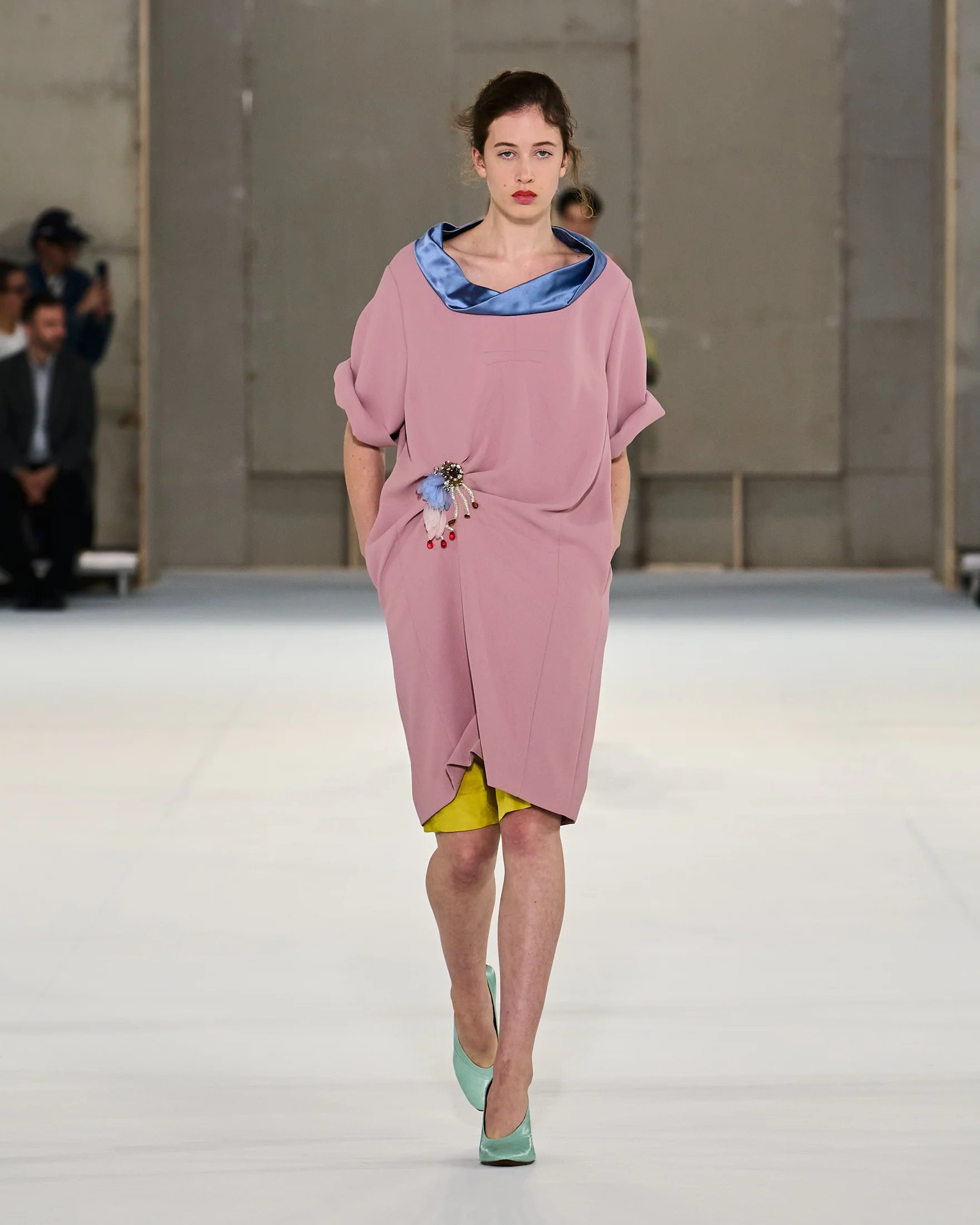
Klausner’s note reduces glamour to a switch rather than a category: “A red lip, a dazzling brooch, a cinched belt. So little is needed to spark that feeling.” That is a merchandising thesis as much as a mood. The collection is built so the switch can be bought in one piece, a brooch or a belt or a satin slip, rather than assembled across a full look.
It also sets the season’s risk. A wardrobe that promises transformation has to read as clothes a customer can wear to work, not only to a premiere.
Silhouette and Styling
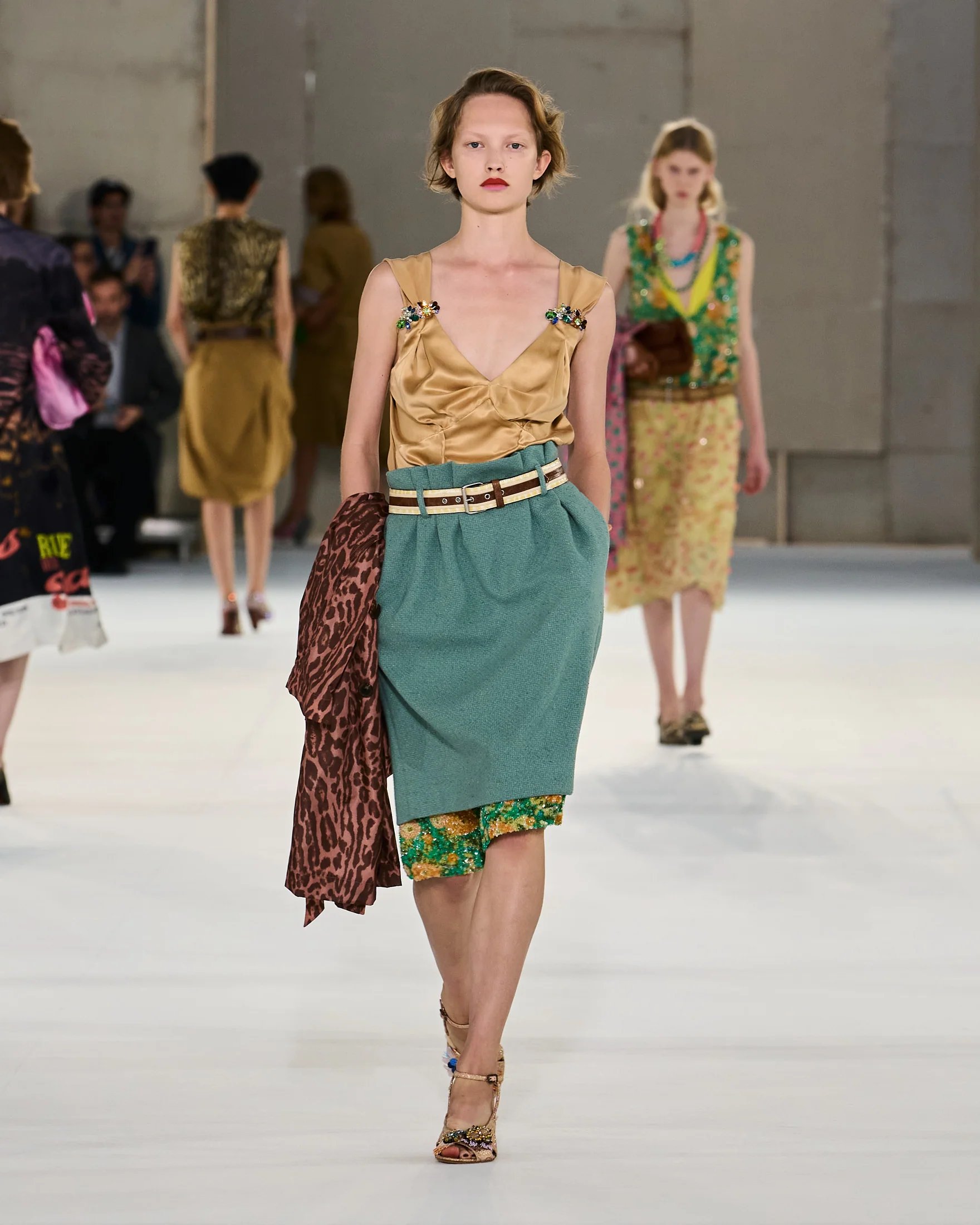
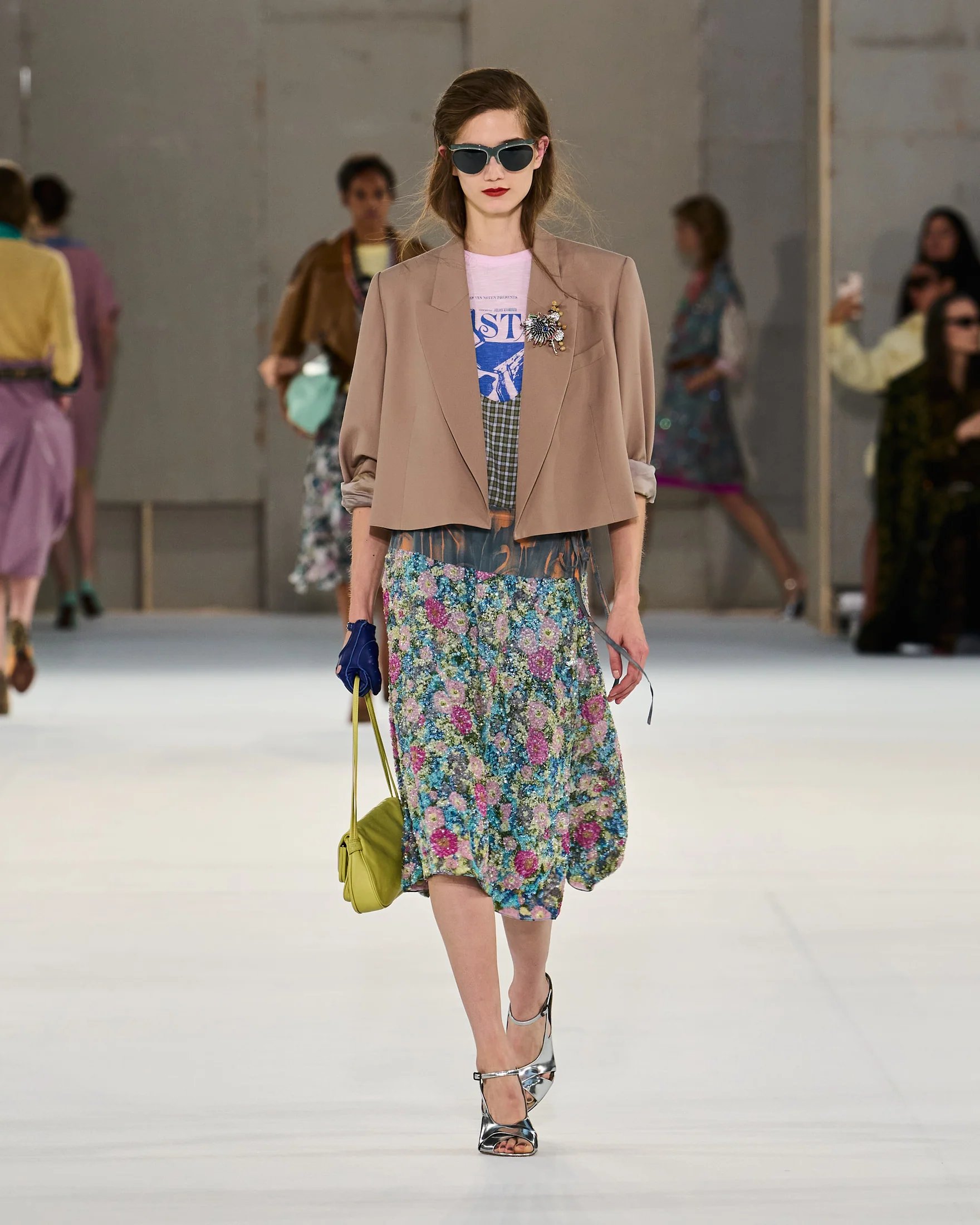
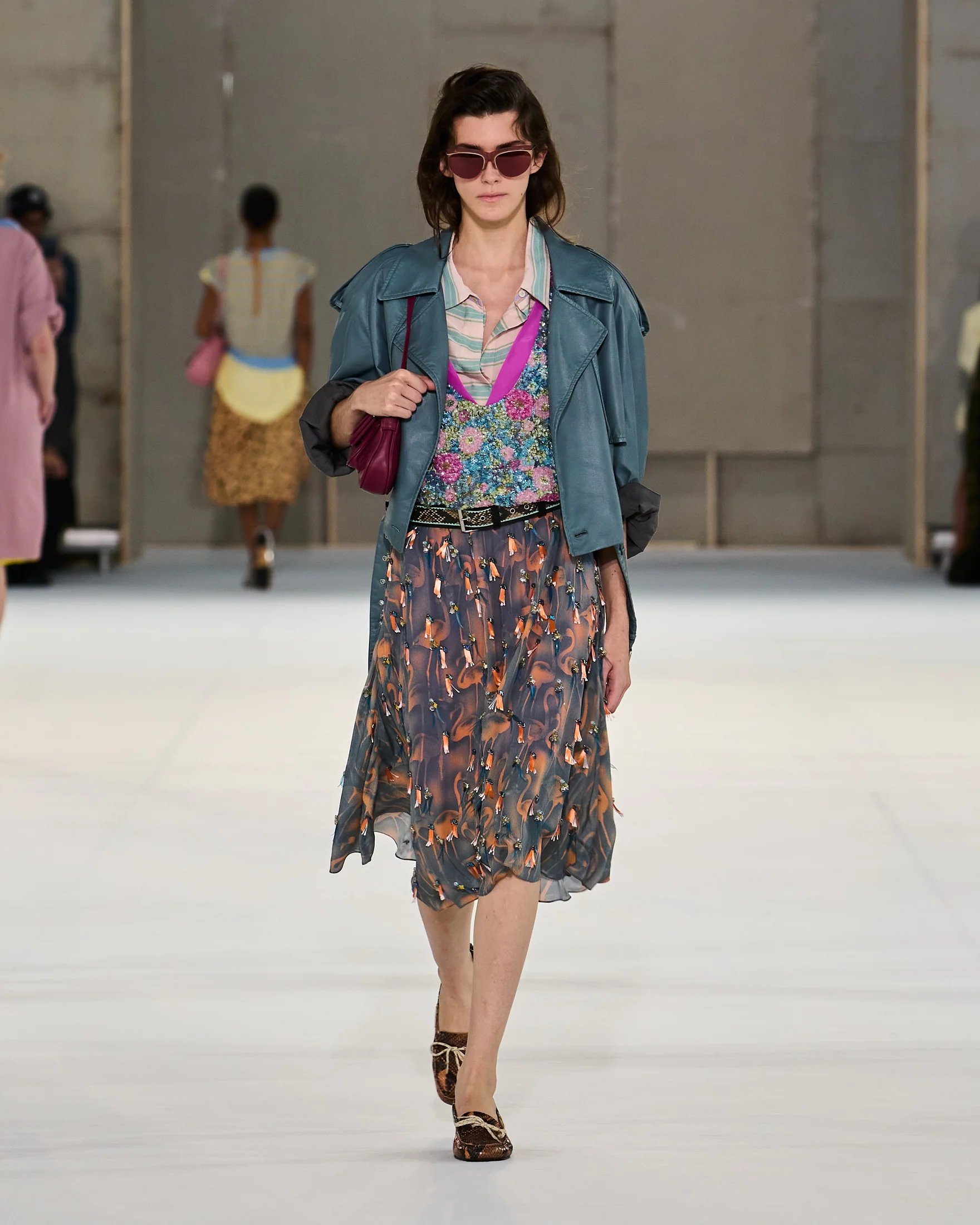
The strongest through-line is proportion, not print. Oversized trenches and boxy, broad-shouldered blazers were cut long and dropped at the shoulder, then set against narrow pencil skirts or bias-cut satin slips that fell to mid-calf. Volume sat on top; the line stayed vertical underneath.
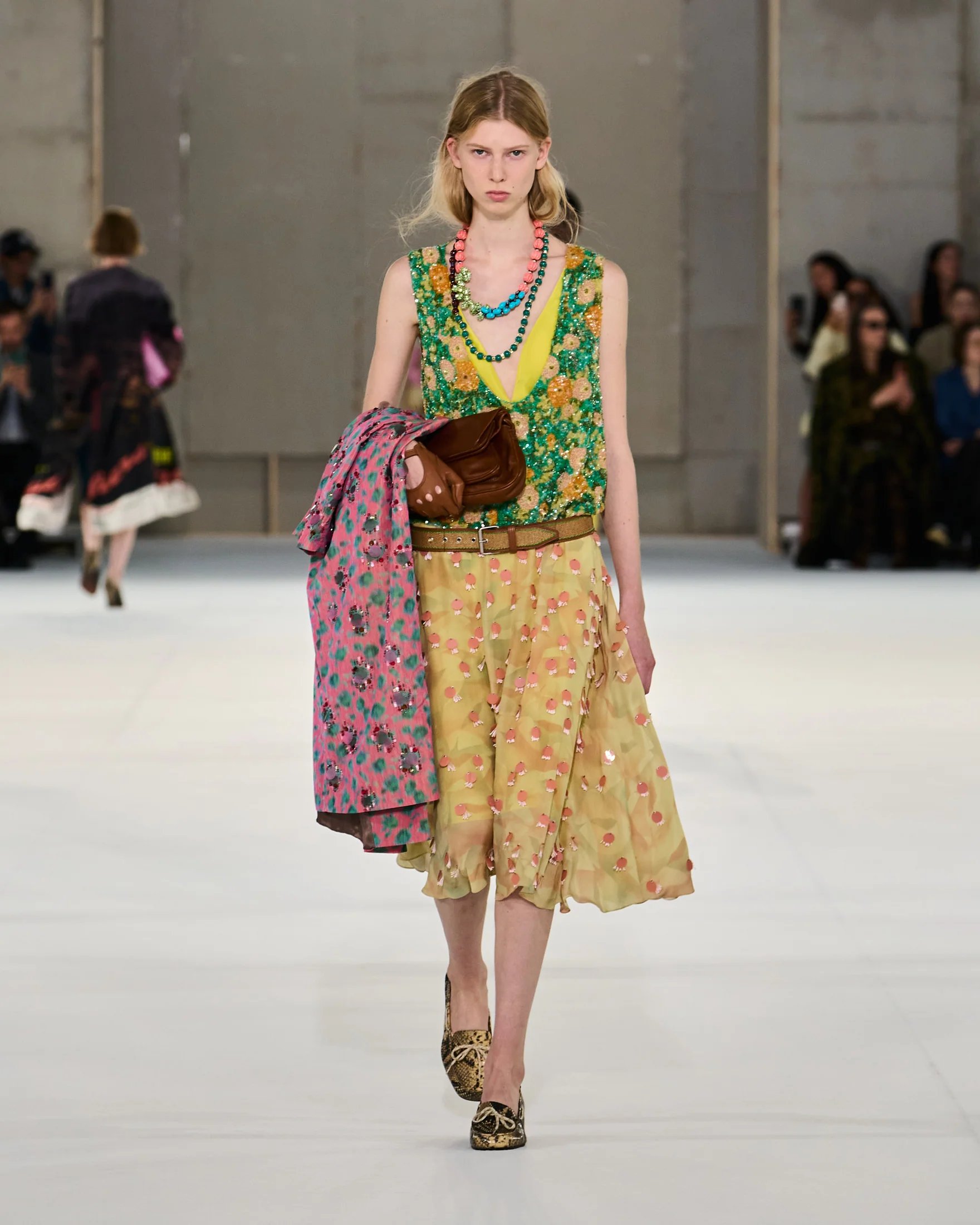
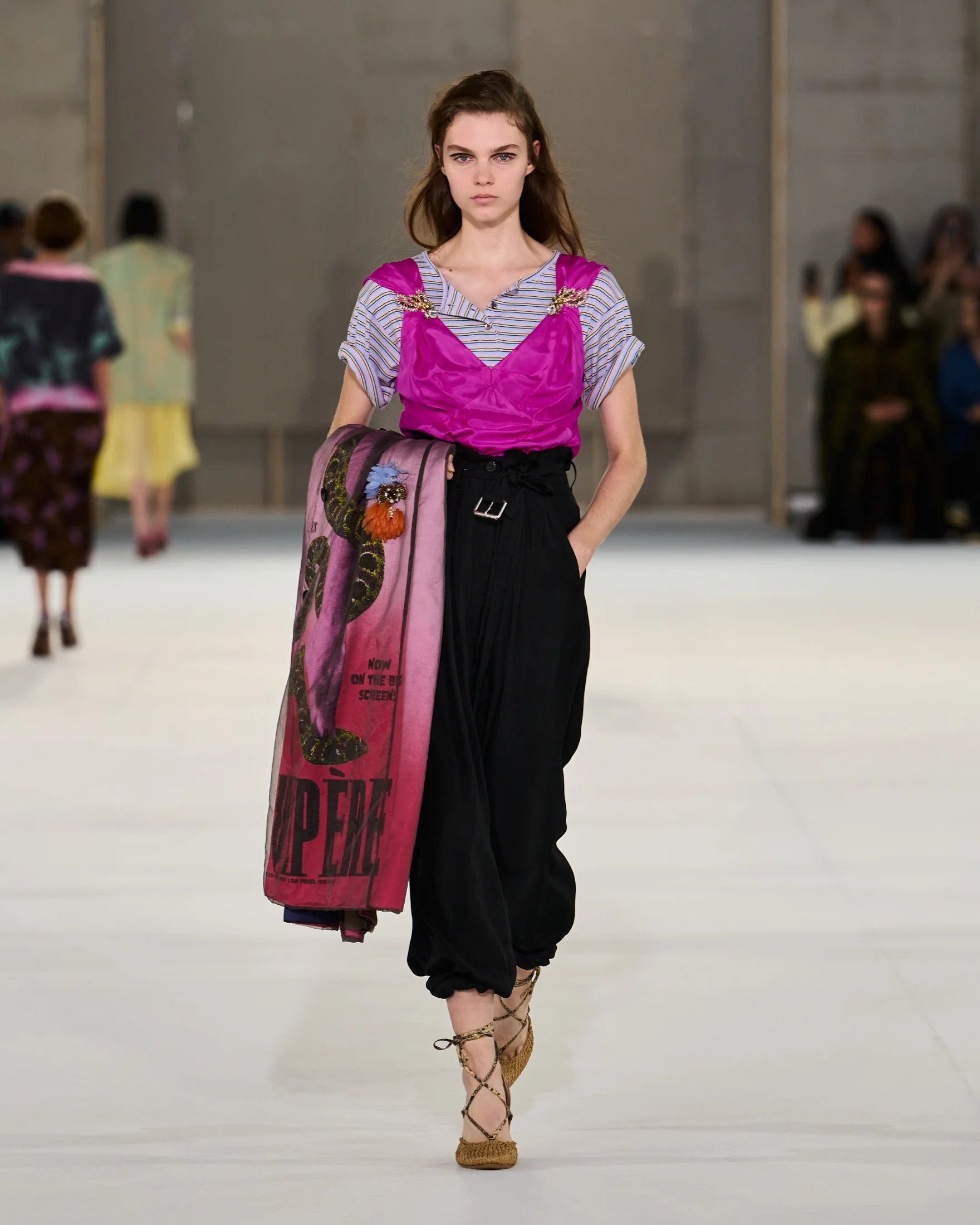
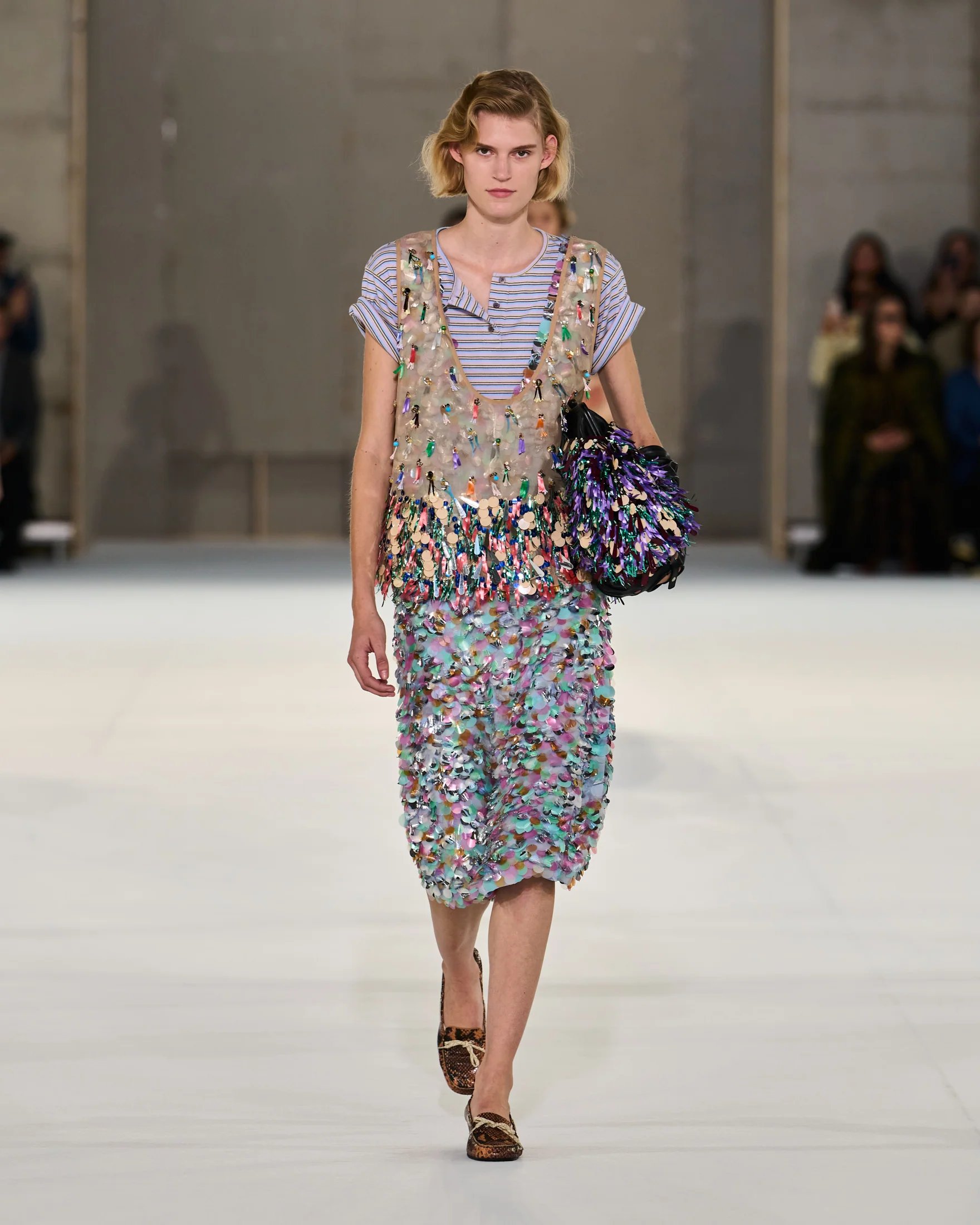
Evening leaned on surface: paillette-encrusted skirts, metallic brocade bubble skirts with knife pleats at the waist, and tiered chiffon midi dresses. Daywear ran to pussy-bow blouses, knickerbockers gathered below the knee, and rugby-striped jersey tunics.
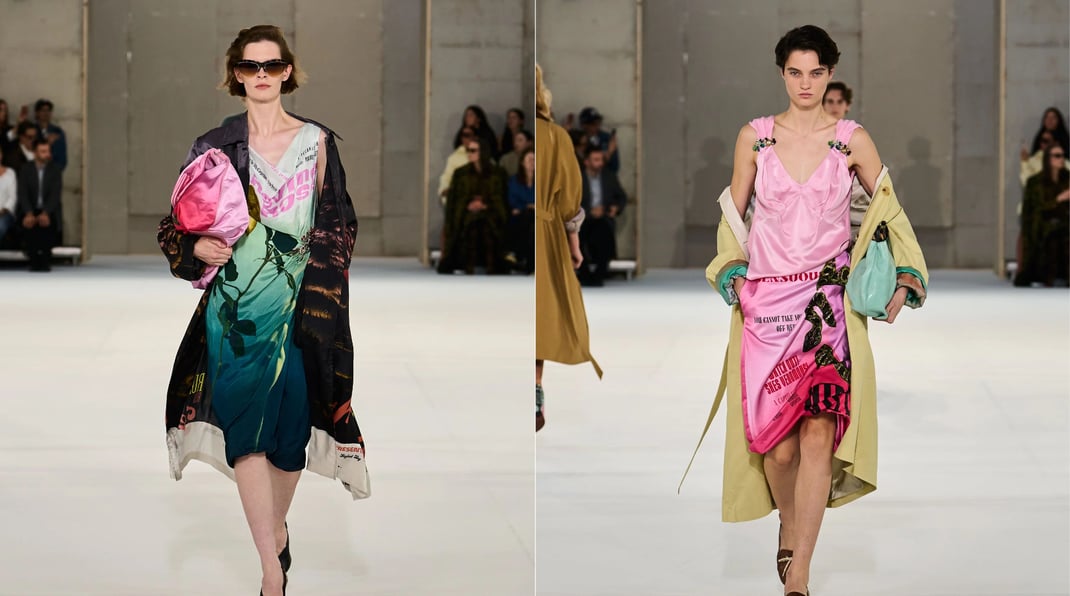
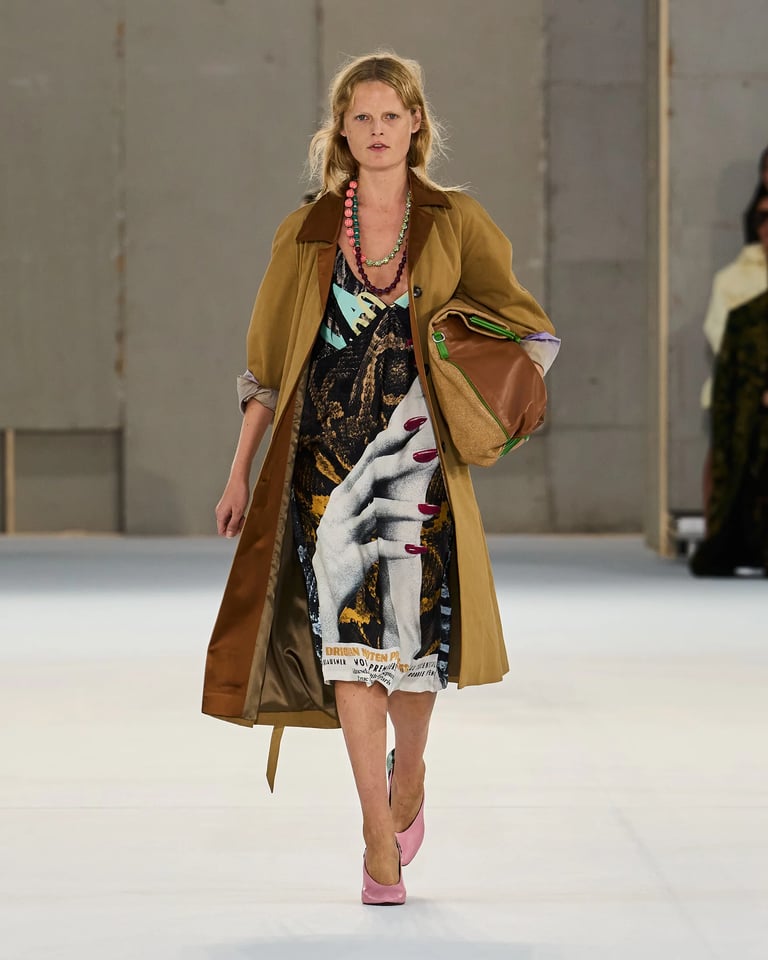
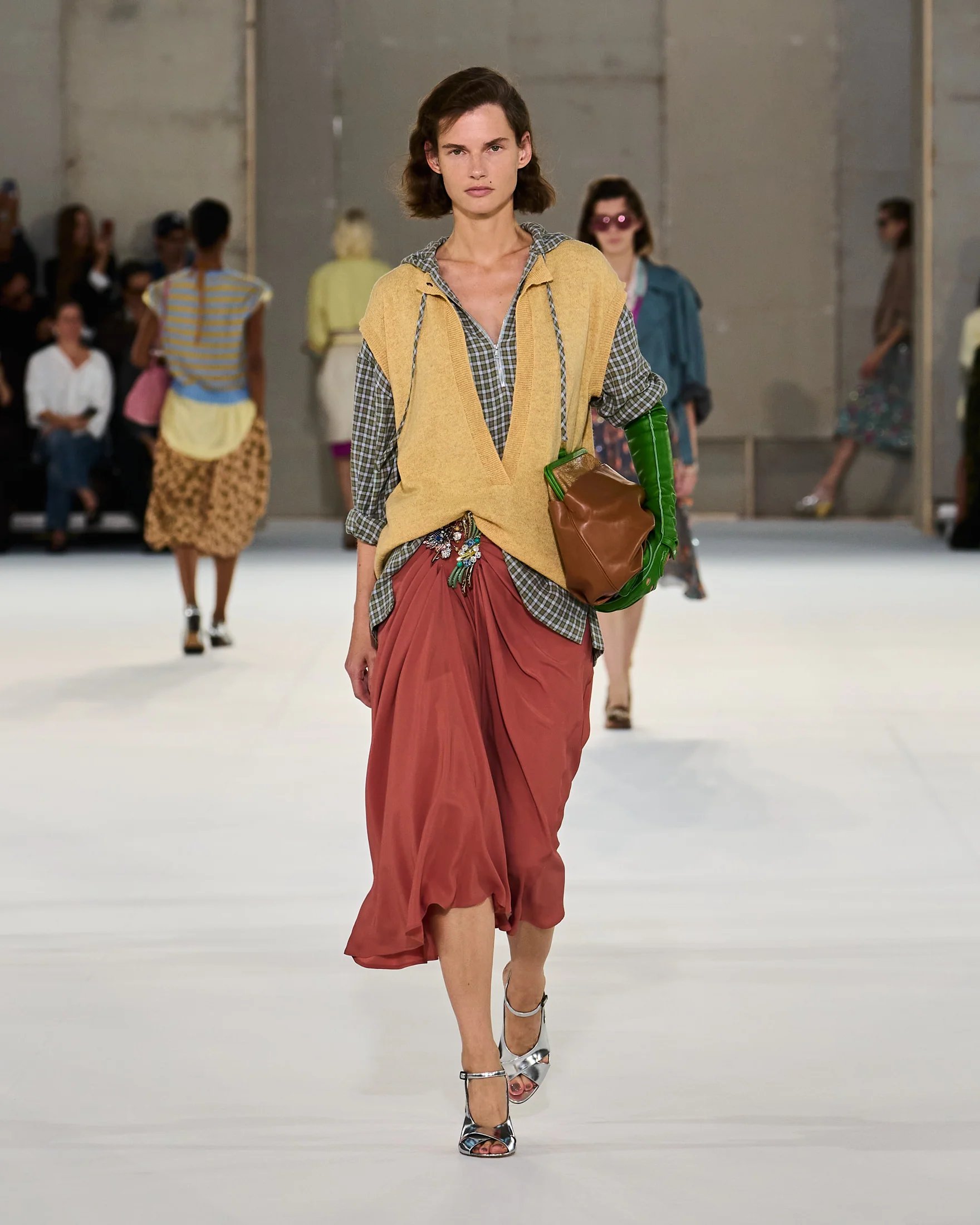
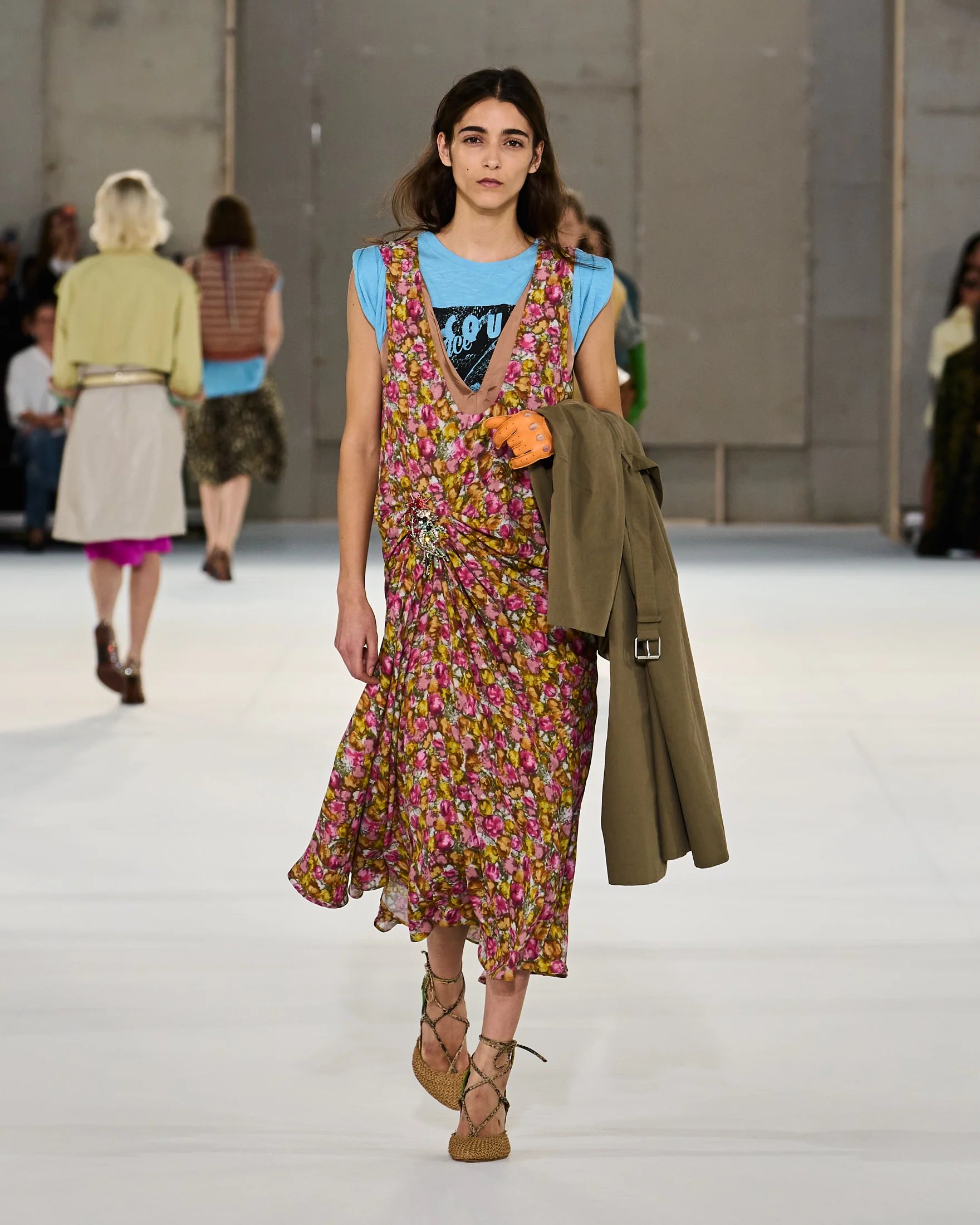
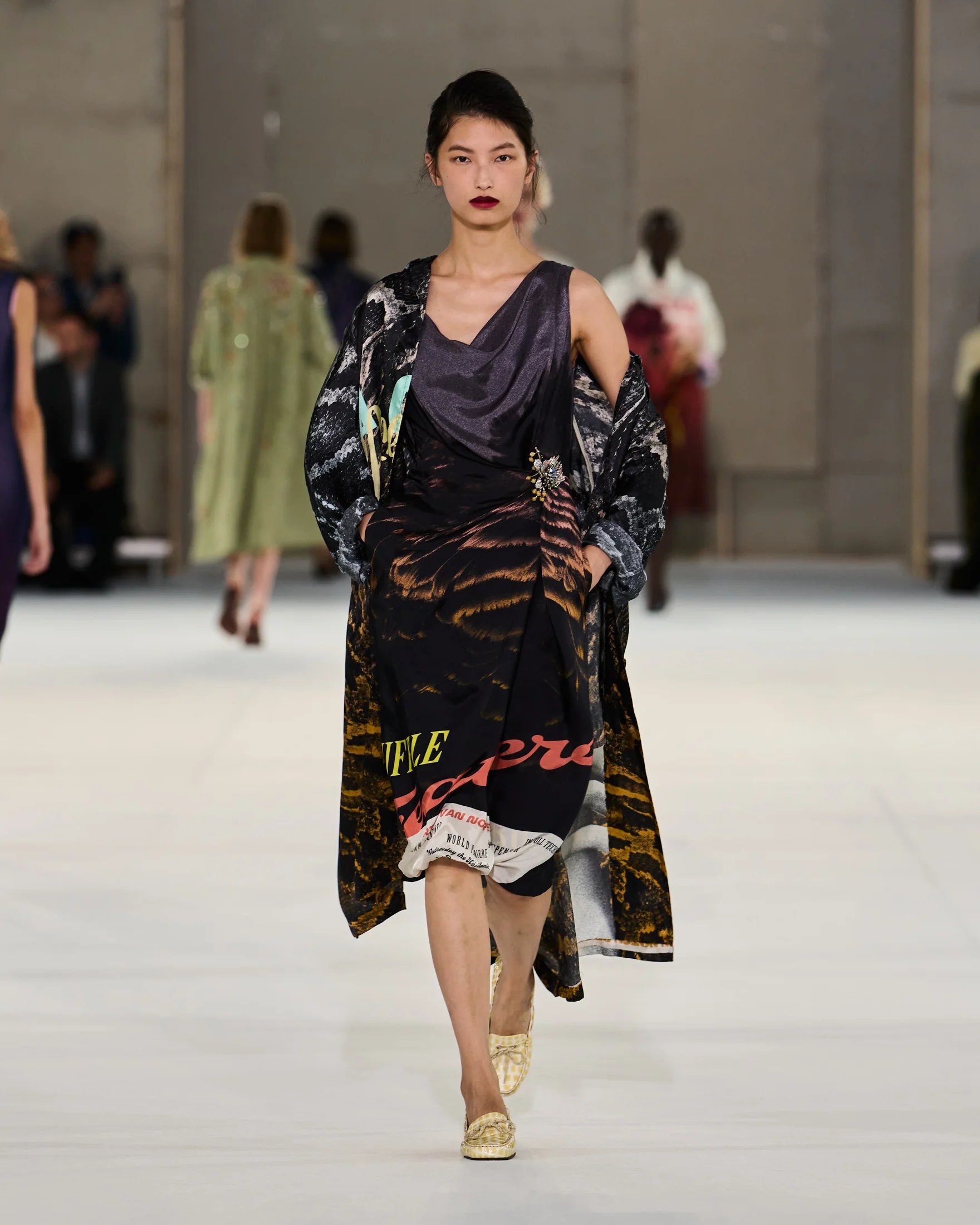
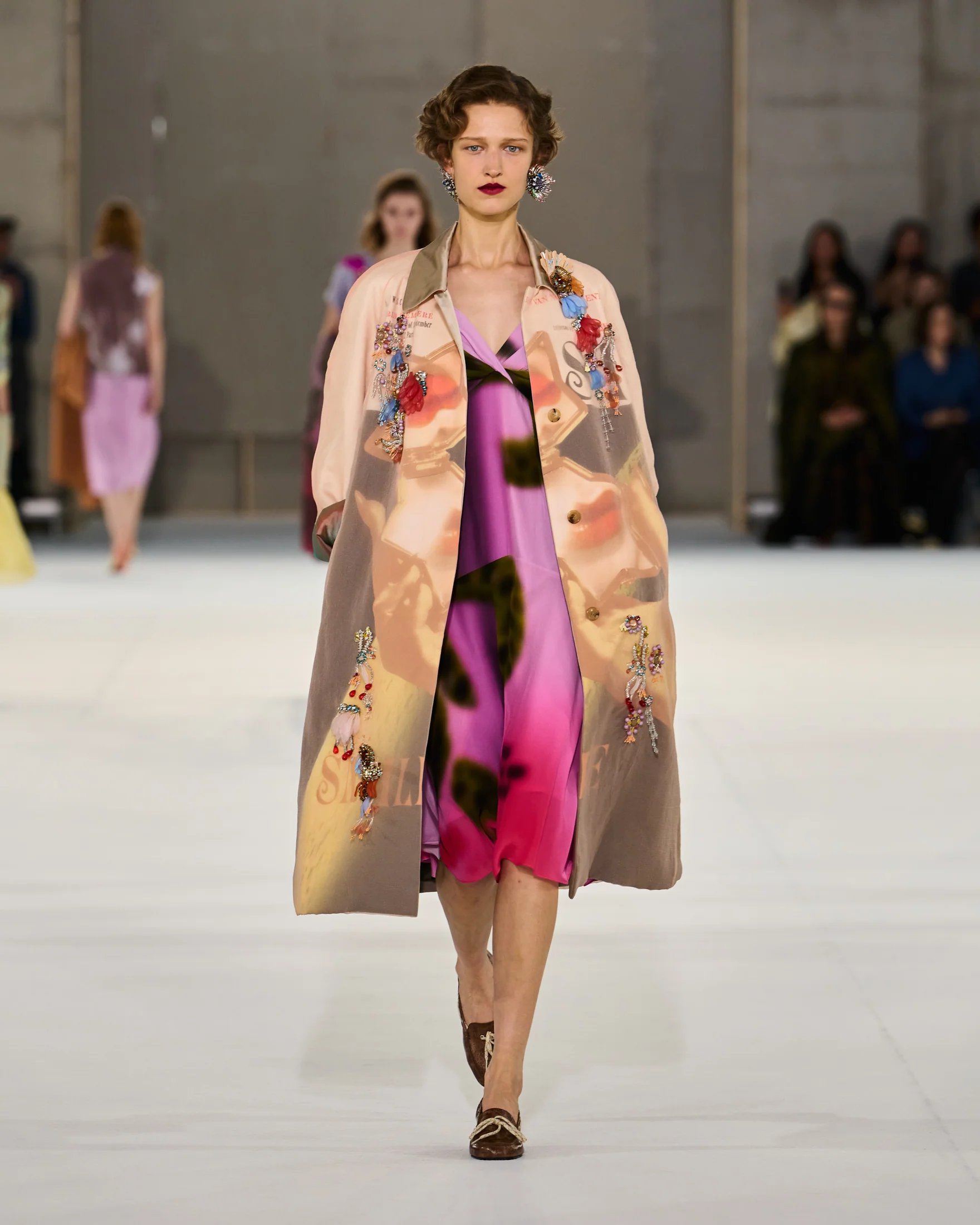
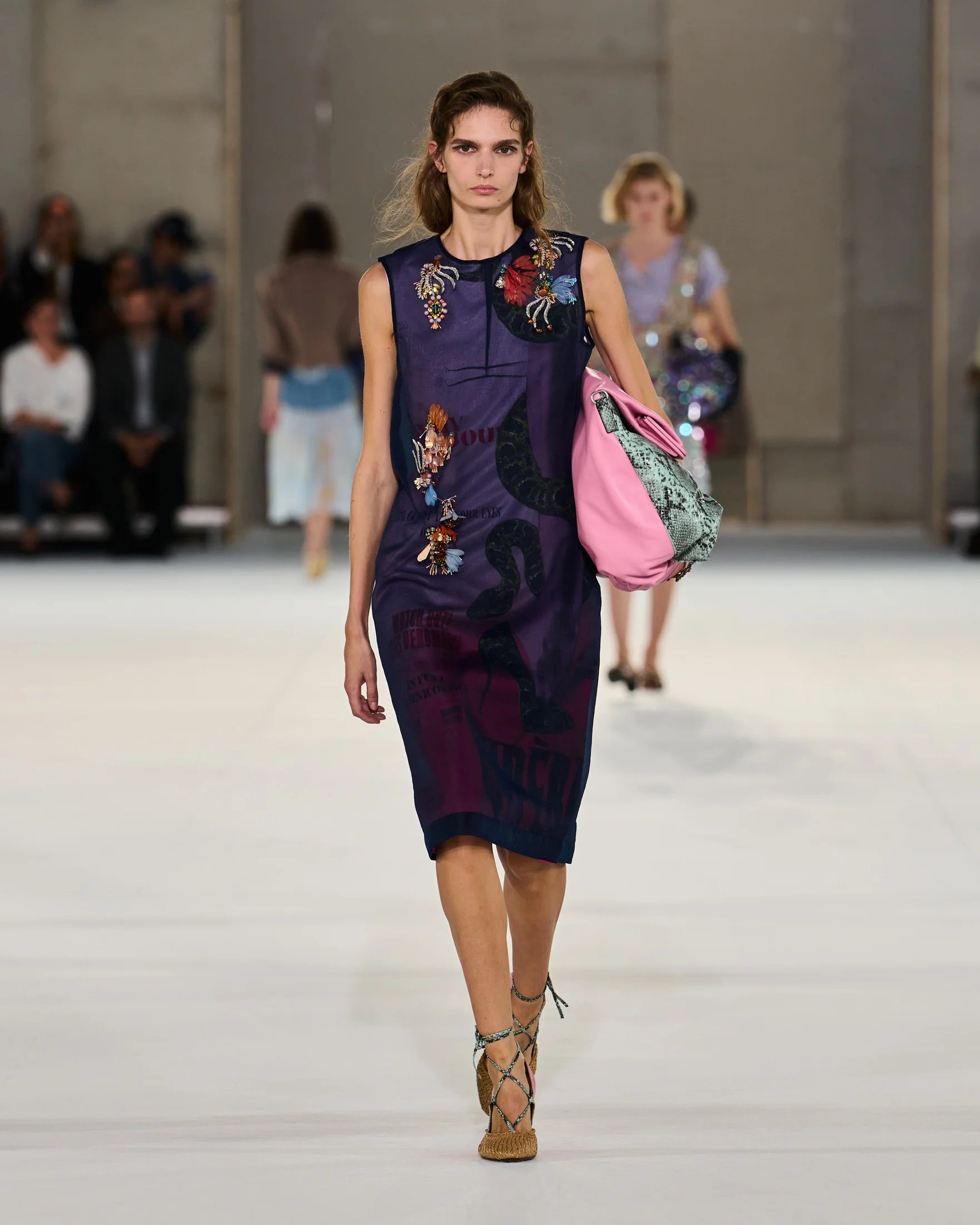
Styling carried the theme hard. Brooches were pinned at the hip to gather a drape and at the throat to anchor a bow; oversized clutches were tucked under the arm; footwear split between pointed pumps and raffia lace-up flats that wrapped the ankle. Single gloves and oversized sunglasses appeared throughout.
The House Codes
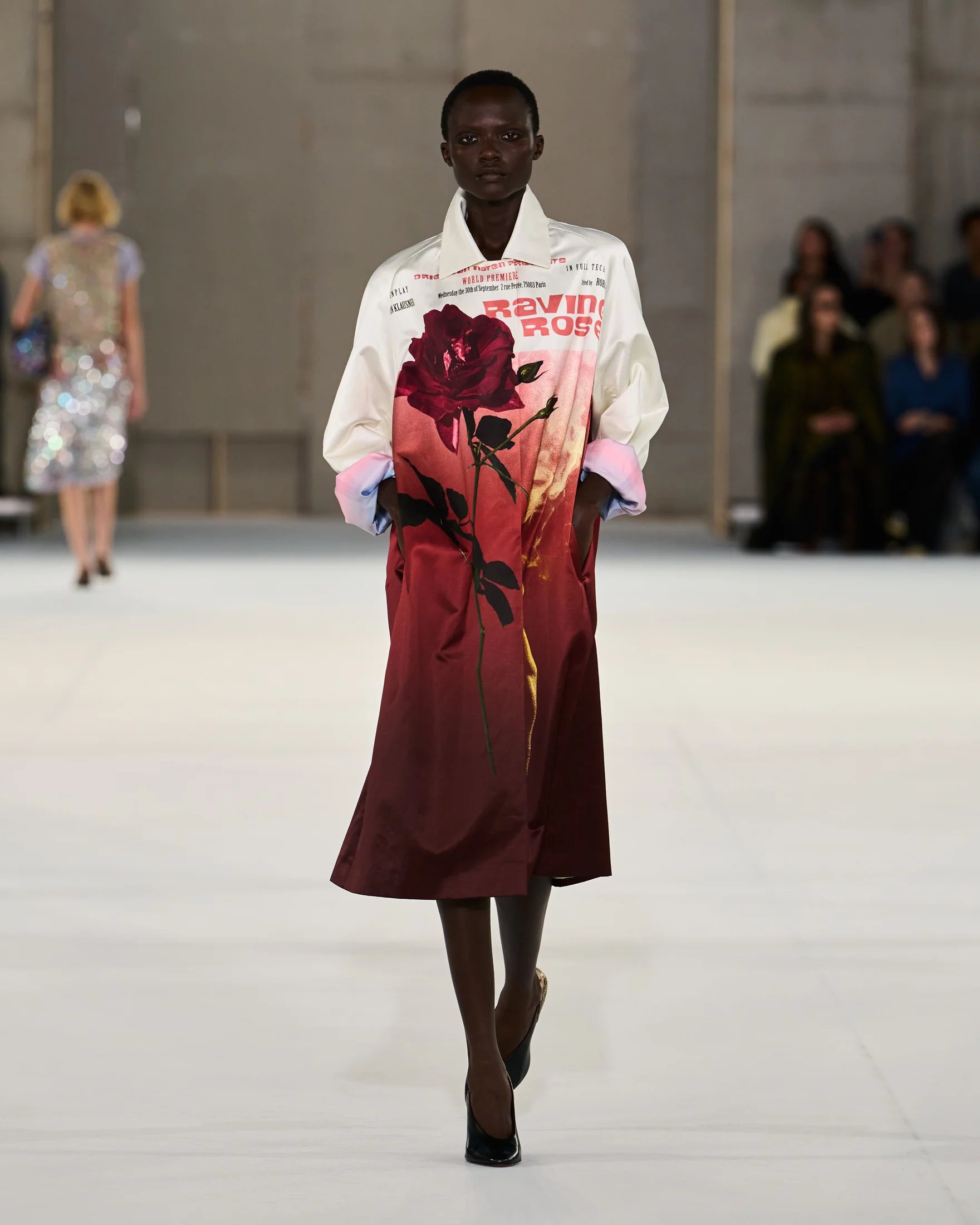
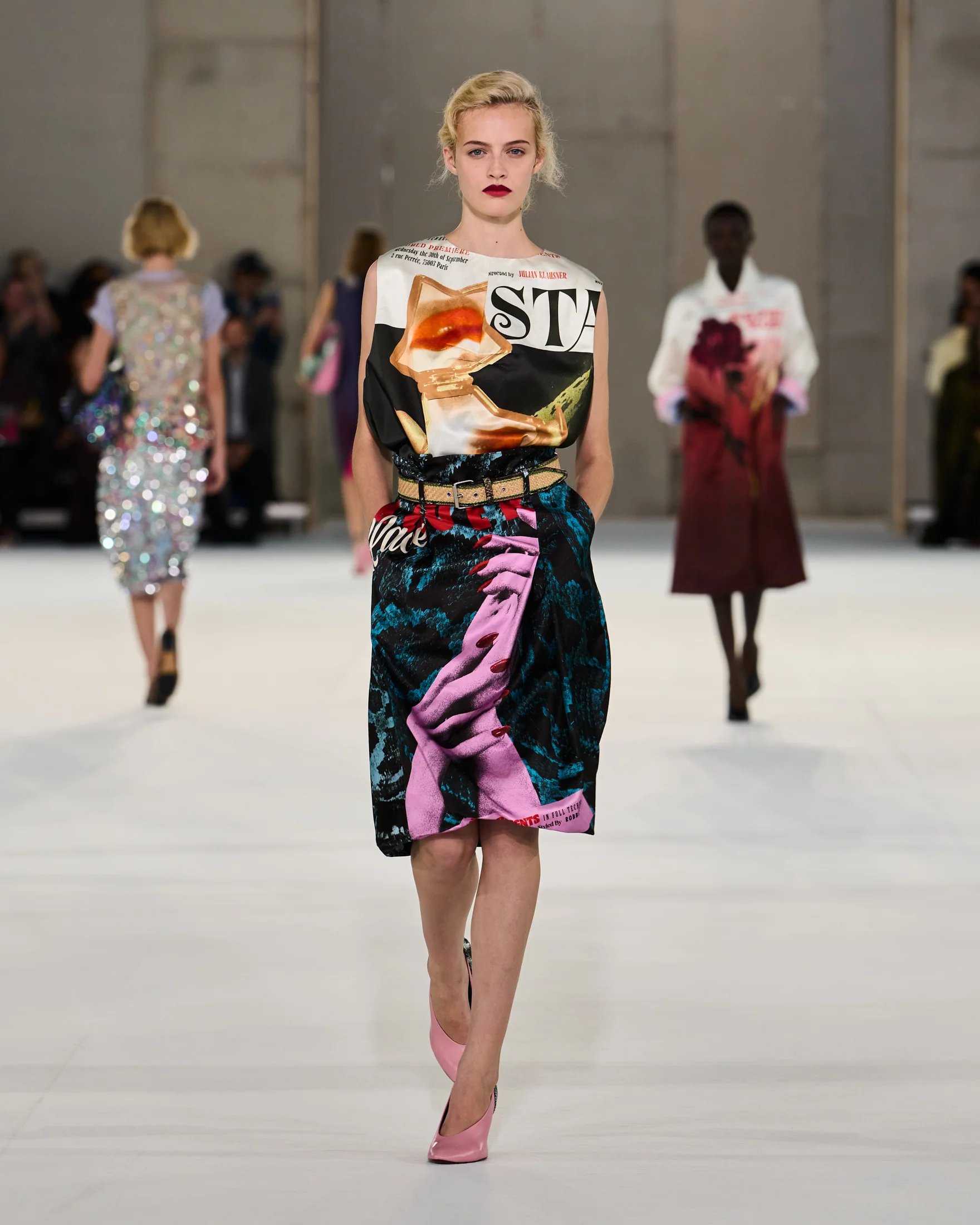
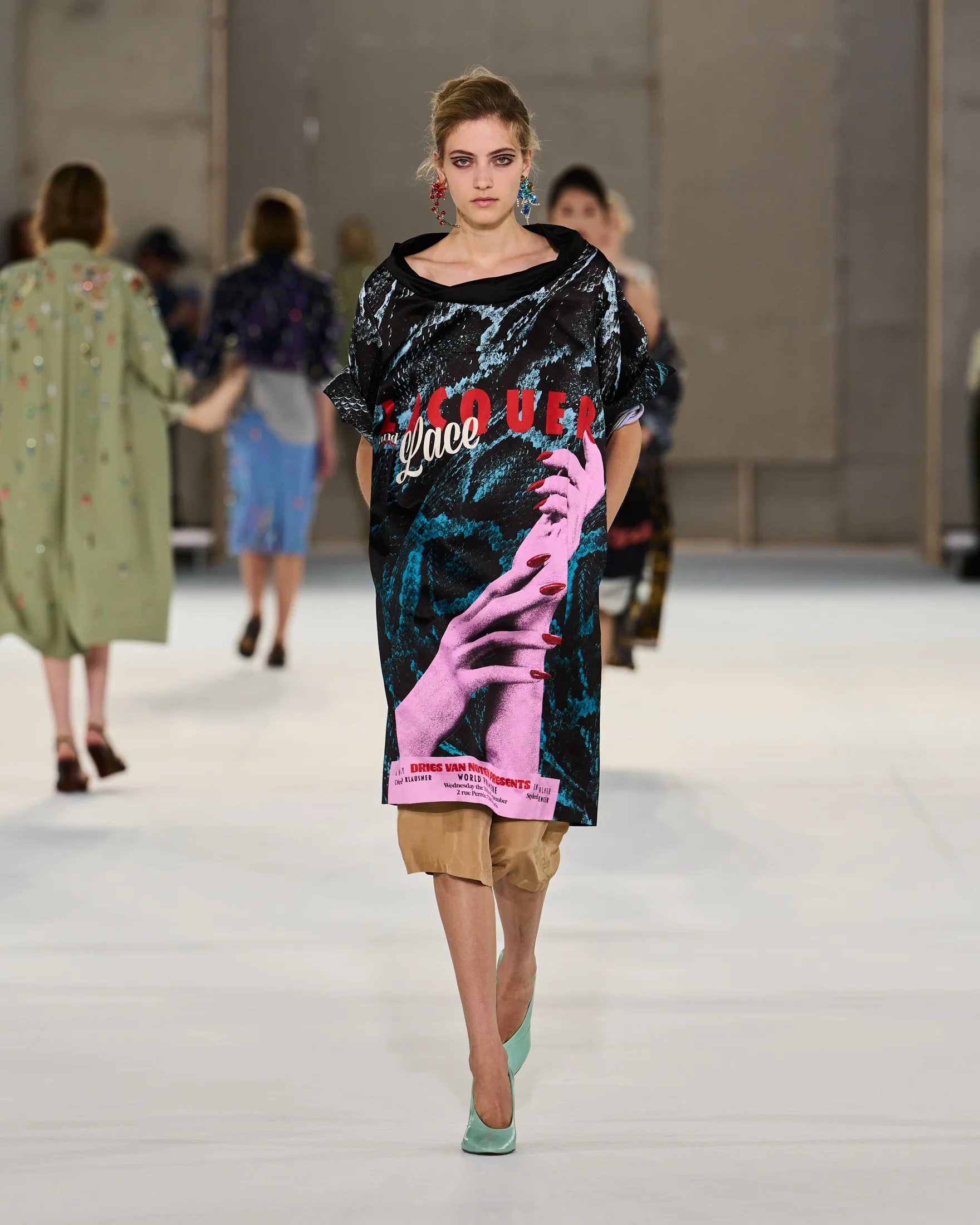
Print and color remain the engine, and Klausner is running them at full volume. Placement prints put manicured hands and an oversized eye across satin, while a duchesse satin coat carried a rose print under film-poster typography reading “WORLD PREMIERE” and “Wednesday the 30th of September, Paris.”
The references are the house’s own. Dries Van Noten, one of the Antwerp Six, brought his women’s collection to the Paris runways in 1993 and built the label on unexpected combinations of print, texture and color. Klausner, who joined in 2018 to work on womenswear, has kept that vocabulary intact since the founder’s retirement.
What Worked
The tailoring held the argument. A long, unfastened trench over a bias-cut slip dress kept the shoulder soft and the waist loose, and the contrast between a heavy outer layer and a fluid underlayer did the work the theme asked for without a costume cue.
The same logic landed in the evening pieces, where a boxy blazer over a paillette skirt let the shine sit under structure. Those looks read as clothes first and reference second, which is the harder, more commercial result.
Where It Faltered
The graphic prints pushed past the clothes. The “WORLD PREMIERE” coat, in high-luster duchesse satin, put a film-poster conceit on a garment that already had enough presence. The typography competed with the rose print rather than framing it, and the piece read as a graphic exercise.
Styling density was the second problem. Five or more exits stacked a brooch, a belt, a multi-strand bead necklace, a single glove, and oversized sunglasses at once, so no single accessory could register. The collection’s own thesis, that one piece flips the switch, was undercut by looks that flipped five.
Dries Van Noten is owned by Puig, and the categories that carry margin sit in accessories and fragrance, not the runway. That makes the brooch, belt and clutch story the commercial spine of this collection. They are the pieces a customer can buy into the idea at a lower entry point than a satin coat.
The print reputation is the house’s durable asset, and Klausner is right to spend it. The risk is timing. A collection that reads as costume sells for one season; a collection that reads as wardrobe sells for several. On this showing, the tailoring is what will still be on the floor in a year.
The siren, in other words, is most convincing when she is not performing.
See the complete collection below:
Images courtesy of Dries Van Noten
In another fashion week news, Dolce & Gabbana Spring 2027 Runway Collection at Milan Fashion Week