

Josh Wink Revisits His Roots on New Ovum Recordings Single “Futurama”
Inspired by a rediscovered recording of his first Los Angeles rave set, the techno pioneer
channels the spirit of 1994 into a new acid-fueled journey
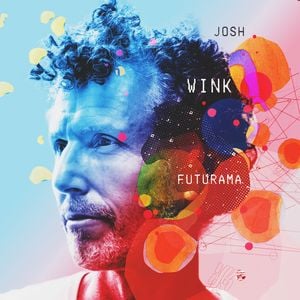
Josh Wink – “Futurama” Out Now – July 17
Ovum Recordings
Listen Here
Charlotte de Witte – “Here We Gooo :)”
“Love This” – Nicole Moudaber
“Another Josh Monster” – Laurent Garnier
Maceo Plex – “Slammin WINK, awesome”
“The King” – DJ Hell
“Love this, proper peaktime acid by Josh!” – Gregor Tresher
Sometimes inspiration arrives from the most unexpected places.
For Josh Wink, it came as a decades-old recording. While digging through his archives in 2025, the Philadelphia producer and DJ stumbled upon a tape of his first-ever Los Angeles performance, a rave called “Futurama” held in 1994. Hearing it again after more than thirty years brought back a flood of memories and a renewed connection to the sounds and energy that shaped his early years.
That rediscovery became the spark behind “Futurama,” Wink’s new single out now on Ovum Recordings.
Rather than recreating the past, Wink used it as a starting point. The track draws inspiration from the era’s acid lines, tension, and raw spirit while firmly pushing into the present. It’s a record that feels familiar without looking backward, combining the hypnotic qualities of classic acid techno with the precision and depth of modern production.
Built around rolling grooves and steadily unfolding momentum, “Futurama” captures the feeling of being pulled deeper into the dancefloor. There’s a sense of nostalgia in its DNA, but the track never relies on it. Instead, it channels the excitement of discovery that defined the early rave years and translates it for today’s clubs and festivals.
That approach has been a hallmark of Wink’s career. Since emerging as one of electronic music’s most influential innovators in the 1990s, he has consistently moved between house, techno, acid, and everything in between without being tied to any one sound. His productions and remixes for artists including Radiohead, Moby, Sting, Depeche Mode, Radio Slave, and Dave Clarke have left an unmistakable mark on electronic music, while his Ovum Recordings imprint continues to thrive nearly three decades after its launch.
With “Futurama,” Wink isn’t revisiting history for the sake of nostalgia. He’s reconnecting with the curiosity and creative energy that first drew him into dance music and proving that those instincts remain as powerful today as they were in a Los Angeles warehouse back in 1994.
Josh Wink Tour Dates
Jul 18 – Cali Fest, Can Tarranc, Barcelona, Spain
Jul 26 – Shambhala Festival, Salmo, British Columbia, Canada
Jul 31 – Golden Lion, Todmorden, United Kingdom
Aug 1 – Camp Bestival, Dorset, United Kingdom
Aug 7 – Shore Sound, Brighton, United Kingdom
Aug 8 – Neopop Festival, Viana do Castelo, Portugal
Aug 15 – It’ll Do Club, Dallas, TX

Follow Josh Wink:
The Architecture of 'Futurama': What Makes the Track Work
On a purely sonic level, ‘Futurama’ is a study in restraint and escalation. Wink constructs the track around a TB-303-influenced acid bassline that coils and tightens across the arrangement, never resolving in the way a listener might anticipate. That tension is deliberate. It mirrors the experience of standing in a dark room at four in the morning, waiting for a drop that keeps threatening to arrive but always holds back just long enough to keep the body moving.
The percussion is lean and purposeful. Wink strips away any unnecessary layering, letting the kick and hi-hat pattern breathe alongside the acid figure rather than compete with it. The result is a track that feels simultaneously spacious and suffocating, which is precisely the quality that made 1990s warehouse techno so compelling to dancers and producers alike.
Production notes from Ovum Recordings indicate that Wink worked to preserve an analog warmth throughout the mix, avoiding the clinical polish that often characterizes contemporary techno. The low end is rounded rather than surgical, and the mid-range frequencies carry a slight grit that reinforces the track’s connection to its archival inspiration. This is not a track designed for headphone listening alone. It is built for systems, for rooms with concrete floors and high ceilings, for spaces where the bass can travel across a crowd before it reaches the back wall.
Ovum Recordings at 30: A Label That Refuses to Stand Still
The release of ‘Futurama’ on Ovum Recordings carries a significance that extends beyond the single itself. Josh Wink founded the Philadelphia-based label in 1994, the same year he played that first Los Angeles rave set that would eventually inspire this track. The coincidence is not lost on longtime followers of his career. Ovum and Wink have grown in parallel, and the label’s continued relevance across three decades is a remarkable achievement in an industry that has seen countless imprints rise and quietly dissolve.
Ovum has functioned as a barometer for where underground electronic music is headed rather than where it has been. The label has released work from artists including Dj Assault, Raxon, and Butch, maintaining a roster that reflects Wink’s own broad musical appetite. Crucially, it has never repositioned itself to chase trends. The aesthetic remains consistent: deep, purposeful, and rooted in the belief that electronic music is most powerful when it prioritizes feeling over formula.
For a publication audience that tracks the intersection of culture, sound, and identity, Ovum represents something worth noting. It is an independent institution that has shaped global club culture from a mid-Atlantic American city, influencing DJs and producers from Berlin to Tokyo without ever abandoning its founding values. ‘Futurama’ arrives as a kind of anniversary statement, even if Wink would likely resist that framing.
Why 'Futurama' Resonates Beyond the Dancefloor
The broader cultural conversation around ‘Futurama’ is one about preservation, rediscovery, and the relationship between personal archives and creative renewal. Wink did not set out to make a nostalgic record. He set out to understand what an old recording told him about who he was as an artist before the weight of legacy had any meaning to him. That distinction matters.
In an era defined by algorithmic curation and the constant pressure to produce content at volume, the act of sitting with a thirty-year-old tape and allowing it to generate something genuinely new is a counter-cultural gesture. It prioritizes depth over speed and memory over trend. The peer response the track has already received from figures such as Charlotte de Witte, Laurent Garnier, Nicole Moudaber, and Maceo Plex suggests that this approach resonates within the community of artists who have themselves been navigating the tension between legacy and forward motion.
For listeners who may not set foot on a dancefloor, ‘Futurama’ still communicates something recognizable: the feeling of returning to a version of yourself that existed before self-consciousness took hold. That is a universal experience, and it is part of what separates a track with genuine emotional architecture from one that simply fills time on a playlist. Josh Wink has always understood this distinction, and ‘Futurama’ confirms that understanding remains intact.