
Nicolas Ghesquière closed Paris Fashion Week with ‘Ergonomie,’ a collection engineered around movement — and a notable pullback from the house’s most lucrative visual code
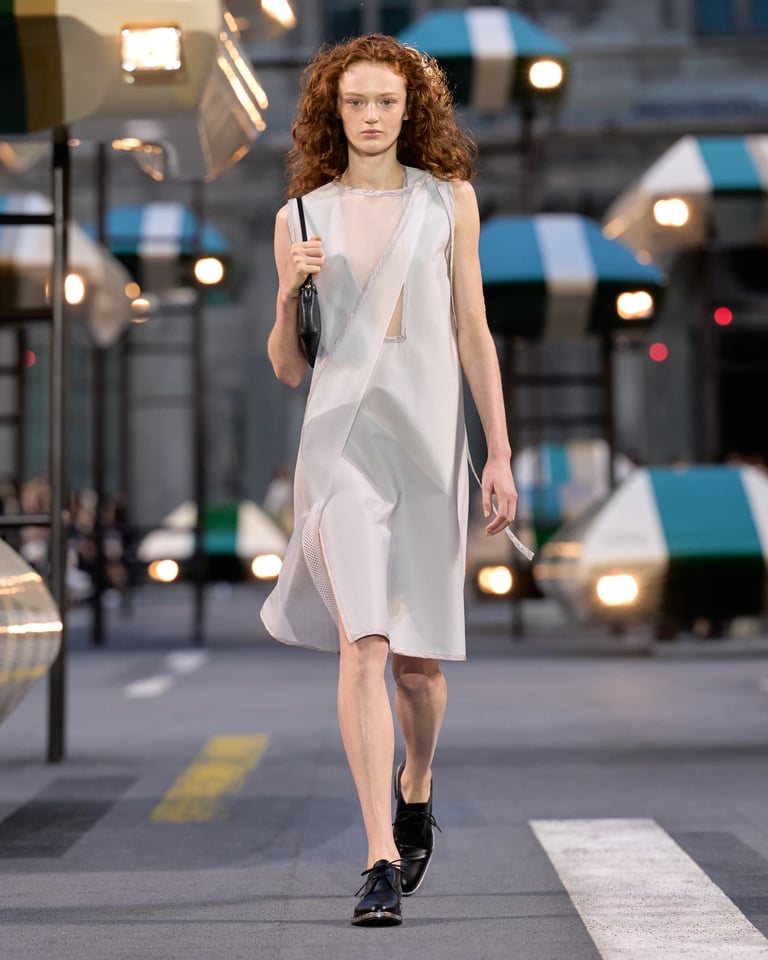
PARIS — Nicolas Ghesquière closed Paris Fashion Week on Tuesday with a Louis Vuitton spring 2027 collection built on subtraction: weight taken out of the coats, rigidity taken out of the tailoring and, across most of the runway, the monogram taken off the clothes. He titled it ‘Ergonomie,’ and showed it in the Cour Carrée of the Louvre under a fleet of Damier-striped vehicles hung above an asphalt catwalk.
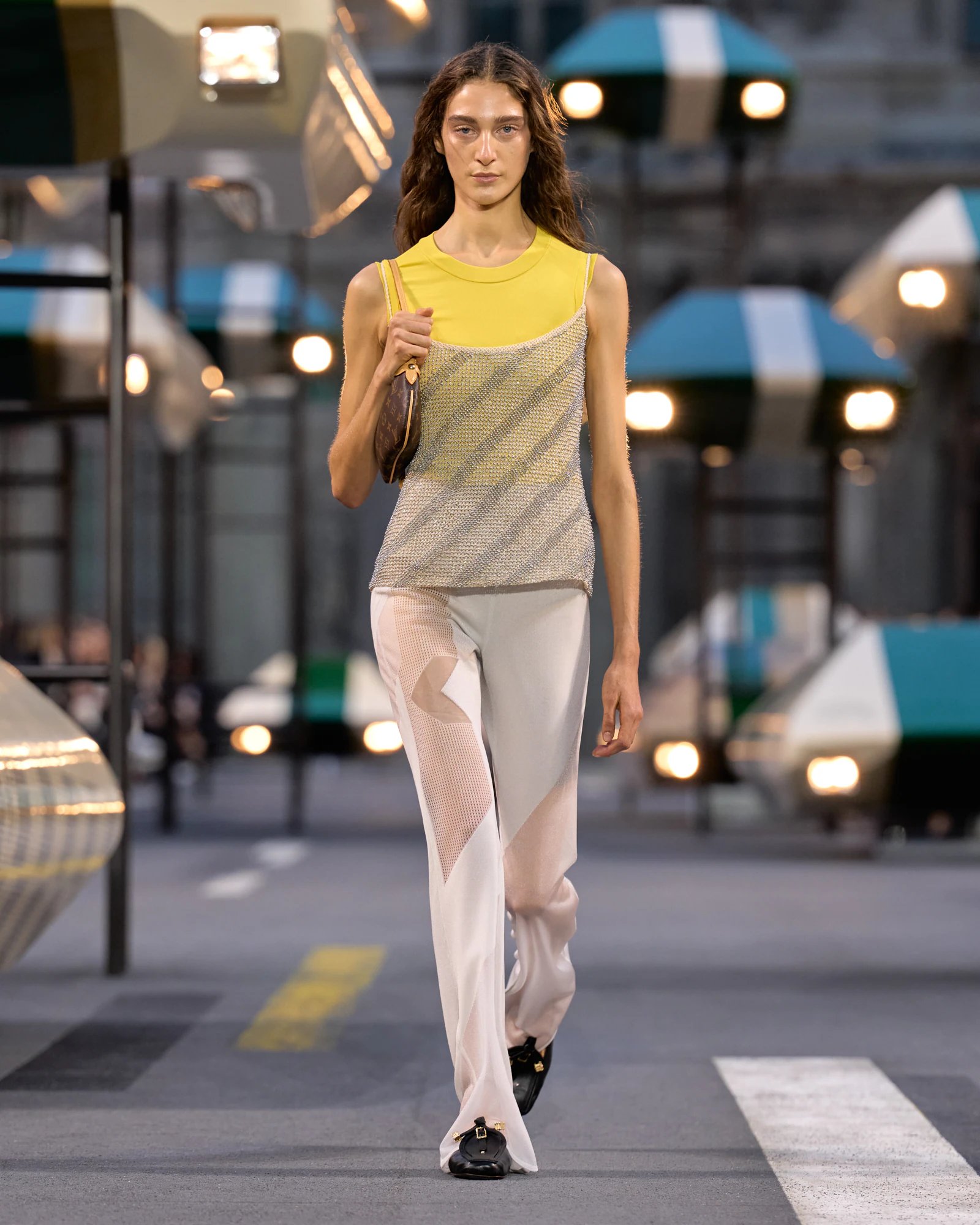
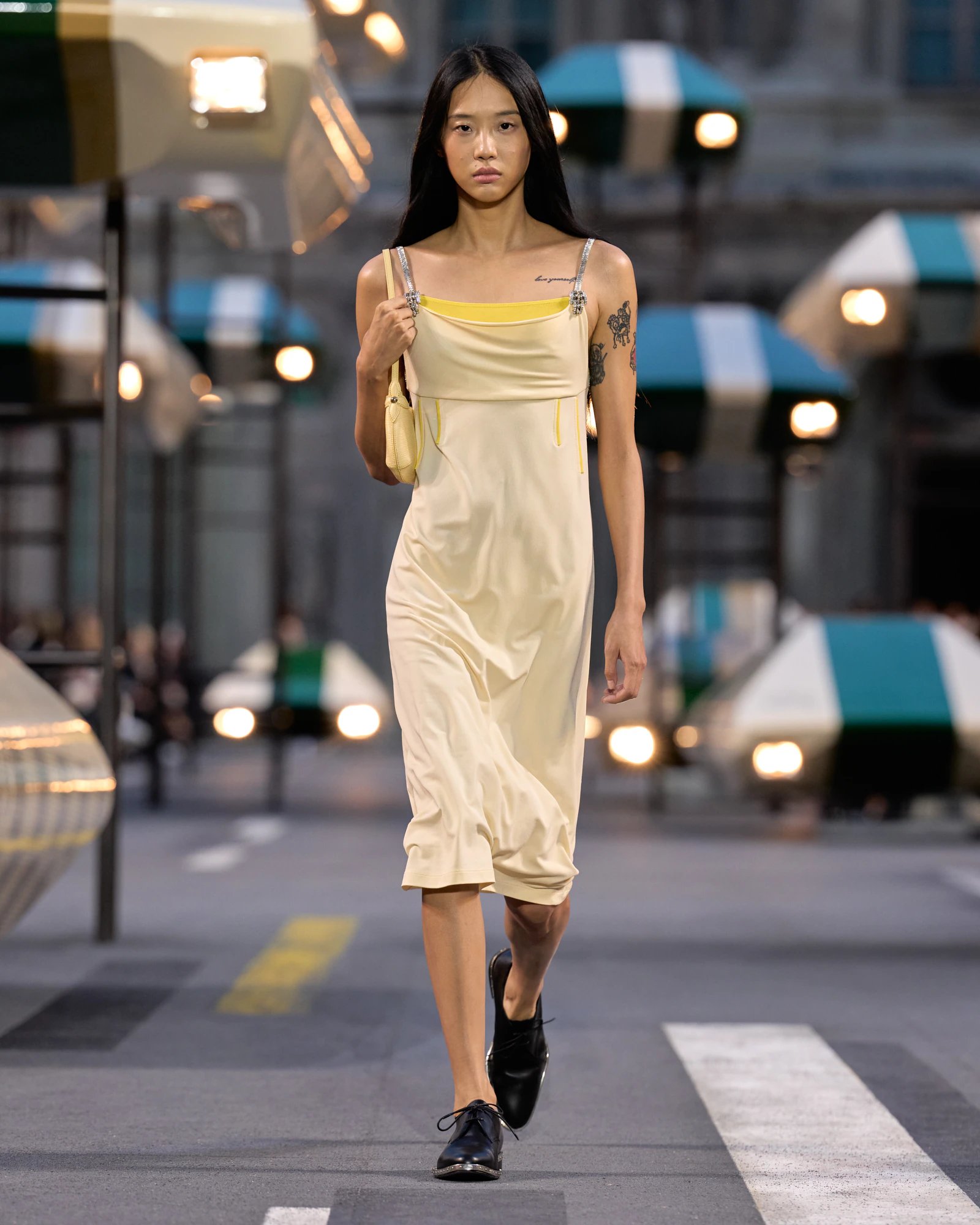
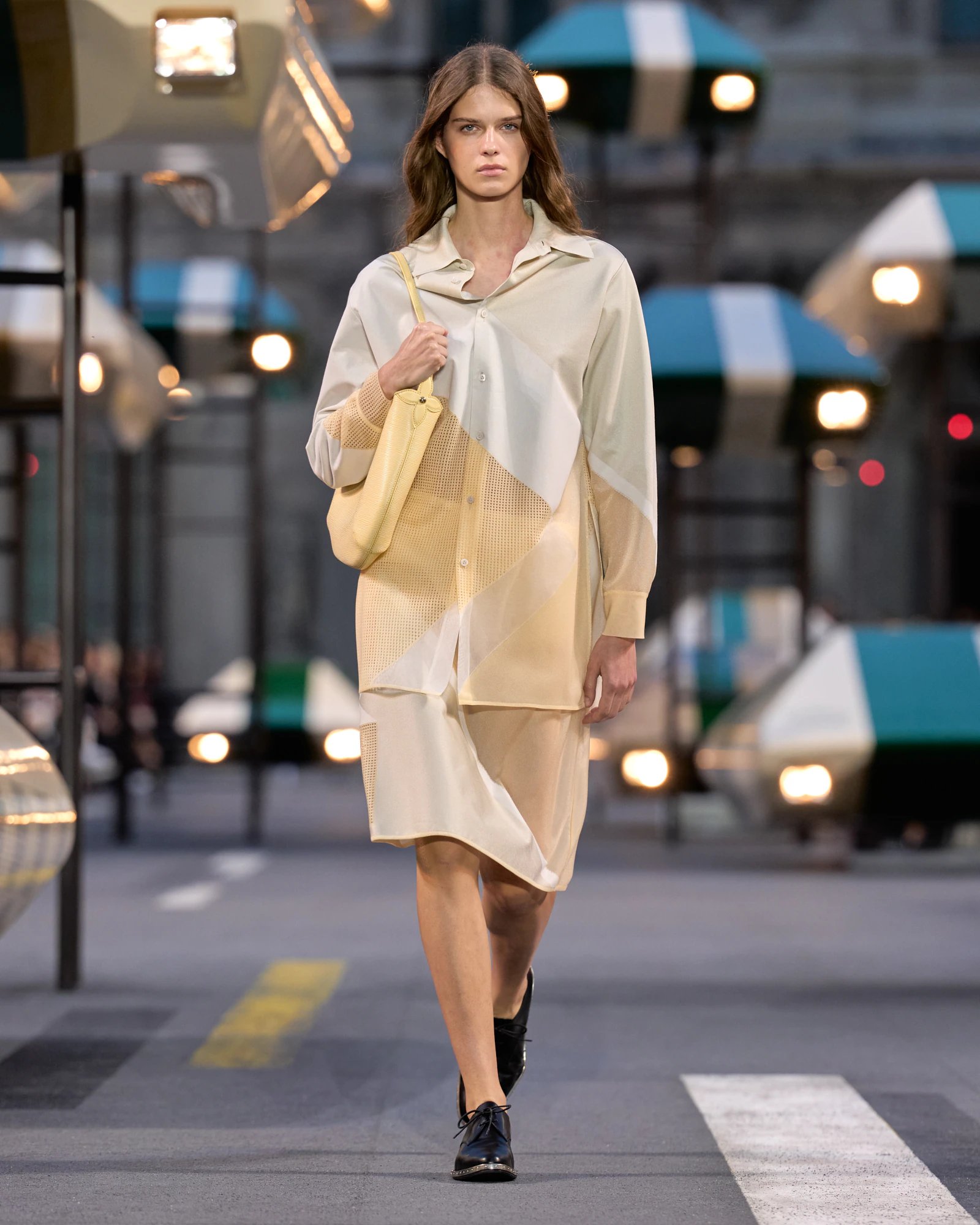
The timing gives the argument its stakes. Chanel and Dior are selling the season on new creative directors in Matthieu Blazy and Jonathan Anderson; Louis Vuitton went into the final slot of the month with Ghesquière, 55, who has run the house’s women’s collections for nearly 13 years, AFP reported. Continuity is the position. Instead of a reset, he proposed a change of material register.
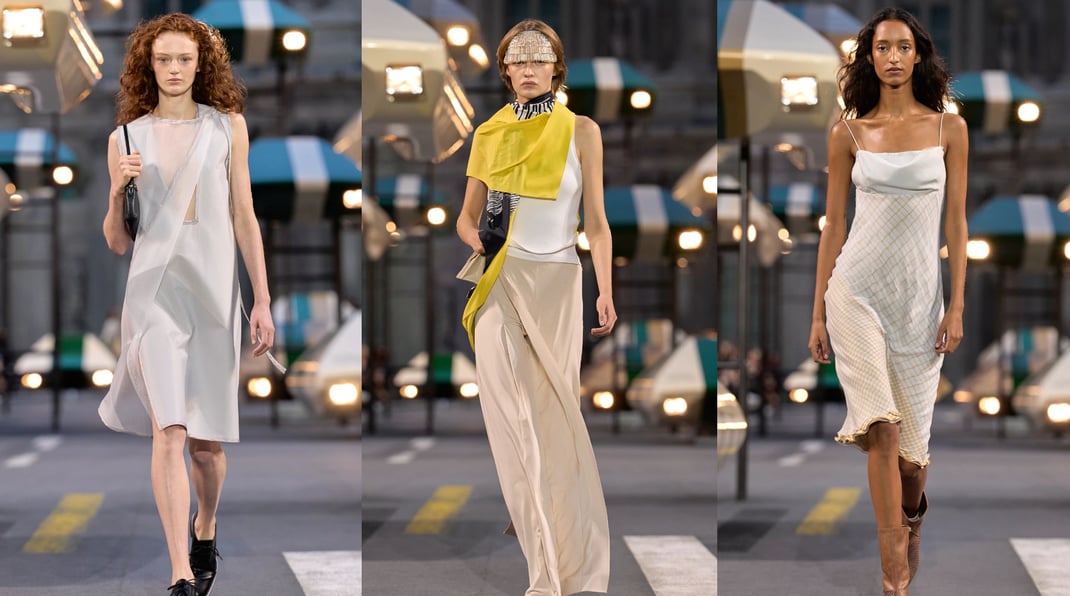
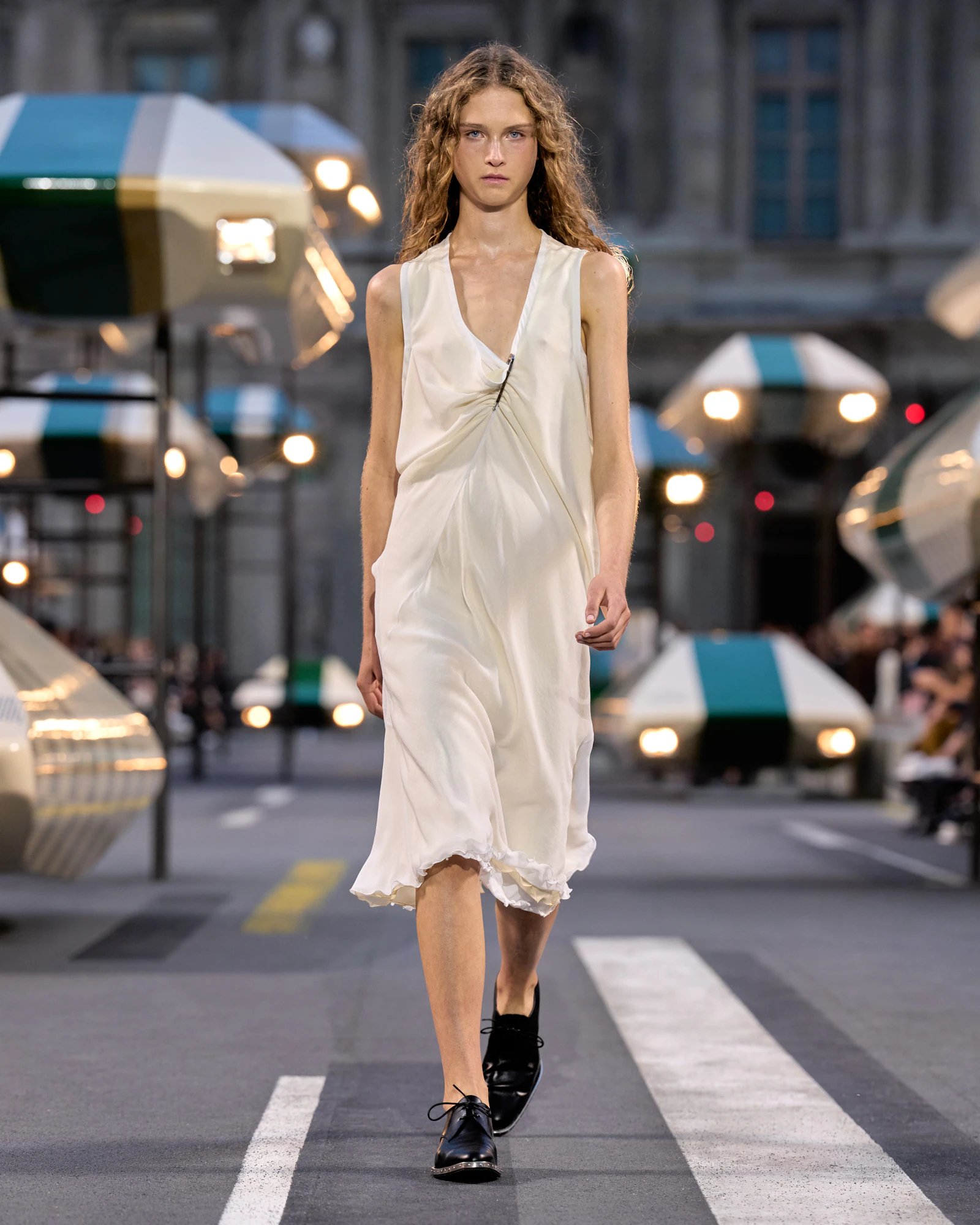
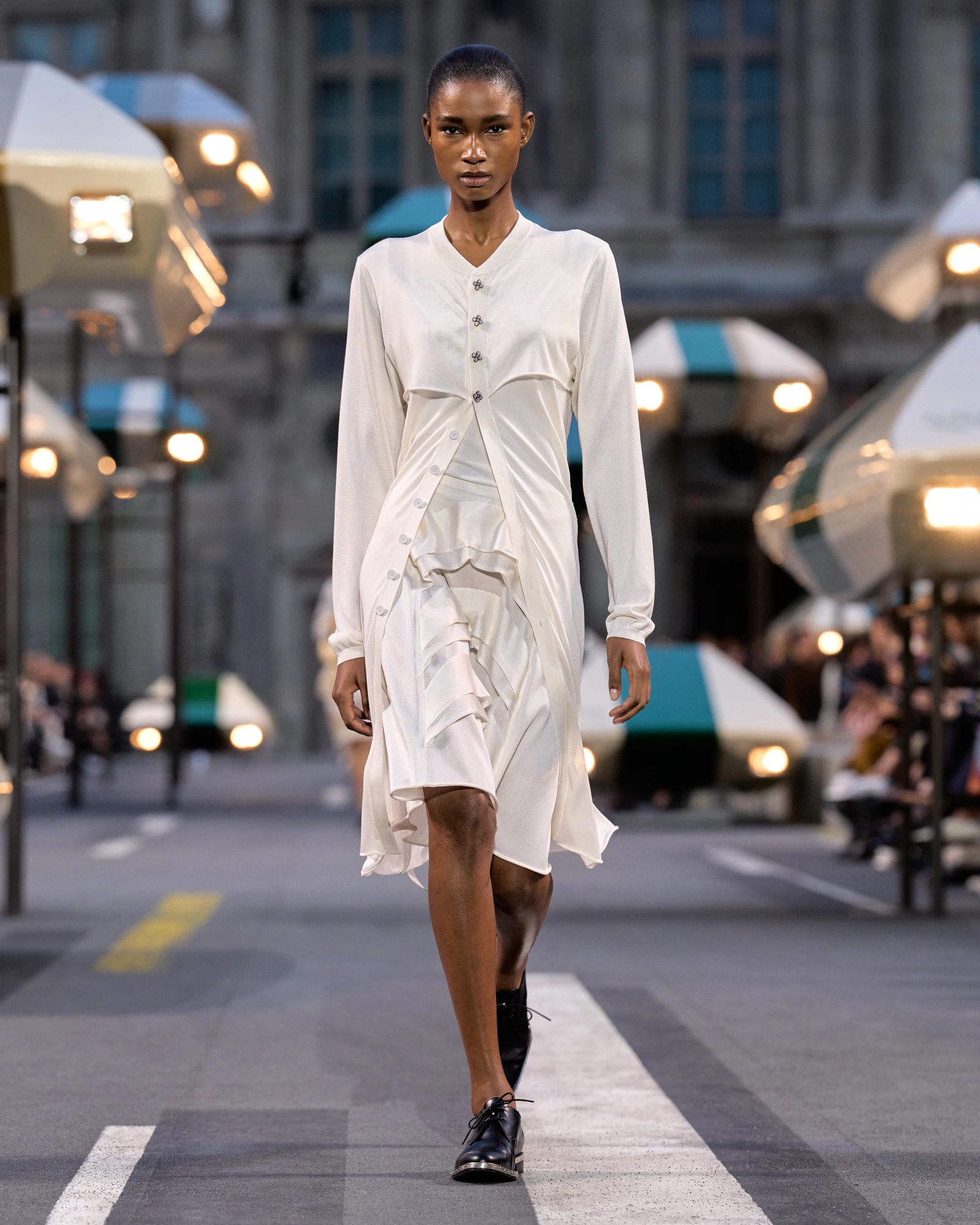
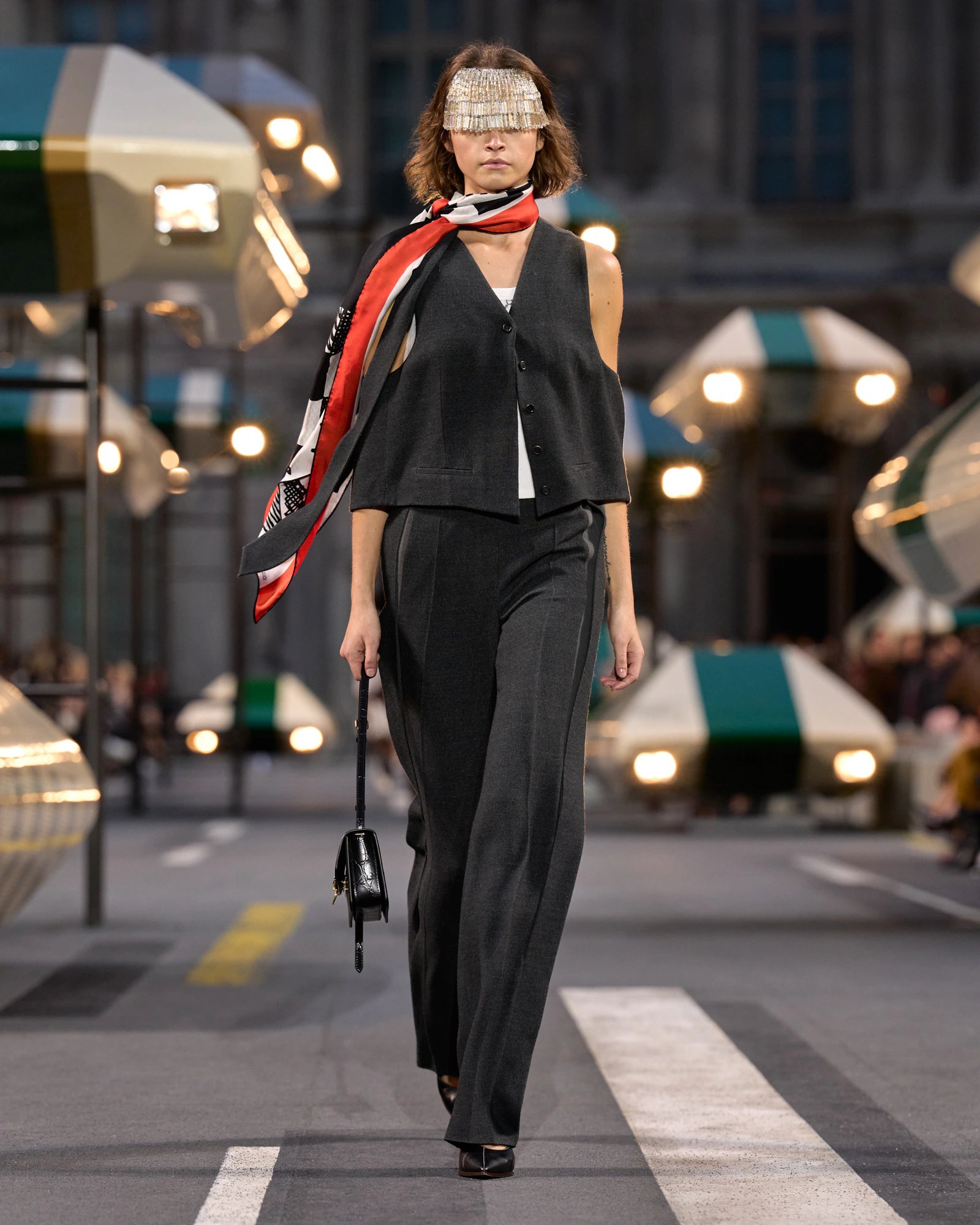
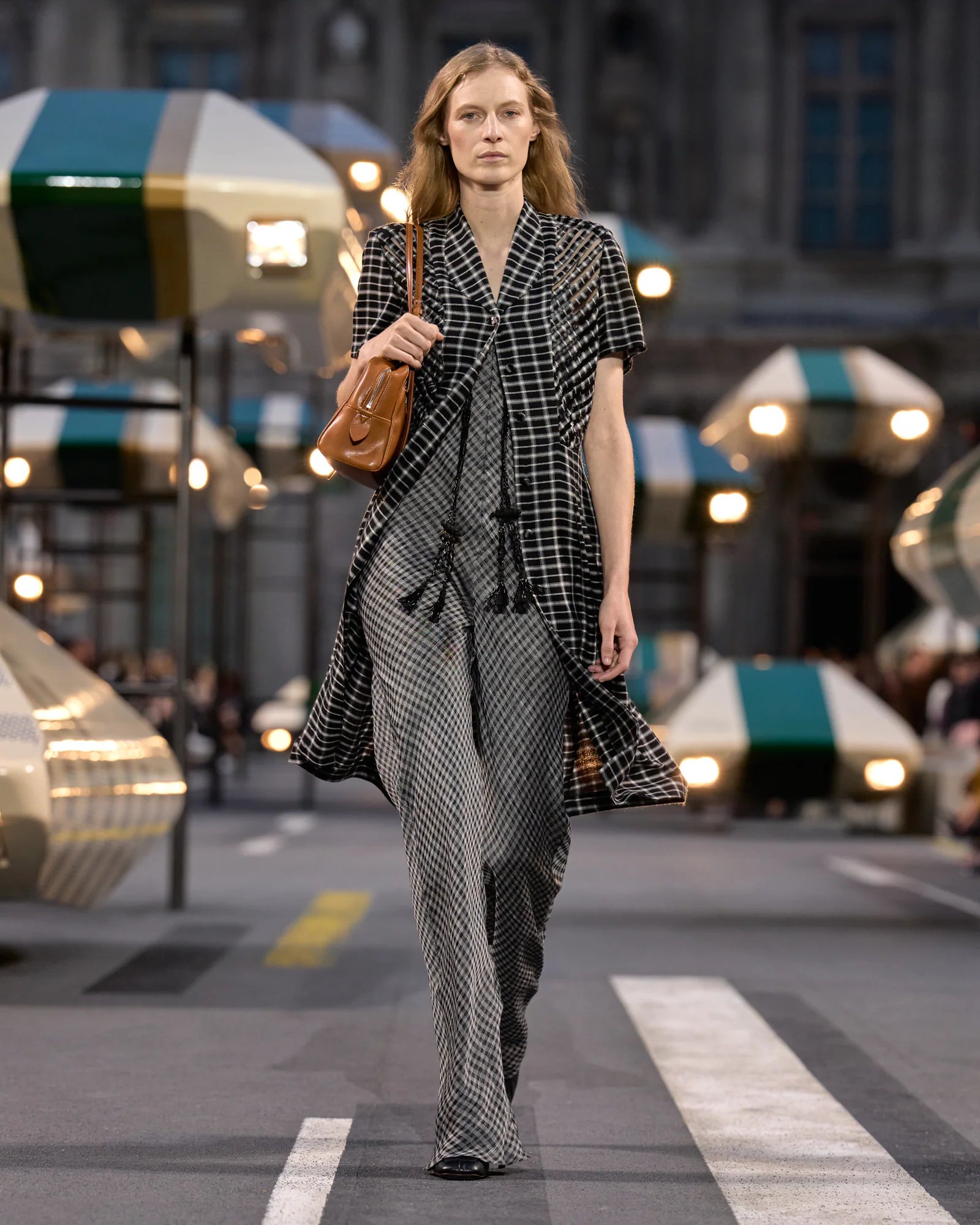
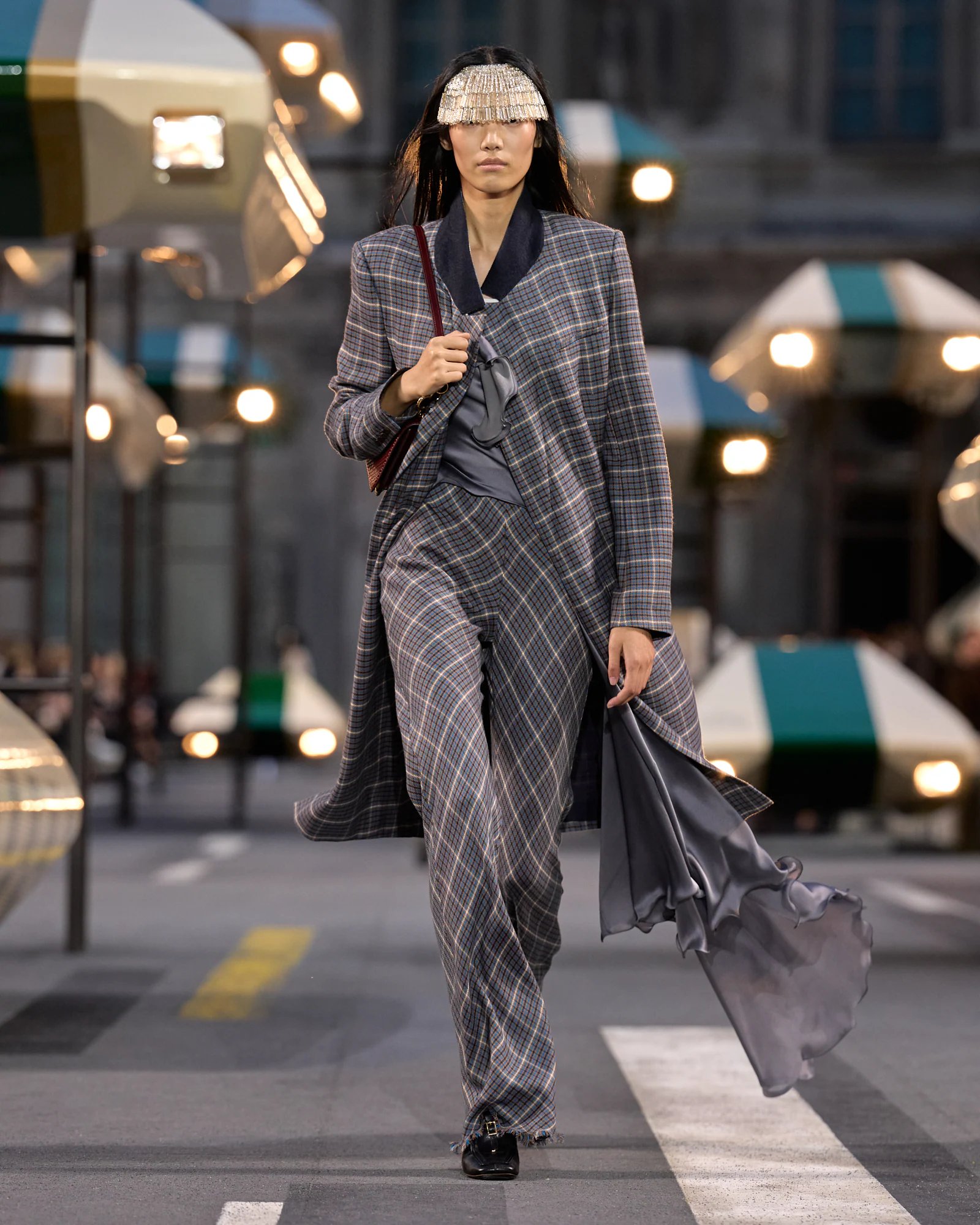
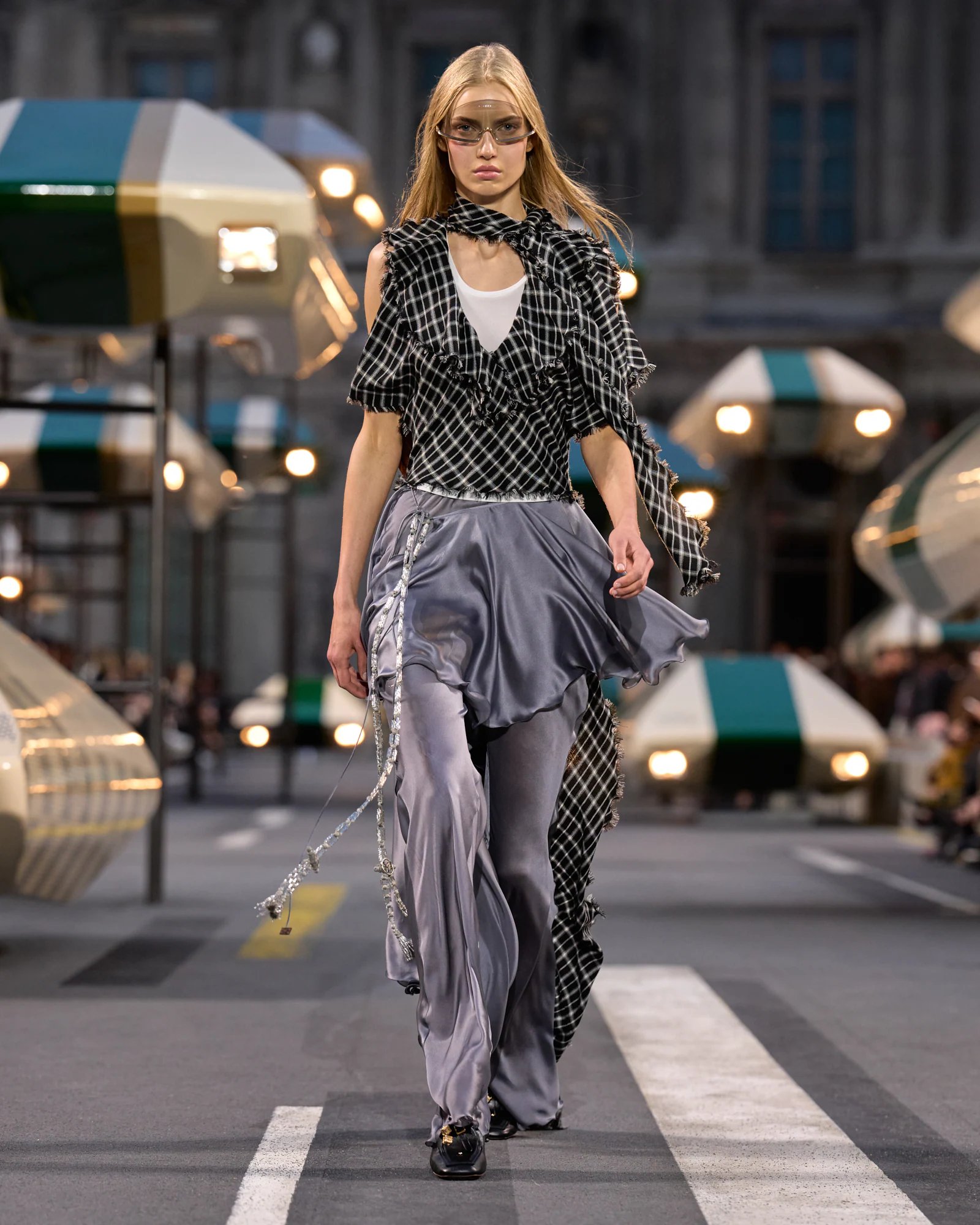
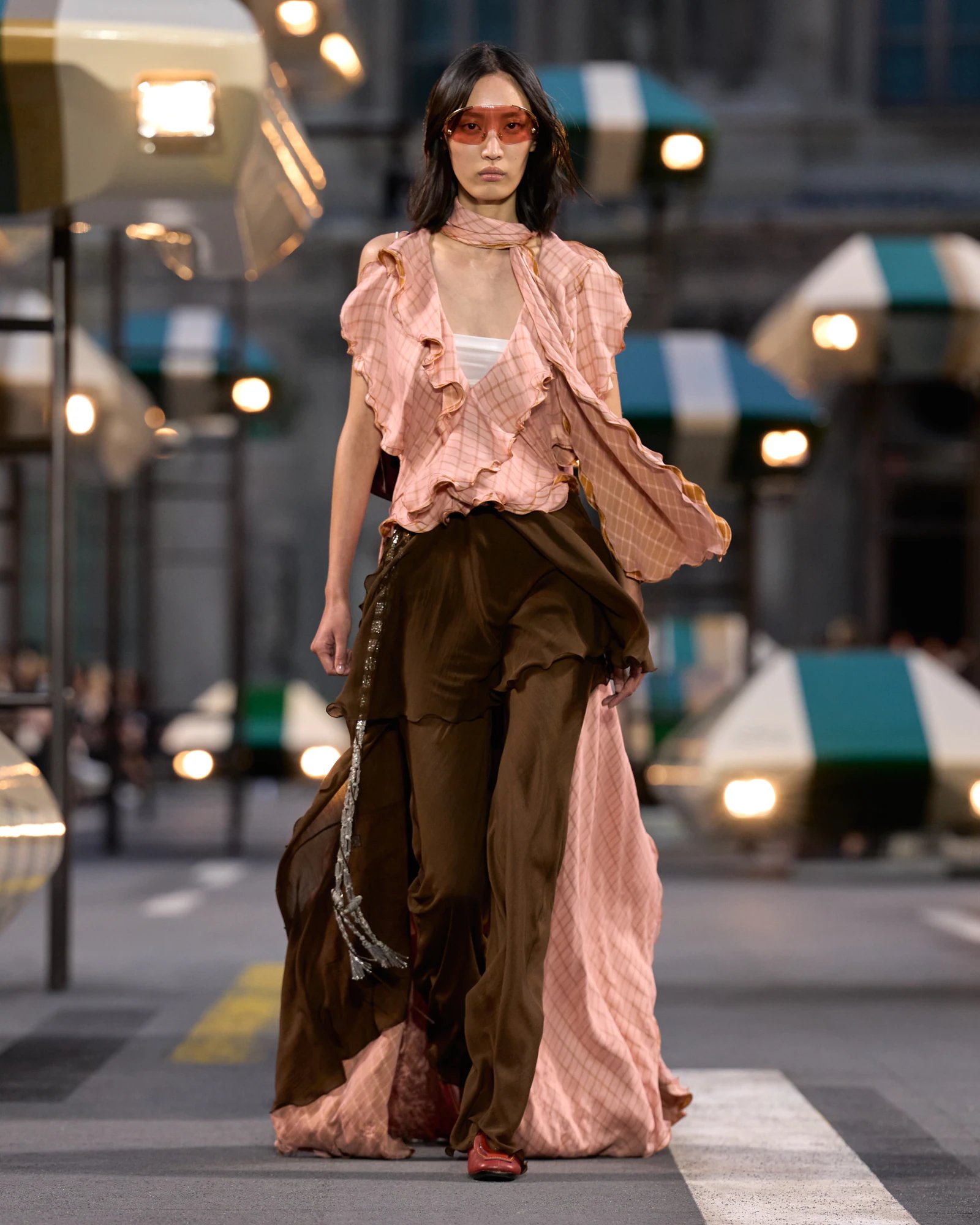
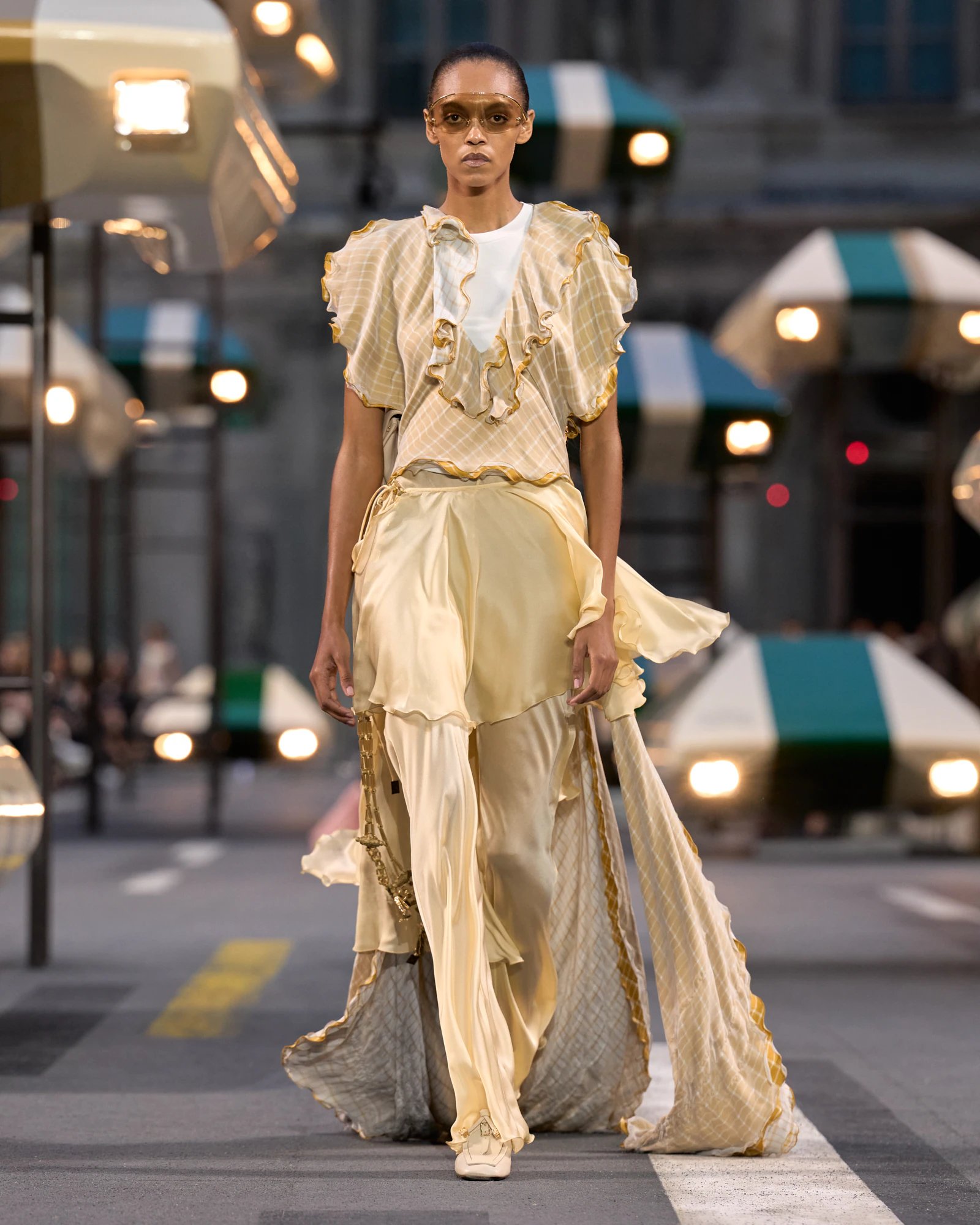
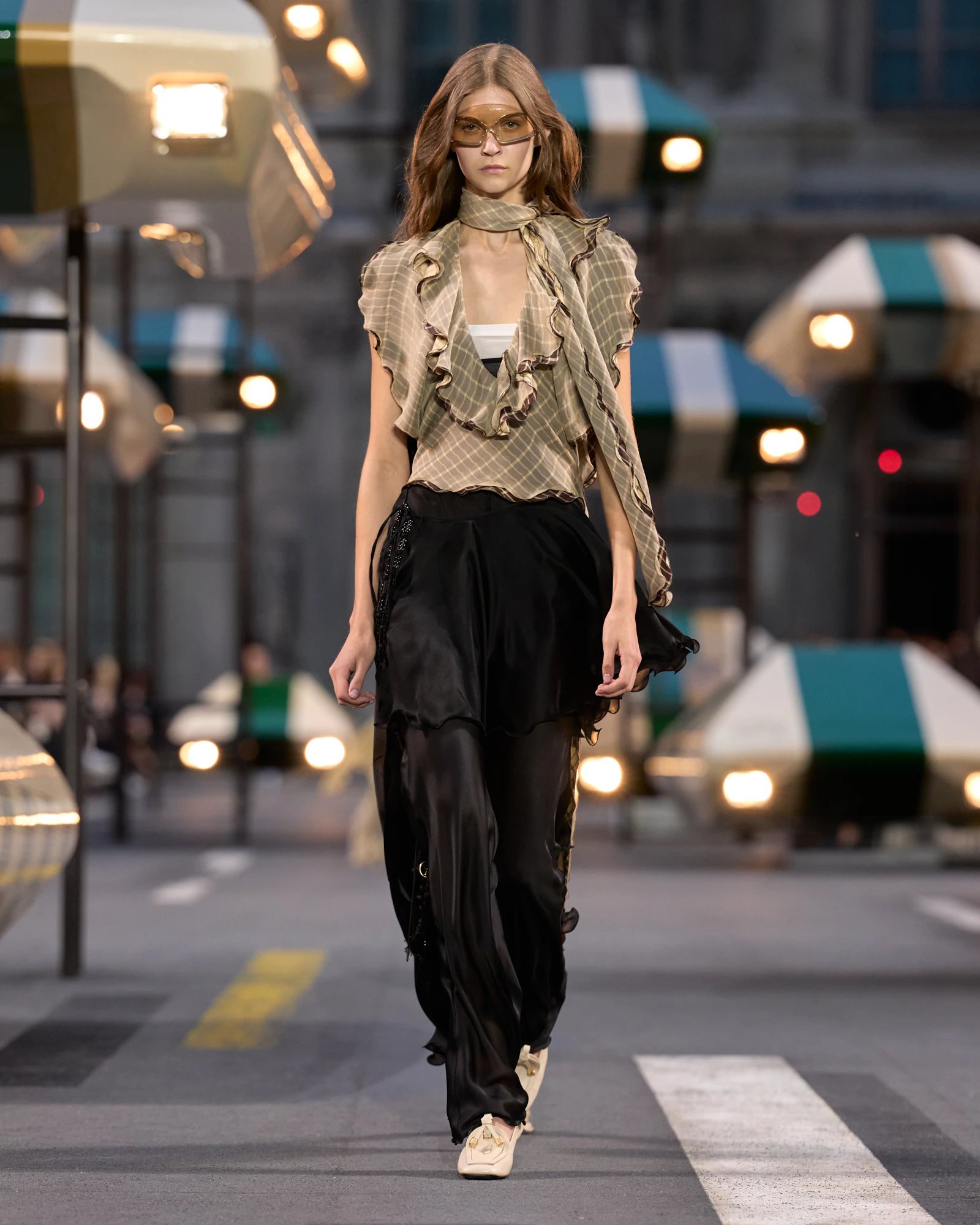
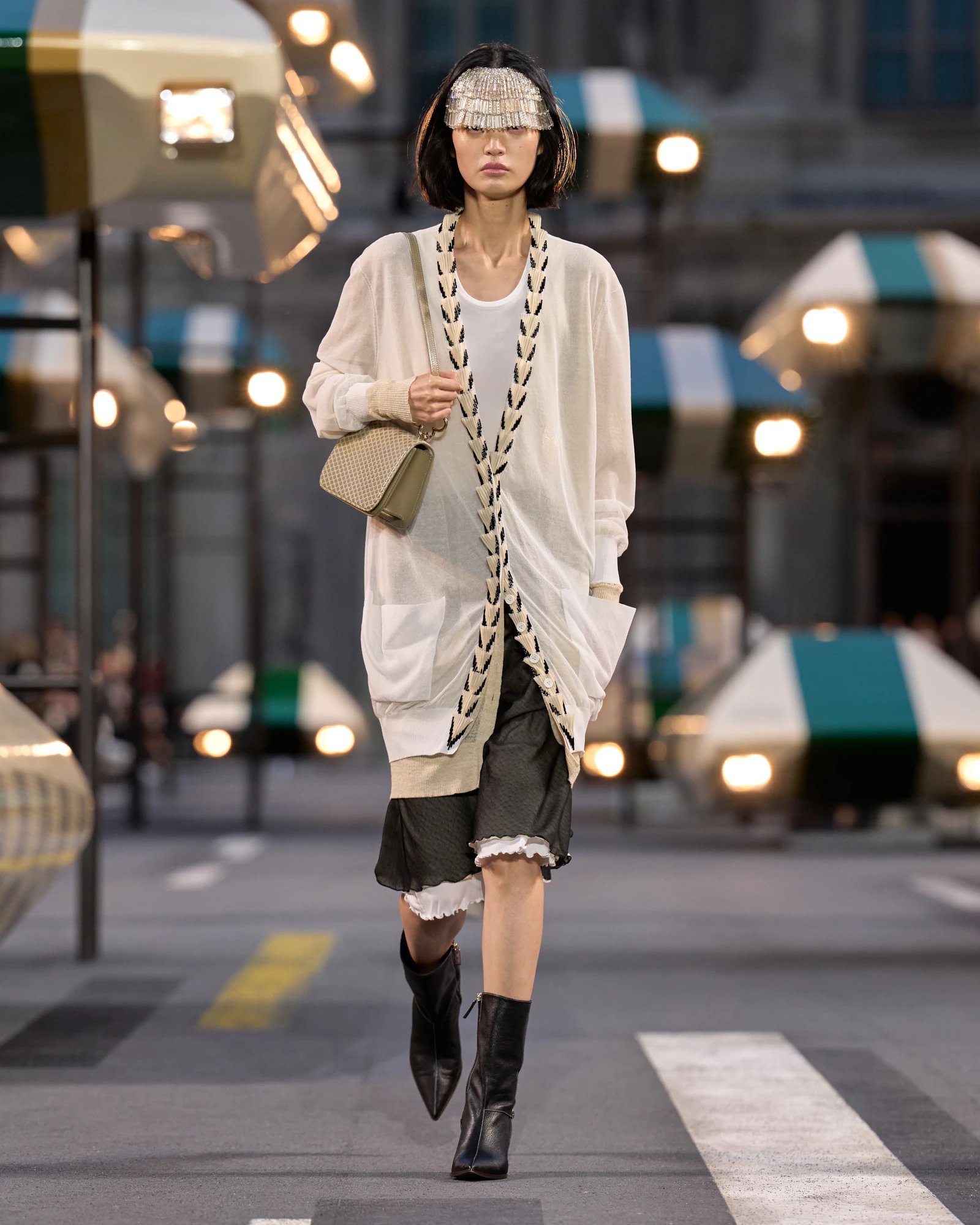
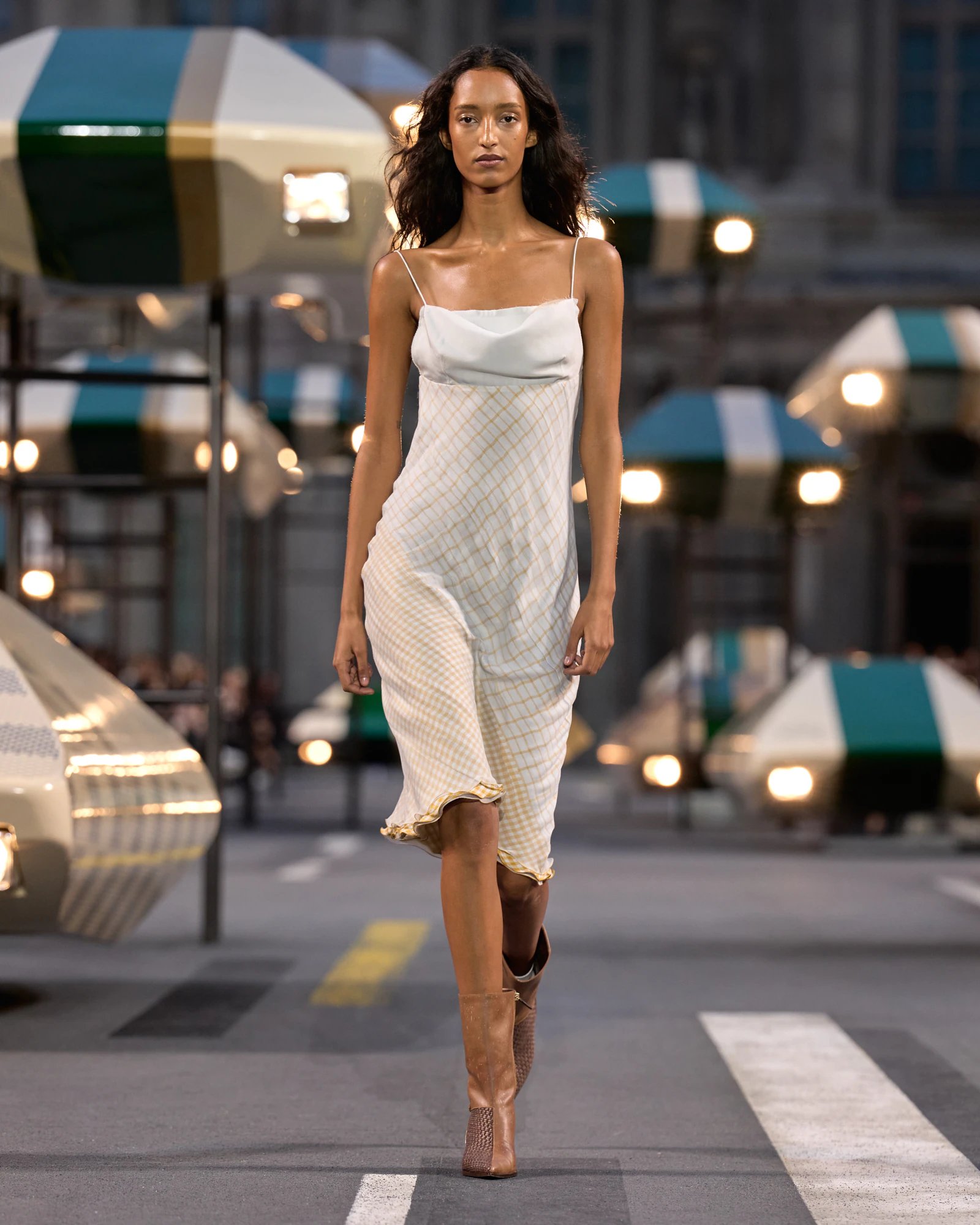
The opening looks made the brief legible: composite dresses in mesh and fabric that AFP described as light as cigarette paper, worn with loafers. From there came open-knit tops, car coats and nylon anoraks, then reefer coats, blousons and cardigans in gauzy, papery cloth. Ghesquière told WWD he wanted “a sensation of simplicity – a quest for purity somehow”, and said most of the coats weigh less than a T-shirt. The engineering is the point: double-faced garments cut from material thinner than chiffon still have to hold a shape.
The Climate Brief Behind the Featherweight Coats
Ghesquière gave the lightness a reason beyond craft. European heat waves had made him reconsider the physical weight of clothing, he told reporters after the show – “The world is getting warm” – and the collection proceeded from there. The show notes framed it as a body-first method: nothing rigid, everything fluid, clothes designed for action rather than display. Set against the Cour Carrée’s 17th-century façades, show notes also described the staging as a “crossroads of classical architecture and an imagined future.”
That is a sharper proposition than the usual spring pitch for ease, and it travels. Fabric weight is the one variable that reads the same to a client in Dubai, Shanghai, and Houston.
Where the 1960s Dresses Lose the Thread
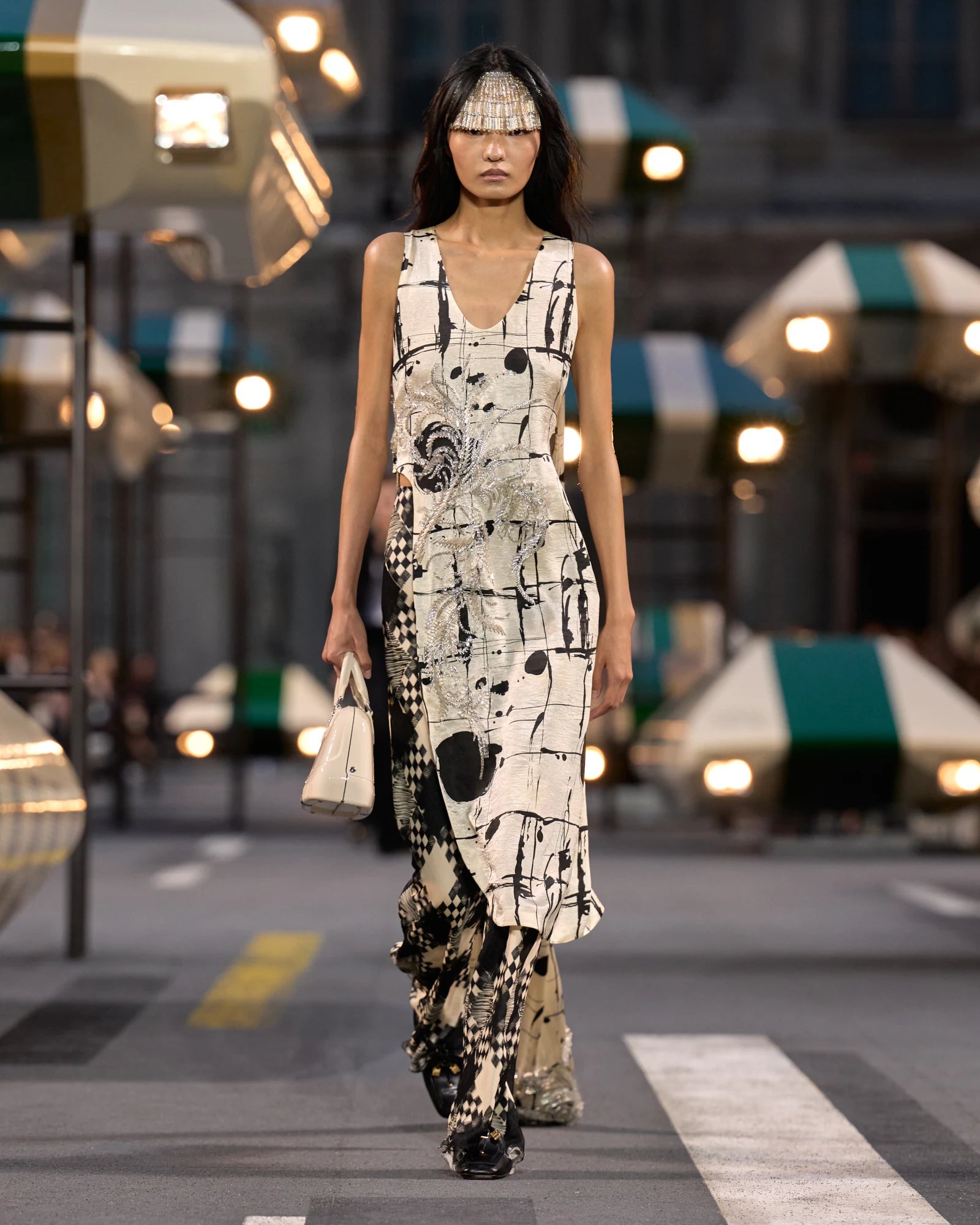
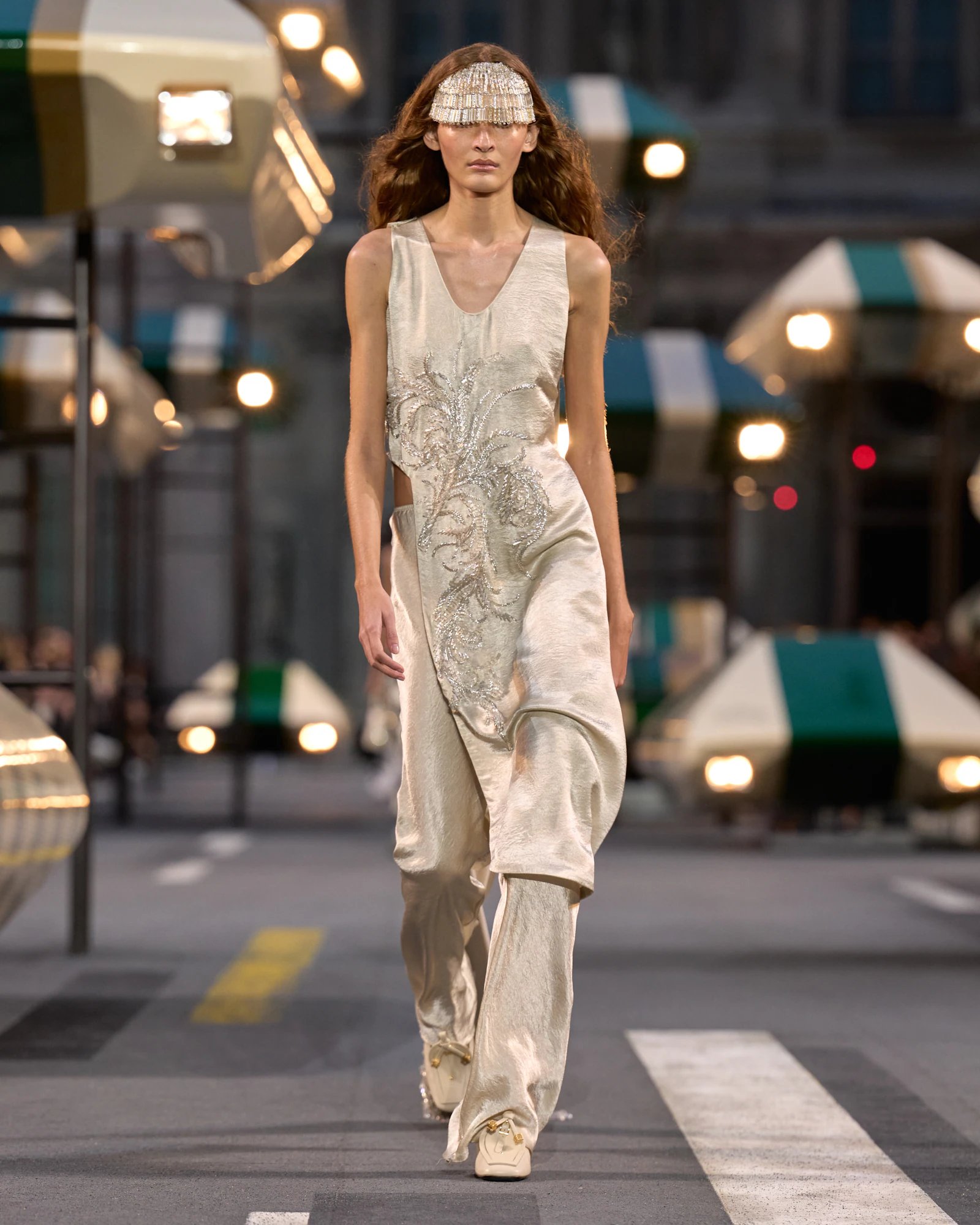
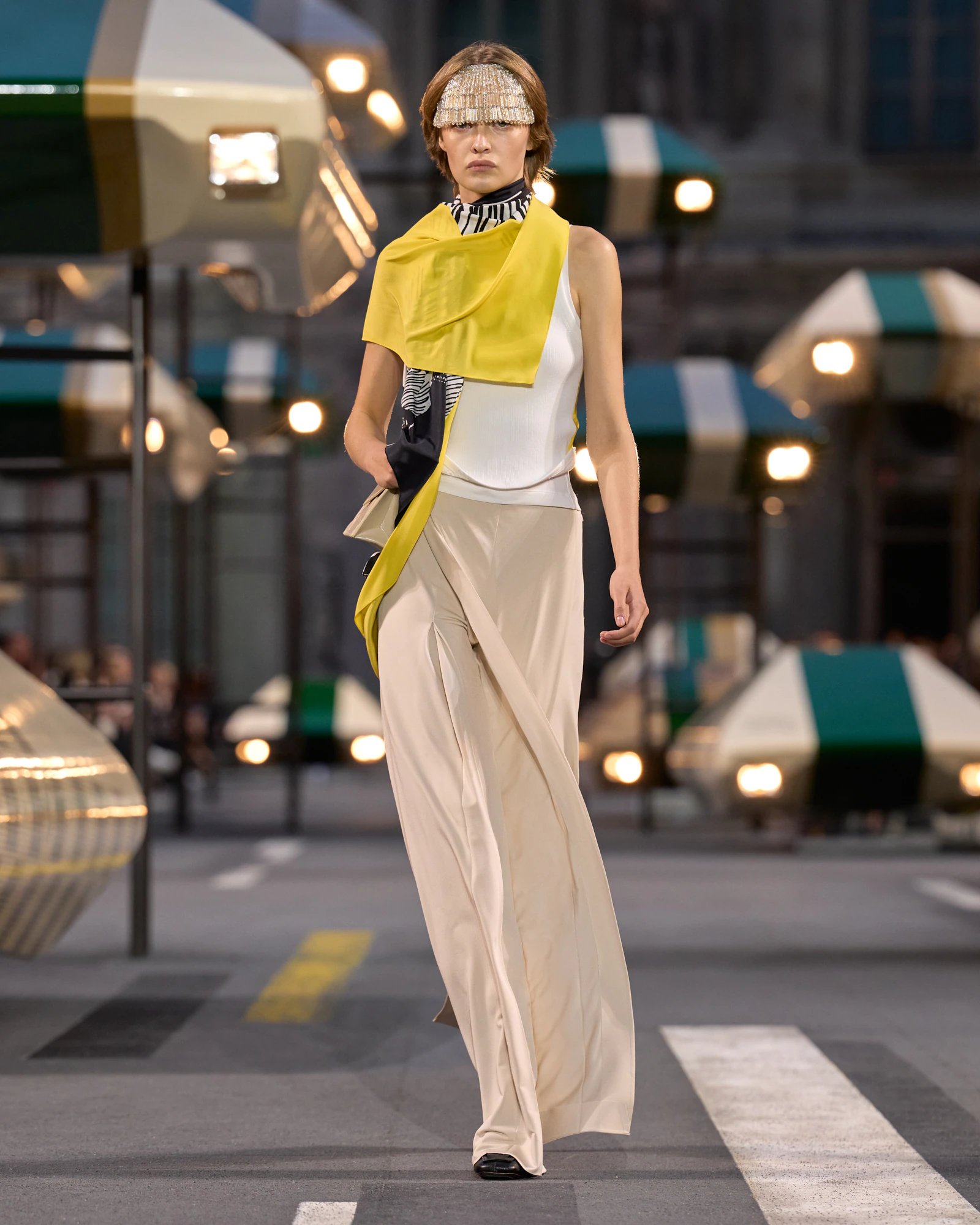
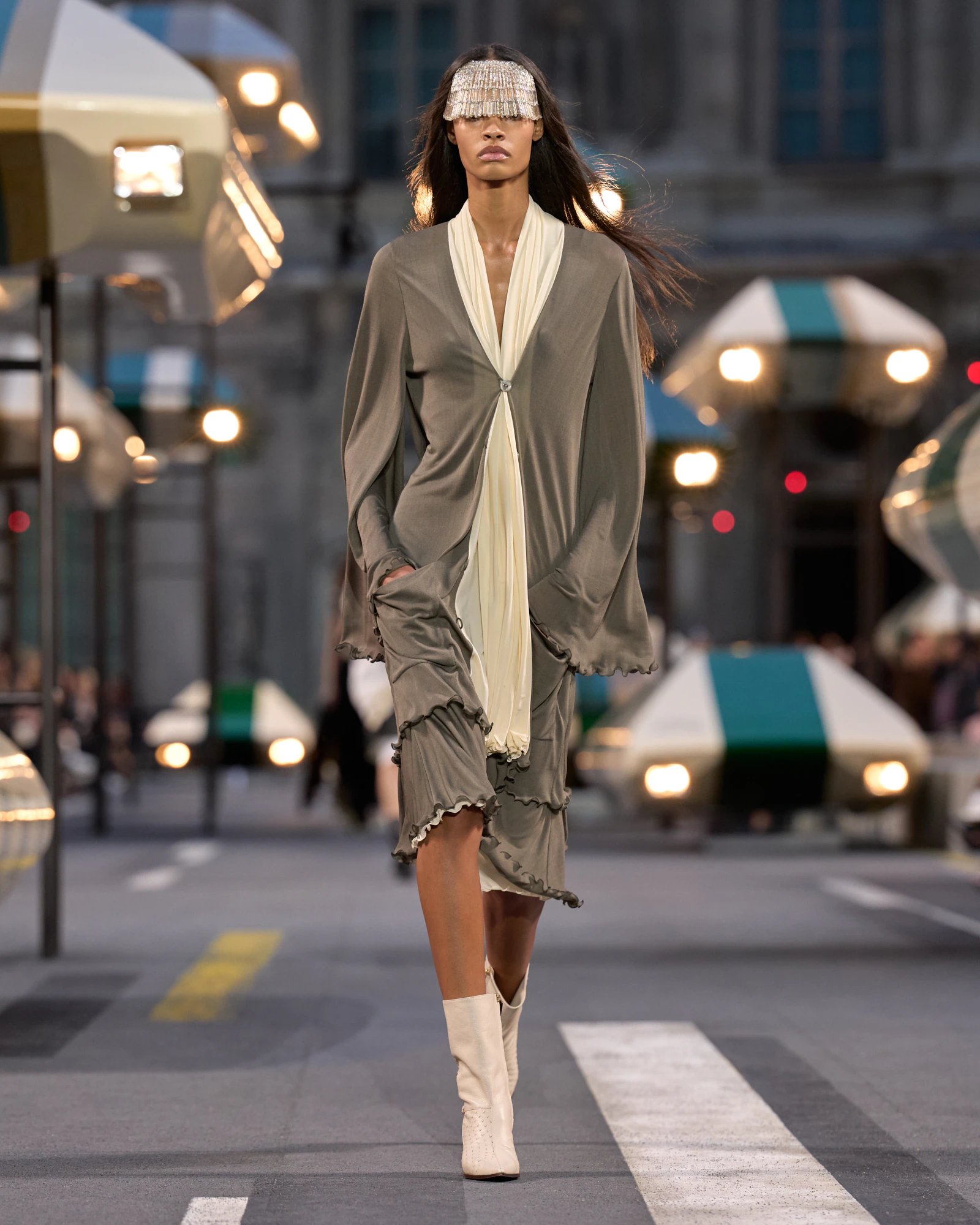
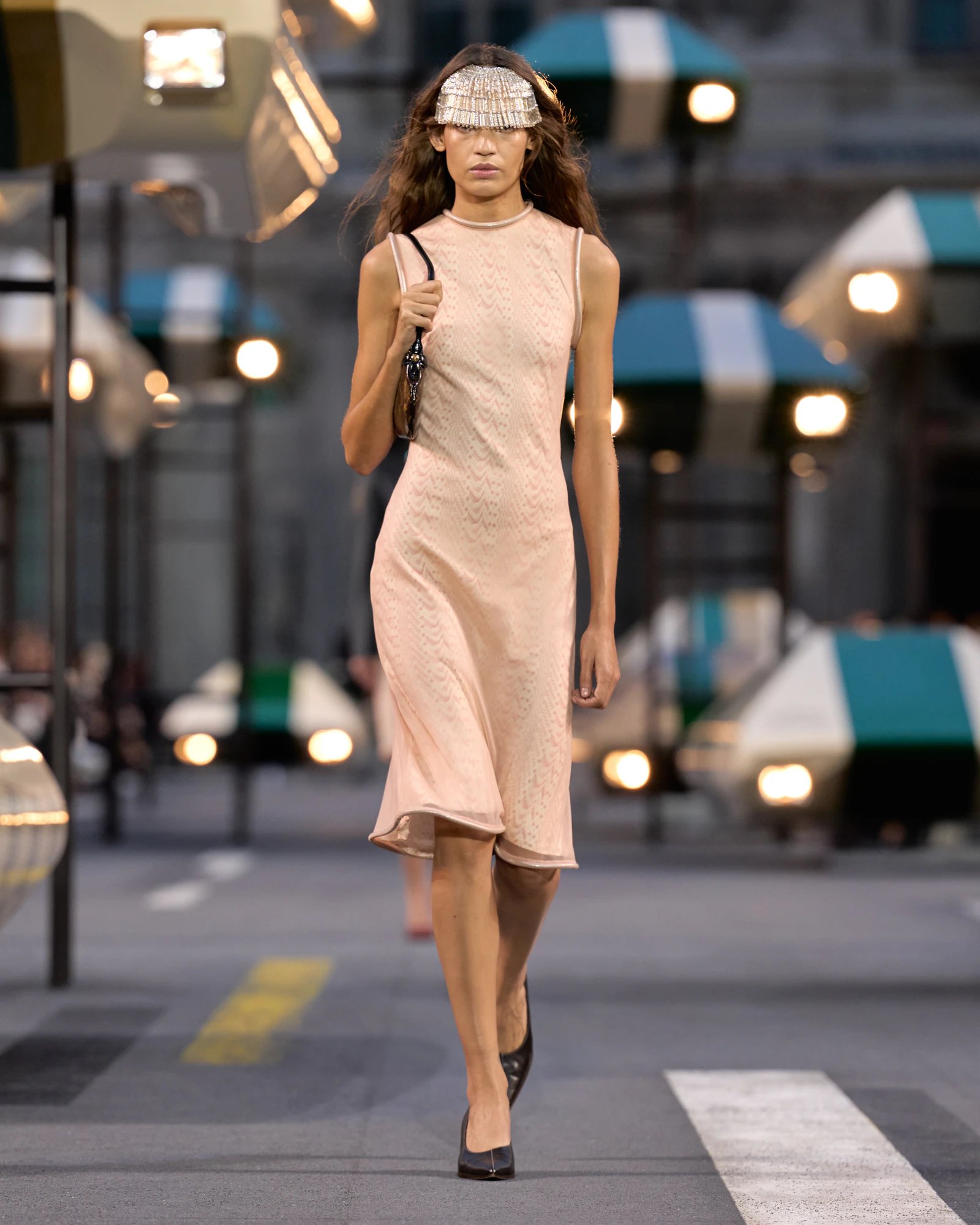
The sequence is where the collection weakened. The first passage carried genuine information – engineered mesh, funnel-neck co-ords, utilitarian pockets with silver hardware, the strange fringed visors dangling across the eyes like jeweled windshield shades. Then came straight dresses on a 1960s line, embellished with reflective paper diamonds, which AFP placed in a more expected register. The argument peaked early and the back half restated house default. A collection that opens by taking structure apart should not spend its middle rebuilding a silhouette Ghesquière has shown many times before.
The scenography has the same problem in a different key. Ghesquière has staged science fiction in a Louvre courtyard before: the spring 2019 show ran crystal-strewn, space-odyssey looks under neon tubing in the same complex, Reuters reported at the time. Hovering cars are a new prop on a familiar set, and this time they worked against the clothes, which were quieter and more disciplined than the installation suggested.
Shrinking Bags Test the Leather Goods Engine
The commercial risk sits in the accessories. The bags have shrunk in line with the collection’s pursuit of lightness, AFP reported, which it noted could widen the customer base. The monogram, meanwhile, appeared sparingly; MILLE called a brown monogram bomber worn with a black-and-white embellished skirt one of the collection’s most direct looks precisely because the canvas is used so little elsewhere.
Restraint of that kind is a design decision with a profit-and-loss shadow. LVMH’s fashion and leather goods division posted 1 percent organic growth to 9.01 billion euros in the second quarter of 2026, ending seven consecutive quarters of decline, WWD reported on July 27. For the half, the division’s revenue fell 5 percent on a reported basis to 18.14 billion euros while group revenue reached 38.6 billion euros, down 3 percent reported and up 2 percent organic, according to LVMH. The group does not publish standalone figures for Louis Vuitton. A pista that pulls back on the house’s most recognizable code, in the first season after the division returned to growth, is a bet on the ready-to-wear buyer rather than the logo buyer – and the store floor, not the Cour Carrée, settles that.
What ‘Ergonomie’ Looks Like on 57th Street
New York gets this collection in two acts. Spring 2027 will land at 6 East 57th Street, the largest Louis Vuitton space in the United States, which the house opened in November 2024 while its Fifth Avenue flagship is rebuilt; demolition for the new 485-foot tower at 1 East 57th Street was underway as of December 2025, New York YIMBY reported. The city already has a preview of the thinking: Ghesquière showed cruise 2027 at The Frick Collection in May, alongside a three-year patronage deal that funds three temporary exhibitions and free monthly evening hours.
Lightness is the easiest idea in moda to say and the hardest to build. Ghesquière built it. Whether he can hold the line for a full collection – rather than for the first 20 minutes of one – is the question spring 2027 leaves open.
See the complete collection below:
Images courtesy of Louis Vuitton
In other fashion week news, Elie Saab Spring 2027 Ready-to-Wear Collection at Paris Fashion Week