

The Spring/Summer 2027 show left the auditorium for a public park in the Tortona district, dressed its models as guests of a banquet that ran past its own end, and left the gate open
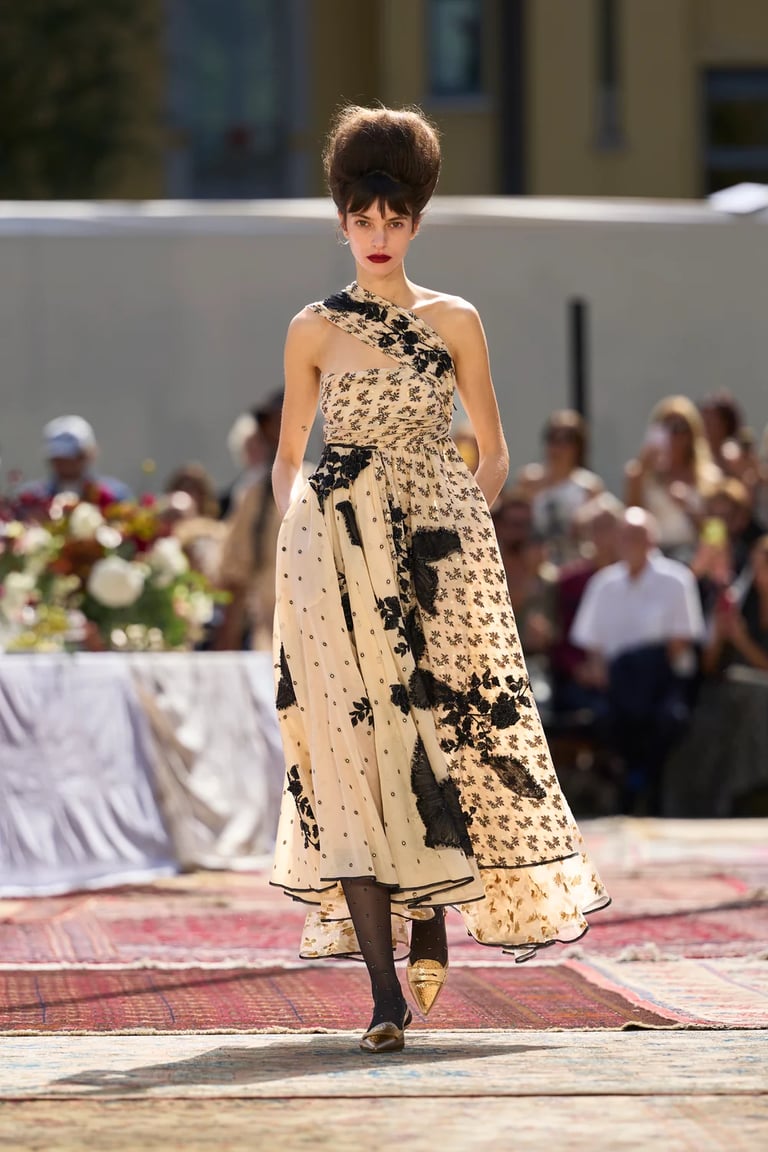
MILAN – Antonio Marras presented his Spring/Summer 2027 collection at 12:30 p.m. on Sept. 23 on a basketball court in Giardino Vincenzo Muccioli, with the asphalt covered in overlapping rugs and the backboards wrapped in printed fabric. The invitation was a wedding announcement. The audience was anyone who walked into the park.
The bride and groom are Ippolita and Antiogu, married in Alghero at midday the day after St. John’s night, at an endless table open to everyone. Marras keeps the scene at that hour: the clothes from the celebration are still being worn, the salt of the sea lingers on the skin, myrtle is tangled in the hair.
He described it more plainly backstage. “This is the wedding of the day after, when we’re a little wrecked, a little tired, when everything is a bit undone, disheveled, unhinged,” he said. Then the sentence that explains the staging: “Moda also has a duty to unhinge things, to take things apart.”
One Table, No Guest List
For a house that builds its collections out of memory, the venue was the argument. Marras showed indoors last season. This time the runway left the building beside the park and put itself on public ground at noon, then streamed the whole thing live. The collection ran 63 looks, all of them shown outdoors under open sun. Guests fanned themselves in the heat, and the glare cost the room some of the finer detail. The park did not have that problem. It had no seat numbers to lose. The house’s own line about the show, that a true celebration needs no doors, turns out to describe the seating plan as much as the theme.
A Wedding Dress That Isn’t One
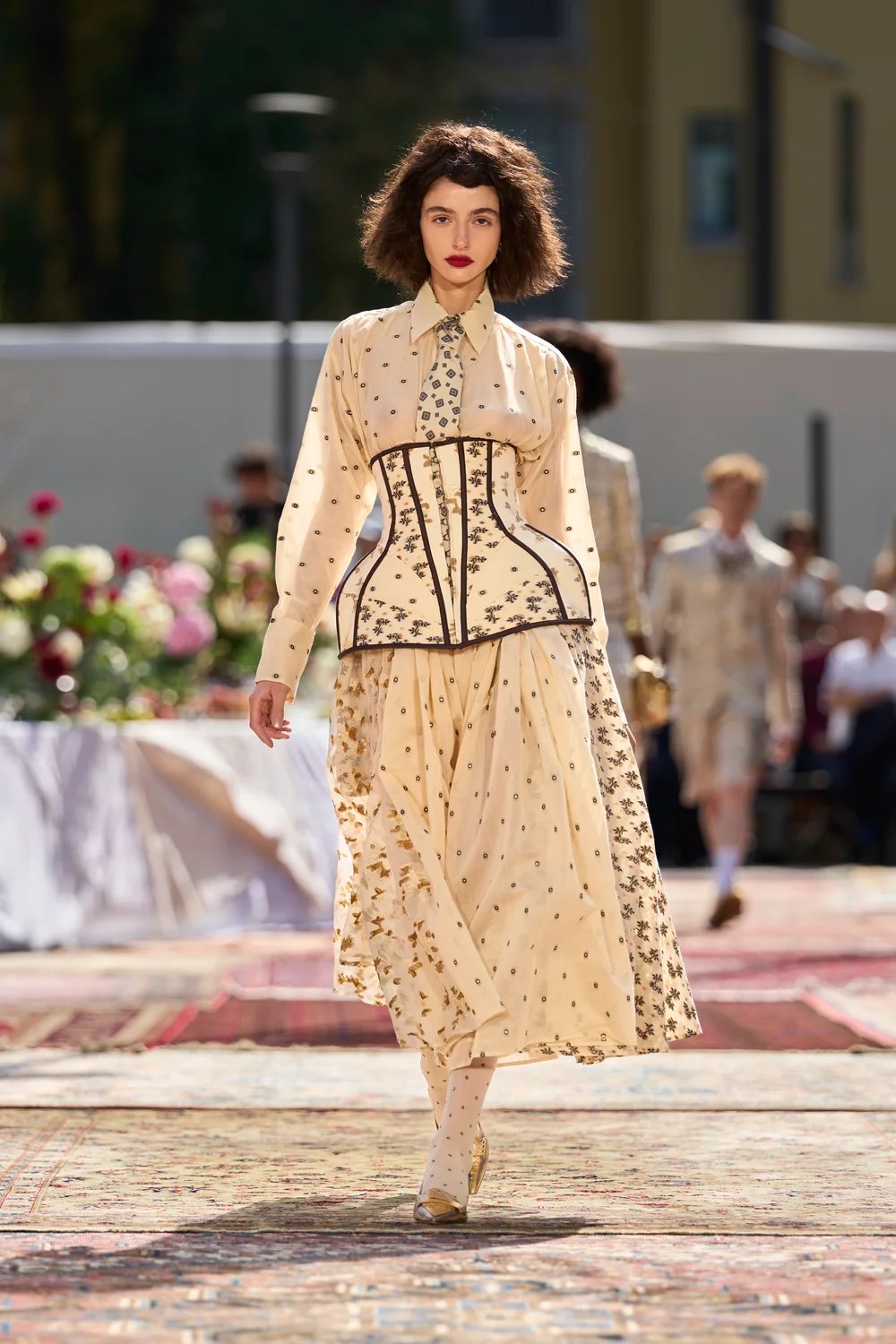
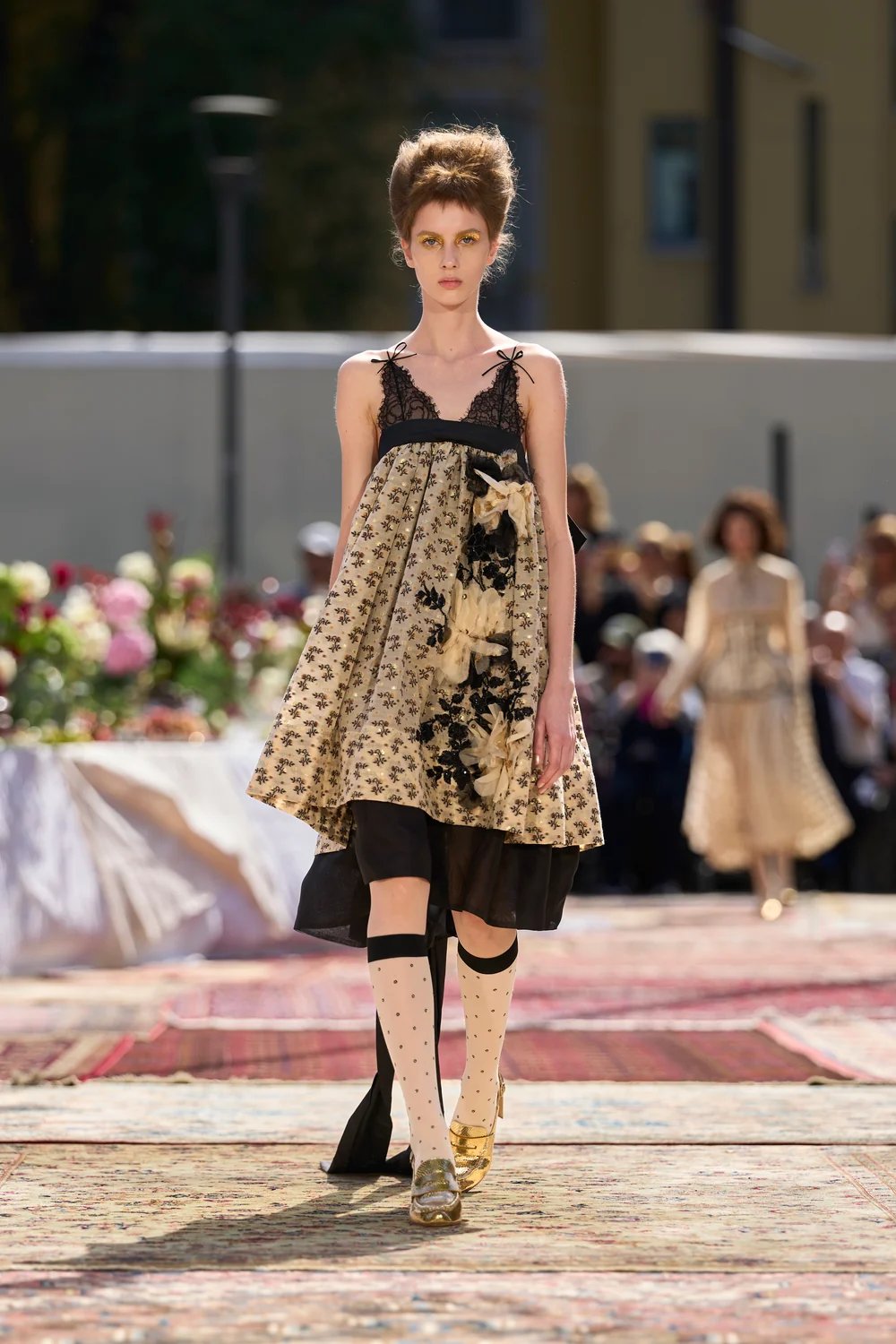
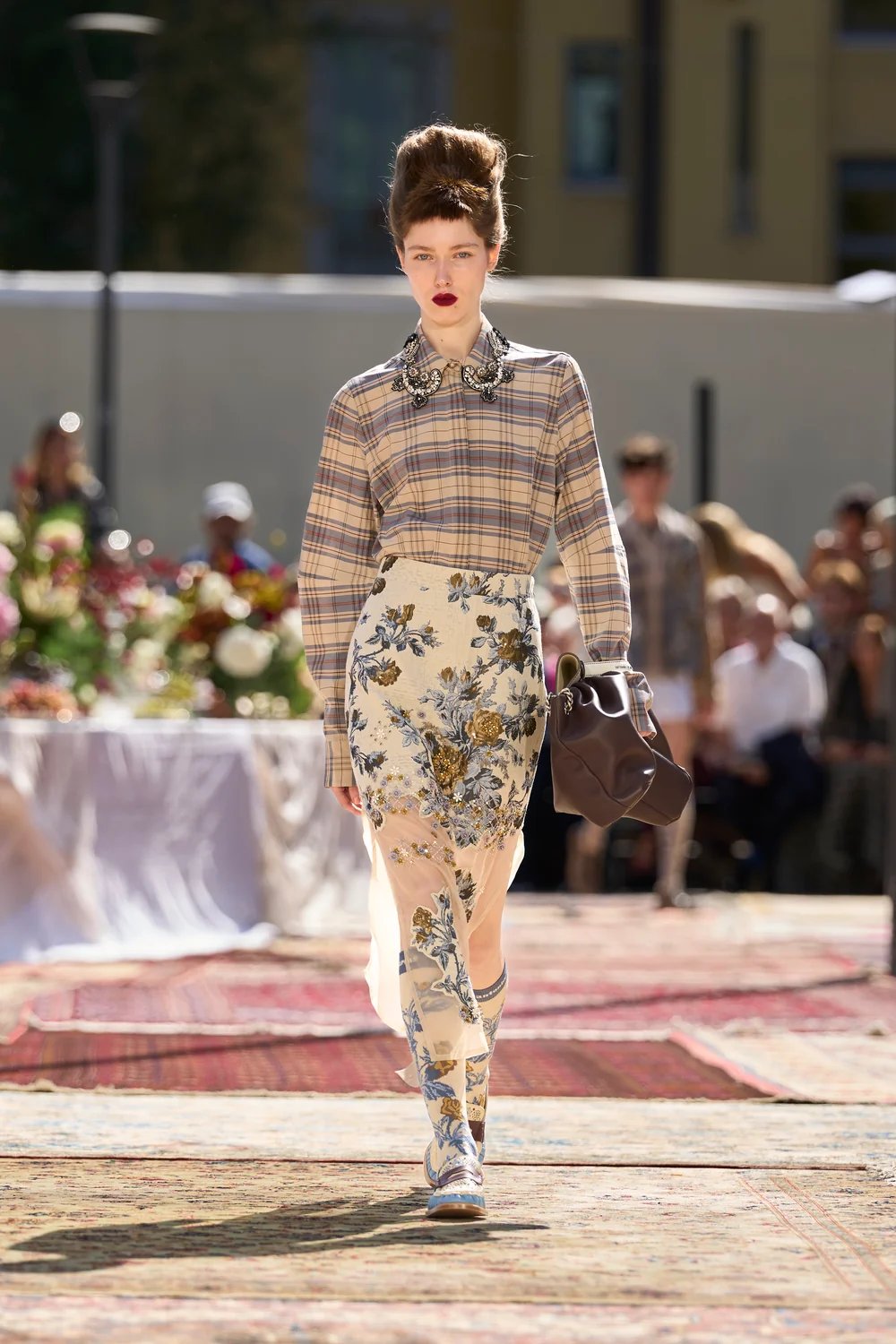
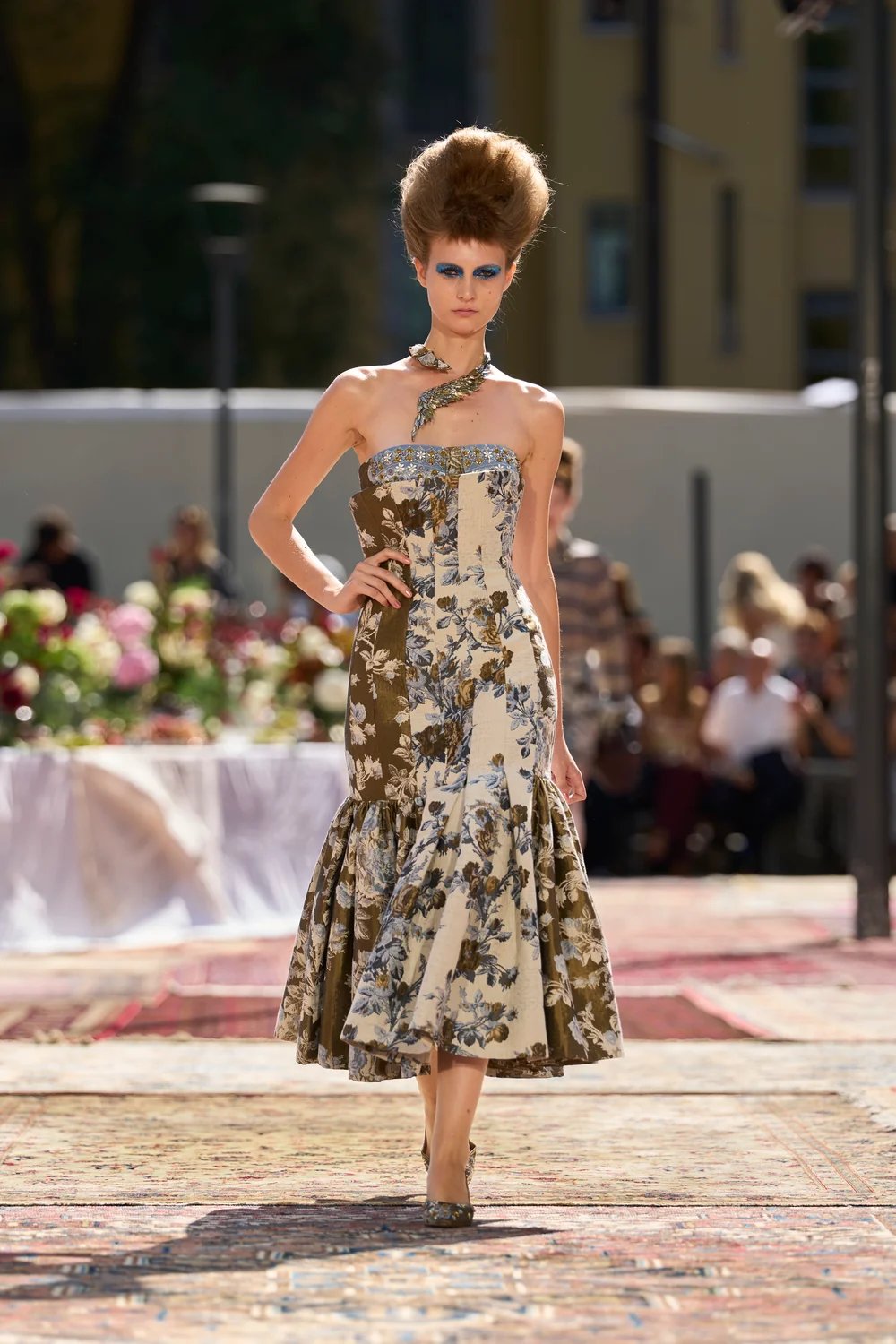
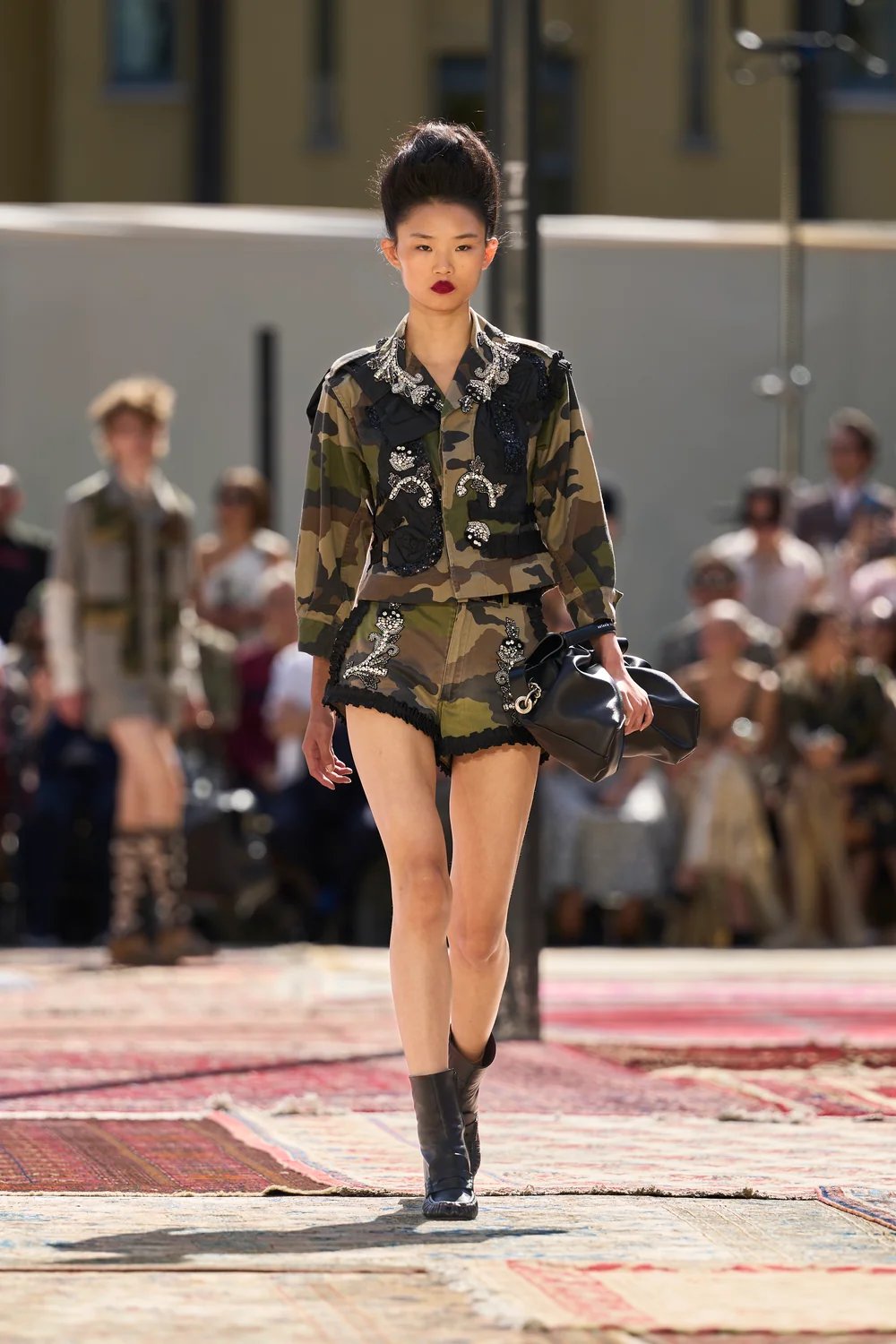
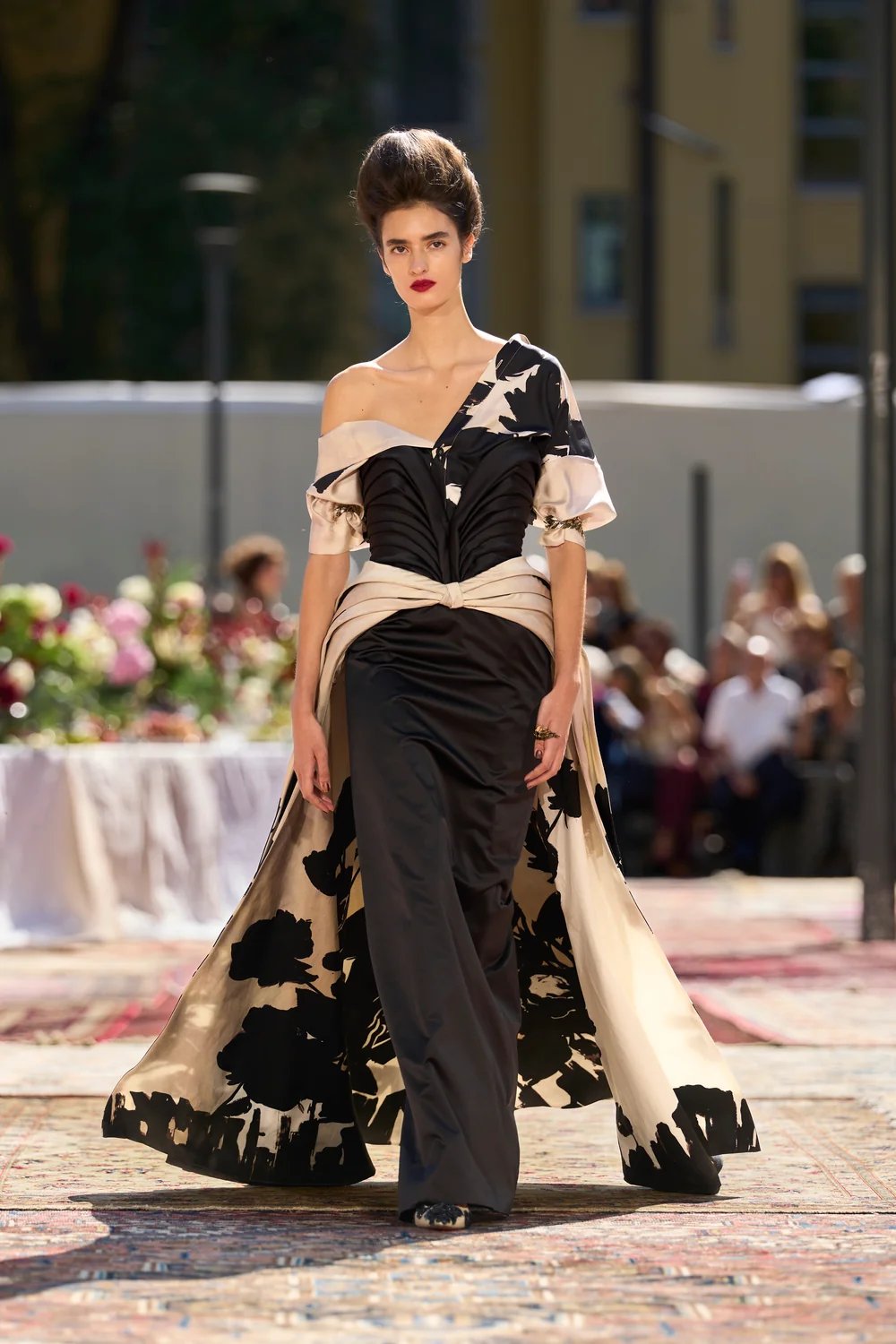
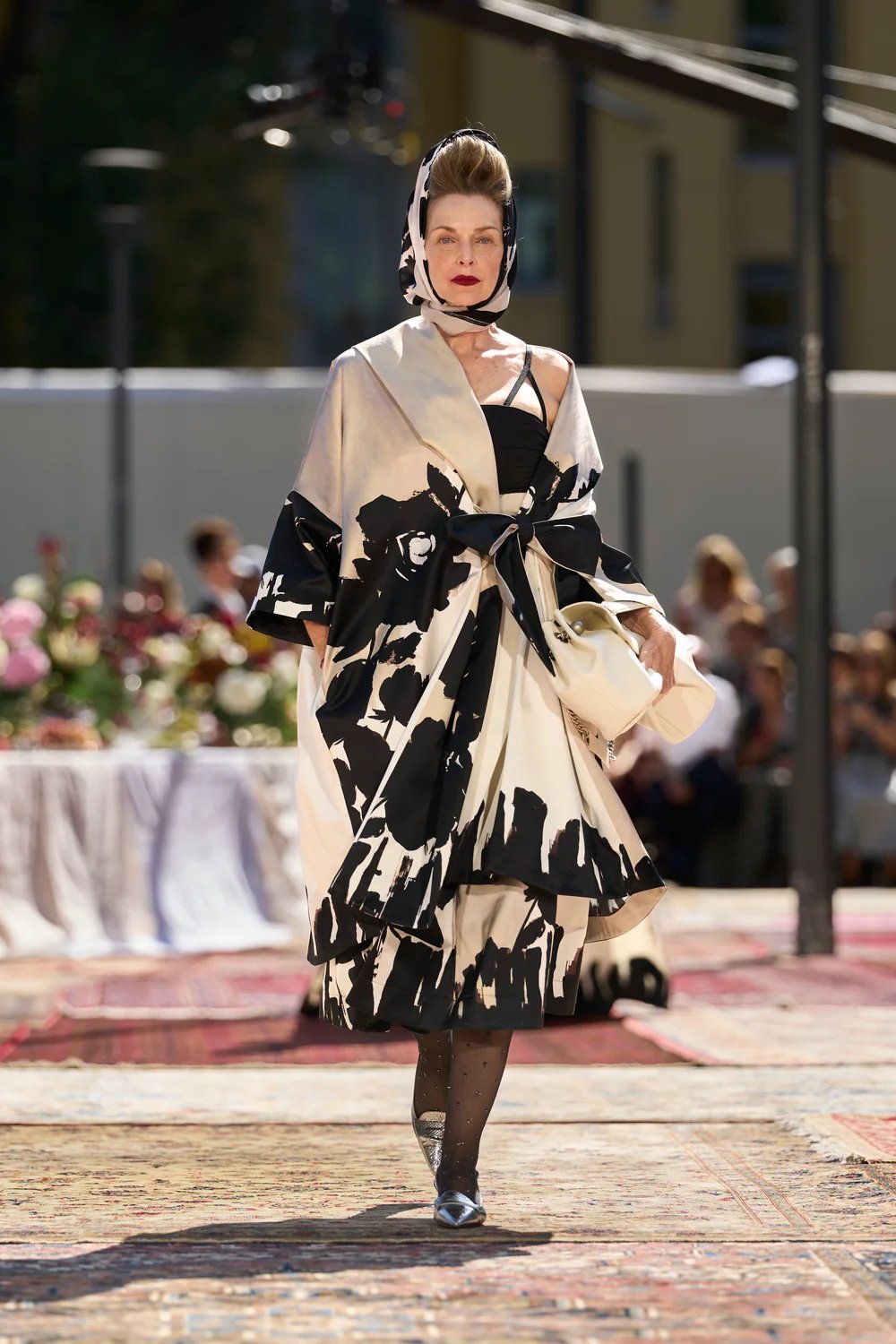
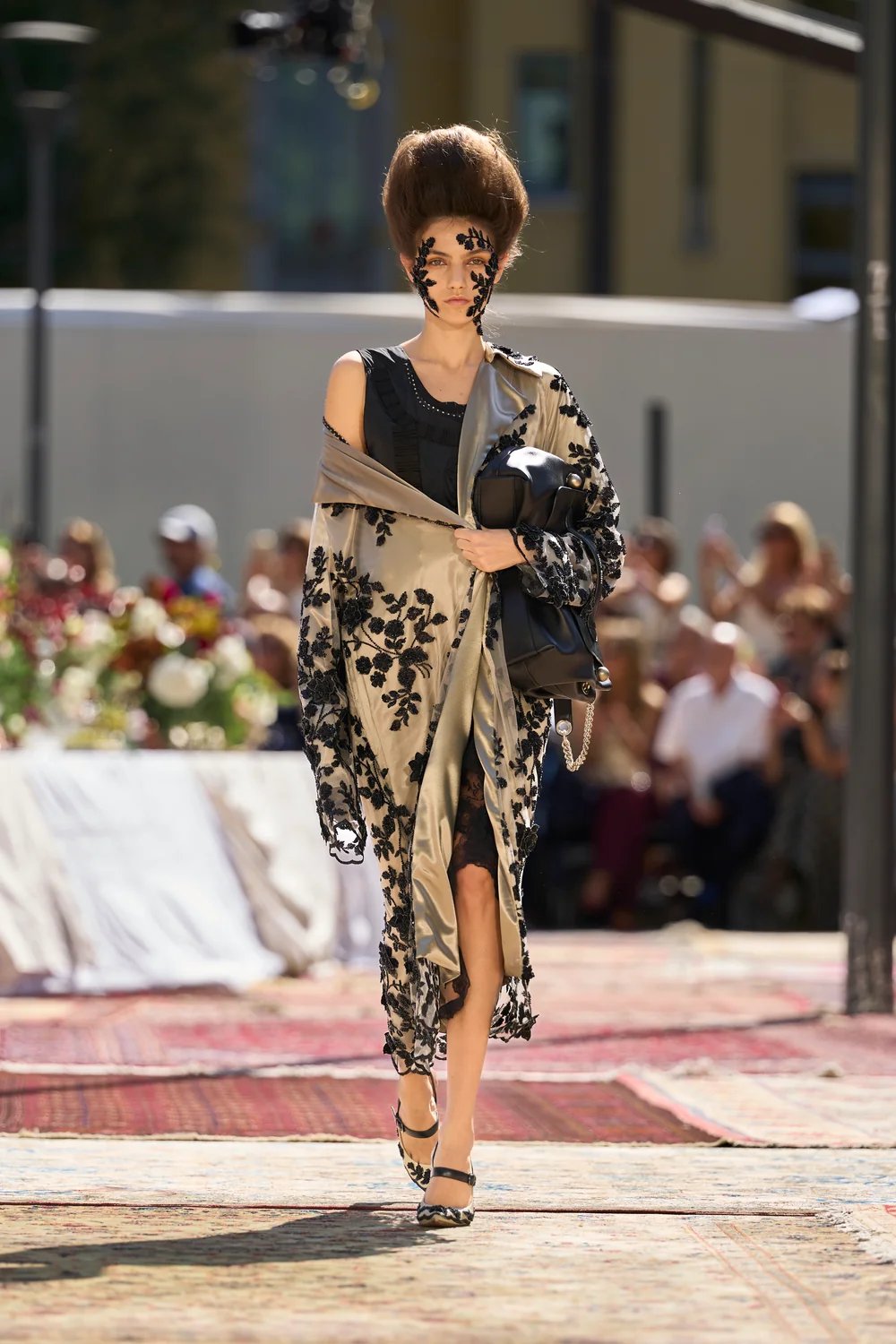
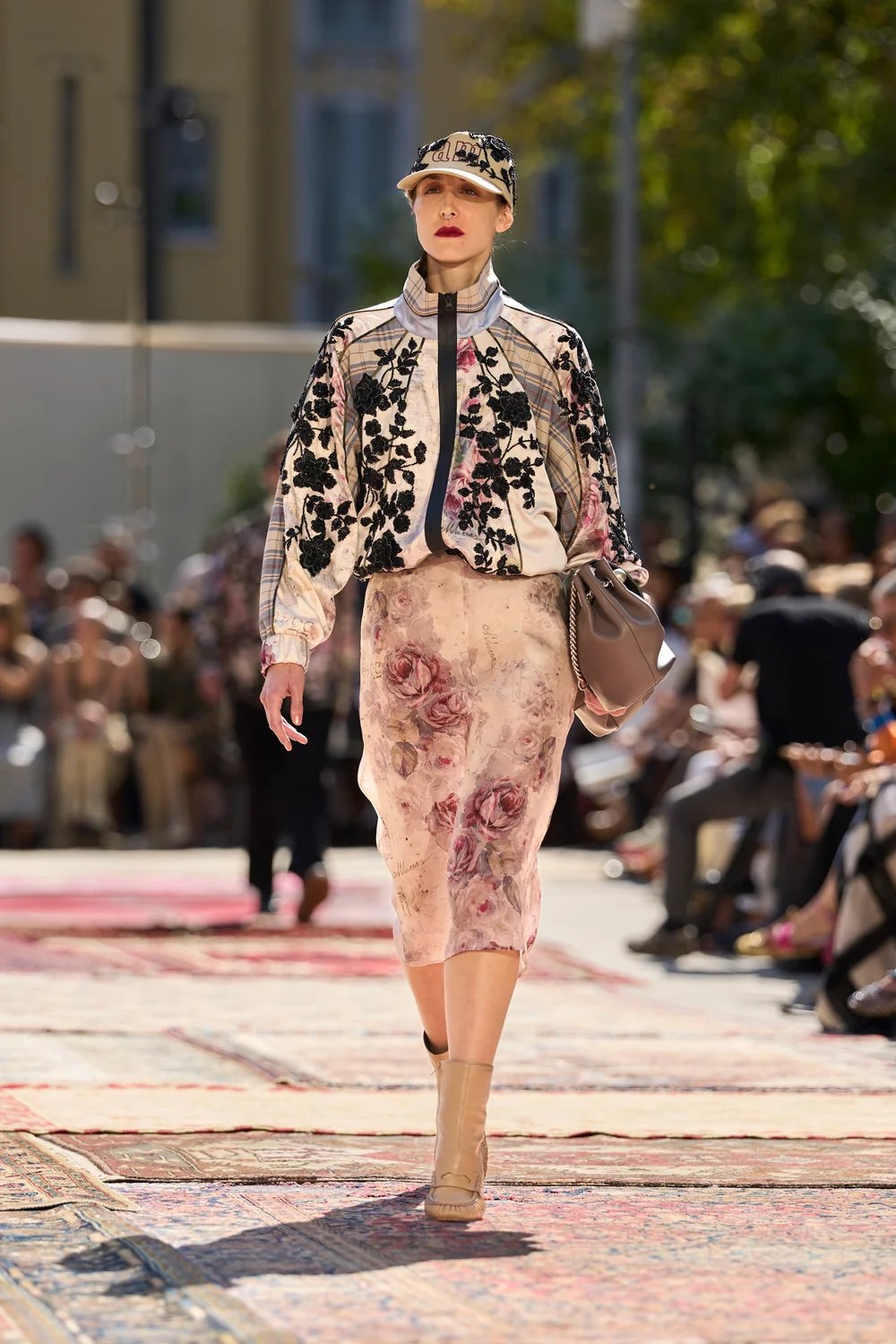
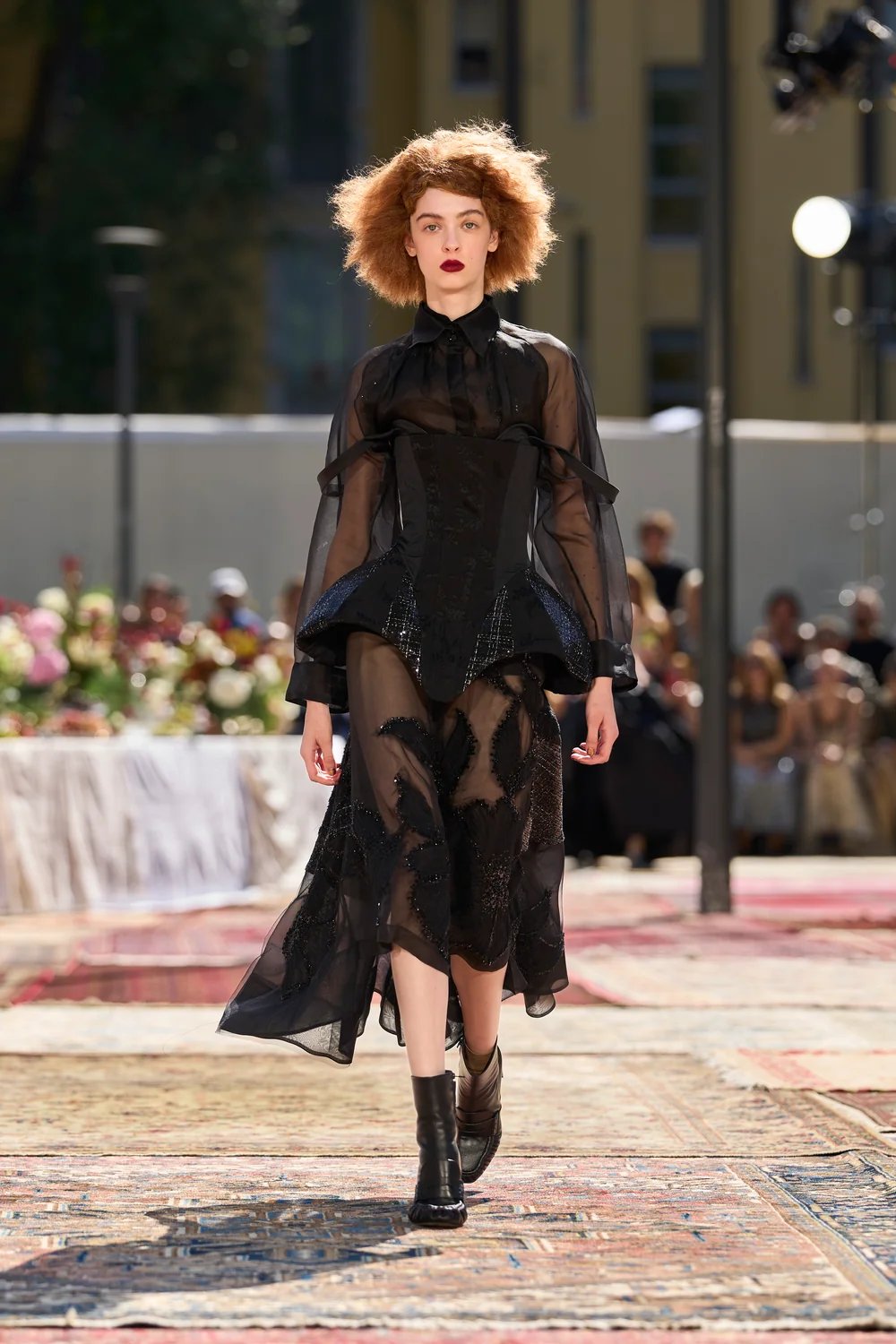
The palette ran honey, cream, sand and nude against powder pink, dusty blue, military green, mud and black. Silk, chiffon, organza, tulle and lace met wool, poplin, leather, brocade and jacquard, with painterly flowers, embroidery and crystal worked across the surface.
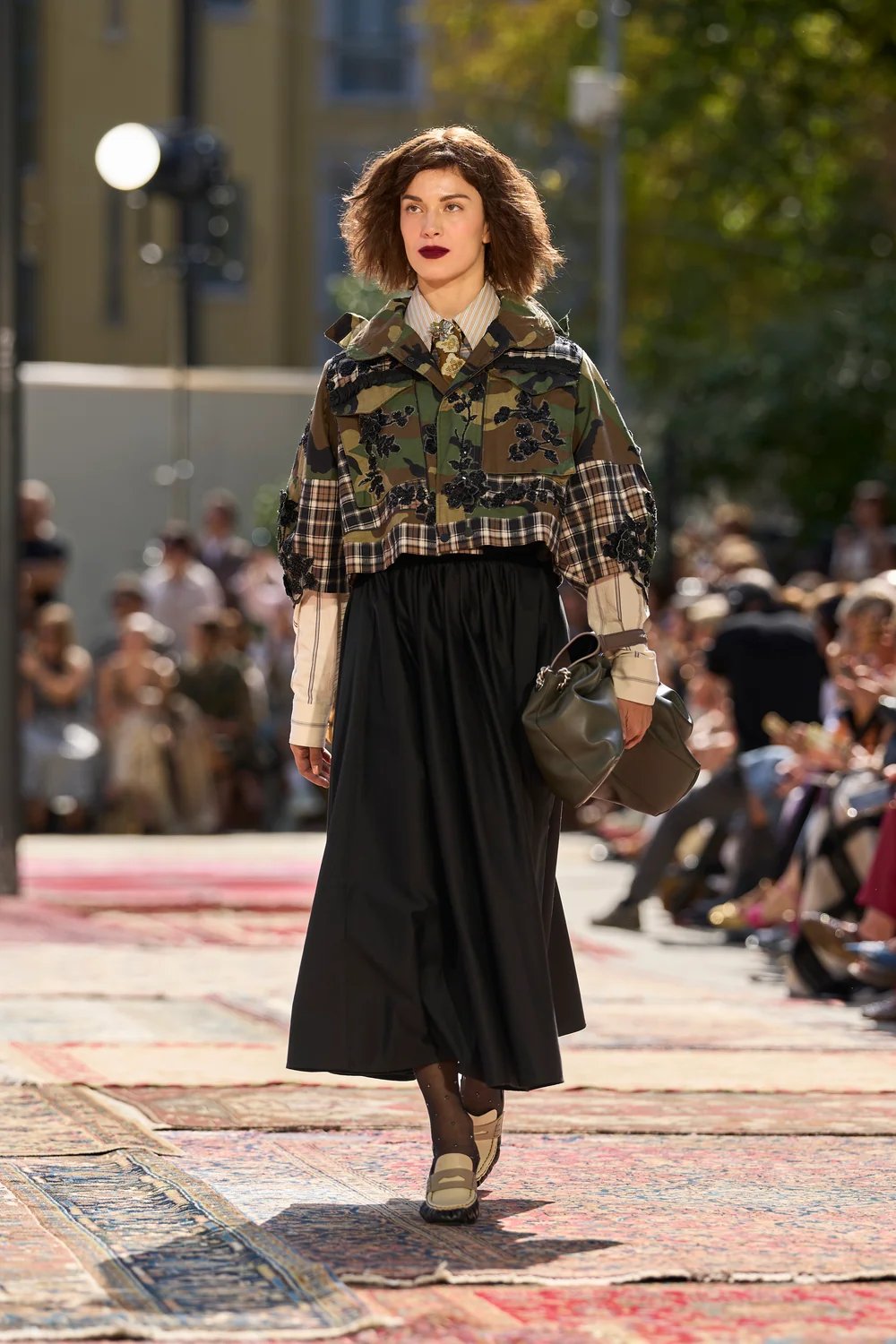
The method is easier to read in single outfits than in the swatch list. Military trousers overlaid with sequined lace flowers. A navy jacket banded in fringe over a lace skirt. A sprigged chiffon shirtdress strapped into a boned corset. Argyle knee socks turned up under tailored shorts. Victorian dresses came cinched at the waist beside embroidered parkas; pleated skirt-and-shirt combinations mixed denim with floral motifs; jackets were laced at the back like corsets. The men’s side drew on the same wardrobe, down to a patchwork floral and checkered jacket and a shorts-and-shirt combination that looked like the morning after a long night.
The Handwork, and the Bronze
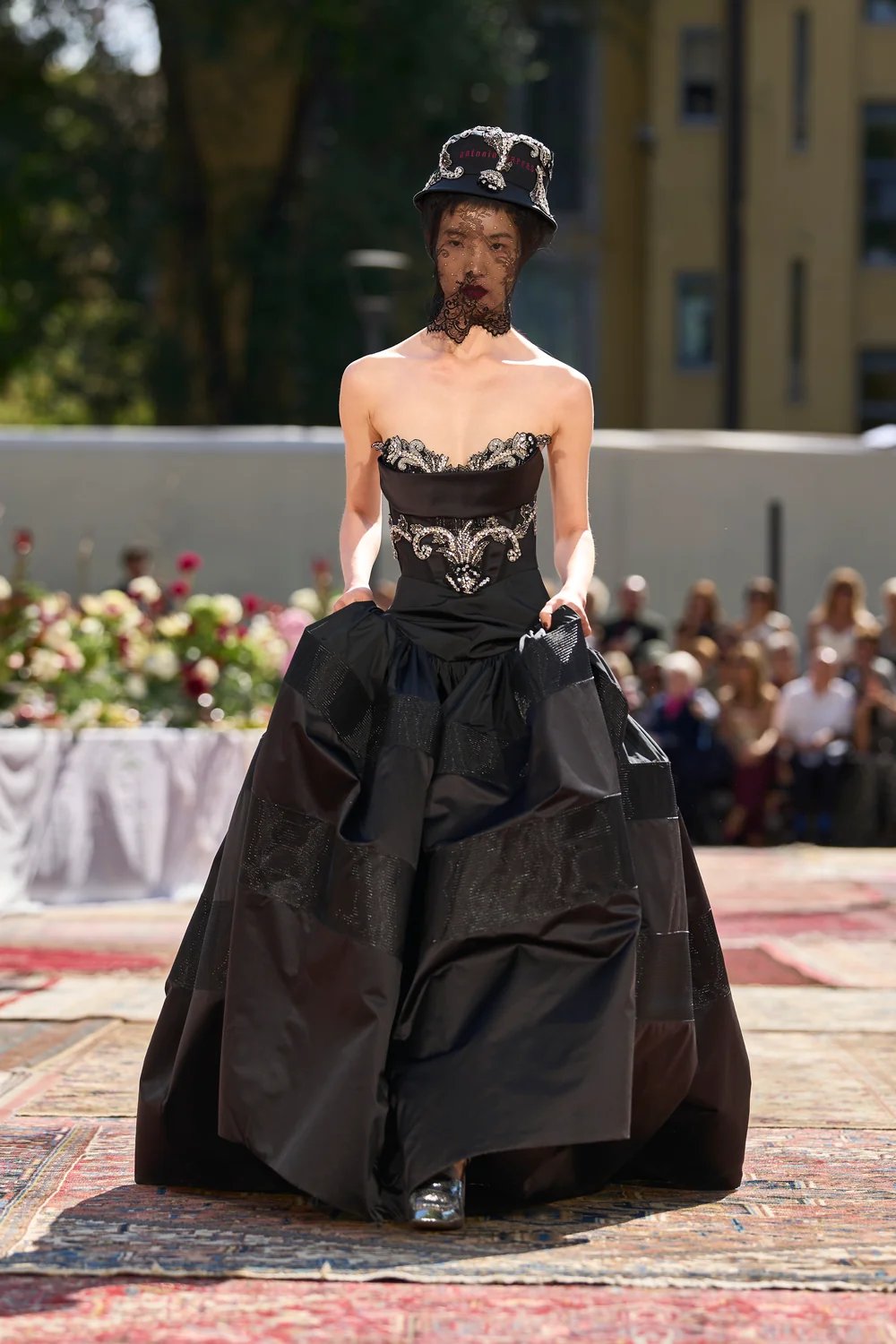
The embroidery and crystal that catch on the signature military jackets and the evening gowns, and the floral motifs on the chiffon dresses, were made by hand by Marras’s artisans in Alghero, Sardinia. Gioielli came from a new collaboration with Giovanni Raspini: Sardinian masks, geckos and flowers cast in burnished bronze. Sardinia was not a reference on a mood board. It was the supply chain.
The Last Passage
The final stretch went to black, ending in a strapless ball gown with an embroidered bodice and a lace veil. Models returned carrying chairs and sat at a long table set for a wedding luncheon. The bride arrived late and disheveled, tripping on the rugs; the groom danced the length of the table; the two of them left together and led the models out. Adrien Brody, an Academy Award winner, watched from the front row.
In a week of consecutive auditorium bookings, one wedding in a park with the gate open buys the house footage, goodwill and a story that survives the drive home. The sewing still has to carry the sale afterward, which is why the embroidery on chiffon and the crystal on military jackets matter more than the seating chart. Next spring the collection reaches the shops. The wedding is already over.
About Antonio Marras
Antonio Marras works from Alghero, Sardinia, and Milan. The house describes its practice as a narrative of fabrics, signs and visions, in which Italian craftsmanship meets contemporary research, and it locates each collection in stories, cultural influences and artistic references carried outward from Sardinia. Its stated position is that garments should not follow time but move through it.
See the complete collection below:
Images courtesy of Antonio Marras
In another fashion week news, Diesel Spring 2027: Glenn Martens Takes His Final Bow in Shredded Denim