
After five years, the Belgian designer closed his Diesel chapter in Milan with deconstructed workwear, “pantasocks” and a finale that turned the bleachers into a nightclub. The show also doubled as the launch platform for Only Desire, the label’s first feminine fragrance under his creative direction
The last 20 looks of Glenn Martens’ swan song for Diesel were never going to get an undivided audience. He had planted performers in the bleachers, and by the finale the remix of Donna Summer’s “Love to Love You Baby” had built to a pitch that had them pole dancing, headbanging, making out with each other or writhing in ecstasy alone, depending on the seat.
It was a fitting exclamation point on a five-year run. Martens took over a jeans-and-T-shirt specialist and left behind a label whose party is the product. The house line is that Diesel stands for alternative luxury. On this evidence, what it actually stands for is access: a brand that lets its customer in rather than grading them at the door.
The spectacle was also a launch. Only Desire, the first feminine fragrance developed under Martens’ creative direction at Diesel, arrived over the summer, and the Sept. 22 show in Milan was built to sell it. Perfumers Nelly Hachem-Ruiz and Paul Guerlain built the scent around what they call metallic vanilla: a cold first hit of platinum aldehydes and AmberXtreme that warms as it sits. Dove Cameron fronts the campaign. At a show where the clothes were competing with a makeout session in the stands, the perfume had the better night.
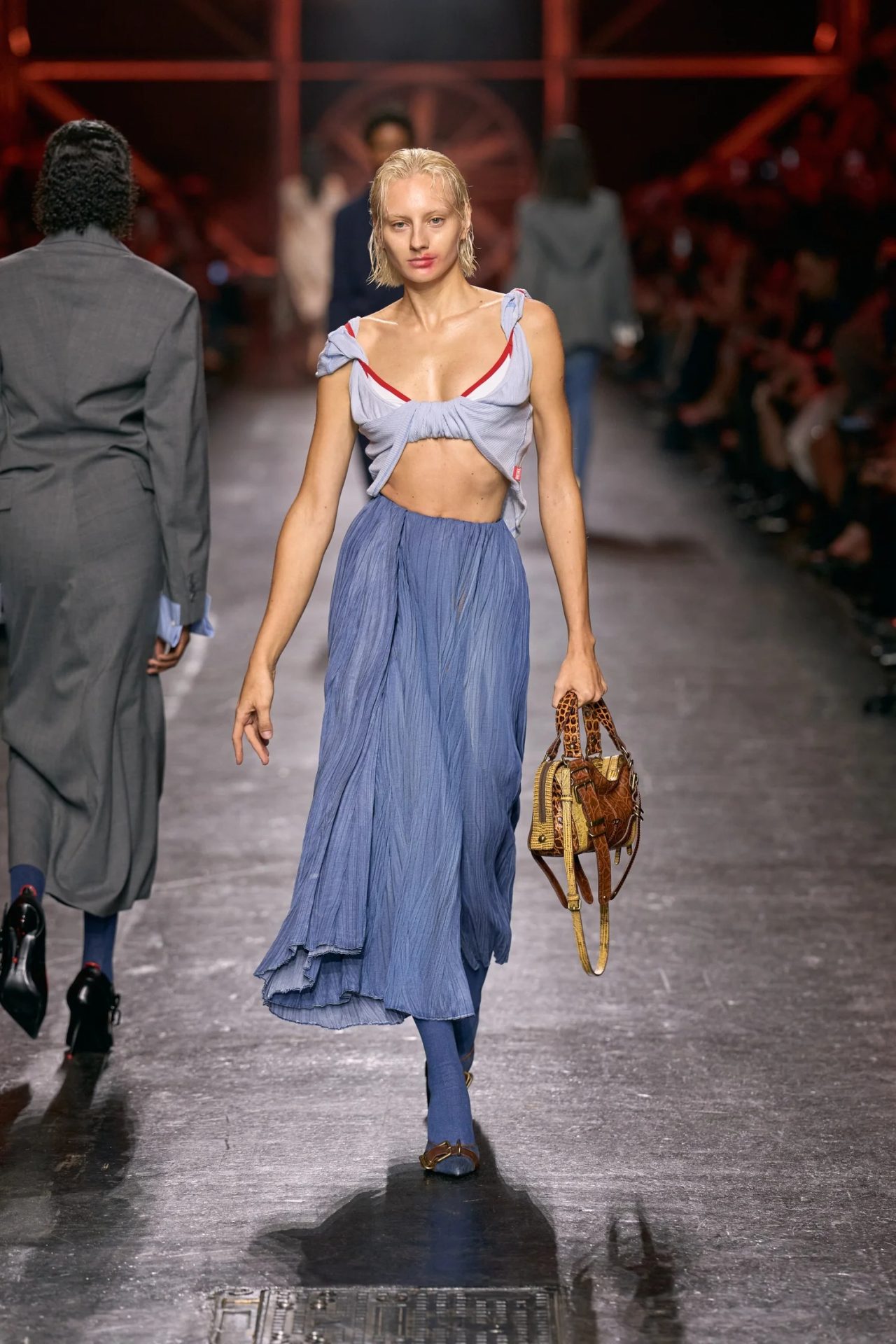
The Clothes, Before the Chaos
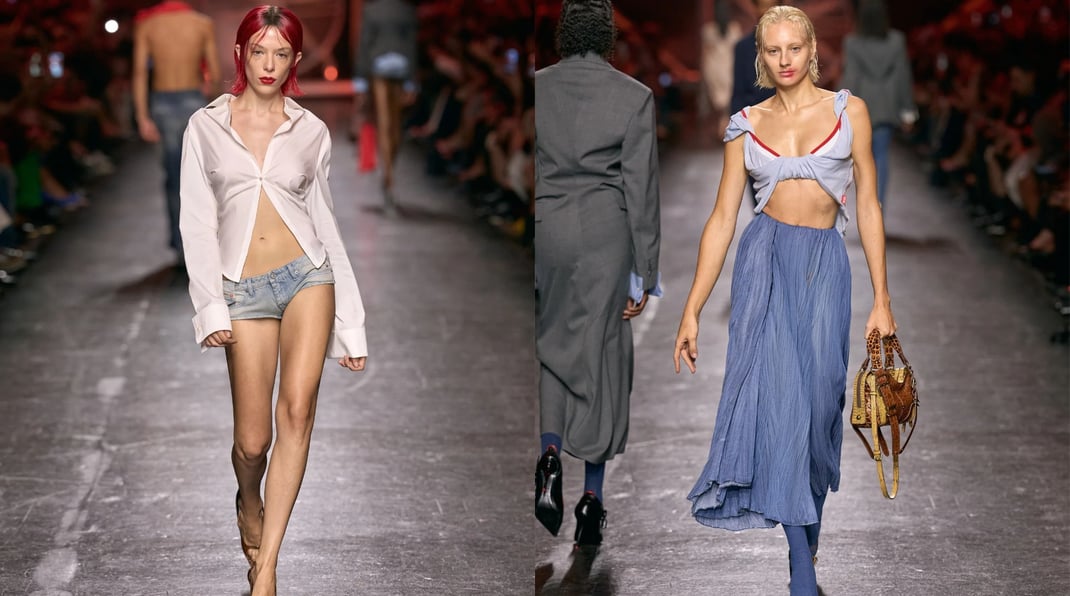
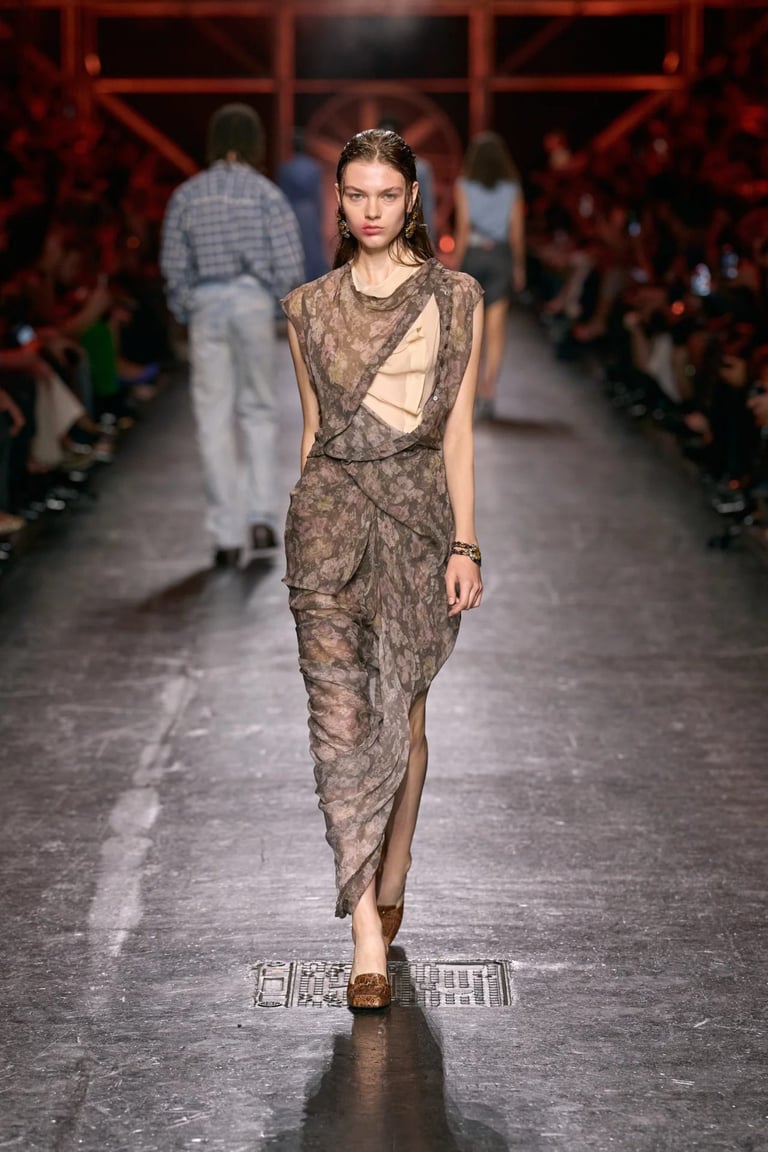
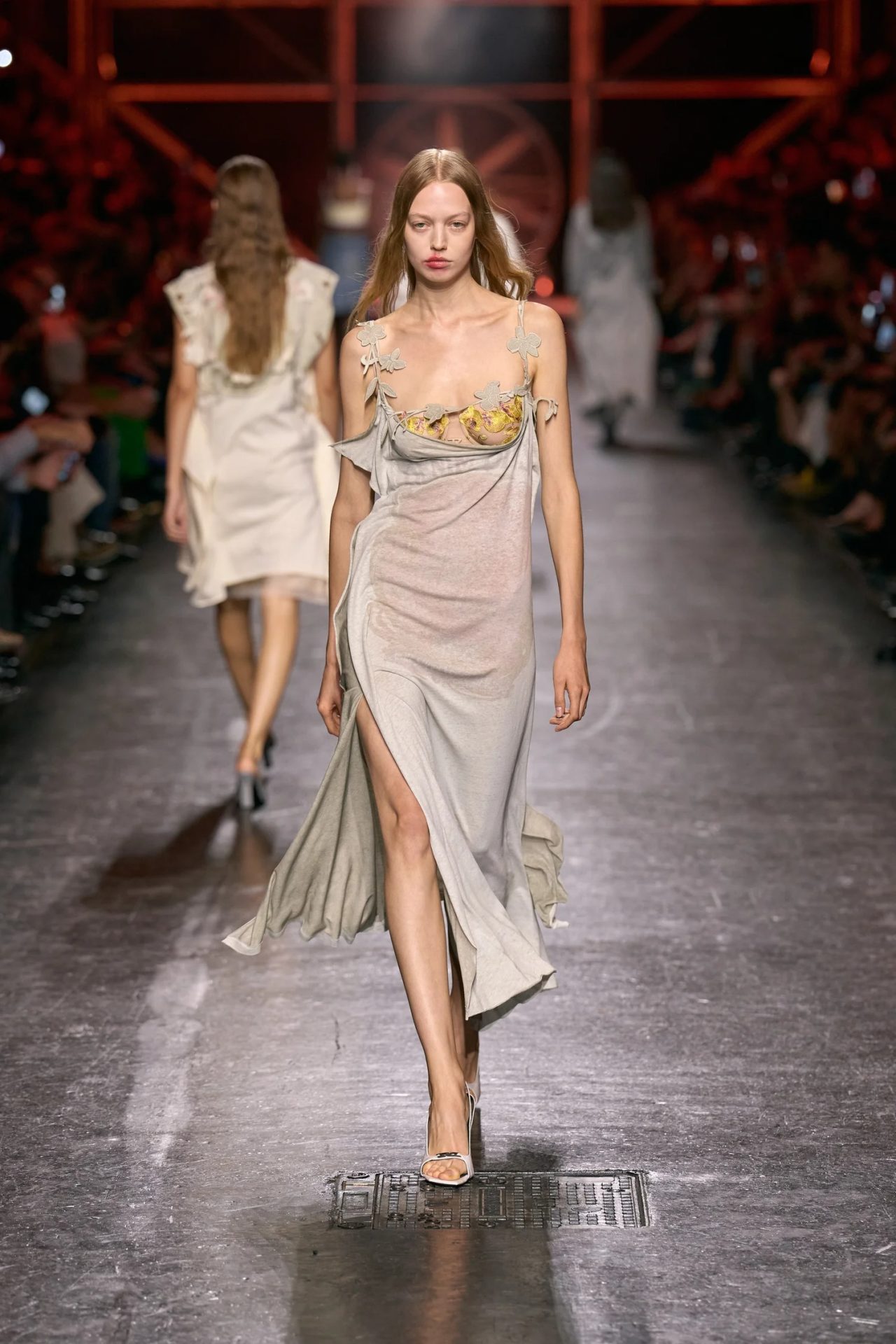
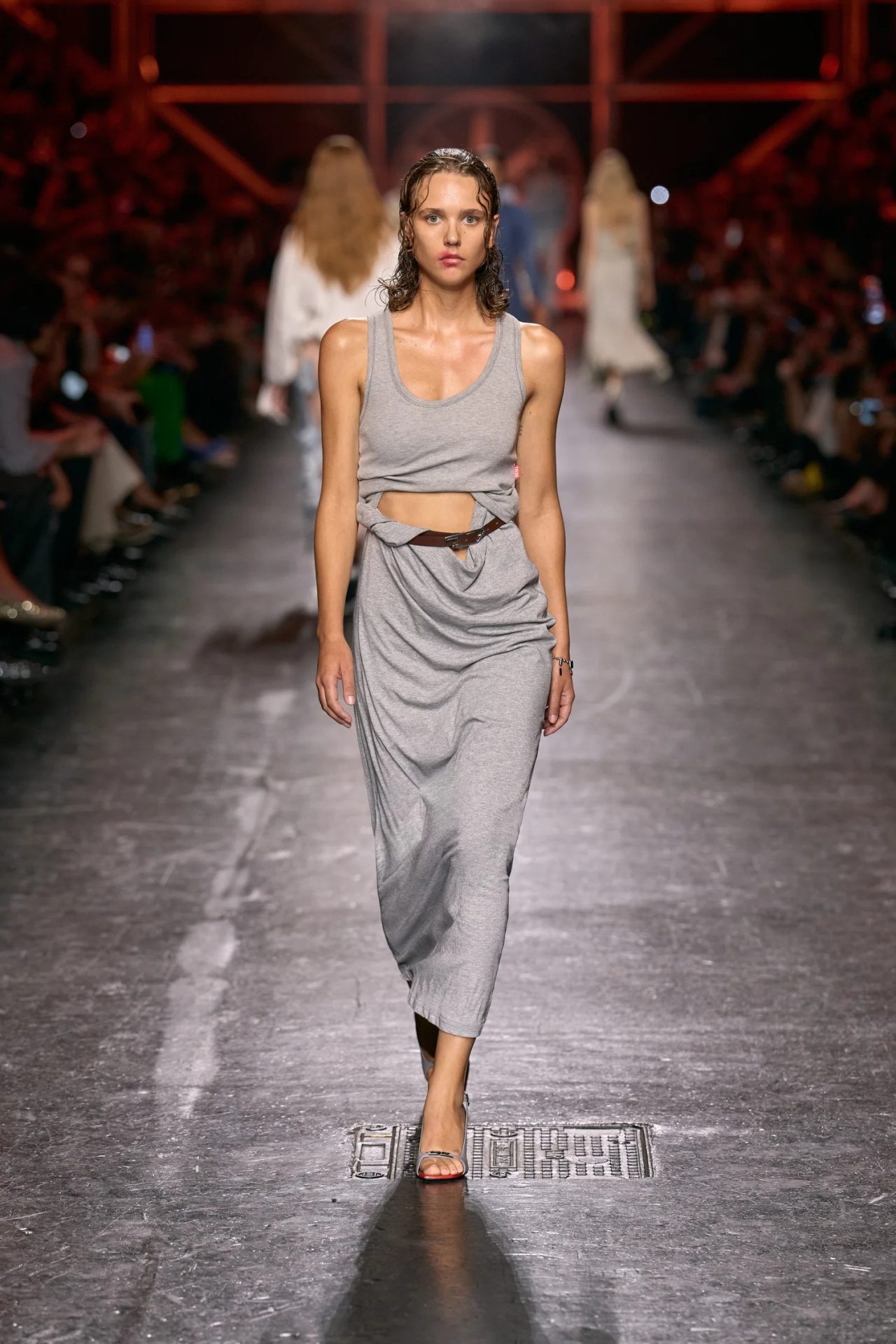
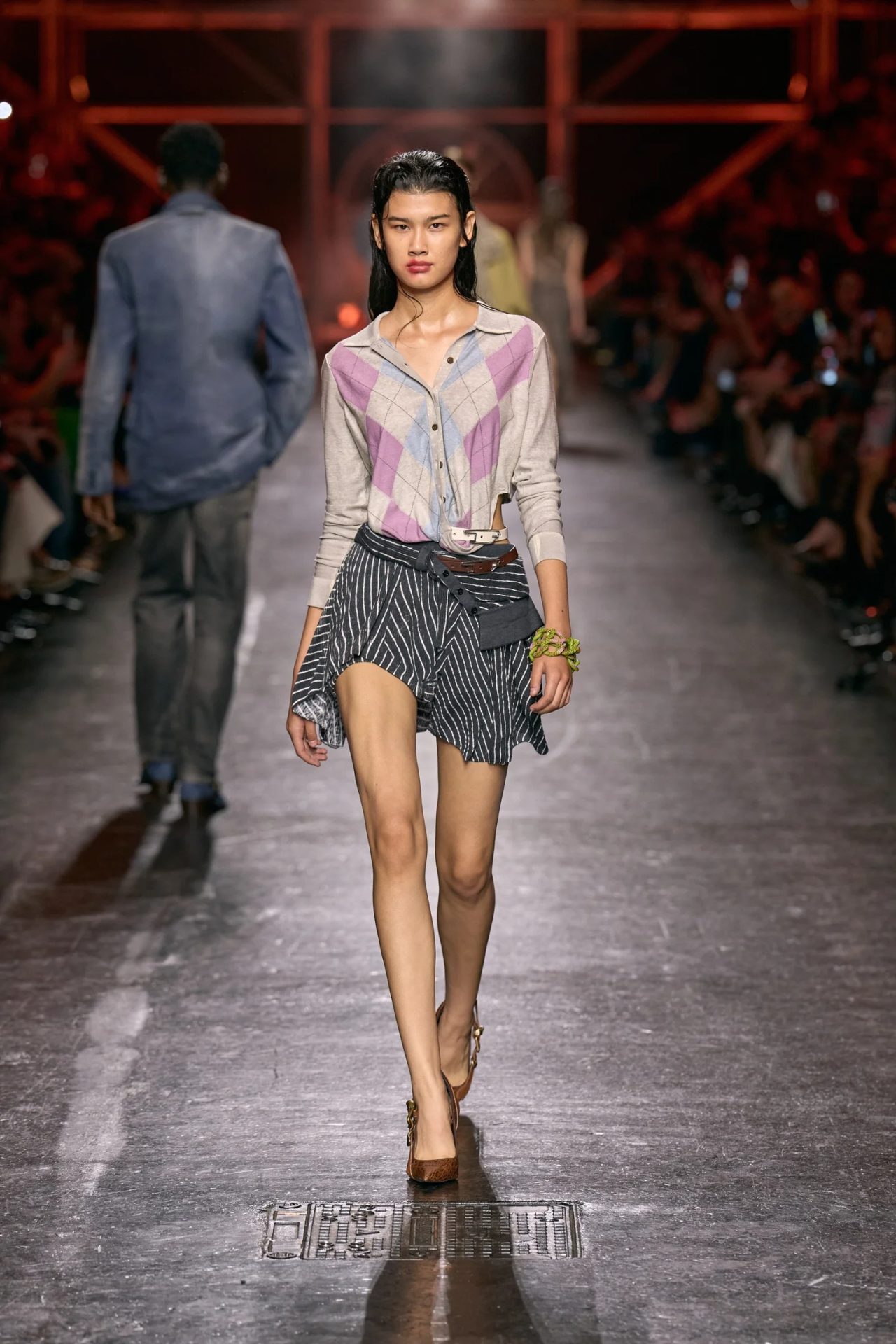
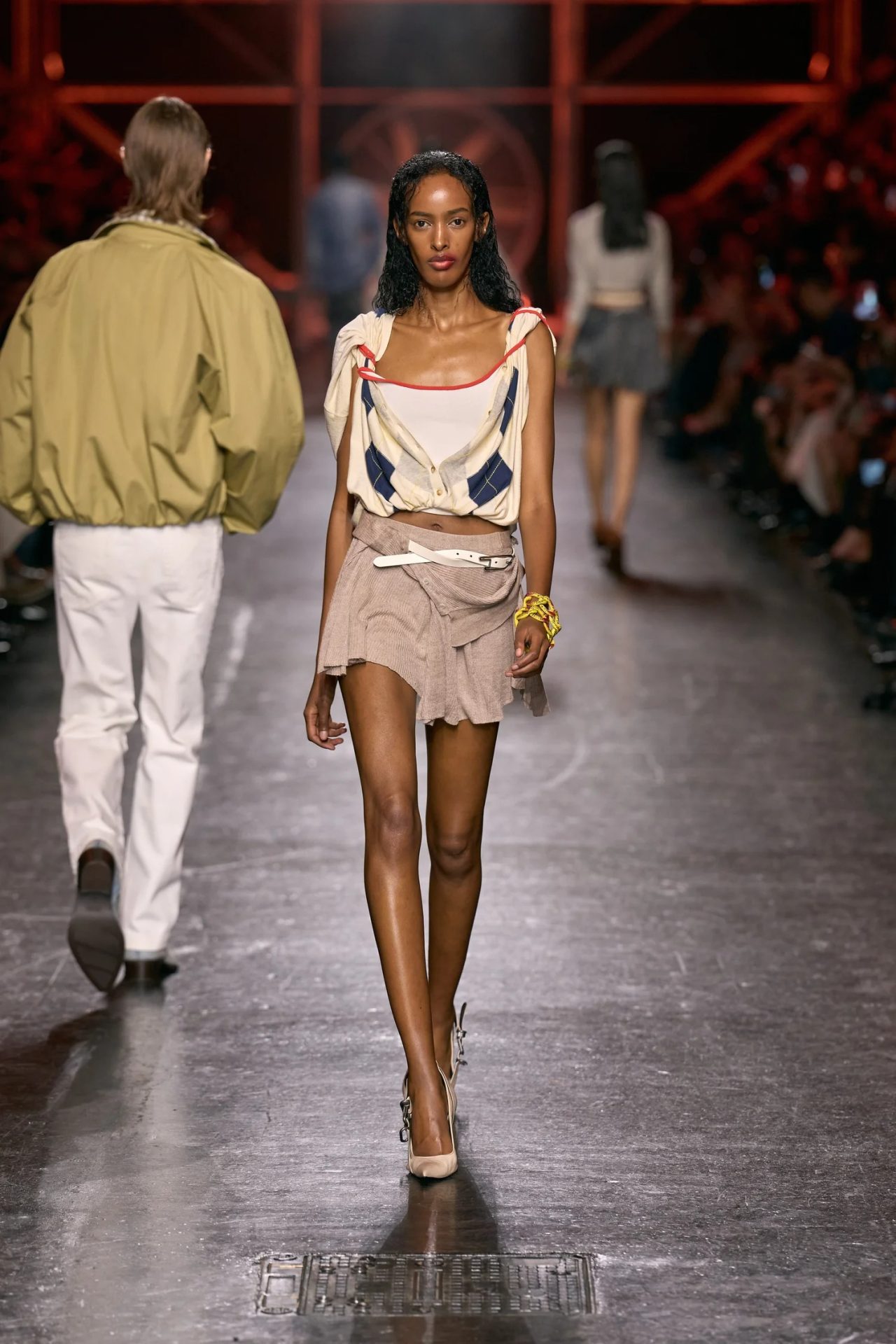
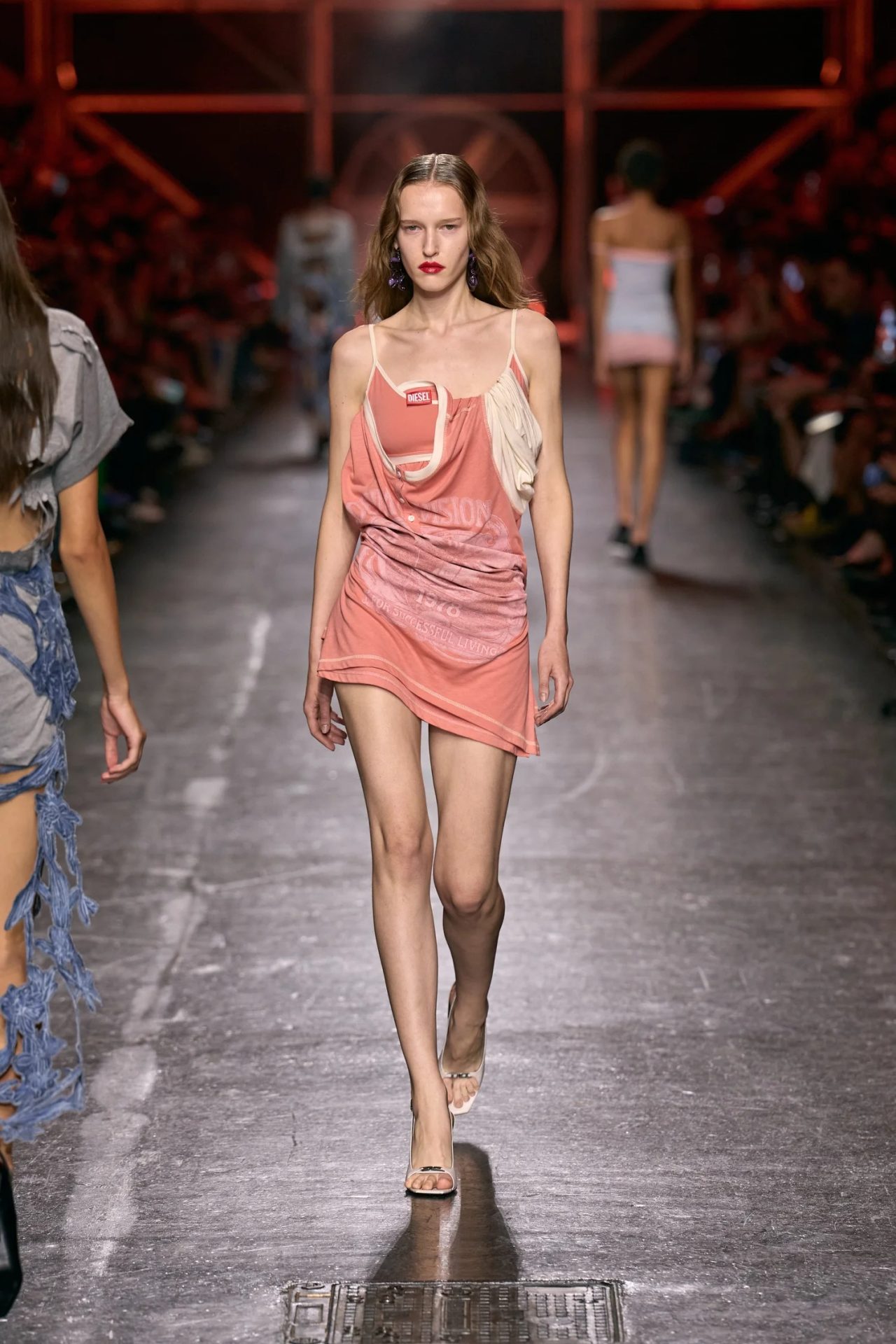
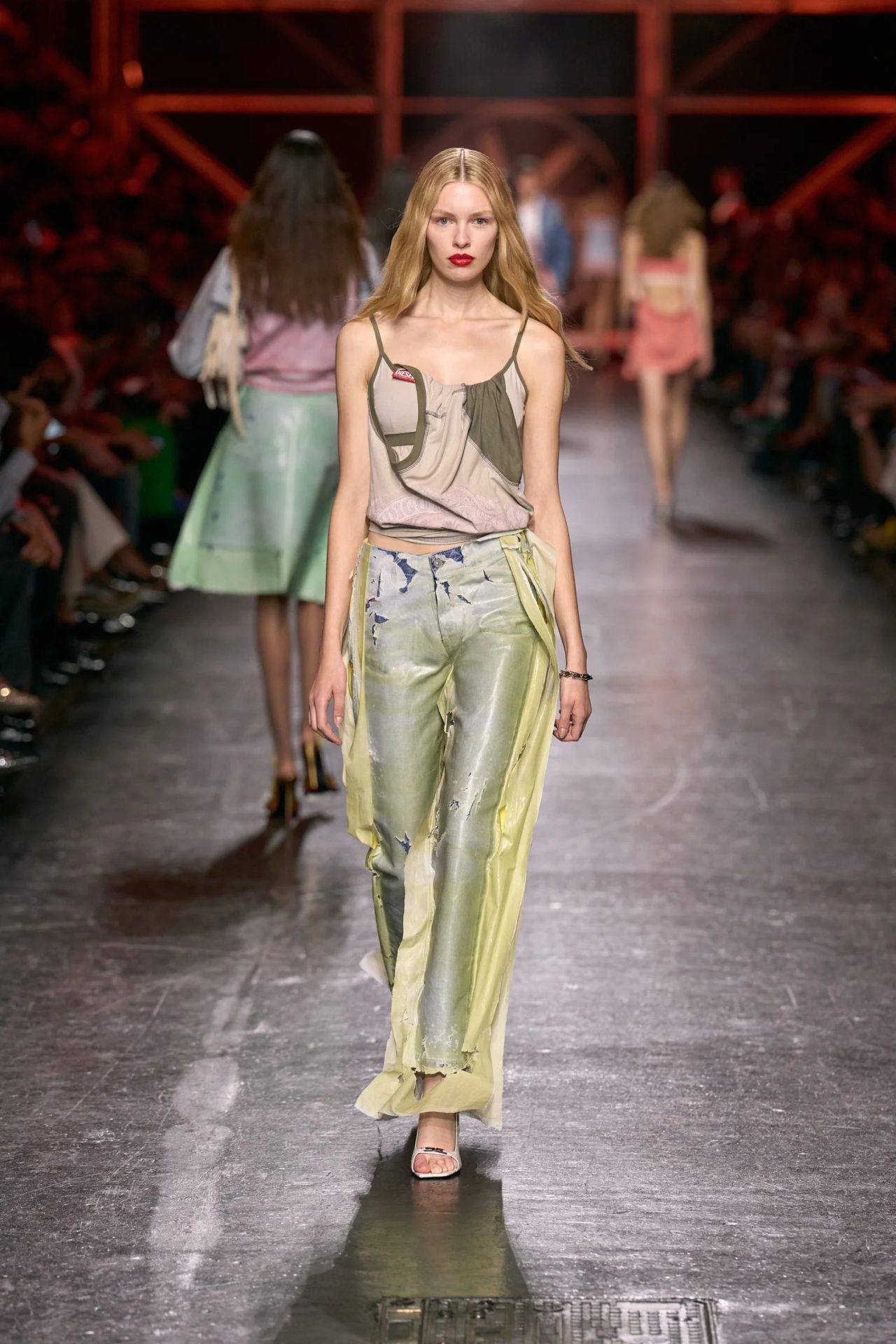
They were worth watching anyway. Martens worked the seams, not the surface. A trucker jacket was grafted onto a quarter zip; a jeans jacket was fused with a polo shirt; denim ran past the ankle into “pantasocks.” Shearling coats and lumberjack shirts were printed onto nylon, which meant that for long stretches of the show you could not say with confidence whether you were looking at denim, leather or a trompe-l’œil print.
The styling moved in one direction. Each exit came back skimpier than the last, and the final look landed on minuscule HotPants on oiled male models and dresses made of shredded denim and sweatshirt fleece, the remaining strands hanging like guipure lace. Sending nearly nothing down a runway is easy. Making it read as a collection rather than a stunt is the hard part, and that work happens in the fabric room.
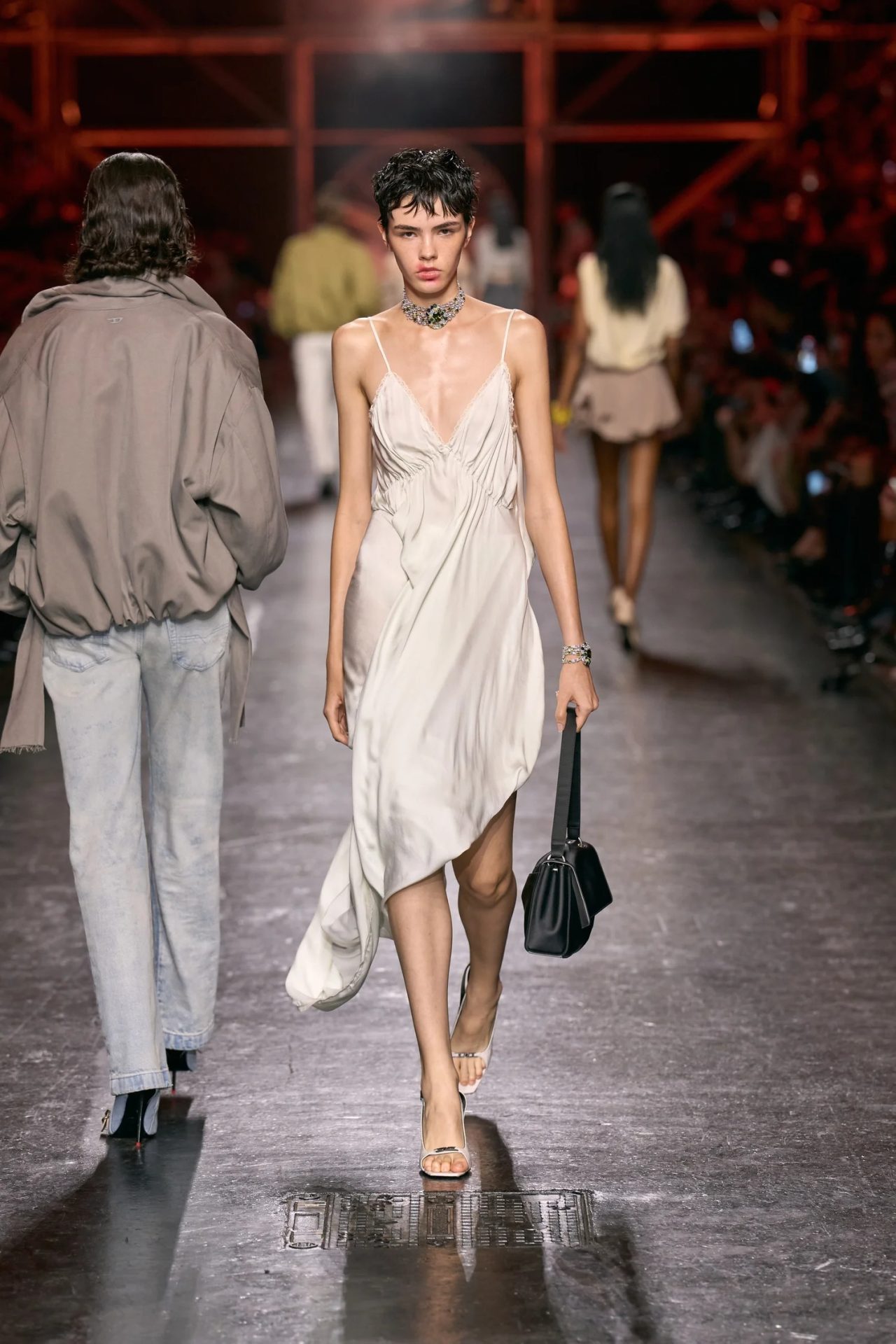
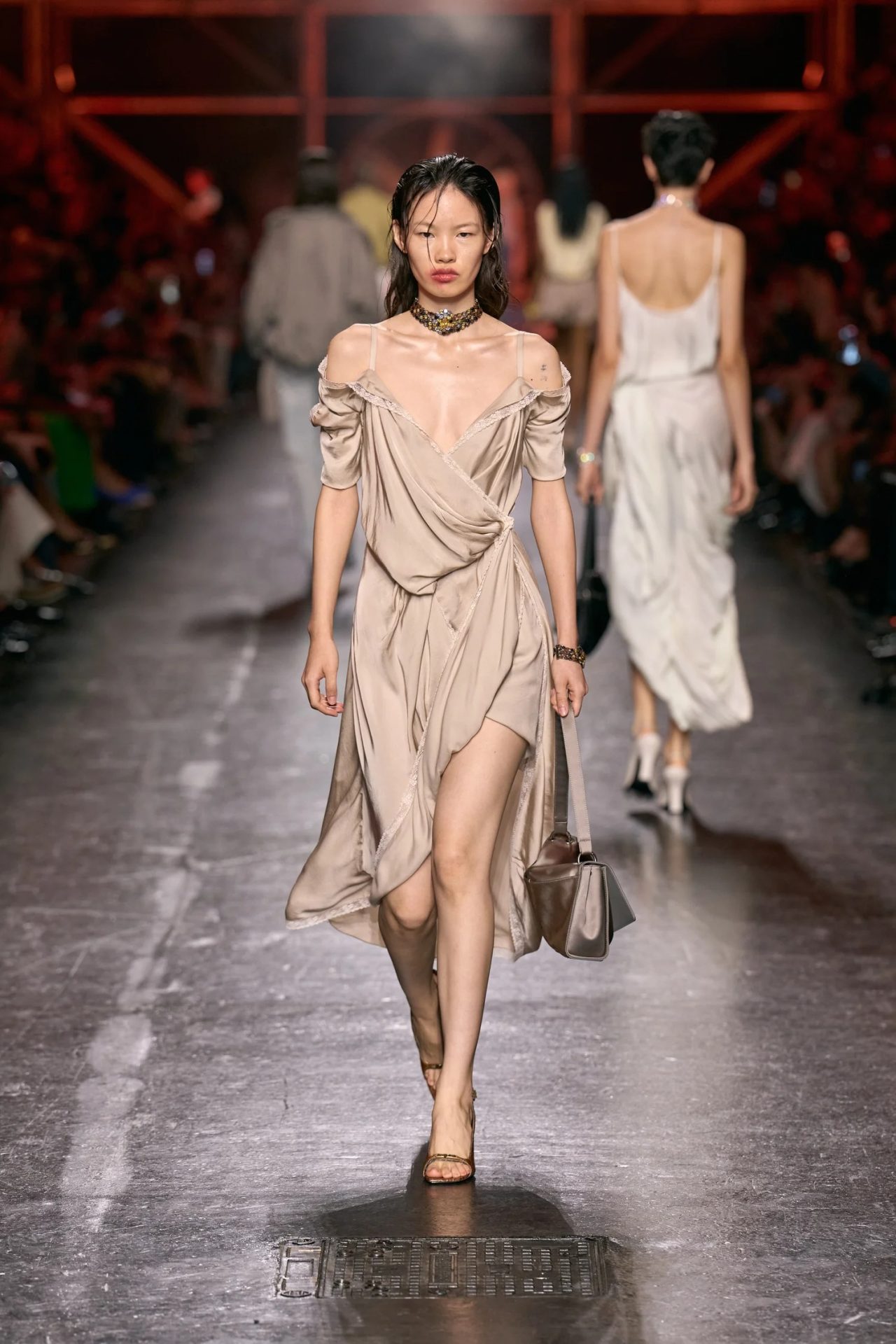
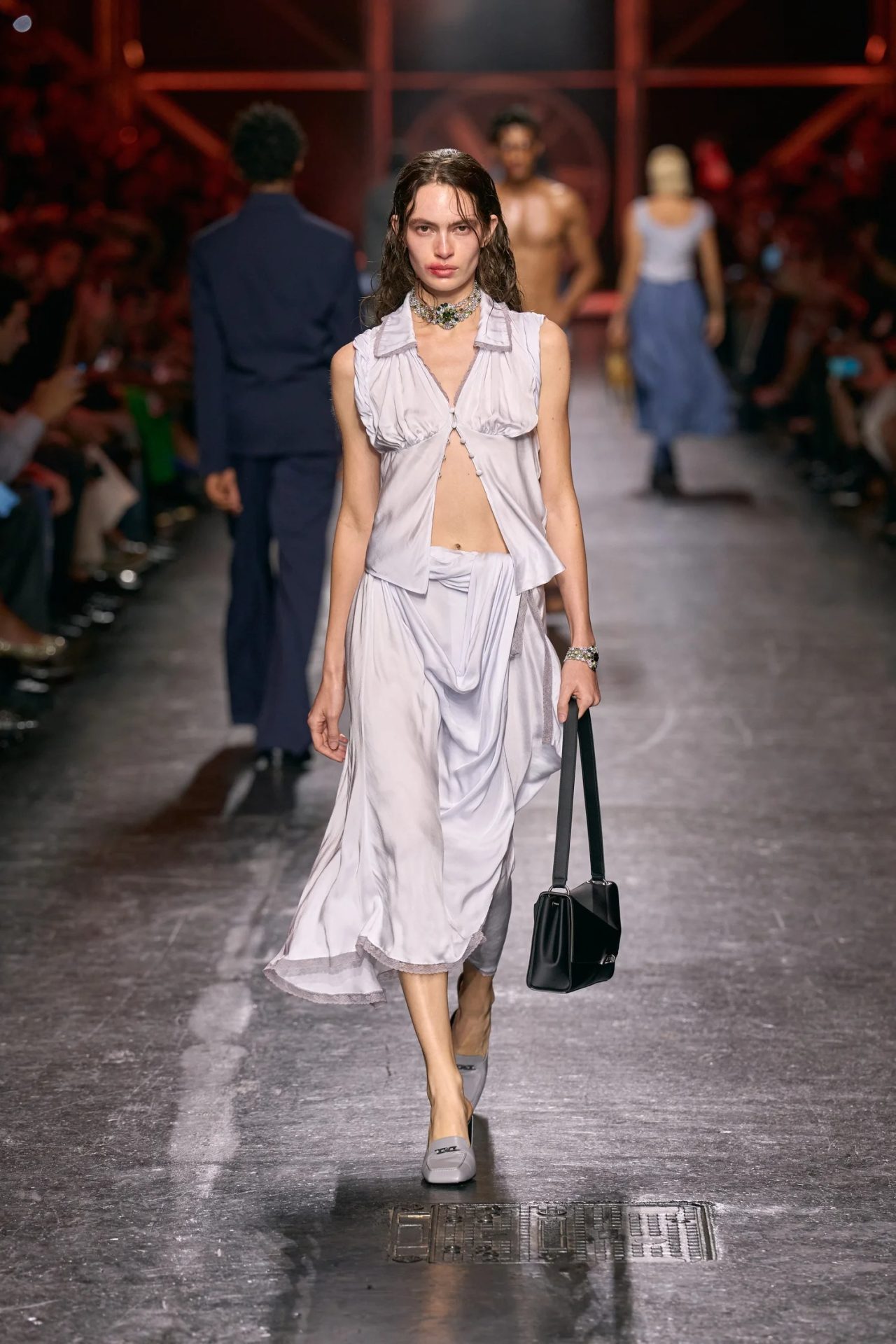
A Fabric He Never Stopped Reworking
Martens first won attention for avant-garde silhouettes at Y/Project, the Belgian label that has since closed, and he carried that construction instinct into a brand built on five-pocket jeans. Backstage, he framed the material as the point, not the constraint.
“Denim is a never-ending source of inspiration,” he said. “The beauty of denim is always the soul: The more you work on it, the more soul it gets. It’s the same thing with five-pocket jeans. The more you wear them, the more beautiful they become. I think denim is really that.”
That is the case for his five years in one answer. Diesel’s advantage was never prestige. It was a product that improved with use, sold to people who didn’t need to be talked into the fantasy.
The Bookend
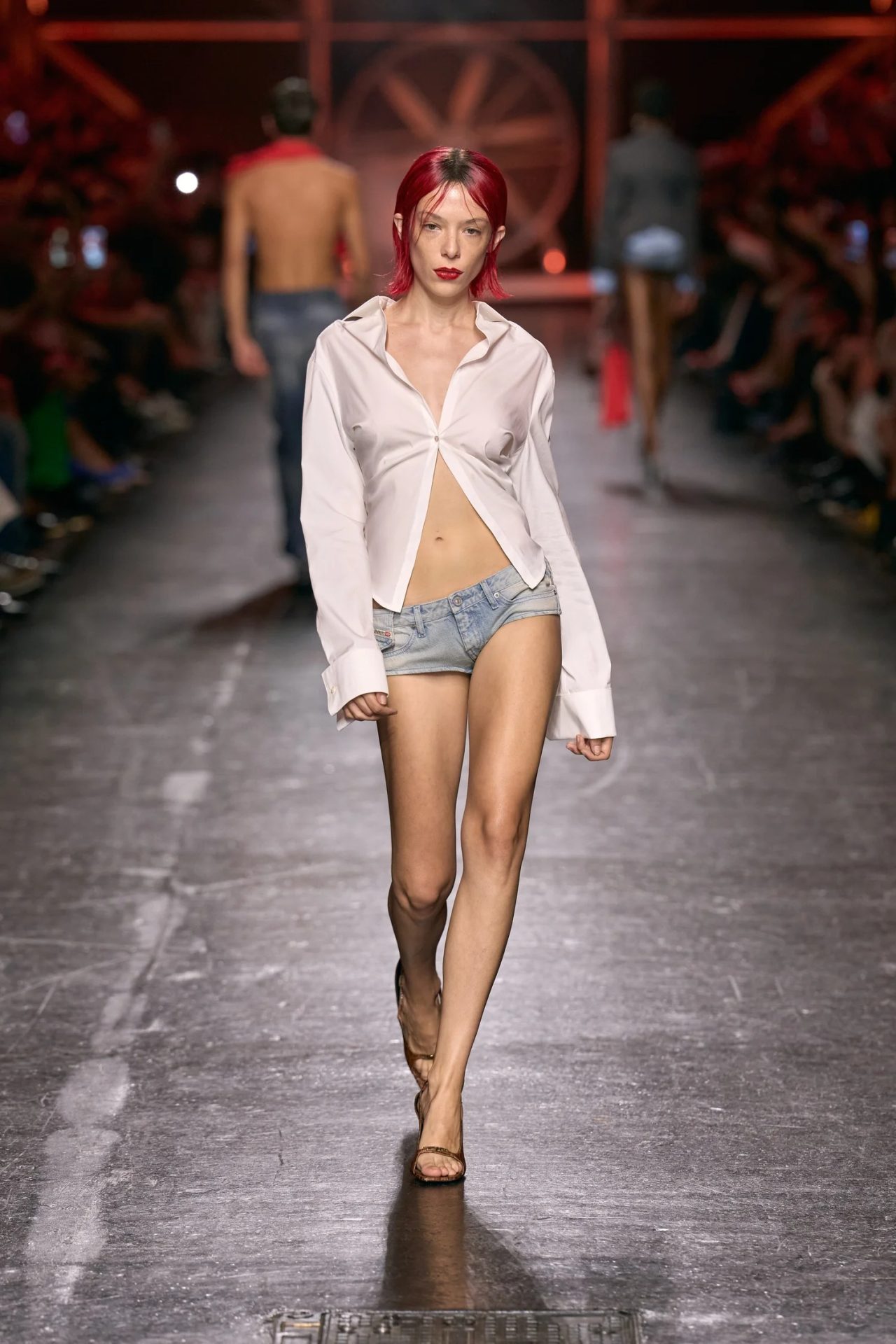
Guests who were paying attention caught the rest of the trick. Model Ella Snyder wore the finale look, which was the same as the first look Martens sent down a Diesel runway. One model, two ends of the same five-year sentence.
It was his last. Martens now devotes himself full time to Maison Margiela in Paris, having run the two OTB-owned houses in tandem for the past year and a half. He moves to a couture house with a longer avant-garde ledger and a smaller, quieter room than the one he just filled.
What He Leaves Behind
Backstage, Martens summed up the tenure without much hedging. “It’s always stood for alternative luxury, but it’s definitely a brand [that] has made statements, and I think a lot of people are following it,” he said.
The second half of that sentence is the load-bearing half. Diesel under Martens didn’t compete on heritage or handbags. It competed on permission, and permission is the one asset a luxury house cannot buy quickly. Much of the Milan calendar sells aspiration to a customer standing outside the velvet rope. Diesel sold the room, and charged less for it.
Which is why the fragrance was the smartest line item on the schedule. A scent is the most accessible entry point a brand like this has: the one Diesel product that reaches a first-time buyer and keeps selling after the runway images stop circulating. The stunt bought the attention this week. The bottle is what will still be moving in three years.
Snyder closed the show in a look cut from the same cloth as the one that opened the chapter. The bleachers were still going when the lights came up.
Diesel’s next chapter starts without him. The audience he built is what stays.
See the complete collection below:
Images courtesy of Diesel
In another fashion week collection, Thom Browne Spring 2027 ready-to-wear collection at New York Fashion Week