
The artistic director staged his spring 2027 collection inside a purpose-built Gucci boutique in Milan, menswear first and womenswear after, and argued that the house’s bourgeois and eccentric halves can finally share one identity
MILAN — Demna started with the room.
Gucci’s spring 2027 show on Sept. 25, the closing Friday of Milan Fashion Week, unfolded inside a Gucci store built for the occasion and titled, plainly, “The Store Show”: marble walls, a bas-relief, a rail of clothes, shelves holding the brand’s accessories. The designer called the set a blueprint for a future Gucci unit. It also fixed the terms of everything that followed. Here was a collection shown as stock, in a space engineered for the transaction – a retail proposition and a design one made at the same time.
He split the presentation in two, menswear first and womenswear second, so that each got a full turn rather than half of one. Models moved through the connected rooms at a deliberate pace, purposeful rather than performative. In preview, Demna said the set and the clothes together consolidated an aesthetic he has been building since he arrived.
Two Identities, One Wardrobe
His argument in preview was psychological before it was visual. Gucci, he said, sits between bourgeois and pop culture, between eccentricity and sensuality, between Florence and Hollywood. His first year in the job went into studying that split, and he describes spring 2027 as the first collection in which he has assembled the pieces into a single vision.
“I needed to kind of digest this information because sexy is easier for me, or sex appeal is easier to understand than the bourgeoisie in the Gucci prism,” he said. “So I kind of, basically like a Lego, put all of these different elements together, and then tried to make it mine.”
He was more direct about the house itself. “Gucci is not a mono-channel consumer; it has multiple personalities in its identity,” he said.
The two halves he names are the bourgeois and the eccentrics, and he treats them as interdependent rather than opposed. A Gucci that leans only respectable, on his reading, struggles to hold its own identity; a Gucci that leans only eccentric fails too. The assignment for the season was to keep both standing at once.
What Walked
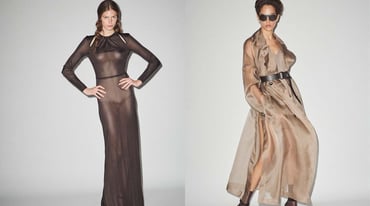
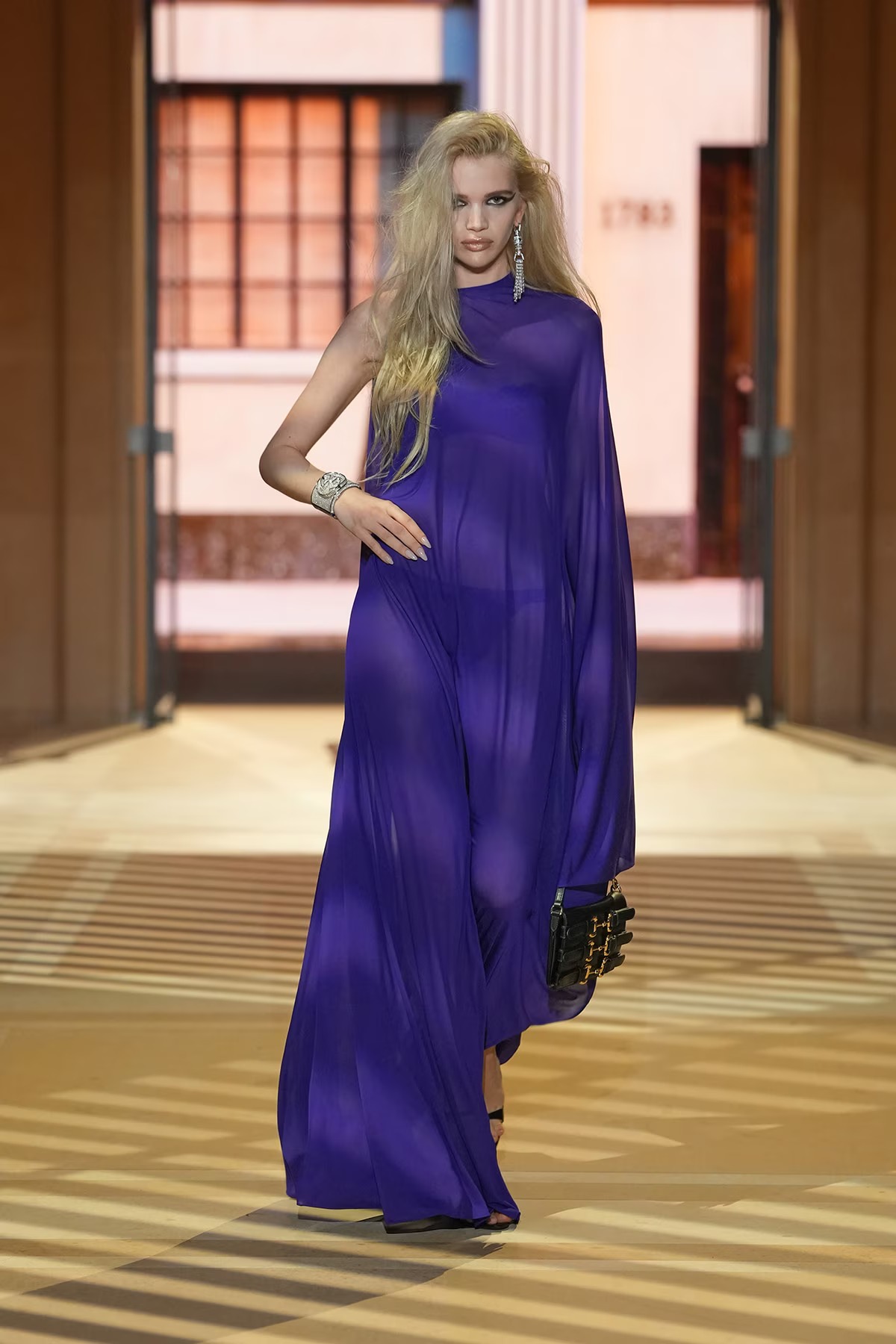
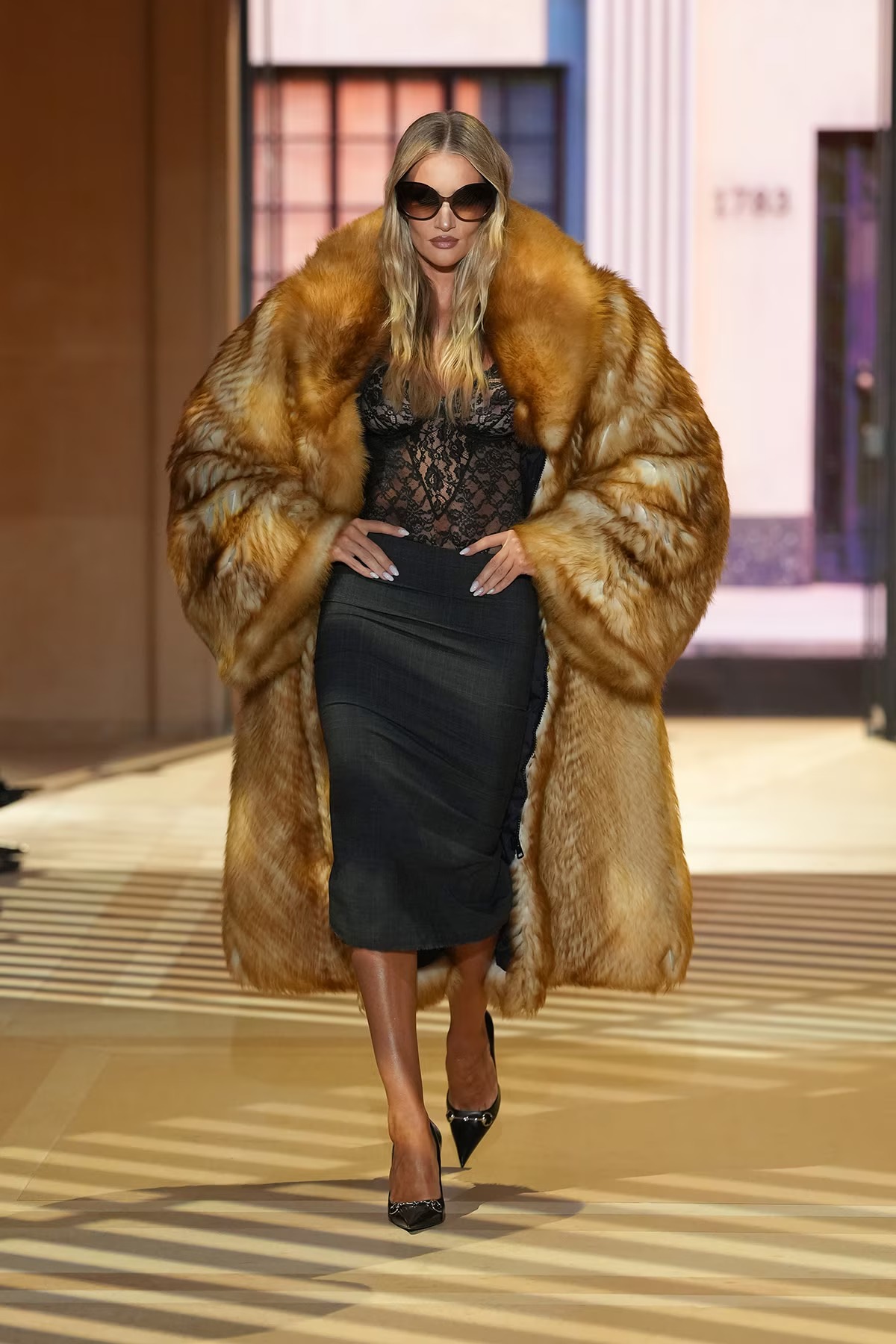
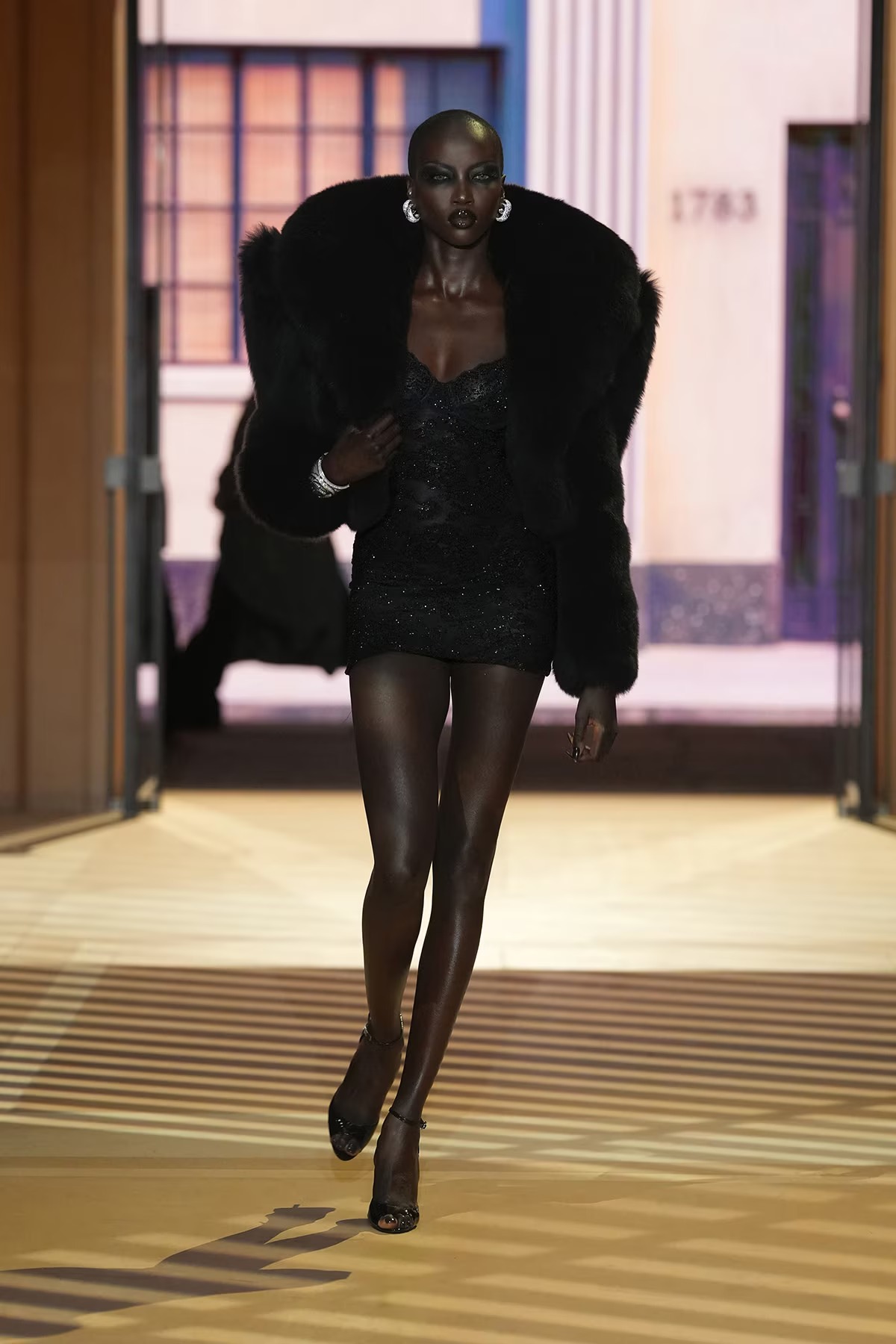
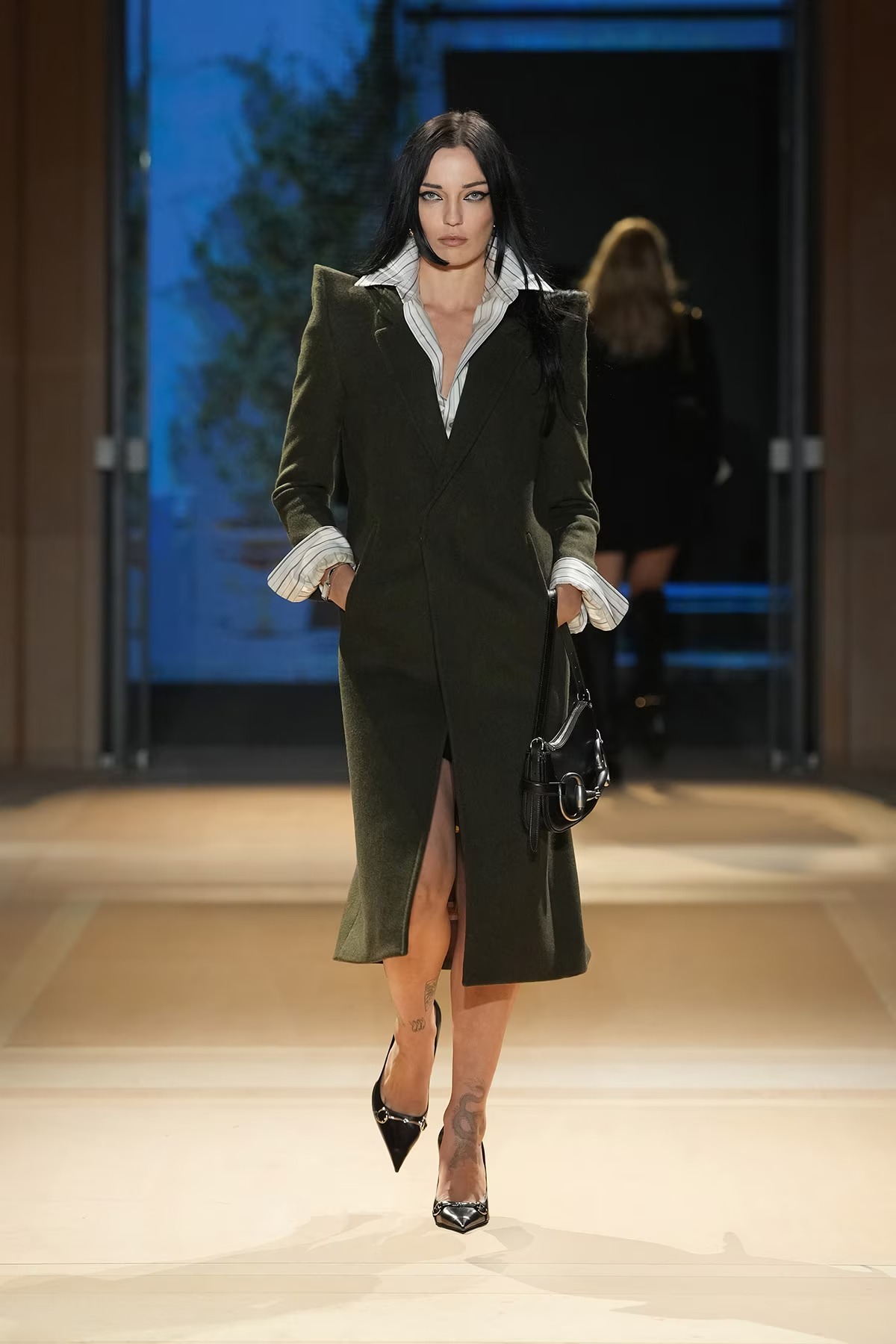
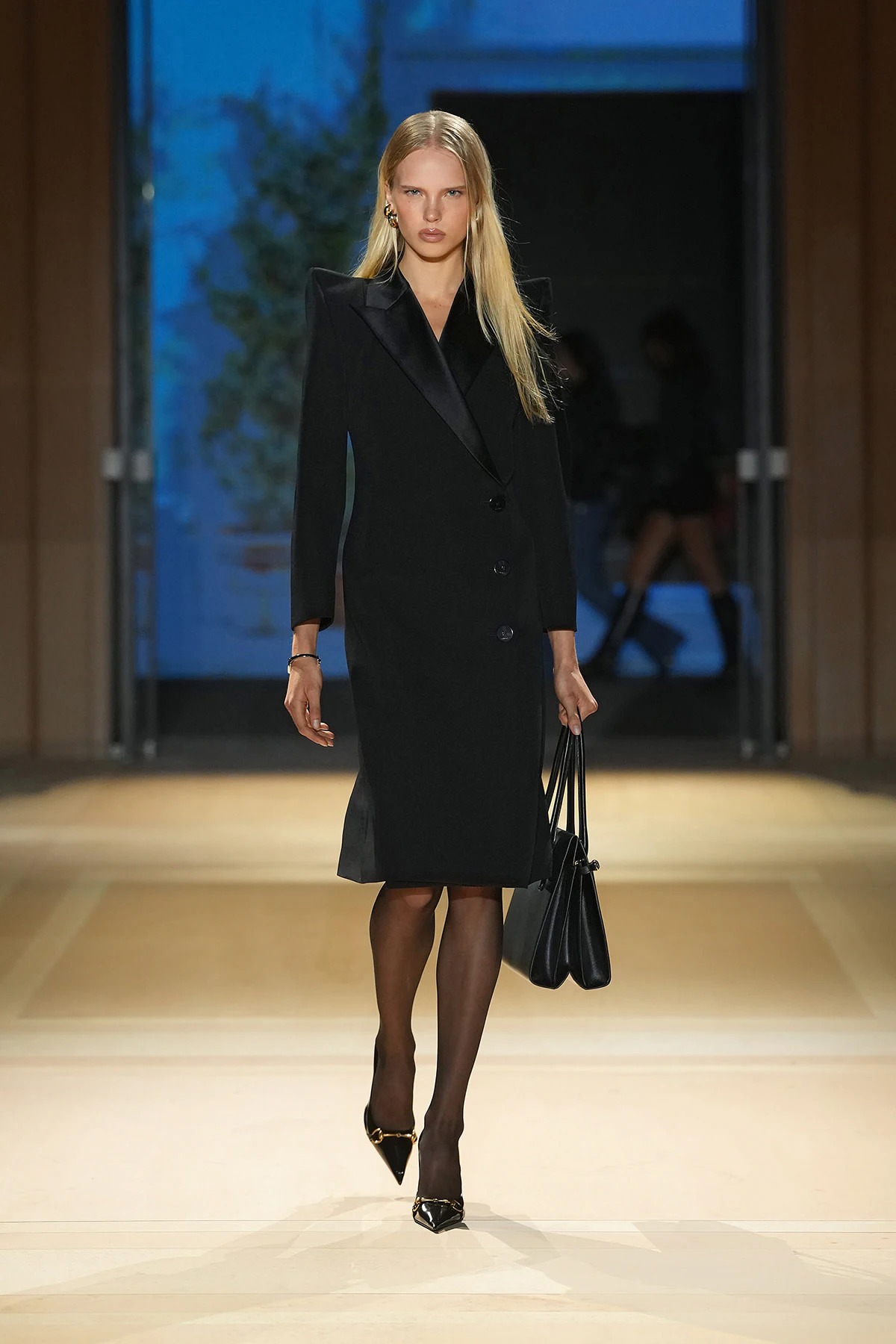
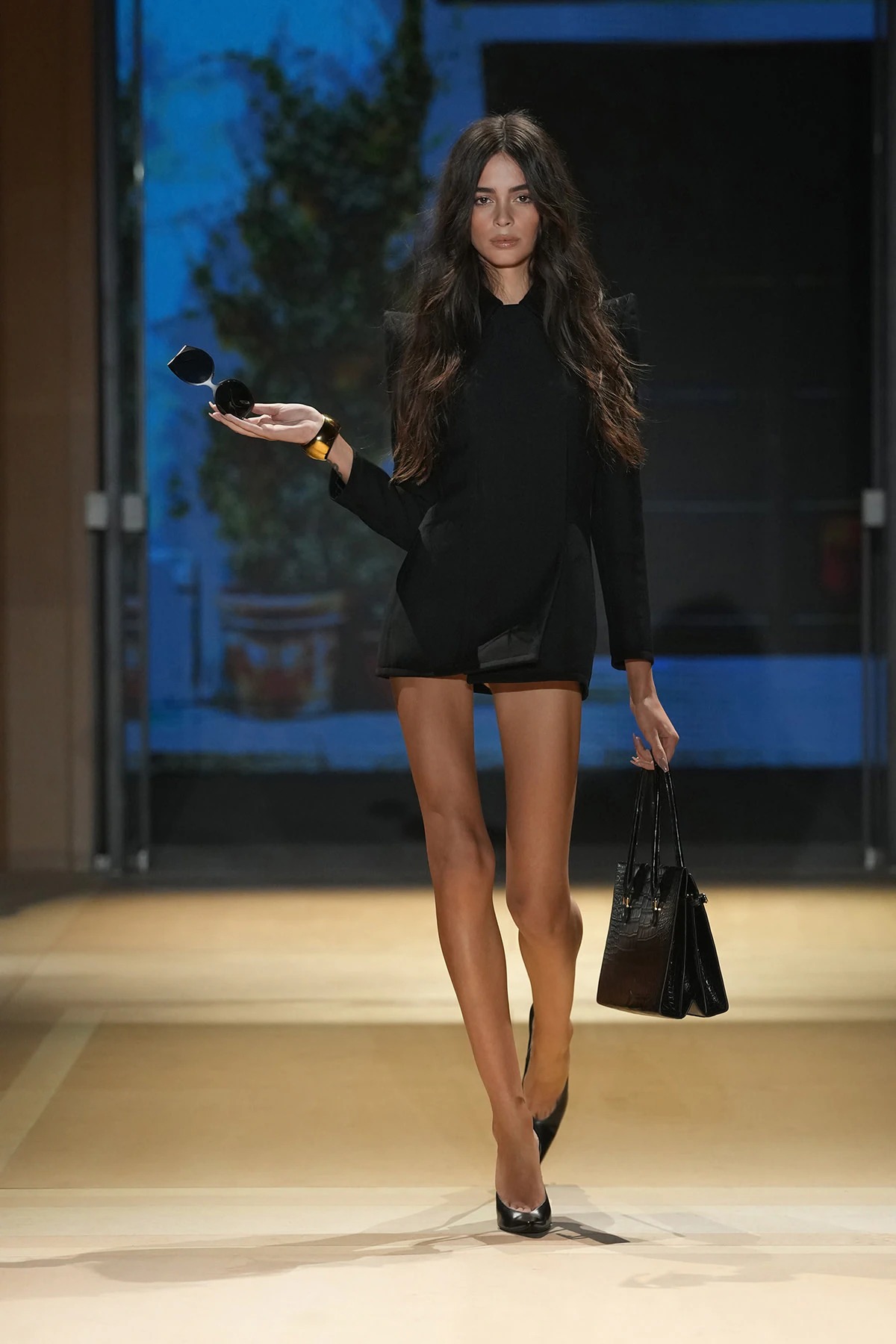
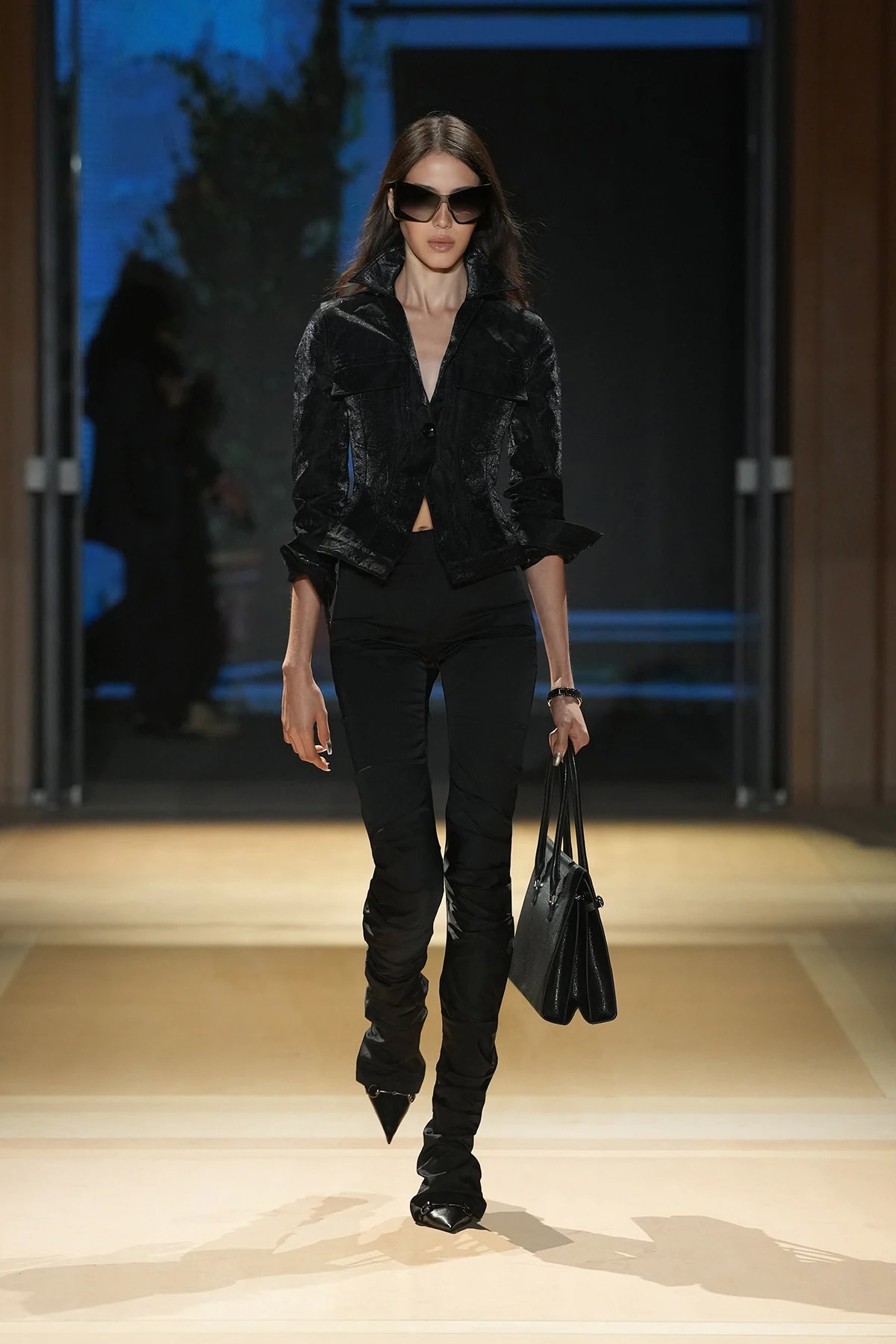
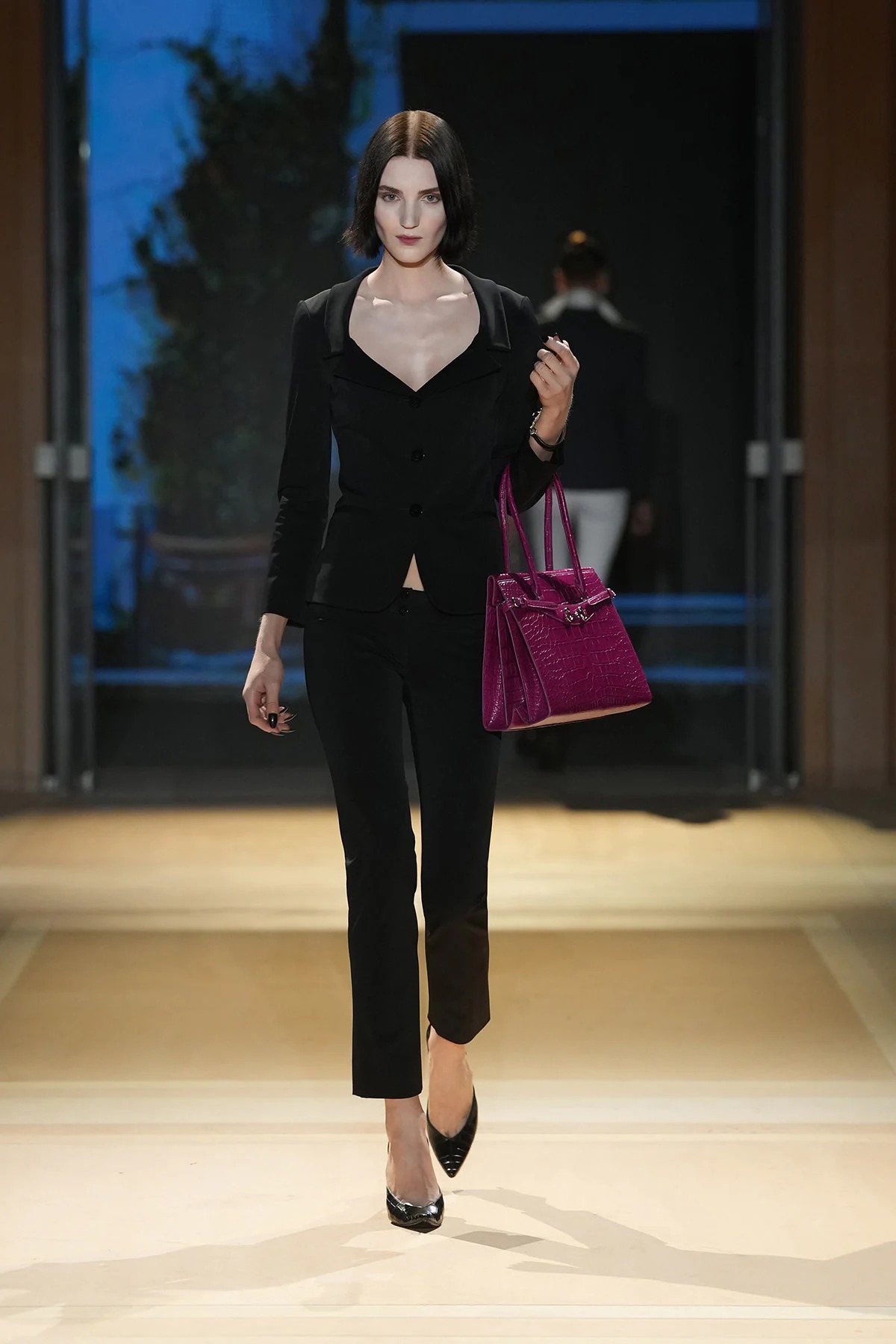
Shadows of the designer’s Balenciaga years arrived early: tailoring cut dark and severe, shoes extended at the toe. Proportions ran wide past the shoulder line, then settled into Gucci’s own register instead of being imported whole.
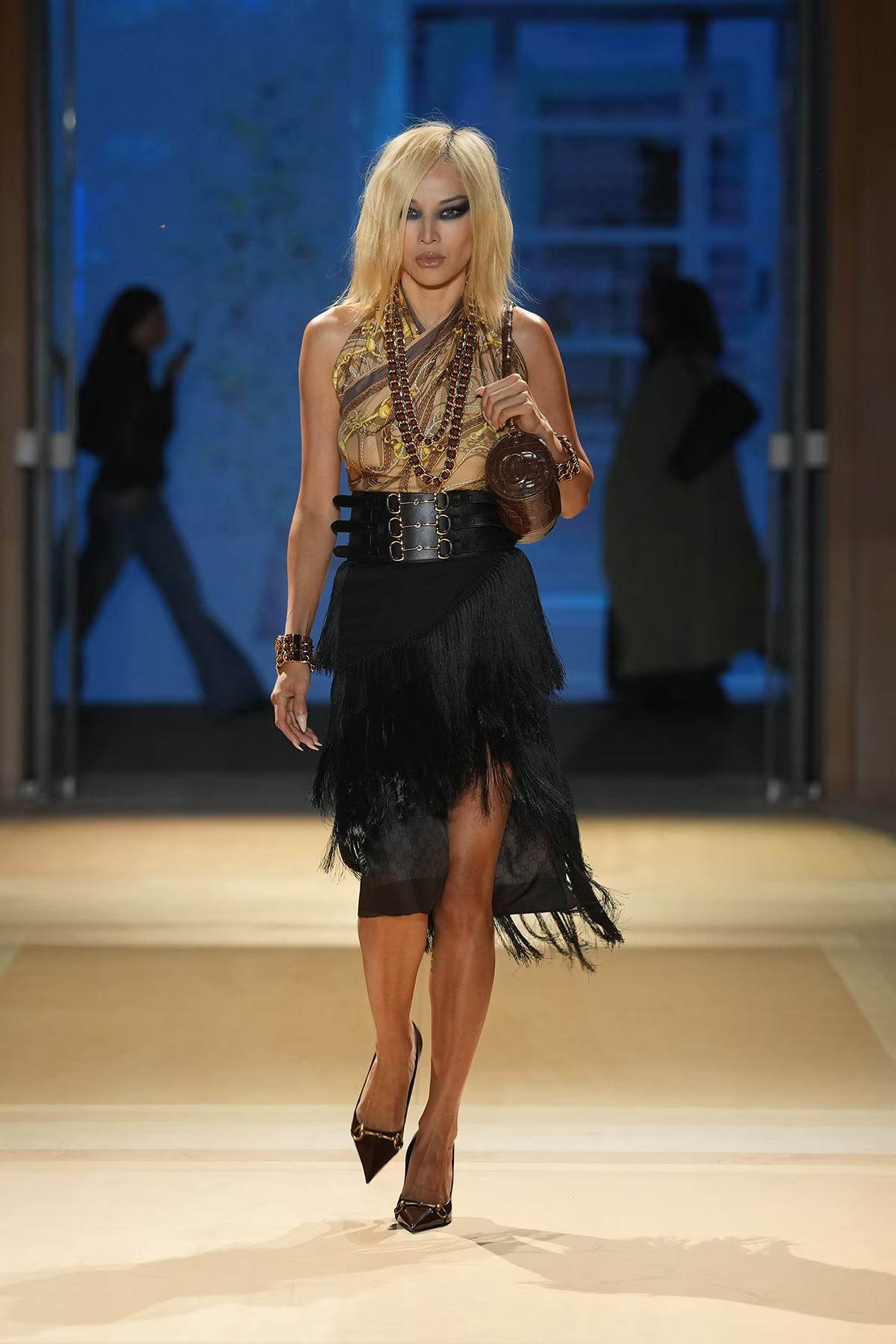
Where he let the archive speak, he kept the volume down. Waist belts fastened with three horsebit closures punctuated a few looks. The GG monogram appeared on parka linings, visible only when a jacket came open. Hardware and logos that could have carried an entire season were used as punctuation. That restraint is what gives the collection its weight.
The first women’s look reached for the house’s horse heritage and brought it forward. A fitted three-button jacket, cropped and sharp, carried a small silver horse bit on each lapel, worn over white breeches cut close to the body and riding boots. The equestrian reference landed without costume.
Demna also reworked staples Gucci already owns: the tartan skirt, the waxed jacket, the preppy polo shirt. Tailoring was precise throughout, including the trench coat on Naty Abascal, the Spanish socialite. The casting leaned away from the expected, pairing Amanda Harlech and Olympia of Greece with Poppy Delevingne and Osanna Visconti di Modrone. In the seats: Cardi B, Aryna Sabalenka, Jannik Sinner, Bianca Jagger, Shawn Mendes, Naomi Watts, Ni Ni, Bilkin and Edward Norton.
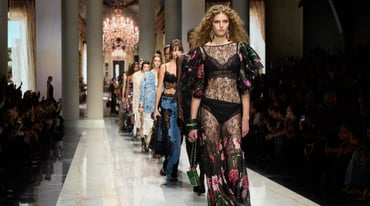
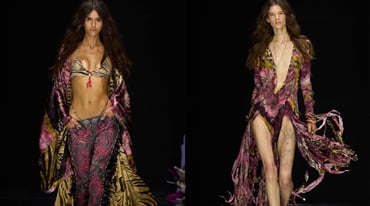
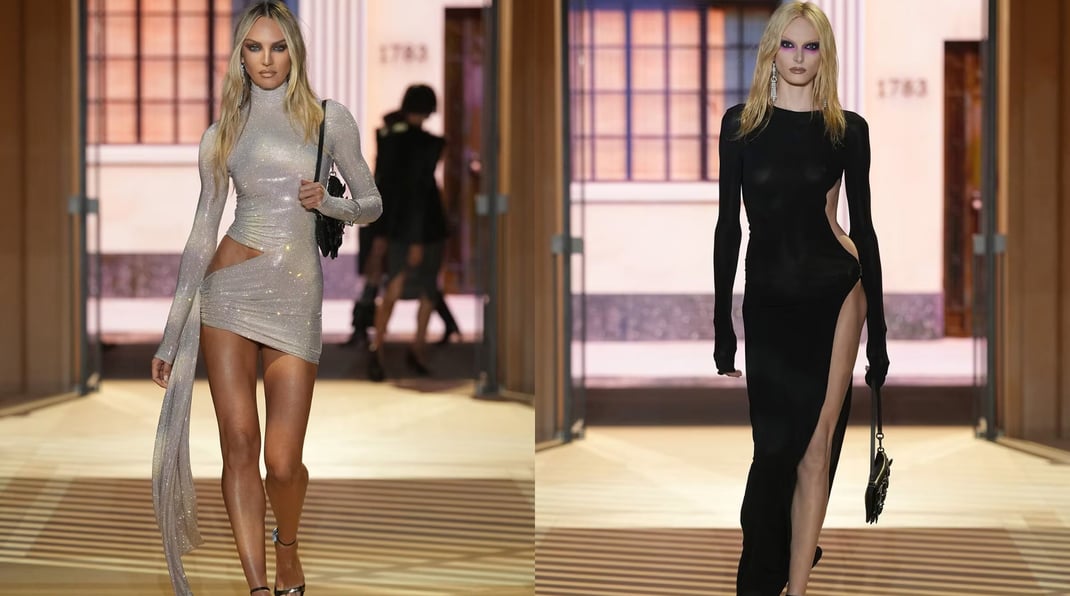
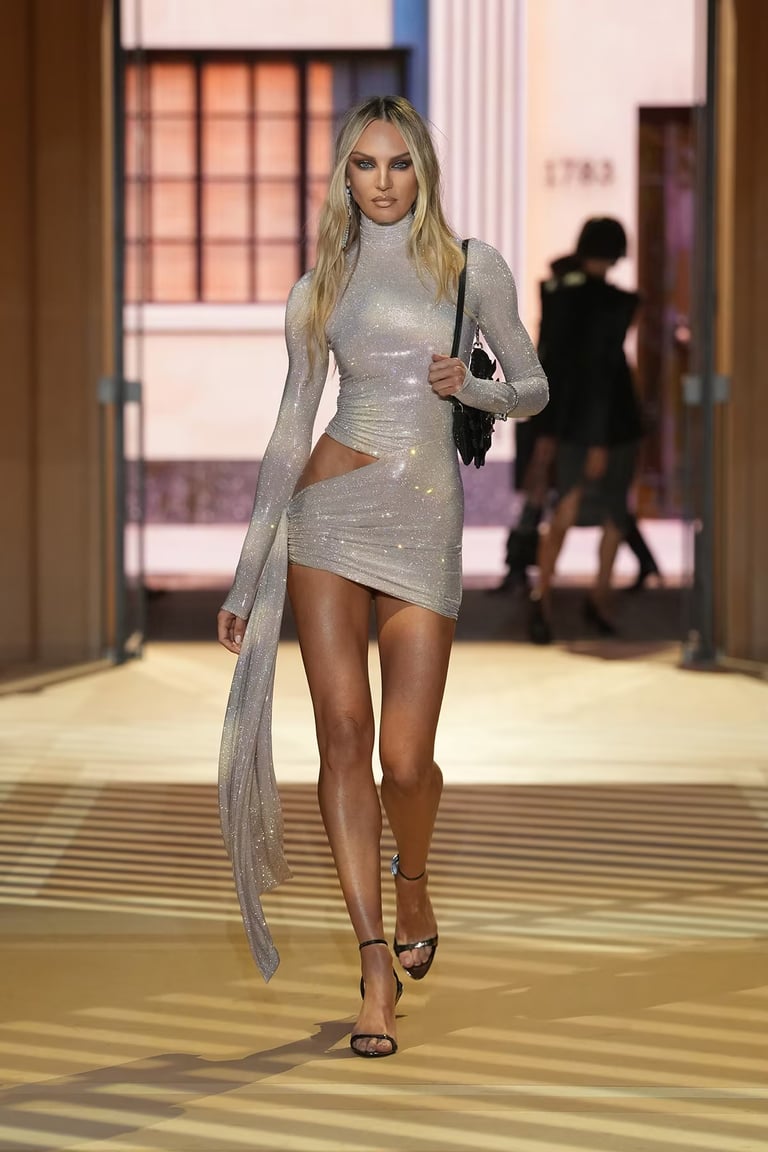
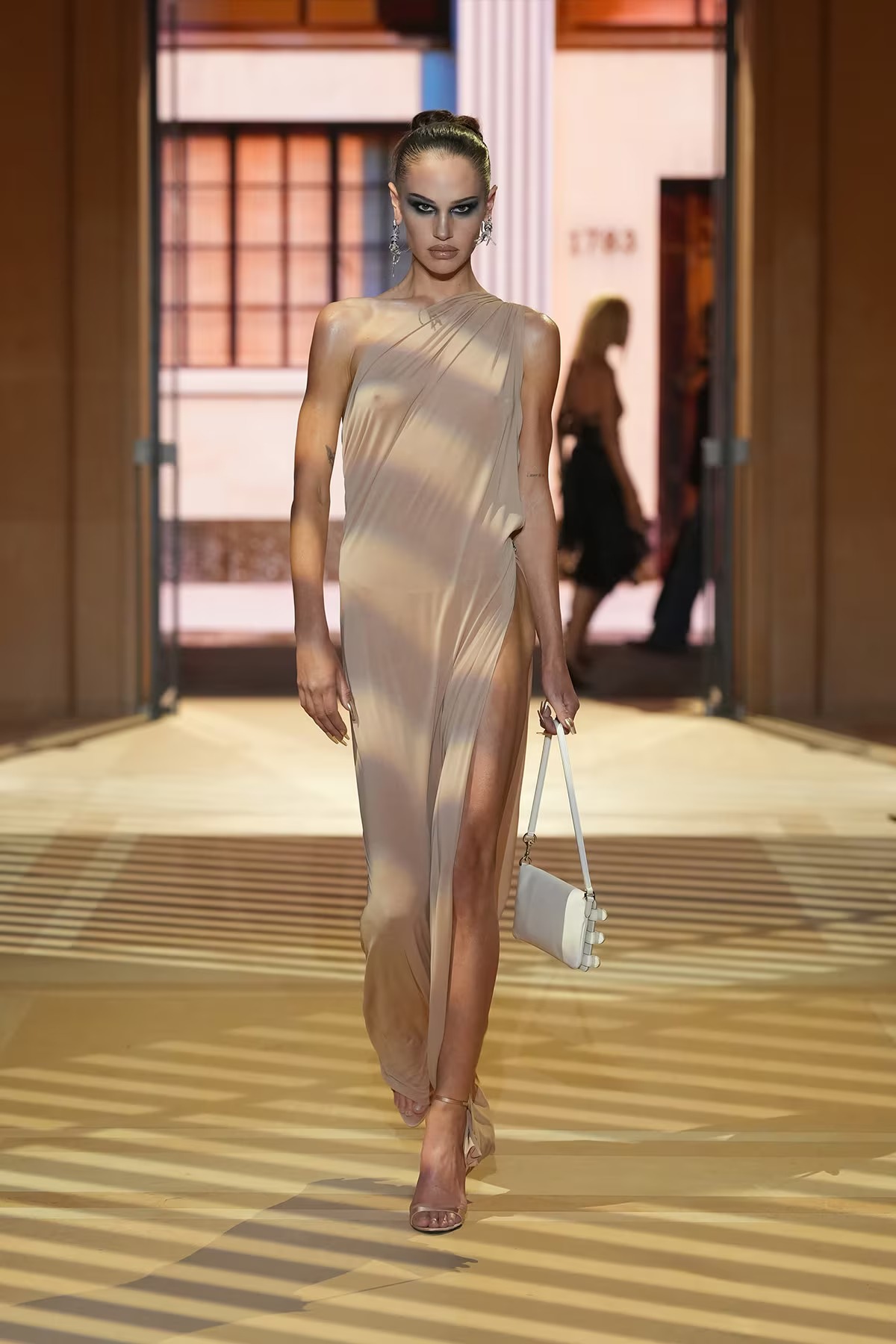
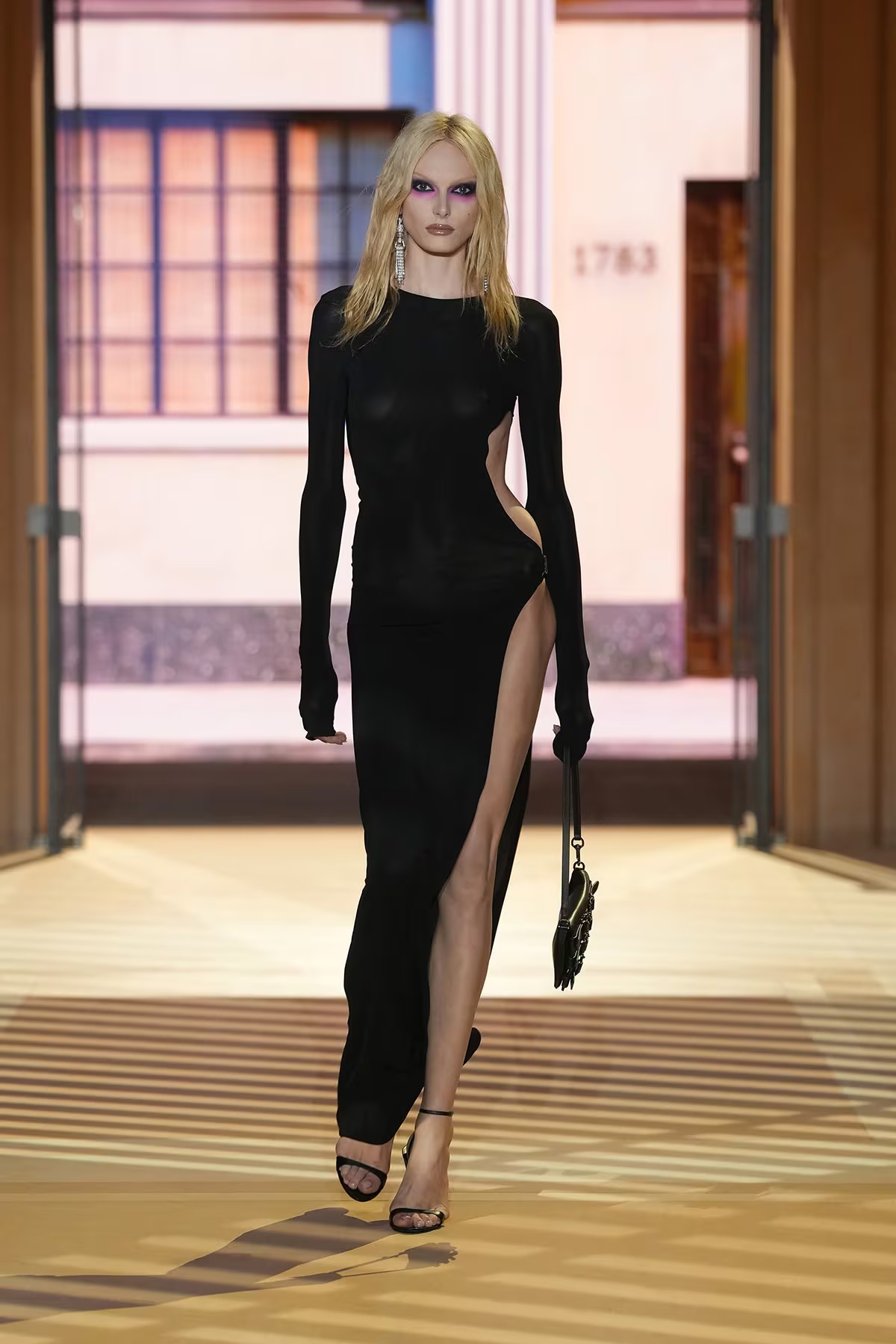
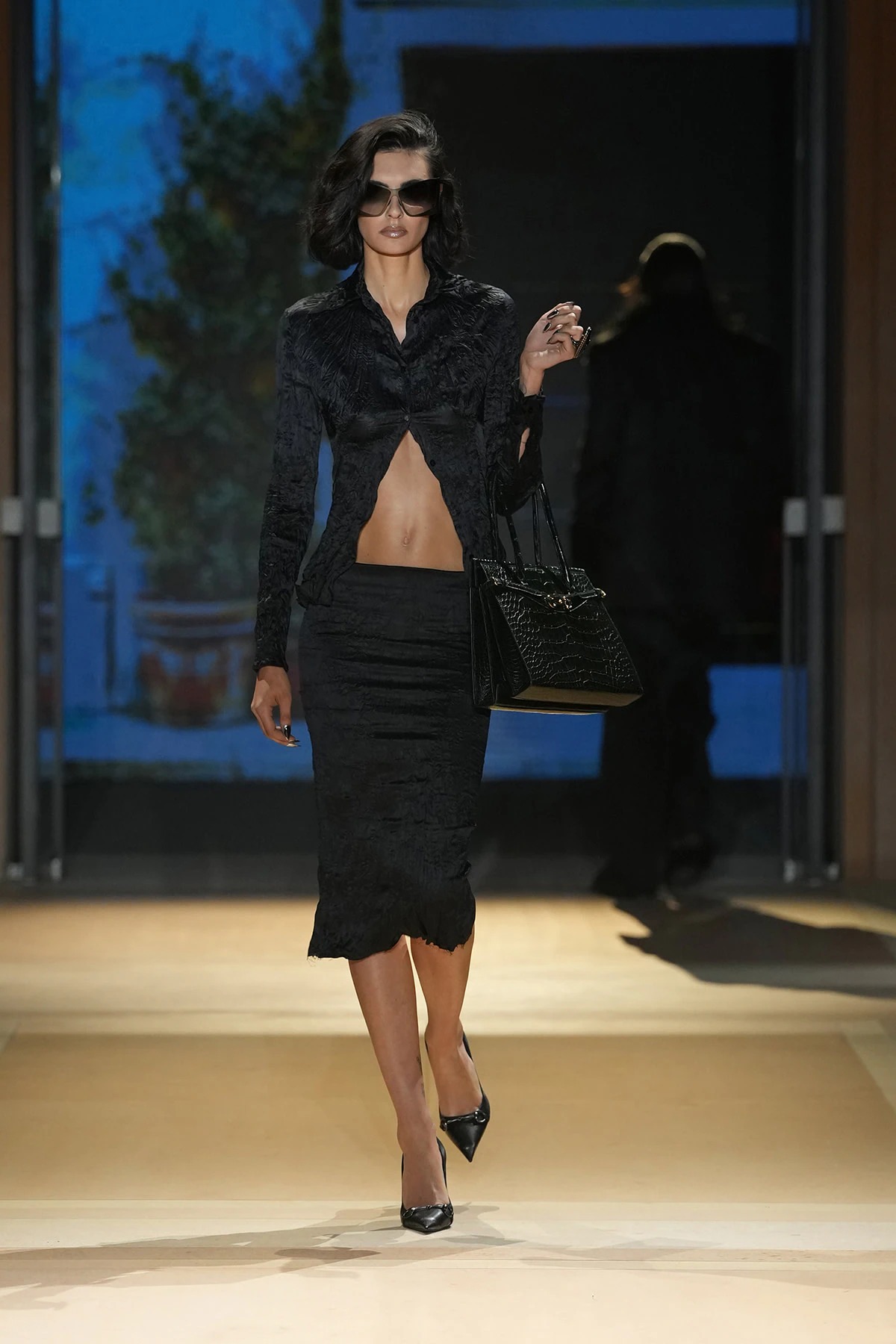
The riskier entries came later. A belted coat in mock leopard fur. A black evening dress built around a deep cutout. A pale pink gown that appeared to be propped against the body and held by little more than a silver hook at the back – clothes designed to be read from across a room, which is exactly the distance at which a store’s customers meet them.
What the Store Is Really For
The retail setting is not a conceit, and the calendar explains why. Kering reported in July that Gucci’s first-half 2026 revenue reached €2,757 million, down 5% on a comparable basis, with the second quarter’s 2% decline the house’s greatest sequential improvement in several quarters. The group closed 84 stores in the first half of 2026, after 75 net closures the year before. Gucci is being rebuilt around fewer, better rooms. Demna has now put a version of one on a landasan pacu.
That reframes the collection’s discipline. On a shop floor, where every object has to earn its square footage, a horsebit belt and a monogrammed parka lining carry a different charge than they would on a set built purely for spectacle. Restraint becomes a merchandising position as much as an aesthetic one.
Three collections in, the terms are set. Spring 2027 is the first in which the house’s contradictions were treated as inventory rather than a problem to be solved. The test that follows is commercial: whether the rooms Demna draws can sell the clothes he cuts.
See the complete collection below:
Images courtesy of Gucci
In another fashion week news, Fendi Spring 2027: Maria Grazia Chiuri Finds Freedom in Lingerie