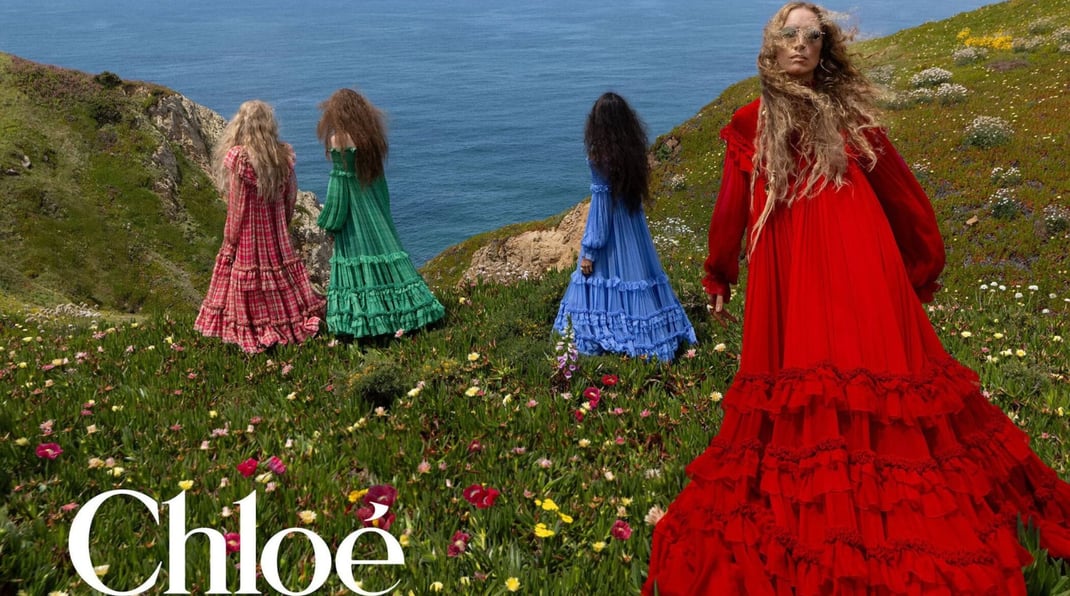

The Chloé Winter 2026 campaign, photographed and directed by Inez Van Lamsweerde and Vinoodh Matadin under creative direction by Chemena Kamali, casts Raquel Zimmerman, Jacqui Louise, Thalita Ferreira, and Sarah Isaksen across untamed coastal meadows and clifftop terrain. The palette spans saturated reds and blues, emerald greens, tartans, and earthy tones, with key pieces including prairie dresses, embroidered blouses, sweeping capes, and towering boots. The campaign’s soundtrack is “Ferch Gyda’r Llygaid” by Tristwch Y Fenywod, and the work exists as both still photography and film.
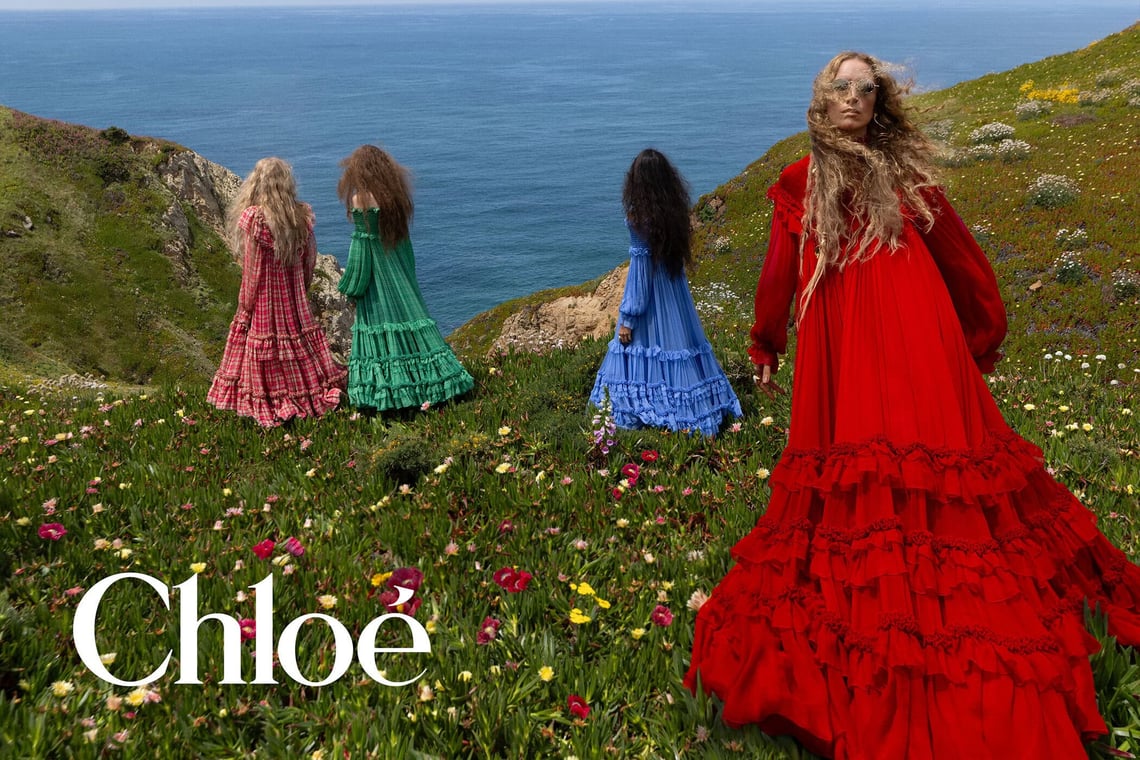
- Les Chloé Winter 2026 campaign, photographed and directed by Inez Van Lamsweerde and Vinoodh Matadin under creative direction by Chemena Kamali, casts Raquel Zimmerman, Jacqui Louise, Thalita Ferreira, and Sarah Isaksen across untamed coastal terrain; the soundtrack is “Ferch Gyda’r Llygaid” by Tristwch Y Fenywod; the campaign exists as both still photography and film.
- The campaign’s central argument is that the relationship between a woman and a landscape is structural rather than decorative: the coastal meadow is the garments’ primary collaborator, and wind, color, and terrain become the forces that reveal what the clothes actually do rather than simply where they are worn.
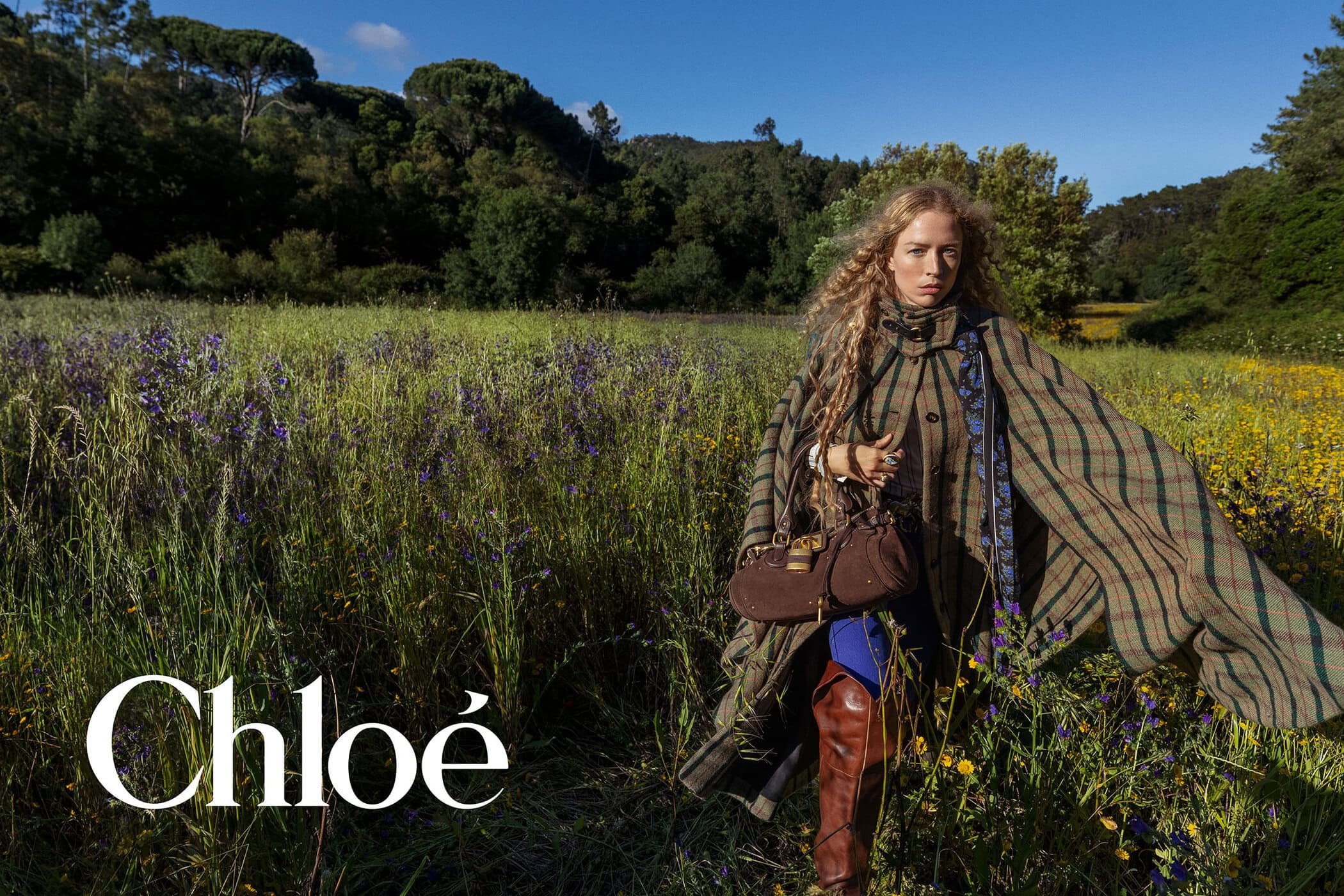
- Key pieces include prairie dresses cascading with volume, embroidered blouses that soften structured tailoring, sweeping capes, towering boots, and practical leather accessories; the palette spans saturated reds and blues, emerald greens, tartans, and earthy tones; the wide-angle fisheye lens bends the horizon and expands the frame, removing the viewer’s distance from the image so the meadow surrounds rather than recedes.
- Kamali’s stated concept is devotion expressed through women, open landscapes, and craftsmanship, with femininity described as unfolding with untamed strength and togetherness; the source draws a connection to the Pre-Raphaelites, specifically to John Everett Millais, citing a shared reverence for women entwined with nature, flowing hair, and saturated color.
The wind arrives before the clothes do. Across clifftop grass and open meadows, it moves through billowing dresses and capes before the lens has time to settle. That sequence is deliberate.
Photographed and directed by Inez Van Lamsweerde and Vinoodh Matadin under creative direction by Chemena Kamali, the Chloé Winter 2026 campaign casts Raquel Zimmerman, Jacqui Louise, Thalita Ferreira, and Sarah Isaksen across untamed coastal terrain. The palette spans saturated reds and blues, emerald greens, tartans, and earthy tones. The soundtrack is “Ferch Gyda’r Llygaid” by Tristwch Y Fenywod. The campaign exists as both still photography and film.
The meadow is not a backdrop. It is a collaborator.
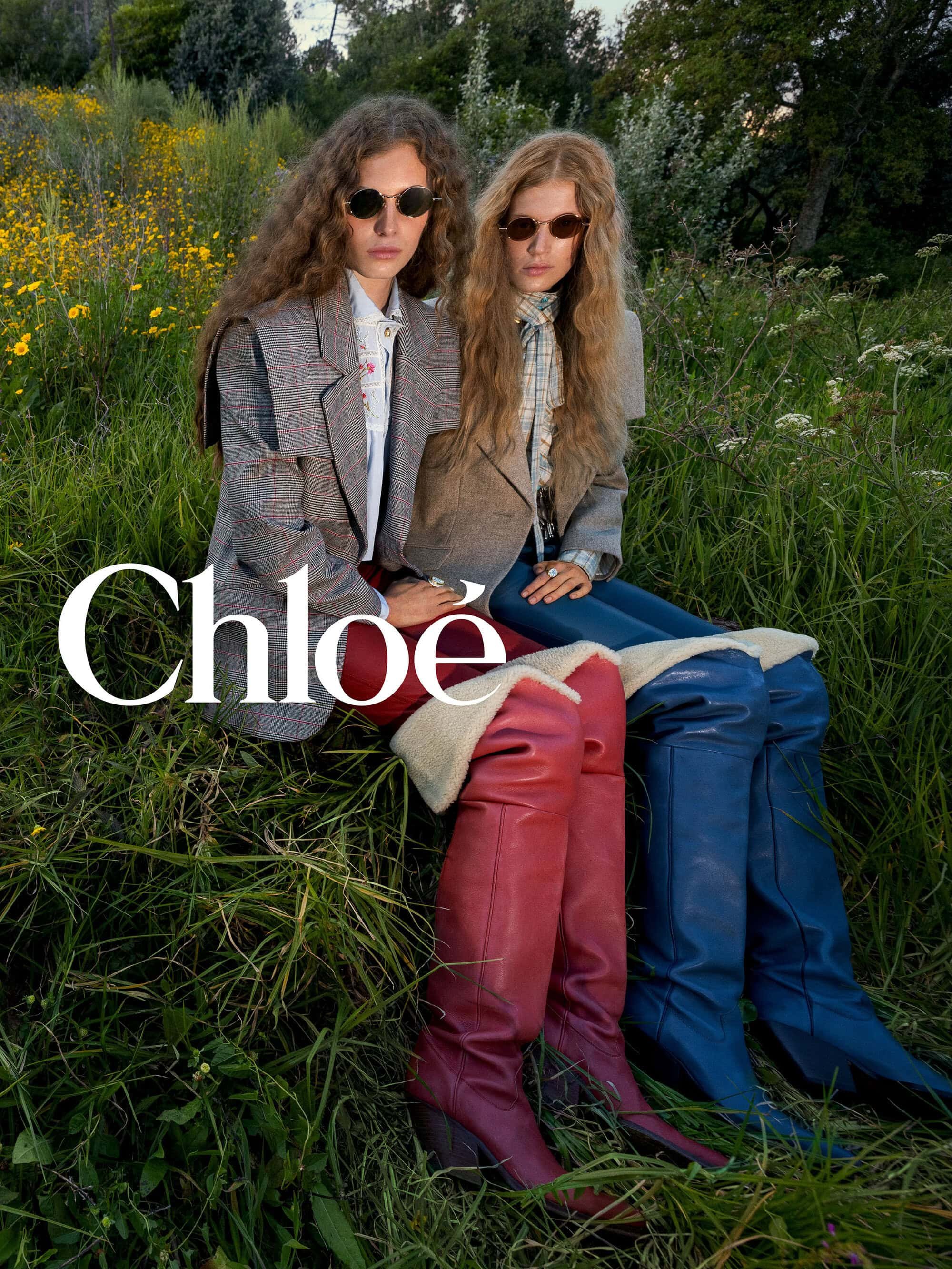
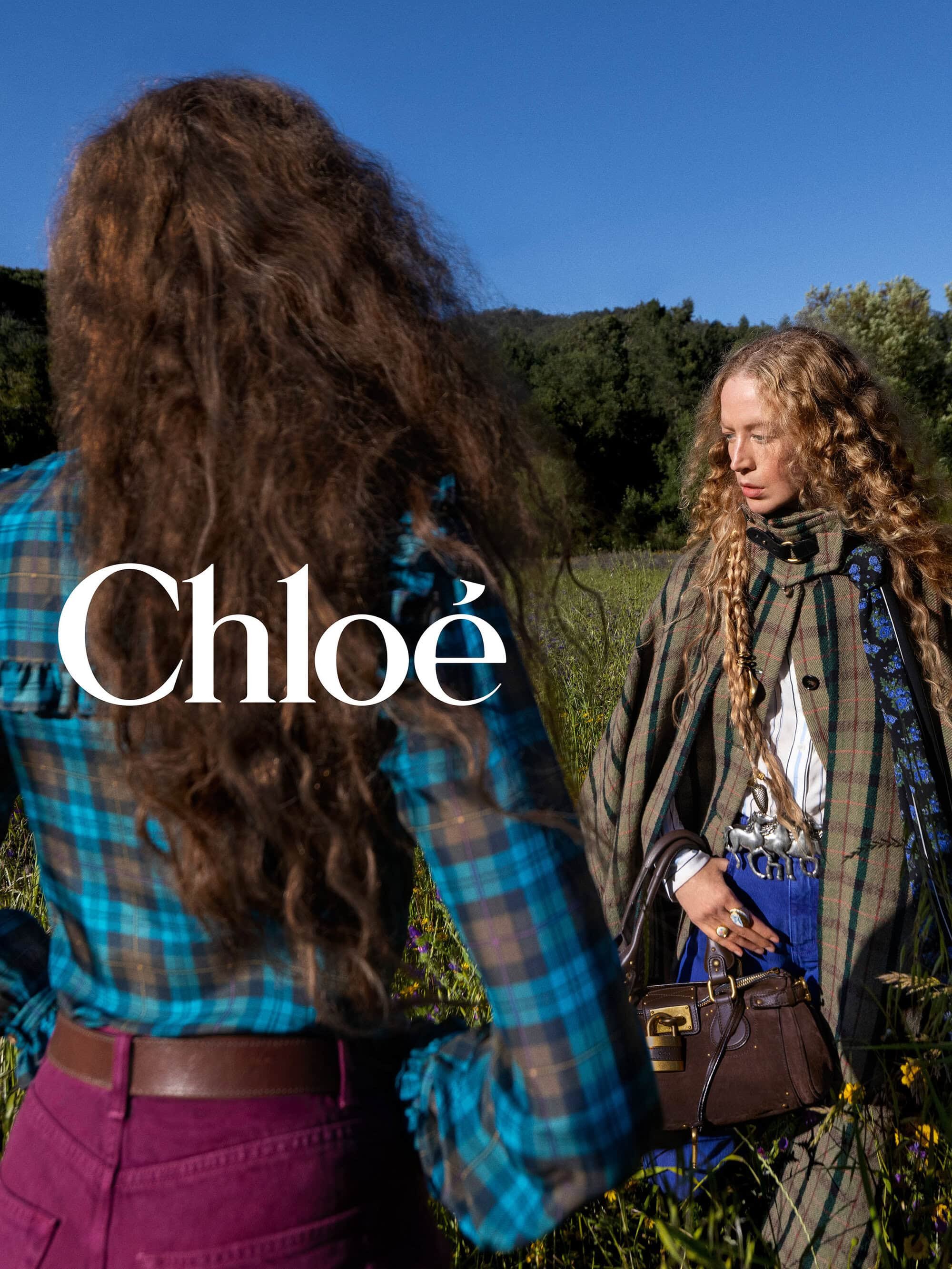
Fabric in Motion, Color Against the Cliff
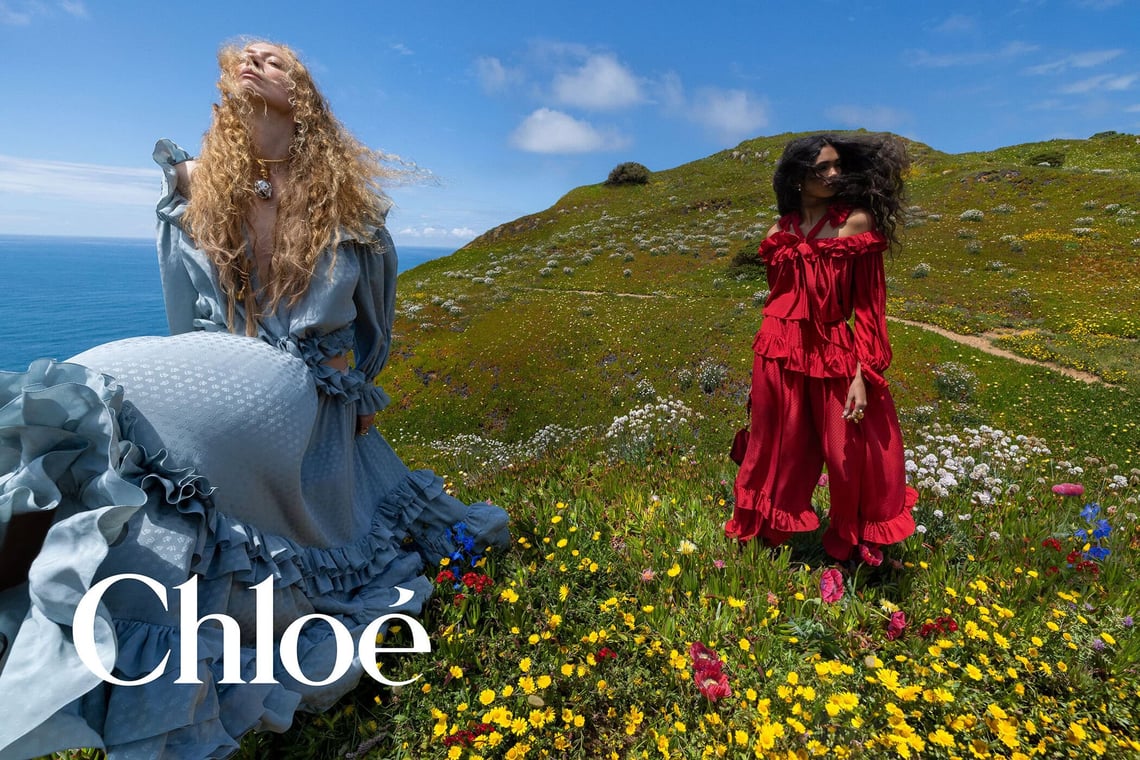
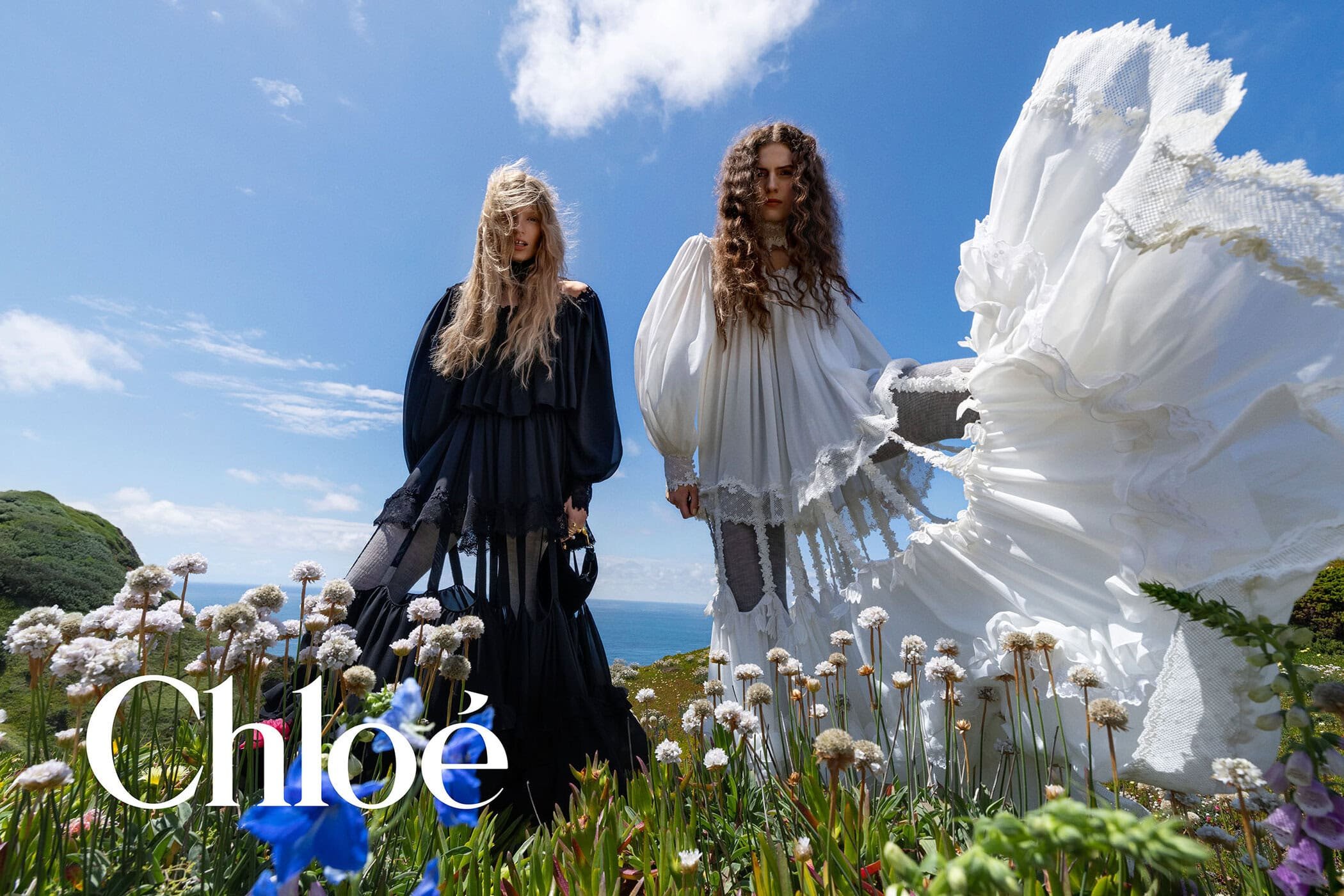
The wide-angle fisheye lens is the campaign’s most precise technical decision. By bending the horizon and expanding the frame outward, the photographers remove the viewer’s distance from the image. The grass does not recede. It surrounds. That immersive quality changes what the garments communicate: a prairie dress cascading with volume reads differently when the ground around it moves at the same pace.
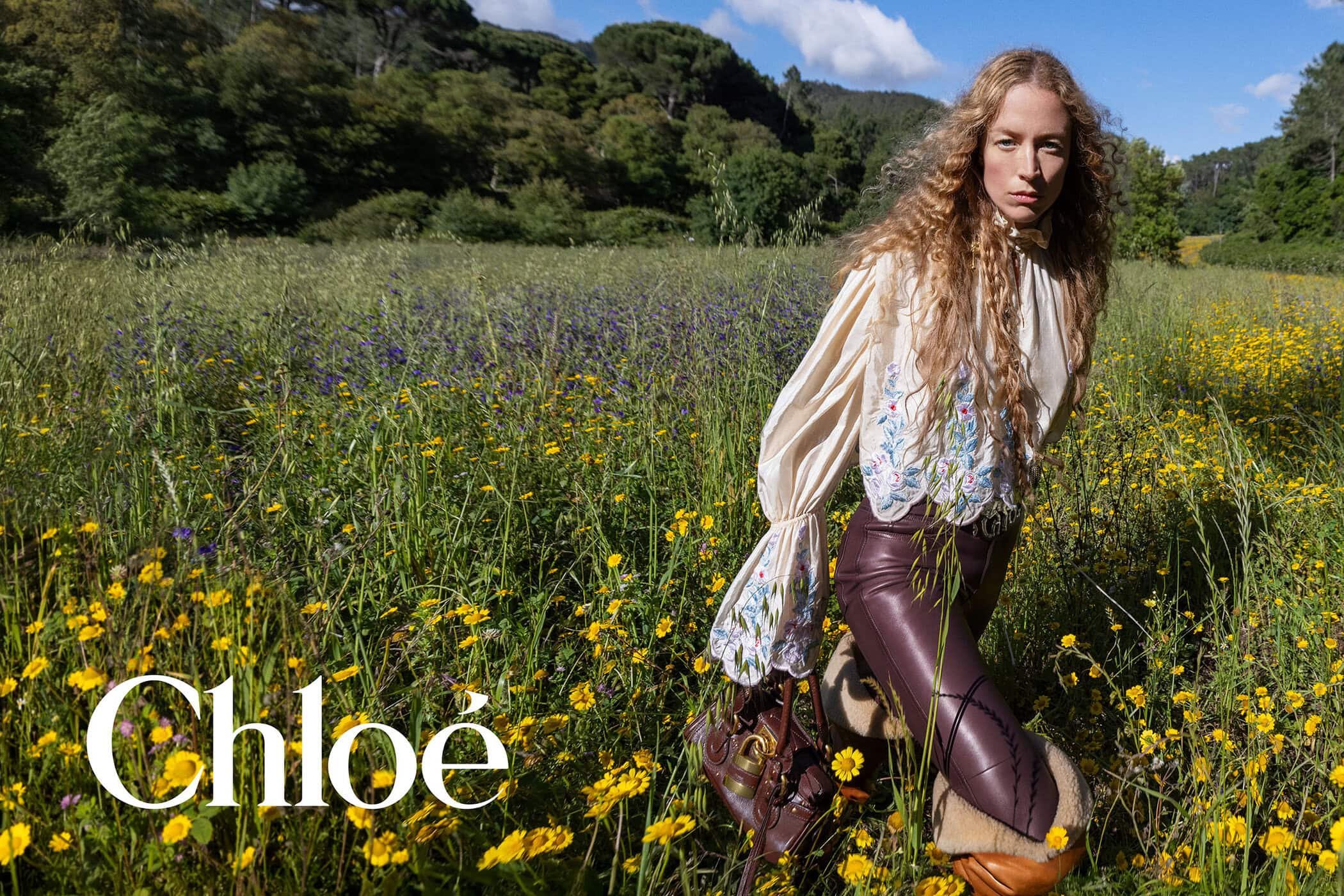
Kamali’s garment choices are built for exactly this condition. Embroidered blouses soften structured tailoring without removing its discipline. Sweeping capes extend the body’s outline into the surrounding air. Towering boots ground the silhouettes without anchoring them to stillness. Practical leather accessories complete each look without competing with the movement above them.
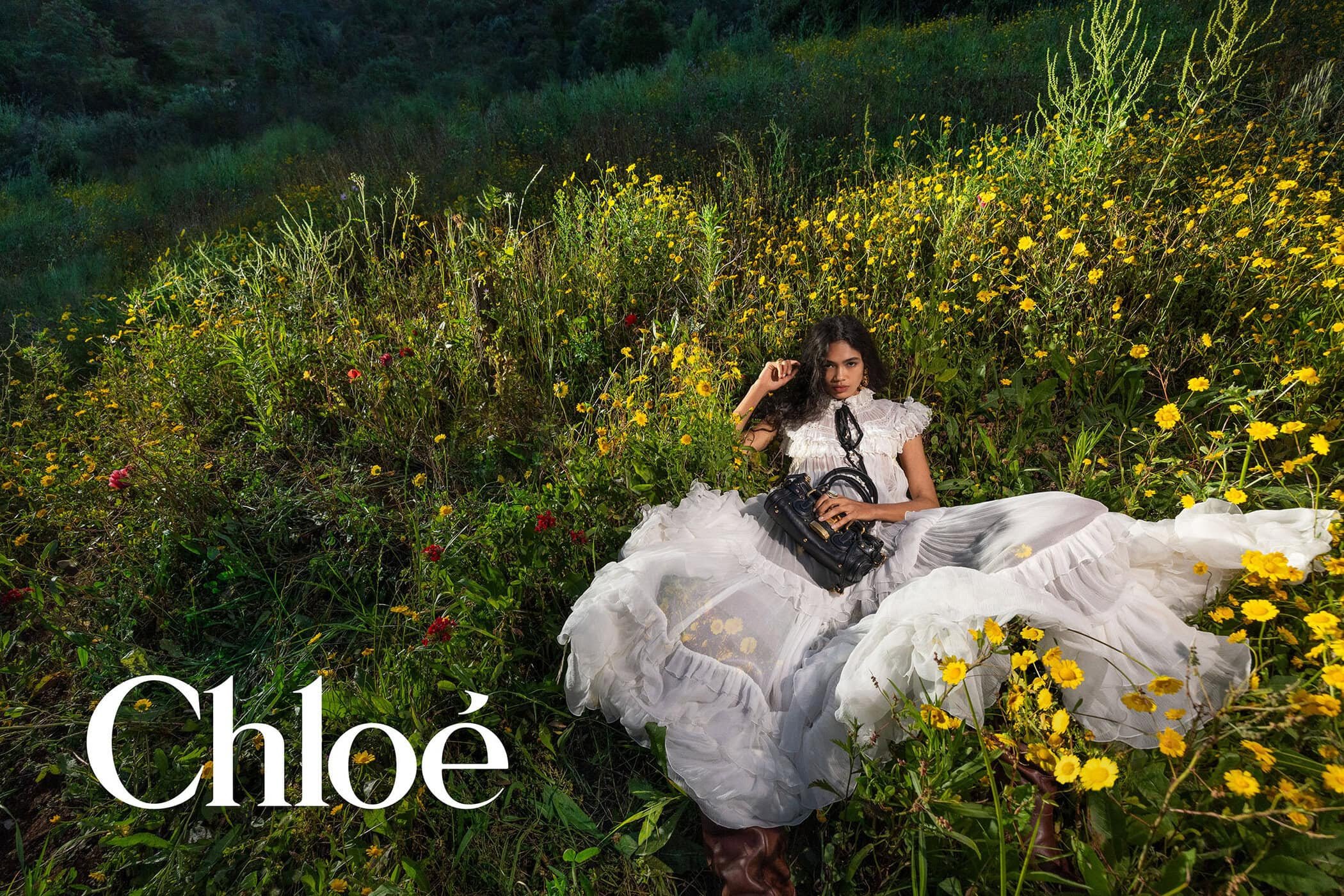
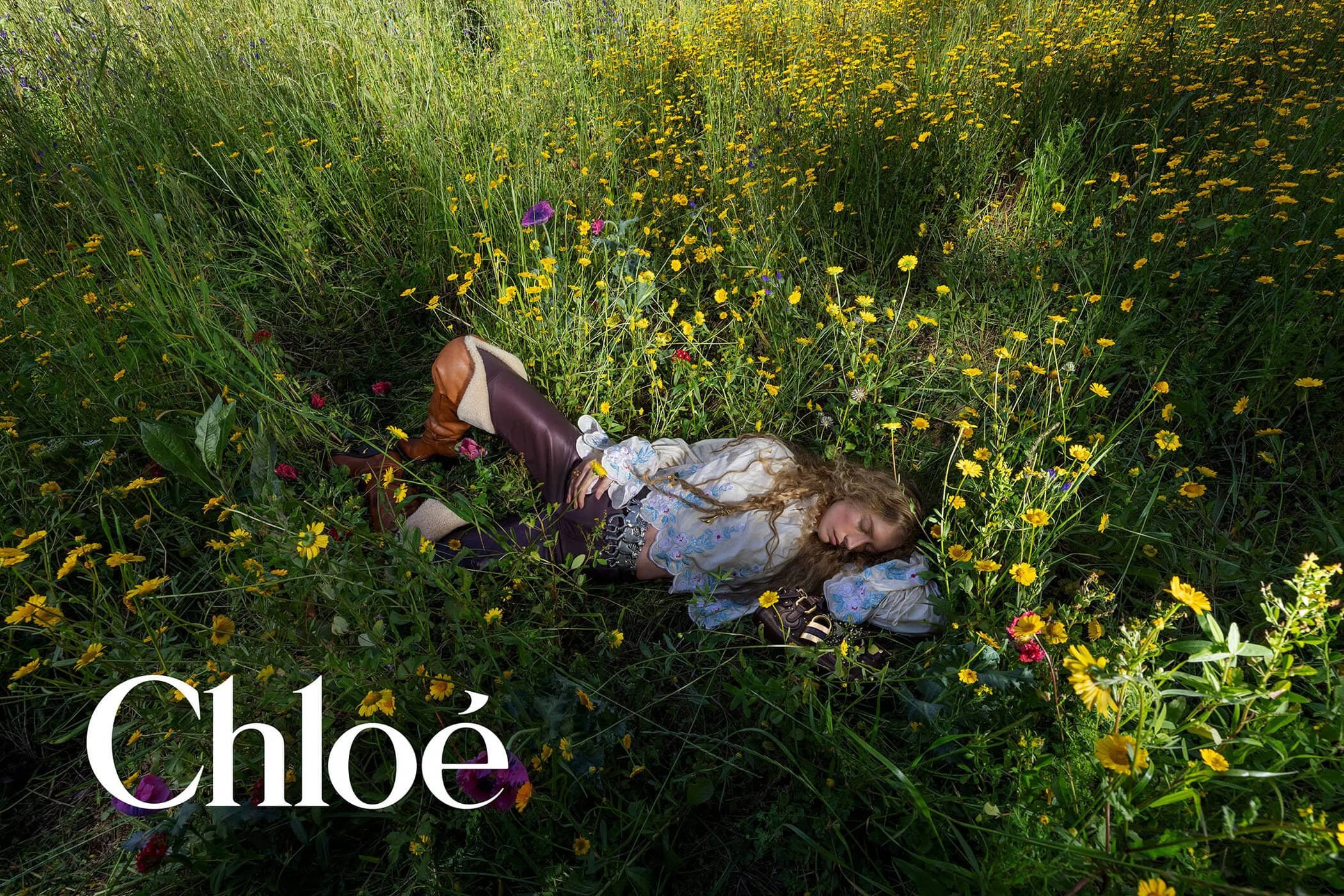
Color does the campaign’s most direct work. A poppy-red dress against a hillside does not blend with the earth. It holds its position within the frame, distinct and uncompromising. Powder-blue reads differently: against open coastal light, it extends the sky’s tonal range downward. Woven checks and greens pull the wardrobe toward the earth’s own palette, while whites and warm browns keep the collection from tipping into costume.
The Bohemian Heroine and Her Horizon
Kamali’s stated intention is direct: “For this campaign, I wanted to express devotion through women, the vastness of open landscapes, and craftsmanship. Nature brings us back to instinct, freedom, and connection. In that openness, femininity unfolds with untamed strength and togetherness.” The campaign’s visual language supports that position without illustrating it literally. The women do not perform belonging to the location. They occupy it, moving through wildflowers and clifftop grass with a physical ease the clothes enable rather than restrict.
The source draws a connection to the Pre-Raphaelites, specifically to John Everett Millais, citing a shared reverence for women entwined with nature, flowing hair, and saturated color. The comparison is grounded. What those painters achieved through oil, Inez & Vinoodh achieve through the fisheye’s expanded field: a frame in which the woman and the terrain exist at the same depth, neither subordinate to the other.
The campaign’s critical tension is one of signature versus expansion. Kamali has built a recognizable visual language for the house: the windswept bohemian heroine, the open setting, the saturated palette. That consistency is a genuine achievement in luxe branding. It is also, by now, a known quantity. The campagne executes its visual argument with confidence and precision. The question it leaves open is whether the heroine’s next location will be equally familiar or somewhere the house has not yet taken her.
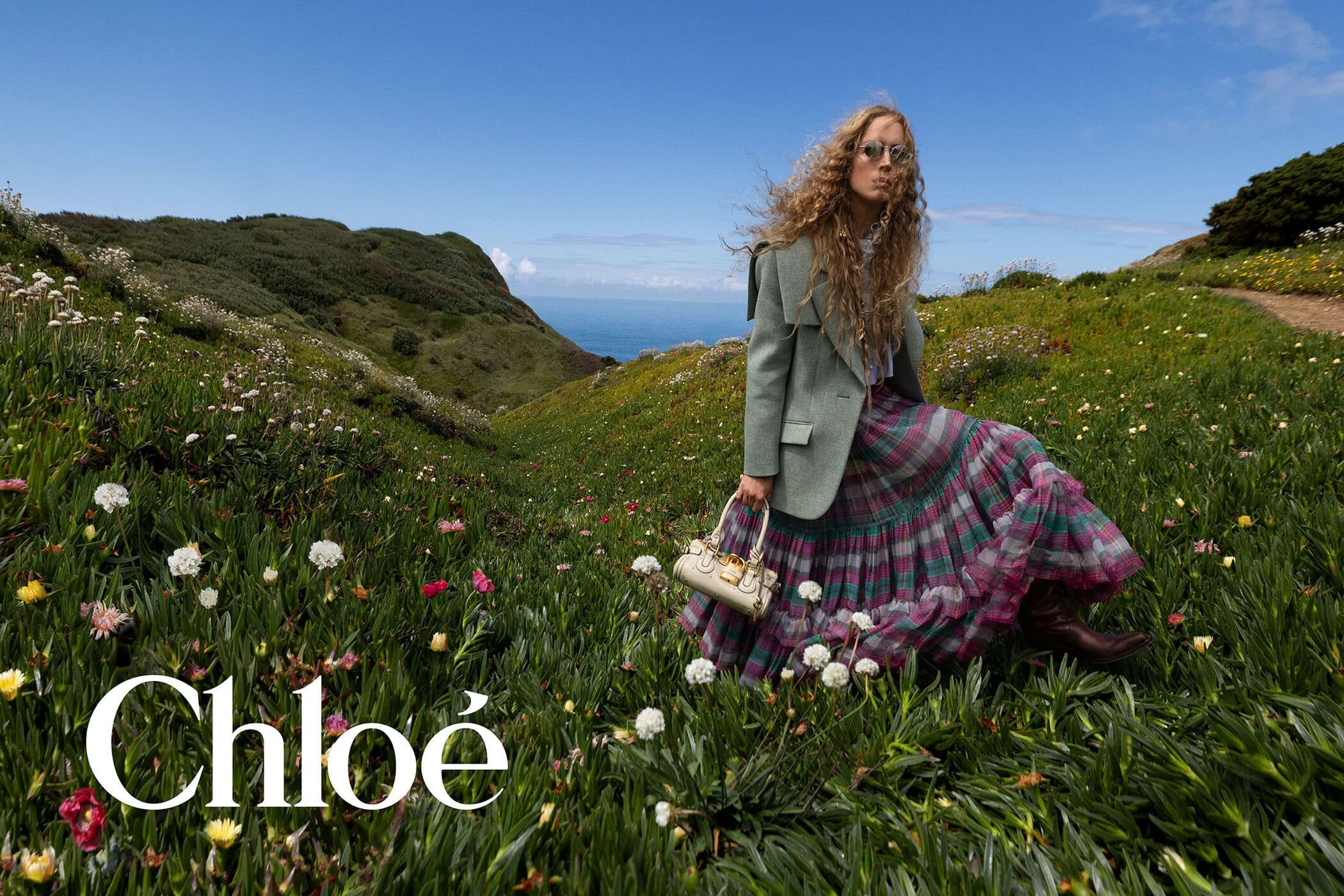
Les Chloé Winter 2026 campaign is a precise execution of a visual philosophy built on one argument: that femininity is most legible when it occupies open ground on its own terms. That lens choice and the meadow setting work together to make the clothes’ movement the primary statement. For the house, the work confirms the strength of a signature and raises the question of what lies beyond it.
Images Courtesy of Chloé
Dans d'autres nouvelles de la campagne, Miu Miu Fall 2026 Campaign Starring Hailey Bieber