Transits in Astrology
Learn how astrologers compare the current sky with a natal chart, why slower and faster transits feel different, and how timing is interpreted.
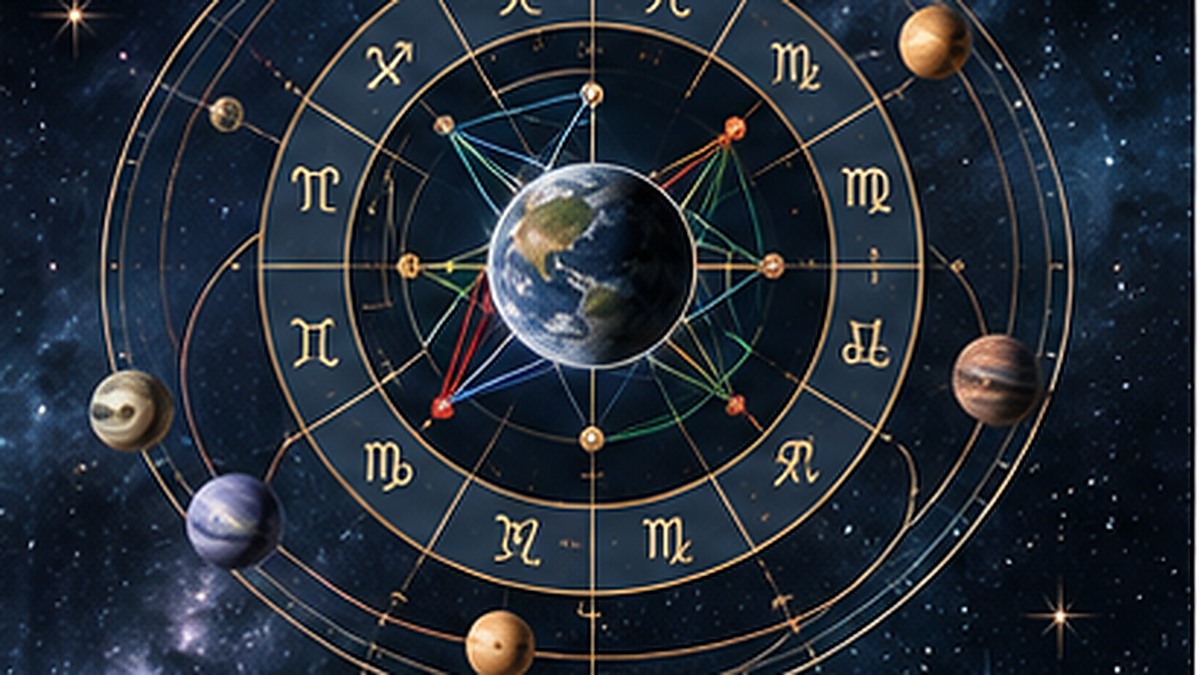
A transit compares the current position of a planet with a natal chart or another reference chart. Astrologers look at the transiting planet’s sign and house position, plus aspects it makes to natal planets and angles. Accurate transit work requires reliable current planetary data.
What a transit actually compares
The natal chart stays fixed as a reference map, while the planets continue moving through the zodiac. A transit reading overlays current planetary positions onto the natal chart to identify contacts with natal planets, angles and houses.
The interpretation combines the function of the transiting planet, the natal point being contacted, the aspect between them and the house areas involved.
Fast and slow transits
The Moon moves quickly and produces short-lived contacts, while Mercury, Venus and Mars operate on a longer but still relatively immediate scale. Jupiter and Saturn can describe broader developmental periods.
Uranus, Neptune and Pluto move slowly enough that their close aspects to natal points can remain relevant for extended periods. Retrograde motion can cause a slow planet to contact the same natal degree more than once.
Transits are not isolated predictions
One transit rarely tells the entire story. Astrologers usually compare multiple simultaneous conditions and look for repeated themes rather than treating one aspect as a guaranteed event.
A transit can be interpreted as a period of emphasis, opportunity, pressure or adjustment. How it manifests depends on the natal chart, circumstances and choices.
Transits and Sun-sign horoscopes
General horoscopes often organize readers by Sun sign because it provides a practical twelve-sign structure. A personalized transit reading requires an actual natal chart and current planetary positions.
This distinction matters. A Sun-sign forecast can be thoughtful and useful, but it should not be presented as a full natal transit analysis unless the necessary birth data and astronomical calculations are available.
Why ephemeris accuracy matters
Planetary longitude, speed, retrograde status and exact aspects are date-specific astronomical data. They should come from a reliable ephemeris or calculation engine rather than from generated narrative.
A strong technical astrology platform separates calculation from interpretation: first establish the sky accurately, then apply the editorial and interpretive layer.
A transit reading combines
Häufig gestellte Fragen
What is a transit in astrology?
A transit compares a planet’s current zodiac position with a natal chart. Astrologers interpret the aspects and houses involved as timing factors.
How long does a transit last?
It depends on the planet and aspect. Fast planets can create brief contacts, while slower planets can remain within range of a natal point for much longer.
Can a Sun-sign horoscope replace a transit chart?
No. A Sun-sign horoscope is a general forecast for a zodiac-sign audience, while a natal transit analysis requires birth data and current planetary calculations.
Explore NYSG Astrology
Use the reference library as the foundation, then move into current readings and the broader NYSG astrology experience.
Read current Daily, Weekly, Love, Money, Career and Wellness forecasts.
Explore →Zodiac Sign GuidesExplore the enduring traits, style and structure of all 12 signs.
Explore →Compatibility LabMove from reference concepts into relationship-focused sign pairings.
Explore →Celebrity ZodiacSee how zodiac-sign content connects with designers and cultural figures.
Explore →