Planets in Astrology
A clear guide to the Sun, Moon and planets as symbolic functions in Western astrology, including personal, social and outer planets.
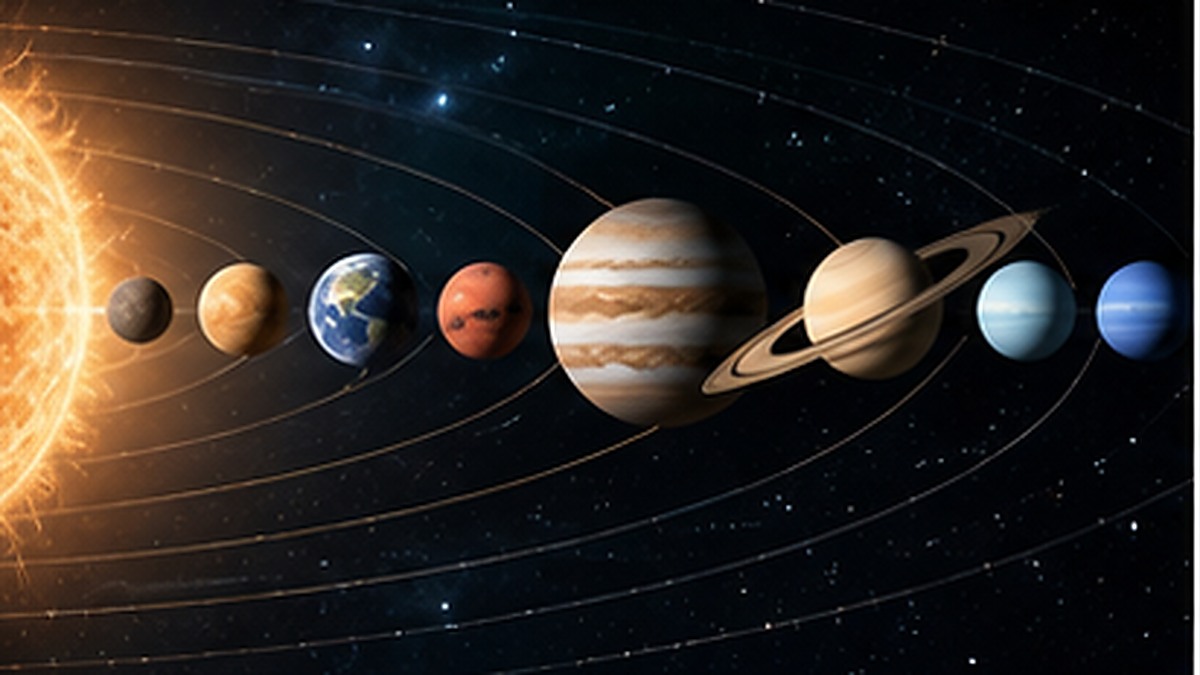
In astrology, planets represent different functions or drives within chart interpretation. The Sun and Moon are traditionally called luminaries, while Mercury through Pluto are treated as planetary factors with distinct symbolic roles. Their signs, houses and aspects modify how those functions are read.
Personal, social and outer planets
The Sun, Moon, Mercury, Venus and Mars are often treated as personal factors because they connect closely with identity, emotion, communication, attraction and action. Jupiter and Saturn are sometimes called social planets because their cycles are slower and their themes include growth, structure and participation in wider systems.
Uranus, Neptune and Pluto move much more slowly and can remain in one sign for years. Their sign positions are therefore shared by larger age groups, while house placement and aspects make them more personal within an individual chart.
Planet, sign and house are different layers
A common beginner mistake is to blend all chart factors into one meaning. A planet answers what function is being interpreted, a sign describes how it tends to operate, and a house describes where that function becomes especially visible.
Keeping those layers separate at first produces clearer interpretations. They can be synthesized after each part is understood.
Rulership and dignity
Traditional astrology associates planets with zodiac signs they rule. Modern astrology also uses Uranus, Neptune and Pluto as rulers or co-rulers for Aquarius, Pisces and Scorpio in many contemporary schools.
Rulership is a system of symbolic correspondence. It is especially useful when following the ruler of a house cusp or tracing relationships between different areas of a chart.
Planetary speed and personal relevance
Faster-moving factors change signs more often and create more variation between people born close together in time. Slower planets can remain in a sign across many birthdays, making their sign meaning more generational.
A slow planet can still be highly personal when it closely aspects the Sun, Moon, Ascendant or another important natal factor, or when it occupies a prominent house.
A practical order for learning the planets
Begin with the Sun and Moon, then Mercury, Venus and Mars. Add Jupiter and Saturn once the personal planets are comfortable, then study Uranus, Neptune and Pluto as slower layers.
This order keeps the chart readable and prevents the outer planets from overshadowing the faster factors that often describe everyday behavior more directly.
Planetary meanings at a glance
Häufig gestellte Fragen
Why are the Sun and Moon listed with the planets in astrology?
Astrologers traditionally call the Sun and Moon luminaries, but they are interpreted alongside the planets as major chart factors.
What is a ruling planet?
A ruling planet is the planet traditionally associated with a zodiac sign. Rulership helps astrologers connect signs, houses and chart themes.
Are outer planets less important?
Not necessarily. Their sign positions are more generational, but they can become highly personal through houses, angles and close aspects to natal planets.
Explore NYSG Astrology
Use the reference library as the foundation, then move into current readings and the broader NYSG astrology experience.
Read current Daily, Weekly, Love, Money, Career and Wellness forecasts.
Explore →Zodiac Sign GuidesExplore the enduring traits, style and structure of all 12 signs.
Explore →Compatibility LabMove from reference concepts into relationship-focused sign pairings.
Explore →Celebrity ZodiacSee how zodiac-sign content connects with designers and cultural figures.
Explore →