
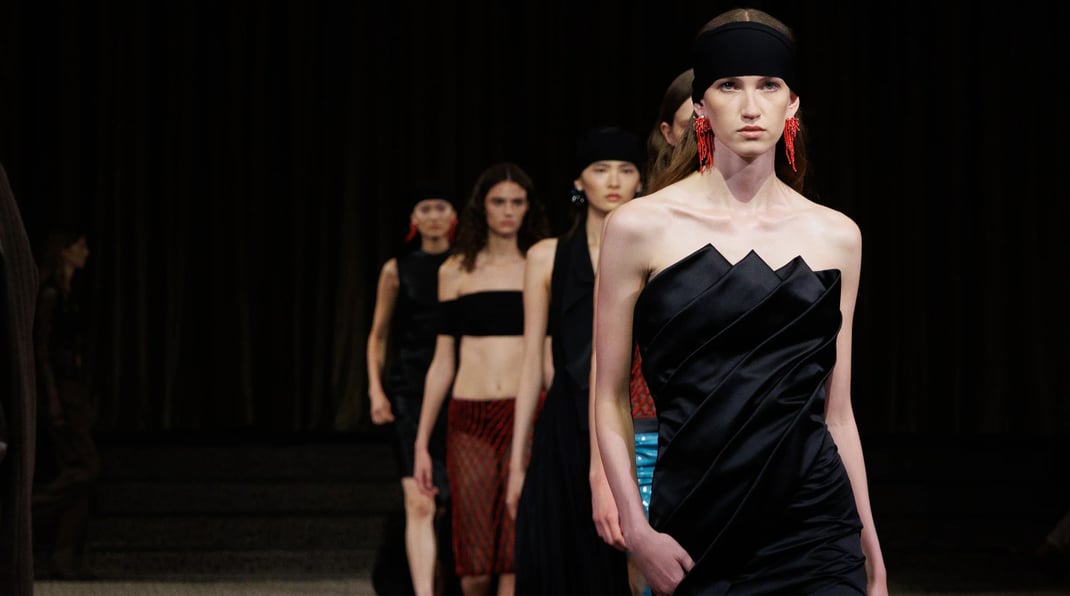

Esber closed the Paris season with 47 looks built from displaced studs, cuffs and belts — a tailoring argument from a designer the market still reads as a drape specialist
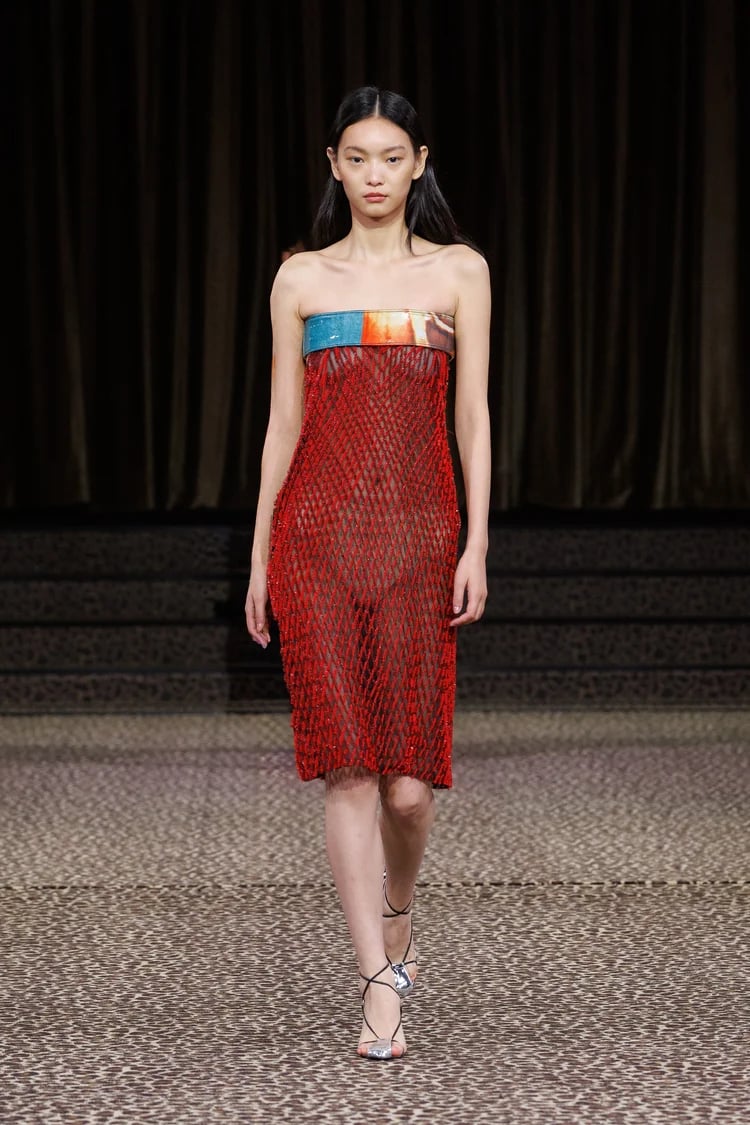
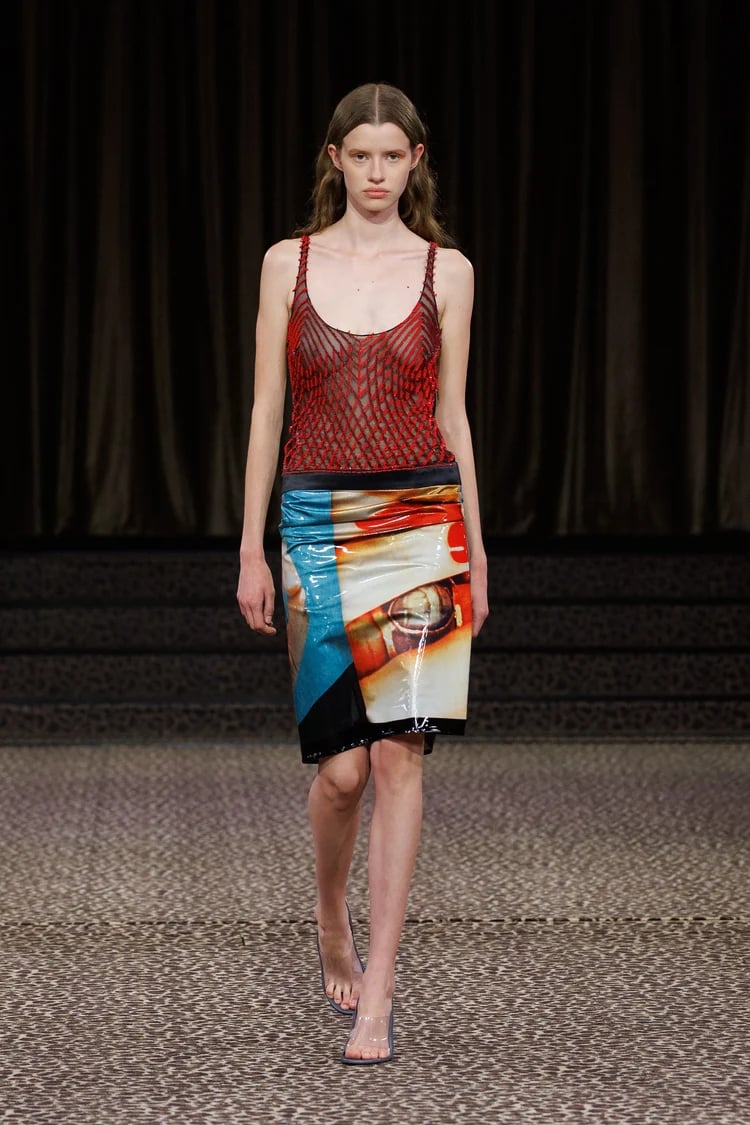
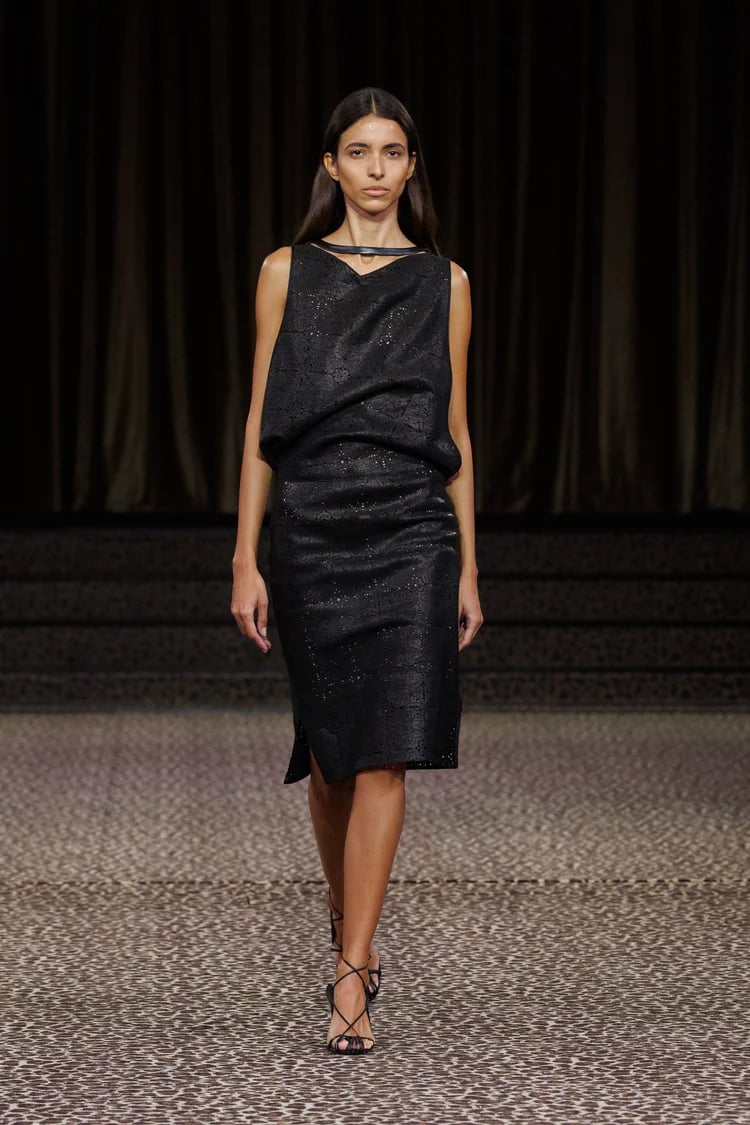
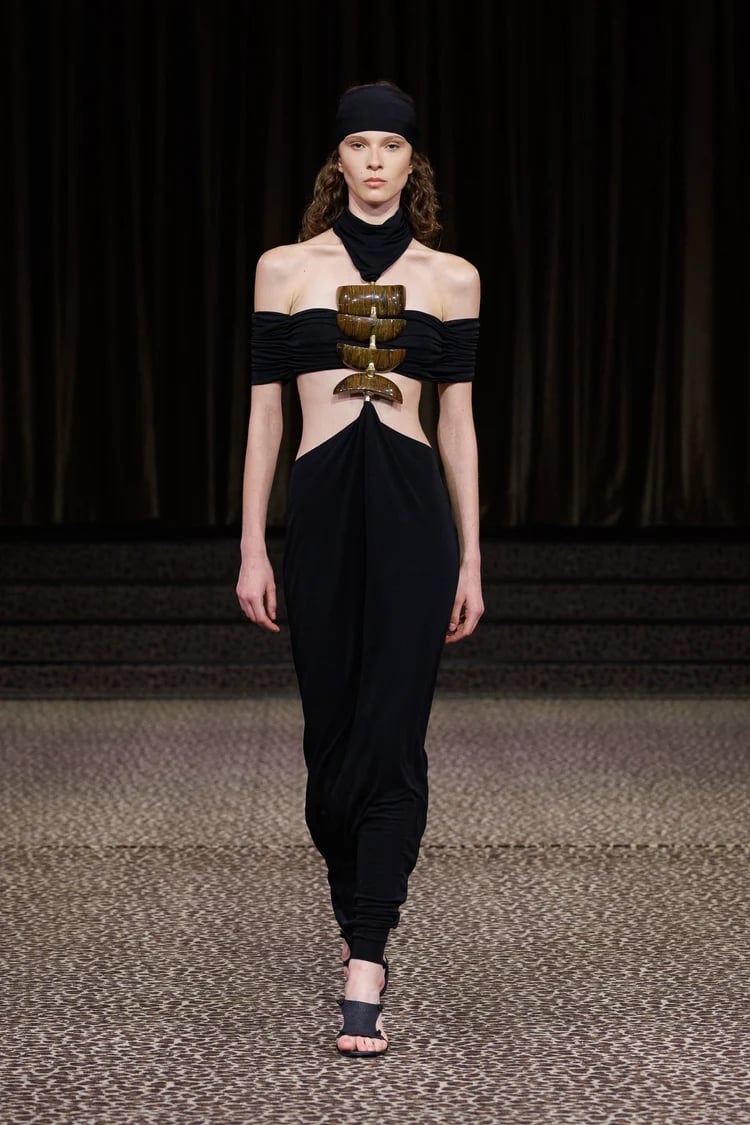
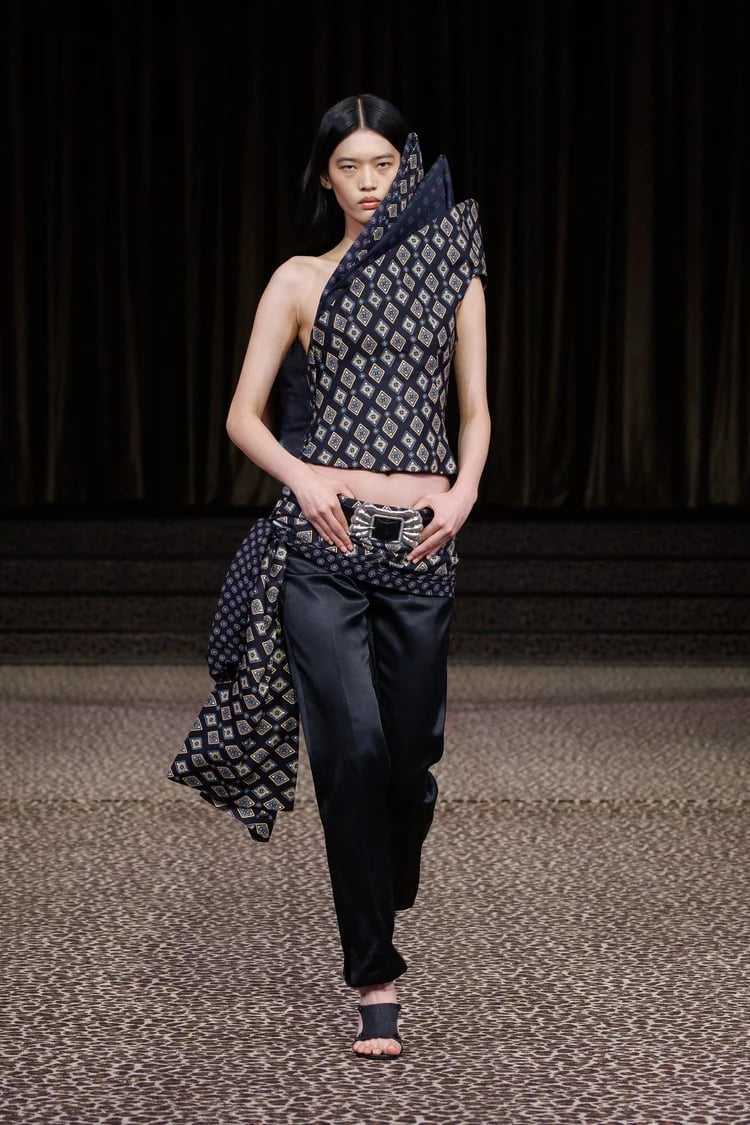
PARIS — Christopher Esber closed the women’s spring 2027 season here on Tuesday, Oct. 6, with 47 looks shown in an underground theatre beneath an oval skylight, on a floor laid in leopard carpet. The organizing idea, per the house’s show notes, was that “ornament becomes architecture” – a pocket square, a cuff, a belt, a stud, blown up and moved off their usual positions until they dictate how the cloth is held and released.
That is a structural argument from a designer the market has spent three years reading as a drape specialist. Esber founded his label in 2010 and made his on-schedule Paris debut in September 2023; in June 2024 he took the ANDAM Grand Prize, a 300,000-euro award whose jury that year was chaired by Saint Laurent creative director Anthony Vaccarello. His slot on Oct. 6 fell at the end of a nine-day calendar that the Fédération de la Haute Couture et de la Mode set at 101 houses, 68 shows and 33 presentations, running Sept. 28 through Oct. 6.
The Tailoring Carries the Whole Argument
Suiting is where the premise reads cleanest. Proportions run long, cuffs multiply down the arm, and belting shifts between holding a garment shut and simply sitting on it as decoration. The studs are original 1950s stock the house sourced unused – a deadstock find that gives weight and a hard edge to fabric that otherwise wants to fall. Lace borrows from menswear here, with pocket-square motifs scaled up and rendered in ceramic-coated lace, and collars and lapels morphed across both dresses and jackets.
Lingerie Strapping Redraws the Body’s Lines
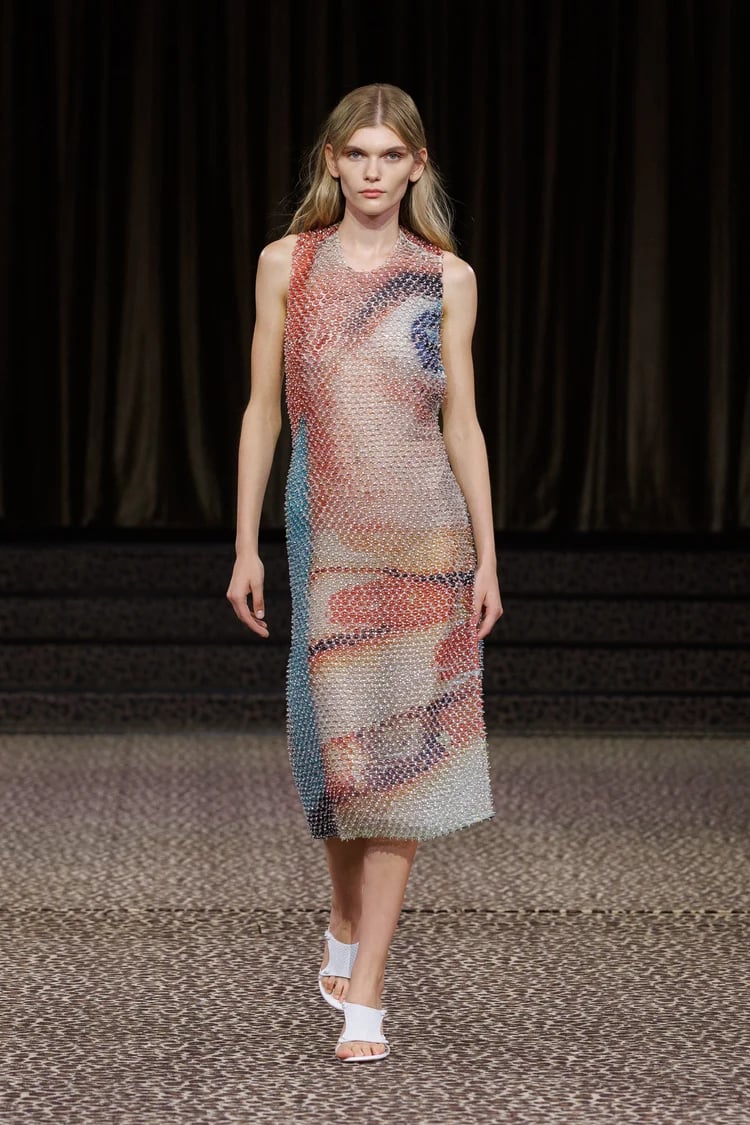
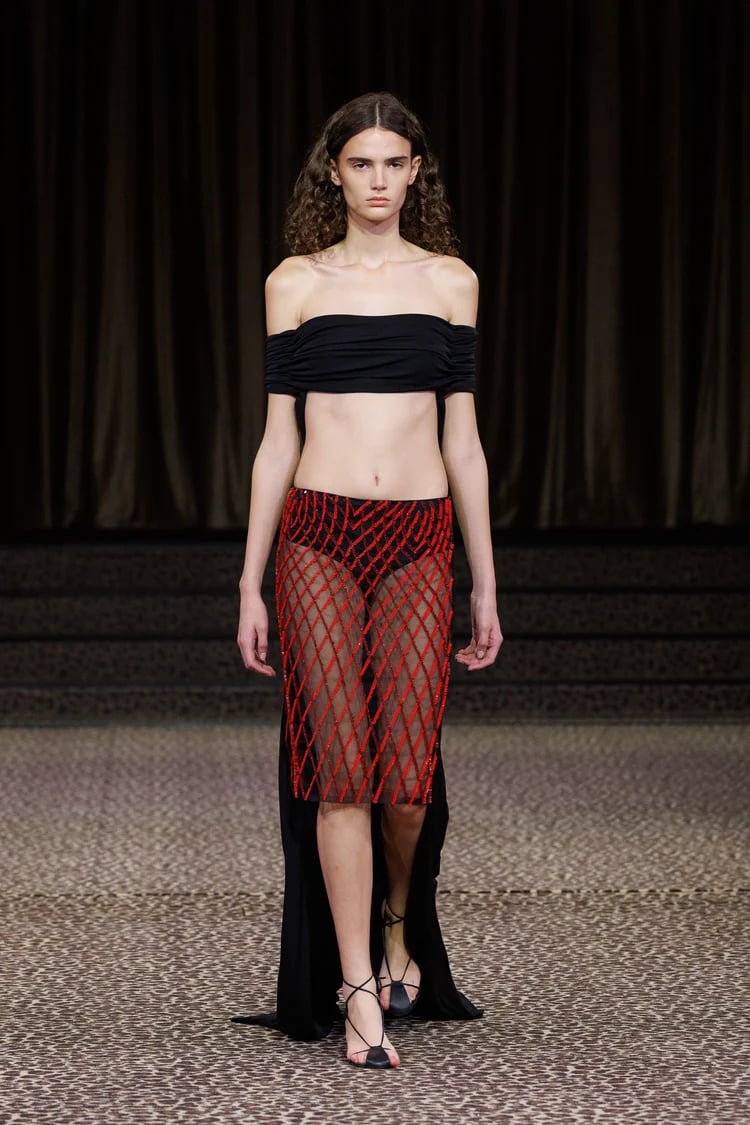
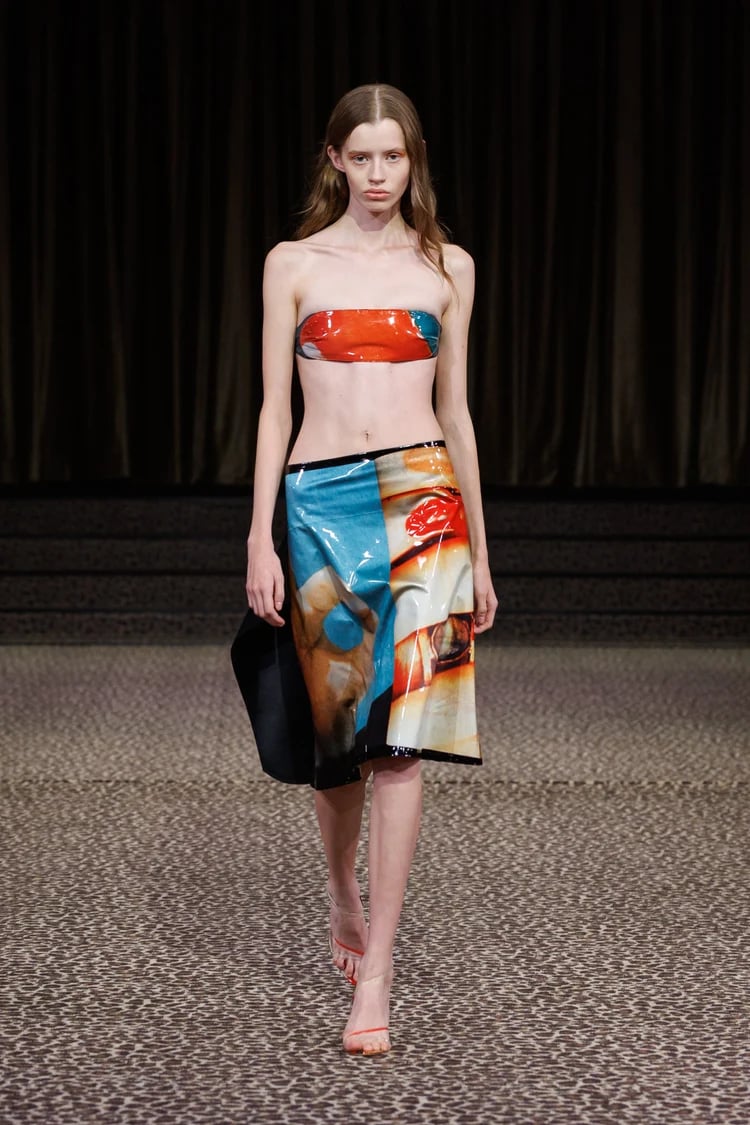
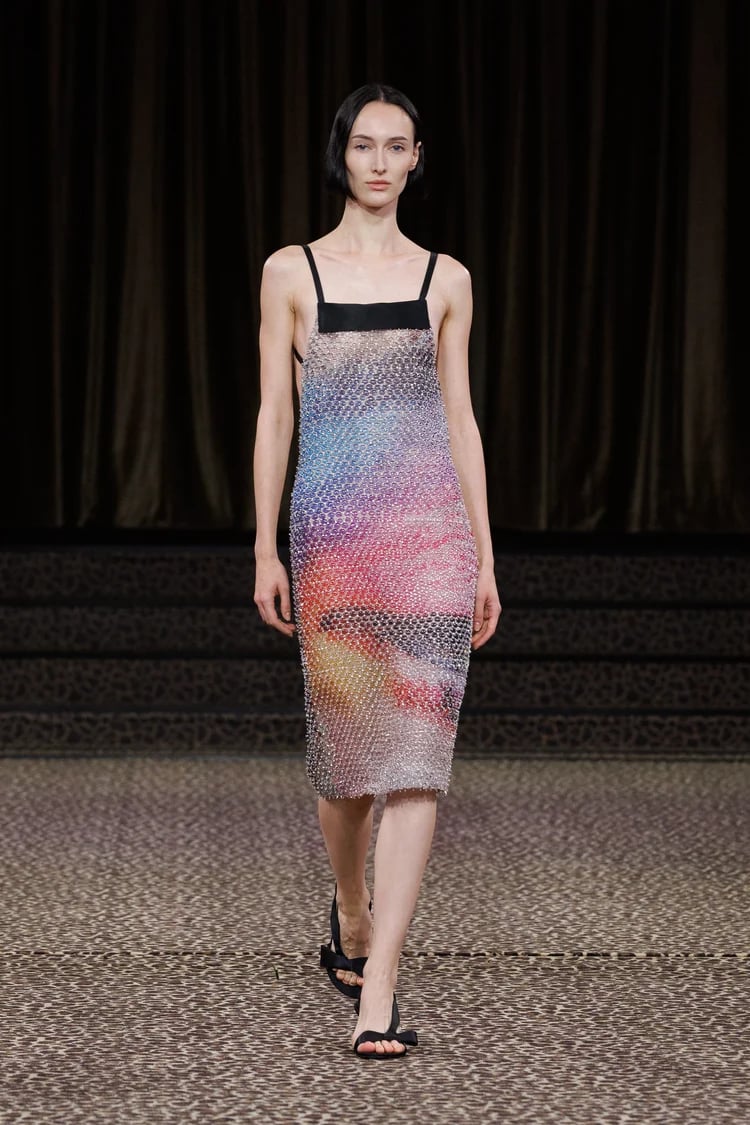
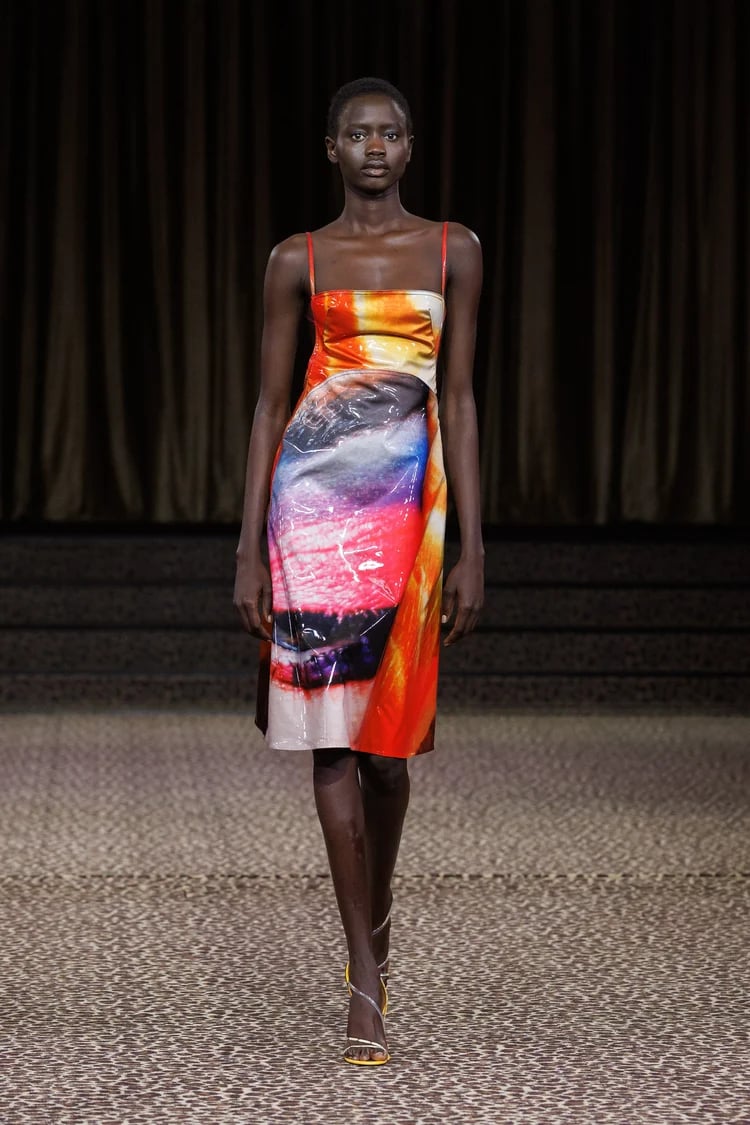
The second device family is underwear hardware. Lace trims, transparent lingerie jersey, bandeaux and bra straps are built into the garments rather than worn beneath them, cutting abstracted lines across the torso. Sheath tops open onto fine georgette. Working with artist Anna Studeli, the house translated collage works onto satin-backed PVC, which the show notes place “between the familiar and the abstract.” Elsewhere, metallic turquoise lace floats off the body, gowns are cut away and shortened at the front, and leather is shredded, fragmented and pieced back together.
Esber’s house codes have always been cut, negative space, and hardware. This season, the reversal is one of hierarchy: hardware leads and drape responds to it, instead of the other way round.
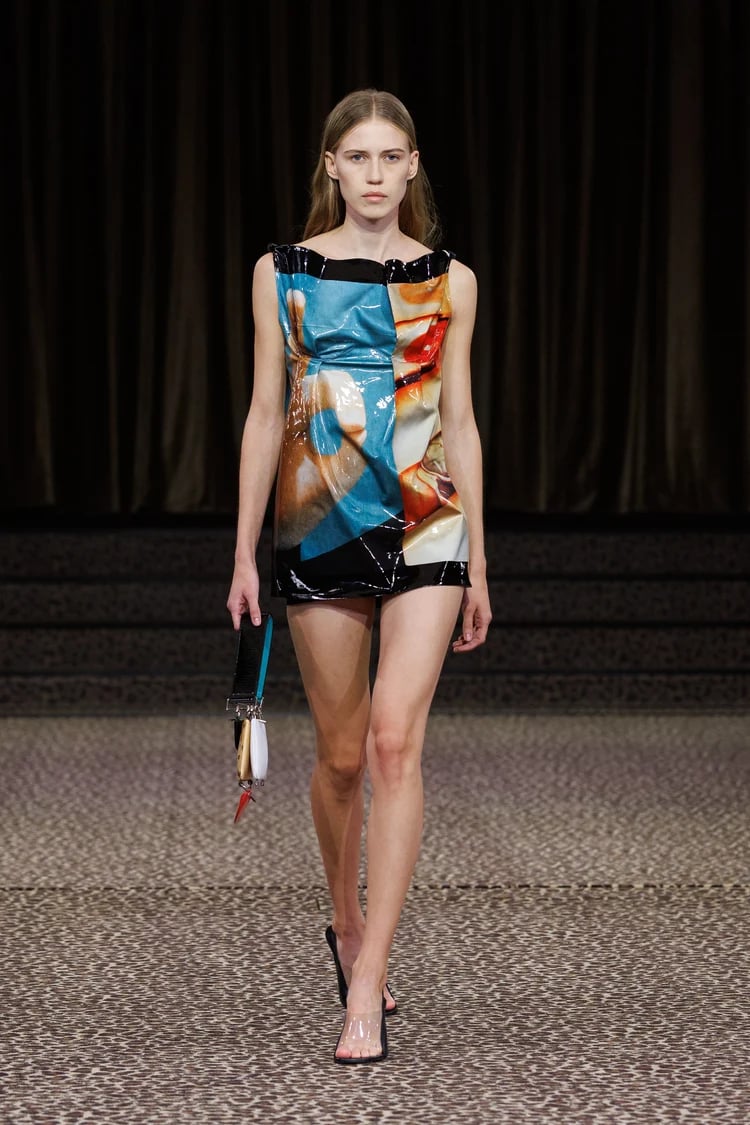

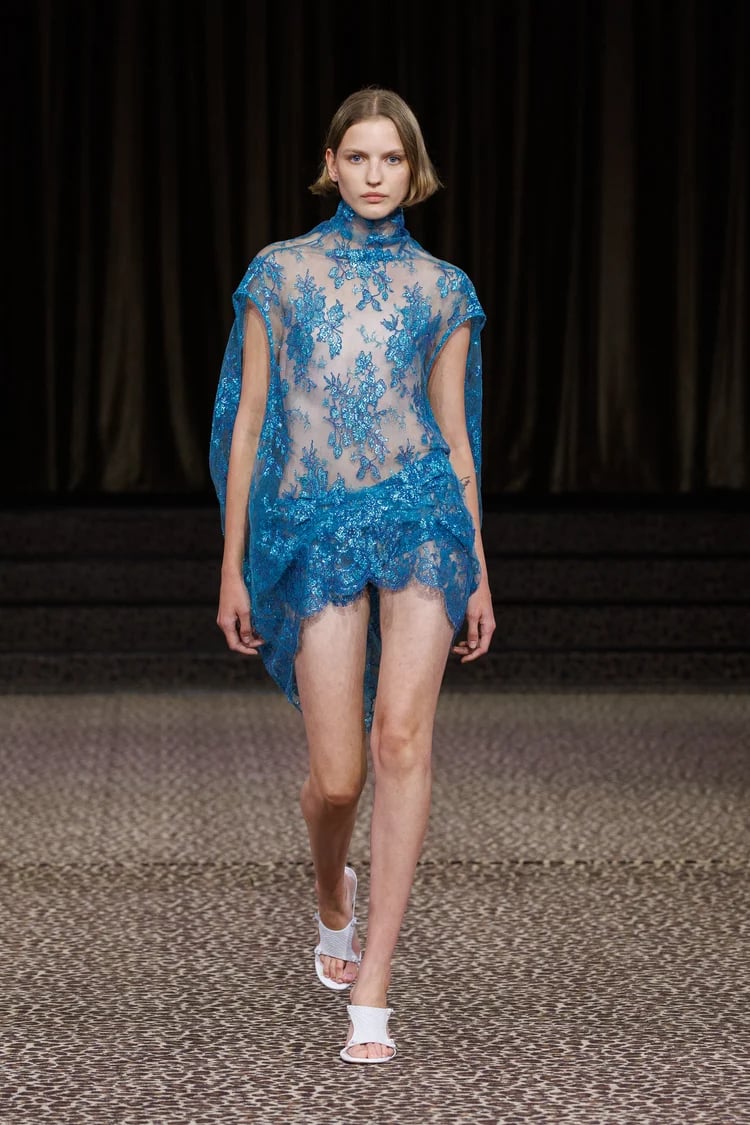
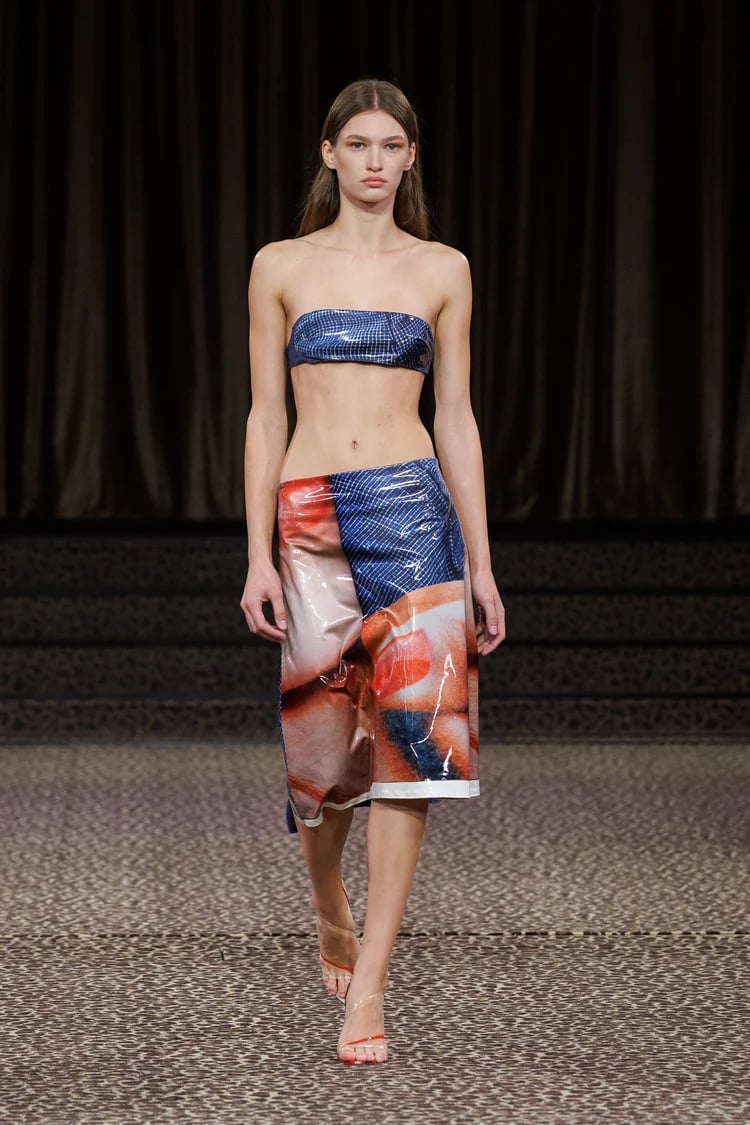
Where 47 Looks Dilute the Idea
The structural problem is arithmetic. A thesis this granular – one detail determining an entire garment – needs to be read look by look, and the collection runs at least six separate device families across 47 exits: studs, enlarged pocket squares, belting, lingerie strapping, PVC collage and reconstructed leather. Each is legible on its own. Stacked at that length, they multiply rather than develop, and the viewer tracking the fifth system has stopped tracking the first.
The commercial problem is repeatability. The fabrications that make the argument visible are the ones hardest to carry into a wholesale order. Deadstock studding cannot be reordered by definition. Ceramic-coated lace, satin-backed PVC and shredded-and-rebuilt leather sit well above the band where Esber’s business actually runs: on his own site, a Banyan Bias Top is $545, a Lea Trouser $895, a Banyan Blazer $1,395, with a Torrent Tailored Coat at $2,695 as the top of the tailoring range. The most argued pieces in this collection are the least likely to appear in a buy.
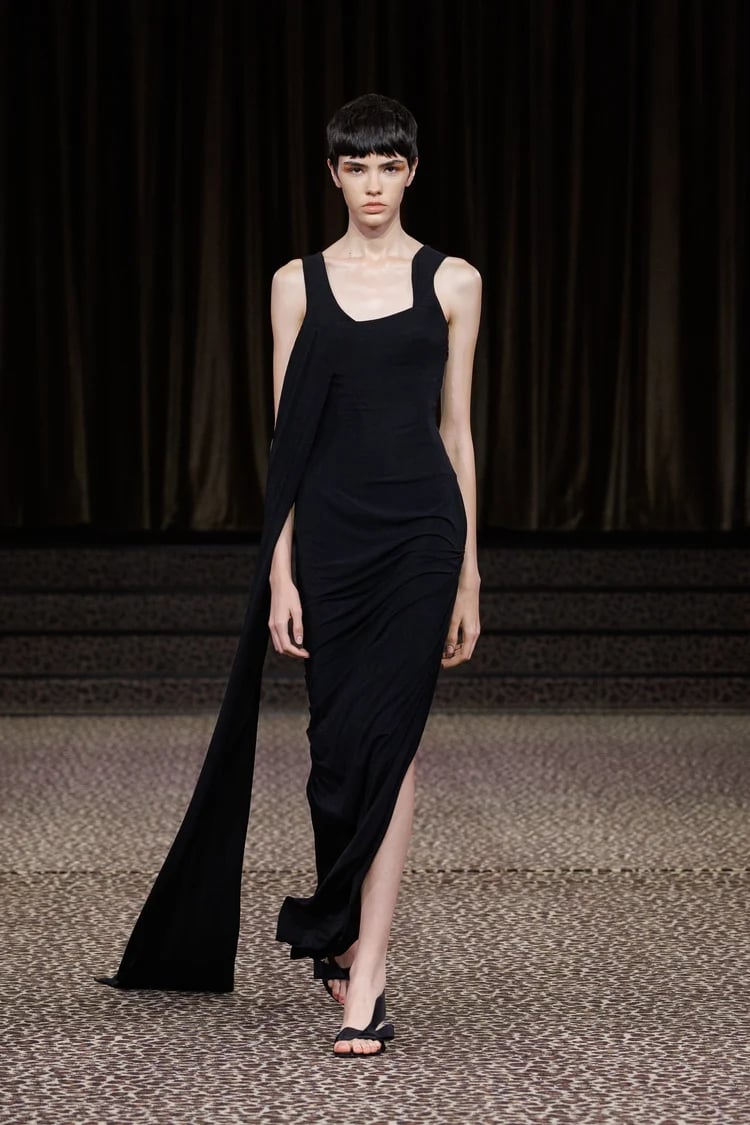
Ready-to-Wear Is the Category Still Growing
The timing is more favorable than the degree of difficulty suggests. Bain & Company and Altagamma put the personal luxury goods market at about 358 billion euros in 2025, down roughly 2 percent at constant exchange rates, and forecast growth of 2 to 4 percent for 2026 in their spring study published June 25. In the same study, ready-to-wear in China is growing at about twice the rate of leather goods. Esber has no leather-goods engine to defend, so a tailoring-and-construction season is a reasonable place to put the ANDAM money.
For New York, the route in is direct. Esber sells to U.S. customers through his own site in dollars, with runway pieces flagged and sold as such, and Mytheresa’s U.S. storefront listed 188 Christopher Esber products as of Oct. 8. That is a DTC-weighted footprint for a designer at this stage, and it means the New York customer sees the Paris output without waiting on a wholesale door to edit it first.
Ornament does become architecture here, and the suiting proves it. The 47 looks leave open the question of whether a detail can carry a whole garment when six competing details ask to do the same job.
See the complete collection below:
Images courtesy of Christopher Esber
In other fashion week news, Valentino Spring 2027 Ready-to-Wear Collection at Paris Fashion Week