
Calvin Klein has launched a limited-edition Pride 2026 release supported by a creator-led campaign starring artist Deon Hinton, choreographer Sam Salter, and model and athlete Jordan Rand.
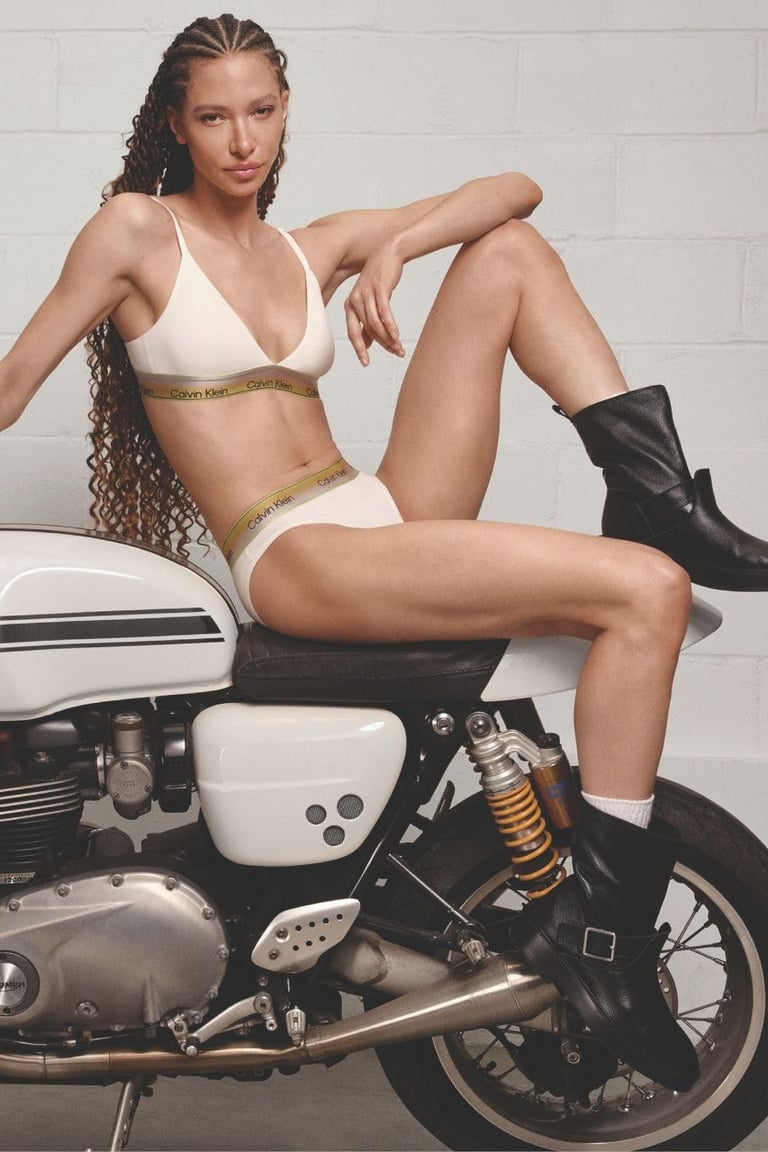
– It is Calvin Klein’s limited-edition Pride 2026 launch, framed through a creator-led campaign starring Deon Hinton, Sam Salter, and Jordan Rand.
– It matters because the brand centers Pride through individual interpretation, pairing product with self-expression rather than flattening it into a generic seasonal message.
– It is aimed at readers drawn to Calvin Klein underwear, graphic tees, and baggy denim, and to anyone watching how major brands speak to LGBTQIA+ culture.
– The imagery reflects a broader fashion appetite for personality, ease, and identity-driven styling, sharpened here through bold color, gradients, and expressive graphics.
– It is appearing now as part of Calvin Klein’s Pride 2026 release, launched June 2, 2026, with the collection presented on calvinklein.com.
Calvin Klein opens the frame with motion, color, and a certain studied ease. One creator turns inward through self-shot intimacy. Another moves through space. A third takes to a motorcycle in New York City. The point is not polish for its own sake. It is perspective.
That distinction matters now. Pride campaigns have long risked becoming a wash of slogans and rainbow shorthand, but this one leans on authorship instead: artist Deon Hinton, choreographer Sam Salter, and model and athlete Jordan Rand each channeling an authentic expression of Pride through their own lens. Calvin Klein knows the value of image. Here, it chooses point of view over pageantry.


Why the Pride 2026 Visual Story Lands Through Color, Cotton, and Baggy Denim
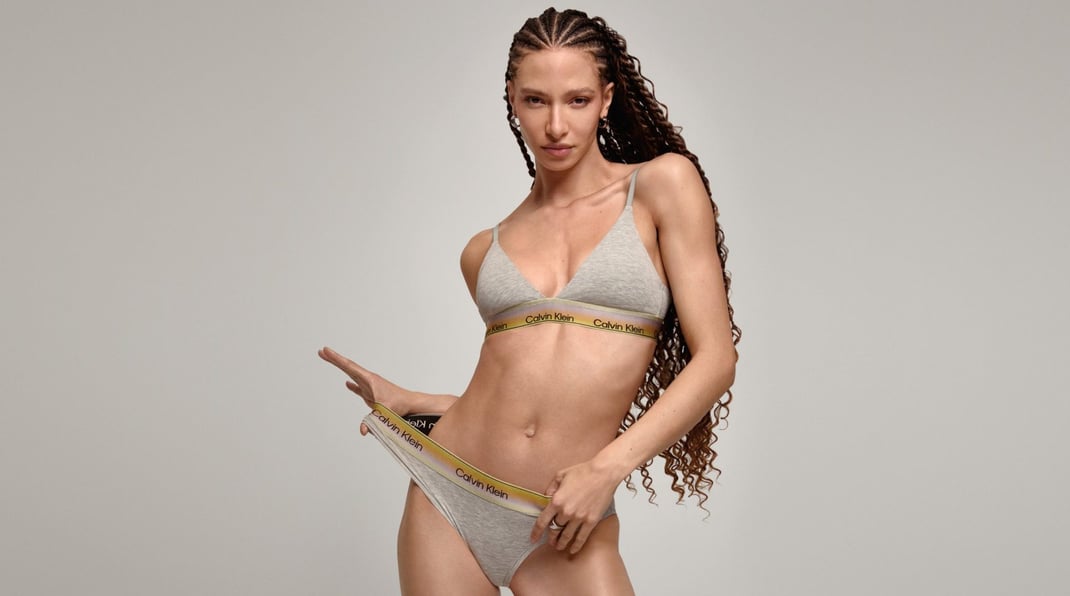
The clothes themselves are concise. Breathable cotton underwear arrives energized by bold colors, dynamic gradients, and logo bands that do what Calvin Klein branding has always done best: turn the familiar into something immediately legible from a distance. Classic tees carry expressive graphics. Relaxed and baggy denim silhouettes complete the picture.
Campaign imagery suggests a wardrobe built on recognizable Calvin Klein codes, then slightly pulled off-center. The silhouette recalls the brand’s longstanding ease, but the Pride framing sharpens it with saturated color and a looser, more casual line. There is no overworked styling thesis here. Just enough. That restraint gives the visual identity its charge.


Why This Creator-Led Pride Campaign Feels Tuned to the Current Fashion Mood
Who wears this story? People who want identity visible, but not overexplained. Hinton’s intimate self-shot content, Salter’s expressive movement, and Rand’s freeing ride across New York City all suggest Pride as lived experience rather than staged tableau. That is a meaningful distinction, and a commercially astute one.
It resonates because fashion is in one of its periodic swings back toward personality. Not maximalism for sport. Personal style with a pulse. Calvin Klein’s Pride 2026 collection channels that mood through individuality, self-expression, and bold styling, while grounding it in categories the brand already owns with authority: underwear, tees, and denim. The message is clear without becoming clumsy.


Calvin Klein’s Pride 2026 campaign works because it keeps its eye on authorship: bold colors, graphic clarity, relaxed denim, and three creators whose distinct modes of expression give the project shape and credibility. This is not Pride as decoration. It is Pride as image, movement, and self-definition, rendered with a disciplined fashion eye.
Images Courtesy of Calvin Klein
In other brand campaign news, Gucci Summer 2026 Campaign: Luxury in Motion and the Return of Flora
Jordan Rand and the Case for the Athlete-Model in Fashion Campaigns
Jordan Rand occupies a specific and increasingly sought-after position in the fashion landscape: the athlete-model whose physical credibility lends a campaign something that pure editorial casting cannot manufacture. Where a traditional model brings technical precision, Rand brings a body shaped by genuine physical practice, and a presence that reads as earned rather than assembled. That distinction becomes visible in the imagery. The motorcycle sequence through New York City is not styled anonymity. It is a recognizable person moving through a recognizable city with a legible sense of self.
The rise of the athlete-model in major brand campaigns reflects a broader cultural recalibration. Audiences have grown more attuned to authenticity as a visual quality, not just a marketing claim. When Calvin Klein places Rand in this context, alongside Hinton and Salter, the casting logic is clear: three people who each have a discipline, a practice, and a perspective. The result is a campaign where the product is worn, not merely displayed. That difference registers, even subliminally, and it is precisely why Calvin Klein’s choice of Rand reinforces the campaign’s credibility rather than simply extending its reach.
How Calvin Klein Builds Brand Equity Through Pride Without Overclaiming
There is a structural tension that every major brand navigates during Pride: how to participate meaningfully without appearing to extract cultural value for commercial gain. Calvin Klein’s approach in 2026 addresses this tension through restraint and specificity. The brand does not attempt to speak for a community. Instead, it hands the frame to three individuals and allows their distinct modes of expression to carry the weight. The product functions as wardrobe, not symbol.
This approach has a practical intelligence behind it. Consumers engaged with LGBTQIA+ culture are among the most discerning audiences a brand can court. They have watched years of rainbow-washed campaigns arrive and disappear without structural commitment. What registers here is the combination of a considered product story, grounded in categories Calvin Klein already owns with authority, and a casting strategy that prioritizes authorship over representation as checkbox. The limited-edition framing also signals intention: this is not a permanent repositioning but a seasonal release executed with focus and care.
The broader lesson for the fashion industry is visible in the campaign’s restraint. Bold color, clean product, specific people, a defined city. That is a complete visual argument, and it does not require overstatement to land.
New York City as a Campaign Location and What It Adds to the Pride 2026 Story
New York City is not incidental to the Calvin Klein Pride 2026 campaign. It is structural. The city carries its own relationship to Pride history, queer culture, and the visual grammar of American fashion, and placing Jordan Rand on a motorcycle navigating its streets activates all of that context without spelling it out. Calvin Klein has always been a New York brand in its bones, its directness, its refusal of unnecessary ornament, and its understanding that urban life is itself a form of styling.
Shooting in the city also grounds the campaign in something tangible. Pride campaigns that exist only in controlled studio environments risk a certain weightlessness: beautiful but unmoored. The New York footage gives Rand’s segment a specific energy, a sense that these clothes exist in motion, in heat, in the texture of an actual summer. That quality extends to the underwear and tee imagery as well, where the color palette echoes the city’s saturated light without becoming artificial.
For readers of this publication who live in or follow New York as a cultural reference point, the campaign lands with added resonance. It is a reminder that the best fashion imagery does not just feature a location. It earns it.