
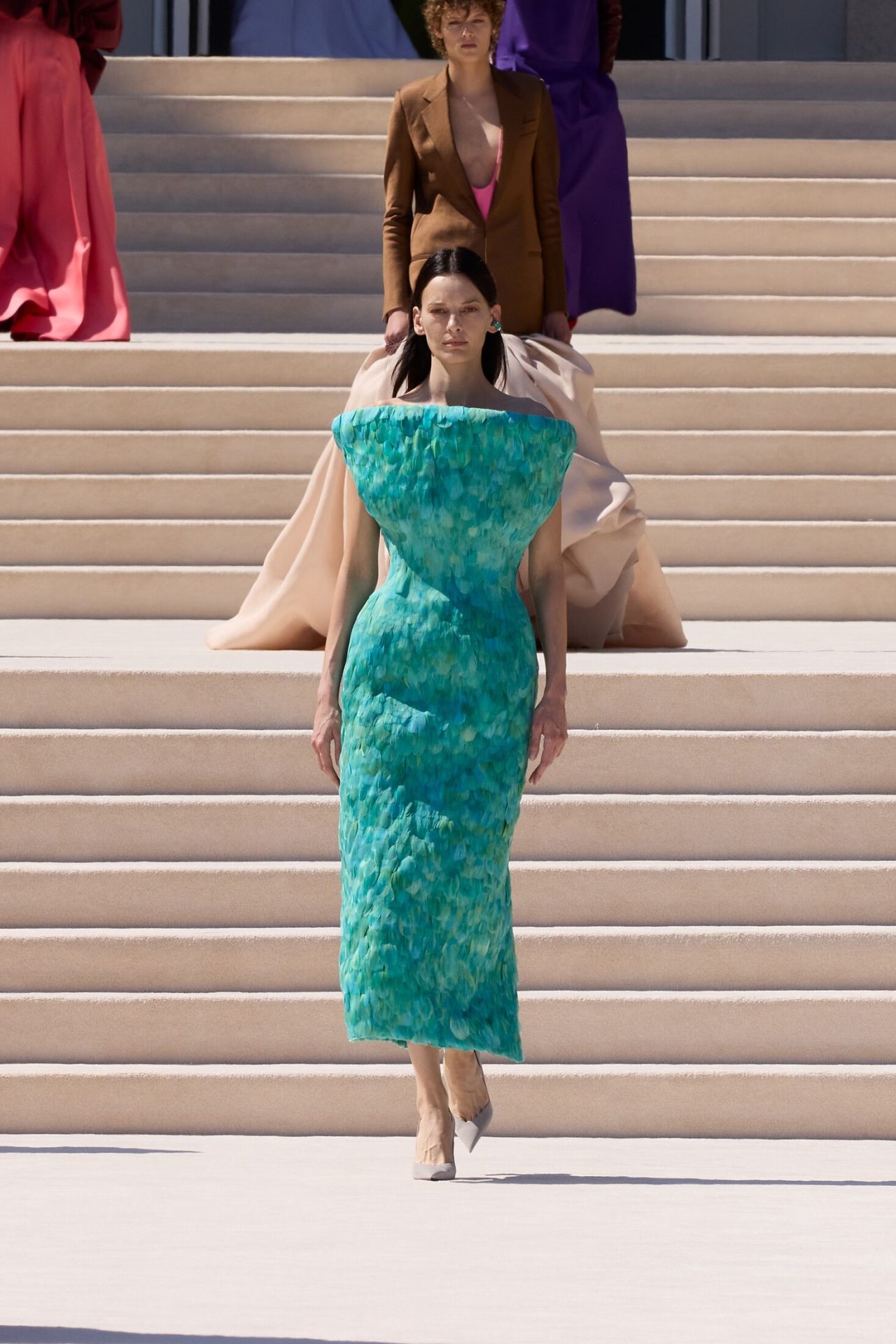
Pierpaolo Piccioli’s debut haute couture collection for Balenciaga, shown on Wednesday July 9, 2026 at the Cité Internationale Universitaire de Paris with British singer Anohni providing the emotional soundtrack, was built on a methodology the designer described as “engineering the cuts, not using so many fabrics, not using additional structures, but arriving at the perfect meld between the fabric, the shape, the color and the surface — as if you used only one gesture to create the object,” with maximalist surfaces applied to minimalist shapes as the collection’s recurring structural logic.
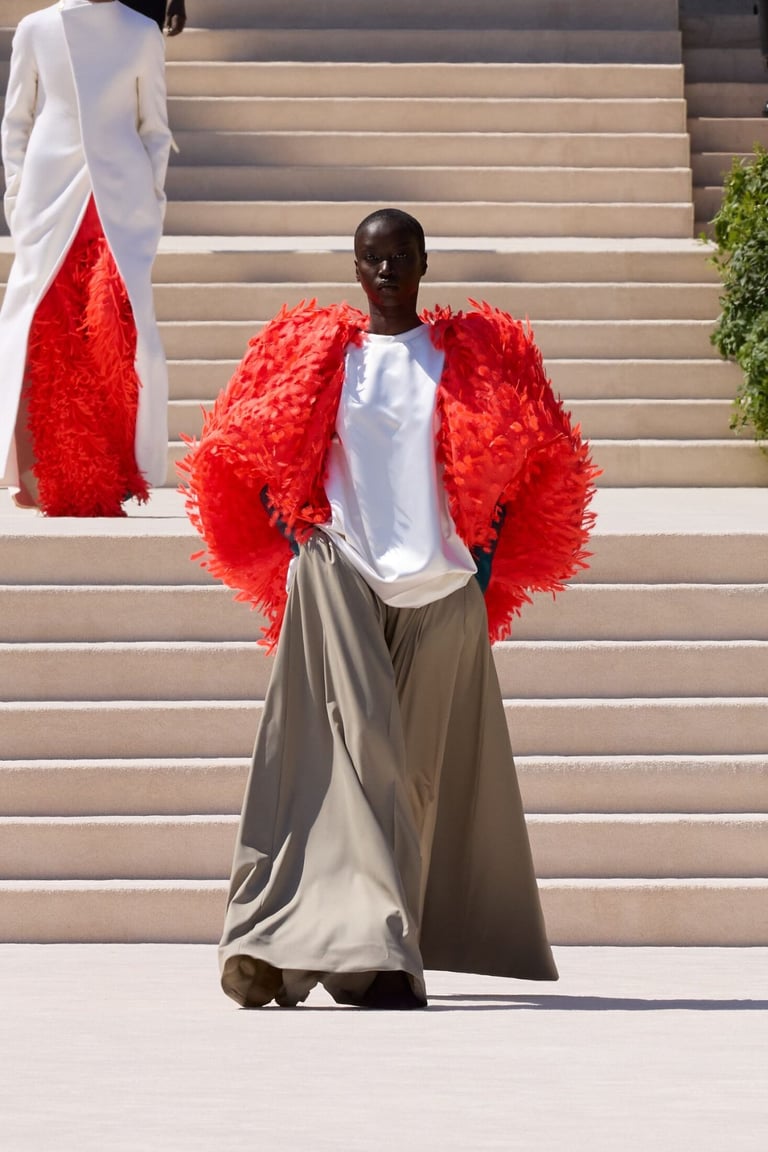
- Pierpaolo Piccioli’s debut haute couture collection for Balenciaga, shown Wednesday July 9, 2026 at the Cité Internationale Universitaire de Paris with British singer Anohni providing the emotional soundtrack, was built on a stated methodology of “engineering the cuts, not using so many fabrics, not using additional structures, but arriving at the perfect meld between the fabric, the shape, the color and the surface — as if you used only one gesture to create the object.”
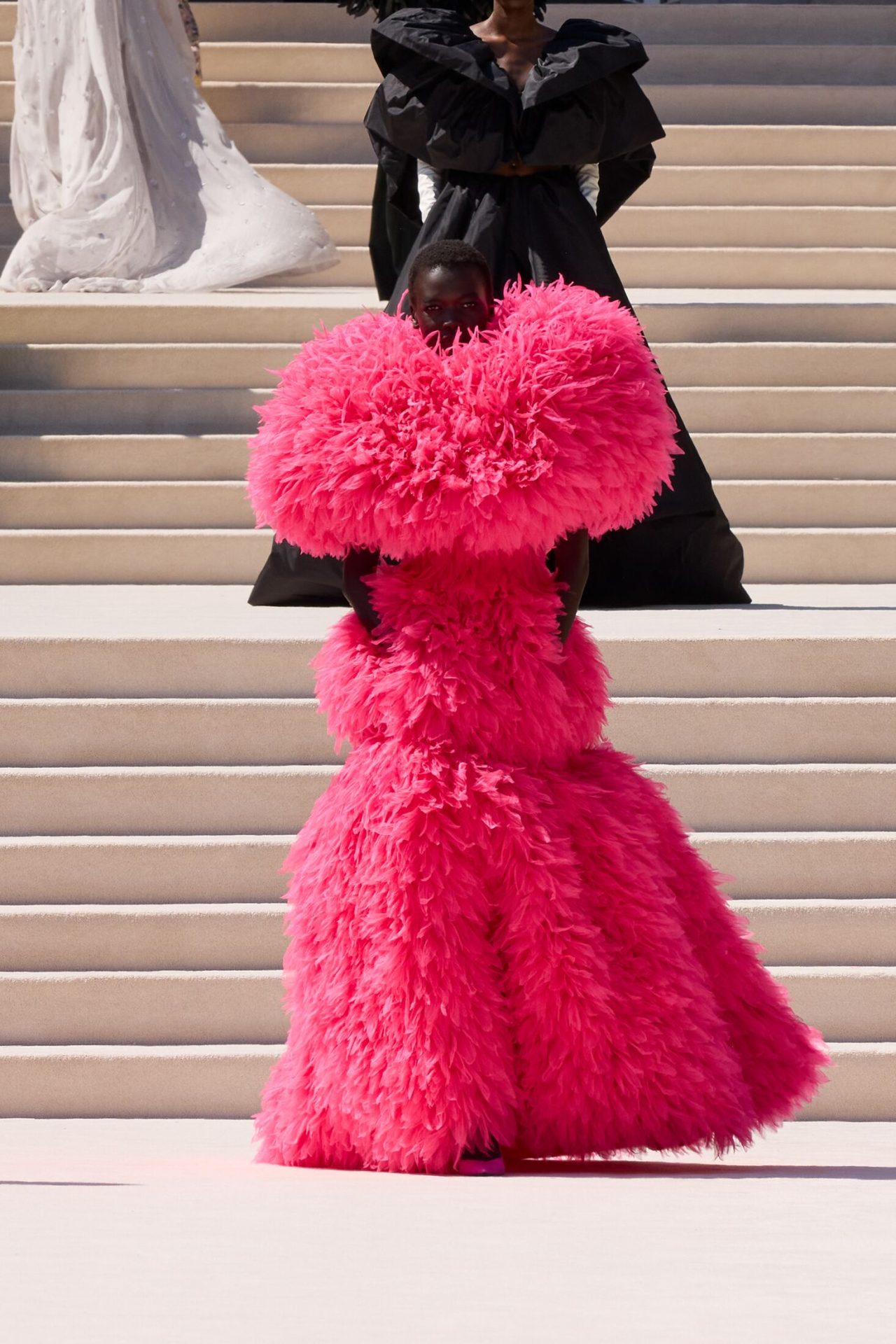
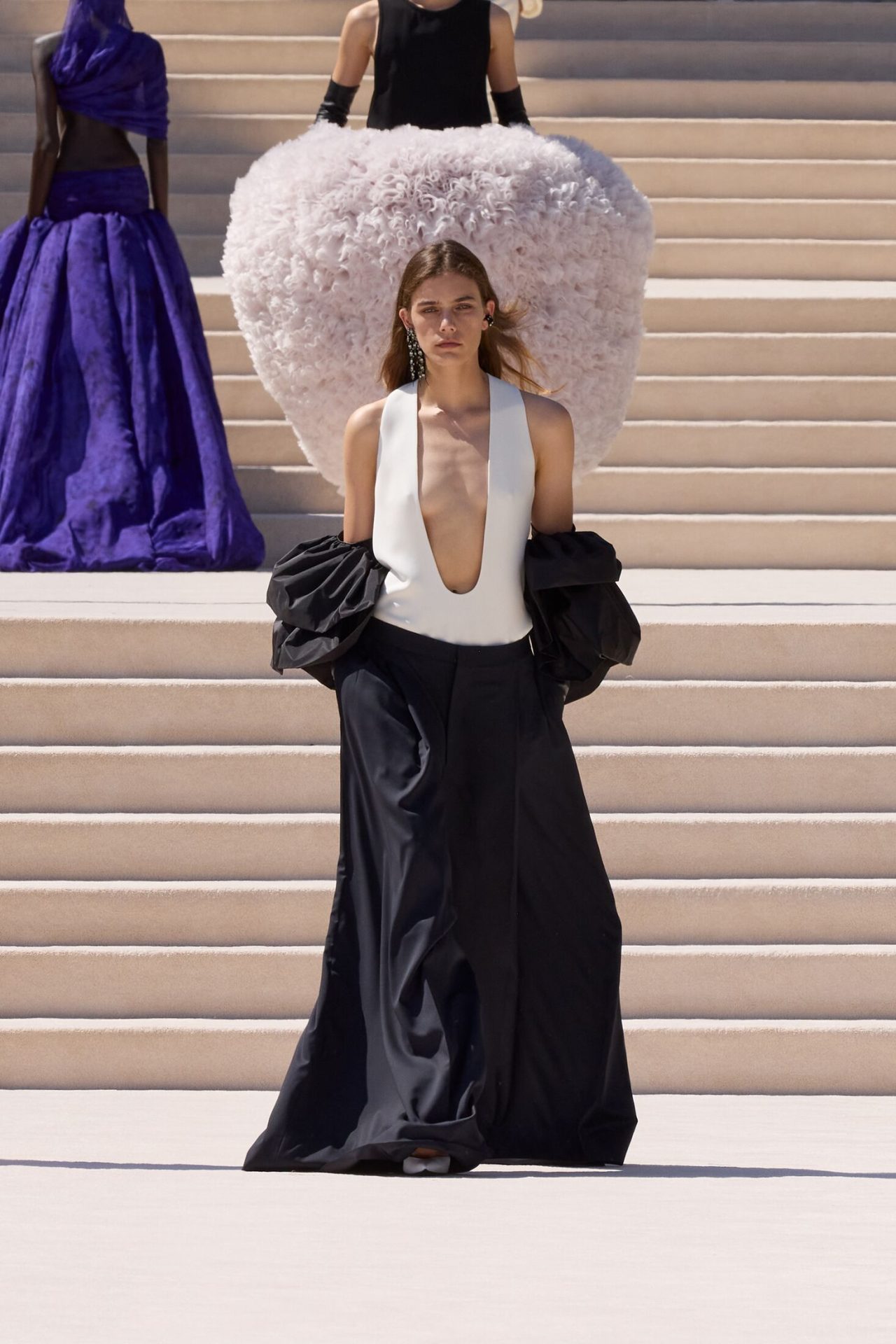
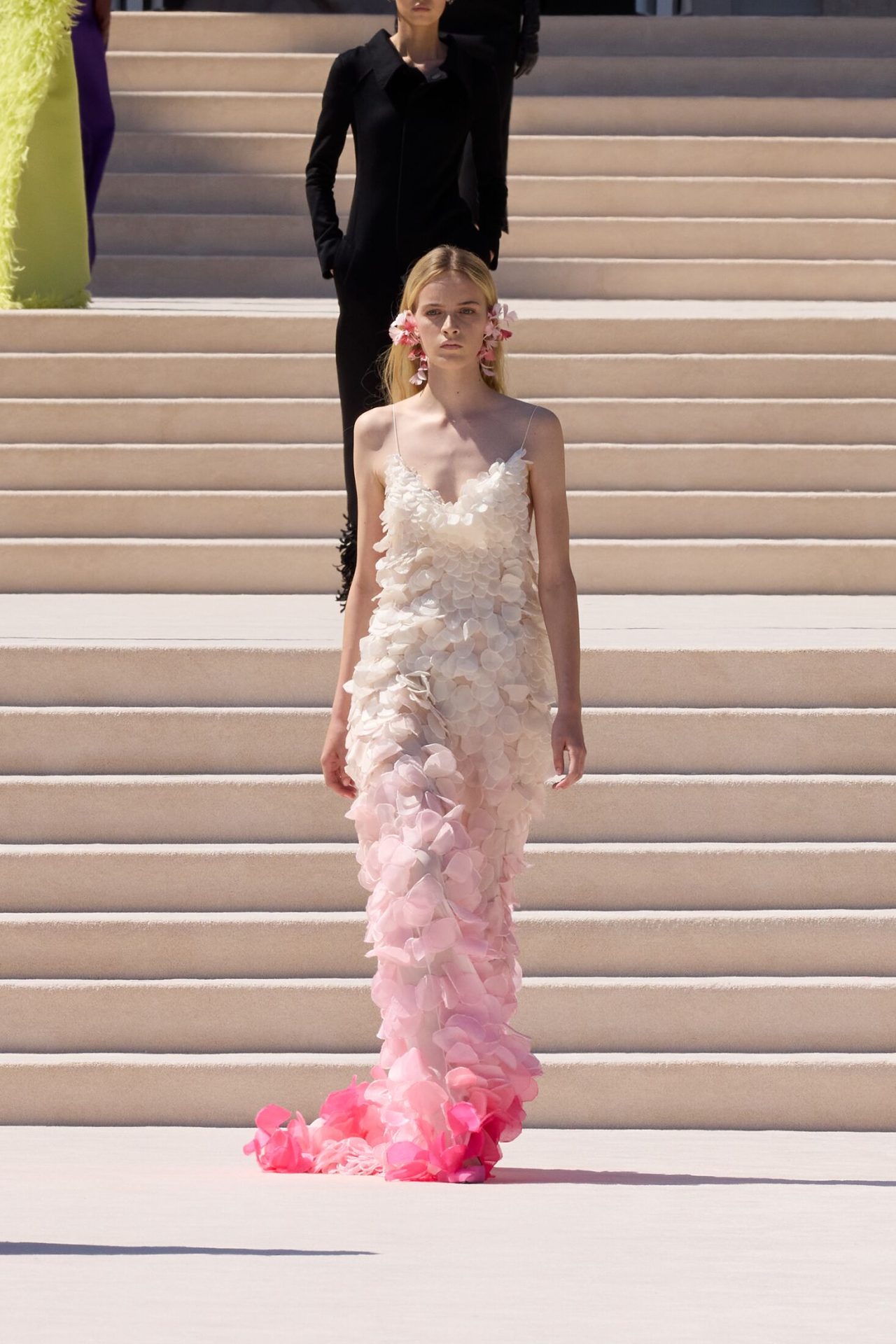
- The 53-look lineup climaxed with Gigi Hadid in a dramatic, face-framing, body-engulfing hood of jutting rooster feathers, and included a vast strapless gown adorned with 24,150 shredded gazar petals, puff-sleeved silk gazar bomber jackets with bulging backs described as “bound to rack up some orders,” and maximalist surfaces applied to minimalist shapes as the collection’s recurring structural logic.
- Daywear was minimal — floor-sweeping chinos, a couture tee, a tank top — with Piccioli making no apologies, stating: “You have to dream about couture. I want to deliver a dream about this house,” before taking his bow alongside the entire couture studio and atelier, all dressed in white couture coats, reprising a gesture from his Valentino years.
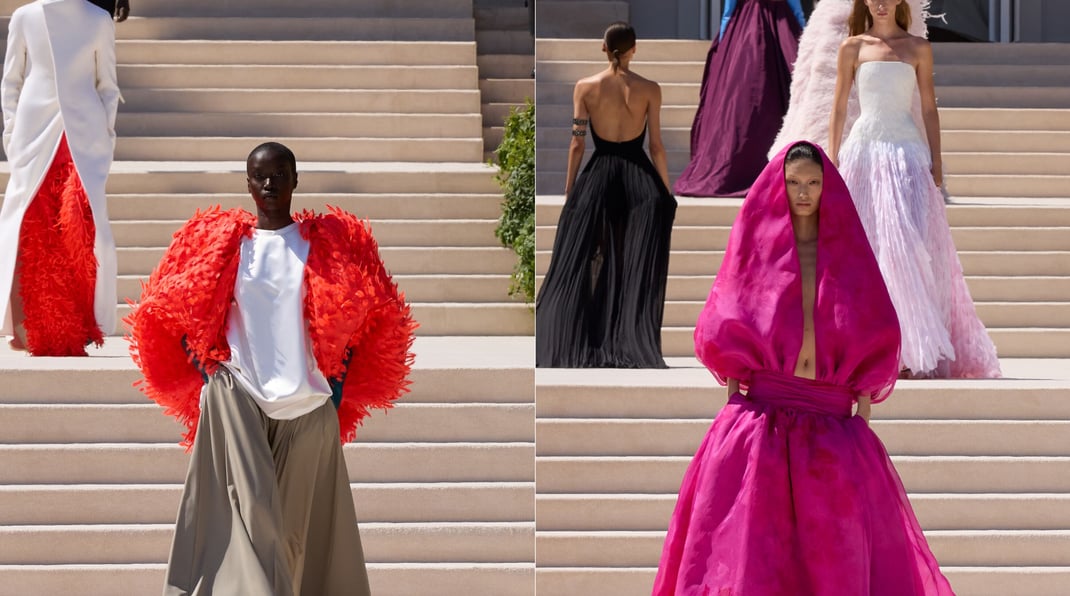
Pierpaolo Piccioli opened his first Balenciaga couture show with a giant pair of chinos, a white couture T-shirt, and a bubble-bolero-bomber bristling with orange feathers. The message was immediate. This is a designer who understands that couture’s first obligation is to produce something worth looking at.
Cristóbal Balenciaga, the house’s founder, held that a couturier must be an architect for the shape, a painter for the colors, and a philosopher for the way people feel in the clothes. Piccioli studied those values at Valentino across a long and acclaimed tenure. He arrived at the Spanish-founded Paris house carrying them intact. The outdoor venue at the Cité Internationale Universitaire, a scenic courtyard under blazing midday sun with seats encircling a hedge, was a royal pain to get to and deeply uncomfortable. A breeze moved through the models’ hair and disturbed the petals on the gazar gown. The setting was not incidental.
What Fuzzy Full-Legged Pants, Hand-Molded Leather Coats, and a Pistachio Trapeze Coat Reveal About Piccioli’s Balenciaga Vocabulary
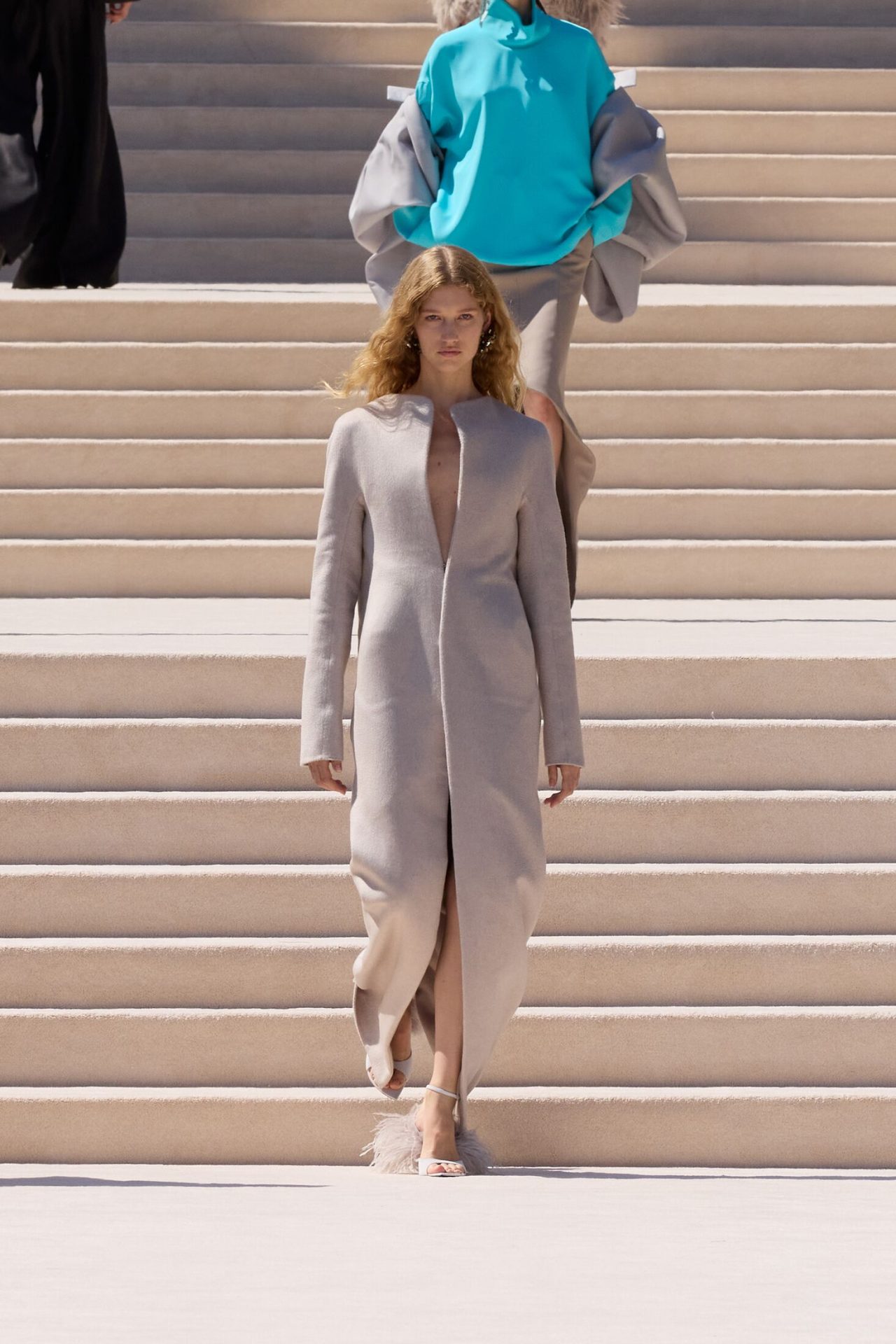
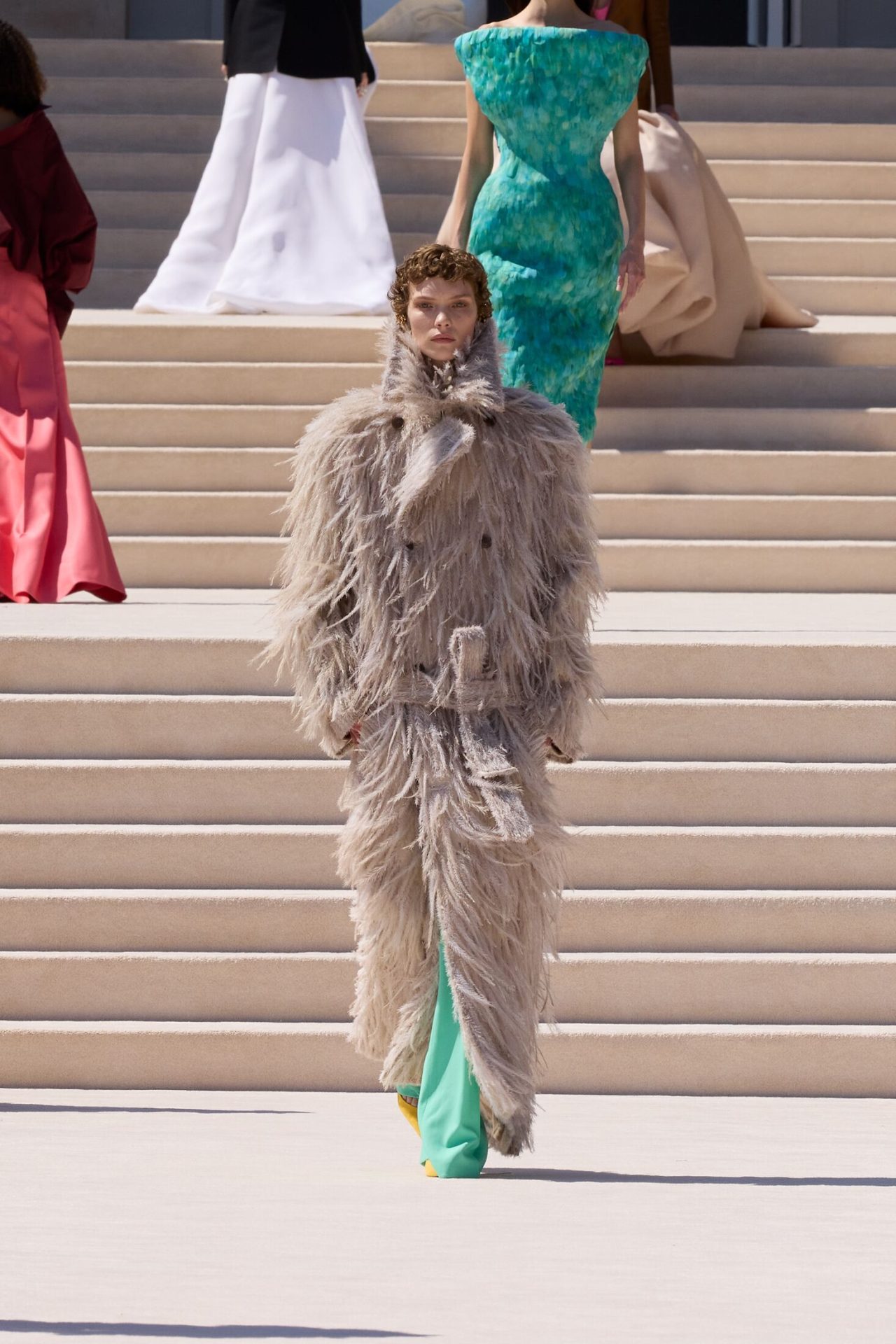
The collection’s construction logic was visible in the atelier preview. A funnel-necked, tortoise-backed Stockman held a piece in progress, with seamstresses hand-molding leather and cashmere directly onto the form. The sleek coats that technique produced were arresting in profile. Tubular embroideries and silky hairs lapped under lean cashmere coats throughout the lineup.
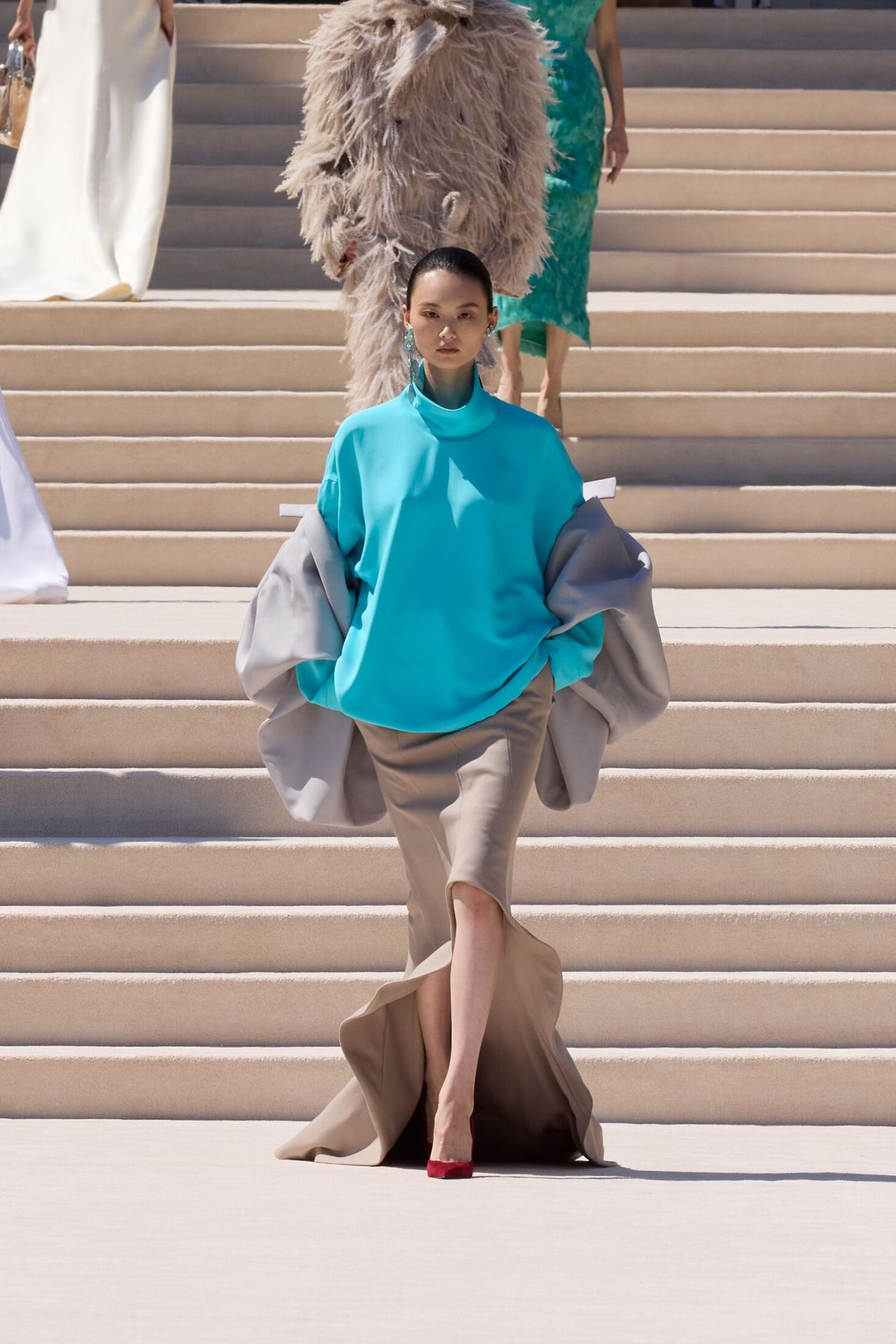
Fuzzy, full-legged pants appeared in abundance. They were paired with structured upper halves, the contrast between relaxed volume below and controlled construction above establishing the collection’s central tension. A narrow, severely elegant black tailored dress carried a white satin scarf trailing behind its neck. A pistachio trapeze coat opened at the back, the opening edged with neon green feathers. A pale pink ostrich-type trapper hat attached to a giant scarf-stole twisted around the torso, resolving into a vast pouf skirt.
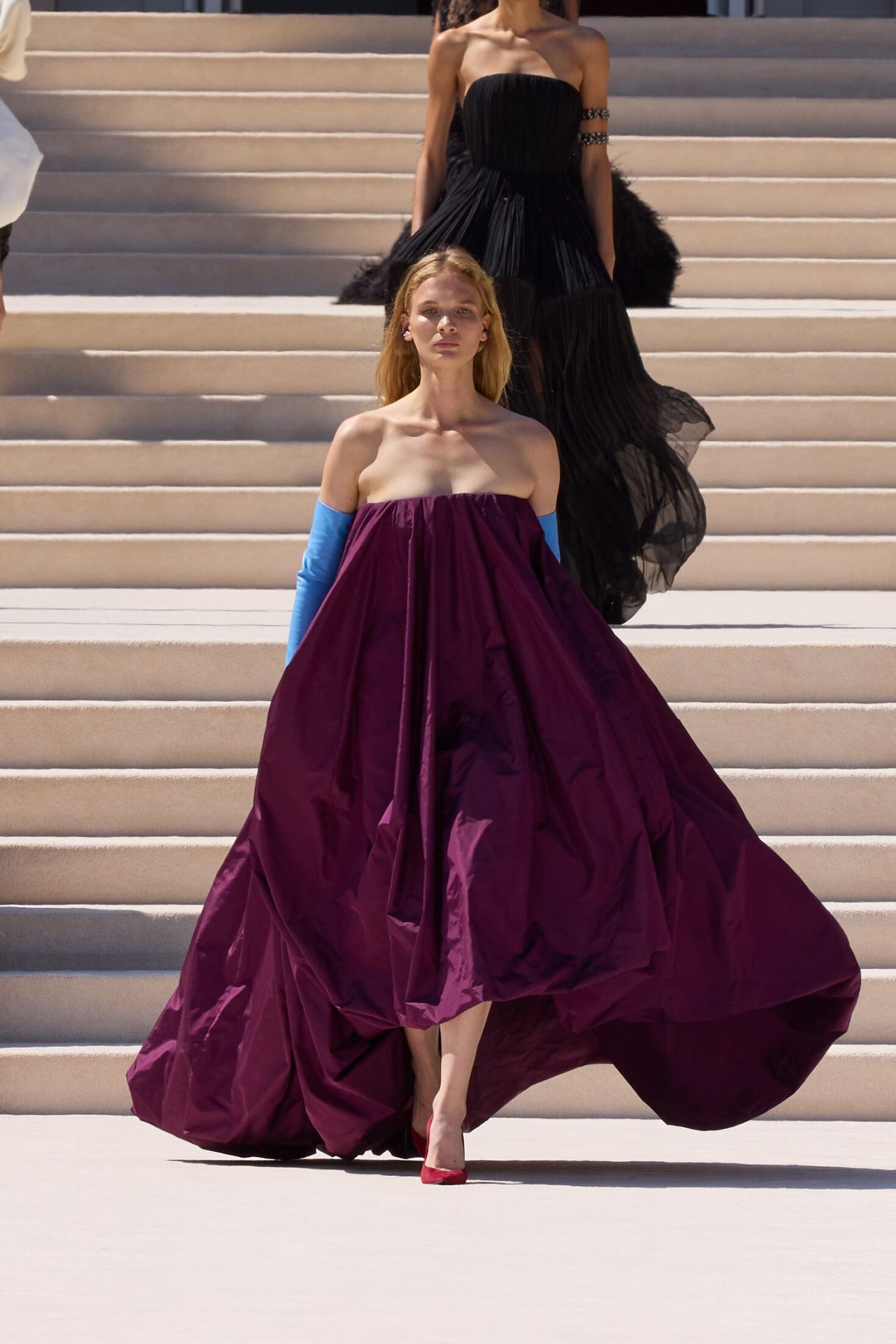
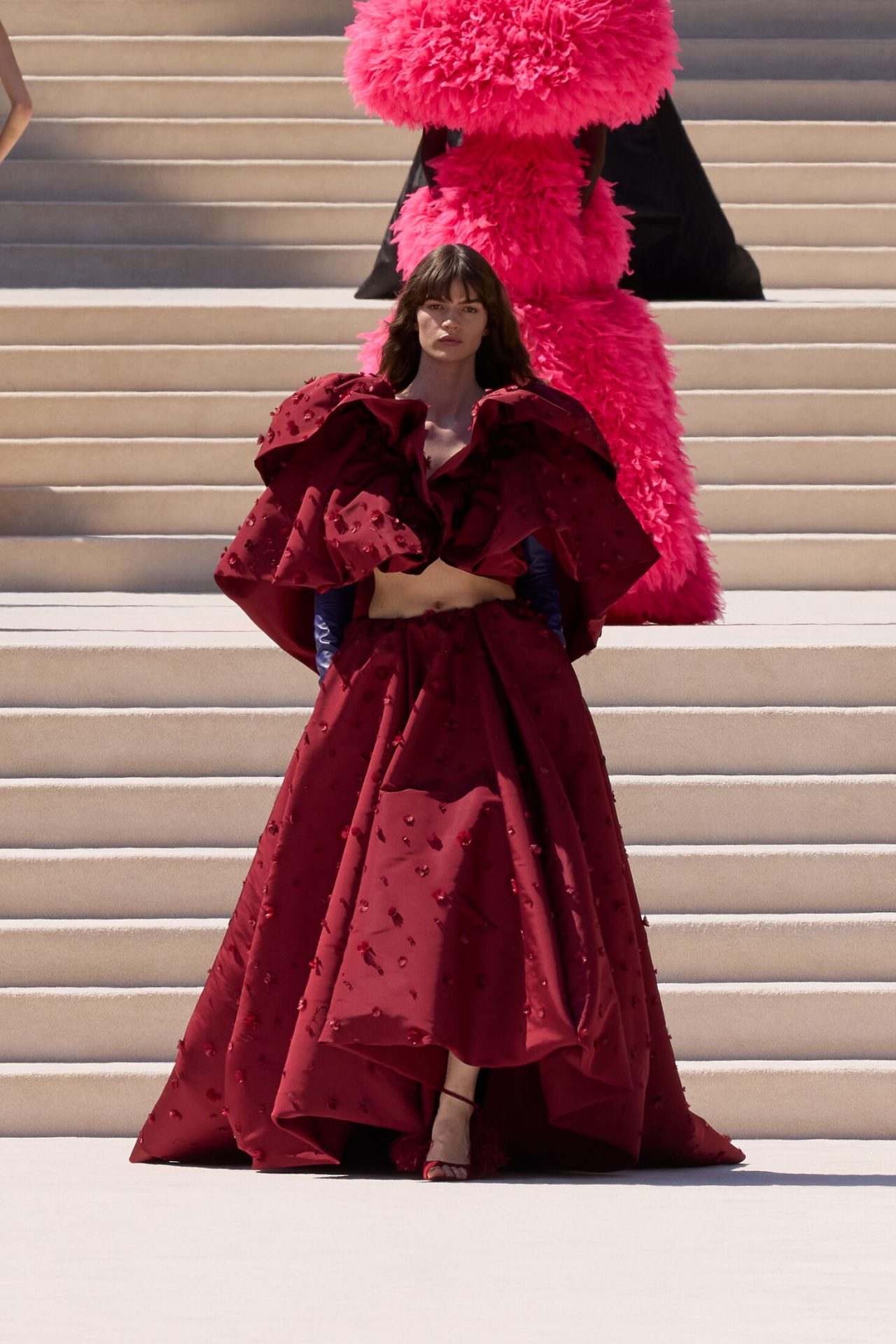
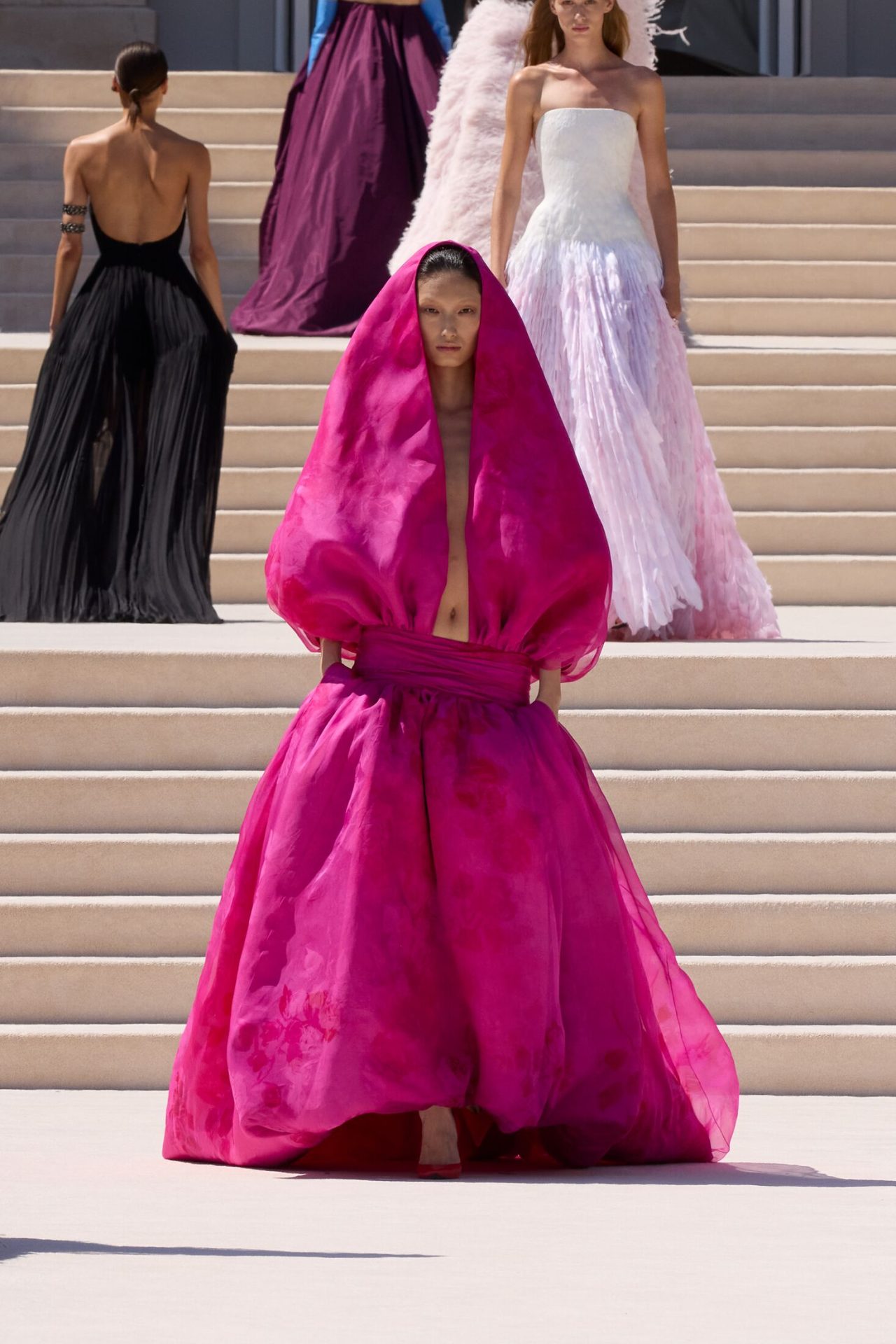
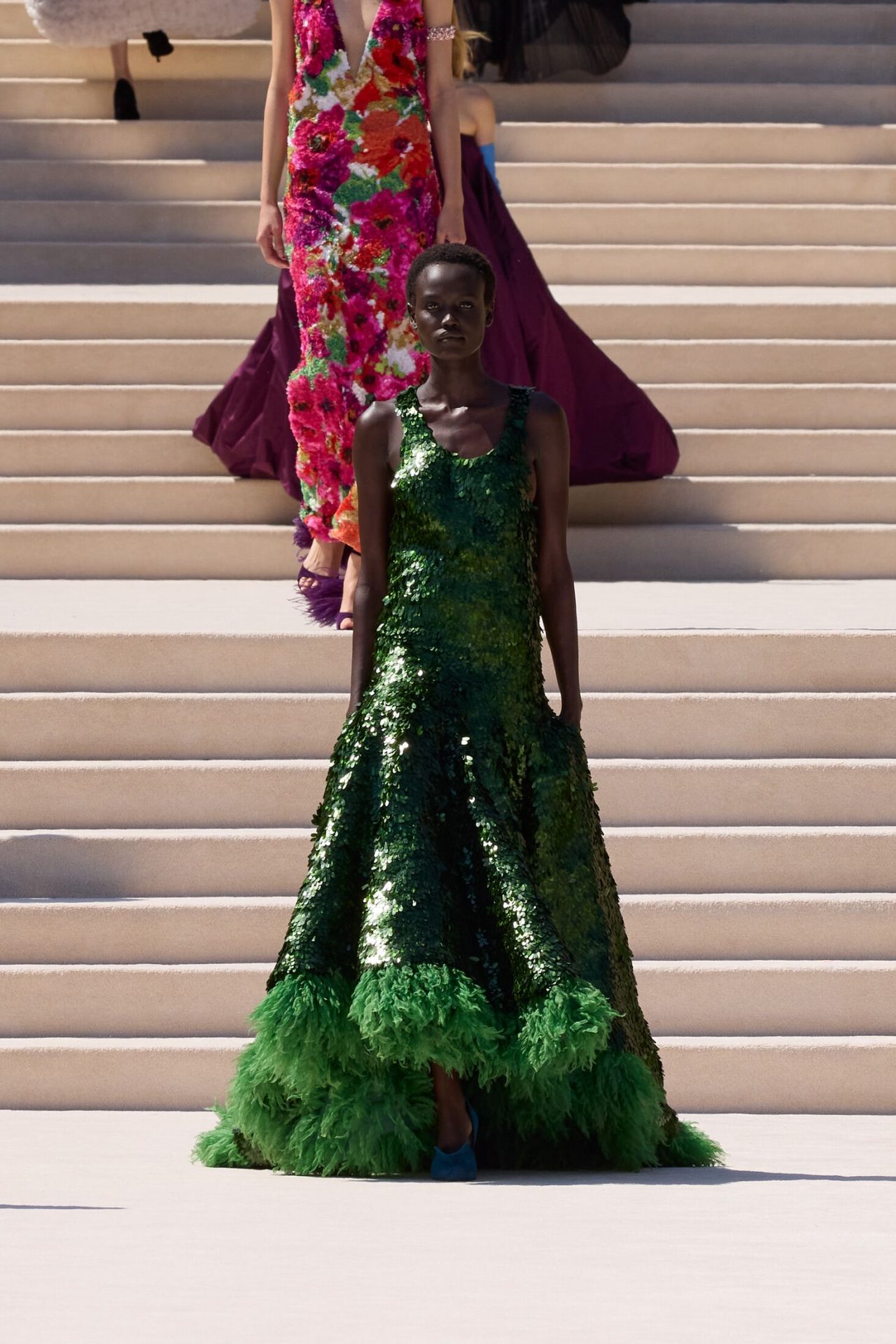
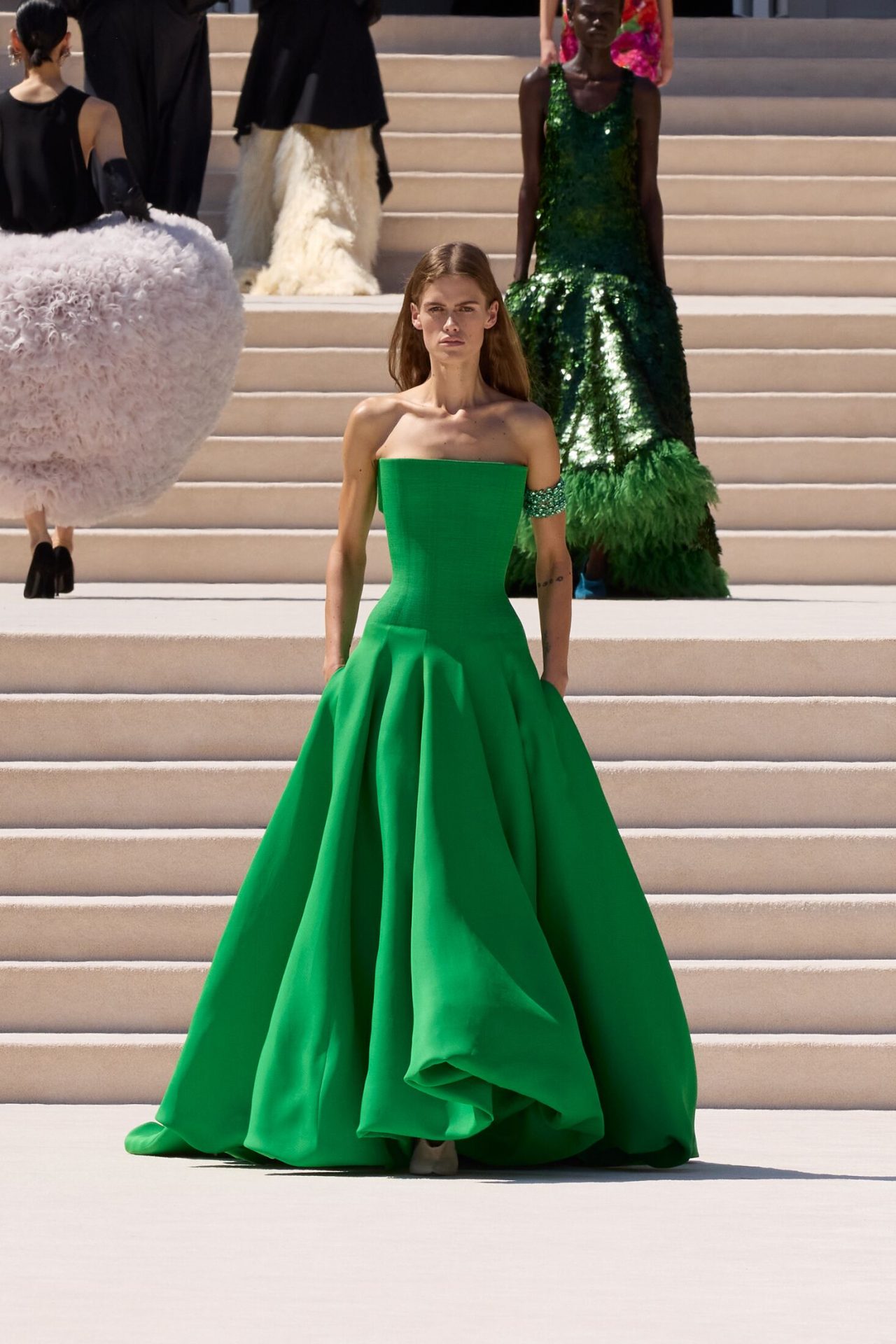
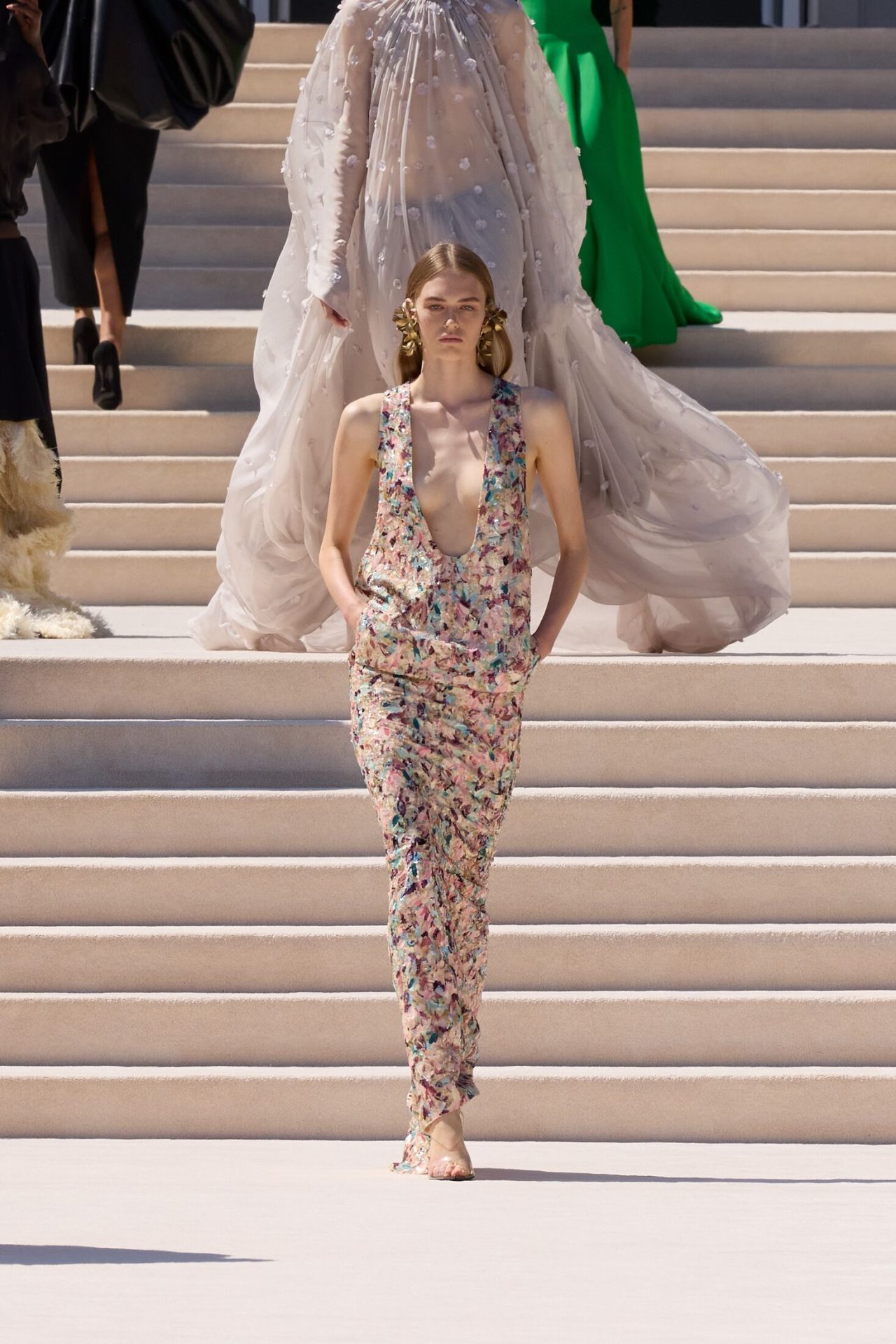
Piccioli and his team also merged tailoring and flou techniques within single garments. The approach produced pieces that operated in two registers simultaneously. A black bustier dress carried an undulating protrusion just past the hips, over which pleated chiffon drifted freely. The construction was precise. The result was not.
The show climaxed with feathery, topiary-like gowns of stacked volumes that processed slowly down the venue’s grand steps. The sequence built deliberately toward Gigi Hadid’s closing look. The rooster feather hood was face-framing and body-engulfing. It was also the collection’s most direct statement of intent.
Why Piccioli’s Couture Debut Matters Beyond the Spectacle, and What It Establishes for Balenciaga’s Annual Schedule
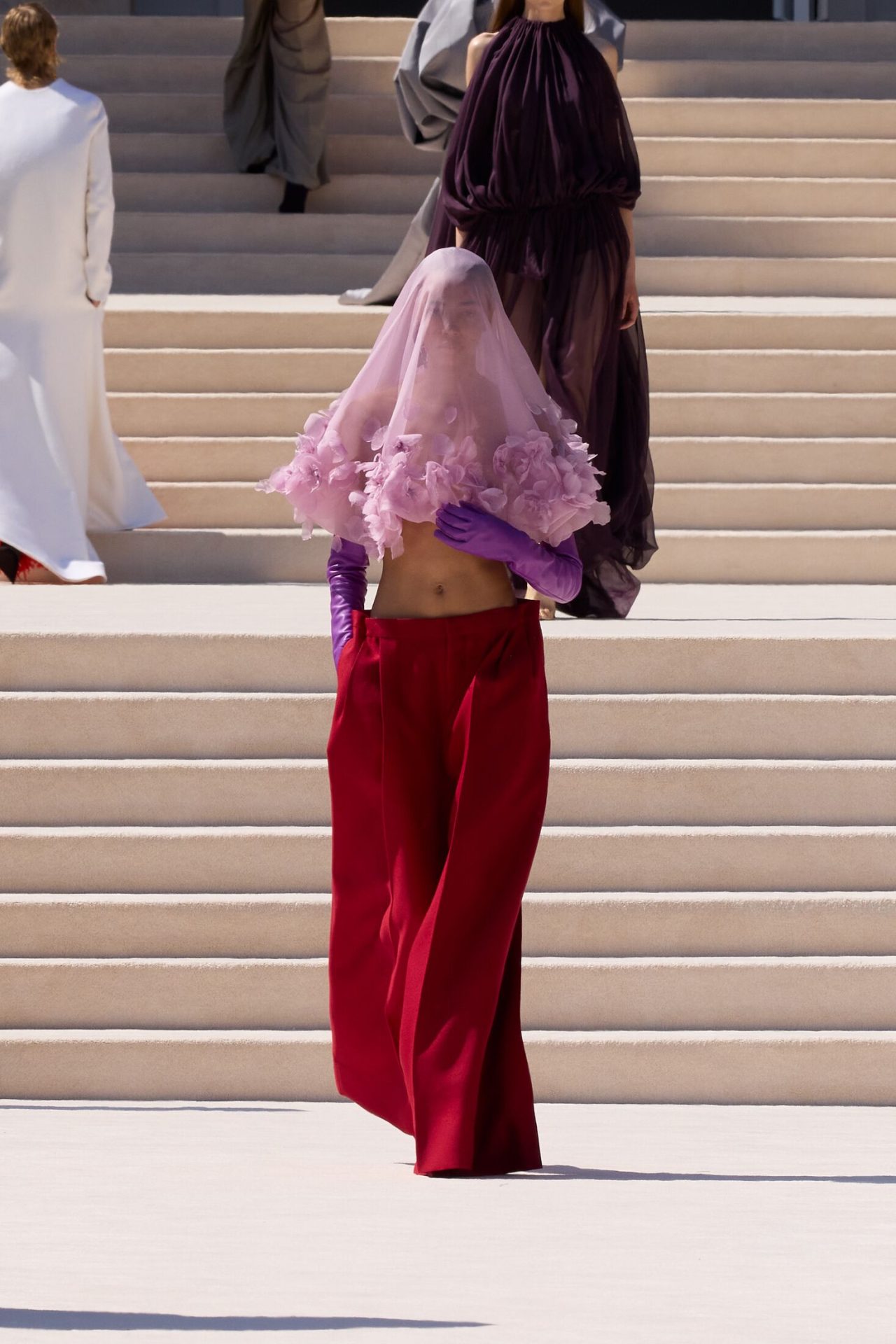
Since Demna’s departure, Balenciaga has held its couture show annually. That frequency places each collection under considerable pressure to justify the format. Piccioli’s hiring made sense on the couture level precisely because his design instincts align with the house’s founding obsession: exacting shapes, sometimes austere and linear, sometimes all poufs and ballooning volumes.
The emotional dimension was present throughout. Anohni, the British singer who had been Piccioli’s go-to vocalist at Valentino, provided the soundtrack. Her presence connected the new chapter to the previous one without making that connection the collection’s primary argument. The clothes carried the argument themselves.
The collection’s qualified weakness was its daywear proposition. Floor-sweeping chinos, a couture tee, and a tank top were present but underdeveloped against the evening program’s ambition. Piccioli acknowledged this directly and declined to apologize for it. His stated priority was the dream. The daywear existed to confirm that the house can dress a body at any hour, not to compete with the gowns.
At the conclusion, Piccioli came out for his bow with the entire couture studio and atelier, all dressed in white couture coats. He had done the same at Valentino. The gesture was deliberate. It positioned the atelier’s collective labor as the collection’s true subject, which is either a sincere acknowledgment of craft or a very effective piece of theater. At Balenciaga, the distinction may not matter.
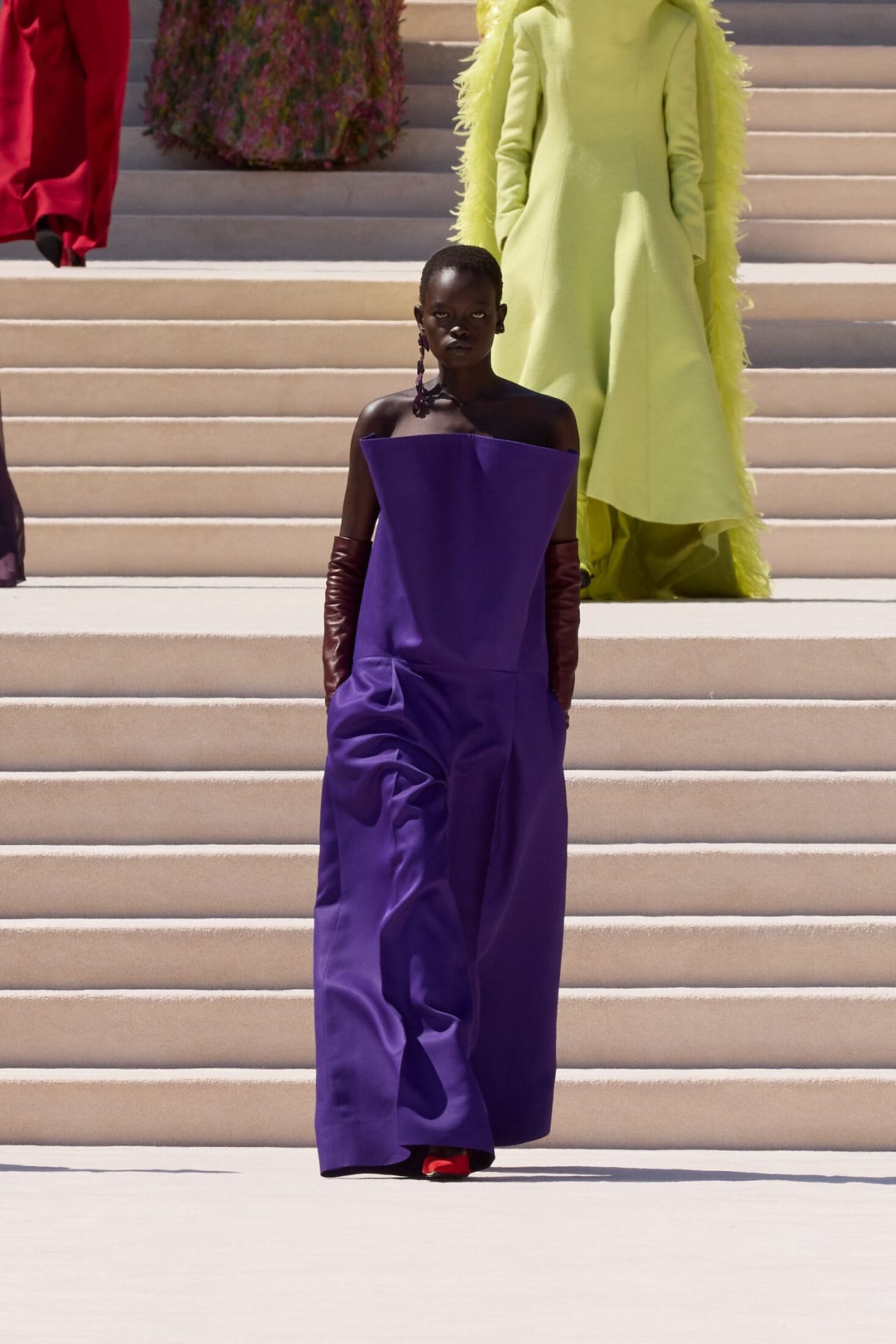
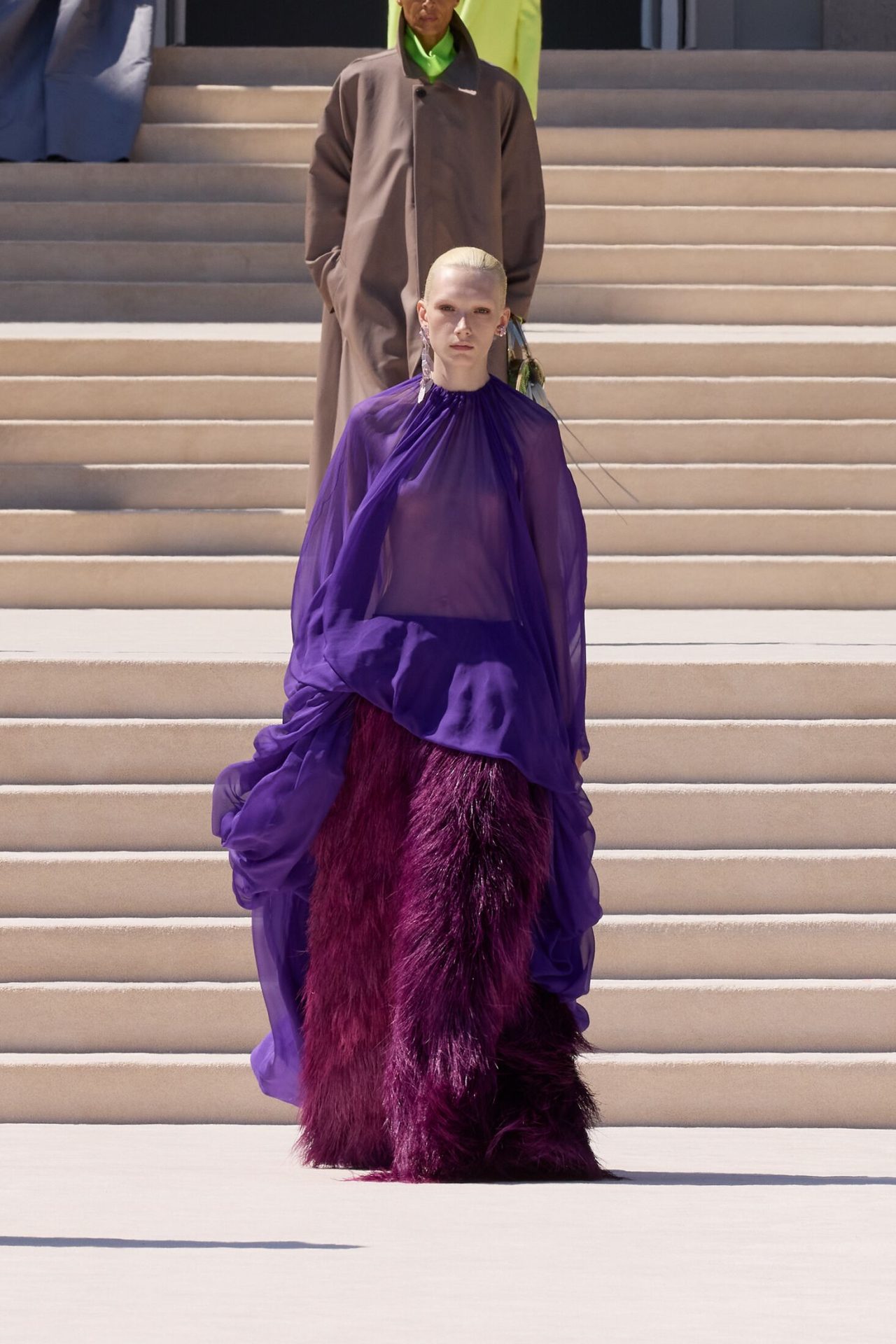
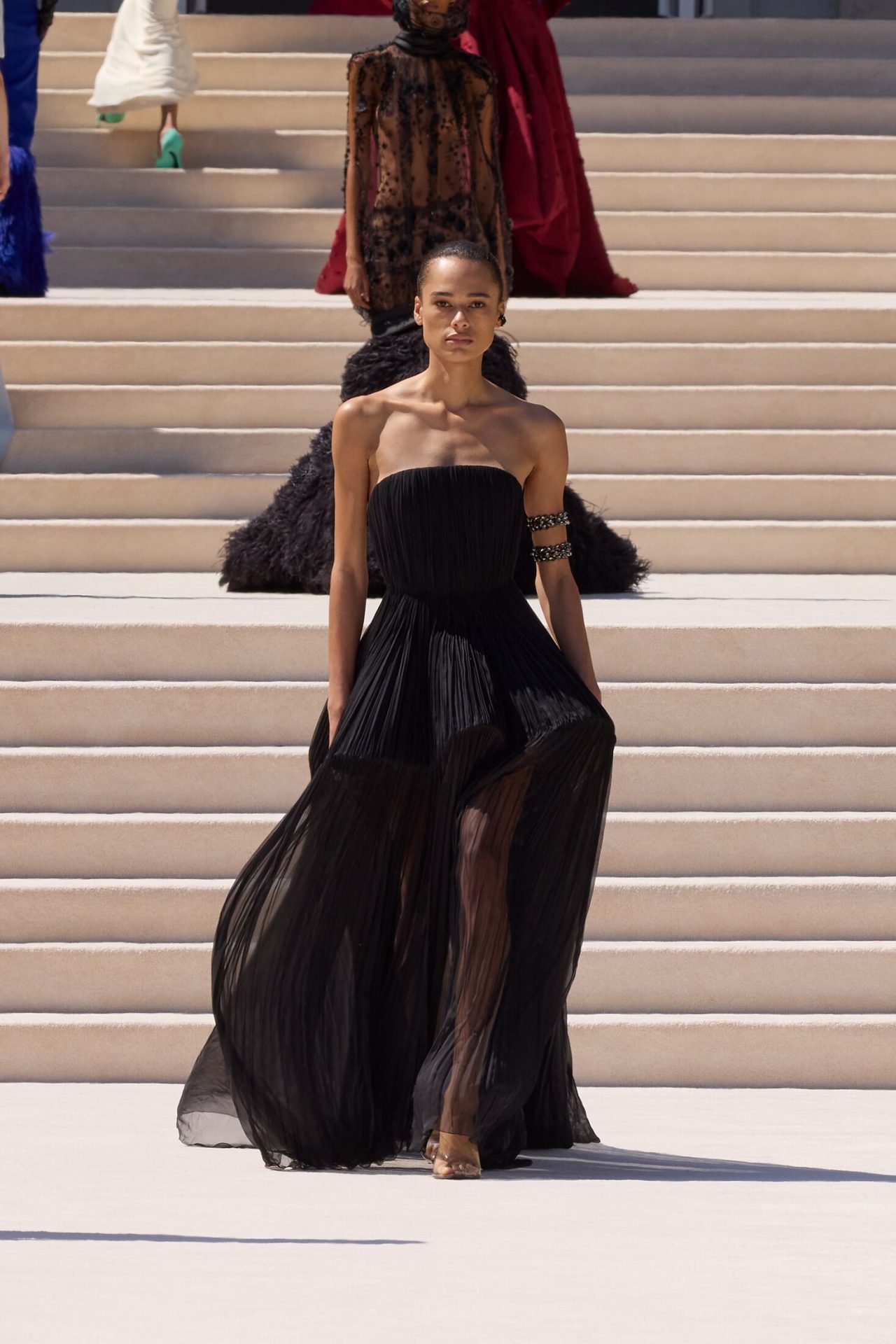
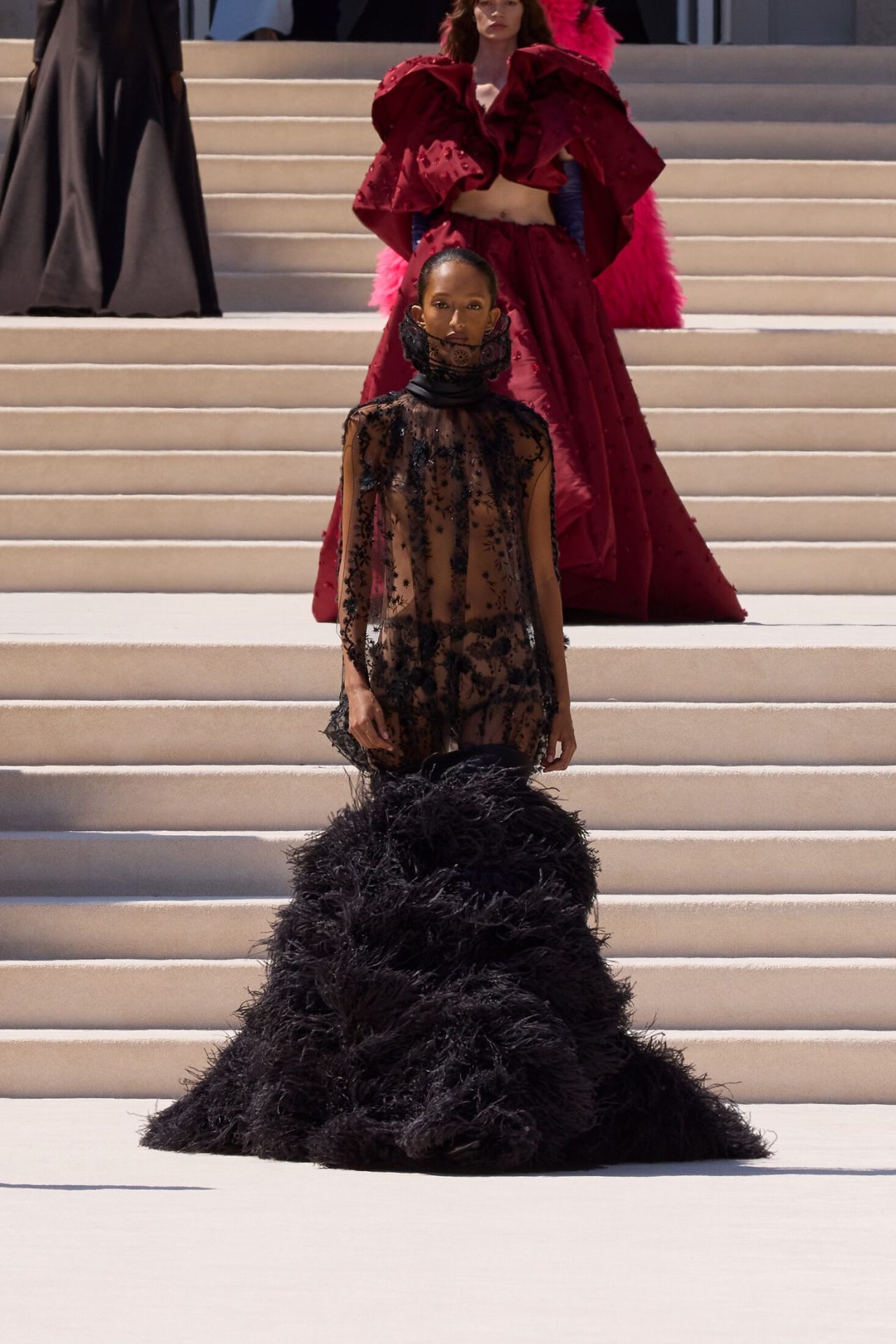
Pierpaolo Piccioli’s Balenciaga couture debut is a collection that knows its own ambitions and pursues them without hedging. The hand-molded leather coats, the 24,150-petal gazar gown, the pistachio trapeze coat with neon-green feather edging, and the rooster-feather finale form a coherent argument for couture as a discipline of extreme precision applied to extreme volume. The daywear is thin, grounded by the floor-sweeping chinos and little else. Everything else is fully committed. For a first collection at a house with this much technical and cultural weight, that commitment is the correct opening position.
See the collections below:
Images Courtesy of Balenciaga
In other couture collection news, Dior Fall 2026 Couture Collection at Paris Couture Week