
For its 30th anniversary season, Jonny Johansson turned denim into a time-traveling canvas at the Collège des Bernardins — and the idea was sharper than the execution
PARIS — Jonny Johansson didn’t title his spring collection Denim Hystoria by coincidence. Thirty years into building Acne Studios, he arrived at the Collège des Bernardins with a proposition: that denim, properly examined, can absorb the Renaissance, the New Romantics and a 17th-century Swedish shipwreck and still read as a pair of jeans.
Whether that holds together is a more complicated question.
The Central Idea
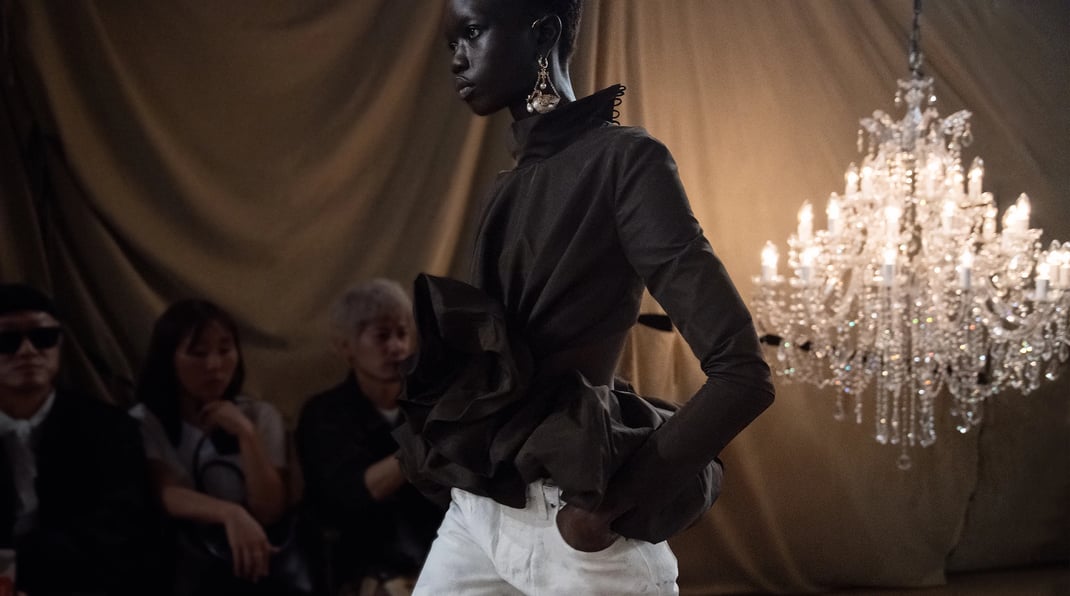
The venue made the argument before a single look appeared. Gothic-vaulted ceilings, chandelier lights, and carpets by Azerbaijani artist Faig Ahmed – their traditional patterns appearing to dissolve at the edges, weaving unraveling into something uncertain – established the season’s tone before Johansson needed to. Palace-scale formality inside a 13th-century college, undercut by the sense that the furniture had been covered for some time.
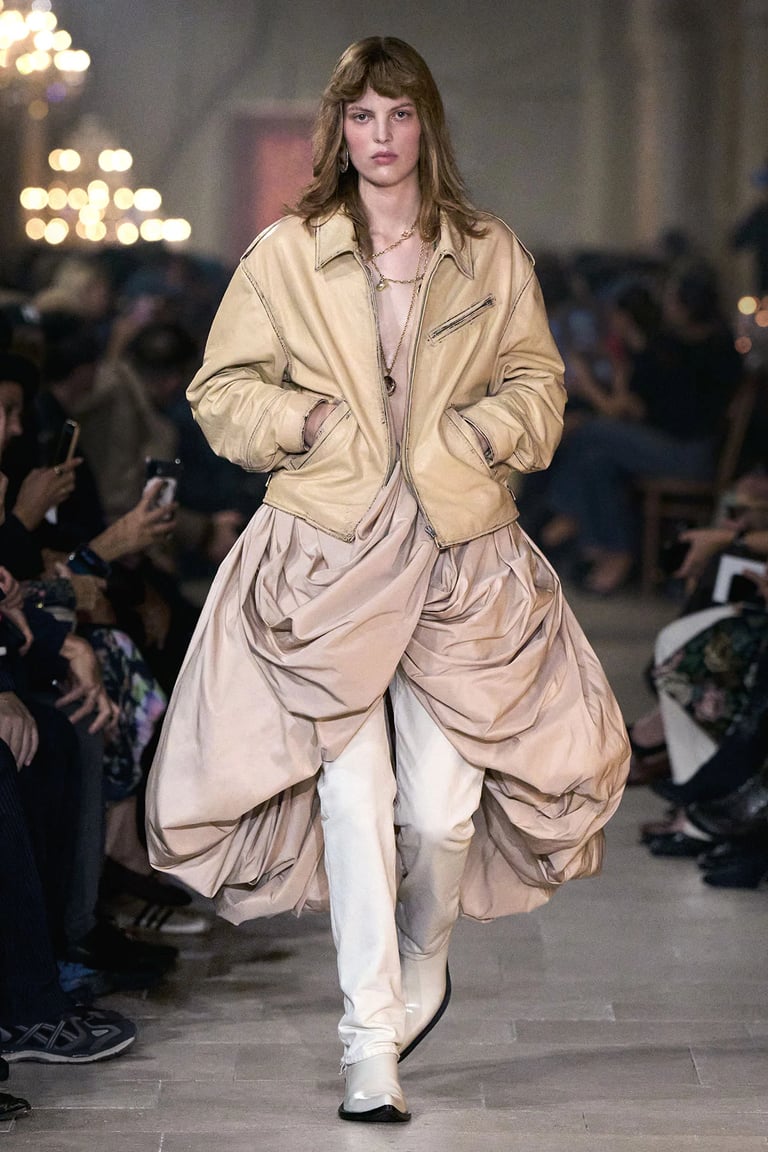
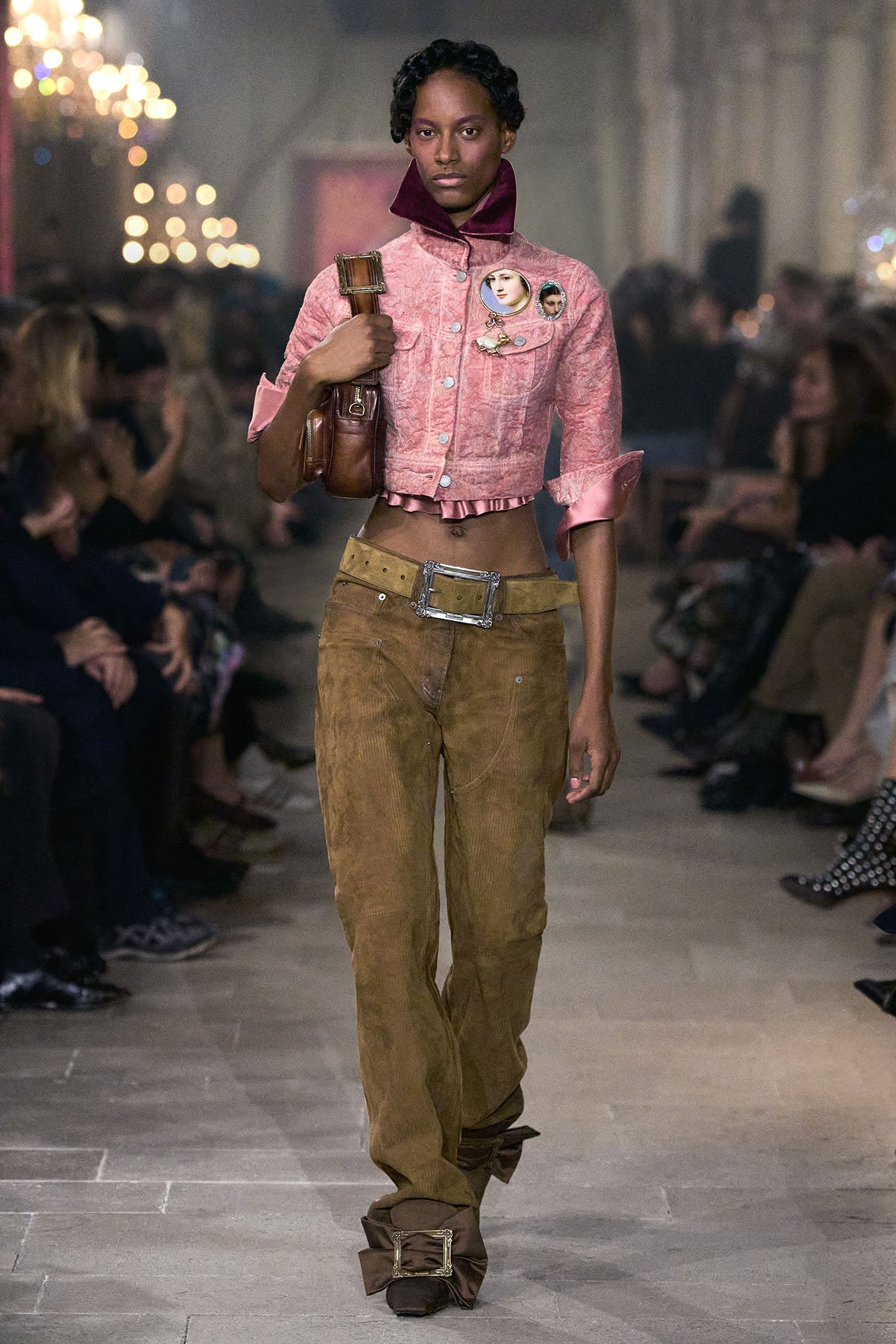
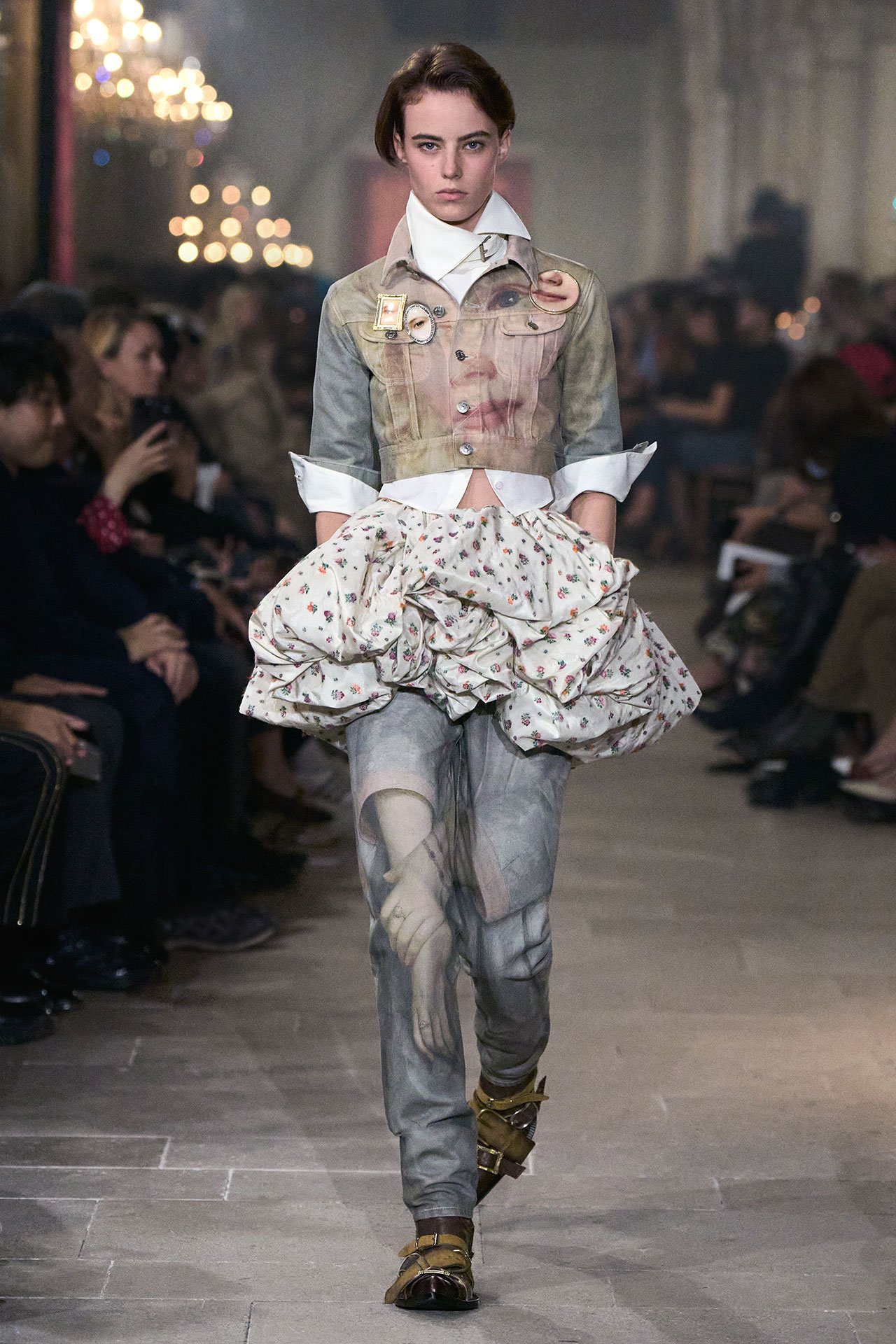
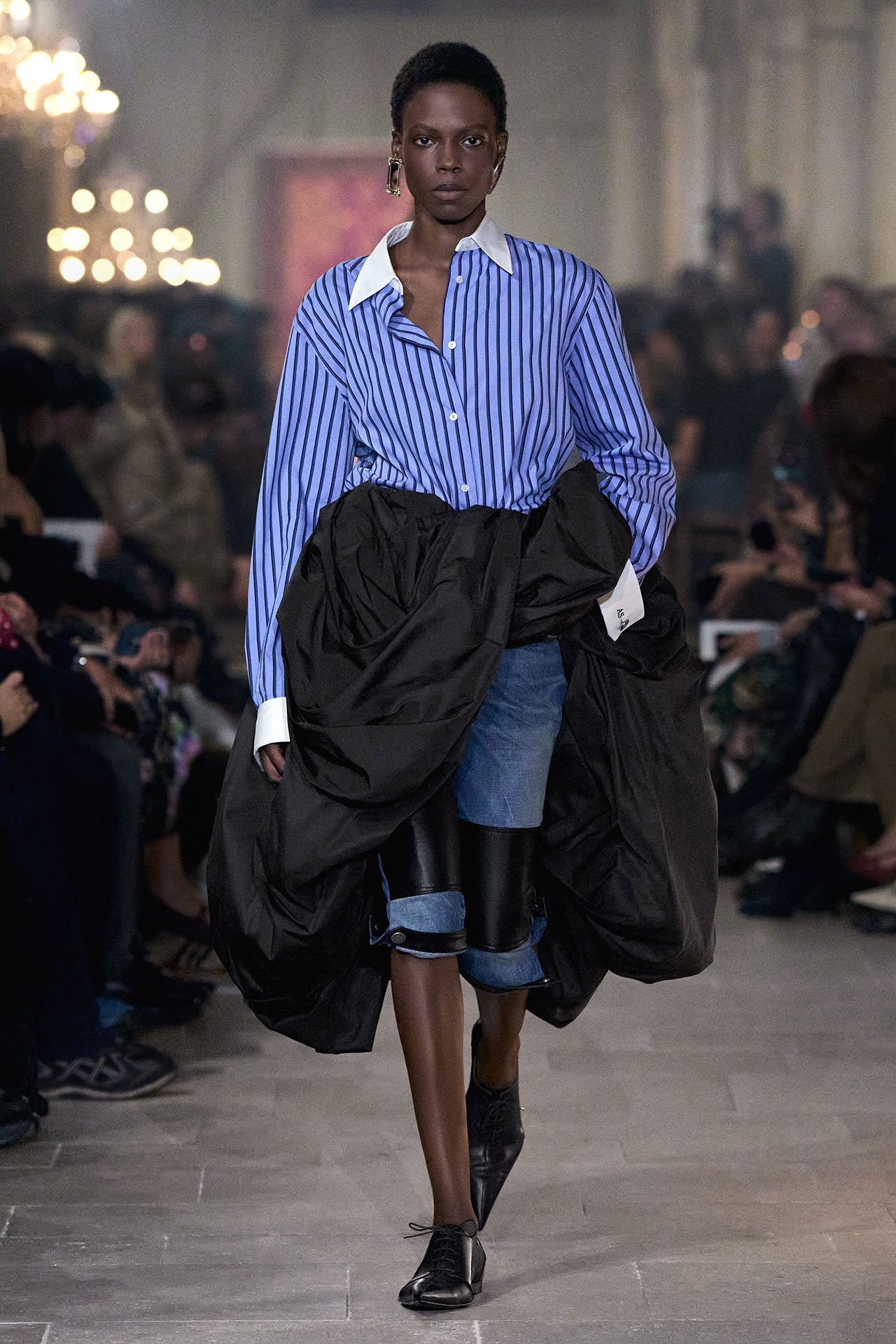
The opening look compressed the whole thesis into a single body: Acne’s signature leather jacket and five-pocket jeans worn with a billowing taffeta ballgown. 17th-century silhouette, brand-foundational denim, one outfit. “Brings together two things that don’t belong,” Johansson said of the collection’s governing concept. What followed – duster coats, leather breeches, pirate boots loosely drawn from Adam Ant’s “Prince Charming” New Romantic period, which opened the soundtrack – operated on the same principle of deliberate anachronism.
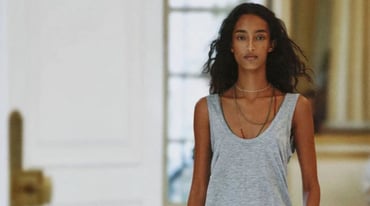
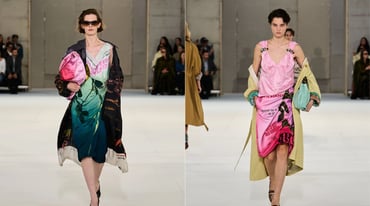
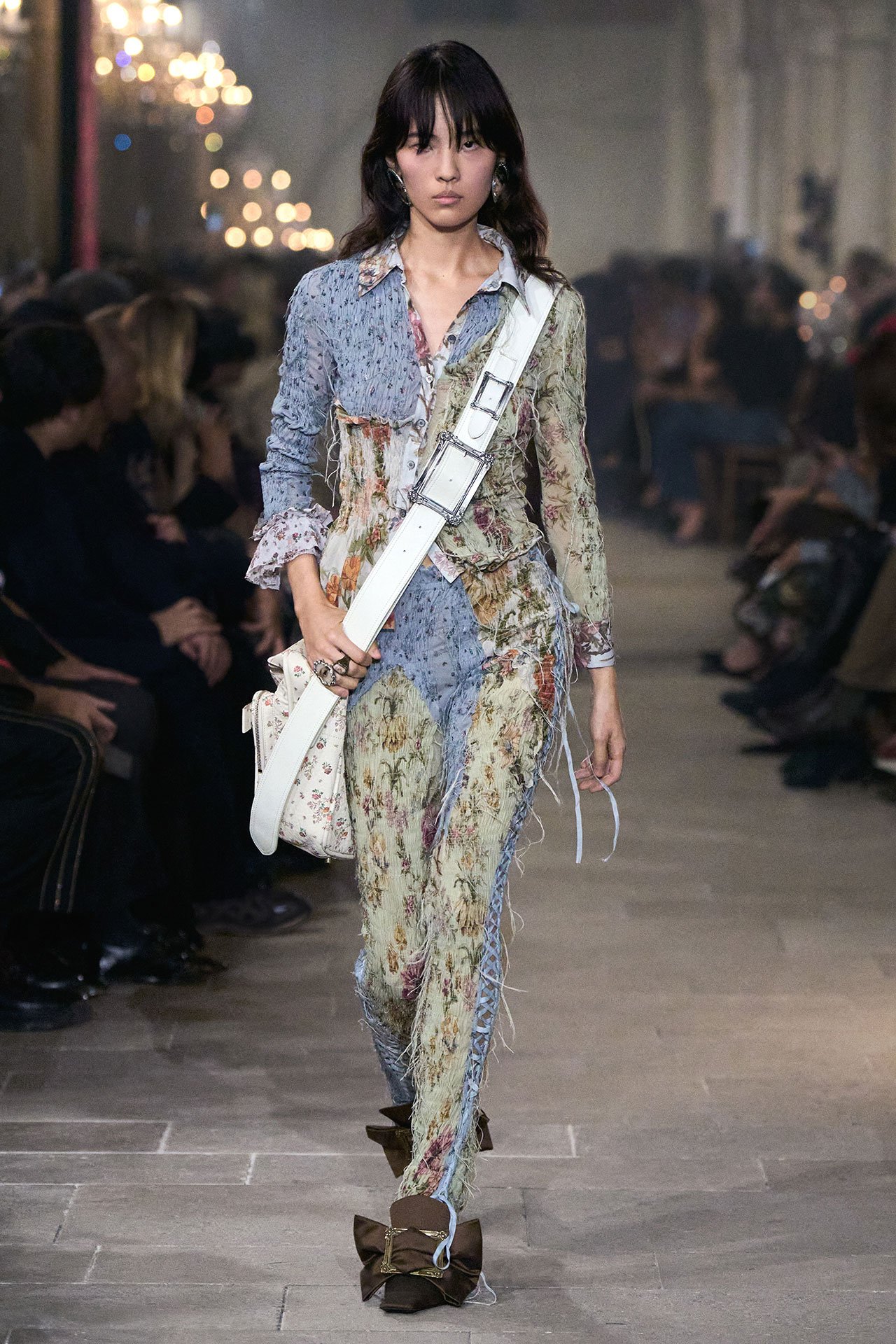
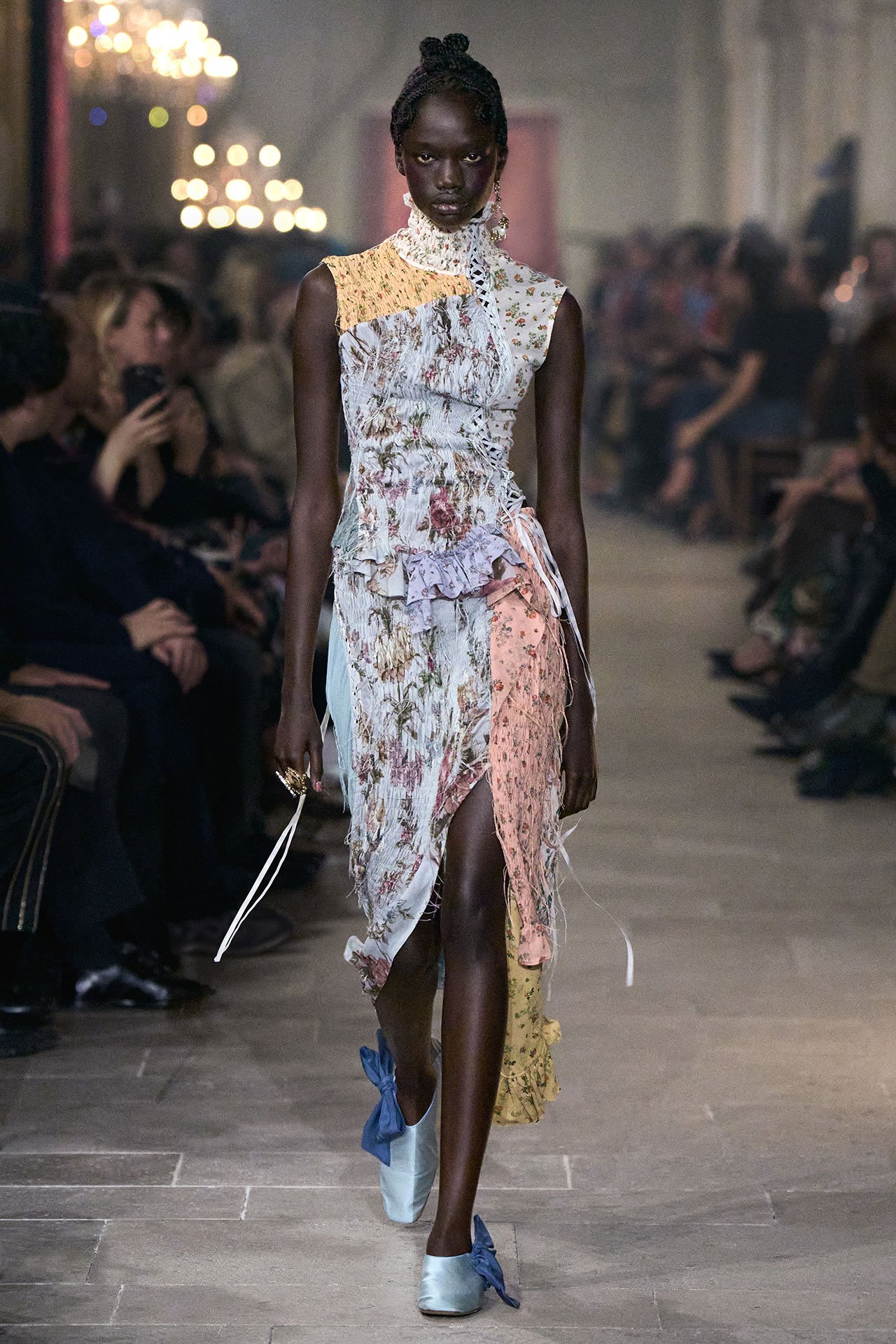
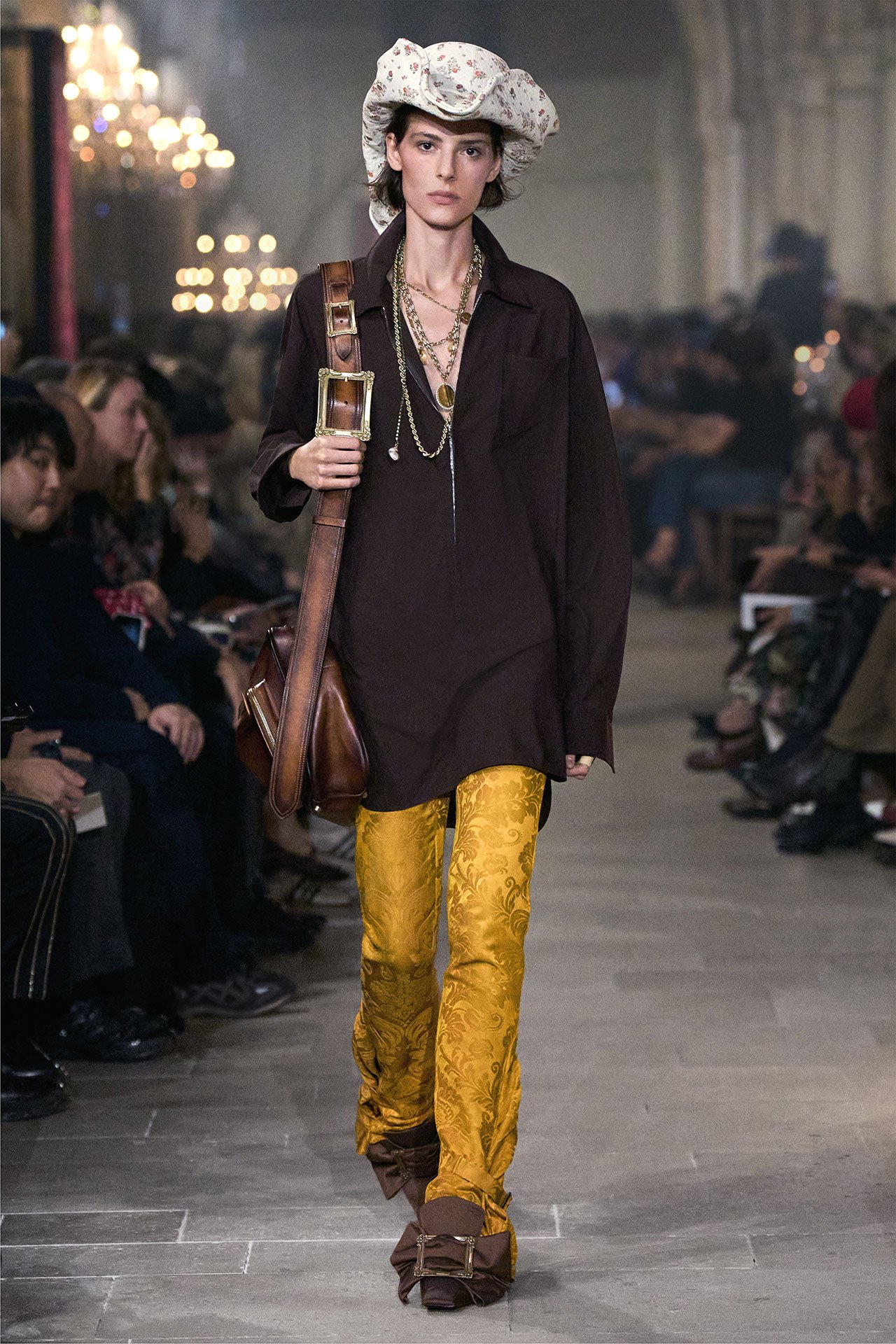
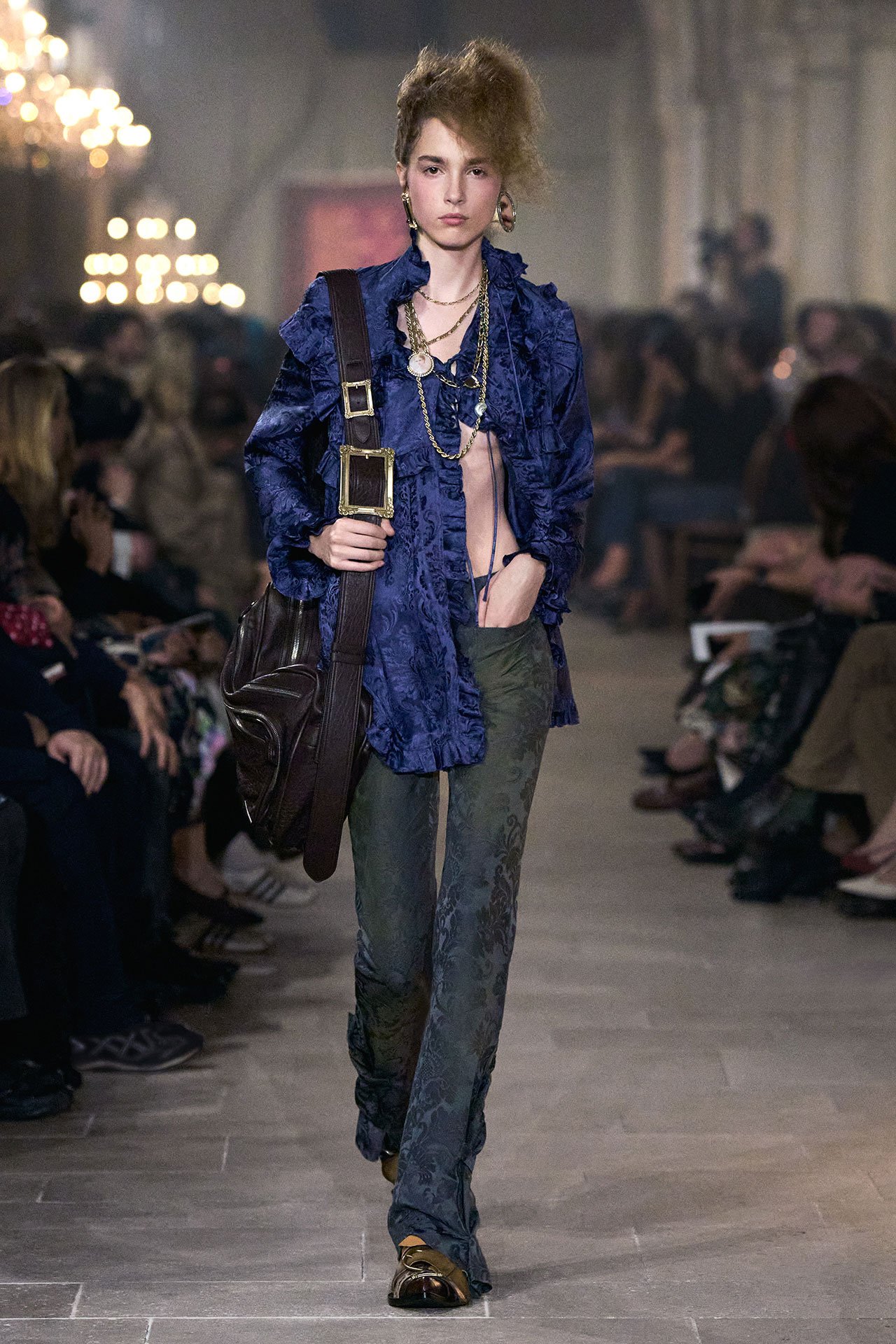
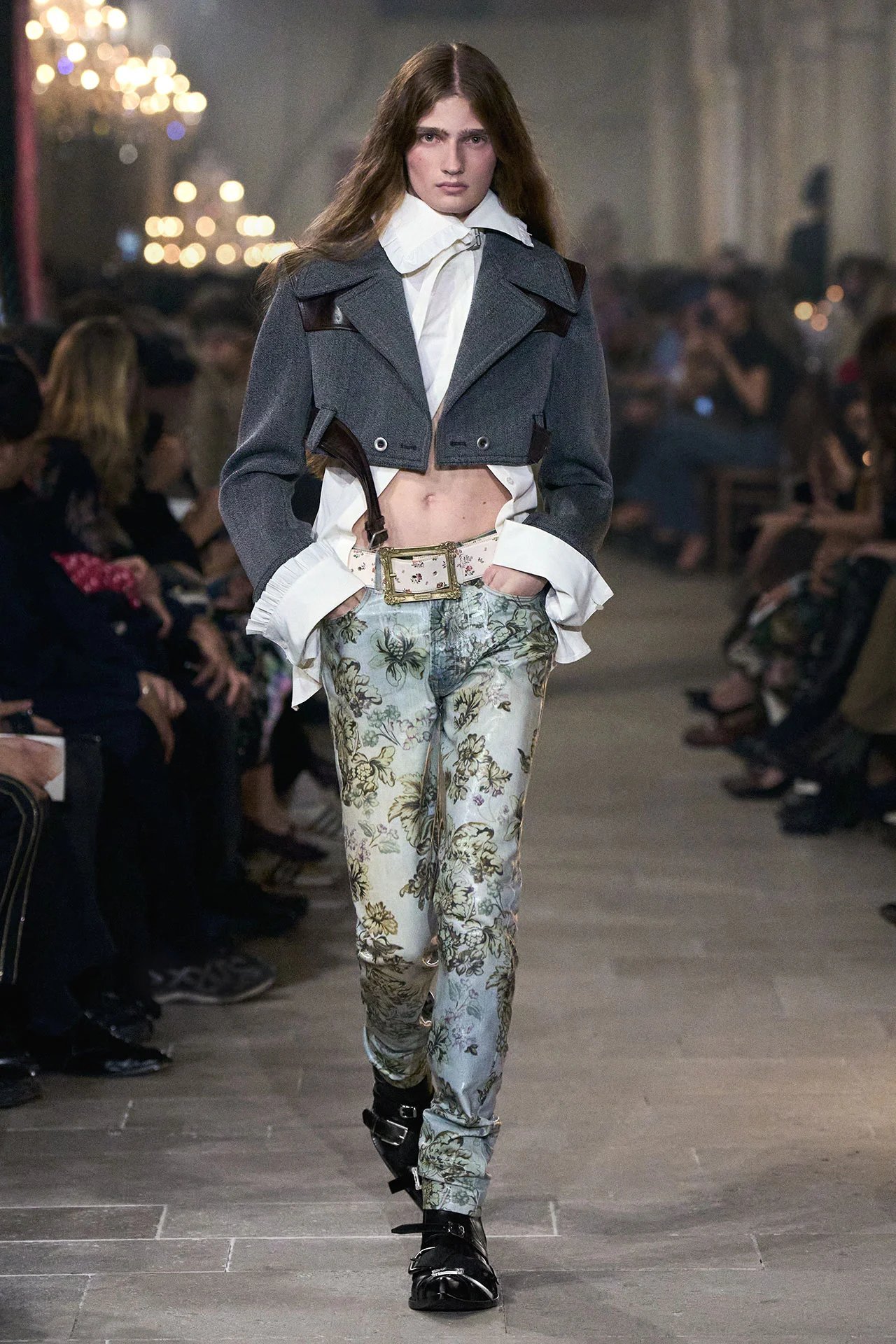
Denim was everywhere, in different states. Distressed. Lacquered with floral motifs. Printed in trompe-l’oeil takes on its own construction. Stiffened or draped into shapes far removed from its utilitarian origins. “Denim becomes a canvas that moves through time,” Johansson said, and across the collection’s strongest moments, that was demonstrably true.
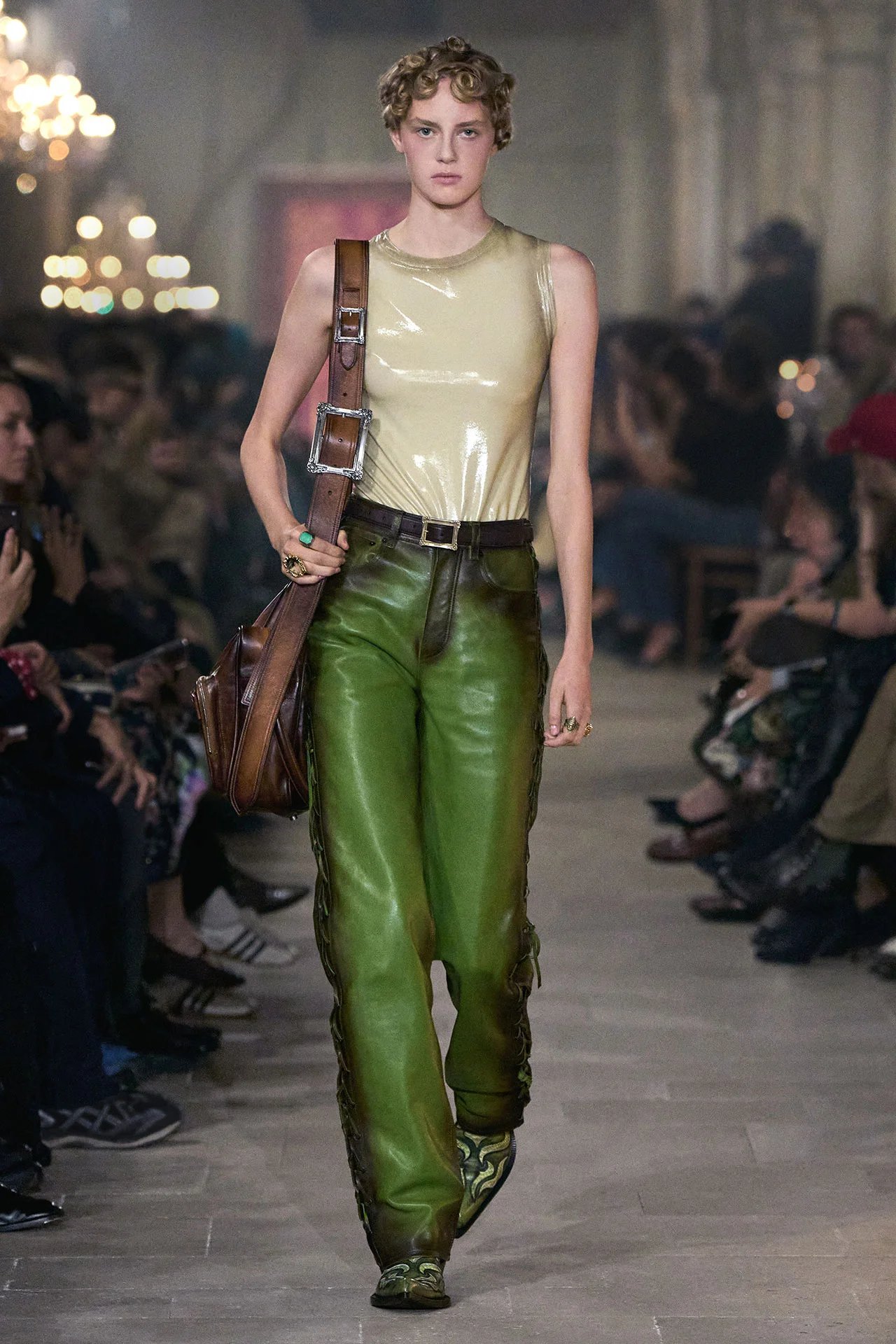
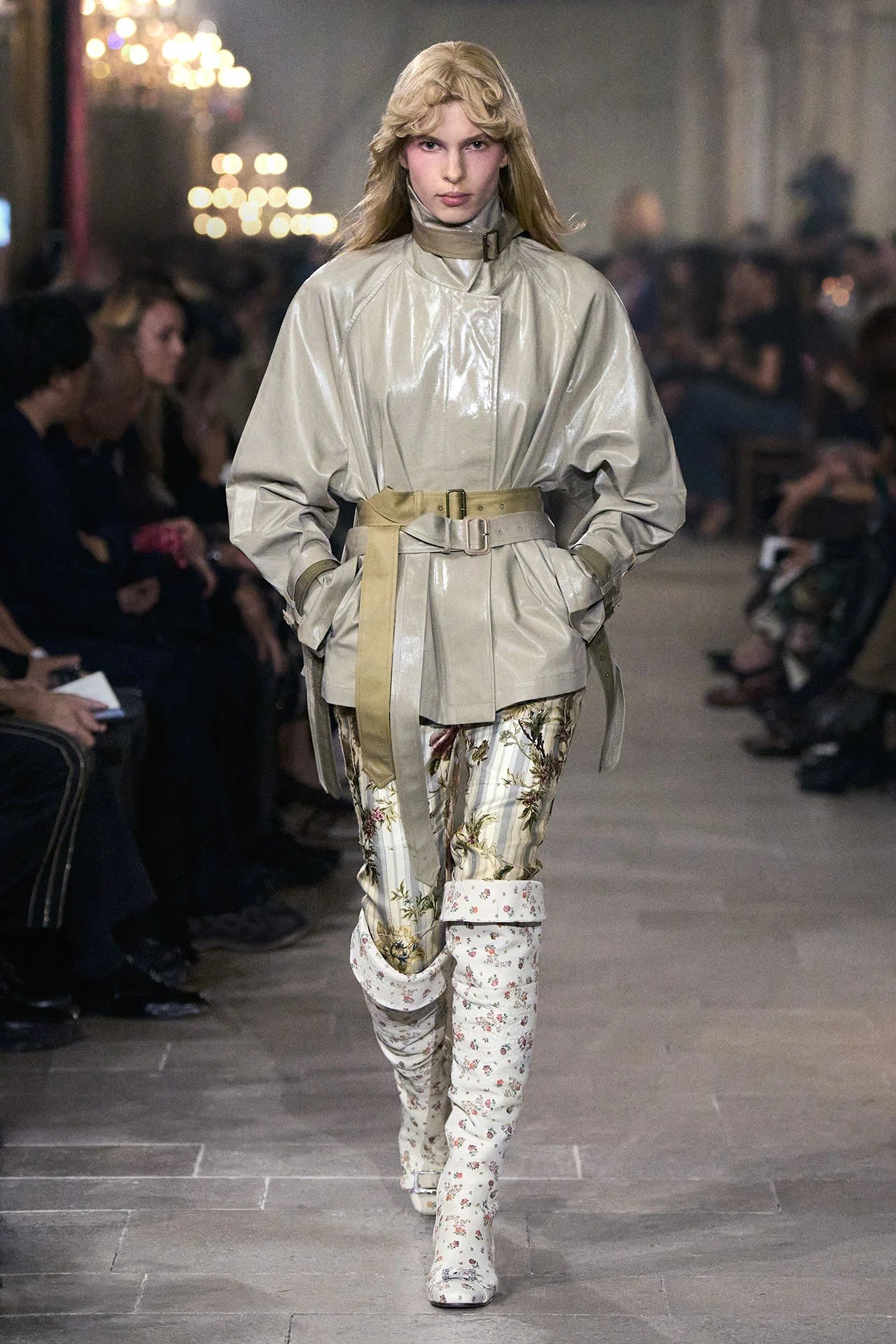
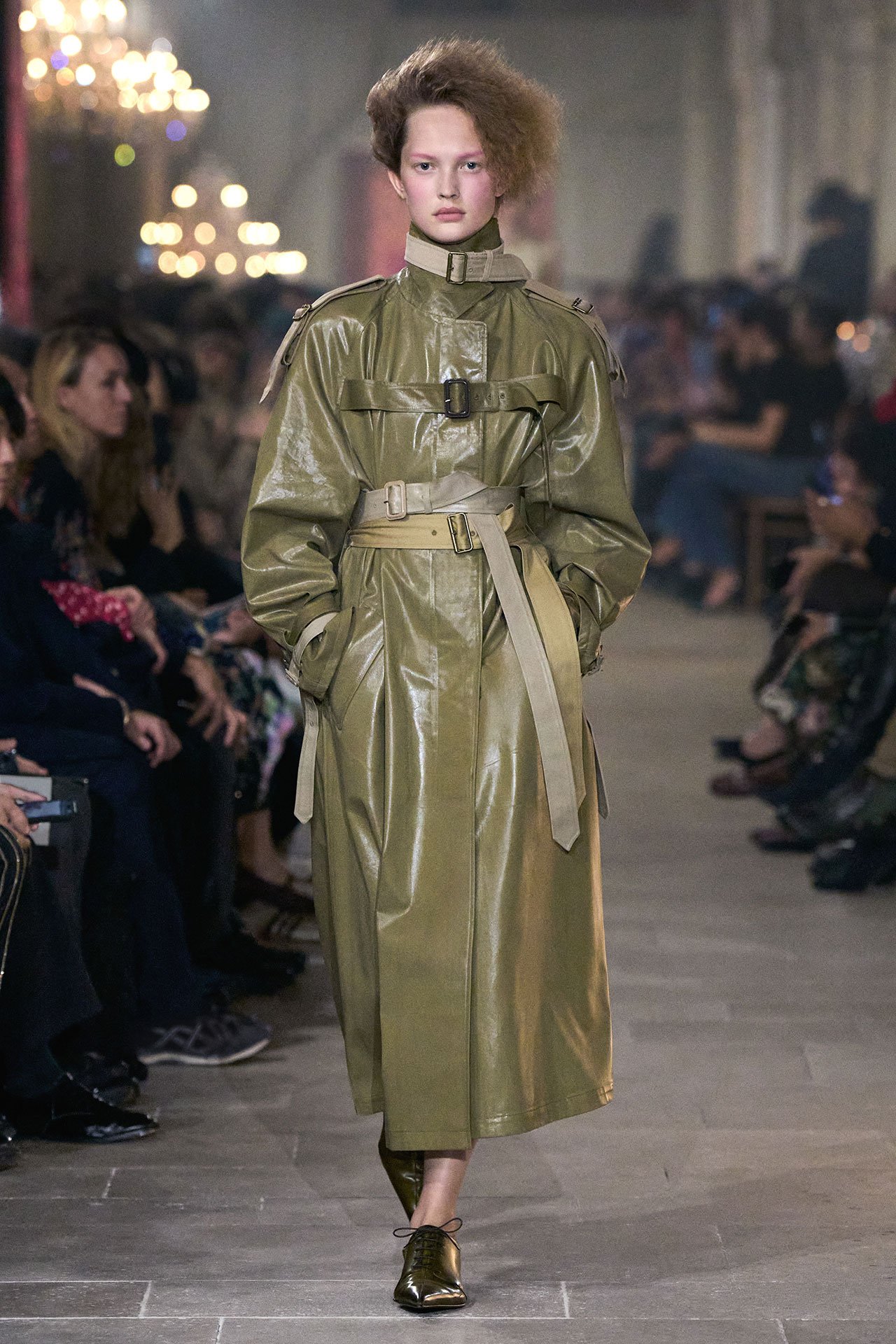
Silhouette and Styling
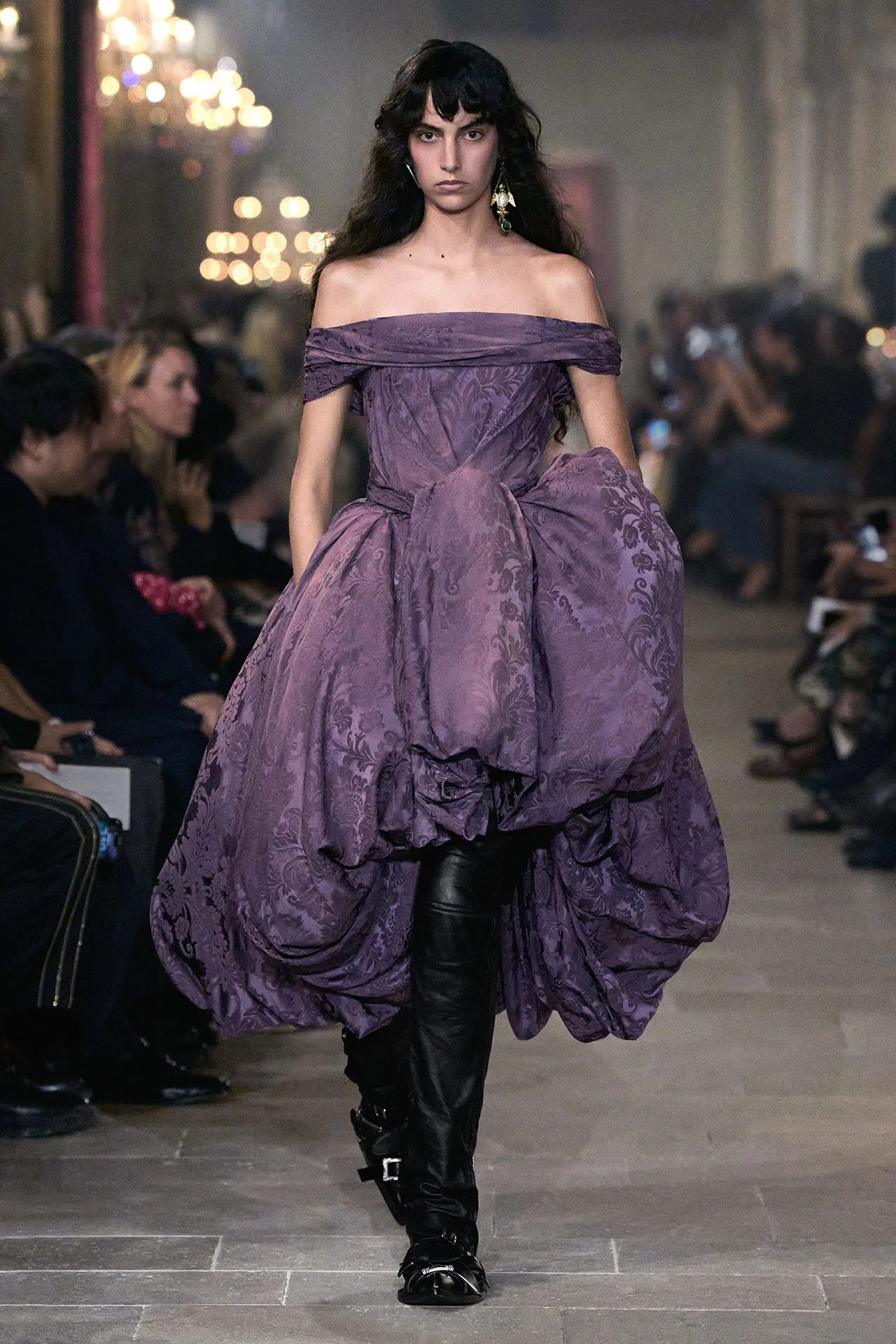
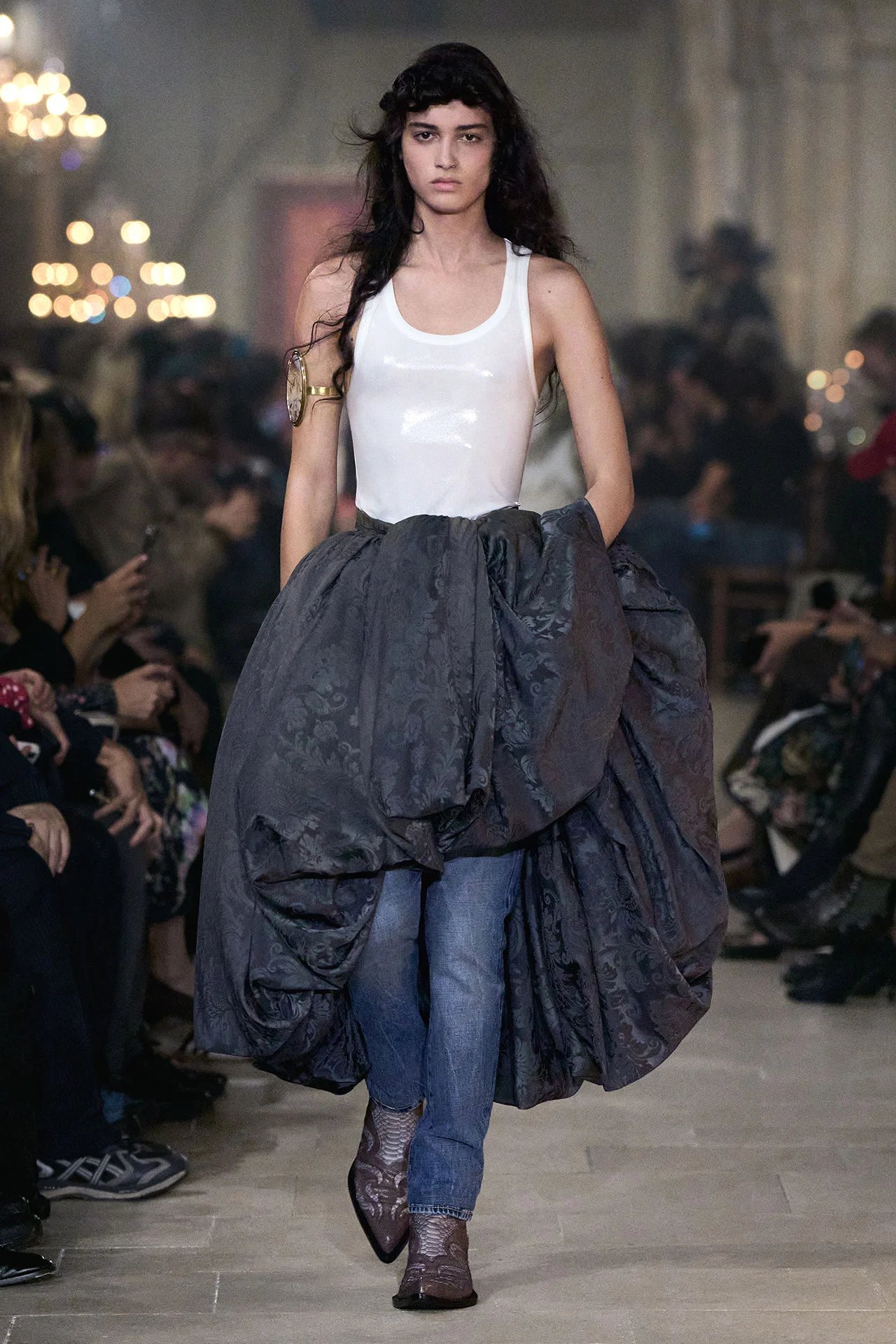
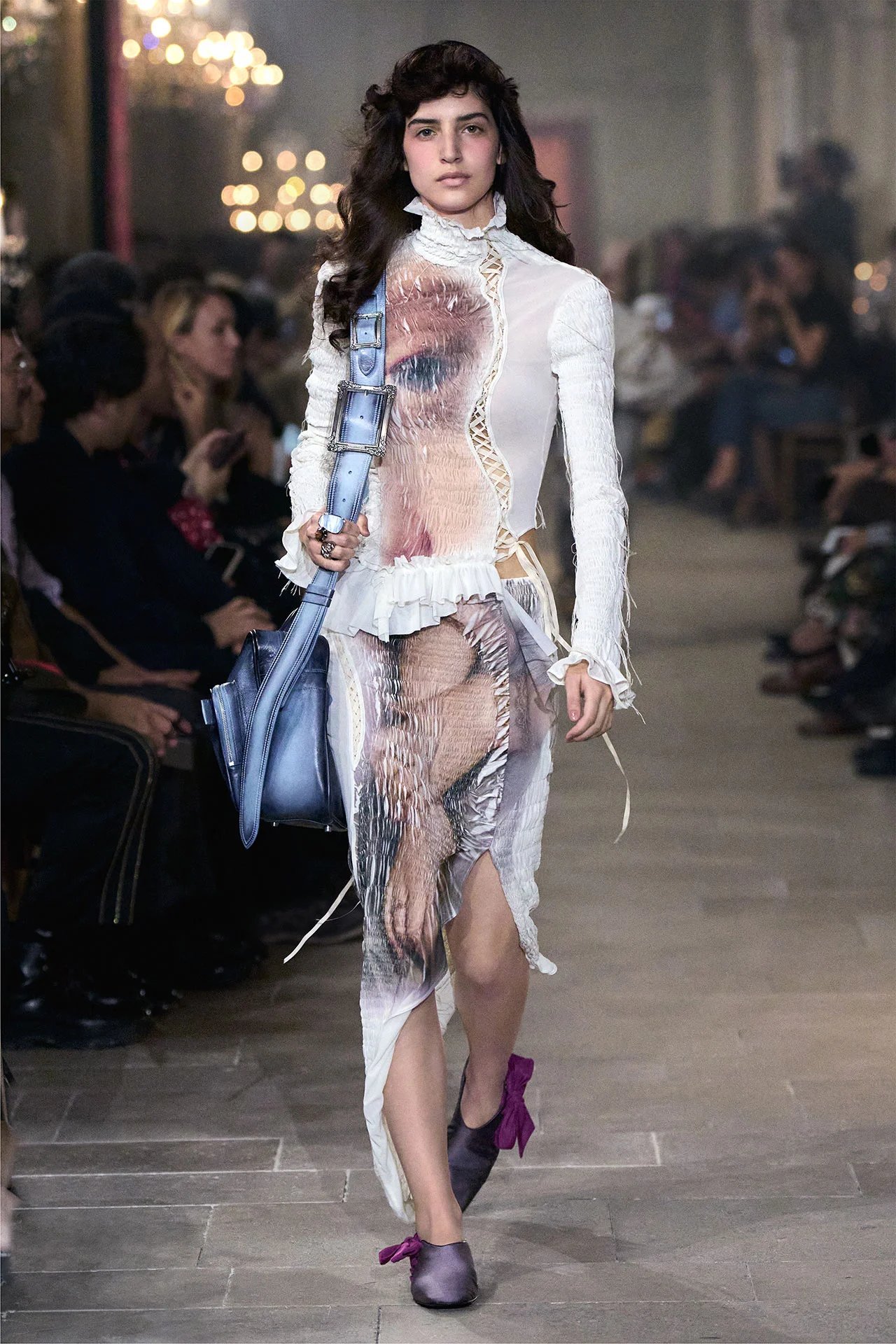
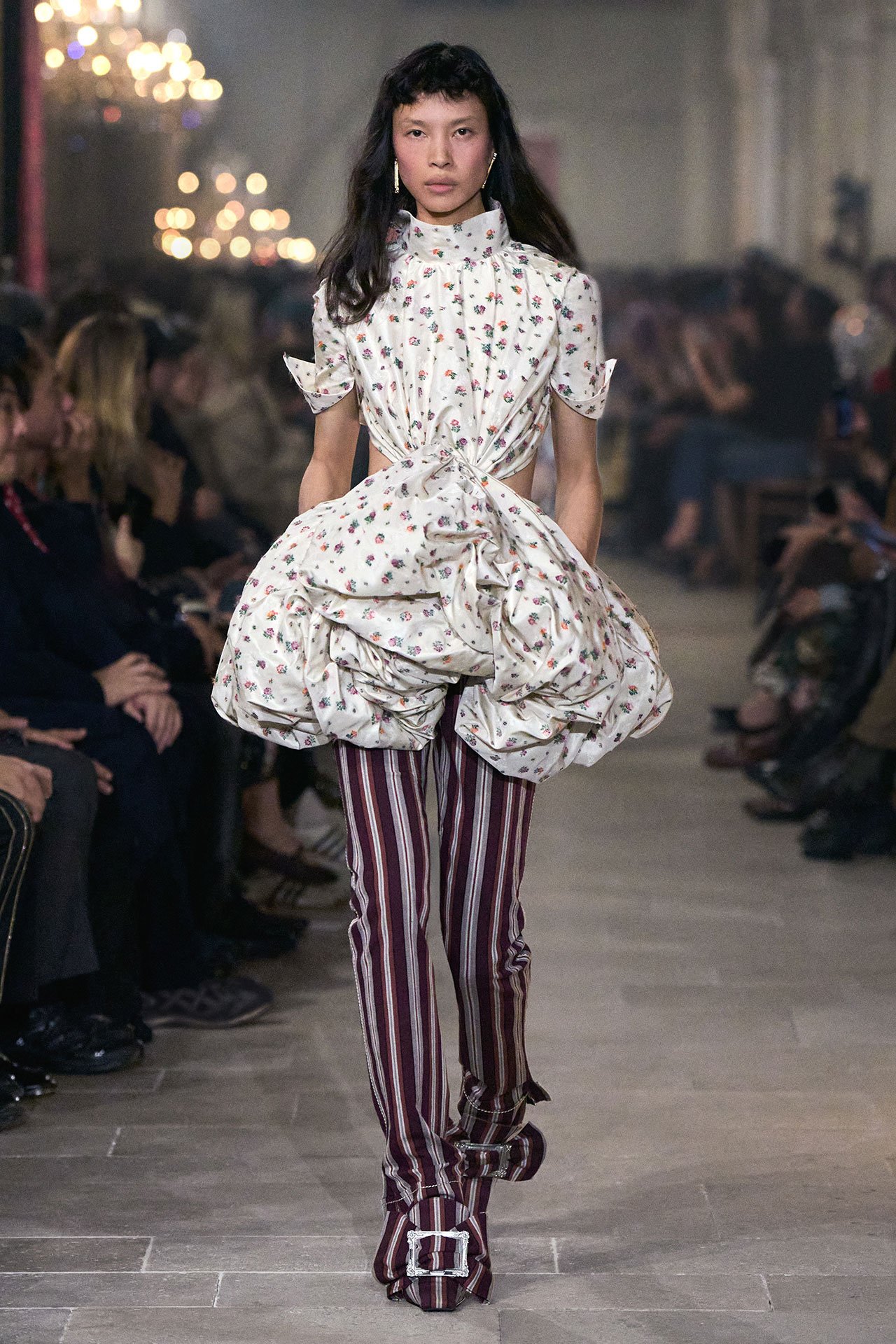
The most dramatic shapes were the largest. Enormous draped balloon skirts and dresses that swelled out from the body in exaggerated clouds of fabric provided the visual signature – a direct formal debt to court dress that also pointed back to the theatrical volume of the New Romantic period Johansson was invoking. The two references arrived at the same silhouette from opposite directions, and that convergence was the strongest rationale.
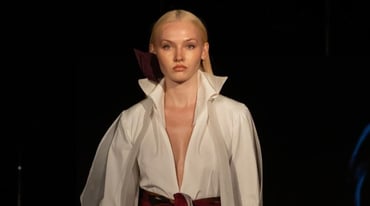
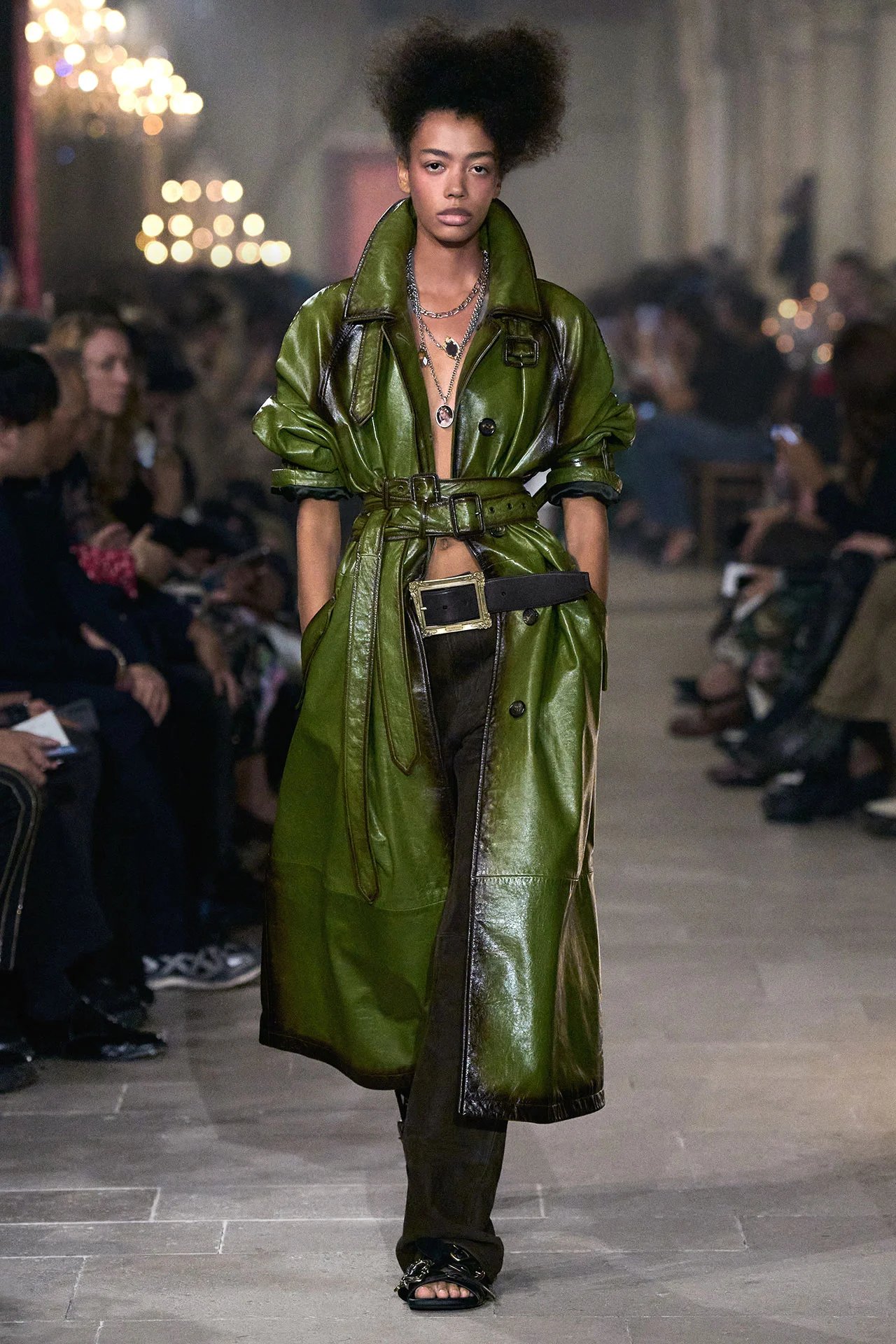
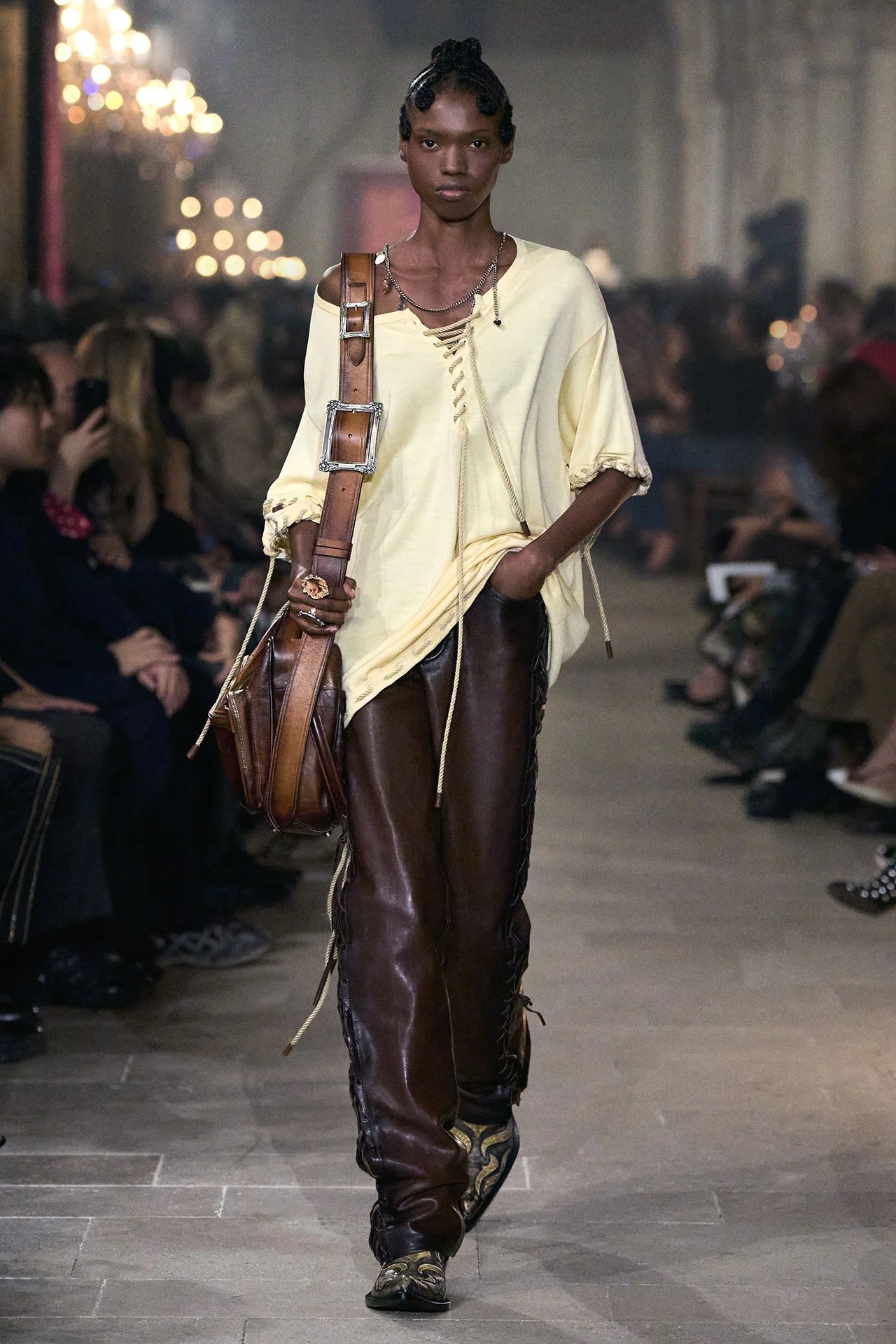
Beneath the volume, a counter-logic: glazed denim and aged olive green leather with the quality Acne has always been able to coax from its materials – worn in rather than distressed, as though the garments had been somewhere before arriving at the runway. High-collar shirts in technical taffeta read historically in shape while being impossible in material: porcelain sheen, contemporary construction.
The trompe-l’oeil jeans were among the most resolved pieces: printed to mimic their own stitching and pocket architecture, clever without performing cleverness, and the kind of item that retroactively justifies the whole framework around it.
The House Codes
Acne has used its denim heritage strategically before – most explicitly in the 2017 relaunch of its Blå Konst line – but this is the first time Johansson has placed denim itself at the center of a full collection thesis rather than treating it as a category within a broader assortment. The 30th anniversary makes that positioning legible. It also raises the bar for whether the idea can carry the weight of a full show.
“Global freezing, I call it,” Johansson said, noting that snow bombs now routinely paralyze northern Sweden. It accounted, he suggested, for why a spring collection focused on covering up rather than stripping off. The line between genuine creative logic and a good story about creative logic is thin here, but it at least gave the collection a consistent internal temperature.
What Worked
The strongest looks were the ones where the collision felt structurally resolved rather than decoratively stacked. The opening leather-jacket-and-ballgown worked precisely because neither piece apologized for the other – they occupied the same silhouette without merging. The taffeta high-collar shirts did something similar: form historically plausible, material technically impossible, result genuinely strange in a way the collection consistently aimed for and only occasionally achieved. The trompe-l’oeil denim held its own argument without requiring the surrounding references to prop it up.
Ahmed’s carpets at the rear of the room, their patterns visibly coming apart at the edges, were a stronger statement of the season’s thesis than several of the runway looks – a high bar that the clothes occasionally cleared.
Where It Faltered
The Marie Antoinette associations were the weakest thread. Faded damask ball skirts dropped over white pedal pushers and a beige twinset landed as an incomplete thought: the two registers didn’t create tension so much as coexist without resolving. Where the collection worked best, the references were pressing against each other. Here, they were just stacked.
The Vasa Museum reference – a Stockholm 17th-century warship that sank on its maiden voyage, invoked by Johansson as one of the season’s anchors – never surfaced in the clothes in any traceable way. It may have operated atmospherically in the venue. As structural reasoning for what was worn, it didn’t land.
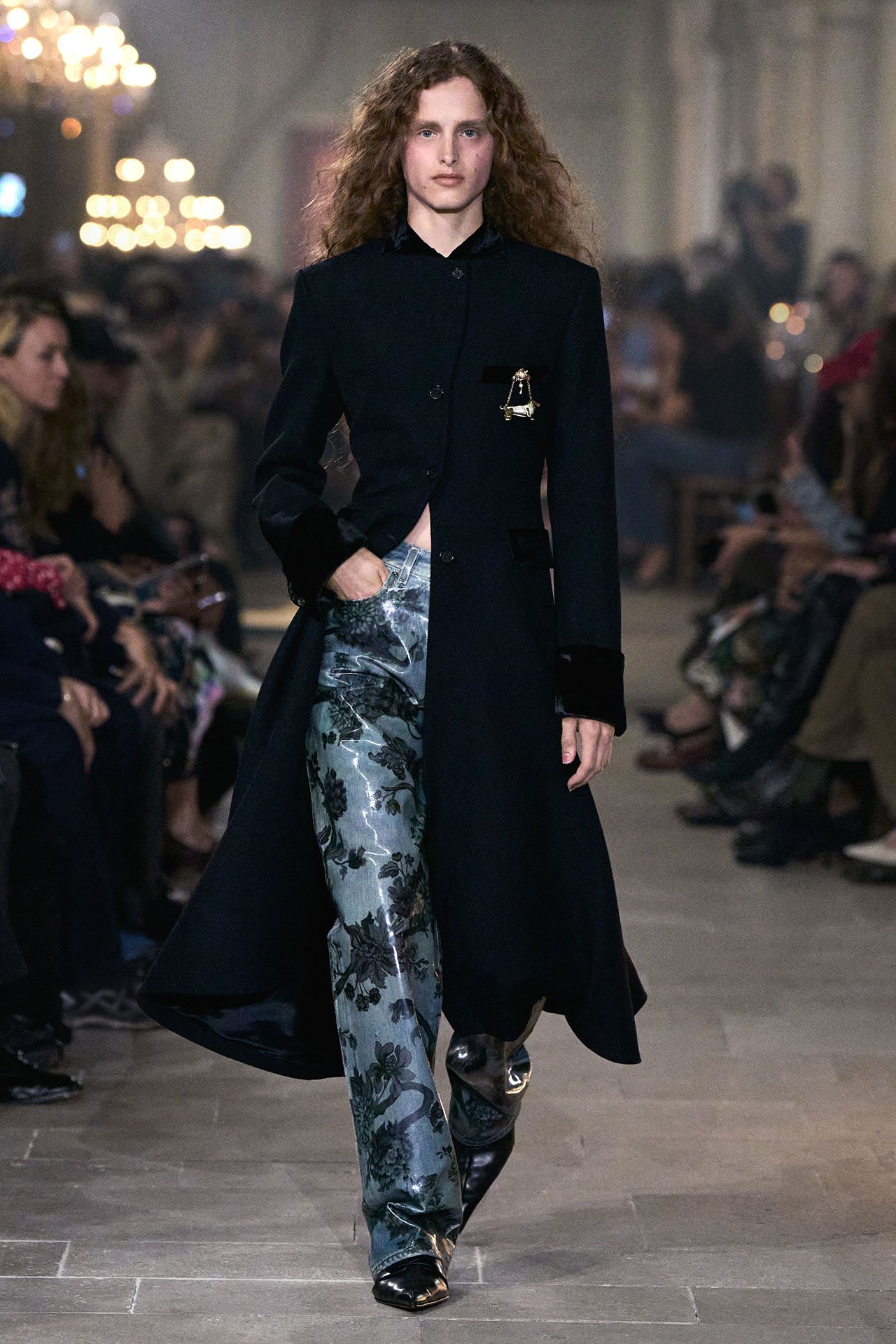
Thirty years in, Johansson is in the unusual position of leading a house whose denim archive is now long enough to function as its own primary source. Denim Hystoria used that position well for most of its runtime. The collection was recognizably Acne – irreverent, intellectually considered, never fully committed to any single idea long enough to let it calcify – while pushing the house’s formal vocabulary into new territory.
The question it raised, without answering it: whether historical collision is a sustainable method or a single season’s proposition. When the looks held the tension, it was the most persuasive argument Johansson has made for what this house can do. When they didn’t, it suggested that accumulation and resolution are different things.
See the complete collection below:
Images courtesy of Acne Studios
In another fashion week news, Dries Van Noten Spring 2027 Ready-to-Wear Collection at Paris Fashion Week