

Tanger Fashion Week 2026: A Third Edition Marked by Elegance, Cross-Cultural Dialogue, and Moroccan Creativity
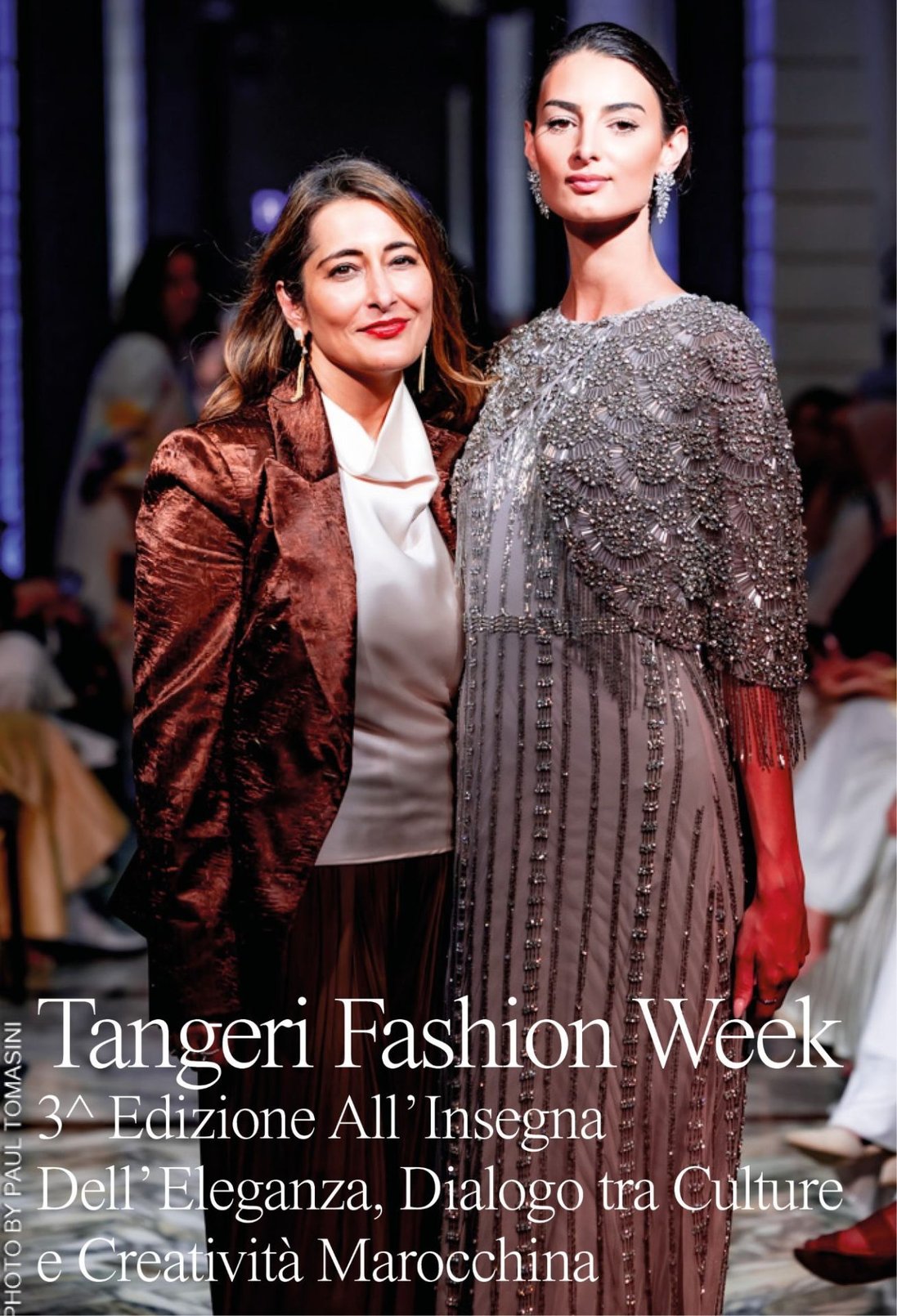
Tangier, June 20, 2026 – The third edition of Tanger Fashion Week successfully concluded at the Fairmont Tazi Palace in Tangier, confirming Tangier’s growing role as an emerging hub for fashion and the creative industries in the Mediterranean.
A Platform for Moroccan Heritage and Contemporary Creativity
Organized by the Association Route de la Soie et d’Al-Andalus (Silk Road and Al-Andalus Association), the event brought together designers, fashion houses, young talents, industry professionals, institutions, and international media to celebrate Moroccan heritage and promote contemporary creativity.
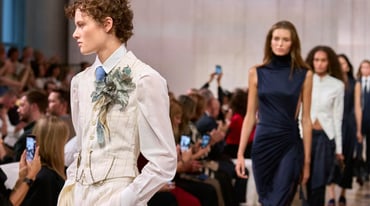
The Fashion Talks addressed central themes such as sustainability, innovation, craftsmanship, and the development of the creative industries. At the same time, the runway shows highlighted the excellence of Moroccan savoir-faire and the dialogue between tradition and modernity. Significant space was also dedicated to emerging young designers.


A Couture Show Overlooking the Strait of Gibraltar
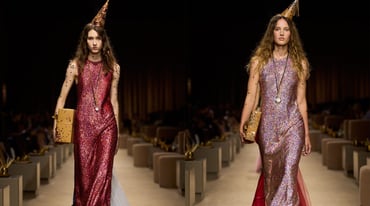
Among the most significant moments, the Couture Show overlooking the Strait of Gibraltar celebrated Tangier’s creativity and multicultural identity through collections rich in influences and cross-cultural exchanges. Tanger Fashion Week thus confirms its mission as an international platform for exchange, networking, and the promotion of talent.
A Vision for the Future
President Hind Joudar emphasized the event’s commitment to promoting a creative Morocco, open to the world and proud of its cultural heritage. Following the success of the 2026 edition, the event is already looking ahead to a new edition marked by excellence, innovation, and intercultural dialogue.
Founded in 2026, Tanger Fashion Week is an annual platform dedicated to Moroccan and international 时装 that, through runway shows, meetings, and networking, helps position Tangier as a Mediterranean hub for creativity and emerging talent.
Couture Show Participants
Yoland Fashion House – Sultanate of Oman
Göwher Gouvernet – Turkmenistan
Laila Gheziel – Morocco
Hindi Mahdi – France
Raishma Couture – United Kingdom
Amina Benzekri – Morocco


Tangier as a Rising Force in Global Fashion
Tangier occupies a uniquely strategic position in the global fashion conversation. Situated at the crossroads of Africa, Europe, and the Arab world, the city has long served as a meeting point for civilizations, merchants, and artists. Tanger Fashion Week 2026 capitalizes on this geographic and cultural advantage, presenting the city not merely as a tourist destination but as a serious contender within the international fashion calendar.
The choice of the Fairmont Tazi Palace as the event’s venue reinforces this ambition. A property that blends Moroccan architectural grandeur with contemporary luxury hospitality, it provides a backdrop that is itself a statement about the intersection of heritage and modernity. For international buyers, editors, and stylists attending the event, the venue communicates that Tanger Fashion is operating at a level of sophistication that demands global attention.
Morocco’s broader fashion industry has been gaining recognition in recent years, with Moroccan designers appearing at trade fairs in Paris, Milan, and Dubai. Tanger Fashion Week consolidates this momentum by creating a dedicated home stage, one that champions Moroccan craft traditions such as zellige-inspired embroidery, hand-woven textiles, and intricate kaftan construction, while simultaneously inviting international voices to participate in that creative dialogue.
The International Designer Lineup: A Closer Look
The Couture Show participant list for Tanger Fashion Week 2026 reflects the event’s genuinely international scope. The six participating houses represent five countries across three continents, signaling that this is not a regional showcase but a platform with credible global reach.
Yoland Fashion House from the Sultanate of Oman brought Gulf luxury aesthetics to the Tangier runway, offering richly layered silhouettes informed by Omani court dress traditions. Göwher Gouvernet of Turkmenistan presented pieces that draw on Central Asian textile heritage, a rarely seen influence in Western-oriented fashion events. Raishma Couture, a United Kingdom-based label with a strong international following, contributed evening wear that merges British tailoring with South Asian embellishment techniques.
Among the Moroccan participants, Laila Gheziel 和 Amina Benzekri represented the depth of local couture talent, each approaching Moroccan craft traditions from distinct contemporary perspectives. Hindi Mahdi, based in France, rounded out the lineup with a diaspora viewpoint that bridges Moroccan cultural roots with the sensibility of Parisian fashion culture.
Together, this roster demonstrates the event’s curatorial intelligence, assembling designers whose work speaks to shared themes of cultural identity, craftsmanship, and the negotiation between tradition and contemporary life.
Fashion Talks, Sustainability, and the Creative Economy
Beyond the runway, Tanger Fashion Week 2026 positioned itself as a substantive forum for industry thinking through its Fashion Talks program. In an era when fashion events are increasingly evaluated not only for their aesthetic output but for their intellectual and social contribution, the inclusion of structured dialogue sessions is a mark of institutional maturity.
The discussions centered on four interconnected themes: sustainability, innovation, craftsmanship, and the development of the creative economy. These are not abstract concepts in the Moroccan context. Morocco’s artisan sector employs hundreds of thousands of people, and the intersection of that traditional knowledge economy with contemporary fashion design represents both a cultural responsibility and a significant commercial opportunity.
Sustainability was addressed with particular urgency, as the global fashion industry faces mounting pressure to reduce its environmental footprint. For Moroccan designers, whose craft traditions have long favored natural fibers, hand production, and slow making, there is an argument that artisanal fashion is inherently aligned with sustainable values. The Fashion Talks provided a space to articulate and amplify that argument to an international audience.
The emphasis on young emerging talent throughout the event also speaks to a long-term vision. By creating visible pathways for new designers, Tanger Fashion Week is actively investing in the next generation of the Moroccan creative economy, positioning the country as a net exporter of fashion ideas rather than simply a manufacturer for Western brands.