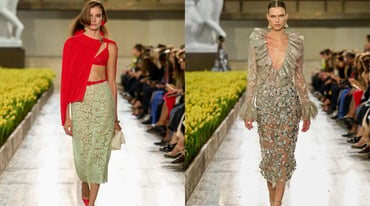

As of 2026, Kenneth Ize continues to expand his global footprint, with his craft-forward approach to West African textiles remaining a touchstone reference for conversations around heritage dressing and the ongoing influence of African designers on international luxury fashion.
The Vision Behind Kenneth Ize Fall-Winter 2021
The Kenneth Ize Fall-Winter 2021 collection arrived as one of the most deliberate and poised statements of the season, cementing the Nigerian-Austrian designer’s reputation as a serious force in contemporary luxury fashion. Drawing from the rich tradition of aso-oke weaving, a technique deeply embedded in Yoruba cultural heritage, Kenneth Ize presented a body of work that refused to separate craft from couture. The collection featured hand-loomed textiles produced in collaboration with artisans in Nigeria, a practice that has defined the brand since its earliest runway appearances.
Tailoring was central to the Fall-Winter 2021 lineup. Structured blazers, wide-leg trousers, and floor-length coats were rendered in bold stripe formations and tightly woven aso-oke fabric, creating silhouettes that felt at once architectural and deeply personal. The color palette leaned into warm terracottas, deep indigos, and ivory tones, referencing both the natural dye traditions of West Africa and the restrained luxury vocabulary of European tailoring houses.
What made this collection particularly notable was its confidence. Rather than translating African textile culture into something more palatable for a Western runway audience, Kenneth Ize presented the work on its own terms, allowing the fabric itself to carry the narrative weight of the collection.
Kenneth Ize and the Broader Conversation on African Luxury Fashion
The Fall-Winter 2021 collection did not exist in isolation. It arrived during a period of accelerating global interest in African designers and the question of how luxury fashion institutions engage with non-Western creative traditions. Kenneth Ize had already gained significant international recognition following his LVMH Prize nomination in 2019, and his continued presence on the Paris Fashion Week calendar positioned him as a key figure in reshaping expectations of what a luxury brand can look and sound like.
His approach to supply chain transparency has also drawn attention. By maintaining direct relationships with weavers in Lagos and the surrounding region, the brand operates a model that prioritizes economic continuity within the communities that produce its core materials. This is not a peripheral marketing point; it is structural to how the brand functions and how the garments are made.
Critics and buyers who covered the Fall-Winter 2021 season noted the collection’s ability to communicate multiple registers simultaneously: it spoke to customers with deep knowledge of Yoruba textile history while remaining visually legible and commercially compelling to a broader international audience. That dual fluency is rare, and it has become a signature quality of the Kenneth Ize brand identity.
- Hand-loomed aso-oke fabric produced by Nigerian artisans
- Structured tailoring as the dominant silhouette category
- A palette rooted in natural dyeing traditions
- Direct artisan partnerships that support local economies
Legacy and Continued Influence After Fall-Winter 2021
The Fall-Winter 2021 collection is now regarded as a pivotal moment in Kenneth Ize’s trajectory. In the seasons that followed, the designer continued to refine the tailoring vocabulary introduced in that collection, while expanding the range of collaborative partnerships and retail placements available to the brand. The collection helped solidify his standing not only as a designer of cultural significance but as a commercially viable one, capable of sustaining a brand identity across global markets.
Fashion educators and critics have returned to the Fall-Winter 2021 season repeatedly in discussions about craft-centered luxury, the role of diaspora designers in reframing heritage narratives, and the evolving definition of a fashion capital. Kenneth Ize’s decision to show in Paris while maintaining production roots in Nigeria offers a practical model for how designers from the Global South can engage with established fashion infrastructure without surrendering creative or economic sovereignty.
As global consumers continue to seek out fashion that carries genuine cultural meaning and transparent production values, the Kenneth Ize Fall-Winter 2021 collection stands as a reference point. It demonstrated that a rigorous commitment to craft, community, and visual identity can generate work that is both critically respected and broadly appealing, without compromise to either standard.