
For his fifth anniversary at the French house, the creative director staged a cinematic day-to-night wardrobe on a runway designed like a Parisian street — complete with manholes, organza metro tickets, and a finale in white.
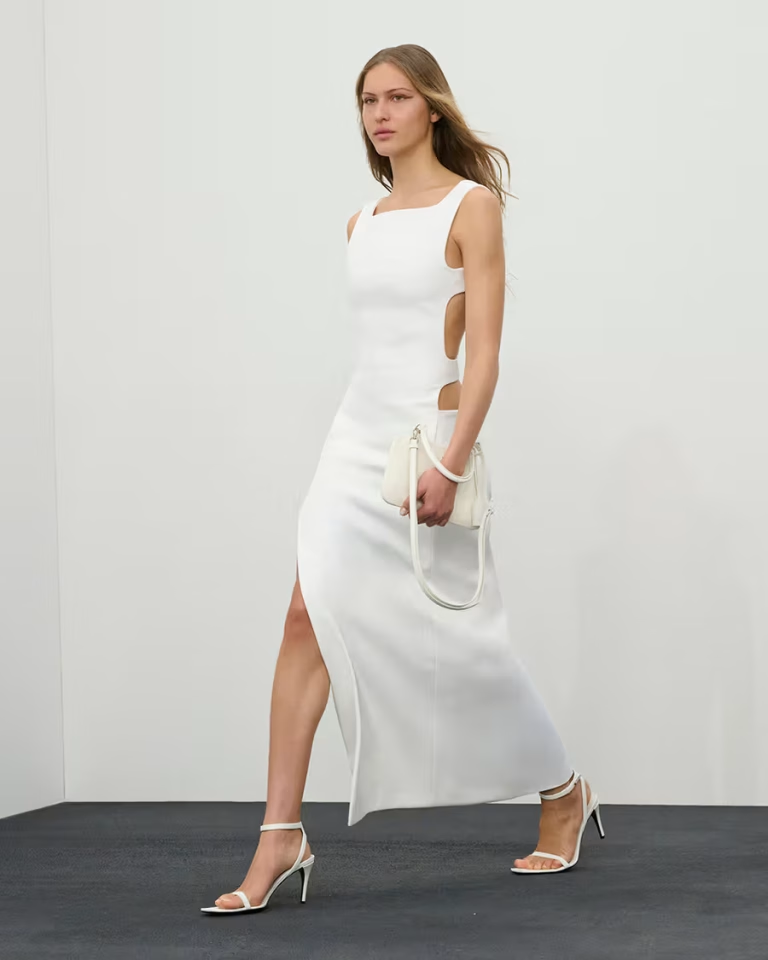
There is something quietly radical about a fashion show that begins before dawn and ends at midnight, not in real time, but in the logic of its clothes. Nicolas Di Felice’s Fall/Winter 2026 collection for Courrèges — titled ’24 Hours in the Life of a Courrèges Woman’ — arrived at Paris Fashion Week as precisely that: a wardrobe structured like a film, one that tracked a single woman’s day from the moment she pulled back the sheets to the hour the city went dark.
The setting was immersive by design. The runway was built to resemble a Parisian street, narrow enough that the toes of seated guests nearly grazed the hems passing by. Manholes and surface markings lined the floor, and the proportions were so tight that they caused an epic traffic jam before the show even began. It was a deliberate provocation — and a fitting one for a collection rooted in the texture and tempo of urban life.
A Collection Drawn from the Films of Chantal Akerman
Di Felice has always brought a strong conceptual framework to his work at Courrèges, and this season was no exception. His primary reference was the Belgian director Chantal Akerman — specifically her film ‘Portrait of a Young Girl at the End of the ’60s in Brussels.’ The choice is characteristically precise: Akerman’s work is defined by its attention to female interiority and the passage of ordinary time, qualities Di Felice translated into the structure of an entire collection.
Speaking backstage, the designer framed his process in cinematic terms. ‘It’s about a girl on the move,’ he explained. ‘I really saw it like a tracking shot in my head, so I wanted fabrics that remind you of the street.’ He pointed to a flecked denim woven to evoke the texture of asphalt — a material decision that was both poetic and technically considered.
“I really saw it like a tracking shot in my head, so I wanted fabrics that remind you of the street.” — Nicolas Di Felice
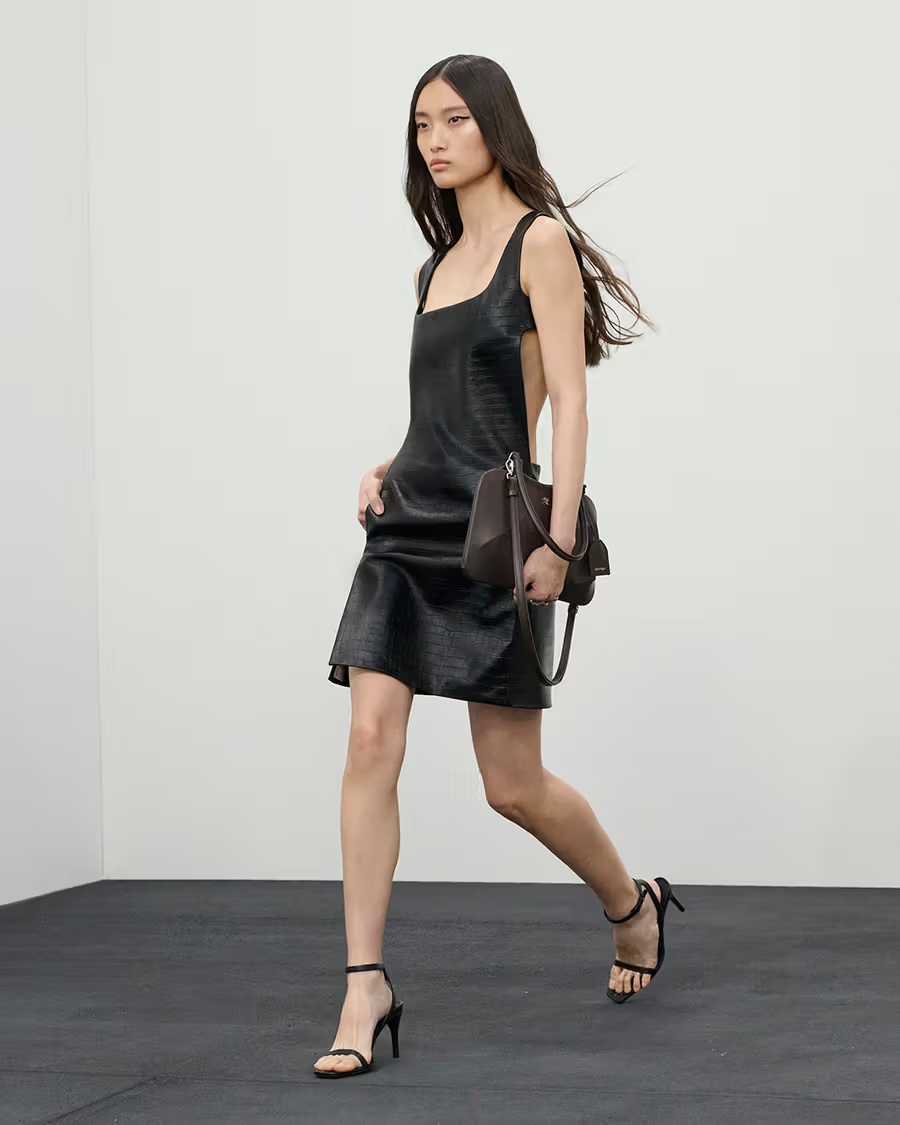
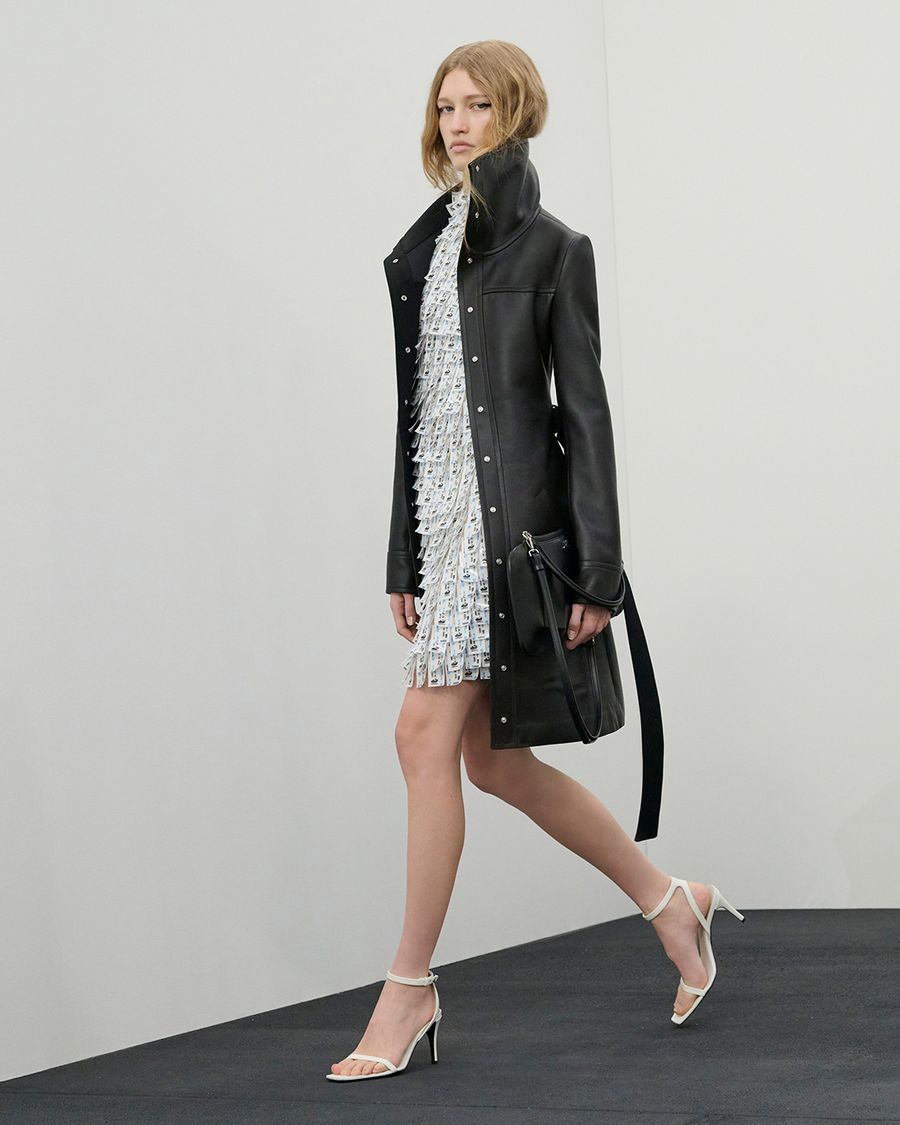
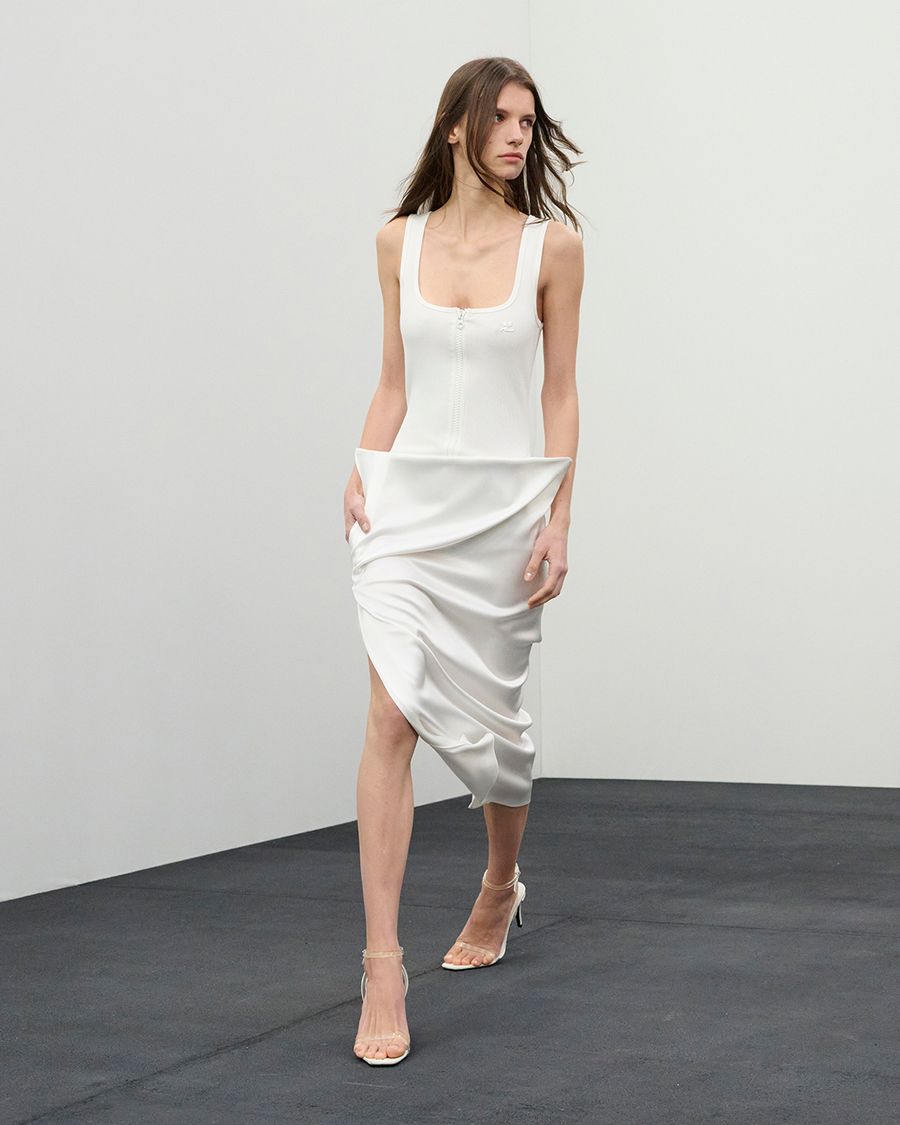
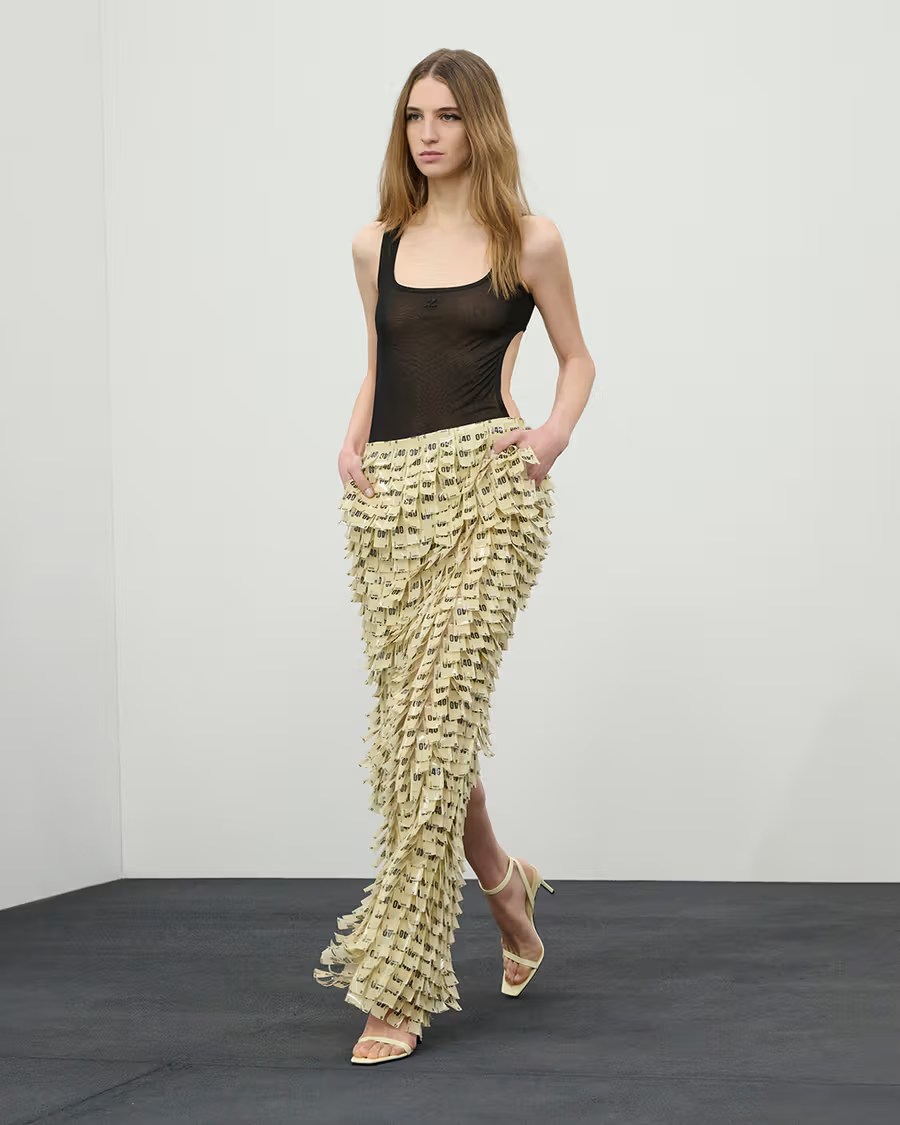
From Morning White to Midnight Black
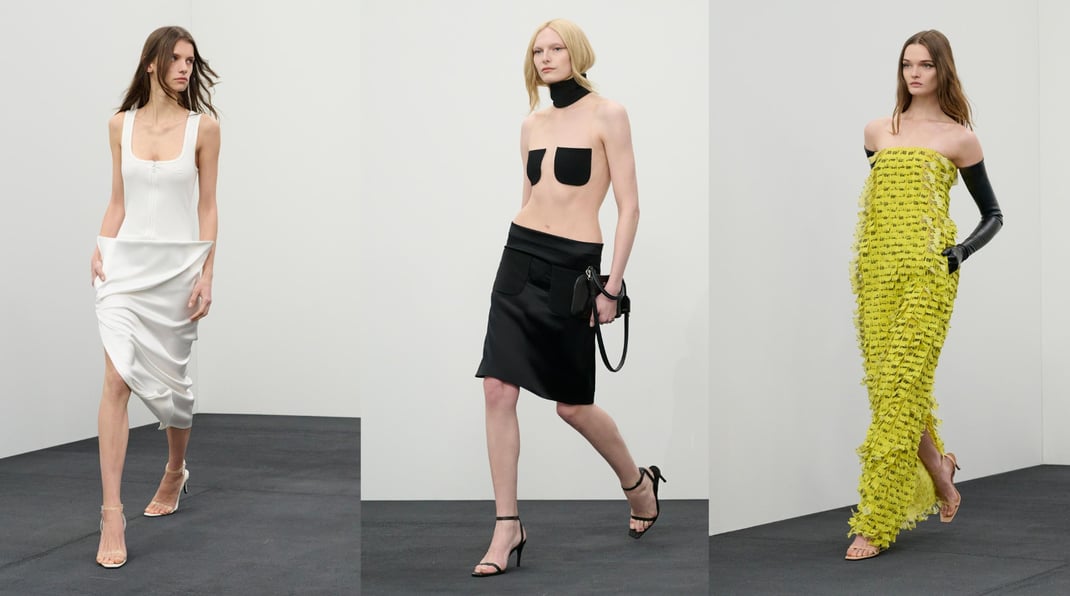
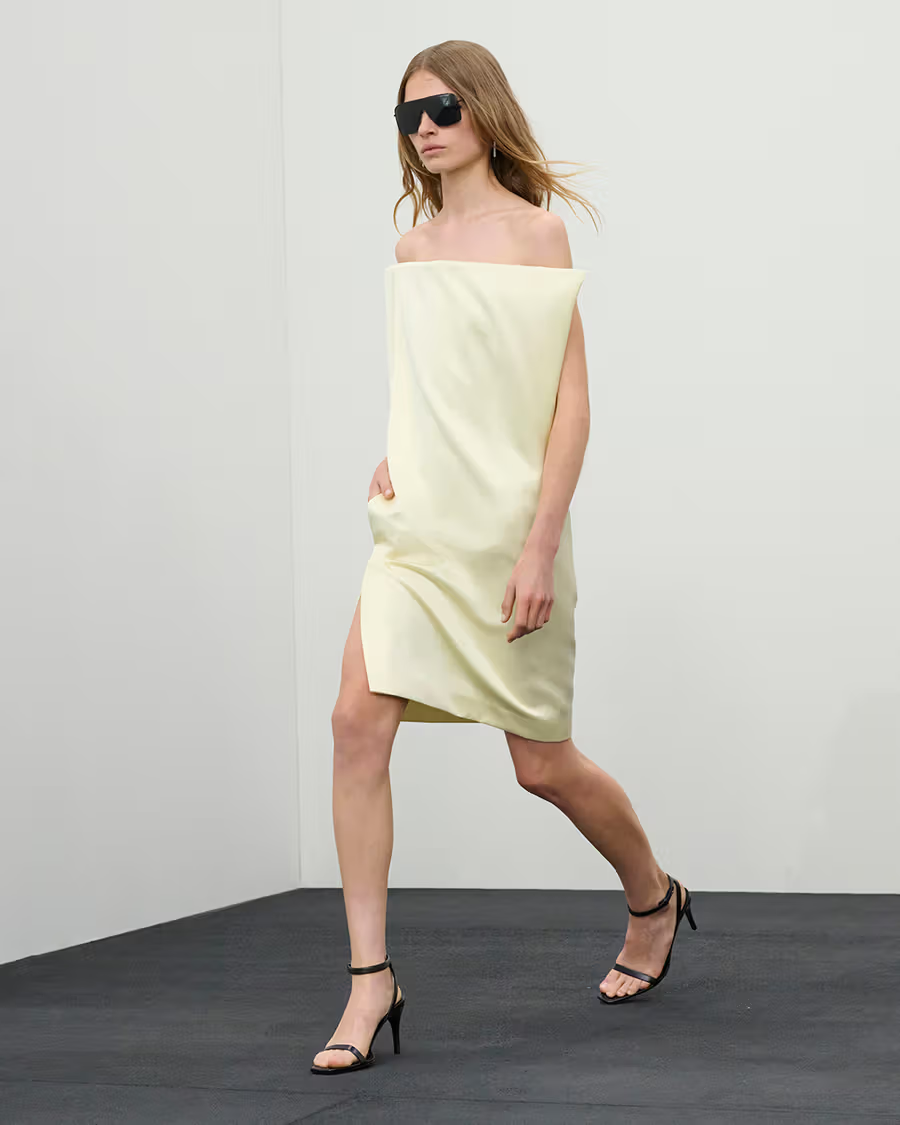
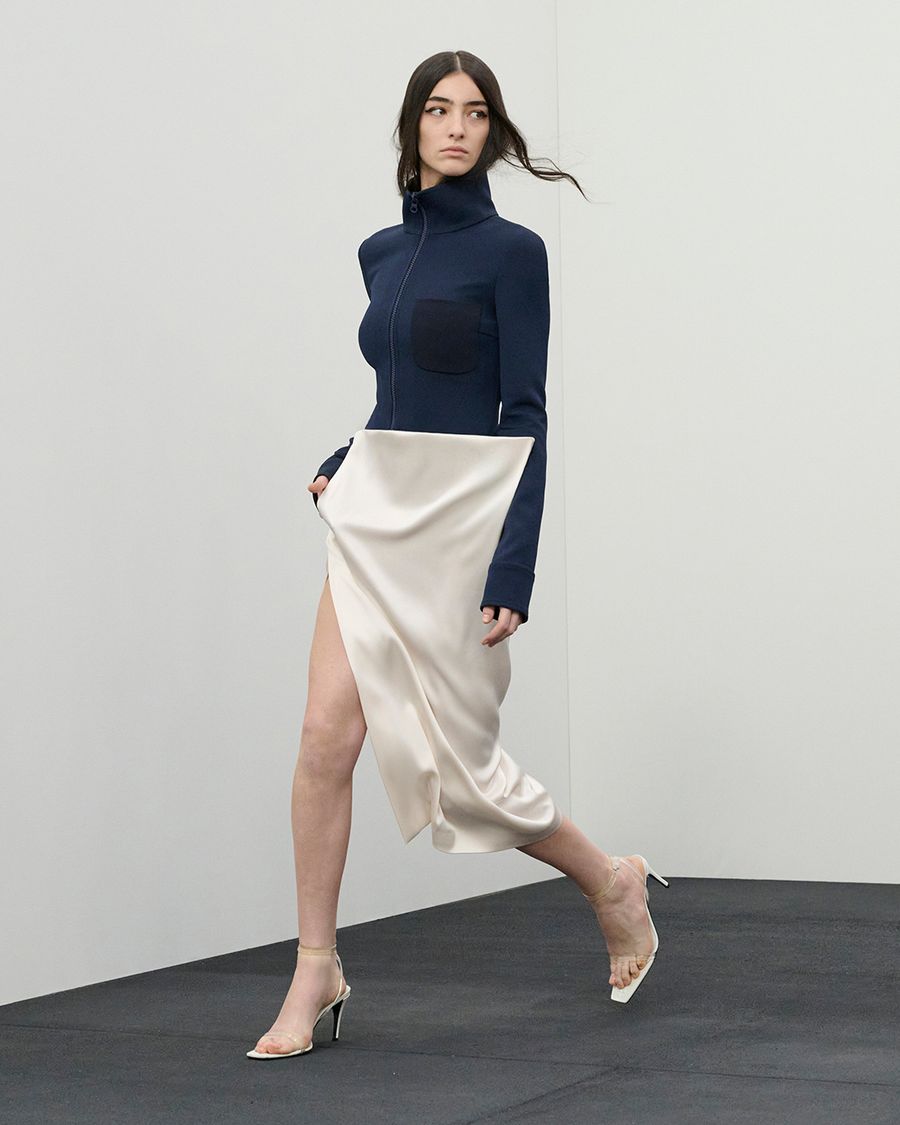
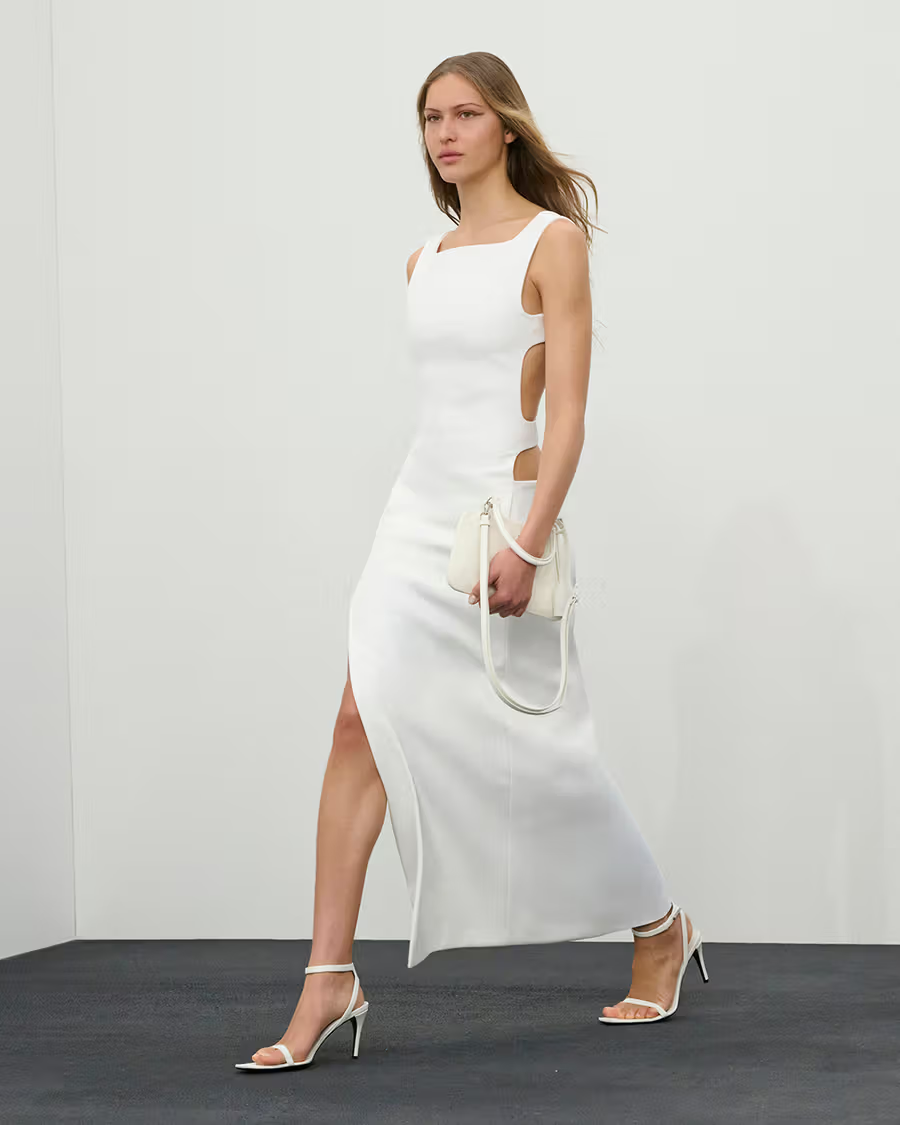
The show opened with white — white fabrics draped like sheets, a direct nod to those early, barely-conscious morning hours. The references reached back into the house’s archives, drawing from pieces created between 1960 and 1980. One standout opening look featured a white satin dress suspended from a metallic frame, simultaneously evoking a bedsheet and an archival image of a Courrèges model from 1965 holding a white square.
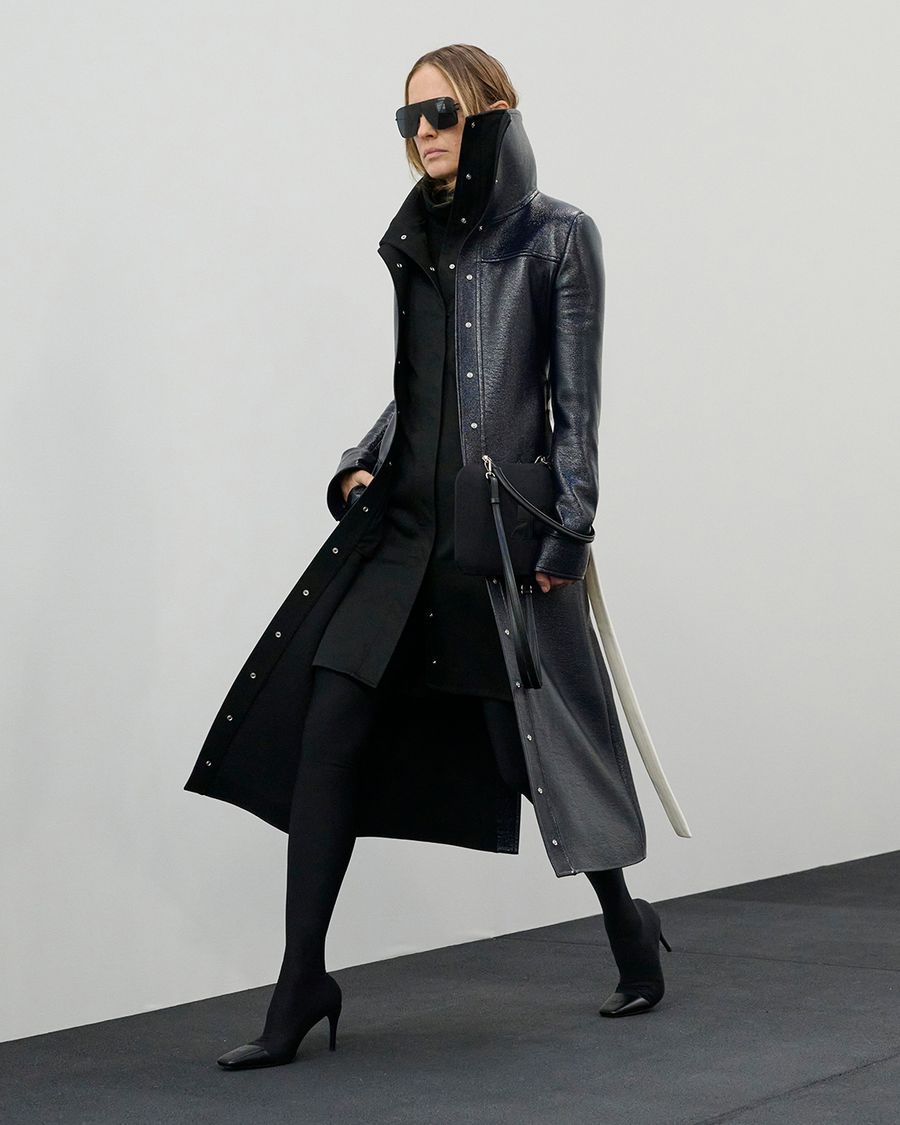
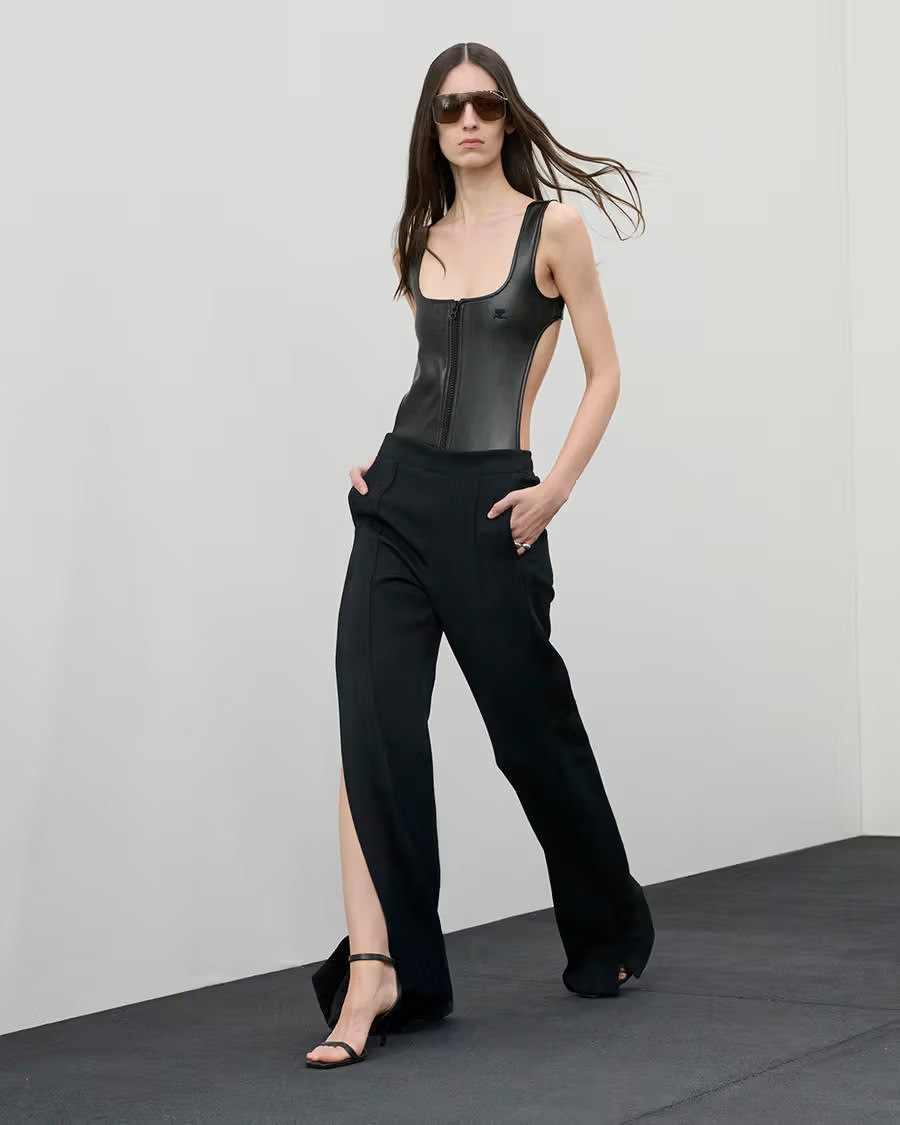
As the narrative moved into daytime, the silhouettes shifted accordingly. Daycoats appeared with trapezoidal cuts and collars folded asymmetrically upward — the visual shorthand of a woman perpetually in motion, always running slightly ahead of schedule. Urban detail seeped into the fabrication: denim woven with a tar effect, a flecked texture borrowed from the pavement itself.
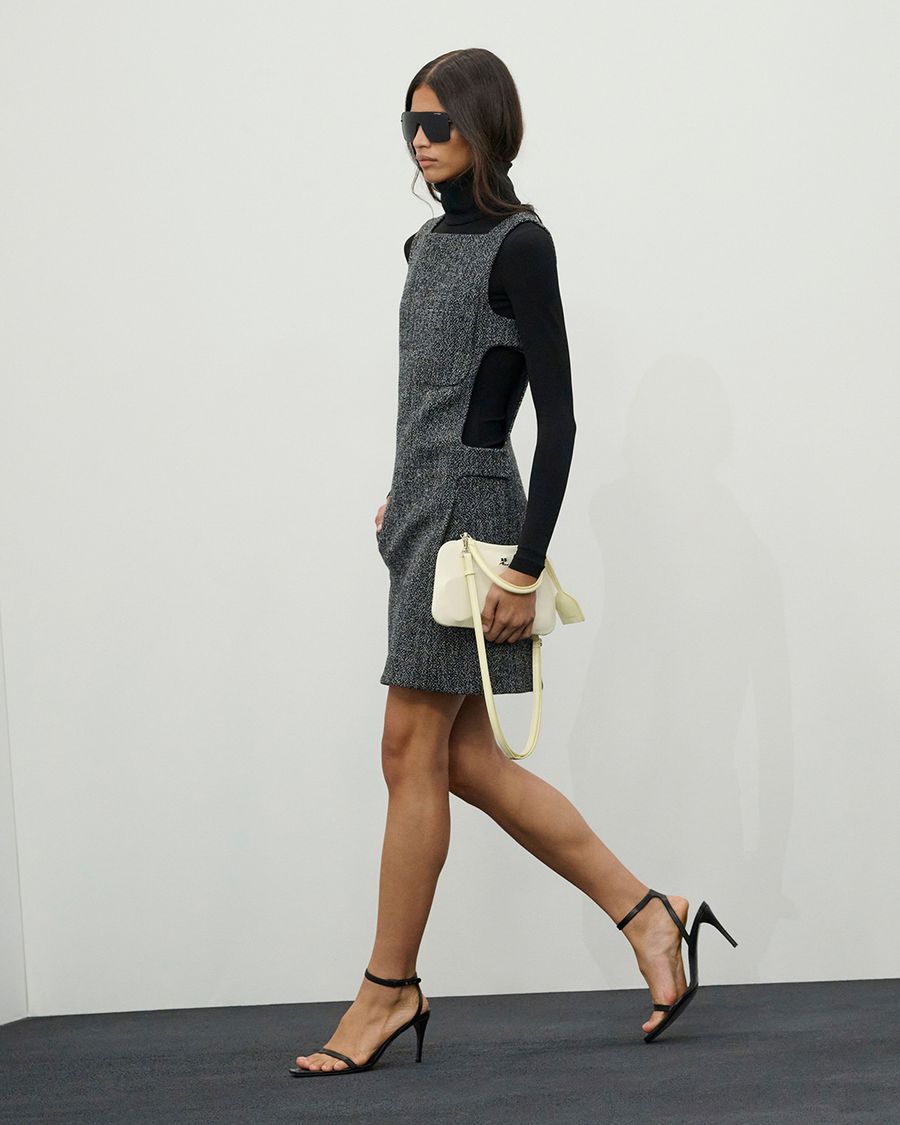
The middle of the day brought Courrèges’ signature sensibility into focus. Glossy textures and razor-sharp proportions defined slim coats and jackets with funnel collars; a slick pleated skirt and dresses with graphic cutouts at the side and back reinforced the house’s kinetic energy. Di Felice — who has been described as bringing a kinky sensuality to the Space Age legacy of founder André Courrèges — also demonstrated the full range of the brand’s signature vinyl, moving between a T-shirt-and-matching-pants combination that read as cool and edgy, and a pleated dress described as a technical feat.
Embroidered Metro Tickets and Cloakroom Stubs: Evening’s Arrival
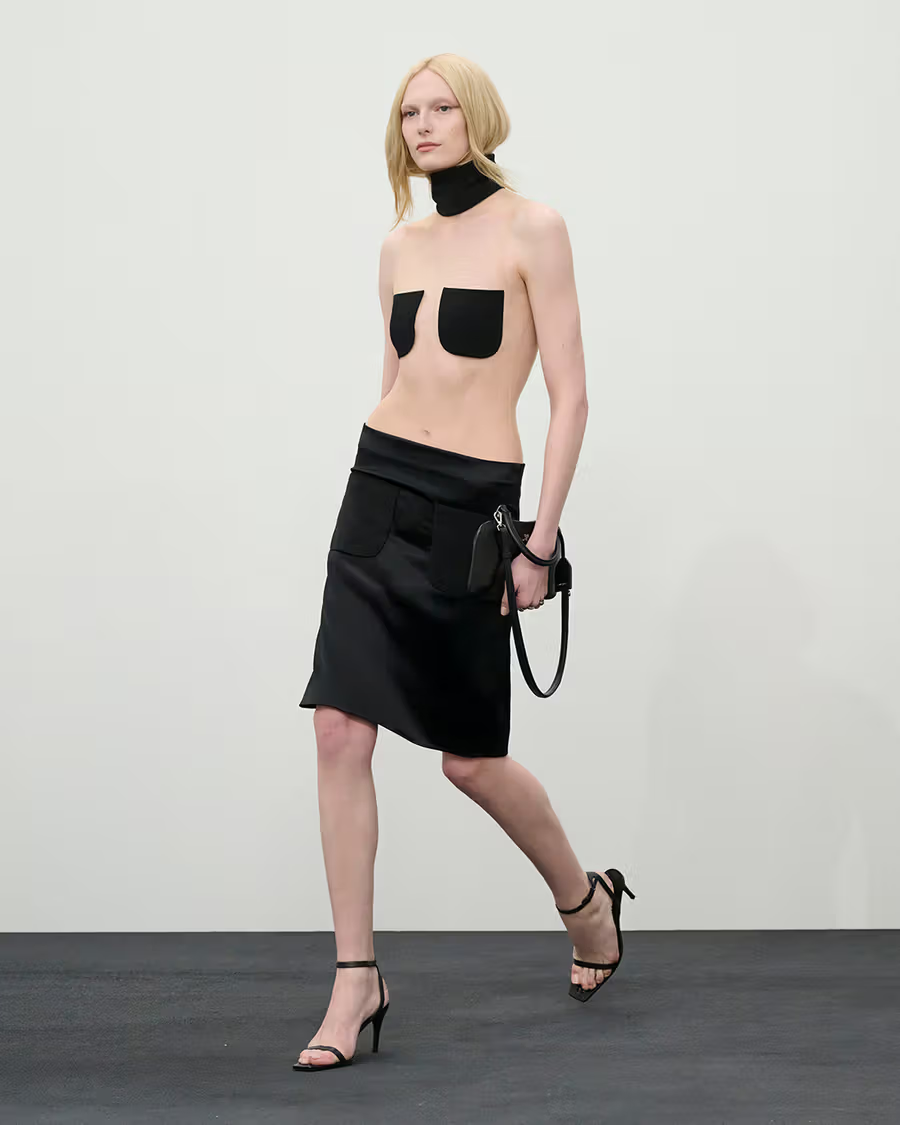
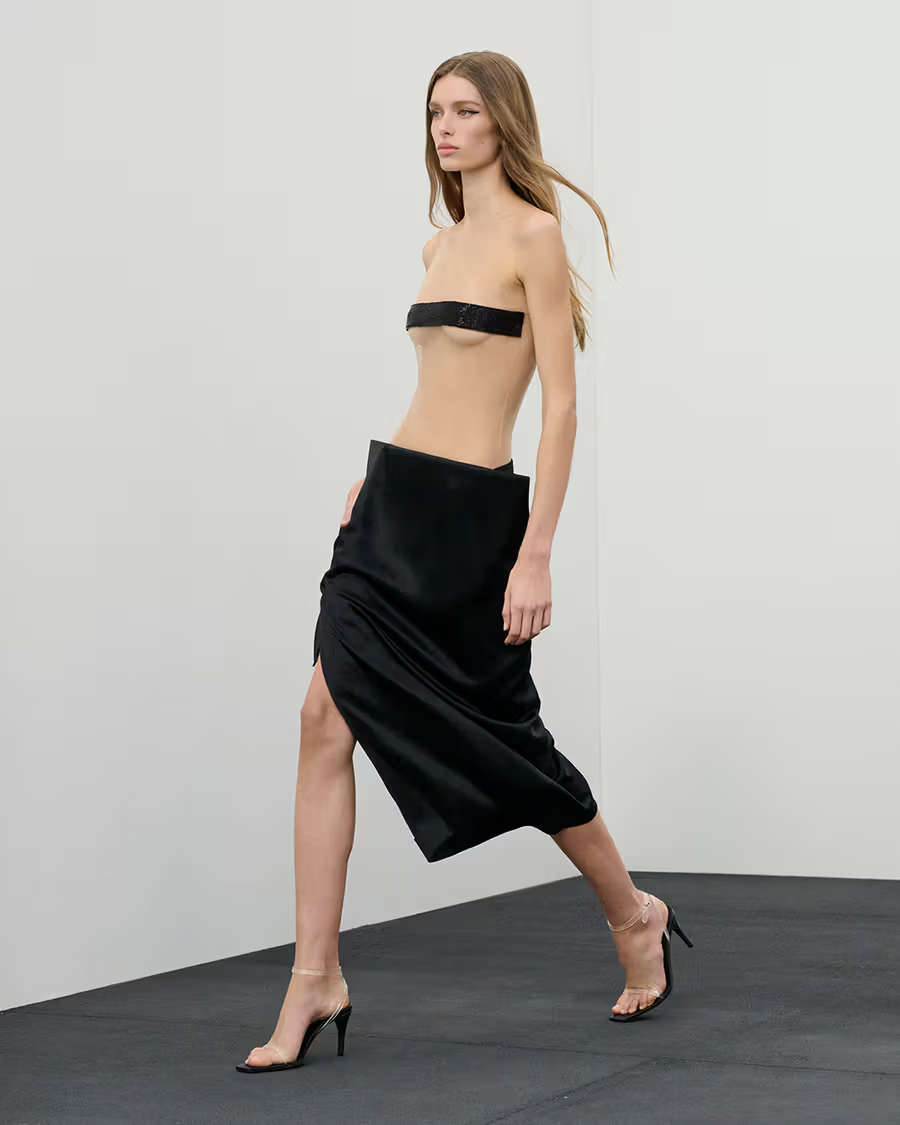
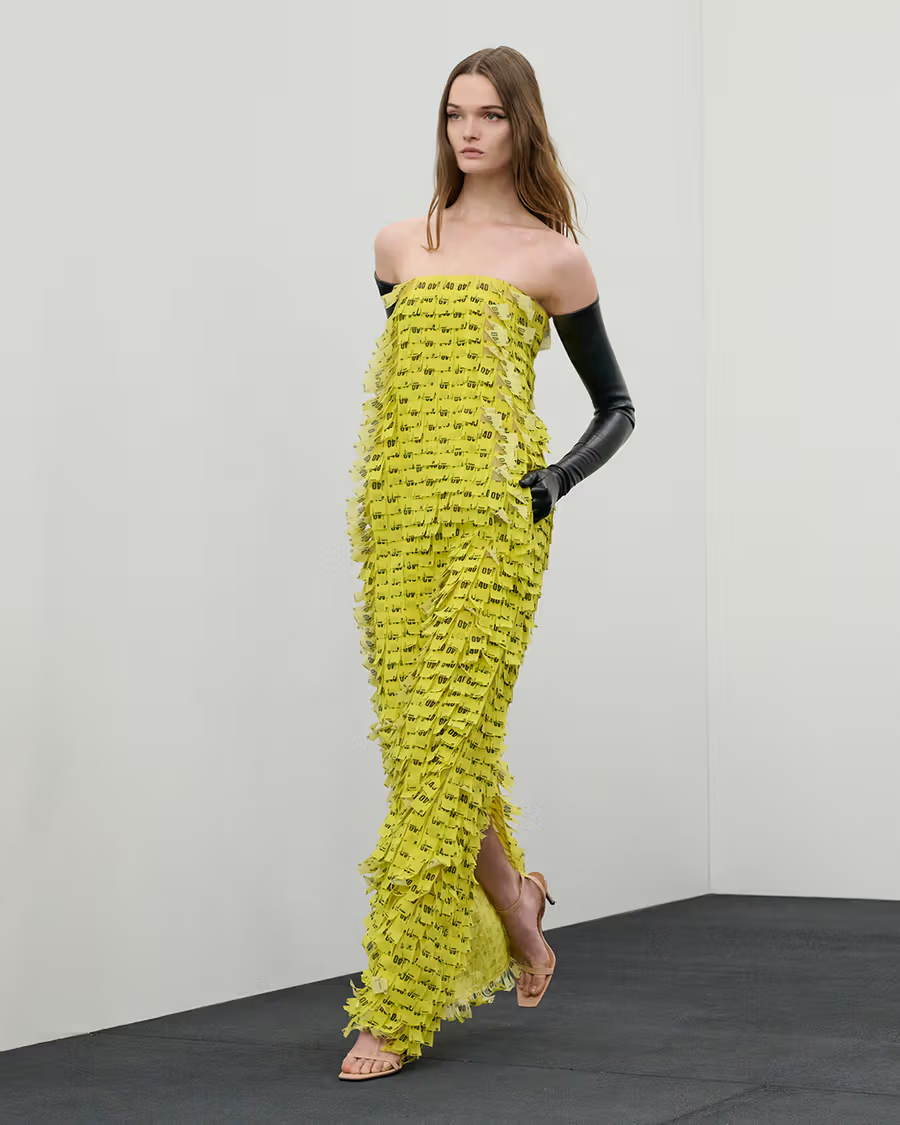
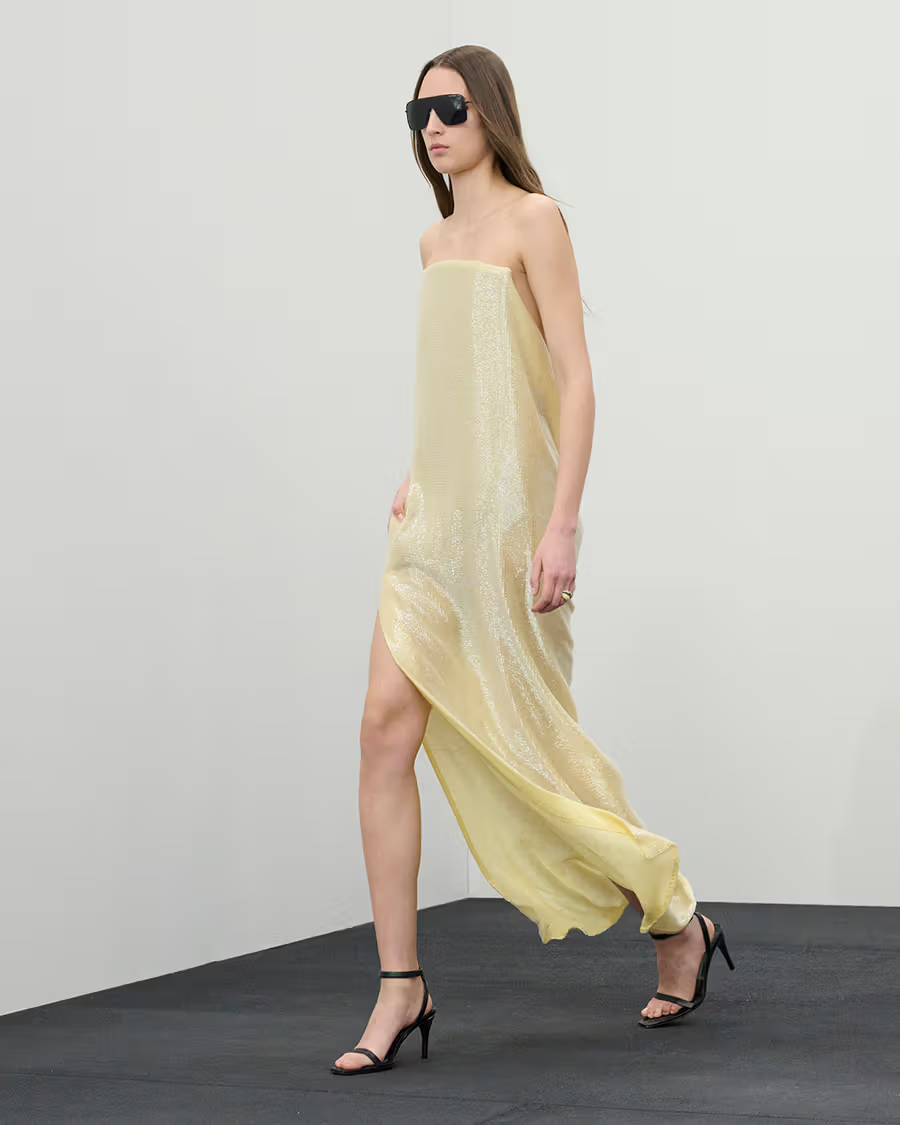
The transition into the evening was handled with characteristic wit. As the collection’s fictional woman moved from elevator to taxi, the looks shifted toward materials that caught the low light of neon-lit streets: evening dresses adorned with embroidered cloakroom tickets, skirts pieced together from organza Paris metro tickets, and looks finished with glass beads designed to reflect the city’s nocturnal glow. The Metro ticket embroidery, in particular, became one of the collection’s most discussed gestures — a small, precise detail that collapsed the distance between everyday life and haute couture.
Late in the evening, the Courrèges woman returned home. A black dress with a geometric structure closed the cycle, bringing the 24-hour narrative back to its origin point. Di Felice also introduced a new bag for the season — the Shadow — which appeared designed to mold to its contents, its silhouette determined by what was carried inside.
The cast included veteran models Anne-Catherine Lacroix and Nataša Vojnović, whose presence lent the proceedings an assured, unhurried confidence that Di Felice has spoken about in terms of protection. ‘I hope to make women feel beautiful — as simple as that sounds,’ he said backstage. ‘There is a structure to Courrèges clothes that is there to protect you.’
The White Finale: A Fifth Anniversary in Full Circle
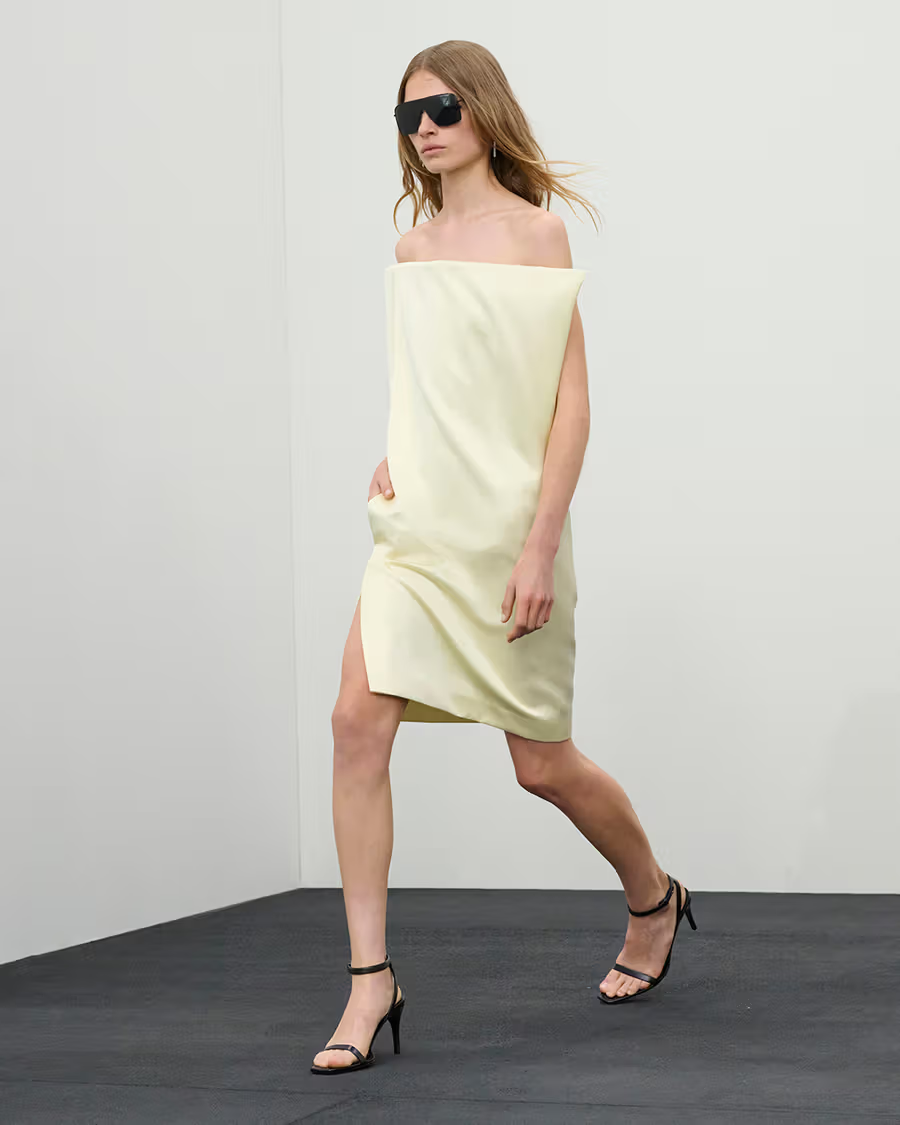
For the finale, every look in the collection reappeared — reworked entirely in white. The gesture was both a tribute and a reset, what Di Felice described as ‘an open canvas’ for whatever the next day might bring. He also acknowledged the color’s deeper resonance within the house. ‘It was André Courrèges’ favourite colour,’ he said. ‘To him, it expressed lightness, purity.’
The timing was not incidental. This collection marked Di Felice’s fifth anniversary at Courrèges, a tenure during which he has methodically rebuilt the fading French house into one of Paris Fashion Week’s most consistently compelling presences. His approach has remained fundamentally consistent: sleek, sensual riffs on André Courrèges’ 1960s Space Age designs — geometric, vinyl-forward, deliberately modern — delivered with an attention to wearability that the original house was occasionally accused of sacrificing. Di Felice has never made that trade-off.
The show took place on Wednesday, March 4, 2026, on what proved to be one of the central days of the 巴黎时装周 Fall/Winter 2026-2027 schedule.
主要收获
- Collection title: 24 Hours in the Life of a Courrèges Woman
- Key references: Chantal Akerman’s ‘Portrait of a Young Girl at the End of the ’60s in Brussels’; Courrèges archives 1960–1980
- Signature materials: Vinyl, asphalt-effect denim, organza, glass beads
- Standout details: Embroidered organza Paris metro tickets; cloakroom ticket evening wear; the new Shadow bag
- Milestone: Nicolas Di Felice’s fifth anniversary as creative director of Courrèges
- Finale: Entire collection restaged in white as a tribute to André Courrèges’ signature color
请看下面的所有造型:
图片由以下机构提供 fhcm.paris
In another Paris Fashion Week news, the Dior Autumn-Winter 2026 Ready-to-Wear Show at Paris Fashion Week