
With “Black Orchid,” the Ukrainian label draws on Japanese visual culture and tattoo art to ask how much of the body a garment should give back
Some brands talk about the body. TTSWTRS keeps trying to negotiate with it. The Ukrainian label built its name on second-skin fits and anatomical cut-outs, and its new collection, “Black Orchid,” takes that project into darker territory: Japanese visual culture, tattoo art and the architecture of the body itself, assembled into clothes that can reveal, protect or transform depending on the wearer’s nerve.
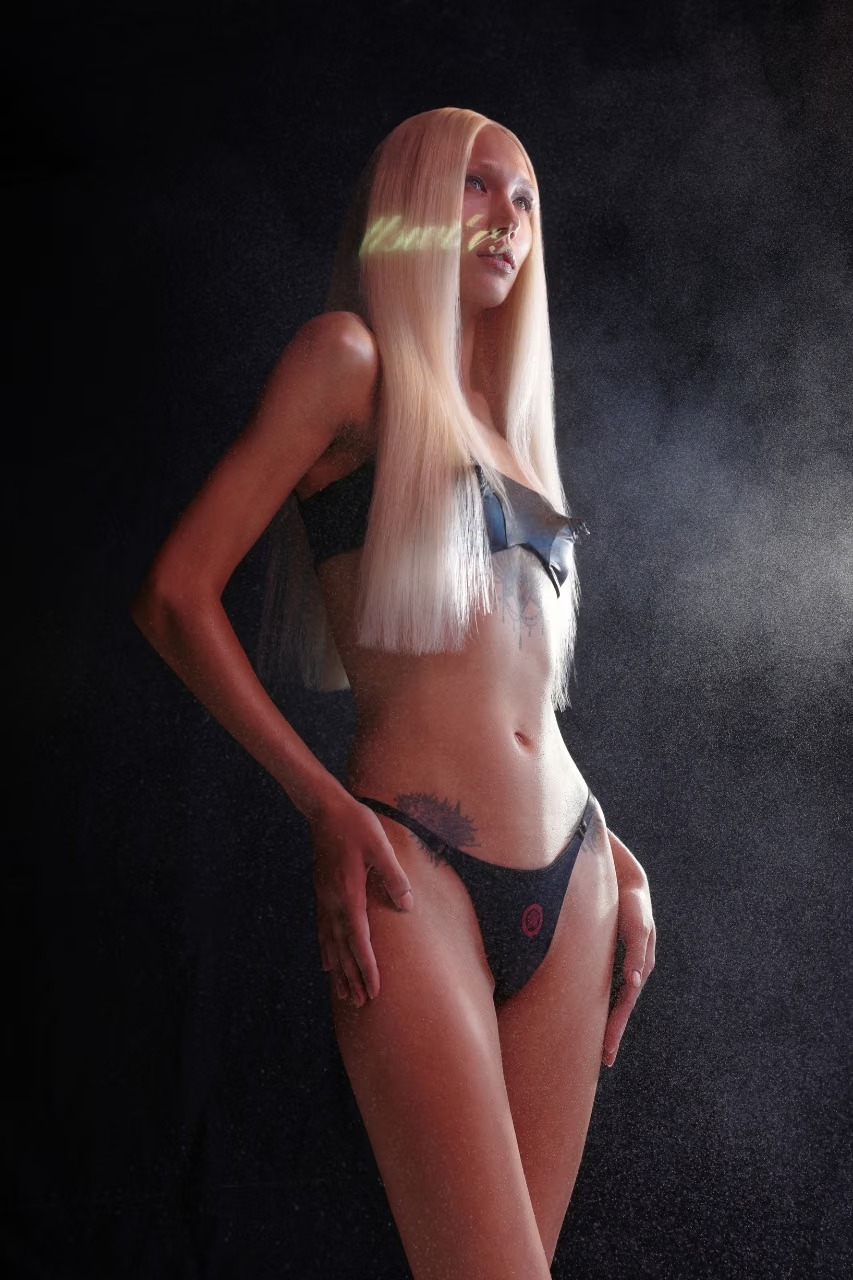
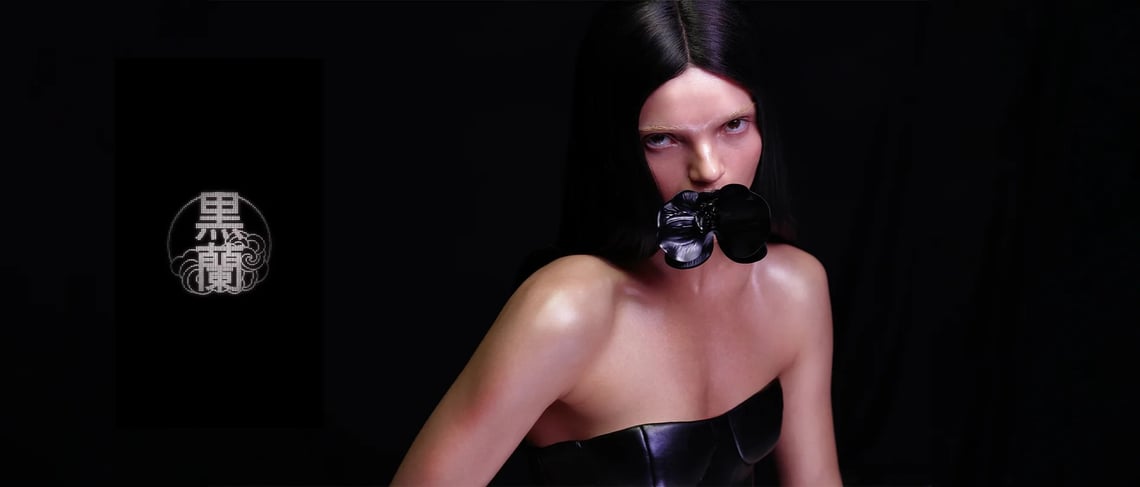
The name sets the terms. In the collection’s private language, a black orchid symbolizes rare beauty and inner strength, working as motif and mood at once. It arrives as a new black-orchid “mon,” the house’s interpretation of a traditional Japanese family emblem, a seal of belonging that marks the lineup the way a crest once marked a clan. Kimono-inspired proportions loosen the tailoring. Calligraphic lines move across panels like brushwork, and artist seals punctuate the cloth like signatures. The references stay subtle enough that nothing reads as costume.
The materials play the same game of exposure and control. Sheer second-skin pieces follow the body’s surface without quite giving it away. Sculpted denim, structured tailoring, dense knitwear and cruelty-free leather bring the weight, and oversized streetwear supplies the armor. Transparency runs against density throughout the lineup, and the collection never pretends the two are easy to balance. This is not an exercise in nudity. It is a question about coverage: who gets to decide what is seen.
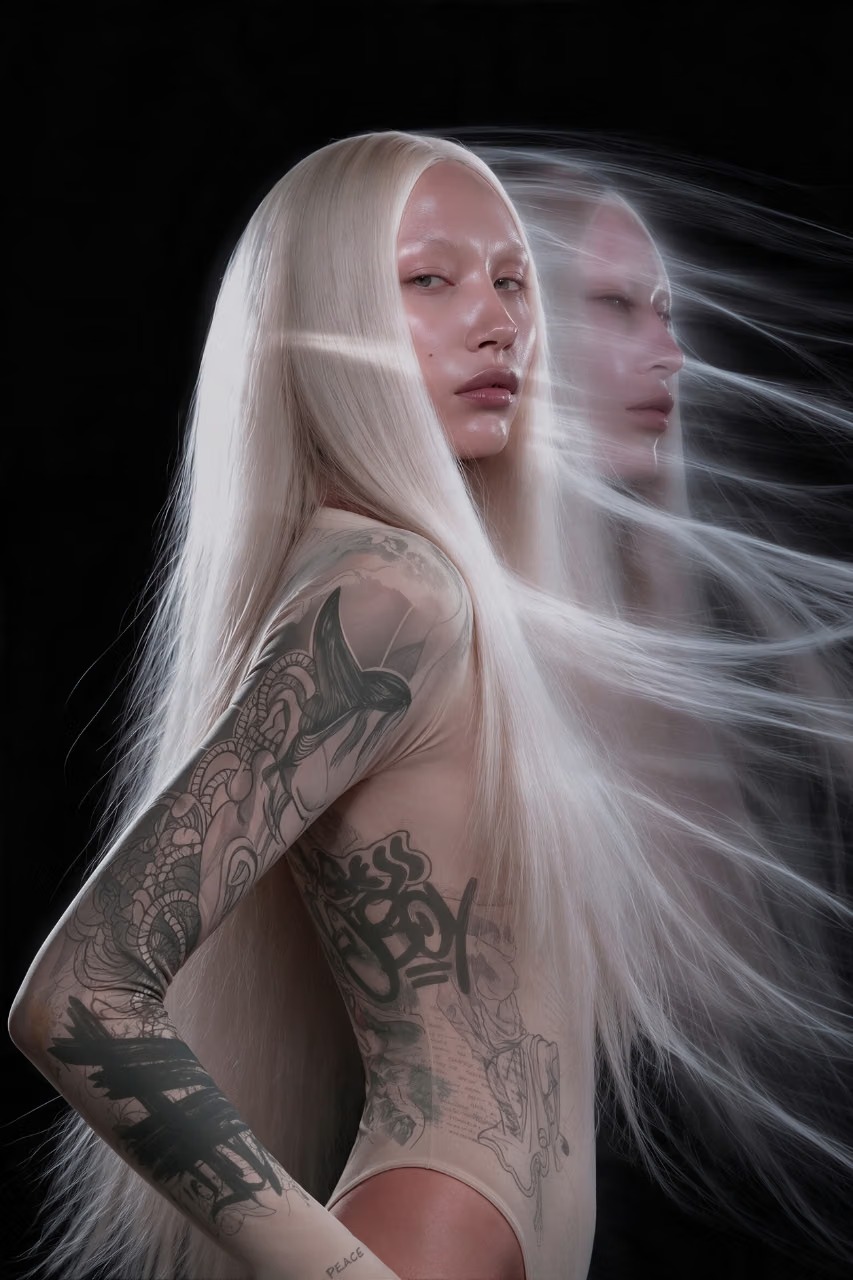
Tattooing is the connective tissue, and here the label treats ink as a fabric technology. Work by artists Nissaco, Senshin Irezumi, and Longboy translates across garments through digital and silicone printing, embroidery, embossing, and layered applications, so a flower can sit raised off the cloth or sink into it. Piercing-inspired hardware replaces conventional buttons, jewelry logic applied to fastenings. The house’s anatomical cut-outs return across jeans and leggings, tracing the body’s natural lines instead of fighting them.
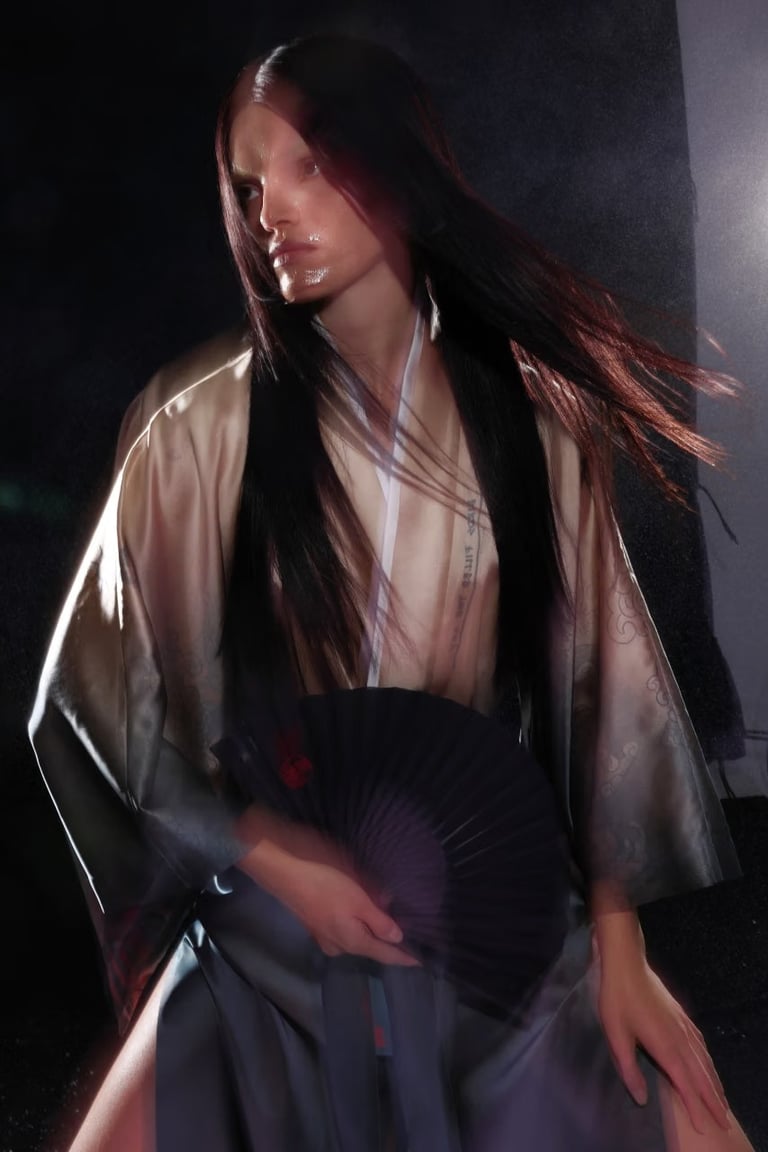
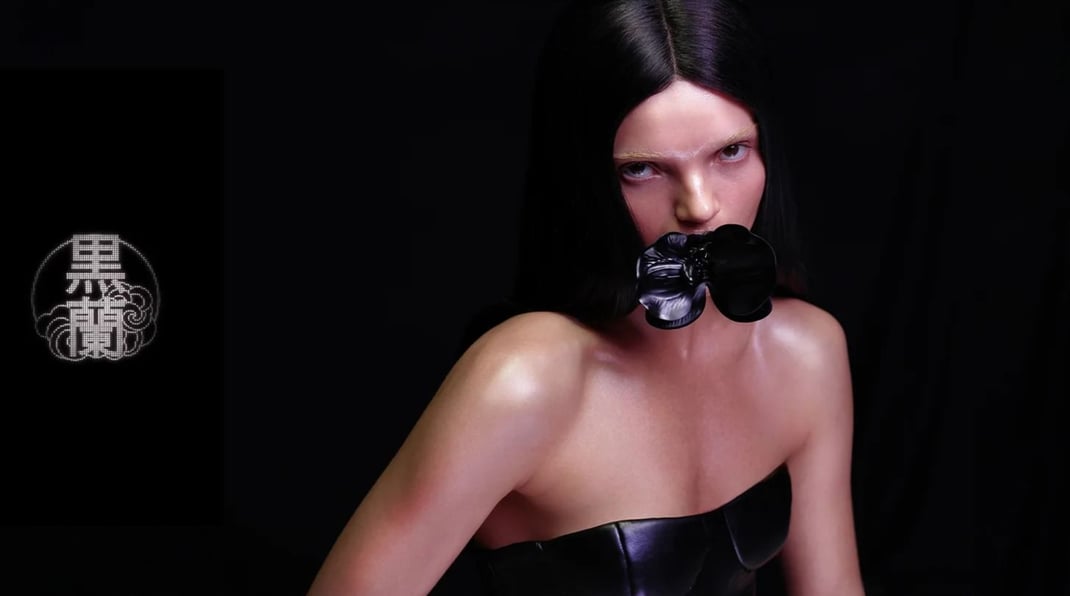
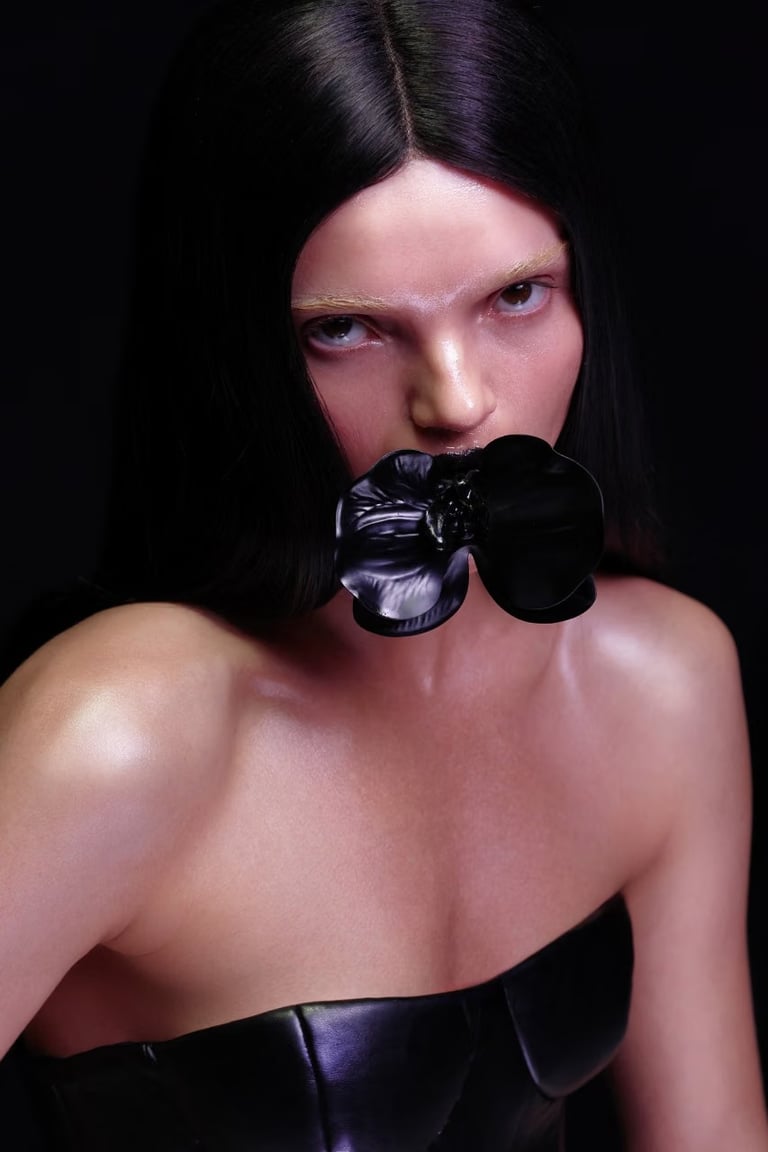
In the campaign portraits, that tension gets a face. TTSWTRS shoots against a black void, and the body becomes the whole frame. One look is a second-skin bodysuit dense with tattoo-style ink work, script and fine-line figurative drawings crowding the torso the way a collector’s arm reads top to bottom. A kimono-cut silk robe, smoked from ivory to charcoal, opens over sheer layers while calligraphic marks run down the chest. Elsewhere, a model holds a glossy black orchid at her lips, its petals wet and dark as obsidian against a structured leather bodice. Motion trails ghost around several figures, so the eye catches a body that is there and not there, marked and unmarked, mid-transformation. Skin, garment and light read as one surface.
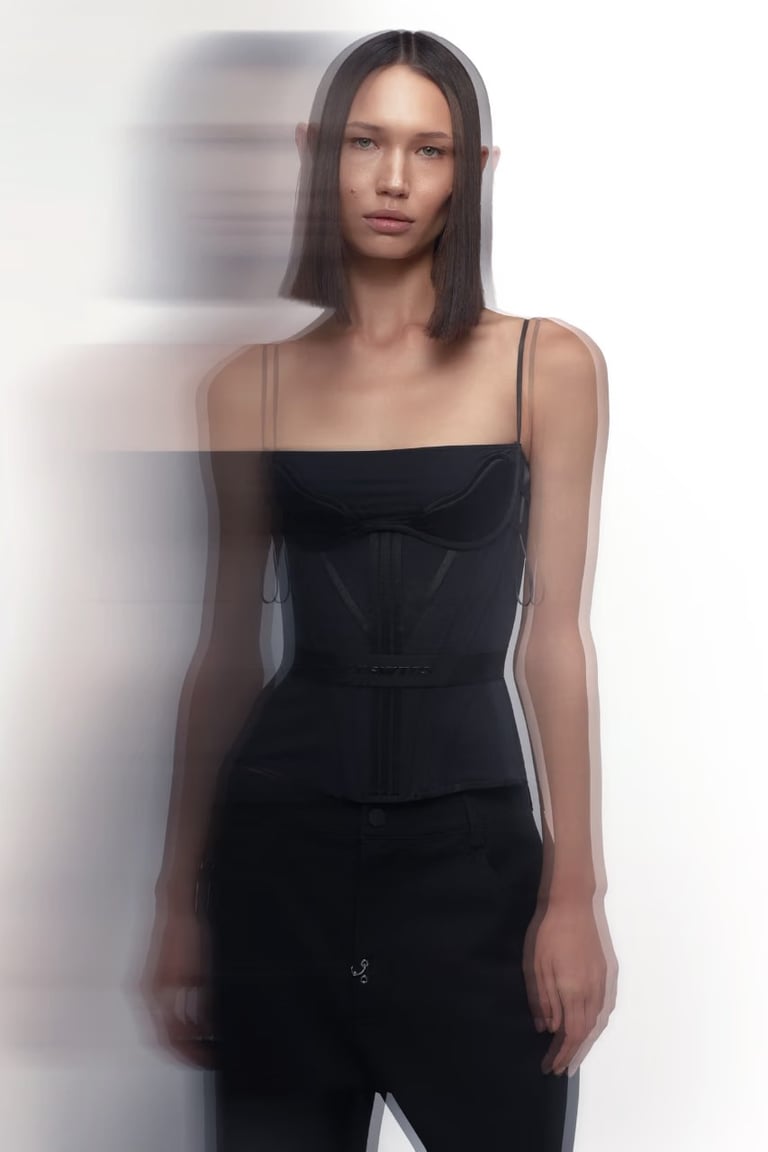
The drop is the latest chapter in a yearlong study of that surface. In April, TTSWTRS examined skin and spirituality with experimental printing and tactile finishes. In June, a ballet-inspired collection printed lace and mesh directly onto fabric. “Black Orchid” darkens the palette and hardens the hand, arriving in lockstep with a larger conversation: Hypebae’s Body Issue, now tracing a decade of fashion’s relationship with the body, from inclusivity to size politics to the sheer volume of flesh the industry has learned to photograph. Most of that history treated the body as a surface to decorate. TTSWTRS treats it as the structure the clothes are built around, which is the whole point of the label. A canvas gets painted. This one talks back.
The full lineup is available now on the brand’s website. The question hidden in the collection’s name, though, remains open. TTSWTRS has decided what it will show. What stays covered is now up to whoever steps into the clothes.
Images courtesy of TTSWTRS
In other brand campaign news, Calvin Klein Fall 2026 “Feel the Fit” Denim Campaign Starring Sadie Sink