
Seán McGirr brought the house back to London for his ninth collection – and in the space between a Renaissance altarpiece and a South London rave, found the clearest argument yet for his version of McQueen
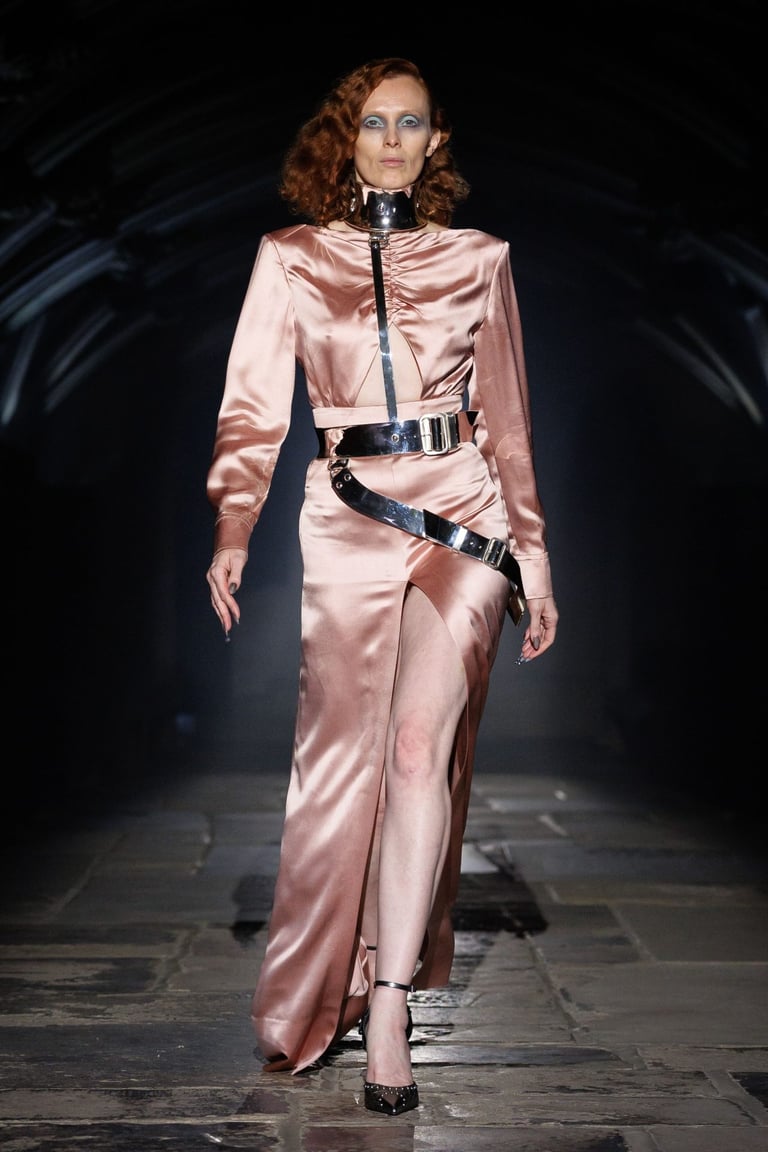
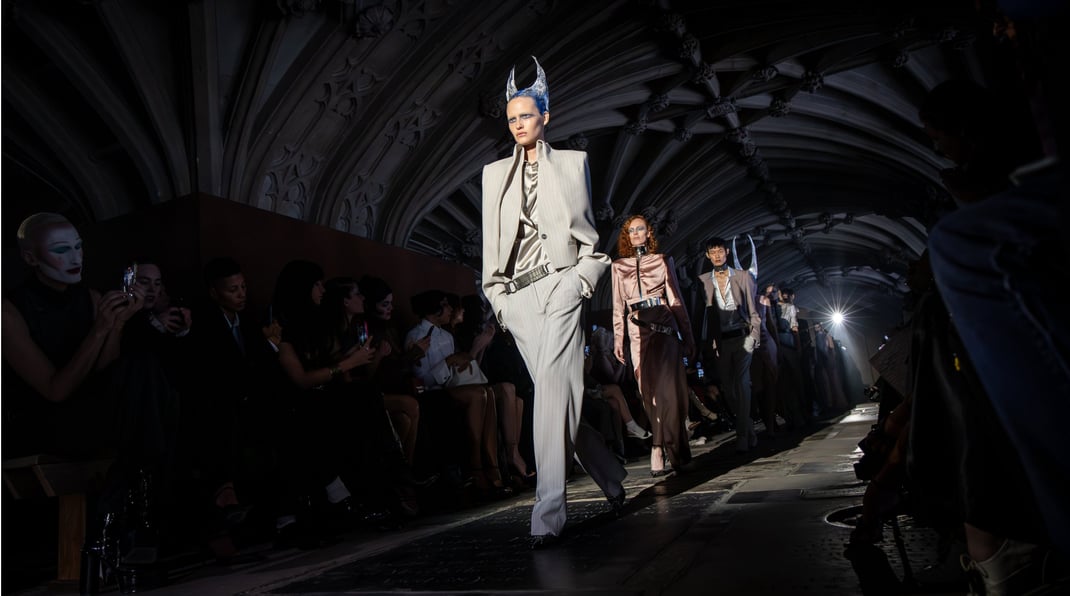
LONDON – Piero della Francesca’s “The Baptism of Christ,” hanging in the National Gallery roughly five miles west of The Undercroft at Lincoln’s Inn Chapel, was Seán McGirr’s entry point for spring. The 15th-century altarpiece – its planes of light pressed flat, its calm that reads less like peace than like held breath – gave McGirr the sensation of transcendence and serenity he said backstage he could not get out of his head while building the collection. The other half of the inspiration was London itself, and specifically its rave culture: the particular version of underground nights that determines a certain kind of getting-dressed. One frame sacred, one subcultural. The question the clothes had to answer was whether the seam between them held.
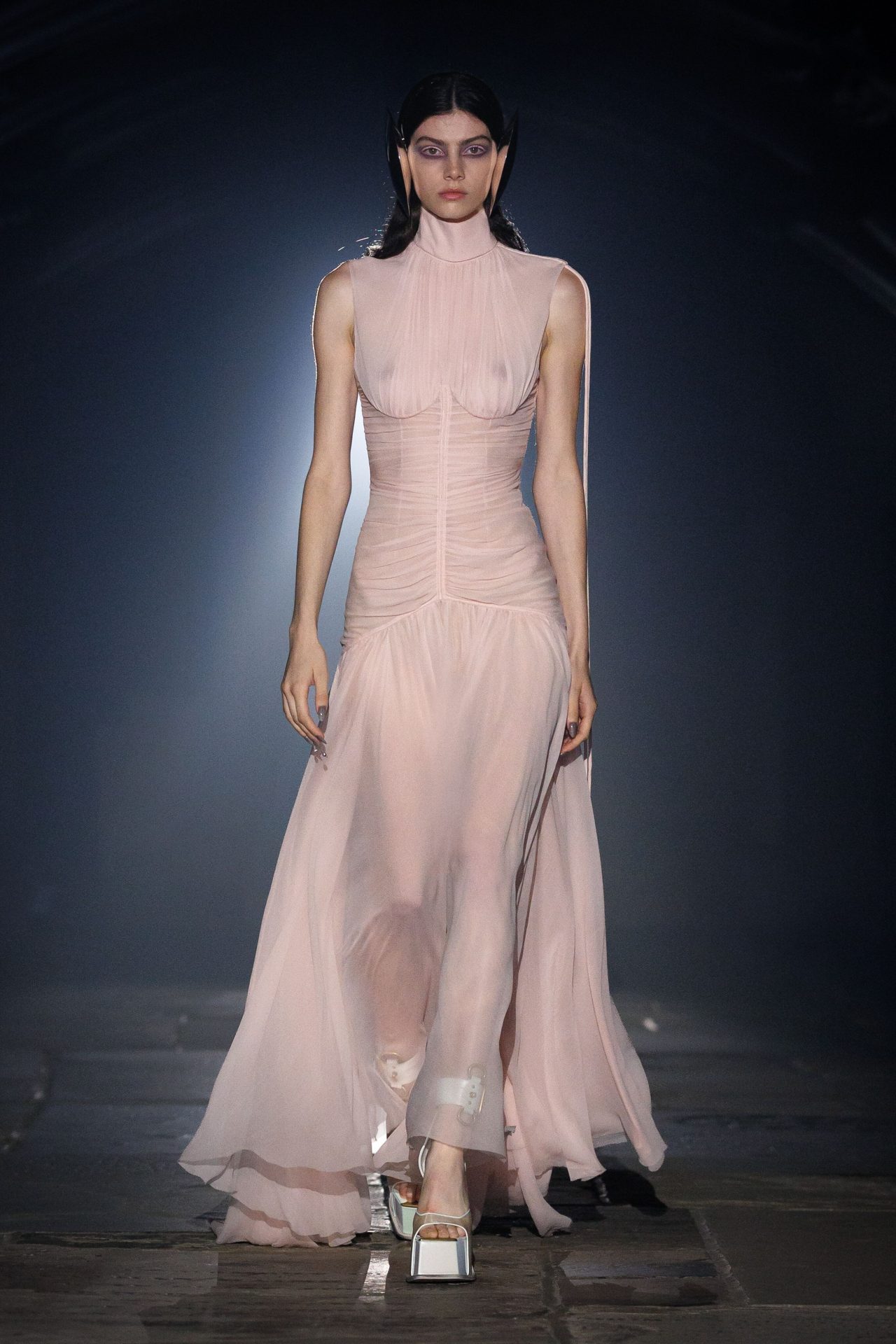
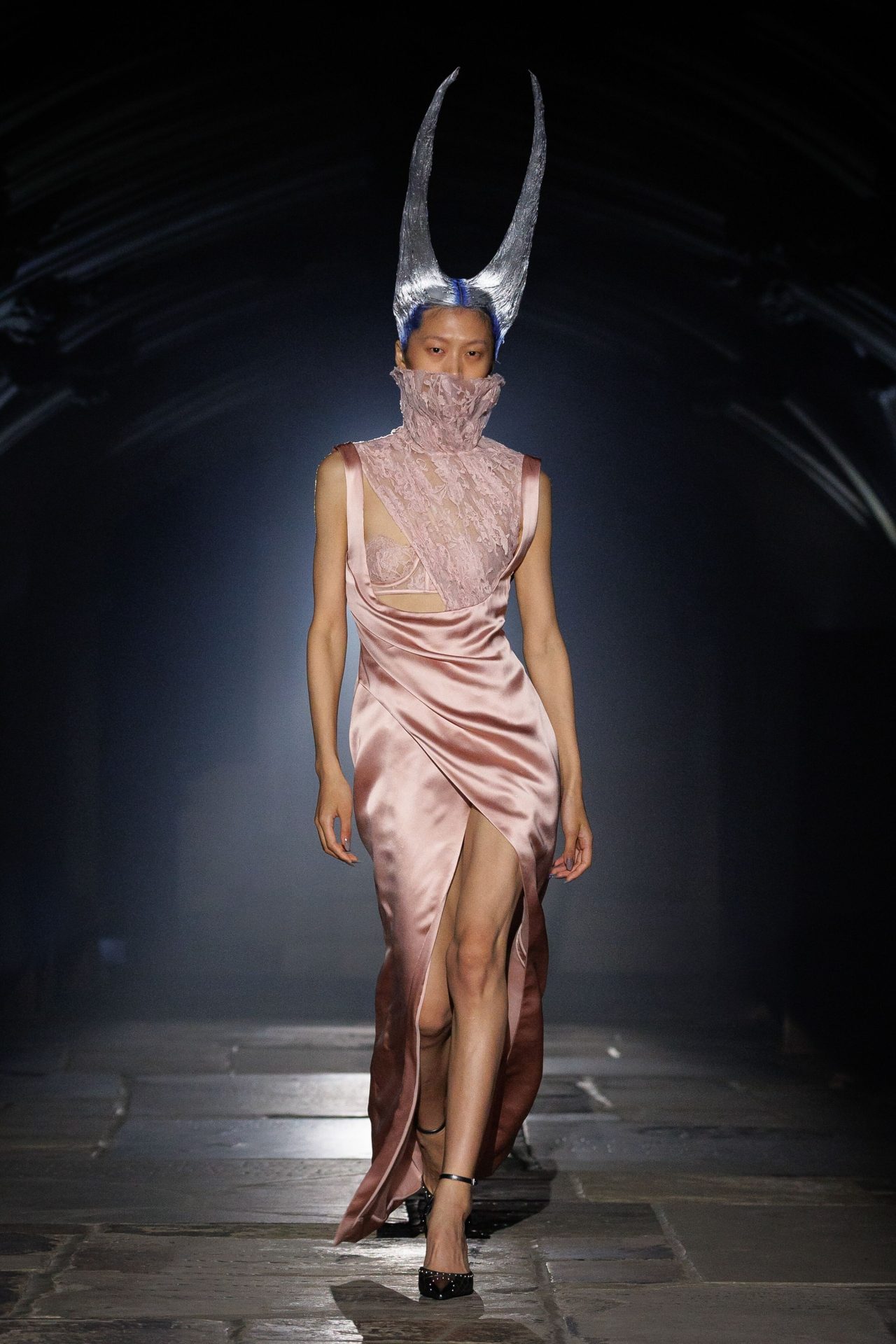
It was McGirr’s ninth season for the house, and his first in London. The house was founded in the city in 1992 and had been showing primarily in Paris. The return came in co-ed format and inside a broader reset: Gianfranco D’Attis, the former Prada chief, was named chief executive officer in June, and has been sharpening the house’s output, tightening its retail footprint under Kering, and returning craft to the center of what McQueen sells – a full wardrobe of ready-to-wear, tailoring, eveningwear, and the statement footwear the brand is known for.
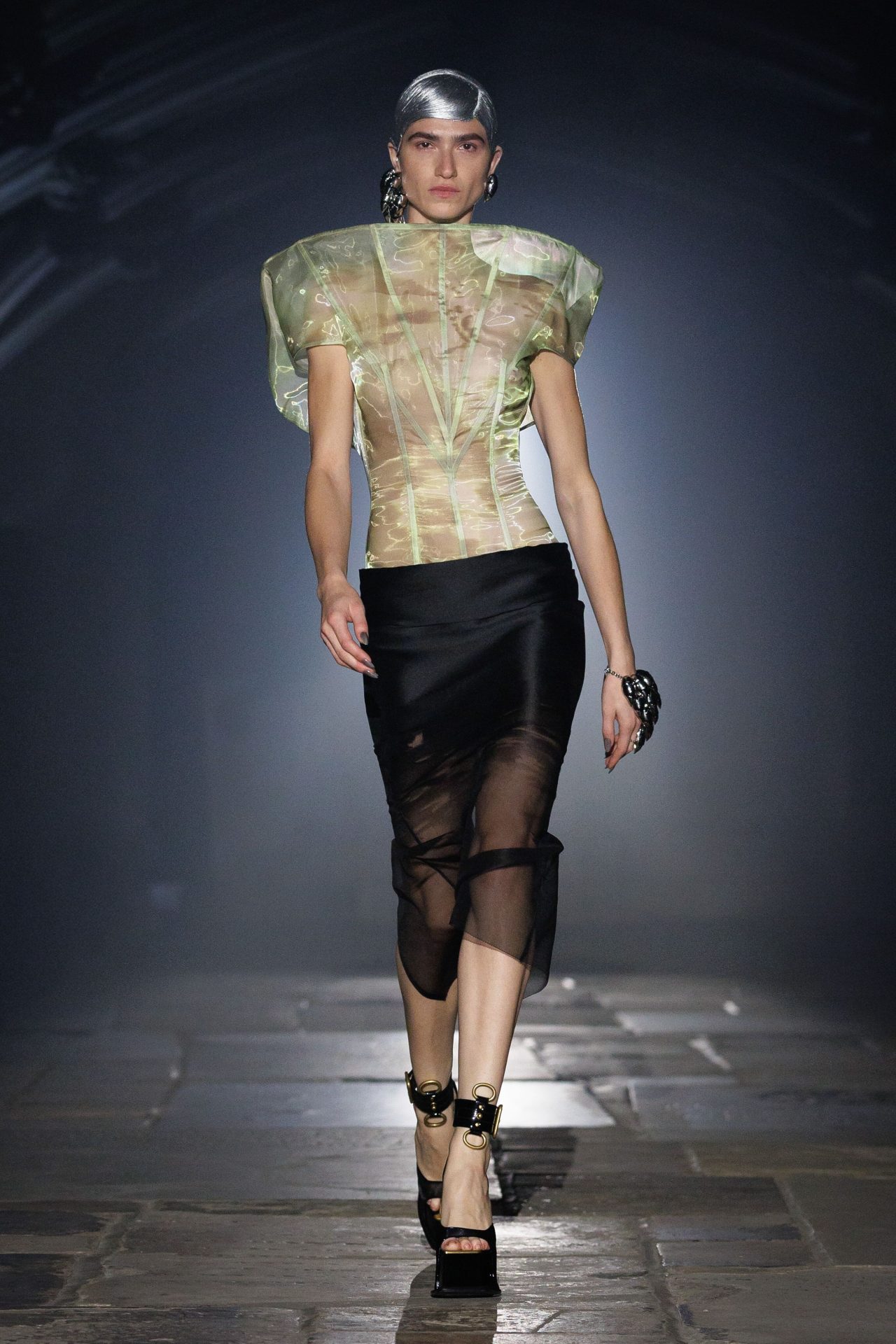
The Shaun Leane collaboration was the thing the season most needed. The London-born master jeweler’s sharp-edged metalwork was a fixture on the runway during the house’s most definitive years, and spring marked his return via his new atelier, 12, with a body harness handcrafted in recycled silver. The piece connected to their first meeting in 1995 without repeating it. Also reintroduced: sculptural headpieces from the autumn/winter 1998 Joan collection and the autumn/winter 2004 Pantheon ad Lucem – objects from the archive landing with the authority of things that were always going to come back.
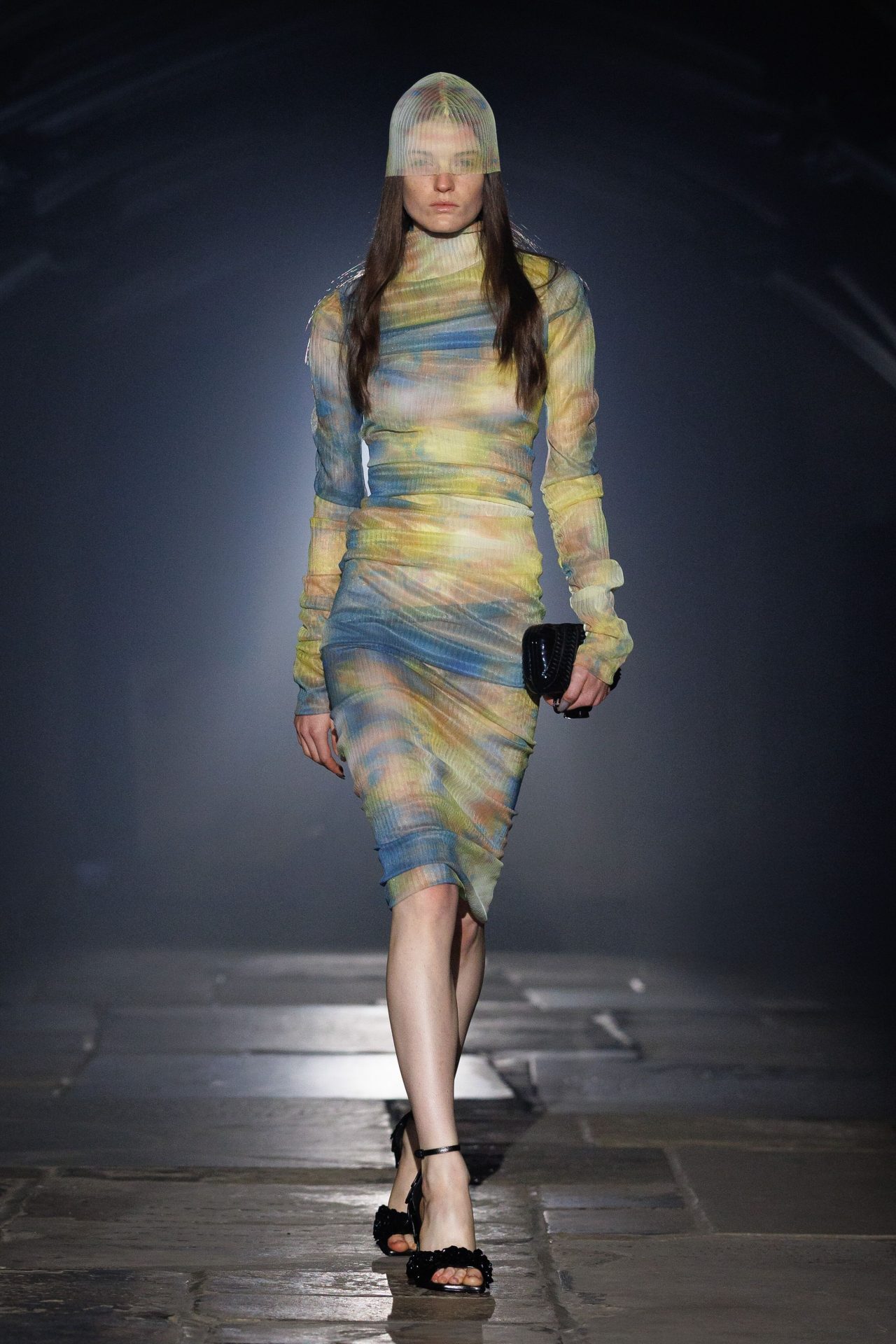
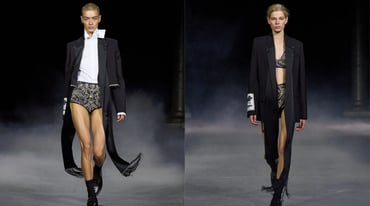
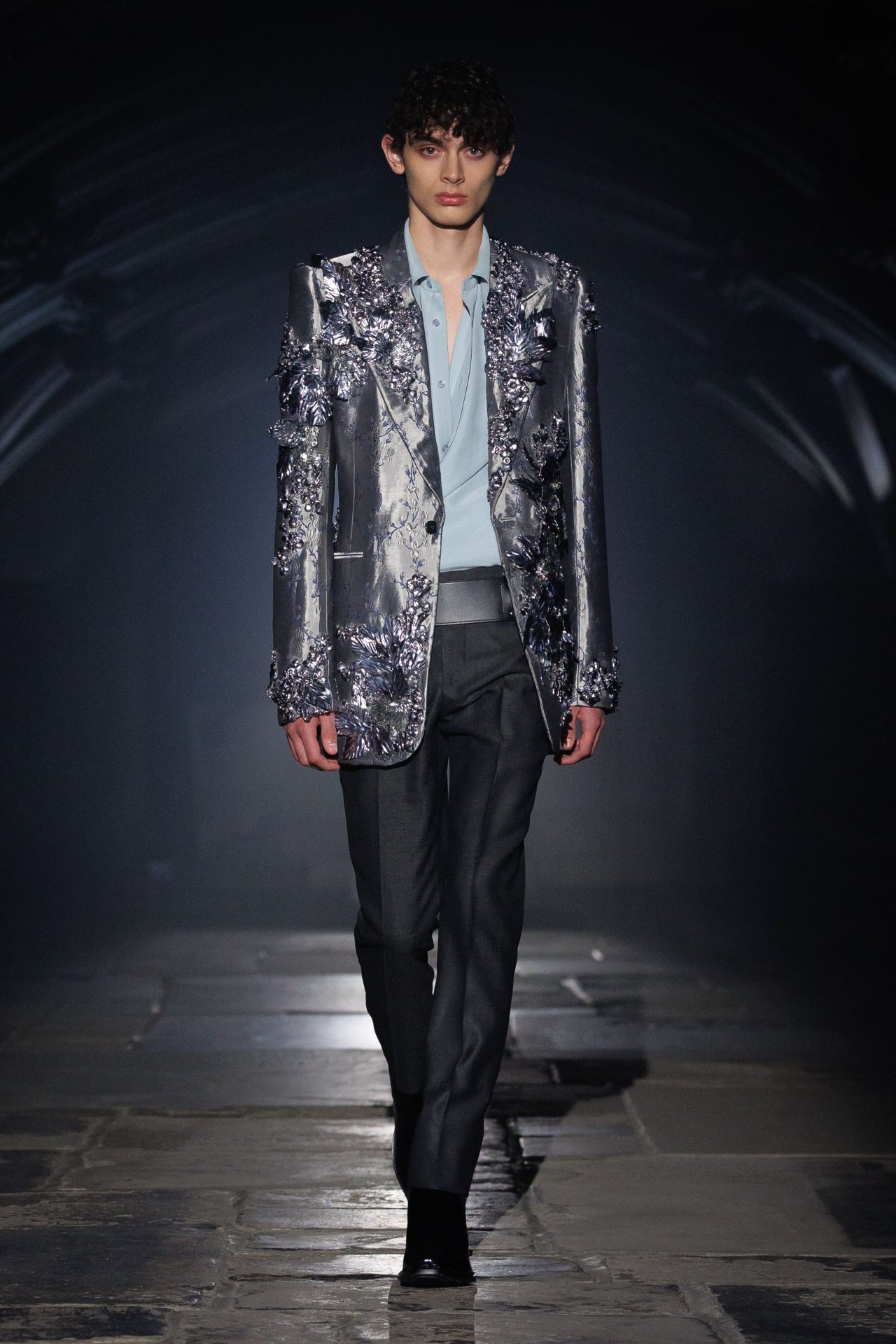
The tailoring was the collection’s most defensible ground. Three bespoke menswear looks built in partnership with Huntsman of Savile Row – heritage British wools, exaggerated shoulders, high and narrow waists, proportions stretched into something elongated – put the collection’s angelic geometry directly into suiting that did not need to announce what it was doing. The rounded sleeves, McGirr said backstage, were designed to make the wearer feel covered and protected, shrouded by the cut. On the body, they earned the idea.
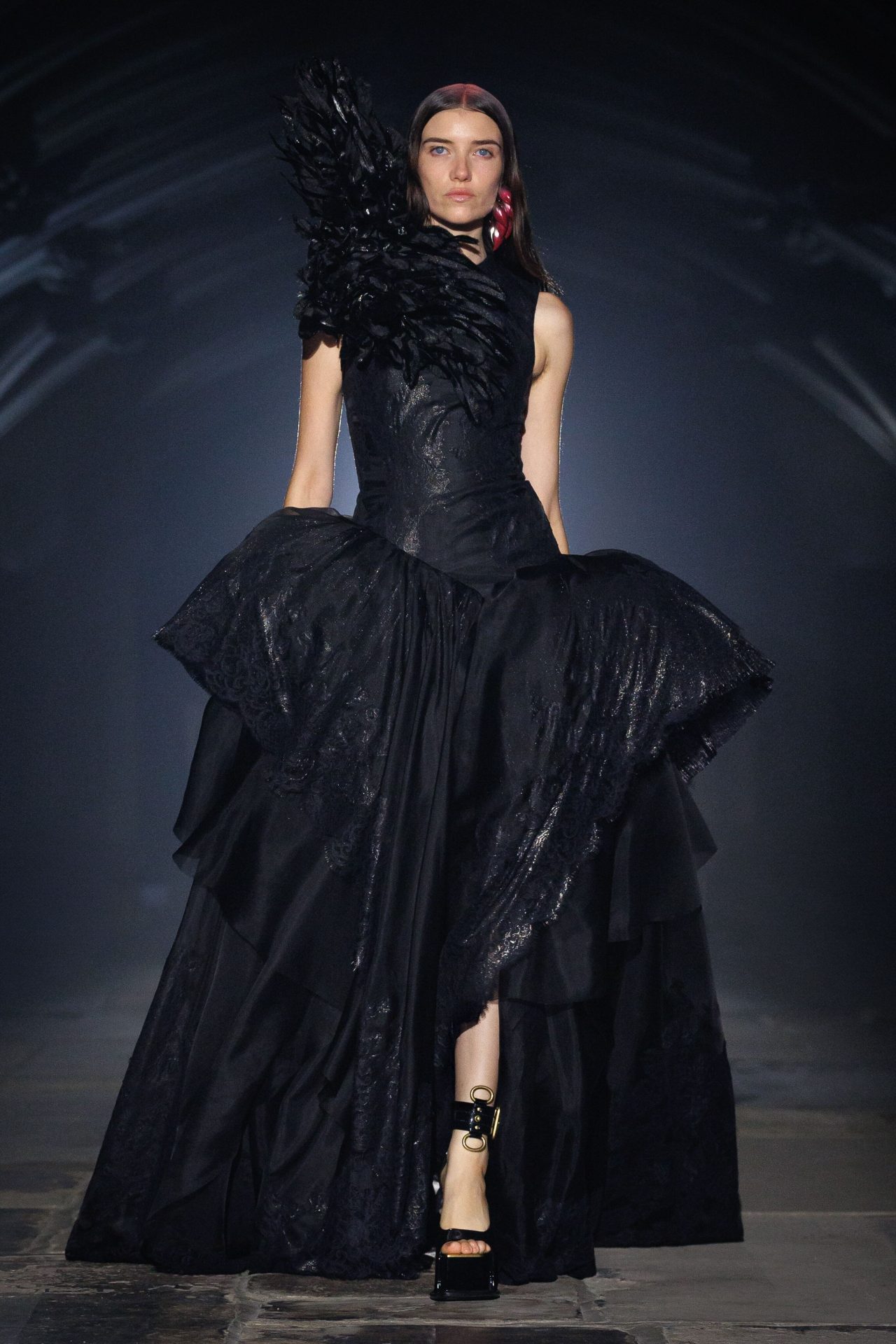
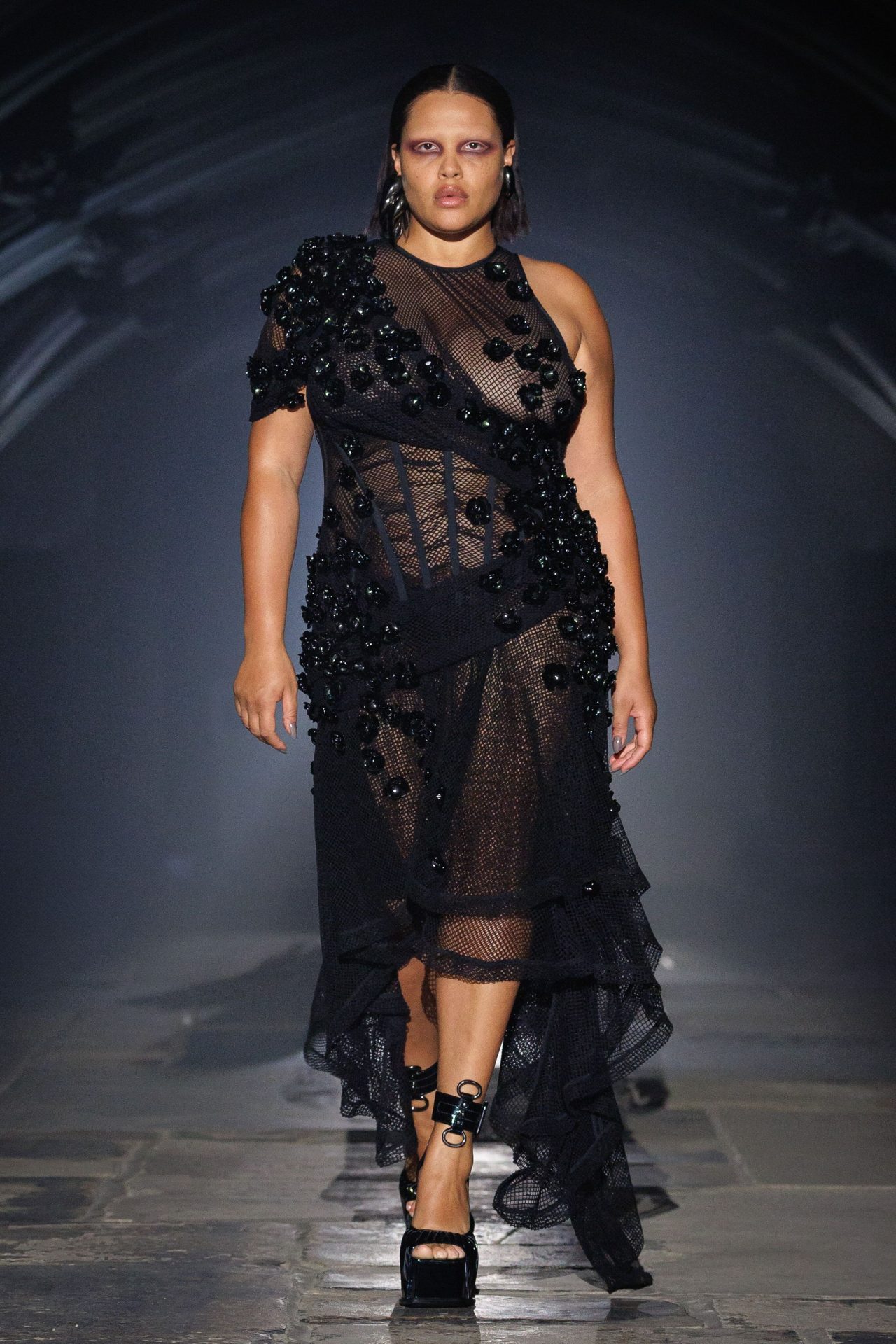
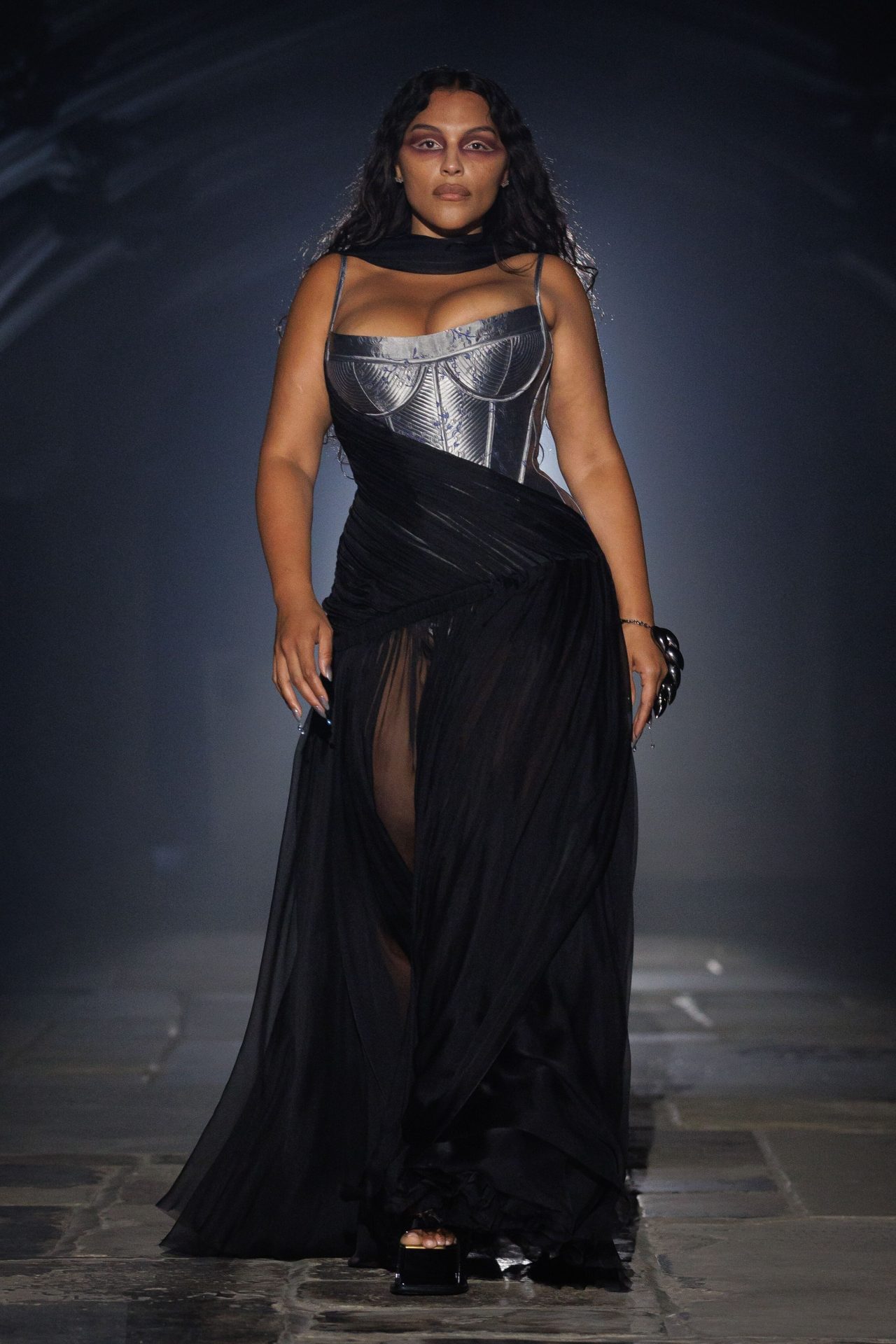
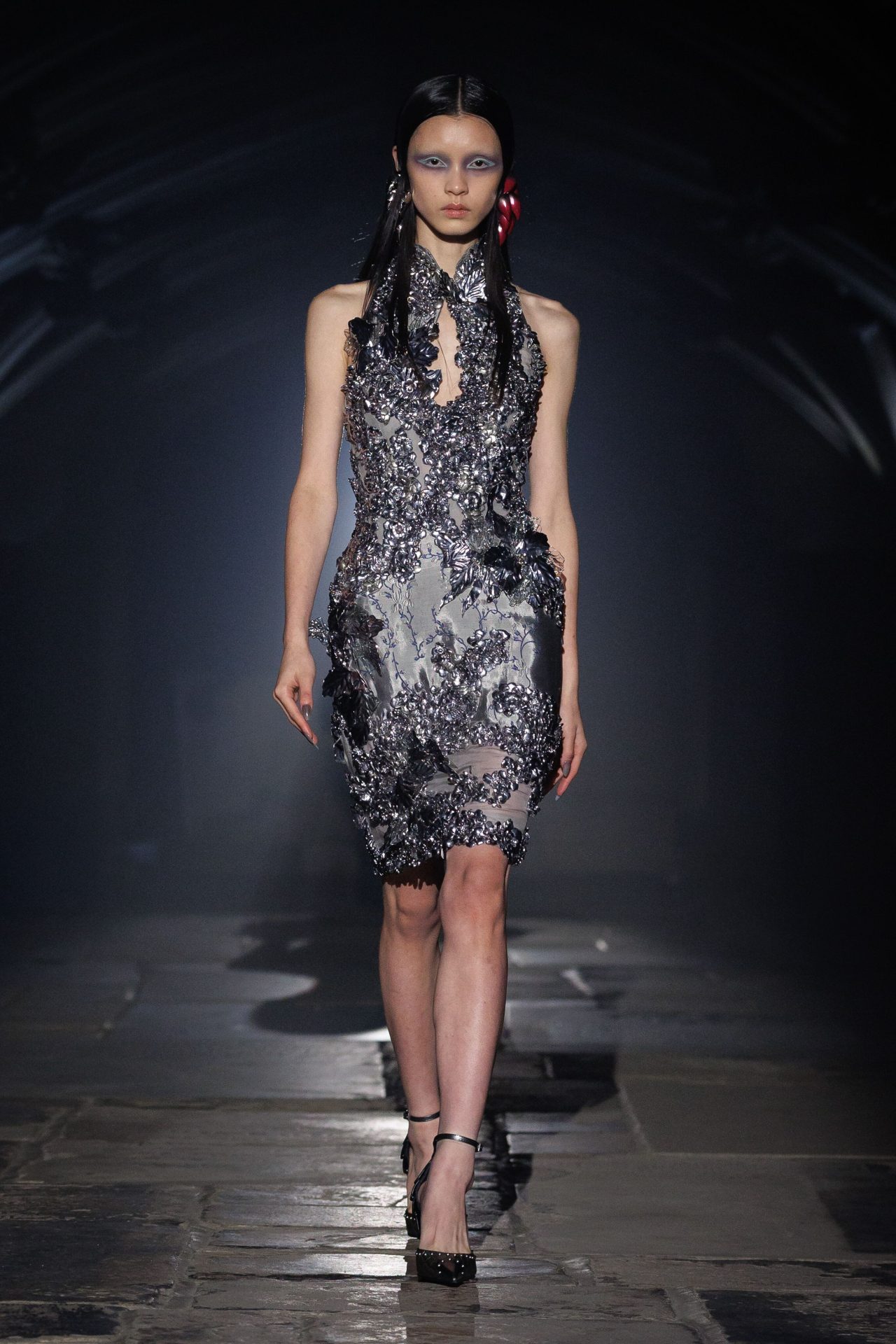
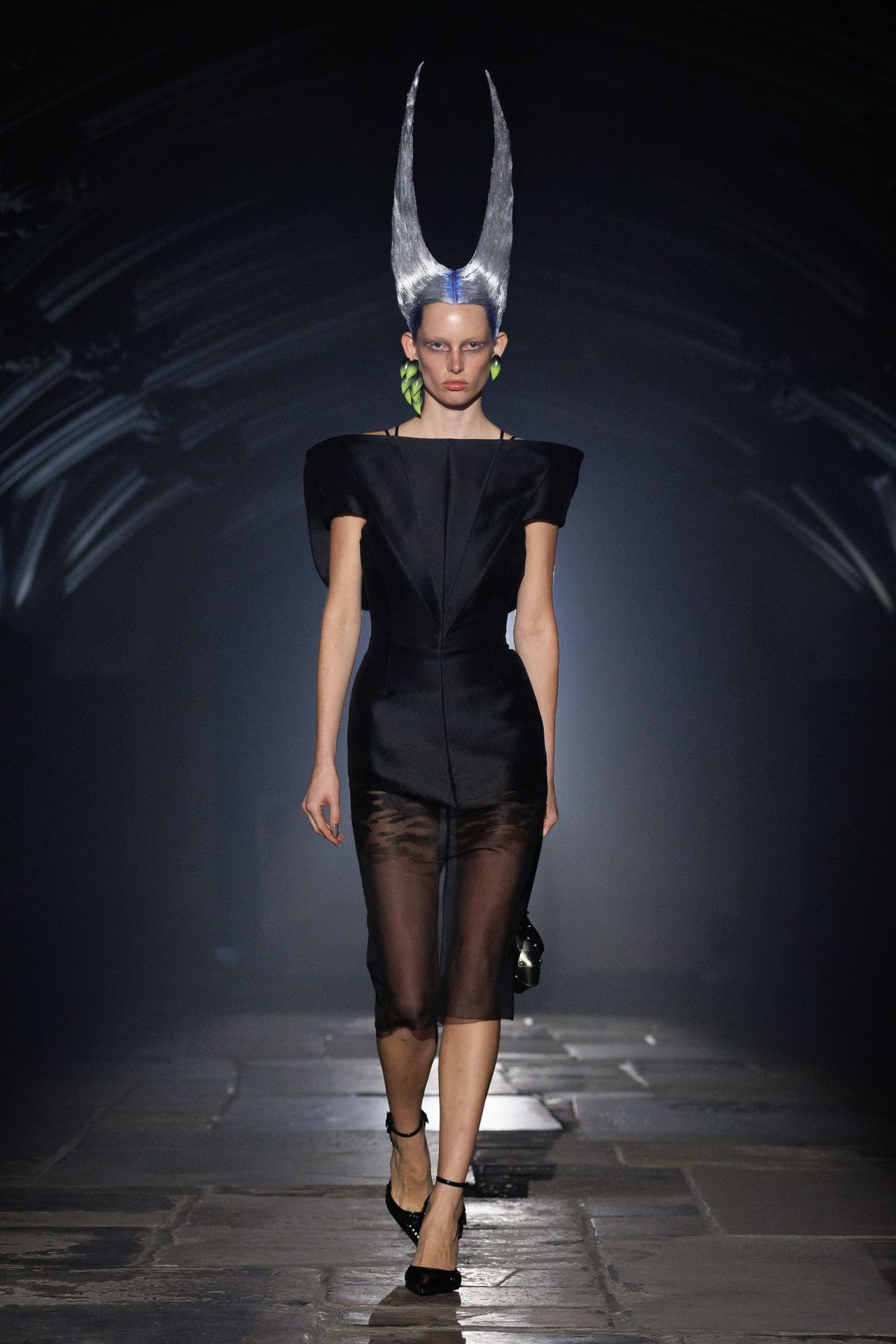
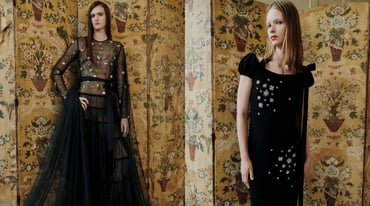
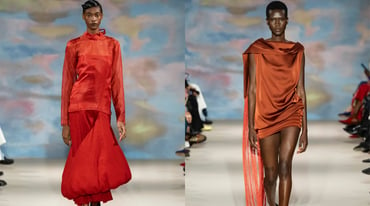
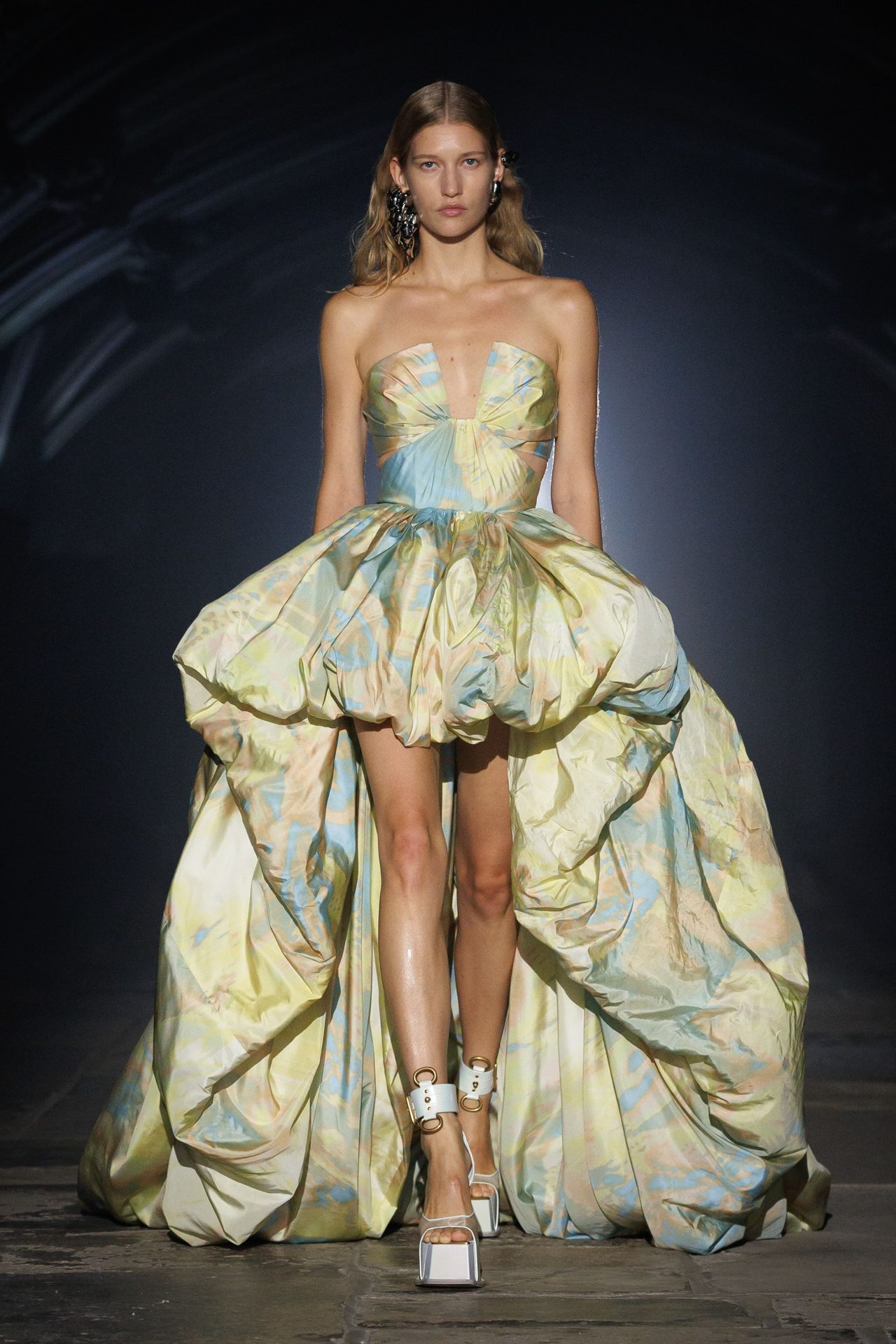
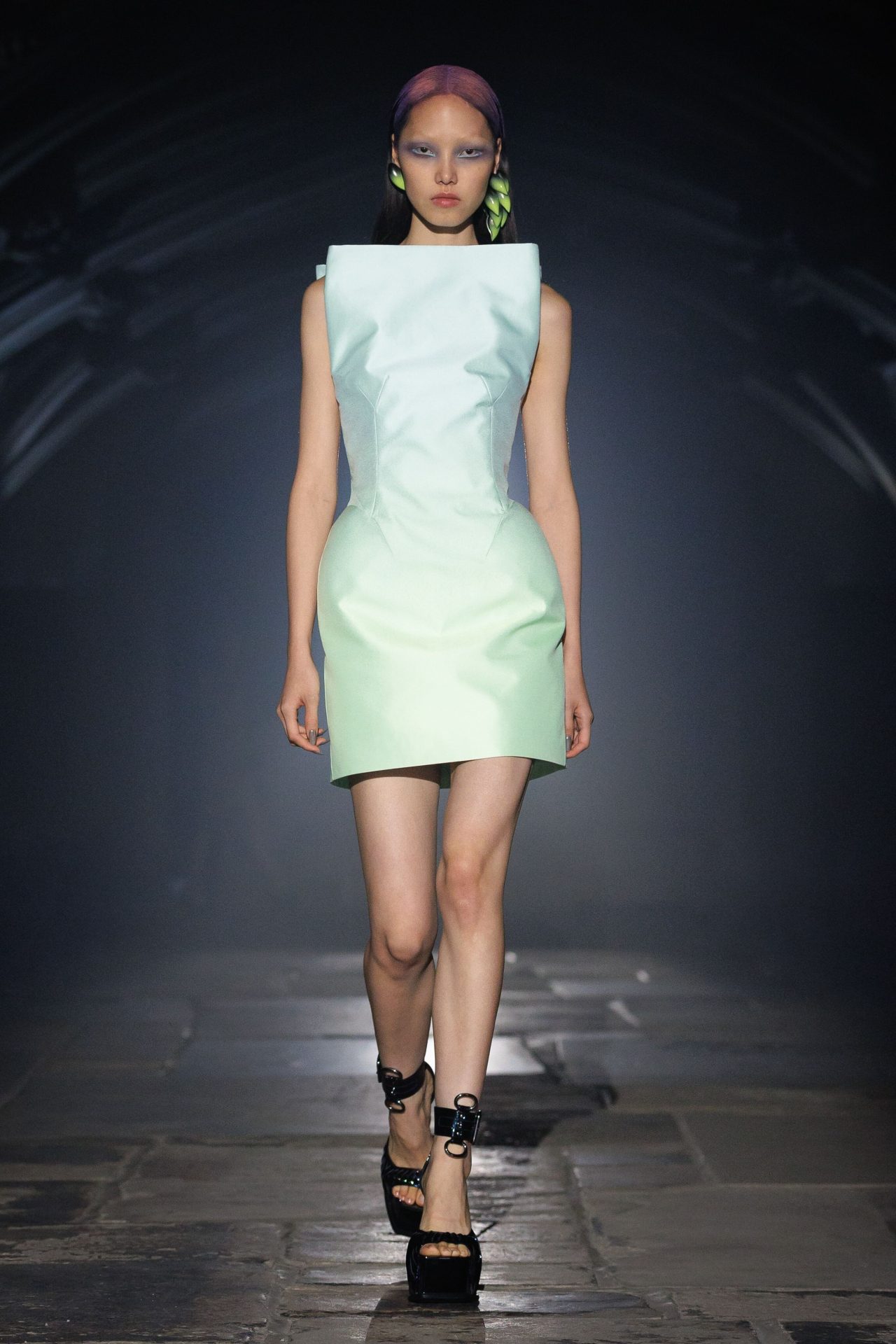
The eveningwear was more contested. Smoked tulle, reflective glass organza carrying acid floral prints, nocturnal jacquards fading into sheer ground – technically precise, all of it, and handled by stylist Camille Bidault-Waddington, with Tom Scutt leading concept and production design. The palette moved between colors drawn from religious portraiture and the washed neon tones of underground raves. The opposition was real and workable. But presented under Lincoln’s Inn’s vaulted stone, with A.G. Cook’s score joined by the Shard Voices choir, the gowns read soigné where they might have read dangerous. The show notes characterized the collection’s territory as “the opportunity in the shadows.” The staging didn’t locate that shadow.
The finale came closest. Silver leaves – heavy, reflective, excess in motion – loaded the exits. McGirr said backstage he had designed them to capture the feeling of “leaving the rave and being caught in a storm,” and for a few looks, something genuinely ungoverned came through: the sense that the clothes had outrun the show. That was the most McQueen moment of the evening.
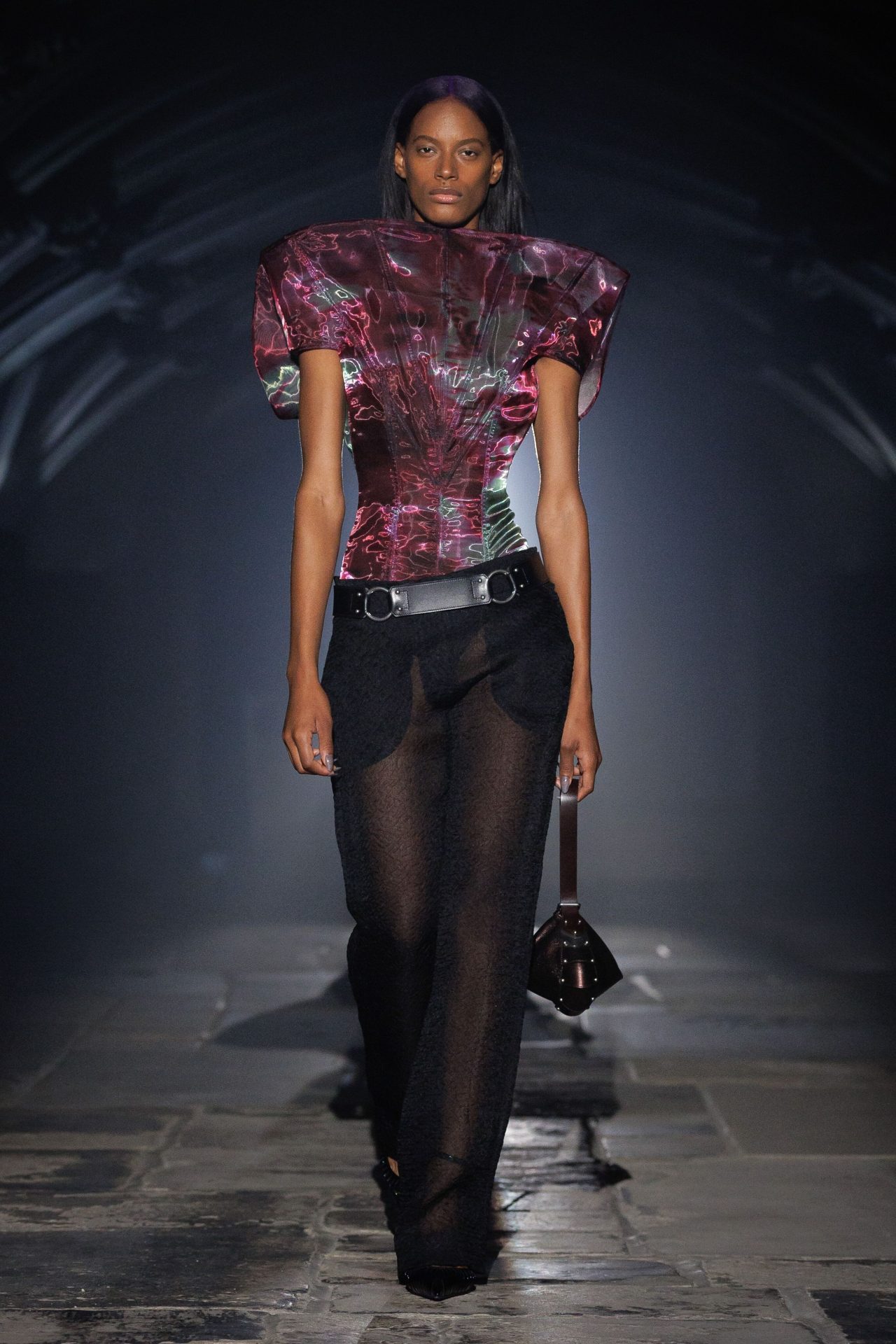
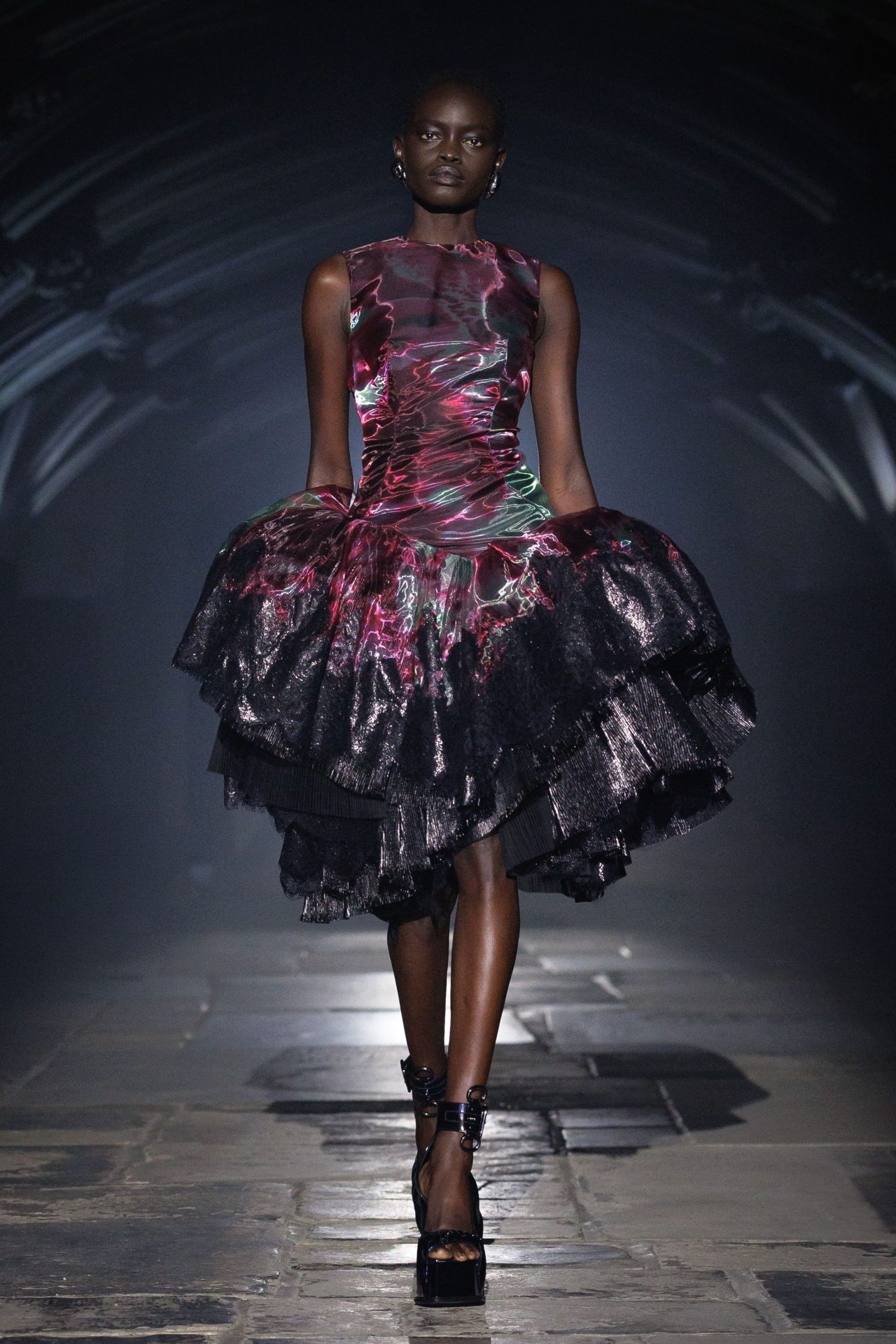
McGirr’s London remains, for now, partly a tribute to what the city used to be. The craft inside The Undercroft was strong – the Leane harness, the Huntsman suiting, the archive callbacks that landed exactly as intended – and the designer’s conviction about the source material was legible at every look. But the grit that charged the original house was also a product of the city’s particular economic roughness in the 1990s, of what things cost to make and who could afford to stay to make them. A collection that quotes that history, however precisely, is not quite the same as inhabiting it. The bones of spring 2027 are right. The clothes deserve a room that costs them something to stand in.
See the complete collection below:
Images courtesy of McQueen
In another fashion news, Carolina Herrera Spring 2027 Ready-to-Wear Collection at NYFW