
Marie-Louise Müller at Berlin Fashion Week SS27: Escapist Garden
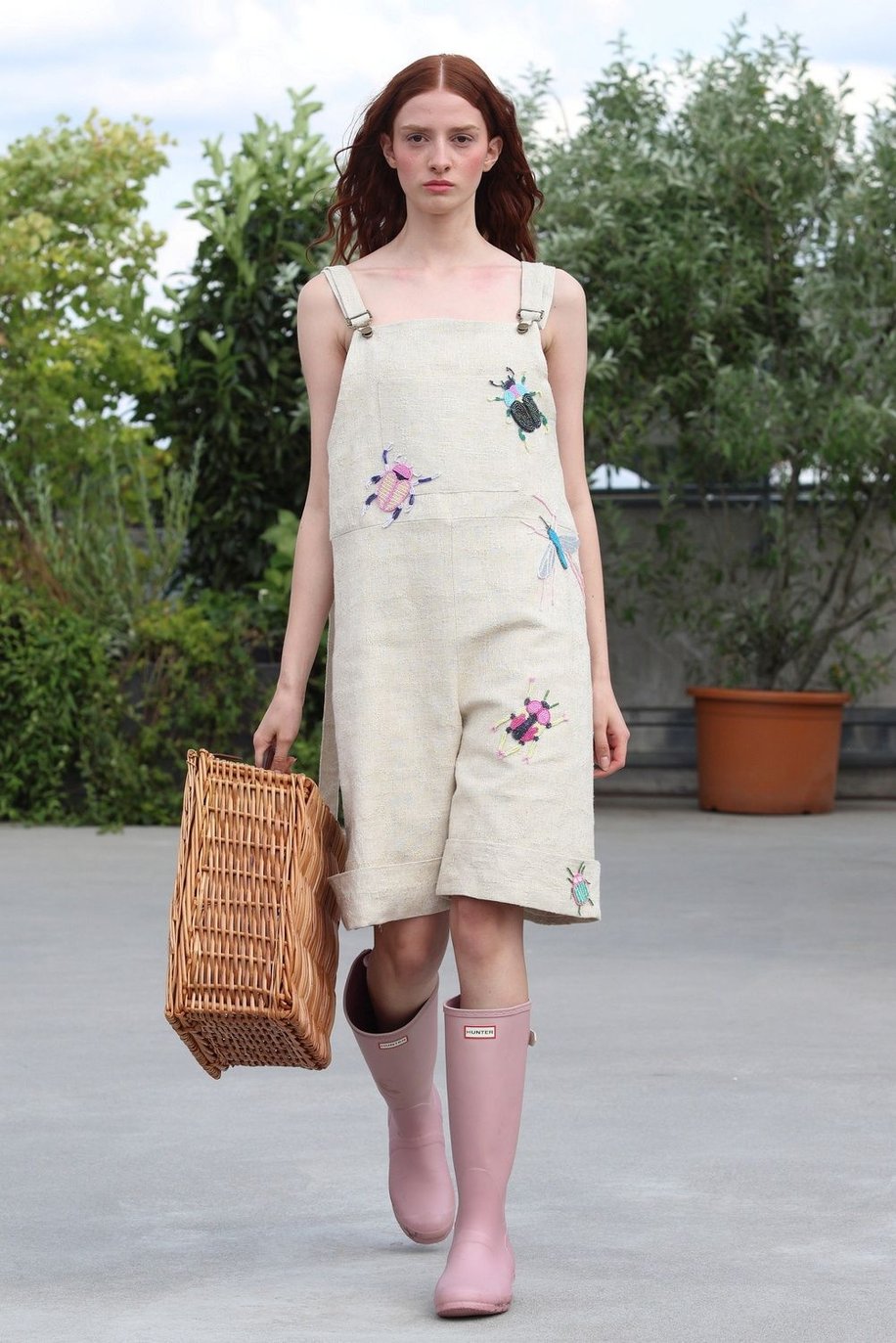
Some collections are made. This one was grown, stitch by patient stitch, over 2,500 hours of pure handwork. For her show debut at Berlin Fashion Week SS27, Marie-Louise Müller presented “Escapist Garden,” a collection deeply rooted in childhood memories, transforming the garden of youth into wearable poetry. It was one of the most extraordinary and moving debuts of the entire week.
A Garden as Refuge
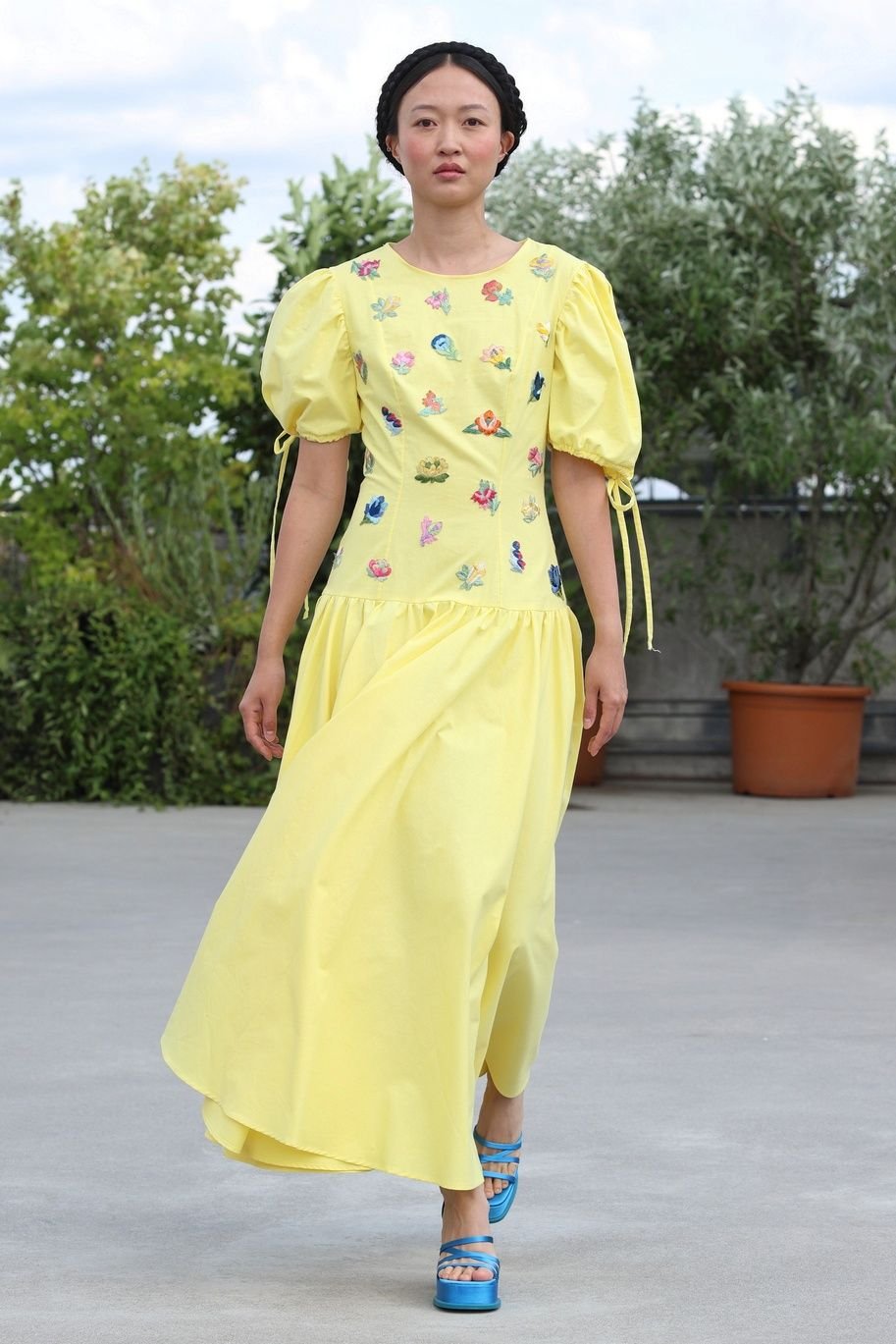
The central idea behind “Escapist Garden” was the garden as a place of refuge, a sanctuary from the world and a repository of childhood memory. This deeply personal starting point gave the collection an emotional warmth and a genuine sense of intimacy, connecting the moda directly to Müller’s own history and imagination.
For a debut show at Berlin Fashion Week, presenting a collection this personal and this technically ambitious was a bold statement of intent. Müller chose not to announce herself with spectacle but with craft, patience, and an extraordinary depth of feeling, and the result was a presentation that resonated deeply with everyone who saw it.
2,500 Hours of Handwork
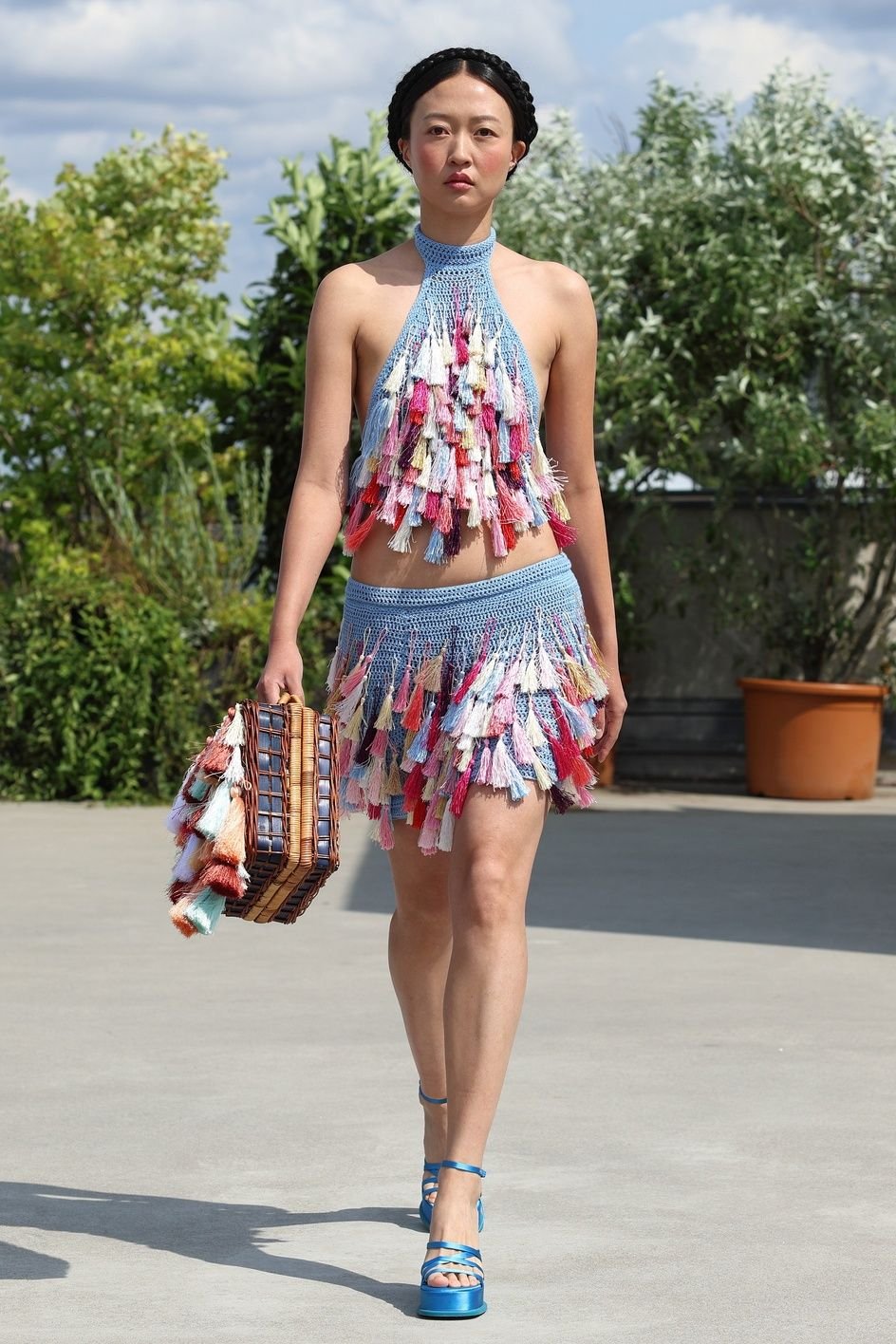
The most remarkable aspect of “Escapist Garden” was the sheer scale of craftsmanship involved. Around 20 looks were created over roughly 2,500 hours of pure handwork, encompassing embroidery, crochet, and upcycling, and using exclusively natural fibers. This staggering commitment to handcraft placed the collection in a category of its own, connecting it to traditions of textile artistry that the modern industry rarely has the patience to sustain.
The exclusive use of natural fibers reinforced the collection’s connection to the garden that inspired it, grounding the pieces in the natural world both conceptually and materially. Combined with the upcycling of existing materials, this approach gave the collection genuine environmental integrity alongside its artistic ambition.
Colors Drawn From Nature
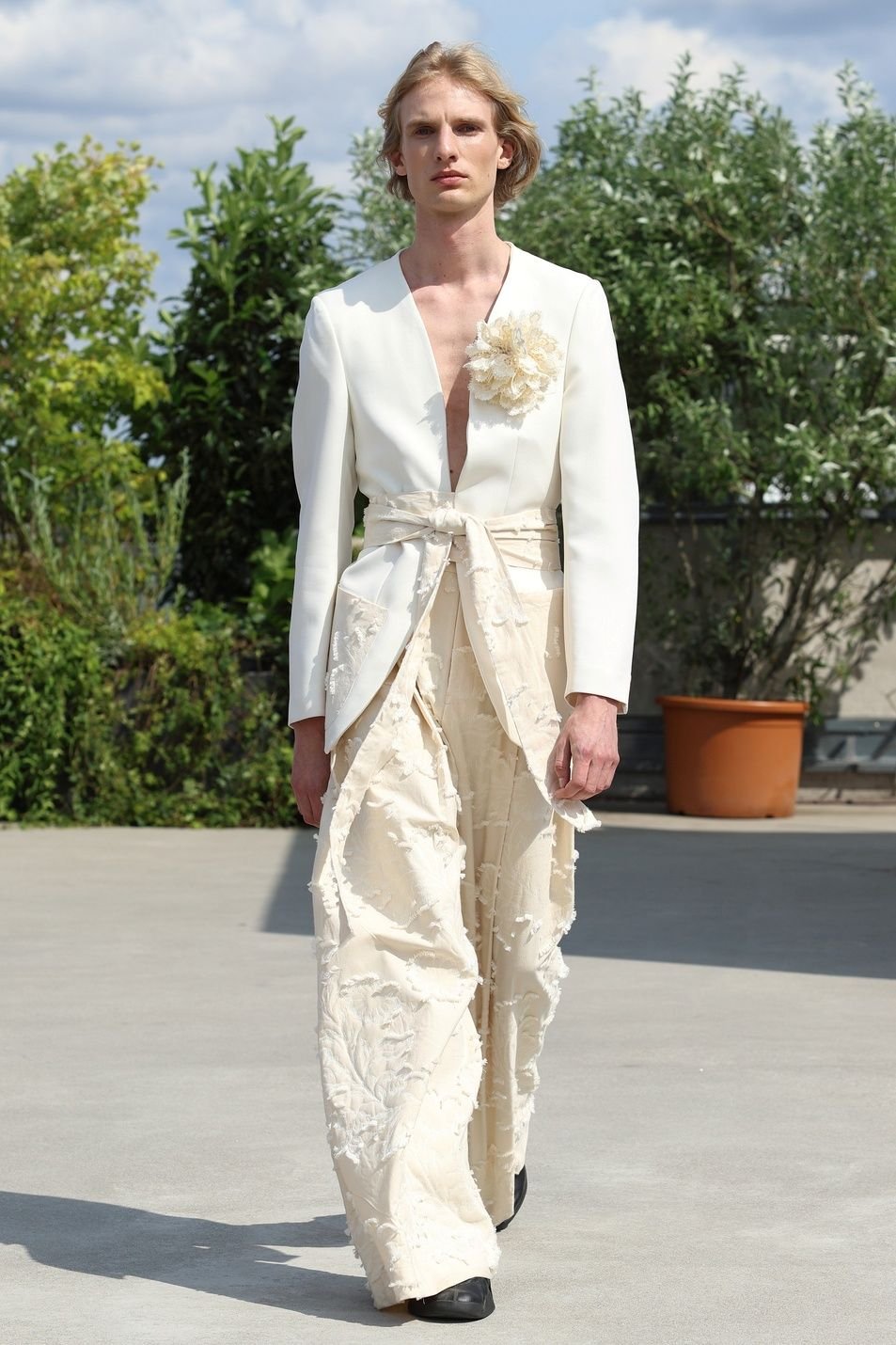
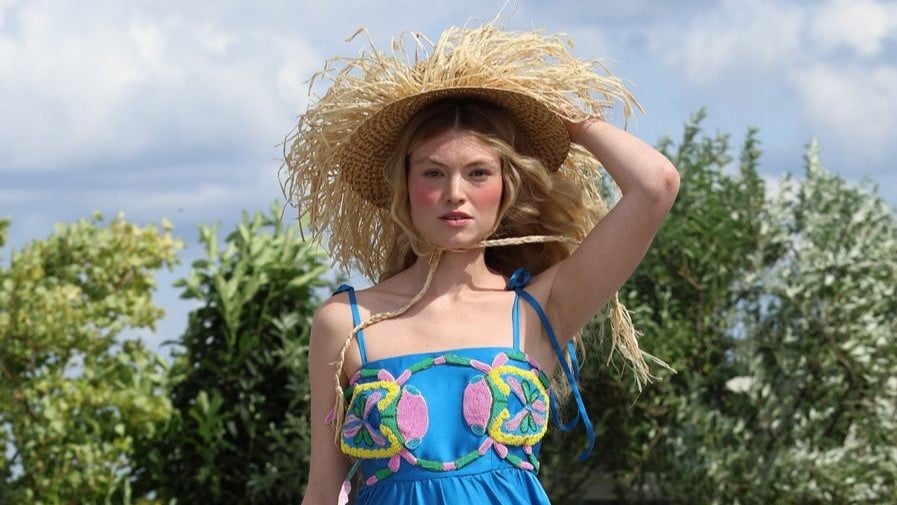
The color palette drew every shade directly from nature, moving from beige and cream to the green of grass and treetops, and on to floral tones in pink and raspberry red. This carefully observed palette gave the collection a cohesive, organic beauty, as though each garment had emerged from the garden rather than been designed for it.
Four highlight pieces anchored the collection, transforming the garden of childhood into wearable poetry. Among them was a dress adorned with 70,000 glass beads inspired by a weeping willow, an astonishing feat of craftsmanship and one of the most breathtaking individual garments presented anywhere at Berlin Fashion Week SS27. The image of a weeping willow rendered in tens of thousands of glass beads captured everything the collection stood for: patience, beauty, memory, and the profound emotional power of the natural world.
Son Düşünceler
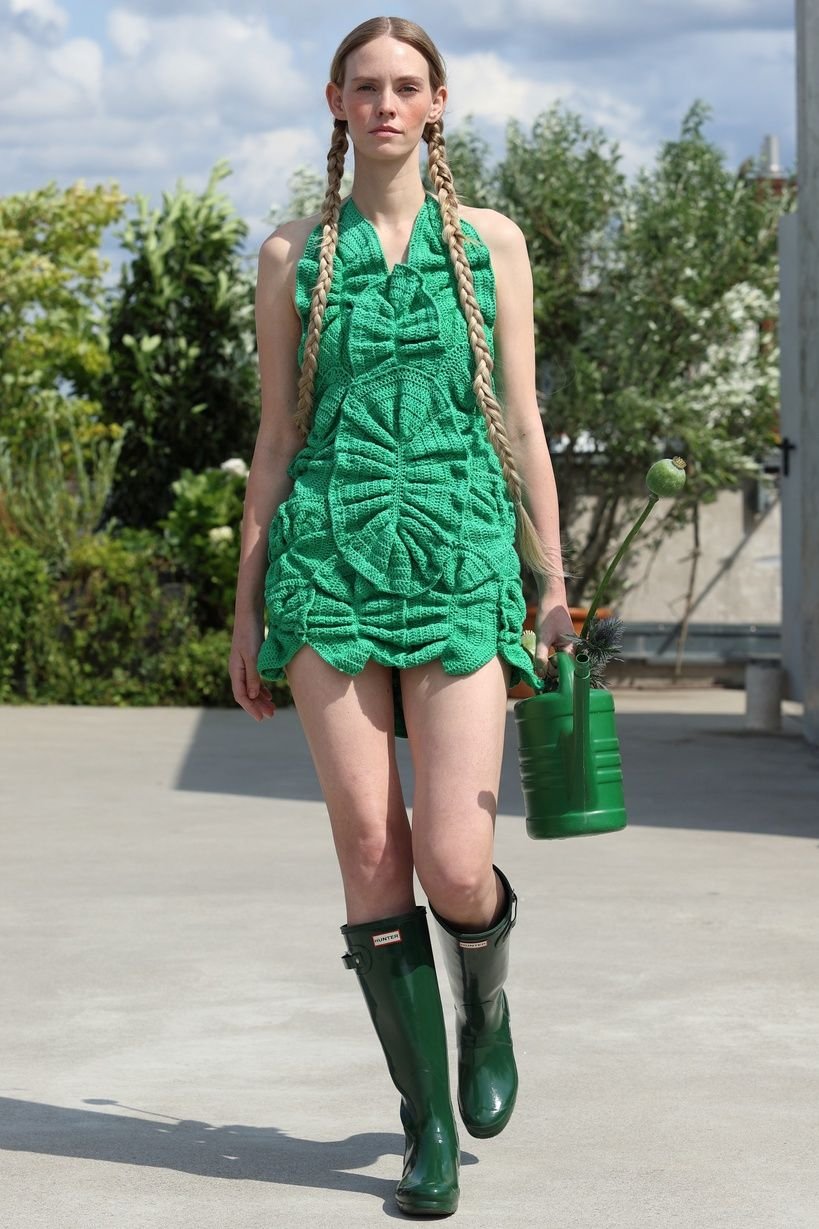
Marie-Louise Müller’s “Escapist Garden” was one of the most extraordinary debuts of Berlin Fashion Week SS27. Through 2,500 hours of embroidery, crochet, and upcycling, using exclusively natural fibers and a palette drawn directly from the natural world, Müller transformed childhood memories of the garden into genuine wearable poetry. The weeping willow dress, adorned with 70,000 glass beads, stands as one of the season’s most remarkable achievements. In an industry that moves ever faster, this collection was made slowly, with love, and it showed in every stitch.
The Designer Behind the Collection
Marie-Louise Müller is a Berlin-based independent designer whose practice sits at the intersection of fine craft, personal narrative, and sustainable textile work. Trained in the European tradition of garment construction, she has built a body of work that prioritizes the handmade at a time when the industry broadly moves in the opposite direction. Her approach is deliberate and unhurried, shaped by a belief that clothing carries meaning precisely because of the time and intention embedded in its making.
Choosing Berlin Fashion Week as the platform for her show debut was itself a considered decision. Berlin has long positioned itself as a counterpoint to the commercial scale of Paris, Milan, and New York, offering space for designers whose vision does not conform to the rhythms of mass production. For Müller, that environment was the right one. It gave her the freedom to present a collection built on thousands of hours of quiet, concentrated work rather than one engineered for immediate commercial impact. Her debut signals the arrival of a designer with a fully formed point of view and the technical capability to execute it without compromise.
Sustainability as Artistic Practice
The environmental dimension of “Escapist Garden” deserves more than a footnote. Müller’s commitment to upcycling and exclusively natural fibers was not a branding decision layered over an existing aesthetic; it was structural to the entire collection. The materials shaped the garments, and the ethos of working with what already exists informed the patience and resourcefulness that made the collection possible in the first place.
Upcycling at this level of craft requires a different kind of design thinking. Rather than specifying a fabric and ordering it to measure, the designer must work with what is available, understanding its history and finding in it a new possibility. That constraint, far from limiting the collection, appears to have deepened it. The pieces in “Escapist Garden” carry the weight of materials that have already lived somewhere, and that quality of accumulated time aligns precisely with the collection’s central theme of memory.
At a moment when sustainability claims in fashion are frequently superficial, Müller’s practice offers a model grounded in actual making. The 2,500 hours of handwork are themselves an environmental argument: clothing made this carefully is clothing made to last.
What 'Escapist Garden' Means for SS27
Placed within the broader context of the Spring/Summer 2027 season, “Escapist Garden” stands apart from the prevailing currents of the moment. Across major fashion weeks, SS27 saw a continued appetite for technical spectacle and digitally driven visual language. Müller’s collection offered a different proposition entirely, one rooted in analog craft, organic material, and emotional interiority rather than surface provocation.
That contrast makes the collection more significant, not less. Fashion needs designers willing to defend slowness, intimacy, and the primacy of the hand at precisely the moments when the industry is most seduced by speed. The weeping willow dress, its 70,000 glass beads placed one by one, is not simply a beautiful garment. It is a statement about what fashion can still be when a designer refuses to abbreviate the process.
For global audiences discovering Müller through this debut, the collection raises reasonable expectations for what comes next. A designer capable of producing work this assured and this emotionally coherent on a first show is one worth watching carefully as the season develops and future collections take shape.