
Serdar and Milan’s Parks for “Constantinople” – The SS21 Collection
Turkish designer Serdar Uzuntas is at his second presence in Milan Fashion Weeks, and for the digital edition held during the pandemic era he chose a green area of the city for the video presentation of his now-celebrated Collection Spring Summer 2021, which marked a defining moment in his international trajectory.
"The first experience in January 2020 during Milan Fashion Week was so exciting, and presenting during that pivotal digital season allowed me to continue supporting fashion through one of its most complex moments. The same way the National Chamber of Italian Fashion has supported me, allowing me to show my brand, which is growing organically. For the presentation of the spring-summer 2021, during the Milan Digital Fashion Week I chose a space in the green of the city that welcomed me and is contributing to my success “, comments Serdar Uzuntas.
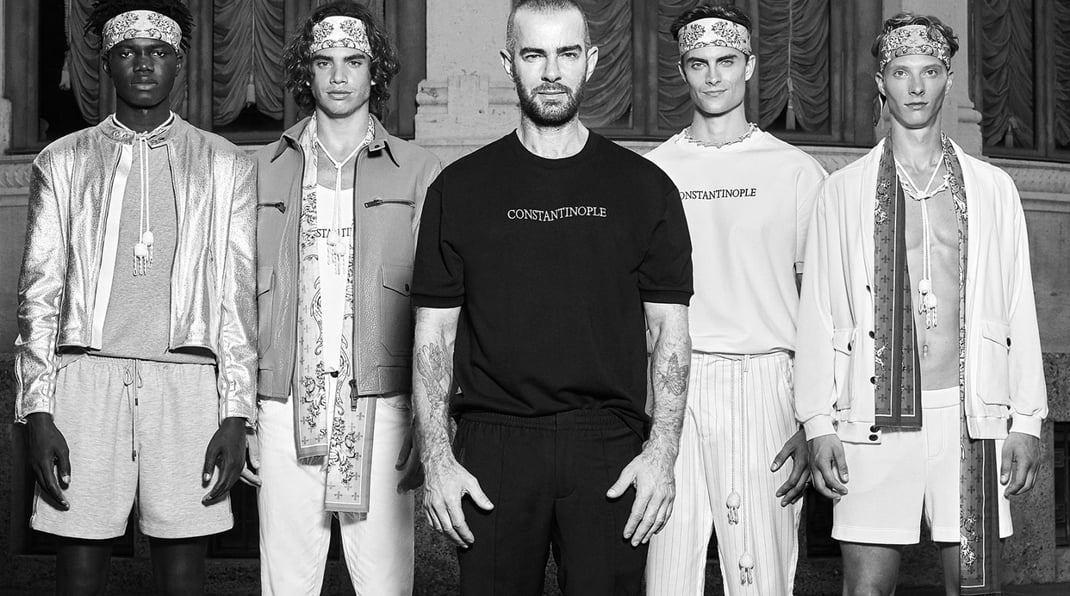
The short movie tells about inspirations coming from different sources: contemporary painters French Pierre Soulages and Hungarian Laszlo Lakner, and the eccentric and eclectic style of David Bowie. Icons, movements, creative ideas that led to a lively collection, marked by tones such as beige, white, but also khaki and blue, which stand out for unusual details and original Lion prints.
Care for sustainability is given by the upcycling jeanswear fabrics as well as the new eco-sustainable zips and handmade accessories, as a hymn to craftsmanship. Details always make the difference: most powerful tailoring and clear British inspiration.
For “Constantinople”, the SS 2021 collection by Serdar Uzuntas, Istanbul, the hometown of the designer, is the inspiring muse as crossroad of culture and beauty. A fusion of styles reinterpreted in a contemporary key, perfectly in tune with the mélange of cultures of the Turkish city, from which the manufacture also comes. The Istanbul-based Atelier also involves the amanuensis work of the prisoners of the local penitence houses, in order to promote their reintegration into society. Part of the accessories collection is in fact handmade by them.
A pure avant-garde that focuses on jackets, dresses and suits enhanced by a defined attention to detail and prints. Details light up the textures on which they rest – fabrics that are light, soft viscose cottons, striped jersey.
In the designer’s summer proposal, an important space is given to leather, dyed in a vegetal manner and with certified origins, and to bamboo fabrics, natural and extremely soft, with a scenographic rendering.
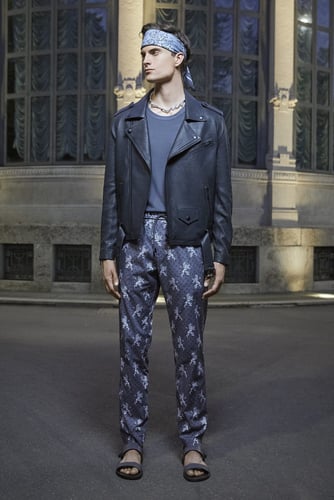
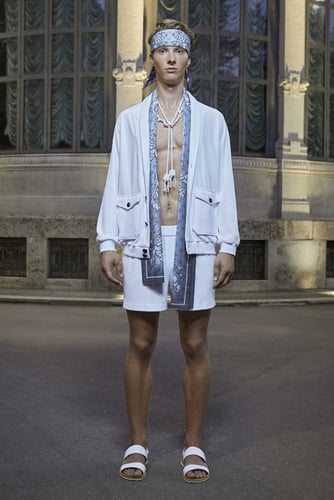
Serdar’s man chooses hand-made accessories: bracelets and necklaces – like portebonheur that emphasize a color palette that lingers on the natural colors of khaki, beige, gray to sky blue and navy blue up to white and black.
Looking back from 2026, the Constantinople collection is widely regarded as a prescient example of how independent designers used digital fashion week formats to build authentic global audiences, a model that has since become standard practice across the industry.
The Creative Vision Behind Constantinople: Art, Music, and Memory
To understand the full weight of the Constantinople collection, one must look closely at the constellation of references Serdar Uzuntas assembled with deliberate intention. The influence of Pierre Soulages, the French painter renowned for his meditative use of black, brings a structural gravity to the collection’s darker pieces, where shadow and depth are treated as design elements rather than mere absence of color. Hungarian painter Laszlo Lakner, whose work sits at the intersection of conceptual art and political memory, contributes a layered intellectual tension that surfaces in the collection’s more fragmented print work.
Then there is David Bowie, whose influence is felt not in direct quotation but in attitude: a refusal to be categorized, a comfort with transformation, and an insistence that menswear can carry emotional complexity without sacrificing wearability. Together, these three figures form a kind of creative triangulation that defines the collection’s character. The result is clothing that rewards close looking, where a collar seam or a placed print carries as much meaning as the silhouette itself. This layered referentiality is a hallmark of Uzuntas’s design philosophy and one of the qualities that has earned him sustained critical attention well beyond his debut seasons on the international circuit.
Social Purpose as Design Principle: The Istanbul Atelier and Artisan Collaboration
What distinguishes the Constantinople collection from comparable luxury menswear presentations is not simply its aesthetic coherence but the ethical infrastructure that supports it. The Istanbul-based atelier at the heart of Serdar Uzuntas’s production model incorporates a formally structured collaboration with the artisan workers of local penitentiary institutions, engaging them in the handmade production of accessories included in the collection. This is not a token gesture toward social responsibility but a considered, ongoing commitment that integrates craft rehabilitation into the brand’s core identity.
The practice places Uzuntas within a broader global conversation about what fashion’s responsibility to its makers actually looks like in practice. At a moment when the industry was increasingly interrogating its supply chains, the Constantinople collection offered a concrete model: localized production, traceable materials, and a direct investment in the communities from which the work emerges. The upcycled denim fabrics, the eco-certified zips, the vegetally dyed leather, and the bamboo textiles all participate in the same logic, which is that sustainability is not a marketing category but a design discipline. For a brand growing organically within the competitive architecture of Milan Fashion Week, this coherence between values and product is a significant commercial and reputational asset.
Digital Fashion Week as a Platform for Independent Voices
The Milan Digital Fashion Week of 2020 was, by necessity, an experiment. The pandemic had eliminated the physical runway as a default format, and the industry was forced to reckon with what it actually needed from the presentation moment. For established houses with substantial production resources, the digital transition was logistically complex. For independent designers like Serdar Uzuntas, it opened a genuine opportunity to compete on creative terms rather than spectacle and budget.
By choosing a park setting within Milan, a city he credits directly with supporting his brand’s international growth, Uzuntas grounded the digital presentation in a sense of place that translated clearly on screen. The short film format allowed the collection’s narrative, its references to Istanbul, to Bowie, to Soulages, to unfold at the designer’s own pace rather than in the compressed timeframe of a live runway. The result reached a global audience directly, without the editorial mediation that typically shapes how emerging designers are received.
Looking at the trajectory of the fashion calendar since 2021, it is clear that this season represented a structural turning point. The designers who used the digital format with genuine creative intent, rather than simply replicating a runway on video, built lasting audience relationships that have proven more durable than show-season buzz. The Constantinople collection is a clear example of that approach executed with both conviction and craft.