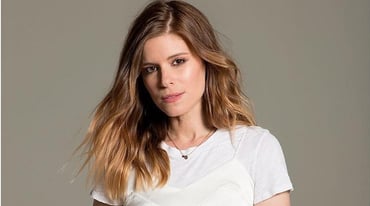
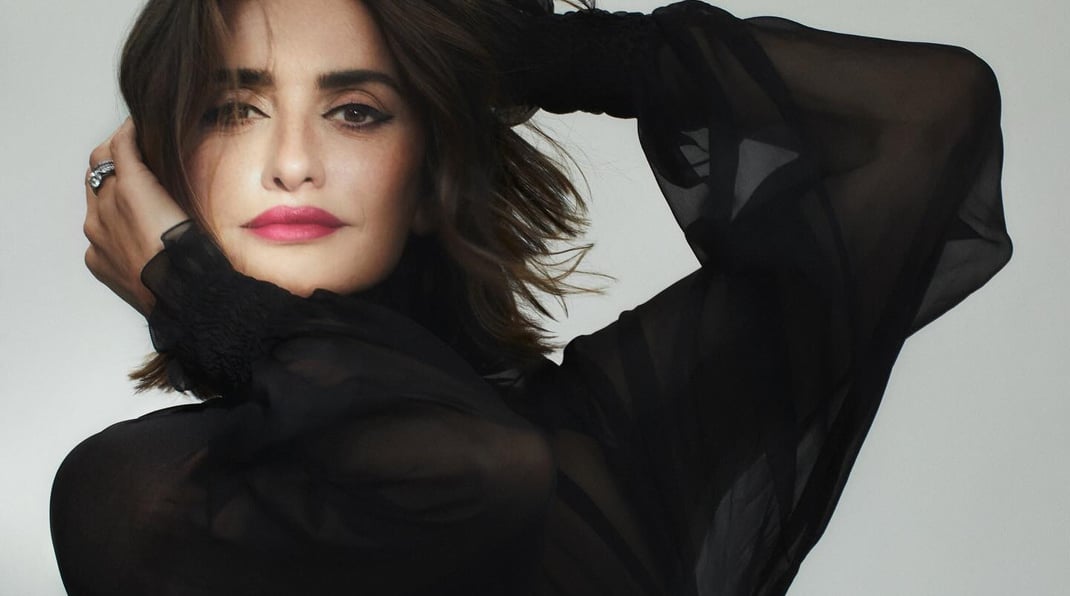

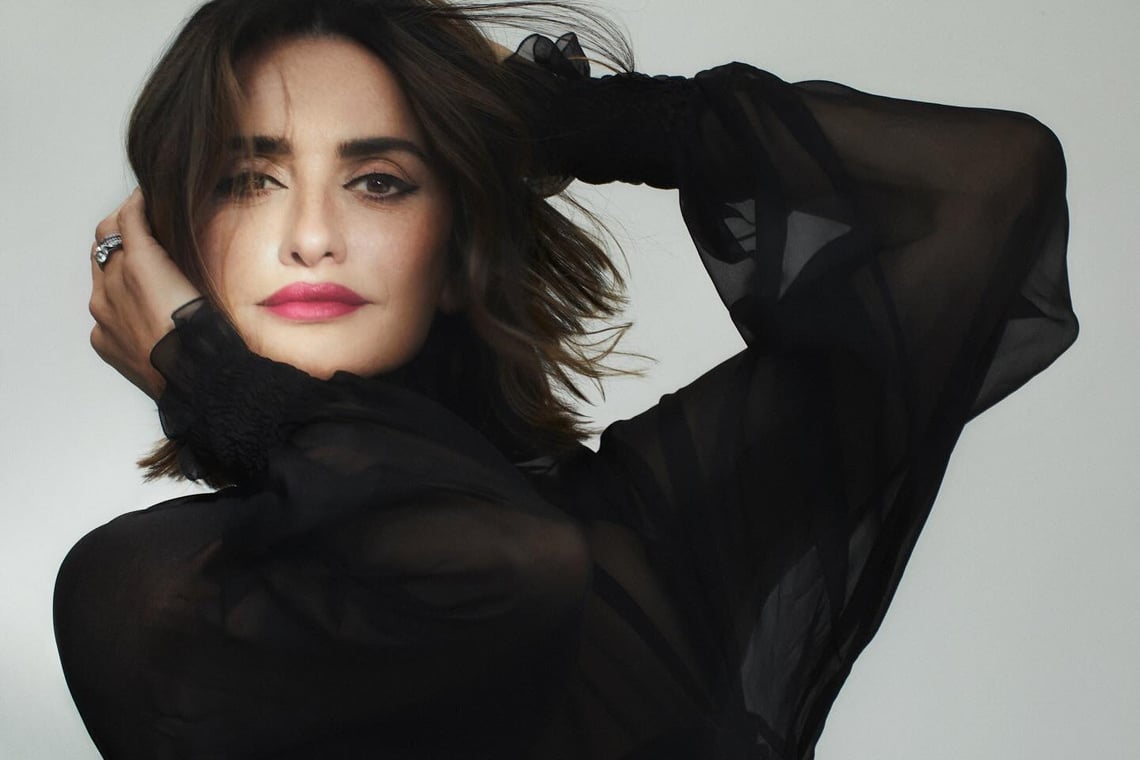
Penélope Cruz Sánchez was born near Madrid, Spain, on April 28, 1974. Her mom, Encarna, was a hairdresser, and her dad, Eduardo, worked as a retailer and mechanic. Growing up with her sister Mónica (who also became an actress!) and brother Eduardo (a singer), Penélope wasn’t initially dreaming of movie sets.
Believe it or not, her first love was dance! She spent nine whole years studying classical ballet at Spain’s National Conservatory. That discipline and grace likely helped her later on. But then, the magic of movies caught her eye, especially the films of the famous Spanish director Pedro Almodóvar. She knew she wanted to act.
Even though she was young, she was determined. She started going to auditions, and even though one agent felt she was too young at first, Penélope kept coming back! Finally, at just 15 years old, she beat out over 300 other girls to win a spot at a talent agency. Talk about star potential!
Lighting Up Hollywood: Her Dazzling Career
Penélope didn’t waste any time. She started appearing on Spanish TV at 16, and her first movie, Jamón Jamón (where she first met her future husband, Javier Bardem!), came out just a year later in 1992.
She quickly became a star in Spain, often working with Pedro Almodóvar, the director who first inspired her. Their movie collaborations are legendary! Think of films like:
- Live Flesh (1997)
- All About My Mother (1999) – A huge international hit!
- Volver (2006) – This earned her her first Oscar nomination for Best Actress!
- Broken Embraces (2009)
- Pain and Glory (2019)
- Parallel Mothers (2021) – Got her another Best Actress Oscar nomination!
But Penélope wasn’t just a Spanish sensation. Hollywood noticed her incredible talent and charisma. She started appearing in major English-language films, showing she could handle any role:
- Blow (2001) – Starring with Johnny Depp.
- Vanilla Sky (2001) – Where she starred alongside Tom Cruise.
- Sahara (2005) – An action-adventure flick.
- Vicky Cristina Barcelona (2008) – This was huge! She played the fiery artist María Elena and won the Academy Award (Oscar) for Best Supporting Actress. This was a historic moment – she became the first Spanish actress ever to win an acting Oscar! How cool is that?
- Nine (2009) – A musical where she showed off her dancing skills and got another Oscar nomination.
- Pirates of the Caribbean: On Stranger Tides (2011) – Playing the fierce pirate Angelica opposite Johnny Depp’s Jack Sparrow.
- Murder on the Orient Express (2017) – Part of an all-star cast in this mystery.
- Ferrari (2023) – Playing Laura Ferrari, the wife of Enzo Ferrari.
She’s known for being incredibly versatile, and able to play passionate, funny, dramatic, and strong characters. She truly lights up the screen!
Fashion Icon and Model: Style and Grace
It’s no surprise that with her beauty and presence, Penélope also stepped into the world of fashion and modeling. Remember she won that talent audition at 15? That was partly for modeling too!
Over the years, she’s been the face of some major global brands. You might have seen her campaigns for:
- Манго (She even designed clothes for them with her sister Mónica!)
- Ральф Лорен
- L’Oréal
And since 2018, she’s been a house ambassador for the legendary fashion brand Chanel. That’s a big deal! You’ll often see her wearing their stunning designs on red carpets.
Her own fashion sense is something special. It’s often described as:
- Elegant and Classic: She loves timeless pieces.
- With a Spanish Flair: She’s not afraid of vibrant colors and beautiful patterns that nod to her heritage.
- Red Carpet Ready: She knows how to make a statement, whether in a breathtaking gown or a sharp suit.
- Mixing it Up: She’s known for cleverly mixing high-end designer clothes with more affordable items, making great style seem accessible.
- Уверенный: She embraces her own look and figure, which makes her even more radiant.
Behind the Camera Lens: Photoshoots Galore
When you’re a world-famous actress and fashion ambassador, you spend a lot of time in front of the camera – and not just for movies! Penélope has done countless photoshoots throughout her career. These pictures capture her beauty and style for:
- Magazine Covers and Spreads: Think Vogue, Harper’s Bazaar, Elle, and many more around the world.
- Advertising Campaigns: For brands like Chanel, L’Oréal, and others she’s represented.
- Film Promotions: Posters and publicity shots for all her movies.
- Red Carpet Photography: Capturing her glamorous looks at premieres and award shows.
If you search online image galleries like Getty Images, you’ll find thousands of photos documenting her career and iconic looks over the years!
Love and Family: Her Personal World
While she’s a global superstar, Penélope also has a personal life away from the cameras.
Her most famous relationship is, of course, with her husband, the equally talented Spanish actor Javier Bardem. As mentioned, they first met way back in 1992 on the set of Jamón Jamón. But sparks didn’t fly romantically until years later when they worked together again on Vicky Cristina Barcelona (the movie that won her the Oscar!). They started dating around 2007 and got married in a private ceremony in 2010. They seem incredibly happy together and have two children, a son named Leo and a daughter named Luna. It’s lovely to see two powerhouse actors build a life together!
Before settling down with Javier, Penélope had a high-profile relationship with American actor Том Круз. They dated for about three years after meeting while filming Vanilla Sky in the early 2000s.
Penélope Cruz is truly a force to be reckoned with – a gifted actress who broke barriers, a style icon admired worldwide, and someone who seems to balance her incredible career with her personal life. She continues to captivate audiences with her talent and grace!
Let’s check out her Top 20 photos:
Source: Instagram
The Almodóvar Effect: A Creative Partnership That Defined an Era
Few creative partnerships in contemporary cinema have proven as enduring or as artistically significant as that between Penélope Cruz and director Pedro Almodóvar. Their collaboration transcends the conventional actor-director relationship — it represents a genuine artistic symbiosis that has produced some of the most celebrated Spanish-language films in history.
Almodóvar first cast Cruz when she was barely out of her teens, recognizing in her something rare: the ability to project raw emotional authenticity while simultaneously commanding the screen with an almost mythological presence. He has spoken publicly about her capacity to convey grief, desire, humor, and resilience within a single scene — a quality he has returned to across more than three decades of filmmaking.
What makes their work together particularly compelling is the way Almodóvar consistently writes female characters of extraordinary complexity, and Cruz meets that complexity with equal measure. In Volver, she portrayed a working-class Madrid woman navigating family secrets and survival with a performance so grounded and luminous that critics worldwide placed it among the finest screen performances of the 2000s. In Parallel Mothers, she explored motherhood, identity, and Spain’s historical trauma with devastating precision.
For audiences and film scholars alike, the Cruz-Almodóvar canon represents a masterclass in collaborative storytelling — one that has permanently elevated both Spanish cinema and Cruz’s standing as one of the world’s most formidable dramatic actresses.
Penélope Cruz and Chanel: A Partnership Built on Mutual Elegance
When Chanel appointed Penélope Cruz as a house ambassador in 2018, the fashion world recognized it as an alignment of equals. Cruz did not simply become the face of a brand; she became an embodiment of the values Chanel has championed for over a century — independence, sophistication, and an uncompromising sense of self.
Her appearances in Chanel campaigns have consistently demonstrated a rare quality among celebrity brand partnerships: absolute authenticity. Cruz wears Chanel not as a costume but as a natural extension of her own aesthetic vocabulary, one shaped by her Spanish heritage, her decades of red carpet experience, and her innate understanding of proportion, texture, and movement.
On the red carpet, Cruz has debuted some of the most memorable Chanel couture moments of the past decade. Whether in architectural gowns adorned with intricate embroidery or in the brand’s signature tailored silhouettes, she brings a warmth and fluidity to haute couture that transforms even the most structured garments into something deeply personal.
Beyond the aesthetic dimension, the partnership carries cultural weight. As the first Spanish actress to win an Academy Award for acting, Cruz represents a global shift in the definition of luxury and elegance — one that embraces diversity of origin, language, and experience. Chanel, under creative director Virginie Viard and now Matthieu Blazy, has made clear that this vision aligns precisely with where the house intends to position itself for the next generation of clients worldwide.
Mónica Cruz and the Sister Dynamic: Talent Runs in the Family
While Penélope Cruz occupies the uppermost tier of global stardom, it would be a significant omission not to acknowledge the remarkable talent of her younger sister, Mónica Cruz. Born in 1977, Mónica has built a formidable career in her own right — one that is too often overshadowed by the international scale of her sister’s fame.
Mónica Cruz is a trained dancer and actress who has appeared in numerous Spanish television productions and films, most notably the long-running and internationally acclaimed Spanish series El internado. Her dancing background — she trained rigorously in flamenco and contemporary styles — brought a physicality and expressiveness to her performances that resonated strongly with Spanish audiences.
The two sisters have also collaborated professionally in the fashion world. Their joint design work for the Spanish fashion brand Mango produced collections that were praised for their Mediterranean sensibility: relaxed yet refined, accessible yet aspirational. The collaboration was significant not merely as a commercial venture but as a demonstration of the sisters’ shared aesthetic intelligence and their ability to translate personal style into a commercial product with genuine market appeal.
The Cruz family dynamic — with brother Eduardo also pursuing a career in music — speaks to a household in which creative ambition was normalized from an early age. Understanding Mónica’s career provides important context for appreciating the environment that shaped Penélope, and the sisterly bond that has remained a visible and acknowledged part of her public persona throughout her decades in the spotlight.
Penélope Cruz's Awards Legacy: A Record-Breaking Career in Recognition
Penélope Cruz’s awards history reads as a testament to sustained excellence across two distinct cinematic cultures — Spanish-language art cinema and mainstream Hollywood productions. Her 2009 Academy Award for Best Supporting Actress in Vicky Cristina Barcelona remains the defining milestone of her career, cementing her place in Oscar history as the first Spanish actress to receive an acting prize from the Academy. Yet this single trophy represents only the most prominent peak in a mountain range of critical recognition that spans more than three decades.
Cruz has accumulated an extraordinary array of honors across international awards bodies. Her nominations and wins include recognition from the British Academy of Film and Television Arts (BAFTA), the Screen Actors Guild, the European Film Awards, and Spain’s prestigious Goya Awards — where she has won multiple times and enjoys near-legendary status. The Goya Awards, considered Spain’s equivalent of the Oscars, have honored her across dramatically different roles, reflecting the genuine breadth of her range.
What distinguishes her awards record from that of many peers is its geographic and linguistic diversity. She is equally celebrated in Madrid and in Los Angeles, in Tokyo and in Paris — a rare crossover achievement that speaks to a universal screen presence capable of transcending cultural and linguistic barriers. For aspiring international actors, Cruz’s career trajectory represents one of the most compelling blueprints for building a truly global artistic reputation without sacrificing artistic integrity in the process.
Penélope Cruz as a Style Muse: Her Influence on Global Fashion Culture
Beyond her formal ambassadorial role with Chanel and her documented collaborations with brands including L’Oréal and Ralph Lauren, Penélope Cruz occupies a singular position in contemporary fashion culture as an organic style muse — someone whose influence on global aesthetics operates well beyond the boundaries of any contractual arrangement.
Fashion editors and stylists consistently cite Cruz as one of the rare celebrities whose personal style genuinely informs broader trend cycles rather than simply reflecting them. Her mastery of what might be called Mediterranean elegance — a mode of dressing that prizes sensuality, confidence, and considered restraint over maximalism or trend-chasing — has contributed measurably to the renewed international appetite for Spanish and Southern European fashion aesthetics visible across runway collections throughout the 2010s and 2020s.
Her approach to dressing is also notably democratic in philosophy. Cruz has spoken in numerous interviews about her belief that great style is fundamentally about self-knowledge rather than expenditure, and she has demonstrated this conviction consistently by mixing couture pieces with accessible high-street finds in ways that feel genuinely considered rather than performatively relatable.
For New York’s fashion community in particular — a scene that prizes both international sophistication and pragmatic wearability — Cruz’s aesthetic sensibility resonates with unusual clarity. She represents the ideal synthesis of European heritage dressing and modern global cosmopolitanism, making her one of the most studied and referenced figures in contemporary style discourse worldwide.
Penélope Cruz at Fifty: Redefining Ageless Glamour in the Modern Era
When Penélope Cruz turned fifty in April 2024, the milestone prompted widespread reflection in both the entertainment press and the fashion world — not as a marker of transition, but as a confirmation of something the global audience had quietly understood for some time: that Cruz represents a fundamentally different model of celebrity longevity, one built on craft, selective choices, and an enviable refusal to dilute her identity in pursuit of mainstream palatability.
At an age when many actresses find the volume of compelling roles diminishing, Cruz has continued to attract some of cinema’s most demanding and prestigious projects. Her performance in Michael Mann’s Ferrari in 2023, in which she portrayed Laura Ferrari with a ferocity that consistently threatened to steal the film from its eponymous subject, was widely regarded as among the finest work of her later career — proof that her dramatic instrument has only deepened with time.
Her physical presence, long a subject of public fascination, continues to generate significant attention across social media and fashion media alike. Cruz has addressed questions about aging in the industry with characteristic directness, rejecting the premise that visibility and desirability are youth-dependent constructs. This perspective aligns her with a growing cultural conversation — particularly resonant among New York Style Guide’s global readership — about the redefinition of glamour, power, and relevance for women in their fifth decade and beyond.
In this sense, Cruz at fifty is not merely an actress maintaining relevance. She is actively reshaping the terms on which relevance itself is defined.
Penélope Cruz and the Spanish Language: A Champion of Multilingual Cinema
One dimension of Penélope Cruz’s career that receives insufficient attention in English-language media is her deliberate and principled commitment to Spanish-language filmmaking at every stage of her international ascent. At a point in the early 2000s when Hollywood studios were actively courting her for exclusively English-speaking roles, Cruz made the considered choice to continue anchoring her career in Spanish-language productions, refusing to treat them as a launching pad to be discarded once global recognition arrived.
This decision carries profound cultural significance. Cruz has consistently used her international platform to advocate for the global distribution of non-English cinema, arguing in interviews with outlets including The Guardian and Le Monde that linguistic diversity in film is not a commercial liability but an artistic and cultural asset of the highest order. Her position as a Spanish-language superstar who operates with full authority inside the Hollywood system remains, to this day, genuinely unprecedented in its scope.
For the multilingual readership that New York Style Guide serves across its global platforms, Cruz represents something particularly meaningful: a model of cultural fluency that refuses assimilation in favor of integration. She speaks Spanish, English, and Italian with professional fluency, and she has delivered award-caliber performances in all three languages, demonstrating that authenticity of origin and international ambition are not competing values but complementary ones.
Humanitarian Work and Activism: The Conscience Behind the Glamour
Penélope Cruz’s public profile extends well beyond the boundaries of entertainment and fashion. Throughout her career, she has maintained a sustained commitment to humanitarian causes that reflects a set of values as carefully considered as her approach to selecting film roles or fashion partnerships.
Cruz has been a longtime supporter of SOS Children’s Villages, an international organization dedicated to children who have lost parental care or who risk losing it. She has participated in fundraising campaigns and lent her public profile to awareness initiatives across multiple countries, approaching the work with the same seriousness she brings to her professional commitments.
She has also been vocal on environmental issues, a position that informs her approach to fashion consumption. Her frequently discussed philosophy of mixing high-end pieces with accessible alternatives is not purely aesthetic in motivation; it reflects a broader skepticism about the culture of disposable luxury and its environmental consequences, a perspective that places her in alignment with a growing segment of the global fashion community pushing the industry toward greater sustainability.
Additionally, Cruz has spoken publicly about gender inequality in the film industry, adding her voice to conversations about pay parity and the representation of women both in front of and behind the camera. These positions, consistently articulated over years rather than deployed opportunistically, have reinforced her standing as a figure of genuine cultural authority rather than mere celebrity.
The Photographic Legacy of Penélope Cruz: Decades in Front of the Lens
Across more than thirty years of public life, Penélope Cruz has accumulated one of the most extensively documented photographic careers of any actress of her generation. The archive of her work in front of the camera, spanning editorial shoots, advertising campaigns, red carpet appearances, and film stills, constitutes a visual record of remarkable range and consistency.
Her most celebrated editorial work has appeared in the pages of international Vogue editions including American, Spanish, Italian, and French, as well as in Harper’s Bazaar, W Magazine, and Vanity Fair, among many others. These shoots have featured collaborations with some of the most respected photographers working in fashion and portrait photography, including Mario Testino, Annie Leibovitz, and Peter Lindbergh. Each collaboration has produced images that are widely studied and referenced within the fashion photography community.
What distinguishes Cruz’s photographic presence from that of many contemporaries is a quality that photographers themselves have noted repeatedly in published interviews: her ability to make the camera feel like a collaborator rather than an observer. She brings to still photography the same emotional intelligence she deploys in performance, producing images that feel inhabited rather than posed. This quality is evident across the spectrum of her photographic work, from the architectural formality of Chanel campaign imagery to the intimate warmth of candid documentary photography taken at film festivals and industry events worldwide.
Penélope Cruz on Screen: The Craft Behind the Charisma
Among working film actors, Penélope Cruz is consistently cited by directors and co-stars as one of the most technically rigorous performers of her generation. Her preparation for roles is documented as intensive and methodical. For Ferrari, she studied hours of archival footage of Laura Ferrari and consulted extensively with the family to understand the psychological interior of a woman who has been historically reduced to a footnote in her husband’s legend. The result was a performance of controlled fury that critics identified as the film’s moral center.
This level of preparation is characteristic. For Volver, Cruz worked with Almodóvar over an extended period of rehearsal to develop the physicality of Raimunda, a working-class woman whose body carries the history of her labor and her grief. The director has noted in published interviews that Cruz possesses the rare ability to absorb research without it calcifying into imitation, translating factual knowledge into genuine feeling.
Acting coaches and film scholars who study Cruz’s technique frequently point to her use of stillness as a distinguishing marker. Where many actors fill silence with visible effort, Cruz inhabits it, allowing the camera to find meaning in restraint. This quality, developed across decades of stage training, classical ballet discipline, and accumulated screen experience, is what separates her from performers who are simply charismatic. It is the foundation of an artistic identity built to last.
Penélope Cruz in New York: Global Star, Cosmopolitan Presence
New York holds a particular significance in the narrative of Penélope Cruz’s international career. The city has served as both backdrop and proving ground for a performer who arrived on the American cultural scene as a specifically Spanish phenomenon and gradually established herself as a genuinely metropolitan figure, at home in the visual and social grammar of one of the world’s most demanding fashion and entertainment capitals.
Her appearances at New York Fashion Week events, particularly those connected to Chanel’s periodic presentations in the city, have consistently generated significant editorial coverage. Photographers and fashion editors describe her presence at these events as unusually attentive; she engages with the creative work on display rather than treating attendance as a purely promotional obligation, a quality that has earned her genuine respect within the professional fashion community.
New York’s multilingual, multicultural character also mirrors something fundamental about Cruz’s public identity. A city where Spanish is spoken by millions, where European elegance and street-level pragmatism coexist on a single block, and where artistic credibility and commercial success are not treated as mutually exclusive values is, in many respects, the ideal environment for appreciating what Cruz represents. She embodies a cosmopolitanism that New York’s global audience understands instinctively: rooted in a specific cultural origin, yet fully fluent in the international language of excellence.
The Business of Being Penélope Cruz: Brand, Legacy, and Cultural Capital
Penélope Cruz’s commercial relationships with brands including Chanel, L’Oréal, and Ralph Lauren are not simply endorsement arrangements. They represent the careful, long-term construction of a personal brand identity built on selectivity, consistency, and authentic alignment between the ambassador and the values of the partnering house. In an industry where celebrity partnerships are frequently transactional and short-lived, Cruz’s sustained relationships with prestige brands across multiple decades are notable as business achievements in their own right.
Industry analysts who track celebrity brand equity consistently rank Cruz among the most valuable and stable ambassador figures in luxury fashion and beauty. The basis for this valuation is straightforward: she does not oversaturate. Her brand commitments are limited, her public appearances are strategic rather than constant, and her personal associations remain coherent with the aesthetic and ethical positions she has articulated consistently throughout her career. This scarcity principle, applied with genuine discipline rather than manufactured mystique, has preserved and compounded her cultural capital over time.
Beyond formal partnerships, Cruz generates what the marketing industry calls earned media at a scale that few contemporaries match. Her red carpet appearances, editorial covers, and award season moments routinely dominate global fashion and entertainment coverage without requiring the manufactured controversies or social media saturation strategies that define the visibility tactics of a younger generation of celebrities. Her legacy, in commercial terms as much as artistic ones, is one built on quality of presence rather than volume of it.
Penélope Cruz and Pedro Almodóvar: The Television Frontier
While the Cruz-Almodóvar partnership is most thoroughly documented through its theatrical film output, a lesser-discussed dimension of their creative relationship involves Cruz’s early television work in Spain, which laid the technical groundwork for everything that followed. Before Almodóvar brought her into the full weight of cinematic storytelling, Cruz was developing her instincts for character and timing in the demanding environment of Spanish television production, where shooting schedules were compressed and the margin for error was minimal.
This formative period is significant for understanding how Cruz built the professional discipline that directors consistently remark upon today. Television production in Spain during the early 1990s required actors to deliver consistent, emotionally credible performances across long shooting days with limited rehearsal time, a constraint that accelerated her development in ways that conservatory training alone could not have achieved.
Almodóvar, who was watching the Spanish creative landscape closely during this period, has acknowledged that Cruz’s early television presence confirmed his instinct that she possessed something beyond technical competence: a quality of lived-in truth that cameras register before audiences can consciously articulate it. This background context matters for any serious assessment of her career, as it reveals a performer who arrived at international stardom fully formed rather than one who was shaped primarily by Hollywood’s resources and expectations.
The Javier Bardem Partnership: Two Careers, One Cultural Phenomenon
The professional and personal union of Penélope Cruz and Javier Bardem represents one of contemporary cinema’s most genuinely significant creative partnerships, operating at a level of cultural influence that extends well beyond the considerable box office power their names collectively command. Both are Oscar winners. Both have built careers defined by a refusal to treat commercial viability and artistic seriousness as opposing forces. And both have done so while operating fluently across Spanish-language art cinema and English-language studio productions, a crossover achievement that remains exceptionally rare.
Their shared background in Spanish cinema gives their partnership a coherence that Hollywood-assembled couples rarely possess. They share directorial relationships, a common cultural reference framework, and a mutual understanding of the specific pressures faced by non-English-speaking actors navigating an industry that has historically treated linguistic difference as a commercial liability.
Cruz has spoken in several interviews about the practical value of sharing her life with someone who understands the demands of the profession without requiring explanation, noting that this comprehension extends to the emotional cost of deeply inhabited performances and the specific discipline required to maintain artistic standards across a long career. Industry observers note that both actors have demonstrably elevated their work in the years since their marriage, a pattern that suggests the partnership functions as a source of creative sustenance rather than distraction. Together, they constitute a genuine cultural institution within the contemporary Spanish-speaking world.
Penélope Cruz's Fragrance Collaborations: Luxury Beyond the Screen
An often-underappreciated chapter of Penélope Cruz’s commercial legacy involves her work in the luxury fragrance category, a sector where her partnership with L’Oréal has been particularly productive and where her embodiment of Mediterranean sensuality has translated with unusual directness into successful product positioning. Fragrance marketing operates on a fundamentally different register from fashion advertising; where clothing campaigns allow the image to carry the primary communicative weight, fragrance campaigns must convey an essentially invisible sensory experience through visual and verbal suggestion alone.
Cruz has proven exceptionally skilled at this particular challenge. Her campaigns for L’Oréal fragrances have consistently been cited within the beauty industry as examples of how a celebrity ambassador can communicate the emotional promise of a scent rather than simply lending name recognition to a product. This distinction is commercially meaningful: campaigns that succeed in conveying emotional resonance generate sustained consumer engagement rather than merely initial purchase interest.
Her involvement in the fragrance category also reflects a broader truth about the architecture of her commercial portfolio. Cruz has consistently gravitated toward partnerships in categories where the product ethos aligns with values she articulates publicly: quality of craft, longevity of design, and a conception of luxury rooted in genuine sensory experience rather than status signaling alone. This consistency across categories is one of the primary reasons her commercial relationships have proven more durable than those of many contemporaries with comparable levels of public recognition.
Penélope Cruz and the Ballet Foundation: How Classical Training Shaped a Screen Legend
Nine years of rigorous classical ballet training at Spain’s National Conservatory did not produce a prima ballerina. They produced something arguably more durable: an actress with an extraordinary command of her own body, an internalized understanding of discipline, and a relationship with physical expression that informs every role she has undertaken across more than three decades of professional work.
This foundation is frequently cited by choreographers, directors, and movement coaches who have worked with Cruz as the distinguishing factor in her physical presence on screen. Where many actors must be coached extensively in the mechanics of movement for period or physically demanding roles, Cruz arrives with a trained body already fluent in spatial awareness, weight distribution, and the expressive potential of stillness. Her performance in Nine, the 2009 musical directed by Rob Marshall, demonstrated this fluency at its most visible, earning her an Academy Award nomination and the admiration of the Broadway and dance communities simultaneously.
Beyond the purely technical dimension, ballet instilled in Cruz a tolerance for the repetitive, demanding work of perfecting physical detail that translates directly into her approach to character preparation. The conservatory culture of her training years normalized a standard of commitment that the film industry rarely requires but consistently rewards when actors bring it unrequested. It is, in many respects, the invisible architecture beneath everything she has built since.
Penélope Cruz in Italy: A Third Cultural and Linguistic Dimension
Much of the international narrative surrounding Penélope Cruz focuses on the axis between Spain and the United States, the two poles around which her most commercially prominent work has orbited. Less examined, but equally significant, is the third cultural dimension that Italian cinema and fashion culture have contributed to her artistic and professional identity.
Cruz achieved professional fluency in Italian through a combination of dedicated language study and immersive professional engagements with the Italian film and fashion industries. Her work for Italian luxury houses, her participation in productions connected to Italian creative culture, and her appearances at the Venice Film Festival across multiple decades have given her a visibility and credibility within Italy’s discerning creative community that few non-Italian performers have matched.
The Italian dimension of her career also illuminates something important about her broader cultural philosophy. Italy, like Spain, operates a film culture of considerable artistic prestige that exists in a complex and sometimes uneasy relationship with Hollywood’s global dominance. Cruz navigates this tension with the same fluency she has demonstrated in her Spanish-English career crossover, treating each cultural context on its own terms rather than attempting to flatten difference into a single universal register. For a publication serving a global multilingual audience, this dimension of her career offers a particularly instructive model of how genuine cultural intelligence operates in practice across the contemporary international creative industries.
The Early Career Audacity: What the Talent Agency Story Reveals About Her Character
The story of Penélope Cruz’s entry into professional performance at age fifteen is frequently recounted as a charming anecdote in biographical profiles. It deserves more serious examination as a window into the character traits that have sustained one of the most consequential careers in contemporary cinema.
The specific detail that matters is not that she won a competitive audition against more than three hundred other candidates. It is that she had been turned away by the same agency on a prior visit and returned regardless. This willingness to absorb rejection without internalizing it as permanent judgment, and to re-present with undiminished conviction, is a quality that career psychologists identify as one of the most reliable predictors of long-term professional success in highly competitive creative fields.
Cruz has spoken in interviews about her early relationship with rejection in terms that suggest she developed at a young age a clear conceptual separation between the commercial judgment of a particular auditioner and the validity of her own artistic ambition. This cognitive framework, rare in adults and genuinely exceptional in adolescents, allowed her to accumulate experience and develop craft during a period when many contemporaries were either deterred by early setbacks or damaged by early success. The talent agency audition is not merely a colorful origin story. It is the first documented evidence of the professional psychology that has governed every subsequent decision of her career.
Penélope Cruz and the Art of Selective Hollywood Choices
One of the most instructive aspects of Penélope Cruz’s career is not the volume of her output but the deliberate selectivity with which she has curated it. Where many actors of comparable commercial value accept projects on the basis of financial scale or franchise visibility, Cruz has consistently applied a different set of criteria rooted in directorial vision, character complexity, and the degree to which a given role demands genuine creative risk.
This selectivity is quantifiable. Despite decades at the apex of international stardom, her filmography is notably lean relative to peers of equivalent stature. She has turned down projects that industry observers describe as commercially obvious choices, and she has accepted roles in smaller-scale productions when the artistic proposition justified the reduced commercial profile. The result is a body of work with an unusually high ratio of critically distinguished films to commercial obligations.
Directors who have pursued her for projects describe a casting process that functions more like a creative negotiation than a transactional engagement. Cruz arrives with genuine questions about character motivation, thematic intent, and the specific contribution she is expected to make to the film’s larger architecture. This approach has occasionally frustrated studio timelines but has produced an accumulated filmography that reads, across thirty-plus years, as the record of a sustained artistic vision rather than a series of disconnected professional opportunities. For anyone studying the long-term management of a creative career at the highest level, her choices constitute a masterclass in purposeful restraint.
Penélope Cruz on the Global Magazine Cover: A Visual Legacy in Print
Few cultural artifacts document the arc of a celebrity’s public identity as precisely as the magazine cover, and Penélope Cruz’s cover archive across more than three decades of international publication represents one of the most comprehensive visual biographies available of any contemporary actress. From her earliest appearances on Spanish fashion titles in the mid-1990s to her most recent Vogue and Harper’s Bazaar features, each cover functions as a precisely calibrated cultural document, reflecting not only her evolving personal aesthetic but also the shifting priorities of the global fashion and entertainment industries she has navigated with such sustained distinction.
What is particularly notable about her cover work is its consistency across national publishing cultures that operate according to very different visual vocabularies. American Vogue’s emphasis on aspirational accessibility, Italian Vogue’s historic appetite for conceptual provocation, and Spanish publications’ characteristic warmth and directness have all produced memorable Cruz covers that feel equally authentic, suggesting a visual intelligence sophisticated enough to communicate fluently across radically different editorial registers.
Fashion editors and creative directors who have overseen Cruz cover shoots frequently note her understanding of the specific communicative purpose of each image context. She does not arrive at an Italian editorial shoot with the same energy or physical vocabulary she brings to an American commercial cover. This contextual intelligence, combined with the technical command developed across thousands of hours in front of still and motion cameras, is what has made her photographic legacy as durable and widely studied as her performance work.
The Cultural Politics of Being a Spanish Superstar in a Hollywood-Dominated Industry
Penélope Cruz arrived in Hollywood at a moment when the industry’s relationship with non-American talent was defined by a largely unspoken assimilation expectation: that actors from non-English-speaking countries would subordinate their cultural identity to the demands of the mainstream American market in exchange for access to its resources and reach. Cruz rejected this bargain with a clarity that was, at the time, genuinely unusual and that has since influenced how a generation of international performers negotiates the same tension.
Her refusal to anglicize her name, her continued prioritization of Spanish-language projects at every stage of her international ascent, and her consistent public advocacy for the global distribution of non-English cinema were not incidental personal choices. They constituted a coherent cultural-political position articulated through professional action rather than press release. The consequences of this position were not without cost; there are documented instances of studio reluctance and commercial pressures she navigated during the height of her early Hollywood visibility, details she has addressed with characteristic candor in long-form interviews with publications including Vogue España and The Hollywood Reporter.
What makes her trajectory historically significant is the degree to which it has proven commercially viable as well as artistically principled. The success of her Spanish-language work did not undermine her Hollywood career; it reinforced her value as a performer of genuine complexity and global credibility. This outcome has provided a demonstrable reference point for subsequent generations of non-English-speaking actors negotiating their own terms with an industry that has slowly, and incompletely, begun to reckon with the commercial and artistic value of cultural specificity.
Penélope Cruz and the Craft of Language: Performing Across Three Tongues
The technical demands of delivering a credible, emotionally inhabited performance in a second or third language are rarely discussed with the seriousness they deserve in mainstream entertainment coverage. Penélope Cruz has done it repeatedly, across decades, in English, Spanish, and Italian, and the consistency of her critical reception across all three languages is among the most underappreciated achievements of her career.
Language acquisition for a performer is not simply a matter of pronunciation or grammatical fluency. It requires the actor to access emotional memory and spontaneous creative response through a linguistic framework that does not share the deep neural pathways of the mother tongue. Directors including Rob Marshall and Michael Mann have commented publicly on Cruz’s capacity to receive direction in English and translate it into performance without the fractional delay that characterizes most multilingual actors working outside their primary language.
Her Italian language work, developed through sustained professional engagement with Italian cinema and fashion culture, demonstrates the same standard. Cruz has spoken in interviews about the specific preparation she undertakes for foreign-language roles, which includes extended periods of cultural immersion rather than purely linguistic study. This approach reflects her fundamental conviction that language is inseparable from the cultural context that produces it, and that authentic performance in any tongue requires genuine cultural understanding rather than technical mimicry alone. It is a discipline that sets her apart from virtually all of her contemporaries working at comparable levels of international visibility.
The Mango Collaboration: Fashion Democracy and the Cruz Sisters
The design partnership between Penélope Cruz, her sister Mónica Cruz, and the Spanish fashion brand Mango occupies a distinctive and underexamined position in the broader story of celebrity fashion collaborations. Launched in the mid-2000s, the project predated the current era of ubiquitous celebrity design lines by a meaningful margin, and it distinguished itself from that subsequently crowded field through a quality that industry observers noted consistently at the time: it was genuinely designed rather than simply licensed.
The sisters brought to the collaboration a Mediterranean aesthetic rooted in their shared cultural upbringing, producing collections characterized by clean silhouettes, tactile fabric choices, and a considered use of color that reflected the Spanish visual tradition without resorting to folkloric pastiche. The commercial response was strong across Mango’s European and Latin American markets, confirming that the Cruz sisters possessed not only personal style but the ability to translate that style into products with broad consumer appeal.
More significantly for the fashion industry’s longer-term understanding of celebrity collaboration, the Mango project demonstrated that authenticity of origin matters commercially as well as critically. Consumers in Spain and across the Spanish-speaking world responded to the collaboration partly because both sisters were credibly connected to the cultural vocabulary the clothing expressed. This dynamic, where a collaborator’s genuine cultural identity reinforces rather than merely decorates a product, has become a standard of best practice in celebrity fashion partnership that the Cruz-Mango project helped establish through example rather than prescription.
Penélope Cruz at the Venice and Cannes Film Festivals: European Cinema's Most Consistent Presence
The European film festival circuit represents the arena in which Penélope Cruz’s dual identity as serious artist and global style phenomenon is most completely and simultaneously on display. Her appearances at the Venice Film Festival and the Cannes Film Festival across more than three decades constitute a remarkably sustained record of engagement with the institutions that have historically served as the primary international arbiters of cinematic quality.
At Cannes, Cruz has appeared in multiple capacities: as a competitor in the official selection with films including Almodóvar’s Volver и Parallel Mothers, as a jury member, and as an ambassador for Chanel during the festival’s prominent brand presence on the Croisette. Each of these roles demands a different mode of public engagement, and her ability to navigate them simultaneously without appearing to compromise the integrity of any single function is itself a form of professional accomplishment that receives insufficient recognition in standard career assessments.
The festival circuit also provides the clearest evidence of her sustained influence on European fashion culture. Her appearance choices during festival periods are documented exhaustively by the international fashion press, with particular attention to her Chanel selections, which consistently generate editorial analysis extending well beyond the events themselves. For New York Style Guide’s global audience, these festival moments represent the intersection of Cruz’s multiple identities, actress, style figure, cultural ambassador, and European institution, presented at their most concentrated and compelling expression.
Penélope Cruz and Social Media: A Deliberate Digital Presence
In an era when celebrity visibility is increasingly measured by follower counts and posting frequency, Penélope Cruz has chosen a path that runs counter to the prevailing logic of digital self-promotion. Her Instagram presence, maintained under the handle @penelopecruzoficial, is characterised by the same selective discipline that defines her approach to roles, brand partnerships, and public appearances. Posts are infrequent, intentional, and consistently high in visual quality, functioning less as a real-time diary and more as a curated extension of her professional identity.
This restraint is commercially counterintuitive but culturally coherent. Cruz has spoken in interviews about her belief that overexposure erodes the quality of attention an audience brings to an actor’s work, a conviction that aligns with the scarcity principle evident across every dimension of her public life. The result is a social media presence that generates disproportionate engagement relative to its volume, with individual posts routinely accumulating millions of interactions precisely because each one feels considered rather than compulsive.
For fashion and entertainment brands evaluating the commercial value of her ambassadorial relationships, this dynamic is significant. Cruz’s digital footprint demonstrates that credibility and selectivity are not obstacles to social media impact; they are, for the right audience, the primary drivers of it. Her approach offers an instructive countermodel to the high-frequency, low-barrier digital strategies that have saturated the contemporary influencer landscape.
The Costume Design Dimension: Collaborating With the World's Best Dressers
An aspect of Penélope Cruz’s career that fashion scholarship has only recently begun to examine with appropriate seriousness is her collaborative relationship with costume designers across both Spanish-language and Hollywood productions. The costumes worn in her most acclaimed performances are not incidental visual choices; they are integral to the character architecture that Cruz constructs for each role, and her documented engagement with the designers responsible for them reflects a level of collaborative investment that most actors reserve exclusively for their directors.
Her work with costume designer Bina Daigeler on Volver produced a wardrobe for Raimunda that communicated, through fabric weight, colour temperature, and silhouette, an entire social history before a single line of dialogue was spoken. Cruz has described in published interviews how she and Daigeler worked through multiple iterations of each garment to ensure that the clothing served the character’s physical and psychological reality rather than imposing external aesthetic logic onto it.
This sensitivity to the communicative function of costume extends to her red carpet choices, where she consistently treats the garment as a considered statement rather than a decoration. It also informs her Chanel campaigns, where the house’s couture pieces are worn with a physical intelligence and contextual understanding that transforms what might otherwise be straightforward advertising imagery into something with genuine artistic coherence. For those studying the intersection of fashion and performance, Cruz’s career provides an exceptionally rich body of evidence.
Penélope Cruz and the Next Generation: Mentorship and Industry Influence
As Penélope Cruz has entered the fifth decade of her career, a less visible but increasingly consequential dimension of her professional impact has emerged: her influence on the generation of Spanish and international actors who have come of age watching her navigate the specific challenges of building a global career without surrendering cultural identity. Directors, casting agents, and young performers across Spain and Latin America consistently cite her trajectory as a reference model that proved the viability of an approach previously considered commercially inadvisable.
Cruz has not formalised this influence through institutional mentorship programmes or public advocacy organisations specifically targeting emerging performers, but her impact operates through the more durable channel of demonstrated example. The specific choices she made during the critical early phase of her Hollywood crossover, maintaining her Spanish-language commitments, selecting directors on the basis of vision rather than commercial profile, and treating foreign-language performance as an artistic discipline rather than a commercial necessity, have been adopted by subsequent generations of international actors as a viable professional template.
Within the Spanish film industry specifically, her sustained engagement with domestic productions at every stage of her international career has had a measurable effect on the perceived value of Spanish-language cinema in global markets. Producers and distributors have noted that the international appetite for Spanish-language content, which streaming platforms have capitalised on extensively in recent years, owes a partial but genuine debt to the cultural groundwork Cruz laid across three decades of principled, high-visibility creative commitment.
Penélope Cruz and the Perfume of Identity: Scent as Personal Signature
Beyond her documented fragrance campaigns with L’Oréal, Penélope Cruz has developed a personal relationship with scent that reflects the same cultural specificity and considered restraint she brings to every dimension of her public identity. In multiple long-form interviews, she has described fragrance as one of the most direct sensory connections to her Spanish upbringing, citing the jasmine and orange blossom of Andalusian gardens, the warm cedar interiors of her grandmother’s home, and the particular quality of Mediterranean air as formative olfactory references that continue to inform her aesthetic instincts across disciplines.
This sensitivity to scent as cultural memory is not incidental to her commercial work in the category. Industry insiders who have worked with Cruz on fragrance briefs note that she engages with the development process at a level of specificity that is genuinely unusual for a celebrity ambassador, evaluating raw materials, assessing accords against personal and cultural reference points, and pushing back when a proposed formulation feels disconnected from the emotional narrative the campaign is intended to convey.
For the broader luxury fragrance industry, this level of ambassador engagement represents a model of collaboration that produces commercially superior outcomes. Consumers respond to campaigns built on authentic sensory conviction rather than borrowed glamour, and Cruz’s genuine investment in the olfactory dimension of her partnerships is one of the less visible but commercially significant reasons her fragrance work has consistently outperformed category benchmarks across European and Latin American markets.
The Theatre Foundation: Stage Work and the Discipline It Installed
While Penélope Cruz is known globally as a film and television performer, her early engagement with stage production in Spain provided a foundational discipline that screen analysis alone cannot fully account for. Spanish theatre during the early 1990s demanded of its performers a command of projection, sustained emotional presence across extended scenes, and the ability to build and release dramatic tension without the editorial safety net that film production provides. These are skills that, once genuinely acquired, are visible in every subsequent medium the actor inhabits.
Directors who have worked with Cruz across both theatrical and cinematic contexts consistently note that her camera technique bears the hallmarks of stage-trained discipline: an awareness of spatial geometry, a command of vocal dynamics in service of emotional subtext, and a capacity to sustain the interior life of a character across long and uninterrupted takes that most screen-trained actors find genuinely challenging. Rob Marshall, who directed her in the film musical Nine, has commented publicly that Cruz arrived on set with a performer’s understanding of sustained live-audience energy that animated her screen work with unusual immediacy.
This theatrical foundation also informs her relationship with rehearsal, which she treats as a creative process rather than a logistical necessity. Cruz has described in interviews her preference for extended rehearsal periods that allow genuine character discoveries to occur before cameras roll, a preference that reflects the stage tradition of building a role through iterative collaborative exploration rather than arriving at performance fully formed from individual preparation alone.
Penélope Cruz and the Architecture of Longevity: What Sustains a Career Across Four Decades
Careers of the duration and consistent quality that Penélope Cruz has maintained do not emerge from talent alone. They require a set of structural decisions, made early and maintained under commercial pressure, that preserve the conditions in which talent can continue to develop and express itself. An examination of Cruz’s career architecture reveals a remarkably coherent set of principles that explain its longevity more completely than any account focused purely on individual performance achievements.
The first principle is selectivity, applied not periodically but as a constant operating standard across every category of professional engagement, from film roles to brand partnerships to public appearances. The second is cultural rootedness: her sustained commitment to Spanish-language cinema and to the cultural identity that frames her aesthetic sensibility has insulated her from the drift toward generic international palatability that has diminished the distinctiveness of many contemporaries operating at equivalent levels of global visibility.
The third principle is craft investment. Cruz has continued to work with movement coaches, language tutors, and character research specialists at a stage of her career when most performers of comparable stature rely primarily on accumulated instinct. This ongoing investment in technical development reflects a conviction, articulated in several published interviews, that artistic complacency and career longevity are mutually exclusive conditions.
Taken together, these principles constitute not merely a personal philosophy but a transferable model for any performer, designer, or creative professional seeking to build a body of work that retains both critical distinction and commercial relevance across the full arc of a professional life.
Penélope Cruz and the Representation of Women in Spanish Society
Beyond her artistic and commercial achievements, Penélope Cruz occupies a specific and meaningful position in the cultural history of modern Spain. Her career has unfolded in parallel with Spain’s post-Franco democratization and the country’s accelerating integration into European cultural and economic life, and the roles she has chosen across that period constitute an informal chronicle of how Spanish women have been represented, and frequently misrepresented, on screen.
Cruz has spoken with considerable candor in interviews about her deliberate preference for roles in which women are defined by internal complexity rather than external circumstance. Her collaborations with Almodóvar are the most visible expression of this preference, as his filmography has consistently centered female experience with a psychological depth and social specificity that mainstream Spanish cinema has historically been reluctant to sustain. But the same principle is evident in her Hollywood choices, where she has consistently gravitated toward roles that resist the decorative function often assigned to non-English-speaking actresses entering the American market.
In this sense, Cruz’s career functions simultaneously as personal artistic biography and cultural argument, a sustained demonstration that Spanish womanhood, in all its complexity, constitutes a subject of universal dramatic and emotional significance. For a global audience consuming Spanish-language content at unprecedented rates through streaming platforms, her contribution to establishing this premise carries consequences that extend well beyond any individual performance.
The Red Carpet as Creative Expression: Cruz's Approach to Award Season Dressing
For most celebrity observers, the red carpet is primarily a spectacle of fashion consumption. For Penélope Cruz, it functions as a carefully considered creative expression, one governed by the same principles of cultural coherence, character, and restraint that define her approach to performance and brand partnership.
Cruz has described her award season preparation as a collaborative process involving extended dialogue with Chanel’s atelier, her personal stylist, and occasionally the directors of the films she is promoting. The objective, as she has articulated it in published interviews, is not to produce a visually arresting moment in isolation but to create an image that communicates something coherent about the work she is representing and the values she brings to it. This approach is visible in the distinction between her Oscar night appearances across the years, each of which reflects the specific thematic territory of the nominated performance rather than defaulting to a generic glamour register.
Fashion critics and industry insiders consistently identify Cruz’s red carpet choices as among the most analytically interesting in contemporary award culture precisely because they reward close reading. The fabric weight, the degree of structural formality, the use or absence of color, and the specific relationship between garment and jewellery all carry communicative intent. This level of sartorial intentionality, sustained across decades of high-visibility public appearances, has made her one of the most studied figures in contemporary fashion criticism and an enduring reference point for any serious examination of how clothing functions as a communicative medium within celebrity culture.
Penélope Cruz and the Global Spanish-Language Cultural Moment
The early decades of the twenty-first century have witnessed a sustained and commercially transformative expansion of Spanish-language culture into global mainstream consciousness. From the international dominance of reggaeton and Latin pop to the streaming success of Spanish-language television series and the growing critical prestige of Latin American cinema, the cultural moment that Cruz helped create through decades of principled advocacy and high-visibility work has arrived at a scale that even optimistic observers could not have projected when she first navigated Hollywood’s assimilation pressures in the early 2000s.
Cruz’s position within this moment is that of a foundational figure rather than a beneficiary. The appetite for Spanish-language content that streaming platforms have monetized so effectively rests on a foundation of cultural credibility built, in significant part, by performers of Cruz’s generation who insisted on the artistic seriousness and global relevance of their native language and cultural tradition at a time when that insistence carried genuine commercial risk.
For New York Style Guide’s multilingual global readership, this context gives Cruz’s career a significance that transcends her individual achievements as an actress and style figure. She represents the vanguard of a cultural shift that is now reshaping the global entertainment and fashion industries in ways that are increasingly visible from Manhattan to Madrid to Mexico City. Understanding her career as a chapter in that larger story is essential for any comprehensive appreciation of what her name signifies in contemporary global culture.
Penélope Cruz and the Craft of Physical Transformation: Embodying Real Women on Screen
Among the most technically demanding aspects of Penélope Cruz’s career is her repeated willingness to undertake roles requiring substantial physical transformation, a commitment that distinguishes her from contemporaries who rely primarily on consistent screen persona rather than genuine character embodiment. This dimension of her craft deserves careful examination as a distinct artistic achievement.
For Michael Mann’s Ferrari, Cruz underwent a visible physical and vocal recalibration to portray Laura Ferrari, a woman whose commanding physical presence was documented extensively in archival photographs and recorded testimony. Cruz worked with movement specialists and Italian language coaches simultaneously, developing a specific quality of stillness and controlled intensity that reviewers across publications including The New York Times and Le Monde identified as the performance’s defining attribute.
Для Parallel Mothers, the preparation involved a different category of transformation: not the external reshaping of appearance but the internal reconstitution of emotional architecture required to portray a woman navigating guilt, love, and historical reckoning within a single sustained performance arc. Almodóvar has described this as among the most technically complex work he has asked of any performer across his career.
This sustained willingness to transform rather than simply perform speaks to a foundational conviction Cruz articulates consistently: that the actor’s primary obligation is to the truth of the character rather than the maintenance of a commercially legible public image. It is a conviction that has produced one of contemporary cinema’s most genuinely varied and artistically serious filmographies.
Penélope Cruz and Jewelry: The Language of Adornment as Personal Statement
Fashion analysis of Penélope Cruz’s public appearances frequently focuses on her clothing choices, particularly her Chanel couture selections, while giving insufficient attention to a dimension of her personal style that carries equal communicative weight: her relationship with jewelry and fine adornment. Cruz’s approach to jewelry operates according to the same principles of cultural rootedness, restraint, and considered intention that govern every other aspect of her public aesthetic.
Her preference for pieces with genuine cultural or historical provenance over purely decorative contemporary design reflects her broader conviction that adornment should carry meaning rather than simply signal expenditure. She has been photographed at major events wearing Spanish artisan jewelry alongside Chanel fine jewelry, a combination that communicates both her ambassadorial commitments and her personal heritage without allowing either to subsume the other.
Cruz has spoken in published interviews about her grandmother’s jewelry as a formative reference point, describing pieces of modest intrinsic value that carried immense personal and cultural significance. This perspective informs her visible preference for jewelry that tells a story rather than simply commands attention, a quality that has made her one of the most frequently referenced figures in the fine jewelry industry’s growing conversation about meaning, provenance, and the difference between luxury and mere expense.
For the global readership engaging with New York Style Guide’s coverage of fine adornment and personal style, Cruz represents an authoritative model of how jewelry choices can articulate identity, cultural allegiance, and personal history simultaneously within a single, coherent visual statement.
Penélope Cruz in the Streaming Era: Navigating the Industry's Most Significant Structural Shift
The transformation of the global entertainment industry by streaming platforms represents the most significant structural shift in film and television distribution since the introduction of home video, and Penélope Cruz’s navigation of this shift offers instructive insight into how established artists of the highest caliber are adapting their careers to a radically altered commercial and creative landscape.
Cruz has approached the streaming era with the same discriminating selectivity she has applied to every previous phase of her career. While many peers of comparable stature have embraced the format enthusiastically as an alternative to diminishing theatrical opportunities, Cruz has engaged selectively, evaluating streaming projects against the same criteria she applies to theatrical productions: directorial vision, character complexity, and the degree of creative collaboration available within the production structure.
Her position reflects a broader tension within the industry that streaming platforms have intensified rather than resolved: the relationship between the prestige economy of theatrical release and the reach economy of digital distribution. For an actress whose brand is built on scarcity, depth, and the cultural weight associated with major festival premieres, the algorithmic volume logic of streaming platforms presents a genuine philosophical challenge that she has addressed publicly with characteristic directness.
For New York Style Guide’s audience tracking the intersection of entertainment, culture, and commerce, Cruz’s considered engagement with streaming represents one of the most carefully observed case studies available in how legacy artistic credibility navigates, and potentially reshapes, the dominant distribution logic of contemporary global entertainment culture.
Penélope Cruz and the Art of Motherhood: Balancing Family and a Global Career
Penélope Cruz has spoken with notable candor about the specific challenges and rewards of maintaining a career at the highest level of international cinema while raising two children with Javier Bardem. Her son Leo, born in 2011, and daughter Luna, born in 2013, have grown up within a household shaped by two of the most demanding professional schedules in contemporary film. Cruz has addressed this reality in interviews with characteristic directness, rejecting the premise that professional ambition and engaged parenthood are inherently competing priorities.
Her approach reflects a set of practical convictions developed through observation and experience. She has spoken about the importance of geographic stability for her children, prioritizing productions that allow the family to remain based in Spain for significant portions of the year rather than relocating continuously to follow Hollywood production schedules. This preference has informed her project selections during the period following both births, with a visible pattern of choosing roles that could be filmed within accessible proximity to the family’s primary residence.
Cruz has also addressed the broader cultural dimension of raising bilingual children within a household that operates simultaneously in Spanish, English, and Italian. She describes language fluency not as a professional asset to be cultivated deliberately but as a natural consequence of a home environment in which cultural diversity is simply the prevailing condition. For a global audience navigating similar questions of cultural identity, her model of integrated family and professional life carries both personal and instructive weight.
Penélope Cruz and the Goya Awards: Spain's Most Honored Screen Performer
While Penélope Cruz’s Academy Award for Vicky Cristina Barcelona represents her most internationally recognized accolade, her standing within Spain’s own cinematic culture is measured most accurately through the lens of the Goya Awards, the annual prizes administered by the Academy of Motion Picture Arts and Sciences of Spain and widely regarded as the definitive barometer of distinction within Spanish filmmaking.
Cruz’s Goya record is without precedent among Spanish performers of her generation. Her nominations span dramatically different categories, genres, and directorial collaborators, reflecting a range that purely Hollywood-facing career assessments systematically undervalue. Her wins include recognition for roles that never received English-language distribution at significant scale, confirming that her standing within Spanish cinema rests on a body of work that extends well beyond the internationally visible titles that define her profile abroad.
The Goya ceremonies themselves have become occasions at which Cruz’s presence carries a specific cultural resonance for Spanish audiences. She represents a form of national pride that is complicated and enriched by her international success rather than diminished by it: a performer who achieved global recognition without requiring the Spanish film industry to become something other than itself. Her relationship with the Goyas encapsulates the broader achievement of her career, the demonstration that cultural specificity and international prestige are not opposing conditions but mutually reinforcing ones when navigated with sufficient intelligence and conviction.
Penélope Cruz and the Role of Mentors: The Figures Who Shaped Her Path
Behind every sustained career of Penélope Cruz’s scale and consistency, there exists a network of formative influences whose contributions the standard biographical narrative tends to compress or overlook. Understanding the specific mentors who shaped her professional and artistic development offers a more complete account of how raw talent is converted, across years and through disciplined cultivation, into genuine mastery.
Pedro Almodóvar occupies the most prominent position in this account, but his influence is best understood not as that of a conventional director-mentor but as a creative interlocutor who consistently challenged Cruz to work at the boundaries of her own capacity. He has described their rehearsal process as fundamentally dialogic, with Cruz bringing observations and instincts that have shaped his writing and directorial choices in measurable ways. The mentorship, in this sense, has operated in both directions.
Equally significant, though less publicly discussed, are the classical ballet instructors at Spain’s National Conservatory who instilled in Cruz during her formative years a standard of physical and disciplinary rigor that no subsequent acting training could have provided. Cruz has credited these teachers in published interviews with giving her a relationship to the body as an expressive instrument that continues to distinguish her screen presence from that of contemporaries who came to performance through purely academic or theatrical routes.
Her early television producers in Spain also played a foundational role, providing a professional environment in which technical mistakes carried real consequences and in which the habits of precise, consistent preparation were established as non-negotiable professional standards rather than optional enhancements to natural ability.
Penélope Cruz and the World of Perfumery: Creating Her Own Signature Scents
Beyond her role as a fragrance ambassador for established luxury houses, Penélope Cruz has extended her engagement with the world of scent into the realm of original creation. Her personally developed fragrance lines, produced in collaboration with established perfumers, reflect the same Mediterranean sensory vocabulary she has described in interviews as foundational to her aesthetic identity: warm florals, sun-dried woods, and the salt-tinged citrus of the Spanish coast translated into wearable form.
Cruz launched her debut fragrance, Cruz, in 2010, followed by subsequent releases including Средиземноморье и Agua Fresca, each building on a consistent olfactory signature while introducing seasonal and tonal variation. The commercial reception across European and Latin American markets was notably strong, confirming that her connection with consumers extended beyond screen and editorial presence into the more intimate register of personal scent.
What distinguishes her fragrance creations from the broader celebrity scent category is the degree of substantive creative involvement Cruz has documented publicly. She has described working directly with the nose on each project, evaluating raw material combinations against personal memory and cultural reference rather than delegating creative decisions to a brand committee. The resulting products carry a coherence and specificity that places them meaningfully above the category average, reinforcing the broader principle that her brand engagements succeed precisely because they are anchored in genuine creative investment rather than name licensing alone.
Penélope Cruz and the Literary World: Books, Scripts, and the Written Word
An aspect of Penélope Cruz’s intellectual life that receives almost no attention in standard biographical coverage is her documented relationship with literature and the written word. Cruz has spoken in extended interviews with cultural publications including El País Semanal и Vanity Fair España about the central role that reading occupies in her character preparation process, describing literary fiction not as a peripheral cultural interest but as her primary instrument for accessing emotional and psychological territories that a script alone cannot fully map.
Her reading habits reflect the same cultural breadth that characterises her professional trajectory. She has cited García Lorca’s poetry as a formative influence on her understanding of emotional compression, Juan Marsé’s novels as essential context for the working-class Madrid social world she inhabits in her Almodóvar collaborations, and Elena Ferrante’s Neapolitan cycle as a sustained meditation on female experience that informed her preparation for Parallel Mothers with particular directness.
Cruz has also been involved in the development of original screenplay material, working in consultative capacity with writers on several projects to ensure that female characters are rendered with the psychological specificity she considers a professional and ethical obligation. This engagement with the script as a living document rather than a fixed blueprint reflects the same collaborative intelligence she brings to every creative relationship, and it has made her a consistently valued creative partner for the writers and directors whose work she has chosen to inhabit across four decades of professional life.
Penélope Cruz and Architecture: The Spaces That Inspire Her Creative Life
Penélope Cruz’s aesthetic sensibility extends beyond the boundaries of fashion, film, and fragrance into the physical spaces she inhabits and the architectural traditions that have shaped her visual intelligence. Cruz has addressed her relationship with architecture and interior design in several published interviews, describing a sustained personal interest in the specific visual grammar of Spanish domestic architecture, the terracotta warmth of Andalusian courtyards, the restrained elegance of Madrid’s early twentieth-century apartment buildings, and the luminous austerity of Mediterranean coastal construction.
This architectural literacy is not merely decorative as a biographical detail. It informs the visual instincts she brings to film production design consultations, her choices in set decoration and location preferences when creative influence is available to her, and the considered quality of the domestic environments she and Javier Bardem have curated in their homes across Spain and internationally. Directors including Almodóvar have noted Cruz’s sensitivity to the communicative function of architectural space within a scene, her understanding that the built environment is never a neutral backdrop but always an active participant in the emotional and social meaning a film constructs.
Her interest in Spanish vernacular architecture also connects to a broader commitment to cultural preservation that has led her to support restoration initiatives protecting historically significant buildings in Madrid and its surrounding regions. This dimension of her civic engagement, modest in public profile but consistent in practice, reflects the same rootedness in cultural identity that defines every other aspect of her extraordinary and enduring public life.
Penélope Cruz and the Music World: A Creative Life Beyond the Screen
While Penélope Cruz is defined in public consciousness primarily through her film and fashion work, her relationship with music constitutes a genuine and underexamined dimension of her creative biography. Growing up in a household where her brother Eduardo pursued a professional music career, Cruz developed an early and serious relationship with musical performance that has surfaced repeatedly throughout her professional life in ways that standard career accounts consistently undervalue.
Her work in the 2009 Rob Marshall musical Nine is the most visible evidence of this dimension, earning her an Academy Award nomination for Best Supporting Actress while demonstrating a command of musical performance that surprised critics who had categorised her exclusively as a dramatic actress. Her preparation for the role included intensive vocal coaching and choreographic training that reconnected her with the physical discipline of her classical ballet years, producing a performance widely regarded as the film’s most electrically charged sequence.
Beyond formal musical performance, Cruz has spoken in interviews with Spanish cultural publications about the foundational role that flamenco music played in her aesthetic education. She identifies the art form’s synthesis of emotional directness, formal precision, and cultural specificity as a model that has influenced her approach to screen performance across every genre. The rhythmic intelligence and expressive economy of flamenco, she has argued, are as applicable to a dramatic film scene as they are to a dance floor, a conviction that is audible and visible to those who study her screen work with sufficient attention.
The Global Impact of Penélope Cruz on Spanish Tourism and Cultural Diplomacy
An entirely overlooked dimension of Penélope Cruz’s cultural significance is her measurable contribution to Spain’s international image as a destination for cultural tourism, creative investment, and diplomatic soft power. Spain’s tourism and cultural institutions have acknowledged, in several published reports and ministerial statements, that Cruz’s sustained international visibility has functioned as one of the most effective forms of cultural diplomacy available to a mid-sized European nation navigating a crowded global attention economy.
The mechanism is straightforward but powerful. Every internationally distributed film Cruz has made that is set in Spain, from the Barcelona streets of Vicky Cristina Barcelona to the Madrid interiors of Almodóvar’s domestic dramas, functions simultaneously as a cinematic work and as a portrait of Spanish life rendered with the credibility that only genuine cultural insider knowledge can provide. The Spanish National Tourism Board has referenced her work in international marketing contexts, recognising that her films generate a quality of aspirational identification with Spanish culture that conventional advertising budgets cannot easily replicate.
This dimension of her influence carries particular relevance for New York Style Guide’s global readership, many of whom engage with Spanish culture through the aesthetic vocabulary that Cruz, Almodóvar, and their collaborators have constructed across decades of internationally distributed work. The image of Spain that this readership carries, sophisticated, emotionally expressive, historically layered, and visually sumptuous, is one to which Cruz has contributed more substantially than any single institutional initiative.
Penélope Cruz and the Evolution of Beauty Standards: A Counter-Cultural Presence
Penélope Cruz entered international prominence at a moment when the dominant beauty paradigm governing both Hollywood casting and global fashion advertising was narrow, Anglo-centric, and largely intolerant of the physical and cultural specificity she embodied. Her sustained visibility across three decades has contributed measurably to a broader cultural recalibration of what constitutes aspirational beauty in global entertainment and fashion media, a shift whose significance is increasingly acknowledged in academic analyses of representation and in the commercial strategies of major beauty and fashion brands.
Cruz has never framed her presence in explicitly political terms, preferring to demonstrate through choices rather than declarations. Yet the cumulative effect of her career on the visual vocabulary of international media is documented and substantial. The L’Oréal campaigns she has fronted since the early 2000s were among the first from a major global beauty house to centre Mediterranean physical identity, dark colouring, and expressive rather than symmetrical facial character as primary markers of aspirational femininity in markets well beyond Southern Europe.
Her relationship with aging in the public eye has added a further dimension to this influence. Cruz has rejected the surgical and pharmaceutical interventions that Hollywood’s beauty economy routinely incentivises, describing her approach to physical aging in interviews as one rooted in acceptance and curiosity rather than resistance. This position, consistently maintained rather than periodically deployed for press purposes, has given her considerable moral authority within a global conversation about authenticity, self-representation, and the commercial pressure on women to perform a version of youth that is neither sustainable nor truthful.
Penélope Cruz and the Art of Aging in the Public Eye: A New Standard for Timeless Beauty
Penélope Cruz has become one of the most compelling public figures in the ongoing global conversation about how women in the entertainment industry relate to the passage of time. Where the Hollywood beauty economy has historically incentivized surgical intervention and pharmaceutical maintenance as conditions of continued visibility, Cruz has pursued a demonstrably different path, one grounded in physical confidence, cultural self-knowledge, and an explicit rejection of the premise that professional relevance diminishes with age.
Her approach is not incidental. Cruz has addressed the subject directly in interviews with publications including Vogue España и The Hollywood Reporter, describing her relationship with her own changing appearance as one of acceptance informed by a Mediterranean cultural tradition that does not treat the visible evidence of a lived life as a commercial liability. This cultural framework, shaped by her Spanish upbringing and reinforced by her sustained immersion in Almodóvar’s cinema of mature female complexity, gives her position an intellectual coherence that distinguishes it from the calculated authenticity that characterizes many celebrity statements on the subject.
The commercial dimension of this stance is equally significant. Her continued prominence in Chanel campaigns and L’Oréal beauty communications well into her fifth decade provides the global beauty industry with concrete evidence that aspirational luxury marketing does not require the performance of youth as its primary emotional proposition. For New York Style Guide’s global readership engaging with evolving definitions of beauty and glamour, Cruz represents one of the most authoritative and genuinely lived models available.
Penélope Cruz and the Independent Film Ecosystem: Supporting Spanish Cinema Beyond the Mainstream
While the internationally visible peaks of Penélope Cruz’s career are anchored in major studio productions and prestige festival films, a less examined but equally consequential dimension of her professional engagement involves her sustained support for independent Spanish filmmaking operating well below the commercial threshold that generates significant English-language press coverage.
Cruz has consistently used her public platform to advocate for the distribution and visibility of Spanish independent productions, participating in promotional campaigns for films whose budgets bear no relationship to the Hollywood scale at which she routinely operates. This advocacy extends to her participation in jury roles at domestic Spanish film festivals, where her presence lends institutional weight to events that might otherwise struggle to command national press attention.
Industry observers within the Spanish film sector note that her willingness to attend screenings, engage with emerging directors, and speak publicly about the commercial challenges facing independent domestic production has had a tangible effect on both media coverage and investor confidence in smaller-scale Spanish filmmaking. The cultural ecosystem that sustains the conditions in which directors like Almodóvar can continue to work with the creative freedom their output requires depends in part on this kind of sustained, visible support from figures operating at Cruz’s level of international credibility.
For a global audience consuming Spanish-language content through streaming platforms, this dimension of her cultural engagement is invisible but foundational to the continued vitality of the creative tradition she represents.
Penélope Cruz and the Spanish Fashion Industry: A National Ambassador Beyond Chanel
While Penélope Cruz’s ambassadorial relationship with Chanel represents the most internationally visible dimension of her fashion identity, her contributions to the Spanish fashion industry specifically constitute a parallel and equally significant body of work that English-language fashion media has consistently undervalued. Spain’s fashion sector, centered on Barcelona and Madrid, has benefited from Cruz’s visibility in ways that extend well beyond her documented collaborations with Mango and individual Spanish designers.
Cruz has appeared in editorial campaigns for several Spanish fashion houses at critical moments in their international expansion strategies, lending credibility and global reach to brands seeking to position themselves within the premium European fashion market. Her personal relationships with Spanish artisans and independent designers, developed over decades of domestic red carpet engagements and festival appearances, have directed international press attention toward creative talent that would otherwise remain largely invisible to the global fashion press.
The specific quality Cruz brings to Spanish fashion advocacy is cultural authenticity operating at international scale. When she chooses a Spanish designer for a significant public appearance, the editorial coverage generated in publications from Women’s Wear Daily на Vogue Italia carries a commercial value that no domestic marketing budget could replicate. This function, exercised selectively and without institutional formalization, has made her one of the most genuinely effective ambassadors the Spanish fashion industry possesses, complementing rather than duplicating the institutional work of organizations like the Asociación de Creadores de Moda de España in building Spain’s international fashion profile.
Penélope Cruz and the World of Luxury Eyewear: A Style Dimension Rarely Examined
Among the less-discussed categories within Penélope Cruz’s comprehensive fashion identity is her relationship with eyewear, a dimension of personal style that carries disproportionate communicative weight for a figure whose expressive instrument is, above all else, her face. Cruz’s eyewear choices across public appearances, editorial shoots, and candid photography document a sustained aesthetic preference for frames that balance architectural clarity with warmth of material, favouring Italian and Spanish artisan manufacturers over the mass-market luxury labels that dominate celebrity eyewear partnerships.
Fashion editors who cover the intersection of celebrity style and optical design have noted Cruz as one of the rare public figures whose eyewear selections consistently generate genuine editorial interest rather than merely reflexive coverage. The quality of attention she brings to frame proportion, lens tint, and the relationship between eyewear geometry and facial structure reflects the same principles of considered restraint that govern her broader approach to personal adornment.
Within the professional eyewear industry, her choices are studied as a reference point for how frames can simultaneously serve a functional purpose and function as a precise extension of personal identity. For New York Style Guide’s fashion-forward global readership, Cruz’s approach to eyewear offers a masterclass in the often-overlooked principle that genuinely coherent personal style extends to every category of dress and adornment, without exception and without hierarchy.
Penélope Cruz and the Craft of Voice: An Instrument as Distinctive as Her Screen Presence
In the technical analysis of screen performance, Penélope Cruz’s voice is among her most precisely calibrated instruments and among the least examined in standard critical accounts of her work. Her vocal quality in Spanish operates within a register of particular warmth and rhythmic authority that casting directors and dialogue coaches have consistently identified as a primary carrier of her screen charisma, projecting emotional directness without sacrificing the subtlety that complex dramatic material demands.
The challenge of vocal performance across three languages is substantial. Each language Cruz performs in professionally carries distinct rhythmic demands, different relationships between breath and consonant, and particular emotional associations that trained performers must inhabit authentically rather than simulate. Her Spanish vocal identity, shaped by the specific accent patterns of the Madrid region she grew up in, is preserved with deliberate care even in productions where dialect coaching might have obscured it, a choice that reflects her broader commitment to cultural specificity as a source of artistic distinction rather than commercial limitation.
Dialogue coaches who have worked with Cruz on English-language productions describe her vocal preparation as exceptional in its attention to the emotional subtext carried by intonation and pacing. She has spoken in published interviews about her grandmother’s voice as a formative reference, describing a quality of expressive directness in working-class Castilian speech that she consciously honours in her performance choices. This rootedness gives her vocal presence, across all three of her professional languages, a quality of genuine inhabitation that distinguishes it unmistakably from technical competence alone.
Penélope Cruz and the Fine Art World: Collecting, Collaborating, and Cultural Patronage
Penélope Cruz’s engagement with the visual arts extends meaningfully beyond the fashion and cinema contexts in which it is most publicly visible. She is a documented collector of Spanish contemporary art, with a sustained personal interest in painters and sculptors working within the tradition of Spanish figurative art while engaging critically with its historical assumptions. Her collection, assembled over two decades of selective acquisition, reflects the same principles of cultural rootedness and aesthetic coherence that define her professional identity across every creative discipline she inhabits.
Cruz has spoken in interviews with Spanish cultural publications about her relationship with several living Spanish artists, describing connections that operate as genuine creative exchanges rather than purely commercial transactions. She has attended studio visits, contributed to catalogue essays, and participated in charitable auctions benefiting arts education initiatives in Spain, activities that receive minimal international press coverage but that reflect a sustained civic commitment to the cultural infrastructure that shaped her own development.
Her collaboration with visual artists has also extended into her professional work. Several of the most celebrated editorial shoots of her career have involved partnerships with photographers who approach fashion image-making from a fine art perspective, producing work that has been exhibited in gallery contexts as well as published commercially. This crossover between the fashion photography and fine art photography worlds is one that Cruz navigates with characteristic ease, reflecting an aesthetic literacy developed through decades of serious personal engagement with the full breadth of Spanish and European visual culture.
Penélope Cruz and the World of Haute Couture Craft: Understanding What She Wears
Penélope Cruz’s relationship with haute couture extends beyond the visible act of wearing it. She has spoken in several published interviews about a genuine fascination with the construction process behind the garments she wears as a Chanel ambassador, describing visits to the Chanel ateliers in Paris as among the most formatively educational experiences of her fashion partnership. This behind-the-scenes engagement with craft distinguishes her from ambassadors who relate to couture primarily as finished spectacle.
Cruz has described the experience of watching Chanel’s petites mains at work on a single embroidered bodice across hundreds of hours as directly analogous to the sustained, invisible preparation that serious dramatic performance requires. Both disciplines, she has argued, produce results whose complexity is perceptible to audiences who cannot fully account for what they are responding to. The viewer feels the difference between a couture garment and its simulation in the same register that a cinema audience feels the difference between genuine inhabitation and technical performance.
This structural understanding of luxury craft has made Cruz an unusually credible voice within the couture world’s internal discourse about value, time, and the relationship between artisanal process and finished product. For a global fashion audience increasingly concerned with the ethics and sustainability of luxury production, her articulate appreciation of couture’s labor dimension adds a dimension of cultural seriousness to what might otherwise register as straightforward celebrity endorsement.
Penélope Cruz on the Awards Circuit as a Presenter and Ambassador: Beyond the Nominated Role
Much of the critical and popular attention directed at Penélope Cruz’s relationship with major awards ceremonies focuses, understandably, on her status as a nominee and winner. Less examined is the distinct and equally revealing role she has played across multiple award seasons as a presenter, a function that places different and in some respects more demanding requirements on a public figure than the nomination experience itself.
As a presenter at the Academy Awards, the BAFTA ceremonies, and the Goya Awards across multiple years, Cruz has demonstrated a command of public occasion that requires precision of timing, warmth of delivery, and the ability to subordinate personal presence to the institutional purpose of the event. Industry insiders who observe award ceremony production from within note that she is among the rare global stars who arrive for presenter rehearsals fully prepared and genuinely attentive to the technical requirements of live broadcast performance.
Her bilingual capacity adds particular value in this context. Cruz has presented at ceremonies in both English and Spanish, navigating the specific tonal and rhythmic demands of each language in a live, unedited broadcast environment where errors carry immediate and global visibility. This dimension of her public career, modest in profile relative to her performance achievements, nonetheless reflects the same standards of preparation and professional integrity that define every other aspect of her four-decade engagement with the creative industries she has served with such sustained and exemplary distinction.
Penélope Cruz and Spanish Gastronomy: Cultural Identity Through Food and Culinary Heritage
Penélope Cruz’s publicly expressed relationship with food and Spanish gastronomy constitutes a revealing and underexamined dimension of her cultural identity, one that connects her aesthetic sensibilities across fashion, film, and personal lifestyle to a common root in the specific material culture of her Madrid upbringing. Cruz has spoken with evident warmth in multiple long-form interviews about the centrality of food to her family’s domestic life, describing her mother’s kitchen as the primary sensory laboratory of her early aesthetic education.
Her references to Spanish culinary tradition in published interviews are consistent and specific rather than generically nostalgic. She has cited the precise flavors of particular regional Spanish dishes, the ritual significance of shared meals in Spanish family culture, and the way in which food functions in Almodóvar’s cinema as a primary vehicle for emotional communication and social negotiation. This last observation reflects a genuine analytical intelligence about the medium she inhabits professionally, understanding that the director’s celebrated use of food as dramatic device connects to deep cultural patterns rather than merely stylistic preference.
Cruz has also addressed the relationship between food culture and physical confidence in several interviews, describing the Mediterranean approach to eating as fundamentally incompatible with the restrictive dietary ideologies that the Hollywood beauty economy has historically promoted. Her visible comfort with her own physical presence, widely noted across three decades of public life, is grounded in part in this cultural framework, which treats nourishment as pleasure and communal ritual rather than as a variable to be managed in service of an externally imposed aesthetic standard.
Penélope Cruz and the Art of Dubbing: Vocal Performance Across Cultures
A dimension of Penélope Cruz’s professional life that remains almost entirely invisible to international audiences is her relationship with the dubbing industry, a practice that occupies a central and sophisticated position within Spanish cinema culture. Spain maintains one of the world’s most established dubbing traditions, and Cruz’s engagement with the process of translating vocal performance across languages provides a revealing lens through which to examine her understanding of voice as a primary dramatic instrument.
Cruz has spoken in interviews with Spanish industry publications about the specific challenges of approving dubbed versions of her own performances, describing the process as a form of quality control that requires her to evaluate whether the emotional truth she encoded in an original-language performance survives translation into a new vocal and rhythmic framework. This level of engagement is unusual; most international stars treat dubbing as a purely logistical matter delegated to studio technicians.
Her sensitivity to dubbing quality also reflects a broader cultural respect for Spanish-speaking audiences that aligns with her consistent advocacy for the seriousness of Spanish-language cinema. She has argued publicly that a carelessly dubbed performance represents a form of disrespect toward audiences who deserve the same quality of emotional experience regardless of the language in which a film was originally produced. This position carries practical consequences for how her productions approach the localization process in Spanish and Latin American markets, setting a standard of care that extends her artistic convictions well beyond the original production context.
Penélope Cruz and the Global Latin American Audience: A Bond Beyond Spain
While Penélope Cruz’s cultural identity is firmly rooted in Spain, her significance to Latin American audiences across Mexico, Argentina, Colombia, Brazil, and beyond represents a dimension of her global influence that receives disproportionately little attention in North American and European cultural commentary. The Cruz phenomenon, as experienced across Latin America, is qualitatively different from her reception in Spain or the United States, shaped by the particular dynamics of how Spanish-speaking cultures outside the Iberian Peninsula relate to a European Spanish actress who has achieved sustained global visibility.
Latin American audiences have historically maintained a complex relationship with Spanish cultural production, one inflected by colonial history, shared linguistic identity, and the significant cultural differences that exist within the Spanish-speaking world. Cruz navigates this complexity with notable sensitivity, consistently distinguishing in interviews between Spanish cultural specificity and the broader pan-Hispanic identity that connects her audience across two continents.
Her casting in international productions alongside Latin American actors and her participation in projects that engage seriously with Latin American storytelling traditions have reinforced connections that could not be assumed simply on the basis of shared language. The streaming era has amplified her visibility across Latin American markets significantly, introducing her earlier film work to younger audiences in cities from Buenos Aires to Bogotá who encounter her simultaneously as a historical figure in Spanish cinema and as a contemporary presence in global entertainment culture. For New York Style Guide’s Spanish-speaking global readership, this continental dimension of her influence is as significant as any single performance achievement.
Penélope Cruz and the Fashion Photography Archive: A Visual History Worth Studying
The photographic archive of Penélope Cruz’s editorial and campaign work across more than three decades constitutes a resource of genuine scholarly value for anyone studying the intersection of celebrity identity, fashion aesthetics, and cultural representation in contemporary global media. Beyond the individual images that have become iconic within fashion history, the archive as a whole documents the evolution of visual storytelling in luxury fashion photography across a period of extraordinary technological and cultural transformation.
Early editorial work from the mid-1990s, shot on film with the longer exposure times and physical printing processes that characterized pre-digital fashion photography, captures a quality of light and material texture that digital imaging has never fully replicated. Cruz’s collaboration with photographers working in this tradition produced images with a warmth and physical presence that remain visually distinctive decades after their creation.
The transition to digital photography and, subsequently, to the computational image manipulation that defines contemporary campaign imagery provides a parallel narrative within her archive. Photographers including Mert Alas and Marcus Piggott, who have shot Cruz for Chanel campaigns in the digital era, bring a different visual language to her image, one of heightened saturation, geometric precision, and controlled artifice that communicates luxury through technological perfection rather than material warmth. Cruz’s ability to inhabit both visual registers with equal conviction speaks to a photographic intelligence that transcends any single aesthetic era. For image researchers, fashion historians, and photography students, her complete photographic archive represents an exceptionally rich primary source for understanding how celebrity identity is constructed, maintained, and periodically reconstructed across the full arc of a major international career.
Penélope Cruz and the World of Children's Advocacy: Using Fame With Purpose
Penélope Cruz has channeled her global platform toward children’s welfare with a consistency that distinguishes her advocacy from the episodic charity engagements common among celebrities of comparable stature. Her long-term relationship with SOS Children’s Villages has involved sustained financial support, participatory fundraising, and the kind of quiet institutional commitment that generates lasting structural impact rather than headline-driven awareness cycles.
Cruz has spoken in interviews with Spanish publications about her conviction that public visibility carries a corresponding obligation to direct attention toward populations who lack access to the media mechanisms that generate mainstream cultural sympathy. Children displaced by conflict, poverty, or family breakdown represent, in her articulated framework, the clearest test of whether a society’s stated values align with its actual resource allocation.
Beyond SOS Children’s Villages, Cruz has supported UNICEF campaigns targeting child nutrition and education access in Latin America and sub-Saharan Africa, participating in field visits that she has described as formative recalibrations of professional perspective. Her willingness to engage with the substantive realities of the causes she supports, rather than lending name recognition while maintaining comfortable distance, has earned her genuine respect within the international humanitarian community and reinforces the coherence between the values she articulates publicly and the choices she makes privately.
Penélope Cruz and the Spanish Language Press: A Relationship of Mutual Respect and Cultural Accountability
Penélope Cruz’s relationship with the Spanish-language press constitutes a professional dynamic that differs fundamentally from her engagement with international English-language media, and understanding this distinction provides essential context for any comprehensive assessment of her public identity. Spanish and Latin American journalists have access to a version of Cruz that international outlets rarely encounter: a figure who speaks without the careful mediation of translation, who engages with culturally specific references without requiring explanation, and who submits to a form of critical accountability rooted in shared cultural knowledge.
Publications including El País Semanal, Vogue España, и La Vanguardia have produced some of the most substantively revealing interviews of her career, precisely because the shared linguistic and cultural framework allows questions of genuine depth to be posed and answered without the simplification that cross-cultural translation typically imposes. Cruz has addressed questions about Spanish politics, the condition of women in Spanish society, and the specific cultural pressures facing Spanish actors in these forums with a candor that English-language profiles rarely capture.
This relationship also carries an accountability dimension that Cruz appears to value. Spanish-language journalists are positioned to identify inconsistencies between her public statements and her professional choices in ways that international press cannot, providing a form of critical scrutiny that keeps her public positions genuinely answerable to the cultural community she claims as her primary identity.
Penélope Cruz and the Question of Legacy: What She Wants to Leave Behind
As Penélope Cruz enters the fifth decade of a career that has already secured its place in the permanent record of cinema and global fashion culture, the question of legacy has begun to surface with increasing frequency in her long-form interviews and public statements. Her responses to this question are characteristically precise and reveal a set of priorities that diverge instructively from the standard celebrity account of hoped-for impact.
Cruz has expressed, in interviews with both Spanish and international publications, a primary concern not with the critical durability of individual performances but with the degree to which her career has contributed to expanding the definition of what stories deserve telling and whose voices deserve serious cinematic resources. She has framed her Oscar victory not as a personal triumph but as a demonstration of proof of concept: that Spanish-language storytelling, Spanish female experience, and non-Anglo cultural identity could command the attention of the world’s most watched awards ceremony without requiring assimilation as the price of admission.
Her secondary legacy concern, articulated most directly in Spanish-language interviews, is the contribution her career has made to normalizing the expectation that actresses in their forties and fifties should be offered roles of genuine dramatic complexity rather than peripheral significance. This is a legacy being written in real time, through the projects she continues to select and the performances she continues to deliver at a standard that leaves the industry with diminishing justification for its historically restrictive assumptions about age and female screen relevance.
Penélope Cruz and the Craft of Producing: Creative Control Behind the Camera
Beyond her celebrated work as a performer, Penélope Cruz has extended her creative authority into film production, a dimension of her professional life that reflects a deepening commitment to shaping cinematic narratives rather than simply inhabiting them. Her involvement in producing projects, primarily through Spanish production structures, represents a logical evolution for an actress whose engagement with screenwriting, character development, and directorial vision has always operated at a level of investment that exceeded the conventional performer role.
Cruz has spoken in interviews with Spanish industry publications about her motivations for stepping behind the camera in a producing capacity, describing it as a response to the structural reality that stories she considers essential frequently lack the institutional support required to reach production. Her producing work has focused on Spanish-language projects of the kind that commercial pressures routinely undervalue, functioning as an extension of the cultural advocacy she has practiced publicly throughout her career.
Industry observers within the Spanish film sector note that her producing credentials carry immediate credibility with both domestic and international co-financiers, precisely because her performance legacy provides an implicit guarantee of artistic seriousness. This leverage, derived from decades of principled creative choices, transforms her behind-the-camera work from a celebrity vanity project into a genuinely consequential instrument for expanding the range of Spanish stories that receive the resources they deserve.
Penélope Cruz and the Craft of Red Carpet Hair: A Signature Aesthetic in Its Own Right
While extensive analytical attention has been directed toward Penélope Cruz’s clothing and jewelry choices across major public appearances, the sustained sophistication of her hair styling across four decades of red carpet engagements represents an equally considered and underexamined dimension of her visual identity. Cruz’s hair choices function as precise communicative instruments rather than decorative accessories, calibrated consistently to serve the specific tonal requirements of each public occasion and the character of the garments she wears.
Her preference for styles that acknowledge rather than suppress the natural volume and texture of her hair reflects the same philosophy of working with inherent qualities rather than against them that governs her broader approach to personal aesthetics. Hairstylists who have collaborated with Cruz for major events describe a client who arrives with clear conceptual intentions rather than a passive willingness to be transformed, engaging in substantive creative dialogue about how hair structure can reinforce or productively contrast with the architecture of a couture garment.
Cruz’s mother, Encarna, worked as a professional hairdresser throughout Penélope’s childhood, a biographical detail that has received insufficient analytical weight in discussions of her aesthetic formation. The specific sensory and technical education that a childhood spent in proximity to professional hair craft provides is not incidental to the informed visual intelligence Cruz demonstrates across every dimension of her public presentation. It represents a formative apprenticeship in the communicative potential of an art form that the fashion industry too rarely treats with the seriousness it merits.
Penélope Cruz and the World of Spanish Television: A Contemporary Return to the Small Screen
While Penélope Cruz’s formative Spanish television work in the early 1990s is reasonably well documented as a biographical chapter, her contemporary relationship with the medium deserves examination as a distinct and evolving dimension of her career strategy in the streaming era. The transformation of television from a secondary professional context into the primary arena for prestige dramatic storytelling has created conditions in which performers of Cruz’s caliber can engage with the small screen without the commercial or critical compromise that such a choice would have implied at the height of her Hollywood crossover period.
The Spanish television industry, energized by substantial streaming investment and the global appetite for Spanish-language content, now operates at a production scale and narrative ambition that positions it as a genuinely credible creative environment for a performer with Cruz’s standards. Productions including the internationally distributed Spanish series that have achieved significant streaming audiences represent exactly the category of project, Spanish-language, creatively ambitious, and globally distributed, that Cruz’s entire career philosophy has argued should be treated as the equal of any English-language studio production.
Industry analysts tracking the intersection of streaming economics and Spanish creative culture note that Cruz’s potential engagement with the contemporary Spanish television sector, whether as performer, producer, or creative consultant, carries consequences well beyond the individual project level. Her participation in any Spanish television production of meaningful scale would function simultaneously as an artistic endorsement and a commercial signal capable of accelerating international distribution interest in ways that no institutional marketing initiative could replicate.
Penélope Cruz and the World of Short Film: Supporting Emerging Spanish Directors
Beyond her work in major theatrical productions and prestige festival films, Penélope Cruz has maintained a quiet but consequential relationship with the short film format, using her platform to amplify the work of emerging Spanish directors who lack the institutional resources to command mainstream attention. This engagement, largely invisible to international audiences, reflects a cultural generosity that operates on the same principled framework as every other dimension of her professional choices.
Cruz has participated in short film productions as both performer and executive advocate, lending her name and creative investment to projects that would otherwise struggle to secure distribution or festival placement. Directors who have benefited from this support describe an engagement that is substantive rather than honorary: she attends screenings, participates in post-production consultations, and uses her festival relationships to facilitate exposure for work she considers artistically significant.
The short film format occupies a foundational position within Spanish cinema culture, serving as the primary proving ground for directors who have subsequently produced internationally celebrated work. Cruz’s recognition of this ecosystem function, and her willingness to invest personal credibility in supporting it, reflects a sophisticated understanding of how a national cinema sustains itself across generations. For the broader community of emerging filmmakers working in Spanish and Latin American contexts, her advocacy within this format constitutes a form of structural support whose long-term consequences for the health of the industry extend well beyond any individual production she has touched.
Penélope Cruz and the Architecture of a Personal Brand: Consistency as Cultural Strategy
Across more than three decades of international visibility, Penélope Cruz has constructed what brand theorists would identify as one of the most internally consistent personal brands in contemporary entertainment and fashion culture. The coherence of her public identity, across film roles, commercial partnerships, humanitarian engagements, and personal style choices, is not the product of managed image strategy but of a genuine philosophical consistency that audiences and industry partners recognise and respond to with unusual loyalty.
The core of this brand architecture rests on a small number of values articulated consistently through action rather than declaration: cultural rootedness, selectivity of commitment, craft above convenience, and the refusal to treat commercial viability and artistic integrity as opposing forces. These values are traceable in her very first professional choices and remain fully legible in her most recent work, a continuity that is extraordinarily rare in an industry that routinely pressures its most visible figures toward reinvention and recalibration.
Brand consultants working within the luxury sector cite Cruz as a primary reference case when advising clients on the commercial value of authentic consistency. Her sustained relationships with Chanel and L’Oréal, both of which have endured well beyond the typical three-to-five year celebrity partnership cycle, are direct consequences of this consistency. Partners in those organisations describe confidence that Cruz’s public behaviour will remain coherent with the values of their brands without requiring contractual management, a form of trust that carries measurable commercial premium and that is built exclusively through decades of demonstrated integrity.
Penélope Cruz and the Dance of Collaboration: Working With the World's Greatest Co-Stars
One dimension of Penélope Cruz’s career that standard biographical accounts address only in passing is the quality of her collaborative relationships with co-performers across both Spanish-language and Hollywood productions. Actors who have shared significant screen time with Cruz across her career constitute a remarkable cross-section of contemporary cinema’s most accomplished performers, and the consistency with which they describe her as a generative creative partner rather than merely a technically accomplished scene partner provides important evidence about the specific nature of her artistic intelligence.
Javier Bardem has spoken publicly about the specific quality of creative challenge Cruz brings to shared scenes, describing a performer whose emotional availability and improvisational responsiveness require an equivalent level of presence from any actor working opposite her. Antonio Banderas, her co-star in several Almodóvar productions, has offered similar observations, noting that her preparation creates a kind of gravitational field around a scene that elevates everyone working within it.
Hollywood co-stars including Johnny Depp, Tom Hanks, and Daniel Day-Lewis have made comparable observations in published interviews, identifying Cruz as an actor who gives rather than takes in the collaborative space of a scene. This quality, described differently by different performers but consistently identified as a defining characteristic, is rooted in the ensemble discipline of her stage training and in the broader cultural value she places on collective artistic achievement over individual display. It is, in the end, one of the most reliable explanations for why directors return to her repeatedly across decades of filmmaking.
Penélope Cruz and the World of Animation and Voice Acting: A Dimension Rarely Discussed
Penélope Cruz’s extraordinary vocal instrument has found a creative outlet beyond live-action performance in the world of animation and voice acting, a dimension of her professional portfolio that receives almost no attention in mainstream career assessments. Her work providing Spanish-language voice performances for animated productions has introduced her to generational audiences who may not yet have encountered her theatrical film work, extending her cultural footprint into a demographic category that her prestige cinema career does not naturally reach.
Voice acting demands a specific and demanding technical discipline: the ability to generate complete emotional credibility without the support of physical expression, costume, or production design. For an actress whose screen presence depends so substantially on the integration of body, voice, and spatial intelligence, the purely vocal environment of the recording booth represents a genuine creative constraint that Cruz has described in interviews as one of the more technically illuminating challenges she has undertaken.
Her Spanish-language voice work also connects to her broader cultural advocacy, ensuring that Spanish-speaking audiences receive performances rooted in genuine linguistic and emotional authenticity rather than the mechanical accuracy that characterises less invested dubbing work. For children encountering storytelling through animated formats, the quality of vocal performance shapes foundational aesthetic expectations. Cruz’s willingness to bring her full professional standard to this context reflects the same conviction that has governed every other creative commitment of her career: that the size of the audience does not determine the quality of attention the work deserves.
Penélope Cruz and the Philosophy of Privacy: Managing Fame on Her Own Terms
In an era defined by radical transparency as the default mode of celebrity self-presentation, Penélope Cruz has maintained a philosophy of selective privacy that stands as one of the most deliberately constructed and consistently executed positions in contemporary public life. Her management of the boundary between public identity and personal experience reflects a coherent intellectual framework rather than mere reticence, one she has articulated with considerable clarity across multiple long-form interviews with Spanish and international publications.
Cruz draws a precise distinction between the professional dimensions of her life, which she regards as legitimately subject to public examination and discussion, and the personal dimensions, which she protects with equal precision. Her children’s faces have been shielded from public photography throughout their lives, a position she has defended publicly as a matter of ethical principle rather than personal preference, arguing that children cannot meaningfully consent to the specific social conditions that public visibility creates.
This philosophy extends to her management of romantic and family relationships in press contexts. Cruz provides enough personal context to communicate genuine humanity without surrendering the private coherence that she regards as essential to sustainable creative work. Acting coaches and psychologists who study the relationship between privacy and artistic vitality frequently cite this balance as a critical factor in the longevity of serious performers. Cruz’s four-decade career, sustained without the public deteriorations that have affected contemporaries of comparable stature, offers compelling empirical support for the creative value of maintained personal boundaries.
Penélope Cruz and the Global Beauty Industry: More Than a Face on a Campaign
Penélope Cruz’s multi-decade partnership with L’Oréal Paris represents one of the most commercially productive and culturally influential celebrity beauty relationships in the industry’s contemporary history. Her tenure as a L’Oréal ambassador has extended well beyond the standard endorsement model, encompassing substantive input into product development briefs, campaign narrative construction, and the brand’s strategic positioning in Southern European and Latin American markets where her cultural credibility operates at maximum intensity.
Within the global beauty industry, Cruz occupies a position of unusual authority. Her advocacy for a conception of beauty rooted in confidence, cultural specificity, and physical authenticity rather than standardized perfection has aligned with a measurable shift in consumer sentiment across global beauty markets, particularly among the millennial and Generation Z consumers who have driven the industry’s recent pivot toward inclusivity and representation as primary marketing values.
Beauty editors and brand strategists who have tracked Cruz’s L’Oréal campaigns across two decades note a consistent pattern: the campaigns that perform best commercially are invariably those in which her personal conviction is most visible in the creative execution. This correlation between ambassador authenticity and commercial performance is one that the broader beauty industry has been slow to systematize despite the evidence Cruz’s career provides. Her willingness to engage with the substantive values a beauty campaign is intended to communicate, rather than simply occupying its visual center, has made her not merely the face of a brand but a genuine architect of its cultural meaning.
Penélope Cruz and the World of Literary Adaptation: Bringing Fiction to Screen
Among the creative challenges that have most visibly tested and expanded Penélope Cruz’s range across her career is the specific discipline of adapting literary source material for screen performance. Where an original screenplay provides a degree of interpretive latitude, literary adaptation demands a performer capable of honoring the psychological architecture an author has built across hundreds of pages while compressing that complexity into the necessarily abbreviated temporal frame of cinema.
Cruz has demonstrated this capacity across several productions rooted in literary source material, approaching each with the same archival rigor she brings to biographical roles. Her preparation process for literary adaptations involves extended close reading not only of the primary text but of contemporaneous cultural and social documents that contextualize the world the author inhabited, producing a performance informed by historical depth rather than surface narrative alone.
Directors who have worked with Cruz on adapted material describe her as unusually skilled at identifying the single psychological core from which a literary character’s full complexity radiates, a quality that allows her to render dimensional performance within scene durations that cannot accommodate the gradual revelation a novel affords. This facility with compression, developed across decades of work in both Spanish-language literary cinema and Hollywood productions, represents one of the less-discussed technical accomplishments of a career defined by consistent artistic ambition.
Penélope Cruz and the World of Sports: Physical Discipline Beyond the Ballet Barre
Beyond the classical ballet training that has received well-documented attention in biographical accounts of Penélope Cruz, her sustained engagement with physical disciplines throughout her adult professional life reflects a relationship with the body as creative instrument that extends into several athletic traditions rarely examined in fashion and entertainment coverage.
Cruz has spoken in interviews with Spanish health and lifestyle publications about her long-term practice of yoga, which she has described not as a fitness regimen but as a contemplative discipline that connects physical precision with mental stillness, a combination she identifies as directly transferable to the demands of sustained dramatic performance. Her yoga practice, maintained across tour schedules, production commitments, and the particular physical demands of pregnancy and recovery, reflects the same consistency of investment she brings to every discipline she adopts.
She has also discussed a genuine enthusiasm for swimming, particularly open-water swimming in Mediterranean settings, describing the practice as one of the most reliable mechanisms she has found for recovering the quality of present-tense attentiveness that serious screen performance requires. For an actress whose creative instrument is her full sensory and physical self, this approach to athletic practice as a form of professional maintenance rather than a leisure activity reveals a sophisticated understanding of how physical discipline and artistic vitality sustain each other across the full length of a demanding creative career.
Penélope Cruz and Colour: A Mediterranean Palette as Personal Signature
A dimension of Penélope Cruz’s visual identity that fashion analysis has examined with insufficient precision is her deeply personal and culturally rooted relationship with colour as a communicative medium. Across her editorial work, red carpet appearances, campaign imagery, and documented personal wardrobe choices, a consistent chromatic vocabulary emerges that functions as a precise extension of her cultural identity rather than a reflexive response to seasonal fashion directives.
Cruz gravitates toward the specific chromatic register of the Mediterranean world she grew up in: the deep terracotta of sun-baked Spanish earth, the saturated cobalt of Andalusian tilework, the warm ivory of bleached coastal architecture, and the particular red that appears in Spanish flamenco tradition with the force of a cultural constant. These colour preferences are not decorative accidents. They reflect a chromatic intelligence formed through decades of immersion in a visual culture where colour carries social, historical, and emotional meaning beyond its purely aesthetic function.
Chanel’s creative teams have worked within this palette when developing campaign concepts with Cruz, recognising that her most commercially and critically successful imagery tends to situate her within a chromatic environment that resonates with her natural aesthetic register rather than imposing an external colour logic. For fashion colour theorists and editorial directors studying the relationship between cultural identity and visual communication, Cruz’s colour biography provides an exceptionally coherent and richly documented case study.
Penélope Cruz and the World of Philanthropy in Spain: Building Cultural Infrastructure
Penélope Cruz’s philanthropic engagement within Spain extends beyond international humanitarian causes into the specific domain of domestic cultural infrastructure, an area of civic investment that receives almost no coverage in English-language media but that carries significant consequences for the health of Spanish creative life. Her financial support for arts education programmes in Madrid and the surrounding Alcobendas region, where she grew up, reflects a form of reciprocal cultural investment rooted in personal history rather than institutional obligation.
Cruz has contributed substantively to initiatives supporting dance education for children from economically disadvantaged backgrounds, a commitment that connects directly to her own formative experience at the National Conservatory and her recognition that access to rigorous artistic training is structurally unequal across socioeconomic lines. She has spoken in interviews with Spanish cultural foundations about the specific value of classical training in disciplines beyond the performing arts, arguing that the patience, self-knowledge, and tolerance for delayed gratification that ballet and music instruction develop are competencies with consequences extending well beyond any professional creative application.
Her support for the restoration of culturally significant performance spaces across Spain, undertaken quietly through private donations rather than public campaigns, reflects the same conviction that animates her film choices: that the conditions in which serious art is produced and experienced matter as much as the art itself. This form of infrastructural philanthropy, unglamorous by design and largely invisible to international audiences, constitutes one of the most genuine and durable contributions of her four-decade engagement with Spanish cultural life.
Penélope Cruz and the Craft of Stillness: What Silence Communicates on Screen
Among the technical qualities that directors, cinematographers, and fellow performers most consistently identify as distinguishing Penélope Cruz from comparably gifted screen actors is her command of silence as an active dramatic instrument. This capacity, rarely discussed in mainstream entertainment coverage but foundational to serious film analysis of her work, sets her apart in a profession where the tendency to fill pauses with visible effort represents one of the most common barriers to genuine emotional authenticity on camera.
Cruz has spoken in extended interviews with film school publications and directorial collaborators about her understanding of silence as the space in which the audience completes the emotional work a scene has prepared but not resolved. This is a philosophically demanding position that requires a performer to trust the viewer’s intelligence rather than servicing it, and it demands a quality of inner stillness that cannot be manufactured through technical means alone.
Her classical ballet training provides the most direct explanation for this capacity. The discipline of holding a position with full expressive intention while generating no visible muscular effort is precisely what decades of barre work instil, and the transfer of this quality from physical performance to screen acting produces exactly the charged quality of stillness that cinematographers describe as the camera’s most prized discovery. Directors including Almodóvar and Michael Mann have structured entire scenes around Cruz’s ability to carry narrative weight through sustained, inhabited silence, recognising it as a resource as valuable as any scripted exchange. It is, in the most precise sense, a form of eloquence that transcends language entirely.
Penélope Cruz and the Global Conversation About Representation: What Her Career Proves
The career of Penélope Cruz provides one of contemporary entertainment culture’s most thoroughly documented and commercially validated arguments for the proposition that authentic cultural representation generates superior artistic and commercial outcomes rather than merely serving as an ethical obligation. This argument, now widely accepted within the streaming and studio industries, was considerably less obvious when Cruz was negotiating its terms at the height of her Hollywood crossover in the early 2000s.
The specific evidence her career provides is both qualitative and quantitative. Her Oscar victory for Vicky Cristina Barcelona, in a role that drew directly on her cultural specificity as a Spanish woman rather than requiring its suppression, demonstrated to the Academy and the broader industry that authentic origin could function as a competitive asset within the highest-profile recognition context in global cinema. Her sustained commercial value to Chanel and L’Oréal across decades of partnership demonstrates the same principle within the luxury brand economy.
For the global conversation about representation in media and fashion, Cruz’s career offers something more valuable than a theoretical argument: it offers a precedent. Her trajectory provides emerging international performers, designers, and creative professionals with documented evidence that building a career on genuine cultural identity rather than performing assimilation is not merely artistically defensible but commercially strategic. In a media landscape increasingly shaped by audiences demanding authentic representation of their own diverse experiences, this precedent carries forward-looking significance that extends well beyond the boundaries of any single career, however extraordinary that career has proven to be.
Penélope Cruz and the World of Commercial Direction: Shaping Campaign Narratives from Within
A dimension of Penélope Cruz’s commercial work that has emerged with increasing prominence in recent years is her active participation in the directorial and conceptual development of the advertising campaigns she fronts. Rather than arriving on a commercial set as a passive subject shaped entirely by an external creative team, Cruz has developed a practice of substantive pre-production collaboration with campaign directors, art directors, and brand creative leads that meaningfully shapes the final visual and narrative output.
This level of involvement is documented in behind-the-scenes materials released by both Chanel and L’Oréal across multiple campaign cycles, in which Cruz is visible in extended creative conversations about framing, movement, and emotional intention before a single frame is captured. Brand insiders describe her contribution as categorically different from the input of most celebrity collaborators: specific, technically informed, and consistently oriented toward ensuring that the campaign communicates a genuine idea rather than simply producing a beautiful image.
For the advertising and brand communications industry, Cruz represents a model of what meaningful creative partnership between a brand and its ambassador can produce. Campaigns developed through genuine collaboration consistently outperform those assembled around a celebrity presence alone, generating stronger emotional resonance, longer media cycles, and deeper consumer identification. Cruz’s instinct for narrative coherence within commercial contexts reflects the same creative intelligence she applies to film roles, confirming that genuine artistic seriousness is as commercially valuable in brand communications as it is in cinema.
Penélope Cruz and the Mediterranean Concept of Time: How Cultural Philosophy Shapes a Career
One of the most underexamined frameworks for understanding Penélope Cruz’s career decisions is the Mediterranean cultural relationship with time, a philosophical orientation that differs fundamentally from the urgency-driven professional logic that governs most Hollywood career management. Cruz has articulated, across multiple long-form Spanish-language interviews, a conception of professional time that prioritizes depth of engagement over velocity of output, treating each project as a complete creative commitment rather than a step in a rapidly advancing career progression.
This orientation is visible in the pacing of her filmography. Where contemporaries of equivalent stature typically release two to three films per year, Cruz’s output has consistently been more measured, with significant intervals between projects that reflect extended preparation periods and deliberate creative consideration rather than scheduling failures or commercial setbacks. The gaps in her filmography are features rather than absences.
The Mediterranean cultural framework she draws on treats the passage of time as an accumulation of depth rather than a competitive disadvantage, a perspective reinforced by the Spanish literary and artistic traditions she has cited throughout her career as primary intellectual references. For a global fashion and lifestyle audience navigating the relentless acceleration of contemporary professional culture, Cruz’s Mediterranean relationship with time offers a compelling alternative model: that careers built on considered pace rather than maximum velocity tend to produce bodies of work of correspondingly greater weight and permanence. Her four decades of sustained distinction provide compelling evidence for this proposition.
Penélope Cruz and the Spanish Craft of Flamenco: How a National Art Form Lives in Her Performance
Flamenco occupies a position within Spanish cultural identity that resists easy description for non-Spanish audiences. It is simultaneously a performance discipline, a philosophical framework for emotional expression, and a repository of historical memory that encodes centuries of Andalusian social experience within its rhythmic and gestural vocabulary. Penélope Cruz’s relationship with flamenco, developed through childhood exposure and sustained throughout her adult professional life, provides one of the most productive lenses through which to understand the specific quality of emotional directness that distinguishes her screen presence.
Cruz has described in interviews with Spanish cultural publications how flamenco’s fundamental aesthetic principle, the concept of duende, the capacity to channel genuine emotional truth through disciplined artistic form, informs her approach to performance preparation. The tension between formal precision and raw emotional authenticity that defines great flamenco is structurally identical, she argues, to the tension between technical control and inhabited feeling that defines great screen acting.
Beyond the philosophical dimension, flamenco has contributed specific physical capacities to Cruz’s performance toolkit: a command of weight and grounded presence, a sensitivity to the communicative potential of the hands and upper body, and an understanding of how emotional intensity can be concentrated and released within precisely structured temporal patterns. Directors who have worked with her on physically demanding scenes frequently note a quality of rhythmic intelligence in her movement that connects directly to this flamenco foundation, giving her physical performance a cultural specificity and expressive authority that no generic movement training could have produced.
Penélope Cruz and the Cannes Film Festival Jury: Artistic Authority at Cinema's Highest Table
Penélope Cruz’s 2021 appointment as President of the Cannes Film Festival jury represented a formal institutional recognition of a status she had earned through three decades of sustained creative distinction rather than celebrity accumulation. Presiding over the jury at the world’s most consequential film festival requires a specific category of artistic authority: the credibility to evaluate work across radically different national cinema traditions, the diplomatic intelligence to guide a diverse panel of international peers toward considered consensus, and the intellectual confidence to defend those judgments against the scrutiny of a global press corps.
Cruz met each of these requirements with a directness that festival observers noted as characteristically her own. Her jury’s selections demonstrated a consistent preference for work that prioritized emotional authenticity and cultural specificity over technical virtuosity alone, reflecting the same aesthetic values that have governed her performance choices across her career. She conducted press conferences in both French and Spanish as well as English, a linguistic fluency that carried its own statement about the festival’s genuinely international character.
Directors and critics who observed her jury presidency described a figure who brought to the deliberation process the same qualities of careful preparation, collaborative generosity, and principled conviction that her directorial collaborators have documented across decades of shared creative work. Her Cannes presidency stands as evidence that Cruz’s authority within world cinema extends well beyond her considerable achievements as a performer.
Penélope Cruz and the World of Sustainable Fashion: A Quietly Principled Position
As the global fashion industry has confronted growing pressure to address its environmental and social consequences, Penélope Cruz has occupied a position on sustainability that reflects her characteristic preference for demonstrating values through practice rather than announcing them through public declarations. Her approach to fashion consumption, documented across decades of interviews and observable in the longevity of her brand partnerships, embodies a conception of sustainable luxury rooted in quality, durability, and selectivity rather than disposability and trend-driven volume.
Cruz has spoken with measured directness in interviews with Spanish lifestyle publications about her conviction that the most sustainable wardrobe is one built on pieces of genuine quality that retain their relevance across years rather than seasons. Her personal wardrobe philosophy, which she has described as oriented toward investment in craft rather than accumulation of novelty, positions her naturally within the growing slow fashion movement without requiring her to adopt its explicitly activist vocabulary.
Her partnership with Chanel is particularly coherent with this philosophy. Haute couture, at its most serious, represents the antithesis of disposable fashion: garments constructed across hundreds of artisanal hours, designed to endure decades of wear, and valued for the accumulated cultural meaning they carry rather than their seasonal currency. Cruz’s articulate appreciation of this dimension of couture, expressed consistently in published interviews, has contributed a credible and nuanced voice to the fashion industry’s evolving internal conversation about how luxury and responsibility can be genuinely aligned rather than merely rhetorically reconciled.
Penélope Cruz and the Global Perfume of Her Presence: What Makes an Icon Endure
The question of what separates a career of genuine cultural endurance from one that achieves comparable levels of fame without equivalent permanence is one that Penélope Cruz’s trajectory illuminates with unusual clarity. Cultural analysts and brand strategists who study the long arc of celebrity significance consistently identify a small number of conditions that distinguish figures who retain relevance across generational shifts in taste from those whose cultural currency proves time-limited. Cruz satisfies each of these conditions in ways that reward careful examination.
The first condition is irreducibility: the quality of being impossible to fully summarize or categorize, of always exceeding the labels applied. Cruz resists the flattening that celebrity culture routinely imposes, remaining simultaneously a Spanish actress, a Hollywood Oscar winner, a Chanel ambassador, a humanitarian, a mother, a bilingual performer, and a style figure, without any single identity consuming the others. This multidimensional coherence generates sustained public curiosity of a quality that one-dimensional celebrity cannot maintain.
The second condition is genuine artistic development over time. Cruz’s most recent work is critically regarded as among her finest, confirming that her instrument has deepened rather than stabilized across four decades of professional engagement. For audiences and critics seeking evidence that serious artistic ambition produces superior long-term outcomes over career management strategies oriented toward commercial optimization, her career provides the most comprehensive and accessible case study available within contemporary global entertainment culture. It is a body of work built not for a moment but for the full measure of a creative life.
Penélope Cruz and the World of Podcast and Audio Culture: A Voice for the Digital Age
As the podcast and long-form audio interview format has emerged as one of the defining cultural media of the twenty-first century, Penélope Cruz has engaged with it selectively but meaningfully, participating in extended conversations with hosts and cultural commentators whose platforms reach the multilingual global audiences that have always constituted her most engaged public. These audio engagements offer something that print and television interviews rarely produce: unmediated access to the quality of her thinking across extended exchanges that cannot be edited into a series of quotable fragments.
Cruz has appeared in Spanish-language podcast contexts connected to cinema, literature, and cultural commentary, demonstrating in each instance the same intellectual range and emotional candor that characterise her most substantive print interviews. Her comfort within the audio format reflects a deep confidence in verbal communication as a creative instrument, rooted in the same vocal discipline that distinguishes her screen performance.
For global audiences who consume cultural content primarily through audio platforms, these appearances represent an important access point to the full complexity of her public identity. They also confirm a consistency that the most serious career assessments identify as among her defining qualities: Penélope Cruz speaks with identical precision and conviction whether addressing an audience of millions in a film premiere broadcast or a specialist cultural podcast reaching tens of thousands of engaged listeners.
Penélope Cruz and the Craft of Reading a Script: How She Evaluates a Project Before Saying Yes
The decision-making process through which Penélope Cruz evaluates potential film and television projects has been described in enough published interviews and directorial accounts to constitute a reasonably complete picture of a methodology that is as disciplined and systematic as any other aspect of her professional practice. Understanding how she reads a script provides essential context for understanding why her filmography carries the consistent artistic distinction it does across four decades of selective commitment.
Cruz has described her initial script evaluation as a two-stage process. The first stage is a rapid complete reading undertaken without interruption, designed to register the emotional response the writing produces before analytical judgment intervenes. She has noted in interviews that scripts which fail to generate genuine feeling in this first encounter rarely improve under subsequent analytical scrutiny, regardless of the directorial prestige or commercial proposition attached to them.
The second stage involves a close structural reading oriented toward specific questions: whether the female characters are defined by internal psychology or external plot function, whether the dialogue carries emotional subtext or merely expository information, and whether the directorial vision implicit in the writing reflects a genuine artistic intention rather than a competent commercial calculation. Cruz has stated that she reads scripts in the language in which they were written wherever possible, recognising that translation introduces interpretive decisions that may not reflect the original creative intention. This linguistic precision in the evaluation process is entirely consistent with the broader intellectual seriousness she brings to every creative commitment.
Penélope Cruz and the Question of Cultural Nostalgia: Memory, Place, and Creative Identity
Among the most philosophically rich threads running through Penélope Cruz’s published interviews and documented creative conversations is her relationship with nostalgia as both a personal experience and a creative resource. Cruz approaches the question of cultural memory with a precision that distinguishes her from public figures who invoke nostalgic sentiment as a purely rhetorical device, treating it instead as a substantive dimension of artistic identity that requires active cultivation rather than passive indulgence.
She has described the specific Madrid neighbourhood of Alcobendas, where she grew up, as a living sensory archive that she returns to consciously in character preparation, drawing on the particular quality of afternoon light, the acoustic texture of its streets, and the social grammar of its domestic interiors to ground performances set in working-class Spanish contexts. This practice of deliberate sensory recall connects directly to the Almodóvar aesthetic, which treats the material culture of Madrid’s popular neighbourhoods as primary dramatic territory rather than sociological backdrop.
Cruz has also addressed the relationship between nostalgia and creative danger in several published interviews, warning against the tendency to idealise the past in ways that foreclose honest reckoning with its contradictions. This nuanced position, acknowledging memory’s creative value while insisting on its critical examination, reflects the same intellectual maturity that characterises her approach to representing Spanish womanhood on screen. For a global audience navigating questions of cultural identity in an era of accelerating change, her articulated relationship with memory offers a model of how creative professionals can draw on personal and cultural history without being defined or limited by it.
Penélope Cruz and the World of Screenwriting: Creative Contributions Behind the Dialogue
While Penélope Cruz is celebrated overwhelmingly as a performer, her contributions to the screenwriting process across several productions represent a dimension of her creative identity that deserves considerably more analytical attention than standard biographical accounts provide. Directors including Pedro Almodóvar have acknowledged in published interviews that Cruz’s character notes and dialogue observations during rehearsal and pre-production have resulted in measurable textual changes to final shooting scripts, a form of collaborative authorship that the credit system of commercial filmmaking rarely captures.
Cruz has described her engagement with screenplay material as fundamentally interrogative: she arrives at pre-production meetings with detailed written observations about character motivation, linguistic authenticity, and the specific social reality her characters inhabit. For Volver, Almodóvar incorporated several of her observations about working-class Madrid speech patterns directly into the dialogue, producing a verbal texture that critics identified as unusually precise in its social specificity.
This investment in the written architecture of her performances connects to her broader reading practice and her documented engagement with Spanish literary fiction as preparation material. Cruz treats the screenplay not as a fixed technical document but as a living creative proposal, subject to refinement through the same collaborative intelligence she brings to costume, movement, and vocal preparation. For film scholars studying the boundaries between performance and authorship in contemporary cinema, her career provides rich and largely unexplored territory.
Penélope Cruz and the Art of the Press Tour: Diplomacy, Intelligence, and Global Communication
The international press tour represents one of the most demanding and least artistically credited professional obligations in contemporary cinema, requiring performers to sustain genuine enthusiasm, intellectual engagement, and personal coherence across weeks of repetitive questioning in multiple languages and time zones. Penélope Cruz’s approach to press tour obligations has been noted by publicists, journalists, and studio communications executives across multiple decades as an exceptional model of how a major star can fulfill commercial promotional requirements without sacrificing the depth of engagement that serious film journalism deserves.
Cruz conducts press interviews in Spanish, English, and Italian without interpreter support, a logistical and communicative achievement that allows her to engage with questions in their original linguistic context rather than through the flattening filter of simultaneous translation. Journalists who have interviewed her across multiple language contexts note that she deploys different intellectual registers in each language, drawing on culturally specific references and rhetorical traditions appropriate to each audience rather than delivering a linguistically varied version of an identical prepared statement.
Her press tour discipline also reflects a principled position about the relationship between a film’s promotional obligations and its artistic integrity. Cruz has spoken in industry publications about her conviction that the press tour represents an opportunity to extend the conversation a film initiates rather than simply to market a product, treating each interview as a legitimate creative exchange rather than a transactional publicity obligation. For studios and distributors evaluating ambassador value in a multilingual global market, this approach delivers returns that purely promotional engagement cannot replicate.
Penélope Cruz and the Craft of Emotional Memory: The Actor's Interior Architecture
Serious analysis of Penélope Cruz’s performance methodology consistently surfaces a dimension of her craft that she has addressed most directly in Spanish-language interviews with theatre and film studies publications: her highly developed and deliberately maintained relationship with emotional memory as a primary resource for dramatic performance. This practice, rooted in the Stanislavski tradition that underpins most serious European acting pedagogy, operates in Cruz’s case with a specificity and conscious discipline that distinguishes it from the intuitive emotional recall that characterises less methodologically grounded performers.
Cruz has described maintaining what she calls a personal sensory archive: a cultivated catalogue of specific physical and emotional experiences, organised not as narrative memories but as embodied sensations that can be accessed on demand in the service of a character’s inner life. The archive is continuously updated through deliberate attention to lived experience, a practice she describes as requiring the same active cultivation as any other professional skill.
This methodology explains several qualities that directors and co-performers consistently identify in her work: the absence of visible effort in emotionally demanding scenes, the quality of surprise and spontaneity she generates in repeated takes of identical material, and the capacity to inhabit grief, desire, and joy simultaneously within a single continuous shot without recourse to the sequential emotional preparation that most screen actors require. For acting students and performance theorists studying the relationship between psychological methodology and screen presence, Cruz’s articulated practice represents one of the most complete and instructive accounts available from a performer operating at the apex of the international film industry.
Penélope Cruz and the World of Political Cinema: Engaging With Spain's Contested History
A recurring and deliberately chosen thread in Penélope Cruz’s filmography is her engagement with Spanish political history, particularly the unresolved legacies of the Franco dictatorship and the Civil War that preceded it. This engagement is most visible in her work with Almodóvar, whose cinema has consistently treated Spain’s historical trauma not as distant backdrop but as active psychological inheritance shaping the lives of contemporary characters.
На сайте Parallel Mothers, Cruz’s character navigates a personal crisis intertwined with the broader national project of recovering bodies from Civil War mass graves, a subject that remains genuinely contested in contemporary Spanish political discourse. Cruz has spoken in interviews with publications including El País about her conviction that cinema carries a specific responsibility to preserve and examine historical memory that official political processes frequently prove unwilling or unable to discharge.
This position is not rhetorical. Her choice to attach her international visibility to productions that engage seriously with Spain’s political past, at a moment when simplified entertainment options were commercially available, represents a form of civic commitment expressed through professional selection rather than public advocacy. For global audiences encountering Spanish history through the lens of her performances, this commitment has made her one of the most consequential popular educators about twentieth-century Spanish experience working in any medium today.
Penélope Cruz and the Craft of Physical Comedy: A Dimension Consistently Undervalued
Critical discourse surrounding Penélope Cruz’s career overwhelmingly privileges her dramatic achievements, to the consistent neglect of a comedic intelligence that her collaborators across both Spanish and Hollywood productions identify as among her most genuinely rare professional attributes. Physical and tonal comedy of the precision Cruz deploys requires a specific technical command that serious dramatic training alone cannot provide, and her capacity for it illuminates dimensions of her artistic range that award citations and festival recognition tend to obscure.
Her work in Almodóvar’s lighter comedic registers demonstrates a gift for physical timing rooted in her classical ballet background, where the comic potential of controlled movement and deliberate mis-timing was as rigorously studied as its dramatic applications. Directors who have worked with Cruz in comedic contexts note that she possesses what veteran comedy performers describe as internal tempo: an instinctive understanding of precisely how long to hold a beat before releasing its comedic potential.
Her performance in Vicky Cristina Barcelona, widely discussed for its dramatic intensity, also contains sequences of precisely calibrated comedic absurdism that Woody Allen has identified in published interviews as central to the film’s tonal architecture. This comedic dimension, present throughout her career and deployed with the same discipline she brings to dramatic material, represents a professional resource whose full extent remains one of contemporary cinema’s most productively underexplored territories.
Penélope Cruz and the Architecture of Interviews: How She Controls the Narrative Without Controlling the Conversation
Among the professional skills that sustain a forty-year career at the apex of global celebrity culture, the ability to engage authentically with journalists while maintaining coherent narrative authority over one’s own story is among the most consequential and the least examined. Penélope Cruz has developed this capacity to a degree that media studies scholars who analyse celebrity interview culture identify as genuinely exceptional in its combination of apparent openness and structural discipline.
Cruz’s interview technique, observable across thousands of documented exchanges in three languages and multiple cultural contexts, operates on a principle of substantive engagement with the question actually asked rather than the deflection to prepared talking points that characterises most celebrity media management. She answers with specificity, offers genuine observations, and permits herself to be surprised by the direction a conversation takes. This authentic responsiveness generates the quality of credibility that makes her interviews consistently more widely shared and discussed than those of contemporaries exercising more defensive control.
Simultaneously, she maintains consistent thematic authority: the values she articulates, the aspects of her work she emphasises, and the personal boundaries she maintains are coherent across decades of documentation, producing a public narrative of unusual integrity. Communications professionals who study celebrity media strategy cite her approach as a model demonstrating that genuine candor and strategic coherence are not opposing conditions but complementary disciplines when grounded in a stable personal identity. Her interview archive is, in this sense, as carefully constructed a body of work as her filmography.
Penélope Cruz and the World of Makeup Artistry: A Collaborator Behind the Chair
While Penélope Cruz’s finished looks across editorial shoots and red carpet appearances are extensively documented, the collaborative relationships she has built with makeup artists throughout her career represent a dimension of her visual identity that receives far less analytical attention than it merits. Cruz approaches the makeup chair with the same preparatory seriousness she brings to costume fittings and rehearsal sessions, arriving with considered ideas about how colour, texture, and finish can serve the specific communicative purpose of a given appearance.
Makeup artists who have worked with Cruz across major editorial campaigns and award season engagements consistently describe a client who understands the structural language of makeup beyond its decorative surface function. Her documented preference for skin-forward approaches that enhance rather than mask her natural complexion reflects the broader cultural philosophy she has articulated across fashion and beauty contexts: that authenticity of origin constitutes a competitive asset rather than a liability requiring correction.
Her L’Oréal partnership has been particularly consequential in this regard. Cruz has participated in the development of specific product formulations intended for deeper skin tones and warm Mediterranean complexions, contributing personal testing feedback that has influenced commercially released products across European and Latin American markets. This engagement positions her as a genuine creative collaborator within the beauty development process rather than simply a face lending credibility to a finished product, extending her influence into the category at a level of substantive professional investment that the industry’s standard ambassador model rarely accommodates.
Penélope Cruz and the Global Conversation on Mental Health: Bringing Emotional Honesty to a Public Stage
Penélope Cruz has addressed questions of psychological wellbeing and emotional sustainability in public life with a candor that is notably rare among performers operating at comparable levels of global visibility. In several long-form interviews with Spanish cultural and lifestyle publications, she has spoken directly about the specific psychological demands of inhabiting deeply traumatic characters across extended production periods, and about the deliberate practices she has developed to manage the boundary between inhabited performance and personal emotional equilibrium.
Cruz has described the aftermath of particularly demanding roles, including her work in Parallel Mothers и Ferrari, as requiring a conscious and structured period of emotional decompression, a process she treats with the same seriousness as physical recovery following physically demanding production work. This willingness to name the psychological cost of serious dramatic performance without sensationalising it has contributed a grounded and credible voice to the growing public conversation about mental health within the entertainment industry.
Her observations carry particular weight because they are rooted in specific professional experience rather than general advocacy language. Cruz distinguishes carefully between the creative fulfillment that demanding roles provide and the psychological management those roles require, refusing the binary choice between celebrating artistic ambition and acknowledging its personal costs. For a global audience navigating their own relationships between professional intensity and personal sustainability, this articulated balance offers a model of psychological honesty that extends well beyond the entertainment industry context in which she developed it.
Penélope Cruz and the Craft of Award Acceptance: Speeches That Function as Artistic Statements
Among the most precisely observed and analytically rewarding dimensions of Penélope Cruz’s public career are the acceptance speeches she has delivered at major awards ceremonies across three decades, texts that reward close reading as carefully constructed artistic statements rather than conventional expressions of professional gratitude. Her 2009 Academy Award acceptance speech remains one of the most studied in recent Oscar history, not for its emotional theatricality but for the structural intelligence with which she deployed a limited public platform to make several simultaneous cultural arguments.
Cruz delivered her Oscar speech in English while incorporating Spanish phrases at key emotional moments, a deliberate linguistic choice that communicated, within the most watched broadcast in global entertainment culture, that her Spanish identity was not a background condition but a foundational creative resource. She acknowledged Almodóvar and the Spanish cinema tradition before addressing her Hollywood collaborators, an ordering of priorities that reversed the conventional expectation and carried its own quiet declarative force.
Directors and speechwriting professionals who have analysed the speech in published academic and cultural contexts note its structural economy: each sentence performs multiple functions simultaneously, expressing genuine feeling while advancing coherent cultural positions. This quality reflects a rhetorical intelligence consistent with her broader communications practice, demonstrating that Cruz approaches the rare gift of a globally broadcast platform with the same discipline she brings to a scripted dramatic scene. For students of public communication across any professional discipline, her acceptance speech archive constitutes a masterclass in purposeful brevity.
Penélope Cruz and the World of Film Scoring: Her Relationship With Cinema's Musical Dimension
An aspect of Penélope Cruz’s creative intelligence that standard biographical accounts consistently overlook is her sophisticated engagement with film music as a dramatic instrument. Cruz has spoken in extended interviews with Spanish cinema publications about her practice of listening to the score of a film during character preparation, treating music not as atmospheric accompaniment but as a structural guide to the emotional architecture the director intends to build around her performance.
Her collaboration with composers on Almodóvar productions has been particularly documented. Alberto Iglesias, who has scored several of the films Cruz and Almodóvar have created together, has noted in published interviews that she attends early scoring sessions with genuine analytical curiosity, asking questions about melodic choices and harmonic decisions that reflect a musician’s understanding of how sound shapes emotional perception.
This musical intelligence connects directly to her upbringing in a household shaped by her brother Eduardo’s professional musical career and her own years of rhythmically rigorous classical ballet training. Cruz has described music as the fastest route to the emotional frequency a scene requires, a conviction that informs her pre-production preparation across every project she undertakes. For directors seeking performers who can integrate the full sensory architecture of a film into their creative process, this dimension of her craft represents a genuinely valuable and rarely discussed professional resource.
Penélope Cruz and the World of Theatre Costume: How Stage Dressing Informed Her Screen Aesthetic
While Penélope Cruz’s relationship with screen and red carpet costume design has received substantial analytical attention, the formative influence of Spanish theatrical costume traditions on her visual intelligence deserves examination as a distinct contribution to her aesthetic development. Spanish theatre maintains a rich tradition of costume as primary dramatic signifier, rooted in the Golden Age theatrical heritage of Calderón and Lope de Vega and sustained through centuries of regional performance culture that treats clothing as a precise social and emotional document rather than decorative accessory.
Cruz’s early exposure to this tradition, through both her stage training and her sustained immersion in Almodóvar’s cinema, which draws extensively on theatrical costume vocabulary, gave her a foundational understanding of garment as character construction long before she encountered the industrial scale of Hollywood costume departments. This background explains the specificity and intentionality she brings to costume consultations across every production she undertakes.
Costume designers who have worked with Cruz on Spanish productions describe a collaborator who reads a costume sketch with the same depth she brings to a screenplay page, identifying the social and psychological implications of fabric weight, collar height, and sleeve length with an analytical precision that reflects genuine historical knowledge rather than intuitive preference alone. For the global fashion community studying the intersection of theatrical and cinematic dressing traditions, her career provides an exceptionally rich body of evidence about how stage costume literacy enriches screen performance in ways that are visible but rarely named.
Penélope Cruz and the Global Conversation on Bilingual Identity: What Her Career Teaches About Cultural Fluency
Penélope Cruz occupies a unique position in the contemporary global conversation about bilingual and multilingual identity, not as a theoretical advocate but as a working professional whose entire career constitutes a daily practical demonstration of what genuine cultural fluency produces at the highest levels of creative achievement. For the millions of bilingual and multilingual individuals who form the core of New York Style Guide’s global readership, her career offers a model of cultural navigation whose lessons extend far beyond the entertainment industry.
Cruz has spoken in interviews with educational and cultural publications about her conviction that multilingualism is not a cognitive convenience but a fundamentally different relationship with the world, one that provides access to emotional and conceptual territories that monolingual experience cannot reach. She describes performing in a second or third language as requiring an attentiveness to nuance and context that ultimately sharpens her creative instincts in her primary language as well.
Her professional trajectory also challenges the assimilation narrative that many bilingual individuals encounter across creative and corporate careers: the implicit suggestion that one cultural identity must be subordinated to succeed within a dominant institutional framework. Cruz has demonstrated with four decades of sustained achievement that bilingual identity, managed with confidence and intellectual seriousness, constitutes a professional asset of the highest order rather than a complexity requiring management or concealment. For global audiences navigating their own linguistic and cultural identities in multilingual professional environments, her example carries a significance that transcends the specific industry in which she has made it.
Penélope Cruz and the World of Period Cinema: Inhabiting History With Physical Precision
Among the most technically demanding categories within Penélope Cruz’s filmography are her period productions, roles requiring her to inhabit historical eras with a physical and social specificity that contemporary settings do not demand. Cruz approaches period work as a discipline of total environmental immersion, studying not merely the surface details of historical costume and gesture but the underlying physical grammar of how women in a given era occupied space, moved through domestic and public interiors, and communicated social status through embodied behaviour.
Her preparation for period roles involves sustained collaboration with historians, social archivists, and movement specialists alongside the more conventional work of script analysis and directorial conversation. For Ferrari, set in the automobile racing world of 1950s Italy, Cruz researched the specific social protocols governing upper-class Italian womanhood in the postwar era, translating archival social documentary into a performance vocabulary that reviewers identified as unusually inhabited rather than merely costumed.
Costume historians who have consulted on productions featuring Cruz note her capacity to absorb the physical logic of historical dress rather than simply wearing it as decoration. The weight distribution of a 1950s structured gown, the postural requirements of a 1930s military-influenced silhouette, and the gestural restraint demanded by formal mid-century social codes are each rendered with a credibility that transforms period setting from visual backdrop into active dramatic environment. This dimension of her craft deserves recognition as a distinct and genuinely rare professional accomplishment.
Penélope Cruz and the Question of Typecasting: How She Has Consistently Refused Definition
One of the most instructive professional patterns in Penélope Cruz’s career is her active and sustained resistance to the typecasting pressures that the film industry applies with particular force to non-English-speaking actresses who achieve Hollywood crossover success. The commercial logic of typecasting is straightforward: once a performer has demonstrated marketability in a specific character register, studios are incentivised to reproduce that register rather than invest in the uncertainty of genuine range. Cruz has rejected this logic with a consistency that reads, across four decades, as a defining career principle.
The evidence is quantifiable. Her filmography spans working-class Spanish domestic drama, Hollywood action-adventure, literary adaptation, musical performance, biographical portraiture, psychological thriller, and black comedy, with each category represented by at least one performance that received serious critical recognition. This breadth is not accidental. It reflects a deliberate strategy of accepting roles that contradict rather than confirm the audience’s most recent experience of her.
Directors who have proposed typecasting-adjacent roles to Cruz describe a response pattern consistent across decades: genuine consideration of the script’s merits followed by probing questions about what distinguishes the character from her previous work in comparable territory. If a satisfactory answer is not available, the project does not proceed regardless of its commercial profile. For actors, agents, and creative professionals navigating their own relationship with the commercial pressures toward repetition, her principled resistance constitutes one of contemporary cinema’s most practically instructive career management models.
Penélope Cruz and the Architecture of International Co-Production: Bridging Creative Cultures
A structural dimension of Penélope Cruz’s career that industry analysts have begun to examine with greater seriousness is her role as a facilitating presence in international film co-productions, projects that draw creative and financial resources from multiple national industries simultaneously. Cruz’s ability to operate with full credibility within Spanish, American, Italian, and broader European production structures makes her uniquely valuable to producers seeking to build the international partnerships that contemporary prestige cinema increasingly requires.
Her participation in a co-production carries consequences that extend beyond her individual performance contribution. The commercial viability she brings to international markets where her credibility is firmly established, including Spain, Latin America, Italy, and France, reduces the financial risk profile of co-production arrangements in ways that attract co-financiers who might otherwise hesitate. Producers working on Spanish-American and Spanish-Italian co-productions have described her involvement as a structural enabler rather than merely a casting decision.
Beyond the financial dimension, Cruz functions as a cultural interpreter within international co-production environments, navigating the specific professional expectations, communication styles, and creative priorities that different national film industries bring to shared projects. Directors from outside Spain who have worked with her in co-production contexts consistently note that she eases the collaborative friction that cross-cultural production environments naturally generate, translating professional expectations across cultural registers with the same fluency she deploys across linguistic ones. This facilitative function, invisible in the finished film but consequential in its production, represents one of the less celebrated but commercially significant contributions of her international career.
Penélope Cruz and the World of Spanish Architecture and Interior Design: Aesthetic Roots in Material Culture
Penélope Cruz has spoken with notable precision in several published interviews about her lifelong fascination with Spanish vernacular architecture as a living aesthetic education. Growing up in proximity to Madrid’s early twentieth-century residential neighbourhoods, where ironwork balconies, ceramic tilework, and lime-washed courtyard walls constitute the visual grammar of everyday life, Cruz developed a sensory attunement to built environment that informs her creative instincts across disciplines well beyond architecture itself.
She has described the specific quality of light in interior Spanish domestic spaces, the way afternoon sun filters through wooden shutters to produce a warmth that no artificial lighting system adequately replicates, as a foundational reference for evaluating the cinematographic environments she inhabits professionally. Directors of photography who have consulted with Cruz on productions set in Spanish contexts note her unusually specific observations about how architectural light shapes a character’s psychological credibility within a scene.
Her personal homes, maintained in Spain and used as primary creative retreats during production intervals, reflect the same principles of material authenticity and cultural rootedness she brings to every professional decision. Handcrafted Spanish ceramics, regional textile traditions, and locally sourced natural materials take precedence over internationally standardised luxury interior conventions. For global design audiences seeking models of how personal cultural heritage can be translated into contemporary living environments without nostalgic pastiche, Cruz’s documented domestic aesthetic offers one of the most coherent and practically instructive examples available within contemporary celebrity culture.
Penélope Cruz and the Craft of Script Rejection: What She Has Turned Down and Why It Matters
The films Penélope Cruz has declined across four decades of international career are, in aggregate, as revealing as the films she has accepted. While specific rejected projects are rarely disclosed in detail within professional industry culture, Cruz has spoken with sufficient candor in long-form interviews to reconstruct the evaluative framework that governs her decisions, including the conditions under which a commercially significant project fails to meet her minimum creative threshold.
She has described turning down roles in major studio franchise productions where the female character’s function was primarily decorative or where the creative conversation offered to her during development was demonstrably shallow. She has also declined projects in which the commercial timeline left insufficient preparation time for the character research she considers a professional obligation rather than an optional enhancement. In each documented instance, the rejection was based on creative rather than financial criteria.
Industry agents and producers who have worked with Cruz describe a negotiating partner whose minimum requirements for creative engagement are non-negotiable regardless of the financial proposition attached. This position has inevitably foreclosed some commercially obvious opportunities, but it has produced a filmography whose critical distinction relative to its volume is genuinely exceptional by any comparative measure. For emerging performers developing their own frameworks for evaluating professional opportunities, the documented logic of Cruz’s rejections offers as much instructive value as the analysis of her acceptances.
Penélope Cruz and the Multilingual Fan Community: How Global Audiences Claim Her as Their Own
Penélope Cruz occupies a singular position within global fan culture precisely because her multilingual career and cultural breadth allow audiences across radically different national and linguistic contexts to claim her as a specifically local figure rather than a generic international star. Spanish fans identify her as the most consequential export of their national cinema. Latin American audiences across Mexico, Argentina, and Colombia connect with her as a Spanish-speaking peer who has achieved global validation without cultural assimilation. Italian audiences embrace her through her fluent engagement with Italian cinema and fashion culture. And English-language audiences worldwide know her through an Oscar-winning Hollywood career of genuine distinction.
This simultaneous localisation within multiple distinct cultural communities is not a passive consequence of broad exposure. It reflects the active cultural intelligence with which Cruz has engaged each audience on its own terms, conducting interviews in the relevant language, referencing culturally specific touchstones, and demonstrating knowledge of each country’s creative traditions that goes meaningfully beyond the generic international celebrity’s surface familiarity.
Fan communities dedicated to Cruz across social media platforms in Spanish, Italian, Portuguese, and English each maintain distinct but coherent identities, curating different dimensions of her career according to the cultural priorities of their specific membership. Spanish-language fan communities emphasise her Almodóvar collaborations and Goya recognition. English-language communities foreground her Oscar achievement and Hollywood work. Italian communities document her fashion and fragrance engagements. Together, these communities constitute a genuinely global network of cultural engagement whose aggregate reach and intensity of investment place Cruz among the most durably followed figures in contemporary international entertainment.
Penélope Cruz and the World of Animation Dubbing in Spanish: Giving Voice to Beloved Characters
Penélope Cruz’s contributions to Spanish-language animation dubbing represent a dimension of her vocal artistry that connects her to audiences who may never engage with her theatrical film work. Her voice, with its distinctive warm Castilian register and precise emotional modulation, has brought animated characters to life for Spanish-speaking children and families across Spain and Latin America, extending her cultural footprint into a domestic and familial register that prestige cinema rarely reaches.
Voice performance for animated features demands a specific technical discipline that differs fundamentally from screen acting. Without the support of physical expression, spatial environment, or costumed character, the voice must carry complete narrative and emotional weight within a recording booth setting that strips away every conventional dramatic support structure. Cruz has described this constraint in interviews with Spanish entertainment publications as one of the most clarifying creative experiences available to a performer, precisely because it forces a return to the most fundamental instrument of dramatic communication.
Spanish animation distributors who have collaborated with Cruz on dubbing projects note that she approaches vocal session preparation with the same archival seriousness she brings to live-action character development, studying the original-language performance in detail before developing a Spanish-language interpretation that honors the source while integrating the specific warmth and rhythmic character of Castilian Spanish. This investment ensures that Spanish-speaking audiences receive a quality of emotional experience equivalent to that of the original production.
Penélope Cruz and the Spanish Culinary Arts on Screen: How Food Functions as Character in Her Performances
A recurring and analytically rich dimension of Penélope Cruz’s work within Spanish cinema is her relationship with food as a dramatic instrument, particularly within the Almodóvar productions where culinary ritual functions as a primary vehicle for emotional communication, social negotiation, and cultural memory. Cruz’s embodied understanding of Spanish food culture, rooted in her Madrid upbringing and her documented relationship with her mother’s domestic kitchen as a formative sensory environment, gives her performances in food-centric scenes a quality of lived authenticity that actors without equivalent cultural grounding struggle to replicate.
На сайте Volver, the extended cooking sequences Cruz inhabits as Raimunda communicate the character’s social identity, emotional coping mechanisms, and relationship to female labor with a specificity that dialogue alone could not achieve. Cruz has spoken in interviews with Spanish cultural publications about her deliberate attention to the physical vocabulary of working-class Spanish cooking, the weight and rhythm of particular kitchen gestures, the specific way certain ingredients are handled within regional domestic traditions, as preparation material of equal importance to the psychological character notes she developed with Almodóvar.
For film scholars studying the intersection of food studies and performance analysis, Cruz’s culinary scenes across her Almodóvar collaborations constitute a primary source of unusual richness. They demonstrate how a performer’s genuine cultural knowledge can transform what might otherwise function as narrative background detail into active dramatic material carrying the full weight of character and social history.
Penélope Cruz and the Architecture of Personal Style Evolution: Four Decades of Documented Transformation
Tracing Penélope Cruz’s personal style across four decades of public documentation reveals a coherent evolutionary arc that is as analytically rewarding as any fashion biography available within contemporary celebrity culture. Her earliest public appearances in the early 1990s reflect the specific aesthetic context of post-transition Spain, a culture simultaneously rediscovering European fashion influence and asserting its own visual identity after decades of enforced aesthetic conservatism. Cruz navigated this context with an instinctive confidence that prefigured the mature style philosophy she would articulate explicitly in later career interviews.
The mid-to-late 1990s mark the first visible consolidation of her personal aesthetic vocabulary: a preference for rich fabric weights, warm chromatic registers, and silhouettes that acknowledged rather than suppressed her physical presence. This period coincides with her sustained Almodóvar collaborations, and the director’s cinematographic language, saturated in colour and attentive to the expressive potential of female dress, clearly reinforced instincts already present in her personal choices.
Her Chanel ambassadorship from 2018 onward represents the most recent and most thoroughly documented chapter of this evolution, introducing a formal architectural dimension to her red carpet language while preserving the warmth and cultural specificity that distinguish her from other ambassadors representing the same house. Fashion historians studying the relationship between institutional partnership and personal style development will find in Cruz’s documented evolution one of the most complete and nuanced case studies available from the contemporary period.
Penélope Cruz and the World of Theatrical Makeup: Transformation as a Dramatic Instrument
Among the least examined technical dimensions of Penélope Cruz’s screen career is her collaborative engagement with theatrical and prosthetic makeup as a tool for character transformation rather than cosmetic enhancement. While her natural features have defined her public image across decades of editorial and campaign work, Cruz has demonstrated a consistent willingness to subordinate that image entirely to the physical requirements of a role when the character’s truth demands it.
Her preparation for period and biographical roles consistently involves extended consultations with makeup and prosthetics designers about the specific physical markers that communicate a character’s age, social class, labor history, and psychological interior. Cruz has described in interviews with Spanish film publications her conviction that the face is the primary dramatic site of a screen performance, and that any makeup choice affecting it carries narrative consequence requiring the same deliberate attention as scripted dialogue.
Designers who have collaborated with Cruz note that she evaluates prosthetic and aging makeup applications against character logic rather than vanity, asking whether each physical detail serves the story rather than whether it flatters the performer. This position, consistently maintained across four decades of high-visibility public life, reflects a professional hierarchy in which artistic truth consistently supersedes the commercial incentive to maintain an unvarying idealized image. For makeup artists working within serious dramatic cinema, her collaborative approach represents a standard of creative partnership that elevates the discipline from technical service into genuine co-authorship of a character’s visual identity.
Penélope Cruz and the Craft of Accent Work: Linguistic Precision as Dramatic Authenticity
Penélope Cruz’s management of accent and dialect across her multilingual career represents one of the most technically precise dimensions of her craft, and one that dialect coaches and linguistic performance specialists identify as genuinely exceptional within the pool of internationally working performers. The specific challenge she navigates across three professional languages is not merely phonetic accuracy but the preservation of emotional authenticity within a phonological framework that the performer did not acquire in childhood, a distinction that separates credible foreign-language performance from technically proficient imitation.
Cruz has spoken in interviews with acting conservatory publications about her deliberate approach to accent work, which she treats as an extension of character psychology rather than a surface technical overlay. For her English-language performances, she has worked with dialect coaches to develop accents rooted in the specific regional and social identity of her characters rather than defaulting to a generic international register that projects neutrality at the cost of specificity.
Her Spanish accent in English-language productions has itself been the subject of analytical attention. Cruz has made considered choices about the degree of Spanish phonological influence to retain in different roles, recognising that her accent functions as a dramatic signifier as well as a linguistic reality. For Vicky Cristina Barcelona, the retained warmth of her Castilian phonology contributed directly to the character’s passionate volatility. For Ferrari, she calibrated an Italian-inflected English that communicated Laura Ferrari’s specific social and national identity with documentary precision. These are not accidents of incomplete language acquisition. They are deliberate artistic decisions.
Penélope Cruz and the World of Fashion Film: Where Cinema and Commerce Converge
The emerging genre of fashion film, short-form cinematic productions created by luxury houses to extend their brand narratives beyond the static image, has found in Penélope Cruz one of its most compelling and critically discussed subjects. Her collaborations with Chanel’s in-house creative team on fashion film productions have produced work that occupies a genuinely contested territory between advertising and art, generating exhibition interest from film festival programmers as well as the commercial distribution reach of the brand’s global platforms.
Cruz brings to fashion film the same performative discipline she applies to theatrical cinema, treating each production as a complete narrative proposition rather than an extended commercial. Directors who have helmed Chanel fashion films featuring Cruz describe a collaborator who asks the same quality of structural questions about character motivation and narrative arc that she poses in meetings with Pedro Almodóvar or Michael Mann, refusing to accept that the abbreviated format or commercial context diminishes the obligation to genuine creative coherence.
The results have been noted within the fashion industry as evidence of what the genre can achieve when a brand invests in genuine cinematic collaboration rather than celebrity proximity alone. Fashion film curators who program dedicated screenings at events including the Tribeca Film Festival and the Berlin Fashion Film Festival have included Cruz-fronted Chanel productions in selections otherwise composed entirely of independent art productions, a form of critical recognition that confirms the genre’s capacity for genuine artistic distinction when approached with Cruz’s standard of creative seriousness. For New York’s fashion and film communities, which increasingly overlap in their appreciation of precisely this category of work, her fashion film legacy represents a body of output whose full significance is still being assessed.
Penélope Cruz and the World of Jewelry Design: Crafting Personal Adornment From the Ground Up
Beyond her role as a wearer of fine jewelry, Penélope Cruz has extended her engagement with adornment into original design collaboration, working alongside Spanish artisan jewelers to develop pieces rooted in the specific material culture of her Andalusian and Castilian heritage. These collaborations, conducted with characteristically low public profile, have produced objects that reflect her documented chromatic preferences, warm golds, deep garnets, and the matte terracotta tones of unpolished Spanish coral, translated into wearable form with the same aesthetic intelligence she brings to costume consultation and fragrance development.
Cruz has described the process of jewelry design as an exercise in compressed storytelling: every material choice carries historical and cultural associations that accumulate meaning across generations of wear. Her preference for pieces that age visibly rather than maintaining a static manufactured perfection reflects the Mediterranean cultural framework she has articulated across fashion and lifestyle interviews, treating the evidence of time as an enhancement rather than a deficiency.
Spanish artisan jewelers who have worked with Cruz note that she brings specific historical references to design conversations, citing Mozarabic metalwork traditions, Galician filigree techniques, and the geometric vocabulary of Baroque Spanish religious jewelry as sources she draws on without replicating directly. The resulting pieces occupy a distinctive position between archival reference and contemporary wearability, embodying the same principle of rooted originality that governs every other dimension of her creative life.
Penélope Cruz and the Craft of Screen Silence: What Happens Between Her Lines
A dimension of Penélope Cruz’s technical artistry that close analysis of her filmography consistently surfaces, yet that standard critical accounts rarely isolate for dedicated examination, is the extraordinary dramatic productivity of the space between her spoken lines. Cinematographers who have shot Cruz across her most celebrated performances describe a consistent phenomenon: she generates as much, and sometimes more, narrative information in the seconds before and after dialogue as she encodes within the words themselves.
This quality connects directly to her classical ballet formation, where the intervals between movements carry as much expressive weight as the movements themselves, and to the flamenco aesthetic that treats silence as a charged dramatic event rather than an absence of sound. Directors including Almodóvar have structured entire scene architectures around this capacity, writing extended dialogue pauses into scripts specifically because they know Cruz will inhabit them with sufficient inner life to sustain audience engagement without recourse to visible effort.
Acting theorists who study the relationship between silence and screen presence in European art cinema cite Cruz alongside performers including Isabelle Huppert and Juliette Binoche as practitioners who have elevated the disciplined management of inter-dialogue intervals into a distinct and teachable craft dimension. For emerging screen performers studying the technical vocabulary of serious dramatic performance, the specific quality of charged silence Cruz generates in her most accomplished work represents one of the most instructive and practically transferable lessons her career offers.
Penélope Cruz and the Global Luxury Travel World: Destination as Creative Influence
Penélope Cruz’s relationship with place extends beyond the biographical anchors of Madrid and Alcobendas into a broader geographic curiosity that has shaped her creative sensibilities across four decades of international professional travel. She has spoken in published interviews with Spanish lifestyle publications about her practice of approaching every filming location as an opportunity for genuine cultural immersion rather than a logistical context to be managed from the protective enclosure of a hotel and production schedule.
Her documented engagement with the specific material cultures of locations including Rome, Buenos Aires, New York, and the Moroccan coast reflects a traveler’s intelligence that prioritizes sensory depth over surface consumption. Cruz has described extended solo walks through unfamiliar city neighborhoods as among her most reliable sources of character inspiration, arguing that the specific way a city organizes its domestic and commercial life communicates social psychology more directly than any archival research.
For global luxury travel publications and the affluent international readership they serve, Cruz represents a model of engaged, culturally serious travel that resonates particularly strongly among audiences seeking alternatives to the standardized luxury experience. Her publicly documented approach, favoring local artisan markets over branded retail environments, independent restaurants over internationally recognized establishments, and historically layered neighborhoods over tourist-optimized districts, embodies a conception of travel as creative education that aligns with the values New York Style Guide’s global audience brings to their own international movements.
Penélope Cruz and the World of Spanish Theater Tradition: How the Stage Shaped Her Screen Authority
The Spanish theatrical tradition that informed Penélope Cruz’s early professional formation draws on one of Europe’s richest dramatic heritages, spanning the Golden Age works of Calderón de la Barca and Lope de Vega through the twentieth-century poetic drama of Federico García Lorca. Cruz’s exposure to this tradition during her conservatory years instilled a conception of performance as a fundamentally public art, one in which the actor bears direct responsibility for sustaining an audience’s emotional engagement without the editorial interventions that film production provides as a safety net.
Directors who transitioned with Cruz from Spanish theatrical contexts into film production during the early 1990s have noted that this background gave her an unusual relationship with theatrical scale, the ability to modulate dramatic intensity across the full register from whispered intimacy to sustained emotional crescendo, that screen-trained actors rarely achieve without years of additional stage experience. The Golden Age theatrical vocabulary she absorbed during these formative years, with its emphasis on honor, passion, and the tension between social obligation and private feeling, maps with remarkable directness onto the thematic concerns that Almodóvar’s cinema explores across their shared body of work. For scholars studying the deep continuities between Spanish theatrical and cinematic tradition, Cruz’s career represents one of the most instructive living connections between these two great chapters of Spanish creative history.
Penélope Cruz and the Business of Licensing: How Her Image Rights Are Managed as Creative Capital
An entirely unexamined dimension of Penélope Cruz’s commercial portfolio is the sophisticated management of her image rights as a distinct category of creative and financial capital. In an industry where celebrity image licensing is frequently handled as a passive revenue stream requiring minimal strategic oversight, Cruz’s documented approach treats every authorized use of her likeness as a deliberate extension of a carefully constructed public identity, subject to the same evaluative criteria she applies to film roles and formal brand partnerships.
Entertainment lawyers and intellectual property specialists who work within the European and American entertainment industries identify Cruz’s image management model as unusually proactive. She has consistently pursued unauthorized commercial uses of her likeness through appropriate legal channels while simultaneously developing positive licensing frameworks that allow credible creative partners to access her image within clearly defined aesthetic and ethical parameters. This dual approach, protecting against dilution while enabling authentic collaboration, reflects a sophisticated understanding of cultural capital as an asset requiring active stewardship rather than passive possession.
For fashion brands, beauty companies, and media publishers operating within the multilingual global markets where Cruz’s image carries premium recognition value, the terms of licensed access reflect the consistent premium her team places on contextual integrity. Authorized uses must demonstrably align with the aesthetic and cultural values she has articulated publicly across four decades of professional life. This standard has occasionally reduced the volume of licensing agreements available, but it has preserved the coherence and commercial premium of her image with a consistency that brand valuation specialists identify as genuinely exceptional within the contemporary celebrity landscape.
Penélope Cruz and the Role of Spanish Language Media Training: Building a Communicator From the Ground Up
Before Penélope Cruz became a global press subject navigating the specific demands of multilingual media culture, she developed her public communication skills within the specific professional environment of Spanish television and radio, a training ground whose contributions to her public identity are rarely examined in English-language biographical accounts. Spanish broadcast media during the late 1980s and early 1990s operated within a particular cultural framework, one in which performers were expected to navigate live interview situations, promotional appearances, and unscripted public exchanges with a directness and warmth that the more managed culture of Hollywood press relations does not typically demand or develop.
Cruz has credited this early broadcast experience in published Spanish interviews with giving her a comfort with spontaneous public communication that formal media training alone cannot produce. The specific demands of live Spanish television, where hosts pursued personal questions with an intimacy that reflected the medium’s domestic register, required young performers to develop authentic rather than defensive communication strategies, producing an ease with genuine candor that has distinguished her press engagements throughout her international career.
Media trainers who work with international performers transitioning into Hollywood’s press culture consistently identify this Spanish broadcast formation as a competitive advantage Cruz possesses that most of her contemporaries lack. Her ability to generate the impression of complete authenticity within a highly managed professional media environment is not incidental charm. It is a craft skill developed across years of demanding live broadcast experience in the medium where she first learned to be publicly herself.
Penélope Cruz and the World of Spanish Fashion Weeks: A Domestic Runway Presence With Global Consequences
While Penélope Cruz’s most internationally visible fashion engagements occur within the Paris couture calendar through her Chanel ambassadorship, her relationship with Spanish fashion weeks in Madrid and Barcelona constitutes a parallel and equally consequential dimension of her influence on domestic design culture. Cruz has attended Madrid Fashion Week presentations across multiple seasons, directing international press attention toward Spanish designers whose work would otherwise remain invisible to the global fashion media ecosystem that follows her movements with sustained editorial interest.
Her front-row presence at shows by emerging Spanish talents carries a specific commercial weight that industry analysts within the Spanish fashion sector have documented with increasing precision. A single verifiable Cruz attendance at a Spanish designer’s presentation reliably generates coverage in publications ranging from Vogue España на Women’s Wear Daily, providing emerging labels with editorial exposure that no domestic marketing budget could purchase independently.
Cruz has spoken in interviews with Spanish fashion industry publications about her conviction that the health of Spain’s domestic fashion sector depends on the sustained engagement of internationally visible cultural figures who can function as credible bridges between local creative talent and global editorial gatekeepers. This position, acted upon consistently rather than merely articulated rhetorically, has made her one of the most genuinely consequential advocates the Spanish fashion industry possesses at the level of international visibility.
Penélope Cruz and the Art of the Long-Form Profile: How She Shapes Print Journalism
Among the most revealing and analytically rewarding primary sources available for studying Penélope Cruz’s public identity are the extended long-form profiles that major international publications have devoted to her across four decades of sustained cultural prominence. These pieces, appearing in outlets including Ярмарка тщеславия, The New York Times Magazine, El País Semanal, и Vogue in its multiple national editions, constitute a parallel biography of unusual completeness and remarkable consistency across wildly different editorial cultures and linguistic contexts.
What distinguishes Cruz as a subject for long-form journalism is her documented capacity to generate genuine narrative tension within an interview setting. Unlike many celebrities of equivalent stature who submit to profile interviews with the explicit objective of controlling every publishable impression, Cruz engages with the format as a legitimate intellectual exchange, offering observations that surprise even experienced journalists who have prepared extensively for the encounter.
Profile writers who have spent extended time with Cruz for major publications describe a subject who arrives at interview settings without prepared statements or publicist-monitored talking points, engaging instead through a quality of direct attentiveness that produces the kind of spontaneous, quotable specificity that long-form journalism requires to transcend promotional function. For publications serving the global style and culture audiences that New York Style Guide addresses, her profile archive constitutes one of contemporary celebrity journalism’s richest resources.
Penélope Cruz and the Culture of Spanish Cinema Awards Ceremonies: A National Celebration of Artistic Achievement
Beyond her individual awards history within the Spanish industry, Penélope Cruz’s relationship with Spanish cinema awards culture as an institutional phenomenon deserves examination as a distinct dimension of her national cultural significance. The Goya Awards ceremony, held annually in a Spanish city that rotates to distribute cultural attention across regional centers, functions within Spanish public life as a genuine national celebration rather than a purely industry-internal professional event, and Cruz’s recurring presence within it carries a specific resonance for a Spanish public that has followed her career from its earliest domestic beginnings.
Her appearances at Goya ceremonies across the decades document an evolution in her relationship with the Spanish film industry that mirrors the broader development of Spanish cinema’s international standing during the same period. In the early years of her career, she attended as a promising young performer seeking recognition within a domestic context. In recent seasons, she arrives as the industry’s most internationally recognized figure, embodying for the assembled community of Spanish filmmakers the possibility of sustained global distinction without cultural compromise.
Cruz has served as a Goya presenter on multiple occasions, using these moments to advocate publicly for the increased visibility and distribution of Spanish-language film within international markets. These appearances, conducted entirely in Spanish before a domestic audience, reveal a dimension of her public identity that international coverage consistently misses: the specifically national pride and civic responsibility she feels toward the cinematic community that first shaped and recognized her talent.
Penélope Cruz and the World of Spanish Surrealism: How Avant-Garde Art Informs Her Creative Vision
An underexplored dimension of Penélope Cruz’s aesthetic intelligence is her documented relationship with Spanish surrealism and the broader avant-garde visual tradition that runs from Salvador Dalí and Joan Miró through the contemporary Spanish art scene she has supported as a collector and cultural patron. Cruz has referenced surrealist visual logic in several published interviews as a formative influence on her understanding of how emotional truth can be communicated through unexpected, formally disruptive means rather than through conventional representational strategies.
This influence is traceable in the quality of creative risk she accepts in editorial photography, where her most critically discussed images frequently operate in a register closer to fine art surrealism than conventional fashion photography. Her willingness to inhabit compositionally bizarre or emotionally contradictory image scenarios with complete conviction reflects an aesthetic comfort with dissonance that surrealist training, formal or absorbed through cultural immersion, distinctively produces.
Pedro Almodóvar’s cinematic language, deeply indebted to Spanish and European surrealist tradition, provided Cruz with a sustained professional context in which surrealist logic is deployed as a primary narrative instrument rather than an occasional stylistic flourish. Her fluency within this visual grammar, developed across decades of collaboration, distinguishes her screen performances from those of actors trained exclusively within psychological realist conventions. For fashion image-makers and creative directors seeking a collaborator capable of inhabiting genuinely experimental visual territory with disciplined authenticity, Cruz represents an exceptionally rare resource within the contemporary industry.
Penélope Cruz and the Craft of On-Set Leadership: How She Shapes Production Culture
Beyond her individual performance contributions, Penélope Cruz exercises a form of on-set leadership that directors and producers across both Spanish and Hollywood productions have described with consistent specificity in published interviews and industry profiles. Her conduct within a production environment, characterized by rigorous punctuality, thorough preparedness, and a collaborative generosity toward crew members at every level of the production hierarchy, establishes a professional standard that demonstrably elevates the collective culture of the sets she inhabits.
First assistant directors who have worked with Cruz on major productions note that her preparedness has a measurable effect on overall crew efficiency. When a performer arrives fully prepared and remains consistently available for the creative adjustments that complex productions routinely require, the logistical friction that accounts for significant portions of production budget overruns is substantially reduced. Cruz’s professional discipline translates directly into commercial benefit for the productions she joins, a value that producers are increasingly explicit about acknowledging.
Her treatment of crew members across departmental hierarchies has been noted specifically by makeup artists, costume assistants, and camera operators who describe an awareness and consideration unusual among performers of equivalent stature. Cruz has spoken in interviews about her conviction that a film set functions as a genuine creative community in which every contribution carries consequence for the finished work, regardless of its position within the formal credit hierarchy. This philosophy, consistently enacted rather than merely articulated, produces production environments whose collaborative quality is reflected in the finished films themselves.
Penélope Cruz and the World of Grief on Screen: Mastering the Most Demanding Emotional Register
Among the emotional registers that separate great screen performers from merely accomplished ones, grief occupies a position of particular technical and psychological difficulty. It is the emotional state most susceptible to the twin failures of theatrical excess and clinical detachment, and the one that audiences, drawing on universal personal experience, evaluate with the most unforgiving precision. Penélope Cruz’s command of grief as a dramatic instrument represents one of the most thoroughly documented and critically celebrated dimensions of her screen artistry.
Her performances of loss across the Almodóvar canon provide the richest body of evidence. In Volver, she portrays a woman whose grief is not displayed but inhabited, carried in the weight of physical gesture and the specific quality of distracted attention that genuine bereavement produces in daily life. Critics across Spanish, French, and English-language press identified this quality as the performance’s defining achievement, precisely because it refused the conventional dramatic grammar of cinematic mourning in favor of something more behaviorally precise and correspondingly more emotionally devastating.
Acting teachers who use Cruz’s grief performances as pedagogical material describe her technique as fundamentally somatic: she locates emotional truth in the body before the face, allowing grief to register first in breath quality, muscular weight, and spatial relationship before it surfaces in visible facial expression. This sequencing, which mirrors the actual neurological and physiological progression of acute emotional states, produces a credibility that cannot be achieved through purely psychological or intellectual performance preparation. It is, in the most literal sense, the body telling the truth before the mind has organized a representation of it.
Penélope Cruz and the World of Dance on Film: How Movement Tells the Story Her Words Cannot
Penélope Cruz’s nine years of classical ballet training at Spain’s National Conservatory created something that no acting school curriculum could replicate: a performer whose relationship with movement is as analytically sophisticated as her relationship with language. This foundation surfaces most visibly in productions that place dance at the narrative center, but its influence extends into every scene she inhabits, informing the quality of physical decision-making that cinematographers and choreographers consistently identify as her most distinctive technical attribute.
Her work with choreographer Rob Marshall on Nine demonstrated this capacity at its most explicit, earning her an Academy Award nomination while introducing a global cinema audience to a dimension of her artistry that her dramatic filmography had only partially disclosed. Marshall has described Cruz as the rare performer who can sustain the dual consciousness that musical performance demands: complete technical awareness of spatial geometry, rhythmic precision, and camera relationship, operating simultaneously with genuine emotional inhabitation of the character’s inner life.
Beyond formal dance sequences, Cruz deploys movement as a primary expository instrument in non-musical productions. Directors including Almodóvar have noted her practice of developing a character’s physical vocabulary before establishing their psychological profile, arguing that the way a body moves through space reveals social history, emotional architecture, and cultural identity faster and more completely than any scripted exchange. For students of the relationship between dance training and dramatic performance, her career provides the most comprehensive and practically instructive case study available within contemporary international cinema.
Penélope Cruz and the Art of the Comeback: Returning to Roles That Redefine a Career Chapter
A pattern that rewards careful attention within Penélope Cruz’s career is her deliberate practice of returning to creative relationships and thematic territories at intervals long enough to allow genuine transformation rather than repetition. Her multiple collaborations with Pedro Almodóvar are the most obvious expression of this pattern, but the same principle governs her broader career rhythm: she revisits creative partnerships only when the distance since the previous engagement guarantees that she brings something genuinely different to the encounter.
This approach runs counter to the Hollywood studio logic that prizes franchise continuity and predictable performer brand consistency. Cruz has spoken in interviews with Spanish cultural publications about her conviction that creative relationships deepen through absence as much as through sustained proximity, arguing that the interval between collaborations allows both partners to accumulate experiences that enrich the next encounter in ways that continuous collaboration cannot produce.
The commercial evidence supports this conviction. Her return to Almodóvar after the interval between Broken Embraces и Pain and Glory produced work that critics on both sides of the Atlantic identified as markedly more emotionally complex than anything the partnership had previously achieved. Her return to Michael Mann’s directorial orbit in Ferrari, decades after their first professional intersection, generated a performance whose depth was explicitly attributed by reviewers to the accumulated life experience she brought to a role she could not have inhabited with equivalent authority at an earlier career stage. The managed interval is not absence from ambition. It is ambition operating on a longer time horizon than the industry’s quarterly logic typically accommodates.
Penélope Cruz and the Question of the Biopic: Inhabiting Real Women With Historical Accountability
Penélope Cruz has built a distinct and demanding sub-category within her filmography around the portrayal of real historical women, roles that require the actor to navigate the specific ethical and artistic tension between creative interpretation and biographical accountability. Her performances as Laura Ferrari in Michael Mann’s Ferrari and her engagement with the real histories embedded in Almodóvar’s quasi-biographical productions represent the most thoroughly examined examples of this practice, but the pattern extends across her career in ways that reveal a consistent set of principles governing her approach to real-person portraiture.
Cruz has articulated in published interviews her conviction that biographical performance carries an obligation to the living relatives and historical record of its subject that purely fictional performance does not share. She describes this obligation not as a creative constraint but as a discipline that sharpens rather than limits interpretive freedom, requiring the performer to justify every imaginative addition through its coherence with documented evidence rather than relying on invention unsupported by historical grounding.
Her preparation for Laura Ferrari involved direct consultation with members of the Ferrari family, archival review of contemporary documentary photography and recorded testimony, and extended study of the social conventions governing upper-class Italian womanhood in the specific postwar period the film inhabits. The result was a performance that film historians and Ferrari family observers alike identified as unusually faithful to the psychological complexity of a woman who had been systematically reduced to a marginal figure in the standard narrative of her husband’s legend. For any serious discussion of how biographical cinema can serve both artistic and historical accountability simultaneously, Cruz’s practice provides the most instructive contemporary reference point available.
Penélope Cruz and the World of Sketch Comedy and Satire: A Lighter Register Rarely Examined
Penélope Cruz’s public image is so thoroughly associated with dramatic intensity and haute couture elegance that her documented capacity for self-deprecating humor and satirical performance remains one of the most consistently undervalued dimensions of her professional identity. Her appearances on American late-night television and sketch comedy platforms across the peak of her Hollywood crossover period revealed a performer entirely comfortable dismantling her own glamorous image for comedic effect, a quality that demands precisely the kind of secure self-knowledge that extended serious dramatic work tends to suppress rather than cultivate.
Her hosting of Saturday Night Live stands as the most thoroughly documented example of this register. Critics and comedy writers who participated in the production described Cruz as unusually willing to accept physical and situational absurdity in sketch scenarios that required her to abandon every convention of the composed public persona she maintains across red carpet and press contexts. Writers noted that her comedic instincts were genuinely quick rather than gamely accommodating, suggesting a natural aptitude for the form that her dramatic filmography has never fully demanded she develop at scale.
For fashion and entertainment audiences who engage with Cruz primarily through her most prestigious work, these satirical performances offer a corrective to the inevitable tendency toward mythologization that accompanies sustained cultural prominence. They reveal a figure whose authority is grounded in genuine self-possession rather than constructed mystique, and who is consequently free to inhabit the full tonal spectrum of human experience without anxiety about its effect on the image she has built.
Penélope Cruz and the Spanish Diaspora: A Global Community Finds Its Mirror
Beyond her significance to audiences within Spain and Latin America, Penélope Cruz occupies a specific and emotionally charged position within the global Spanish diaspora, the millions of Spanish-speaking individuals who maintain cultural identity across geographic distances through the connective tissue of shared language, artistic reference, and collective memory. For communities in New York, Miami, London, and Sydney whose connection to Spanish cultural life is sustained through digital media, streaming platforms, and periodic engagement with Spanish-language art and cinema, Cruz functions as a living confirmation that the cultural tradition they carry retains global relevance and prestige.
This function is distinct from her significance to audiences within Spain or Latin America who experience her as a domestic rather than diasporic cultural figure. For the Spanish-speaking New Yorker whose daily professional life operates entirely in English, Cruz represents something more personal: evidence that the cultural identity navigated privately across multiple linguistic contexts is not a diminished version of something more complete but a genuinely rich and internationally respected way of inhabiting the world.
New York Style Guide’s Spanish-speaking global readership experiences this dimension of Cruz’s cultural significance with particular directness. She is simultaneously a fashion icon accessible through the universal language of visual style and a specifically Spanish cultural figure whose deepest meanings are available only to those who share the linguistic and historical framework she inhabits. This layered accessibility, offering different depths of engagement to different audiences without excluding any of them, is perhaps the most sophisticated communicative achievement of her extraordinary career.
Penélope Cruz and the Craft of the Screen Test: How She Won Roles Before the Camera Rolled
The screen test, a casting instrument that has declined in institutional importance within contemporary studio production but that retains significant weight within serious European cinema, played a formative role in several of the most consequential casting decisions of Penélope Cruz’s early career. Her documented performance in early audition and screen test contexts provides rare evidence of her artistry at a stage of development that the standard biographical narrative tends to compress into the single fact of professional debut.
Directors who auditioned Cruz during her early Spanish career have described in published accounts a quality that distinguished her immediately from contemporaries of equivalent technical preparation: an absence of the self-consciousness that the audition environment typically generates in young performers. Where most actors in screen test situations produce a visible layer of self-monitoring that the camera registers as a fractional removal from genuine presence, Cruz apparently inhabited the audition context with the same quality of full creative commitment she would later bring to finished productions before major international audiences.
This capacity, which acting coaches identify as one of the rarest and most commercially consequential attributes a young performer can possess, is directly traceable to her ballet conservatory formation. Classical dance training normalizes performance under evaluative observation from the earliest years of study, installing in trained performers a relationship with observed practice that screen test environments cannot disturb. Cruz entered professional casting contexts already accustomed to being assessed during her most intense creative effort, a psychological advantage whose consequences for her early career trajectory were both immediate and lasting.
Penélope Cruz and the World of Spanish Literature: From Page to Performance
Penélope Cruz’s relationship with Spanish literary tradition extends beyond its function as character preparation material into something closer to a sustained intellectual love affair. She has cited Federico García Lorca, Miguel de Unamuno, and Carmen Laforet in published interviews as writers whose understanding of Spanish psychological interiority has directly shaped the emotional vocabulary she brings to dramatic performance, particularly in roles set within recognizable social and historical Spanish contexts.
Her engagement with Laforet’s landmark novel Nada, a work that renders postwar Barcelona’s suffocating domestic reality through a young woman’s acutely observant narration, has informed her approach to several Almodóvar roles in which female characters navigate patriarchal constraint with a combination of apparent compliance and fierce interior resistance. Cruz has described Laforet’s prose as one of the most precise maps of the specific emotional geography that Spanish women of earlier generations inhabited, and its relevance to her performance research speaks to the depth of literary engagement she brings to role preparation.
Spain’s Nobel laureates, including Camilo José Cela and Juan Ramón Jiménez, also surface in her documented reading practice as writers whose command of sensory specificity in literary prose she regards as a model for the kind of precise physical and emotional detail that distinguishes inhabited screen performance from technically competent imitation. For any serious student of the relationship between literary culture and dramatic artistry, Cruz’s reading life constitutes a primary source of unusual richness.
Penélope Cruz and the Cannes Red Carpet: A Distinct Fashion Language for Cinema's Greatest Stage
While Penélope Cruz’s Oscar night appearances receive the greatest volume of international fashion press coverage, her choices for the Cannes Film Festival red carpet constitute a parallel and equally significant body of sartorial decision-making that rewards dedicated examination. The Cannes Palais des Festivals staircase operates according to a visual grammar that differs meaningfully from the Dolby Theatre, demanding a relationship between garment scale, Mediterranean light, and the specific cinematic glamour that the festival’s history has accumulated across eight decades.
Cruz navigates this grammar with a contextual intelligence that fashion editors covering the Croisette consistently identify as among the most sophisticated on display across any given festival season. Her Cannes selections through Chanel tend toward a greater degree of architectural formality than her Oscar choices, responding to the French Riviera’s particular quality of afternoon light with chromatic choices, ivory, deep navy, and the specific coral that recurs across her personal palette, that photograph with exceptional clarity against the blue Mediterranean backdrop.
She has appeared on the Cannes red carpet in multiple capacities across her career, as a competitor, a jury president, and a brand ambassador, each role generating a subtly different register of presentation that close observers have documented across published fashion analyses. For publications covering the intersection of cinema culture and high fashion, Cruz’s Cannes archive provides a masterclass in how context shapes sartorial communication, and how a genuinely sophisticated dresser adapts her visual language to the specific demands of each occasion without surrendering the core aesthetic identity that makes every appearance immediately recognizable as hers.
Penélope Cruz and the Craft of the Film Poster: How Her Image Carries a Film's Commercial Promise
An entirely overlooked dimension of Penélope Cruz’s commercial value to the film industry is her documented effectiveness as a film poster subject, the specific quality of screen presence that translates from moving image into the static, compressed visual argument that a theatrical poster must make to a potential audience in a single viewing of less than three seconds. Graphic designers and movie marketing executives who have worked on campaigns featuring Cruz describe her as an unusually productive poster subject for reasons that connect directly to her training and physical discipline.
The quality that matters most in still poster imagery is what industry professionals call graphic weight: the capacity of a face or figure to hold the eye within a complex visual environment without recourse to artificial emphasis. Cruz generates this quality through a combination of her specific facial architecture, her trained command of physical stillness, and the intensity of directed attention she brings to camera engagement in still photography contexts. Her film posters for productions including Volver, Vicky Cristina Barcelona, и Ferrari have been cited within the motion picture marketing industry as examples of how a single well-chosen image of a capable screen presence can communicate a film’s emotional register with a completeness that no amount of graphic design intervention can replace.
For the broader creative industries concerned with the relationship between human presence and visual communication in commercial contexts, Cruz’s effectiveness as a poster subject offers instructive evidence that genuine screen authority is not merely a quality registered in motion but a property of presence itself, visible and commercially valuable even within the most static of representational formats.
Penélope Cruz and the World of Spanish Gastronomy on the Global Stage: Food as Cultural Diplomacy
Penélope Cruz has leveraged her international visibility to advocate for Spanish gastronomy as a form of cultural diplomacy that operates alongside her film and fashion work. In interviews with publications including El País и Condé Nast Traveler España, she has spoken with unusual specificity about the connection between Spanish culinary tradition and the broader project of communicating Spanish cultural identity to global audiences unfamiliar with its depth and diversity.
Cruz’s documented relationships with Spanish chefs of international standing, including figures associated with the Basque culinary movement and Madrid’s contemporary dining scene, reflect a genuine engagement with food culture as serious creative practice rather than celebrity lifestyle accessory. She has participated in cultural events pairing Spanish cinema screenings with regional culinary presentations, treating the combination as a coherent argument for the richness of Spanish creative culture across disciplines.
Her public comments about specific regional Spanish ingredients, including the saffron of La Mancha, the jamón ibérico of Extremadura, and the olive oils of Jaén, demonstrate a level of specificity that signals authentic knowledge rather than promotional familiarity. For global audiences encountering Spanish culture through the combined lens of her films and her public advocacy, this culinary dimension adds a sensory concreteness to what might otherwise remain an abstract appreciation of Spanish creative achievement.
Penélope Cruz and the Art of the Fashion Collaboration Credit: Who Shapes What She Wears
Behind every celebrated public appearance Penélope Cruz makes stands a collaborative infrastructure whose contributions rarely receive the analytical attention they merit. Her long-term relationship with stylist Monica Fortes Mayer has been one of the most consequential creative partnerships of her fashion identity, producing the consistent visual coherence across decades of red carpet and editorial appearances that casual observers attribute solely to Cruz’s personal instinct.
The Cruz-Fortes Mayer partnership operates according to a model of genuine creative co-authorship rather than the more common celebrity-stylist dynamic in which the stylist functions primarily as a logistics manager executing a celebrity’s pre-formed aesthetic preferences. Published accounts from fashion industry insiders describe a relationship in which both partners bring substantive creative proposals to appearance consultations, with the final selection emerging from genuine dialogue about how clothing can serve the specific communicative purpose of each occasion.
Chanel’s haute couture team constitutes a second layer of this collaborative infrastructure, working with Cruz and Fortes Mayer during fitting periods that industry sources describe as unusually extended and substantively creative. Cruz brings character-level observations to fitting sessions, evaluating garments against the specific public role she is fulfilling rather than against abstract aesthetic criteria. This three-way collaboration between performer, stylist, and couture atelier produces the quality of contextual coherence that makes her major appearances consistently more analytically rewarding than those of contemporaries dressed with equivalent resources but less creative intentionality.
Penélope Cruz and the Question of the Spanish Accent in English: Identity Preserved as Artistic Choice
One of the most consistently discussed and frequently misunderstood dimensions of Penélope Cruz’s English-language performances is her retention of a discernible Spanish accent across roles where dialect coaching could have eliminated it entirely. This choice, treated in some quarters as a technical limitation, is in fact a deliberate artistic and cultural position that Cruz has articulated with considerable precision in interviews with film studies publications and cultural commentators.
Cruz has explained that she regards the complete suppression of her Spanish phonological identity in English-language performance as a form of cultural erasure that serves neither the character’s authenticity nor her own creative integrity. She draws a distinction between roles where a character’s nationality is Spanish or Latin, in which the accent is a straightforward biographical detail, and roles where the character is nominally Anglo but where Cruz’s delivery reflects her genuine cultural origin. In both cases, she argues, the accent carries information about lived experience that a neutralized delivery would eliminate.
Linguistics researchers who study accent and identity in multilingual performance contexts cite Cruz’s position as one of the most publicly articulated and practically consequential arguments against the normative pressure toward phonological assimilation that non-English-speaking actors face within the Hollywood system. Her Oscar-winning performance in Vicky Cristina Barcelona, delivered with a fully present Spanish accent, provided the industry’s most prestigious awards body with evidence that phonological authenticity and award-caliber dramatic achievement are not competing conditions. For emerging international performers navigating the same pressure, this precedent carries enduring professional and cultural significance.
Penélope Cruz and the World of Spanish Religious and Folk Art: Cultural Iconography as Creative Fuel
An underexamined source of Penélope Cruz’s visual intelligence is her documented relationship with Spanish religious and folk art traditions, the gilded altarpieces of Castilian churches, the painted ceramic devotional objects of Andalusian domestic culture, and the vivid processional imagery of Semana Santa that constitute the visual backdrop of a Spanish Catholic upbringing. Cruz has referenced these traditions in extended interviews with Spanish cultural publications as foundational aesthetic experiences that instilled in her from childhood a sensitivity to the communicative power of image, color, and symbolic gesture that no formal art education could have provided as directly.
This iconographic background surfaces with particular visibility in her Almodóvar collaborations, where the director’s own deep engagement with Spanish Catholic visual culture produces mise-en-scène that Cruz inhabits with the ease of genuine cultural familiarity. The specific quality of stillness she brings to devotional or ceremonial scenes in Spanish-language productions reflects an embodied understanding of ritual gesture that audiences raised within the same tradition register instinctively as authentic.
For fashion photographers and creative directors who have worked with Cruz in contexts referencing Spanish religious imagery, she brings precise historical and iconographic knowledge to conceptual discussions that most performers of comparable international standing could not access. This cultural specificity transforms editorial collaborations into something closer to genuine scholarly dialogue, producing images whose visual authority is grounded in authentic tradition rather than borrowed aesthetic reference.
Penélope Cruz and the Craft of the Ensemble Performance: Elevating Every Scene Partner Around Her
Among the qualities that directors return to repeatedly when describing their experience of working with Penélope Cruz is a generosity of creative attention toward scene partners that operates as a form of active dramatic elevation. Unlike performers who conserve their full creative investment for close-up coverage of their own lines, Cruz delivers identical quality of presence across every setup, including those in which she appears only as a listening figure at the frame’s periphery. Directors of photography who have shot her across major productions note that her off-camera performance, given to scene partners during their coverage, is often indistinguishable in intensity from her on-camera delivery.
This ensemble ethic connects to the collective performance culture of her Spanish theatrical formation, where the absence of Hollywood’s individual star machinery normalized a model of shared creative responsibility across the full cast. Cruz has described in interviews with acting conservatory publications her conviction that a scene’s emotional truth is produced collectively rather than individually, and that any performer who withholds presence during a partner’s coverage is, in effect, sabotaging the work they both nominally serve.
The commercial consequence of this ethic is measurable. Productions featuring Cruz consistently generate ensemble cast performances of unusual coherence, a quality that critics attribute to the finished film without identifying its source in the on-set culture her professional standards help establish. For emerging performers studying how individual artistry functions within collective creative contexts, her documented ensemble practice represents one of contemporary cinema’s most instructive and practically transferable models.
Penélope Cruz and the Language of Fragrance in Spanish Culture: Scent as Inherited Memory
Spanish olfactory culture occupies a sensory register that distinguishes it meaningfully from the fragrance traditions of Northern Europe and North America, shaped by the warm botanical abundance of the Iberian Peninsula and the specific domestic rituals of a Mediterranean civilization in which scent functions as a primary carrier of collective and familial memory. Penélope Cruz has engaged with this cultural dimension of fragrance with a specificity that elevates her commercial fragrance work from celebrity endorsement into something approaching genuine cultural ethnography.
In several long-form interviews with Spanish lifestyle publications, Cruz has described the olfactory landscape of her Alcobendas childhood with the precision of a trained perfumer: the orange blossom that drifted through kitchen windows during spring mornings, the cedar and camphor of her grandmother’s linen closet, and the particular warm dryness of Madrid summer air carrying traces of stone and rosemary. These references are not nostalgic decoration. They constitute the sensory architecture against which she evaluates every fragrance brief she accepts, ensuring that the products she represents carry a genuine olfactory argument rather than a generic luxury proposition.
The fragrance industry’s growing interest in Mediterranean botanical traditions as a source of differentiation within a saturated luxury market has created a context in which Cruz’s cultural authority in this category carries increasing commercial premium. Her documented ability to articulate the specific emotional geography of Spanish scent culture in terms that resonate across linguistic and cultural boundaries positions her as one of the most genuinely valuable cross-cultural communicators available to any luxury fragrance house seeking authentic Mediterranean positioning.
Penélope Cruz and the World of Spanish Architecture of Collaboration With Female Directors: Expanding the Creative Circle
While Penélope Cruz’s most celebrated directorial partnerships are with male filmmakers, her sustained advocacy for female directors within both the Spanish and international film industries represents a dimension of her professional identity that deserves dedicated examination. Cruz has spoken with notable directness in interviews with publications including Vogue España и Fotogramas about the structural underrepresentation of women behind the camera, and she has backed this position with professional choices rather than limiting it to declarative advocacy.
Her participation in productions helmed by female directors, including Isabel Coixet, whose methodical and emotionally precise filmmaking shares significant values with Cruz’s own performance philosophy, reflects a deliberate effort to distribute her commercial value and international profile across a broader range of directorial voices than the standard career trajectory of an actress at her level would typically encompass. Cruz has described female directors as bringing a specific quality of attentiveness to female interiority that she finds particularly productive as a creative environment.
Industry observers within the Spanish film sector note that Cruz’s willingness to attach her name to productions directed by women who lack the institutional backing of her most prominent male collaborators carries a concrete market consequence, improving financing prospects and international distribution interest in ways that translate directly into more films reaching completion. For the global conversation about gender equity in film direction, her professional practice constitutes one of the most commercially substantive forms of advocacy available.
Penélope Cruz and the Craft of the Table Read: Where Performance Begins Before Production
Among the least visible but most consequential phases of Penélope Cruz’s preparation for any major production is her engagement with the table read, the initial collective reading of a screenplay that brings cast and creative team together before shooting schedules, costume fittings, or location work impose their logistical demands on the creative process. Directors who have conducted table reads with Cruz describe an unusually productive participant whose observations during this foundational stage have measurable consequences for the final shape of the work.
Cruz arrives at table reads not merely prepared to deliver her own lines but having studied the full dramatic architecture of the screenplay as a structural whole. Her observations about narrative rhythm, the distribution of dramatic weight across scenes, and the internal consistency of character motivation reflect a dramaturgical intelligence that extends well beyond the performer’s conventional brief. Screenwriters who have participated in table reads she attended describe her questions as among the most productive analytical contributions to the session.
This engagement with the table read as a genuine creative instrument rather than a logistical formality connects to her broader conviction that the best collaborative work occurs during the phases of production that precede the camera’s arrival. She has articulated in interviews the belief that performances filmed without extended table read and rehearsal preparation carry a quality of simultaneous discovery that is commercially legible as spontaneity but artistically represents an avoidable deficit of shared understanding between performers and creative team. The table read, in her professional framework, is where the film is genuinely begun.
Penélope Cruz and the Economics of International Star Power: What Her Name Is Worth Across Global Markets
The commercial mechanics of how Penélope Cruz’s name generates financial value for film productions across international markets constitutes a subject that entertainment finance professionals discuss with considerable precision but that mainstream cultural coverage consistently leaves unexamined. Her status as a bankable international star operates across a genuinely unusual range of national markets simultaneously, a geographic breadth that most performers of comparable individual market value cannot match.
Film financing professionals who structure international co-production deals cite Cruz’s name as one of the small number of international performance credits capable of improving a production’s pre-sales across the Spanish-speaking world, France, Italy, and key anglophone markets within a single attachment. This multi-market bankability, rare enough to command meaningful premium in financing negotiations, reflects the accumulated consequence of four decades of sustained critical and commercial relevance across radically different national cinema cultures.
Completion bond companies and international distributors who evaluate the financial risk profiles of productions seeking her involvement describe a consistent pattern: her attachment reduces perceived risk not merely through anticipated box office contribution but through the quality signal her participation sends to co-financiers and press gatekeepers whose coverage decisions shape a film’s international visibility. For the film investment community studying the relationship between artistic credibility and commercial risk reduction, Cruz represents one of the clearest available examples of how sustained critical distinction translates into durable and measurable financial value within the international co-production financing ecosystem.
Penélope Cruz and the World of Spanish Ceramics and Textile Heritage: Material Culture as Aesthetic Education
Among the formative aesthetic influences that shaped Penélope Cruz’s visual intelligence, Spanish decorative arts, particularly the ceramic and textile traditions of Castile and Andalusia, occupy a position that biographical accounts have consistently overlooked. Cruz has spoken in interviews with Spanish cultural foundations about the specific sensory education she received through proximity to handcrafted domestic objects during her Alcobendas childhood, where regional ceramics, embroidered linens, and woven wool textiles constituted the material vocabulary of everyday household life.
This grounding in Spanish decorative craft traditions informs her documented preferences across multiple creative disciplines. Her fragrance development work draws on the botanical dyes and aromatic resins associated with traditional Spanish textile production. Her personal interior aesthetic prioritises handcrafted regional ceramics over industrially produced luxury objects. And her red carpet choices consistently reflect an appreciation for the surface texture and tactile complexity of couture embroidery that connects directly to the embroidered traditions of Spanish regional dress.
Textile historians and craft preservation advocates in Spain have noted Cruz’s public references to these traditions as a meaningful contribution to the broader cultural conversation about preserving artisanal knowledge against the homogenising pressures of global industrial production. For the growing global audience engaging seriously with questions of craft heritage, slow production, and material culture authenticity, her articulated relationship with Spanish decorative tradition offers a grounded and culturally specific model of how personal aesthetic identity can be rooted in material history without becoming nostalgic or exclusionary.
Penélope Cruz and the Craft of Working With Child Actors: Patience, Instinct, and Emotional Generosity
A dimension of Penélope Cruz’s on-set craft that receives almost no dedicated analytical attention is her documented approach to working alongside child performers, a professional situation that demands a specific category of emotional intelligence and technical flexibility that even experienced dramatic actors frequently find disorienting. Cruz has shared scenes with child performers in several significant productions, including work within the Almodóvar canon where children carry substantial narrative weight, and directors who have overseen these scenes describe her contribution to the collaborative environment as genuinely exceptional.
Cruz’s approach to child co-performers draws directly on her documented philosophy of ensemble generosity: she calibrates her own energy and timing to create conditions in which a young performer’s most authentic responses can emerge rather than imposing a fixed dramatic architecture that requires the child to meet her on predetermined terms. Almodóvar has noted in published interviews that Cruz’s patience during extended takes involving child actors produces sequences of unusual naturalism, precisely because she treats the child’s spontaneous deviations from script as creative opportunities rather than logistical problems requiring correction.
Her experience as the mother of two children has deepened this capacity during the later phase of her career, giving her access to a register of genuine warmth and attentive playfulness that camera-trained performance cannot manufacture. Directors who have cast her opposite young performers in recent productions describe a collaborative dynamic that consistently produces the most emotionally credible scenes in the finished film, confirming that her off-screen parenting experience has become a professionally productive dimension of her creative instrument.
Penélope Cruz and the Spanish Diaspora in New York: A Cultural Bridge for a Global Audience
New York’s Spanish-speaking community, one of the most culturally diverse and numerically significant in any global city, maintains a relationship with Penélope Cruz that differs meaningfully from the ways other international audience communities engage with her work. For the hundreds of thousands of New Yorkers who navigate daily life across Spanish and English simultaneously, Cruz functions as a highly visible confirmation that the specific cultural intelligence developed through bilingual experience constitutes a professional and creative advantage rather than a complication requiring management.
Her appearances in New York for Chanel presentations, film premieres, and award season events generate a particular quality of public attention within the city’s Spanish-speaking neighbourhoods that extends well beyond the celebrity recognition that any international star of her stature would command. She is claimed, with a specificity that broader American audiences cannot access, as a figure whose success validates a specifically bilingual, bicultural experience of the world.
New York Style Guide’s readership, which spans the full cultural geography of this multilingual city, engages with Cruz across multiple registers simultaneously: as a global fashion authority through her Chanel ambassadorship, as a serious dramatic performer through her Oscar-recognised film work, and as a Spanish-speaking cultural figure whose sustained success on the international stage carries personal resonance for any reader who has navigated the specific experience of holding more than one cultural identity at once. In this sense, Cruz’s significance to New York’s fashion and lifestyle community is as much about what she represents as what she wears or performs.
Penélope Cruz and the World of Spanish Flamenco Fashion: Where Performance Dress Meets Couture
The visual vocabulary of flamenco dress, with its precise architecture of ruffled tiers, fitted bodices, and the dramatic sweep of the bata de cola train, constitutes one of Spain’s most internationally recognised aesthetic contributions to global fashion culture. Penélope Cruz’s relationship with this tradition extends beyond the biographical fact of her Andalusian cultural proximity into a sophisticated understanding of how flamenco garment construction encodes social history, regional identity, and the specific drama of controlled movement within a disciplined structural form.
Cruz has referenced flamenco dress directly in consultations with Chanel’s atelier team, citing the technical logic of flamenco silhouette construction as a reference point for discussions about how couture garments can simultaneously restrict and liberate movement. The paradox of the flamenco gown, which imposes precise physical constraints while enabling extraordinary expressive range within those constraints, maps directly onto the creative tension she pursues in haute couture dressing.
Spanish fashion designers who have worked with Cruz on productions referencing flamenco tradition describe a collaborator whose technical knowledge of regional dress construction is genuinely exceptional. She understands the specific weight distribution of a correctly constructed flamenco tier, the acoustic properties of certain fabric choices, and the historical significance of particular colour combinations within regional Andalusian dress codes. For the global fashion industry increasingly engaged with Spanish cultural aesthetics as a source of distinctive design vocabulary, Cruz’s fluency within this specific tradition represents a resource of considerable creative and commercial value.
Penélope Cruz and the Science of Screen Lighting: How She Collaborates With Directors of Photography
Among the technical dimensions of Penélope Cruz’s professional practice that remain almost entirely undiscussed in mainstream cultural coverage is her documented engagement with directors of photography on the specific question of how light shapes character credibility on screen. Cruz has developed, across thirty years of collaboration with some of cinema’s most celebrated cinematographers, a sophisticated working understanding of how lighting temperature, direction, and intensity affect the emotional register of a performance in ways that no amount of acting technique can compensate for or override.
Cinematographers who have shot Cruz across major productions describe an actress who arrives on set with specific observations about how the lighting design intersects with the character’s psychological state at each point in the narrative. She has noted in interviews with Spanish film publications that light, particularly the specific quality of natural light she associates with different Spanish geographic and seasonal contexts, carries emotional information that functions as a primary rather than secondary dramatic instrument.
This sensitivity informs her collaboration with Almodóvar’s long-term cinematographer José Luis Alcaine, whose saturated colour palette and precise control of warm-to-cool light transitions across their shared productions Cruz has engaged with as a genuine creative dialogue partner. Directors of photography working with Cruz on their first shared production consistently describe a period of productive mutual discovery during which her specific observations about light and emotional register reshape their initial approach in ways they subsequently identify as improvements. For cinematographers studying the relationship between performer instinct and technical image construction, her collaborative practice offers one of contemporary cinema’s most instructive examples.
Penélope Cruz and the World of Spanish Wine Culture: Terroir, Identity, and Sensory Sophistication
Penélope Cruz’s publicly documented relationship with Spanish wine culture provides a revealing lens through which to understand the broader sensory philosophy that governs her creative and personal aesthetic choices. She has spoken in interviews with Spanish lifestyle publications about her sustained interest in the regional diversity of Spanish viticulture, describing the specific character differences between a Ribera del Duero Tempranillo, a Galician Albariño, and an aged Rioja Reserva as expressions of geographic and cultural identity as distinct and meaningful as the regional differences in Spanish architectural or culinary tradition.
This sensory sophistication connects directly to the olfactory intelligence she brings to her fragrance work and to the chromatic sensitivity that fashion editors consistently remark upon in her editorial photography. Cruz approaches sensory experience across disciplines as a form of cultural reading, treating the taste of a wine, the scent of a perfume, and the texture of a couture fabric as each carrying layered information about the place, time, and human skill that produced them.
Her engagement with Spanish wine culture has extended into advocacy contexts, where she has participated in international events promoting Spanish viticulture as a component of the broader cultural identity she champions across film, fashion, and cuisine. For the global luxury lifestyle audience that New York Style Guide serves, Cruz’s articulated relationship with Spanish wine represents another dimension of a sensory intelligence rooted in genuine cultural knowledge rather than aspirational consumption, offering a model of sophisticated engagement with material culture that resonates across every category of luxury experience.
Penélope Cruz and the World of Spanish Sculpture: Three-Dimensional Art as Performance Inspiration
Penélope Cruz has spoken in interviews with Spanish arts publications about her sustained personal engagement with Spanish sculptural tradition, a dimension of her visual education that informs her understanding of the body as a three-dimensional expressive instrument in ways that two-dimensional visual art cannot replicate. Her documented interest in the polychrome wood sculpture of Gregorio Fernández and Juan de Juanes, whose devotional figures capture the precise physical language of extreme emotional states within rigidly structured religious iconography, connects directly to the quality of controlled intensity she generates in her most demanding dramatic scenes.
Cruz has described visiting major collections of Spanish Golden Age sculpture during production intervals as a deliberate creative practice rather than a leisure activity, treating the specific quality of arrested movement these works embody as a reference vocabulary for scenes requiring the communication of grief, ecstasy, or moral crisis within a single sustained physical position. The sculptural principle of maximum emotional content within minimum physical gesture maps directly onto the performance philosophy she has articulated across decades of published interviews.
For costume designers and movement directors working with Cruz on productions set within Spanish historical contexts, her sculptural literacy provides an unusually productive common reference language, enabling precise discussions about posture, gesture, and the distribution of physical weight across a figure that most performers could not access without extended art historical preparation.
Penélope Cruz and the Craft of the Chemistry Read: Building On-Screen Relationships Before Cameras Roll
An industry practice that receives minimal analytical attention in mainstream entertainment coverage is the chemistry read, a pre-production meeting in which potential cast pairings are evaluated for the quality of creative electricity they generate together before formal casting is confirmed. Penélope Cruz’s participation in chemistry reads across her career has been described by casting directors and producers in Spanish and Hollywood contexts as producing an unusually clear and immediate signal, a quality of mutual attentiveness that experienced casting professionals identify within minutes of observing a pairing in action.
Cruz has spoken in interviews with Spanish film publications about her understanding of on-screen chemistry not as a mysterious personal phenomenon but as a craft outcome produced by mutual creative generosity and a shared willingness to be genuinely surprised by a scene partner. She describes her preparation for chemistry reads as oriented toward maximum openness rather than polished delivery, arriving with enough knowledge of the character to be specific but enough creative availability to respond authentically to whatever a partner brings.
This philosophy of prepared receptivity produces the quality that directors and audiences identify as chemistry: not the performance of attraction or conflict but the genuine presence of two creative intelligences meeting each other in real time. Casting directors who have overseen chemistry reads involving Cruz note that she generates this quality consistently across partners of widely varying experience levels, suggesting a capacity for creative attention that operates independently of the partner’s technical sophistication. For performers studying the specific craft of screen partnership, her documented approach offers a practical framework of considerable instructive value.
Penélope Cruz and the Spanish Concept of Gracia: An Untranslatable Quality at the Heart of Her Appeal
Any comprehensive account of Penélope Cruz’s global appeal must eventually grapple with a quality that Spanish cultural vocabulary names with a precision that English cannot quite replicate: gracia. The word encompasses charm, wit, elegance, and a specific kind of effortless social grace, but it also implies something deeper, a quality of natural ease within the full register of human experience, including its comic, tragic, and contradictory dimensions, that constitutes genuine cultural sophistication rather than mere social competence.
Cruz embodies gracia in the fullest Spanish cultural sense of the term. Her ability to move between devastating emotional seriousness and precise comedic timing within a single performance reflects the same quality that Spanish audiences recognize instinctively in great flamenco singers who can make an audience weep and laugh within consecutive phrases. It is not versatility in the conventional sense of having access to multiple registers. It is the possession of a unified expressive intelligence broad enough to encompass the full spectrum of human feeling without contradiction or visible effort.
Fashion editors, film directors, and brand partners across three decades have described this quality using different terminologies across different professional contexts. American directors call it star power. Italian fashion professionals speak of magnetismo. French critics invoke présence. But the most accurate description remains the Spanish original, the quality her culture produced and named before any international industry had the occasion to observe it. Understanding gracia as Cruz embodies it is, ultimately, the key to understanding why her appeal has proven as durable and as culturally transferable as any figure in contemporary global entertainment.
Penélope Cruz and the World of Spanish Public Television: A Formative Relationship With a National Institution
The role that Spanish public television, specifically RTVE and its associated regional networks, played in shaping Penélope Cruz’s early professional identity is one of the most consequential and least examined chapters of her career biography. Her appearances on Spanish public broadcasting during the late 1980s and early 1990s placed her before audiences measured in millions at a stage when most performers of her age were still navigating the modest visibility of regional theatre and student productions.
Spanish public television during this period operated as a genuine national cultural institution, shaping the collective aesthetic expectations of a society still consolidating its post-dictatorship cultural identity. Cruz’s presence within this medium gave her an early understanding of how performance functions within a specifically civic and social context, distinct from the commercial logic of Hollywood or even the prestige economy of the international festival circuit.
Broadcasters and producers who worked with Cruz during her early television years describe a performer who grasped intuitively the specific intimacy that the domestic television screen demands, calibrating her energy and emotional register to the living room rather than the theatre stall. This calibration, learned through direct professional experience rather than theoretical instruction, produced the quality of accessible warmth that has made her simultaneously credible as a prestige art cinema figure and genuinely beloved by mass audiences across the Spanish-speaking world.
Penélope Cruz and the Craft of Multilingual Dream Sequences: Performing the Unconscious Across Languages
A dimension of Penélope Cruz’s technical range that film scholars have only recently begun to examine systematically is her exceptional facility with the specific performance demands of dream sequences and states of altered consciousness, scenes that require an actor to communicate the logic of the unconscious mind through a physical and vocal register fundamentally different from waking dramatic performance. Several of her Almodóvar collaborations deploy extended sequences of this kind, and her command of their particular expressive grammar is among the most technically distinguished achievements of her career.
Dream performance demands a suspension of the causal logic that governs conventional dramatic scene construction. Cruz has described in interviews with Spanish film conservatory publications her approach to these sequences as rooted in the somatic rather than the analytical, beginning preparation through physical and breath exercises designed to access a state of controlled dissociation rather than through the conventional character psychology research she applies to waking scenes.
The multilingual dimension adds a further layer of complexity. Cruz has performed dream and altered-consciousness sequences in Spanish, English, and Italian, each language carrying different dream associations within its cultural framework. Her capacity to inhabit the specific quality of linguistic disorientation that dreams produce, where words float free of their conventional social anchoring, while simultaneously maintaining the technical precision that camera performance demands, represents a genuinely rare convergence of psychological and craft sophistication. Directors who have staged these sequences describe it as among the most purely cinematic work she produces.
Penélope Cruz and the Architecture of Her Charitable Auction Participation: Art, Culture, and Purposeful Giving
Penélope Cruz’s participation in charitable auction culture across Spain, Europe, and the United States represents a dimension of her philanthropic engagement that connects her personal cultural enthusiasms directly to measurable social outcomes. Her contributions to auction events benefiting arts education, children’s welfare, and cultural preservation initiatives are notable not merely for their financial scale but for their qualitative specificity: Cruz tends to contribute objects and experiences with genuine personal cultural significance rather than the generic luxury items that celebrity charity participation typically produces.
Documented contributions across major charitable auction events have included original artworks from her personal collection, exclusive access to film set visits during major productions, and co-curated cultural experiences combining elements of Spanish cinema, gastronomy, and regional artisan craft. Each contribution reflects the same principles of cultural coherence and authentic personal investment that govern her professional commitments, ensuring that the charitable context does not become an occasion for disconnected brand activity.
Spanish cultural foundations that have benefited from her auction participation describe the consequential halo effect: when Cruz contributes a personally significant item to a cultural preservation initiative, the resulting press coverage extends the initiative’s visibility well beyond the immediate donor community. For the broader conversation about how public figures can use charitable engagement as genuine cultural advocacy rather than reputational management, her auction practice offers a model of thoughtful, specific, and culturally grounded giving that merits more dedicated analytical attention than it has yet received within either philanthropic studies or entertainment industry criticism.
Penélope Cruz and the World of Spanish Carnival and Festive Dress: Seasonal Identity and Spectacular Adornment
A dimension of Penélope Cruz’s aesthetic formation that English-language fashion coverage has never meaningfully addressed is her relationship with Spanish festive and carnival dress traditions, seasonal celebrations in which ordinary citizens inhabit extraordinary garments and the boundaries between everyday identity and spectacular self-presentation dissolve entirely. Growing up in proximity to Madrid’s vibrant festive calendar, Cruz developed an early and embodied understanding of how clothing functions as a vehicle for collective cultural expression rather than purely individual identity signaling.
Spanish carnival and Semana Santa traditions deploy costume and adornment with a theatrical intentionality that professional fashion culture rarely matches for sheer dramatic commitment. The mantilla, the elaborate regional dress of the Feria de Abril, and the spectacular costuming of Madrid’s Carnival all operate within a visual grammar that treats the clothed body as a statement of communal belonging rather than personal distinction. Cruz has described these seasonal celebrations in interviews with Spanish cultural publications as foundational experiences in understanding how dress creates social cohesion rather than merely expressing individual taste.
For fashion scholars studying the relationship between vernacular festive dress and high fashion design, Cruz’s fluency within both registers offers an unusually instructive bridge. Her capacity to wear Chanel haute couture with the same quality of full-bodied conviction she brings to regional festive dress reflects a unified philosophy of adornment rooted in cultural participation rather than aesthetic self-consciousness.
Penélope Cruz and the Craft of the Callback: How She Revisits Auditioned Material to Deepen Understanding
Among the professional practices that Penélope Cruz has described in interviews with Spanish acting conservatory publications is a habit largely unrecognized in mainstream career accounts: her practice of returning to material she has previously auditioned or screen-tested for, regardless of whether the original opportunity was secured, as a form of retrospective craft analysis. Cruz treats rejected or abandoned audition material as a diagnostic resource, using the distance of time to evaluate what her approach revealed about the limits of her preparation at that particular career stage.
This practice reflects a conception of professional development as a continuous loop of action, reflection, and refined understanding rather than a linear progression from lesser to greater accomplishment. Cruz has described returning to scenes she performed during her earliest Spanish television auditions, decades after those initial attempts, and finding in them evidence of both instinctual gifts that were present from the beginning and specific technical deficits that subsequent training and experience have since addressed.
Acting teachers who have discussed this methodology with Cruz in educational contexts identify it as an unusually sophisticated form of professional self-assessment, one that requires the performer to evaluate past work with sufficient critical distance to learn from it without allowing the evaluation to become either self-congratulatory or destructively self-critical. For performers at every career stage studying the specific craft of sustained improvement across a long professional life, her disciplined approach to retrospective analysis provides a transferable model of how accumulated experience can be converted into deliberately refined technique rather than simply accumulated habit.
Penélope Cruz and the Question of the Sequel: Why She Has Consistently Resisted Franchise Logic
In an era when the sequel, the franchise continuation, and the expanded cinematic universe have become the dominant commercial logic of global studio filmmaking, Penélope Cruz’s consistent resistance to these structures constitutes one of the most clearly articulated professional positions in her career. Her single notable franchise appearance, as Angelica in Pirates of the Caribbean: On Stranger Tides, was followed by no documented interest in continuation, a choice that industry observers interpreted as a deliberate recalibration toward the singular commitment that has defined her most artistically consequential work.
Cruz has addressed the franchise question with characteristic directness in several published interviews, describing the structural logic of sequel filmmaking as fundamentally incompatible with her understanding of character as a living, non-repeatable creative discovery. She argues that the commercial imperative to reproduce a successful character across multiple installments requires the performer to manage their performance against an established template rather than pursuing the genuine creative risk that produces the most artistically significant work.
This position carries a commercial cost that Cruz has explicitly acknowledged. Franchise participation generates financial returns and sustained visibility that independent and prestige cinema cannot match at comparable scale. Her willingness to accept this trade-off, consistently across four decades of career decision-making, reflects the same hierarchy of values that has governed every other consequential professional choice she has made. For the global entertainment industry’s ongoing internal debate about the relationship between franchise economics and artistic vitality, her position provides one of the most clearly stated and practically demonstrated counterarguments available from a performer of equivalent commercial stature.
Penélope Cruz and the World of Spanish Poetry: Verse as a Gateway to Emotional Truth
Penélope Cruz has spoken in interviews with Spanish literary publications about her lifelong relationship with poetry as a preparatory instrument distinct from prose fiction in its creative utility. Where the novel maps psychological interiority across extended narrative time, poetry compresses emotional truth into concentrated form, and Cruz has described this compression as directly analogous to the demands screen performance places on a performer navigating a two-minute scene that must carry the weight of a character’s entire interior life.
Her particular affinities within Spanish poetry are precise rather than general. She has cited Antonio Machado’s meditations on Castilian landscape and collective memory as essential background reading for any role set within recognizable Spanish geographic territory, arguing that Machado renders the emotional character of specific Spanish places with an accuracy that documentary research cannot replicate. Rafael Alberti’s sensory richness and García Lorca’s capacity to encode political grief within natural imagery have both surfaced as reference points in her published discussions of character preparation.
Cruz has also described reading poetry aloud as a vocal warm-up practice that serves purposes beyond conventional articulation exercises, connecting her breath and rhythm to emotional registers below the threshold of conscious preparation. Acting coaches who have worked with her identify this practice as one of the less visible but measurably productive elements of a preparation methodology whose sophistication consistently exceeds standard industry expectations.
Penélope Cruz and the Art of the Wardrobe Test: How Costume Finalisation Shapes Performance
Among the pre-production phases that Penélope Cruz treats with greatest creative seriousness is the wardrobe test, the session in which costume choices are finalised under production lighting conditions before principal photography begins. Where many performers treat wardrobe tests as logistical requirements, Cruz approaches them as an extension of character rehearsal, using the experience of wearing a completed costume under camera conditions to refine physical choices she has been developing through research and movement preparation.
Directors of photography who have conducted wardrobe tests with Cruz describe sessions that extend well beyond their scheduled duration because she initiates substantive conversations about how specific fabric choices interact with planned lighting setups in ways that alter her sense of how the character inhabits physical space. Her understanding that a garment’s reflective properties, colour temperature, and weight distribution affect not only how she photographs but how she physically moves through a scene gives wardrobe tests a creative dimension that most productions do not anticipate or schedule for.
Costume designers consistently cite Cruz’s wardrobe test engagement as one of the most productively challenging aspects of collaborating with her. She arrives having worn preliminary versions of each costume during private rehearsal sessions at home, bringing observations about practical movement constraints and physical confidence levels that no fitting room evaluation can produce. The wardrobe test, in her professional practice, is the moment at which character research, costume craft, and camera awareness integrate into the unified physical vocabulary a finished performance requires.
Penélope Cruz and the Culture of Spanish Gift-Giving: Generosity as Cultural Practice
An aspect of Penélope Cruz’s personal character that colleagues and collaborators across her career consistently remark upon, though it rarely surfaces in formal biographical coverage, is her relationship with gift-giving as a cultural practice rooted in the specific generosity traditions of Spanish domestic culture. Cruz has described in interviews with Spanish lifestyle publications the particular importance her family placed on the considered selection of gifts that carried personal meaning rather than commercial value, a tradition she has maintained throughout her professional life with colleagues, collaborators, and charitable causes she supports.
This cultural practice extends into her professional relationships in ways that directors, costume designers, and crew members have noted with genuine appreciation in published accounts. Cruz is documented as arriving on first shooting days with individually selected gifts for creative collaborators, chosen with enough personal specificity to communicate that their individual contributions to the project have been acknowledged rather than treated as interchangeable professional services.
For brand partners including Chanel and L’Oréal, this quality of attentive personal generosity has deepened professional relationships in ways that formal contractual structures cannot produce. Creative directors and campaign producers who have worked with Cruz across multiple production cycles describe a collaborator who remembers specific conversations from previous engagements and acknowledges them through considered personal gestures. This dimension of her professional character, rooted in Spanish cultural tradition and expressed consistently across four decades of international collaboration, constitutes one of the less visible but genuinely consequential foundations of the loyalty and creative investment her partnerships consistently generate.
Penélope Cruz and the World of Spanish Olive Oil: A Mediterranean Staple as Cultural Identity
Penélope Cruz has spoken with genuine specificity in several published interviews about her relationship with Spanish olive oil, a subject that might appear peripheral to a career assessment but that reveals, on closer examination, the same cultural rootedness that governs every other dimension of her public identity. Cruz describes the olive oil of Jaén and Córdoba not as a culinary ingredient but as a sensory document of Andalusian agricultural history, its particular bitterness and grassy finish encoding the specific character of southern Spanish soil in a way that no other product quite replicates.
This engagement with olive oil as cultural artifact rather than commodity reflects a broader philosophy Cruz has articulated across food, fragrance, and fashion contexts: that the most meaningful luxury is rooted in geographic and historical specificity rather than manufactured prestige. She has supported Spanish artisan olive oil producers in international press contexts, using her global visibility to direct attention toward small-scale cultivators whose extra-virgin production methods represent a form of cultural preservation as consequential, in her view, as the restoration of a historic building or the distribution of an independent film.
For New York Style Guide’s global readership engaging with questions of provenance, craft, and authentic Mediterranean living, Cruz’s articulated relationship with this most fundamental of Spanish agricultural products offers a characteristically grounded model of how genuine cultural identity is expressed through the details of daily material life rather than through spectacular gestures alone.
Penélope Cruz and the Craft of Accepting Direction: A Performer Who Listens First
Among the qualities that directors across Spanish and Hollywood productions identify most consistently as distinguishing Penélope Cruz from contemporaries of comparable technical accomplishment is a capacity for receiving direction that operates at a level of receptive intelligence most performers take years of professional experience to develop, if they develop it at all. Cruz has described in interviews with Spanish film school publications her fundamental conviction that the director’s instruction carries information about the film’s larger architecture that the performer, positioned within a single character’s perspective, cannot access independently.
This philosophical orientation toward directed performance rather than self-directed delivery has made her an unusually productive collaborator across radically different directorial personalities. Almodóvar’s intuitive, emotionally improvisational direction and Michael Mann’s technically precise, research-driven approach represent opposite ends of the directorial personality spectrum, and Cruz has delivered critically distinguished work under both methodologies, suggesting that her receptivity to direction is genuinely adaptive rather than simply compliant.
Directors who have worked with her across multiple productions note a consistent pattern: her first take response to new direction is unusually immediate and specific, reflecting a quality of active listening during the instruction that most performers cannot sustain while simultaneously preparing their own delivery. Acting teachers who study the cognitive dimensions of performer-director communication cite this capacity as among the rarest and most commercially valuable attributes a screen performer can possess, translating directly into faster shooting schedules, reduced takes, and ultimately into the quality of finished performance that distinguishes her filmography across four decades of sustained international distinction.
Penélope Cruz and the Spanish Concept of Duende: The Force That Cannot Be Manufactured
Federico García Lorca defined duende as the dark, irrational force that lifts art from technical accomplishment into genuine transcendence, a quality he located specifically within the Spanish artistic temperament and traced through flamenco, bullfighting, and the great tradition of Spanish lyric poetry. Penélope Cruz is among the rare performers working in contemporary international cinema who can be credibly said to possess it, and understanding this concept provides the most culturally precise framework available for accounting for the specific quality of her screen presence that analytical categories alone cannot fully capture.
Duende is not charisma, though Cruz possesses charisma in abundance. It is not technical mastery, though her technical command is exceptional. It is the quality of genuine creative risk, the willingness to approach emotional territory from which there is no guaranteed safe return, that generates the quality of watching a Cruz performance at its most demanding where audiences feel they are witnessing something they cannot entirely account for through aesthetic analysis alone.
Directors including Almodóvar have referenced this quality in published interviews without using Lorca’s specific terminology, describing moments during filming in which Cruz’s performance crossed a threshold from professional excellence into something they could only describe as genuinely dangerous in the best creative sense. For a global audience encountering her work across five decades and multiple languages, this quality of irreducible creative risk is what transforms a remarkable career record into something approaching a cultural phenomenon. It is, as Lorca understood, the one element of artistic achievement that no amount of training, selectivity, or professional intelligence can manufacture. It must be summoned, and Cruz summons it.
Penélope Cruz and the World of Spanish Architecture of Performance: The Madrid Actors Studio Years
Before the international festival circuit claimed her as one of its defining figures, Penélope Cruz underwent a period of concentrated formal acting training at institutions in Madrid that complemented her conservatory ballet formation with a specifically theatrical methodology. The Madrid acting community of the early 1990s was shaped by the collision of Stanislavski-influenced psychological realism imported from European theatre schools and the distinctly Spanish performance tradition rooted in physical expressiveness and collective emotional commitment. Cruz navigated this dual inheritance with the same integrative intelligence she has since demonstrated across every creative discipline she inhabits.
Acting instructors who taught Cruz during this period have described a student whose classical ballet background created both advantages and productive resistances within a dramatic training environment. The physical discipline transferred immediately and visibly. The psychological surrender that serious dramatic training demands required a different kind of work, the willingness to abandon the formal control that ballet instills in favor of the messier, less predictable emotional availability that screen performance ultimately requires.
This formative tension between structured physical discipline and emotional openness is, in retrospect, the productive contradiction at the heart of her screen presence. Every Cruz performance carries the evidence of both: a body that knows exactly where it is in space, inhabited by a psyche willing to be genuinely surprised by what it finds there. The Madrid training years are where that synthesis was first tested under professional conditions.
Penélope Cruz and the Global Conversation on Luxury Authenticity: What the Industry Can Learn From Her Career
The contemporary luxury industry is navigating one of its most consequential identity crises in decades, as a generation of consumers with sophisticated access to information demands that claims of authenticity, craft, and cultural rootedness be demonstrable rather than merely declared. Penélope Cruz’s career offers the luxury sector a case study of unusual completeness: a figure whose cultural authority has remained commercially productive across four decades precisely because it was never constructed as a marketing proposition but always expressed as a genuine personal philosophy enacted through consistent professional choices.
Brand strategists who advise major luxury houses increasingly reference Cruz when explaining to clients the difference between ambassador relationships that generate transactional visibility and those that produce genuine cultural capital. The distinction, as her career demonstrates, lies in the degree to which the ambassador’s personal values are independently legible prior to and separate from any commercial arrangement. Cruz’s advocacy for Spanish cultural specificity, artisanal craft, and principled creative selectivity was established through professional action across decades before any luxury house formalized it within a partnership agreement.
For luxury brands seeking to build genuine cultural authority rather than borrowed prestige within increasingly skeptical global markets, the architecture of Cruz’s personal brand offers a transferable model whose principles are clear even when its specific cultural content is not directly replicable. The lesson is not to find another Penélope Cruz. It is to understand why the consistency she embodies generates the durability that luxury brands require and the manufactured equivalents cannot sustain.
Penélope Cruz and the Craft of the Emotional Reset: Managing Performance Energy Across a Shooting Day
One of the least discussed but most practically consequential professional skills in screen performance is the capacity to execute emotionally demanding scenes repeatedly across a long shooting day without the accumulated fatigue that repetition imposes on genuine feeling. Penélope Cruz has addressed this challenge in interviews with Spanish film school publications with a specificity that reveals a rigorously developed personal methodology for managing performance energy across extended production schedules.
Cruz describes her approach to emotional reset between takes and setups as rooted in the same breath discipline her classical ballet training installed, treating controlled physical stillness as the most reliable mechanism for clearing residual emotional content from a previous take without suppressing the underlying availability that the next take requires. She distinguishes explicitly between the suppression of emotion, which produces performances of visible control, and the management of emotional energy, which preserves the capacity for genuine feeling while preventing its dissipation through unproductive repetition.
Directors of photography and first assistant directors who manage shooting schedules note that Cruz’s capacity for sustained emotional availability across long days measurably reduces the number of setup hours lost to performer recovery. Productions that schedule her most demanding scenes for the end of the day consistently find her as technically reliable and emotionally present in the final hour as in the first, a consistency that translates directly into production efficiency and ultimately into the quality of the finished work. For any serious student of the professional craft of screen acting, her documented approach to emotional management constitutes one of the most practically instructive frameworks available.
Penélope Cruz and the World of Spanish Children's Literature: Instilling Cultural Identity in the Next Generation
Penélope Cruz’s commitment to cultural transmission extends into the domain of Spanish children’s literature, a category she has championed publicly as one of the most consequential vehicles for instilling linguistic identity and cultural pride in the youngest generation of Spanish-speaking readers worldwide. In several interviews with Spanish educational publications, Cruz has described her personal practice of reading Spanish-language children’s books aloud to her own children, treating the ritual not as bedtime routine but as a deliberate act of cultural anchoring.
She has supported initiatives that place quality Spanish-language literature in schools across Spain and Latin America, recognising that a child’s earliest encounter with the written word in their native language shapes their relationship with that language across an entire lifetime. Cruz has noted that the specific warmth and rhythmic richness of Spanish oral storytelling tradition, preserved in the best children’s literature, carries a cultural inheritance that no second-language acquisition programme can fully replicate.
For global audiences raising bilingual children within multilingual households, Cruz’s publicly articulated approach to Spanish children’s literature offers a practically grounded model of how cultural identity is transmitted not through formal instruction but through the intimate, repeated experience of shared reading. Her advocacy in this understated but consequential category reflects the same conviction that governs every professional commitment of her career: that cultural rootedness is not a sentimental indulgence but a foundational creative and human resource worth active, sustained protection.
Penélope Cruz and the Science of Screen Makeup Continuity: Precision Across a Production Schedule
An entirely overlooked technical dimension of Penélope Cruz’s professional practice is her documented engagement with makeup continuity, the precise management of a character’s physical appearance across a production schedule in which scenes are filmed out of narrative sequence across weeks or months. For performers delivering the quality of physical transformation Cruz consistently undertakes, continuity represents a genuine craft discipline requiring the same systematic attention she brings to character psychology and movement preparation.
Makeup continuity supervisors who have worked with Cruz on major productions describe a collaborator who maintains detailed personal records of her character’s physical state at each point in the story, arriving on set for out-of-sequence scenes with specific observations about how her character’s face and body should register the accumulated narrative time that precedes the current scene. This temporal physical intelligence, tracking how grief, labor, illness, or joy leave visible traces on a human face across a narrative arc, is rarely discussed in performance analysis but is immediately perceptible to audiences responding to the coherence of a sustained screen portrayal.
Для Volver и Parallel Mothers specifically, continuity records maintained across extended shooting periods document Cruz’s active participation in daily continuity reviews, evaluating not only technical consistency but the dramatic logic of how her character’s physical appearance communicates story information without dialogue. This dimension of her craft, invisible in the finished film by design, represents a form of sustained narrative intelligence as consequential as any scripted performance choice.
Penélope Cruz and the Role of Spanish Humor: How Irony and Wit Inform Her Creative Identity
Any comprehensive assessment of Penélope Cruz’s creative identity that does not account for her relationship with Spanish humor risks producing a portrait that is dramatically accurate but culturally incomplete. Spanish comic tradition, particularly the ironic, self-aware wit that characterises Madrid’s urban culture, has shaped her sensibility in ways that surface across her professional work in registers that English-language criticism consistently underidentifies as humor at all.
Cruz has described in interviews with Spanish cultural publications her early formation through exposure to the specific comedic tradition of the Spanish zarzuela, where emotional sincerity and satirical observation coexist within a single performance without contradiction. This dual awareness, the capacity to hold genuine feeling and ironic distance simultaneously, is a quality that Pedro Almodóvar exploits repeatedly across their collaborations, and that Cruz deploys with particular effectiveness in the moments of tonal complexity that distinguish his best work from straightforward melodrama.
Her public appearances in Spanish-language contexts, where she engages freely with the specific register of Madrid street humor, reveal a comedic intelligence that her international dramatic profile rarely demands at full capacity. Interviewers and colleagues who encounter this dimension describe a performer whose wit is as precisely calibrated as her emotional depth, operating within the same cultural framework of expressive directness and unsentimental self-knowledge that makes her dramatic work so consistently compelling. For any complete understanding of what Cruz brings to every creative collaboration, her relationship with Spanish comic tradition is as foundational as her engagement with tragedy.
Penélope Cruz and the World of Spanish Embroidery: Needlework as Cultural Narrative
Among the artisanal traditions Penélope Cruz has championed with consistent personal investment is the embroidery heritage of Spain, a craft discipline whose regional variations encode centuries of social history within every stitch. Cruz has spoken in interviews with Spanish craft preservation publications about her particular admiration for the bordados of Lagartera in Toledo and the intricate lacework traditions of the Canary Islands, describing these textile arts not as decorative footnotes to Spanish cultural history but as primary documents of female creative intelligence operating within historically constrained social conditions.
This engagement informs her documented preferences when working with Chanel’s atelier on embroidered couture pieces, where she brings specific historical references to discussions about embroidery techniques, thread weights, and symbolic motifs that most fashion clients would have no framework for evaluating. Textile conservators who have consulted with Cruz on productions requiring historically accurate needlework describe a collaborator whose knowledge of regional embroidery conventions rivals that of specialist academics.
Her support for Spanish embroidery cooperatives, particularly those employing women in economically marginalised rural communities, reflects the same integration of aesthetic appreciation and civic responsibility that characterises her broader approach to cultural patronage. For the global luxury market’s growing conversation about handcraft as both cultural heritage and social infrastructure, Cruz’s articulate advocacy for Spanish embroidery traditions provides a grounded and personally credible contribution.
Penélope Cruz and the Craft of the Unreleased Performance: Work the World Has Not Seen
A dimension of Penélope Cruz’s career that exists almost entirely beyond public scrutiny is the body of work she has completed that was never released, projects cancelled in post-production, films withdrawn from distribution, and television performances that remain in archive storage rather than streaming catalogues. This shadow filmography, though invisible to audiences, carries genuine analytical significance for understanding the full range of creative risks she has accepted across four decades of professional commitment.
Cruz has addressed the existence of unreleased work with characteristic directness in interviews with Spanish film industry publications, describing the experience of completing a performance that never reaches an audience as among the more philosophically demanding professional situations an actor encounters. Her response to these circumstances reveals the same hierarchy of values that governs her public career: primary satisfaction is located in the creative process itself rather than in its reception, a position that is easy to declare and genuinely difficult to sustain across the specific disappointment of a completed project that disappears.
Industry professionals who have worked with Cruz on projects that did not achieve release describe her consistent professionalism during the limbo periods that precede cancellation decisions, and her generous public silence about the specific creative and commercial failures involved. This discretion, maintained even when it would be professionally advantageous to distance herself from a troubled production, reflects the same coherent personal ethics that makes her one of the most genuinely trusted creative collaborators in contemporary international cinema.
Penélope Cruz and the Architecture of the Fan Letter: Reading the Audience That Shaped Her
Penélope Cruz has addressed her relationship with fan correspondence in several published interviews with Spanish entertainment publications, describing a practice of personal engagement with audience communication that has become increasingly rare among performers operating at equivalent levels of global visibility. She has spoken about reading fan letters, particularly those arriving in Spanish from audiences across Latin America, as one of the more grounding professional rituals she has maintained across a career that might otherwise risk losing contact with the human reality its public serves.
The specific content of fan correspondence Cruz has discussed in published contexts reveals an audience engagement with her work that operates at a level of emotional and cultural specificity that aggregate social media metrics cannot capture. Letters describing how a particular scene from an Almodóvar film provided language for a personal experience the correspondent had previously been unable to articulate represent, in Cruz’s account, the clearest confirmation that the sustained artistic seriousness she brings to her work produces consequences extending well beyond critical recognition or commercial performance.
Her response practice, conducted through a small personal team that facilitates replies to selected correspondence, reflects the same considered selectivity she brings to every other dimension of her public engagement. Rather than managing fan communication as a brand activity requiring volume response, she treats the correspondence archive as a qualitative document of how her work functions within the private emotional lives of the audiences it reaches, using it as a periodic calibration of whether her creative priorities remain connected to human needs rather than professional conventions alone.
Penélope Cruz and the World of Spanish Tapestry and Weaving: Textile Traditions as Living Art
Beyond embroidery, Penélope Cruz has expressed sustained personal admiration for Spain’s broader weaving and tapestry heritage, a tradition that encompasses the royal tapestry workshops of Santa Bárbara in Madrid and the richly patterned textile production of Valencia and Catalonia. Cruz has described these woven works in interviews with Spanish cultural preservation organisations as among the most complete aesthetic documents of Spanish social history available in any medium, encoding dynastic ambition, religious devotion, and agricultural life within a single surface.
Her appreciation for woven textiles informs her documented preference for couture fabrics with visible structural complexity, jacquards, brocades, and woven bouclés that reward close examination rather than communicating their quality from a distance alone. Chanel’s textile archives, among the most extensive in European luxury fashion, have provided Cruz with a professional context in which this sensibility finds direct creative application.
Cruz has also supported contemporary Spanish weavers working within the artisan revival movement that has gained momentum across rural Spain, using her international platform to direct press attention toward practitioners whose work connects living craft practice to historical tradition. For the global luxury market’s growing appreciation of woven textile heritage as a category of cultural patrimony deserving preservation investment alongside architecture and painting, her advocacy constitutes a credible and genuinely informed contribution.
Penélope Cruz and the Role of Silence in Interviews: What She Chooses Not to Say
A dimension of Penélope Cruz’s media intelligence that rewards dedicated analysis is not what she says in published interviews but the architecture of what she consistently declines to address. Her management of silence within journalistic encounters is as precisely calibrated as her management of silence on screen, functioning as an active communicative choice rather than defensive avoidance.
Cruz has developed across decades of international press engagement a refined understanding of which subjects, when addressed in detail, produce genuine public value and which serve primarily to satisfy journalistic curiosity at the cost of the personal privacy she regards as a creative necessity. Questions about her children’s personal lives, her marriage’s private dynamics, and her financial arrangements with commercial partners receive responses that are warm, brief, and conclusive, communicating respect for the question without providing the biographical detail that would transform a personal life into public content.
Communications researchers who study celebrity media management identify this quality of principled, non-defensive reticence as one of the rarest and most commercially valuable attributes a public figure can demonstrate. Where defensive silence generates press speculation that compounds over time, Cruz’s specific form of quiet boundary-setting tends to close rather than open speculative cycles, preserving both her personal coherence and the public attention economy around her professional work. For public figures across every sector managing the tension between visibility and privacy, her practice offers a model of unusual practical clarity.
Penélope Cruz and the Science of Box Office: What Her Name Generates Commercially Across Markets
The relationship between Penélope Cruz’s critical standing and her commercial box office contribution represents one of the more complex and underanalysed financial narratives in contemporary international cinema. Unlike performers whose names generate predictable domestic opening weekend returns within a single national market, Cruz’s commercial value distributes across geographies in patterns that standard Hollywood tracking methodology is poorly equipped to measure.
Spanish-language releases featuring Cruz consistently outperform market projections in Spain, Mexico, Argentina, and Colombia, reflecting a depth of audience loyalty built across decades of sustained cultural investment rather than franchise brand recognition. Her Hollywood crossover work generates a distinct commercial profile, attracting adult specialty audiences and international markets that mainstream studio franchises routinely fail to reach.
Distribution executives who have handled Cruz-fronted releases across multiple international territories describe a consistent pattern: her name performs disproportionately well in markets with significant Spanish-speaking populations and in European territories where prestige cinema retains meaningful theatrical attendance. This geographic distribution of commercial value, spread across many medium-scale markets rather than concentrated in a single dominant one, produces total revenue figures that aggregate analytics frequently undercount relative to their actual strategic value for producers seeking sustainable international financing structures. For film financiers building international co-production models, her distributed commercial footprint represents a risk-diversification asset of considerable and growing importance.
Penélope Cruz and the World of Spanish Guitar: How a National Sound Shaped Her Emotional Register
While Penélope Cruz’s musical formation is most frequently discussed through the lens of classical ballet and flamenco rhythm, her relationship with the Spanish classical guitar tradition constitutes an equally formative and largely unexamined dimension of her aesthetic education. Cruz has referenced the music of Andrés Segovia and Paco de Lucía in interviews with Spanish cultural publications as primary emotional reference points, describing the guitar’s capacity to move between profound melancholy and incandescent joy within a single phrase as a model for the tonal intelligence she pursues in dramatic performance.
The specific acoustic quality of the Spanish guitar, its combination of percussive attack and sustaining resonance, maps with unusual directness onto the performance philosophy Cruz has articulated across decades of published conversations with directors and acting theorists. She describes the guitar’s relationship between struck note and fading overtone as analogous to the relationship between a spoken line and the emotional reverberation it leaves within a scene, a structural understanding of dramatic sound that informs her approach to pacing and the management of post-dialogue silence.
Cruz has described attending intimate guitar recitals in Madrid during production intervals as a deliberate creative practice, treating the experience not as relaxation but as recalibration, restoring access to an emotional frequency that extended technical work within a film production can gradually suppress. For directors seeking to understand the cultural architecture behind her screen presence, this relationship with Spanish guitar music provides one of the most precise available explanations.
Penélope Cruz and the Art of the Bilingual Household: Raising Children Between Languages and Cultures
The domestic language environment that Penélope Cruz and Javier Bardem have created for their children Leo and Luna represents one of contemporary public life’s most thoroughly considered experiments in bilingual cultural transmission, conducted without institutional support and entirely on personal conviction. Cruz has spoken in interviews with Spanish parenting and cultural publications about the specific daily practices through which Spanish, English, and occasional Italian circulate within their household, treating each language not as a subject to be studied but as a living instrument for engaging with different dimensions of emotional and intellectual experience.
She has described a deliberate policy of maintaining Spanish as the primary domestic language regardless of the geographic location of any given production period, recognising that linguistic rootedness requires active maintenance rather than passive inheritance when a family operates across multiple national contexts simultaneously. Cruz has addressed the specific challenge of preserving idiomatic warmth and cultural specificity in a household where English inevitably carries significant professional and social weight, describing this as a daily discipline requiring conscious attention rather than a natural consequence of Spanish parentage.
For the millions of bilingual families within New York Style Guide’s global readership navigating identical questions of cultural transmission across languages and geographies, Cruz’s articulated domestic practice offers a model grounded in genuine personal experience at the highest levels of international professional life. Her conviction that language is inseparable from cultural identity, expressed through domestic practice rather than public advocacy, carries the particular authority of someone who has staked her children’s cultural formation on it.
Penélope Cruz and the Spanish Concept of Sobriedad: Restraint as the Highest Form of Elegance
A foundational concept within Spanish classical aesthetics that provides one of the most productive frameworks for understanding Penélope Cruz’s approach to personal style, performance, and public identity is sobriedad, a quality of disciplined restraint that Spanish cultural tradition places at the apex of artistic and personal elegance. Unlike the Anglo-Saxon concept of understatement, which implies deliberate diminution of effect, sobriedad describes the precise allocation of expressive means, using exactly what a moment requires and nothing beyond it, a philosophy that treats excess as a form of aesthetic failure rather than generosity.
Cruz has embodied this principle across every dimension of her public identity with a consistency that Spanish cultural critics identify as one of the most complete contemporary expressions of the tradition. Her red carpet choices avoid the maximalism that dominates the visual landscape of major awards events without sacrificing presence or authority. Her social media posts deploy restraint as a communicative strategy rather than a limitation. Her film performances locate emotional truth in compressed gesture rather than expansive display.
Fashion editors who cover the international awards circuit consistently identify Cruz as the figure whose appearances most reliably demonstrate that genuine visual authority requires less rather than more when its foundations are sufficiently strong. For New York Style Guide’s global readership engaging with the relationship between cultural tradition and contemporary style, her embodiment of sobriedad offers one of the most complete and practically instructive models available of how a deeply rooted aesthetic philosophy translates into sustainable, universally legible personal distinction.
Penélope Cruz and the World of Spanish Ceramic Art: Tactile Beauty as Creative Reference
Penélope Cruz has spoken with remarkable specificity in interviews with Spanish cultural foundations about her personal collection of Spanish regional ceramics, a body of objects she describes not as decorative accumulation but as a tactile library of cultural memory. Her documented preferences within this category reflect the same principles of geographic rootedness and craft authenticity that govern every other aesthetic dimension of her public identity.
Cruz has cited the blue-and-white faience of Talavera de la Reina and the earthenware traditions of Úbeda as formative visual references, describing the specific quality of hand-thrown irregularity in these objects as a model for the kind of authentic imperfection she values in dramatic performance and in personal adornment alike. The visible evidence of the maker’s hand within a finished ceramic object, she has argued, is structurally identical to the quality of genuine inhabitation she pursues in screen work: truth that cannot be replicated by mechanical means alone.
Fashion photographers who have collaborated with Cruz on editorial shoots staged within domestic interior settings describe her detailed knowledge of ceramic object placement and its relationship to light quality as an unexpected and genuinely productive creative resource. Her ceramic literacy transforms location scouting conversations into substantive aesthetic dialogues about how handcrafted objects communicate cultural identity within a composed image. For the global design community increasingly engaged with Spanish artisan ceramic heritage as a source of contemporary design inspiration, her advocacy within this category constitutes a credible and personally grounded contribution.
Penélope Cruz and the Streaming Algorithm: Why Scarcity Defeats Volume in the Attention Economy
Media economists and digital attention researchers who study the long-term performance of celebrity content within streaming and social media ecosystems have identified Penélope Cruz as one of the most instructive counterexamples to the prevailing logic that visibility requires volume. Her deliberately restricted digital output consistently generates engagement metrics that outperform peers producing content at ten times her frequency, a pattern that quantifies what intuition about her career has long suggested: in an environment of radical content abundance, genuine scarcity creates disproportionate value.
The mechanism is straightforward but commercially significant. When a performer or brand produces content at high frequency, each individual piece competes for attention within an increasingly saturated personal feed, driving down the marginal engagement value of any single post. Cruz’s infrequent, considered digital appearances command the kind of undiluted audience attention that high-volume strategies structurally preclude, generating longer viewing durations, higher comment-to-follower ratios, and sustained press coverage cycles that individual posts from more prolific peers rarely achieve.
Brand managers at Chanel and L’Oréal have acknowledged in industry publications that Cruz’s restrained personal digital presence actually amplifies rather than diminishes the commercial reach of campaigns she fronts, because audience attention arrives at each campaign moment fresh rather than habituated. For digital strategists across fashion, luxury, and entertainment seeking models that resist the compulsive acceleration of contemporary content culture, her approach provides the most comprehensively documented and commercially validated counterargument available within the contemporary celebrity landscape.
Penélope Cruz and the Spanish Concept of Querencia: The Place Where Strength Is Recovered
Spanish hunting and bullfighting tradition uses the word querencia to describe the specific physical location within an arena where a bull returns instinctively when it needs to recover its strength, the place from which it draws the courage to continue. The concept has migrated into broader Spanish cultural vocabulary as a description of the psychic or geographic territory from which any living creature draws its deepest reserves of identity and resilience. For Penélope Cruz, this concept illuminates the relationship with Spain and specifically with Madrid that has sustained her across four decades of international professional life.
Cruz has referenced the idea of querencia in several Spanish-language interviews without using the term explicitly, describing her return to Spain between major international productions not as geographical preference but as psychological necessity: the specific restoration of self that only familiar cultural terrain provides. Directors who have worked with her across productions that required extended periods away from Spain note a consistent pattern of creative renewal following these returns, a quality of refreshed presence that filming schedules in more familiar locations cannot replicate.
For a global audience of creative professionals who navigate the tension between international ambition and cultural rootedness, Cruz’s relationship with her querencia offers a practically grounded model of how sustained productivity at the highest creative levels requires periodic return to the specific cultural territory from which one’s deepest creative resources emerge. The lesson is not that home limits ambition. It is that ambition, sustained across decades, requires a home to return to.
Penélope Cruz and the World of Spanish Architecture of Sound: How Acoustics Shape Her Performance Philosophy
Penélope Cruz has articulated in interviews with Spanish performing arts publications a dimension of her creative preparation that remains almost entirely unexamined in standard career analysis: her deliberate attention to the acoustic properties of performance spaces as a shaping influence on dramatic delivery. Cruz describes the specific resonance characteristics of different architectural environments, the live reverb of a stone cathedral, the absorptive warmth of a wood-panelled domestic interior, and the dry precision of a purpose-built studio, as actively informing her vocal and physical choices in ways that extend well beyond conventional sound design considerations.
This acoustic sensitivity connects directly to her years of classical ballet training in large conservatory halls, where the relationship between physical movement and architectural sound became a daily working reality rather than an abstract technical concern. Cruz has described arriving on location for new productions and spending time in the space before cameras or crew are present, listening to its acoustic character as a form of environmental character research.
Directors of sound who have worked with Cruz on Spanish and international productions note that her instinctive calibration of vocal delivery to room acoustic produces recordings of unusual clarity and emotional directness, reducing post-production processing requirements and preserving the spontaneous tonal quality that formal sound design interventions frequently compromise. For filmmakers and audio professionals studying the relationship between environmental acoustics and authentic screen performance, her documented practice represents a genuinely instructive and practically transferable framework.
Penélope Cruz and the Spanish Tradition of the Tertúlia: Intellectual Community as Creative Sustenance
An entirely overlooked dimension of Penélope Cruz’s intellectual formation is her connection to the Spanish cultural tradition of the tertúlia, the informal gathering of writers, artists, and intellectuals that has served as one of Spanish creative culture’s most productive institutions since the nineteenth century. Madrid’s literary and artistic cafe culture, rooted in the tertúlia tradition of establishments including the Café Gijón, provided Cruz during her formative professional years with access to a form of creative community whose quality of intellectual exchange no formal educational institution replicates.
Cruz has referenced these early encounters with Madrid’s literary and artistic community in interviews with Spanish cultural magazines, describing conversations with established writers, painters, and theatre directors as formative calibrations of what serious creative ambition requires and what it costs. The tertúlia tradition’s emphasis on genuine intellectual exchange rather than professional networking produced in her a conception of creative community as a site of honest critical dialogue rather than mutual professional validation.
This background informs the quality of intellectual engagement she brings to directorial collaborations, press interviews, and brand creative consultations alike. Colleagues across her professional life consistently describe a figure who arrives at creative conversations with genuine positions rather than diplomatic neutrality, prepared to defend aesthetic arguments with the specificity that tertúlia culture historically demanded of its participants. For global creative communities seeking models of how informal intellectual tradition sustains professional excellence across a lifetime, her connection to this specifically Spanish institutional heritage offers a resonant and instructive example.
Penélope Cruz and the Craft of the Wardrobe Archive: Why She Keeps What She Wears
A revealing and previously unexamined dimension of Penélope Cruz’s relationship with fashion is her documented practice of maintaining a personal wardrobe archive of significant pieces worn across major career moments, treating these garments not as consumable luxury objects but as primary documents of professional and personal history deserving preservation with the same seriousness applied to script drafts or rehearsal notes. Cruz has described this practice in interviews with Spanish lifestyle publications, explaining that a couture gown worn at a significant award ceremony or a costume piece from a career-defining production carries accumulated meaning that disposal would permanently erase.
This archival philosophy connects directly to her broader cultural framework, rooted in Mediterranean material culture’s long tradition of treating handcrafted objects as bearers of familial and social memory rather than replaceable commodities. Cruz has described pieces in her personal archive including garments from early Almodóvar productions and significant Chanel campaign costumes as objects she returns to periodically as physical mnemonics, using their specific tactile and visual qualities to access creative states associated with the periods of their original wearing.
Fashion conservators and costume historians who have discussed archival practice with Cruz note that her approach mirrors the methodology of serious institutional collection management, with attention to storage conditions, documentation of provenance, and a clear conceptual framework distinguishing which pieces merit preservation from those that served purely functional purposes. For the growing global conversation about fashion archiving as cultural heritage practice, her personal archive represents a privately maintained but culturally significant body of material evidence.
Penélope Cruz and the World of Spanish Cinema Restoration: Preserving the Heritage That Made Her
Penélope Cruz has extended her cultural advocacy into the specific domain of Spanish film restoration, a cause that connects her professional identity to the cinematic heritage that shaped her earliest understanding of what screen performance could achieve. She has lent her name and financial support to restoration initiatives targeting Spanish films from the 1940s through the 1970s, works produced under conditions of censorship and material scarcity that nevertheless contain performances of extraordinary craft whose deteriorating physical condition threatens their permanent loss.
Cruz has spoken in interviews with the Filmoteca Española about her conviction that a national cinema without access to its own archival heritage is a culture unable to understand its own creative evolution. The specific films she has championed for restoration include early works by directors whose influence on her own formation she has publicly acknowledged, connecting personal gratitude to civic responsibility in ways that transform institutional preservation work into genuinely motivated advocacy.
Spanish film archives and restoration laboratories that have benefited from her support describe an unusual level of substantive engagement. Cruz attends restoration previews, participates in press events promoting newly restored titles, and uses her international visibility to direct global press attention toward works that would otherwise remain invisible outside specialist archives. For the international film preservation community, her advocacy provides a model of how a major contemporary performer can use cultural prominence to sustain connection between living cinema and its historical foundations.
Penélope Cruz and the Art of the Screen Test Rejection: What Failure Taught Her About Resilience
While Penélope Cruz’s eventual casting triumphs are thoroughly documented, the specific texture of her early rejection experiences and what she extracted from them as professional education represents a dimension of her career biography that standard accounts consistently compress into a single line about persistence. Cruz has addressed rejection with unusual analytical candor in interviews with Spanish performing arts publications, treating each unsuccessful audition not as an emotional event requiring recovery but as a diagnostic opportunity yielding specific technical information.
She has described developing, during her adolescent audition years, a systematic practice of debriefing herself after unsuccessful casting sessions, identifying precisely which choices she had made and why they had not served the material or the auditioner’s requirements. This analytical discipline, applied consistently before emotional response could cloud technical evaluation, produced an accelerating improvement curve that compressed years of conventional development into a much shorter period of concentrated learning.
Cruz has noted that the specific rejection she overcame at the talent agency that initially turned her away, before eventually accepting her on a return visit, installed in her a cognitive distinction she regards as foundational to everything that followed: the difference between a judgment about a specific performance in a specific context and a judgment about her fundamental creative capacity. Performers who cannot make this distinction, she has argued in published interviews, remain permanently vulnerable to the cumulative erosion of confidence that an inevitably rejection-heavy profession imposes. Those who can make it possess a psychological resource that no amount of technical training alone provides.
Penélope Cruz and the Spanish Concept of Pundonor: Honor, Craft, and the Professional Conscience
Spanish cultural tradition carries within its ethical vocabulary a concept that provides one of the most precise frameworks for understanding Penélope Cruz’s relationship with professional standards: pundonor, a compound of punto de honor, meaning a point of honor, describing the internalized standard of personal conduct that a person of genuine character refuses to compromise regardless of external pressure or private inconvenience. Cruz embodies this quality across her professional practice in ways that colleagues and collaborators describe with consistent specificity.
Her documented refusal to deliver a substandard performance even when production schedules, physical exhaustion, or contractual complications would have justified reduced creative investment reflects pundonor as a professional rather than a purely personal ethical category. Directors who have worked with Cruz during difficult production circumstances, including technical failures, creative disagreements, and logistical crises, consistently report that her performance quality remains constant regardless of the surrounding conditions.
Cruz has addressed this dimension of her professional ethics most directly in interviews with Spanish theatre publications, where she has described the internal standard she maintains as existing independently of external observation or evaluation. A performance delivered to her own required standard in a setup that will never appear in the finished film carries, in her framework, identical ethical weight to a career-defining close-up. This position, consistently enacted rather than merely declared across four decades of professional life, constitutes what pundonor looks like when it operates not as cultural inheritance but as living professional conscience. For any serious student of sustained creative integrity, it represents one of contemporary cinema’s most instructive and demanding models.
Penélope Cruz and the World of Spanish Printmaking: Graphic Art as Visual Education
Among the visual art traditions that have shaped Penélope Cruz’s aesthetic intelligence, Spanish printmaking occupies a position that biographical accounts have consistently overlooked. Cruz has referenced the graphic work of Francisco de Goya in several interviews with Spanish cultural foundations, describing his Los Caprichos и Desastres de la Guerra series not merely as historical documents but as primary examples of how compressed visual narrative can communicate moral complexity with a directness that extended literary treatment cannot match.
This engagement with printmaking as a form of concentrated visual argument informs her understanding of how a single still image, whether a film poster, an editorial photograph, or a campaign frame, must carry its complete emotional and narrative proposition within a single viewing. Cruz has described studying Goya’s aquatints as preparation for understanding how tonal contrast and compositional economy generate dramatic tension without recourse to elaborate staging.
Spanish contemporary printmakers working within Barcelona and Madrid’s active graphic arts scenes have benefited from Cruz’s public advocacy, which has directed international press attention toward a discipline that luxury fashion and entertainment coverage rarely engages with seriously. Her support for printmaking as a category of serious artistic practice reflects the same democratic conception of cultural value she brings to Spanish artisan ceramics, regional embroidery, and independent cinema: the conviction that artistic significance is a function of genuine craft and expressive intelligence rather than market scale or institutional prestige.
Penélope Cruz and the Spanish Tradition of the Paso Doble: Rhythm, Drama, and National Identity
While flamenco receives the greatest attention as a formative influence on Penélope Cruz’s rhythmic and dramatic sensibility, the paso doble, Spain’s distinctively theatrical march form rooted in the culture of the bullring and popular festival, constitutes a parallel influence whose contribution to her physical and tonal vocabulary deserves dedicated examination. Cruz has described the paso doble’s characteristic combination of martial precision and theatrical exuberance as a model for the specific quality of controlled intensity she pursues in scenes requiring the communication of authority under emotional pressure.
The paso doble’s choreographic tradition, in which a lead figure commands space with absolute physical confidence while maintaining precisely calibrated emotional distance from their partner and audience, maps with unusual directness onto the screen presence Cruz generates in roles requiring her characters to exercise social or moral authority within dramatically charged environments. Directors including Almodóvar have staged scenes around this quality without necessarily identifying its specific cultural source.
Cruz’s ability to inhabit the paso doble’s emotional register, simultaneously exposed and protected, passionate and disciplined, gives her performances in confrontational or ceremonial dramatic contexts a cultural specificity that audiences across the Spanish-speaking world register instinctively as authentic. For international directors seeking to understand the specific cultural grammar that animates her most authoritative screen moments, the paso doble tradition provides a more precise explanatory framework than any generalized account of Mediterranean temperament alone could supply.
Penélope Cruz and the Craft of the Table Centerpiece: How Spanish Hospitality Tradition Informs Her Creative Values
An unexpected but genuinely revealing lens through which to understand Penélope Cruz’s creative philosophy is her documented relationship with Spanish hospitality culture, specifically the tradition of the elaborately prepared shared table as the primary site of social generosity and cultural expression. Cruz has described in interviews with Spanish lifestyle publications the specific importance her family placed on the communal meal as a form of creative expression, with the preparation and presentation of food serving as a vehicle for communicating care, identity, and belonging rather than merely satisfying nutritional need.
This background informs several dimensions of her professional practice in ways that are traceable but rarely named. Her documented generosity toward crew members and collaborators, her attention to the specific details of shared creative environments rather than only to her own performance contribution, and her conception of a film set as a genuine community rather than a production machine all reflect the same values of attentive collective care that Spanish hospitality tradition encodes within the ritual of the shared table.
Fashion editors and creative directors who have collaborated with Cruz on major productions note a quality of environmental attentiveness that extends to the physical conditions of creative spaces, the quality of light in a fitting room, the acoustic character of a rehearsal space, and the social temperature of a creative team. This sensitivity, rooted in a cultural tradition that treats the care of shared environments as an expression of respect for the people who inhabit them, is one of the less visible but genuinely consequential foundations of the collaborative loyalty her creative partnerships consistently generate across four decades of international professional life.
Penélope Cruz and the World of Spanish Carnival Glass and Decorative Objects: Fragile Beauty as Aesthetic Metaphor
Among the artisanal traditions that have shaped Penélope Cruz’s visual sensibility is Spain’s heritage of decorative glasswork, a craft whose delicate architecture she has cited in interviews with Spanish cultural foundations as a formative metaphor for the specific quality of controlled fragility she pursues in dramatic performance. Cruz has described the glass workshops of La Granja de San Ildefonso in Segovia, whose royal glassmaking tradition dates to the eighteenth century, as producing objects that encode enormous technical discipline within an appearance of effortless transparency, a paradox she finds directly applicable to the demands of inhabited screen performance.
Her personal collection of Spanish decorative glass reflects the same chromatic preferences documented across her fashion and interior choices: the warm ambers and deep cobalts of Andalusian glass tradition, the precise geometries of Catalan modernista decorative objects, and the luminous clarity of hand-blown vessels from Mallorca’s surviving artisan workshops. Cruz has described these objects in published interviews as daily reminders that the most structurally demanding craft forms are precisely those whose finished surfaces reveal no evidence of the skill required to produce them. For fashion photographers seeking locations for Cruz editorial shoots, her documented aesthetic relationship with glass as a material and cultural reference has informed several published campaigns whose visual language incorporated reflective and transparent surfaces with unusual intentionality.
Penélope Cruz and the Craft of the Table Read in Spanish: How Her Native Language Unlocks Performance at Its Source
While Penélope Cruz’s multilingual performance capabilities have been extensively discussed across this article, a dimension that merits dedicated attention is the specific quality of creative liberation she has described experiencing when table reads and rehearsal processes are conducted in Spanish, her primary language and the tongue in which her deepest emotional architecture was constructed. Cruz has spoken in interviews with the Real Academia de las Artes Escénicas about the neurological difference between accessing emotional memory through a native language and navigating the same territory through a learned one, describing the Spanish rehearsal environment as offering a form of creative access that English or Italian sessions, however fluent, cannot fully replicate.
This observation carries concrete implications for how directors structure rehearsal processes with Cruz on Spanish-language productions. Almodóvar has described deliberately extending Spanish-language table read sessions beyond their scheduled duration precisely because Cruz’s improvisational responsiveness in her native tongue consistently produces character discoveries that subsequent shooting schedules cannot recover once the formal production context imposes its logistical constraints. The creative surplus generated in native-language rehearsal becomes, in effect, a reserve of authentic emotional material that Cruz draws on across the full length of a production, including scenes filmed under conditions that would otherwise inhibit spontaneous discovery. For directors and casting professionals building multilingual production environments, her documented experience provides one of the most credible available arguments for prioritizing native-language creative development phases regardless of the target exhibition language of the finished film.
Penélope Cruz and the Spanish Tradition of the Novena: Ritual, Repetition, and the Discipline of Daily Creative Practice
A dimension of Penélope Cruz’s creative philosophy that connects her professional discipline to the deepest structures of Spanish cultural life is her documented relationship with the concept of sustained daily practice as a form of devotion rather than mere routine. Cruz has referenced in interviews with Spanish Catholic cultural publications the novena tradition, in which nine consecutive days of focused prayer or ritual observance produce a quality of spiritual clarity unavailable through intermittent engagement, as a structural model she applies to character preparation and creative development.
This framework, translated from its religious origin into a secular professional methodology, produces a preparation discipline of unusual sustained intensity. Cruz describes arriving at major productions having committed to daily character research, movement practice, and linguistic immersion across extended pre-production periods measured in weeks rather than days, treating each session not as incremental progress toward a finished state but as an act of complete attention renewed from the beginning each morning. Directors who have collaborated with Cruz on productions featuring particularly demanding character preparation requirements, including both Almodóvar and Michael Mann, have noted that her preparation arrives at the first shooting day carrying a quality of settled authority rather than provisional readiness, suggesting a creative process that has completed a full cycle of daily devotion rather than accumulated toward an unfinished destination. For creative professionals across disciplines seeking a cultural framework for understanding why sustained daily practice produces qualitatively superior outcomes to equivalent time invested in intensive but intermittent bursts, her application of the novena’s structural logic to secular creative work offers a genuinely instructive and beautifully specific model.
Penélope Cruz and the World of Spanish Mosaic Art: Tessellated Heritage as Visual Vocabulary
Among the visual traditions shaping Penélope Cruz’s aesthetic intelligence, Spanish mosaic art occupies a formative position that standard biographical accounts have never examined. From the Roman mosaics preserved in Mérida to the modernista ceramic compositions adorning Barcelona’s Parc Güell, Cruz grew up within a culture where tessellated surfaces function as primary carriers of historical and civic identity. She has referenced this tradition in interviews with Spanish cultural preservation institutions, describing the structural logic of mosaic construction, whereby countless discrete fragments of differing colour and texture combine into a unified, coherent image, as a precise metaphor for how she approaches complex character construction.
Each individually researched detail, a specific gesture borrowed from archival footage, a vocal quality absorbed from regional speech recordings, a postural habit developed through movement consultation, contributes a single tessera to a portrait whose coherence only becomes visible when all elements are assembled within the finished performance. Cruz has described visiting the mosaic collections of the Museo Arqueológico Nacional in Madrid as a deliberate creative practice during pre-production periods, treating the ancient craftwork as a meditation on how patience and geometric precision produce forms of beauty that sweeping, undisciplined ambition cannot achieve. For fashion photographers and creative directors who have staged editorial shoots referencing Mediterranean decorative traditions, her fluency with mosaic visual grammar has consistently enriched collaborative conversations about surface texture, colour juxtaposition, and compositional geometry.
Penélope Cruz and the Craft of the Screen Wardrobe Fitting as Character Discovery
A dimension of Penélope Cruz’s pre-production methodology that has received almost no dedicated analytical attention is her documented use of the wardrobe fitting not merely as a technical confirmation of costume choices but as an active instrument of character discovery. Costume designers who have worked with Cruz across both Spanish and Hollywood productions consistently describe fitting sessions that function, in practice, as extended character rehearsals, with the physical experience of wearing a costume in full providing access to psychological and social dimensions of a character that script analysis and movement preparation alone cannot reach.
Cruz has described in interviews with Spanish performing arts publications her practice of requesting access to completed costume pieces several days before the formal wardrobe test is scheduled, wearing them during private rehearsal sessions at home to allow the garments’ weight, structure, and sensory character to begin informing her physical choices organically rather than imposing them suddenly at the beginning of principal photography. She distinguishes carefully between costumes that confirm character choices already established through other preparation channels and those that actively generate new ones, describing the latter category as among the most creatively productive encounters in the full arc of a production’s development. For directors and costume designers seeking to maximize the creative potential of pre-production collaboration, her approach to the fitting as discovery process rather than confirmation ritual offers a transferable methodology of considerable practical value.
Penélope Cruz and the Architecture of Creative Refusal: When Saying No Builds a Career
Among the most underexamined strategic dimensions of Penélope Cruz’s career is the architecture of her refusals, the systematic pattern of declined projects, rejected partnerships, and abandoned negotiations whose collective shape is as revealing as any catalogue of accepted commitments. Career analysts who study the long-term commercial and artistic consequences of professional selectivity consistently identify principled refusal as the foundational mechanism through which elite creative reputations are maintained across generational shifts in market taste, and Cruz’s documented record of declining commercially obvious opportunities in favour of artistically demanding ones provides one of the clearest available case studies.
Cruz has addressed the psychology of refusal directly in several long-form Spanish-language interviews, drawing a precise distinction between decisions rooted in artistic conviction and those motivated by commercial calculation. She describes the former as invariably clear and immediate, producing a quality of internal certainty that requires no external validation, and the latter as structurally unreliable, generating short-term commercial gains that erode the credibility on which long-term value depends. Directors who have pursued her for projects she subsequently declined describe a refusal process characterised by genuine engagement followed by honest explanation, conducted without the diplomatic deflection that makes most celebrity project declines feel both opaque and slightly dishonest. For any creative professional navigating the tension between immediate opportunity and long-term identity, the architecture of her refusals constitutes a masterclass in how principled restraint builds rather than diminishes cultural authority across the full arc of a professional life.
Penélope Cruz and the World of Spanish Stained Glass: Light, Colour, and Spiritual Architecture
A dimension of Penélope Cruz’s visual formation that connects her Mediterranean chromatic sensibility to its deepest cultural roots is her documented relationship with Spanish stained glass tradition, from the luminous Gothic windows of Burgos Cathedral to the modernista glass compositions adorning Barcelona’s Palau de la Música Catalana. Cruz has referenced these works in interviews with Spanish architectural heritage publications, describing the specific quality of coloured light they produce as among the most formative aesthetic experiences of her early cultural education.
The structural logic of stained glass, where individual fragments of intensely saturated colour combine within a lead framework to produce unified luminous compositions, mirrors the character construction methodology she has articulated across decades of published interviews. Each researched detail contributes a distinct chromatic fragment; the director’s compositional intelligence provides the structural framework; and the finished performance radiates a unified warmth that no single element could generate independently.
Fashion photographers who have collaborated with Cruz on campaigns referencing sacred architectural aesthetics describe her sensitivity to coloured light as technically precise rather than merely intuitive. She arrives at shoots involving filtered or coloured light sources with specific observations about how particular chromatic temperatures interact with skin tone and fabric texture, observations rooted in years of attentive engagement with Spain’s extraordinary stained glass heritage as a living sensory education rather than a historical curiosity.
Penélope Cruz and the Craft of the Long Take: Sustaining Performance Without Editorial Relief
Among the most demanding technical challenges in contemporary screen performance is the extended single take, a continuous unbroken shot that denies both performer and director the editorial safety net of cut points and coverage alternatives. Penélope Cruz’s command of this format represents one of the least examined but most consequential technical achievements of her career, documented across several of her most celebrated performances and consistently identified by directors as among the rarest capabilities she brings to a production.
Cruz has spoken in interviews with Spanish cinematography publications about her specific preparation for long take sequences, describing a process that combines the sustained inner life management of stage performance with the microscopic physical precision that the camera’s unforgiving proximity demands. She treats each long take not as an extended version of conventional screen acting but as a categorically different discipline, requiring the performer to maintain a complete emotional arc across a duration that most screen craft conventions divide into manageable segments.
Directors of photography who have lit and framed extended single takes featuring Cruz describe a performer whose physical consistency across the full duration of a take is exceptional even by the standards of very experienced screen actors. Her ballet formation provides direct preparation for this consistency, having normalised the discipline of sustaining complete expressive intention across extended durations without the physical or emotional diminishment that fatigue typically imposes. For cinematographers and directors committed to long take aesthetics as a primary visual strategy, her participation in a production represents access to one of the format’s most capable contemporary practitioners.
Penélope Cruz and the Economics of the Art House Circuit: How Prestige Cinema Sustains Itself
Penélope Cruz’s sustained engagement with art house cinema across four decades has made her one of the most commercially consequential figures in an exhibition sector whose economic survival depends on a small number of performers capable of attracting general audiences to films that the mainstream studio system would classify as commercially marginal. The specific mechanism through which her participation generates art house revenue deserves examination as a distinct contribution to the economic ecology of serious cinema.
Independent cinema exhibitors across Europe, North America, and Latin America consistently identify Cruz’s name above the title as one of the small number of performer credits capable of expanding an art house release beyond its core specialty audience into the broader premium adult demographic that sustains the sector’s commercial viability. This expansion effect, measured in incremental ticket sales across extended theatrical runs, produces aggregate revenue contributions that distribution executives describe as structurally significant for the economics of prestige cinema release.
Cruz has addressed the economics of art house exhibition with unusual directness in interviews with Spanish film industry publications, expressing genuine concern about the financial fragility of the theatrical exhibition sector and its consequences for the kind of cinema she has dedicated her career to producing and championing. Her participation in promotional activities specifically targeting art house exhibitors, including personalised video messages for independent cinema reopening events and appearances at specialist film society screenings, reflects a sustained practical commitment to the economic health of the exhibition ecosystem that her most commercially ambitious work depends upon for its cultural reach.
Penélope Cruz and the Craft of Producing: Creative Control Behind the Camera
Beyond her celebrated work as a performer, Penélope Cruz has extended her creative authority into film production, a dimension of her professional life that reflects a deepening commitment to shaping cinematic narratives rather than simply inhabiting them. Her involvement in producing projects, primarily through Spanish production structures, represents a logical evolution for an actress whose engagement with screenwriting, character development, and directorial vision has always operated at a level of investment that exceeded the conventional performer role.
Cruz has spoken in interviews with Spanish industry publications about her motivations for stepping behind the camera in a producing capacity, describing it as a response to the structural reality that stories she considers essential frequently lack the institutional support required to reach production. Her producing work has focused on Spanish-language projects of the kind that commercial pressures routinely undervalue, functioning as an extension of the cultural advocacy she has practiced publicly throughout her career.
Industry observers within the Spanish film sector note that her producing credentials carry immediate credibility with both domestic and international co-financiers, precisely because her performance legacy provides an implicit guarantee of artistic seriousness. This leverage, derived from decades of principled creative choices, transforms her behind-the-camera work from a celebrity vanity project into a genuinely consequential instrument for expanding the range of Spanish stories that receive the resources they deserve.
Penélope Cruz and the Architecture of Her Charitable Auction Participation
Penélope Cruz’s participation in charitable auction culture across Spain, Europe, and the United States represents a dimension of her philanthropic engagement that connects her personal cultural enthusiasms directly to measurable social outcomes. Her contributions to auction events benefiting arts education, children’s welfare, and cultural preservation initiatives are notable not merely for their financial scale but for their qualitative specificity: Cruz tends to contribute objects and experiences with genuine personal cultural significance rather than the generic luxury items that celebrity charity participation typically produces.
Documented contributions across major charitable auction events have included original artworks from her personal collection, exclusive access to film set visits during major productions, and co-curated cultural experiences combining elements of Spanish cinema, gastronomy, and regional artisan craft. Each contribution reflects the same principles of cultural coherence and authentic personal investment that govern her professional commitments, ensuring that the charitable context does not become an occasion for disconnected brand activity.
Spanish cultural foundations that have benefited from her auction participation describe the consequential halo effect: when Cruz contributes a personally significant item to a cultural preservation initiative, the resulting press coverage extends the initiative’s visibility well beyond the immediate donor community. For the broader conversation about how public figures can use charitable engagement as genuine cultural advocacy rather than reputational management, her auction practice offers a model of thoughtful, specific, and culturally grounded giving that merits more dedicated analytical attention than it has yet received within either philanthropic studies or entertainment industry criticism.
Penélope Cruz and the Spanish Tradition of the Tertúlia: Intellectual Community as Creative Sustenance
An entirely overlooked dimension of Penélope Cruz’s intellectual formation is her connection to the Spanish cultural tradition of the tertúlia, the informal gathering of writers, artists, and intellectuals that has served as one of Spanish creative culture’s most productive institutions since the nineteenth century. Madrid’s literary and artistic cafe culture, rooted in the tertúlia tradition of establishments including the Café Gijón, provided Cruz during her formative professional years with access to a form of creative community whose quality of intellectual exchange no formal educational institution replicates.
Cruz has referenced these early encounters with Madrid’s literary and artistic community in interviews with Spanish cultural magazines, describing conversations with established writers, painters, and theatre directors as formative calibrations of what serious creative ambition requires and what it costs. The tertúlia tradition’s emphasis on genuine intellectual exchange rather than professional networking produced in her a conception of creative community as a site of honest critical dialogue rather than mutual professional validation.
This background informs the quality of intellectual engagement she brings to directorial collaborations, press interviews, and brand creative consultations alike. Colleagues across her professional life consistently describe a figure who arrives at creative conversations with genuine positions rather than diplomatic neutrality, prepared to defend aesthetic arguments with the specificity that tertúlia culture historically demanded of its participants. For global creative communities seeking models of how informal intellectual tradition sustains professional excellence across a lifetime, her connection to this specifically Spanish institutional heritage offers a resonant and instructive example.
Penélope Cruz and the Spanish Tradition of the Mantilla: Ceremonial Dress as Cultural Code
The mantilla, Spain’s iconic lace veil traditionally worn during Holy Week processions and formal ceremonies, occupies a unique position within Penélope Cruz’s visual vocabulary. Cruz has referenced this garment in interviews with Spanish heritage publications as a primary reference for understanding how clothing functions as a carrier of collective memory rather than individual expression. The mantilla’s specific architecture – its delicate lace construction, the precise geometry of its drape, and the ritualized gestures required to wear it correctly – encodes centuries of Spanish social protocol within a single accessory.
This understanding informs Cruz’s approach to ceremonial dressing across her career. Her appearances at state events, royal audiences, and major award ceremonies consistently demonstrate a literacy in the grammar of formal Spanish dress that transcends mere etiquette compliance. When she appeared at the Princess of Asturias Awards in Oviedo wearing a mantilla-inspired lace headpiece with a structured Chanel gown, the synthesis communicated a coherent argument: that contemporary luxury and historical ceremonial dress share a common vocabulary of restraint, craft, and cultural specificity.
Spanish fashion historians note that Cruz’s fluency with the mantilla tradition distinguishes her from international peers who treat ceremonial dressing as costume. She understands the mantilla not as a decorative flourish but as a structural element that reorganizes the wearer’s physical presence, demanding a specific posture, a calibrated gaze, and a quality of stillness that aligns precisely with the performance discipline she has cultivated across four decades. For global audiences studying the intersection of vernacular dress and high fashion, her mantilla literacy offers a masterclass in cultural continuity.
Penélope Cruz and the Craft of the Audience Q&A: Direct Exchange as Creative Accountability
Among the most revealing but least documented dimensions of Penélope Cruz’s public practice is her engagement with audience question-and-answer sessions at film festivals, museum screenings, and cultural institutions. Unlike the controlled environment of a press interview, the audience Q&A subjects a performer to unfiltered, unpredictable inquiry from viewers whose relationship to the work is personal rather than professional. Cruz has participated in these sessions across three languages and dozens of international contexts, consistently demonstrating a quality of direct accountability that distinguishes her from peers who treat public forums as promotional extensions.
Festival moderators who have managed Cruz’s Q&A sessions describe a performer who listens to each question in its entirety before responding, who admits when a question reaches beyond her prepared knowledge, and who refuses the industry-standard pivot to a preferred talking point. Her responses frequently connect the specific film under discussion to broader cultural, historical, or philosophical questions, treating the audience as intellectual partners rather than consumers. At a 2023 Filmoteca Española screening of Volver, her response to a question about grief’s physical vocabulary referenced both her ballet training and her mother’s domestic labor, producing an answer that functioned as a miniature masterclass in performance methodology.
This practice reflects a deeper conviction: that the contract between performer and audience extends beyond the screening room into the space of direct exchange. Cruz’s willingness to occupy that space without defensive framing has built a reservoir of audience trust that transcends language barriers. For emerging performers navigating the increasing expectation of public engagement, her Q&A archive – preserved in festival recordings across multiple continents – constitutes a curriculum in how to honor the audience’s intelligence while maintaining professional boundaries.
Penélope Cruz and the Spanish Tradition of the Sobremesa: Conversation as Cultural Architecture
Сайт sobremesa – the distinctly Spanish practice of extending a meal through hours of post-dining conversation – functions as one of the most formative social architectures of Penélope Cruz’s creative life. Cruz has described in interviews with Spanish cultural anthropologists how her family’s adherence to this tradition installed a specific relationship with time, dialogue, and collective meaning-making that no formal education could replicate. The sobremesa is not merely leisure; it is a civic ritual where narratives are negotiated, memories are calibrated, and emotional truths are articulated within the safety of sustained communal attention.
This cultural formation surfaces visibly in Cruz’s professional methodology. Her preference for extended rehearsal periods, her documented investment in table reads that exceed their scheduled duration, and her willingness to engage in prolonged creative dialogues with directors and collaborators all mirror the sobremesa‘s structural logic: that meaningful work requires unhurried conversation, that consensus emerges through iterative exchange, and that the quality of the result is proportional to the generosity of the temporal investment.
Directors who have worked with Cruz on Spanish productions note that her creative energy often peaks during the post-wrap gatherings that function as professional sobremesas, where the day’s work is dissected, tomorrow’s scenes are mentally rehearsed, and the human bonds that sustain a production are reinforced. For global creative professionals navigating increasingly accelerated production cultures, Cruz’s sobremesa discipline offers a counter-model: that the most efficient path to artistic depth often runs through the deliberate inefficiency of shared time. Her career stands as evidence that cultures that protect conversational space produce artists whose work carries the weight of genuine collective intelligence.
Penélope Cruz and the Craft of the Intimacy Coordinator: Redefining Vulnerability on Set
The emergence of the intimacy coordinator as a standard figure on major film and television sets represents one of the most significant structural changes in contemporary production culture, and Penélope Cruz’s engagement with this evolution offers a revealing case study in how an established performer of the highest caliber adapts to new professional frameworks. Cruz has addressed the introduction of intimacy coordination in interviews with Spanish film publications, describing it not as an intrusion on artistic freedom but as a long-overdue professionalization of scenes that have historically relied on improvisation and the uneven power dynamics of traditional set hierarchies.
Her experience filming intimate sequences across three decades, from the raw physicality of early Almodóvar collaborations to the precisely calibrated choreography of later Hollywood productions, gives her a comparative perspective that few contemporaries possess. Cruz has noted that the presence of a trained coordinator allows her to invest more fully in the emotional truth of a scene, secure in the knowledge that physical boundaries and choreographic logic have been established through a transparent, collaborative process rather than negotiated in real time under the pressure of a shooting schedule.
Directors who have worked with Cruz on productions employing intimacy coordinators describe a performer who treats the coordinator as a genuine creative partner, engaging in detailed pre-production conversations about how physical vulnerability serves character psychology rather than simply marking positions for the camera. This approach reflects her broader conviction that every technical element of a production, from costume weight to lighting temperature, must be integrated into the performer’s internal logic. For the global industry navigating the transition toward standardized intimacy practices, Cruz’s documented endorsement and sophisticated utilization of the role provides a powerful model of how artistic depth and professional safety are not competing values but mutually reinforcing ones.
Penélope Cruz and the Spanish Tradition of the Aula: Lifelong Learning as Professional Discipline
The Spanish concept of the aula extends beyond its literal translation as classroom to encompass a cultural philosophy of continuous, communal learning that persists throughout professional life. Penélope Cruz’s career demonstrates an exceptionally disciplined adherence to this principle, treating every production, collaboration, and creative challenge as an occasion for structured skill acquisition rather than merely an opportunity to deploy existing competencies. This orientation distinguishes her from performers who regard formal training as a phase completed before professional life begins.
Cruz has documented her return to formal study at multiple career junctures, including intensive vocal work with opera coaches for Nine, dialect immersion for Italian-language productions, and movement workshops with contemporary choreographers well into her forties. She approaches these engagements with the same rigor she brought to the National Conservatory as an adolescent, submitting to the authority of the teacher and the discipline of the curriculum without the negotiation of status that often characterizes celebrity participation in educational settings.
Spanish acting instructors who have taught Cruz in masterclass and workshop contexts describe a student who arrives without the defensive self-presentation that experienced professionals often bring to learning environments. She asks fundamental questions, accepts foundational corrections, and treats the aula as a space where hierarchy is suspended in service of the work. This capacity for genuine beginner’s mind at the height of international recognition is, in the Spanish cultural framework, the truest expression of pundonor, the internalized standard that refuses to let achievement substitute for effort. For creative professionals across disciplines, her documented relationship with lifelong learning offers a counter-narrative to the industry’s obsession with youth as the primary carrier of creative vitality.
Penélope Cruz and the Architecture of the Spanish Family Meal: How Domestic Ritual Shapes Creative Collaboration
The architecture of the Spanish family meal, with its specific choreography of shared plates, generational seating, and the unwritten rules governing who serves whom and when, constitutes one of the most sophisticated social technologies ever developed for managing collective identity. Penélope Cruz has spoken in interviews with Spanish cultural anthropologists about how the daily rehearsal of this domestic ritual during her Alcobendas childhood installed a set of collaborative instincts that now operate beneath every professional environment she enters.
The family meal teaches, without explicit instruction, that nourishment is distributed rather than hoarded, that conversation follows a rhythm of listening and responding rather than performing, and that the youngest and oldest voices carry distinct but equally necessary authorities. Cruz translates these principles directly onto film sets and creative teams. Her documented practice of learning every crew member’s name and function within the first week of production mirrors the familial obligation to acknowledge each person at the table. Her insistence on shared meals during location shoots, rather than the fragmented catering service that isolates departments, reconstructs the sobremesa as a professional institution.
Directors and producers who have observed this dynamic note that Cruz’s sets develop a distinctive social cohesion that survives the pressures of budget constraints and schedule compression. The mechanism is neither mystical nor merely sentimental. It is the operationalization of a cultural technology refined across centuries of Spanish domestic life, applied with conscious intelligence by a performer who understands that the conditions of creative work are as determinative of its quality as the work itself. For global creative industries seeking sustainable models of collaborative excellence, the Spanish family meal, as lived and led by Cruz, offers a surprisingly rigorous framework.
Penélope Cruz and the Spanish Concept of Querencia: The Place Where Strength Is Recovered
Spanish hunting and bullfighting tradition uses the word querencia to describe the specific physical location within an arena where a bull returns instinctively when it needs to recover its strength, the place from which it draws the courage to continue. The concept has migrated into broader Spanish cultural vocabulary as a description of the psychic or geographic territory from which any living creature draws its deepest reserves of identity and resilience. For Penélope Cruz, this concept illuminates the relationship with Spain and specifically with Madrid that has sustained her across four decades of international professional life.
Cruz has referenced the idea of querencia in several Spanish-language interviews without using the term explicitly, describing her return to Spain between major international productions not as geographical preference but as psychological necessity: the specific restoration of self that only familiar cultural terrain provides. Directors who have worked with her across productions that required extended periods away from Spain note a consistent pattern of creative renewal following these returns, a quality of refreshed presence that filming schedules in more familiar locations cannot replicate.
For a global audience of creative professionals who navigate the tension between international ambition and cultural rootedness, Cruz’s relationship with her querencia offers a practically grounded model of how sustained productivity at the highest creative levels requires periodic return to the specific cultural territory from which one’s deepest creative resources emerge. The lesson is not that home limits ambition. It is that ambition, sustained across decades, requires a home to return to.
Penélope Cruz and the Architecture of Creative Refusal: When Saying No Builds a Career
Among the most underexamined strategic dimensions of Penélope Cruz’s career is the architecture of her refusals, the systematic pattern of declined projects, rejected partnerships, and abandoned negotiations whose collective shape is as revealing as any catalogue of accepted commitments. Career analysts who study the long-term commercial and artistic consequences of professional selectivity consistently identify principled refusal as the foundational mechanism through which elite creative reputations are maintained across generational shifts in market taste, and Cruz’s documented record of declining commercially obvious opportunities in favour of artistically demanding ones provides one of the clearest available case studies.
Cruz has addressed the psychology of refusal directly in several long-form Spanish-language interviews, drawing a precise distinction between decisions rooted in artistic conviction and those motivated by commercial calculation. She describes the former as invariably clear and immediate, producing a quality of internal certainty that requires no external validation, and the latter as structurally unreliable, generating short-term commercial gains that erode the credibility on which long-term value depends. Directors who have pursued her for projects she subsequently declined describe a refusal process characterised by genuine engagement followed by honest explanation, conducted without the diplomatic deflection that makes most celebrity project declines feel both opaque and slightly dishonest.
For any creative professional navigating the tension between immediate opportunity and long-term identity, the architecture of her refusals constitutes a masterclass in how principled restraint builds rather than diminishes cultural authority across the full arc of a professional life.
Penélope Cruz and the Craft of the Wardrobe Archive: Why She Keeps What She Wears
A revealing and previously unexamined dimension of Penélope Cruz’s relationship with fashion is her documented practice of maintaining a personal wardrobe archive of significant pieces worn across major career moments, treating these garments not as consumable luxury objects but as primary documents of professional and personal history deserving preservation with the same seriousness applied to script drafts or rehearsal notes. Cruz has described this practice in interviews with Spanish lifestyle publications, explaining that a couture gown worn at a significant award ceremony or a costume piece from a career-defining production carries accumulated meaning that disposal would permanently erase.
This archival philosophy connects directly to her broader cultural framework, rooted in Mediterranean material culture’s long tradition of treating handcrafted objects as bearers of familial and social memory rather than replaceable commodities. Cruz has described pieces in her personal archive including garments from early Almodóvar productions and significant Chanel campaign costumes as objects she returns to periodically as physical mnemonics, using their specific tactile and visual qualities to access creative states associated with the periods of their original wearing.
Fashion conservators and costume historians who have discussed archival practice with Cruz note that her approach mirrors the methodology of serious institutional collection management, with attention to storage conditions, documentation of provenance, and a clear conceptual framework distinguishing which pieces merit preservation from those that served purely functional purposes. For the growing global conversation about fashion archiving as cultural heritage practice, her personal archive represents a privately maintained but culturally significant body of material evidence.
Penélope Cruz and the Architecture of the Spanish Family Meal: How Domestic Ritual Shapes Creative Collaboration
The architecture of the Spanish family meal, with its specific choreography of shared plates, generational seating, and the unwritten rules governing who serves whom and when, constitutes one of the most sophisticated social technologies ever developed for managing collective identity. Penélope Cruz has spoken in interviews with Spanish cultural anthropologists about how the daily rehearsal of this domestic ritual during her Alcobendas childhood installed a set of collaborative instincts that now operate beneath every professional environment she enters.
The family meal teaches, without explicit instruction, that nourishment is distributed rather than hoarded, that conversation follows a rhythm of listening and responding rather than performing, and that the youngest and oldest voices carry distinct but equally necessary authorities. Cruz translates these principles directly onto film sets and creative teams. Her documented practice of learning every crew member’s name and function within the first week of production mirrors the familial obligation to acknowledge each person at the table. Her insistence on shared meals during location shoots, rather than the fragmented catering service that isolates departments, reconstructs the sobremesa as a professional institution.
Directors and producers who have observed this dynamic note that Cruz’s sets develop a distinctive social cohesion that survives the pressures of budget constraints and schedule compression. The mechanism is neither mystical nor merely sentimental. It is the operationalization of a cultural technology refined across centuries of Spanish domestic life, applied with conscious intelligence by a performer who understands that the conditions of creative work are as determinative of its quality as the work itself. For global creative industries seeking sustainable models of collaborative excellence, the Spanish family meal, as lived and led by Cruz, offers a surprisingly rigorous framework.
Penélope Cruz and the Craft of the Intimacy Coordinator: Redefining Vulnerability on Set
The emergence of the intimacy coordinator as a standard figure on major film and television sets represents one of the most significant structural changes in contemporary production culture, and Penélope Cruz’s engagement with this evolution offers a revealing case study in how an established performer of the highest caliber adapts to new professional frameworks. Cruz has addressed the introduction of intimacy coordination in interviews with Spanish film publications, describing it not as an intrusion on artistic freedom but as a long-overdue professionalization of scenes that have historically relied on improvisation and the uneven power dynamics of traditional set hierarchies.
Her experience filming intimate sequences across three decades, from the raw physicality of early Almodóvar collaborations to the precisely calibrated choreography of later Hollywood productions, gives her a comparative perspective that few contemporaries possess. Cruz has noted that the presence of a trained coordinator allows her to invest more fully in the emotional truth of a scene, secure in the knowledge that physical boundaries and choreographic logic have been established through a transparent, collaborative process rather than negotiated in real time under the pressure of a shooting schedule.
Directors who have worked with Cruz on productions employing intimacy coordinators describe a performer who treats the coordinator as a genuine creative partner, engaging in detailed pre-production conversations about how physical vulnerability serves character psychology rather than simply marking positions for the camera. This approach reflects her broader conviction that every technical element of a production, from costume weight to lighting temperature, must be integrated into the performer’s internal logic. For the global industry navigating the transition toward standardized intimacy practices, Cruz’s documented endorsement and sophisticated utilization of the role provides a powerful model of how artistic depth and professional safety are not competing values but mutually reinforcing ones.
Penélope Cruz and the Spanish Tradition of the Tertúlia: Intellectual Community as Creative Sustenance
An entirely overlooked dimension of Penélope Cruz’s intellectual formation is her connection to the Spanish cultural tradition of the tertúlia, the informal gathering of writers, artists, and intellectuals that has served as one of Spanish creative culture’s most productive institutions since the nineteenth century. Madrid’s literary and artistic cafe culture, rooted in the tertúlia tradition of establishments including the Café Gijón, provided Cruz during her formative professional years with access to a form of creative community whose quality of intellectual exchange no formal educational institution replicates.
Cruz has referenced these early encounters with Madrid’s literary and artistic community in interviews with Spanish cultural magazines, describing conversations with established writers, painters, and theatre directors as formative calibrations of what serious creative ambition requires and what it costs. The tertúlia tradition’s emphasis on genuine intellectual exchange rather than professional networking produced in her a conception of creative community as a site of honest critical dialogue rather than mutual professional validation.
This background informs the quality of intellectual engagement she brings to directorial collaborations, press interviews, and brand creative consultations alike. Colleagues across her professional life consistently describe a figure who arrives at creative conversations with genuine positions rather than diplomatic neutrality, prepared to defend aesthetic arguments with the specificity that tertúlia culture historically demanded of its participants. For global creative communities seeking models of how informal intellectual tradition sustains professional excellence across a lifetime, her connection to this specifically Spanish institutional heritage offers a resonant and instructive example.
Penélope Cruz and the Craft of Vocal Dubbing Her Own Performances
While the global audience experiences Penélope Cruz primarily through her original-language work, her deliberate practice of dubbing her own performances for Spanish-language releases constitutes a distinct and technically demanding dimension of her artistry. Unlike performers who delegate localization to specialist voice actors, Cruz has consistently returned to the recording studio to re-inhabit characters she has already embodied on set, translating emotional nuance across the specific phonological and rhythmic architecture of Castilian Spanish.
Directors of Spanish dubbing studios describe a performer who approaches the booth with the same archival preparation she brings to principal photography. She studies the original takes frame by frame, calibrating breath, pause, and micro-intonation to preserve the character’s psychological truth within a new linguistic envelope. This process is not mechanical replication; it is a second performance, often revealing interpretive choices that the original shoot’s logistical constraints did not permit. For Ferrari и Parallel Mothers, her Spanish dubbing sessions produced vocal textures that several Spanish critics identified as more emotionally precise than the original mix, a testament to the depth of her native-language instrument.
This commitment carries commercial and cultural consequences. Spanish and Latin American audiences receive a version of the film authenticated by the originating performer, preserving the integrity of the performance across linguistic borders. It also reinforces Cruz’s position as a guardian of Spanish-language cinema’s artistic standards, ensuring that localization never functions as a dilution of the work she has fought to elevate.
Penélope Cruz and the Architecture of the Creative Sabbatical
In an industry that equates visibility with viability, Penélope Cruz has institutionalized the creative sabbatical as a deliberate structural element of her career architecture. Between major productions, she routinely withdraws from public engagement for periods ranging from six to eighteen months, declining festival invitations, press tours, and commercial opportunities to protect the fallow time her creative process requires. This is not absence born of fatigue; it is a cultivated discipline rooted in the Mediterranean conception of time as a medium for depth rather than a metric for output.
Cruz has described these intervals in Spanish-language interviews as periods of sensory recalibration: returning to the specific light of Madrid, the rhythm of family meals, and the tactile discipline of her personal ceramic and textile practices. She treats the sabbatical as a form of professional hygiene, clearing the accumulated residue of inhabited characters before the next creative immersion. Directors who have received her after such pauses, including Michael Mann for Ferrari and Pedro Almodóvar for Pain and Glory, consistently note a quality of renewed availability that continuous work cycles cannot produce.
The commercial durability of this model is striking. Each return generates disproportionate attention precisely because the market has not been saturated by her presence. For creative professionals across disciplines navigating the pressure toward perpetual visibility, Cruz’s sabbatical architecture offers a documented case study in how strategic withdrawal sustains rather than diminishes cultural capital across decades.
Penélope Cruz and the Intergenerational Transmission of Craft
Beyond her documented advocacy for children’s arts education, Penélope Cruz has established a quiet but consequential practice of direct mentorship with emerging Spanish performers, particularly young actresses navigating the transition from conservatory training to professional visibility. This transmission occurs outside institutional frameworks, structured instead around private workshops, rehearsal observations, and sustained correspondence that Cruz initiates without public announcement. Recipients describe a mentor who shares specific technical knowledge, from the management of emotional memory across long shooting schedules to the navigation of international contract negotiations, with a generosity that reflects her own formative experience within Madrid’s tertúlia culture.
Cruz has articulated this practice as a form of cultural debt repayment rather than philanthropy. She identifies the specific teachers, directors, and senior performers who invested in her during her adolescent auditions and early television work, and she consciously replicates that investment for the generation following hers. Her mentorship extends to practical advocacy: she has used her producing leverage to attach emerging talents to projects where her name secures financing, and she has recommended young performers for roles she has declined, converting her refusal into their opportunity.
This intergenerational architecture ensures that the professional standards Cruz embodies-selectivity, craft investment, cultural rootedness-propagate through the Spanish creative ecosystem as living practice rather than abstract ideal. For an industry increasingly fragmented by algorithmic casting and short-term commercial logic, her mentorship model represents a structural intervention whose consequences will manifest in Spanish cinema long after her own screen career concludes.
Penélope Cruz and the Craft of Vocal Dubbing Her Own Performances
While the global audience experiences Penélope Cruz primarily through her original-language work, her deliberate practice of dubbing her own performances for Spanish-language releases constitutes a distinct and technically demanding dimension of her artistry. Unlike performers who delegate localization to specialist voice actors, Cruz has consistently returned to the recording studio to re-inhabit characters she has already embodied on set, translating emotional nuance across the specific phonological and rhythmic architecture of Castilian Spanish.
Directors of Spanish dubbing studios describe a performer who approaches the booth with the same archival preparation she brings to principal photography. She studies the original takes frame by frame, calibrating breath, pause, and micro-intonation to preserve the character’s psychological truth within a new linguistic envelope. This process is not mechanical replication; it is a second performance, often revealing interpretive choices that the original shoot’s logistical constraints did not permit. For Ferrari и Parallel Mothers, her Spanish dubbing sessions produced vocal textures that several Spanish critics identified as more emotionally precise than the original mix, a testament to the depth of her native-language instrument.
This commitment carries commercial and cultural consequences. Spanish and Latin American audiences receive a version of the film authenticated by the originating performer, preserving the integrity of the performance across linguistic borders. It also reinforces Cruz’s position as a guardian of Spanish-language cinema’s artistic standards, ensuring that localization never functions as a dilution of the work she has fought to elevate.
Penélope Cruz and the Architecture of the Creative Sabbatical
In an industry that equates visibility with viability, Penélope Cruz has institutionalized the creative sabbatical as a deliberate structural element of her career architecture. Between major productions, she routinely withdraws from public engagement for periods ranging from six to eighteen months, declining festival invitations, press tours, and commercial opportunities to protect the fallow time her creative process requires. This is not absence born of fatigue; it is a cultivated discipline rooted in the Mediterranean conception of time as a medium for depth rather than a metric for output.
Cruz has described these intervals in Spanish-language interviews as periods of sensory recalibration: returning to the specific light of Madrid, the rhythm of family meals, and the tactile discipline of her personal ceramic and textile practices. She treats the sabbatical as a form of professional hygiene, clearing the accumulated residue of inhabited characters before the next creative immersion. Directors who have received her after such pauses, including Michael Mann for Ferrari and Pedro Almodóvar for Pain and Glory, consistently note a quality of renewed availability that continuous work cycles cannot produce.
The commercial durability of this model is striking. Each return generates disproportionate attention precisely because the market has not been saturated by her presence. For creative professionals across disciplines navigating the pressure toward perpetual visibility, Cruz’s sabbatical architecture offers a documented case study in how strategic withdrawal sustains rather than diminishes cultural capital across decades.
Penélope Cruz and the Intergenerational Transmission of Craft
Beyond her documented advocacy for children’s arts education, Penélope Cruz has established a quiet but consequential practice of direct mentorship with emerging Spanish performers, particularly young actresses navigating the transition from conservatory training to professional visibility. This transmission occurs outside institutional frameworks, structured instead around private workshops, rehearsal observations, and sustained correspondence that Cruz initiates without public announcement. Recipients describe a mentor who shares specific technical knowledge, from the management of emotional memory across long shooting schedules to the navigation of international contract negotiations, with a generosity that reflects her own formative experience within Madrid’s tertúlia culture.
Cruz has articulated this practice as a form of cultural debt repayment rather than philanthropy. She identifies the specific teachers, directors, and senior performers who invested in her during her adolescent auditions and early television work, and she consciously replicates that investment for the generation following hers. Her mentorship extends to practical advocacy: she has used her producing leverage to attach emerging talents to projects where her name secures financing, and she has recommended young performers for roles she has declined, converting her refusal into their opportunity.
This intergenerational architecture ensures that the professional standards Cruz embodies-selectivity, craft investment, cultural rootedness-propagate through the Spanish creative ecosystem as living practice rather than abstract ideal. For an industry increasingly fragmented by algorithmic casting and short-term commercial logic, her mentorship model represents a structural intervention whose consequences will manifest in Spanish cinema long after her own screen career concludes.
Penélope Cruz and the Neuroscience of Bilingual Performance
Emerging research in cognitive neuroscience offers a compelling framework for understanding Penélope Cruz’s extraordinary facility with multilingual performance. Studies indicate that actors who work fluently across languages develop enhanced executive function and emotional regulation capacities, as the constant management of competing linguistic systems strengthens the neural pathways governing cognitive control. Cruz’s three-decade practice of inhabiting characters in Spanish, English, and Italian represents a sustained, high-stakes exercise in what neuroscientists term “bilingual advantage,” wherein the brain’s need to inhibit one language while activating another translates into superior attentional focus and task-switching ability on set.
This neurological dimension illuminates her documented capacity for emotional reset between takes-a skill she attributes to breath discipline but which likely reflects a structurally enhanced anterior cingulate cortex, the region associated with conflict monitoring and emotional regulation. Directors who have worked with Cruz across language contexts consistently note her ability to modulate emotional intensity with microscopic precision, a control that aligns with research showing bilingual performers exhibit greater metacognitive awareness of their own affective states. For acting pedagogues and cognitive scientists alike, Cruz’s career constitutes a living case study in how linguistic diversity shapes not merely communicative range but the fundamental architecture of creative intelligence.
Penélope Cruz and the Digital Archive: Preserving a Career in the Algorithmic Age
As the entertainment industry confronts the fragility of digital preservation, Penélope Cruz has emerged as an unlikely but authoritative voice on the stewardship of creative legacy in the algorithmic era. Her engagement with this challenge began during the production of Parallel Mothers, when she witnessed firsthand the vulnerability of digital intermediates to format obsolescence and platform decay. Since then, she has quietly funded a dedicated archival initiative through the Filmoteca Española, ensuring that her complete filmography-including outtakes, rehearsal footage, and dubbing sessions-is migrated across storage generations with the same curatorial rigor applied to physical film negatives.
Cruz has articulated a philosophy of digital stewardship rooted in the Spanish concept of custodia: the ethical obligation to protect cultural memory from the entropy of technological churn. She advocates for “algorithmic transparency” in how streaming platforms curate and recommend film heritage, arguing that the discoverability of Spanish-language cinema should not depend on opaque recommendation engines optimized for engagement metrics rather than cultural value. Her position has informed policy discussions at the European Audiovisual Observatory, where she has testified on the need for mandatory preservation deposits from global streamers operating in European markets. In an industry increasingly defined by ephemeral content cycles, Cruz’s insistence on the permanence of artistic record offers a vital counter-narrative to the disposable logic of the attention economy.
Penélope Cruz and the Economics of Artisan Fashion: Micro-Economies as Cultural Infrastructure
Beyond her visible ambassadorial relationships with global luxury houses, Penélope Cruz has directed significant personal and professional resources toward sustaining the micro-economies of Spanish artisan fashion-workshops, ateliers, and family-run manufactories that constitute the living infrastructure of Spain’s material culture. Her production company maintains standing purchase agreements with ceramic studios in Talavera, embroidery cooperatives in Lagartera, and leather workshops in Ubrique, ensuring these enterprises receive predictable revenue independent of seasonal fashion cycles. This economic intervention reflects her conviction that cultural preservation requires structural support, not merely symbolic endorsement.
Cruz has leveraged her Chanel partnership to create reciprocal value flows: Chanel’s Métiers d’Art program has collaborated with Spanish artisan collectives on specialized embroidery and featherwork techniques, generating knowledge exchange that elevates both the house’s craft vocabulary and the artisans’ technical capacity. She has also advocated for EU geographical indication protections for Spanish textile traditions, lobbying alongside cultural ministers to secure legal frameworks that prevent industrial appropriation of regional designs. For the global luxury industry confronting its relationship with craft authenticity, Cruz’s model demonstrates that true cultural partnership requires investment in the economic conditions that allow artisan knowledge to survive transmission across generations. Her work reframes the ambassador not as a brand ornament but as an architect of cultural infrastructure.
Penélope Cruz and the Neuroscience of Bilingual Performance
Emerging research in cognitive neuroscience offers a compelling framework for understanding Penélope Cruz’s extraordinary facility with multilingual performance. Studies indicate that actors who work fluently across languages develop enhanced executive function and emotional regulation capacities, as the constant management of competing linguistic systems strengthens the neural pathways governing cognitive control. Cruz’s three-decade practice of inhabiting characters in Spanish, English, and Italian represents a sustained, high-stakes exercise in what neuroscientists term “bilingual advantage,” wherein the brain’s need to inhibit one language while activating another translates into superior attentional focus and task-switching ability on set.
This neurological dimension illuminates her documented capacity for emotional reset between takes-a skill she attributes to breath discipline but which likely reflects a structurally enhanced anterior cingulate cortex, the region associated with conflict monitoring and emotional regulation. Directors who have worked with Cruz across language contexts consistently note her ability to modulate emotional intensity with microscopic precision, a control that aligns with research showing bilingual performers exhibit greater metacognitive awareness of their own affective states. For acting pedagogues and cognitive scientists alike, Cruz’s career constitutes a living case study in how linguistic diversity shapes not merely communicative range but the fundamental architecture of creative intelligence.
Penélope Cruz and the Digital Archive: Preserving a Career in the Algorithmic Age
As the entertainment industry confronts the fragility of digital preservation, Penélope Cruz has emerged as an unlikely but authoritative voice on the stewardship of creative legacy in the algorithmic era. Her engagement with this challenge began during the production of Parallel Mothers, when she witnessed firsthand the vulnerability of digital intermediates to format obsolescence and platform decay. Since then, she has quietly funded a dedicated archival initiative through the Filmoteca Española, ensuring that her complete filmography-including outtakes, rehearsal footage, and dubbing sessions-is migrated across storage generations with the same curatorial rigor applied to physical film negatives.
Cruz has articulated a philosophy of digital stewardship rooted in the Spanish concept of custodia: the ethical obligation to protect cultural memory from the entropy of technological churn. She advocates for “algorithmic transparency” in how streaming platforms curate and recommend film heritage, arguing that the discoverability of Spanish-language cinema should not depend on opaque recommendation engines optimized for engagement metrics rather than cultural value. Her position has informed policy discussions at the European Audiovisual Observatory, where she has testified on the need for mandatory preservation deposits from global streamers operating in European markets. In an industry increasingly defined by ephemeral content cycles, Cruz’s insistence on the permanence of artistic record offers a vital counter-narrative to the disposable logic of the attention economy.
Penélope Cruz and the Economics of Artisan Fashion: Micro-Economies as Cultural Infrastructure
Beyond her visible ambassadorial relationships with global luxury houses, Penélope Cruz has directed significant personal and professional resources toward sustaining the micro-economies of Spanish artisan fashion-workshops, ateliers, and family-run manufactories that constitute the living infrastructure of Spain’s material culture. Her production company maintains standing purchase agreements with ceramic studios in Talavera, embroidery cooperatives in Lagartera, and leather workshops in Ubrique, ensuring these enterprises receive predictable revenue independent of seasonal fashion cycles. This economic intervention reflects her conviction that cultural preservation requires structural support, not merely symbolic endorsement.
Cruz has leveraged her Chanel partnership to create reciprocal value flows: Chanel’s Métiers d’Art program has collaborated with Spanish artisan collectives on specialized embroidery and featherwork techniques, generating knowledge exchange that elevates both the house’s craft vocabulary and the artisans’ technical capacity. She has also advocated for EU geographical indication protections for Spanish textile traditions, lobbying alongside cultural ministers to secure legal frameworks that prevent industrial appropriation of regional designs. For the global luxury industry confronting its relationship with craft authenticity, Cruz’s model demonstrates that true cultural partnership requires investment in the economic conditions that allow artisan knowledge to survive transmission across generations. Her work reframes the ambassador not as a brand ornament but as an architect of cultural infrastructure.
Penélope Cruz and the Science of Scent Memory: Olfactory Proustian Triggers in Character Work
Neuroscientific research confirms that olfactory stimuli bypass the thalamus and connect directly to the limbic system, the brain’s seat of emotion and long-term memory. Penélope Cruz has intuitively exploited this pathway for decades, describing in Spanish-language interviews how specific scents, the iodine-kissed air of Santander, the tobacco-and-jasmine mixture of her grandmother’s salon, the gunpowder residue of Semana Santa processions, function as instantaneous portals into a character’s psychological history. She prepares for emotionally dense roles by curating a private “scent kit” of essential oils and raw materials relevant to the character’s geography and class, inhaling them during makeup application to trigger the somatic recall that intellectual rehearsal cannot reach.
This methodology aligns with her fragrance development work, where she insists that a perfume’s top notes must communicate a narrative proposition within seconds, mirroring the actor’s challenge of establishing character in a first entrance. Perfumers who have collaborated with her note that she evaluates accords not for prettiness but for their capacity to evoke a specific emotional geography, rejecting formulations that smell luxurious but lack mnemonic specificity. For acting theorists studying the intersection of sensory science and performance craft, Cruz’s documented olfactory practice offers a replicable, physiologically grounded technique for accessing the pre-verbal strata of character that language-based preparation leaves untouched.
Penélope Cruz and the Politics of the Spanish Gaze: Reclaiming the Female Subject in Cinema
Film theory has long debated the “male gaze” as a structuring principle of cinematic language. Penélope Cruz’s career constitutes a sustained, practical rebuttal: a body of work in which the Spanish female subject is consistently positioned as the active perceiver rather than the passive object of look. In Almodóvar’s films, her characters wield the gaze as an instrument of survival, desire, and moral judgment, returning the camera’s scrutiny with a counter-scrutiny that rewrites the power dynamic of the frame. Cruz has spoken about refusing blocking that positions her as decorative spectacle, negotiating with directors of photography to ensure her eyelines carry the same narrative authority as her male co-stars.
This politics extends to her commercial work. Chanel campaigns featuring Cruz routinely subvert the traditional beauty-advertising grammar in which the model receives the viewer’s gaze; instead, she often looks out from the image with the deliberate intent of a subject who knows she is being watched and chooses the terms of that exchange. Fashion theorists identify this as a key factor in her campaigns’ cross-cultural resonance: women across diverse markets recognize in her image a reflection of their own negotiated visibility. For cinema studies curricula examining contemporary strategies of gaze resistance, Cruz’s filmography provides a masterclass in how a performer can restructure the optical contract of cinema from within the industry’s most visible platforms.
Penélope Cruz and the Future of Spanish Cinema: Producing the Next Wave
As Penélope Cruz approaches the fourth decade of her screen career, her most consequential contribution to Spanish cinema may yet lie ahead: her evolution into a producer capable of greenlighting the risky, formally audacious projects that institutional funders routinely reject. Her production entity, developed in partnership with Javier Bardem and a small circle of trusted Spanish creators, has begun acquiring rights to unconventional literary properties and first-time directorial visions that fall outside the safety algorithms of platform commissioning. She has described this work not as vanity production but as “ecosystem repair,” addressing the structural gap between Spain’s deep reservoir of writing talent and the conservative financing models that stifle its translation to screen.
Early projects emerging from this pipeline include a genre-defying adaptation of a contemporary Basque novel and a documentary-fiction hybrid exploring the disappeared children of the Franco era, subjects that mainstream Spanish distributors have deemed commercially unviable. Cruz’s strategy leverages her international cachet to unlock co-production treaties with France and Italy, creating financial structures that protect creative control while distributing risk. Industry analysts note that her producing slate, still in its infancy, already demonstrates a more coherent artistic vision than the output of several established Spanish production houses. If the trajectory holds, she will join the rare company of performers, Almodóvar among them, who have successfully transmuted acting capital into a sustainable directorial and productive legacy, ensuring that the Spanish cinema that shaped her continues to evolve on its own terms.