

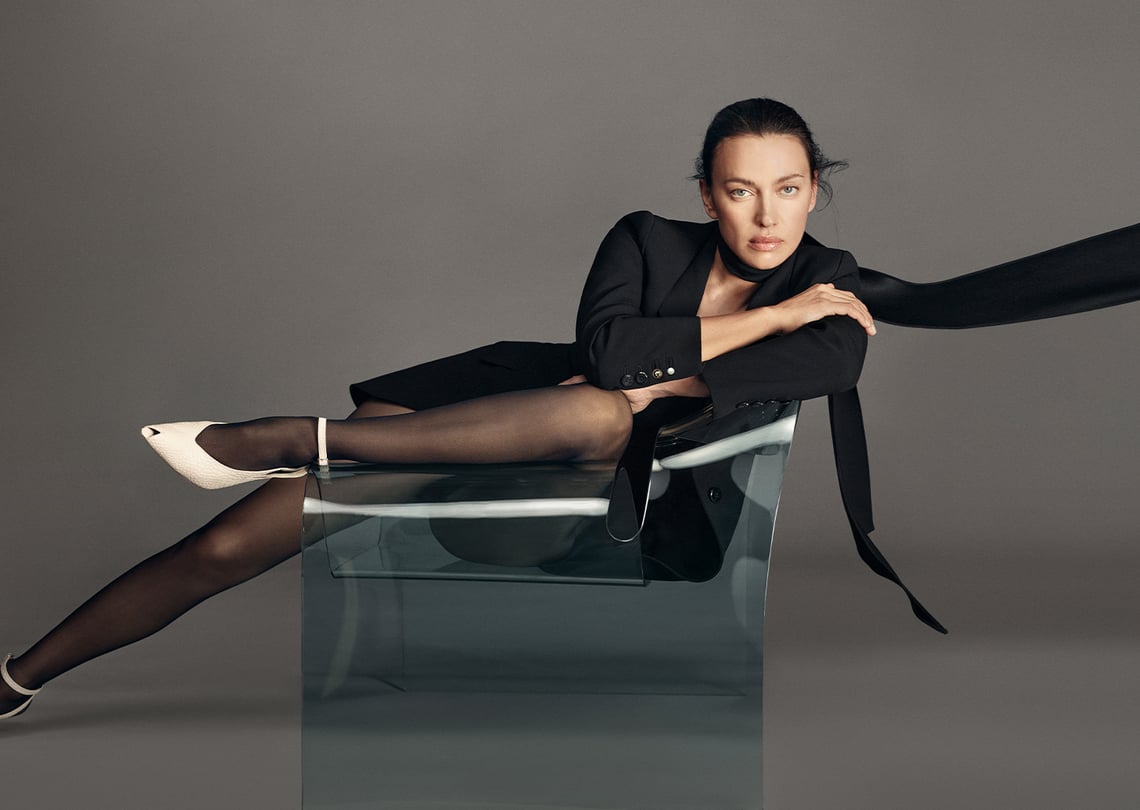
Marella’s fall 2026 campaign, fronted by Irina Shayk, spotlights the Hero Blazer — a single-breasted jacket offered across multiple iterations in materials from velvet to leather, in black, white, camel, and checkered colorways — built around a removable scarf crafted in silk twill or silk habotai embellished with lace inlays, designed to flow along the jacket and amplify its movement. The campaign marks a shift from the brand’s recent collaborative model (Emily Ratajkowski and Stella Maxwell each co-designed capsule collections last year) toward a focused product showcase. Marella is a subsidiary of Dedimax, part of the Max Mara Fashion Group, with more than 250 stand-alone stores and a presence at 1,200 multibrand retailers worldwide.
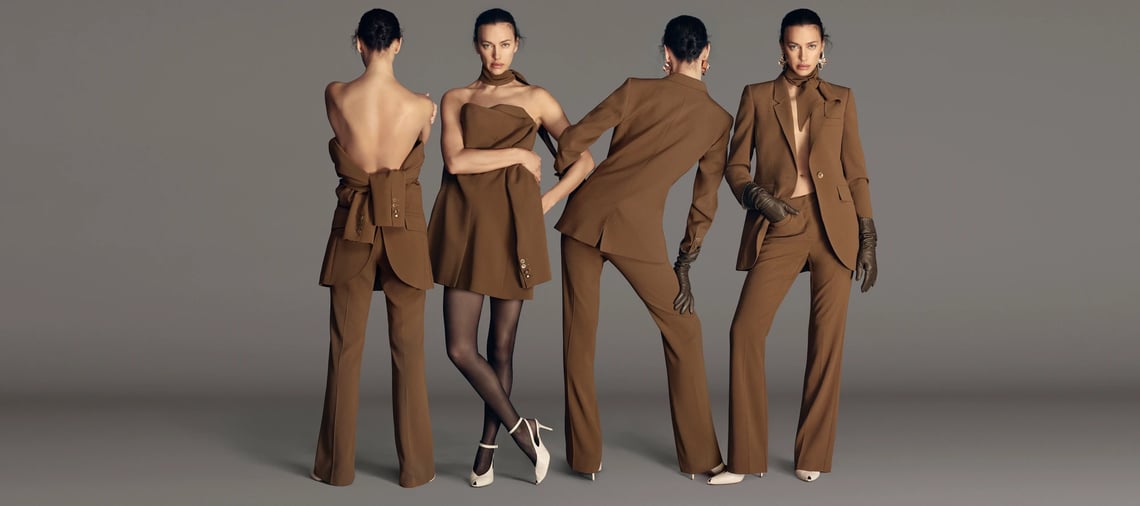
- Marella’s fall 2026 campaign, fronted by Irina Shayk, spotlights the Hero Blazer — a single-breasted jacket the brand is betting on across multiple iterations — with Shayk called upon to express the design’s precise yet lightweight construction and styling potential; the campaign was set to officially launch later this week at the time of the announcement.
- The Hero Blazer’s defining design element is a removable scarf crafted in the same fabric as the jacket or in coordinating materials spanning silk twill to silk habotai embellished with lace inlays; the scarf flows along the jacket, amplifying its movement; iterations span materials from velvet to leather in classic black, white, and camel colorways as well as checkered styles.
- Shayk follows Emily Ratajkowski and Stella Maxwell, who both appeared in Marella campaigns last year and co-designed capsule collections; Marella, part of Dedimax (a Max Mara Fashion Group subsidiary focused on the contemporary sector), operates more than 250 stand-alone stores and a presence at 1,200 multibrand retailers worldwide, with its first U.K. store opening at 8 Marylebone High Street in London in April.
The Hero Blazer arrives with a removable scarf. That single detail tells you everything about where Marella is placing its commercial weight this season.
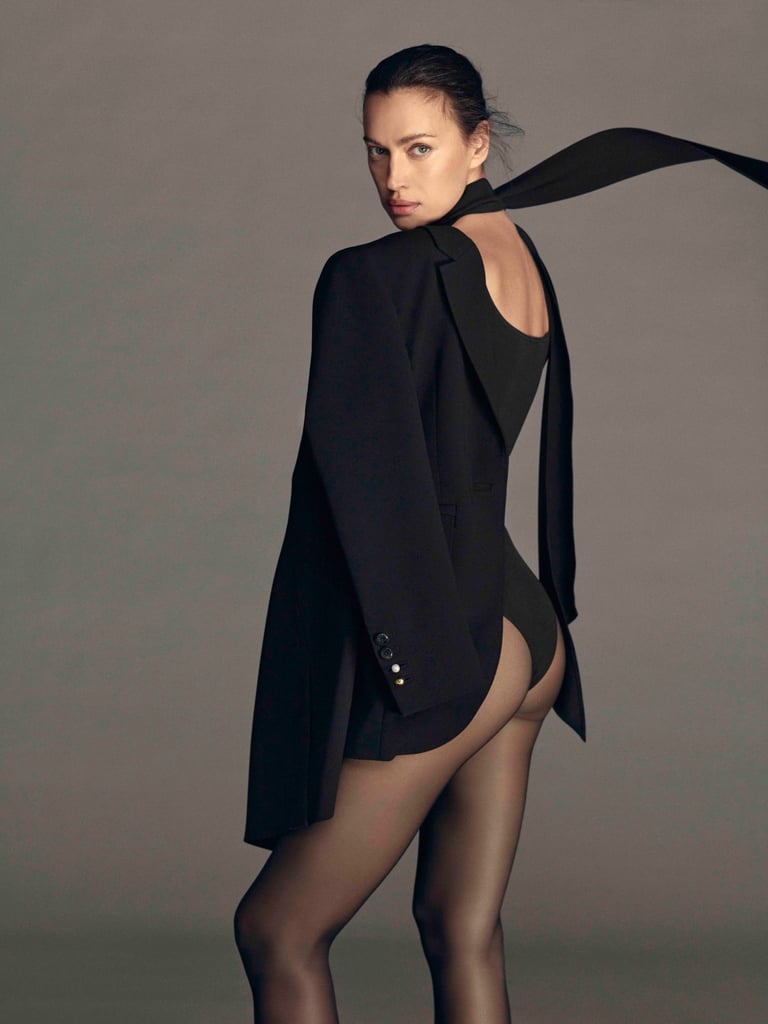
The scarf is crafted in the same fabric as the jacket or in coordinating materials. It is designed to move with the garment rather than sit on top of it, flowing along the jacket and amplifying the silhouette’s movement. The result is a tailored piece that reads as precise without reading as rigid.
Irina Shayk fronts the fall 2026 campaign, which is set to officially launch later this week, at the time of the announcement. She was called upon to express the jacket’s precise yet lightweight construction and styling potential. The casting is consistent with the brand’s recent approach: high-recognition talent deployed to demonstrate a specific garment’s range rather than to anchor a broader seasonal narrative.
How the Single-Breasted Cut, Coordinating Scarf Fabrics, and Multi-Material Iterations Define the Hero Blazer’s Styling Logic
The jacket is a single-breasted design built around the concept of controlled versatility. The brand is betting on it across multiple iterations, each addressing a different register of the same silhouette. Materials range from velvet to leather. Colorways span classic black, white, and camel, with checkered styles extending the lineup.
The detachable scarf is the design’s defining element. Its construction varies across versions, ranging from silk twill to silk habotai embellished with lace inlays, always coordinating with or matching the jacket’s fabric. The scarf’s purpose, as the label frames it, is to emphasize the tailored silhouette’s sense of lightness and effortlessness. In practice, it provides the wearer with a styling variable that shifts the jacket’s visual weight without altering its structure.
That structural logic is the campaign’s actual subject. Shayk’s styling across the imagery demonstrates the blazer worn multiple ways, with and without the scarf, across different colorways and material iterations. The campaign does not introduce a seasonal concept. It demonstrates a product’s range.
Why the Shift From Capsule Collaborations to a Hero-Piece Showcase Signals a Change in the Brand’s Campaign Strategy
The label’s casting history for this campaign cycle is worth reading carefully. Emily Ratajkowski e Stella Maxwell both appeared in Marella campaigns last year. Neither was simply a face. Both co-designed capsule collections alongside their campaign appearances, embedding the talent relationship into the product development process rather than limiting it to imagery.
Shayk’s role here is different. She is demonstrating an existing design rather than contributing to a new one. That shift reflects a change in the brand’s campaign logic: from collaborative product launches to focused product showcases.
The distribution context matters. The label operates more than 250 stand-alone stores and maintains a presence at 1,200 multibrand retailers worldwide, with ongoing expansion across Europe, the United States, and the Middle East. Its first U.K. location opened at 8 Marylebone High Street in London in April. A campaign built around a single, versatile piece is a coherent strategy for a house at this stage of international growth.
The scarf detail is the right one to lead with.


The fall 2026 campaign is a product showcase, not a brand statement, and it is more effective for that clarity. The coordinating scarf construction gives the design a genuine styling variable that the campaign communicates without ambiguity. The house’s confidence in the Hero Blazer is the campaign’s argument. That confidence is earned.
Images Courtesy of Marella
In other brand campaign news, Chloé Resort 2027: Chemena Kamali Brings Tailoring Back to the House