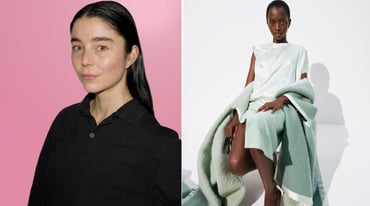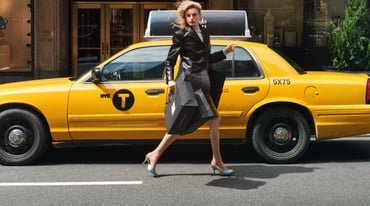


For Fall-Winter 2021 collection, PRIVATE POLICY brings awareness to the important yet hidden history of the 1800s Chinese transcontinental railroad workers and acknowledges the xenophobic feelings of that era, while battling similar issues that gained heightened visibility during the COVID-19 pandemic, when anti-Asian hate crimes surged globally and sparked a sustained cultural reckoning. No longer silenced, communities continue to speak up about historical and ongoing racism, violence, and prejudice against Asian communities, building on momentum that has only grown in the years since. PRIVATE POLICY chose the transcontinental railroad Chinese’s epic story because it declares existence and pride for the previous Asian generations’ phenomenal attributions. We look to them for inspiration to stand tall for who we are and welcome others to learn about Asian culture.
In 2026, PRIVATE POLICY remains a touchstone reference for designers and scholars examining how fashion can serve as a vehicle for reclaiming erased histories and centering Asian diasporic identity in mainstream cultural conversations.
The Design Language of Remembrance
The visual and material vocabulary of PRIVATE POLICY Fall Winter 2021 is inseparable from its historical subject matter. Co-founders Siying Qu and Haoran Li constructed the collection around garments that fuse archival documentation with contemporary silhouette, drawing direct reference to the working clothes, tools, and visual records associated with the estimated 15,000 to 20,000 Chinese laborers who built the western half of the First Transcontinental Railroad in the 1860s. Their contributions were systematically omitted from landmark photographs, official government records, and public monuments for more than a century.
Qu and Li responded to that erasure with deliberate visual density. The collection incorporates workwear-derived construction details, including reinforced seaming, utilitarian layering, and structured outerwear, translated through the lens of contemporary streetwear. Text-based graphics serve as a direct counter-narrative, printing names, phrases, and assertions of presence onto garments in a gesture that refuses anonymity. The color palette references both the raw landscape of the Sierra Nevada and the dyed textiles of nineteenth-century Chinese immigrant communities, creating a layered dialogue between labor history and cultural heritage. Every design choice functions as an act of documentation, insisting that these workers be seen, named, and credited within a medium, fashion, that reaches audiences traditional historical scholarship frequently does not.
Anti-Asian Hate and the Urgency of the 2021 Moment
PRIVATE POLICY presented this collection at a moment of acute cultural and political tension. Throughout 2020 and into 2021, anti-Asian hate crimes increased sharply across the United States, Canada, the United Kingdom, and Australia, fueled in part by pandemic-era rhetoric that scapegoated Asian communities for the spread of COVID-19. Stop AAPI Hate, the coalition formed to track such incidents, reported nearly 3,800 incidents in the United States alone in its first year of operation. The murders of eight people, six of them Asian women, at Atlanta-area spas in March 2021 crystallized a national reckoning that had been building for months.
Against this backdrop, PRIVATE POLICY made a deliberate and considered choice to anchor its seasonal collection not in trend forecasting but in historical argument. The brand positioned the story of the railroad workers as a structural precedent, evidence that anti-Asian prejudice in the United States is not a recent aberration but a recurring pattern embedded in national history. The Chinese Exclusion Act of 1882, passed in part as a political response to anxieties about Chinese labor, arrived just years after those same laborers completed one of the most ambitious infrastructure projects in American history. By invoking that sequence explicitly, the collection asked its audience to connect past and present with clarity and without sentimentality.
PRIVATE POLICY's Broader Mission Within Fashion Activism
The “We Remember You” collection does not exist in isolation within the PRIVATE POLICY body of work. Since the brand’s founding, Qu and Li have consistently approached each season as an opportunity to engage with social, environmental, and political issues that extend well beyond the fashion calendar. Previous collections have addressed climate anxiety, immigration policy, and gender identity, establishing a design practice that treats the runway as a platform for sustained civic engagement rather than seasonal spectacle.
This positioning has earned the brand a distinctive place within the broader conversation about fashion activism. Critics and industry observers have noted that PRIVATE POLICY avoids the performative quality that undermines many brand attempts at social commentary. The depth of research behind “We Remember You,” including the historical specificity of its references and the sincerity of its stated intentions, reflects a creative process that begins with subject matter rather than aesthetics.
By 2026, the collection is widely cited in academic and critical writing on Asian American cultural production, diaspora identity, and the expanding role of independent fashion labels in shaping public discourse. Its influence is visible in subsequent seasons from both emerging and established designers who have taken up similar questions of historical recovery and cultural reclamation, demonstrating that the collection’s impact extends well beyond a single fashion week presentation.