
The London designer built his spring 2027 collection on an imagined meeting between the photographer Deborah Turbeville and the writer Eileen Chang, then put the argument in the lining
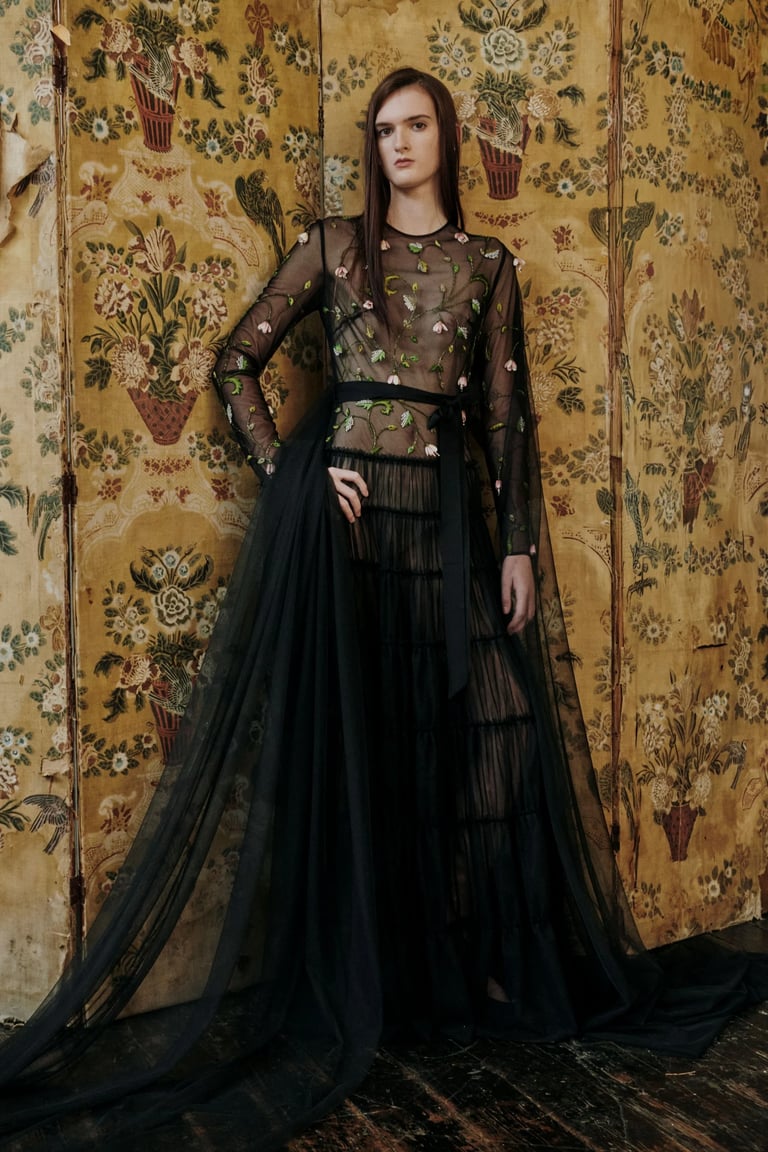
LONDON – Huishan Zhang‘s spring 2027 collection began with a meeting that never happened. The designer imagined the American fashion photographer Deborah Turbeville in conversation with the Chinese writer Eileen Chang, and built the season on the temperament the two might have shared.
Turbeville shot the Bathhouse series for American Vogue in 1975, setting models in a condemned Nova Iorque bathhouse and distressing the prints until they read like something recovered from an archive. Chang wrote “Lust, Caution” and “Love in a Fallen City,” stories in which almost nobody says what they mean. Zhang found a shared register in both.
“They are both very intellectual, and very deep in their own story. For me, it’s the meaning behind the moods they both introduced to the world, either through photography or love stories,” he said during a preview.
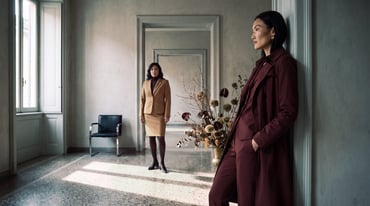
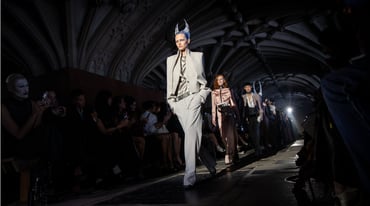
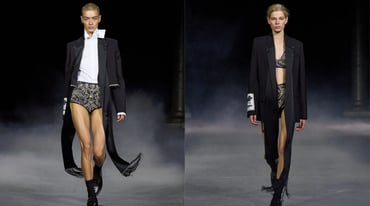
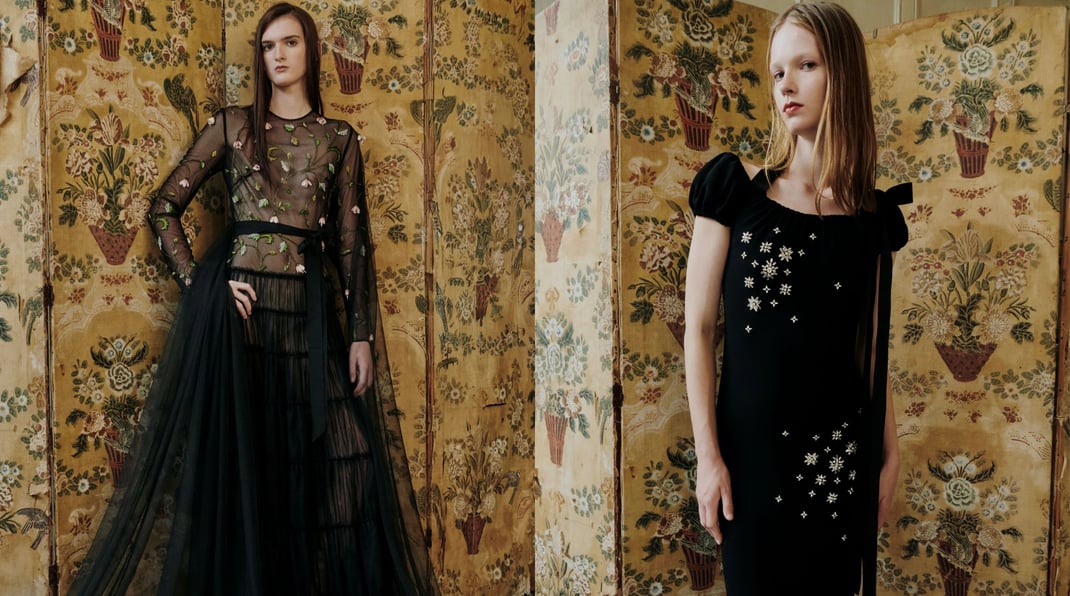
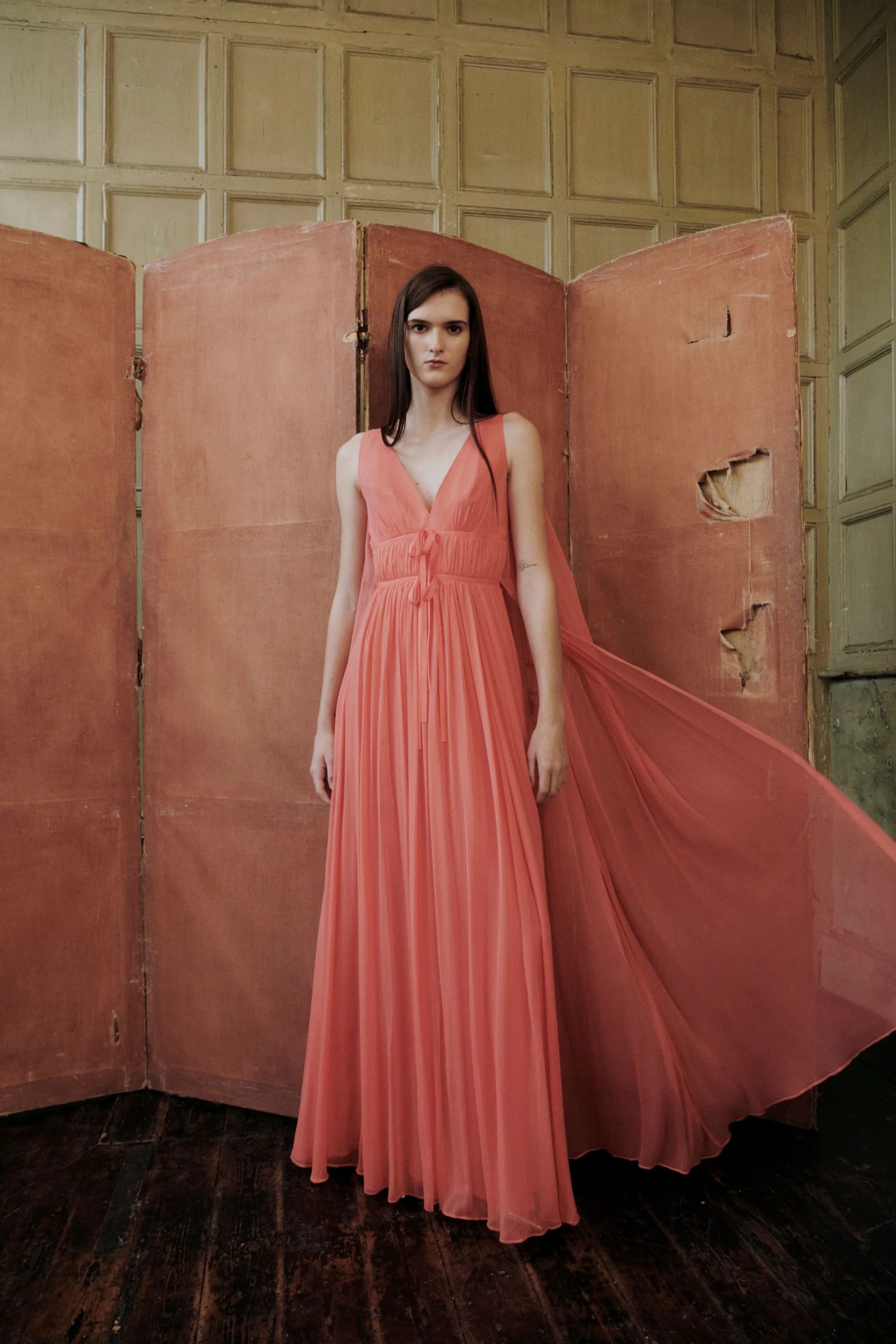
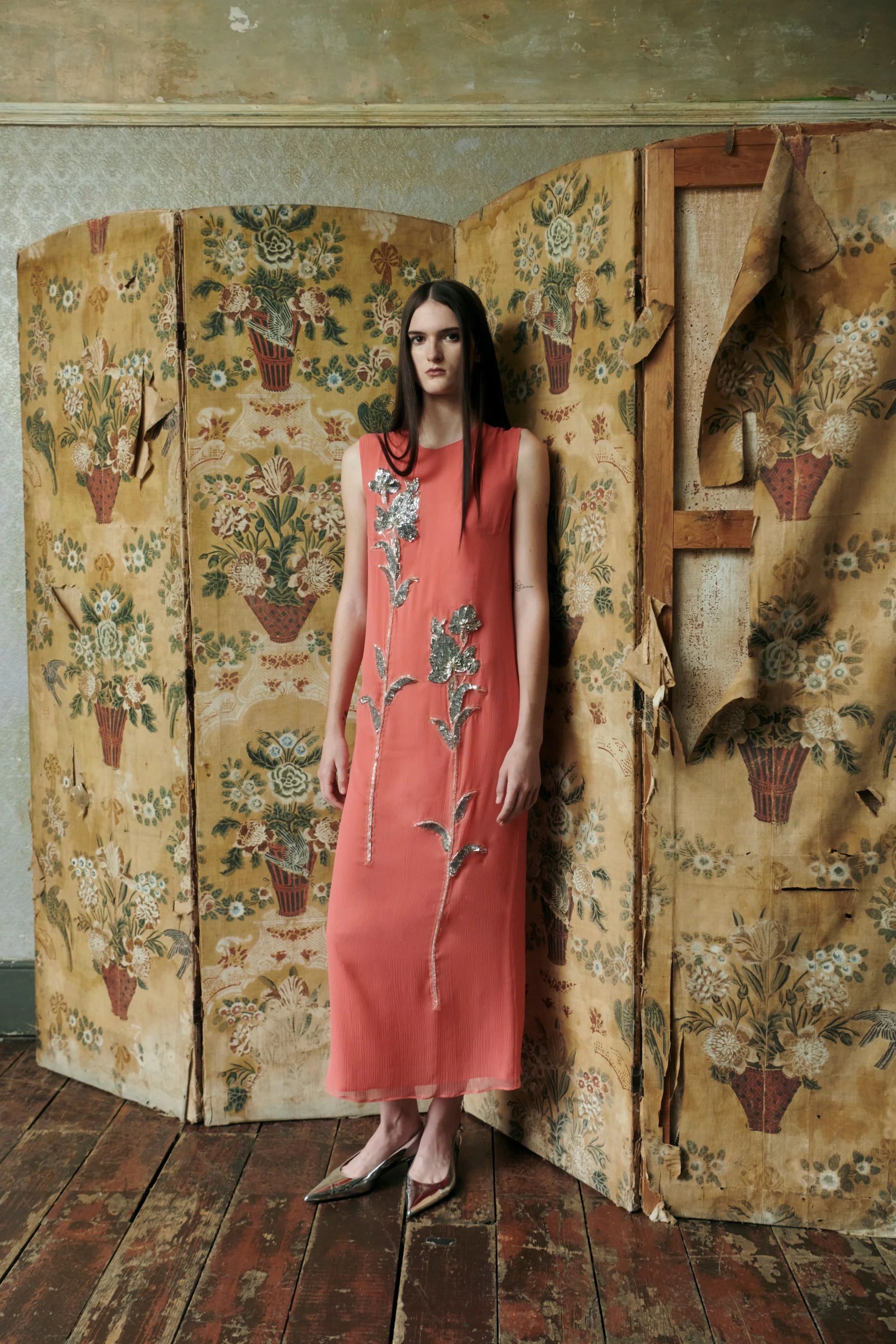
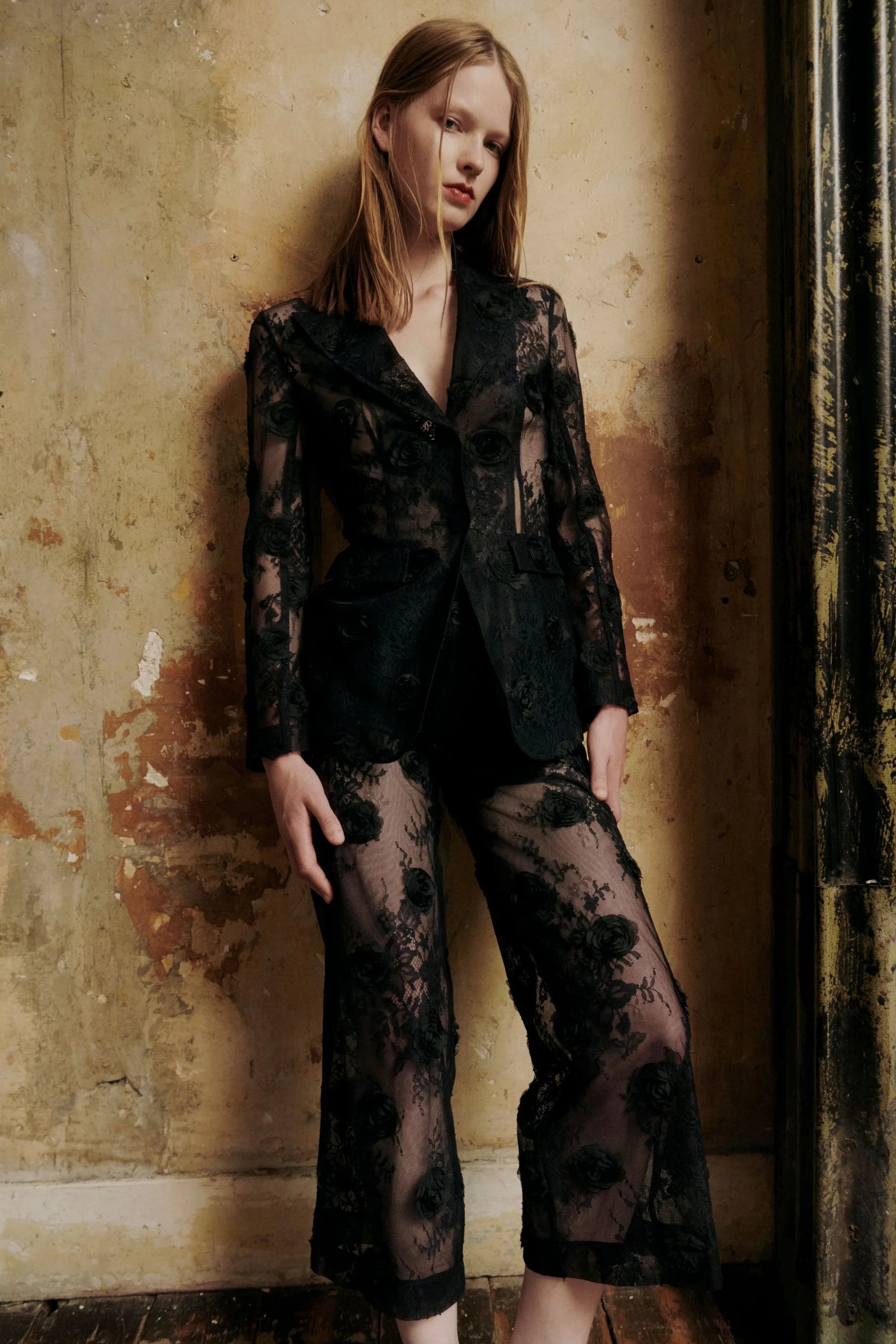
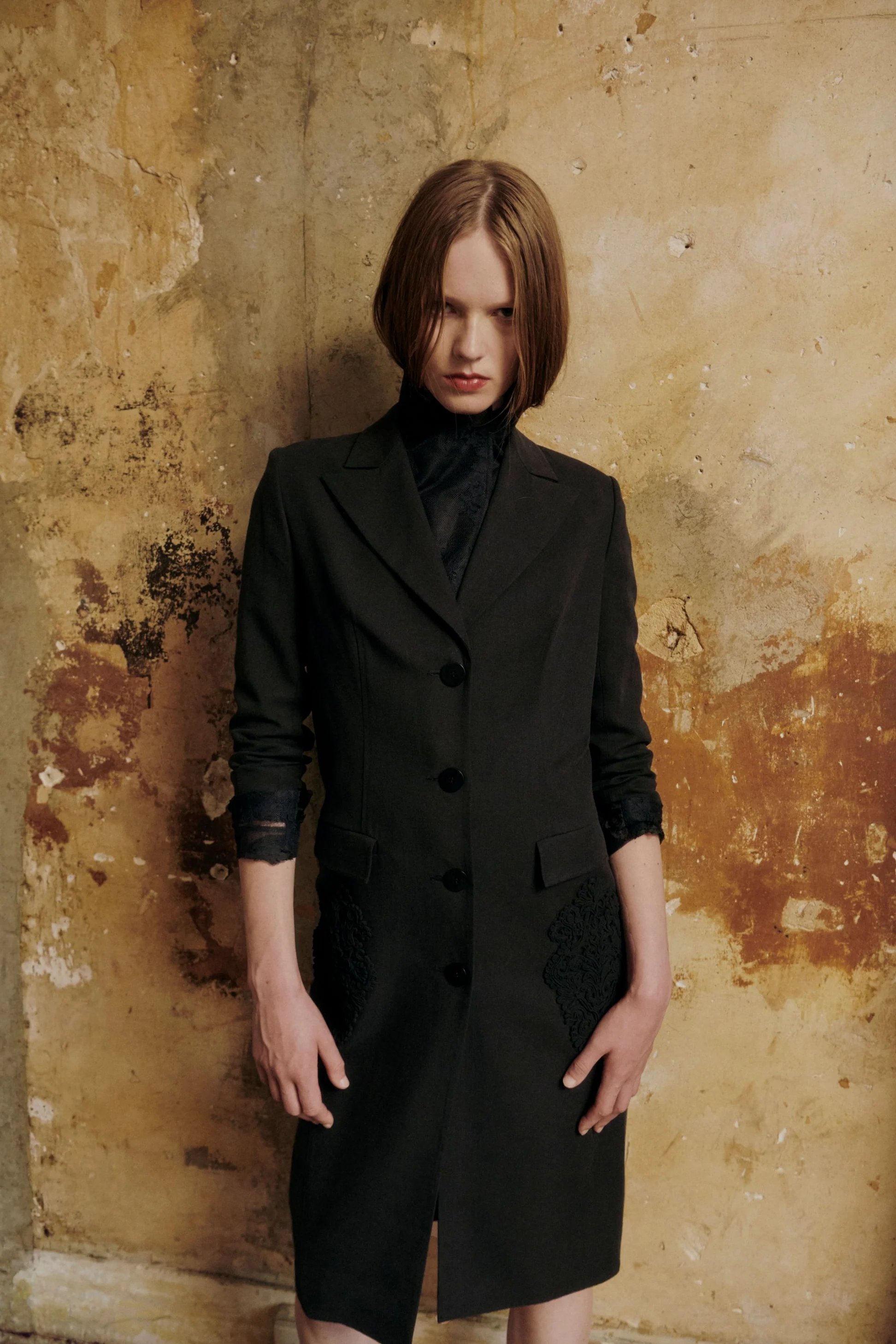
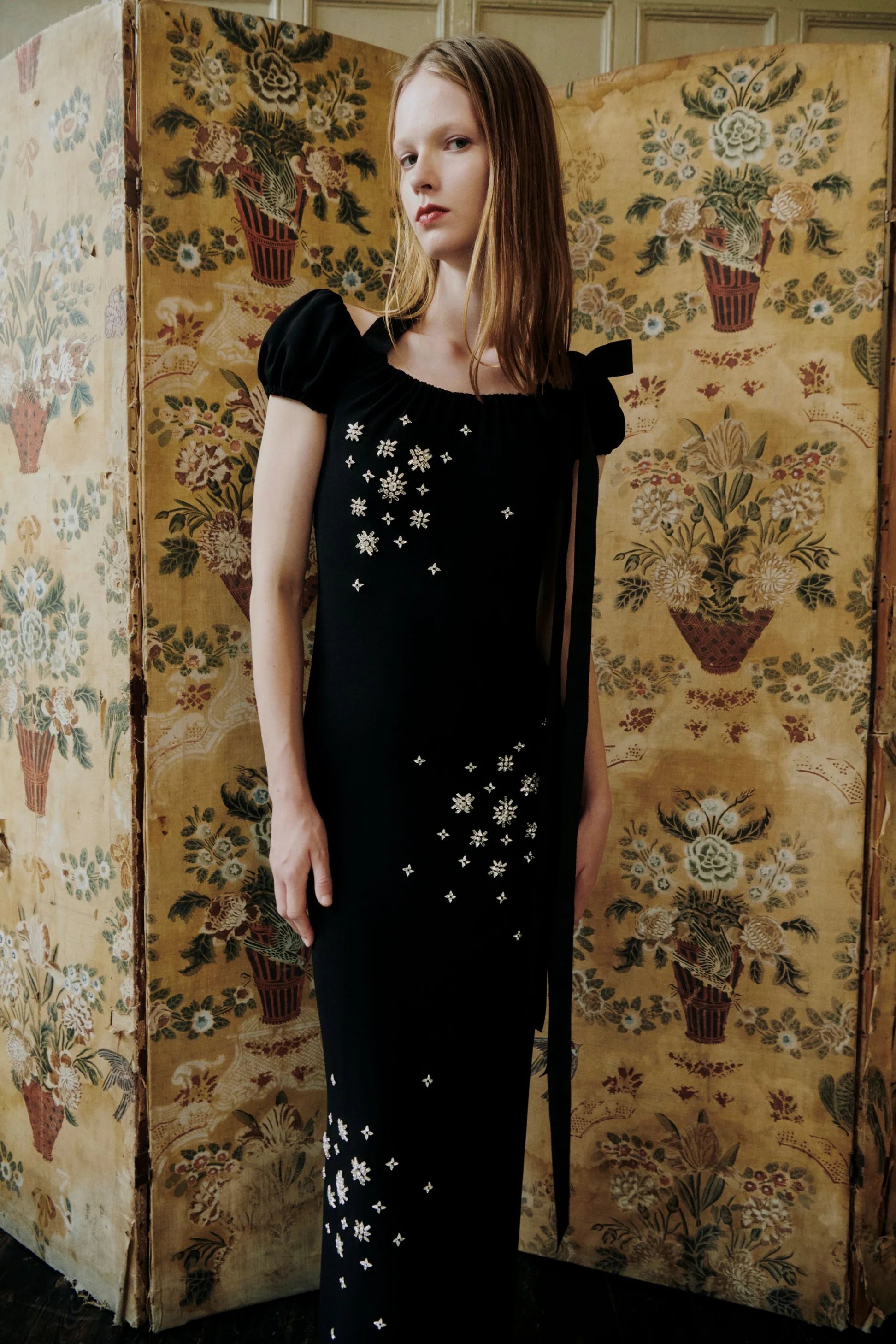
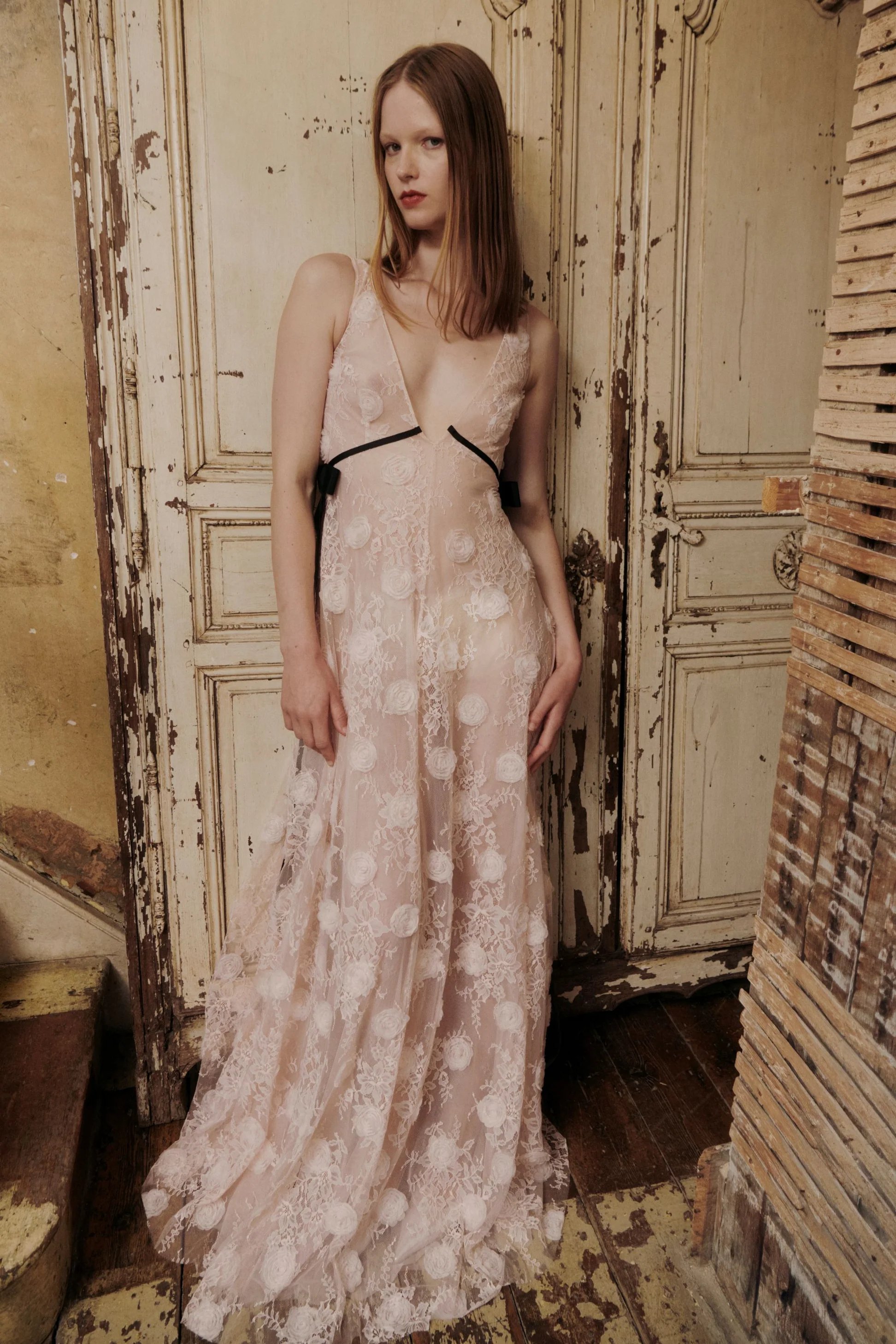
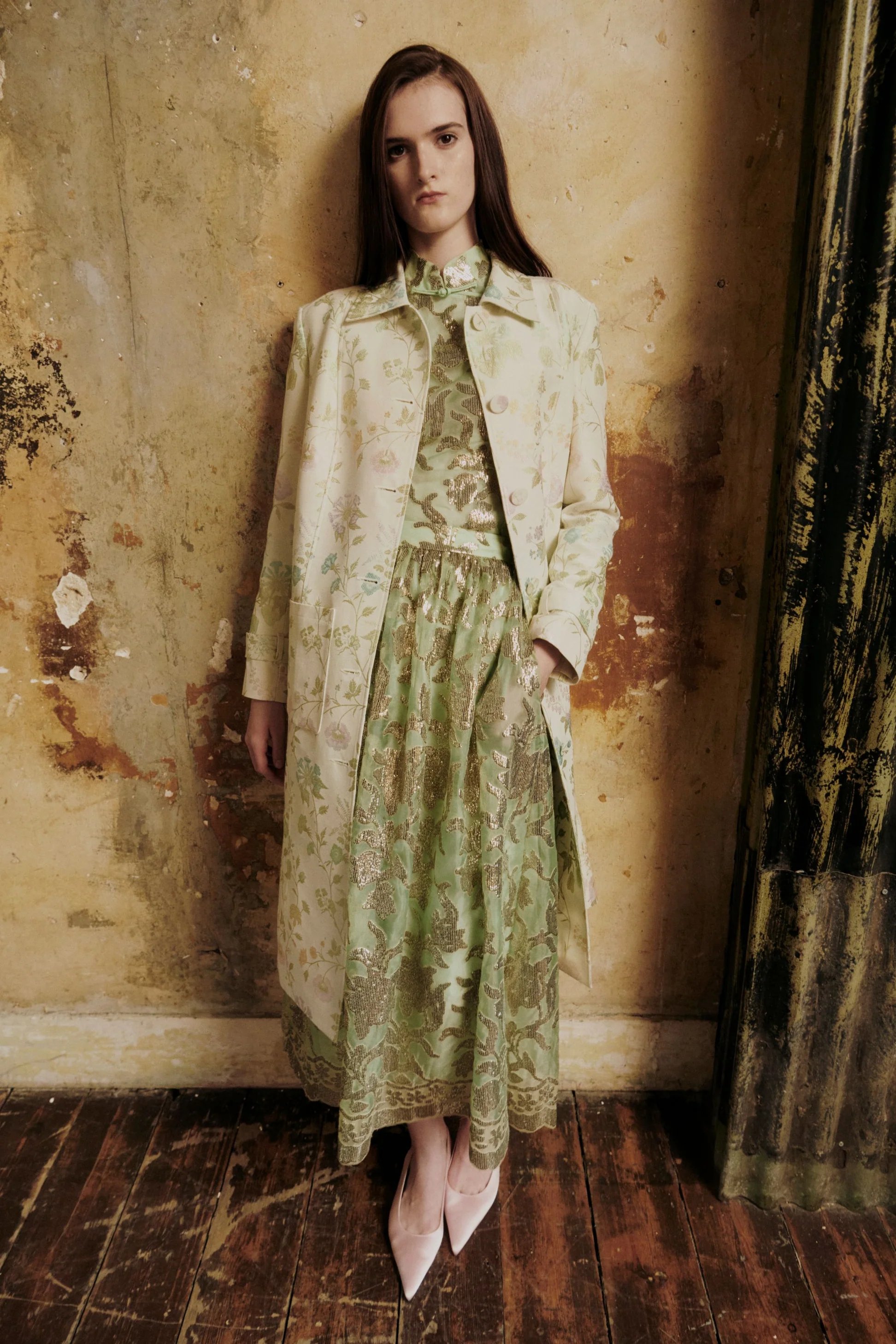
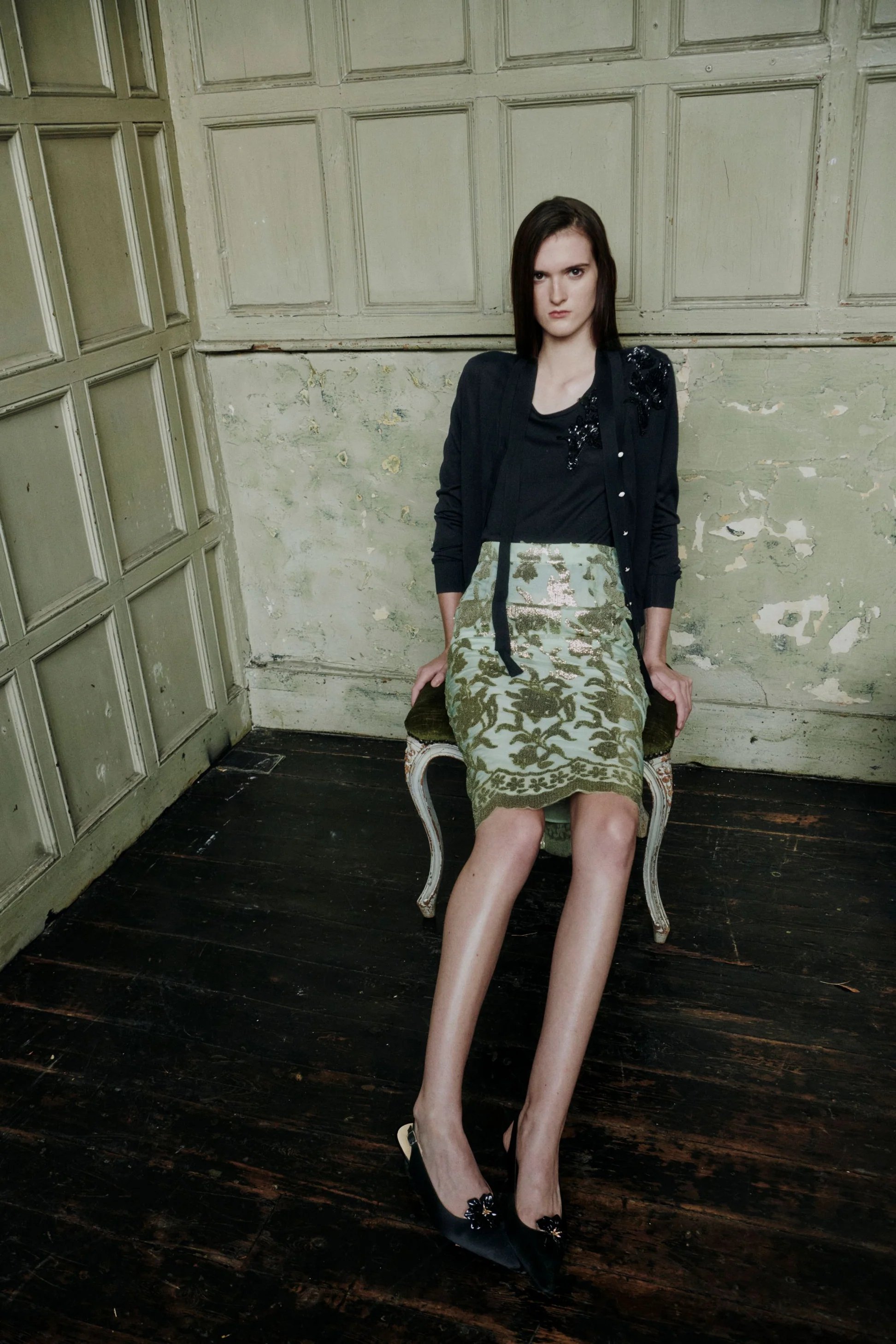
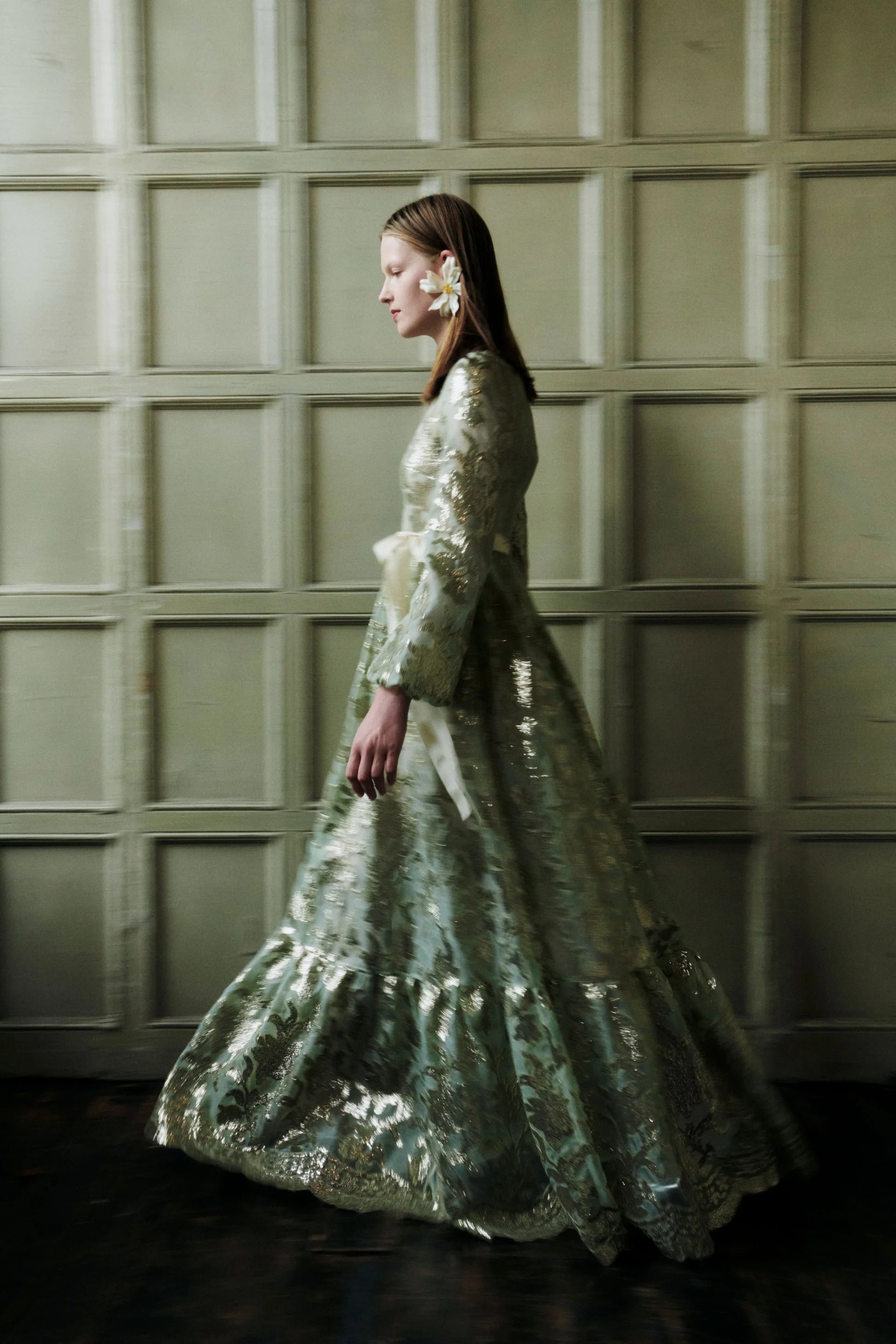
The premise reached the pista as a wardrobe built on withholding. Dresses fell semi-fitted, cut with the looseness of the 1920s. The lace read as revealing until you checked the construction: every piece was fully lined. Cheongsams came reworked, with jackets layered over them to pull the silhouette longer.
“It’s like playing a game of seduction. Sometimes what you don’t show can be more powerful than what you do,” Zhang said.
The Fabric Between Structure and Ease
The push-pull between structure and ease carried into the materials. Zhang worked brushed cotton that mimicked suede for trans-seasonal pieces, some finished with threadwork drawn from Chinese knot patterns. Silk jumpers and denim widened the brand’s daywear offer.
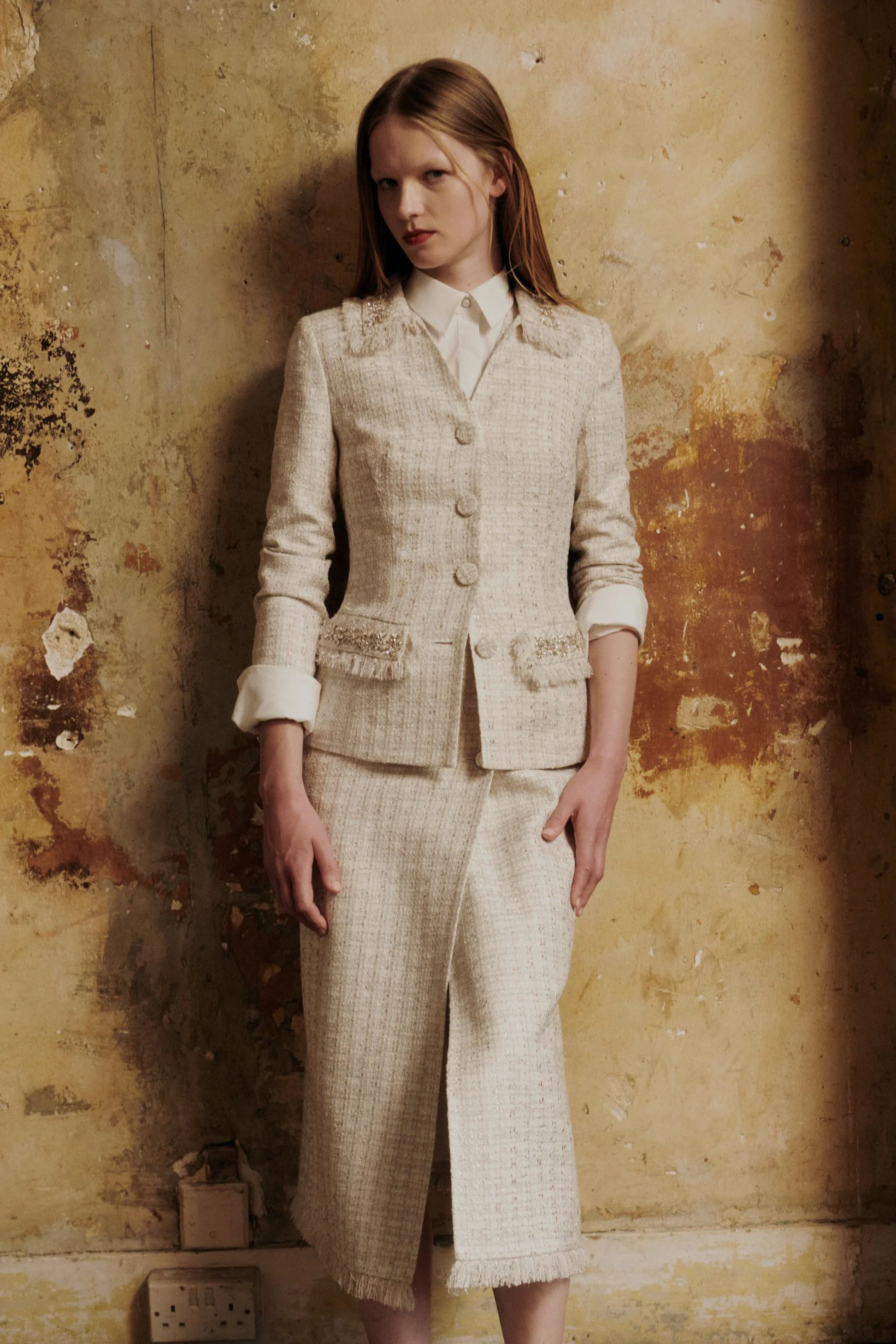
Those fabrics leaned on standing mill relationships. A custom silk jacquard came out of Stephen Walters, the Suffolk weaver at Sudbury Silk Mills that has run jacquard looms for roughly 300 years. A tweed carried embroidery by Chanakya, the Mumbai atelier that has produced handwork for Dior, Prada and Fendi over four decades. And a linen engineered with elastic delivered what Zhang pitched as “wrinkle-free” comfort for his clients.
What the Daywear Is For
Zhang’s label launched in London in 2012, and has always run two businesses at once. The Qingdao-born designer trained at Central Saint Martins, spent a year inside the Dior haute couture atelier in Paris after being selected by Delphine Arnault, and now sells through Selfridges, Harrods, Bergdorf Goodman, Neiman Marcus and Net-a-Porter.
That mix explains the season’s split attention. The linen with elastic, the suede-mimicking cotton, the silk jumpers: these are order-again pieces, the kind a private client buys in multiples rather than one at a time.
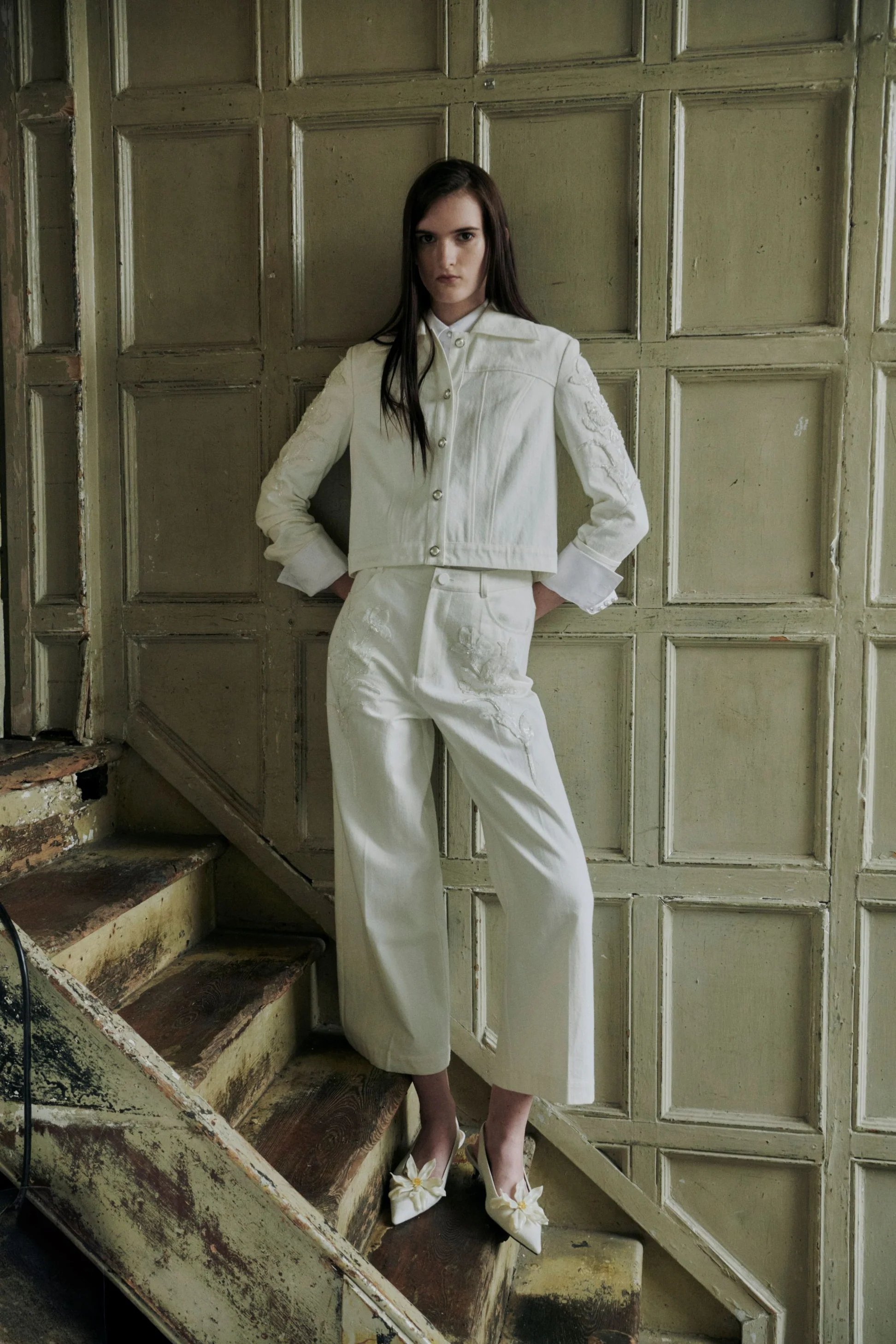
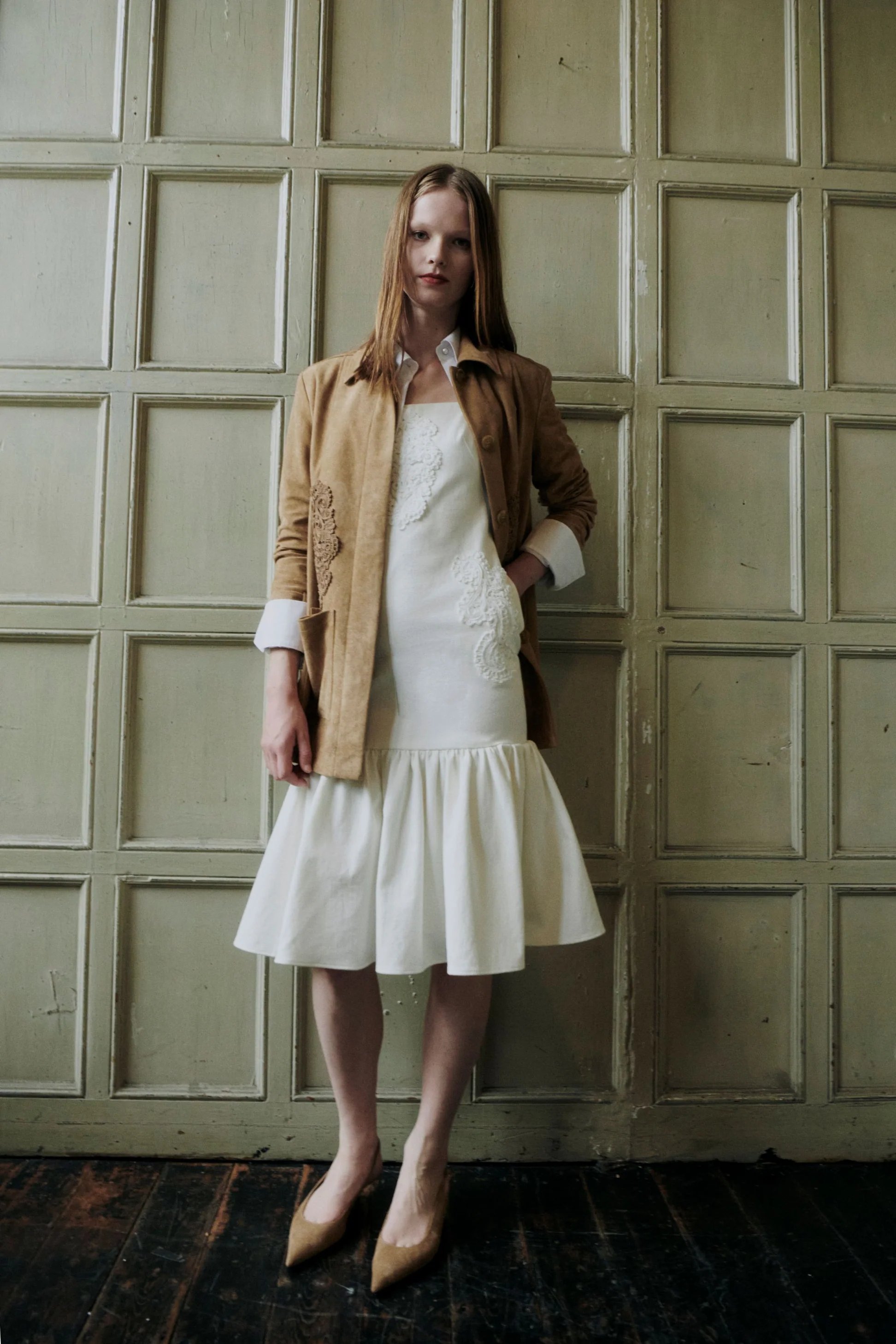
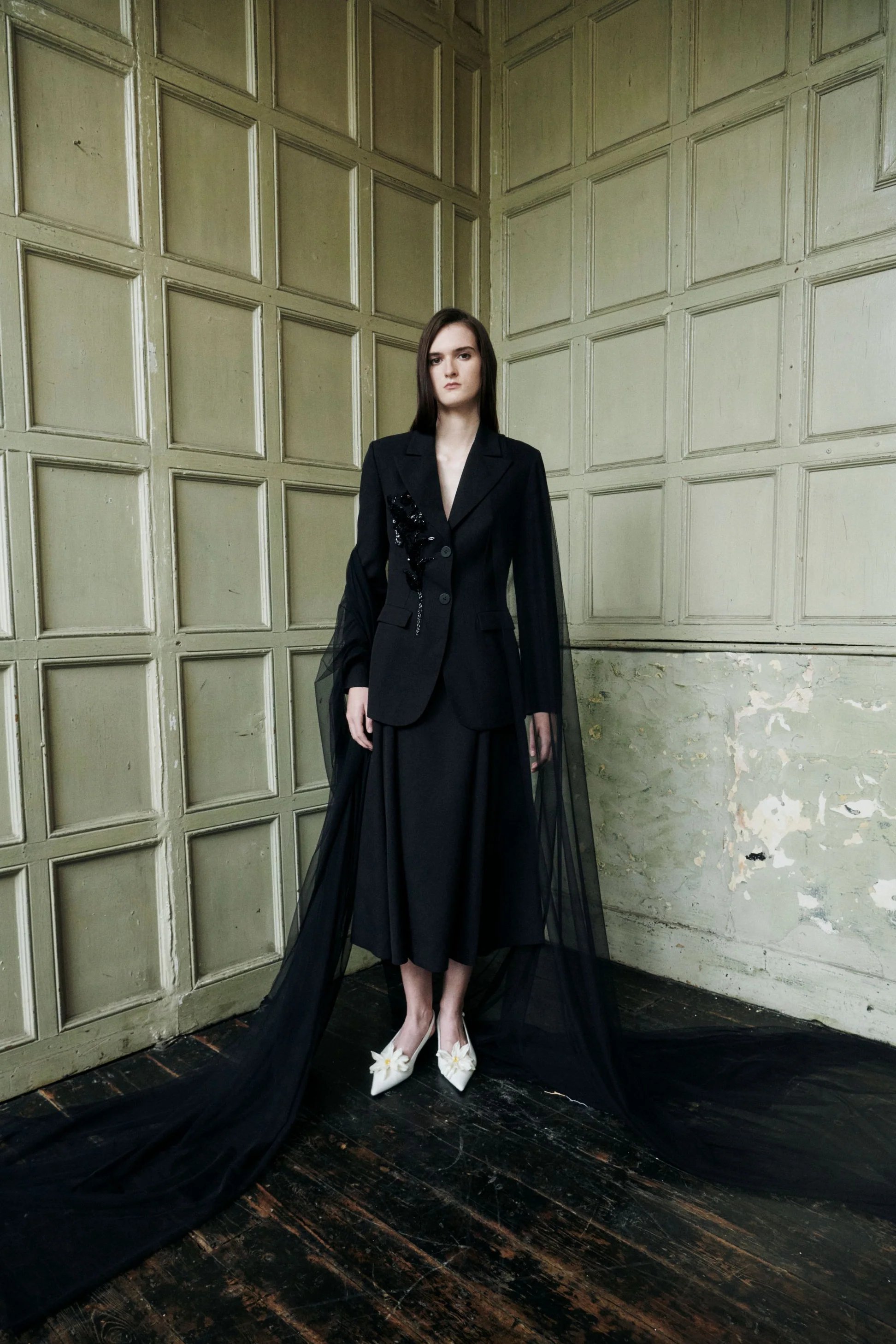
The read here is that a designer’s most photographed images rarely pay for the studio. Zhang’s evening looks earn the gallery; his trans-seasonal cotton and elastic linen keep clients coming back between seasons. The mill sheet makes the point harder to argue with, because the East-meets-West claim now describes a supply chain rather than a mood board — Sudbury in Suffolk, Chanakya in Mumbai, a knot motif out of Shanghai.
Where the Season Leaves Him
Spring 2027 lands as an expansion, not a reinvention. The clothes still carry the argument Zhang has made since his first collection: suggestion travels further than exposure.
This season he put it in the lining.
See the complete collection below:
Images Courtesy of Huishan Zhang
In another fashion news, Calvin Klein Collection Spring 2027 Runway Show at NYFW