
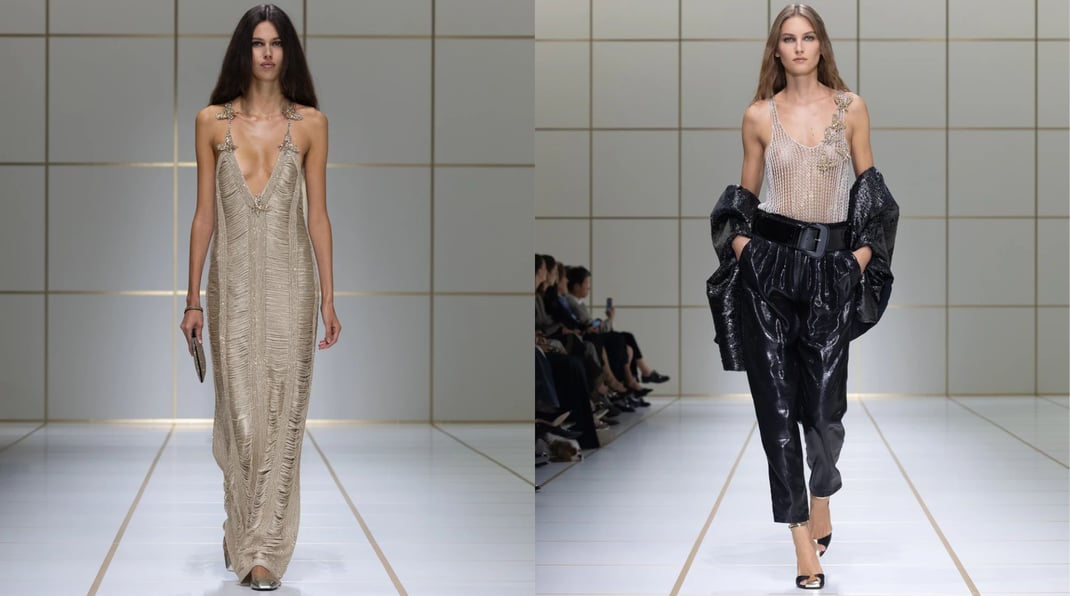

Giorgio Armani showed its Spring 2027 ready-to-wear collection, titled “Evolution,” at the Armani/Teatro in Milan on Sept. 27. Silvana Armani, the founder’s niece and head of womenswear, added cotton, a fiber Giorgio Armani rejected as too humble, and cut jackets longer with a shoulder drawn from the house’s 1980s archive. The lineup closed on an embellished bomber carrying a portrait of her uncle in black tie. Giorgio Armani’s will requires his heirs to sell 15 percent of the group within 18 months of his death, putting the deadline in March 2027; on Sept. 16 the group named Dario Vitale, previously of Versace, creative director of Emporio Armani and Giorgio Armani Accessories.
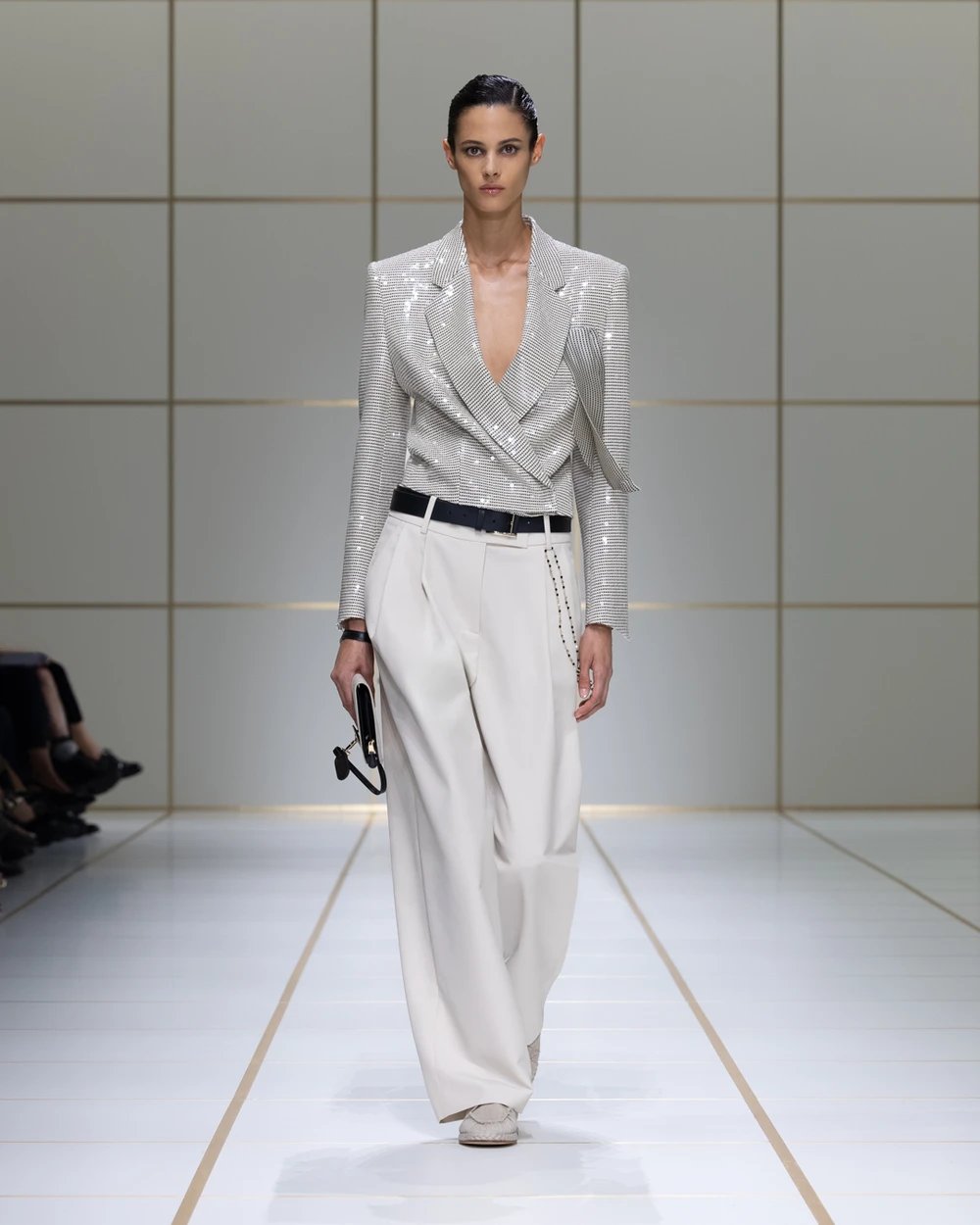
MILAN — Silvana Armani showed her second Giorgio Armani ready-to-wear collection on Sunday morning at the Tadao Ando-designed Armani/Teatro, opening on a black-and-ivory pin-dot double-breasted jacket cut with more shoulder than the house has used in years and worn over wide ivory trousers. Giorgio Armani founded the company in 1975 and spent the next 50 years stripping padding and interlining from tailoring. His niece, now head of womenswear design, has begun putting some of it back.
The Collection’s Central Idea
The show was titled “Evolution,” and the notes carried the line “Identity, too, can evolve without losing its essence.” Underneath sat the suit, and the question of how much of the house’s softness a customer will trade for shape. The change sits in the jacket’s interior, not on its silhouette.
The deadline falls in March 2027, and the will names L’Oréal, LVMH and EssilorLuxottica as preferred buyers. A further 30 to 54.9 percent would go to the same buyer three to five years after his death, or the company would pursue a listing.
Silhouette and Styling
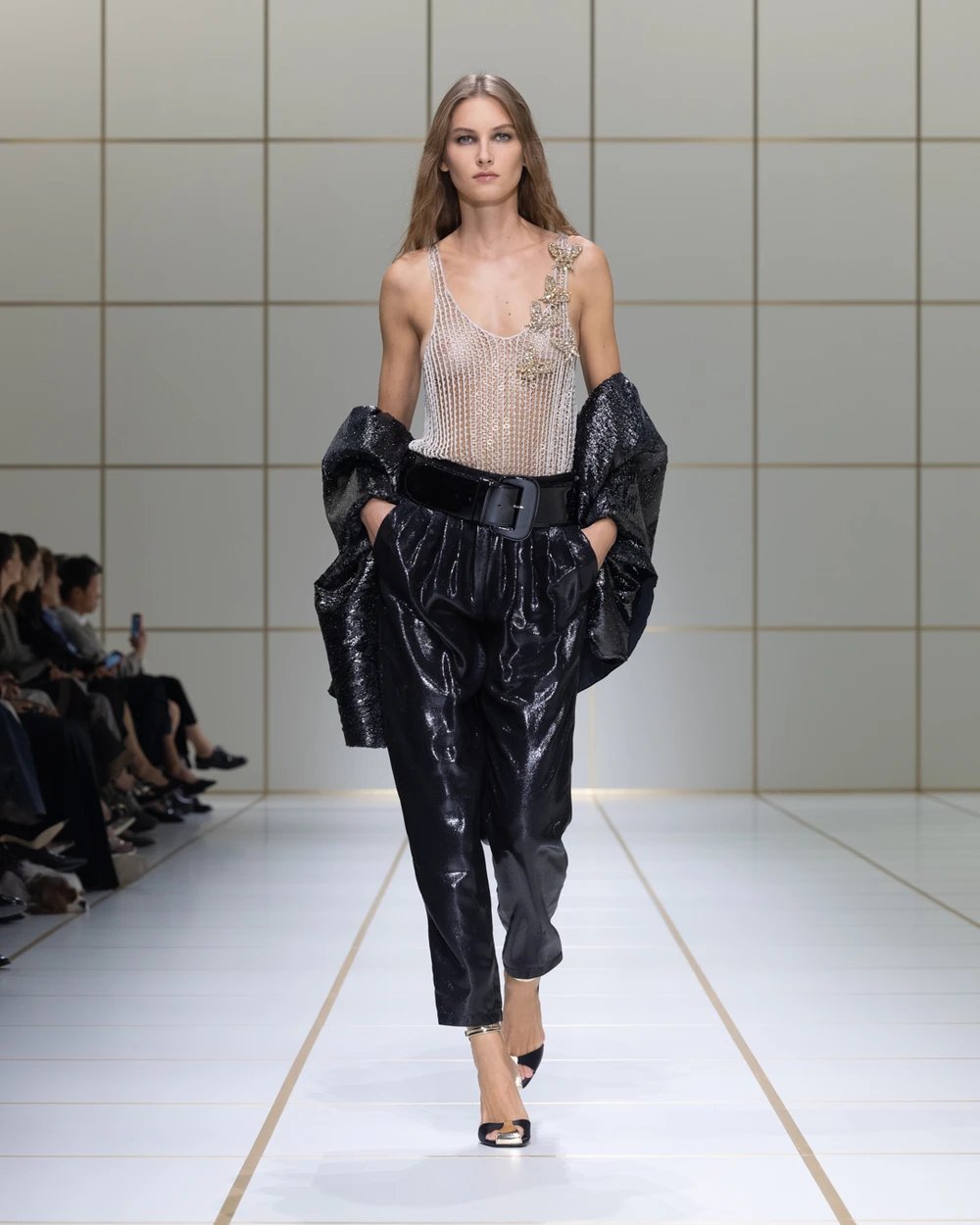
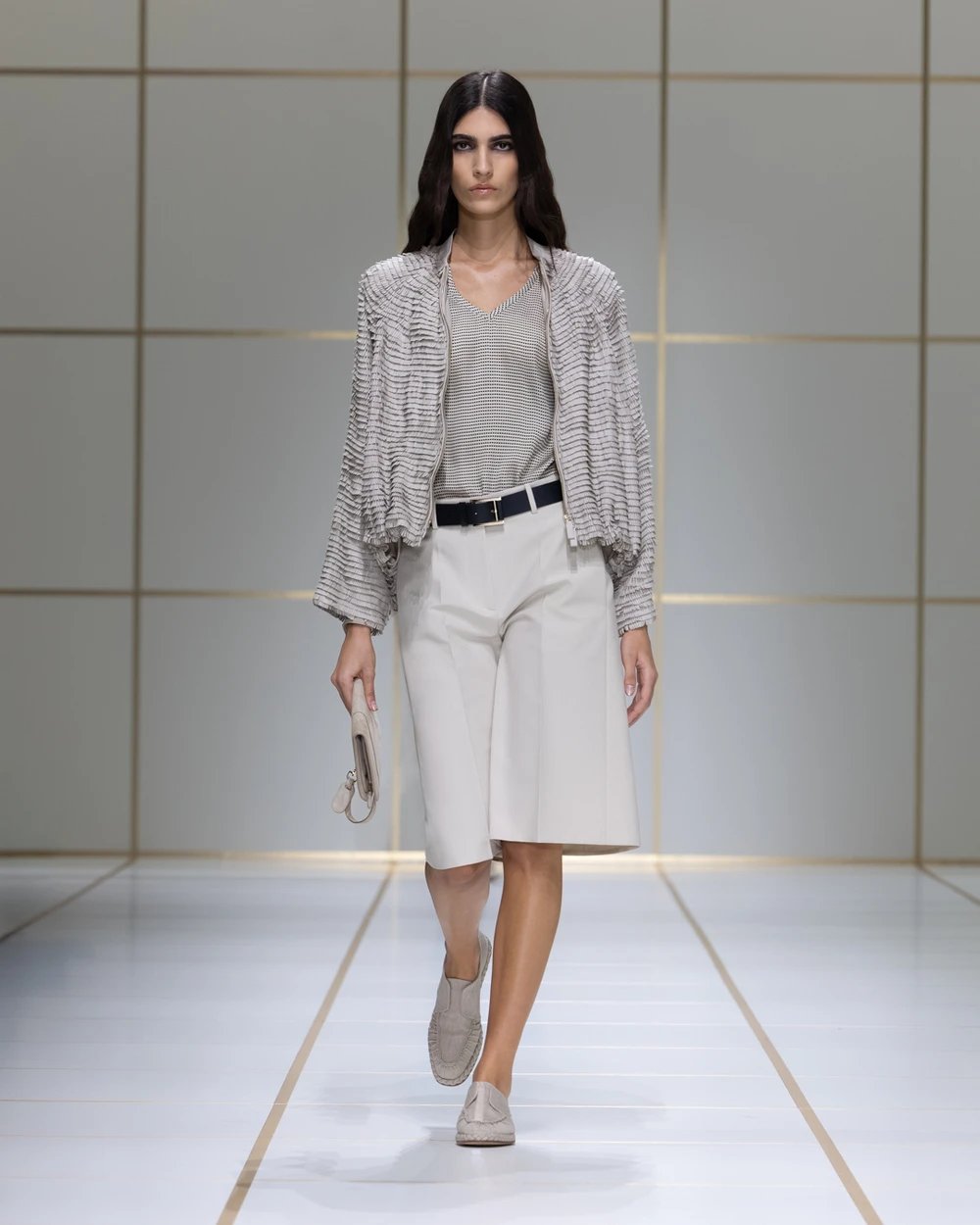
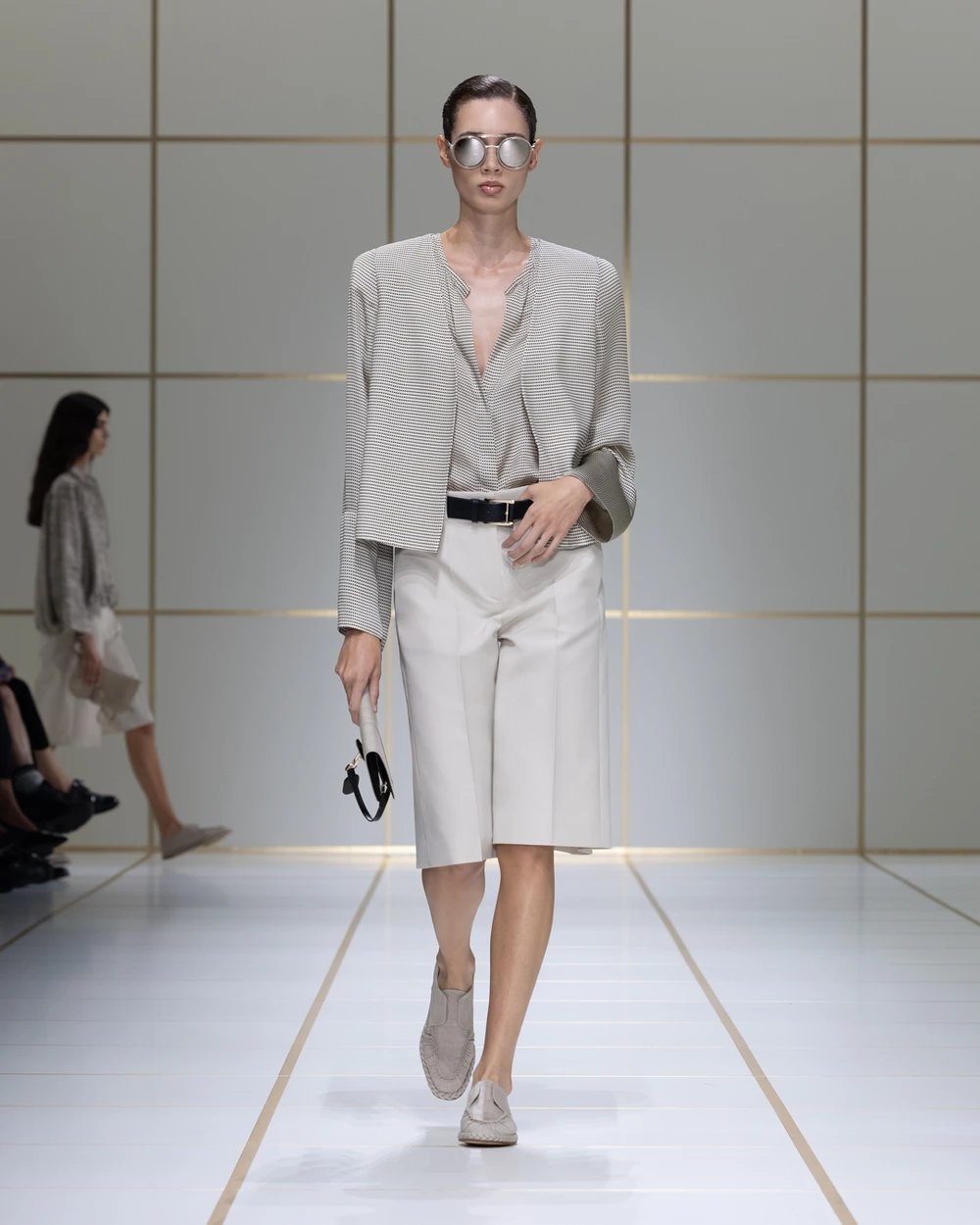
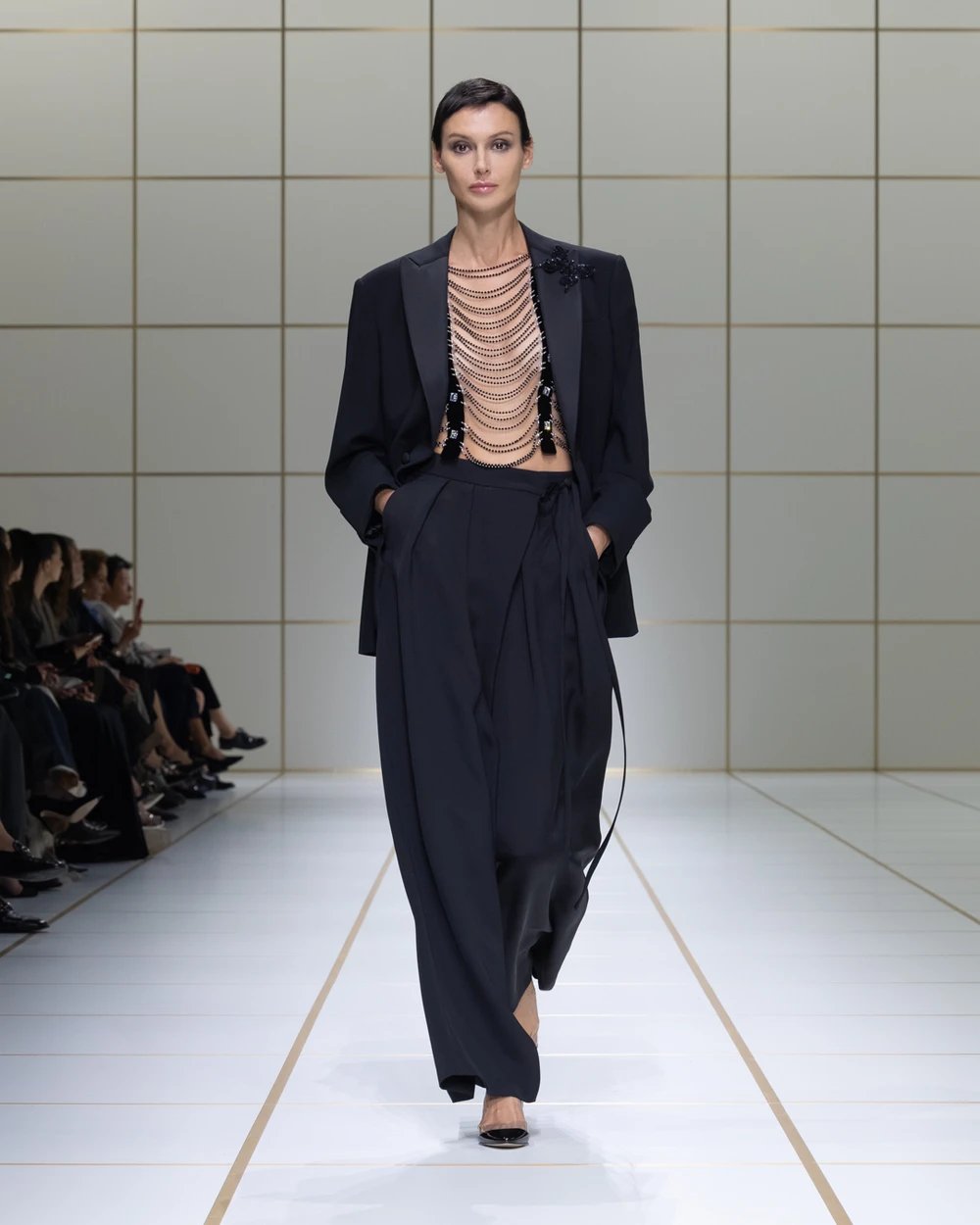
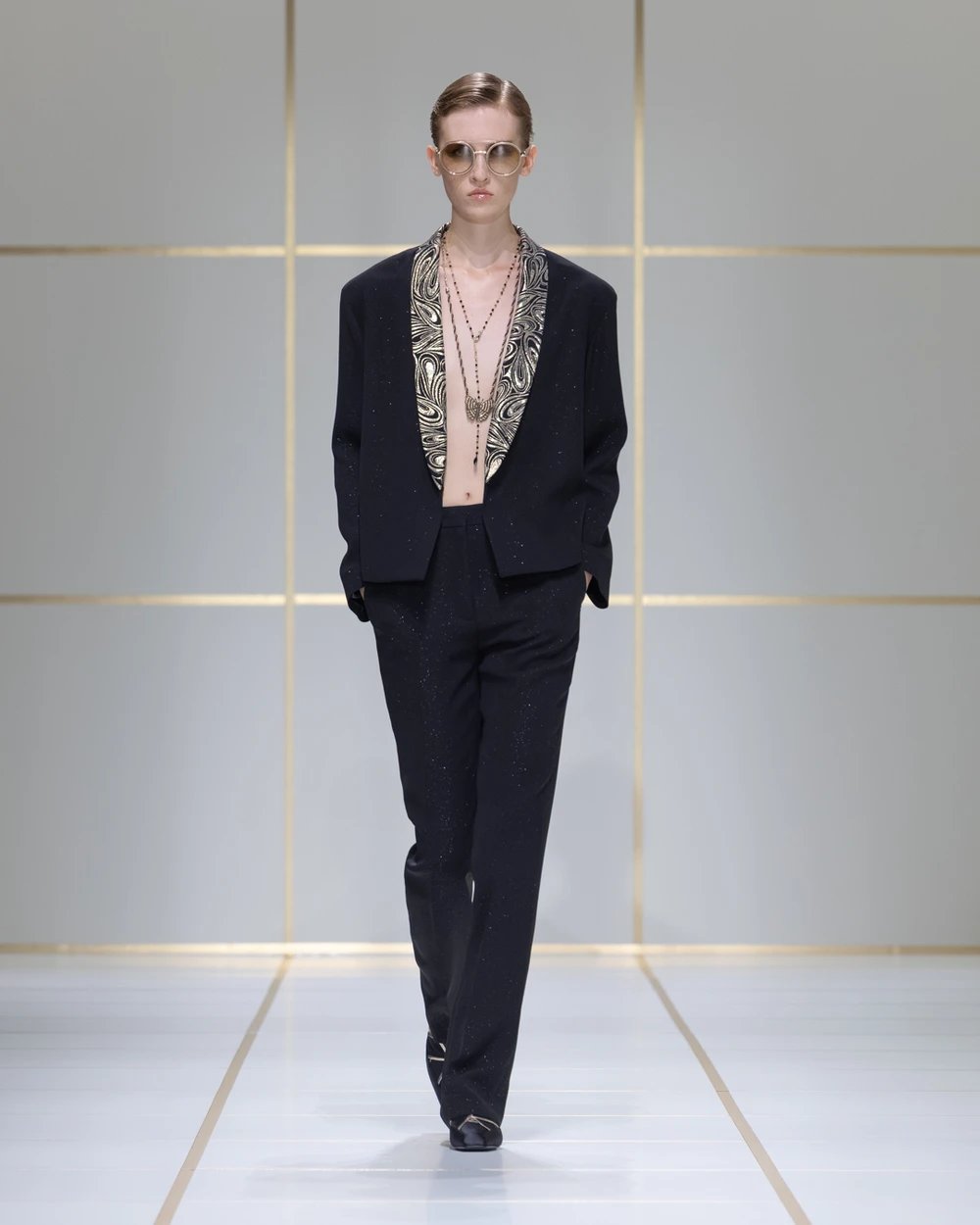
Jackets ran longer than in recent seasons, with the shoulder pushed toward the house’s 1980s archive and a wider trouser beneath. Tuxedo jackets in black and navy blue were thrown over going-out tops or tucked into pleated Bermuda shorts cut in evening fabrics. The shorts became the collection’s second silhouette, shown with quarter-zip hoodies, windbreakers and bustiers.
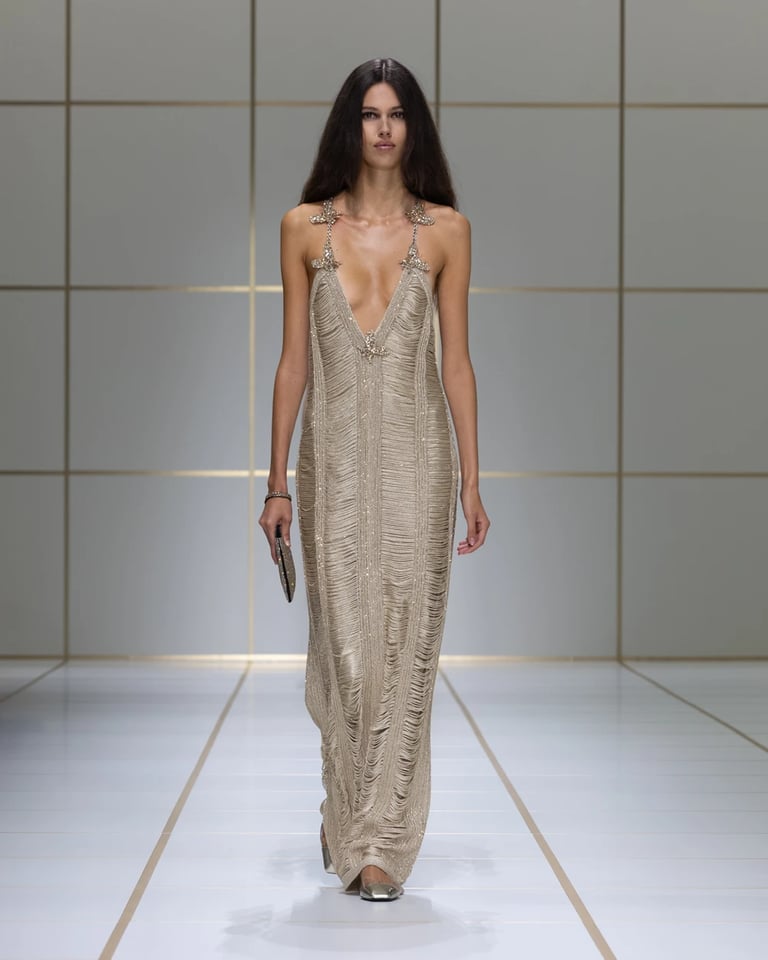
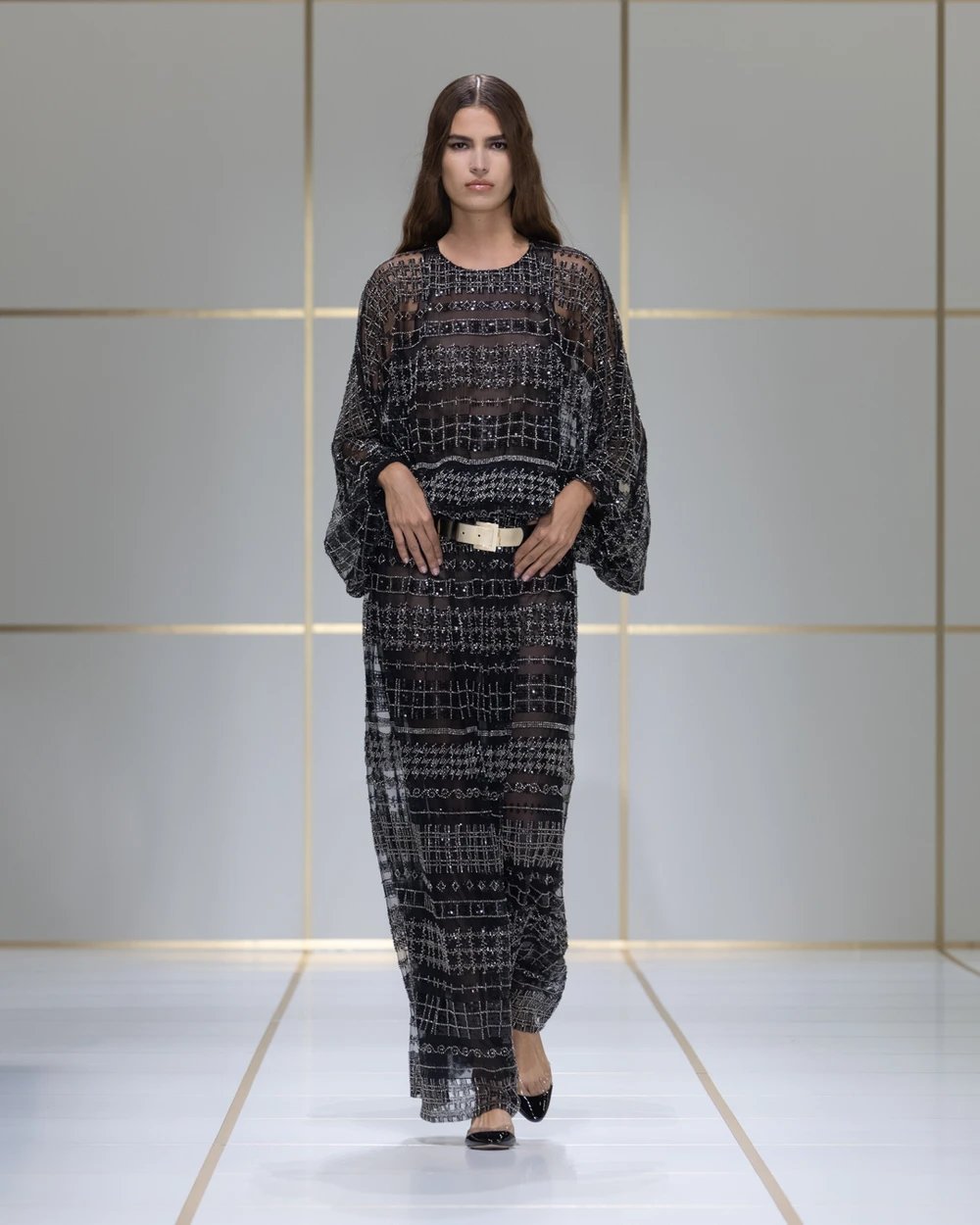
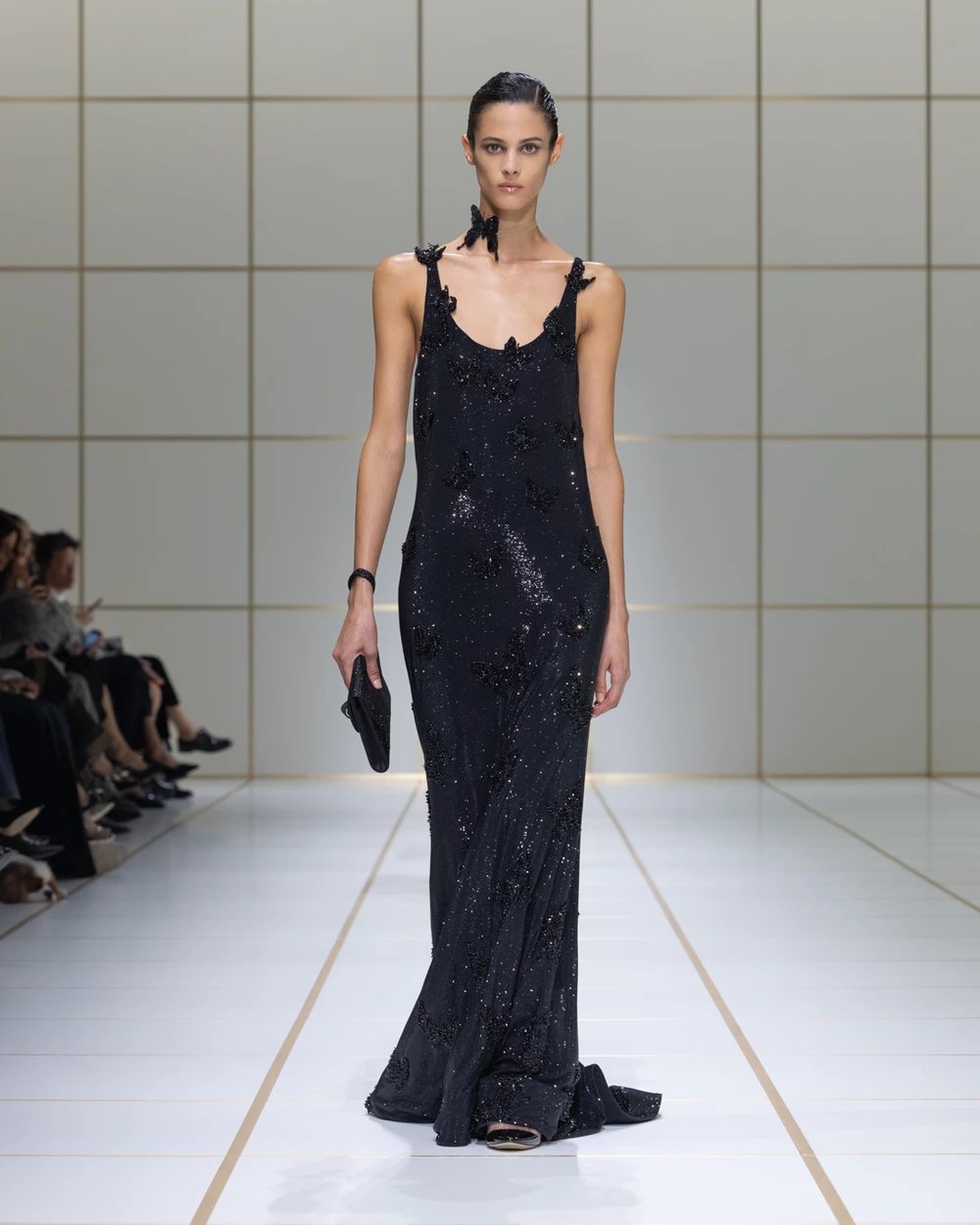
Cotton carried much of the daywear, as a fluid wide-leg trouser and a roomy knee-length short. Styling stayed close to the floor: nearly every look was grounded in flats, among them slim loafers, neoprene knee boots and peep-toe d’Orsays. The heels that appeared came in kitten and platform shapes. Jeweled brooches, pendants and chokers carried butterfly motifs, and one gown repeated them on the spaghetti straps and at the neck.
The House Codes
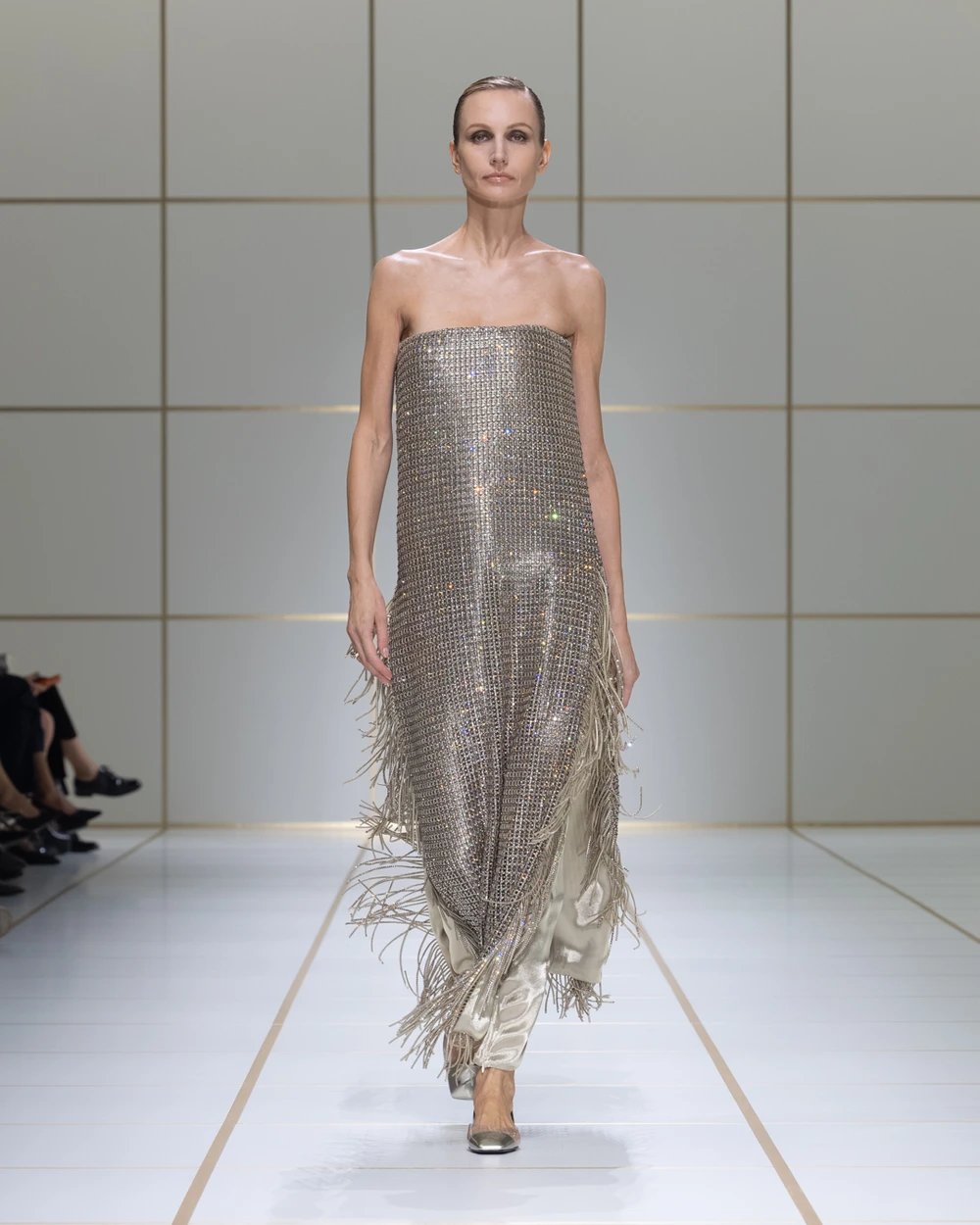
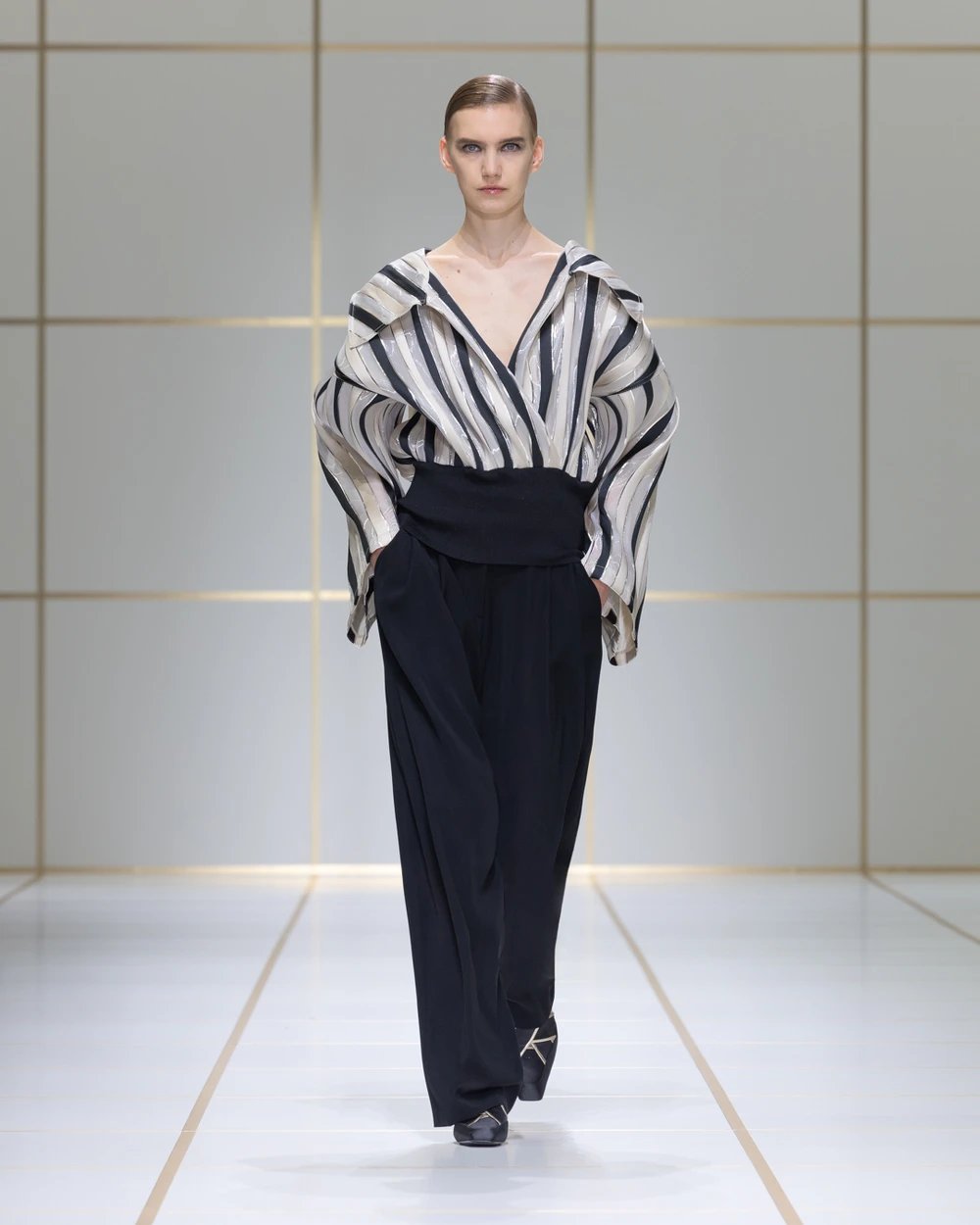
Cotton had not appeared on a Giorgio Armani pista before this collection. “But I adore cotton, so I added it,” Silvana Armani said, adding that her uncle had considered it too humble a fabric for the line. Armani’s evening fabrics have held the top of the house hierarchy for decades, and the two were shown together here.
The archive surfaced in an embellished bomber, with a black-and-white portrait of Giorgio Armani in black-tie collaged onto the surface. The house also reproduced his first Holy Communion suit: dark, double-breasted, with covered buttons, slash pockets and roomy trousers, worn with a tie, white gloves and a rosette on the lapel. Neither the tie nor the gloves is standard on a catwalk now, and the company later released a black-and-white photograph of the designer wearing the suit.
What Worked
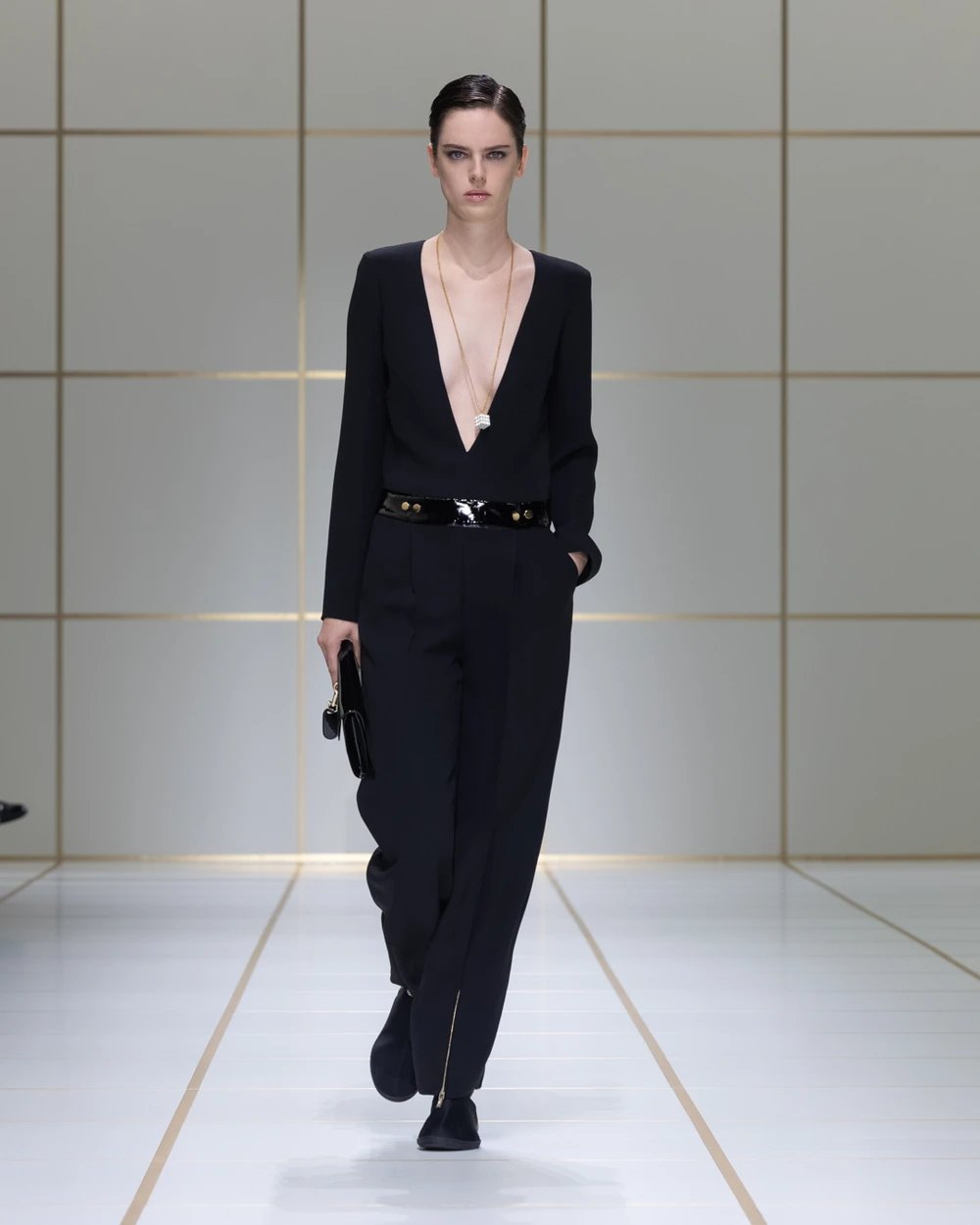
The tailoring carried the argument. A longer jacket over wider trousers covers more figures than the house’s narrow suits, and the collection showed the proportion more than once: a black jacket with gold-stripe trousers and a gold-stripe jacket with black trousers. The suit worked as parts as well as a set.
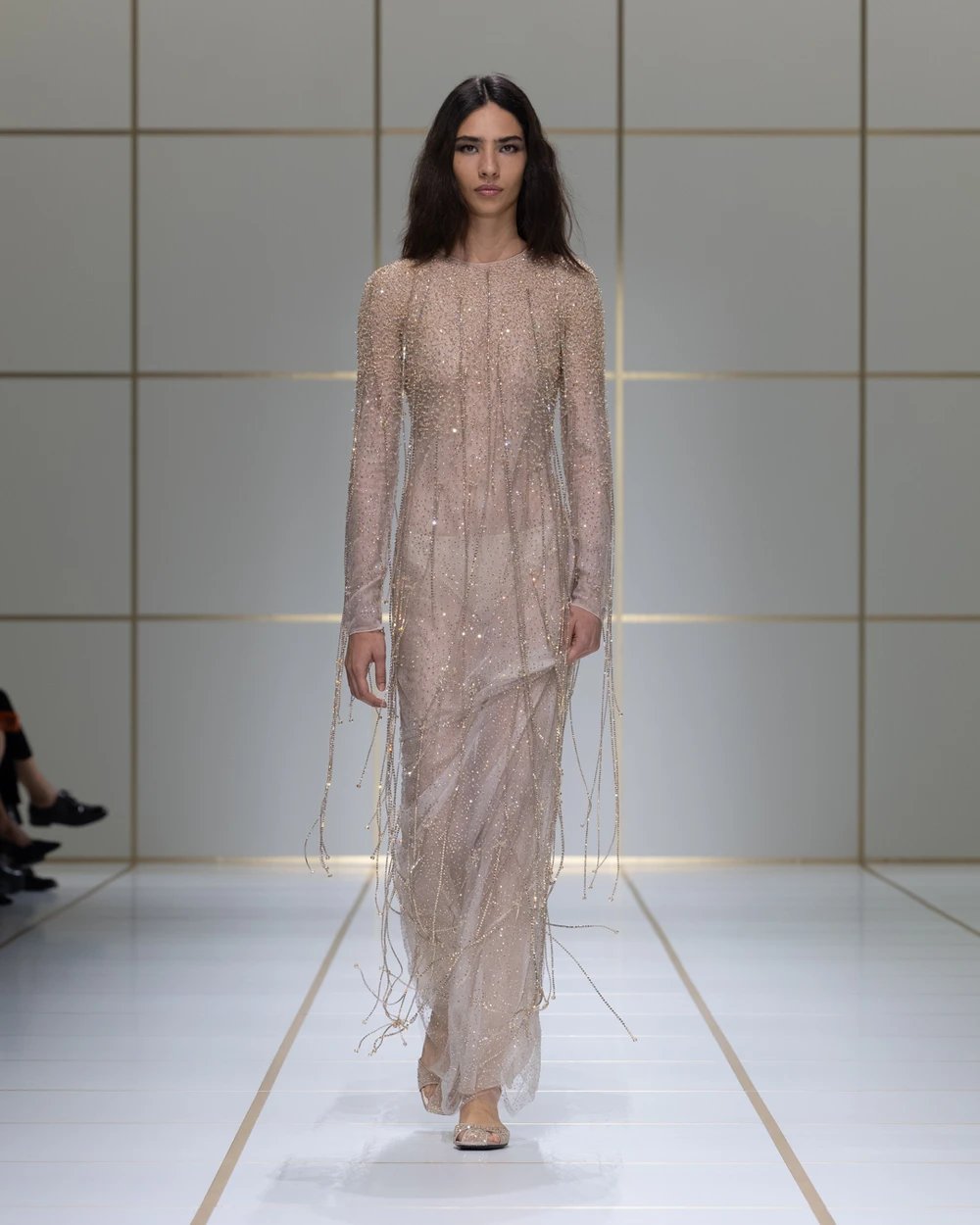
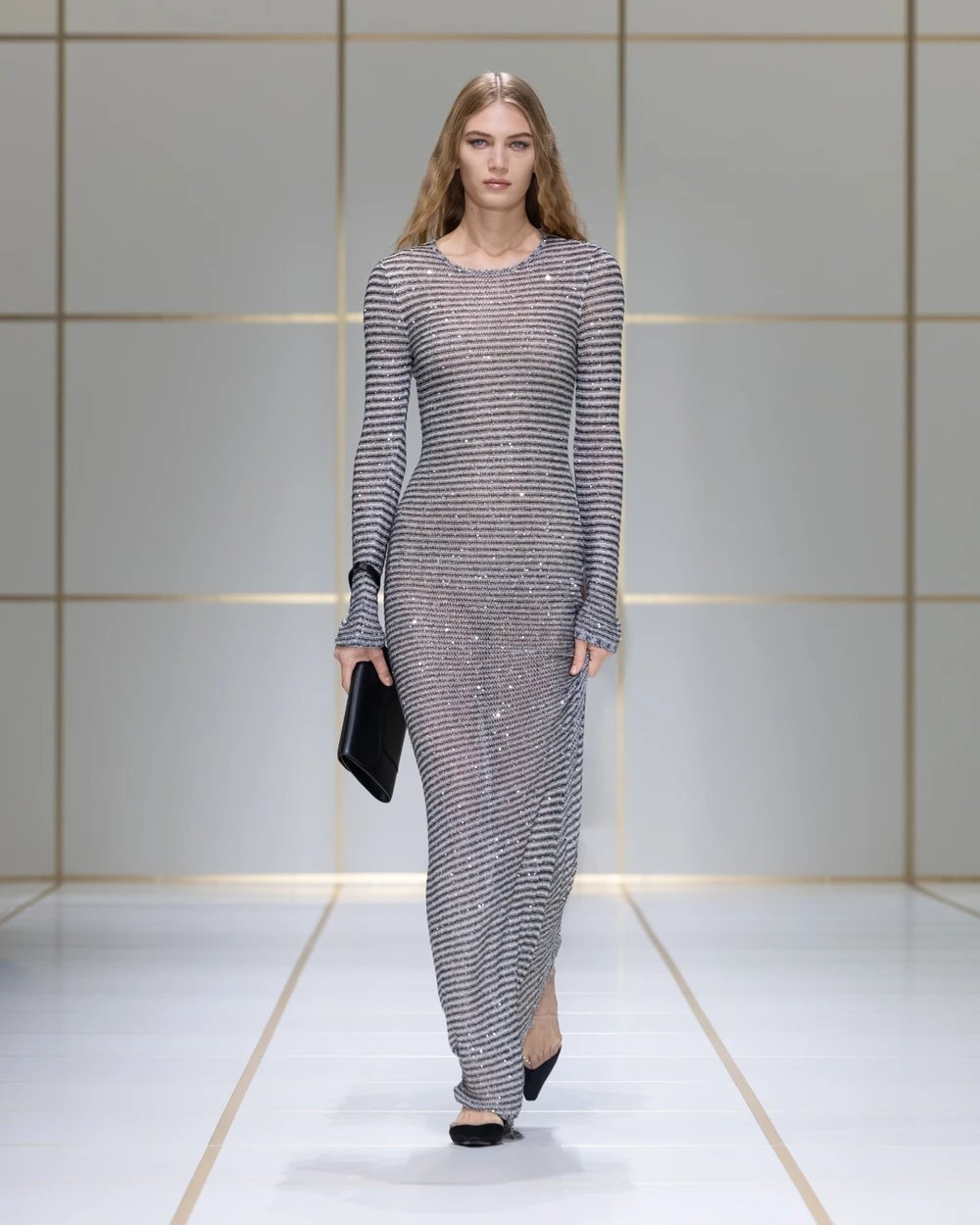
The footwear stayed flat throughout, and the same shoe appeared with Bermuda shorts and evening looks. Eveningwear ran from a slim gown with a deep V at the front to cropped sequin jackets and a white gown with long, loose fringe.
Where It Faltered
Not every look earned its shape. Bustiers worn over statement skirts and trousers read stiff against the loose tailoring, the construction fighting the body rather than following it. Some narrow trousers and a glittering batwing jacket took the 1980s too literally, landing closer to costume than archive.
The change is also smaller than the title suggests. Cotton is one fiber, and the added structure is selective, so the shift registers at the shoulder before it registers on the floor.
The group’s creative structure is already moving. On Sept. 16 it named Dario Vitale, previously creative director of Versace, to lead Emporio Armani and Giorgio Armani Accessories, the first designer from outside the Armani family to hold such a role. Marsocci called the appointment “an important milestone for the Armani Group.”
Accessories sits inside that brief, and the group’s own statement described Emporio Armani as a brand of strategic relevance and accessories as a great opportunity. Leo Dell’Orco, the founder’s longtime partner, holds life tenancy on a 30 percent stake, and Silvana Armani is one of four heirs holding 15 percent each.
The tailoring is doing the arguing. For a house that has to sell a slice of itself by March, that argument is settled on the retail floor, where the added structure reads as either Armani or someone else’s jaqueta.
See complete collection below:
Images courtesy of Giorgio Armani
In another fashion week news, Gucci Spring 2027 Ready-to-Wear Collection at Milan Fashion Week