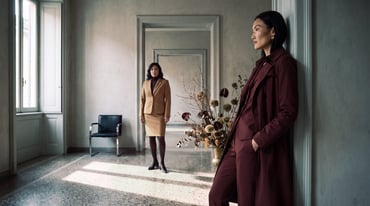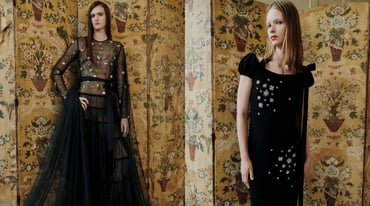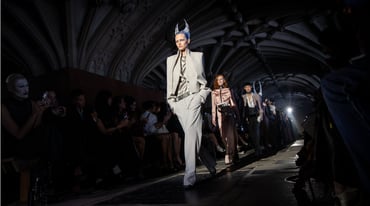
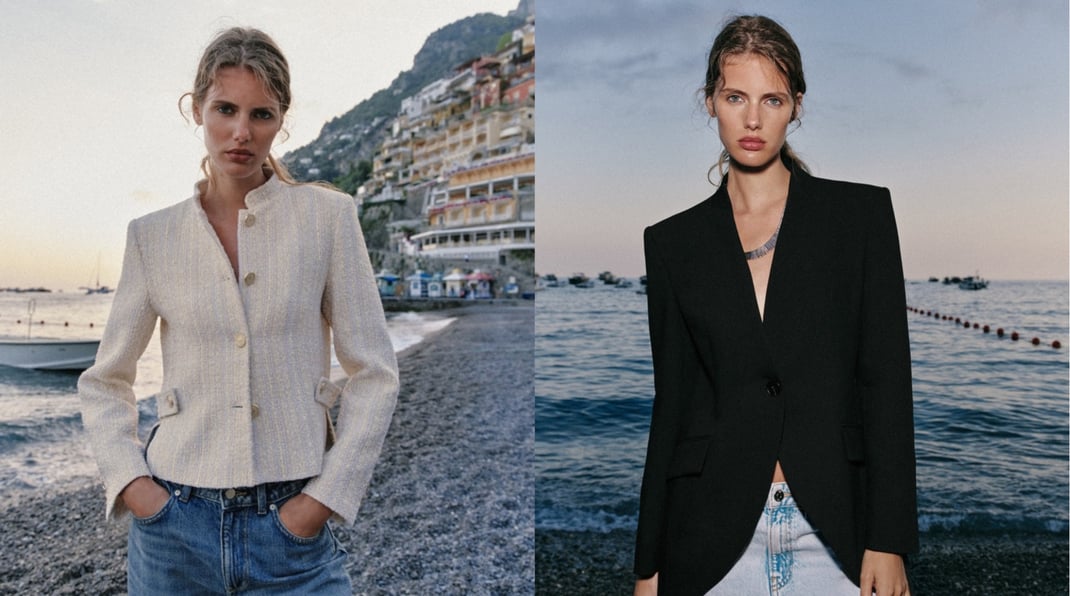

Zara’s Spring 2026 collection distills modern dressing to its most considered form — architectural silhouettes, a chalk-to-obsidian palette, and a quiet interplay of texture that rewards attention. This is not minimalism as absence, but as argument: that clarity, in the right hands, is its own kind of power.
Minimalism has never truly been about subtraction. At its most powerful — in the austere geometries of Jil Sander’s early nineties, in the long, breathing silences of Rei Kawakubo’s white-room presentations — it is an act of radical conviction. To remove is to commit. To simplify is to say: this is enough, and it is everything.

For Spring 2026, Zara arrives at that same frequency — measured, deliberate, and quietly assured.
The collection reads less as a seasonal offering than as a meditation: on proportion, on restraint, on the particular kind of confidence that has no need to announce itself. Silhouettes are gently architectural without being rigid. A blazer, sharply cut and unadorned, skims the body with the ease of something worn a hundred times before. Trousers fall in uninterrupted vertical lines, grazing the floor with a nonchalance that is, in fact, very precisely engineered. Dresses stripped to their structural logic — no flourish, no decoration — rely instead on movement and weight, the way fabric settles and shifts against the body in motion.
There is a dialogue here between tension and release that recalls the disciplined tailoring of late twentieth-century European fashion, yet the mood is distinctly of the present — less boardroom, more open horizon.

The palette holds steady: chalk white, warm sand, inky black, and a handful of soft mineral tones that exist just at the edge of naming. It is a spectrum designed not to dominate, but to redirect — to move the eye toward the fall of a hem, the seam placed with surgical intent, the barely-there contrast between a matte surface and a quietly luminous one. Texture becomes the collection’s true language. Crisp cotton meets supple knit; raw edges push back against polished finishes. Each piece suggests a tactile conversation — an intimacy between cloth and skin that no print or embellishment could replicate.
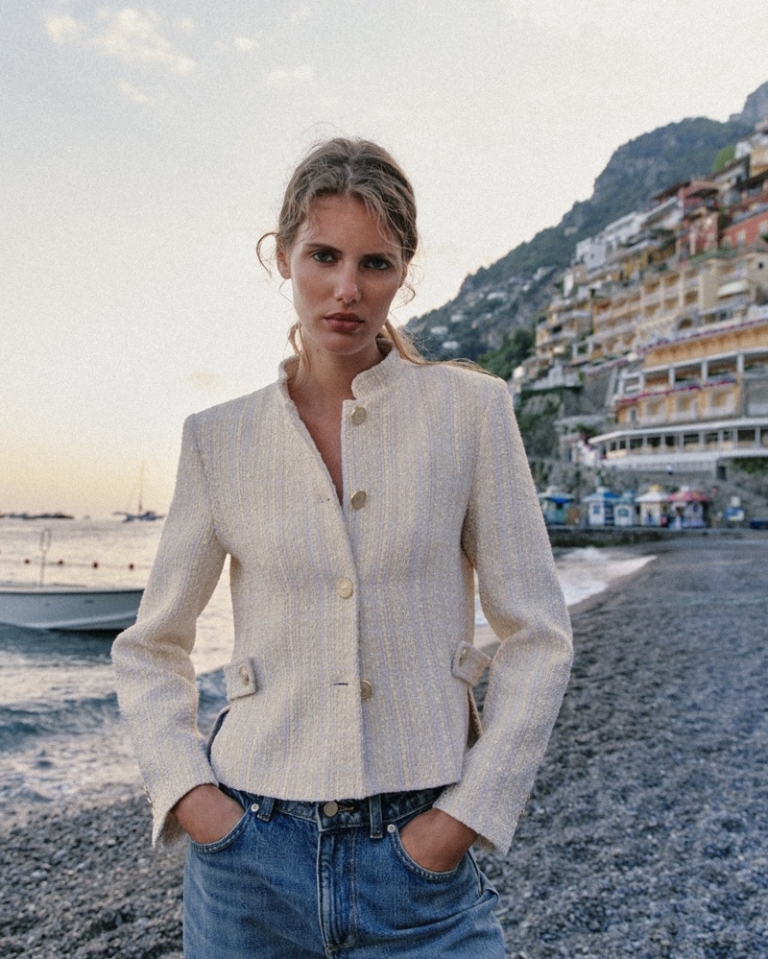
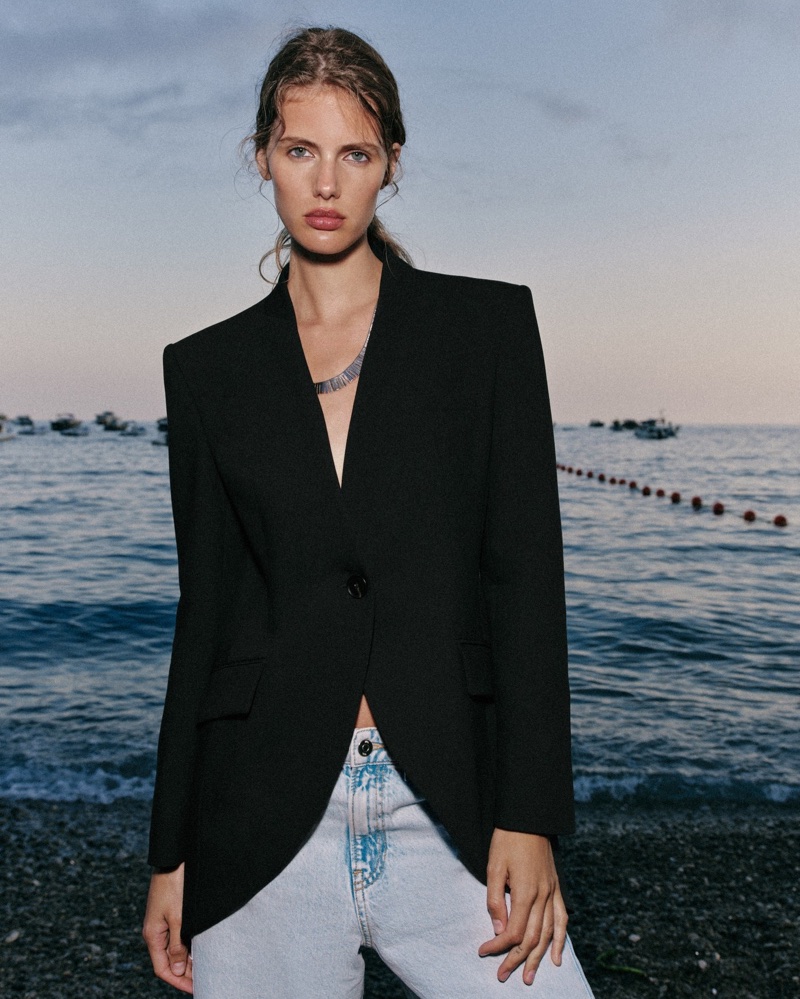
What this collection understands, and what so much of contemporary moda forgets, is that restraint is not passivity. In a cultural moment saturated with volume — visual, digital, sartorial — clothes that refuse to compete carry their own sharp edge. These pieces do not seek attention. They hold it, steadily, on their own terms.
There is something almost philosophical in that — an understanding that the most enduring allure is often the kind that leaves room. Room for movement. Room for interpretation. Room, above all, for the woman wearing it to step fully, unhurriedly into focus.

The truest luxury, it turns out, is space.
Immagini per gentile concessione di Zara
In altre notizie sulla campagna del marchio, Calvin Klein Spring 2026 Is Tailoring Soft & Effortless Elegance