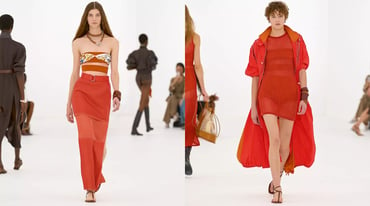
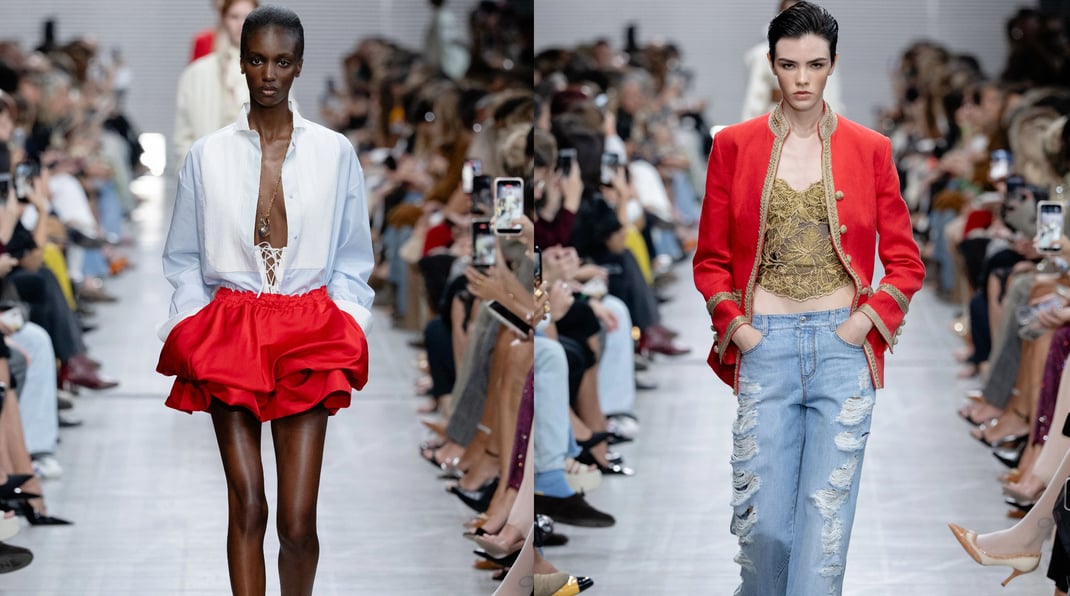

Ermanno Scervino showed 47 looks for spring 2027 during Milan Fashion Week, drawing on an 18th-century piracy reference through corset-laced tailoring, nappa tailcoats, and passementerie-trimmed outerwear. The craft held. The theme’s most literal expressions did not
MILAN — Ermanno Scervino showed 47 looks for spring 2027 during Milan Fashion Week, and the Florentine house used them to argue something the season’s prevailing mood did not: that handwork, not a trend position, is what a privately held Italian label can still sell. The stated reference was 18th-century piracy, with corset lacing, sailor trousers and gold frogging that read as much Sgt. Pepper’s as it did naval dress. The argument underneath was about execution, and the pieces that carried it were the ones where the costume got out of the way.
The Collection’s Central Idea
The designer Ermanno Daelli, who founded the house in Florence in 2000 with Toni Scervino, has built the label on the proposition that Italian handwork is the product. Spring 2027 tested that proposition against a theme with a high costume risk. “Luxury cannot exist without craftsmanship,” Scervino said backstage, which is the house’s position stated plainly: the differentiator is not a silhouette the market can copy in a season but the passementerie, the patinated nappa and the in-house lace that take months to make.
Silhouette and Styling
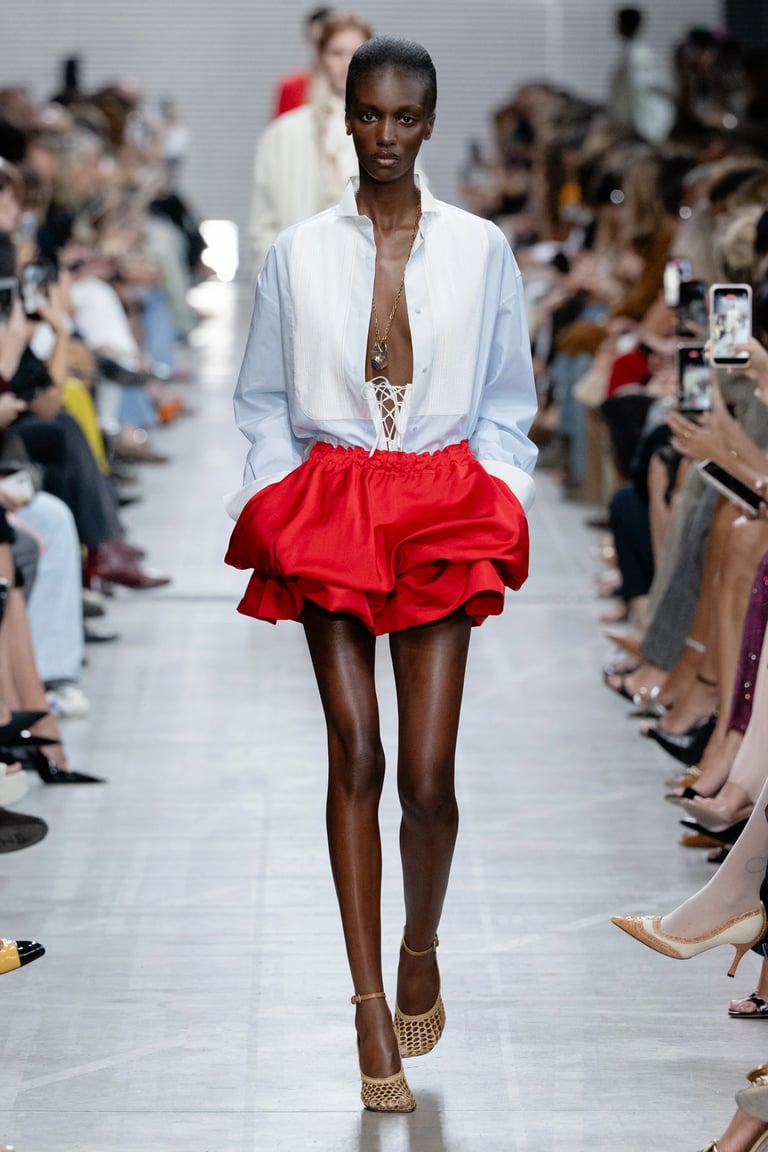
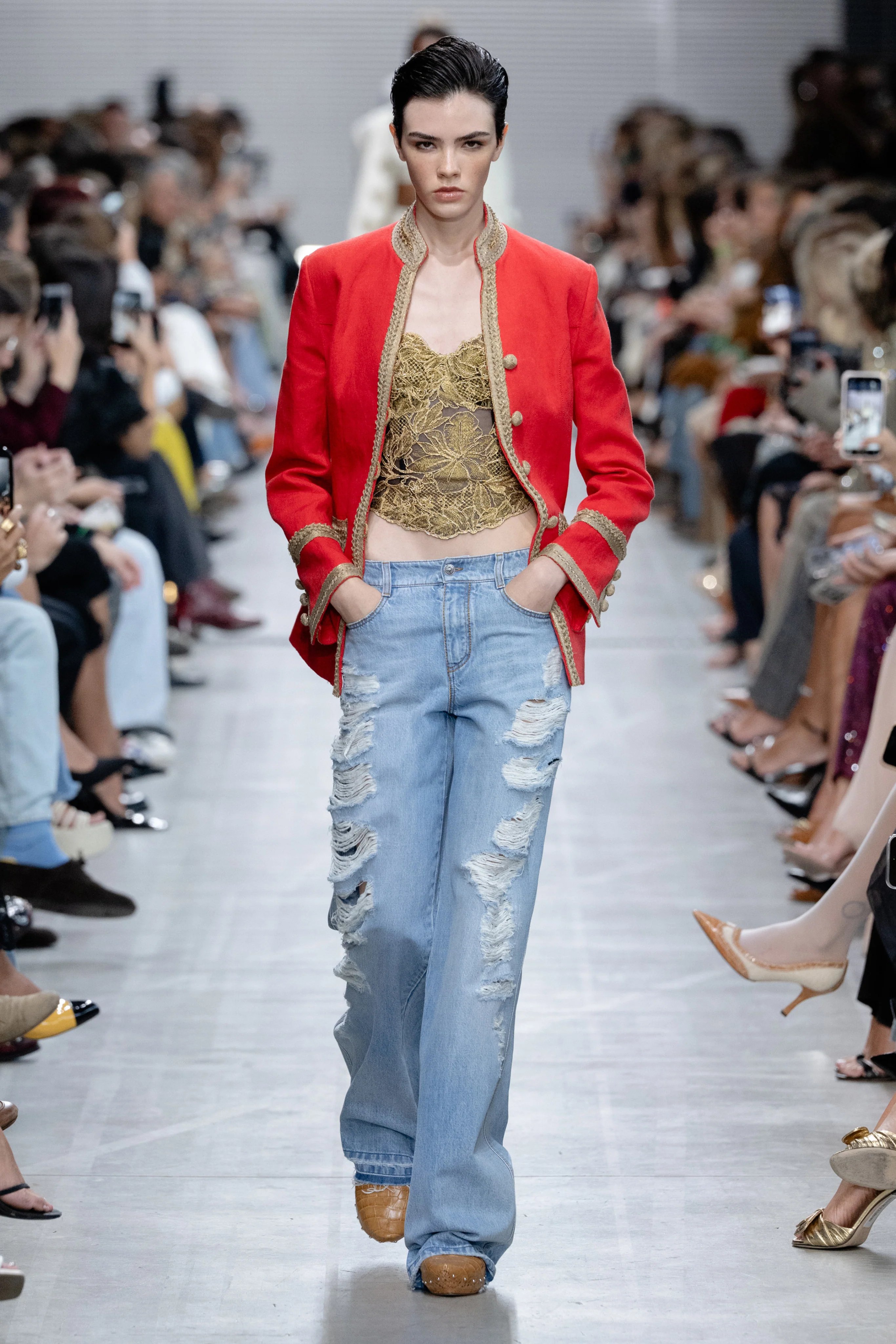
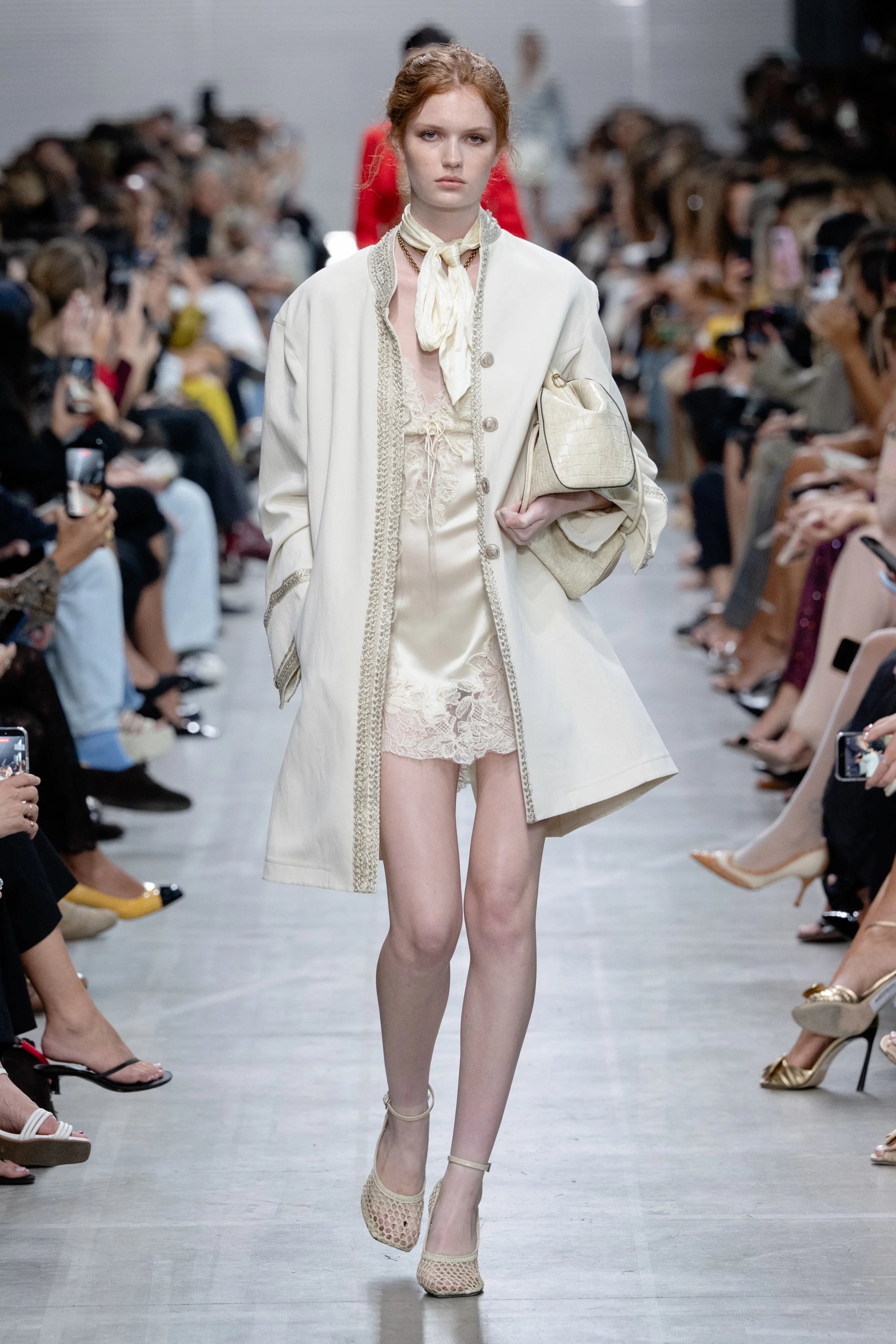
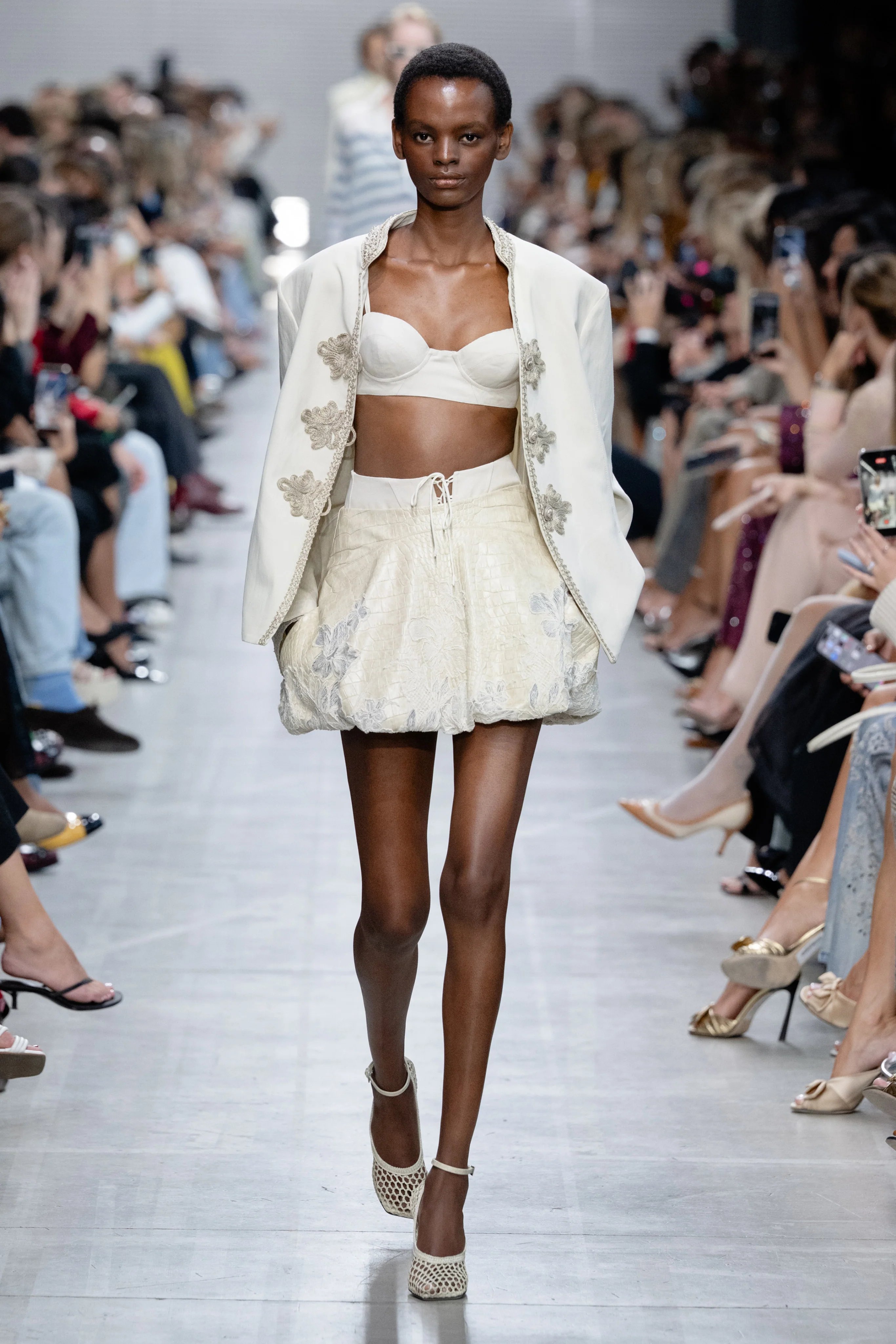
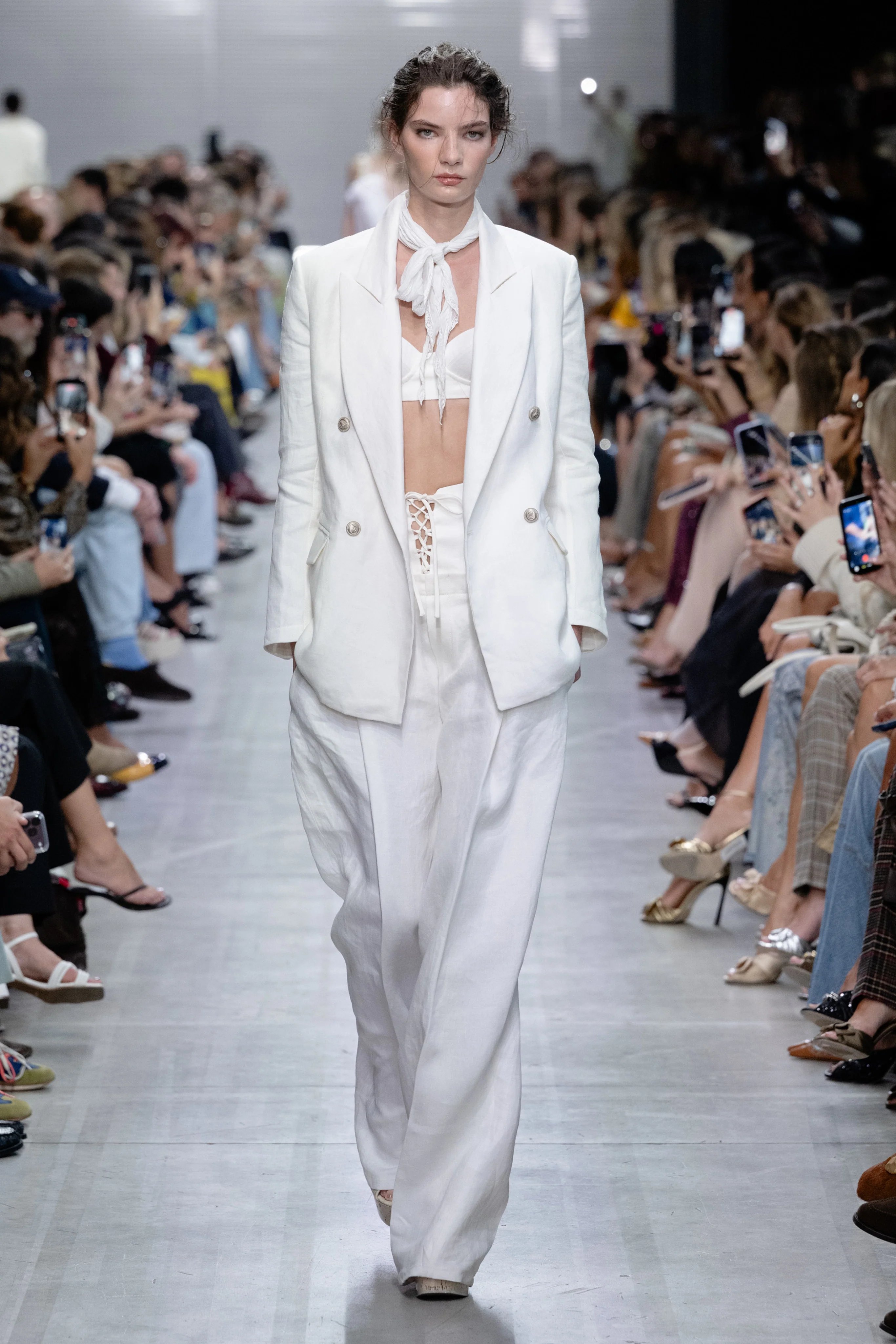
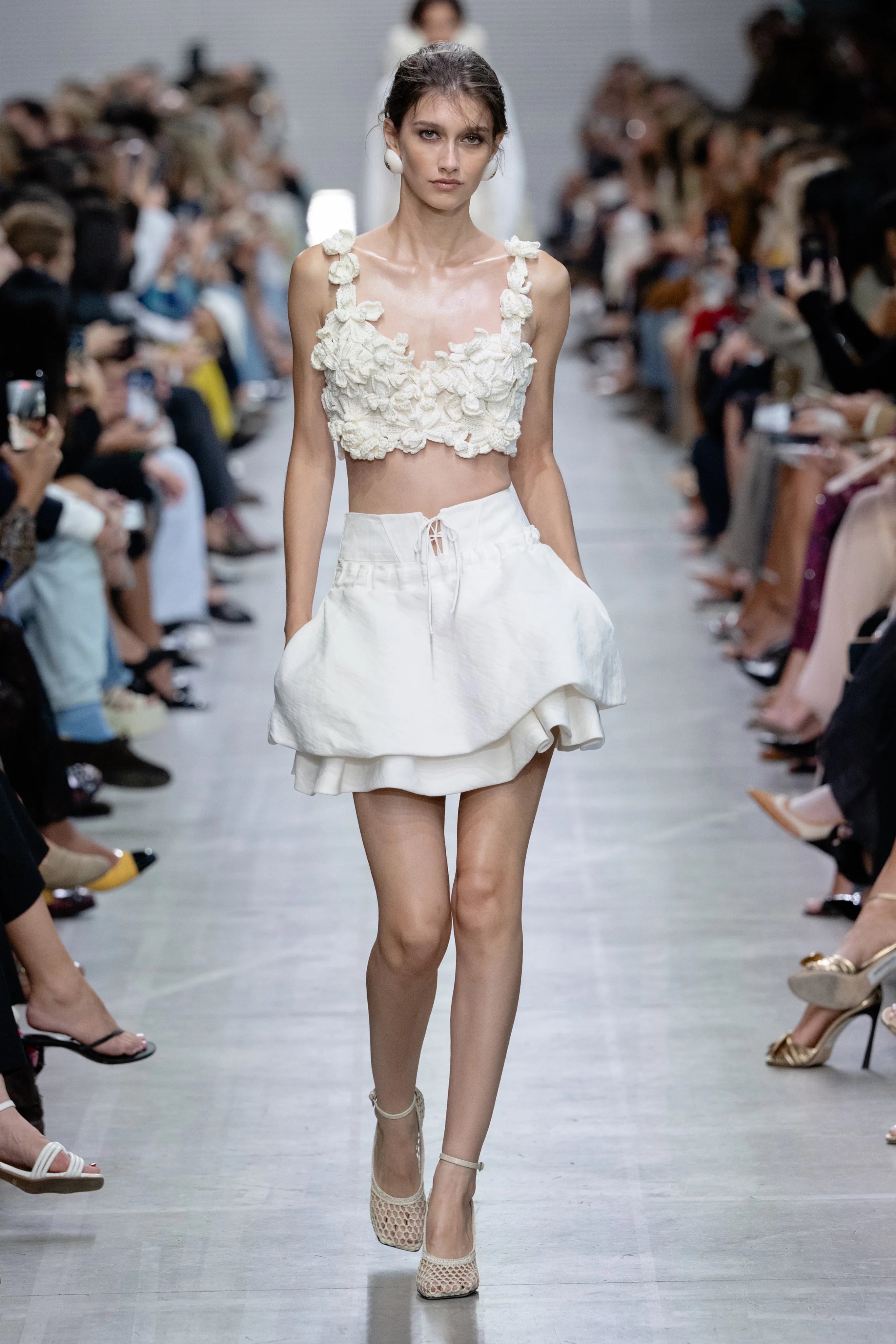
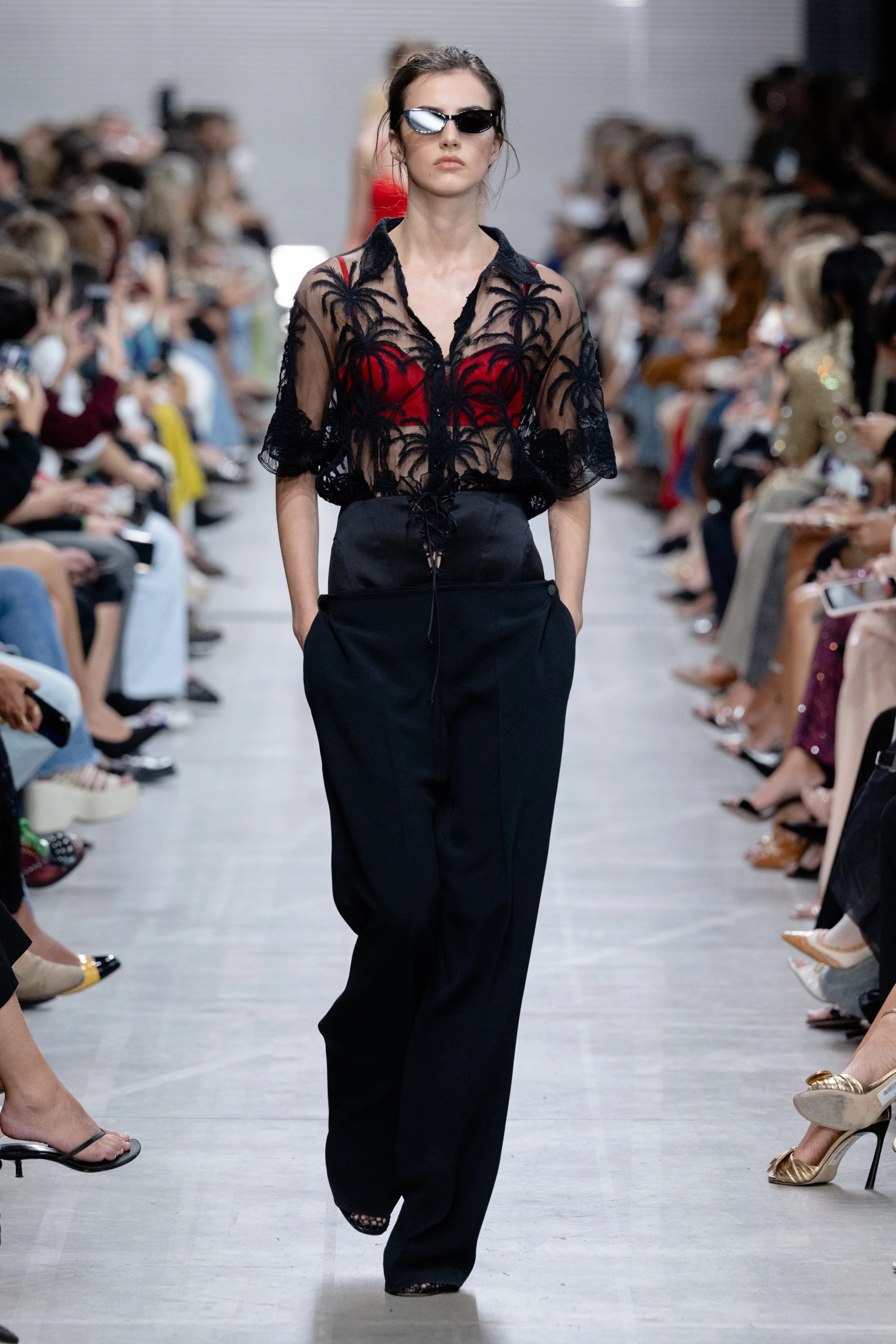
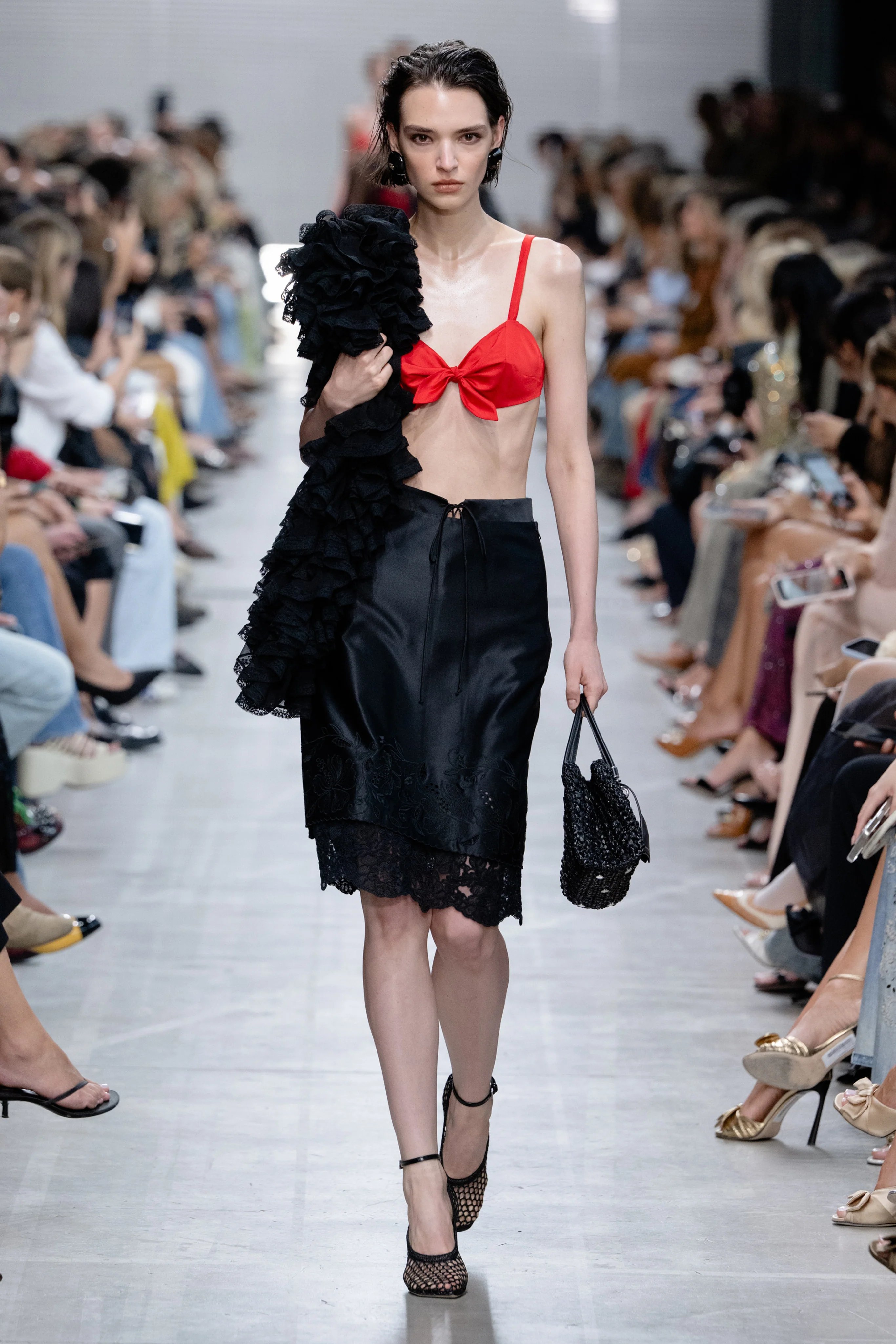
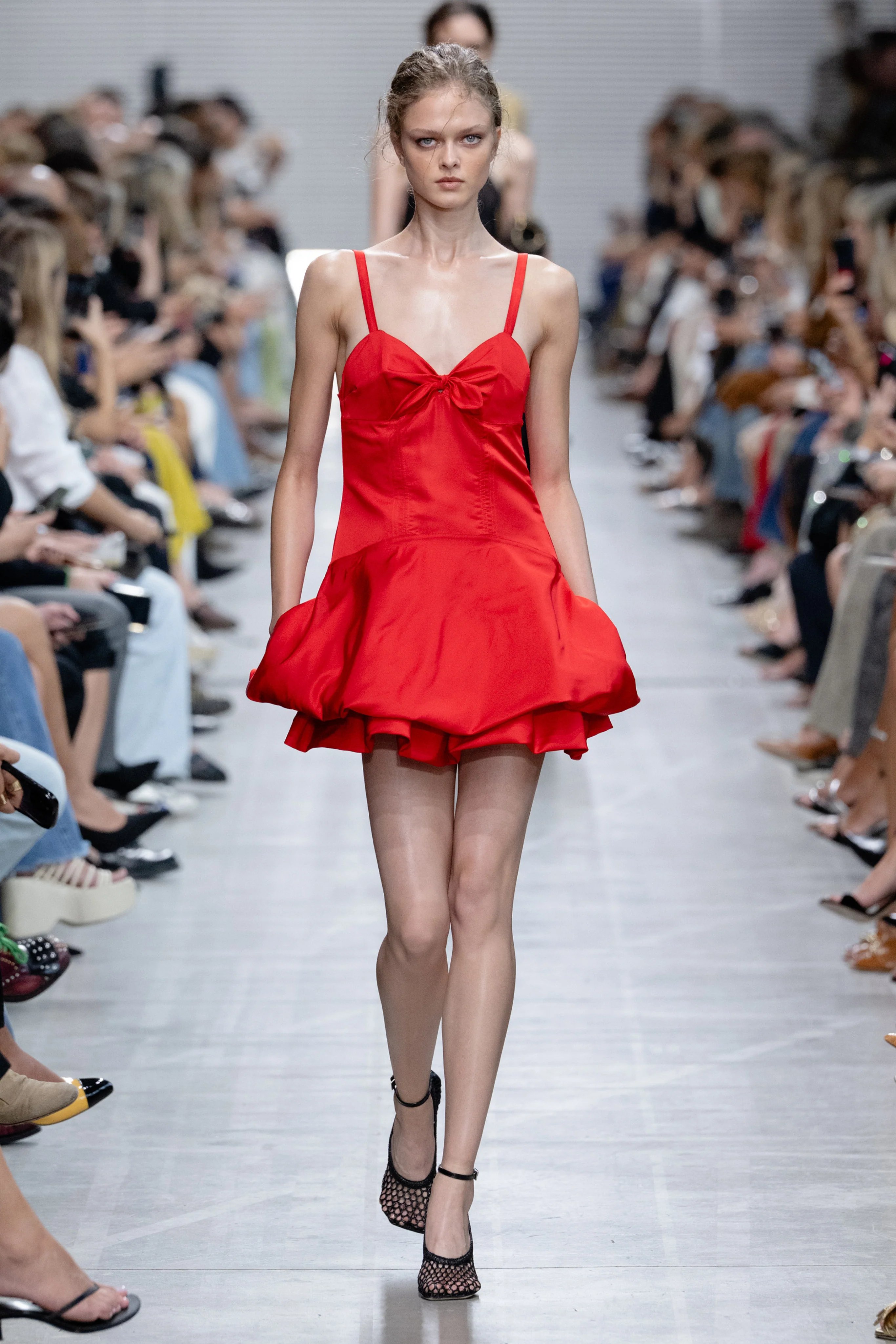
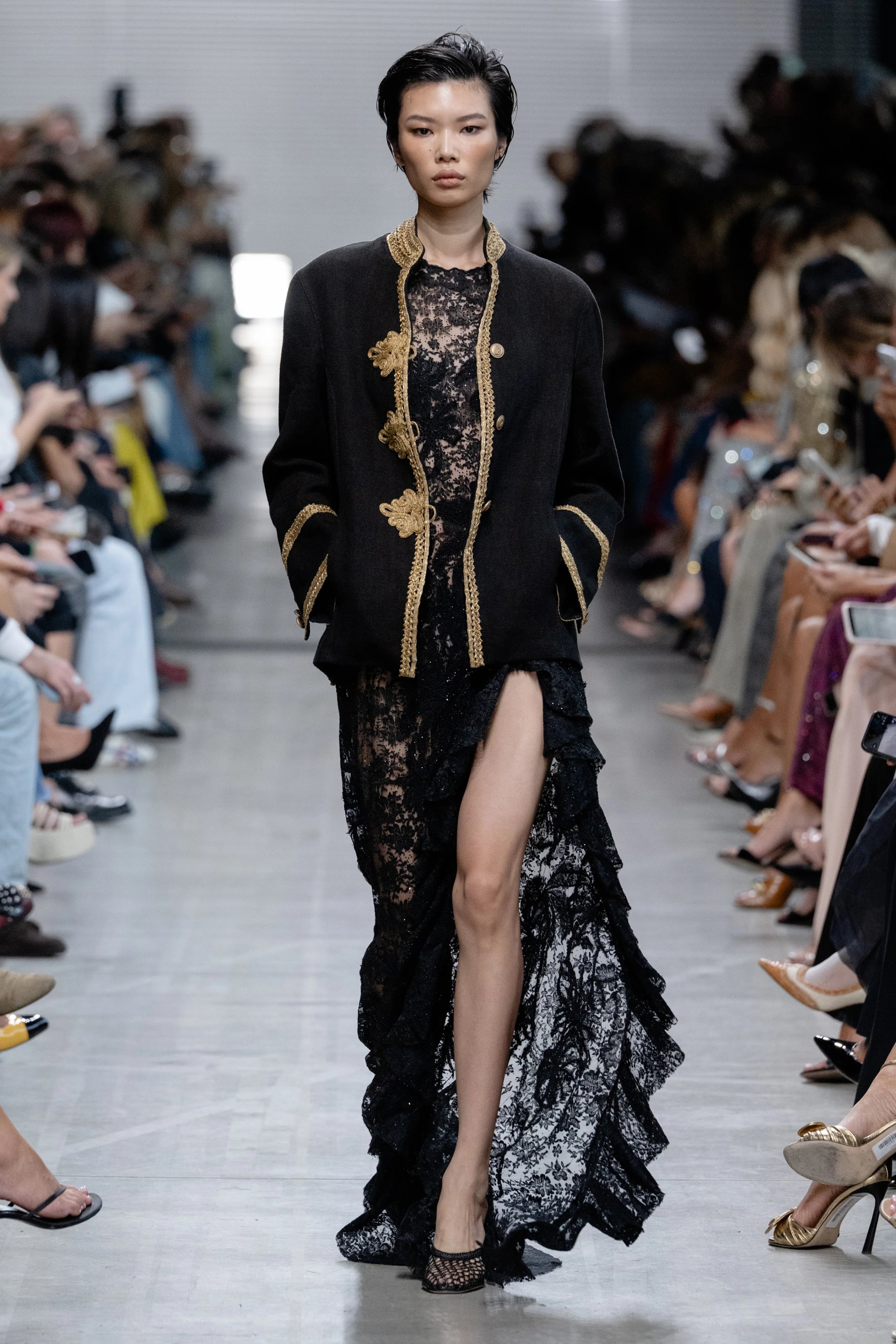
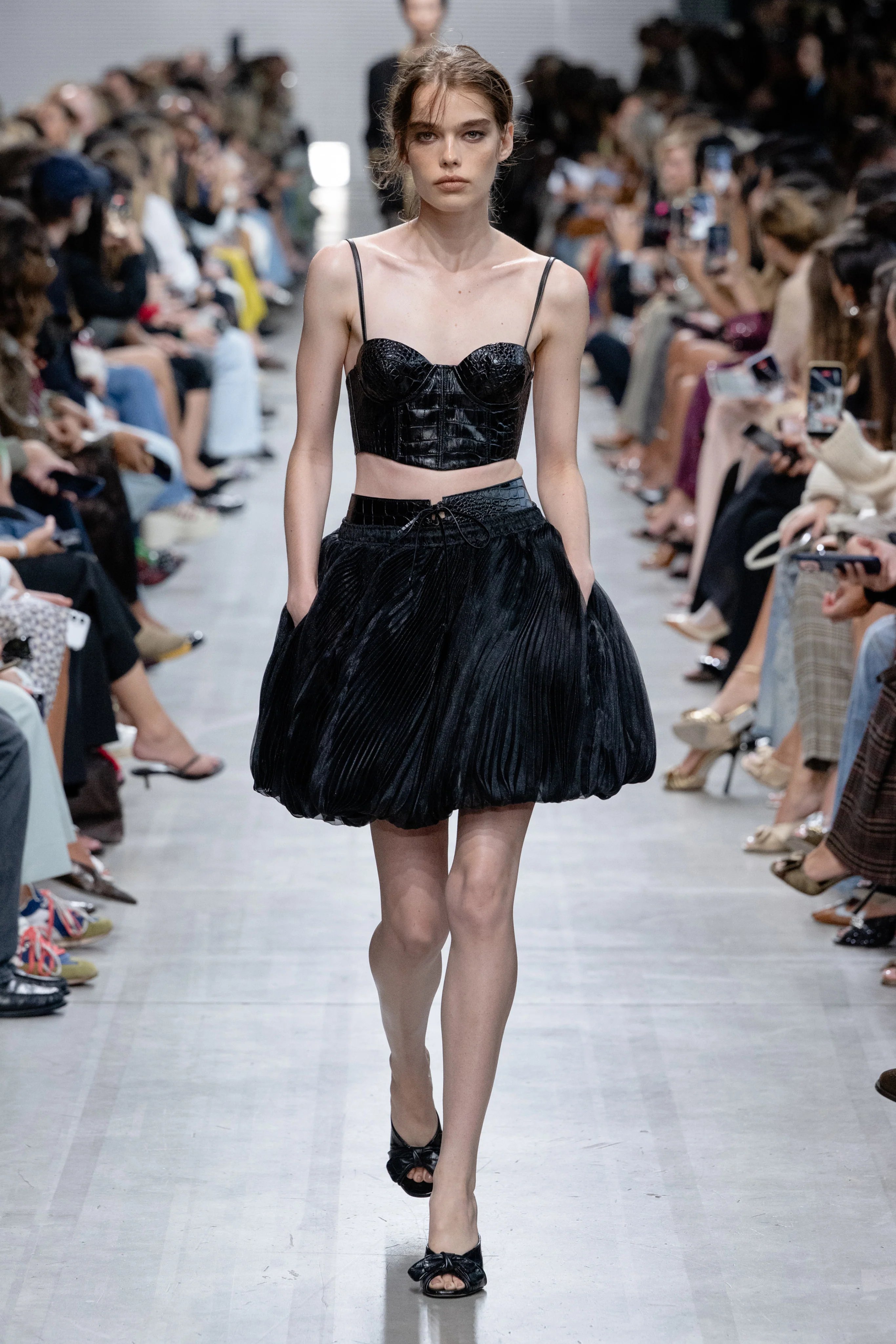
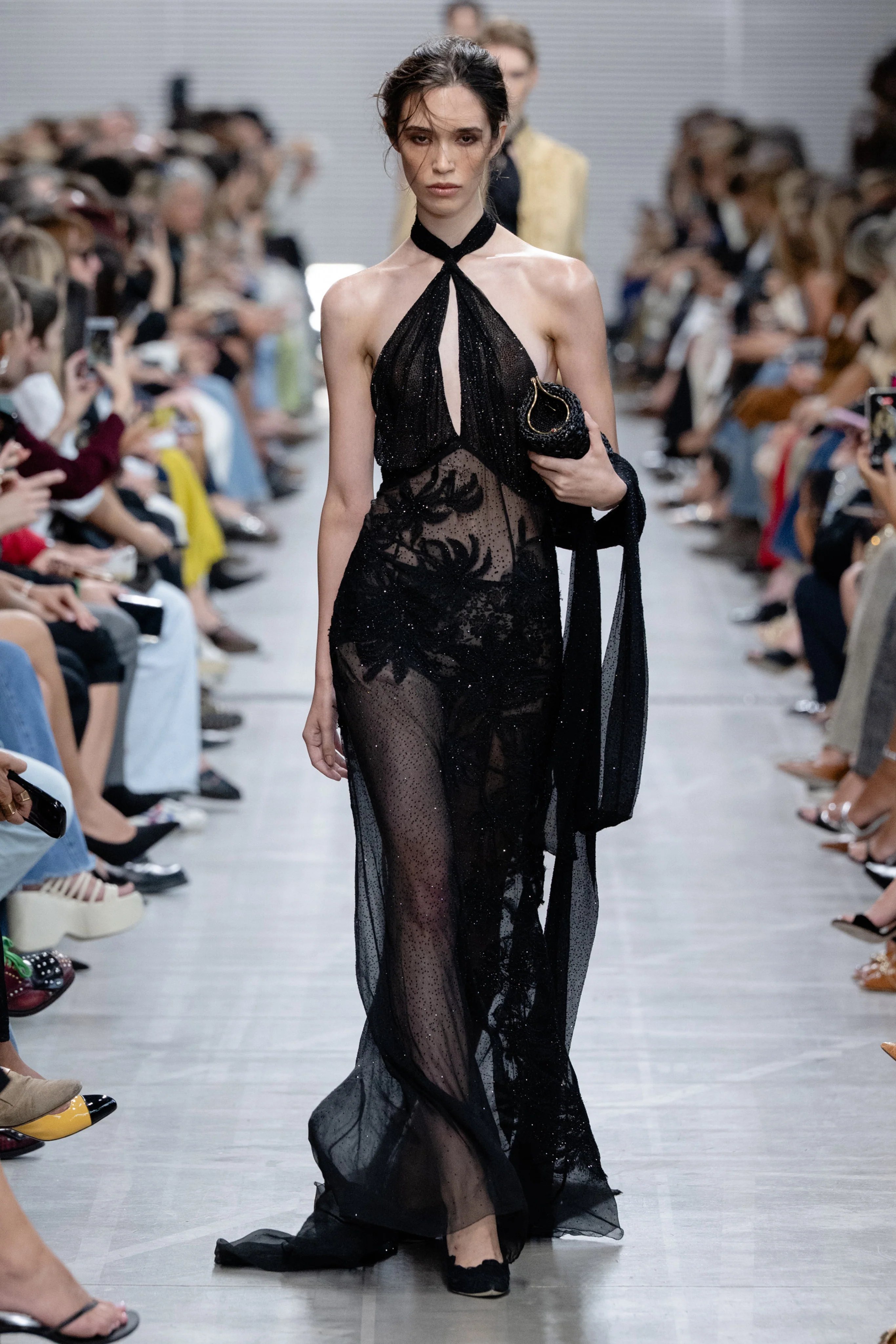
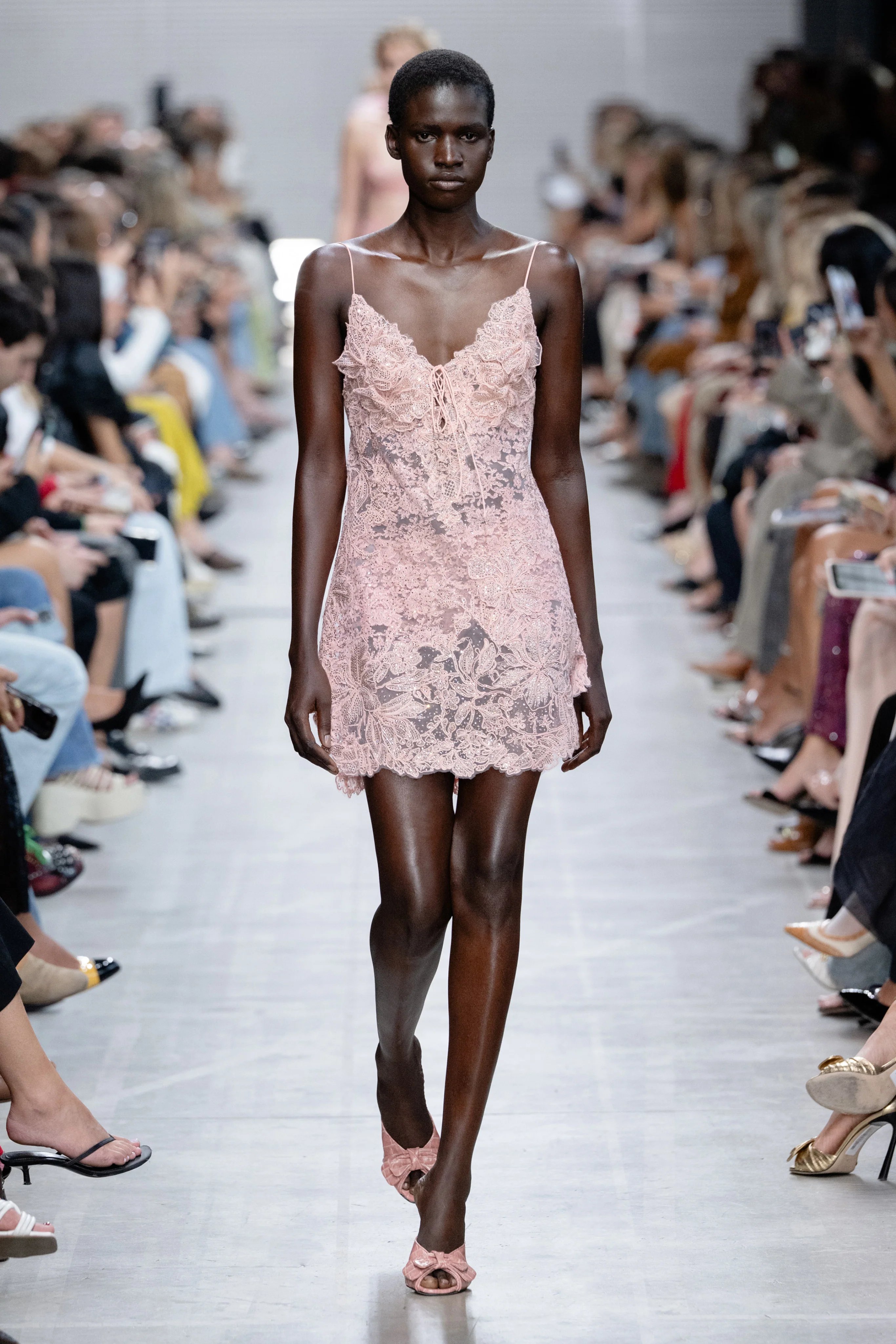
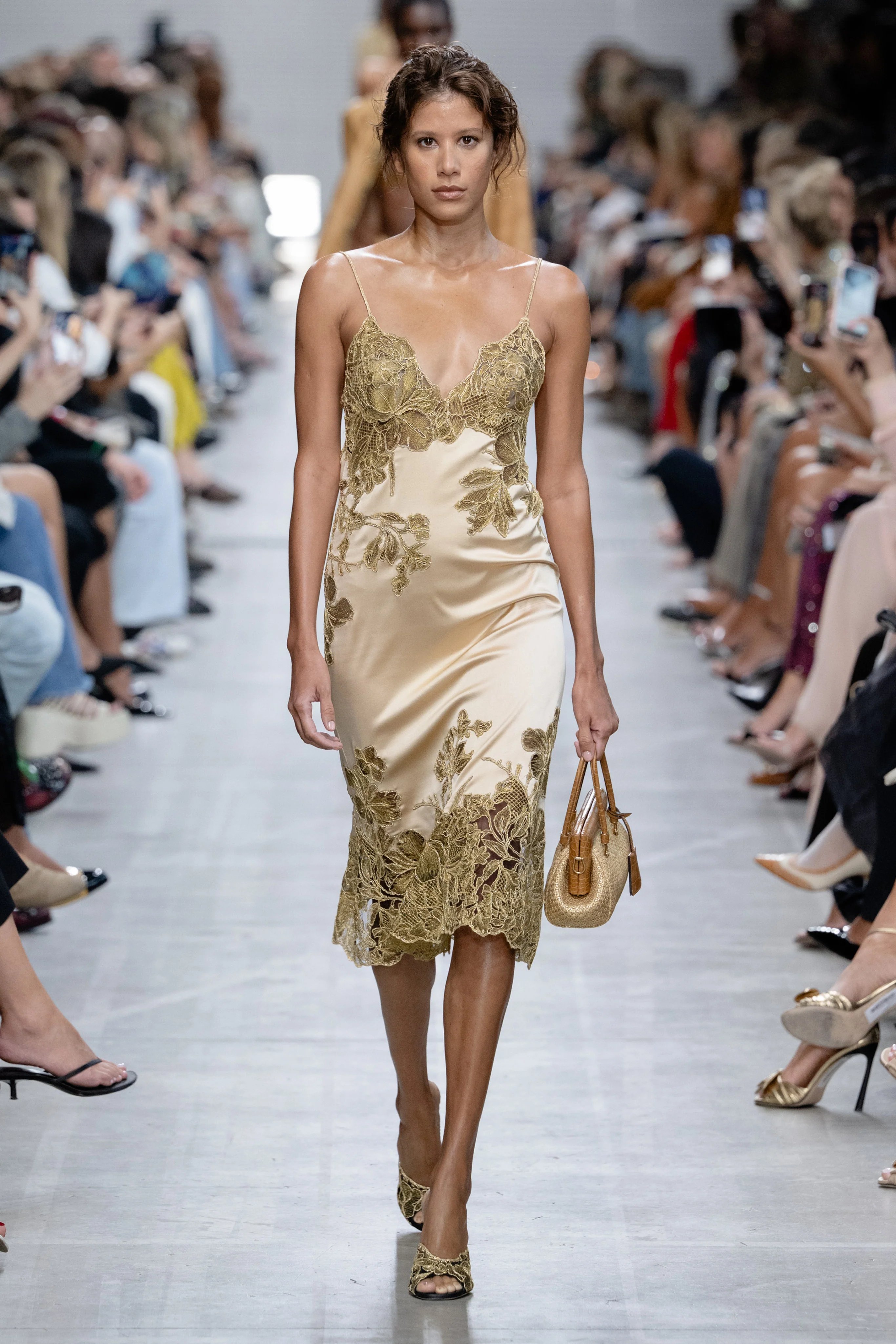
The tailoring was the collection’s most controlled element. Double-breasted jackets carried delicate corset lacing at the sides, some paired with wide-leg sailor pants; others were nipped at the waist and worn with loose, pleat-front tuxedo shirts left open over pouf and leather miniskirts. Evening leaned on satin and lace: slip dresses in rose lace and coppery satin, and lace bustier tops over flippy tiered skirts. Soft cotton and denim jackets in red, gold, blue, and black, with gold frogging on the cuffs, collars, and fronts, were tossed over lace and sailor trousers as the collection’s closing statement.
The House Codes
The craft focused on the outerwear. Perforated suede jackets and trousers were embroidered with organza ribbons worked like lingerie, and the hand-patinated nappa tailcoats were cut light enough to wear as shirts, a softness the designer said took months to achieve. The corsair jackets in linen matting carried passementerie developed with a yarn technician: braided ribbons in gold or copper metallic thread, and silk galloons worked into loops. Scervino designed the lace himself so its motifs would echo the hibiscus and palm leaves in the prints.
What Worked
The knitwear and the tailoring held the collection’s argument. A tailored knit suit in lisle yarn answered the question the theme kept raising: whether the clothes could be worn by someone who is not dressed as a pirate, and the nappa tailcoats and corsair jackets did the same work in outerwear, where the passementerie was dense enough to justify its cost. Denim was the collection’s clearest category expansion: the house does not usually work with it, and Scervino said he treated it “as if it were cashmere or silk.” The faded, slightly distressed denim jackets, thrown over lace and sailor trousers, were the most commercially legible pieces on the pista.
Where It Faltered
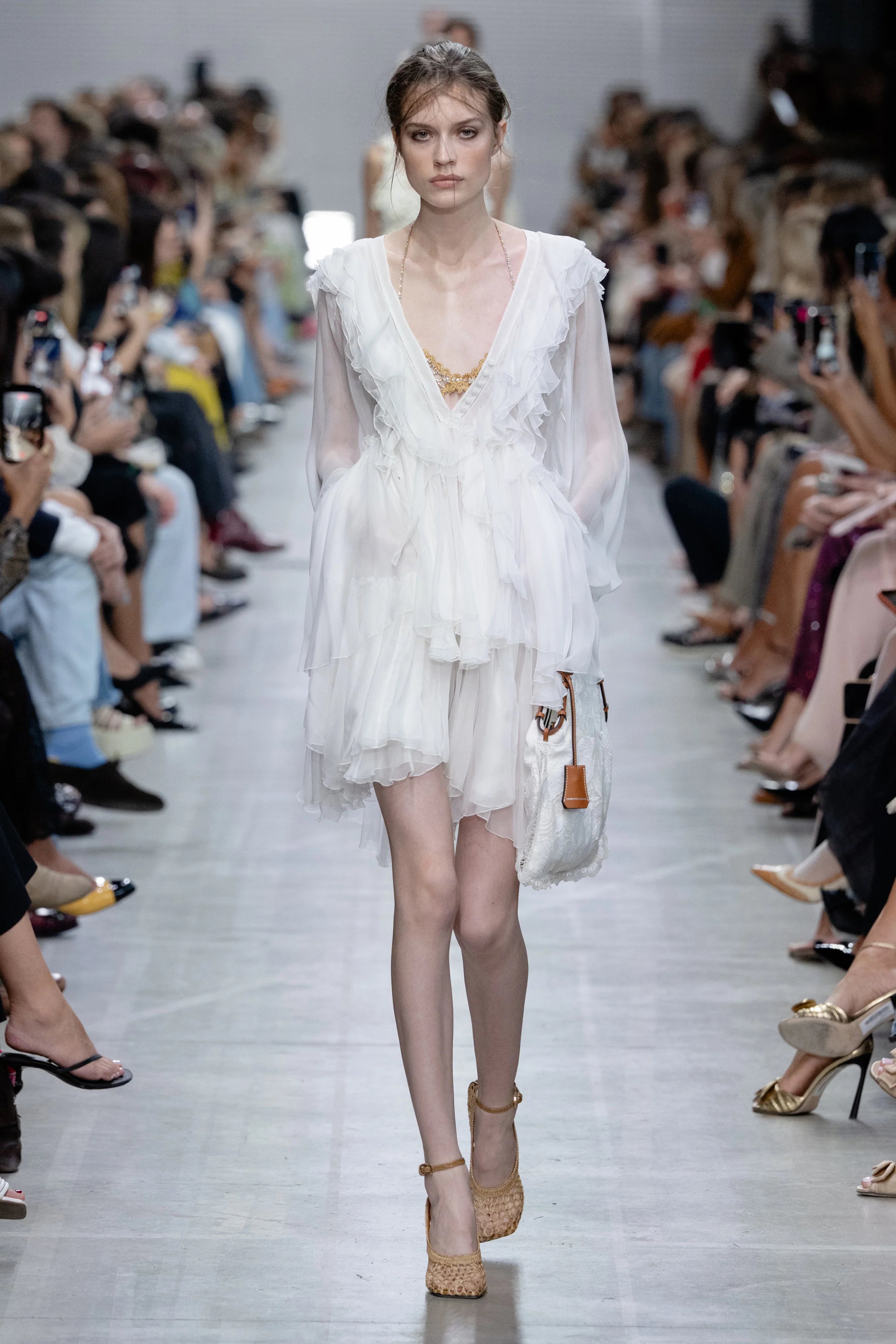
The theme’s most literal expressions were its weakest. A shadowy island landscape with palm trees and beaches appeared as an intarsia on loose sweaters, was patched onto jeans and denim jackets, and surfaced as a blue, black and white print on a strappy baby-doll dress. Applied directly, the motif asked the clothes to carry a narrative the tailoring did not need, and the palm prints read more like a styling exercise than the wardrobe the house sells. The distressed denim giacche, however well made, sat on the same line: a shipwreck finish is a costume response to a craft problem.
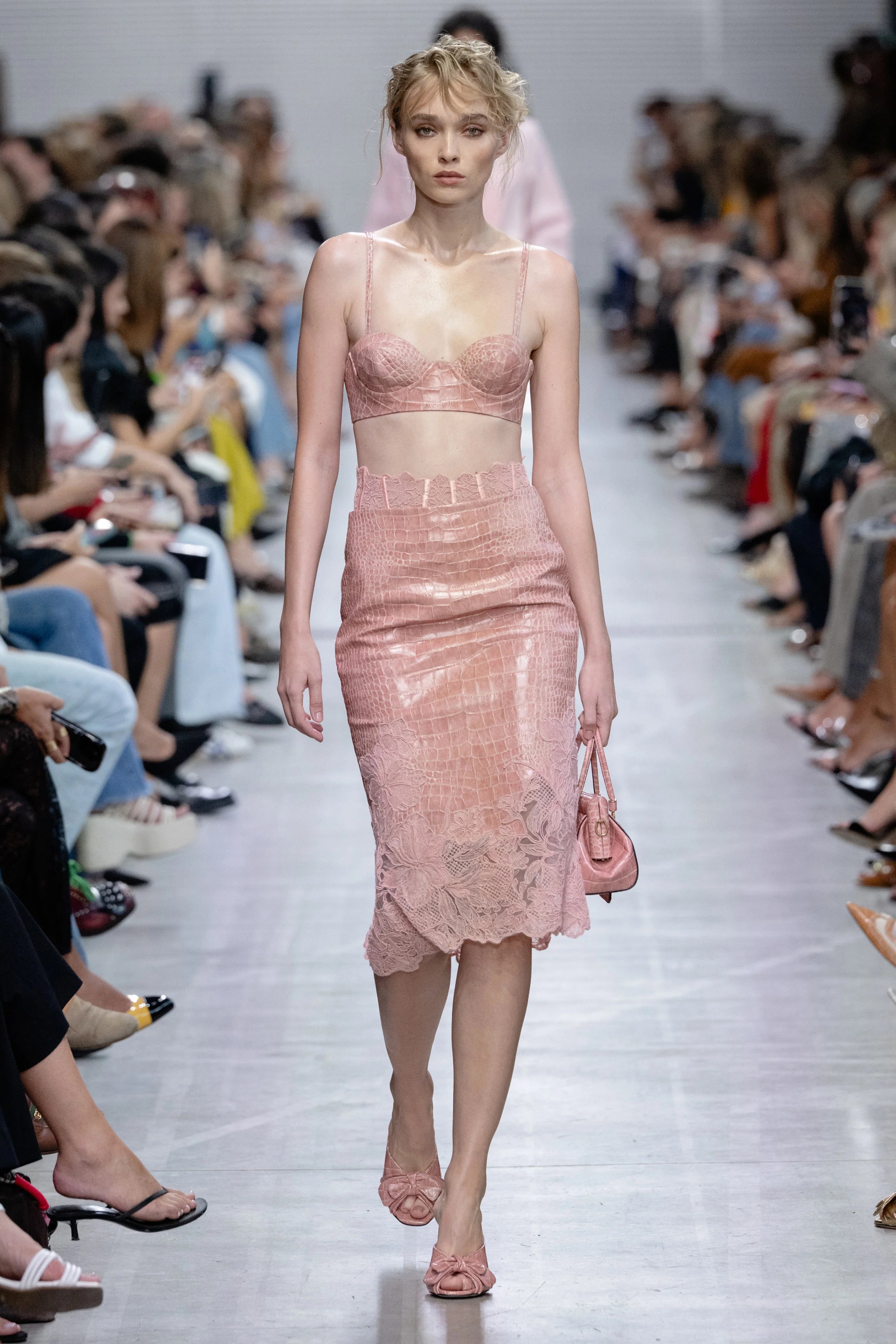
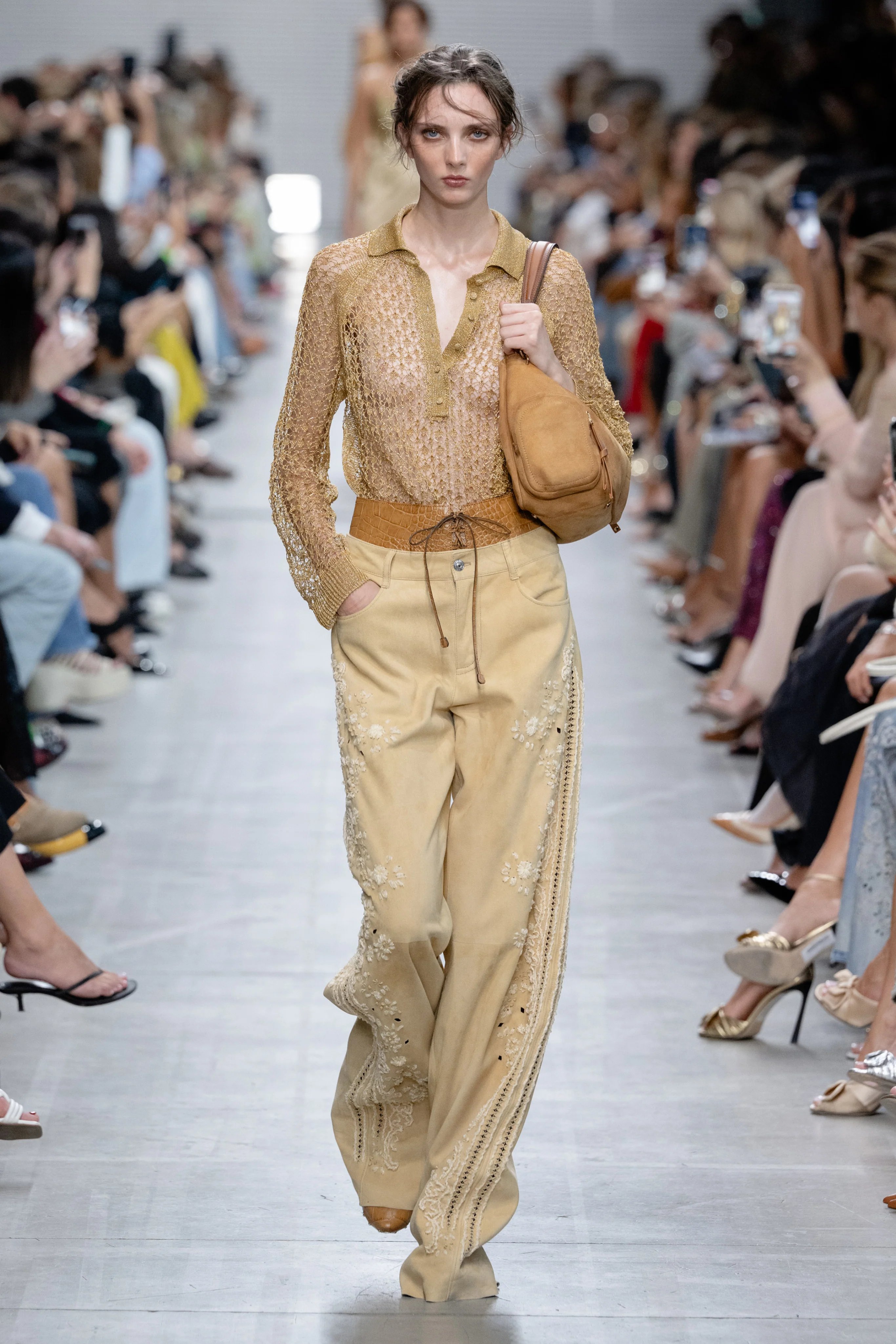
Ermanno Scervino is a private house, headquartered in Florence and held through Dernamaria, with lingerie, beachwear, junior, and leather-accessories lines around the main collection. That structure makes the craft argument commercial rather than rhetorical: a label without a luxury group’s marketing budget sells on provenance, and the house’s Made-in-Italy claim is the asset it can defend. The accessories followed the same logic, with raffia crocheted and woven, trimmed in leather and finished in laminated gold or the collection’s blue-to-sand palette, and jewelry in the form of shells and pomegranates. The open question is conversion: whether a customer who comes for the pirate story leaves with the knit suit.
Scervino has spent 26 years making the case that handwork is a strategy, and spring 2027 made it more clearly than the pirate conceit did. The collection’s best pieces did not need the theme. The next season’s question is whether the house trusts that enough to let the clothes carry the story alone.
See the complete collection below:
Images courtesy of Ermanno Scervino
In another fashion week news, Gucci Spring 2027 Ready-to-Wear Collection at Milan Fashion Week