
The London designer’s 32-look spring 2027 collection reaches for 1990s rink glamour and lands its crystal spiral motif. Presenting it as an AI-assisted image series costs the clothes their best argument
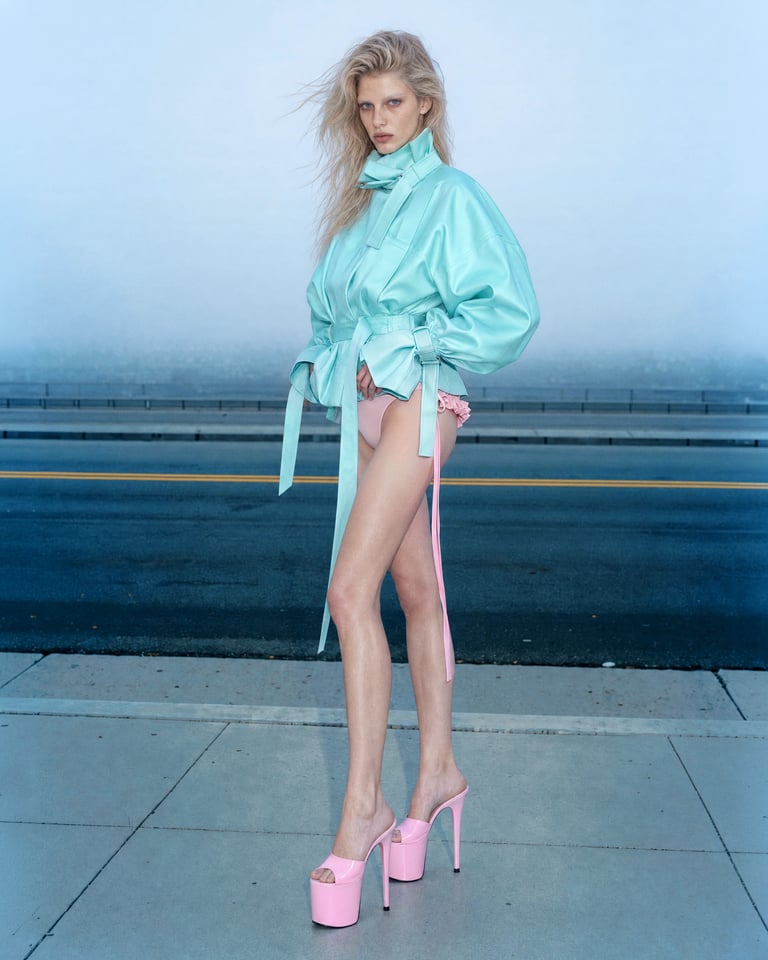
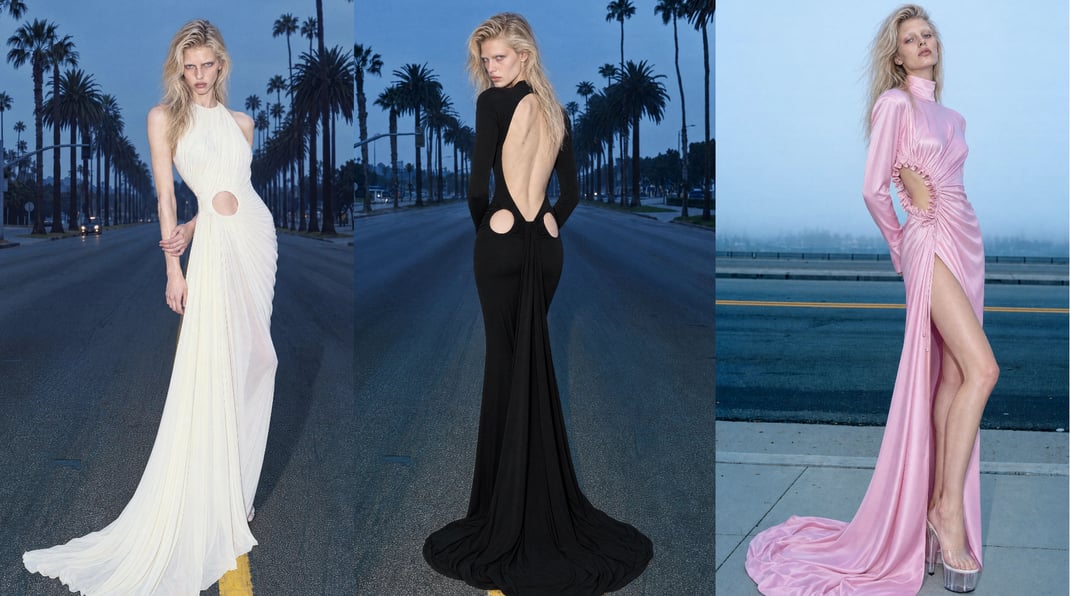
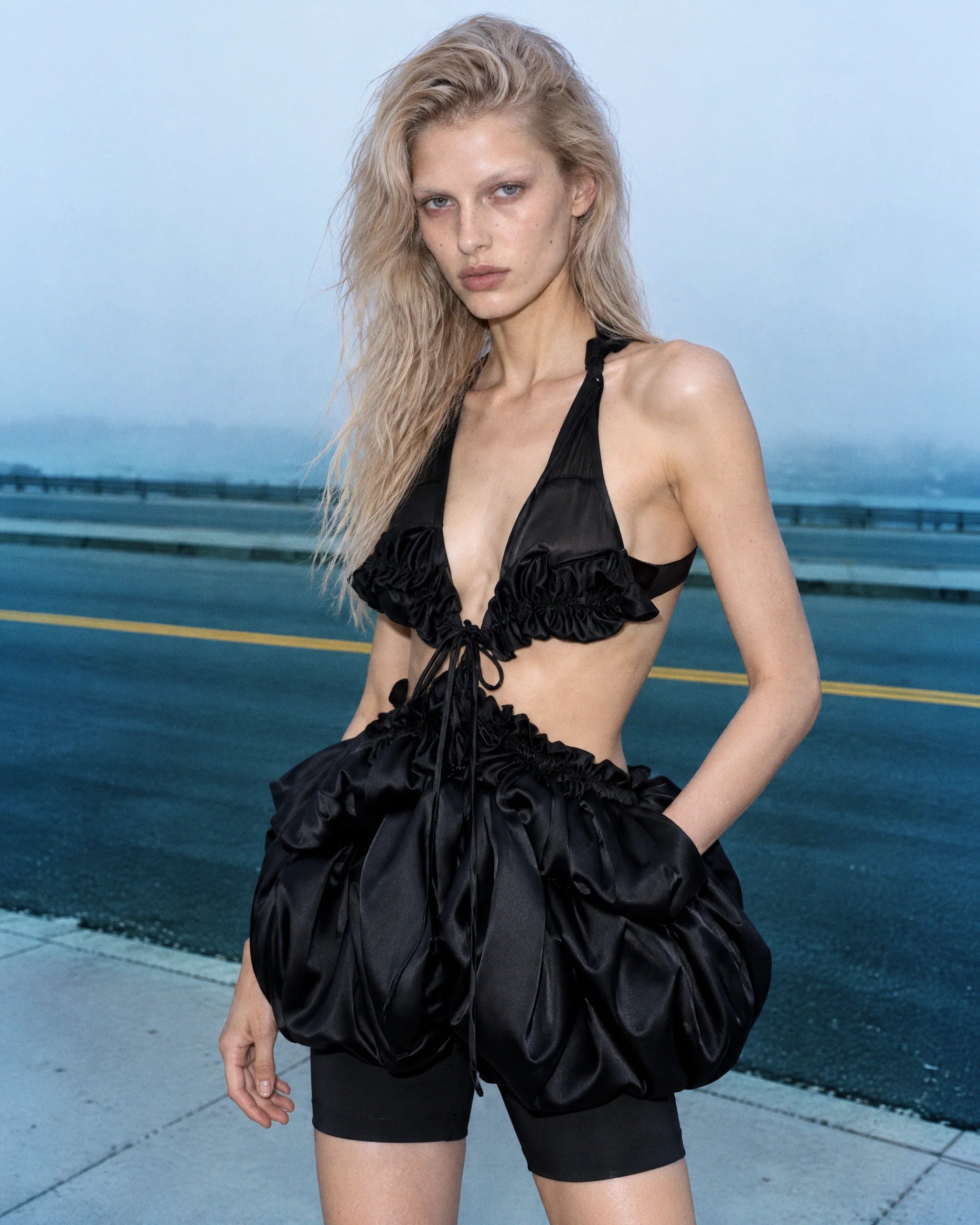
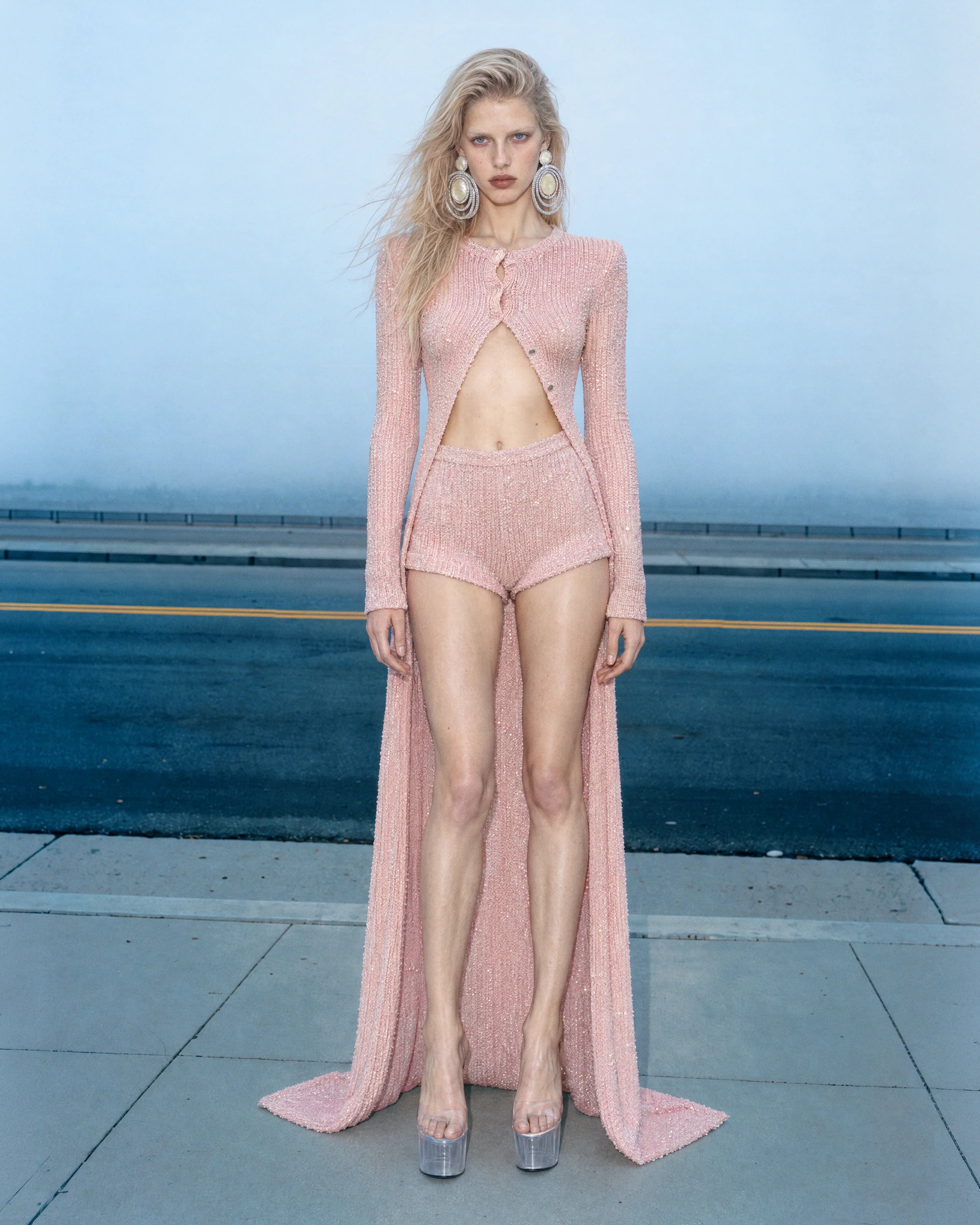
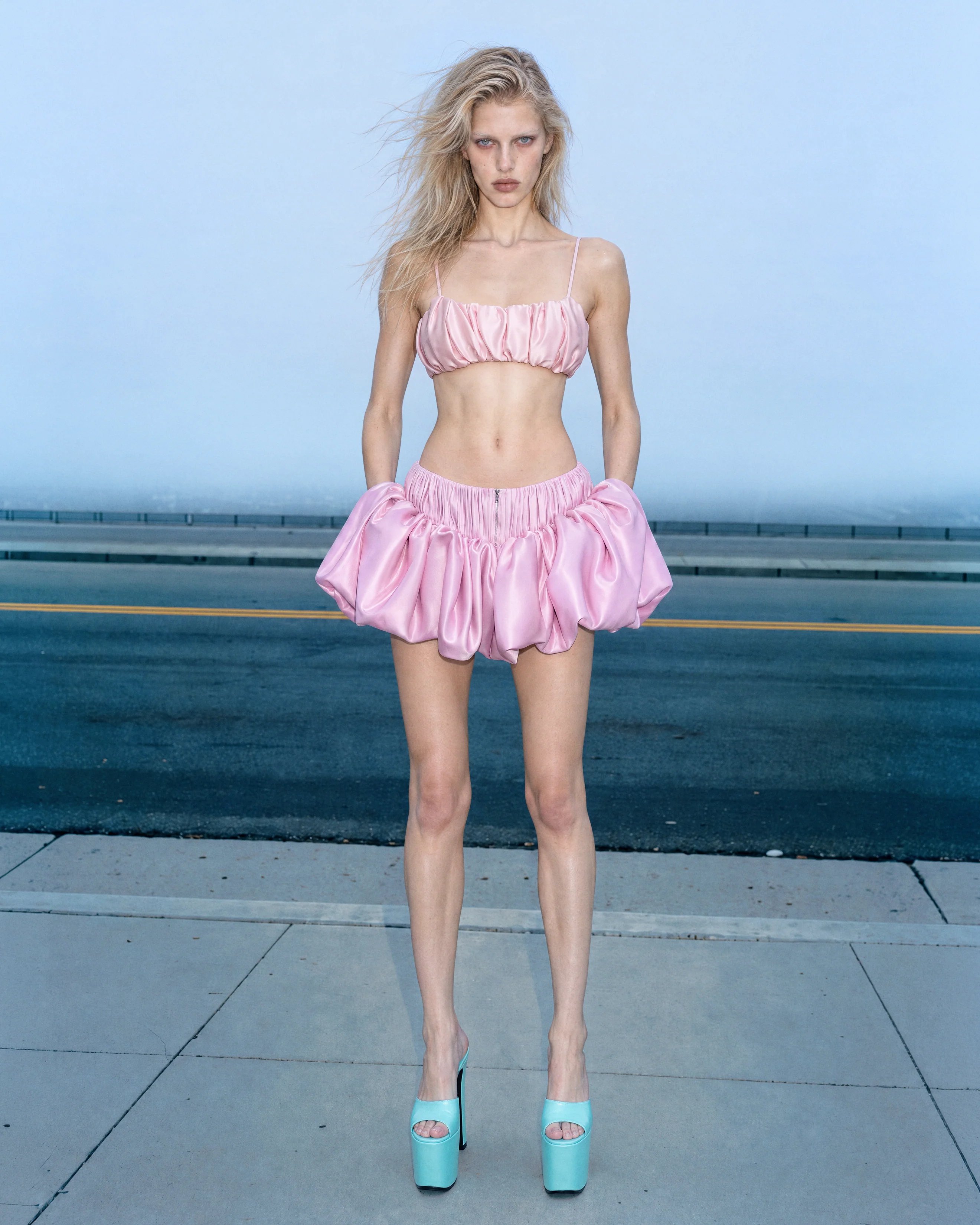
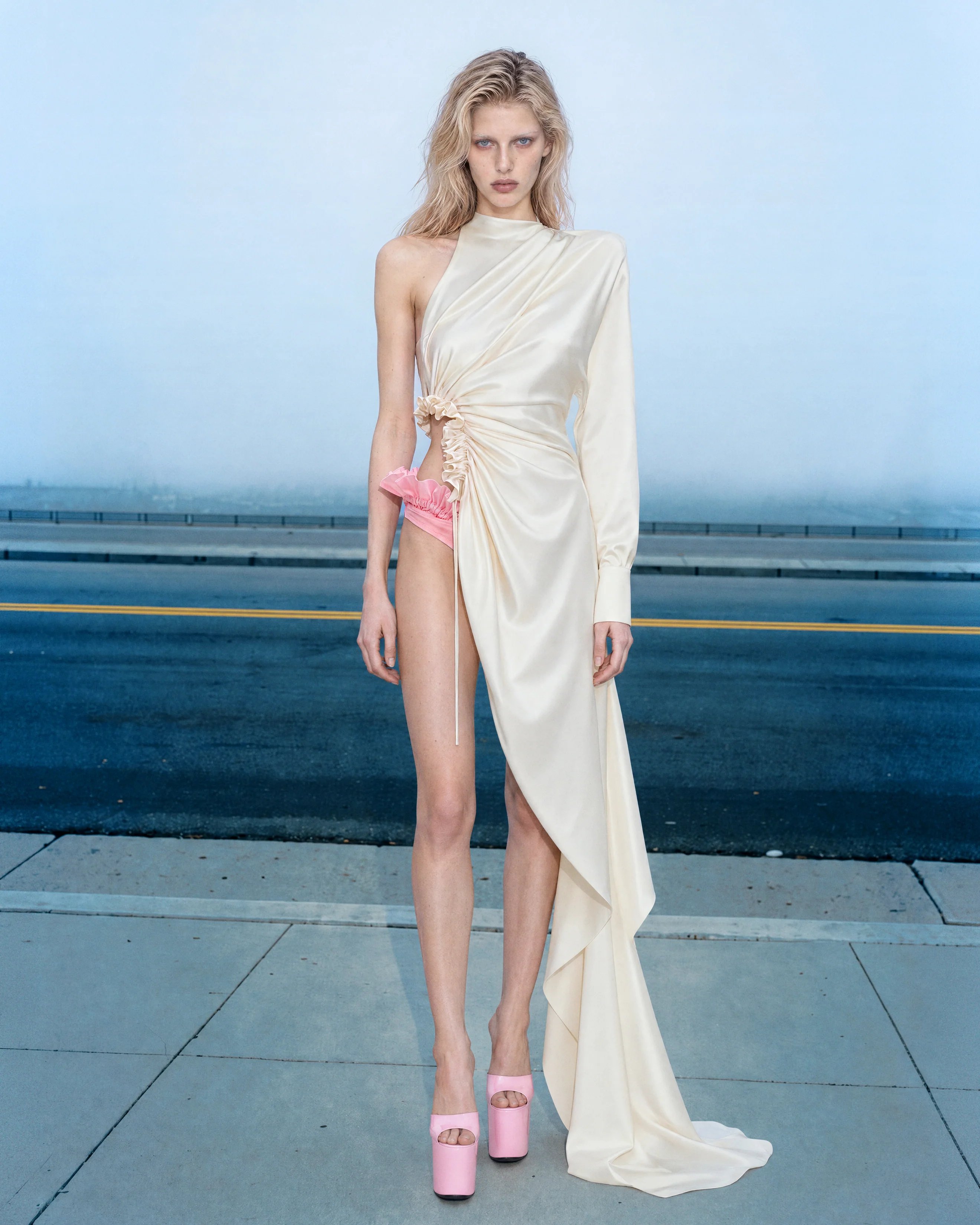
David Koma’s spring 2027 collection runs to 32 looks built on 1990s competitive figure skating, and the brand is presenting it as an image series rather than a runway show. The series was made through a dialogue between photography and generative AI, according to the house’s collection notes, and is set on the palm-lined roads of Los Angeles. The clothes have a real idea in them. The presentation gives that idea away.
Koma has shown at London Fashion Week since launching his label in the city in 2009, the brand’s About page states. For spring 2027 there is no show, no venue and no runway – only a file of images and a set of notes naming Tonya Harding as the season’s reference, a skater the house describes as challenging the sport’s polished ideal.
The Crystal Spiral Earns Its Place
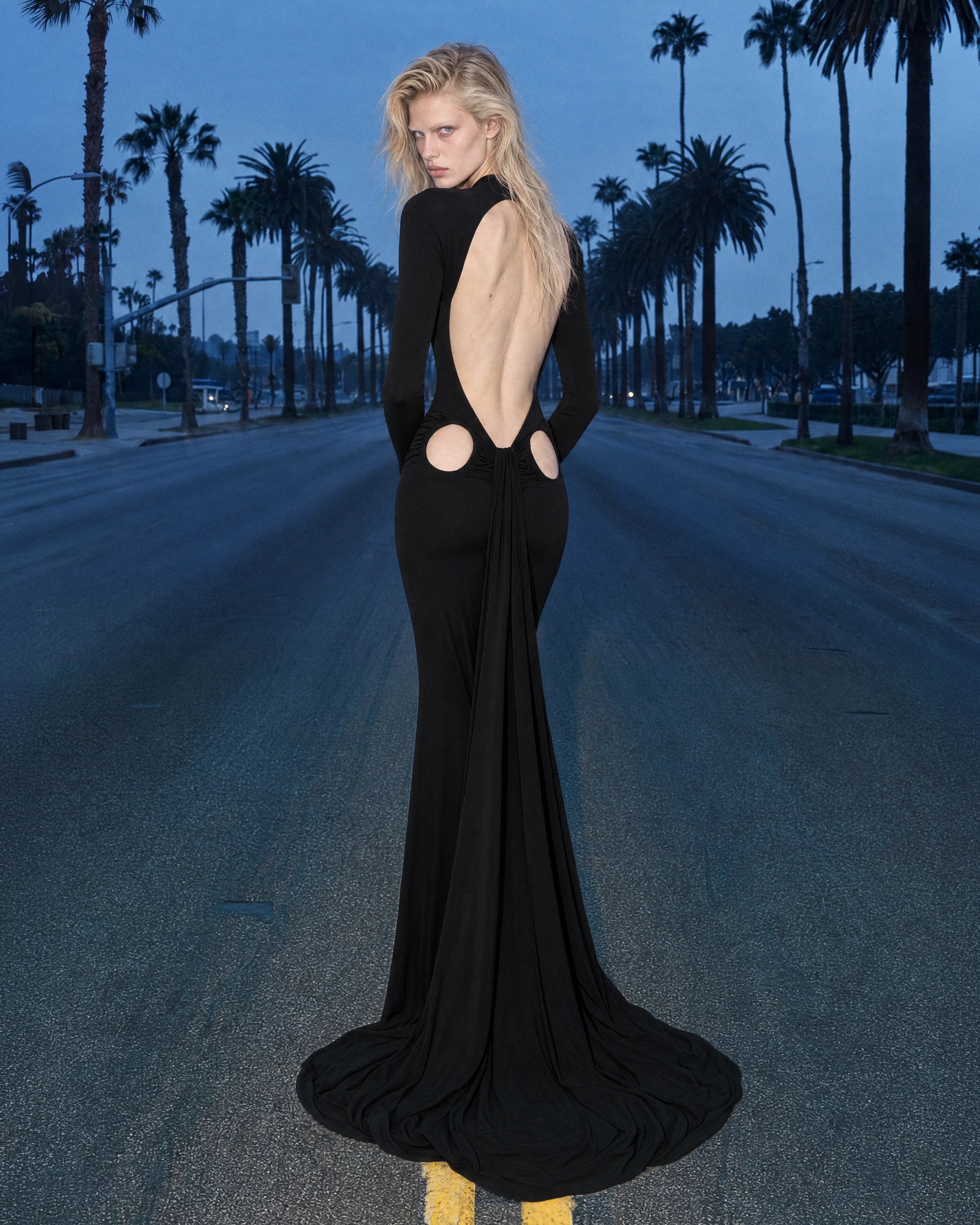
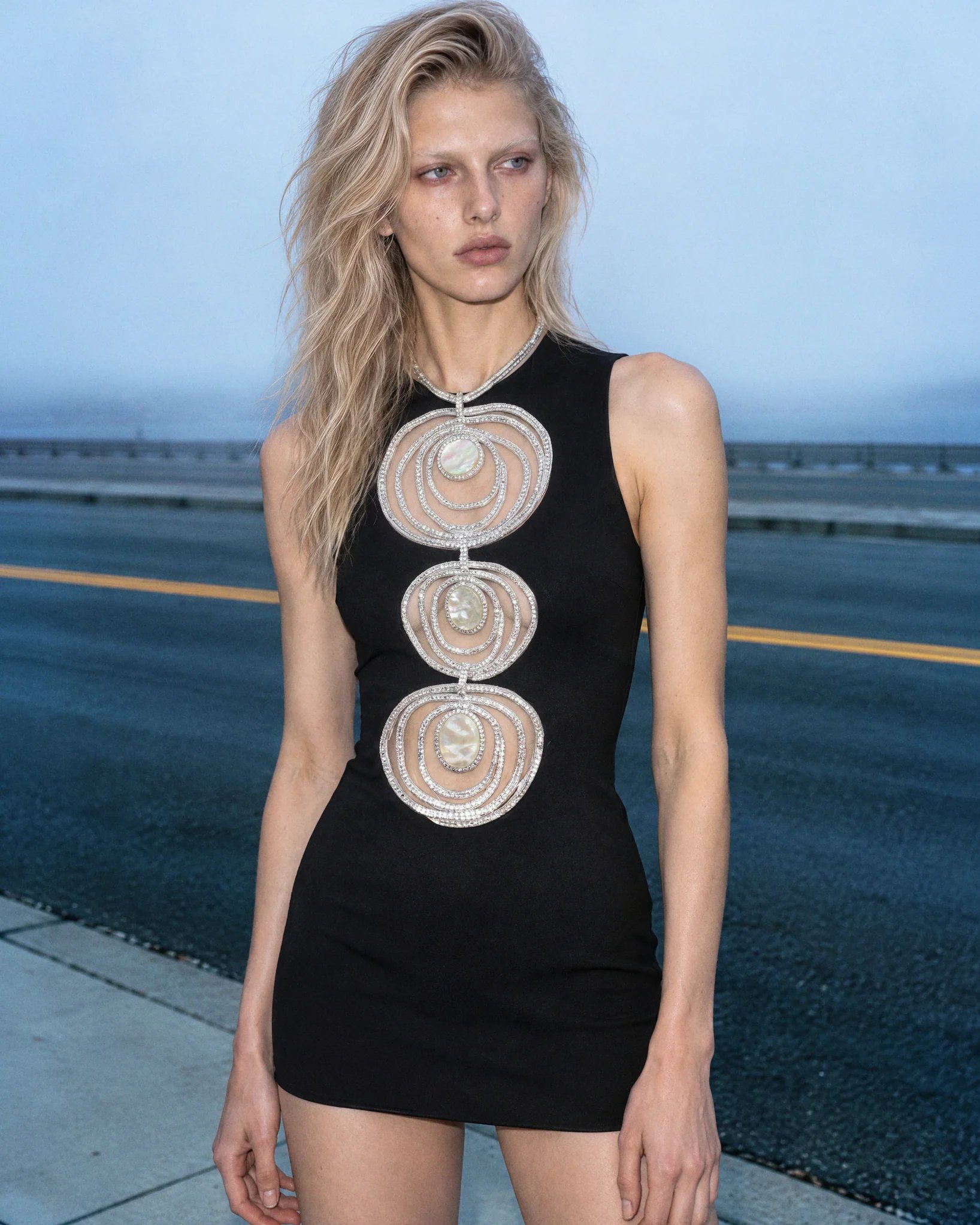
The collection’s strongest device is the crystal spiral, and it holds up across the full 32 looks. The notes trace it to compulsory figures, the circles and figure-eights skaters once traced on ice and were judged on, viewed from above. Koma renders them as spiral embroidery, oversized jewelry and cut-outs, each centered with mother-of-pearl.
It works because the motif carries weight rather than decoration. On a black sleeveless column, two large spirals sit at the chest above wide-leg trousers, and the discs do the structural job a neckline would otherwise do. A black mini runs three of them down the center front, spaced so the cut-outs read as architecture. The idea is specific enough to survive repetition, which is more than most reference-led seasons manage.
The Fringe Construction Needs Motion to Read
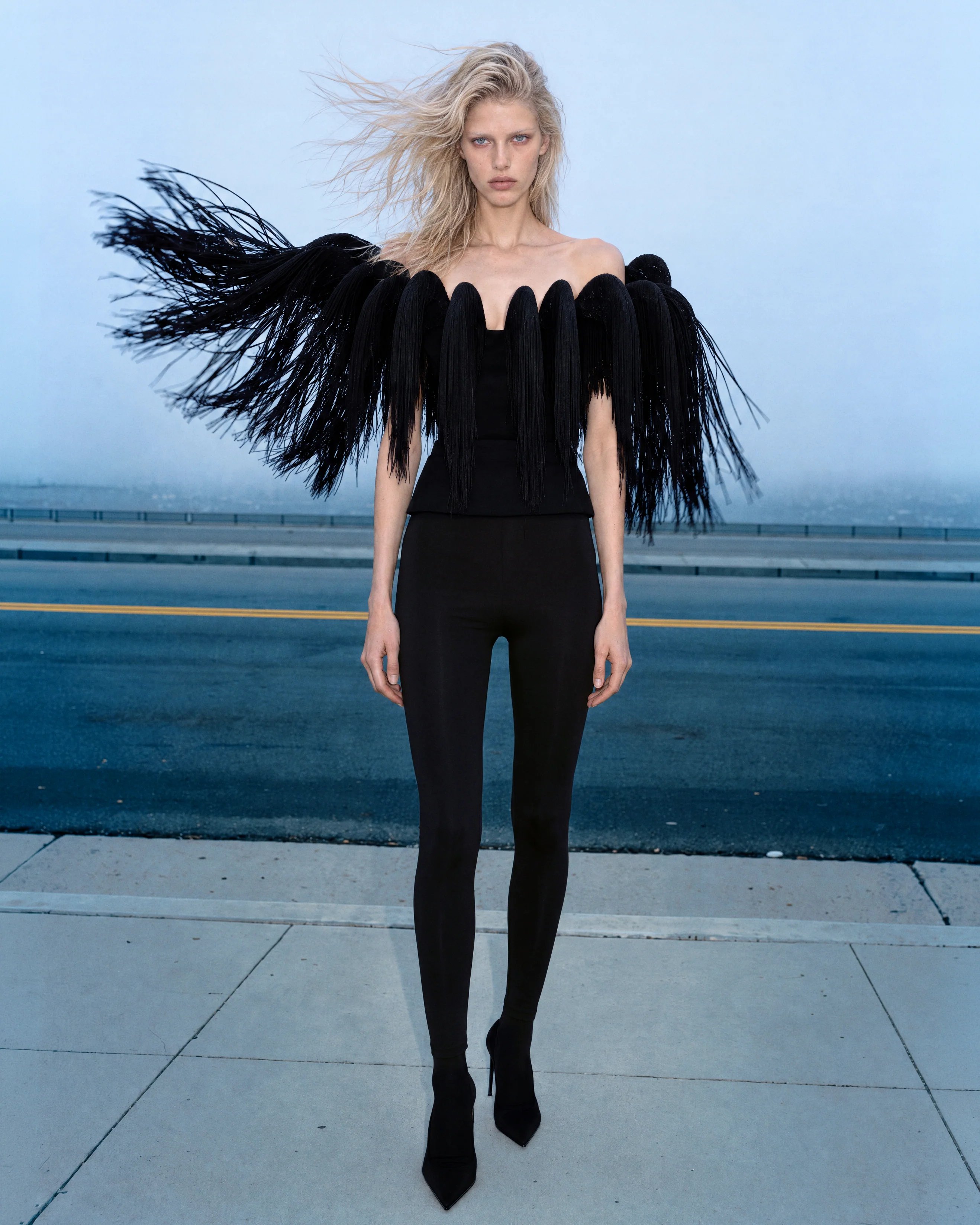
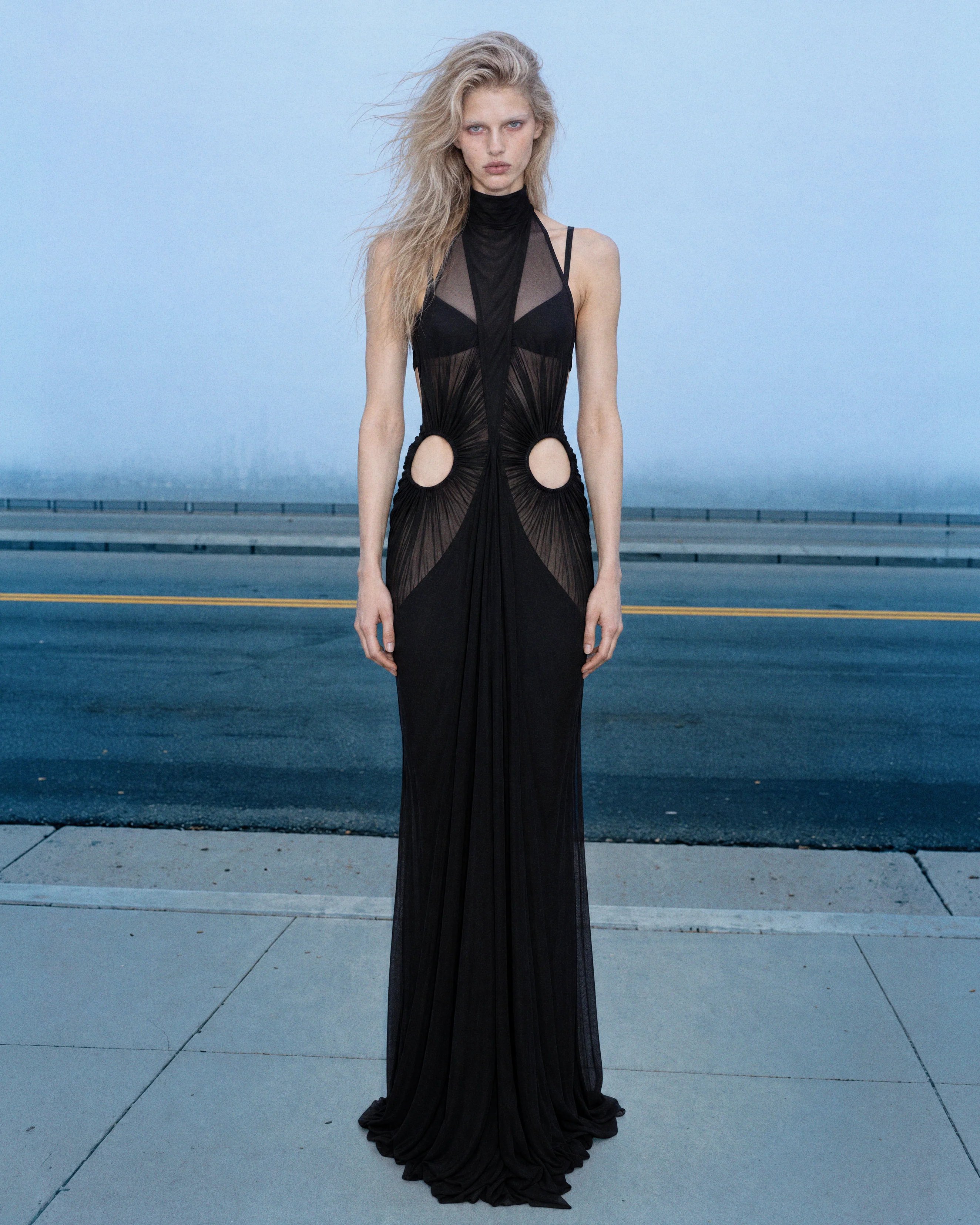
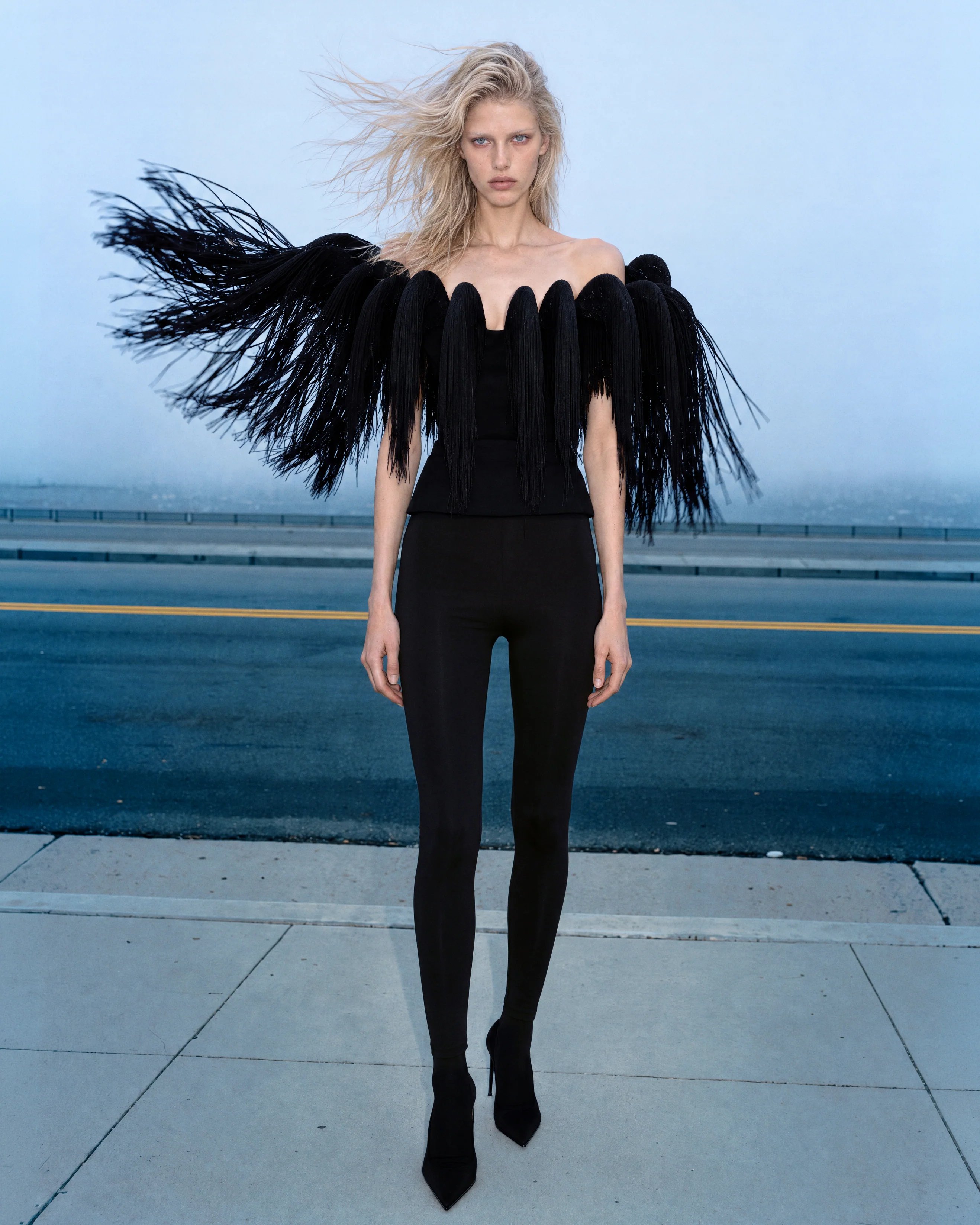
Koma’s most technical proposal is also the one the format defeats. The notes describe rows of fringe stitched onto rigid boning and attached to the dress’s internal framework, bending under their own weight into suspended forms that shift as the wearer moves. That is a couture construction argument, and it is an interesting one.
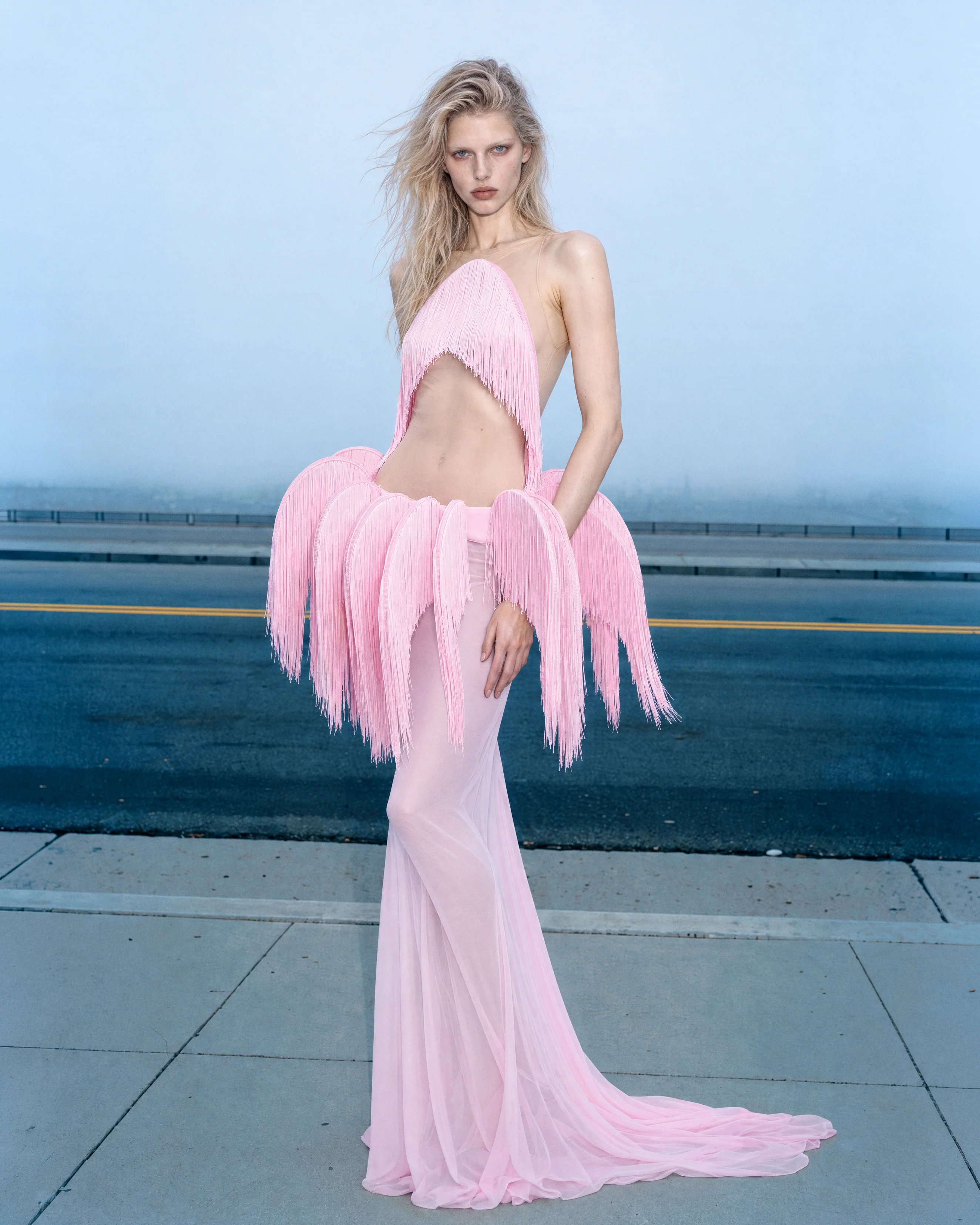
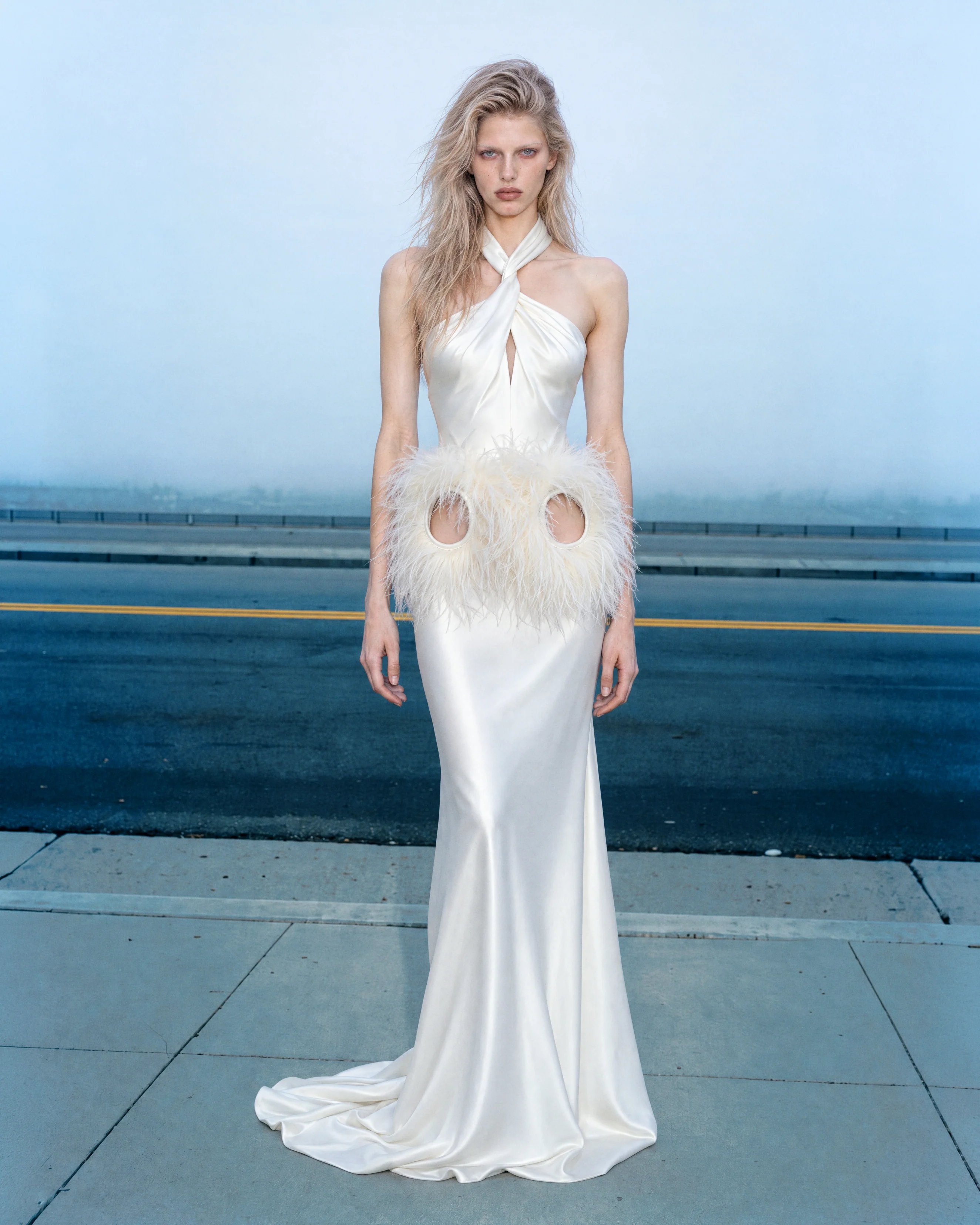
In still images it is invisible. A pink fringed gown and an ivory fringe column both photograph as texture, and the engineering the house is most proud of – the kinetic part – never gets demonstrated. A landasan pacu, or even a film, would have shown it in four seconds. The still frame cannot.
The Satin Midsection Repeats Rather Than Develops
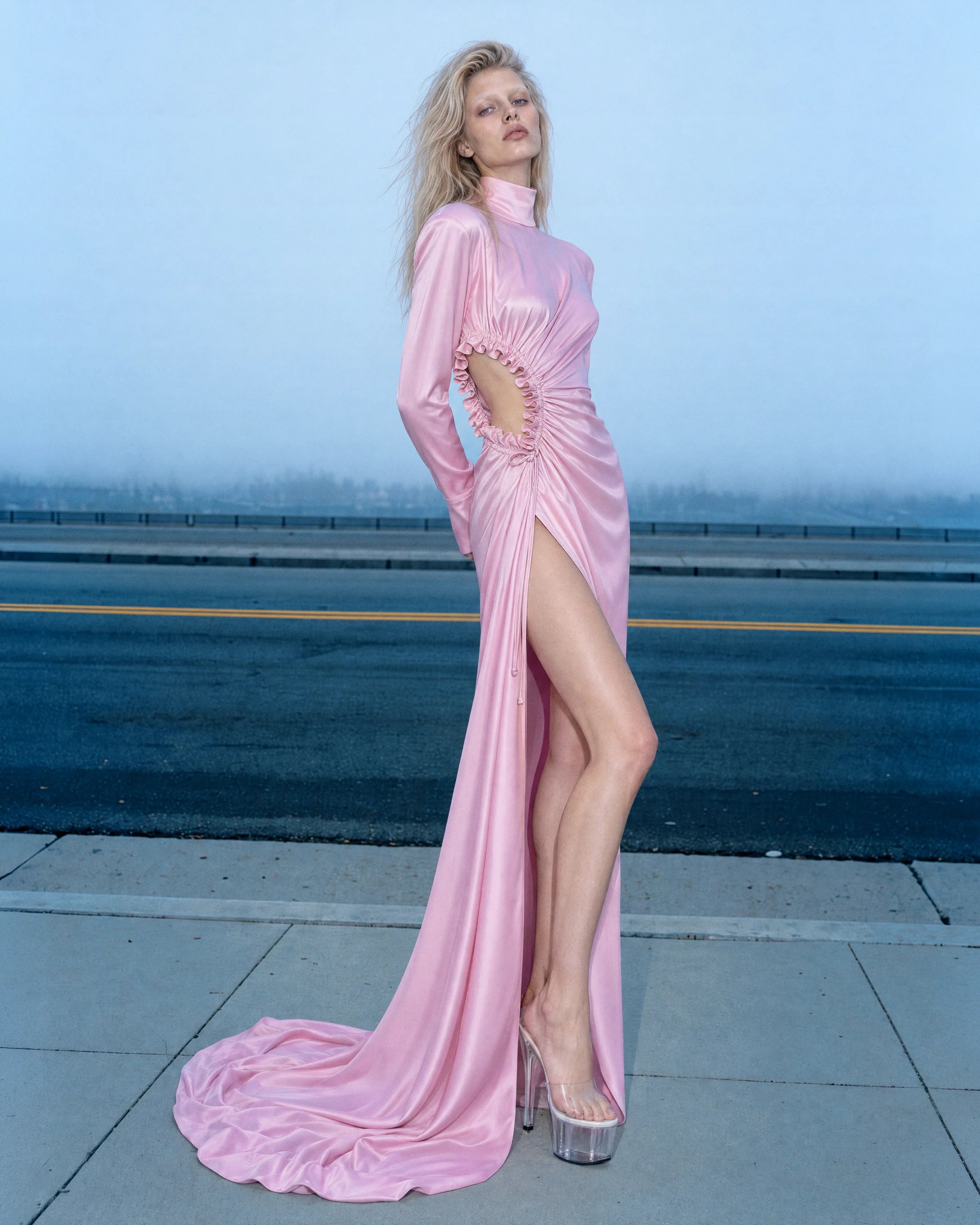
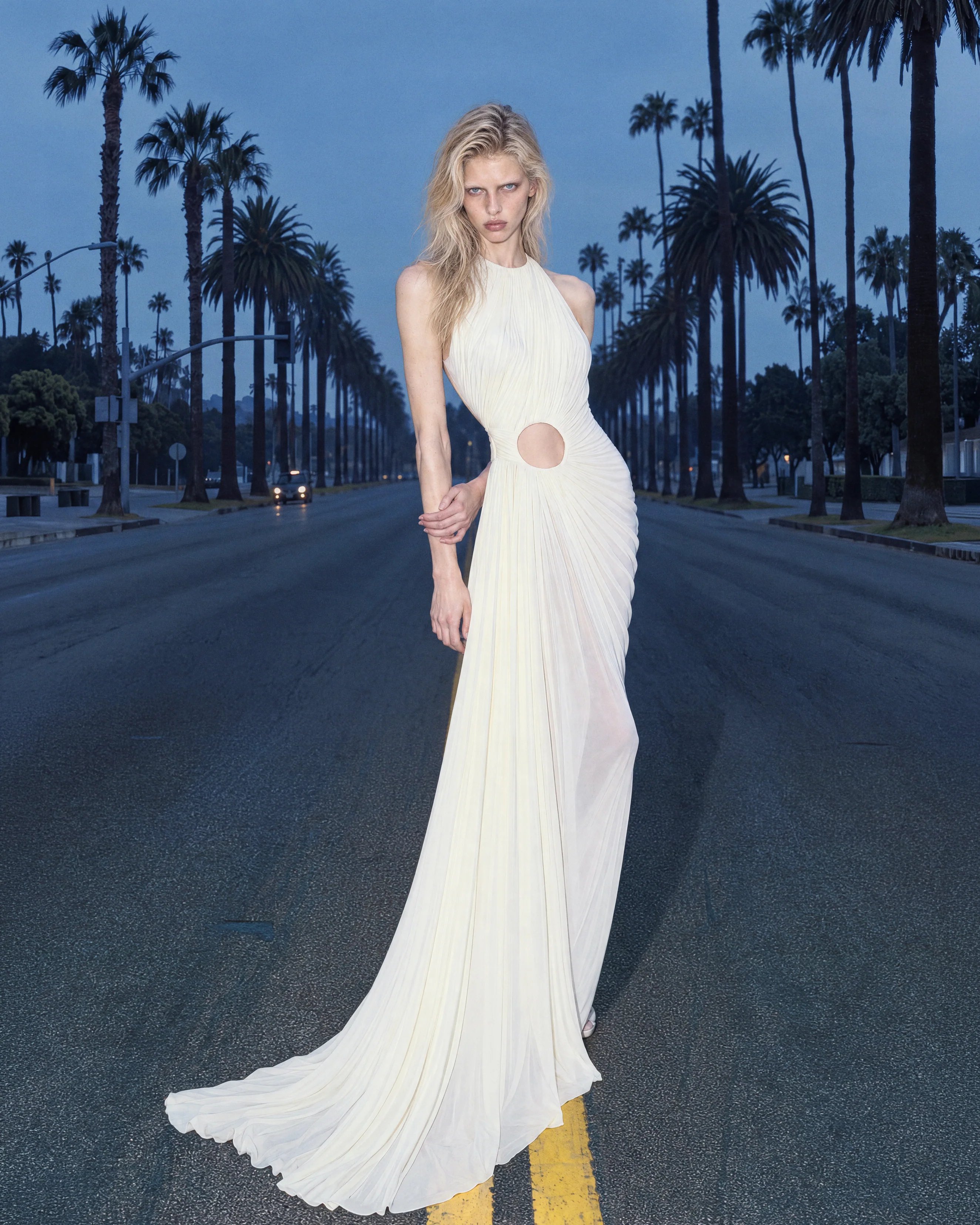
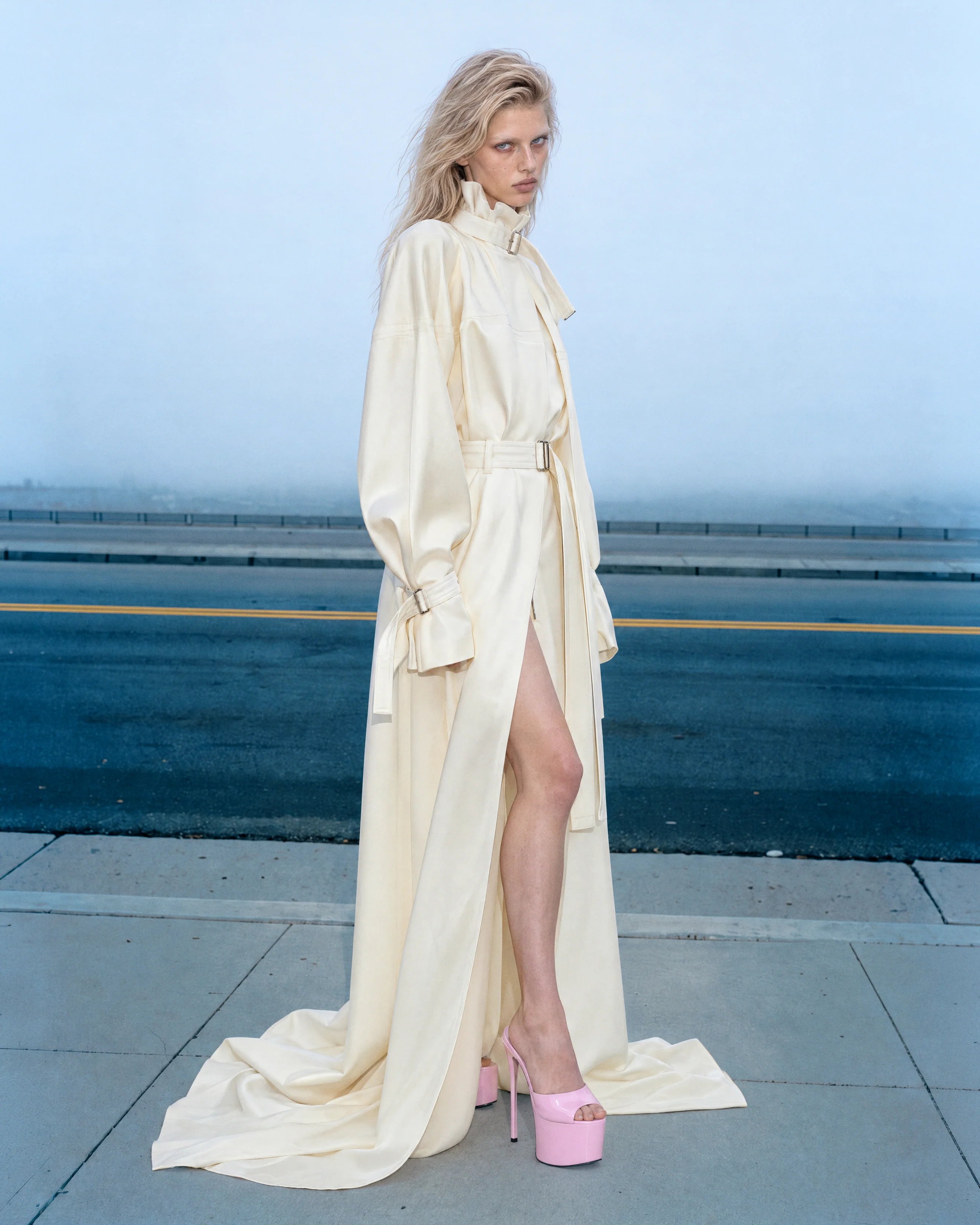
The edit sags across its middle stretch. After a sharp opening run of athletic separates, the series settles into pastel satin – a pink ruched gown with a high slit, an ivory one-shoulder draped gown, an ivory satin robe coat, a pink satin shirt and skirt – and the looks restate the scrunchie-inspired frill rather than advancing it. Four or five of these could go without costing the collection an idea. The drawstring voids that gather satin into circular openings are the better version of the same thought, and they arrive too late to rescue the run.
Casting compounds it. The series runs on a near-uniform figure type throughout, which flattens the claim in the notes that femininity here reads as force rather than fragility. One body, 32 times, is a weaker case than the clothes deserve.
The Warm-Up Separates Carry the Commercial Case
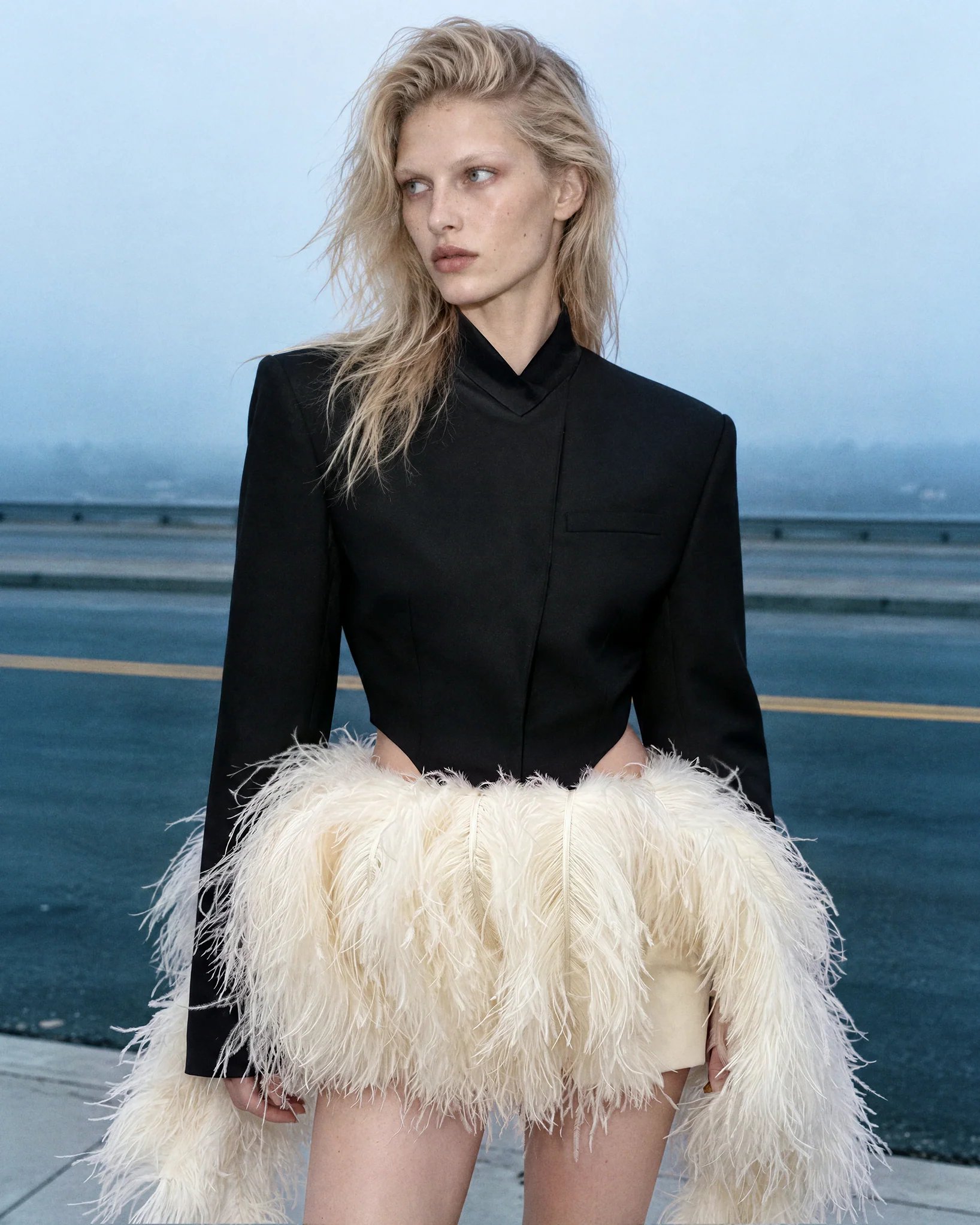
The most sellable material is the training-room wear, and it is the least developed. Satin bombers over voluminous shorts, cropped tops, cycling shorts under a black satin bubble-hem halter, a white tee with lace-trimmed briefs – these are entry-price units in a house whose business runs on cocktail dresses and red-carpet gowns. Koma cuts most of them so abbreviated that they read as styling rather than as a wholesale proposition.
A second commercial problem is specific to the format. Buyers assess hand, drape and finish, and AI-blended imagery gives them none of it. High-shine crystallized Lycra and gathered satin are exactly the fabrications where a showroom appointment has to do the work the pictures normally start.
Generative AI Moves Up the Fashion Chain
Koma is using the technology further up the chain than most of his peers. More than 35 percent of mode executives already use generative AI for image creation, according to McKinsey’s State of Fashion 2026, published Nov. 17, 2025, mostly for routine tasks in select functions, the report notes. A season’s primary visual record is not a routine task. It is the document buyers, stylists, and archives work from.
The American setting is the other shift. A London house has relocated its season to a Los Angeles road, with an American skater as its reference, and the notes read the road as the athlete’s journey. For U.S. customers, the collection isn’t shoppable yet; davidkoma.com is currently selling pre-fall 2026.
Koma has made a collection with a motif worth keeping and a construction idea worth showing. He has shown only one.
See the complete collection below:
Images courtesy of David Koma
In other fashion week news, Fendi Spring 2027: Maria Grazia Chiuri Finds Freedom in Lingerie