
Who is Dakota Fanning?
- Born and Raised: Hannah Dakota Fanning (yep, Hannah’s her first name!) popped into the world on February 23, 1994, way down in Conyers, Georgia.
- Sporty Family: Her background is pretty cool – her mom, Heather Joy, played pro tennis, and her dad, Steven, played minor league baseball before getting into electronics sales. Talk about athletic genes! And get this, her grandpa was a pro football player, and her aunt was a sports reporter for ESPN.
- Famous Sis: Oh, and you definitely know her younger sister, Elle Fanning! They’re both mega-talented actresses. The whole family moved out to Los Angeles when Dakota started getting acting gigs.
- School Smarts: Even with a busy acting career, Dakota didn’t skip out on school. She went to Campbell Hall in LA (she was even a cheerleader and homecoming queen – totally normal teen stuff, right?). Then, she went off to New York University (NYU) and studied stuff about women in film. Pretty smart cookie! She graduated around 2014-2016.
Her Amazing Acting Journey
Dakota’s career is seriously impressive. She went from being the child actor everyone wanted to a super respected actress now.
- The Kid Who Stole Our Hearts (Early 2000s): Remember I Am Sam from 2001? Dakota was just SEVEN and starred opposite Sean Penn. She played Lucy, and wow, she absolutely crushed it. People couldn’t stop talking about how good she was. She even got nominated for a big award (a SAG Award) and was the youngest person ever nominated for it on their own. That movie basically launched her into superstardom.
- Hollywood’s Go-To Kid (Mid-2000s): After I Am Sam, Dakota was everywhere! She was working with huge stars like Denzel Washington in Man on Fire (she was amazing in that!), Tom Cruise in War of the Worlds (directed by Spielberg!), and Brittany Murphy in Uptown Girls. Plus, she was Fern in Charlotte’s Web and voiced the main character in the creepy-cool animated movie Coraline. She was known for being super professional and could act in circles around people twice her age.
- Growing Up On Screen (Late 2000s – Early 2010s): Moving from kid roles to teen roles can be tough, but Dakota handled it like a pro. She showed a totally different side from the kinda scary vampire Jane in the Twilight movies. Then she played rockstar Cherie Currie in The Runaways with Kristen Stewart – proving she could handle gritty roles. She also did powerful dramas like Now Is Good (playing a teen with leukemia) and Effie Gray.
- All Grown Up & Still Shining (Mid-2010s – Now): Dakota is definitely not just a former child star; she’s a force to be reckoned with now. She starred in the cool detective show The Alienist, playing a smart woman ahead of her time. You might have also spotted her in Ocean’s 8, Once Upon a Time in Hollywood (as one of the Manson followers, Squeaky Fromme!), and she teamed up with Denzel Washington again for The Equalizer 3. Most recently, she was brilliant in the moody Netflix thriller Ripley and is in a show called The Perfect Couple. She keeps picking interesting, challenging roles!
Dakota’s Style: Fashion and Looking Good
Dakota’s fashion sense has grown up right along with her.
- Red Carpet Queen: She always looks stunning at big events. Think elegant, classy, and feminine. She often wears dresses from big names like Valentino, Dior, and Miu Miu (she’s even modeled for Miu Miu!). She loves delicate details and beautiful fabrics. She’s not really one to jump on crazy trends; she prefers timeless style.
- Off-Duty Cool: When she’s just out and about, her style is more relaxed but still put-together. Classic pieces, maybe some vintage finds. She knows how to look chic without trying too hard.
- Miu Miu Muse: Her connection with the mode brand Miu Miu is pretty strong. She’s been in several of their ad campaigns, and their style – kind of smart, sophisticated, but still youthful – fits her perfectly.
Those Magazine Moments: Photoshoots!
You’ve probably seen Dakota on tons of magazine covers over the years – Vogue, Elle, Vanity Fair, you name it.
- Picture Perfect Evolution: It’s cool to look back at her photoshoots. Early on, they captured that sweet, wise-beyond-her-years kid vibe. As she got older, the photos became more glamorous and grown-up, showing off her confidence.
- Her Vibe: Often, her photos have a dreamy, romantic feel, but she can totally pull off edgier or more artistic looks too. Those expressive eyes always stand out!
- Confident & Classy: Dakota seems pretty private, and her photos usually reflect that. They’re stylish and beautiful, showcasing her poise and confidence as she matures, rather than being overly revealing. You can really see how she stepped into her own as a self-assured woman through her public image and style.
What’s Her Life Like Off-Screen?
Even though she grew up famous, Dakota seems pretty grounded.
- Loves to Learn: Finishing her degree at NYU while still acting shows she really values education.
- Keeps it Private: She’s not one to splash her personal life all over social media. She keeps her relationships and downtime mostly to herself, which is pretty refreshing in Hollywood.
- Bookworm: She’s known to be a big reader!
- Sister Act: She and Elle are super close. It’s sweet to see them support each other, and they even started a production company together called Lewellen Pictures.
So, there you have it! Dakota Fanning is way more than just that talented kid from I Am Sam. She’s grown into an incredibly versatile actress, a style icon with a classic touch, and someone who seems smart, grounded, and handles the spotlight with total grace. Pretty awesome, right?
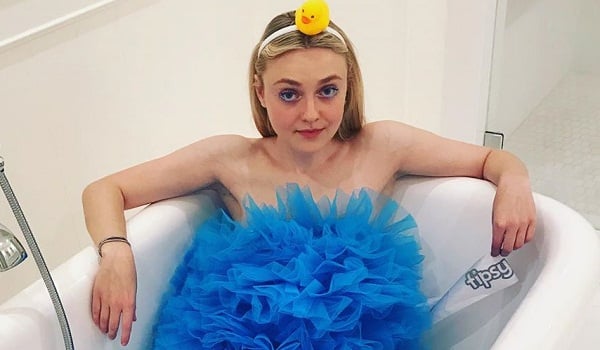
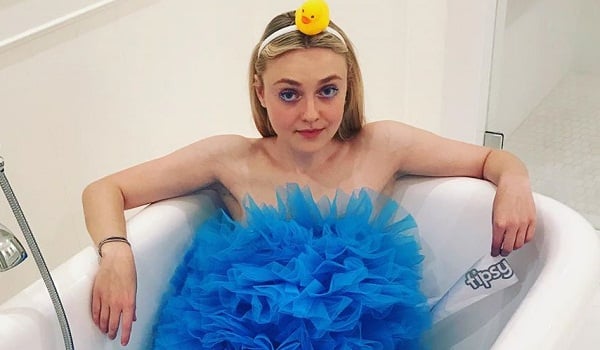
Let’s check out some of her hottest photos:
https://www.instagram.com/p/CW71_PGLaGM/
https://www.instagram.com/p/CGF0kqsAeZX/
https://www.instagram.com/p/B6Q7THXgcPf/
Photo Credit: @dakotafanning
Dakota Fanning as a Brand Ambassador and Fashion Icon
Beyond her acting credentials, Dakota Fanning has built a genuinely compelling presence in the fashion and beauty industries. Her long-standing relationship with Miu Miu has evolved into one of the most recognizable actress-brand partnerships in contemporary fashion. She has fronted multiple seasonal campaigns for the Italian label, embodying its signature blend of intellectual femininity and youthful sophistication. The collaboration reflects a shared aesthetic sensibility that feels authentic rather than contractual.
Her influence extends well beyond a single brand. Fanning has graced the covers of Vogue, Elle, Vanity Fair, W Magazine, Dan Glamour, consistently drawing praise from fashion critics for her ability to interpret a look with subtlety and precision. Stylists and editors frequently cite her as a rare subject who communicates genuine character through clothing rather than simply wearing it.
She has also attracted partnerships with beauty and fragrance houses, further cementing her status as a lifestyle figure. Marc Jacobs Beauty tapped her as a face for the brand, drawn to her combination of classic American beauty and contemporary cool. In an industry where celebrity endorsements can feel interchangeable, Fanning’s selections have remained notably curated and consistent with her personal image, which makes her appeal to both luxury fashion houses and mainstream audiences equally persuasive.
Dakota Fanning's Impact on a Generation of Young Actresses
It is difficult to overstate how influential Dakota Fanning’s early career was on the landscape of child acting in Hollywood. Before her breakthrough in I Am Sam, the prevailing industry assumption held that emotionally complex dramatic roles simply could not be carried by performers under the age of ten. Fanning dismantled that assumption entirely. Directors, casting agents, and screenwriters began approaching projects with a fundamentally different understanding of what a young actress could deliver.
Her approach to preparation and professionalism on set became something of a benchmark. Reports from directors like Steven Spielberg and Tony Scott consistently described her as fully prepared, instinctive, and capable of holding her own against seasoned adult co-stars. That reputation created a new standard of expectation for young performers entering the industry during the mid-2000s and beyond.
Her decision to pursue a degree at NYU while maintaining an active film career also sent a clear signal to peers and younger performers alike: intellectual development and artistic ambition are not in conflict with sustained success in Hollywood. The production company she co-founded with her sister Elle, Lewellen Pictures, extends that influence further by positioning both siblings as creative stakeholders rather than simply talent for hire. That transition from performer to producer represents a model increasingly adopted by the generation of actresses who came of age watching her work.
What to Watch Next: Essential Dakota Fanning Films and Series
For anyone looking to explore the full range of Dakota Fanning’s abilities, her filmography offers a genuinely rewarding journey across genres, tones, and decades. The following selections represent the most essential viewing for understanding her as a performer.
- I Am Sam (2001): The role that introduced her to the world. Her chemistry with Sean Penn remains one of the most affecting performances ever captured between an adult actor and a child performer.
- Man on Fire (2004): Her work alongside Denzel Washington reveals an emotional maturity that is remarkable for her age. The film remains a thriller benchmark.
- The Runaways (2010): Playing Cherie Currie opposite Kristen Stewart, Fanning proved she could handle raw, rock-and-roll energy with complete conviction.
- The Alienist (2018, TNT): A period detective drama in which she plays Dr. Laszlo Kreizler’s assistant Sara Howard, a woman navigating a male-dominated world with intelligence and resolve. The series ran for two seasons and earned strong critical notices.
- Ripley (2024, Netflix): A beautifully photographed adaptation of Patricia Highsmith’s novel in which Fanning delivers a quietly commanding performance opposite Andrew Scott.
- The Perfect Couple (2024, Netflix): A stylish, sun-drenched thriller that showcases her range in an ensemble of accomplished performers.
Each of these titles demonstrates a deliberate career built on selectivity, craft, and a refusal to be confined by expectation.
Dakota Fanning and the Craft of Character: How She Approaches a Role
What separates Dakota Fanning from many of her contemporaries is not simply talent but a demonstrable commitment to the craft of acting that has been evident since her earliest work. Interviews across her career reveal a performer who researches roles with the rigor of a scholar rather than relying on instinct alone. For The Runaways, she trained intensively on drums to physically inhabit Cherie Currie’s world. For The Alienist, she studied the social history of late nineteenth century New York to understand the precise constraints her character Sara Howard would have faced daily.
Her NYU education in women in film was not incidental to this process. It gave her a critical framework for evaluating scripts and understanding the structural dynamics at play in the stories she chooses to tell. That academic grounding is visible in the types of roles she gravitates toward: women operating at the edge of what their society permits, navigating institutions that were not built for them.
Fanning has spoken in interviews about the importance of silence and restraint in performance, a philosophy that aligns closely with the screen actors who most influenced her, including Jodie Foster and Cate Blanchett. Her ability to communicate internal complexity without overstatement is perhaps her most consistent and recognizable quality as a performer, and it is one that has only grown more refined as she has moved into her thirties.
Dakota Fanning in New York: The City That Shaped Her Adult Identity
Although Dakota Fanning was born in Georgia and raised primarily in Los Angeles, New York City occupies a central place in both her personal and professional identity. Her years at NYU immersed her in a cultural environment defined by intellectual rigor, artistic diversity, and a street-level fashion sensibility that differs sharply from the polished surfaces of Hollywood. That experience left a visible mark on how she carries herself in public life.
New York has also served as the backdrop for some of her most significant professional work. The Alienist is set entirely within the city’s late nineteenth century boroughs, and her preparation for the role involved deep research into the neighborhoods, institutions, and social hierarchies of that specific urban world. The series was celebrated by critics for its atmospheric authenticity, and Fanning’s performance was singled out as a grounding presence within it.
Her off-duty style, frequently photographed on the streets of lower Manhattan and the West Village, reflects the city’s particular brand of understated sophistication. She favors clean silhouettes, quality fabrics, and considered layering, an approach that reads as entirely at home in a city where personal style functions as a form of self-authorship. For readers of this publication, Fanning represents something distinct: a figure who absorbed the best of New York’s cultural seriousness and carries it with her wherever she works.
Lewellen Pictures: Dakota and Elle Fanning as Creative Producers
The production company Dakota Fanning co-founded with her younger sister Elle, named Lewellen Pictures, marks a significant evolution in how both women engage with the entertainment industry. Rather than functioning solely as performers available for hire, the sisters have positioned themselves as active architects of the stories they bring to screen. It is a strategic and artistic move that reflects the broader shift among leading actresses toward production as a form of creative control.
Lewellen Pictures was established with a stated focus on female-driven narratives and projects that center the perspectives and experiences of women across genres. That mandate aligns closely with the kinds of roles Dakota has consistently chosen throughout her career, suggesting that the company formalizes an instinct she has always exercised informally when evaluating scripts.
The move into production also insulates both sisters from the cyclical vulnerability that has historically affected actresses in Hollywood, where opportunities can narrow with age or shifts in industry taste. By developing and packaging projects independently, Lewellen Pictures gives the Fannings leverage at the negotiating table and influence over material at the earliest stages of development. For a publication focused on ambitious, creative women who shape culture rather than simply reflect it, the Fanning sisters’ entrepreneurial step is worth noting as a model that extends well beyond the film industry.
Dakota Fanning's Philanthropy and Social Commitments
Beyond the screen and the runway, Dakota Fanning has demonstrated a consistent interest in using her platform for purposes that extend beyond personal advancement. She has been a vocal supporter of organizations focused on women’s education, literacy initiatives, and mental health awareness, causes that align closely with the intellectual seriousness she has cultivated throughout her public life.
Her work with the Elizabeth Glaser Pediatric AIDS Foundation reflects a long-standing commitment that began during her childhood years in the industry, when she participated in fundraising events and awareness campaigns for the organization. That early introduction to philanthropic engagement appears to have shaped a lasting sense of responsibility toward causes affecting children and families.
Fanning has also used her visibility during awards season and major fashion events to draw attention to issues of gender equity in the film industry, particularly around pay parity and representation behind the camera. Her NYU education in women in film provided her with the vocabulary and conceptual framework to engage those conversations with precision rather than generality. In interviews, she consistently credits that academic background as central to how she thinks about her responsibilities as a public figure with access to influential platforms. For an actress of her generation, that combination of artistry and civic engagement represents a notably complete public identity.
The Fanning Effect: Dakota's Influence on Fashion Week and Editorial Culture
Dakota Fanning’s presence at international fashion weeks has become a reliable highlight of the seasonal calendar for editors, photographers, and street style observers alike. Her front-row appearances, particularly at Miu Miu’s Paris showings and at New York Fashion Week, generate significant editorial attention not only because of her celebrity status but because of the consistency and intentionality of her choices. She does not dress for spectacle; she dresses to communicate, and that distinction is immediately legible to anyone with a trained eye.
Her editorial work has contributed meaningfully to conversations about how actresses function within fashion culture. Where some performers approach magazine shoots as promotional obligations, Fanning approaches them as collaborative creative exercises, working closely with photographers and creative directors to shape the visual narrative of each project. The results are images that hold up independently of their commercial context, which is a relatively rare quality in celebrity editorial work.
Fashion critics including those writing for Vogue, WWD, Dan Harper’s Bazaar have repeatedly identified her as one of the cleaner examples of authentic style in contemporary Hollywood, meaning her choices reflect personal conviction rather than stylist-driven trend chasing. That reputation has made her a credible presence in conversations about fashion as a form of cultural expression, a subject this publication takes seriously and one in which Fanning participates with evident knowledge and care.
Dakota Fanning at Thirty: What the Next Chapter Looks Like
Dakota Fanning turned thirty in February 2024, an age that in earlier Hollywood eras might have prompted concern about a performer’s trajectory. For Fanning, it represents something closer to an arrival. The roles she is currently accepting, the production infrastructure she is building through Lewellen Pictures, and the cultural authority she has accumulated across three decades of public life all suggest a career entering its most consequential phase rather than approaching a plateau.
Her recent choices reflect a performer who is entirely comfortable with complexity and ambiguity. The cold, atmospheric tension of Ripley and the layered social dynamics of The Perfect Couple are not the projects of someone coasting on established goodwill. They are the selections of a woman actively testing the boundaries of her range and doing so with the confidence of someone who has been building toward exactly this moment.
From a style and lifestyle perspective, her thirties also represent a period of increased authority in how she presents herself publicly. The experimentation of her twenties has given way to a more defined and self-assured aesthetic, one that borrows from classic European femininity while maintaining the sharp, considered quality that New York instilled in her. For readers of this publication, Dakota Fanning at thirty is not a subject to look back on with nostalgia. She is a subject to watch closely, with considerable anticipation, going forward.
Dakota Fanning and the Art of Reinvention: Navigating Career Transitions
Few performers in contemporary Hollywood have managed the transition from child stardom to adult credibility with as little turbulence as Dakota Fanning. That navigation is worth examining closely, because it did not happen by accident. It was the result of deliberate, patient choices made at moments when the temptation to accept high-profile but shallow work must have been considerable.
The key to her reinvention was selectivity paired with range. Rather than chasing franchise roles or genre blockbusters, she consistently sought projects that required genuine transformation. Her turn as Jane in the Twilight saga gave her mainstream visibility with a younger global audience while keeping her artistic instincts intact, since the role demanded a precise, controlled menace that few actresses her age could have delivered convincingly. That balance of commercial accessibility and artistic seriousness has defined her choices ever since.
Industry observers have noted that Fanning also benefited from strong relationships with directors who trusted her instincts. That trust was earned early and maintained through consistent professionalism across decades of work. The result is a career architecture that looks increasingly rare in the current industry landscape: a performer whose name carries genuine weight across age demographics, genre categories, and international markets simultaneously, with no single defining role threatening to overshadow everything else she has done.
International Appeal: Dakota Fanning's Global Fan Base and Cultural Reach
Dakota Fanning’s appeal has never been confined to North American audiences. Her films have performed strongly across European, Asian, and Latin American markets throughout her career, and her fashion partnerships with Italian and French luxury houses have only deepened that international recognition. In Japan particularly, she has cultivated a devoted following that traces back to her early dramatic work, where her expressive precision resonated strongly with audiences who value restraint and emotional authenticity in performance.
Her Miu Miu campaigns have circulated widely across global fashion media, introducing her to audiences who may not have engaged with her film work but who recognize her as a credible presence within European luxury culture. That cross-market recognition is genuinely unusual for an American actress whose career began in domestic family dramas, and it speaks to the universality of the qualities she projects: intelligence, composure, and a kind of beauty that does not depend on cultural specificity to communicate.
For a publication serving a global multilingual readership, Fanning’s international dimension is particularly relevant. She functions as a cultural bridge between Hollywood craft and European aesthetic values, a combination that makes her compelling to audiences across vastly different cultural contexts. Her social media presence, though notably restrained by celebrity standards, draws consistent engagement from followers across every major international market, confirming that her appeal translates cleanly across language and geography.
Style Icon Analysis: What Dakota Fanning's Fashion Choices Communicate
A closer reading of Dakota Fanning’s fashion history reveals a coherent visual philosophy that has evolved systematically rather than shifted reactively with trends. In her early teens, her red carpet choices were age-appropriate but already hinted at a preference for structure and quality over novelty. By her early twenties, she had developed a clear point of view: feminine silhouettes, elevated fabrics, a color palette anchored in cream, blush, and deep jewel tones, and an almost complete avoidance of anything that might read as costume rather than clothing.
What distinguishes her from peers who are equally well-dressed is the consistency of intention behind each appearance. Fashion insiders frequently note that Fanning never looks styled in the pejorative sense, meaning her outfits do not appear to have been assembled around her by committee. Even in highly constructed editorial contexts, she conveys ownership of what she is wearing, which is a communicative skill as distinct as any acting ability.
Her relationship with accessories is similarly instructive. She favors understated jewelry, structured bags, and footwear that completes a look without dominating it. That restraint is philosophically aligned with the broader principles of Parisian and Italian dressing that have influenced her through her Miu Miu partnership and her exposure to European fashion culture. For style-conscious readers, her archive of public appearances constitutes something close to a masterclass in building a visual identity that remains coherent across a decade and a half of sustained public life.
Dakota Fanning and the Music World: Performance, Collaboration, and Cultural Crossover
Dakota Fanning’s connection to music culture extends well beyond her role as Cherie Currie in The Runaways. Her preparation for that film required sustained immersion in the world of 1970s rock, and the experience appears to have deepened a genuine personal interest in the relationship between music and identity that continues to inform her creative choices. Directors and collaborators have noted that she approaches the sonic environment of a film with the same attention she brings to character research, viewing music as an extension of emotional architecture rather than mere backdrop.
That sensibility has made her a natural presence at the intersection of music and fashion, two industries that increasingly share creative infrastructure. She has attended major music events as both a guest and a cultural participant, and her style at those occasions demonstrates the same considered intentionality she brings to film premieres and fashion week appointments. Editorial shoots placing her within music-adjacent visual contexts have consistently performed well across both entertainment and style media, confirming that her image translates fluidly between creative disciplines.
For a publication attuned to the convergence of fashion, music, and lifestyle culture, Fanning represents a figure who moves between those worlds with genuine fluency rather than calculated positioning. That crossover credibility is increasingly rare among performers of her generation and adds a dimension to her public identity that rewards closer attention.
The Psychology of Privacy: How Dakota Fanning Manages Fame on Her Own Terms
In an era defined by radical celebrity transparency, Dakota Fanning’s relationship with public exposure is both deliberate and instructive. She maintains an Instagram presence that is active without being confessional, sharing professional milestones, fashion moments, and carefully composed personal images while steadfastly protecting the interior dimensions of her life. That boundary is not accidental; it reflects a coherent philosophy about the relationship between a public persona and a private self that she has articulated in several long-form interviews.
Psychologists who study celebrity culture have pointed to performers like Fanning as examples of sustainable fame management, meaning individuals who preserve enough psychological privacy to sustain creative output over decades without the burnout that often accompanies total self-exposure. Her academic background in women in film likely reinforced an analytical awareness of how female public figures are constructed and consumed, giving her conceptual tools that many of her peers lack when navigating the demands of sustained visibility.
The practical results of this approach are visible in her career longevity and the consistency of her public image. There have been no notable controversies, no tabloid narratives that threatened to overshadow her work, and no periods of public overexposure that diminished audience interest. For readers and industry observers alike, her model of engaged but boundaried public life offers a genuinely useful framework for thinking about fame as a resource to be managed rather than a condition to be surrendered to.
Dakota Fanning on Screen in 2024 and 2025: A Critical Reassessment
The years 2024 and 2025 have brought Dakota Fanning a level of critical attention that, even accounting for her long and distinguished career, feels qualitatively different from what came before. Her performance in Ripley, the Netflix adaptation of Patricia Highsmith’s novel directed by Steven Zaillian, drew comparisons to the most restrained and precise work of actresses a full generation older than her. Critics noted that she locates the emotional center of her character without announcing it, a quality that rewards multiple viewings and distinguishes serious screen acting from mere competence.
The Perfect Couple, her Netflix series alongside Nicole Kidman, placed her within one of the most discussed ensemble casts of the year and demonstrated her ability to hold narrative tension in a format that demands sustained character development across multiple episodes. Audience response was immediate and international, confirming that her appeal functions equally well across film and serialized television.
Taken together, these recent projects suggest that Fanning is operating in a creative register she has been building toward throughout her career. The restraint, the precision, and the willingness to inhabit morally complex terrain are all qualities that were present in her earliest work but have deepened considerably with experience. For critics and audiences revisiting her filmography in light of these performances, the throughline from I Am Sam to Ripley is remarkably coherent, and it points toward a third decade of work that may well represent the fullest expression of her considerable gifts.
Dakota Fanning and Literary Culture: Reading as a Creative Practice
Dakota Fanning’s well-documented love of reading is not a casual biographical footnote. It is a window into the intellectual infrastructure that supports one of the most consistently thoughtful careers in contemporary Hollywood. She has spoken across numerous interviews about the centrality of literature to how she processes character, language, and the emotional logic of human behavior. Her NYU studies in women in film reinforced that literary orientation by requiring sustained engagement with critical texts, feminist theory, and the history of narrative representation.
Her reading life appears to inform her script selection in direct and practical ways. Fanning gravitates toward source material drawn from literary fiction and journalism rather than original screenplays, a preference visible across her most celebrated projects. Ripley originates from Patricia Highsmith’s precision-engineered prose. The Alienist derives from Caleb Carr’s meticulously researched historical novel. Charlotte’s Web Dan Coraline both began as distinguished works of literary imagination before reaching the screen.
For readers of this publication who value the intersection of culture, intellect, and personal style, Fanning’s bibliophilia represents a dimension of her identity that is genuinely inseparable from the public figure she has become. A performer who reads seriously tends to perform seriously, and her career offers consistent evidence of that connection.
The Fanning Sisters and the Business of Sisterhood in Hollywood
The professional and personal relationship between Dakota and Elle Fanning constitutes one of the more unusual and compelling dynamics in contemporary entertainment. Both sisters arrived at major careers independently, without the competitive friction that might be expected when two siblings pursue identical professions at the highest level simultaneously. Instead, their trajectories have been mutually reinforcing, with each sister’s success expanding the cultural space available to the other.
Industry observers note that the Fanning sisters operate from a shared foundation of rigorous training, family support, and an evident respect for the craft that predates their individual fame. That shared foundation has allowed them to build Lewellen Pictures on genuinely common creative values rather than simply shared branding. The company benefits from Dakota’s seniority and established industry relationships as well as Elle’s generational reach and international profile, a combination that gives Lewellen Pictures unusual leverage for an independent production entity founded by performers still in their twenties and thirties.
Their public appearances together, whether at industry events, fashion weeks, or on shared press tours, consistently generate significant media attention while projecting an image of warmth and mutual regard that reads as entirely authentic. In an industry not always known for nurturing familial bonds, the Fanning sisters represent a model worth examining carefully by anyone interested in how creative partnerships sustain themselves over time.
Dakota Fanning's Approach to Wellness and Sustained Performance
Sustaining a high-level performance career from early childhood through adulthood requires a relationship with personal wellness that goes well beyond the superficial. Dakota Fanning has never been particularly vocal about fitness or health routines in the prescriptive way that celebrity wellness culture often demands, but the evidence of a disciplined and considered approach to physical and mental upkeep is visible in the consistency of her output and the quality of her presence on screen across three decades.
Her preparation for physically demanding roles has involved targeted physical training, most notably the intensive drumming work she undertook for The Runaways, which required her to develop genuine technical proficiency rather than simulate it for camera. That commitment to embodied preparation rather than surface approximation reflects a broader philosophy about what it means to inhabit a role responsibly.
Mental wellness appears equally central to how she navigates a career that began under extraordinary public scrutiny at an age when most children are entirely shielded from professional pressure. The decision to pursue higher education, maintain firm privacy boundaries, and build creative infrastructure through Lewellen Pictures all function as forms of psychological self-determination, choices that distribute agency rather than concentrate vulnerability. For readers interested in how accomplished women sustain creative careers over the long term, Fanning’s approach offers a quietly instructive model built on discipline, selectivity, and the deliberate protection of interior life.
Dakota Fanning and the Awards Conversation: Recognition Across a Career
Despite the breadth and consistency of her output, Dakota Fanning remains, in certain respects, one of Hollywood’s most underrecognized performers in formal awards terms. Her SAG Award nomination for I Am Sam at age seven remains the youngest individual nomination in that category’s history, a distinction that speaks to the immediate and undeniable impact of her earliest work. Yet the awards recognition that followed in her adult career has not always kept pace with the critical esteem in which she is held by directors, collaborators, and serious film observers.
That gap between critical regard and formal awards recognition is itself a subject worth examining. Fanning’s preference for restraint and interior complexity over demonstrative emotional display makes her performances less immediately legible to awards voters who often respond to more declarative work. Her performances reward attention and repeat viewing rather than announcing themselves in the moment, which is a quality more aligned with long-term canonical status than with the immediate visibility that awards campaigns require.
Recent years have brought renewed awards conversation around her work in Ripley Dan The Perfect Couple, suggesting that the broader critical apparatus is catching up with what close observers of her career have recognized for some time. Whether formal recognition follows or not, her standing among working directors and serious critics represents a form of industry respect that endures considerably longer than any single award cycle.
Dakota Fanning on Social Media: Curated Presence in a Noisy Landscape
Dakota Fanning’s approach to social media constitutes a case study in strategic restraint that is increasingly relevant in a cultural moment defined by algorithmic pressure toward constant self-disclosure. Her Instagram account, which serves as her primary public platform, functions as a carefully edited visual diary rather than a real-time feed of personal experience. Posts are deliberate in composition, selective in subject matter, and consistent in tone, reflecting the same considered intentionality she brings to every other dimension of her public life.
The content she chooses to share skews heavily toward professional work, fashion collaborations, and the occasional personal image that communicates warmth without surrendering privacy. That balance has proven commercially effective as well as personally sustainable: her engagement rates remain strong precisely because her audience understands that each post represents a genuine selection rather than algorithmic output.
For brands and fashion houses considering partnership with public figures, Fanning’s social media record offers a compelling argument for quality over frequency. Her Miu Miu campaign posts, her film promotion content, and her fashion week documentation all perform consistently well because they carry the credibility of a voice that does not speak unless it has something worth saying. In an online landscape saturated with performative transparency, that discipline is both distinctive and persuasive, making her one of the more genuinely influential presences in celebrity social media despite her comparatively modest posting volume.
The Visual Language of Dakota Fanning: Photography, Portraiture, and Screen Presence
Photographers who have worked with Dakota Fanning consistently return to the same observation: she understands the camera in a way that cannot be taught. That understanding goes beyond photogenic features or practiced posing. It encompasses an instinctive awareness of how light, angle, and stillness interact to create an image with lasting impact, a quality she shares with the most photographed women of earlier Hollywood generations.
Her expressive range in still photography mirrors what she achieves on screen: a wide emotional spectrum communicated through small, precise adjustments rather than broad physical gesture. Photographers including those working for Vogue, W Magazine, Dan Vanity Fair have noted that she arrives on set with a clear understanding of the narrative the shoot is attempting to construct, and she contributes actively to that narrative rather than simply serving as its subject.
That collaborative intelligence extends to how her screen presence reads in cinematically composed sequences. Directors consistently note that Fanning’s face functions as a kind of precision instrument, communicating layers of interior experience that dialogue would only diminish. Cinematographers working on Ripley spoke specifically about how Zaillian’s compositions were built around her capacity for stillness, using extended close-ups in ways that would not function with a less internally grounded performer. That relationship between her physical expressiveness and the visual grammar of sophisticated filmmaking represents one of the most technically interesting dimensions of her career.
Dakota Fanning and the Language of Color: A Deep Dive into Her Signature Palette
One of the more revealing ways to understand Dakota Fanning’s visual identity is to study the colors she consistently gravitates toward across two decades of public appearances. Her palette is neither accidental nor trend-driven. It functions as a form of personal vocabulary that communicates specific qualities: refinement, femininity, and a studied classicism that feels entirely her own.
On red carpets and at fashion week appointments, she returns repeatedly to ivory, champagne, and soft blush tones that complement her fair complexion without competing with it. These choices align closely with the aesthetic principles of Miu Miu and Valentino, the houses she most frequently wears, both of which share a commitment to color as a carrier of mood rather than spectacle. When she does reach for deeper tones, she selects burgundy, forest green, or midnight blue with the same deliberateness, choosing shades that carry weight without loudness.
That chromatic restraint extends to her beauty choices as well. Her makeup approach consistently favors luminous skin, softly defined eyes, and lip colors that enhance rather than redirect attention. Beauty directors who have worked with her on editorial shoots note that she arrives with strong opinions about finish and tone, demonstrating a literacy in color theory that goes considerably beyond general awareness. For style-conscious readers, her color philosophy offers a practical and visually coherent framework for building a wardrobe around personal identity rather than seasonal trends.
Dakota Fanning and the Craft of Voice: Narration, Animation, and Sonic Identity
An often overlooked dimension of Dakota Fanning’s career is the distinctive quality and versatility of her voice, an instrument she has deployed across film, animation, and narration work with consistent skill and considerable range. Her vocal presence is immediately recognizable: clear, measured, and capable of communicating emotional nuance without the exaggeration that recorded performance sometimes demands.
Her work voicing the title character in Henry Selick’s Coraline (2009) remains one of the finest examples of vocal performance in contemporary American animation. She brought a combination of curiosity, vulnerability, and mounting dread to the role that grounded an otherworldly story in entirely recognizable human experience. Directors working in animation have cited her understanding of vocal pacing and breath control as qualities that distinguish her from performers who approach voice work as a secondary commitment.
That vocal precision carries over into her live-action work in ways that are easy to underestimate. The controlled cadence she brings to dialogue, particularly in period settings like The Alienist Dan Ripley, contributes significantly to the atmospheric texture of those productions. Sound designers and directors have noted that she understands how voice functions within a sonic landscape rather than in isolation, treating spoken dialogue as one element within a carefully composed acoustic environment. For a publication attuned to all dimensions of creative craft, that auditory intelligence represents a genuinely distinctive aspect of her artistic identity.
Dakota Fanning and the Next Generation: Mentorship, Influence, and Industry Legacy
As Dakota Fanning moves through her thirties with the authority of a performer who has navigated every stage of a serious career, the question of legacy and mentorship becomes increasingly relevant. Through Lewellen Pictures, her public advocacy for gender equity in the industry, and the example set by her own career choices, she occupies a genuinely influential position relative to younger performers entering an industry that remains structurally complex for women.
Industry professionals who have worked alongside her describe a collaborative on-set presence that is generous without being deferential. She asks substantive questions, contributes to creative problem-solving, and treats crew members across every level of production with the same attentiveness she brings to working with directors and established co-stars. That quality of professional comportment, sustained since her earliest days on set as a child, has made her something of an informal standard-bearer for how serious performers conduct themselves regardless of their level of fame.
Younger actresses entering the industry now do so with her career as a visible reference point: a performer who avoided the traps of overexposure and typecasting, pursued education alongside work, built creative infrastructure through production, and maintained artistic integrity across a timeline long enough to demonstrate that those choices compound in value over time. That cumulative example, more than any single role or award, constitutes the most durable dimension of her industry legacy at this still-early stage of what appears to be a very long career.
Dakota Fanning and the World of Fragrance: A Sensory Extension of Personal Identity
Dakota Fanning’s entry into the fragrance world added a genuinely interesting dimension to her public identity, one that operates through an entirely different sensory register than film or fashion. Her collaboration with Marc Jacobs on the Oh, Lola fragrance campaign generated immediate cultural discussion, not only because of the visual quality of the advertising but because the scent’s aesthetic brief, girlish romanticism sharpened by unexpected edge, aligned so precisely with the contradictions that make her compelling as a public figure.
Fragrance campaigns require a particular kind of image communication. Unlike fashion editorial work, where clothing carries significant narrative weight, perfume advertising places the full burden of atmosphere and emotion on the performer’s physical presence and the visual world constructed around them. Fanning demonstrated in those campaigns an ability to anchor abstract mood with specific human feeling, translating a sensory concept into a coherent image without reducing it to literalism.
Itu Oh, Lola campaign also demonstrated that her appeal functions powerfully within beauty culture, a market that demands a very specific combination of aspiration and accessibility. Her ability to occupy both registers simultaneously, the elevated and the approachable, makes her a commercially effective presence in fragrance and beauty contexts while maintaining the artistic credibility that defines her broader public image. For readers interested in the full architecture of a contemporary style icon, her fragrance work deserves attention as a serious creative chapter.
Dakota Fanning in Period Settings: Why Historical Roles Reveal Her Deepest Strengths
A pattern emerges when examining the projects that have drawn the most sustained critical attention across Dakota Fanning’s adult career: a significant number are set in historical periods that place their female protagonists under specific, measurable social constraint. That pattern is not coincidental. Her academic grounding in women in film gave her both the analytical tools and the personal motivation to seek out stories where the distance between what a woman is permitted and what she is capable of generates genuine dramatic tension.
In The Alienist, she plays Sara Howard navigating the exclusively male world of late nineteenth century criminal investigation with a combination of strategic patience and quiet fury that feels historically precise rather than anachronistically modern. In Ripley, the mid-century European setting provides a different kind of constraint, one defined by class, nationality, and gender, and she locates her character within that framework with complete specificity.
Directors working with her in period contexts consistently note that she does not impose contemporary emotional logic onto historical characters. Instead, she researches the exact social grammar of a given moment and works within it, finding freedom in specificity rather than importing modern sensibility as a shortcut to audience identification. That commitment to historical integrity, rare among performers of any generation, produces performances that function simultaneously as entertainment, character study, and a form of social history. It is one of the most intellectually serious habits in her creative practice.
The Architecture of a Long Career: Lessons from Dakota Fanning's Decision-Making
Viewed from a sufficient distance, the shape of Dakota Fanning’s career reveals a decision-making architecture that is worth examining carefully, particularly for anyone interested in how creative careers sustain relevance across multiple decades. The principles that appear to govern her choices are not complicated, but they require a discipline that very few performers manage to maintain consistently when faced with the financial incentives and social pressures of sustained Hollywood fame.
The first principle is genre diversity without incoherence. She has worked across family drama, action thriller, period television, literary adaptation, and ensemble comedy without losing a coherent sense of artistic identity. Each departure into a new genre has been balanced by an underlying consistency of character type: women of unusual interior complexity operating under external constraint.
The second principle is relationship investment. The directors, producers, and collaborators she has returned to across her career, most notably Denzel Washington, with whom she has worked across a gap of nearly two decades, represent a network built on demonstrated mutual respect rather than transactional convenience.
The third principle is the deliberate creation of structural leverage, through education, through Lewellen Pictures, and through the careful management of public image, so that her career is never entirely dependent on the decisions of others. That combination of artistic integrity, relational investment, and structural self-determination offers a model of career architecture that extends well beyond the film industry in its practical wisdom.
Dakota Fanning and the Twilight Phenomenon: How a Supporting Role Redefined Her Global Reach
When Dakota Fanning joined the Twilight saga as the Volturi enforcer Jane in New Moon (2009), she made a choice that revealed considerable strategic intelligence. The franchise was already a global cultural phenomenon, and her involvement brought an immediate layer of dramatic credibility to a series that critics had treated with varying degrees of skepticism. Jane is not a large role by screen time, but it is a precisely calibrated one, demanding a cold, almost surgical menace delivered with complete physical stillness. Fanning executed it with a control that distinguished her from every other performer in those scenes.
The commercial exposure the franchise provided was genuinely significant. Audiences across Europe, Asia, and Latin America who may not have seen her earlier dramatic work encountered her first as Jane, a character whose quiet authority left a strong impression. That introduction expanded her international fan base substantially and introduced her to the generation of younger audiences who now follow her adult career with genuine investment.
What is perhaps most instructive about her Twilight involvement is how carefully she deployed it. She did not allow the franchise to define her publicly, continuing to pursue independent and prestige projects throughout the same period. The result was a perfect calibration of commercial reach and artistic credibility that strengthened rather than complicated her overall career position.
Dakota Fanning and the Art of the Long Interview: How She Communicates Off Screen
Beyond her performances and her fashion appearances, Dakota Fanning has cultivated a distinctive public voice through long-form interviews that reward the same close attention her screen work demands. She is not a performer who defaults to promotional talking points or deflects substantive questions with rehearsed charm. Instead, she engages journalistic interlocutors with a precision and intellectual honesty that consistently generates writing worth reading beyond its immediate promotional context.
Profiles in publications including The New York Times, Interview Magazine, Dan The Guardian have repeatedly noted that she arrives for conversations prepared to discuss her work with genuine critical engagement, referencing literary influences, historical context, and the specific technical challenges a role presented. That seriousness of engagement reflects the same research discipline she brings to character preparation and elevates the resulting coverage into something closer to genuine cultural documentation than celebrity publicity.
Her communication style in interviews also demonstrates a quality increasingly rare among public figures: the willingness to express genuine uncertainty. She does not perform confidence about matters she has not resolved, and that intellectual honesty makes her assessments of her own work and the industry around her considerably more credible than the polished certainties that press junkets typically produce. For readers of a publication that values precise, substantive communication, her approach to the long interview constitutes a dimension of her public identity that deserves recognition on its own terms.
Dakota Fanning and Independent Cinema: Her Commitment to Smaller Scale Storytelling
Alongside her work in major studio productions and prestige television, Dakota Fanning has maintained a consistent commitment to independent cinema that reflects a genuine set of artistic priorities rather than a calculated effort to accumulate critical credibility. Her participation in smaller-scale projects, where budgets are constrained and creative risk is consequently higher, has produced some of her most formally adventurous work and has kept her artistically engaged between larger commercial commitments.
Independent productions offer Fanning something the studio system rarely provides: the time and collaborative intimacy required to develop character without the pressure of franchise obligations or marketing timelines. Directors working with her in independent contexts frequently describe a performer who contributes substantively to the creative development of a project, offering considered input on script, tone, and visual approach that reflects her producer’s sensibility as much as her actor’s instinct.
Her support for independent cinema also has a structural dimension. Through Lewellen Pictures, she and Elle have explicitly committed to developing projects that would not be greenlit within the mainstream studio system, providing creative infrastructure for stories that depend on institutional support from performers willing to accept below-market fees in exchange for creative control. That financial commitment to independent storytelling, made visible through her production company’s mandate, represents one of the more substantive contributions any performer of her commercial standing makes to the broader health of the film industry.
Dakota Fanning and the Language of Collaboration: Working Across Generations of Directors
One of the most telling indicators of a performer’s professional standing is the caliber and diversity of directors who seek to work with them repeatedly. Dakota Fanning’s directorial relationships span generations, aesthetic traditions, and production scales in ways that illuminate both her adaptability and the specific qualities that serious filmmakers value in her presence on set.
She worked with Steven Spielberg on War of the Worlds at age ten, an experience that placed her within one of Hollywood’s most technically demanding production environments at a formative stage of her development. Tony Scott cast her in Man on Fire and described her instinctive responsiveness to his kinetic visual style as something he had not encountered in a performer of any age. David Fincher’s aesthetic demands and Quentin Tarantino’s meticulous attention to period authenticity, both represented in projects she has contributed to, require performers who understand that directorial vision is not a constraint but a collaborative framework.
What unites the assessments of directors across this range is a consistent observation: Fanning comes to set having done the intellectual work independently, which frees the director to focus on execution rather than explanation. That quality, rare at any career stage, becomes genuinely extraordinary when its origins trace back to a seven-year-old on her first major film set. The directorial trust she has earned across three decades constitutes a form of professional capital that no single award or commercial success could replicate.
Dakota Fanning and the Question of Beauty: Redefining Classic Femininity for a Contemporary Audience
Dakota Fanning occupies an interesting position within contemporary conversations about beauty standards, representation, and the specific pressures placed on women who have been visually scrutinized since childhood. Her approach to her own image has been neither defiant nor conventionally compliant; it is something more considered and, in its own way, more subversive.
She has never pursued the maximalist beauty aesthetic that dominates much of celebrity culture, the overdefined contouring, the engineered perfection that social media amplifies. Instead, her public image has consistently favored a luminous naturalness that reads as both effortless and entirely deliberate. That choice communicates something specific to audiences who are accustomed to decoding celebrity presentation: that beauty is most persuasive when it appears unconstructed, even when the unconstructed effect is itself the result of considerable skill and intention.
Beauty editors and critics have noted that her influence on the broader cultural conversation about feminine beauty operates quietly but persistently. Her visibility in Miu Miu campaigns and major editorial contexts demonstrates that classic European femininity, defined by proportion, finish, and restraint rather than spectacle, retains significant cultural authority alongside more assertive contemporary aesthetics. For a publication committed to style as a form of genuine self-expression rather than trend compliance, Fanning’s approach to her own beauty represents a position worth examining with the seriousness it deserves.
Dakota Fanning and the Future of Storytelling: What Her Production Slate Signals for Hollywood
The projects that Lewellen Pictures is developing, alongside the roles Dakota Fanning continues to select as a performer, offer a useful window into where ambitious, female-driven storytelling is heading within the entertainment industry over the next decade. The company’s stated commitment to women’s narratives across genre boundaries reflects a creative conviction that the most commercially underserved stories in Hollywood remain those centered on female experience in its full complexity.
Industry analysts tracking the independent production landscape have identified Lewellen Pictures as one of several actress-led companies that are reshaping how prestige content reaches audiences, bypassing traditional studio gatekeeping in favor of direct relationships with streaming platforms and international distributors. That structural positioning gives the Fannings access to greenlight decisions that would previously have required navigating multiple layers of institutional approval.
For Dakota specifically, the production slate represents an extension of the curatorial intelligence she has always applied to her own career into a broader cultural project. The stories Lewellen Pictures chooses to tell will reflect the same values visible in every significant role she has accepted: complexity over simplicity, interiority over spectacle, and a fundamental belief that audiences will engage deeply with material that takes them seriously. That conviction, sustained across three decades and now institutionalized through her own company, is perhaps the most enduring statement she has made about what cinema is for.
Dakota Fanning and the Art of Costume: Clothing as Character Architecture
Beyond her off-screen fashion identity, Dakota Fanning has developed a sophisticated working relationship with costume designers that reveals how deeply she understands clothing as a vehicle for character construction. Where many performers accept costume as a logistical necessity, Fanning approaches it as a primary research tool, using fabric, silhouette, and period-appropriate detail to locate a character’s social position, self-perception, and emotional state before a single line of dialogue is delivered.
Her collaboration with the costume department on The Alienist was particularly instructive in this regard. The restrictive tailoring of Sara Howard’s late Victorian wardrobe became, by Fanning’s account, a daily physical reminder of the institutional constraints her character navigated, informing the precise economy of movement and gesture she brought to every scene. That integration of costume into physical performance reflects a theatrical intelligence rarely discussed in coverage of her work.
On Ripley, the deliberately understated mid-century European wardrobe she wore contributed to the atmospheric ambiguity of her character, communicating social aspiration and careful self-presentation through cut and cloth rather than explicit narrative statement. Costume designers who have worked with her consistently note that she reads historical fashion with the same critical attentiveness she brings to literary source material, treating garment history as a form of social documentation that enriches rather than merely decorates the character she is building.
Dakota Fanning and the Critical Press: How Serious Journalism Has Documented Her Evolution
The critical record surrounding Dakota Fanning’s career constitutes an unusually rich body of documentation, one that tracks not only the development of a performer but the shifting expectations of serious film journalism toward actresses who began their careers in childhood. Early reviews from publications including The New York Times, Variety, Dan The Hollywood Reporter struggled to find adequate language for what she was doing in I Am Sam Dan Man on Fire, frequently reaching for superlatives that acknowledged her exceptionalism while stopping short of the analytical depth her performances warranted.
That critical vocabulary expanded considerably as she moved into adult roles. The reception of her work in The Runaways marked a turning point, with serious critics engaging for the first time with the specific technical choices she was making rather than simply registering their surprise at her competence. The Ripley reviews in 2024 represent perhaps the fullest expression of that critical maturation, with writers across major international publications treating her performance as the work of a fully formed artistic intelligence deserving sustained analytical attention.
Tracking that critical evolution offers a useful parallel narrative to her career itself. The language critics reach for when writing about her has become progressively more precise, suggesting that her work is demanding and rewarding the kind of close reading that defines serious engagement with significant screen acting. For a publication committed to authoritative cultural coverage, that critical record is a primary source worth consulting directly.
Dakota Fanning and the Geography of Ambition: From Conyers, Georgia to Global Cultural Authority
The biographical arc from Conyers, Georgia, a mid-sized city southeast of Atlanta with no particular connection to the entertainment industry, to the front rows of Paris fashion week and the most discussed prestige productions in global streaming, is one that rewards examination as a story about ambition, family investment, and the compounding returns of early excellence. Dakota Fanning’s origins are neither coastal nor culturally adjacent to Hollywood, and that geographical distance from the industry’s center of gravity may have contributed to the self-sufficiency and independence of perspective that characterize her professional conduct.
Her family’s relocation to Los Angeles following her early casting success represented a significant collective commitment to a career that, at the time, rested entirely on the potential of a child not yet in elementary school. The athletic discipline present in her family background, through her mother’s professional tennis career, her father’s minor league baseball experience, and her grandfather’s professional football career, provided a household framework in which sustained, structured effort toward a demanding goal was entirely normalized. That cultural context shaped a work ethic visible from her earliest professional appearances.
The trajectory from that starting point to her current position as a globally recognized actress, fashion collaborator, production company founder, and credible public intellectual on questions of gender and representation in film constitutes a genuinely American story of geographic and cultural mobility driven by talent applied with exceptional consistency. It also provides useful context for understanding why the groundedness her collaborators consistently describe does not feel performed. It has identifiable roots.
Dakota Fanning and the Television Renaissance: Why She Chose the Small Screen at the Right Moment
Dakota Fanning’s pivot toward prestige television was neither reactive nor reluctant. It was a calculated recognition that the most ambitious storytelling of the past decade has migrated decisively toward serialized formats, and that performers who resist that migration on principle of medium hierarchy are making an artistic mistake as much as a strategic one. Her choices in television reflect the same curatorial intelligence she has always applied to film, and the results have confirmed that her instincts translate without loss across formats.
Her work in The Alienist demonstrated that she could anchor a multi-episode narrative arc with the same precision she brings to a two-hour film performance, sustaining character development across production timelines that extend far beyond those of feature work. The discipline required to maintain consistency of character across months of shooting, across directors and cinematographers who rotate through episodic productions, is a specific and undervalued skill that her performance revealed she possesses completely.
The streaming era has also given her access to international audiences who engage with prestige television as their primary point of cultural consumption. Her presence in Netflix productions including Ripley Dan The Perfect Couple has extended her reach into markets where theatrical distribution alone would never have delivered comparable visibility. That strategic alignment with the dominant distribution model of the current moment, pursued on genuinely artistic terms, represents one of the more sophisticated career decisions of her adult life.
Dakota Fanning and the Ethics of Fame: How She Has Spoken About Growing Up in Public
Few subjects in Dakota Fanning’s public conversation are more substantive or more carefully considered than the experience of growing up under sustained professional and media scrutiny. Unlike many performers who either romanticize childhood fame retrospectively or narrate it primarily as trauma, she has engaged the subject with a precision that reflects genuine intellectual processing rather than rehearsed response.
In interviews conducted across her twenties and into her thirties, she has articulated a nuanced position: that the professional experiences of her childhood were genuinely formative and largely positive, while acknowledging that the specific pressures of public visibility at a developmental stage require structural protections that the industry has historically failed to provide consistently. That acknowledgment carries the credibility of personal experience delivered without self-pity.
Her advocacy for stronger protections for child performers, expressed through interviews and industry conversations rather than formal campaigning, reflects a sense of responsibility toward younger performers entering an environment she navigated successfully but not without considerable family support and personal discipline. The ethical dimension of her public voice on this subject adds a layer of moral seriousness to her public identity that distinguishes her from performers who treat their own biography purely as promotional material. For readers interested in how accomplished public figures engage questions of institutional responsibility, her perspective on childhood fame offers a model of considered, experience-grounded advocacy worth examining carefully.
Dakota Fanning and Transatlantic Style: How European Fashion Culture Refined Her Aesthetic Identity
The influence of European fashion culture on Dakota Fanning’s aesthetic identity is both visible and traceable. Her sustained partnership with Miu Miu, a house whose creative vision is rooted in the contradictions of Italian feminism and postmodern irony, introduced her to a design philosophy fundamentally different from the red carpet conventions that shape most Hollywood style narratives. That exposure appears to have recalibrated her relationship with fashion at a formative stage of her adult public identity.
Her appearances at Paris Fashion Week have demonstrated an ease within European fashion culture that goes beyond the comfort of a well-dressed celebrity fulfilling a contractual obligation. She engages the social and intellectual context of those events with evident familiarity, conversing with designers, editors, and cultural figures in a register that communicates genuine participation rather than curated presence. That fluency is the product of sustained engagement over a period of years rather than seasonal access arranged by a publicist.
The specific aesthetic lessons she appears to have absorbed from European fashion culture, a preference for proportion over volume, for fabric quality over surface decoration, for color as emotional register rather than trend signal, are legible in every significant public appearance she makes. For readers of this publication who track the dialogue between American and European fashion sensibilities as a live cultural conversation, Fanning’s transatlantic aesthetic represents one of the cleaner contemporary examples of productive cross-cultural influence producing a genuinely coherent personal style.
Dakota Fanning and the Short Film Format: Artistic Experimentation Beyond Feature Length
One dimension of Dakota Fanning’s creative practice that receives comparatively little public attention is her engagement with the short film format, a space she has used at intervals throughout her career to pursue artistic experimentation without the commercial pressures that attend major productions. Short films occupy a particular position within serious film culture: they reward formal risk-taking precisely because their brevity insulates them from market obligation, and performers who participate in them signal a commitment to craft for its own sake.
Her willingness to contribute to shorter format work reflects the same instinct that draws her to independent cinema and literary source material. The compressed narrative demands of the short film format require a performer to achieve full character establishment in a fraction of the screen time available in feature work, placing exceptional pressure on precision of gesture, vocal control, and physical stillness. These are exactly the qualities that define her most celebrated screen performances, and the short format functions as a kind of concentrated training ground for the economy of means that distinguishes her adult work.
For critics and industry observers tracking the full arc of her creative development, her short film appearances represent a revealing secondary archive, one that captures her artistic instincts operating without the scaffolding of major production infrastructure and, consequently, in their most direct and unmediated form.
Dakota Fanning and the Cultural Conversation Around Child Stardom: A Broader Industry Perspective
Dakota Fanning’s trajectory through childhood fame and into sustained adult credibility has made her an involuntary reference point in a broader cultural conversation about how the entertainment industry manages, protects, and sometimes fails the young performers it depends upon. That conversation has intensified considerably during the 2020s, driven by a series of public accounts from former child performers describing inadequate institutional support during formative years spent under professional and media pressure of extraordinary intensity.
Fanning’s experience is frequently cited within this conversation not as a cautionary tale but as a structural counterexample, a case in which family oversight, selective career management, and a deliberate commitment to educational continuity produced outcomes that the industry presents as exceptional when they should arguably be standard. Her parents’ insistence on maintaining school attendance and extracurricular normalcy alongside a demanding professional schedule provided the developmental continuity that research on child performers consistently identifies as protective against the psychological disruption that public scrutiny can otherwise produce.
Her measured public engagement with this subject, acknowledging the specific privileges of her own experience while advocating for stronger structural protections for performers who lack equivalent family support, positions her as a credible and thoughtful voice within a conversation that the industry urgently needs to conduct with greater honesty. That willingness to use her platform for substantive institutional critique, delivered with precision rather than grievance, reflects the intellectual seriousness that has characterized her public voice across every subject she addresses.
Dakota Fanning and the Craft of Accents: Linguistic Versatility as a Performance Tool
An underexamined technical dimension of Dakota Fanning’s performance practice is her relationship with accent and dialect work, a discipline that separates performers capable of genuine transformation from those whose range remains anchored in their own vocal identity. Her approach to linguistic adaptation reflects the same research-driven methodology she applies to every other element of character preparation, treating accent not as cosmetic adjustment but as a fundamental expression of a character’s social formation and psychological interior.
Her period work has placed particular demands on this skill. The specific class and regional inflections required for late nineteenth century New York in The Alienist involve a historical accuracy that dialect coaches describe as among the most technically demanding areas of accent work, because the sonic record is incomplete and informed reconstruction requires significant scholarly judgment alongside phonetic training. Fanning’s preparation for that role involved sustained work with specialists in historical American English, producing speech patterns that read as entirely organic within the period setting.
Her natural Georgia origins, though largely absent from her professional vocal identity, provide a phonetic foundation that experienced dialect coaches note can be either a resource or a complication depending on the target accent, and her consistent ability to produce clean, sustained dialect performance across extended shooting schedules reflects a level of technical mastery that deserves recognition as a distinct component of her broader artistic intelligence. Linguistic versatility of this caliber is a craft achievement as significant as any other she has demonstrated across her career.
Dakota Fanning and the World of Literary Adaptation: Why Source Material Matters to Her Creative Process
A pattern that distinguishes Dakota Fanning’s filmography from those of many of her contemporaries is her consistent gravitation toward projects rooted in distinguished literary source material. From E.B. White’s Charlotte’s Web and Neil Gaiman’s Coraline through Caleb Carr’s The Alienist and Patricia Highsmith’s Ripley, her most celebrated performances have drawn from novels and stories that carry their own fully realized imaginative worlds. That preference is not incidental. It reflects a reading-informed creative philosophy in which the depth of a character’s literary origins correlates directly with the depth available to a performer willing to do the excavation work.
Working from strong source material offers Fanning something original screenplays rarely provide with equivalent richness: a pre-existing architecture of interiority. Highsmith’s prose, for example, communicates psychological texture through surface detail and deliberate omission, precisely the kind of subterranean complexity that rewards the restrained, interior performance approach she has refined across three decades. Directors adapting literary fiction consistently report that she arrives having read not only the source novel but its critical reception and its author’s broader body of work, treating the literary context as inseparable from the performance brief.
For readers interested in where her career is heading, tracking the literary properties under development at Lewellen Pictures offers a reliable signal. The source material a performer chooses to produce reveals creative ambition more honestly than any interview, and Fanning’s record in this regard suggests continued movement toward stories of psychological complexity and historical specificity.
Dakota Fanning on the Awards Circuit: Campaign Culture, Critical Recognition, and the Long Game
The mechanics of Hollywood’s awards season represent one of the more revealing stress tests for any performer’s relationship with their own work. The campaign circuit demands a particular form of sustained public self-promotion that sits in direct tension with the privacy orientation and intellectual modesty that have defined Dakota Fanning’s public identity across her career. Observing how she navigates that tension offers a useful window into the values that govern her relationship with institutional recognition.
She engages awards campaigns with evident thoughtfulness rather than either enthusiastic self-advocacy or performative indifference. Her press appearances during qualifying periods demonstrate the same precision she brings to long-form interviews, speaking about her work with genuine critical engagement while deflecting the more hagiographic dimensions of promotional conversation. That approach earns consistent respect from the journalists and industry figures who participate in awards deliberations, even when it does not produce the immediate visibility that more aggressive campaigns generate.
The longer arc of her awards history suggests a performer whose reputation compounds through quality of work rather than strategic campaigning, a slower accumulation of critical authority that tends to produce more durable recognition than any single award cycle delivers. Industry observers tracking the 2024 and 2025 seasons have noted that her recent performances in Ripley Dan The Perfect Couple have generated precisely the kind of sustained critical conversation that precedes serious awards consideration, suggesting that formal recognition may be approaching a body of work that has long warranted it.
Dakota Fanning and the Architecture of Collaboration: Her Relationships with Female Directors and Writers
An examination of Dakota Fanning’s professional relationships reveals a particular depth and consistency in her collaborations with female directors, writers, and creative producers, a pattern that reflects both personal conviction and the practical alignment of her creative values with those of women working to reshape Hollywood’s narrative landscape from behind the camera.
Her work with director Floria Sigismondi on The Runaways represented an early and significant example of this tendency. Sigismondi’s background in music video direction brought a visual intensity to that production that required a performer willing to inhabit physical and emotional extremity without the safety net of conventional dramatic framing, and Fanning’s total commitment to that environment produced one of her most discussed adult performances. The creative trust between the two women was visible on screen in every sequence they constructed together.
Through Lewellen Pictures, she and Elle have formalized this collaborative instinct into institutional practice, actively seeking projects developed by female writers and directors whose material would benefit from both the sisters’ performing abilities and their production infrastructure. That commitment translates the personal into the structural, ensuring that the creative relationships Fanning values most are also the ones receiving active material support. For a publication attentive to the women reshaping cultural production across industries, this dimension of her professional life deserves recognition as a form of creative activism conducted through the most direct means available: the deliberate allocation of resources, attention, and platform toward the voices she believes the broader culture needs most urgently to hear.
Dakota Fanning and Athletic Heritage: How a Sporting Family Shaped a Disciplined Performer
The Fanning family’s deep roots in professional sport represent more than an interesting biographical detail. They constitute a foundational explanation for the work ethic, competitive precision, and pressure tolerance that Dakota has demonstrated consistently since her earliest appearances on set. Growing up in a household where professional athletic achievement was the established norm, she absorbed a cultural framework in which sustained, structured effort toward excellence was simply the baseline expectation rather than an exceptional aspiration.
Her mother Heather Joy’s professional tennis career is particularly instructive as a parallel. Tennis demands individual accountability in a way that team sports do not: there is no collective to absorb a bad performance, no structural buffer between preparation and result. Acting at the highest level carries an equivalent form of exposed individual accountability, and Fanning’s consistent on-set preparedness reflects a psychological comfort with that exposure that appears genuinely inherited rather than consciously cultivated.
Coaches and athletic trainers who work with professional performers note that individuals from sporting family backgrounds often demonstrate superior physical awareness, breath control, and the capacity to sustain peak performance under observation, precisely the qualities that cinematographers and directors consistently identify as distinguishing Fanning from peers of comparable talent. Her cheerleading involvement at Campbell Hall in Los Angeles reinforced that physical intelligence during her formative teenage years, adding coordination and performance confidence to an already exceptionally prepared young professional.
Dakota Fanning and the Teen Vogue Generation: Bridging Young Audiences and High Culture
One of the more nuanced achievements of Dakota Fanning’s career is her sustained ability to maintain credibility across audiences whose cultural reference points diverge considerably. Younger readers who first encountered her through the Twilight franchise or through the fashion pages of Teen Vogue Dan Nylon exist in an entirely different cultural ecosystem from the prestige television audiences who followed her into The Alienist Dan Ripley, and yet her appeal translates fluently across that demographic divide without apparent strain.
Her early fashion magazine appearances for younger-skewing publications were notably sophisticated in tone, treating their readership as capable of engaging with style as a form of genuine cultural expression rather than aspirational consumption. That respect for younger audiences’ intelligence appears authentic, grounded in her own experience of being taken seriously as a professional at an age when most industry assumptions would have counseled condescension.
The result is a fan base with unusual demographic breadth and loyalty. Readers who grew up with her in the pages of youth-oriented publications have aged alongside her career, following her into progressively more demanding creative territory rather than remaining fixed at the point of initial discovery. That organic audience development, sustained without deliberate demographic targeting, represents a form of cultural capital that no marketing strategy reliably produces. It is earned through consistent quality delivered without condescension, and it positions her as a genuinely multigenerational figure within contemporary entertainment and style culture.
Dakota Fanning and the Craft of Stillness: Physical Intelligence as a Defining Performance Quality
Among the technical qualities that directors, cinematographers, and fellow performers most consistently identify in Dakota Fanning’s screen work, stillness emerges with particular frequency as the defining characteristic of her mature performance approach. In an industry that frequently conflates expressive range with physical demonstrativeness, her command of absolute physical quiet as a vehicle for complex interior communication represents a genuinely rare and sophisticated capability.
The roots of this quality are visible even in her earliest film appearances. Watching her work in I Am Sam against Sean Penn, one of the most physically committed dramatic performers of his generation, the eye is repeatedly drawn to the child rather than the adult, not because of scenic stealing but because her stillness within his motion creates a visual and emotional gravity that the camera responds to instinctively.
Cinematographers working on her recent productions have spoken specifically about how her capacity for sustained physical stillness allows for extended close-up work that would collapse with a less internally grounded performer. The camera’s proximity reveals rather than flatters, and Fanning’s face under that scrutiny communicates layered psychological states without a single unnecessary muscular adjustment. That economy of physical means is the product of three decades of disciplined creative development, informed by her study of performers including Jodie Foster and Cate Blanchett who share a commitment to achieving maximum effect through minimum visible effort. It is, in the most precise sense, mastery of her instrument.
Dakota Fanning and the Science of Screen Chemistry: Why Her Co-Stars Consistently Deliver Their Best Work
A quality rarely discussed in coverage of Dakota Fanning’s career is the consistent effect her presence appears to have on the performers working alongside her. The documented pattern across three decades is striking: co-stars from Sean Penn and Denzel Washington to Kristen Stewart and Andrew Scott have delivered performances in her company that critics frequently identify among the strongest of their respective careers. That correlation is not coincidental, and understanding it requires examining what she actually does on set as a collaborative partner rather than simply as an individual talent.
Actors who have worked with her describe a quality of absolute attention that is rarer than it sounds. She does not retreat into private preparation between takes or disengage from scenes in which her character is peripheral. She remains present, responsive, and genuinely reactive, which creates the conditions for spontaneous connection that the most memorable screen performances depend upon. That generosity of attention is a professional discipline as demanding as any technical skill, and its results are visible in the elevated quality of ensemble work that surrounds her most celebrated projects.
Directors including Steven Zaillian and Floria Sigismondi have noted that her on-set presence functions as a kind of calibrating standard for the entire cast, establishing a level of commitment and precision that other performers instinctively rise to meet. That catalytic quality, producing excellence in others rather than simply achieving it independently, represents one of the most consequential and least publicly recognized dimensions of her artistic contribution.
Dakota Fanning and the Archive: Why Her Early Work Deserves Serious Reappraisal
As Dakota Fanning’s adult career achieves the critical recognition it warrants, the logical next step for serious film observers is a systematic reappraisal of her earliest work through the lens of what we now understand her to be capable of. Viewed in retrospect, the performances she delivered between the ages of seven and fourteen constitute not merely an impressive record of childhood precocity but a coherent body of work that rewards the same analytical attention routinely applied to the early careers of canonized adult performers.
Her work in Man on Fire is particularly ripe for reassessment. Tony Scott’s kinetic visual style and its fractured, high-velocity editing grammar place enormous demands on performers to anchor emotional continuity across discontinuous takes, and Fanning’s ten-year-old self accomplished this with a consistency that professional actors twice her age have described as genuinely instructive to observe. The warmth and specificity she brings to Pita, her character in that film, gives the entire production its emotional justification and transforms what might otherwise have been a pure revenge thriller into something considerably more affecting.
Streaming platforms have made this archival reappraisal practically accessible in a way that earlier generations of film scholarship could not take for granted. Audiences encountering her early work now, having first engaged her through Ripley or The Perfect Couple, consistently report the same recognition: the qualities that define her current work were fully present and already remarkable at the very beginning.
Dakota Fanning and the Language of Gesture: How Physical Detail Constructs Character
Beyond the stillness for which she is celebrated, Dakota Fanning deploys a precisely calibrated vocabulary of physical gesture that contributes to character construction in ways that resist immediate analysis but accumulate unmistakably across an entire performance. Movement coaches and physical theater practitioners who have observed her work describe an approach to the body as expressive instrument that reflects both instinctive intelligence and deliberate study, a combination that produces gesture whose apparent naturalness is itself a sophisticated technical achievement.
In The Alienist, the specific physical vocabulary she developed for Sara Howard communicated the character’s social negotiation of male-dominated institutional space through dozens of small, calibrated adjustments: the angle of a shoulder in a professional meeting, the deliberate economy of gesture in public contexts that contrast with moments of private relief. None of these choices were accidental, and their cumulative effect established a fully realized physical characterization that grounded the period setting with social and psychological specificity.
Her preparation process for physical characterization appears to involve the same research orientation she brings to textual and historical study. She has spoken in interviews about spending time in specific physical environments relevant to a character’s daily experience, allowing the spatial and material conditions of that world to inform her body’s habitual responses before the camera begins rolling. That embodied preparation produces the quality directors consistently describe as total believability, a sense that the character’s physical habits preexist the film rather than being assembled for it. It is craftsmanship of the highest order, delivered with characteristic quietness.
Dakota Fanning and the Art of Press Tour Presentation: Style as Strategic Communication
The press tour circuit represents one of the most demanding and underanalyzed arenas of a performer’s public life. Across multiple cities, interviewers, and camera contexts within compressed timeframes, a performer must maintain coherent personal presentation while communicating genuine enthusiasm for work already completed months or years prior. Dakota Fanning navigates this circuit with a wardrobe discipline and conversational consistency that reveal a sophisticated understanding of press appearances as a distinct communicative form requiring its own preparation.
Her press tour wardrobes function as carefully sequenced visual narratives. For major productions, she and her team construct looks that evolve across the campaign’s geography and duration while maintaining aesthetic coherence, demonstrating awareness that the cumulative press record is as important as any individual appearance. Fashion observers tracking her campaign appearances for Ripley Dan The Perfect Couple noted a deliberate progression through palette and silhouette that communicated the tonal qualities of each production through clothing choices alone.
That visual intelligence is matched by an interviewing consistency that experienced journalists identify immediately. She tailors the depth and register of her responses to each platform’s audience without compromising accuracy or reducing complexity to talking points. The result is a press record that holds up across contexts, serving both promotional objectives and the longer archival function that serious interview coverage performs for performers whose careers reward sustained critical attention.
Dakota Fanning and the Architecture of Scene Preparation: Script Analysis as Creative Foundation
Directors who have worked with Dakota Fanning across multiple productions consistently describe a script analysis practice that goes considerably further than memorization and emotional mapping. She approaches a screenplay with the methodical attention of a literary scholar, annotating not only her own character’s trajectory but the structural logic of the entire narrative, the social dynamics operating between characters, and the specific historical or institutional context that determines what her character can plausibly know, want, and do within a given scene.
That comprehensive reading practice produces a performer who arrives at rehearsal with a fully populated understanding of the world she is entering rather than a single character’s isolated perspective. Directors note that this breadth of preparation makes her particularly valuable during script development and table reads, where her observations about structural coherence and character motivation consistently identify problems that benefit from resolution before production begins.
Her approach reflects a theatrical tradition of dramaturgical awareness that is more common in European stage practice than in Hollywood film training, and its origins likely trace to her NYU education as much as to on-set experience. The practical result is a performer whose contributions to collaborative creative problem-solving extend well beyond the boundaries of her own role, providing directors with an intelligent analytical partner at every stage of production. That quality of collaborative intelligence, combined with her technical performance skills, explains the exceptional loyalty she commands among the directors who have worked with her most closely.
Dakota Fanning and the Question of Longevity: What Sustains a Career Across Three Decades
The question of what sustains a serious acting career across three decades of continuous output is one that film historians and industry analysts approach with genuine curiosity, because the structural pressures working against longevity in Hollywood are numerous and well-documented. Typecasting, overexposure, the industry’s chronic underinvestment in actresses over thirty, and the psychological toll of sustained public scrutiny each represent significant attrition forces that have shortened or derailed careers of comparable early promise throughout Hollywood history.
Dakota Fanning’s resistance to each of these forces is traceable to specific, identifiable choices rather than to circumstance or fortune. Her genre diversification prevented early typecasting. Her privacy discipline controlled overexposure. Her production infrastructure through Lewellen Pictures addresses the structural disadvantages facing actresses as they move through their thirties. Her psychological boundaries, maintained since childhood through family support and personal conviction, have preserved the interior resources that creative work requires.
What remains is perhaps the most fundamental factor: a genuine commitment to the craft itself rather than to the status, financial reward, or cultural visibility that craft generates as secondary effects. Performers whose primary relationship is with the work rather than its consequences tend to make decisions that serve longevity, because the work itself provides a stable motivation that external rewards cannot reliably sustain across decades. Fanning’s career record suggests that this orientation is not merely strategic but constitutive of who she is as a creative person, which is the most reliable foundation for a career that continues to generate serious critical attention thirty years after it began.
Dakota Fanning and the Art of Red Carpet Dialogue: How Fashion Week Appearances Function as Cultural Statements
When Dakota Fanning occupies a front row seat at a major fashion week presentation, the event registers differently than when most celebrities fulfill equivalent obligations. Her appearances function as genuine cultural endorsements rather than contractual placement, and the industry understands the distinction immediately. Designers whose collections she chooses to attend receive a form of credibility that derives from her reputation for selectivity rather than her commercial reach alone.
Her red carpet appearances operate on the same principle of deliberate signal over ambient noise. Where many performers approach major industry events as opportunities for maximum visual impact, Fanning consistently selects looks that communicate specific aesthetic positions: a commitment to craftsmanship over spectacle, to historical fashion literacy over trend acceleration, and to the kind of considered femininity that rewards close observation rather than demanding immediate attention from across a crowded room.
Fashion historians who document the red carpet as a primary source of cultural data note that her archive of major event appearances over fifteen years constitutes an unusually coherent visual argument for a particular approach to dressed public life. Each appearance builds on the last, creating a cumulative aesthetic statement that functions independently of any individual look. For editors and critics trained to read fashion as a form of cultural communication, that consistency across time represents a level of intentional image-building that most public figures never achieve.
Dakota Fanning and the Craft of Listening: How Receptivity Defines Her Screen Relationships
Screen acting instructors across major conservatories consistently identify listening as the most demanding and most frequently undervalued skill in a performer’s technical repertoire. The ability to receive another performer’s delivery with genuine responsiveness, rather than waiting for a cue to execute a pre-planned reaction, separates performers capable of authentic connection from those who produce competent but ultimately mechanical work. Dakota Fanning’s reputation among co-stars as an exceptional on-screen listener constitutes one of the most significant and least publicized dimensions of her artistic identity.
The evidence is visible in repeated close viewing of her ensemble scenes across productions. Her eyes track and respond to micro-shifts in her scene partners’ delivery with a specificity that reflects real-time processing rather than rehearsed anticipation. That receptivity creates the conditions for genuine surprise within a performance, which is the quality that distinguishes live creative interaction from technically proficient execution of a predetermined plan.
Acting coaches who have observed her work note that this quality of deep listening appears to have been present from her earliest professional appearances, suggesting an innate perceptual sensitivity rather than an acquired technique. That foundation, developed through decades of professional discipline and academic study of performance craft, has produced a mature screen presence defined as much by what she receives as by what she projects. For an industry that often discusses acting primarily in terms of self-expression, Fanning’s example offers a valuable corrective: the most compelling performances are built equally on generous attention to others.
Dakota Fanning and the Ethics of Role Selection: How Moral Complexity Guides Her Creative Choices
A thread running through Dakota Fanning’s adult filmography that receives insufficient critical attention is the consistent moral complexity of the characters she chooses to inhabit. She does not gravitate toward protagonists whose virtue is unambiguous or whose motivations are transparent. Instead, she demonstrates a sustained preference for women navigating genuine ethical difficulty, characters whose choices resist simple judgment and whose interiority contains contradictions that the narrative neither resolves nor condemns.
Her Jane in the Twilight saga operates from a place of pure institutional loyalty that the franchise presents as menace but that Fanning communicates with a precision that invites more complicated readings. Her character in Ripley navigates a morally opaque landscape with a self-possession that withholds easy audience alignment. Even Sara Howard in The Alienist, nominally a figure of progressive virtue, is rendered with sufficient complexity that her methods and motivations resist straightforward heroization.
That preference for moral complexity as a creative criterion reflects the same intellectual seriousness visible across every other dimension of her public life. It also reflects a sophisticated understanding of how narrative functions: stories built around characters whose ethics are genuinely contested generate the kind of sustained audience engagement that simple moral frameworks cannot sustain. Through Lewellen Pictures, she is now in a position to extend that preference into development, actively selecting source material that centers morally complex female experience as a structural and thematic foundation rather than an incidental quality.
Dakota Fanning and the Language of Color in Cinematography: How She Works With Directors of Photography
An underexplored dimension of Dakota Fanning’s collaborative practice is her working relationship with directors of photography, the craftspeople responsible for translating a director’s visual vision into the specific quality of light and color that defines a film’s emotional register. Cinematographers who have worked with her describe a performer who understands how her physical presence interacts with light in ways that go considerably beyond the average actor’s awareness of camera positioning.
Her fair complexion and notably expressive eyes create a specific set of photographic possibilities that skilled cinematographers have consistently exploited to remarkable effect. On Ripley, director of photography Robert Elswit constructed lighting schemes in close consultation with the knowledge that Fanning’s face under natural and semi-natural Mediterranean light would carry textural and emotional information that supplemental lighting would only diminish. That confidence in her unmediated screen presence allowed the production to achieve a visual restraint that critics identified as one of the series’ most distinctive qualities.
Her understanding of how color temperature and shadow interact with performance extends to her off-screen aesthetic choices as well. The chromatic precision of her fashion selections reflects a person who thinks about color not merely as decoration but as a primary communicative register, a sensibility shared by the most visually sophisticated cinematographers working in contemporary film and television. That convergence of personal aesthetic literacy and on-set technical awareness makes her an unusually productive creative partner for directors of photography pursuing genuinely ambitious visual work.
Dakota Fanning and the New York Literary World: How the City's Intellectual Culture Shapes Her Public Voice
New York City’s literary culture occupies a specific and influential position within Dakota Fanning’s intellectual formation that extends well beyond the campus boundaries of NYU. The city’s concentrated community of writers, editors, critics, and cultural journalists represents an environment in which ideas about narrative, representation, and the social function of storytelling circulate with an intensity rarely encountered elsewhere, and her years of immersion in that environment have left a measurable impression on how she speaks about her work and the industry around her.
Her long-form interviews in publications headquartered in New York, including The New York Times Magazine, Interview, Dan New York magazine, consistently demonstrate a conversational register shaped by exposure to serious literary journalism. She references specific texts, engages with critical frameworks, and distinguishes between categories of cultural analysis with a fluency that reflects genuine participation in the city’s intellectual life rather than studied performance of it.
That literary city shaped her in complementary ways to how European fashion culture refined her aesthetic identity. Where Milan and Paris gave her a visual vocabulary grounded in craft and proportion, New York provided a critical vocabulary grounded in historical awareness and gender theory. The intersection of those two educational streams, one sensory and material, the other analytical and textual, produces the distinctive quality of her public voice: precise, visually literate, and consistently attentive to the structural conditions that shape creative work and the women who produce it. For readers of this publication, that formation is entirely legible and carries immediate relevance.
Dakota Fanning and the Question of Character Research: Primary Sources, Field Work, and Institutional Study
The research methodology Dakota Fanning applies to major roles extends well beyond the standard practice of reading source material and consulting with dialect coaches. For productions set in specific institutional or historical environments, she has pursued what might reasonably be described as field research, engaging directly with the institutions, locations, and archival materials that illuminate the daily texture of a character’s world with a specificity that no secondary account reliably delivers.
For The Alienist, she consulted historical records relating to women in professional institutional settings in late nineteenth century New York, including employment records, correspondence, and contemporary journalism, to understand not only the formal constraints facing Sara Howard but the informal social strategies women deployed to accumulate authority within systems that formally denied it. That granular historical understanding informed choices invisible to most viewers but entirely legible to historians and social researchers who have commented on the series’ unusual accuracy of social texture.
Her approach reflects a conviction, articulated across several interviews, that surface historical accuracy in costume and production design means relatively little without a corresponding accuracy in social behavior, power dynamics, and the specific emotional weather of a given historical moment. Achieving that deeper accuracy requires primary source engagement rather than reliance on the interpretive frameworks already embedded in historical drama conventions. That methodological commitment distinguishes her preparation from that of most performers working in period settings and contributes directly to the quality of critical attention her historical performances consistently receive.
Dakota Fanning and the Art of Navigating the Teen-to-Adult Transition in Hollywood
The passage from celebrated child actress to credible adult performer is one of Hollywood’s most structurally treacherous career transitions, and the industry’s history is littered with examples of performers who failed to navigate it successfully despite exceptional early talent. Dakota Fanning accomplished that transition with a deliberateness that, viewed in retrospect, reflects both personal discipline and a sophisticated understanding of how public perception solidifies around performers who do not actively manage its evolution.
Her selection of Jane in the Twilight saga during this transitional period was a particularly intelligent move. The role was supporting rather than central, which insulated her from the franchise’s critical reception while maximizing its commercial exposure. It also demanded a quality, controlled menace delivered through physical stillness, that demonstrated adult professional range without requiring her to abandon the precision that had defined her childhood work. That calibration of visibility and artistic intention characterized every major decision she made between the ages of fifteen and twenty-two.
Industry analysts who study career lifecycle management in Hollywood cite her transition as a model case precisely because it produced no discernible rupture in critical regard. She did not require a high-profile reinvention narrative or a publicly discussed period of career difficulty. The transition happened continuously and quietly, which is the only form of transition that leaves an artistic reputation entirely intact.
Dakota Fanning and the Economics of Selective Stardom: How Scarcity Builds Authority
A dimension of Dakota Fanning’s career strategy that receives insufficient analytical attention is the economic logic embedded in her approach to public visibility and project selection. In a media environment that relentlessly rewards volume, her commitment to scarcity, fewer appearances, fewer projects, fewer social media posts than her commercial standing would permit, functions as a form of value management that keeps audience appetite consistently ahead of supply.
Economists who study attention markets in the entertainment industry have identified scarcity as one of the most reliable generators of sustained cultural authority among public figures. When an actress of Fanning’s caliber accepts a role, the selection itself communicates something because it represents a choice made against a background of visible discipline and refusal. That signal carries information that the project’s own promotional materials cannot generate independently.
Her approach also insulates her commercial value from the depreciation that overexposure systematically produces. Brands seeking long-term partnerships with credible cultural figures consistently prioritize performers whose endorsements carry the weight of genuine selectivity, and Fanning’s record of curated collaboration with Miu Miu, Marc Jacobs Beauty, and a limited roster of other partners demonstrates that she understands endorsement as a form of editorial statement rather than revenue diversification. The result is a commercial profile whose authority derives directly from the same disciplined restraint that governs every other dimension of her public life.
Dakota Fanning and the Role of Athletic Discipline in Performance Preparation: A Framework for Creative Endurance
The connections between athletic training methodology and the demands of sustained high-level performance work are more direct and more practically significant than popular culture typically acknowledges, and Dakota Fanning’s family background in professional sport provides a particularly instructive lens through which to examine how physical discipline translates into creative endurance across a long career.
Professional athletes and serious performers share a set of structural challenges that are rarely discussed in parallel but are functionally identical: the requirement to perform at peak capacity under conditions of observation and competitive pressure, the management of physical and psychological resources across extended professional seasons, and the navigation of public expectation following both exceptional and disappointing outputs. Fanning’s household normalized all three of these challenges before she entered a professional environment at age six.
Her preparation for physically demanding roles, including the intensive drumming work for The Runaways and the sustained physical patterning required for period work in The Alienist, reflects a comfort with structured, repetitive physical training that most performers acquire only through formal conservatory study, if at all. The athletic family framework that surrounded her development appears to have provided that foundation organically, establishing a relationship with disciplined physical preparation as a creative tool rather than an imposition. That foundation contributes directly to the durability and consistency that distinguish her output across three decades of continuous professional work.
Dakota Fanning and the Art of Wardrobe Continuity: Dressing Across Decades Without Losing Identity
One of the most technically impressive aspects of Dakota Fanning’s fashion record is not any single spectacular appearance but the coherence of her visual identity across a span of time that has seen multiple generational shifts in what constitutes contemporary style. From her earliest red carpet appearances as a preteen through her current position as a front-row fixture at the world’s most photographed fashion presentations, her aesthetic choices form an unbroken visual argument for the primacy of personal conviction over trend compliance.
Fashion historians who document celebrity style as a primary cultural record note that very few public figures maintain this level of aesthetic continuity without calcifying into self-parody. Fanning avoids that trap through a precise calibration of constancy and evolution: her core commitments to feminine silhouette, quality fabrication, and chromatic restraint remain fixed, while her engagement with contemporary designers and emerging creative voices keeps her wardrobe archive from reading as retrospective rather than current.
That balance between the enduring and the immediate reflects a fashion intelligence sophisticated enough to distinguish between personal identity and personal taste, understanding that the former should be protected while the latter remains open to genuine development. For readers of this publication who approach their own wardrobes as long-term creative projects rather than seasonal exercises, her example offers a genuinely practical framework for building a visual identity that compounds in authority over time.
Dakota Fanning and the Archive of Childhood: How Early Interviews Reveal a Consistent Creative Character
Accessing the archive of interviews Dakota Fanning gave between the ages of seven and fourteen reveals something genuinely remarkable: a creative and intellectual character that is recognizably continuous with the adult public figure she has become. The priorities she articulated as a child performer, the importance of thorough preparation, genuine curiosity about the people and worlds her characters inhabit, and a clear-eyed understanding of professional conduct, are the same priorities visible in every substantive interview she has given as an adult.
Child psychologists who study prodigious development across creative disciplines note that this kind of early coherence is unusual and significant. Most individuals undergo considerable revision of their foundational values and working methods between childhood and adulthood. The fact that Fanning’s creative character remained essentially stable across that developmental span suggests a formation unusually well-grounded in authentic personal conviction rather than externally imposed expectation.
Revisiting those early interviews also provides a corrective to the industry narrative that frames child performers as blank instruments shaped entirely by adult direction. Fanning’s early accounts of her own preparation process reveal a young person with genuine agency over her creative choices, selecting details of character behavior and physical expression with a purposefulness that her adult collaborators consistently described as startling. That archival record constitutes primary evidence for understanding the intellectual foundations of one of the most consistent careers in contemporary cinema.
Dakota Fanning and the Culture of Craft Preservation: Why Technical Training Matters in a Digital Age
As digital production technology reshapes the practical conditions of film and television performance, the question of what constitutes foundational craft preparation becomes increasingly urgent and increasingly contested. Dakota Fanning’s career trajectory offers a particularly instructive position within that debate, because her sustained investment in technical preparation, accent work, physical characterization, script analysis, and historical research, represents a deliberate commitment to craft disciplines that predate and will outlast any specific technological moment.
Performers who rely primarily on post-production tools to achieve effects that disciplined preparation would otherwise produce carry a structural vulnerability into every collaboration: they are dependent on conditions outside their own creative control. Fanning’s approach inverts that dependency, building performance choices from internal foundations that remain consistent regardless of production context, budget level, or technological environment.
That commitment to portable, internally grounded craft has practical consequences for her career longevity that deserve recognition alongside its artistic implications. Performers whose excellence is anchored in discipline rather than circumstance sustain their effectiveness across the full arc of a career, adapting to changing production conditions without losing the qualities that made them compelling in the first place. In an industry undergoing more rapid technological transformation than at any point since the introduction of synchronized sound, that foundation represents a form of professional resilience whose value compounds with each passing year. For younger performers and readers interested in creative sustainability, it offers a model worth examining with considerable seriousness.
Dakota Fanning and the World of Literary Adaptation: Coraline, Charlotte's Web, and the Animated Voice
Dakota Fanning’s contributions to animated cinema represent a distinct and rewarding chapter within her broader career, one that demonstrates her vocal and imaginative range in a format that strips away every physical tool a screen performer typically relies upon. When Henry Selick cast her as the title character in the 2009 stop-motion adaptation of Neil Gaiman’s Coraline, the production required her to sustain a full arc of curiosity, longing, terror, and hard-won courage through voice alone, a demand she met with the same disciplined precision she brought to live-action work of equivalent emotional complexity.
Her earlier voice performance as Fern in Charlotte’s Web (2006) served as a complementary demonstration of a different register: warmth, open-hearted wonder, and the specific emotional transparency of a child encountering mortality and friendship simultaneously. Together, the two roles establish that her vocal intelligence operates across tonal extremes with equal confidence and specificity.
Directors working in animation consistently note that voice performers who understand physical acting tend to produce richer recordings, because their awareness of breath, posture, and physical intention shapes vocal delivery from the inside rather than the surface. Fanning’s embodied approach to performance, developed across years of on-camera work before either animated project, gave her recordings a dimensional quality that elevated both productions. For readers tracking her full career architecture, these animated performances deserve recognition as genuine artistic achievements alongside her most celebrated live-action work.
Dakota Fanning and the Culture of the Table Read: How She Contributes Before Cameras Roll
Within the professional culture of major film and television productions, the table read occupies a distinctive creative position: a moment before the production apparatus fully assembles when the intellectual and emotional logic of a script is tested through live spoken performance and collective critical attention. Directors who have conducted table reads with Dakota Fanning consistently describe her contributions as among the most analytically substantive they encounter, regardless of the seniority of the ensemble assembled around the table.
Her preparation for table reads mirrors her preparation for actual production, involving complete script analysis, character research, and a considered assessment of the structural dynamics operating between roles. That level of preparation allows her to identify tonal inconsistencies, character motivation gaps, and rhythmic problems in a screenplay at the earliest possible stage of production, when revisions are logistically and financially feasible. Writers who have participated in these sessions have spoken about her observations with notable respect, recognizing a performer who reads a script with a dramaturgist’s analytical framework rather than an actor’s purely personal interest.
That contribution at the pre-production stage extends the value she delivers to a production well beyond her screen time, positioning her as a genuine creative partner in the full developmental arc of a project. Through Lewellen Pictures, she now participates in equivalent developmental conversations as a producer, formalizing a role she has always performed informally whenever given the collaborative space to do so. That continuity between her performing practice and her producing practice reveals a creative identity that has always been larger than any single professional title.
Dakota Fanning and the Representation of Female Intelligence on Screen: A Recurring Thematic Thread
Across the full arc of Dakota Fanning’s filmography, a thematic pattern emerges with sufficient consistency to constitute a genuine artistic statement: a sustained commitment to portraying female intelligence not as ornamental or incidental but as structurally central to the stories she chooses to tell. The women she inhabits most memorably are defined first by the quality and application of their minds, and their emotional lives, physical presences, and social negotiations are rendered fully comprehensible only within that intellectual framework.
Sara Howard in The Alienist applies forensic and psychological analysis to criminal investigation in a historical moment when institutional authority categorically denied women access to either discipline. Marge Sherwood in Ripley reads the social world around her with a perceptiveness that the narrative ultimately measures against the limits of what knowledge alone can protect against. Even Lucy Diamond in I Am Sam, a child performing a protective adult role within an inverted family structure, demonstrates a precocious situational intelligence that drives the film’s central dramatic tension.
That thematic consistency is not accidental. It reflects the same values evident in her NYU studies, her advocacy for gender equity in the industry, and the stated mandate of Lewellen Pictures. Through her choices as both a performer and a producer, she has constructed a body of work that argues persistently and specifically for stories in which women’s intellectual lives are treated as the primary terrain of dramatic interest rather than a secondary attribute supporting narratives organized around other concerns. That argument, made film by film across three decades, constitutes a coherent and consequential contribution to how female experience is represented in contemporary cinema.
Dakota Fanning and the Soundtrack of Her Career: Music Supervision, Scene Texture, and Sonic Immersion
An aspect of Dakota Fanning’s relationship with film production that rarely surfaces in standard critical coverage is her documented attentiveness to music supervision, the discipline responsible for selecting the pre-existing recordings that shape a scene’s emotional atmosphere before a single line of dialogue is delivered. Collaborators across multiple productions have noted that she arrives on set with an unusually formed opinion about how music functions within the scenes she inhabits, viewing the sonic environment not as a post-production addition but as a contextual reality that informs performance choices from the earliest stages of preparation.
Her deep immersion in 1970s rock culture during the preparation and filming of The Runaways appears to have sharpened this sensibility considerably. Working within a production organized entirely around a specific musical era, she developed a practical understanding of how recorded sound carries social and emotional information that visual imagery alone cannot replicate. That understanding has since informed how she reads scripts, noting the implied sonic environments of scenes with the same attention she brings to visual description and dialogue rhythm.
Composers who have scored productions featuring her work have independently observed that she understands the relationship between performance tempo and musical phrasing with a musicianly precision that most actors do not possess. That rhythmic intelligence, likely rooted in her drumming training and her family’s broadly athletic orientation toward disciplined physical timing, adds a dimension to her collaborative practice that situates her among the more musically literate dramatic performers working across contemporary film and television.
Dakota Fanning and the Architecture of the Close-Up: A Technical Appreciation
The close-up is cinema’s most intimate and most demanding grammatical unit, a framing that eliminates narrative context and places the entire communicative burden on a single human face. Few performers working in contemporary Hollywood deploy the close-up with greater authority or more consistently reward the camera’s proximity than Dakota Fanning, and a technical appreciation of why that is the case offers genuine insight into what separates her screen presence from that of comparably talented contemporaries.
Cinematographers across her career have returned to a consistent observation: her face under close-up conditions functions as a precision instrument capable of communicating multiple simultaneous emotional registers without the muscular overstatement that the format sometimes tempts. That capacity for layered expressiveness within physical stillness is the product of both innate perceptual sensitivity and three decades of conscious development, informed by study of the performers she most admires and by the accumulated experience of working with cinematographers whose visual intelligence demanded exactly this quality.
The practical consequence is that directors staging scenes around her close-up potential can construct emotional arguments of unusual complexity, trusting that the camera’s sustained attention on her face will generate meaning rather than simply record it. Steven Zaillian’s compositional choices throughout Ripley represent the most recent and fully realized example of a filmmaker building an entire visual grammar around this specific capability, producing sequences whose emotional resonance derives almost entirely from what her face communicates within extended, uninterrupted close framings. For technically oriented readers, that directorial trust is itself a form of critical assessment.
Dakota Fanning and the Off-Screen Creative Life: Interests, Influences, and the Cultivation of an Interior World
Understanding Dakota Fanning as a complete creative identity requires attention to the interests and influences she cultivates outside the professional demands of acting and production. The interior life she has built through sustained engagement with literature, visual art, music, and intellectual culture is not incidental to her work; it is the substrate from which her most distinctive creative choices grow, and it distinguishes her from performers whose artistic development remains primarily reactive to industry opportunity rather than proactively nourished from within.
Her reading practice, already documented across multiple interviews as central to her character preparation process, extends well beyond professional research into sustained engagement with fiction, cultural criticism, and feminist theory that has no immediate instrumental application. That breadth of reading produces the associative richness visible in how she discusses her work, making connections across literary, historical, and philosophical contexts that reveal a mind genuinely furnished with more than professional knowledge.
Her engagement with visual art, evident in the compositional intelligence she demonstrates in both editorial photography and public appearance, reflects an eye trained through active looking rather than passive exposure. Gallery visits, attention to the work of photographers whose visual philosophy aligns with her own, and sustained engagement with the design cultures she encounters through her fashion partnerships have all contributed to an aesthetic intelligence that operates across media with notable consistency. That cross-disciplinary cultivation of an interior creative world is, in the deepest sense, the foundation upon which every public achievement rests, and it deserves recognition as a creative practice in its own right.
Dakota Fanning and the Craft of Emotional Memory: How Personal Experience Informs Performance
One of the more philosophically interesting dimensions of Dakota Fanning’s performance practice is how she navigates the relationship between personal emotional experience and the demands of dramatic representation. Having entered professional life before accumulating the breadth of adult experience that most actors draw upon, she developed early an alternative methodology: a rigorous imaginative empathy grounded in observation, literary immersion, and careful attention to the emotional testimony embedded in the source material she researches.
Directors who have worked with her on emotionally demanding sequences describe a performer who does not manufacture feeling through personal memory substitution in the conventional Stanislavski sense but instead constructs emotional truth from the outside in, building through physical specificity, historical context, and precise situational logic until the internal reality she requires becomes structurally inevitable rather than effortfully summoned. That approach reflects a practical intelligence about the limitations of emotional recall as a sustainable technique across a career spanning three decades and dozens of wildly different character contexts.
The result is a performer whose emotional range appears inexhaustible precisely because it is not dependent on finite personal resource. She can return to comparable emotional territory across multiple productions without the diminishing returns that purely autobiographical performance approaches tend to produce over time. For serious students of screen acting, her methodology represents a genuinely distinct and coherent alternative to the dominant traditions taught in most American conservatories.
Dakota Fanning and the European Art House Tradition: Aesthetic Affinities Beyond Hollywood Convention
While Dakota Fanning’s career has been built substantially within the Hollywood studio and prestige television systems, her aesthetic sensibilities align in significant and traceable ways with the European art house tradition that has shaped the most formally ambitious cinema of the past century. Her preference for restraint over declaration, for psychological interiority over dramatic exposition, and for narratives that resist moral resolution aligns her instinctively with filmmakers including Ingmar Bergman, Michelangelo Antonioni, and the contemporary European directors whose work continues that tradition.
That affinity is not merely temperamental. Her NYU education in women in film exposed her systematically to the critical frameworks developed around European cinema, and her sustained partnership with Miu Miu, a house whose creative DNA is inseparable from Italian postwar cultural history, deepened her practical engagement with European aesthetic values across a parallel track. The intersection of those two educational streams produced a performer whose creative instincts operate comfortably within cinematic traditions that most Hollywood-trained actresses encounter only peripherally.
The practical expression of those affinities is visible in how she evaluates scripts. She gravitates toward narrative ellipsis, toward what a story withholds rather than what it declares, and toward characters whose significance is communicated through absence and implication as much as through presence and action. Those preferences are European art house values translated into the working criteria of a Hollywood performer, and they constitute one of the more distinctive and underappreciated aspects of her creative identity.
Dakota Fanning and the Question of Legacy Roles: Characters Who Outlast Their Films
A meaningful measure of any screen performer’s lasting contribution is whether the characters they create continue to resonate within cultural memory independently of the productions that first gave them life. By that measure, Dakota Fanning has already accumulated a remarkable catalogue for a performer still in her early thirties. Lucy Diamond from I Am Sam, Jane from the Twilight saga, Cherie Currie from The Runaways, Sara Howard from The Alienist, and Marge Sherwood from Ripley each occupy a distinct imaginative territory that audiences return to not simply because the productions are rewatchable but because the characters possess genuine psychological weight that rewards subsequent encounters.
What these figures share, across wildly different genres and historical periods, is a quality of fully inhabited specificity. They do not function as narrative instruments or dramatic catalysts for other characters’ development. They exist as complete psychological entities whose interiority the camera consistently treats as the primary object of interest. That quality of full characterization, sustained across a career that spans the most demanding decades of a performer’s developmental arc, is itself a form of artistic legacy that accumulates independent of any single project’s critical or commercial fate.
As Lewellen Pictures develops new material and Fanning continues to select roles with her characteristic deliberateness, the roster of characters constituting her legacy will grow. The question for critics and serious viewers is not whether that legacy is significant, the evidence already answers that, but which future performances will prove most enduring.
Dakota Fanning and the Art of Career Pacing: How She Manages Rest, Selectivity, and Creative Renewal
One of the structural disciplines most visible across Dakota Fanning’s three-decade career is her deliberate management of pace. Unlike many performers of comparable commercial standing who maintain relentless output schedules, she has consistently allowed meaningful intervals between major projects, using those periods not as passive waiting but as active creative renewal. That rhythm, counterintuitive in an industry that equates constant visibility with sustained relevance, has preserved both the quality of her output and the audience anticipation that greets each new project.
Industry professionals who study performer burnout have identified sustained overwork as one of the primary drivers of both creative diminishment and the kind of public overexposure that erodes an audience’s sense of genuine investment in a performer’s choices. Fanning’s record demonstrates the obverse: each project she accepts arrives with the accumulated weight of deliberate selection, which communicates immediately to audiences, critics, and collaborators alike that the work represents a genuine creative commitment rather than a contractual obligation.
Her academic years at NYU functioned partly as a formalized version of this restorative interval, providing structured distance from professional demands at precisely the moment when her transition from child to adult performer required the most careful navigation. That instinct to build restorative structure into a career arc rather than treating professional continuity as an end in itself reflects a long-term orientation toward creative sustainability that distinguishes her approach from the more reactive patterns observable across much of Hollywood’s talent landscape.
Dakota Fanning and the World of Luxury Advertising: How She Translates Brand Philosophy Into Visual Narrative
Dakota Fanning’s work within luxury advertising constitutes a distinct creative discipline that deserves examination separately from her fashion editorial presence. Where editorial work invites a degree of collaborative artistic risk, luxury advertising requires a performer to translate a brand’s philosophical identity into a singular, compressed visual statement that must function simultaneously as aspiration, recognition, and cultural argument. Her record in this discipline is notably consistent and commercially effective across a range of brand contexts.
Her campaigns for Miu Miu demonstrate a particular sophistication in this regard. The house’s identity, built on the productive tension between intellectual seriousness and playful femininity, requires a face capable of holding both registers simultaneously without resolving the contradiction. Fanning accomplishes this with a precision that creative directors across the luxury sector have identified as genuinely rare. She does not perform the brand’s values; she embodies them, which is the distinction that separates luxury advertising with genuine cultural authority from work that merely places a recognizable face within an expensive visual context.
Her Marc Jacobs Beauty campaigns demonstrated equivalent fluency in a different register, translating the brand’s irreverent, overtly American sensibility with a lightness and self-possession that amplified rather than diluted the aesthetic brief. For brands seeking partnerships with public figures, her advertising archive provides a detailed record of what genuine creative alignment between performer and brand actually looks like when executed with mutual seriousness and consistent intention.
Dakota Fanning and the Question of Creative Risk: The Roles She Chose That Surprised the Industry
While consistency and deliberateness define the broad architecture of Dakota Fanning’s career, a closer examination reveals a parallel thread of genuine creative risk-taking, moments when she accepted roles that cut directly against prevailing industry expectations and in doing so expanded both her own range and the industry’s understanding of what she was capable of. Those risk-taking moments are as instructive as her more celebrated choices, because they reveal the appetite for creative discomfort that underlies the composed professional surface she presents.
Her acceptance of the role of Cherie Currie in The Runaways represents the most visible of these moments. Taking on the physical and psychological demands of a rock biography, including sexually charged material and scenes of substance abuse and psychological unraveling, required a willingness to surrender the carefully maintained image of composed intelligence that had defined her public identity through her teenage years. The performance that resulted expanded her credibility among serious critics more rapidly than any safer choice could have achieved.
Her participation in Quentin Tarantino’s Once Upon a Time in Hollywood as Squeaky Fromme offered a different kind of risk: occupying a role historically associated with one of the most disturbing episodes in American cultural history, within a directorial universe defined by its own highly specific and demanding aesthetic logic. Her navigation of that context, contributing a precisely calibrated presence without disrupting the film’s tonal balance, demonstrated a creative confidence that only performers entirely secure in their own artistic identity can reliably sustain.
Dakota Fanning and the Theatrical Tradition: Stage Aspirations and the Live Performance Instinct
Despite building one of the most recognizable screen careers in contemporary Hollywood, Dakota Fanning has maintained a publicly stated interest in theatrical performance that reveals an important dimension of her artistic ambitions. The live stage represents a fundamentally different creative contract than film or television: no editorial safety net, no second take, and no post-production refinement of a performance that falls short of intention. For a performer whose work is defined by precision and controlled interiority, the stage offers both the highest possible test of those qualities and a form of direct audience connection that recorded media cannot replicate.
Theater practitioners and acting educators who have engaged with her work note that her performance methodology, with its emphasis on physical economy, breath control, and sustained interior continuity across extended sequences, is structurally aligned with stage technique in ways that most screen-trained performers cannot claim. Her comfort with stillness under observation, her command of emotional logic across long unbroken takes, and her understanding of how voice carries meaning through space all translate directly into the demands of theatrical presentation.
Whether or not a formal stage debut materializes, the theatrical sensibility embedded in her screen work has contributed significantly to its distinctive quality. The discipline she applies to a film performance, treating each take with the gravity of a live event rather than a rehearsal for eventual editorial assembly, produces an on-screen presence defined by the kind of fully committed, fully inhabited reality that live theater demands and that audiences across every medium recognize immediately as the real thing.
Dakota Fanning and the Conversation Around Mental Health in Hollywood: A Measured but Meaningful Voice
As conversations about mental health within the entertainment industry have intensified during the 2020s, Dakota Fanning has emerged as a measured and credible participant whose contributions derive authority from personal experience delivered without sensationalism. Her public statements on the psychological dimensions of sustained professional performance, offered across long-form interviews rather than social media platforms, reflect a careful and considered engagement with a subject that many public figures either avoid entirely or address with a performative openness that substitutes visibility for genuine substance.
Her specific perspective, grounded in the experience of managing professional demands that began in early childhood, carries particular relevance to broader industry conversations about structural support for performers at every career stage. She has acknowledged the psychological complexity of child performance environments without framing her own experience as traumatic, a distinction that allows her to contribute constructively to reform conversations without the credibility complications that more extreme narratives sometimes produce.
Psychologists who study creative profession wellness have noted that her public framing of mental health as a dimension of professional sustainability rather than personal crisis represents a communicatively effective approach that normalizes the subject without dramatizing it. That framing aligns with the most current clinical thinking about preventive mental health practice and positions her as a genuinely useful voice within an industry that urgently needs more of them. Her advocacy in this area, characteristically quiet and precisely targeted, reflects the same disciplined intelligence she brings to every other dimension of her public life.
Dakota Fanning and the Art of Wardrobe Fitting: Collaboration With Costume and Fashion Professionals
An intimate creative space that rarely receives public documentation is the wardrobe fitting room, the environment where performers and fashion professionals negotiate the physical vocabulary of a character or public appearance in direct, collaborative real time. Dakota Fanning’s reputation within this space, reported consistently by stylists, costume designers, and fashion house representatives who have worked with her, reflects the same preparedness and collaborative generosity she brings to every other professional context.
Stylists who have assembled her red carpet presentations describe a client who arrives at fittings with a clear aesthetic position already formed, capable of articulating precisely why a particular silhouette serves or undermines the communicative intention of a given appearance. That clarity accelerates the collaborative process considerably and produces results that reflect genuine creative dialogue rather than the stylist’s vision imposed on a passive subject. The distinction is immediately legible in the finished images, where Fanning consistently appears to own what she is wearing rather than to be wearing it.
Costume designers working with her on period productions report an equivalent quality: a performer who understands the structural logic of historical garment construction well enough to contribute meaningfully to decisions about how specific design choices will interact with her movement and physicality on screen. That technical engagement with the craft of clothing, whether in the context of public appearance or dramatic character construction, represents a dimension of her creative practice that connects her fashion identity and her performance identity into a single, coherent artistic intelligence.
Dakota Fanning and the Fashion of Femininity: How She Navigates Gender Representation in Visual Culture
Dakota Fanning occupies a particularly thoughtful position within contemporary debates about how femininity is represented across visual media. Her academic grounding in women in film gave her a precise critical vocabulary for evaluating how female bodies, faces, and presences are framed, lit, and contextualized within commercial and artistic image-making, and she applies that vocabulary actively when collaborating on editorial and campaign projects.
What distinguishes her approach from that of many peers is a refusal to treat femininity as either an apologetic concession to commercial expectation or an ironic pose distancing her from it. She inhabits traditional markers of feminine elegance, delicate fabrication, soft color, composed physical grace, with an evident conviction that femininity is a legitimate aesthetic and cultural position rather than a limiting one. That conviction, informed by serious theoretical engagement with the subject, produces a public image that reads simultaneously as classically feminine and intellectually authoritative, a combination that many cultural commentators have struggled to achieve in the abstract but that she demonstrates practically in every significant public appearance.
Fashion critics and gender scholars who have examined her visual archive note that she consistently resists the binary that asks women to choose between being taken seriously and being beautiful. Her career constitutes a sustained, practical argument that the binary is false, and her evidence is compelling.
Dakota Fanning and the Culture of Mentorship Received: The Directors and Co-Stars Who Shaped Her Craft
While significant attention has been paid to Dakota Fanning’s influence on younger performers, the complementary question of who shaped her development during her own formative years deserves equal examination. The directors and co-stars who invested creative attention in her early career provided a professional education of extraordinary quality, one that no formal conservatory training could have replicated in either breadth or intensity.
Sean Penn’s collaborative approach on I Am Sam appears to have established a foundational model for how serious adult performers engage their scene partners without condescension or protective distance. Denzel Washington’s professional discipline and his consistent attribution of genuine creative credit to her contributions during Man on Fire reinforced an understanding that mutual respect between co-stars is both possible and productive regardless of experience differential. Steven Spielberg’s visual intelligence and his organizational command of large-scale productions gave her an early and comprehensive understanding of how creative vision translates into production practice at the highest level of commercial cinema.
Each of these formative relationships contributed specific professional knowledge that compounds visibly across her career. Her generosity toward co-stars, her preparedness on set, and her respect for directorial vision all trace identifiable roots to the models established in her earliest professional years by performers and directors whose own standards were among the highest in the industry.
Dakota Fanning and the Global Streaming Era: What Platform Distribution Means for Her Artistic Reach
The structural shift from theatrical-first distribution toward global streaming platforms has produced consequences for Dakota Fanning’s career that are worth examining with some precision, because they differ in important ways from the effects streaming has had on performers whose audience bases were more geographically concentrated or demographically narrow.
Her appearances in Netflix productions including Ripley Dan The Perfect Couple delivered her work simultaneously to audiences across more than 190 countries, many of whom had limited prior access to her earlier film catalog through conventional theatrical or home video channels. That simultaneous global release created a shared cultural moment around her performances that the sequential release windows of earlier distribution models could never have generated, producing international critical conversations that unfolded in real time across language communities and time zones.
For a performer whose international appeal has always outpaced the distribution infrastructure available to support it, streaming represents a genuine structural alignment between audience appetite and delivery capability. Lewellen Pictures appears to have recognized this alignment early, positioning its development slate to take advantage of the premium content budgets and global distribution reach that major streaming platforms offer independent producers willing to deliver the quality those platforms require. That strategic positioning within the current distribution landscape confirms that the Fanning sisters are building their company with a clear understanding of where cultural authority is most efficiently accumulated in the present moment.
Dakota Fanning and the Art of Press Photography: How She Commands the Still Image
There is a meaningful distinction between performers who photograph well and performers who actively direct the communicative intention of a still image. Dakota Fanning belongs firmly to the second category. Photographers across editorial, campaign, and press contexts consistently describe a subject who arrives with a precise awareness of what a given image is attempting to argue and contributes technically to achieving that argument through micro-adjustments in posture, eye direction, and physical weight that most subjects remain entirely unaware of making.
Her understanding of the still image as a distinct communicative form, separate from the temporal grammar of film and the spatial demands of live performance, appears to have developed in parallel with her screen career from its earliest stages. Magazine editorial sessions from her preteen years already demonstrate an awareness of framing and negative space that is structurally sophisticated, and that awareness has compounded into a mature collaborative intelligence that photographers working at the highest levels of fashion and cultural documentation identify as genuinely unusual among performers of any generation.
The practical consequence is a press photography archive that functions as an independent artistic record rather than simply a promotional by-product of her film and television work. Each significant image in that archive communicates a specific and considered position, contributing to the cumulative visual argument her public identity constitutes across more than two decades of sustained photographic documentation.
Dakota Fanning and the Question of Creative Solitude: How She Works Between Projects
Between the visible markers of Dakota Fanning’s professional life, the announced projects, the press appearances, the campaign launches, lies a sustained practice of creative solitude that functions as the generative foundation for everything the public record documents. Her commitment to reading, independent research, and the deliberate cultivation of aesthetic sensibility during intervals between productions is not downtime in any passive sense. It is an active creative discipline that keeps her imaginative resources well ahead of the professional demands placed upon them.
Directors who have worked with her across multiple productions at intervals of several years consistently note that she arrives to each new collaboration with a deepened intellectual framework rather than a depleted one, suggesting that her between-project periods genuinely replenish and expand the creative substrate her performances draw upon. That quality of sustained independent development is structurally rare in an industry where the pressure toward continuous visible output treats stillness as professional stagnation rather than creative necessity.
Her model of engaged solitude, combining serious reading, aesthetic observation, and the kind of reflective distance that allows prior work to be assessed honestly and future work to be imagined freely, offers a genuinely instructive counterpoint to the industry’s dominant culture of constant professional activity. For any creative professional seeking a sustainable relationship with long-term output quality, the discipline she applies to the intervals between her public achievements deserves as much attention as the achievements themselves.
Dakota Fanning and the Language of Fabric: Tactile Intelligence in Fashion and Costume
An often unremarked dimension of Dakota Fanning’s relationship with clothing, both as a fashion figure and as a dramatic performer, is her documented attentiveness to fabric as a tactile and communicative material rather than simply a visual one. Costume designers and fashion house representatives who have worked with her consistently note that she handles garments with a physical literacy that reflects genuine material knowledge, reading the weight, drape, and structural logic of a piece through touch before evaluating its visual effect.
That tactile intelligence has practical consequences for her performance work. The physical reality of period costume, the specific restriction of structured boning, the particular weight of heavy wool suiting, the social grammar embedded in the formality of specific fabrications, contributes to her character preparation in ways that she has described as foundational rather than supplementary. The body’s knowledge of what it is wearing informs physical comportment at a level below conscious decision-making, producing the kind of historically authentic movement quality that researchers and critics consistently identify as exceptional in her period work.
Her fashion selections off screen reflect the same material literacy. She gravitates toward houses whose identity is rooted in fabric development and construction quality, Miu Miu and Valentino among them, where the tactile experience of the garment is inseparable from its visual presence. That alignment between sensory intelligence and aesthetic preference produces a relationship with clothing that is experienced from the inside rather than assembled from the outside, which is precisely the quality that distinguishes genuine personal style from its well-executed simulation.
Dakota Fanning and the Culture of Continuity: Why She Returns to the Same Creative Partners
One of the most revealing structural features of Dakota Fanning’s career is her pattern of returning to collaborators across significant intervals of time, a habit that distinguishes her from performers who treat each project as an isolated transaction. Her two collaborations with Denzel Washington, separated by nearly two decades, represent the most publicly visible example of a broader professional philosophy: that creative relationships deepen with time and that the trust accumulated across prior work produces conditions for excellence that new partnerships cannot replicate on an equivalent timeline.
Washington has spoken publicly about her consistency across both productions, noting that her preparedness and collaborative attentiveness in The Equalizer 3 carried forward the professional qualities he observed in Man on Fire without the intervening years having produced any detectable complacency. That kind of professional constancy, maintained across a career arc spanning childhood to adulthood, reflects a character formed early and sustained deliberately.
For directors considering casting decisions, that reputation for relational continuity carries practical weight. A performer who invests in long-term creative relationships signals a professional orientation toward quality over novelty, toward deepening craft over accumulating credits. Fanning’s network of sustained professional relationships constitutes an invisible infrastructure supporting every project she accepts, providing a foundation of mutual trust that accelerates creative problem-solving and elevates the conditions available to everyone working alongside her.
Dakota Fanning and the Architecture of the Ensemble: How She Functions Within Large Casts
While Dakota Fanning’s individual performances attract consistent critical attention, a less examined but equally revealing dimension of her craft is how she functions within large ensemble casts where the structural demands on any single performer shift from individual expression toward collective calibration. Her work in Ocean’s 8, Once Upon a Time in Hollywood, Dan The Perfect Couple each placed her within assemblies of accomplished performers whose combined presence required precise navigation of register, timing, and spatial attention that differs fundamentally from the demands of a lead or supporting role in a smaller production.
Ensemble dynamics reward a specific quality that Fanning possesses in abundance: the ability to be fully present within a scene without pulling its gravitational center toward yourself through unnecessary amplification. Directors working in ensemble contexts describe her as a stabilizing presence, someone whose commitment to the scene’s collective logic prevents the competitive self-assertion that can fragment ensemble work into a series of competing individual performances.
That quality of disciplined ensemble citizenship reflects the same generosity of attention her co-stars identify in more intimate two-person contexts, scaled appropriately to the larger collaborative unit. For productions whose success depends on a convincing social world rather than a single dominant performance, Fanning’s ensemble intelligence is a resource whose value exceeds what any individual scene she appears in can fully demonstrate.
Dakota Fanning and the Written Word: Her Relationship With Screenwriters and Script Development
Beyond her well-documented engagement with literary source material, Dakota Fanning has developed a productive and substantive relationship with the working screenwriters whose adapted and original scripts she brings to life. Writers who have worked with her at various stages of script development describe a performer whose analytical precision is as useful in developmental conversations as it is in the final performance, providing the kind of character-specific feedback that rewrites can genuinely incorporate rather than the generalized impressions that most performer notes deliver.
Her approach to a screenplay combines the dramaturgical framework she developed through her NYU studies with the practical experience of having inhabited dozens of fully written characters across three decades. That combination produces observations that address both the structural logic of a script and the specific texture of individual scenes, distinguishing between problems that are architectural and those that are tonal with a precision that writers consistently describe as practically actionable.
Through Lewellen Pictures, this relationship with the writing process has been formalized into production infrastructure. The company’s development practice places screenwriters in direct, sustained conversation with the Fanning sisters from the earliest stages of a project, treating the writing process as a genuinely collaborative enterprise rather than a preliminary delivery preceding the real work of production. That commitment to writers as creative partners rather than service providers reflects a producing philosophy grounded in the conviction, visible across every dimension of her career, that story architecture is the foundation upon which everything else depends.
Dakota Fanning and the Culture of Fan Engagement: How Authentic Connection Builds Lasting Loyalty
Among the more underanalyzed dimensions of Dakota Fanning’s sustained cultural prominence is the quality of her relationship with her fan base, a community that has evolved alongside her career across three decades and across every significant platform through which public figures and audiences engage. Unlike celebrity fan cultures built primarily around parasocial intimacy and constant disclosure, the loyalty her supporters demonstrate derives from something more durable: a consistent sense that what she presents publicly is genuinely representative of who she is privately.
That authenticity operates as a long-term trust mechanism. Fans who first encountered her as a seven-year-old in I Am Sam have followed her through every career transition not because she has maintained a cultivated image of accessibility but because her choices across thirty years have remained coherent with the values she communicated from the beginning. Preparedness, intellectual seriousness, creative commitment, and a quiet refusal to treat fame as an identity rather than a circumstance: these qualities have remained constant, and audiences register constancy with a loyalty that promotional strategy cannot manufacture.
Fan communities organized around her work demonstrate a corresponding seriousness, discussing her performances with critical depth rather than simply aggregating images or biographical trivia. That quality of engaged, analytically oriented fandom reflects the expectations set by the performer herself, confirming that the audience a public figure cultivates is shaped, over time, in the image of the standards she consistently models.
Dakota Fanning and the Architecture of the Audition: How Early Training Shaped Her Competitive Edge
Before the celebrated performances, the fashion campaigns, and the production company, there were auditions: the foundational competitive arena in which Dakota Fanning first demonstrated the qualities that would define three decades of professional distinction. Understanding how she approached those early auditions offers a revealing window into the competitive intelligence and technical preparation that established her reputation before she had accumulated the professional credits to speak for themselves.
Industry casting directors who worked with her during her earliest years in Los Angeles have consistently described audition experiences that departed significantly from the norm for child performers. Rather than delivering coached readings of surface emotional content, she arrived with clear analytical positions on character motivation, asking precise questions about the scene’s narrative context and incorporating the answers into her prepared material with a responsiveness that most child actors, and many adult ones, cannot sustain under audition pressure.
That early audition discipline reflects a training philosophy within the Fanning household that treated professional preparation as a genuine craft responsibility rather than a performative exercise. The competitive edge it produced was not simply the result of natural talent but of a systematic approach to performance preparation that translated directly from audition room to set, establishing from the very beginning the professional reputation that every subsequent career decision has reinforced and extended. For performers at any career stage, her early competitive practice offers a precise and instructive model of preparation as the most reliable form of creative confidence.
Dakota Fanning and the Science of Aging Gracefully in Public: Redefining What Thirty Means in the Industry
The cultural narrative surrounding female performers and age in Hollywood has undergone genuine revision during the 2020s, and Dakota Fanning occupies an instructive position within that revision: a woman who entered professional life before most of her peers entered elementary school and who is now demonstrating, through the quality and ambition of her current work, that the industry’s historical anxieties about actresses aging through their thirties are structurally rather than biologically determined.
Her transition into her fourth decade of life has been accompanied by a visible deepening of the qualities that defined her earlier work, not a defensive maintenance of youthful associations but an active expansion of what she brings to complex material. The restraint, precision, and interior complexity that made her exceptional at seven are now operating with the additional resource of accumulated life experience, producing a combination that serious directors and cinematographers identify as the most compelling register of screen performance available.
Fashion culture has responded equivalently. The luxury houses most closely associated with her image have oriented their creative briefs for her appearances toward the authority of her current presence rather than toward the archival associations of her younger public identity. That forward orientation, shared between performer and collaborators, produces a public image that reads as entirely present-tense, which is the most effective possible argument against the industry’s reductive assumptions about what women’s careers must look like as they move through their thirties and beyond.
Dakota Fanning and the Culture of Collaboration With Hair and Makeup Artists: Beauty as Character Architecture
The relationship between a performer and the hair and makeup artists who help construct their visual identity across both public appearances and dramatic roles is one of the more intimate creative partnerships in professional life, and Dakota Fanning’s reputation within that specific collaborative space reflects the same preparedness and intellectual engagement she brings to every other creative context. Beauty professionals who have worked with her across editorial sessions, red carpet preparations, and dramatic productions consistently describe a client and collaborator who understands makeup and hair not as cosmetic correction but as a primary instrument of character and mood communication.
For dramatic roles requiring specific period or psychological accuracy, she arrives at the makeup chair having already researched the visual conventions of the relevant historical moment, capable of discussing specific photographic and painterly references that inform what the finished look should communicate. That preparation accelerates the collaborative process and produces results grounded in shared creative intention rather than improvised negotiation.
Her editorial beauty work demonstrates an equivalent sophistication. Makeup artists working with her on major magazine shoots note that she understands finish, texture, and the specific relationship between skin preparation and photographic light in ways that most subjects acquire only through years of professional modeling experience. That technical literacy allows her to contribute meaningfully to decisions about how a beauty brief translates into a specific, achieved look, making her an unusually productive creative partner for artists whose craft is too often treated as purely service-oriented work.
Dakota Fanning and the Architecture of the Scene Transition: How She Moves Between Emotional Registers
A technical dimension of Dakota Fanning’s screen performance that rewards dedicated analytical attention is her management of emotional transitions within scenes and between them, the moments where a character’s internal state shifts in response to new information, altered circumstances, or the pressure of accumulated feeling. Where many performers execute these transitions through visible, declarative physical signals, Fanning accomplishes them through a quality of internal redistribution that registers on camera as entirely organic rather than consciously produced.
Directors who have worked with her on productions requiring sustained emotional range across multiple tonal registers describe a performer who thinks in terms of through-lines rather than isolated moments, treating a scene’s emotional architecture as a continuous, internally logical progression rather than a sequence of discrete beats to be executed in turn. That structural thinking produces transitions that feel inevitable rather than constructed, which is the quality that distinguishes fully inhabited performance from technically competent dramatic illustration.
Her work in The Alienist offers particularly instructive examples. Sara Howard’s scenes frequently require rapid negotiation between professional composure maintained for institutional survival and the private emotional reality that composure is managing, and Fanning executes those simultaneous registers with a precision that reveals deep structural understanding of how human beings actually perform their own emotional containment. That understanding, developed across thirty years of disciplined creative practice, is among the most technically sophisticated capabilities in her complete performance toolkit.
Dakota Fanning and the Question of Creative Nationality: An American Original Working Within Global Traditions
Despite the European aesthetic affinities that have shaped her fashion identity and the international distribution platforms that have expanded her global reach, Dakota Fanning remains in the most precise sense an American original, a performer whose creative formation draws on a specifically American set of cultural resources and whose artistic identity is inseparable from the particular geography, family culture, and professional environment that produced her. That national specificity is not a limitation on her global appeal but the foundation of its authenticity.
The American qualities most legible in her work, a pragmatic directness beneath formal restraint, a democratic respect for craft at every level of a production, and an essentially optimistic relationship with difficulty that expects problems to yield to sufficiently rigorous engagement, are qualities that translate across cultural contexts precisely because they are genuinely held rather than performed for international legibility.
Her career also reflects a distinctly American narrative of self-construction through sustained effort, one that begins in Conyers, Georgia, moves through the competitive intensity of the Los Angeles industry, deepens through the intellectual culture of New York, and arrives at a position of genuine global cultural authority built entirely on the compounding returns of consistent excellence. That arc is recognizably American in its structure and assumptions, and it carries a persuasive force for international audiences that derives directly from its specificity rather than from any effort to transcend national identity in favor of generic cosmopolitanism. For a publication serving a global multilingual readership, her career offers a particularly clear example of how deeply particular cultural origins can generate broadly universal appeal.
Dakota Fanning and the Art of the Character Study: How She Inhabits Real People Versus Fictional Creations
Dakota Fanning has worked across both biographical and fictional character contexts with equal command, and the distinction between those two modes of preparation reveals something instructive about the breadth of her creative methodology. When playing a historical figure such as Cherie Currie in The Runaways, she operates under a specific ethical and artistic obligation that purely fictional roles do not impose: the responsibility of representing a living person’s experience with sufficient accuracy to honor the humanity behind the public record while still serving the dramatic requirements of the story being told.
That dual obligation demands a form of research that goes beyond archival documentation into something closer to sustained empathetic inquiry. For Currie, she engaged directly with the subject’s own memoir and public testimony, using those primary accounts to ground her physical and emotional characterization in lived specificity rather than period approximation. The resulting performance communicates biographical fidelity and dramatic truth simultaneously, a balance that biographical drama rarely achieves with comparable integrity.
Her fictional character work, by contrast, grants her the creative latitude to construct interiority from the inside out, working from textual and structural cues in the source material toward a fully realized psychological architecture that the screenplay may only partially articulate. Both modes require the same foundational discipline: rigorous preparation, physical commitment, and an absolute refusal to substitute surface plausibility for genuine interior truth.
Dakota Fanning and the Culture of International Film Festivals: Her Presence on the Global Circuit
International film festivals represent a distinct and revealing professional context for any serious performer, one that places their work and their public presence within a critical environment fundamentally different from the commercial machinery of awards season campaigns or studio press tours. Dakota Fanning’s appearances on the festival circuit, at Cannes, Venice, Sundance, and equivalent gatherings of global film culture, have consistently demonstrated a comfort within that specifically intellectual and curatorial environment that reflects her genuine affinity with cinema as an art form rather than simply a commercial medium.
Festival contexts demand a particular kind of public engagement: conversations with critics, programmers, and international press who approach film with analytical seriousness and who evaluate performers not only through their work but through their demonstrated understanding of the cultural conversation their work enters. Fanning navigates these conversations with the same precision she brings to long-form domestic interviews, referencing cinematic history, engaging questions of form and genre with genuine knowledge, and discussing her own choices with a critical self-awareness that earns credibility within communities whose respect is not easily purchased by commercial success alone.
Her visibility on the international festival circuit has reinforced her standing within the global art film community, providing a platform for her work that complements rather than duplicates her mainstream profile and confirming that her appeal to serious film culture operates entirely independently of franchise visibility or streaming audience metrics.
Dakota Fanning and the Aesthetics of Restraint: Why Less Has Always Meant More in Her Creative Philosophy
A governing principle connecting every dimension of Dakota Fanning’s creative identity, from her screen performances to her fashion choices to her social media practice, is a deep, consistent, and philosophically grounded commitment to restraint as the primary vehicle of genuine expressiveness. That commitment is neither temperamental caution nor cultivated cool; it is a considered artistic position, informed by her study of the performers and traditions she most admires and tested across thirty years of professional application in contexts ranging from intimate two-person dramas to large-scale franchise productions.
The philosophy of restraint as a creative principle has a distinguished lineage that Fanning engages with evident awareness. From the minimalist acting traditions of European art cinema to the classical Hollywood school of internal technique associated with performers including Montgomery Clift and Jodie Foster, the conviction that emotional truth communicates most powerfully through disciplined understatement has produced some of the most enduring performances in the history of the medium. Fanning’s conscious alignment with that tradition is visible in both her role selections and her technical choices within them.
For readers of this publication, her philosophy of creative restraint offers a principle that translates directly across disciplines: in fashion, in communication, and in the construction of a public identity, the deliberate choice of what to withhold is as consequential as what is offered, and mastery of that withholding is among the rarest and most persuasive of creative skills.
Dakota Fanning and the Culture of Giving Back: Charitable Work Beyond the Spotlight
Dakota Fanning’s philanthropic commitments extend well beyond the ceremonial charity appearances that Hollywood routinely produces. Her sustained engagement with causes affecting children, women, and underserved communities reflects a genuine sense of civic responsibility shaped by both her family background and her academic formation at NYU. She has participated in long-term partnerships with organizations including the Elizabeth Glaser Pediatric AIDS Foundation and various literacy initiatives, returning repeatedly rather than fulfilling a single high-profile obligation before moving on.
Her approach to charitable work mirrors her approach to every other dimension of her public life: selective, substantive, and oriented toward meaningful impact rather than reputational benefit. Representatives from organizations she has supported consistently describe a participant who asks operational questions, engages with programmatic detail, and treats the work of the organization as worthy of the same intellectual seriousness she brings to character research.
She has also used interviews and fashion event platforms to direct attention toward gender equity initiatives in the arts, connecting her professional advocacy for women in film to the broader structural conversation about resource allocation and institutional access. That integration of personal philanthropy with professional advocacy produces a public identity in which the values she expresses are demonstrably consistent across every context in which she operates, a coherence that distinguishes genuine commitment from curated benevolence.
Dakota Fanning and the World of Podcasts and Long-Form Audio: A New Platform for a Precise Voice
As long-form audio has emerged as one of the most significant platforms for substantive cultural conversation, Dakota Fanning’s measured, precise communicative style positions her as a particularly compelling potential participant within that medium. Podcast interviews in which she has appeared, including conversations focused on craft, literary adaptation, and the experience of sustained career development, have consistently attracted strong listener engagement and critical notice, confirming that her voice carries the same authority in audio contexts as in print and visual media.
The podcast format rewards exactly the qualities that define her communication style: the willingness to develop an idea across multiple sentences rather than compressing it into a quotable phrase, the precision of vocabulary that derives from genuine intellectual engagement rather than media training, and the comfort with uncertainty that makes her assessments more credible than the polished certainties that shorter interview formats typically produce.
For a public figure whose privacy discipline limits the volume of her public output, the long-form audio interview represents a particularly well-suited venue for substantive engagement. It delivers depth without the visual exposure of television, reaches audiences already oriented toward thoughtful conversation, and generates a documentary record that holds up considerably better over time than social media content. Her growing presence within this format suggests a sophisticated awareness of where meaningful cultural conversation is currently happening and a willingness to participate in it on terms that align with her broader communicative values.
Dakota Fanning and the Science of Staying Curious: How Intellectual Hunger Sustains Creative Excellence
The quality that perhaps most reliably predicts sustained creative excellence across a long career is not talent, technical skill, or professional discipline, though Fanning possesses all three in abundance. It is curiosity: a constitutional appetite for new information, perspectives, and experiences that keeps a creative person’s internal resources genuinely expanding rather than simply recirculating what has already been accumulated. By every available measure, Dakota Fanning’s curiosity is not a cultivated professional habit but a fundamental orientation toward the world.
Evidence of this orientation appears consistently across her public record. She pursues historical research beyond what any given role strictly requires. She engages critically with the theoretical frameworks surrounding her industry rather than treating them as academic abstractions irrelevant to practical work. She maintains aesthetic interests across visual art, music, and literature that feed her creative practice from multiple angles simultaneously, preventing the narrowing that purely vocational focus tends to produce over time.
Directors and collaborators who engage with her across multiple projects at extended intervals consistently report that she arrives to each new conversation with frameworks and references that were not present in prior interactions, suggesting genuine ongoing intellectual development rather than the static expertise that professional success can sometimes calcify into. That sustained curiosity is, in the deepest sense, the renewable resource underlying an extraordinary career, and it provides the most reliable available signal that the work ahead will be as compelling as everything that has come before.
Dakota Fanning and the Language of Color in Personal Branding: How Consistency Creates Recognition
Among the more technically sophisticated aspects of Dakota Fanning’s public identity is the way her personal color palette functions as a form of visual branding that operates independently of any single appearance or campaign. Unlike performers whose visual identity shifts dramatically with each stylist relationship or promotional cycle, Fanning has maintained a chromatic consistency across more than fifteen years of documented public appearances that makes her immediately recognizable within a single image frame, regardless of context.
Brand strategists who study personal visual identity in the entertainment and fashion industries identify this kind of chromatic consistency as one of the most powerful and least consciously understood tools available to public figures. When an audience encounters the same considered palette repeatedly across different contexts, an association forms between those colors and the qualities the person projects: in Fanning’s case, refinement, intellectual seriousness, and a femininity grounded in conviction rather than convention.
The commercial implications of this consistency are directly measurable. Luxury brands seeking partnership with public figures routinely audit the visual coherence of a candidate’s public record before committing to a campaign brief. Fanning’s chromatic reliability across decades of documented appearances represents a form of brand equity that simplifies and de-risks creative collaboration for the houses that have worked with her most closely, including Miu Miu and Valentino, both of whose own chromatic identities align naturally and productively with her established personal palette.
Dakota Fanning and the Geography of Influence: How Regional American Identity Informs a Global Career
The specific cultural geography of Conyers, Georgia, where Dakota Fanning spent her earliest years, contributes dimensions to her public identity that are rarely examined in fashion and entertainment coverage oriented primarily toward her New York intellectual formation and European aesthetic affinities. The American South carries a distinct set of cultural values around hospitality, directness beneath formal courtesy, and a particular quality of unhurried attentiveness that shapes interpersonal conduct in ways that persist well beyond physical relocation.
Collaborators and interviewers who engage with Fanning in professional contexts consistently note a quality of genuine warmth operating beneath the composed professional surface, a relational generosity that reads as authentically Southern in its specific texture even within the cosmopolitan contexts she now habitually inhabits. That warmth is not performed for effect; it appears constitutive of how she engages the people around her, regardless of their professional relevance to her immediate interests.
That regional foundation also provides a useful perspective on her relationship with ambition. The Fanning family’s collective commitment to professional excellence, visible across its athletic and entertainment achievements, reflects a Southern American cultural framework in which sustained, disciplined effort toward a demanding goal is understood as a form of character expression rather than purely instrumental behavior. That framework produces the particular quality of earned confidence, grounded rather than assertive, that characterizes her public presence and that international audiences across very different cultural contexts register as immediately trustworthy.
Dakota Fanning and the Architecture of Silence: What She Chooses Not to Say as a Creative Statement
In contemporary celebrity culture, where the dominant pressure runs relentlessly toward disclosure, Dakota Fanning’s deliberate architecture of silence constitutes one of her most consequential and least discussed creative choices. What she declines to share publicly, about her relationships, her private convictions, and the interior dimensions of her daily life, is not merely the absence of information. It is an active communicative position that shapes how every public statement she does make is received and weighted.
Communication theorists who study public figure rhetoric have identified strategic silence as one of the most powerful tools available to individuals navigating sustained media attention, precisely because it functions as a consistent signal of self-determination in an environment that systematically rewards surrender of privacy. When Fanning does speak publicly about substantive subjects, whether her craft, the structural conditions facing women in the industry, or her literary and aesthetic influences, the scarcity of her public voice amplifies the authority of each statement considerably.
That architecture of silence also protects the interior creative space from which her best work emerges. Performers who disclose their emotional lives continuously in public interviews report a gradual depletion of the private resource that imaginative work requires, a phenomenon with a well-documented parallel in the psychological literature on creativity and privacy. Fanning’s model of deliberate, boundaried public engagement functions simultaneously as personal protection, reputational management, and creative sustainability, producing a public identity whose authority derives directly from what it withholds.
Dakota Fanning and the Culture of Mentorship Given: How She Supports Emerging Female Talent
As Dakota Fanning’s career has matured into its third decade, the question of how she actively supports emerging talent has become increasingly visible through her production work, industry advocacy, and on-set conduct. Through Lewellen Pictures, she and Elle have created development infrastructure that deliberately prioritizes first-time and early-career female writers and directors, providing the institutional access that independent creative voices most urgently require at the stage when their work is most vulnerable to commercial gatekeeping.
Industry observers who track independent film development note that Lewellen Pictures has distinguished itself from comparable actress-led production companies by maintaining genuine developmental conversations with emerging talent rather than simply optioning properties and attaching established creative teams. That distinction matters practically: it means emerging filmmakers gain substantive creative mentorship alongside financial backing, accelerating their development in ways that a purely transactional producing relationship cannot.
On set, her generosity toward less experienced cast members mirrors the professional attention she herself received from Denzel Washington and Steven Spielberg during her formative years. Crew members across multiple recent productions have described a performer who makes specific, thoughtful time for younger performers navigating the pressures of their first significant professional experiences, offering the kind of grounded, experience-based perspective that no formal training program reliably delivers. That reciprocal mentorship, received and returned across the full arc of her career, constitutes a genuinely meaningful contribution to the health of the creative ecosystem she inhabits.
Dakota Fanning and the Semiotics of the Red Carpet Smile: Emotion as Precision Instrument
Among the more philosophically interesting dimensions of Dakota Fanning’s public image is how she manages the specific communicative demands of the red carpet smile, that most scrutinized and most frequently misread of all celebrity expressions. Where many performers default to a fixed, broadly projecting warmth designed for maximum photographic appeal at distance, Fanning consistently deploys a more calibrated emotional register that rewards close examination and distinguishes her presence in red carpet documentation from the ambient pleasantness surrounding her.
Fashion photographers who work major industry events consistently single her out as a subject who produces genuinely different images across a single carpet appearance, varying emotional register and physical orientation with a precision that suggests active compositional awareness rather than held expression. That variation produces a photographic record that reads as inhabited rather than performed, which is a quality immediately legible to editors selecting images for editorial placement.
Beauty editors examining her red carpet archive across fifteen years note a parallel evolution in how she uses expression as a communicative instrument. The open, wondering quality of her early appearances has deepened into something more architecturally complex: warmth contained within composure, intelligence present within accessibility, a quality of engaged reserve that communicates both confidence and genuine interest simultaneously. That emotional semiotics, developed across decades of sustained public visibility, now operates with the same refined precision she brings to her most demanding dramatic performances, confirming that every dimension of her public presence is, in the deepest sense, a form of considered creative expression.
Dakota Fanning and the Question of Creative Failure: How She Has Spoken About Projects That Did Not Achieve Their Ambitions
A dimension of Dakota Fanning’s intellectual honesty that rewards attention is her willingness, expressed across carefully selected long-form interviews, to engage seriously with projects that did not achieve the creative ambitions that drew her to them in the first place. Unlike many performers who apply uniform promotional enthusiasm to every project regardless of outcome, she maintains a critical self-awareness that extends to her own choices and their results, treating creative disappointment as a source of professional information rather than a reputational liability to be managed.
That willingness to acknowledge the gap between intention and outcome reflects a mature creative philosophy in which individual projects are understood as experiments within a longer arc rather than definitive statements requiring permanent defense. Directors and writers who have worked with her on productions that fell short of their initial ambitions describe a collaborator who processes the experience analytically, identifying specific structural or contextual factors that produced the divergence between conception and result without distributing blame or retreating into defensive generalization.
Industry observers tracking the full span of her career note that her most significant creative risks have occasionally produced outcomes that did not match their ambitions, and that her public engagement with those outcomes has consistently modeled the kind of intellectually honest creative accountability that distinguishes performers with genuine artistic integrity from those whose relationship with their own work remains primarily promotional. That honesty, offered with precision rather than self-flagellation, adds a dimension of credibility to her assessments of her own successes that considerably strengthens their authority.
Dakota Fanning and the Culture of the Callback: How Repeat Casting Defines Industry Trust
One of the most precise measures of professional standing within the Hollywood system is not the size of an initial booking but the frequency of the callback: the decision by a director, producer, or creative team to return to a performer for a second or third collaboration. Dakota Fanning’s record in this specific regard is exceptional and deserves examination as a distinct form of industry recognition that awards bodies and box office metrics rarely capture.
Her two productions with Denzel Washington represent the most publicly visible example, but the pattern extends across her career in ways that become increasingly striking when mapped systematically. Directors who have worked with her once consistently express the desire to work with her again, a sentiment that translates into concrete casting decisions with unusual regularity. That consistency reflects something specific about what she delivers on set: not simply a strong individual performance but a collaborative experience sufficiently generative that directors seek to recreate its conditions.
Casting directors who track repeat engagement patterns across major productions identify this quality as one of the most reliable indicators of sustainable industry longevity. Performers who generate repeat callbacks from serious directors build a network of creative loyalty that insulates them from the volatility affecting performers whose appeal rests primarily on cultural moment rather than demonstrated professional substance. Fanning’s callback record constitutes an invisible but structurally significant dimension of the career architecture she has built across three decades.
Dakota Fanning and the Aesthetics of the Unscripted Moment: How Spontaneity Operates Within Discipline
A paradox visible across Dakota Fanning’s most celebrated screen performances is that her most spontaneous-seeming moments are typically the product of her most disciplined preparation. That relationship between structure and spontaneity reflects a sophisticated understanding of how creative freedom operates within artistic practice: not as the absence of constraint but as the confident navigation of constraint that rigorous preparation alone makes possible.
Directors working with her on productions requiring genuine emotional unpredictability consistently describe the same experience: a performer so thoroughly prepared in character logic, historical context, and physical vocabulary that she can respond authentically to the unexpected without losing the structural coherence of the performance. That capacity for disciplined spontaneity is among the rarest and most practically valuable qualities available to a director constructing sequences that depend on moment-to-moment aliveness rather than executed predetermined choices.
Acting theorists from Stanislavski through Meisner have identified this quality, variously described as living truthfully under imaginary circumstances or responding genuinely to what is actually happening, as the central challenge of screen performance. Fanning’s consistent achievement of it across genres, production scales, and character contexts confirms that her preparation methodology is not merely thorough but generative, building the internal conditions from which genuine creative surprise can reliably emerge. For students of performance craft, the relationship between her rigorous preparation and her apparent on-screen spontaneity offers a practically instructive model of how discipline and freedom reinforce rather than oppose each other.
Dakota Fanning and the Question of Creative Legacy in the Digital Archive Era: What Streaming Permanence Means for Her Body of Work
The transition to streaming distribution has produced a structural consequence for film and television legacy that deserves specific consideration in relation to Dakota Fanning’s career: the creation of a permanently accessible, globally searchable archive of her complete body of work, available to any audience member at any moment without the gatekeeping of theatrical scheduling or physical media ownership. That accessibility has fundamentally altered how her creative legacy accumulates and compounds over time.
Audiences encountering her recent work in Ripley or The Perfect Couple can, within minutes, access her earliest performances in I Am Sam Dan Man on Fire, experiencing the full developmental arc of her career in a single viewing session. That temporal compression produces a form of critical appreciation previously available only to film scholars with institutional archive access, and it has demonstrably accelerated the reappraisal of her early work among younger audiences who discover her through contemporary productions.
For Lewellen Pictures, the streaming archive era also reshapes the commercial logic of catalog development. Productions that perform modestly in their initial release window can accumulate substantial audiences across years of platform availability, making the long-term artistic merit of a project a more reliable commercial indicator than immediate viewership metrics. That structural shift rewards exactly the kind of deliberate, quality-oriented project selection that has always defined Fanning’s career choices, suggesting that the economics of the streaming era are unusually well aligned with her established creative philosophy.
Dakota Fanning and the Culture of the Fashion Capsule: Building a Wardrobe With Intention
Dakota Fanning’s approach to personal dressing extends beyond individual statement pieces into something closer to a fully considered capsule philosophy, one that prioritizes internal coherence over seasonal acquisition. Fashion professionals who have studied her off-duty wardrobe across candid street documentation and casual public appearances consistently identify a wardrobe built around a small number of foundational silhouettes executed in rotating quality fabrics rather than a rotating inventory of trend-responsive purchases.
That capsule mentality aligns naturally with the European dressing traditions she has absorbed through her Miu Miu partnership and her extended time within Paris and Milan fashion contexts. The French concept of the garde-robe, a curated collection of pieces that work across contexts and compound in usefulness over years of wear, is visibly operative in how she assembles her non-professional wardrobe. Clean trousers, precisely cut blazers, considered knitwear, and footwear selected for quality of construction rather than seasonal currency form a repeating visual vocabulary that reads as effortlessly consistent precisely because it was deliberately built.
For readers of this publication seeking a practical framework for personal wardrobe development, her approach offers a compelling alternative to the consumption cycle that fast fashion and algorithmic trend acceleration promote. The capsule wardrobe she implicitly models is not about austerity but about the compounding visual authority that intentional selection produces over time, a principle as applicable to a global fashion audience as to a working performer navigating public scrutiny daily.
Dakota Fanning and the Art of the Transition Scene: Communicating Change Without Announcement
Among the specific technical achievements that distinguish Dakota Fanning’s screen performances from those of comparably talented peers, her management of transition scenes deserves particular recognition. These are the moments in a screenplay where a character’s circumstances, understanding, or internal state shifts fundamentally, and where the dramatic logic of an entire narrative frequently pivots on whether an audience believes the change is genuine rather than scripted. Fanning executes these moments with a precision that consistently earns critical admiration without attracting the attention that more demonstrative acting choices generate.
Her method appears rooted in a structural conviction that emotional transitions communicate most truthfully when they are experienced as inevitable rather than announced. Rather than marking a character’s turning point with a visible performance signal, she works backward from the endpoint of a transition to locate the precise moment at which its internal logic became irreversible, and she plays from that internal moment rather than its external expression. The result is change that audiences register with the surprise of recognition rather than the acknowledgment of craft.
Directors including Steven Zaillian have structured entire scenes in Ripley around her capacity for this specific quality, allowing the camera to remain in sustained close-up during transitional sequences that lesser performers would have needed to move through more quickly. For cinematographers and editors, that capacity generates material of unusual richness, producing sequences whose emotional resonance accumulates across multiple viewings rather than exhausting itself on first encounter. It is a technical achievement that reflects three decades of deliberate, disciplined creative development.
Dakota Fanning and the Question of Screen Time Economics: How She Maximizes Impact in Limited Appearances
A pattern observable across Dakota Fanning’s career that receives insufficient analytical attention is her consistent ability to generate disproportionate critical and audience impact relative to her actual screen time within a given production. Several of her most discussed performances occupy supporting rather than lead positions, yet they function within their respective films as gravitational centers that shape how audiences experience the surrounding narrative. Understanding how she achieves this effect offers genuine insight into one of the more advanced skills in contemporary screen performance.
The mechanism is partly technical and partly philosophical. Technically, she maximizes the communicative efficiency of every moment she occupies on screen through the physical economy, vocal precision, and layered internal complexity that define her mature performance approach. Nothing is wasted and nothing is repeated, which means each appearance accumulates rather than dilutes. Philosophically, she approaches supporting roles with the full preparatory investment she brings to lead work, building complete character architectures that the camera captures even when the screenplay does not explicitly surface them.
Her Jane in the Twilight saga is perhaps the clearest example: a character present in relatively few scenes across multiple films who nonetheless registers as one of the saga’s most memorable presences. Her Squeaky Fromme in Once Upon a Time in Hollywood achieves an equivalent effect in a single scene. For producers and directors working within budget and scheduling constraints, that capacity to generate outsized impact from limited screen allocation represents a form of practical value whose commercial implications are as significant as its artistic ones.
Dakota Fanning and the World of Perfume Campaigns: Scent as Narrative
Dakota Fanning’s collaboration with Marc Jacobs on the Oh, Lola fragrance campaign introduced her to a commercial creative context that operates through an entirely different sensory grammar than film or fashion editorial. Perfume advertising requires a performer to translate an olfactory concept into a compelling visual and emotional argument using only physical presence, art direction, and the associations an audience brings to a recognizable face. Fanning accomplished this with a specificity that distinguished the campaign from the generic aspirational imagery that saturates the fragrance category.
Itu Oh, Lola brief demanded a quality of girlish romanticism sharpened by knowing sophistication, precisely the tonal combination that defines her broader public identity. Rather than simply occupying the visual space a perfume campaign provides, she contributed a specific emotional register that made the advertisements read as character studies as much as product placements. Beauty industry analysts noted at the time that the campaign performed significantly above category benchmarks in editorial placement and consumer recall, attributing that performance directly to the narrative credibility her presence introduced.
For luxury fragrance brands seeking cultural legitimacy alongside commercial reach, her campaign record demonstrates that a performer with genuine aesthetic convictions delivers a qualitatively different result than a face selected purely for demographic recognition. That distinction has made her an enduringly attractive partner for beauty and fragrance houses whose creative standards align with her own.
Dakota Fanning and the Practice of Character Journaling: Writing as a Preparation Tool
A preparation practice Dakota Fanning has referenced across several long-form interviews, though rarely in sufficient detail to attract dedicated critical attention, is her use of written character journaling as a foundational tool for inhabiting complex roles. Before cameras roll on a major production, she develops written documents from her character’s perspective, first-person accounts of experiences the screenplay references but does not dramatize, that build the interior life a performance requires without imposing interpretive decisions prematurely.
This practice reflects a literary orientation toward character that aligns naturally with her deep engagement with fiction and her academic study of narrative representation. Writing from inside a character’s consciousness requires a performer to commit to specific psychological positions with a granularity that generalized emotional preparation cannot achieve, producing clarity about motivation, contradiction, and habitual response that remains available across the full length of a production schedule.
Directors who have worked with her on psychologically demanding roles describe the practical consequence of this preparation: a performer who never appears to be searching for her character’s response to an unexpected directorial note but instead immediately locates how that specific individual would process the new information. That speed of internal access is the direct product of the written preparation work, confirming that her journaling practice is not a peripheral creative habit but a central technical tool whose results are visible in the precision and consistency of her most celebrated screen performances.
Dakota Fanning and the Architecture of the Interview Answer: Precision as a Communicative Standard
Across three decades of media engagement, Dakota Fanning has developed an interview style that functions as a communicative art form in its own right. Where the standard celebrity interview answer moves from general claim to illustrative anecdote and back to general claim, her responses operate through a different structural logic: she identifies the precise dimension of a question worth engaging, develops that specific dimension with evidential detail, and concludes with an observation that extends the conversation rather than closing it. The result is interview copy that journalists consistently describe as among the most quotable and least editorially dependent they produce.
That precision derives from the same analytical framework she applies to character research and script evaluation. She arrives at interviews having considered the likely territory of the conversation and having formed genuine positions on the subjects most relevant to the production or cultural moment being discussed. Those positions are not rehearsed talking points but intellectually inhabited conclusions that hold up under follow-up questioning, which is the test that distinguishes substantive interview engagement from its simulation.
For publications serving readers who value precision and intellectual honesty, her interview archive represents a primary source of unusual quality. The positions she has articulated across fifteen years of long-form conversations about craft, gender representation, literary adaptation, and career architecture form a coherent intellectual record that rewards systematic reading alongside the more familiar cinematic and fashion documentation her career has generated.
Dakota Fanning and the Culture of the Table Read: Script Development as Collaborative Dialogue
One dimension of Dakota Fanning’s professional practice that rarely surfaces in standard critical coverage is her documented engagement with the script development process as an active creative participant rather than a passive recipient of finished material. Writers and producers who have worked with her across various stages of pre-production describe a collaborator who treats the developmental conversation around a screenplay with the same analytical rigor she brings to character preparation, offering observations that address structural coherence, character motivation, and tonal consistency with a precision that most performers never develop regardless of their experience level.
Her academic grounding in women in film provided her with a critical vocabulary for evaluating how female characters function within narrative architecture, identifying patterns of reduction or instrumentalization that less theoretically informed performers might absorb without question. That analytical capacity makes her notes on a developing script substantively useful rather than merely directorial, and writers who have benefited from those conversations consistently describe the resulting revisions as meaningfully stronger rather than diplomatically accommodated.
Through Lewellen Pictures, this developmental engagement has been formalized into institutional practice. The company positions both Fanning sisters as genuine creative partners from the earliest stages of a project, ensuring that the curatorial intelligence Dakota has always applied informally to her own career selections now shapes the stories their company brings to production. For the industry as a whole, that model of performer-as-developer represents a structural evolution worth careful attention.
Dakota Fanning and the Language of Movement: Physical Training Across Dramatic Genres
The physical demands Dakota Fanning has met across dramatically different genre contexts constitute an underexamined chapter of her creative development, one that reveals a relationship with the body as expressive instrument that goes well beyond the baseline physical awareness most screen performers develop through standard training. From the intensive drumming preparation she undertook for The Runaways to the historically specific movement patterns required for her period work in The Alienist, her approach to physical preparation reflects a conviction that character exists in the body before it exists in dialogue.
Movement coaches and physical theater practitioners who have consulted on her productions describe a performer who approaches physical training with the same research orientation she brings to literary and historical study, asking questions about the biomechanical logic behind specific period movement conventions rather than simply absorbing a choreographed physical vocabulary. That intellectual engagement with the reasons behind physical choices produces movement that reads as inhabiting a body rather than performing in one, a distinction that cinematographers and directors working in close-up contexts find practically invaluable.
Her comfort with sustained physical discipline also reflects the athletic household framework that surrounded her earliest development. The structured repetition required to develop genuine technical proficiency in an unfamiliar physical skill, whether drumming, period walking, or the specific gestural economy of a constrained historical social world, is entirely continuous with the training culture she absorbed through her family’s collective professional athletic experience. That continuity between her domestic formation and her professional preparation produces a physical confidence on camera that appears entirely organic because it is.
Dakota Fanning and the Question of Creative Currency: Staying Relevant Without Chasing Relevance
An instructive paradox defines Dakota Fanning’s sustained cultural presence: she has remained consistently relevant across three decades without making relevance itself a visible professional objective. Where many performers of comparable commercial standing organize their public choices around maintaining proximity to whatever cultural moment is generating the most immediate attention, Fanning’s career demonstrates that genuine artistic authority accumulates most reliably when its cultivation is oriented toward depth rather than proximity to trend.
The mechanism behind this paradox is legible in her project selection history. Each role she has accepted during the streaming era, from The Alienist through Ripley to The Perfect Couple, was chosen for its creative specificity rather than its positioning within a prevailing genre cycle. Yet each has landed precisely within conversations the broader culture was already having about genre sophistication, female interiority, and the formal possibilities of prestige television. That consistent alignment between her instinctive choices and emerging cultural conversations reflects a taste formation deep and secure enough to anticipate rather than react to where serious audiences are heading.
Brand strategists who study cultural longevity among public figures identify this quality, sometimes described as constitutive rather than constructed relevance, as the most durable form of cultural authority available. It cannot be manufactured through strategic positioning or trend analysis. It requires the accumulated credibility of choices made consistently, over sufficient time, from genuine conviction. Fanning’s thirty-year record provides precisely that evidence base, making her cultural authority one of the more instructive models available to any public figure seeking sustainable rather than cyclical presence within the broader conversation about fashion, film, and contemporary life.
Dakota Fanning and the Art of the Screen Test: How Chemistry Reads Before Cameras Roll
The screen test occupies a peculiar and revealing position within the casting process, functioning simultaneously as technical audition, chemistry evaluation, and first collaborative conversation between a performer and the creative team considering them. Industry casting directors who have participated in screen tests involving Dakota Fanning describe a candidate who transforms the format from evaluation into genuine creative proposition, arriving not simply prepared but already inhabiting the character with sufficient specificity to generate authentic chemistry with whoever sits opposite her.
That capacity for immediate relational authenticity in a test context reflects the same preparation discipline she brings to full production, treating the screen test as a legitimate creative commitment rather than a preliminary formality. Directors who cast her following formal tests consistently note that the quality present in those early sessions was entirely continuous with what she delivered across the full production schedule, a reliability that addresses one of the fundamental uncertainties the screen test is designed to resolve.
For the chemistry question specifically, her reputation as an exceptional on-screen listener means that screen tests conducted alongside potential co-stars tend to generate stronger results than casting teams typically encounter, because her genuine responsiveness elevates the other performer’s work simultaneously. That catalytic quality, producing measurably better test footage from scene partners across experience levels, gives directors additional confidence in ensemble configurations that a less generous performer would leave more uncertain.
Dakota Fanning and the Architecture of the Sequel: How She Approaches Returning Characters
The specific creative challenge of returning to a character across multiple productions or seasons represents a distinct performance discipline that rewards examination in relation to Dakota Fanning’s career. Her appearances as Jane across several installments of the Twilight saga, and Sara Howard across two seasons of The Alienist, required her to navigate the tension between character consistency and genuine developmental progression, maintaining recognizable identity across production intervals while allowing the accumulated experience of each chapter to alter the character’s internal landscape in ways that feel truthful rather than cosmetic.
Directors and showrunners working with her on returning character productions describe a performer who treats each new installment as a complete creative brief rather than a continuation of prior work, researching what has changed in the character’s circumstances since the previous production and building from those changes rather than simply repeating the established physical and emotional vocabulary. That approach produces character continuity that reads as lived rather than maintained, which is the distinction between a serial performance that rewards sustained investment and one that gradually loses credibility through repetition.
Her analytical approach to returning characters also involves reassessing prior choices with a critical honesty that most performers resist out of protective attachment to established work. If a decision made in a prior installment no longer serves the character’s current narrative position, she revisits it without sentimentality, treating character consistency as a function of psychological logic rather than behavioral habit. That discipline produces performances across multi-installment productions that deepen coherently rather than accumulating inconsistency.
Dakota Fanning and the Ethics of Representation: Playing Across Historical and Cultural Contexts
As conversations about representation, authenticity, and the ethics of casting have intensified across the entertainment industry during the 2020s, Dakota Fanning’s filmography raises genuinely interesting questions about how a performer navigates the responsibility of representing experiences and historical contexts that differ from their own. Her approach to this challenge reflects the same intellectual seriousness she brings to every dimension of character research, treating representational ethics as a primary creative obligation rather than a public relations consideration.
For her work in historical settings, she has consistently engaged with the specific social positions of her characters with a granularity that goes beyond costume and dialogue accuracy into the precise experiential texture of inhabiting a given social identity within a specific historical moment. That commitment to representational specificity produces performances that critics with relevant historical expertise consistently identify as unusually accurate in their social and psychological detail.
Her NYU education in women in film provided a critical framework for evaluating how representation functions structurally within narrative, equipping her with tools to assess not only whether a character is portrayed accurately but whether the story’s architecture treats that character’s experience with genuine respect rather than instrumental convenience. Through Lewellen Pictures, those evaluative standards now inform development decisions at the earliest stage of a project’s life, ensuring that representational ethics are addressed in the writing room rather than managed retrospectively during production. That upstream engagement with representation as a creative rather than a compliance concern distinguishes her producing practice as substantively progressive within the current industry landscape.
Dakota Fanning and the Culture of the Behind-the-Scenes Documentary: Transparency as Creative Invitation
As streaming platforms increasingly commission behind-the-scenes documentary content alongside their flagship productions, Dakota Fanning’s relationship with that format reveals a performer comfortable extending creative transparency without surrendering the privacy architecture that defines her broader public conduct. Her participation in making-of content for productions including Ripley Dan The Perfect Couple demonstrates a precise calibration between professional openness and personal boundary, sharing the craft process without converting it into autobiographical disclosure.
Directors and documentary producers who have captured her on-set practice describe footage that functions as genuine pedagogy for serious students of screen performance. Watching her move through the specific stages of preparing a take, the consultation with the cinematographer, the brief physical settling before action is called, the immediate departure from character between takes that protects the performance’s integrity across a long shooting day, reveals a working methodology as coherent and instructive as any formal acting course.
That willingness to let the process be visible, selectively and on her own terms, reflects a mature relationship with transparency that distinguishes craft documentation from personal exposure. For audiences who engage with filmmaking as a creative discipline rather than simply a cultural product, these behind-the-scenes records constitute a valuable secondary archive alongside her completed performances.
Dakota Fanning and the World of Creative Direction: When a Performer Shapes the Visual Concept
A development visible across Dakota Fanning’s recent editorial and campaign work is her increasingly active role in shaping the visual concept of collaborative image-making projects rather than simply executing a creative director’s brief. Photographers and art directors who have worked with her on major editorial sessions in the past several years describe a collaborator whose pre-production input, offered through considered reference sharing and precise articulation of tonal intention, meaningfully shapes the final visual direction before the shoot itself begins.
That creative directorial instinct has obvious roots in her production work through Lewellen Pictures, where evaluating and developing visual language is a primary responsibility. It also connects to the aesthetic education she has accumulated through fifteen years of sustained engagement with the European fashion houses whose creative process is more collaborative and conceptually rigorous than the transactional celebrity shoot model that dominates American celebrity media production.
Beauty and fashion editors who have collaborated with her on concept-driven editorial projects note that her contributions consistently push the work toward greater specificity and formal ambition, moving away from generic glamour toward images with a genuine visual argument at their center. For publications committed to fashion editorial as a legitimate creative discipline rather than promotional real estate, her emerging role as a creative partner rather than purely a subject represents a genuinely productive evolution in how the performer-publication relationship can function.
Dakota Fanning and the Architecture of the Career Pivot: How She Moves Between Dramatic Registers Without Losing Coherence
One of the most technically impressive features of Dakota Fanning’s career across three decades is her ability to move between dramatically different tonal registers, from the intimate family drama of I Am Sam to the atmospheric thriller territory of Ripley, from rock biography in The Runaways to ensemble social comedy in The Perfect Couple, without producing the incoherence that such range typically risks. Understanding how she maintains artistic identity across these tonal shifts offers a practically instructive model of how genre versatility and personal consistency coexist when both are grounded in genuine principle rather than strategic positioning.
The key appears to lie in her selection criterion, which operates at the level of character psychology rather than genre convention. She evaluates each project by the complexity and authenticity of the interior life available to her within it, a criterion that produces coherent results across wildly different surface genres because psychological depth is itself a genre-independent quality.
Industry analysts who study multi-genre career management note that performers who organize their choices around internal character criteria rather than external market positioning tend to produce the most coherent long-term career narratives, because their choices read as expressions of consistent artistic values rather than responses to shifting commercial winds. Fanning’s filmography is among the cleaner contemporary examples of that organizing principle applied with consistent discipline across a career spanning four distinct industry eras.
Dakota Fanning and the Culture of the Table Read: Script Development as Collaborative Dialogue
Beyond her well-documented engagement with finished screenplays, Dakota Fanning has built a reputation within Hollywood development circles as a performer who contributes substantively during the earliest, most vulnerable stages of a project’s creative life. Writers and producers who have worked with her in pre-production describe a collaborator who treats script development as a genuine intellectual exercise rather than a contractual formality, arriving at developmental conversations with specific, actionable observations about narrative architecture, character motivation, and tonal consistency that most performers never develop regardless of experience level.
Her academic grounding in women in film provided her with a precise critical vocabulary for identifying how female characters function within story structure, including patterns of reduction or instrumentalization that a less theoretically informed performer might absorb without question. Writers who have benefited from her developmental notes consistently describe the resulting revisions as structurally stronger rather than simply diplomatically accommodated.
Through Lewellen Pictures, this developmental instinct has been formalized into producing practice. The company positions both Fanning sisters as genuine creative partners from the earliest stages of a project, ensuring that the curatorial intelligence Dakota has applied informally throughout her career now shapes the stories the company brings to production at their most foundational level. For the broader industry, that model of performer as developer represents a structural evolution whose influence is likely to compound considerably as the company’s slate expands.
Dakota Fanning and the Language of the Close Collaboration: How She Works With Intimacy Coordinators and Stage Combat Professionals
As the entertainment industry has professionalized its approach to physically demanding and emotionally sensitive material through the formalized role of the intimacy coordinator, Dakota Fanning’s engagement with these specialists offers a revealing window into her broader collaborative philosophy. Productions that have included emotionally or physically demanding sequences describe a performer who treats intimacy coordinators and stage combat professionals as primary creative partners rather than compliance facilitators, engaging their expertise with the same intellectual seriousness she brings to dialect coaches and historical consultants.
That attitude of genuine professional respect for specialized craft knowledge extends the collaborative ethos visible across every other dimension of her on-set conduct. Directors working on productions with significant physical demands note that her preparedness within those specialized contexts, arriving with clear questions and a formed understanding of the scene’s emotional architecture, accelerates the technical work considerably and produces results grounded in shared creative intention.
Her advocacy for the formalization of these roles within industry standard practice also reflects a broader commitment to structural improvements in the production environment, particularly for younger and less experienced performers who most urgently benefit from the protections these specialists provide. That combination of personal professionalism and institutional advocacy positions her as a constructive voice within an industry conversation about on-set safety and creative responsibility that remains actively in progress.
Dakota Fanning and the Architecture of the Brand Collaboration: From Endorsement to Creative Authorship
The evolution of Dakota Fanning’s relationship with commercial partnerships across her career traces a trajectory from conventional celebrity endorsement toward something closer to genuine creative authorship, a shift that reflects both her growing institutional authority through Lewellen Pictures and the broader industry movement toward authenticity as the primary currency of luxury brand collaboration.
Early partnership work followed the established model of a recognizable face occupying a brand’s visual space with professional polish. Her more recent collaborations, particularly with Miu Miu across multiple seasonal campaigns, operate on fundamentally different terms. Creative directors at the houses she works with most closely describe pre-production conversations in which she contributes substantively to the conceptual brief, offering references, tonal positions, and character propositions that shape the campaign’s visual language from the ground up rather than simply animating a direction developed independently.
That evolution from subject to co-author has commercial as well as artistic consequences. Campaigns developed through genuine creative dialogue with a performer of her aesthetic intelligence tend to carry a narrative specificity that differentiates them from category-standard luxury advertising, producing editorial placement and cultural conversation that purely transactional partnerships rarely generate. For luxury brands operating in an attention economy that increasingly rewards authentic creative conviction over polished generic aspiration, her model of engaged creative partnership represents a genuinely valuable template for how celebrity collaboration can function at its most productive.
Dakota Fanning and the World of Children's Literature: From Fern to Coraline and the Power of Young Readers
Dakota Fanning’s two most celebrated contributions to family cinema share a meaningful common root: both Charlotte’s Web Dan Coraline originate from children’s literature that refuses to condescend to its audience. E.B. White’s novel confronts mortality and loss with quiet directness, while Neil Gaiman’s story operates through genuine psychological dread. That Fanning was drawn to both properties, and that she rendered both with complete emotional honesty, reflects a conviction she has articulated in interviews: young audiences deserve stories that treat their inner lives as serious territory.
Her vocal performance as Fern in Charlotte’s Web preserves the character’s uncomplicated love for Wilbur without sentimentalizing it, grounding the film’s central loss in something entirely believable. Her Coraline achieves a complementary effect through a different register, mapping a child’s curiosity curdling into terror with vocal precision that directors working in animation specifically cited as technically exceptional.
For readers with children, this dimension of her career carries practical relevance. Both productions hold up as genuinely excellent family viewing, distinguished from the category’s average by the seriousness she brought to performances that lesser performers would have treated as secondary commitments. Her understanding that children’s stories deserve the full measure of a performer’s craft is itself a meaningful cultural statement, one consistent with every other creative value her career demonstrates.
Dakota Fanning and the Culture of the Second Take: How She Processes Directorial Feedback in Real Time
Among the practical professional qualities that directors across Dakota Fanning’s career most consistently single out for admiration is her capacity to receive directorial feedback and implement it with precision on the immediately following take. That ability, sometimes described in industry shorthand as adjustability, is considerably rarer than it sounds. Most performers require several iterations to translate a directorial note from verbal instruction into embodied performance adjustment, and the gap between receiving a note and executing it cleanly costs productions significant time across a shooting day.
Fanning’s adjustability appears to derive from the analytical clarity she brings to character preparation. Because she arrives on set with a fully formed understanding of the structural logic governing her character’s behavior, she can evaluate a directorial note against that existing framework rapidly, identifying precisely which parameter is being adjusted and implementing the change without disrupting surrounding performance choices that remain correct. Directors describe this as working with a performer who knows the difference between a note about degree and a note about direction, and who responds to each type accordingly.
Sound mixers and script supervisors, the crew members who most directly observe a performer’s consistency across takes, consistently identify her among the most technically reliable performers they have worked with, noting that her adjustments between takes are precise and intentional rather than variable and exploratory. That reliability is a form of professional craftsmanship whose value compounds across a production schedule.
Dakota Fanning and the Summer of 2024: How a Single Season Confirmed Her Place in the Conversation
The summer and autumn of 2024 constituted a specific and defining cultural moment for Dakota Fanning’s adult career. The simultaneous visibility generated by Ripley on Netflix and the subsequent attention surrounding The Perfect Couple placed her work before international audiences of unprecedented scale within a compressed timeframe, producing a critical and popular conversation about her range and authority that felt genuinely cumulative rather than episodic.
Fashion and lifestyle publications including this one tracked a measurable surge in audience interest not only in her new work but in her complete filmography, with streaming data suggesting significant retroactive discovery of her earlier performances among viewers encountering her for the first time through the 2024 productions. That retroactive engagement is the clearest possible signal that a performer has moved beyond moment-specific visibility into something closer to canonical status.
Her public appearances across that period, including fashion week commitments and press engagements for both productions, were documented with the kind of editorial intensity typically reserved for performers at career peaks. The difference, legible to close observers, was that this attention felt earned rather than manufactured, the natural result of a body of work achieving a critical mass that the industry simply could not overlook any longer. For readers following her career in real time, that summer represented the moment when the long game she has always been playing became visible to everyone watching.
Dakota Fanning and the World of Vintage Fashion: How Archive Pieces Inform Her Contemporary Style
Alongside her celebrated relationships with contemporary luxury houses, Dakota Fanning has cultivated a genuine affinity for vintage and archive fashion that adds historical texture to her visual identity. Stylists who have worked with her consistently note an unusually developed knowledge of fashion history, including the ability to identify specific designers, decades, and construction techniques from physical examination of a garment alone. That archival literacy informs how she contextualizes contemporary pieces within a longer aesthetic conversation.
Her off-duty wardrobe, documented across years of candid street photography in New York and Los Angeles, frequently incorporates vintage finds that communicate something specific about her relationship with clothing as cultural artifact rather than simply seasonal commodity. A precisely cut 1960s blazer or a finely constructed 1970s blouse carries information about craftsmanship standards and design philosophy that contemporary fast production rarely replicates, and her ability to integrate those pieces within a coherent modern wardrobe reflects genuine connoisseurship rather than nostalgic decoration.
That archival sensibility also deepens her costume work. For period productions, her familiarity with original garments from the relevant era gives her an experiential reference point that research photographs alone cannot provide, informing how specific fabrications and silhouettes interact with the body in ways that change how a character moves and holds herself. For readers building wardrobes with genuine longevity, her integration of vintage and contemporary pieces offers a practically instructive model of how fashion history enriches rather than complicates personal style.
Dakota Fanning and the Culture of the Callback Interview: How She Revisits Her Own Career With Critical Distance
A distinctive feature of Dakota Fanning’s long-form interview archive is her willingness to revisit earlier work with a critical distance that most performers reserve for private conversation. In retrospective interviews spanning her transition from child star to adult performer, she engages her own prior choices with the same analytical precision she applies to current projects, identifying what served a role well, what she would approach differently now, and what each production taught her about the specific craft demands she was not yet fully equipped to meet at the time.
That capacity for honest retrospective assessment reflects an intellectual security grounded in three decades of accumulated experience and a NYU-sharpened critical framework for evaluating narrative and performance. She does not perform false modesty about her early achievements, which were genuinely exceptional, but neither does she treat them as beyond reassessment. The result is an interview archive that functions as a developmental record, documenting not only what she did but how her understanding of what she was doing has evolved.
Journalists and cultural critics who have conducted these retrospective conversations consistently note that her self-assessments align closely with external critical consensus rather than diverging from it toward either excessive self-criticism or defensive self-promotion. That alignment between private evaluation and public critical record suggests a performer with a reliably calibrated internal standard, which is itself a significant form of artistic intelligence. For readers interested in how creative self-knowledge develops across a long career, her retrospective interviews constitute a primary source of genuine value.
Dakota Fanning and the Question of Screen Silence: How She Commands Scenes Without Dialogue
A technical achievement that defines Dakota Fanning’s mature screen work and that deserves dedicated recognition is her command of extended silent scenes, sequences in which no dialogue is available to carry narrative weight and where the entire dramatic argument must be constructed through physical presence, facial expression, and the interaction of those elements with the cinematographic environment surrounding them. Her performances contain a disproportionate number of such sequences relative to the average prestige production, because directors who have worked with her trust completely that the camera in close proximity to her face will generate meaning rather than simply record it.
Steven Zaillian’s direction of her in Ripley is the most recent and fully realized example of a filmmaker structuring significant narrative sequences around her capacity for this specific quality. Scenes that might conventionally be anchored in expository dialogue are instead constructed as extended visual arguments in which her response to her surroundings communicates the essential information. Those sequences reward repeat viewing precisely because the layered psychological complexity she communicates without words does not exhaust itself on first encounter.
Acting educators who use her screen work as pedagogical material identify these silent sequences as among the most instructive examples available of what serious screen performance can achieve through physical and psychological precision alone. For students of the craft and for audiences who watch with close attention, they represent some of the most fully realized moments in her three-decade body of work, confirming that silence, in the right hands, is among the most powerful tools available to a dramatic performer.
Dakota Fanning and the Culture of the Costume Drama: How Period Dress Becomes Second Skin
For performers working regularly in period productions, the relationship between historical costume and physical identity represents one of the more demanding creative challenges in screen acting. Dakota Fanning has navigated this challenge across multiple productions with a consistency that costume historians and period drama specialists identify as genuinely exceptional. Her ability to wear historical garments as though they constitute her body’s natural environment rather than an external imposition produces a quality of period authenticity that no amount of production design can manufacture independently.
The specific discipline she brings to this process involves extended pre-production time spent wearing period-appropriate understructure and foundational garments before cameras roll, allowing her body to develop the postural habits and movement vocabulary that the outer costume then expresses rather than creates. That methodological commitment distinguishes her period work from productions where performers appear to be managing their costumes rather than inhabiting them.
Costume historians who have consulted on productions she has worked in describe an actress who reads period fashion documentation with the analytical attention of a researcher, asking questions about the social grammar of specific dress conventions and their implications for how a character would occupy public space. That historical literacy produces period performances grounded in material culture rather than approximated through visual convention alone, contributing significantly to the atmospheric authority that her most celebrated historical work consistently generates.
Dakota Fanning and the Architecture of the Press Photograph: How She Controls Her Own Narrative Through Images
The press photograph occupies a structural position within celebrity culture that most public figures navigate reactively, accepting whatever documentation a given occasion produces and managing the results after the fact. Dakota Fanning operates within this system with a notably different orientation, one defined by active compositional awareness and a clear understanding of how individual images accumulate into a coherent visual narrative across years of sustained public documentation.
Publicists and photo editors who have worked alongside her across major industry events describe a subject who understands the architectural logic of the press photograph circuit with genuine sophistication. She recognizes which moments within a carpet appearance or press call will generate the most editorial placement, and she invests those moments with specific communicative intention rather than simply being present within them. That awareness does not produce a mannered or stilted quality in the resulting images; rather, it generates photographs that carry the particular conviction of a person entirely comfortable with how they are being seen.
That comfort derives from a relationship with her own image that has developed, necessarily, since early childhood. Having been photographed professionally since the age of six, she has accumulated an unusual depth of experience with how the still camera translates presence into document. The result is a press photography archive whose internal coherence across three decades constitutes one of the more instructive long-term examples available of how a public figure can maintain visual authority through deliberate engagement with the image-making process rather than passive participation within it.
Dakota Fanning and the Question of Genre Loyalty: Why She Returns to the Psychological Thriller
Across the full breadth of Dakota Fanning’s filmography, the psychological thriller emerges as the genre that most consistently draws her sustained creative investment. From the atmospheric tension of her early dramatic work through her adult career in productions including The Alienist, Ripley, Dan The Perfect Couple, she returns repeatedly to narratives organized around hidden motive, unreliable surface, and the specific dread of knowing that something is deeply wrong without yet possessing sufficient evidence to act. That pattern is not coincidental, and understanding it illuminates something important about her creative values.
The psychological thriller privileges exactly the performance qualities she has developed most deliberately: restraint, layered interiority, and the capacity to communicate information to an audience that her character either cannot or will not make explicit. Genres that demand declarative emotional display offer her comparatively less creative territory to inhabit, while the psychological thriller’s structural dependence on what is withheld creates precisely the conditions in which her specific capabilities generate maximum dramatic effect.
Directors who have cast her in thriller contexts describe a performer who understands the genre’s particular relationship between information and atmosphere with a structural sophistication that most performers develop only through repeated engagement. She is alert to the pacing logic of suspense, to how withheld revelation generates tension that premature disclosure immediately dissipates, and to the specific physical vocabulary of characters operating under the pressure of concealment. That genre intelligence, combined with her technical command of stillness and interior complexity, makes the psychological thriller the creative environment in which her most fully realized adult performances have consistently emerged.