

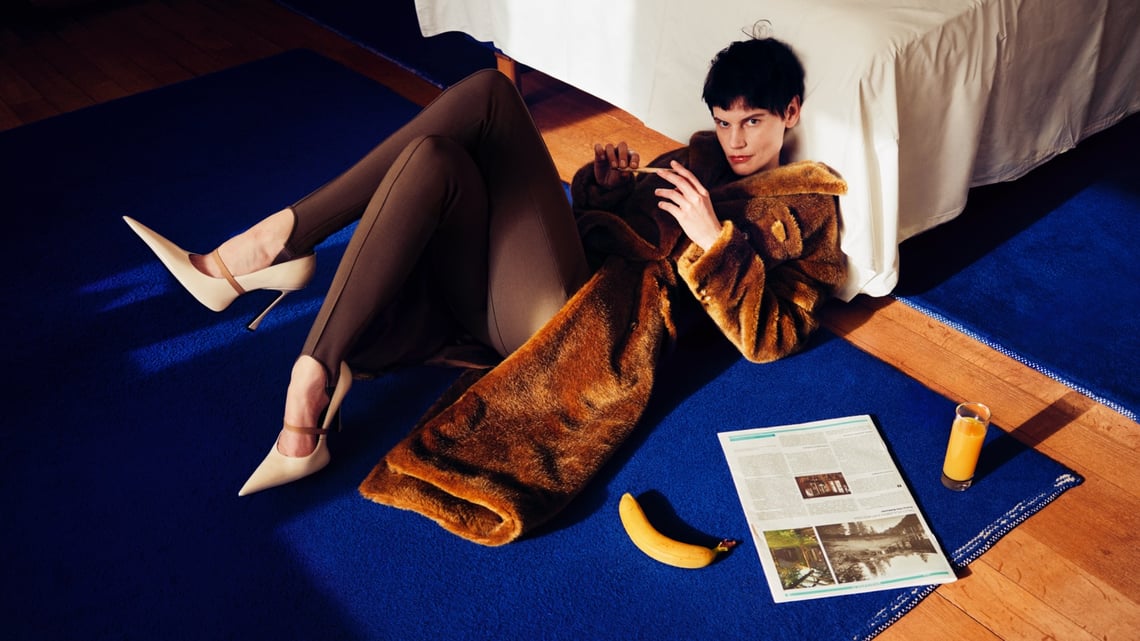
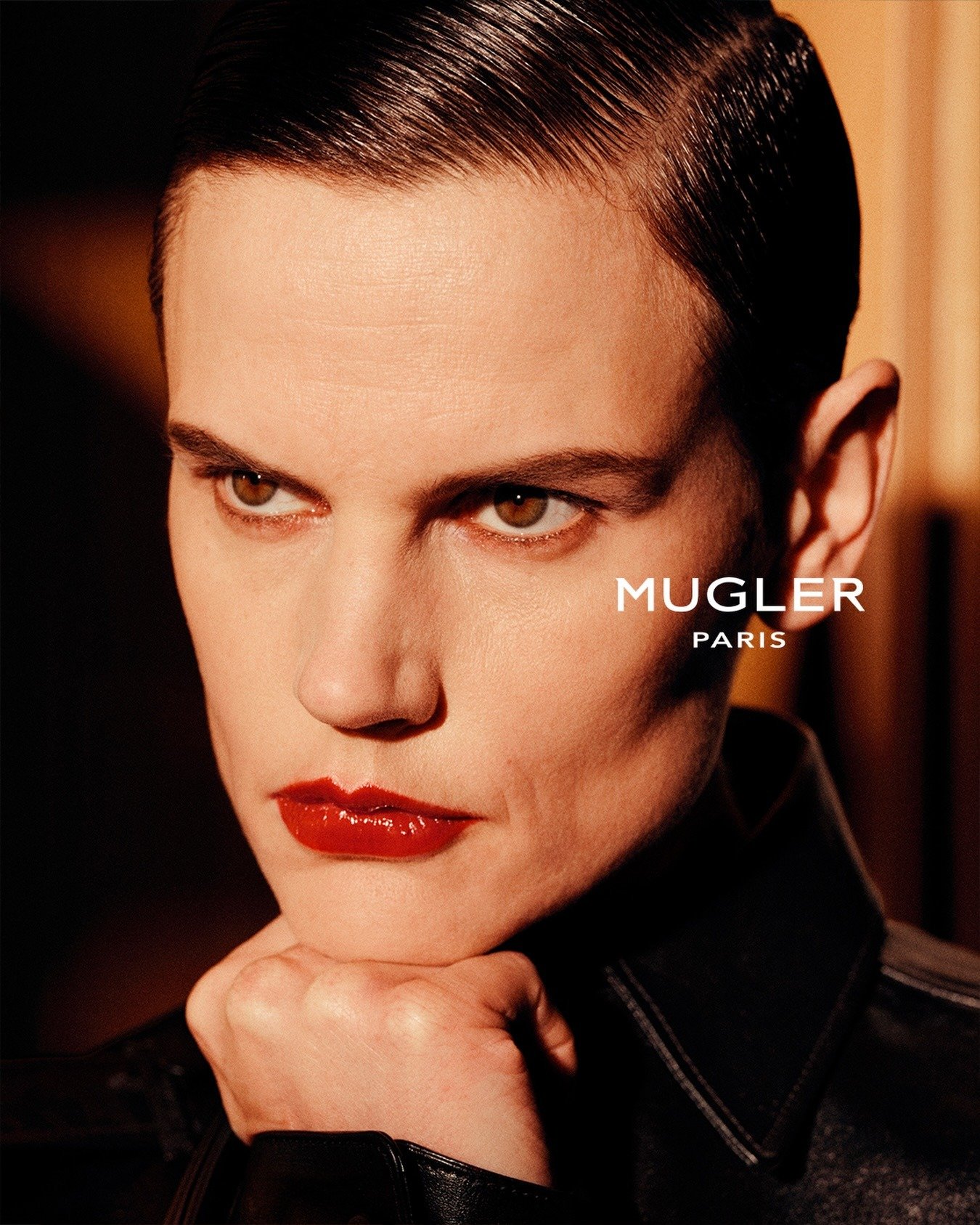
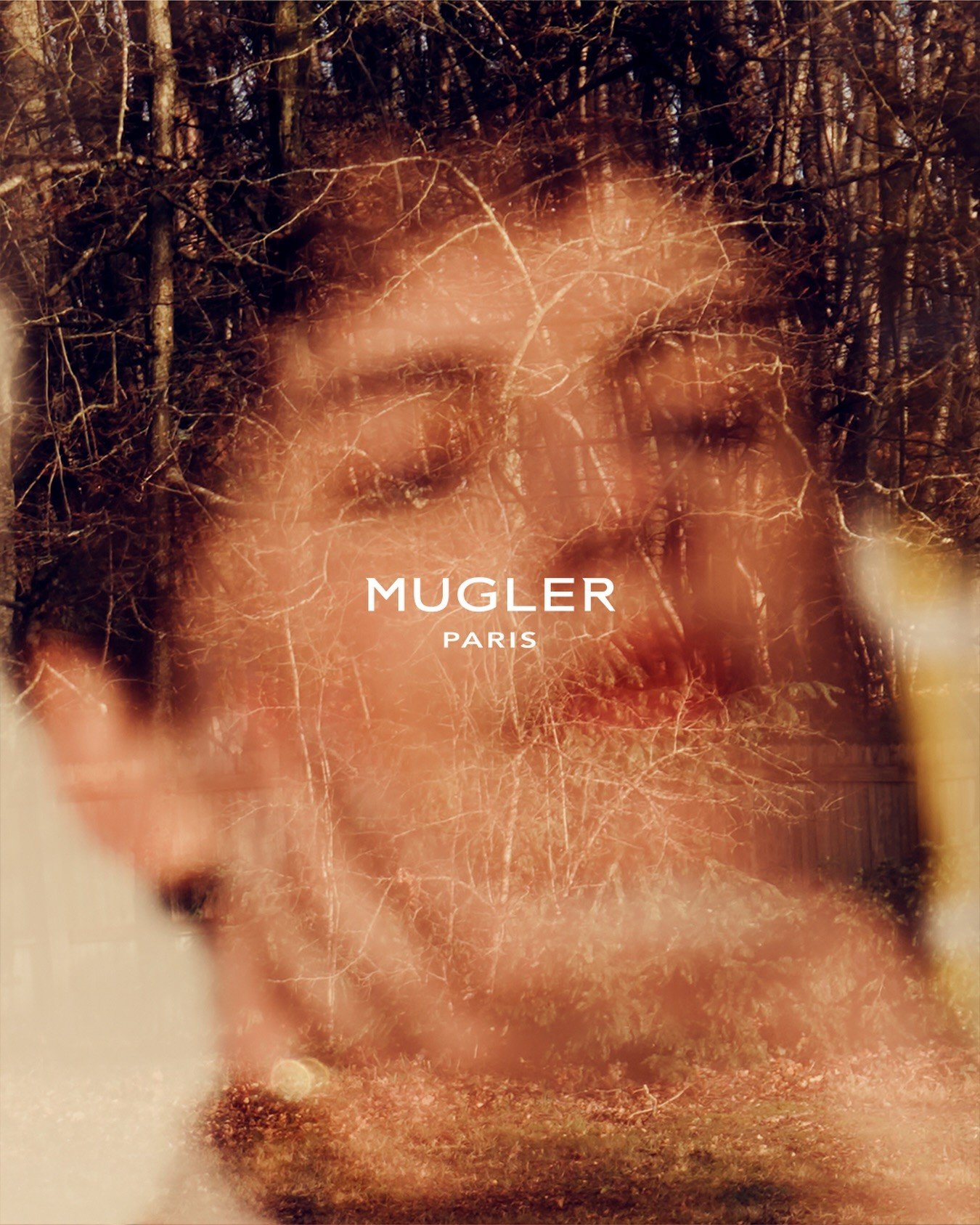
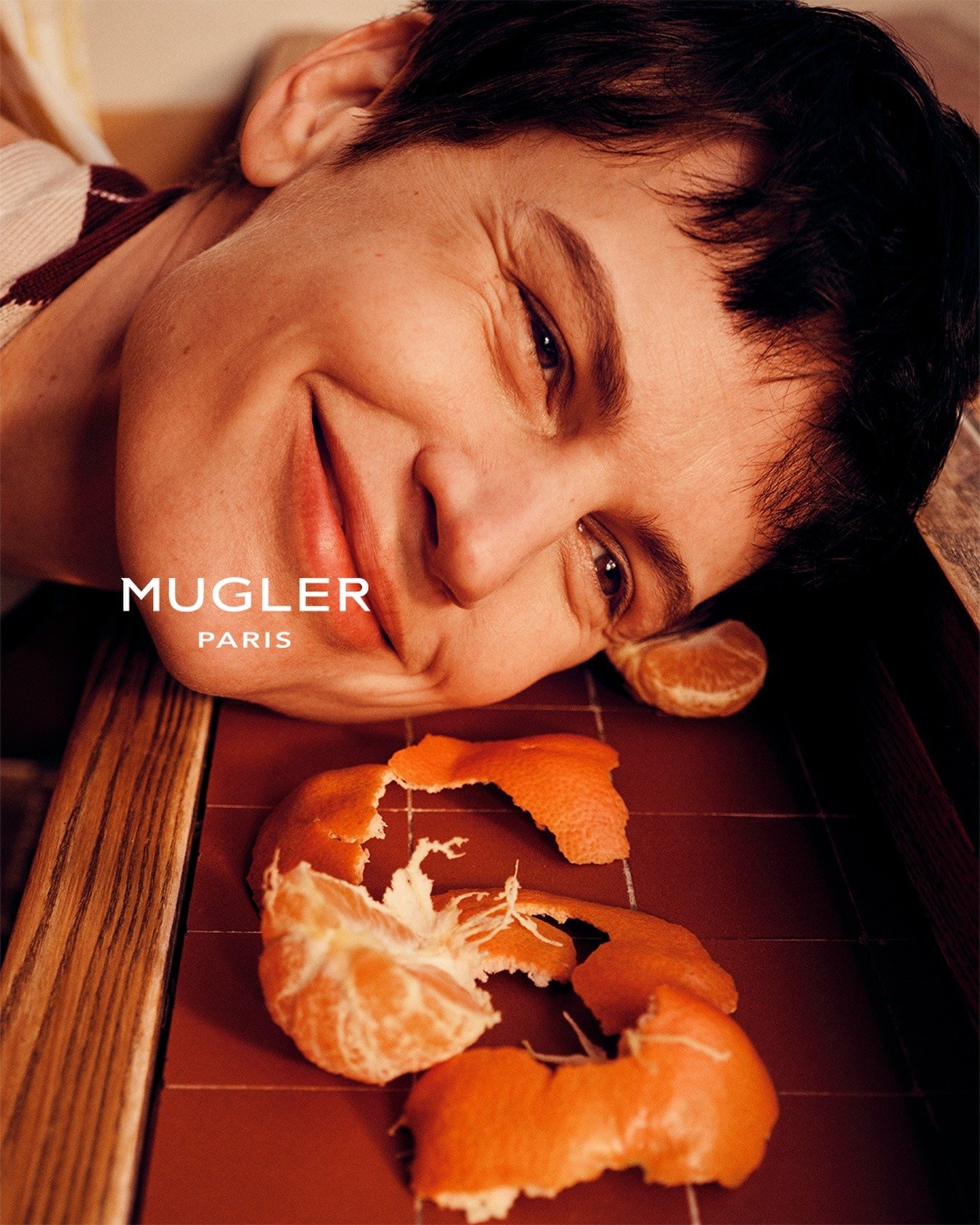
Mugler’s Pre-Fall 2026 campaign, the second chapter of The Wardrobe of Identities, is directed by creative director Miguel Castro Freitas and photographed by Rafael Pavarotti. Model Saskia de Brauw fronts the campaign, styled by Robbie Spencer. The work examines identity as a continuous, shifting process, with sculpted tailoring, exaggerated shoulders, and fluid draping forming the visual vocabulary.
- Mugler‘s Pre-Fall 2026 campaign is the second chapter of The Wardrobe of Identities, directed by creative director Miguel Castro Freitas.
- Photographer Rafael Pavarotti shoots at close range, creating a tension between intimacy and performance that anchors the campaign’s central concept.
- Saskia de Brauw fronts the campaign, with styling by Robbie Spencer that allows sculpted tailoring, exaggerated shoulders, and fluid draping to read as character rather than spectacle.
- The Aurora and Lua bags appear as narrative extensions rather than commercial focal points, integrated into the campaign’s identity-driven framework.
- The campaign positions selfhood as an ongoing process of revision, a shift from Mugler’s historically spectacle-driven visual language.
The first chapter established the premise. The second one tests it. Mugler’s Pre-Fall 2026 campaign, the continuation of The Wardrobe of Identities, moves away from the theatrical register that has long defined the house’s visual output and toward something quieter and more considered. Creative director Miguel Castro Freitas is not abandoning Mugler’s appetite for transformation. He is redirecting it.
Photographer Rafael Pavarotti works in close proximity throughout. The camera does not observe from a distance; it stays near its subject, attentive in a way that reads as both curious and slightly insistent. That closeness is deliberate. It reinforces the campaign’s argument that identity is not a fixed state but something constantly negotiated, revised, and performed within the ordinary rhythms of daily life. Familiar settings become the backdrop for that negotiation. Nothing is staged as spectacle.
How Castro Freitas Is Rebuilding Mugler’s Design Language Through Tailoring and Construction
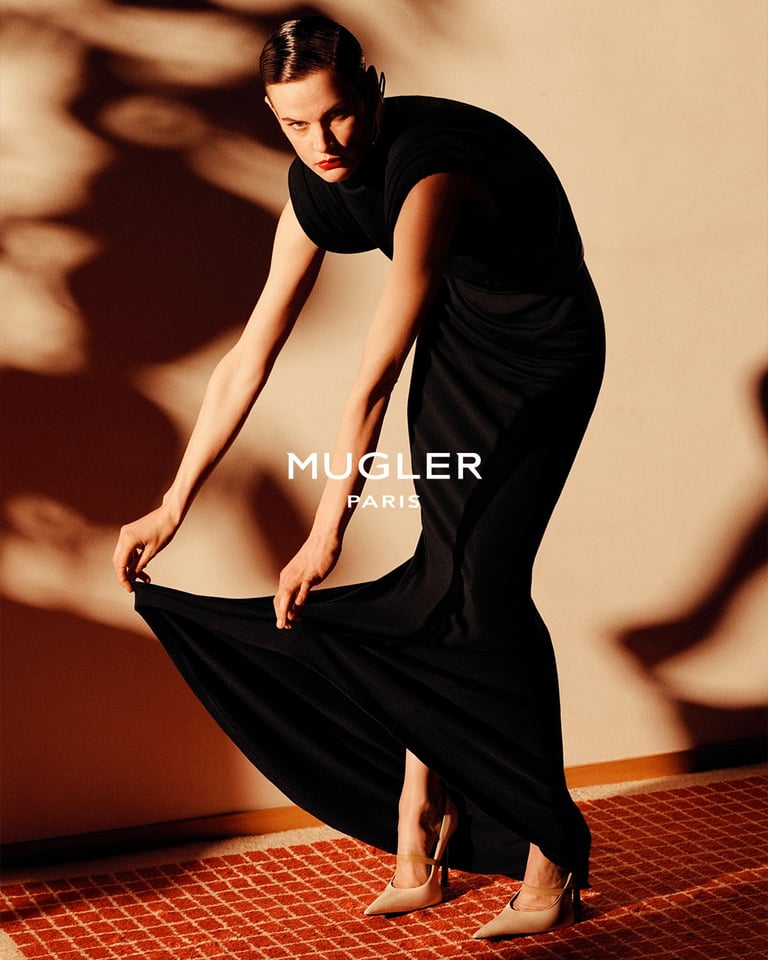
The wardrobe Robbie Spencer assembles for Saskia de Brauw draws directly from the design signatures Castro Freitas has been developing at the house. Sculpted tailoring. Exaggerated shoulders. Fluid draping set against precise construction. These are not archival citations; they are the building blocks of a new visual grammar that acknowledges Mugler’s history without being governed by it.
The Aurora and Lua bags appear throughout, but Spencer’s approach keeps them from functioning as commercial interruptions. They are integrated into the narrative as extensions of the character de Brauw is inhabiting in each frame, objects that belong to the person rather than accessories placed on her. That distinction matters. It keeps the campaign coherent as a piece of storytelling rather than a product showcase.
De Brauw’s presence is central to the approach’s hold. She projects authority and restraint in equal measure, which is precisely what the concept requires. A campaign built around multiplicity of self needs a subject who can shift registers without losing credibility. She does.
Why Mugler’s Shift Toward Introspection Connects to a Broader Moment in Luxury Dressing
The idea that clothing enables different versions of the self is not new. पहनावा has been making that argument for decades. What distinguishes this campaign is not the concept but the restraint with which it is executed. The imagery does not oversell the thesis. It presents it and steps back.
That restraint is well-timed. विलासिता fashion has spent several seasons recalibrating after a period of maximalist visual noise, and the brands gaining traction now are those that have found ways to communicate strength without volume. Mugler under Castro Freitas is making that case through construction and casting rather than through set design or digital manipulation.
The campaign’s accompanying text leans on familiar language about self-expression and transformation, which is its weakest element. The images do not need the reinforcement. They are precise enough to carry the argument on their own.
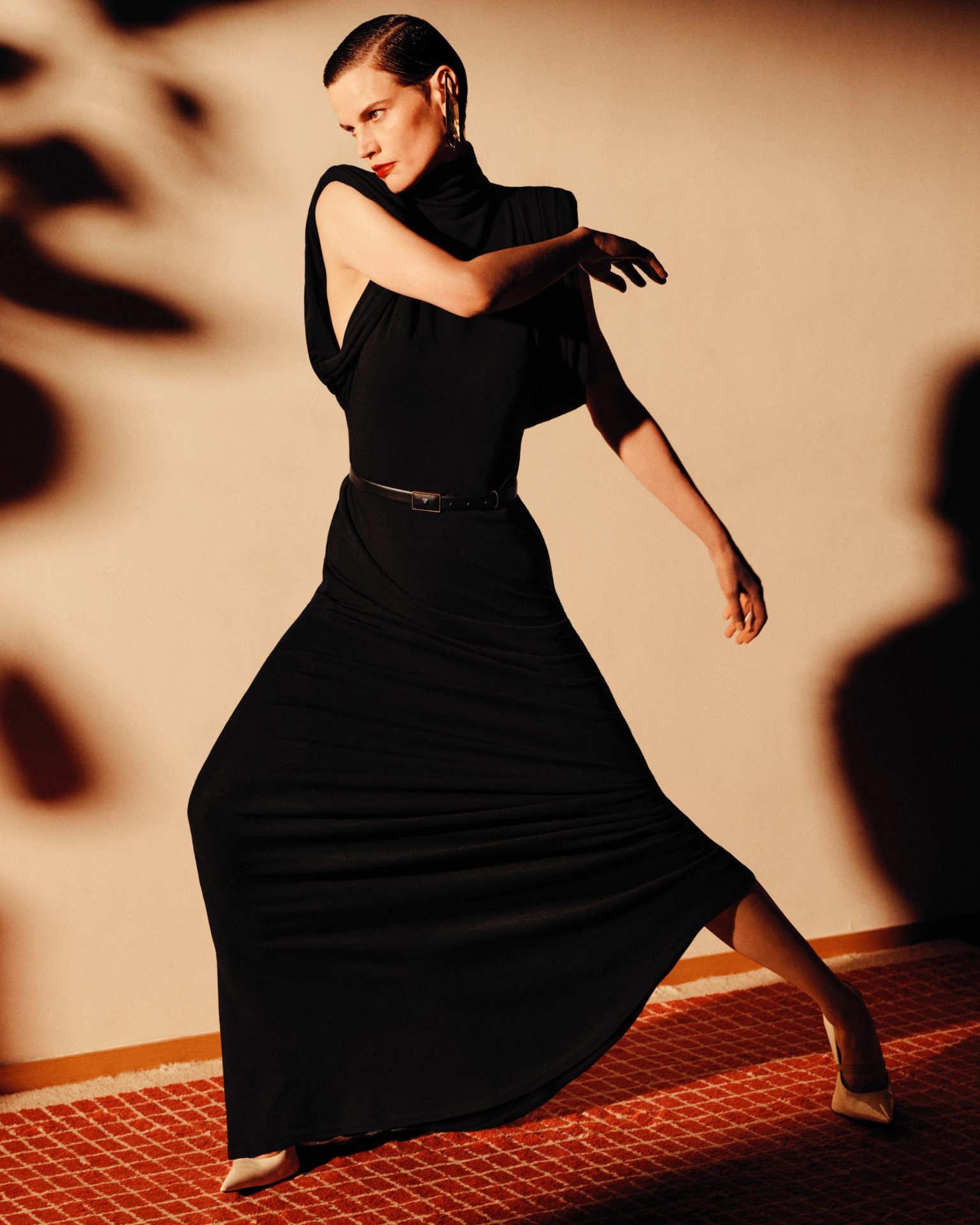
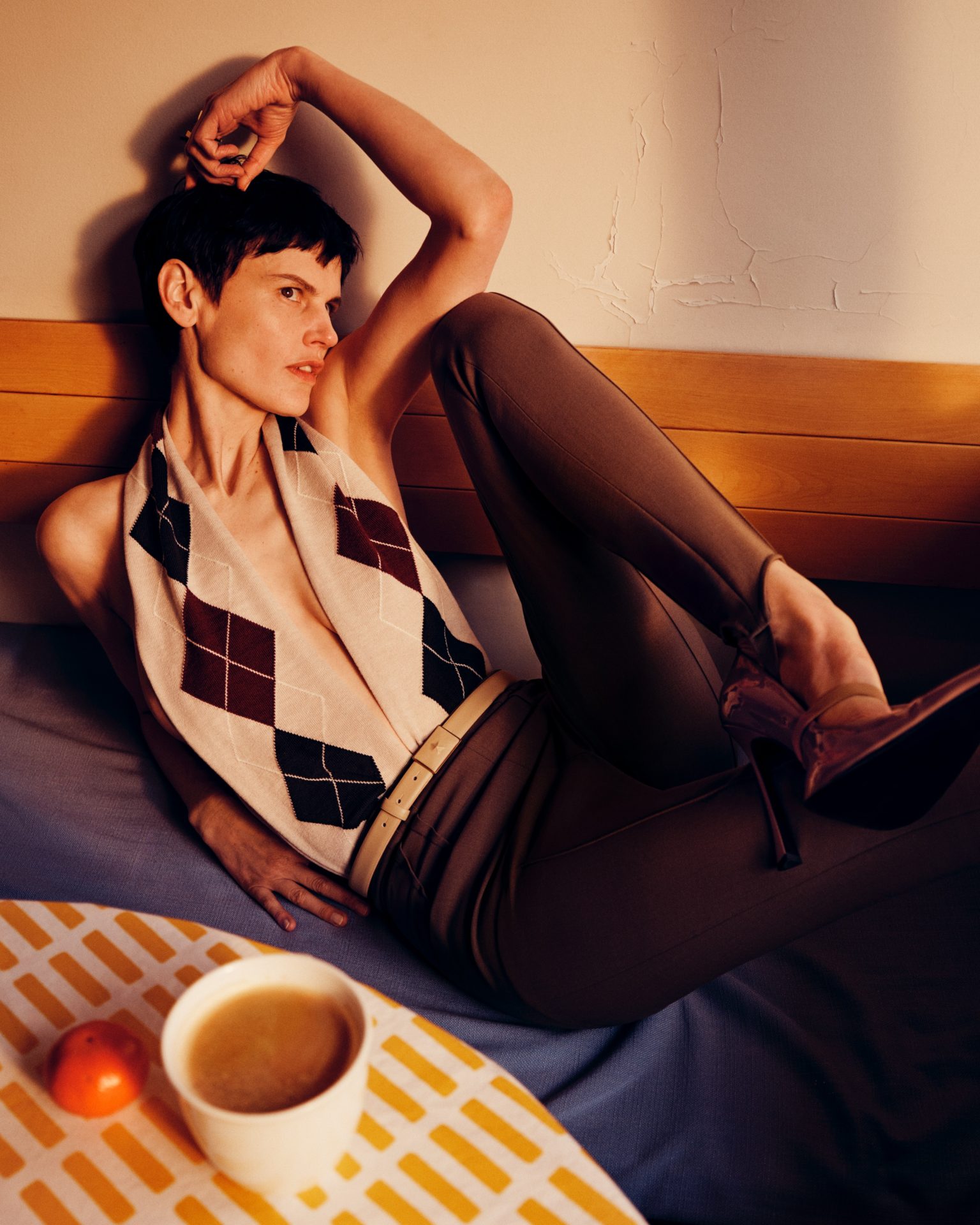
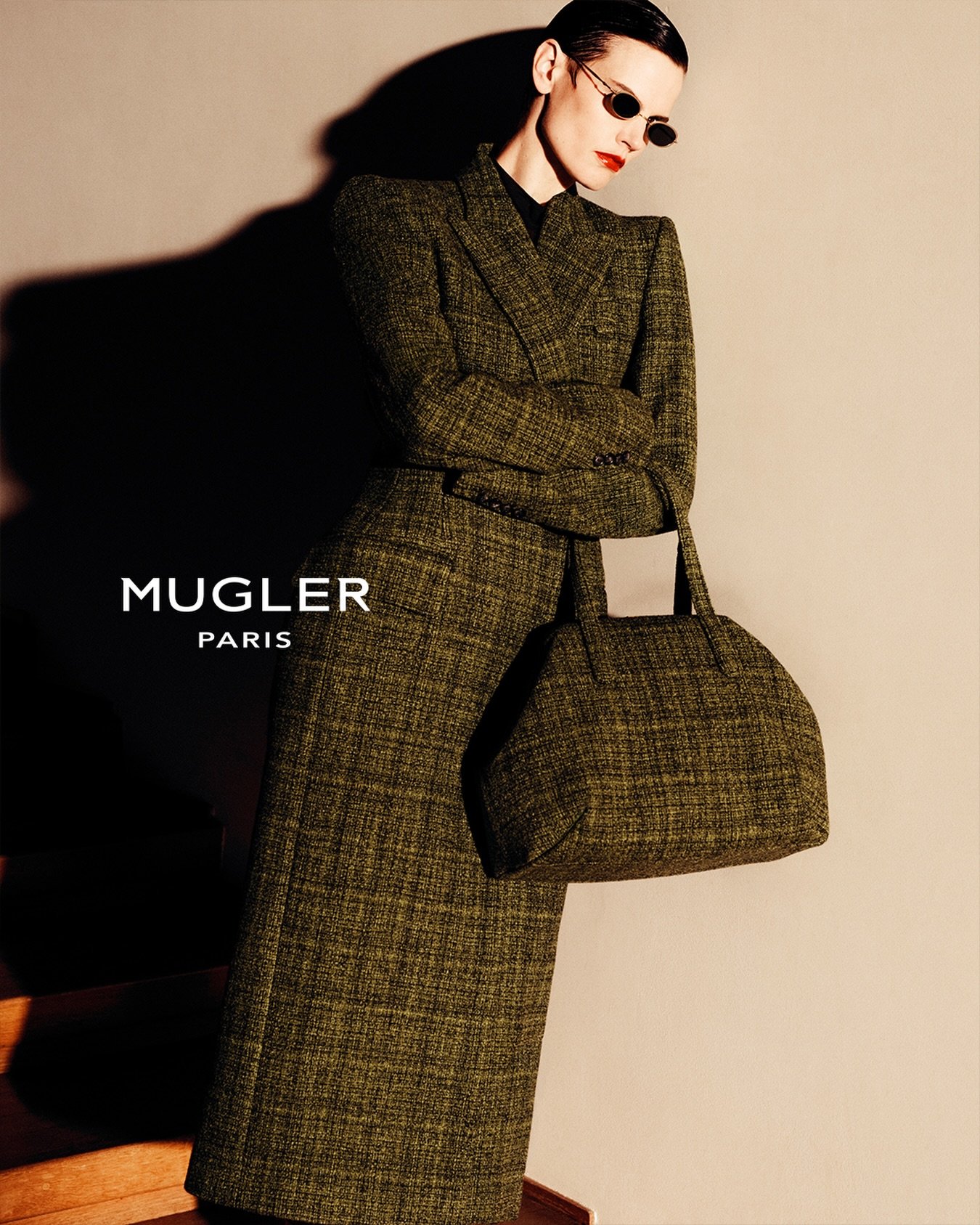
The Wardrobe of Identities confirms that Castro Freitas is building something at Mugler with a clear point of view and the patience to develop it across multiple seasons. Pavarotti’s photography, Spencer’s disciplined styling, and de Brauw’s performance make the campaign’s central argument without overstating it. The concept is not original. The execution is.
Campaign credits:
- Creative Director: Miguel Castro Freitas
- Photographer: Rafael Pavarotti
- Model: Saskia de Brauw
- Stylist: Robbie Spencer
- Hair: Louis Ghewy
- Makeup: Lauren Aiello
- Manicurist: Alex Feller
Images Courtesy of Mugler
अन्य ब्रांड अभियान समाचारों में, Balenciaga Resort 2027: Piccioli’s “Unsize” Concept Rewrites the Rules of Fit