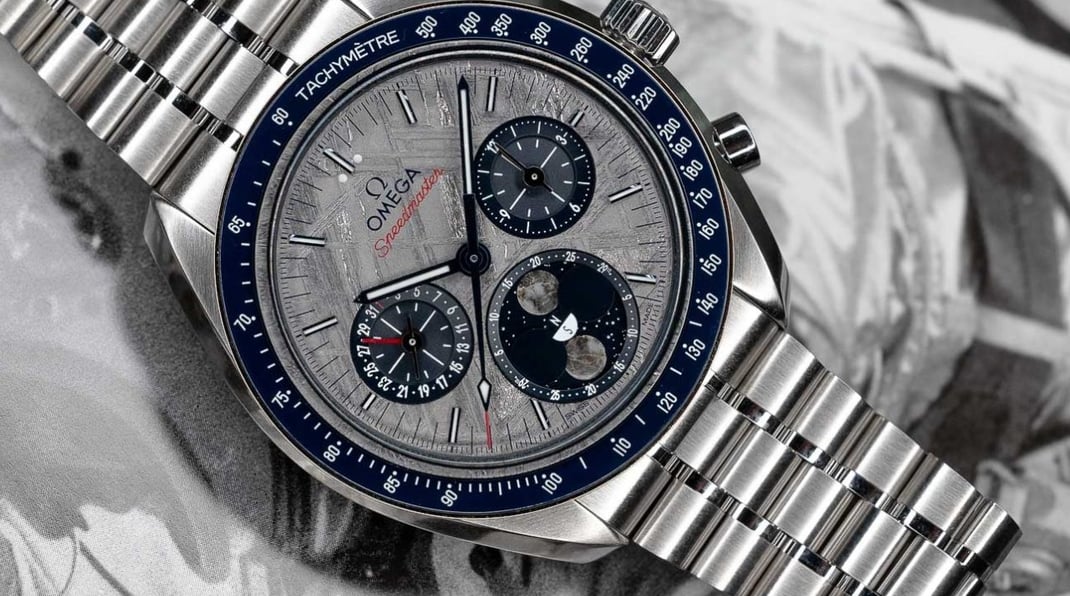

Swiss watchmaker Omega is the only company certified to provide watches to NASA space missions, which it has done since 1965. The luxury timepiece creator has run with this prestigious designation over the years, making several watch lines that incorporate cosmological and astronomical elements. Not least of which has been meteorite watch dials taken from real pieces of space rock.
This article will look at everything you need to know about Omega’s Meteorite watches, from the company’s history with space exploration to the creation of its Meteorite timepieces and the science behind the beauty, to the modern market and the options available at various price points. So you have everything you need to know in mind before investing in one of these unique designs.
What Makes a Meteorite Dial so Rare and Valuable?
Omega first introduced meteorite dials in the early 2000s, updating the Speedmaster and Constellation models. While some other premium watchmakers used pieces of the Gibeon meteorite that fell over Africa several thousand years ago, Omega opted to use cross-section pieces of the Muonionalusta meteorite, which impacted in northern Sweden over a million years ago.
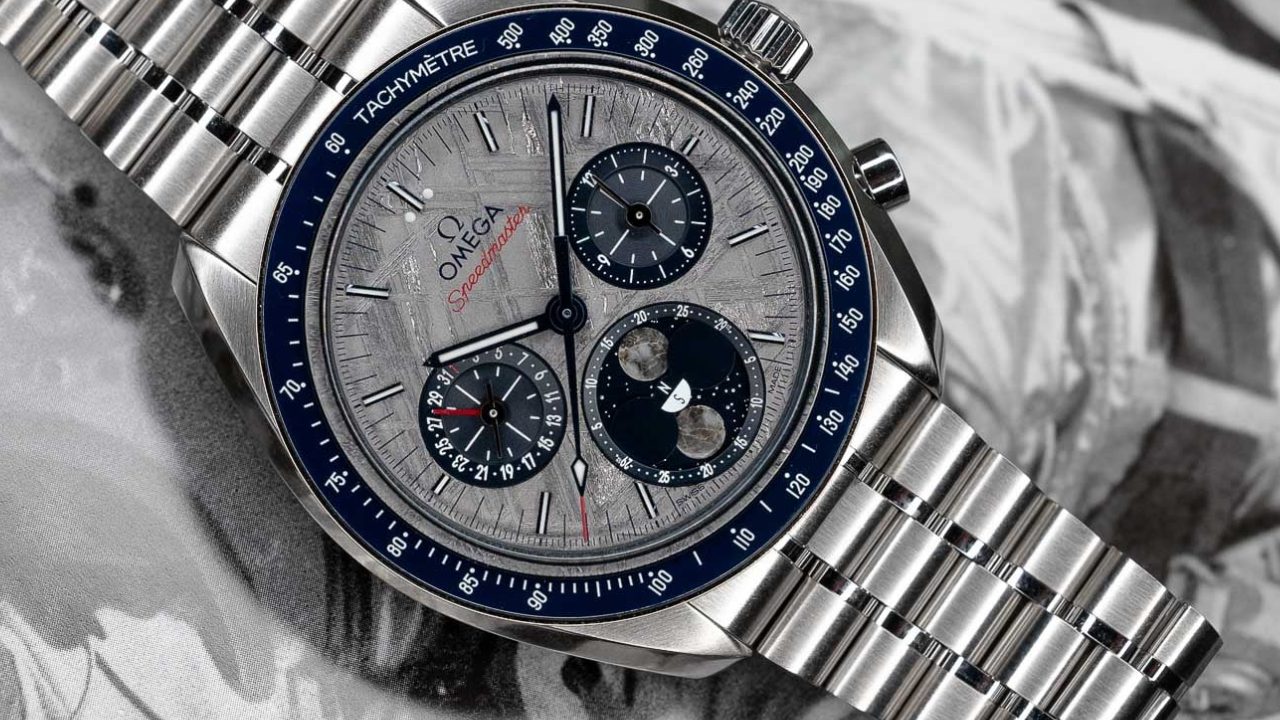
Discover Omega with meteorite dials, using these exquisitely formed natural grain patterns that are truly one of a kind. The unique Widmanstätten pattern from a million-year-old meteorite makes for an extraordinarily refined piece that will stand out in any collection.
The one-of-a-kind pattern in each watch is impossible to recreate in a laboratory setting, with the fine kamacite and taenite metal lattice structure forming only under the extreme conditions of cosmic collisions between large rocks in the voids of endless space. Omega’s Meteorite watches use a slivered cross-section of the millions-of-years-old Muonionalusta meteorite as the centrepiece backing for their dials.
With such an origin story, you can see why Omega Meteorite dial watches are among some of the most prized and expensive in the luxury watch business.
Omega’s Spacefaring History Fits Well with the Meteorite Theme
On top of their use of Meteorites, Omega designed the watches that NASA astronauts wore in space on the Apollo missions, when man first visited the moon in the late 1960s. This means many of their watches already had a strong astronomical connection, with several lines featuring lunar phasing chronometers and other cosmological symbology.
Using pieces of actual space rock in their designs was almost a natural step forward for this prestigious company. The Swiss watchmaker first began using meteorite dials in the early 2000s. Cutting the meteorite into thin slices that don’t damage the cross-section’s lattice pattern, then treating them and installing them inside a watch for longevity and structural integrity is no small task at all, adding to the luxury craftsmanship behind any Omega watch.
As well as the Muonionalusta meteorite, Omega’s partnership with NASA has also granted them access to pieces of actual lunar rock. They have incorporated slivers of this precious off-world material into several of their Meteorite watches, adding a touch of rarity few can match.
Omega’s Key Meteorite Models – a Brief History
Omega has made the following Meteorite dial watches over the past two decades, with some also incorporating pieces of moon rock:
- Speedmaster Moonphase
- Seamaster Terra
- Speedmaster – Dark Side of the Moon
- Various Constellation watches
The most visually striking options are the special editions, such as the lunar phase chronometer Dark Side of the Moon. The most prestigious are generally considered to be the Speedmaster variants made in precious metals, such as the unique Sedna Gold – a reddish-tinted gold named after one of the furthest flung dwarf planets in the Solar System.
Omega developed Sedna gold as a more durable alternative to traditional rose gold options. Most other Omega Meteorite models use ceramic or steel casings, making them less expensive than some of their luxury watch competitors. However, the company’s long association with space exploration and the use of unique materials makes it just as prestigious for many collectors and connoisseurs.
Collector Appeal and Market Value in the Current Time
Omega meteorite watches start at around $ 8,000 for the most basic steel or ceramic model on the resale market, making them a one-of-a-kind, unique cosmic timepiece. The more expensive options start at around $20,000 and can go up to $50,000 or more for pieces made with Sedna gold, platinum, or other precious metals.
None of these watches is ever mass-produced, meaning purchasing one is a unique experience in itself. The company is not currently producing Speedmaster watches with Meteorite dials. Given that particular model’s spacefaring history, they are among the most sought-after on the secondary market.
Brand new Speedmaster meteorites often start at $15,000-plus, even for ceramic options, and the rarer special edition Moonphase models can sell for well over $25,000. Currently, there is a fast-growing public interest in space travel due to the activities of SpaceX and other private companies, and digital pushback has led to a surge in watch collecting. Add to that the value of cosmic objects rising in recent years, and auction houses have reported massively increased market interest in Meteorite dial watches like Omega’s.