
BUGATTI PHOTO RELEASE - LE BUGATTI BOLIDE EST RÉEL

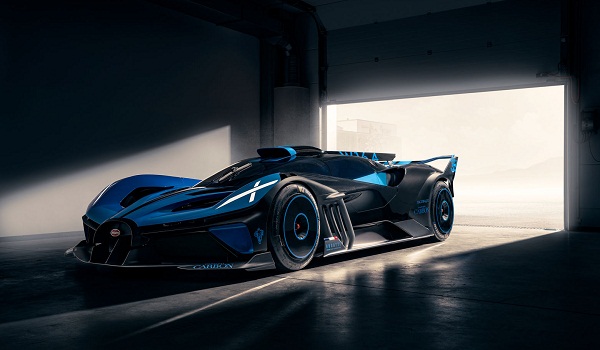
Incomparably fast, light, extreme. With its Bugatti Bolide presented a few weeks ago, the French luxury brand is once again pushing the boundaries of what is physically possible. Never before has Bugatti designed such an uncompromising vehicle, focused solely on the race track. The Bugatti Bolide serves as an experimental design study and a carrier of technological expertise: designers and engineers created and developed the real, drivable vehicle in less than one year, a pace that carried through into the accelerated production timeline for its select customer deliveries, using new materials and manufacturing processes that were proven to be reliable with both real and virtual testing laps. They simulated maximum loads, acceleration times and lap times in the virtual environment.
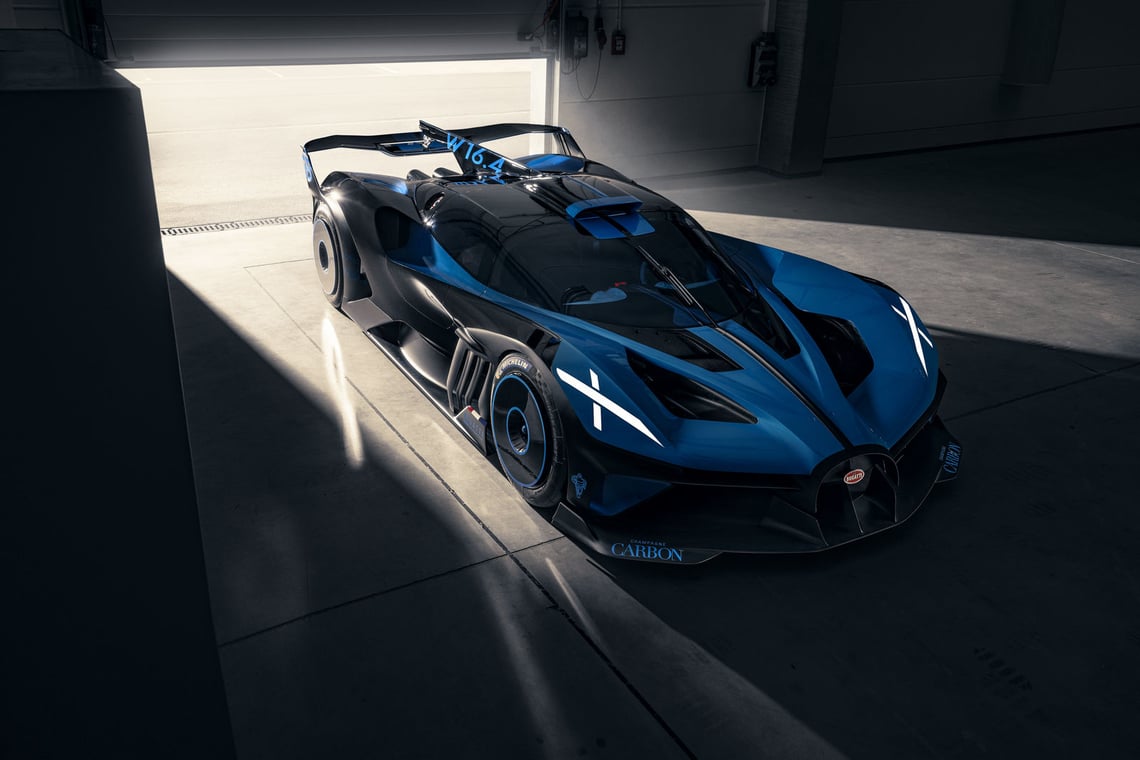
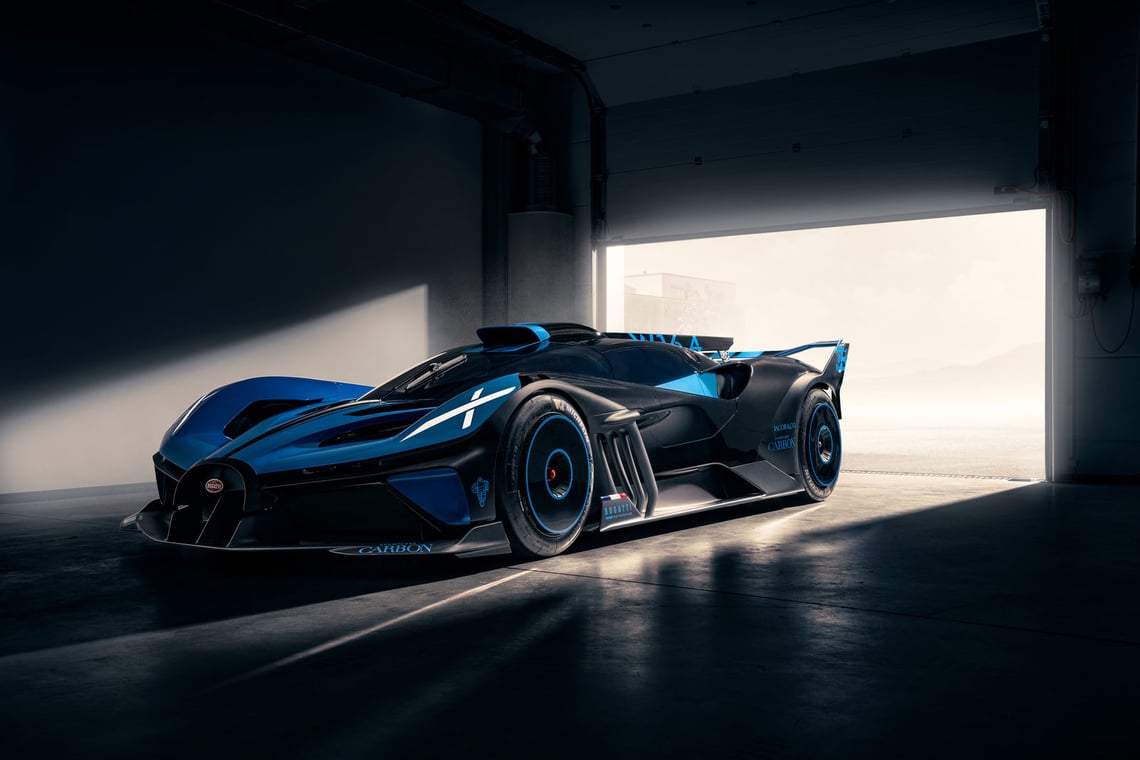
“With the Bolide we have dared to pursue an experiment of extremes. In our history that dates more than 115 years, there has never been a comparable model based on such a minimalist concept conceived solely around the engine,” says Stephan Winkelmann, President of Bugatti. “An output of up to 1,850 PS˚ is combined with a weight of just 1,240 kilograms˚˚ – giving an unprecedented weight-to-power ratio of only 0.67 kilograms per PS. Driving the Bolide is like riding on a cannonball.”
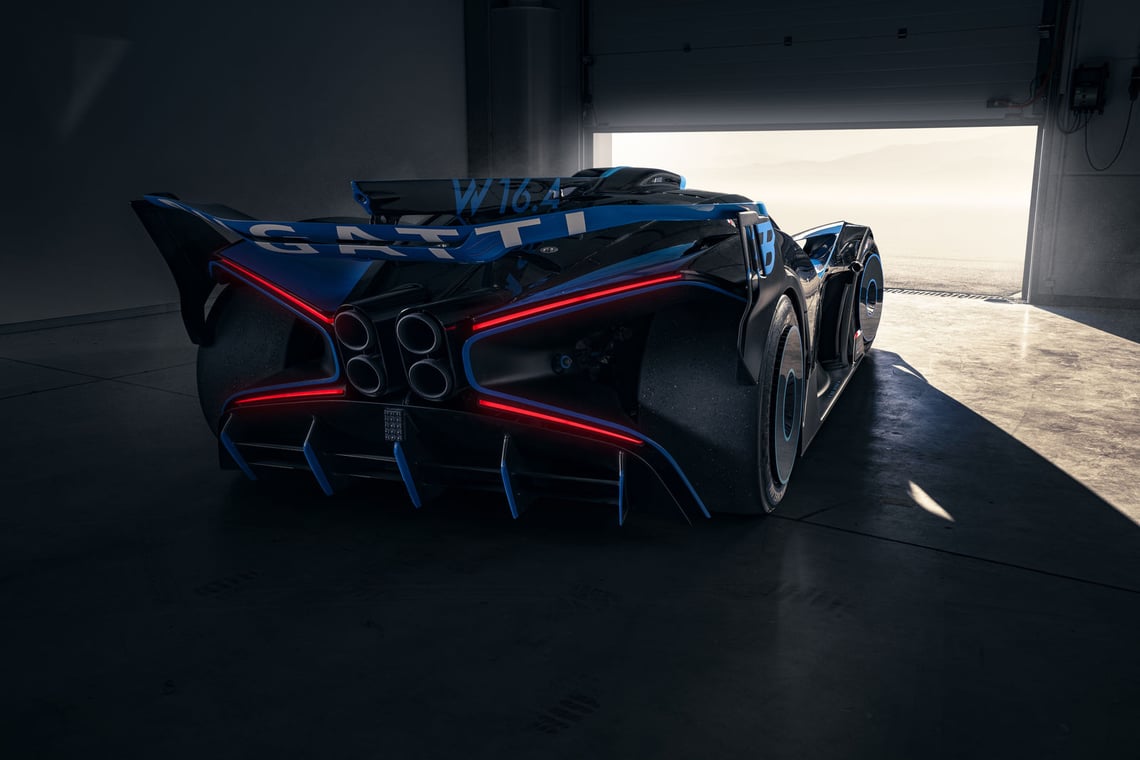

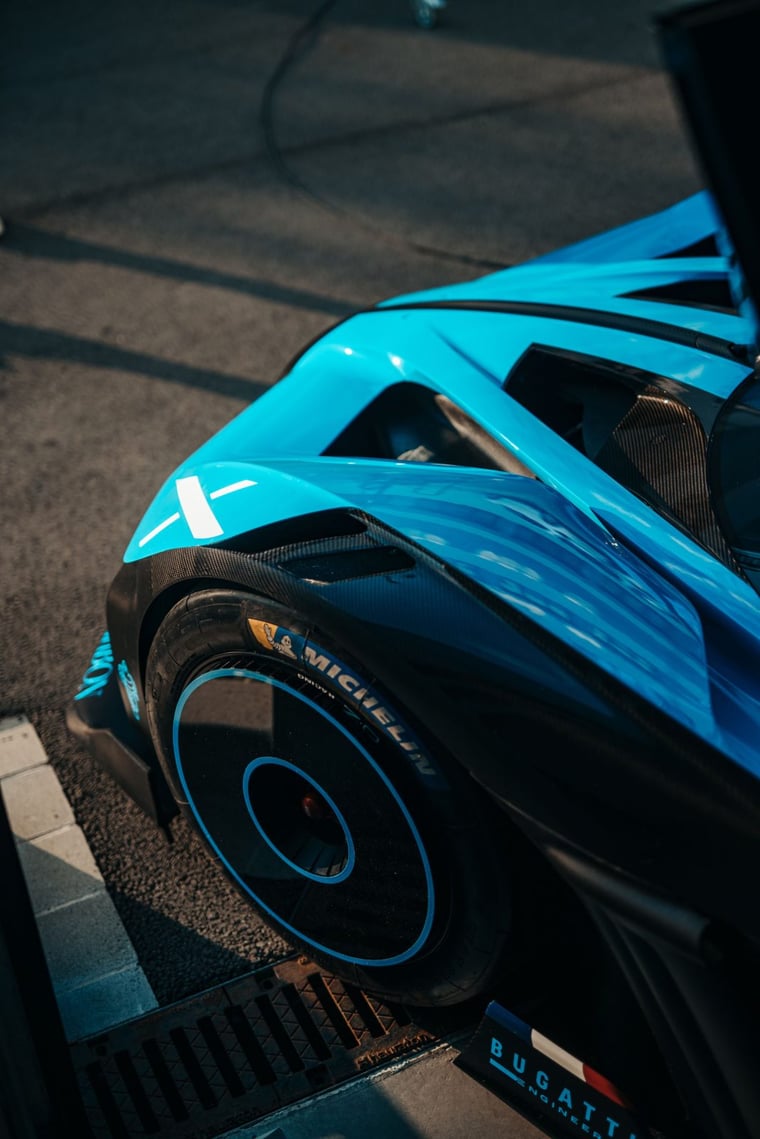
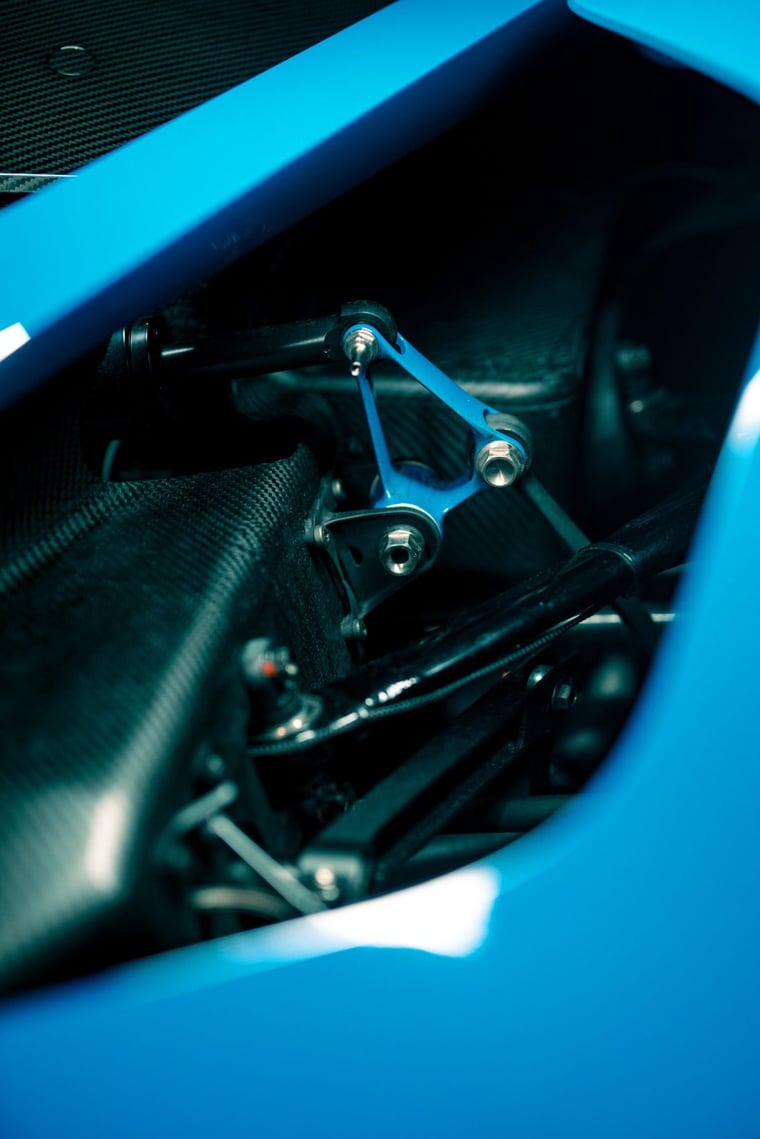
The Bolide is unique in terms of its technical elements, too: Bugatti has created a radically light vehicle around the iconic 8.0-litre W16 engine with an output of 1,850 PS and 1,850 newton-metres of torque. The monocoque chassis is made of light, high-strength carbon fibre, while all screw and connecting components are made of titanium. What is more, hollow, thin-walled functional components made of an aerospace titanium alloy are used at numerous points. In the simulation, the Bolide almost reaches Formula 1 figures with a top speed of well over 500 km/h˚˚˚ – though without sacrificing maximum handling and agility. The Bolide takes 3:07.1 minutes˚˚˚ to complete a lap of Le Mans and 5:23.1 minutes˚˚˚ to get round the Nürburgring Nordschleife.
˚ When using 110-octane racing petrol; engine with 98-octane petrol at 1,600 PS
˚˚ The weight specification is based on the theoretically possible dry weight
˚˚˚ Simulated figures


Source Bugatti
As of 2026, all 40 production examples of the Bugatti Bolide have been allocated to customers, cementing its status not merely as a technological showcase but as one of the most exclusive track-only hypercars ever produced.
THE DESIGN PHILOSOPHY BEHIND THE BUGATTI BOLIDE
The Bugatti Bolide represents a deliberate departure from the brand’s road-going tradition of opulent grand tourers. Where the Chiron balances breathtaking performance with daily usability, the Bolide strips every consideration down to a single obsessive principle: maximum performance on the track. The result is a machine that feels less like a car and more like a philosophical statement rendered in carbon fibre and titanium.
Bugatti’s design team, working under immense time pressure, approached the Bolide’s silhouette as an aerodynamic problem first and an aesthetic exercise second. Every surface serves a function. The aggressive front splitter, the sculpted underbody channels, and the towering rear wing are not decorative flourishes; they are precision tools engineered to generate the downforce necessary to keep a 1,850 PS machine planted at speeds that challenge the limits of physics.
The cockpit itself reflects this same rigour. The driver sits in a space that is deliberately minimal, surrounded by exposed carbon fibre, titanium hardware, and only the instrumentation deemed essential. No infotainment screen. No leather-trimmed comfort. The Bolide’s interior communicates a singular message: this vehicle exists to perform, and every gram saved elsewhere is a gram that serves the driver on corner entry.
For collectors and connoisseurs within the global luxury sphere, the Bolide’s design is as compelling a conversation piece as any work of contemporary art, combining radical function with a visual identity that is unmistakably, defiantly Bugatti.
THE BUGATTI BOLIDE AS A COLLECTORS OBJECT AND CULTURAL ARTEFACT
With production strictly limited to 40 examples, the Bugatti Bolide occupies a category that transcends conventional automotive classification. It is simultaneously an engineering milestone, a collectors object of the highest order, and a cultural artefact that speaks to the intersection of craft, technology, and extreme luxury. Each example has been allocated to a verified customer, a detail that underscores the Bolide’s scarcity and the exclusivity that defines the Bugatti ownership experience at its most concentrated.
For the global audience that orbits the worlds of fashion, art, and high style, the Bolide holds a specific and undeniable appeal. It represents the same commitment to uncompromising quality that drives the finest ateliers in Paris or the most celebrated jewellers on Fifth Avenue. The titanium fasteners, the aerospace-grade alloys, and the hand-finished carbon fibre panels are the automotive equivalents of hand-stitched seams and hand-set stones: details that reveal themselves slowly to those who know where to look.
The Bolide also carries significant investment potential. Track-only hypercars from marques with Bugatti’s heritage and production discipline have historically appreciated with conviction in the collector market. Analysts within the alternative assets sector regard limited-production Bugatti models as blue-chip holdings, combining emotional resonance with demonstrable scarcity, a combination that is extraordinarily difficult to manufacture and impossible to replicate once the allocation is closed.
Owning a Bugatti Bolide is, in the most precise sense, owning a piece of automotive history at the moment it is being made.
THE W16 ENGINE: THE HEART OF THE BUGATTI BOLIDE
At the core of the Bugatti Bolide sits one of the most extraordinary powerplants in the history of the internal combustion engine: the iconic 8.0-litre quad-turbocharged W16. This engine has been the defining technical signature of Bugatti’s modern era since its introduction in the Veyron, but in the Bolide it reaches its most extreme expression to date.
Running on 110-octane racing fuel, the W16 produces 1,850 PS and 1,850 newton-metres of torque, figures that are not merely impressive in isolation but genuinely transformative when considered in the context of the Bolide’s theoretical dry weight of 1,240 kilograms. The resulting power-to-weight ratio of 0.67 kilograms per PS places the Bolide in a performance category that has no meaningful peer among production vehicles.
To extract this output while maintaining structural integrity under sustained track conditions, Bugatti’s engineers undertook a comprehensive programme of thermal management and materials innovation. Hollow titanium components reduce weight in areas where steel or aluminium would previously have been the only viable options. The monocoque chassis, constructed from high-strength carbon fibre, provides the rigidity necessary to manage the forces generated during hard acceleration, braking, and high-speed cornering.
The W16’s configuration, with its 16 cylinders arranged in a distinctive W formation, also provides a packaging advantage: the engine’s relatively compact footprint allows engineers to position mass centrally, contributing to the balance and handling agility that the simulated Nurburgring and Le Mans lap times suggest is genuinely exceptional.