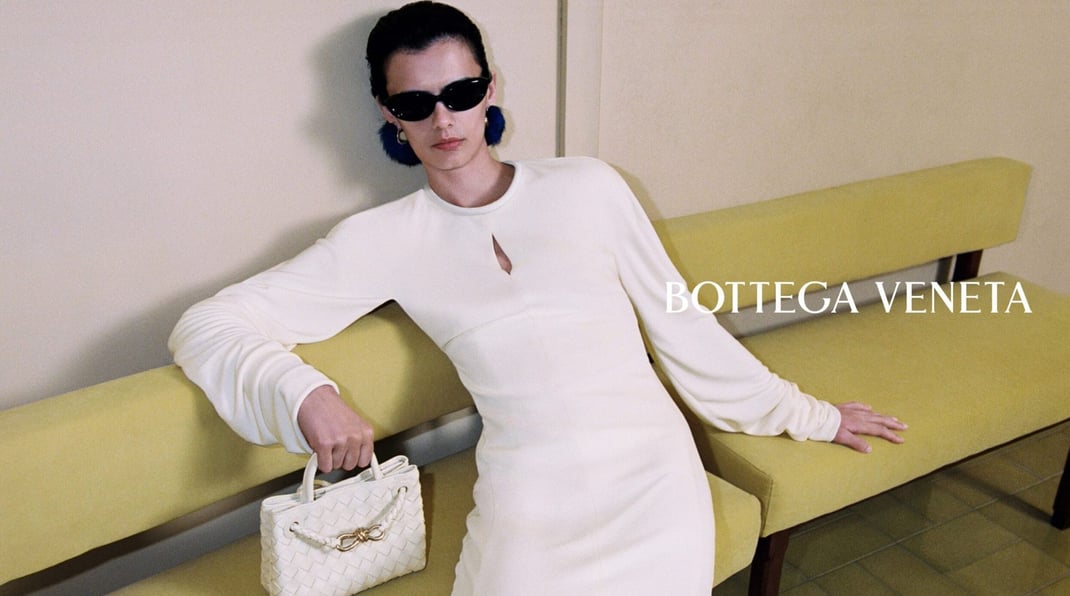

Bottega Veneta’s “IL MIO, A Portrait Series” is a 2026 ad campaign under creative director Louise Trotter, with campaign creative direction by Stephen Kidd and photography by Drew Vickers. Models Chu Wong, Selena Forrest, and Sihana Shalaj are photographed in spare, slightly domestic interiors, holding bags against the body in gestures of quiet possession. The campaign title translates from Italian as “what belongs to me,” and the entire visual argument is built around that premise: the bag as a personal object, chosen and lived with rather than displayed.
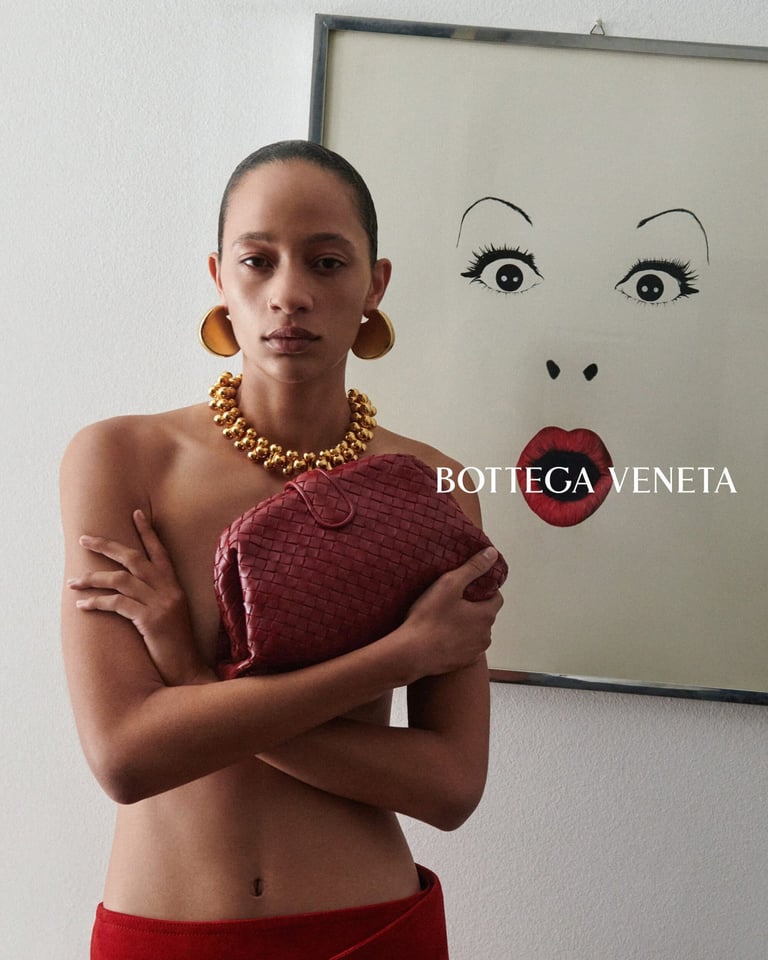
- Bottega Veneta‘s 2026 campaign, IL MIO, is directed by Louise Trotter and photographed by Drew Vickers, featuring models Chu Wong, Selena Forrest, and Sihana Shalaj.
- The title translates from Italian as “what belongs to me,” framing the bag not as a status object but as a personal companion acquired through use and attachment.
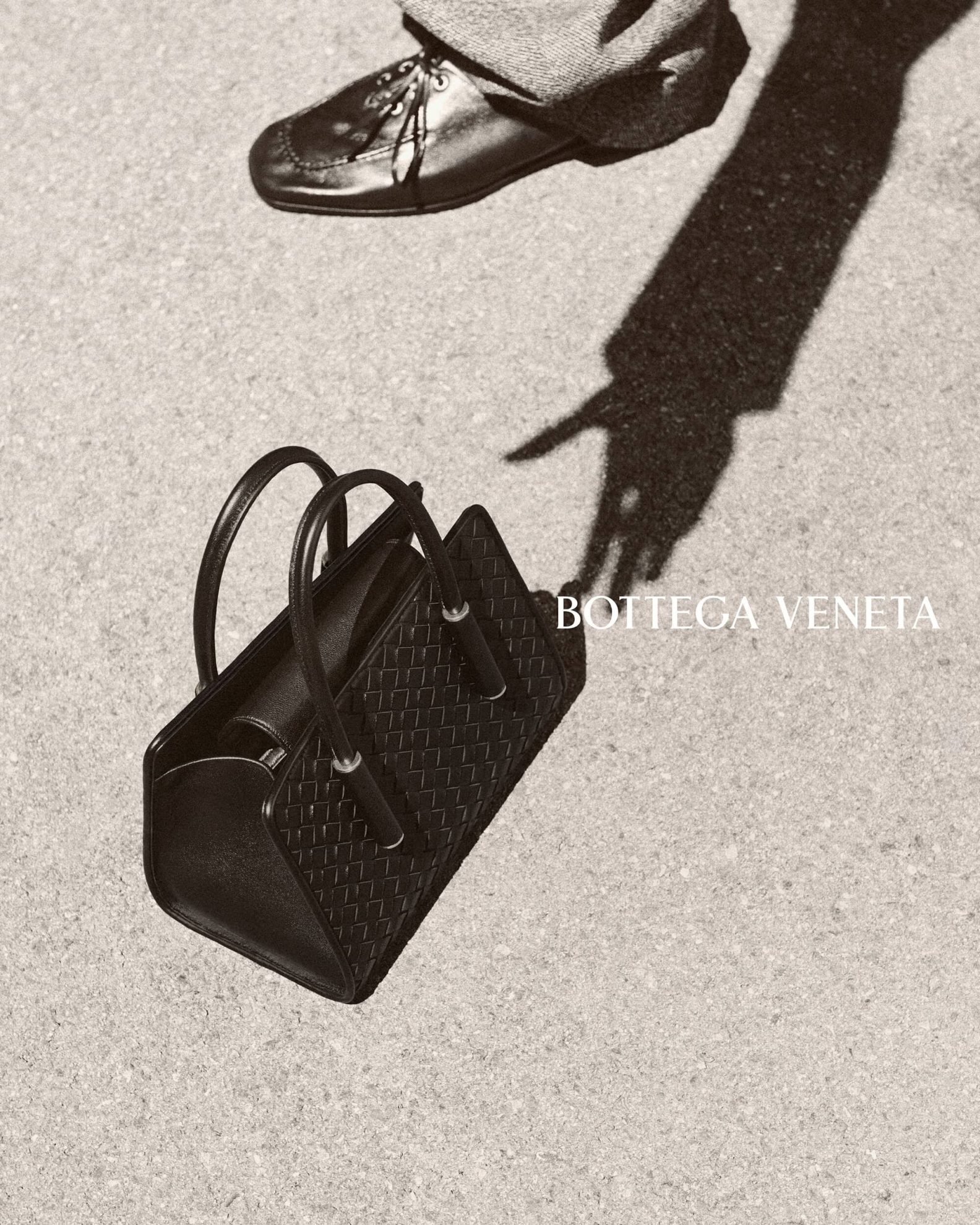
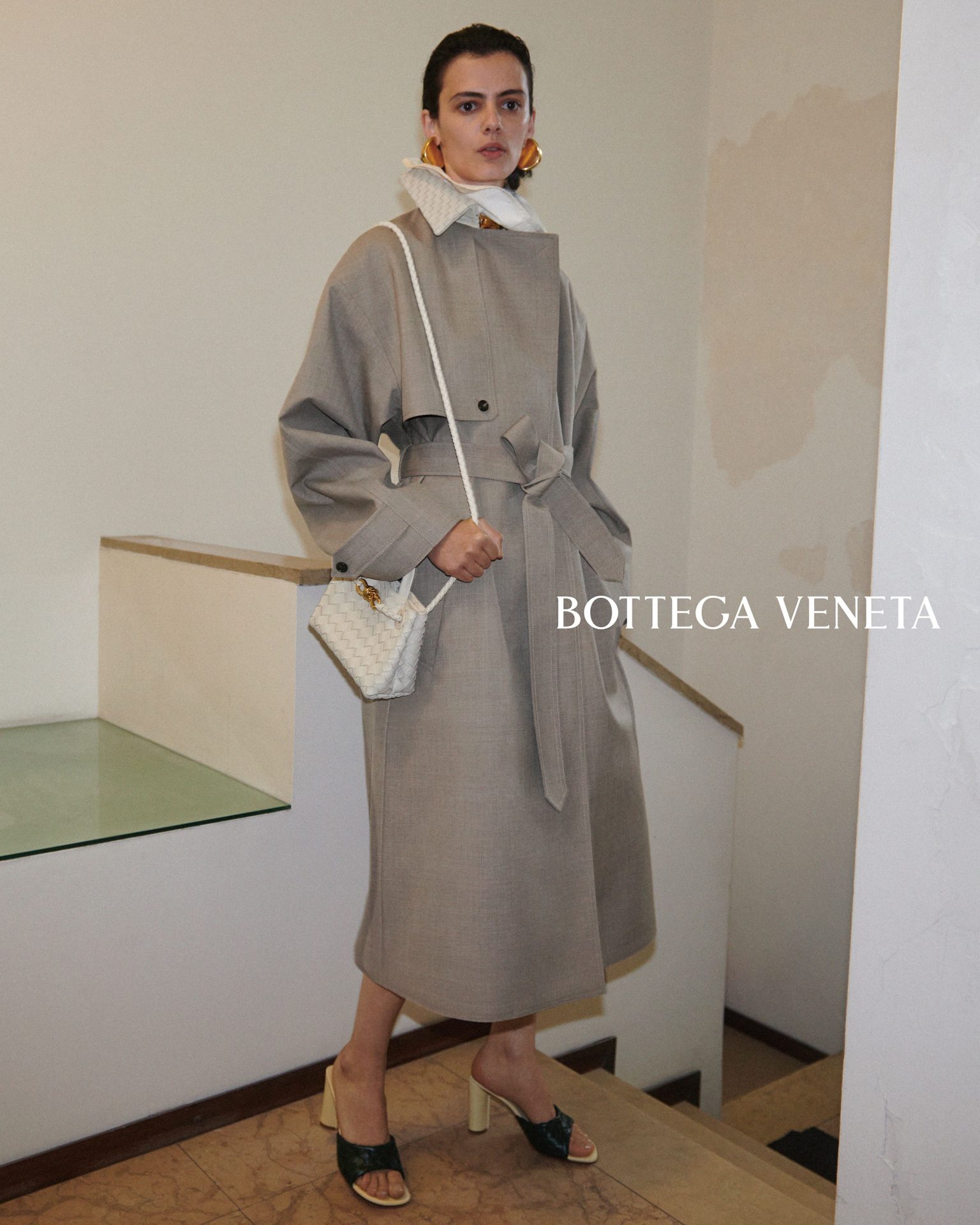
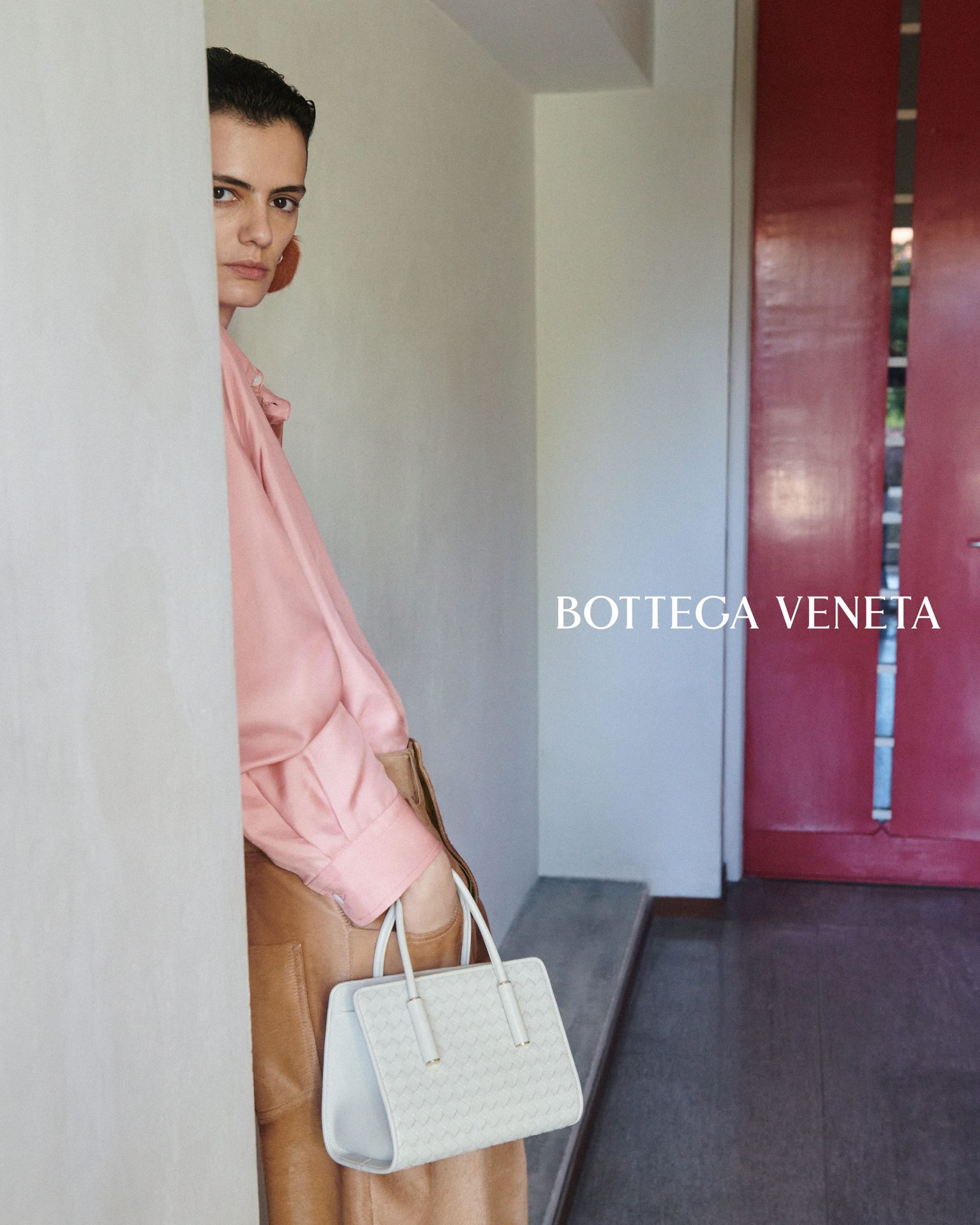
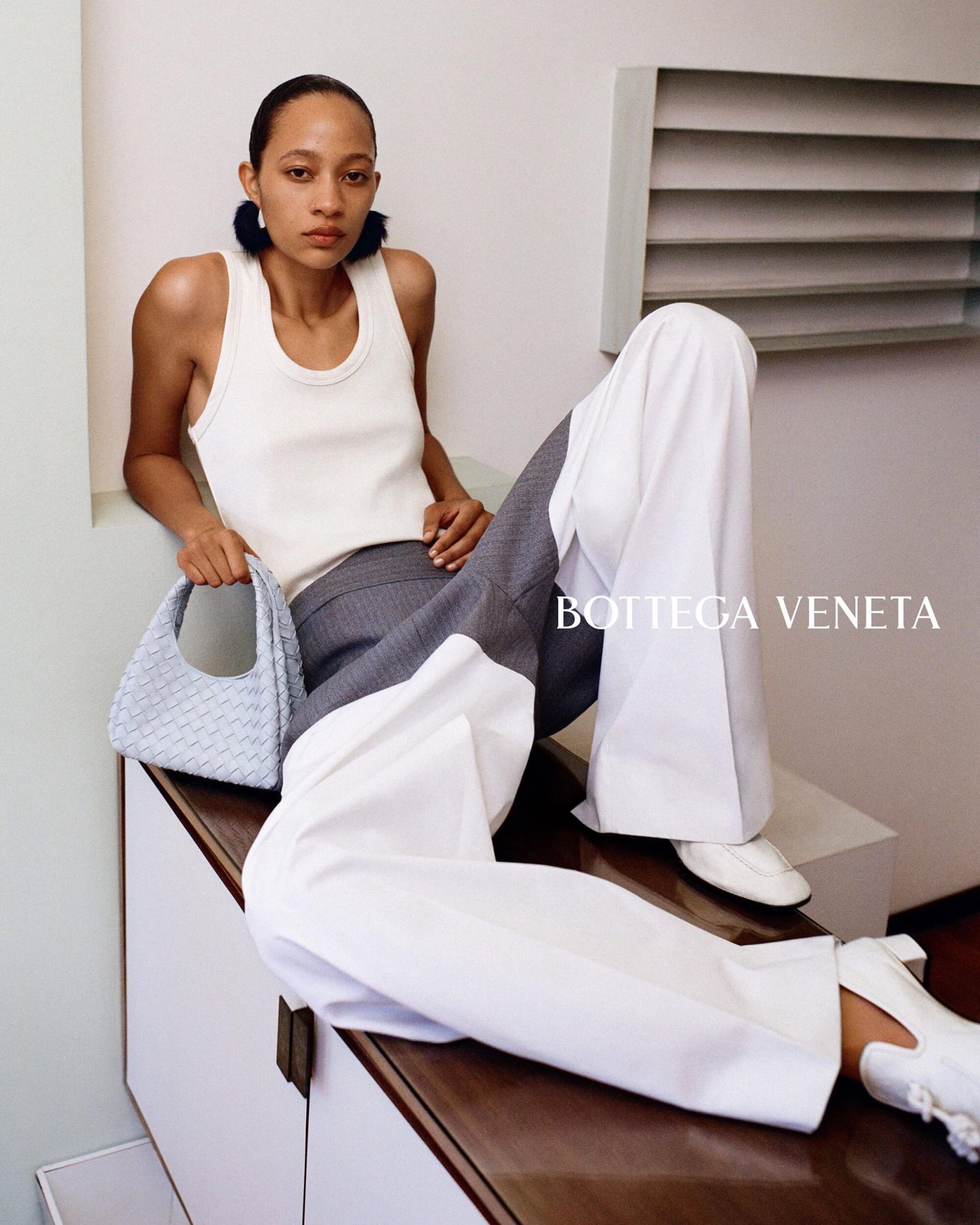
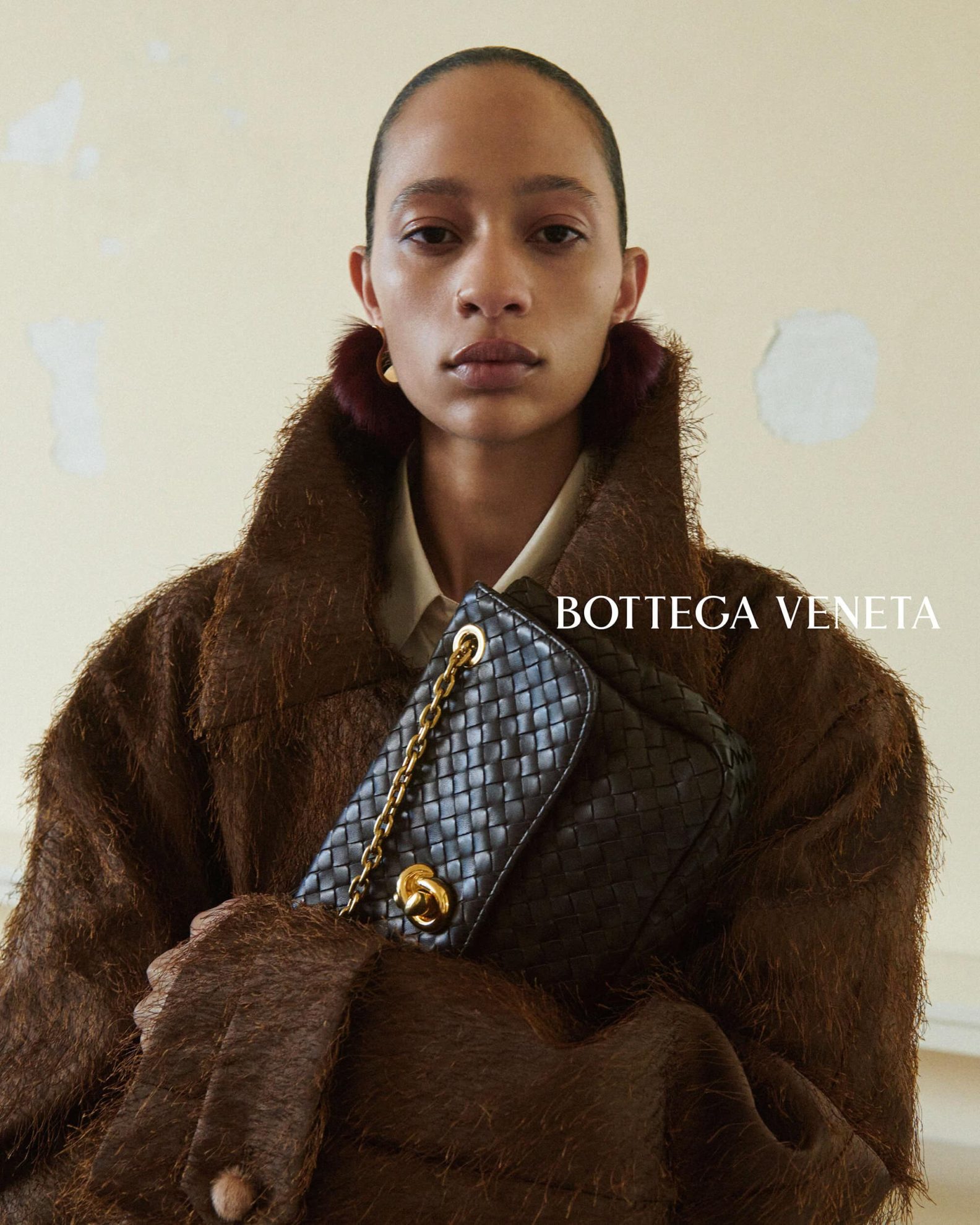
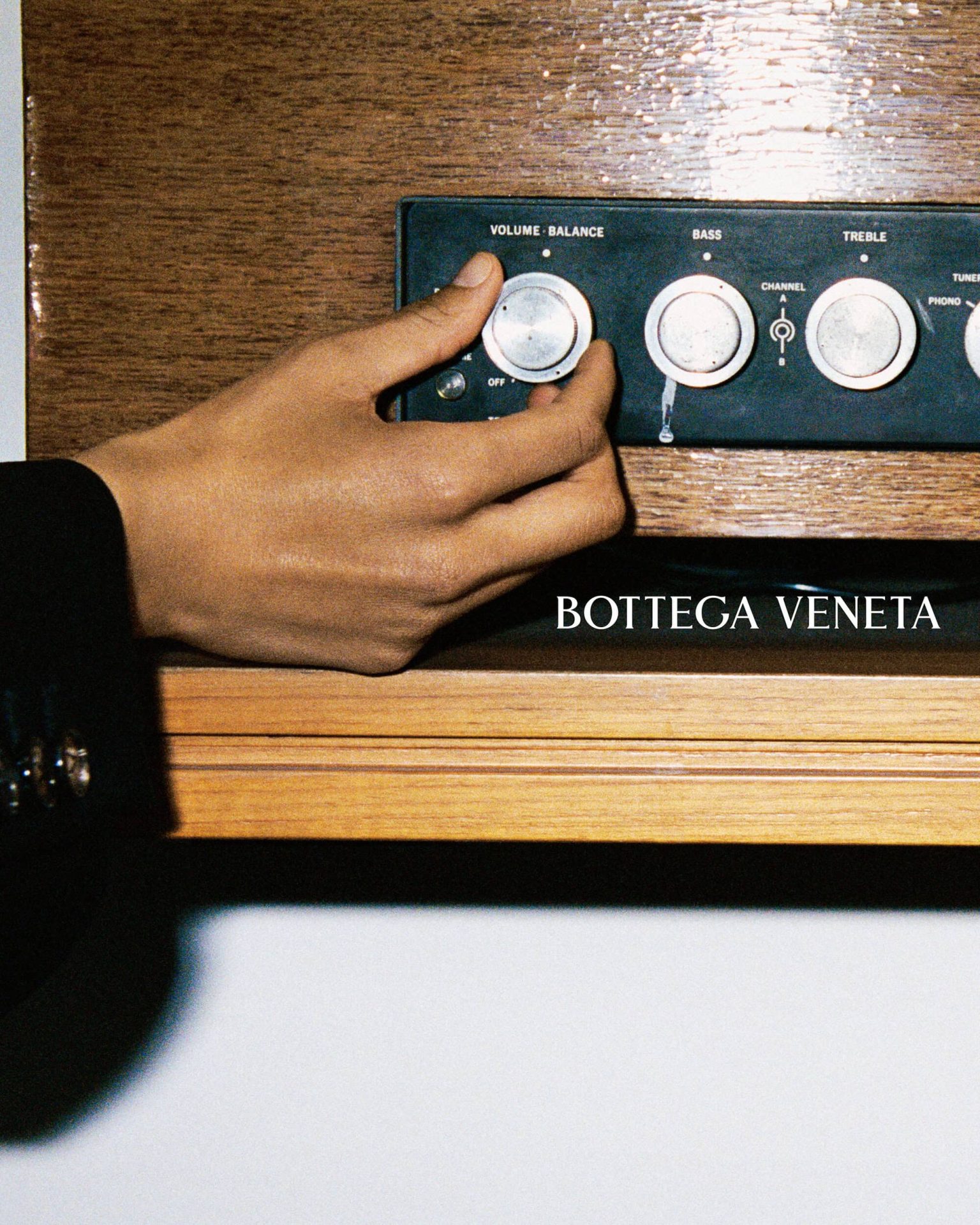
- The campaign’s visual language is built on gesture: bags pressed against the torso, tucked beneath an arm, placed nearby with the ease of something already familiar.
- Set designer Giovanna Martial’s spare, slightly domestic interiors give the portraits a private quality, positioning the women through posture and attitude rather than biography.
- The campaign is intellectually precise and well aligned with Bottega’s house codes, though its emotional restraint keeps the viewer at a slight remove from the attachment it describes.
Bottega Veneta has never needed to announce itself. The house’s most recognizable code, Intrecciato, is visible without being loud. Its power has always come from touch, repetition, and proximity — qualities that belong to private experience rather than public display. IL MIO, the brand’s 2026 portrait campaign, understands this. It does not stage the bag as a trophy. It stages it as something already chosen, already close.
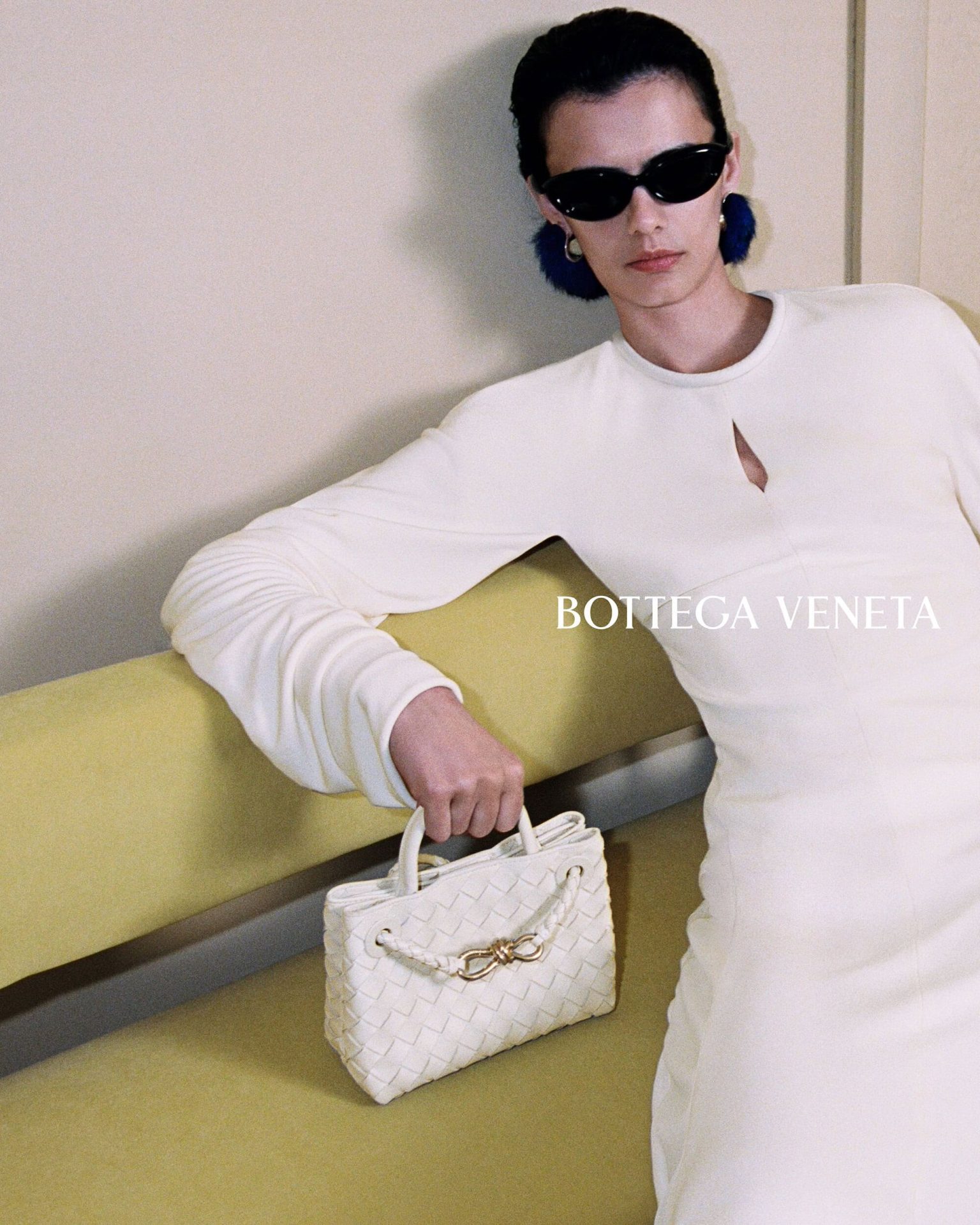
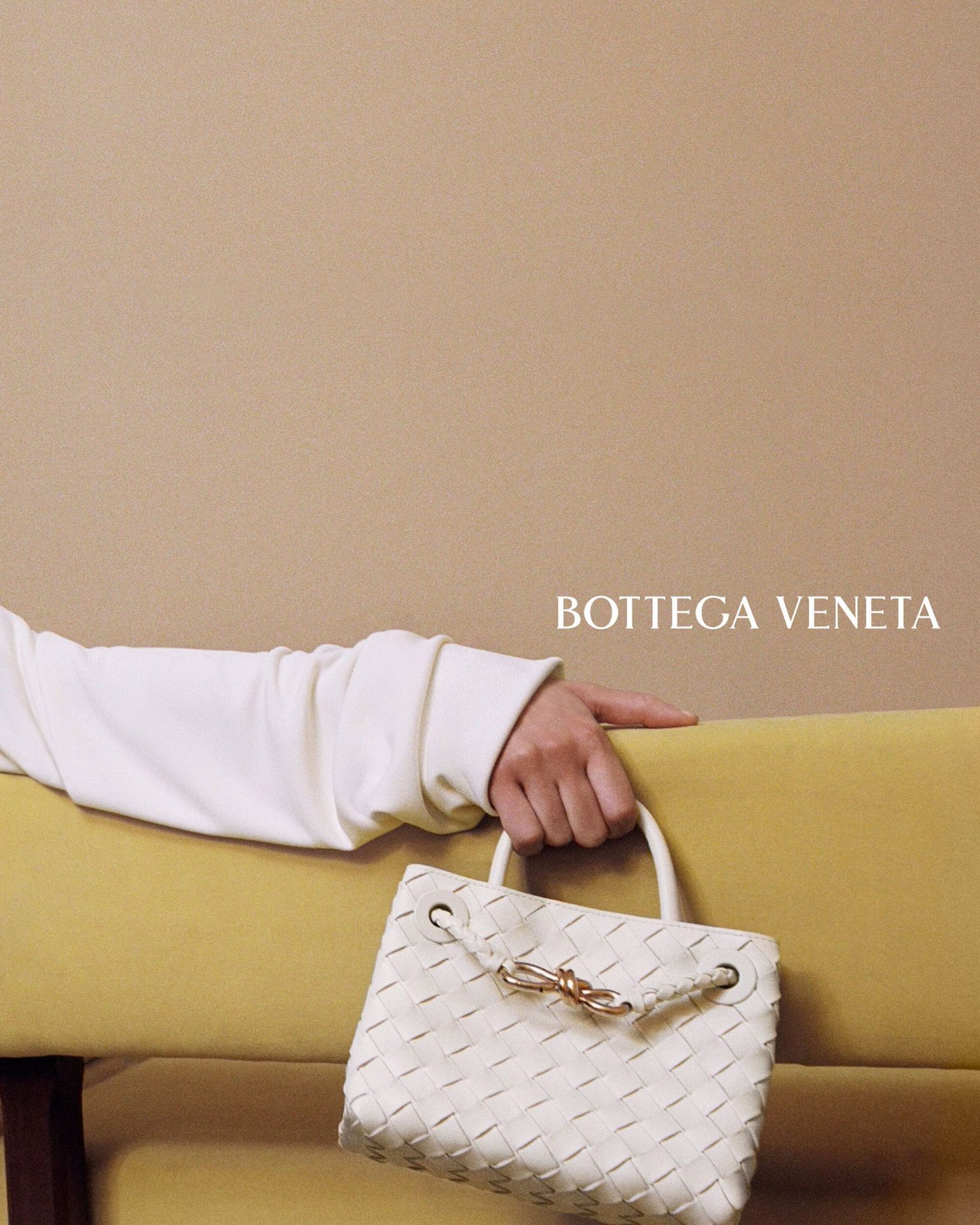
The title comes from the Italian for “what belongs to me.” That framing does real work. It shifts the viewer’s relationship to the object before a single image is seen. A bag that belongs to someone is not the same as a bag that is owned. Belonging implies history, preference, and a kind of mutual recognition. Under Louise Trotter’s creative direction, with campaign direction by Stephen Kidd and photography by Drew Vickers, IL MIO builds its entire visual argument around that distinction.
The campaign’s intelligence is in its restraint. At a moment when luxury advertising frequently leans on celebrity presence, cinematic world-building, or highly legible mode de vie fantasy, IL MIO turns inward. Set designer Giovanna Martial’s interiors are spare, slightly domestic, and quietly strange. Models Chu Wong, Selena Forrest, and Sihana Shalaj are not introduced through narrative or biography. They are read through posture, attitude, and choice. The bag becomes the clue.
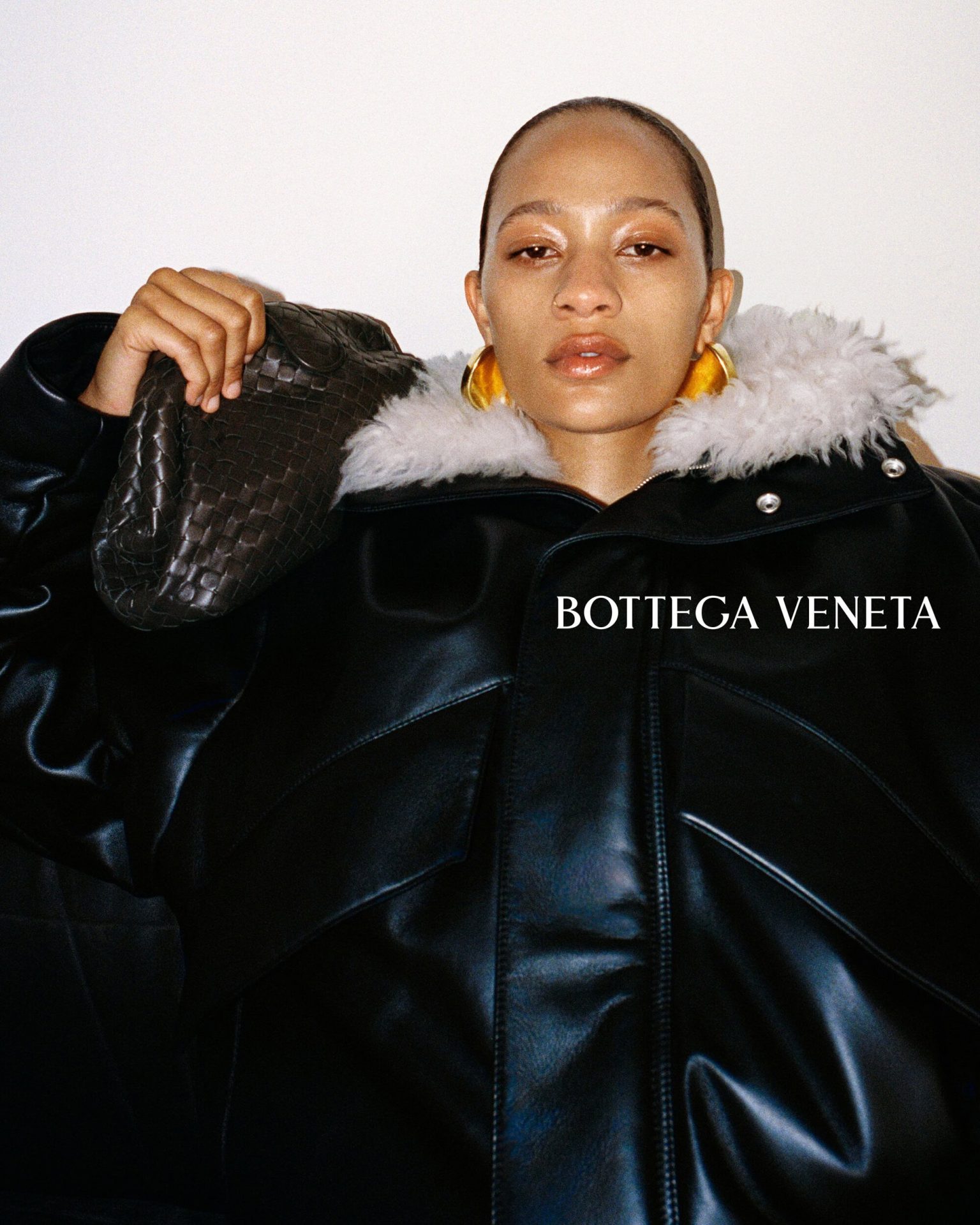
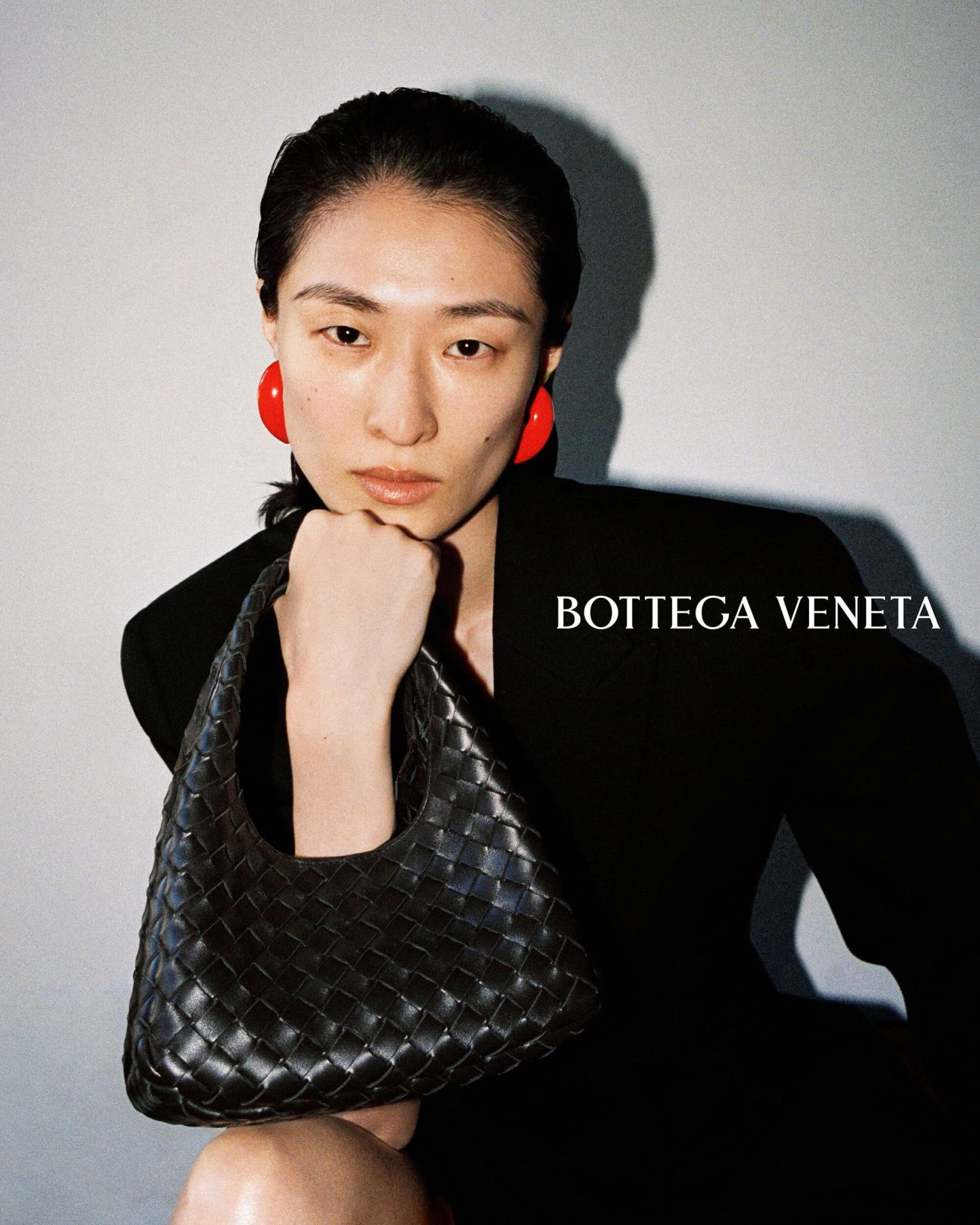
How Drew Vickers and Giovanna Martial Build Intimacy Through Gesture and Interior
The campaign’s most effective images work through physical proximity. A bag pressed against the torso, gripped by the handle, tucked beneath an arm, or placed nearby with the casual authority of something already familiar — these gestures carry the argument. Bottega is not staging possession as spectacle. It is staging possession as attachment. The bag does not appear to have been added to the body; it appears to have already found its place beside it.
That reading is supported by Martial’s set design. The interiors are not aspirational in any conventional sense. They are transitional, slightly unresolved, and private in a way that feels specific rather than generic. Hair by Shiori Takahashi and makeup by Laura Dominique, with casting by Anita Bitton, keep the women grounded and unperformed. Nothing in the frame competes with the central relationship between person and object. The restraint is structural, not incidental.
Why IL MIO Fits the Current Moment in Luxury — and Where It Stops Short
The campaign is well judged for where Bottega Veneta is right now. Trotter is in the early stages of articulating her vision for the house, and IL MIO does not attempt a dramatic reinvention. It looks closely at what has always made Bottega compelling: the idea that a luxury object becomes meaningful when it is lived with. Discretion, in this reading, is not absence. It is a form of expression.
That positioning resonates in a broader context where conspicuous luxe has begun to feel exhausted. The bag that does not need to explain itself, that carries meaning through craft and touch rather than logo and scale, is a coherent response to that fatigue. IL MIO makes the case without stating it directly, which is precisely the point.
Where the campaign encounters its limits is emotional. The idea of attachment is clear. The feeling of it is harder to locate. Because IL MIO is built around the transformation of an object into a companion, the viewer wants more evidence of that transformation — more of the life around it, its use, its contradiction, its personal history. The portraits suggest intimacy. They do not always make it fully felt.
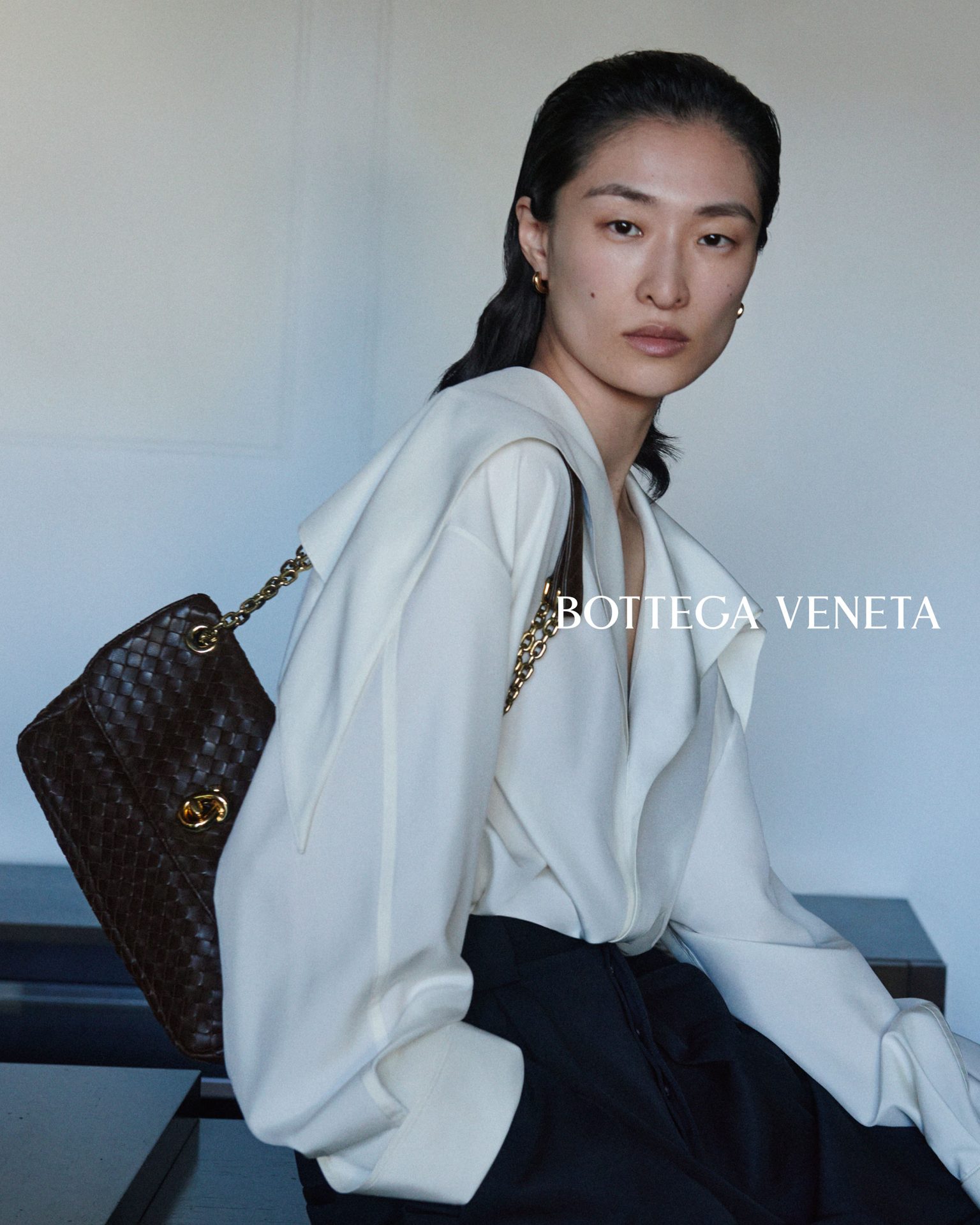
IL MIO is a campaign that trusts its house codes and asks the viewer to pay attention. Its simplicity is structured and intentional, and its alignment with Bottega Veneta’s belief in craft, touch, and closeness is precise. The intellectual argument is sound. The emotional one is still forming. If these bags are companions, the next step is to let us feel more fully the lives they accompany — and that is where Trotter’s vision for the house has room to deepen.
Images reproduites avec l'aimable autorisation de Bottega Veneta
Dans d'autres nouvelles de la campagne, NINGNING Stars in Gucci Paparazzo Bag Campaign Chapter 2