

Fashion rarely stays confined to the closet. It follows through security lines, layovers, and long-haul flights, whether or not anyone dresses for the occasion. Airport style has become its own category worth watching, less about a single outfit and more about the pieces that carry it, quite literally, from one city to the next.
The strongest wardrobes worth watching are the ones developing a real point of view rather than copying whatever silhouette happens to be trending. That same logic applies the moment a trip enters the picture. A distinctive set of travel bags can do for an airport look what a great handbag does for an everyday one, giving even the simplest travel outfit a sense of intention rather than an afterthought.

Structure Over Size
A larger bag isn’t automatically a better one. What separates a travel piece worth keeping for years from one destined for a single season is structure: a base that holds its shape when set down on a marble airport floor, hardware that won’t corrode after one rainy layover, and stitching dense enough to survive being thrown into an overhead bin more times than anyone cares to count. The most photographed carry-ons tend to share this quality long before they share a color. A bag that collapses the moment you set it down rarely photographs as well as one that holds its shape, which is part of why structure has become such a talking point among stylists and frequent flyers alike.
Leather Still Wins the Long Game
Technical fabrics have their place, particularly for anyone chasing the lightest possible pack. But leather remains the material fashion insiders return to for anything meant to last years rather than trips. It resists scuffing in a way canvas rarely does, and instead of looking tired after a season of gate checks, it develops a patina that makes each mark feel earned rather than damaging.
One Bag, Several Jobs
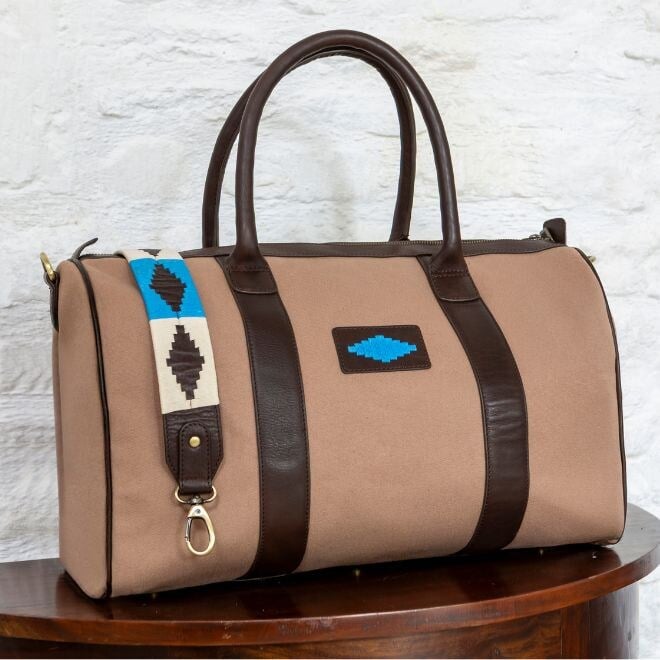
The most efficient travelers aren’t packing more bags; they’re packing smarter ones. A structured weekender that transitions from the overhead bin to a hotel lobby without missing a beat has quietly become one of the most coveted categories in travel style, because it eliminates the need for a separate, forgettable suitcase.
Hardware Is the Detail That Gives It Away
As with handbags, the giveaway in a well-made travel piece is rarely the leather itself. It’s the hardware: substantial zip pulls, buckles that close with a satisfying weight rather than a hollow click, and clasps engineered to survive years of daily use rather than one glamorous photo. These are the details that separate a bag built to be seen from one built to actually perform.
Color Still Does the Talking
Neutral tones — cognac, chocolate, and black chief among them — remain the safest long-term investment, largely because they pair with virtually everything else in a travel wardrobe without demanding a rethink each time. That said, a distinctive color can function almost like a signature, making a bag instantly recognizable on a crowded baggage carousel, which is its own kind of practical luxury.
The Bigger Picture
Travel style is no longer separate from everyday style; it’s an extension of it, carried through customs and reassembled at the other end. The bags worth investing in hold up to both scrutiny and scuffs, proving that considered design and genuine durability were never mutually exclusive.
Building a Travel Edit That Lasts
The smartest approach mirrors how a considered wardrobe is built: slowly, with an eye toward pieces that work across multiple contexts rather than a single trip. A weekender that looks equally at home boarding a red-eye or sitting in the back of a car service does more work than three separate bags bought for three separate occasions. The goal isn’t to own more; it’s to own fewer things that perform better.
What to Look for Before Buying
Before adding anything new to a travel wardrobe, check a few details in person rather than trusting a product photo alone. Seams should be tight and even, straps should sit comfortably at the shoulder without digging in, and any zip should glide rather than catch. These small mechanical details tend to predict longevity far more reliably than the bag’s label.