
https://www.youtube.com/watch?v=qNIk_9qkV04
Official runway film
Klicken Sie hier für weitere Videos…
The brand continues to define avant-garde sustainability through bio-engineered textiles in its 2026 collections.
Deconstructing the Narrative of Regenerative Design
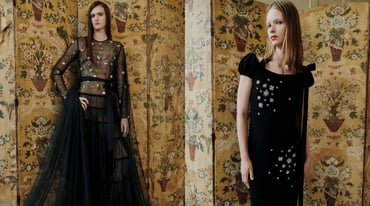
The Autumn-Winter 2021/2022 collection marked a pivotal moment where Louise Lyngh Bjerregaard translated abstract ecological theory into tangible haute couture methodology. Rather than treating sustainability as a peripheral certification, the Danish designer positioned bio-engineered textiles as the primary protagonist of the silhouette. The runway film reveals garments cultivated through bacterial cellulose and mycelium-based composites, materials that challenge the industry’s reliance on petroleum-derived synthetics and water-intensive natural fibers. This approach reframes the atelier as a laboratory, where the growth cycle of a textile dictates the architecture of the final garment.
Structural integrity is achieved not through traditional interfacing or boning, but through the inherent tensile strength of grown matter. The collection’s color palette-muted ochres, oxidized greens, and abyssal blacks-derives directly from the biological processes of the organisms producing the fabric, eliminating the toxic runoff associated with conventional dye houses. For a global audience attuned to the semantics of luxury, Bjerregaard proposes a new vocabulary: one where provenance is measured in petri dishes rather than mills, and where the carbon footprint of a gown is calculated by the metabolic rate of the organism that wove it.
Cinematic Choreography and the Digital Atelier
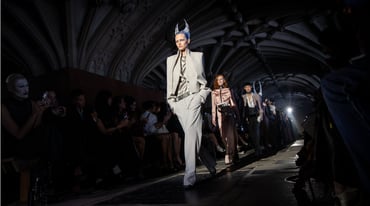
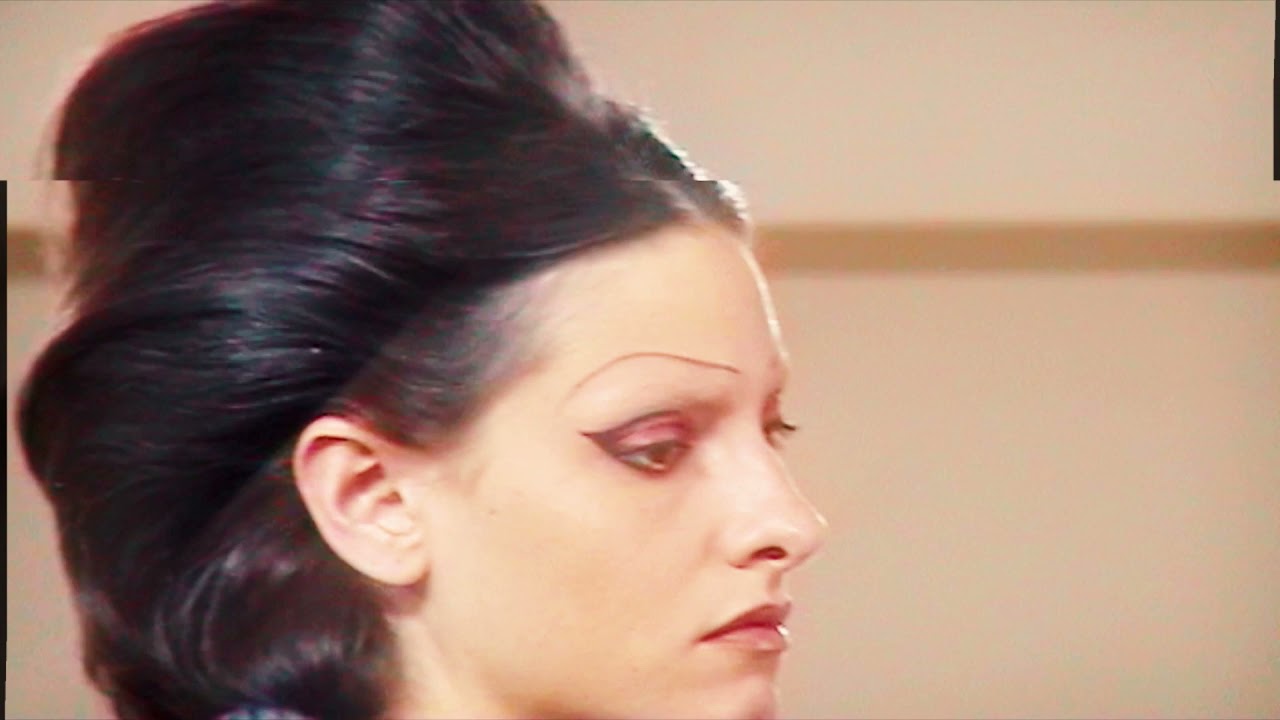
The official runway film, directed with a distinct absence of a physical audience, functions as a deliberate curatorial statement on the democratization of the front row. By removing the performative spectacle of the catwalk, the camera assumes the role of the intimate inspector, lingering on the macro-textures of lab-grown leather alternatives and the microscopic porosity of algae-based foams. This visual strategy serves a dual purpose: it educates a multilingual viewership on the materiality of innovation without relying on translated copy, and it archives the ephemeral nature of biological textiles which may degrade, evolve, or bloom differently under studio lights versus retail environments.
The film’s pacing-measured, almost clinical-mirrors the slow temporality of bio-fabrication. Where traditional fashion films accelerate to match the rhythm of a seasonal drop, this piece forces the viewer to confront the duration required to grow a jacket. It is a subtle critique of the industry’s accelerationist logic. For the New York Style Guide reader, accustomed to the velocity of the Garment District, the film offers a necessary friction, a reminder that the future of luxury may not be faster, but significantly more patient.
Market Positioning and the 2026 Horizon
Since the debut of this collection, the brand has migrated from experimental fringe to a reference point for major houses negotiating their own material transitions. The 2026 collections signal a maturation of this dialogue: the bio-engineered textiles are no longer presented as singular statement pieces but integrated into ready-to-wear systems capable of industrial scaling. This evolution addresses the primary criticism leveled at early adopters of grown materials-that they remain artisanal curiosities rather than commercial realities. Bjerregaard’s current output demonstrates that bacterial cellulose can be standardized for consistent weight, drape, and durability across production runs numbering in the thousands.
Strategic partnerships with biotech firms in the Northeast corridor have localized the supply chain, reducing the logistical emissions historically associated with textile importation. For the New York market, this represents a rare convergence of avant-garde aesthetics and regional economic development. The label now operates at the intersection of design, material science, and agricultural policy, advocating for regulatory frameworks that classify grown textiles as a distinct category from synthetics or naturals. This advocacy ensures that the infrastructure supporting the 2026 collections-fermentation facilities, sterilization protocols, waste-to-nutrient loops-becomes permanent civic architecture rather than temporary pilot programs.